An afternoon settling into the shade of the maples, in the hidden garden of the Imperial Palace in Kyoto. Ren, the court’s chief philosopher of nature, and the Empress paused as they walked along the stone path. The bond between them passed over the rigid rules of court protocol; it was a quiet attachment fed by their reverence for knowledge, for nature and for the hidden mathematics of the universe.
By the edge of the pond, where the light came through, a peacock stood with its feathers opened like a fan. While the Empress watched in an enchanted silence, Ren began to speak in a low voice.
Your Majesty, he said, the navy and green tones you see in these feathers are not a material pigment. The layers of keratin inside the feather, and the tiny rods of melanin ranged between them, are on almost exactly the scale of a wavelength of light. When light strikes that ordered rank, some colours cancel one another out and others reinforce each other. The colour you see is not the substance itself but the result of the dance light performs with that texture.
The Empress paused and raised an eyebrow slightly. How so, Ren? This sapphire blue, this emerald green shining in front of my eyes, is it not a paint? How can a colour exist that has no substance?
Ren smiled faintly and touched the water of the pond. Your Majesty, is that arc you see in the sky after a storm a paint? A raindrop is transparent and so is sunlight; yet light bends as it passes through the heart of the drop and separates into colours. Or think of the rainbow that falls on a wall when you hold a clear crystal up to the sun. There is no colour in the crystal, but light turns into art as it passes through. The peacock’s feather is the same: there is no blue pigment on it, the bird bends the light falling on it and throws a rainbow back into your eyes. The most faithful form of colour is the one made with light and not with paint.
To say that such an arrangement emerged on its own is to say a prism happened to arrange itself along a bird’s back. The calculation that places a structure on the scale of a wavelength of light into the feather of a living creature cannot be the work of that creature’s own mind.
Ren finished his thought. In the art of the East, and in the tradition of the court, the peacock stands for an elegance that never turns into vanity. Every autumn it leaves those magnificent feathers on the ground, and in spring it puts on something more magnificent still. So it is not merely a bird; it is the emblem of shedding what passes and being born into what lasts. And the red peony that opens at its feet is called the king of flowers in the botany of the East.
And how, said the Empress, can we preserve for ever this moment that flies off on the wind, this fugitive dance of light? Ren pointed to the tree in the most sheltered corner of the garden.
Toxicodendron vernicifluum, the Urushi tree, secretes a burning sap to keep strangers away from its bark. That poison is the way the tree protects itself.
But when a skilled hand cuts a gentle notch into the bark, the tree begins to weep its white tears. What can be gathered from one tree in a season does not exceed a cupful. This resin does not dry and evaporate in the sun; on the contrary, it hardens in damp, dark rooms by absorbing the oxygen and the moisture in the air. Once cured it becomes an armour smoother than glass, defying fire, water, acid and time. That a substance needs damp in order to dry is one of the most elegant contradictions in nature.
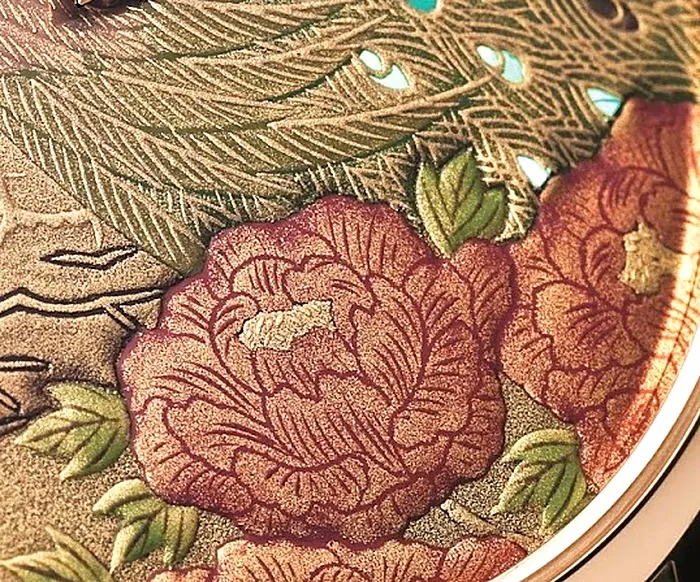
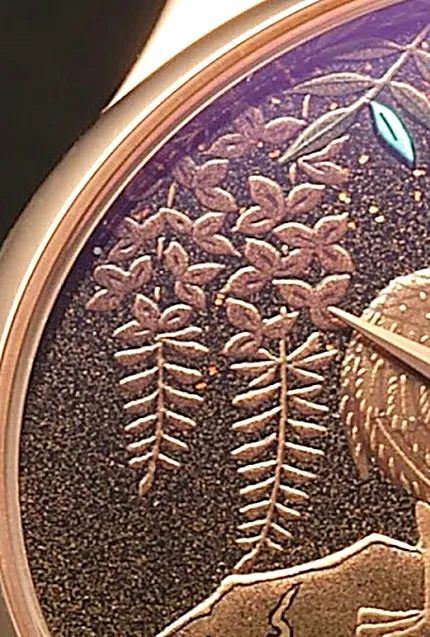
In the imperial age this resin was used to harden the helmets of samurai against blows, to keep tea ceremony vessels safe from moisture and to give palace walls surfaces that would not fade. Maki-e, the technique of sprinkling gold and silver powder onto the wet lacquer through bamboo tubes, was the summit of the craft: the powder sticks to the surface before the lacquer has cured, and once it hardens it becomes a line that can never be lifted again. The picture is not painted onto the surface but buried in it.
Today the tradition continues at the historic Yamada Heiando atelier, official supplier to the Imperial Household of Japan. The brushes are still made from animal hair as they were centuries ago, most often from rat hair, because no other material gives a tip of that fineness and that spring.
format_quote"The most faithful form of colour is the one made with light and not with paint."
Hasan Bekmezci
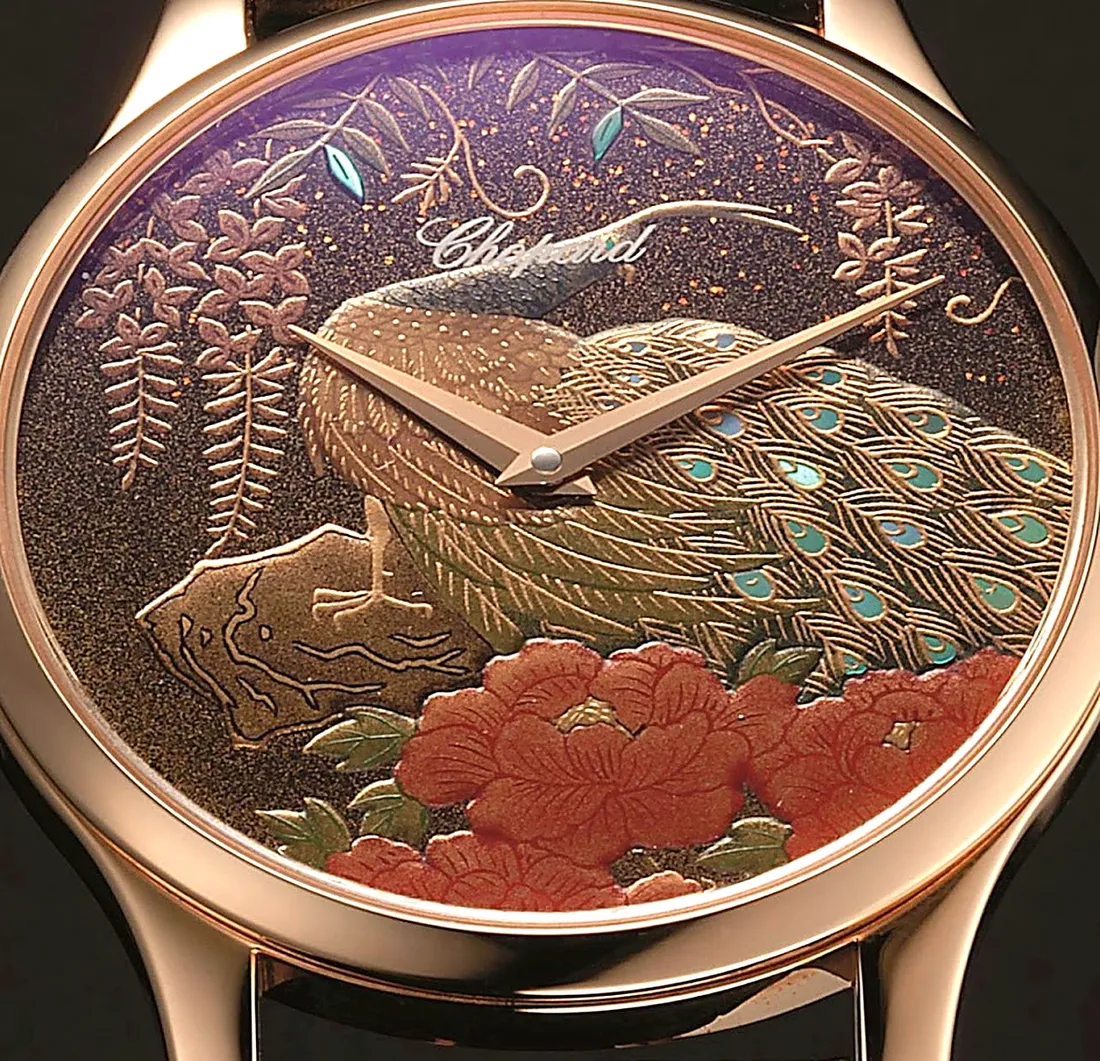
That contemplation by the pond, between the Empress and her philosopher, enters a case in Geneva centuries later.
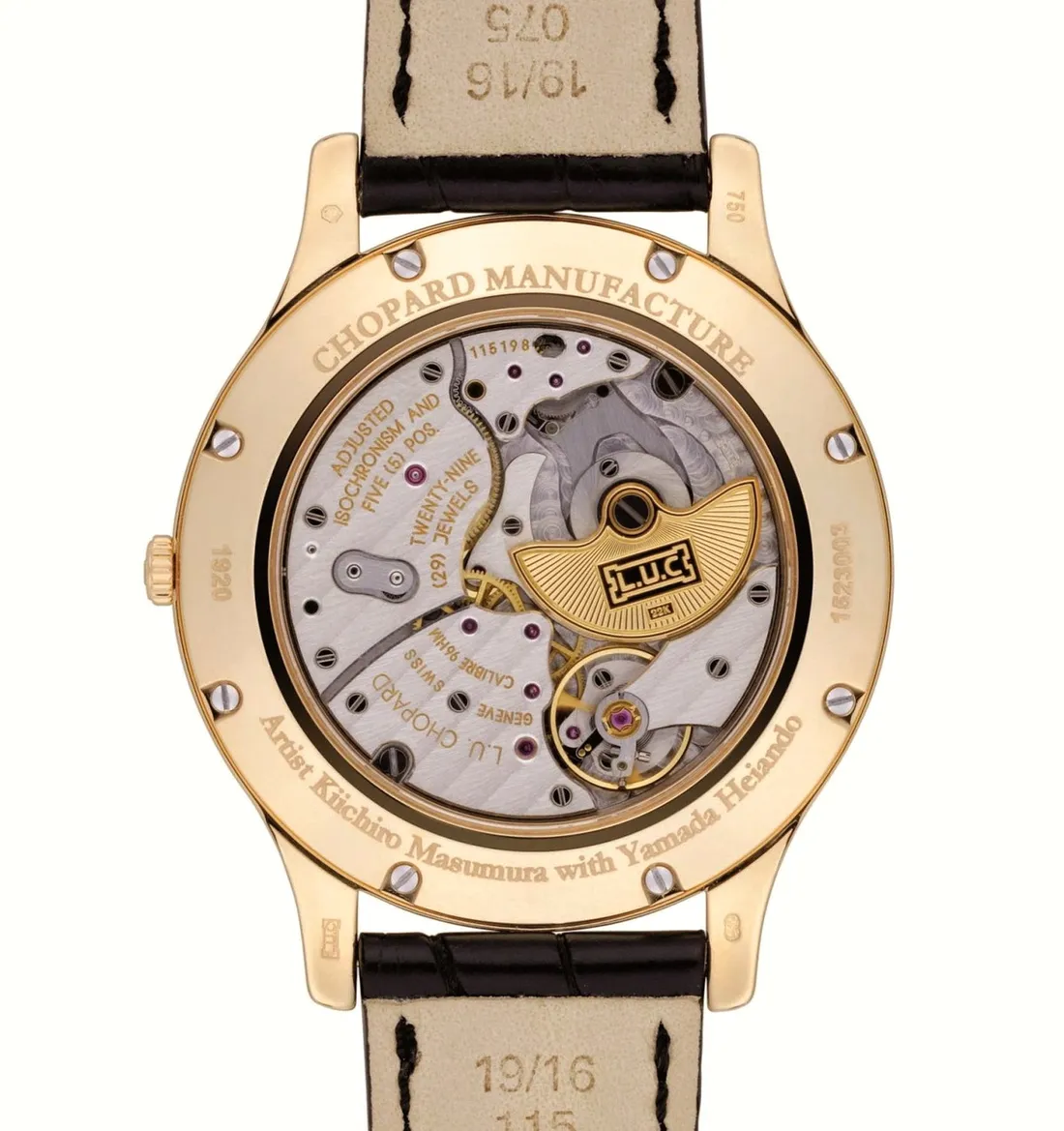
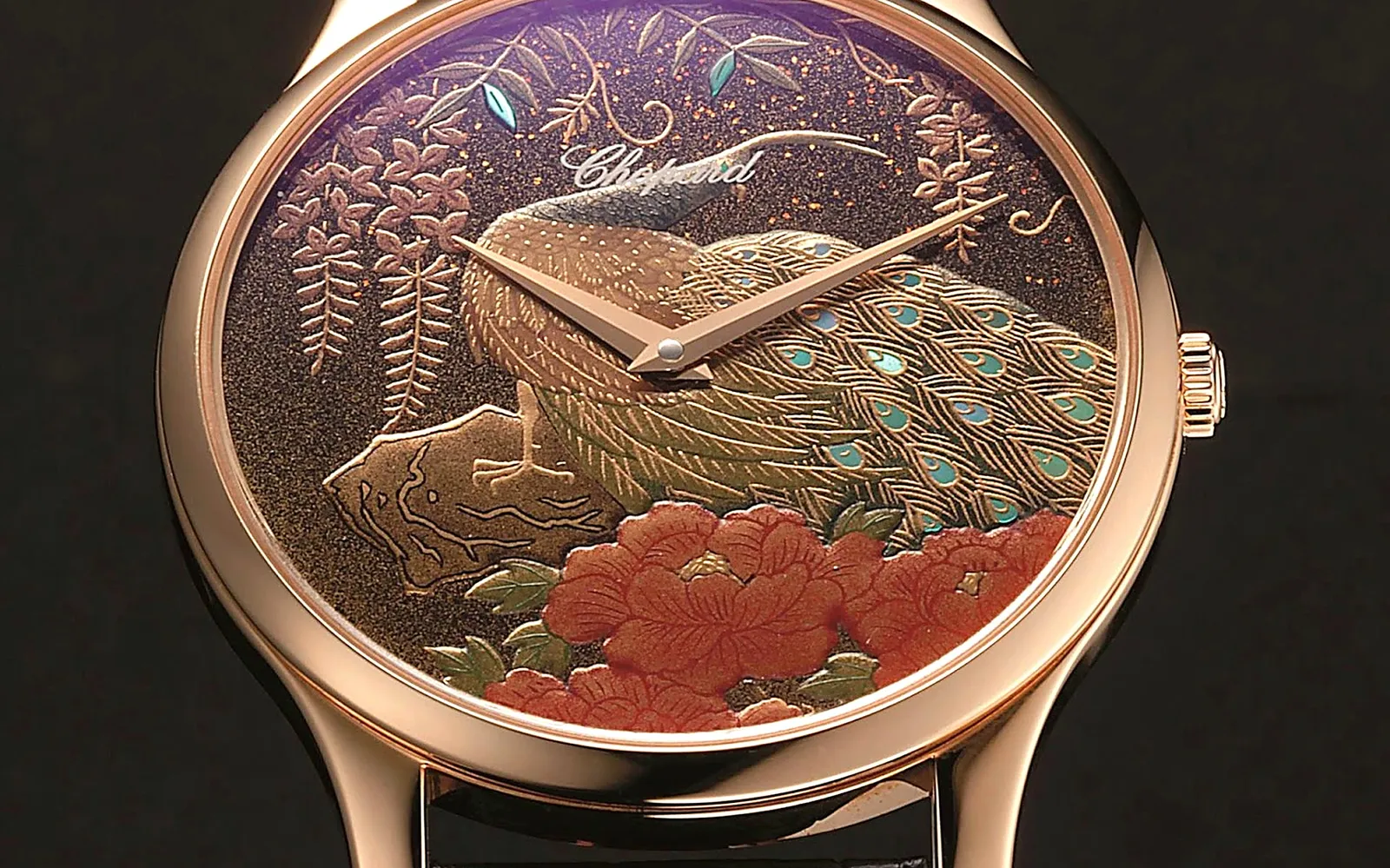
In 2009 Chopard brought the Urushi dial into high watchmaking with a series presented at first only in Japan; a collection of nine different dials followed. The technical supervisor of those nine was Kiichiro Masumura, a master holding Japan’s title of Living National Treasure, while the drawing, the painting and the sprinkling of gold dust came from the hands of Yamada Heiando. The peacock is the most magnificent member of that family: reference 161902-5049.
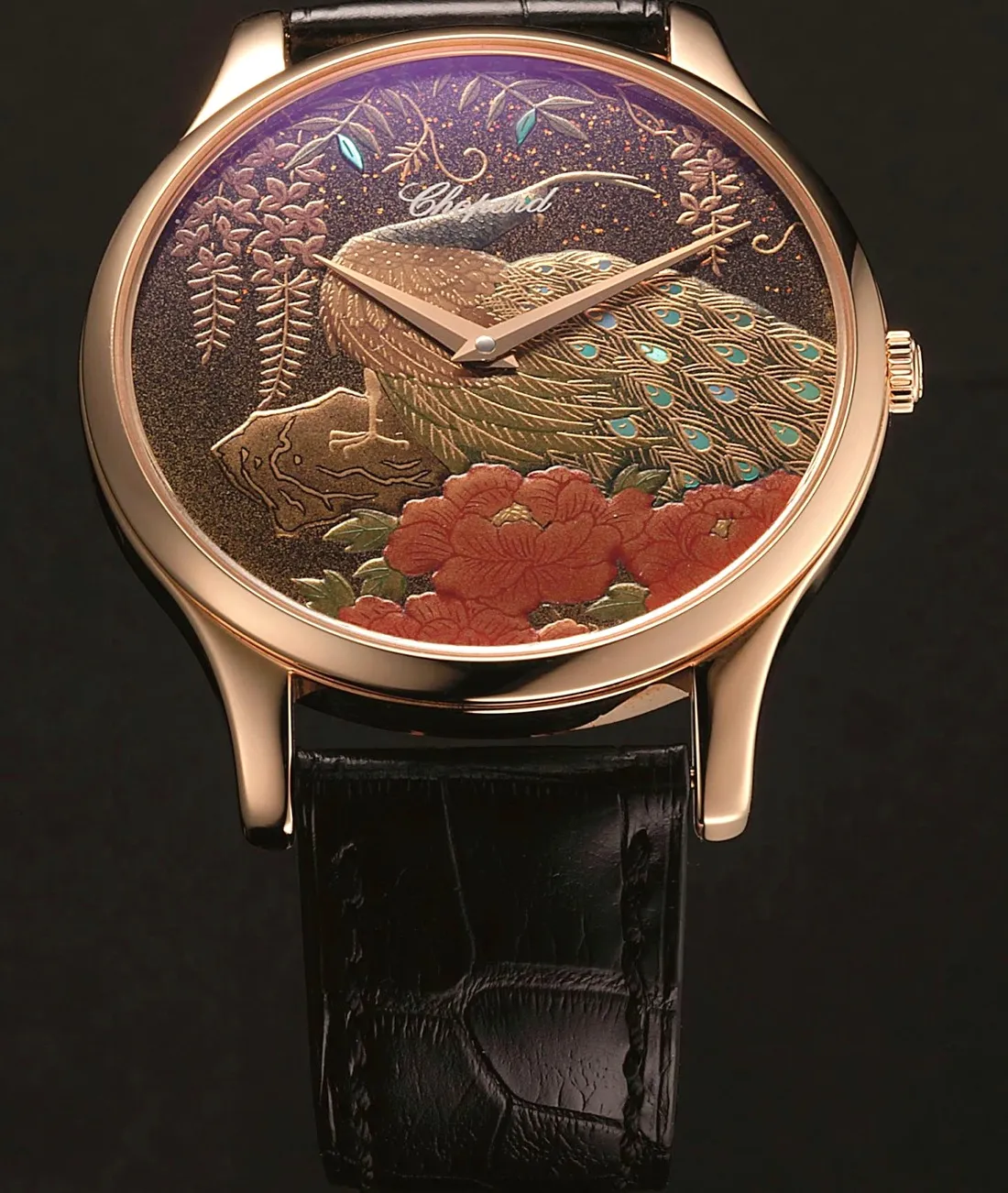
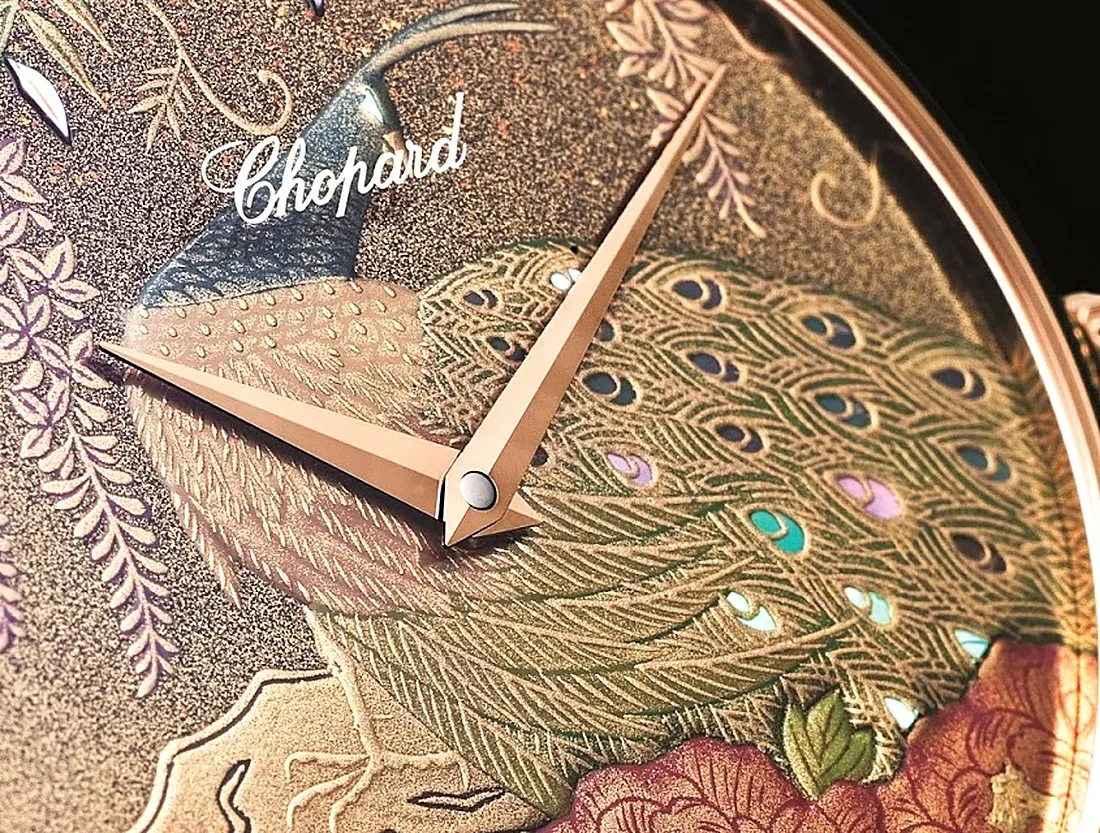
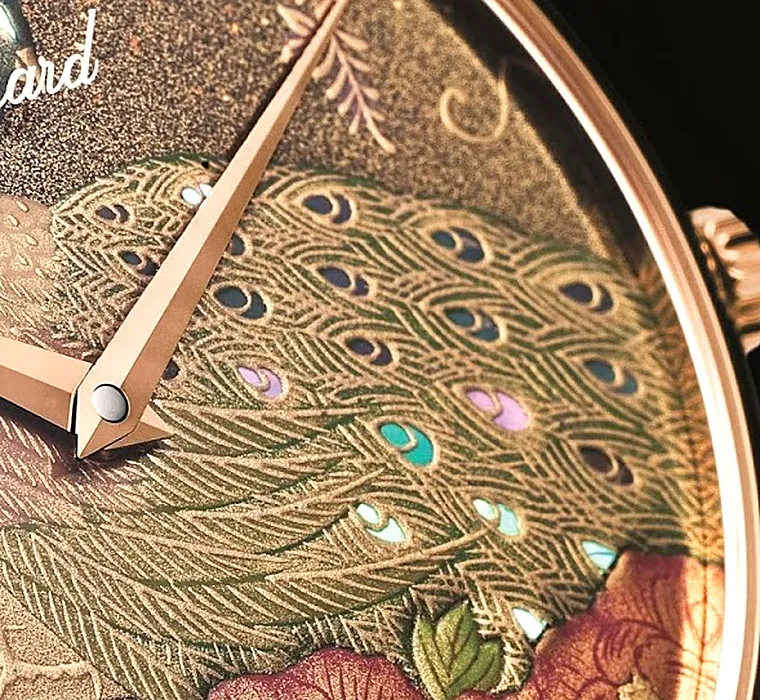
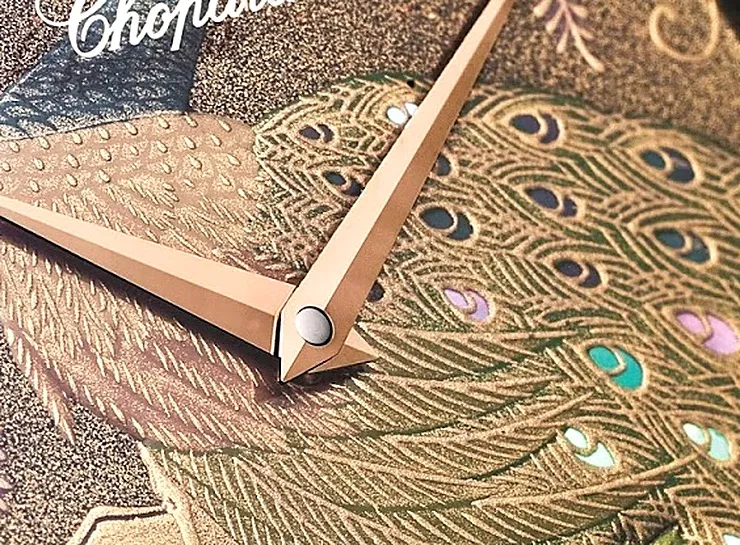
The upper half of the dial holds a violet sky; wisteria hangs from the left, the peacock’s tail opens to the right and red peonies burst below. The eyes of the tail are not lacquer but shell: finely cut pieces sunk into the surface, each returning the light at a different angle. So the principle Ren described by the pond is here imitated on a dial: once again the colour comes not from pigment but from light striking a texture. The highest point of a craft is where it copies not only the thing but the thing’s method.
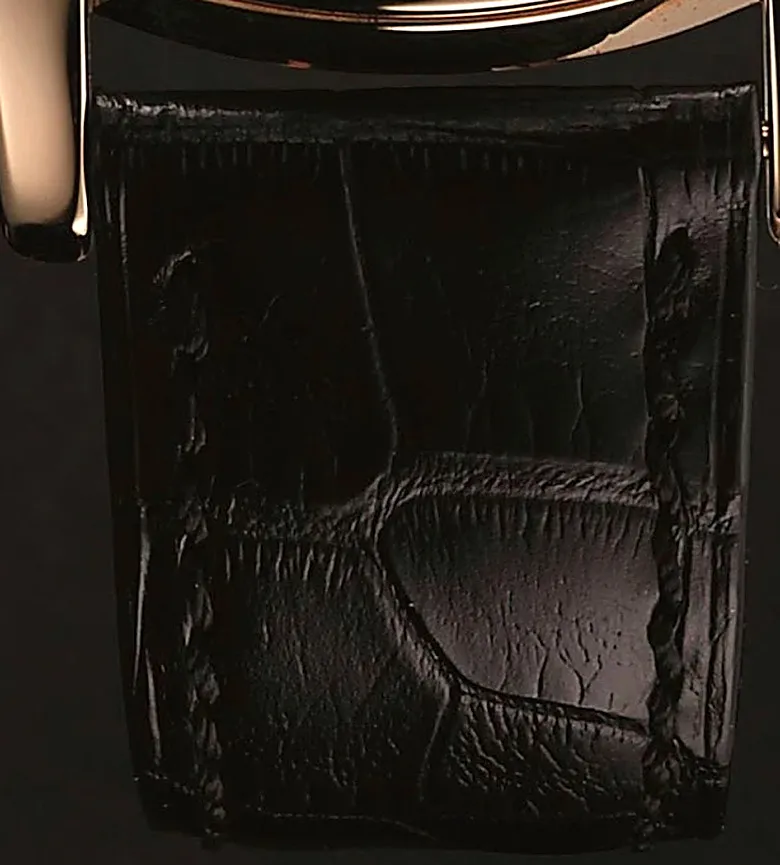
The case is eighteen-carat rose gold, thirty-nine and a half millimetres across and only six point eight deep; it is water-resistant to thirty metres, the crystal has anti-reflective coating on both faces, the hands are gold dauphines and the strap is black alligator. The secret of carrying so dense a layer of art in a case this thin lies in the movement: the L.U.C 96 calibre uses its rotor not as a mass turning above the plates but as a micro-rotor sunk into the plane of the movement itself, and that rotor is in 22-carat gold. It carries twenty-nine jewels, runs at 28,800 vibrations an hour and gives sixty-five hours thanks to twin barrels stacked one on the other. To hide a rotor is the most expensive way of making room on a dial.
format_quote"The highest point of a craft is where it copies not only the thing but the thing’s method."
Hasan Bekmezci
The Chopard L.U.C XP Urushi Peacock is not merely an instrument that measures time; it is the meeting on a wrist of a permanence distilled from the poison of a tree, of a philosopher’s contemplation in front of a peacock, and of an aesthetic search that outlasts its own age.
And it carries this detail: the lacquer protecting this dial is a poison a tree produces in order to defend itself. What makes a thing last is very often the remedy some living creature found in order to protect itself.
format_quote"What makes a thing last is very often the remedy some living creature found in order to protect itself."
Hasan Bekmezci