"On a dark night in Zurich in 1912, Albert Einstein fell asleep among the scribbles on his desk. In his dream he was on an enormous theatre stage. The boards of the floor were splitting, the actors were drifting in the air, and the hands of the clocks on the walls were turning at different speeds as though they had lost their minds. He cried out as he fell, because there was neither a floor to hold on to nor a steady rhythm by which to measure time. When he woke in a sweat he understood that the unshakeable reality mankind had trusted for a thousand years was an illusion: space was not a motionless stage, and time was not one clock ticking identically everywhere. Mass was bending the fabric, and time was stretching inside the hollow. To rescue time from the relentless pressure of gravity in that bent universe is a three-dimensional cry for freedom in micromechanics."
On the island of Koh Samui in Thailand, in the shade of tropical palms, the turquoise sea was breaking gently on the shore. Two old friends lying on wooden loungers, the cosmologist Professor Edward and the thermodynamicist Professor Theo, were sipping coconut water and watching the deep hollow left in the sand by a heavy tropical fruit that had fallen on the beach.
Edward began without taking his eyes off the hollow.
"You know, Theo, before Einstein woke from those dreams the world of physics was very simple. Isaac Newton had taught us everything: we saw space as an immense and unshakeable theatre stage, and time as an absolute wall clock ticking at the same rate everywhere in the universe. In Newton’s universe there was no arguing about whether two events happened at the same time; it was a fact independent of who was looking."
"And who was the man who broke that dream, this Maxwell? Where did he come from, and how did he work out that the speed of light is the one constant in the universe?"
Edward sat up.
"James Clerk Maxwell, the genius who in the eighteen hundreds united electricity and magnetism under a single theory. And the most beautiful part of it is this: Maxwell did not measure the speed of light with a stopwatch and a lantern. He was at a desk."
"Meaning?"
"There were two coefficients in the laboratory, both already measured. The first said how easily electricity spreads through empty space. The second said how easily magnetic field lines pass through it. Think of them as the electrical give and the magnetic stiffness of the fabric we call the void. Both had been measured with a coil, a capacitor and a magnet, instruments entirely of this world; not one of them had anything to do with the sky."
"And then?"
"When Maxwell wrote out his equations he saw this: a changing electric field gives birth to a magnetic field, and a changing magnetic field gives birth to an electric one. The two, breeding one another, travel through the void like a wave. At what speed? When he did the arithmetic only one answer came out: the speed depended solely on the square root of the product of those two coefficients. On the fabric of the void itself. He put in the laboratory numbers and got roughly three hundred thousand kilometres a second."
"And that number was already known."
"It was the speed of light astronomers had been trying to measure for years by watching the moons of Jupiter. In that instant Maxwell understood what light is: an electromagnetic wave. But the real bomb was this. There is no term in the formula for your speed. Nor for the speed of the source. Only the properties of the void. The fabric of the universe has nailed that speed down, and nothing you do can change it."
"Extraordinary. And where exactly did Einstein get stuck?"
"Speed is distance divided by time," said Edward. "Throw a ball forward from a car doing a hundred kilometres an hour and an observer outside sees the ball’s speed as the car’s speed plus your throw. Newtonian physics says so and it never fails in daily life. But turn on the headlights of that same car and the observer outside does not add the car’s speed to the light. He measures the same number."
"That makes no sense."
"It makes no sense until you give something up. For two years Einstein looked for the thing he had to give up. In the end he saw it: if the result of the division is the same for everyone and the numerator changes, then the denominator must change too. Distance and time must stretch. The faster you go, the slower your clock runs and the shorter your metre becomes, precisely so that the speed of light stays fixed. These are not tricks invented to rescue an equation; they are measurable facts. If GPS satellites did not apply that correction, your position would drift ten kilometres a day."
"And gravity? What is the difference between Newton’s G and Einstein’s?"
"The simplest way to put it," said Edward, "is that for Newton gravity was like an invisible, inelastic rope stretched between the Earth and the Moon. The greater the mass the thicker the rope, and G tells you how hard that rope pulls. The rope had a problem: news travelled along it instantly. If the Sun vanished right now, for Newton the Earth would leave its orbit in the same second. Information was travelling at infinite speed."
"And Einstein could not accept that."
"Because Maxwell had said nothing can travel faster than light. So he cut the rope. There is no rope, he said; the universe is a taut trampoline, and G is the give in that cloth. If the trampoline were as stiff as a plank, it would not bend even under the Sun and no planet could enter an orbit. If it were as thin as gauze, the smallest pebble would tear through it and the universe would have become a black hole at birth."
"Then why does a planet orbit?"
"Put a cannonball in the middle of the trampoline. The cloth caves in. The marble you roll in from the edge starts going round that hollow not because the cannonball is pulling it with a rope, but because in the bent cloth there is no straighter path left to take. And enjoy this detail: if the Sun vanished now, the hollow would not flatten all at once but in a wave, and that wave would reach us in eight minutes. At exactly the speed of light. That is what cut Newton’s rope."
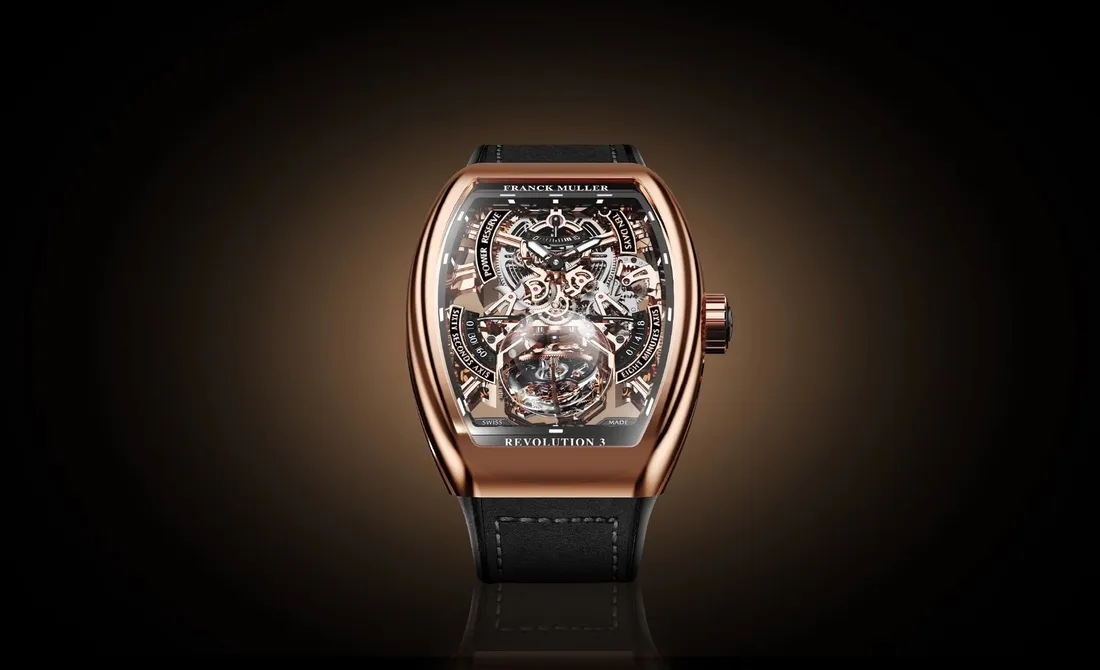
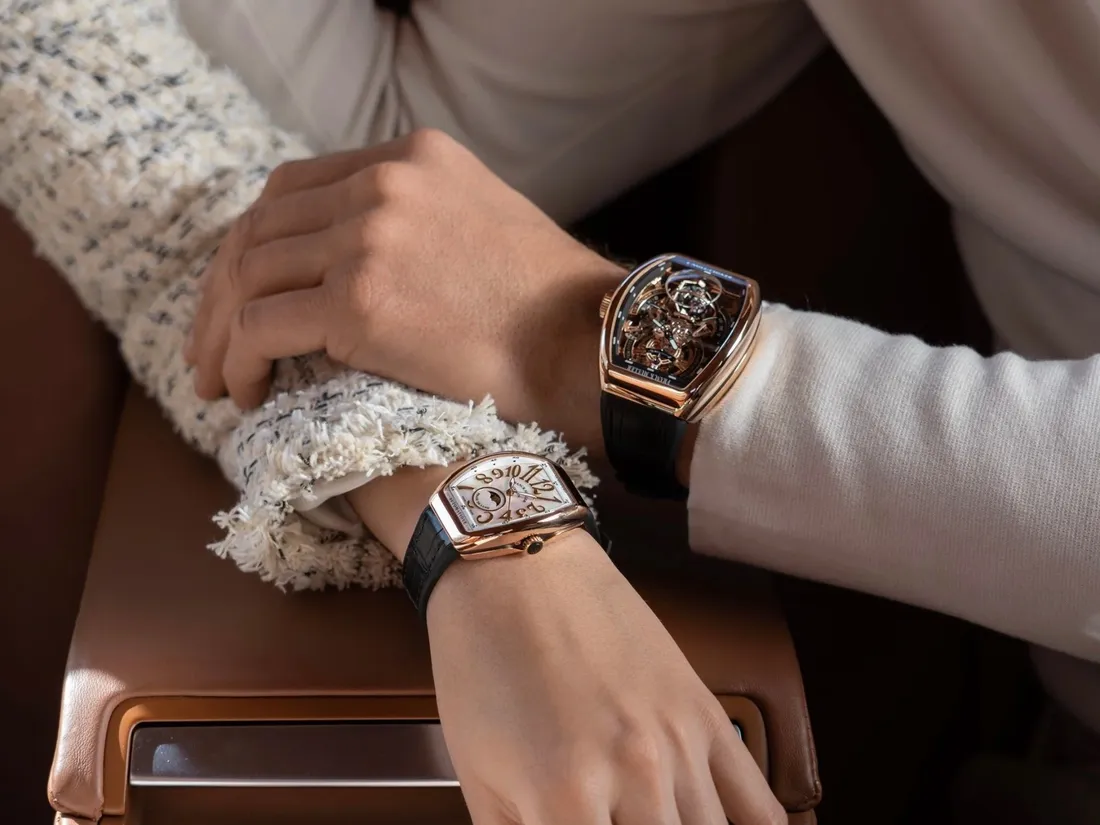
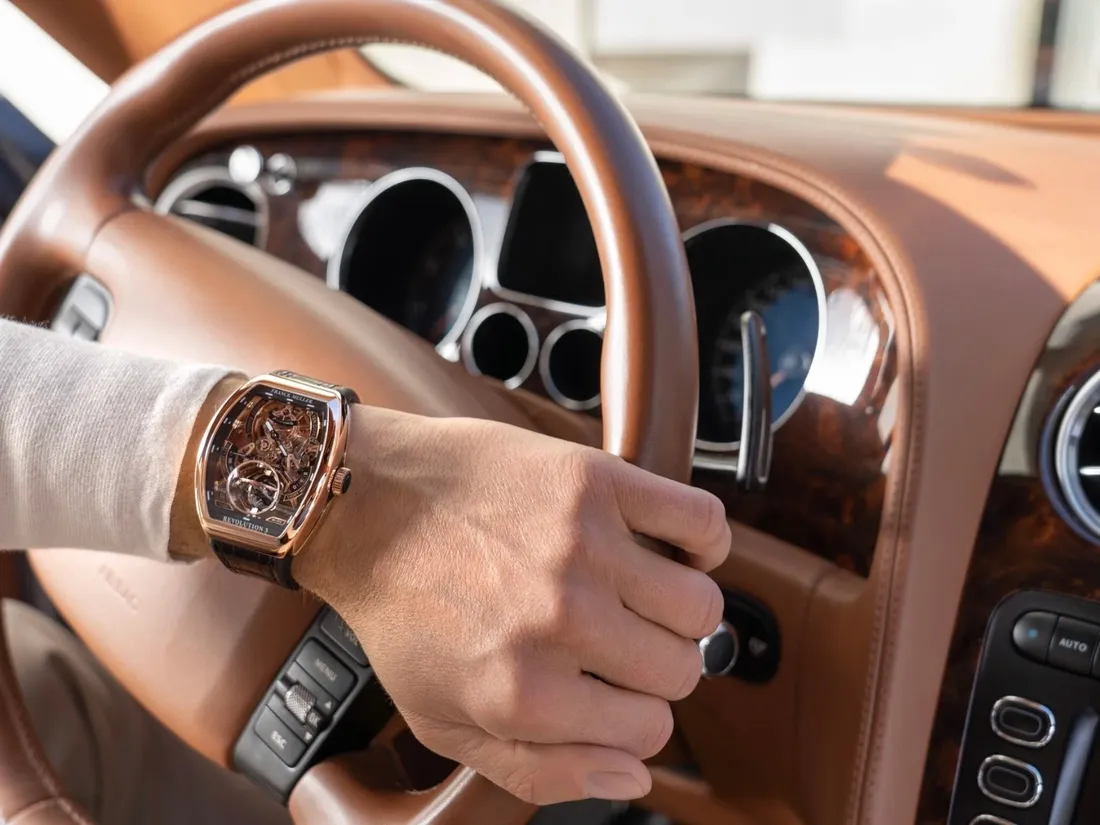
Theo raised his arm with a smile. The glint of sapphire off the rose gold tonneau case caught Edward’s eye. In the heart of the case, in the middle of the tropical breeze, a mechanical mass was drifting like an independent satellite, turning on three separate axes at once.
"Beautifully told, Edward. And what does a mechanical watch experience inside that bent trampoline?"
"Two separate things," said Edward. "One real but far too small to measure, the other small but far too large to ignore. The first is relativity itself: time runs slower at the bottom of the hollow. The watch on your wrist runs a little slower than the clock in your head. But the difference is a billionth of a second a day; no mechanical watch can see it."
"And the second?"
"Brute force. Gravity is pulling the balance wheel inside that watch in one direction at every instant. If the centre of mass of the balance is not exactly on its axis, then with the watch standing upright the wheel turns with gravity through one half of its swing and against it through the other. The result: the watch changes rate with position. That is the two-hundred-year headache of mechanical watchmaking, and in daily life it is billions of times larger than relativity."
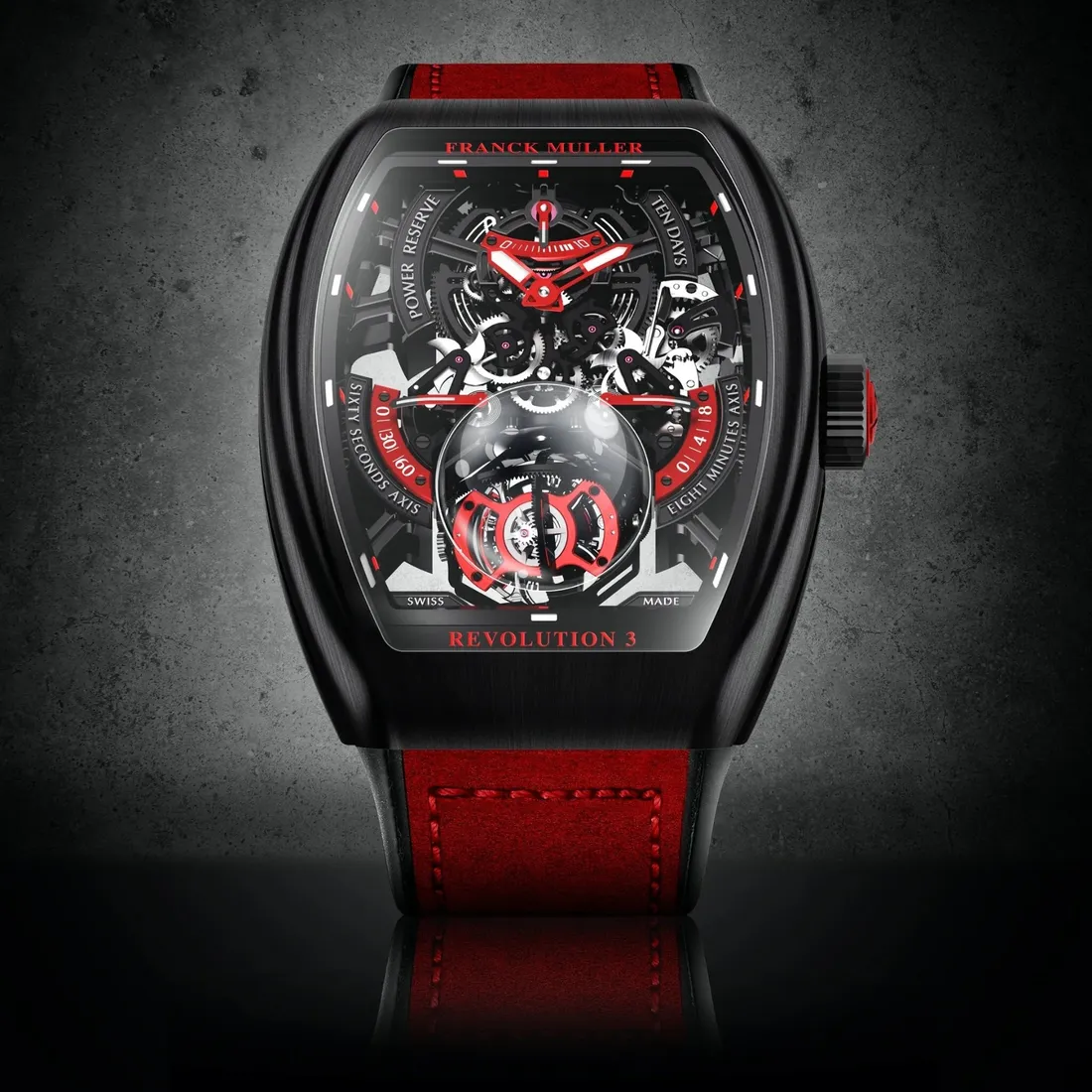
Theo took the watch off and laid it on the velvet cloth on the wooden table.
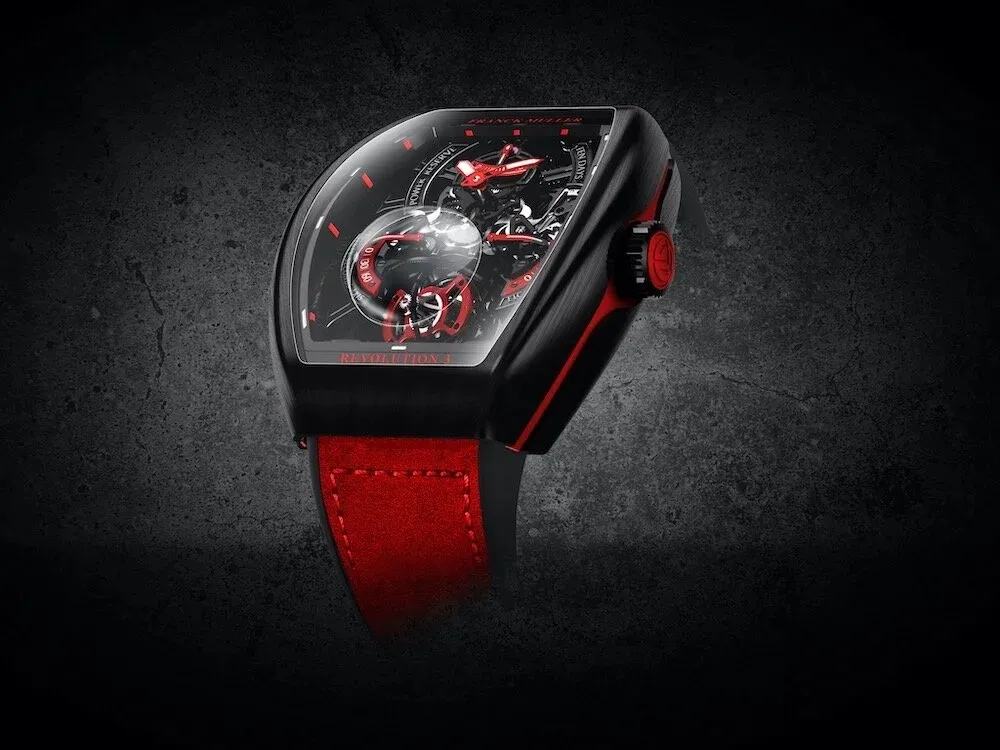
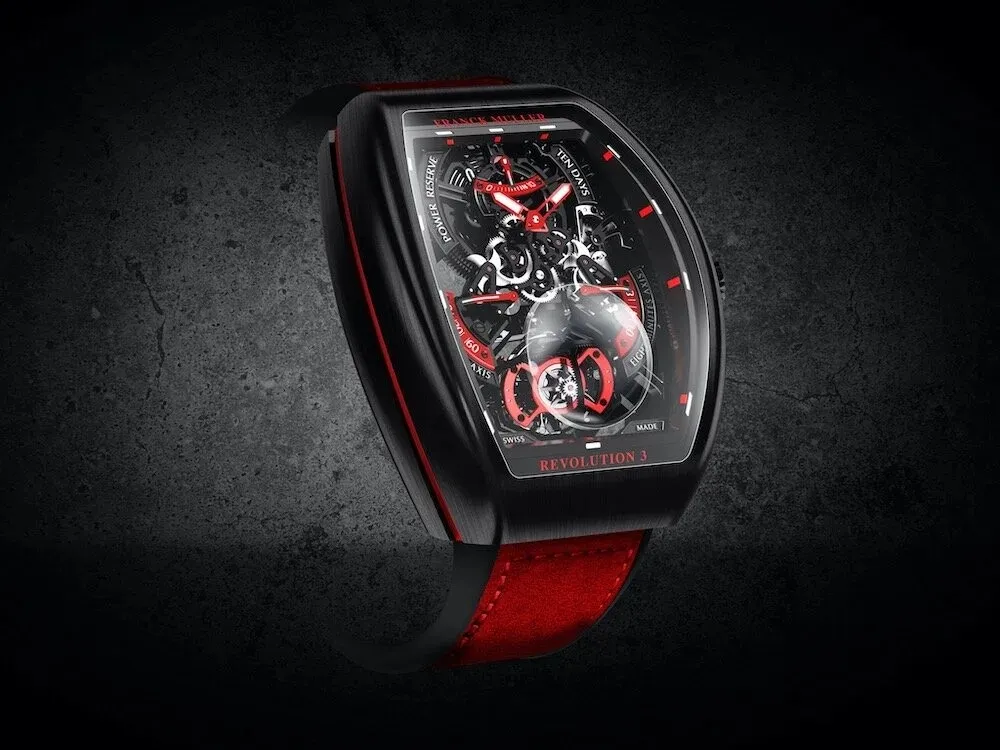
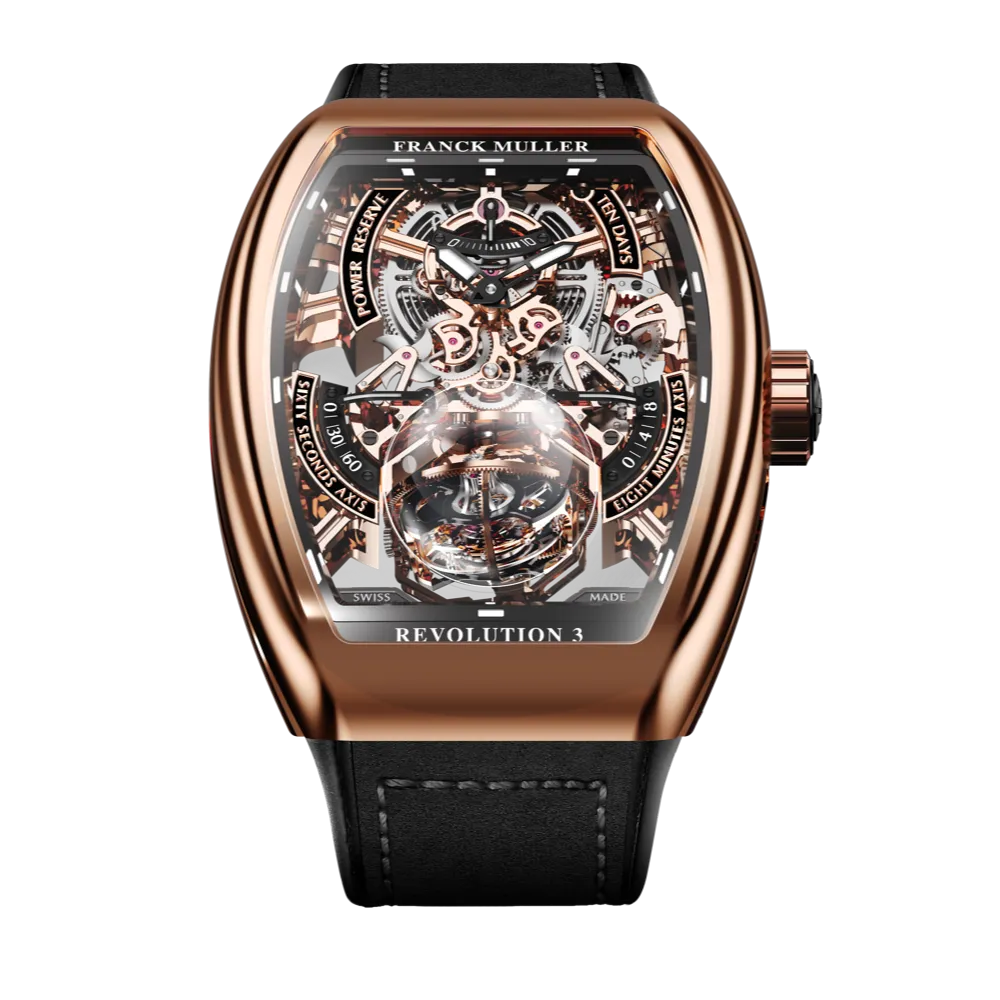
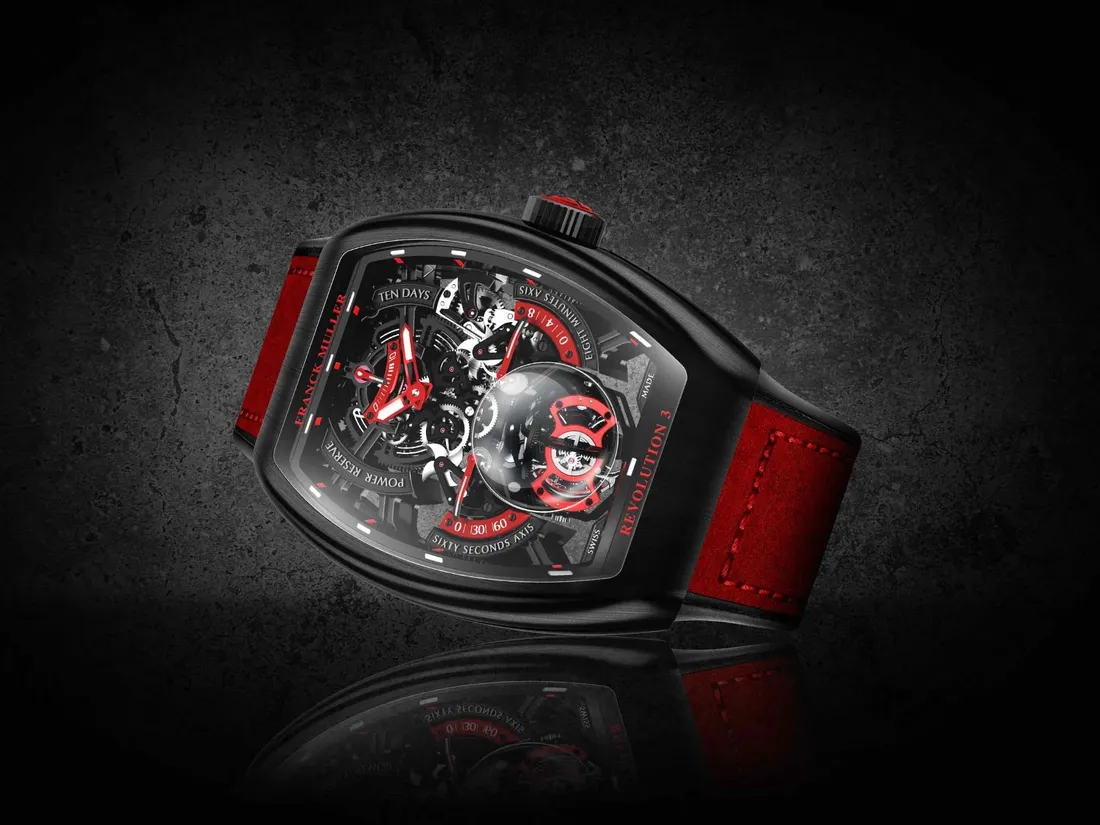
"This is the three-dimensional answer to those hollows of error. The Franck Muller Vanguard Revolution 3 Skeleton."
Edward picked up the loupe and focused into the watch. "My God. Look at this microscopic architecture. Explain it to me."
"First let us understand what it is trying to solve," said Theo. "Breguet patented the classic tourbillon in 1801. The idea is simple: put the balance and the escapement inside a carriage and turn the carriage once a minute. The centre of mass of the balance then visits every direction within a minute, and the error gravity makes in one direction is cancelled by the error it makes in the other. The error is not eliminated; it is averaged."
"And that is not enough."
"Not enough, because a single-axis carriage only averages the errors within its own plane of rotation. In a pocket watch that was sufficient; a pocket watch stands upright in a waistcoat pocket. A wristwatch does not. At night it lies on the bedside table with the dial facing up, and in that position the carriage holds the balance in the same orientation the whole time. So a single-axis tourbillon does nothing at all in the position where the watch spends a third of its day. Breguet’s solution fails in a way of wearing that Breguet never knew."
"And what does the Revolution 3 do?"
"It nests three carriages. The innermost turns the balance about its own centre once every sixty seconds; that is the classic tourbillon itself. The middle one takes that entire first carriage and turns it on another axis once every eight minutes. The outer one embraces both and turns them through three hundred and sixty degrees in an hour."
"The result?"
"Within a window of one hour, the centre of mass of the balance passes through very nearly every point on the surface of a sphere. A single-axis carriage draws a circle; a triple-axis carriage sweeps a sphere. The vector of gravity is now averaged not in a plane but across the three dimensions of space."
"Give me an image."
"The compass on a ship in a storm. The compass sits inside a mounting of nested rings, a gimbal. Whichever way the ship rolls, the rings turn and hold the compass level. The logic here is identical and the purpose is the opposite. A gimbal turns in order to hold the compass still; this carriage turns in order to leave the balance still in no direction at all. One swallows motion, the other distributes it."
"And what does it cost?"
"Heavily," said Theo. "The escapement of a watch normally drives only the balance. Here it has to turn three separate carriages as well. And these are not masses that stop and start; they are masses in constant rotation, eating energy constantly. Each carriage also has a weight of its own, and if that weight is not balanced the carriage itself becomes a source of gravity error. So all three carriages have to be poised individually, to within microns. Build a machine to solve gravity and, poised wrongly, it manufactures a new gravity problem."
"And where does the energy come from?"
"Two places. The first is removing mass. The plates and bridges have been skeletonised, and the hollowing here is not a decorative choice but a requirement. Every gram in a turning carriage is a load the escapement has to carry every second. Think of the hollow steel skeleton of the Eiffel Tower instead of a vast stone building; or the bones of a bird, honeycombed inside yet unbreakable. People assume that removing material removes strength. Removed from the right place, the weight goes and the strength stays."
"And the second?"
"A bigger tank. There is not one barrel inside but two, and together they give two hundred and forty hours, a full ten days. Forty-eight hours is the standard in a normal watch; this is five times that. The reason is not luxury but arithmetic: the bill for turning three carriages has to be paid."
"The frequency?"
"Eighteen thousand vibrations an hour, two and a half oscillations a second, the balance pushed five times a second. Slow by modern standards, and deliberately so. The faster a balance swings the more energy it spends per second. Drop the frequency and the budget you save goes straight to the carriages. In this watch, speed has been converted into endurance."
"What are those two small arcs on the dial?"
"My favourite detail," said Theo. "They do not show the time. They show the rotation of the tourbillon itself. The arc on the right is marked eight minutes axis and tells you where the middle carriage is in its eight-minute turn. The arc on the left says sixty seconds axis and follows the minute turn of the inner carriage. Both are retrograde: when the hand reaches the end of the arc a spring throws it back to the start in a fraction of a second. Like the rev counter of a sports car dropping to zero the moment it touches the red."
"How does it fly back?"
"With a part called a snail cam. A spiral ramp that climbs and ends in a sheer cliff. A little finger resting on the ramp creeps up as the cam turns and drives the hand forward; the instant it reaches the edge of the cliff the ground runs out beneath it and a tensioned spring snatches it to the bottom. And consider this: these two indications do not tell you how accurately the watch is running. They tell you how hard it is working. Somewhere on the dial you can read the watch’s own effort."
"And there is an arc above them."
"That is the power reserve. Power reserve on the left, ten days on the right. The ten-day tank counting itself down at the top of the dial."
"The case?"
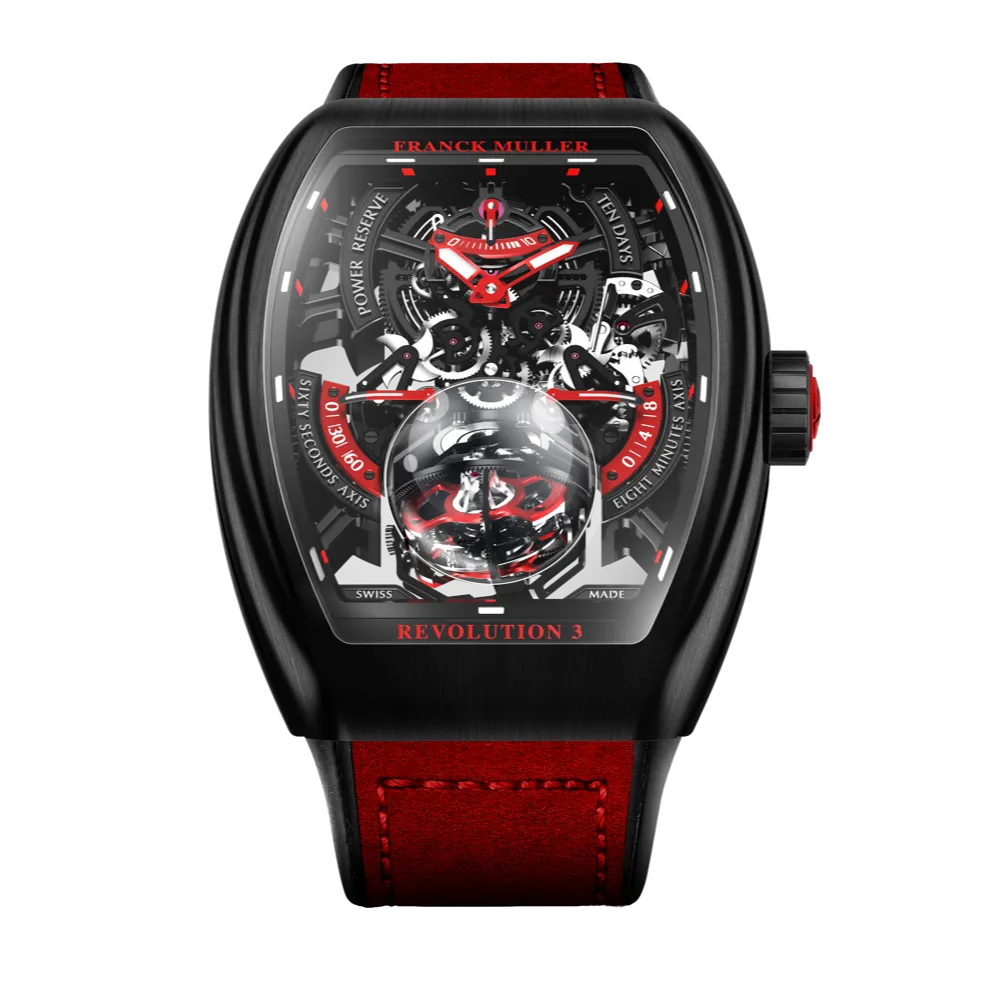
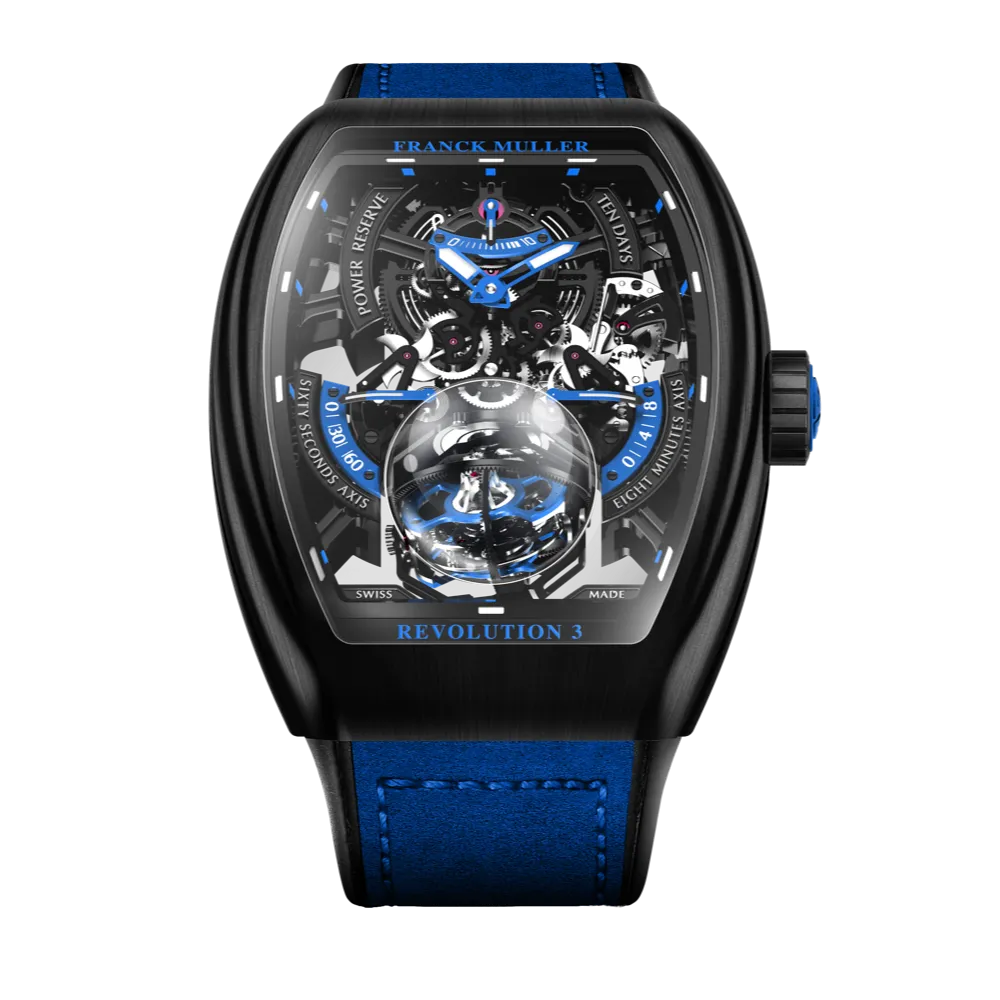
"A Vanguard tonneau, fifty-five point nine by forty-six millimetres. In the launch version the material is grade 2 titanium under a black PVD coating. Grade 2 is unalloyed titanium, commercially pure; it is softer than grade 5 and takes shape more easily, which matters for a case of this size and this curvature. And the case is domed in both directions so that it sits on the wrist."
"And that dome?"
"Both crystals, front and back, are sapphire and both are curved spherically. That is harder than it looks. Sapphire is a nine on the Mohs scale, the hardest material after diamond; you can only cut, grind and polish it with diamond tooling. Machining a flat sapphire is already expensive; a dome whose concave and convex faces are held true at once is another matter entirely. But it was compulsory: the carriage is too tall to fit under a flat crystal."
"How many are made?"
"It was not announced as a numbered series, but production is microscopic. The price is above half a million dollars, and the watch is delivered with a five-year warranty on the tourbillon, in a special box whose lid opens by motor. And enjoy this detail: the strap is red Alcantara, and the colour is not incidental. It matches the anodised red of the aluminium indicators inside the movement."
Edward put down the loupe and looked out at the endless sea of Koh Samui.
"Maxwell drew the speed of light out of the electric and magnetic fabric of space. For the sake of that constant, Einstein had to accept that space and time bend. And Franck Muller, in the middle of that bent spacetime, brought gravity to heel with a three-dimensional mechanical hurricane."
"Let me correct one thing," said Theo, putting the watch back on his wrist. "It did not bring gravity to heel. Gravity is still there, still pulling on the balance, and it does not pause for an instant. The only thing these three carriages do is keep changing the direction of the pull. They do not eliminate the error; they refuse to let it accumulate anywhere. This watch is not telling you the time. It is telling you how not to fight a law."
format_quote"A single-axis tourbillon does nothing at all in the position where a wristwatch spends a third of its day."
format_quote"They do not eliminate the error; they refuse to let it accumulate anywhere."
Hasan Bekmezci