What divides time inside a mechanical watch has been the same for three hundred years. There is a balance wheel; the wheel is attached to a spiral hairspring; the spring pulls the wheel back, the wheel carries past on its own inertia, and a regular going and returning is born. In a mechanical watch that swing opens to as much as three hundred and twenty degrees. The balance is flung almost a full turn, stops, and comes back.
The arrangement worked so well that nobody seriously tried to replace it. In 2012 the Aiguille d’Or, the highest award of the Grand Prix d’Horlogerie de Genève, went to a watch that did exactly that.
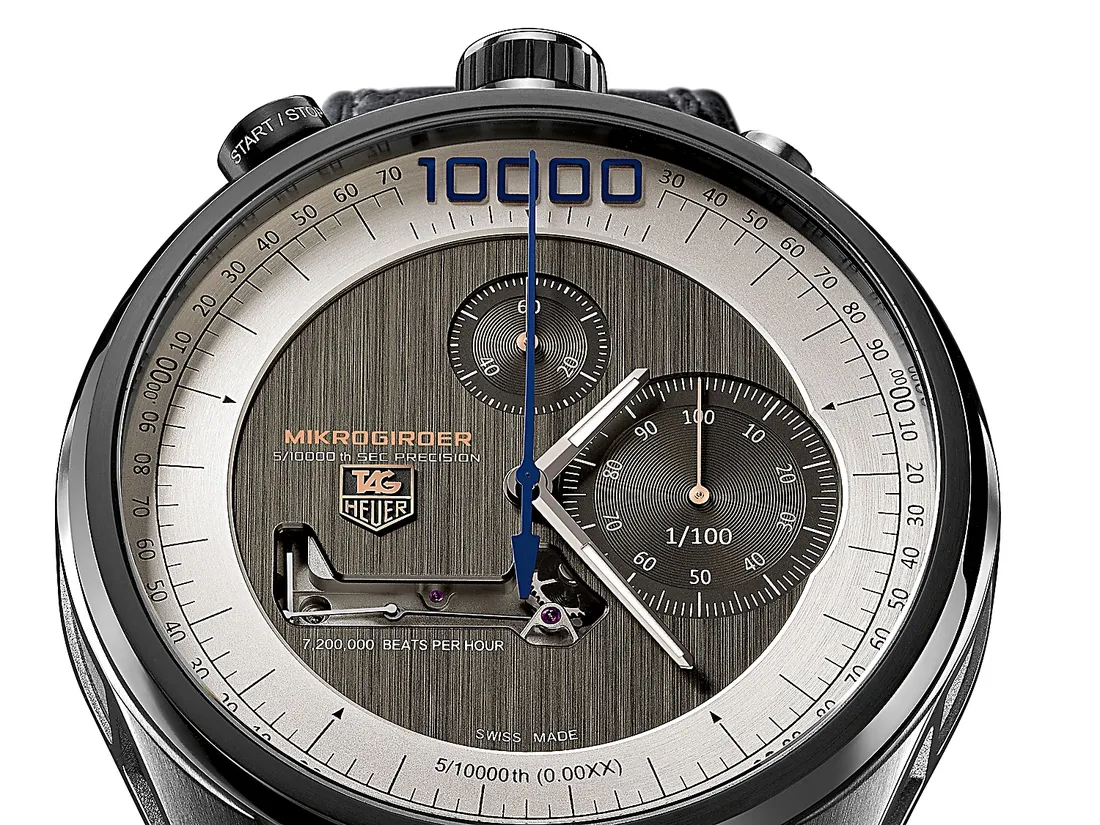
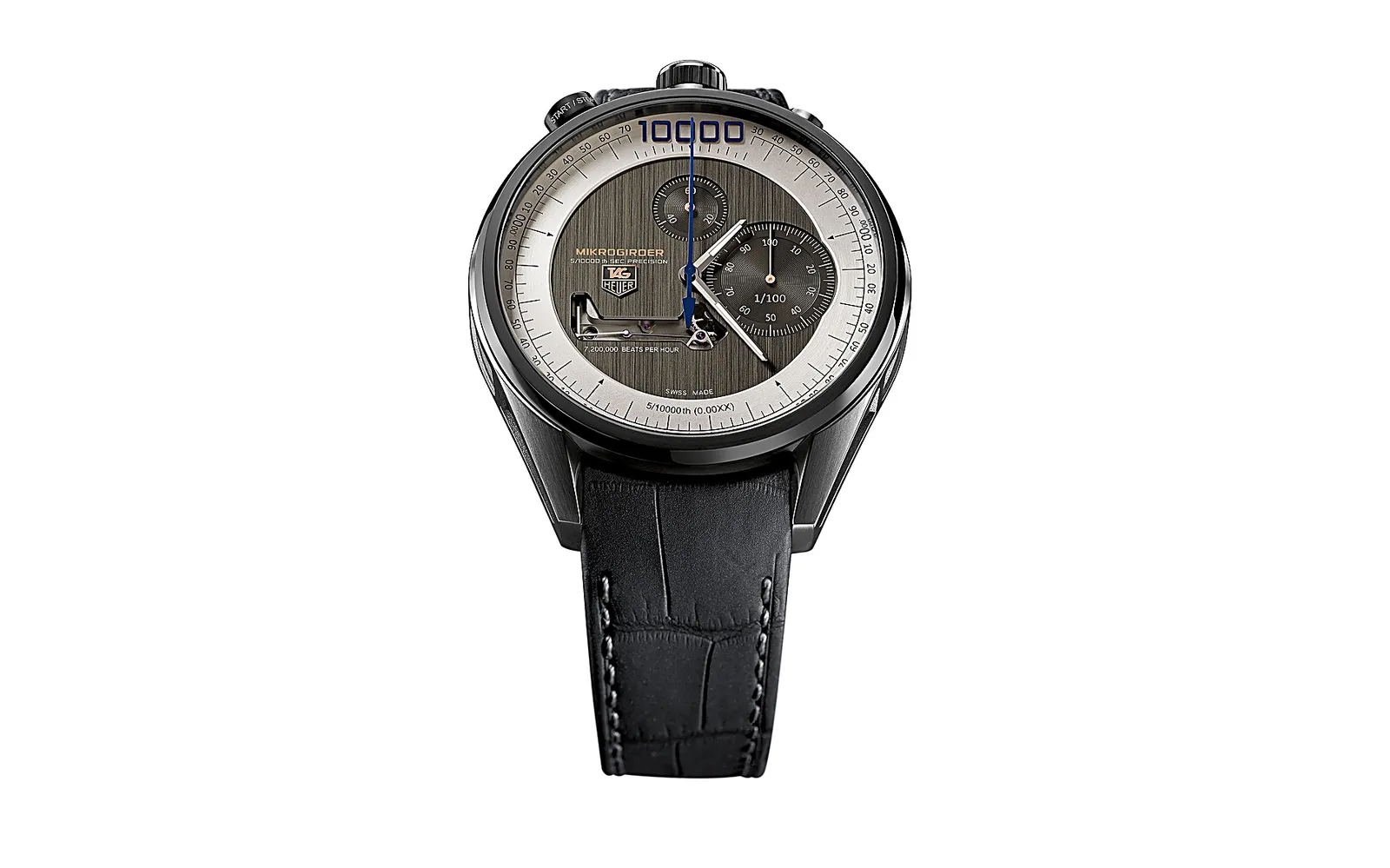
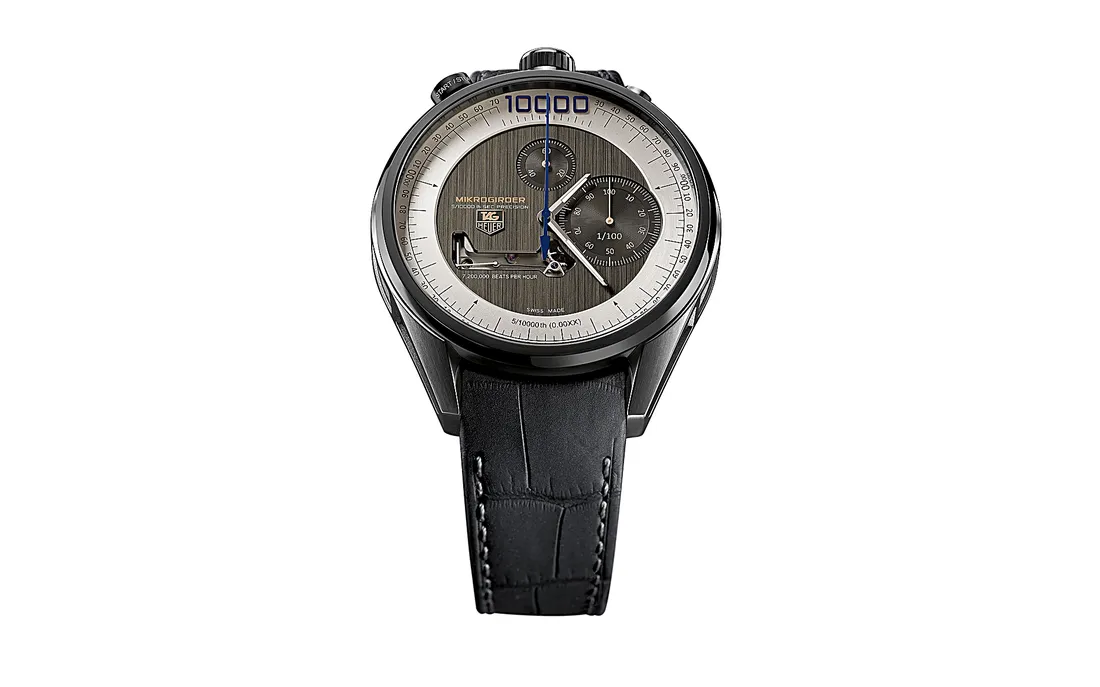
Developed in TAG Heuer’s research laboratory at La Chaux-de-Fonds, the Mikrogirder does away with the spiral hairspring altogether. In its place is a linear oscillator: a coupling blade and an excitatory blade working together. A spiral spring stores energy by winding and unwinding; a blade stores it by bending. The difference sounds small. Its consequences are not.
The blade vibrates through a very small angle. Against the three hundred and twenty degrees of a classic balance, the movement here is too narrow to see. The first consequence is speed. The natural frequency of a clamped blade rises very steeply as the blade gets shorter, and a short, stiff blade can reach frequencies a balance wheel will never touch. The Mikrogirder makes a thousand complete oscillations a second, which is 7,200,000 vibrations an hour. That is exactly two hundred and fifty times a classic chronograph running at four oscillations a second.
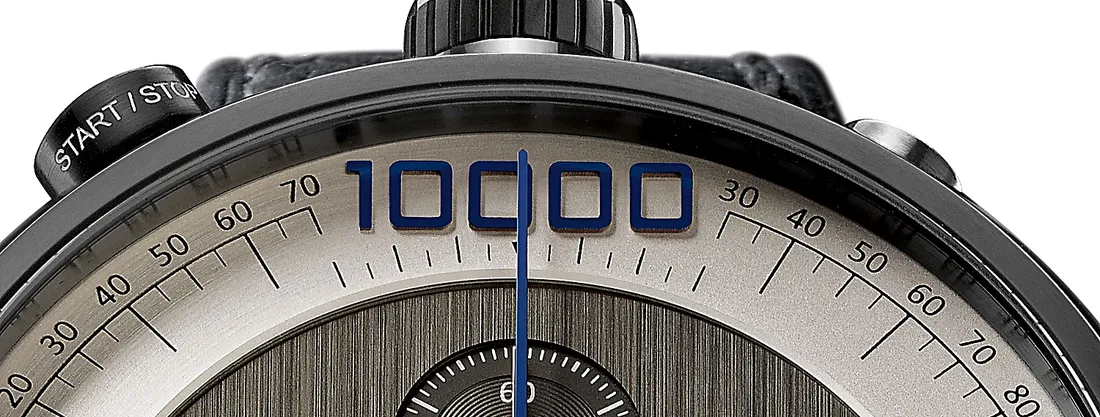
To see what the figure means it is enough to do the division. A system taking two thousand steps a second cuts time into two-thousandths, which is five ten-thousandths of a second. That is precisely the number printed on the dial.
Making the precision concrete is easy too. A runner moving at thirty-six kilometres an hour covers ten metres a second. In five ten-thousandths of a second he travels five millimetres. This chronograph, in other words, divides finely enough to separate two runners who cross the line five millimetres apart.
format_quote"An instrument taking two thousand steps a second can separate two runners who reach the line five millimetres apart."
Hasan Bekmezci
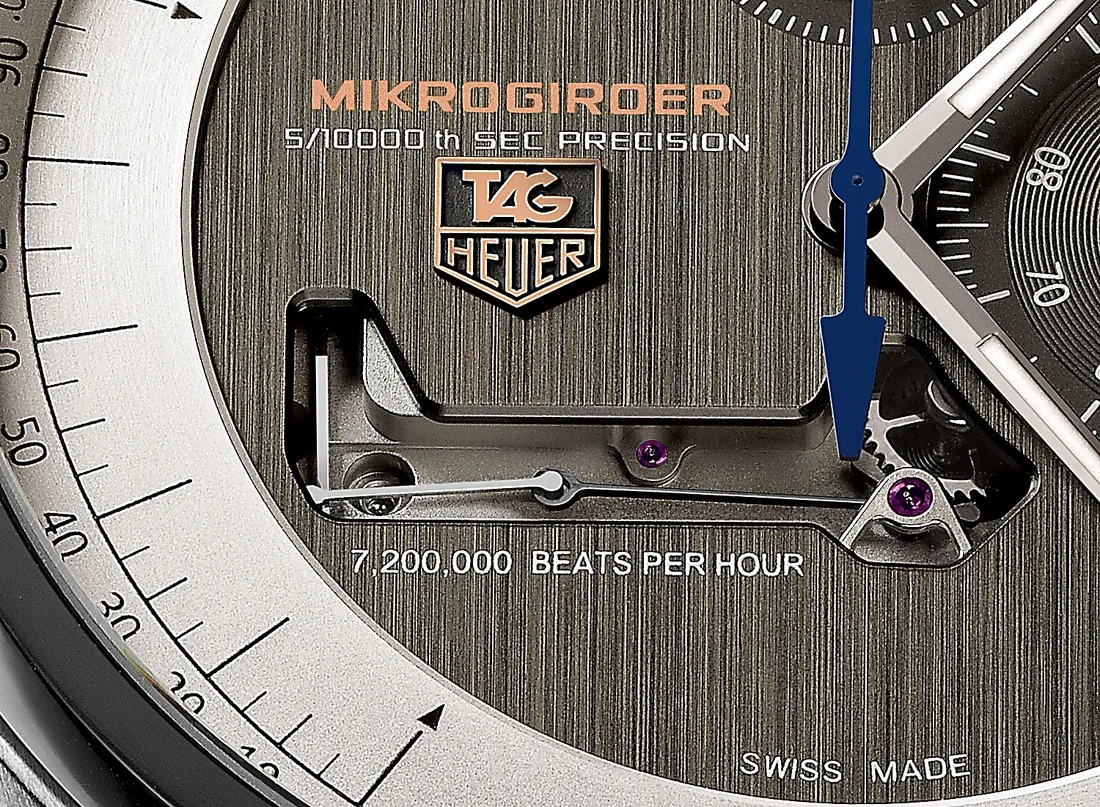
More interesting than the speed is the second gain the narrow angle brings. A classic balance is a mass with weight, flung along an arc of three hundred and twenty degrees. Gravity acts on that mass, and its effect changes with the position of the watch; this is the source of what watchmakers call positional error. It is exactly why the tourbillon was invented two centuries ago.
A vibrating blade has no large mass being flung anywhere. The brand states it plainly in its own text: in a spiral hairspring system the effect of gravity due to mass is a major issue, and with the Mikrogirder the problem no longer even exists. Alongside that, the loss of amplitude disappears. A balance loses amplitude as the mainspring empties, and the rate drifts with it; a blade working through a narrow angle has no amplitude to lose.
The third gain is flexibility. In the brand’s words, this architecture allows the frequency to be modulated across a very wide spectrum without overburdening the power supply. On a classic balance, raising the frequency raises energy consumption directly; here the link is not nearly so tight.
format_quote"A balance is flung; a blade trembles. What is flung has weight. What trembles has almost none."
Hasan Bekmezci
Picture two people hearing the idea for the first time: a régleur who has spent his life adjusting hairsprings, and the engineer who designed the blade.
The régleur defends the habits of his hands. My work is to move the index by a hair, to correct the last coil of a spring, to poise a balance. What am I supposed to adjust on your blade?
The engineer’s answer changes the nature of the job. There is nothing to adjust, because there is nothing to go wrong. A spiral spring tires with time, wanders off its centre, reacts to magnetic fields. A blade bends and straightens, and its natural frequency follows from its geometry; change nothing about the geometry and the frequency does not change either.
The régleur asks the real question. And how long does a piece of metal last, bending a thousand times a second?
Here the engineer has to be honest. The answer lies in the fatigue limit of the material, and that limit is respected by keeping the amplitude small. Because the blade bends so little, the stress gathered on each cycle stays very low. Speed does not come free. Its price is keeping the swing too short to see.
format_quote"No speed comes free. The price this mechanism pays is keeping its own swing too small for the eye to see."
Hasan Bekmezci
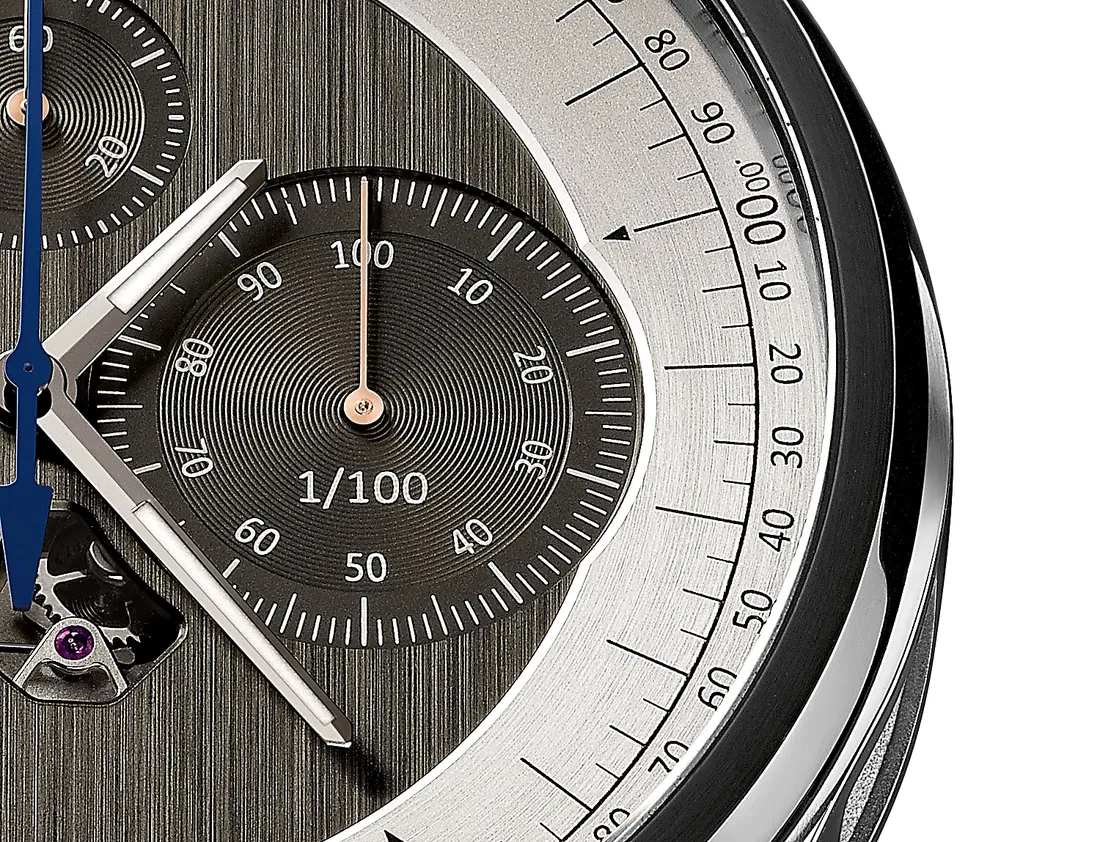
The rest of the watch is built to serve that heart. The case is steel and forty-five millimetres across, water resistant to fifty metres. The power reserve is forty-two hours. The functions are hours, minutes, seconds and chronograph. The model belongs to the Carrera family and was made as a single piece; the price was 150,000 Swiss francs before tax.
That it exists in a single example tells you what this watch is. The Mikrogirder is not a collection piece but a thesis. In the brand’s own words, it is the fastest mechanical regulator ever crafted and tested. When the Geneva jury gave it the Aiguille d’Or in 2012, it was not rewarding a product but a question: is a three-hundred-year-old solution really the only one?
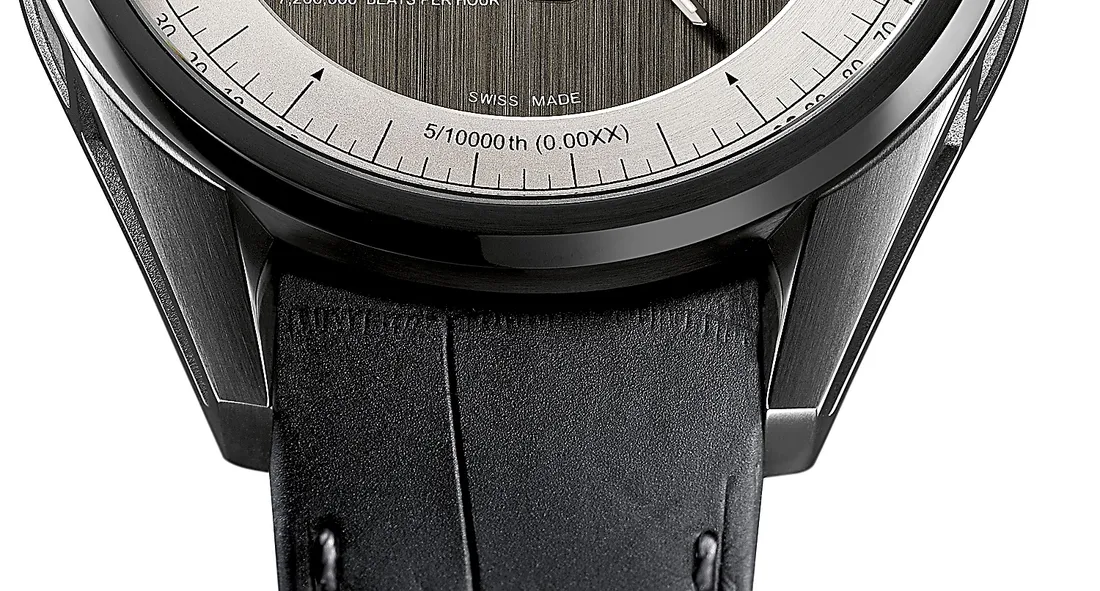
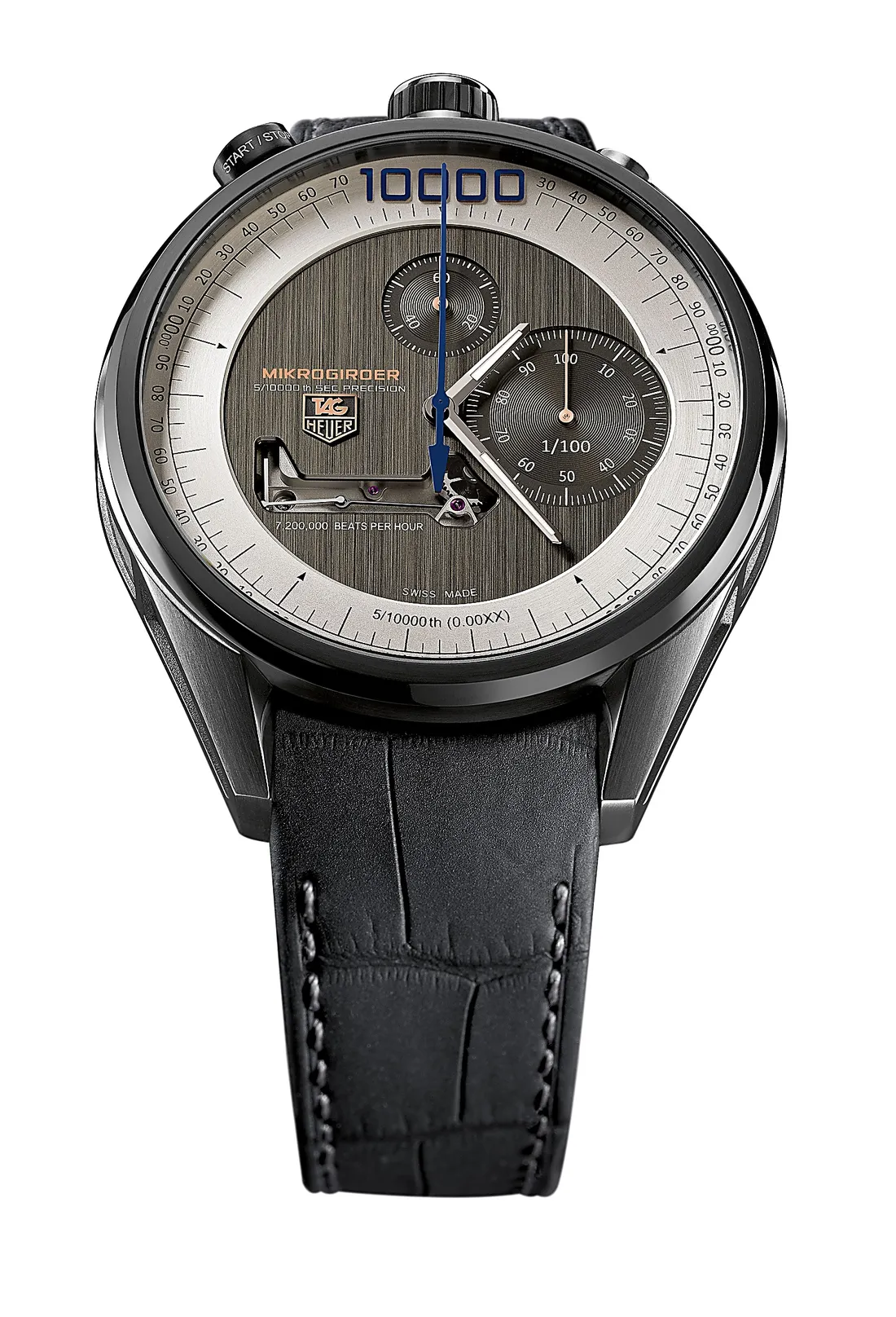
Look at this watch long enough and a thought arrives. In measuring time, we have moved steadily towards finer divisions. First there was the day, then the hour, then the minute, then the second. The twentieth century cut the second into a hundred, then into a thousand. Now we hold a mechanical instrument that can separate five ten-thousandths of one.
And yet the finer division does not lengthen the moment being lived. The runner took exactly as long to cross the line as he took; we simply looked with a finer ruler. As the instrument sharpens, the thing measured does not change. Only our attention to it grows.
Perhaps that is what this watch is really saying. We cannot slow time, or stretch it, or take it back. The only thing we can do is look at it more carefully. Not even a mechanism that cuts the second into two thousand pieces alters that; it only shows how far attention can be pushed. Time itself never passes into the hands of any instrument that measures it.