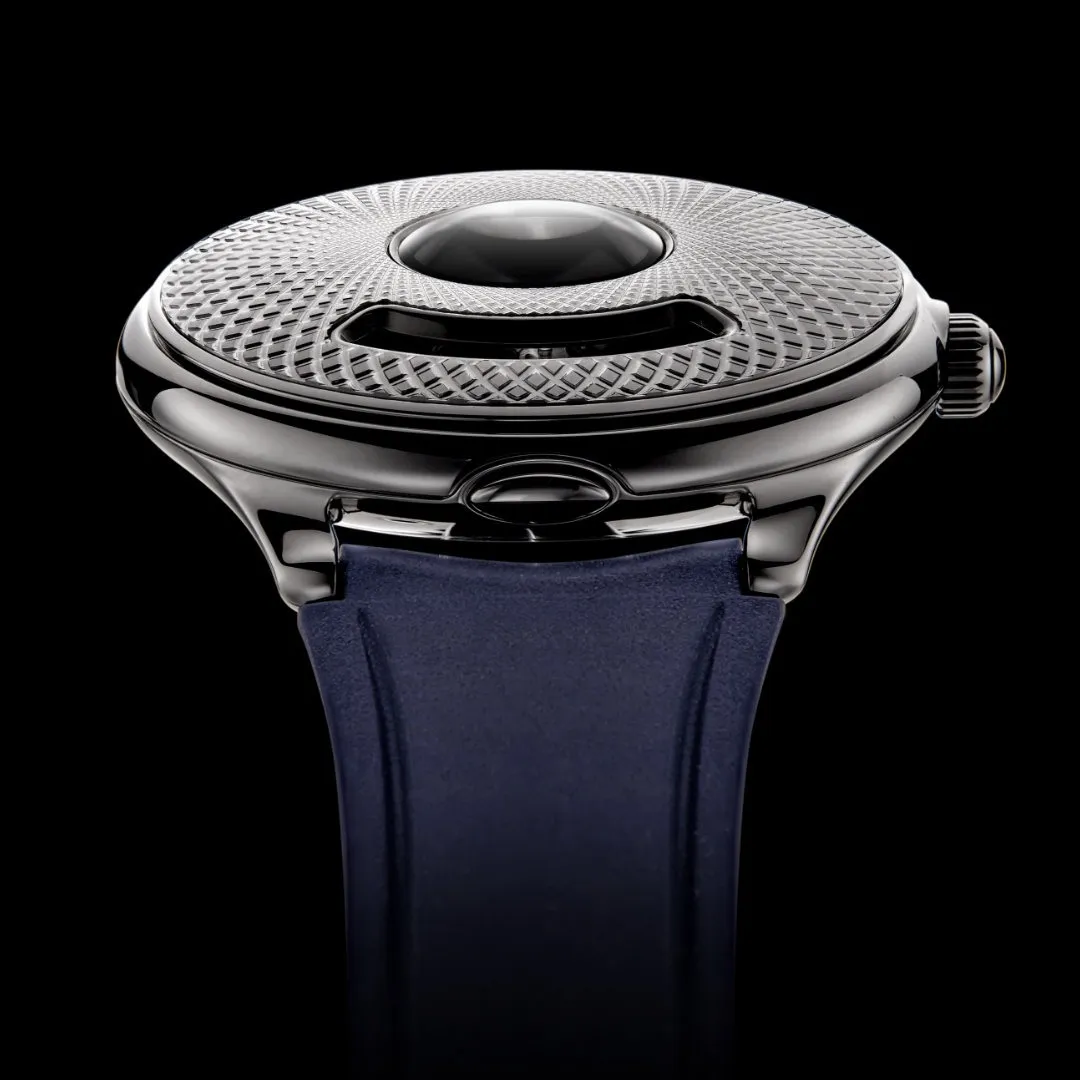
The library closed at ten, but one of the lamps in the reading room is still on. Two people are sitting at the head of the long table: the philosopher of science Prof Adèle Marchand and the theoretical physicist Prof Yusuf Karahan. Between them there is only a watch.
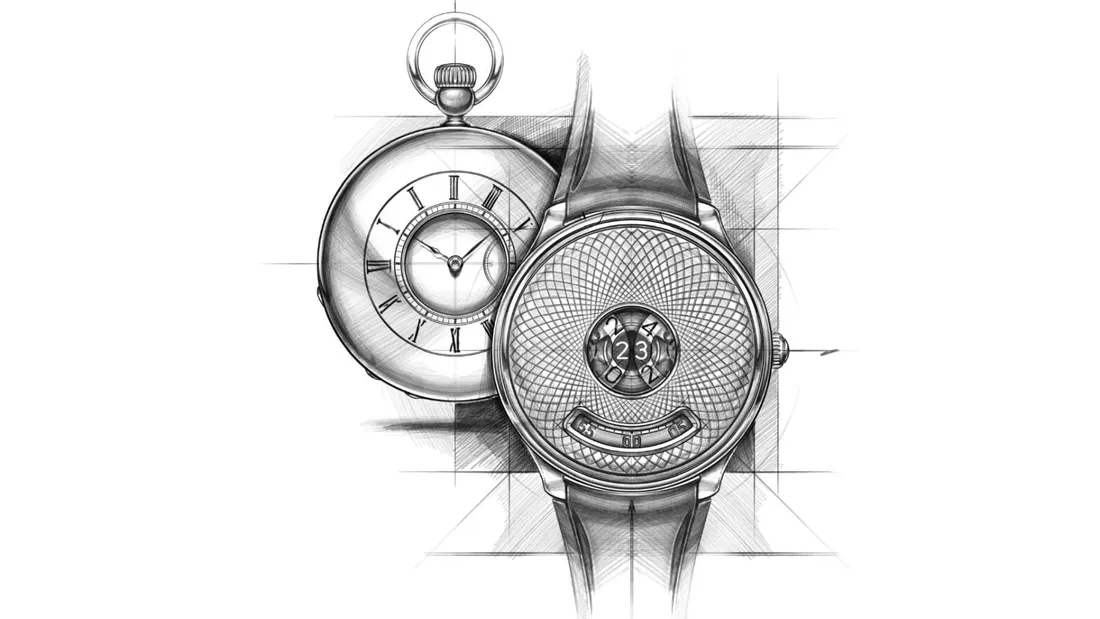
"This has no hour hand," said Yusuf. "Two digits sit in a window, and when the hour is complete those two digits change in an instant. The minutes, meanwhile, slide continuously around the edge. So half the dial leaps and half of it flows."
Adèle smiled. "They have put a two-thousand-four-hundred-year-old argument onto a dial. And they have made both sides right, which is the one thing philosophy cannot do."
Without a Mind to Count There Is No Number
"In the fourth book of the Physics, Aristotle defines time like this," said Adèle. "Time is the number of movement in respect of before and after. Notice: not movement, but the number of movement. If time were movement itself, every movement would create its own time and we could not speak of a shared time at all. Aristotle places time in the countable aspect of movement."
"And then he asks a strange question."
"He does. He asks whether there could be number if there were no mind to count. Because number is a relation between the counted and the counter. With nobody present, movement continues, but does that movement have a number? Aristotle leaves it as a question; it is still sitting there today."
Yusuf picked up the watch and looked at the digits under the loupe-shaped aperture. "This watch gives that question an answer," he said. "The minute disc flows without stopping; it flows whether anyone is looking or not. But the hour only appears as a number in a window. Movement is what is continuous, number is what is discrete."
"Kant goes further," said Yusuf. "For him time is not an object found outside; it is the form of inner sense. It is not drawn from experience, it is the condition of experience. You cannot think a thing without time, because thinking is itself sequential. We do not find time in the universe; we place the universe into time."
"As a physicist, do you agree?"
"Partly. Almost none of our equations care about the direction of time; they work as well backwards as forwards. Run a planet’s orbit in reverse and no law is broken. The only thing that gives a direction is entropy, a system moving towards its more probable states. Run the film of a breaking glass backwards and no law is violated, only probability is. Shards spontaneously reassembling into a glass is not forbidden; it is simply so improbable that the age of the universe is not enough."
"So the arrow of time is a statistic, not a law."
"And that supports Kant in a strange way. If the laws of physics do not supply the difference between past and future, then we are the ones supplying it."
The Flying Arrow and the Jumping Hour
Adèle laid a pencil on the table and pointed its tip at the minute disc.
"Zeno’s arrow," she said. "A flying arrow occupies a definite place in space at every instant. And at the instant it occupies a definite place, it is motionless. If it is motionless at every instant, then the arrow never moves at all. That paradox held for two thousand years, because its resolution did not lie in geometry but in a calculus written in the language of infinitesimals."
"It is not entirely resolved even today," said Yusuf. "We do not know whether time is discrete. There is a scale at which known physics loses its meaning: an interval about ten to the minus forty-third of a second. Time may have a smallest step there. If it does, the universe itself works like this watch: what appears from the outside to flow is in fact made of very small leaps."
Adèle looked at the watch. "And your dial confesses it. The minute flows because our experience does. The hour jumps because measurement does."
format_quote"Movement is what is continuous, number is what is discrete."
"What is this watch’s own story?" asked Adèle.
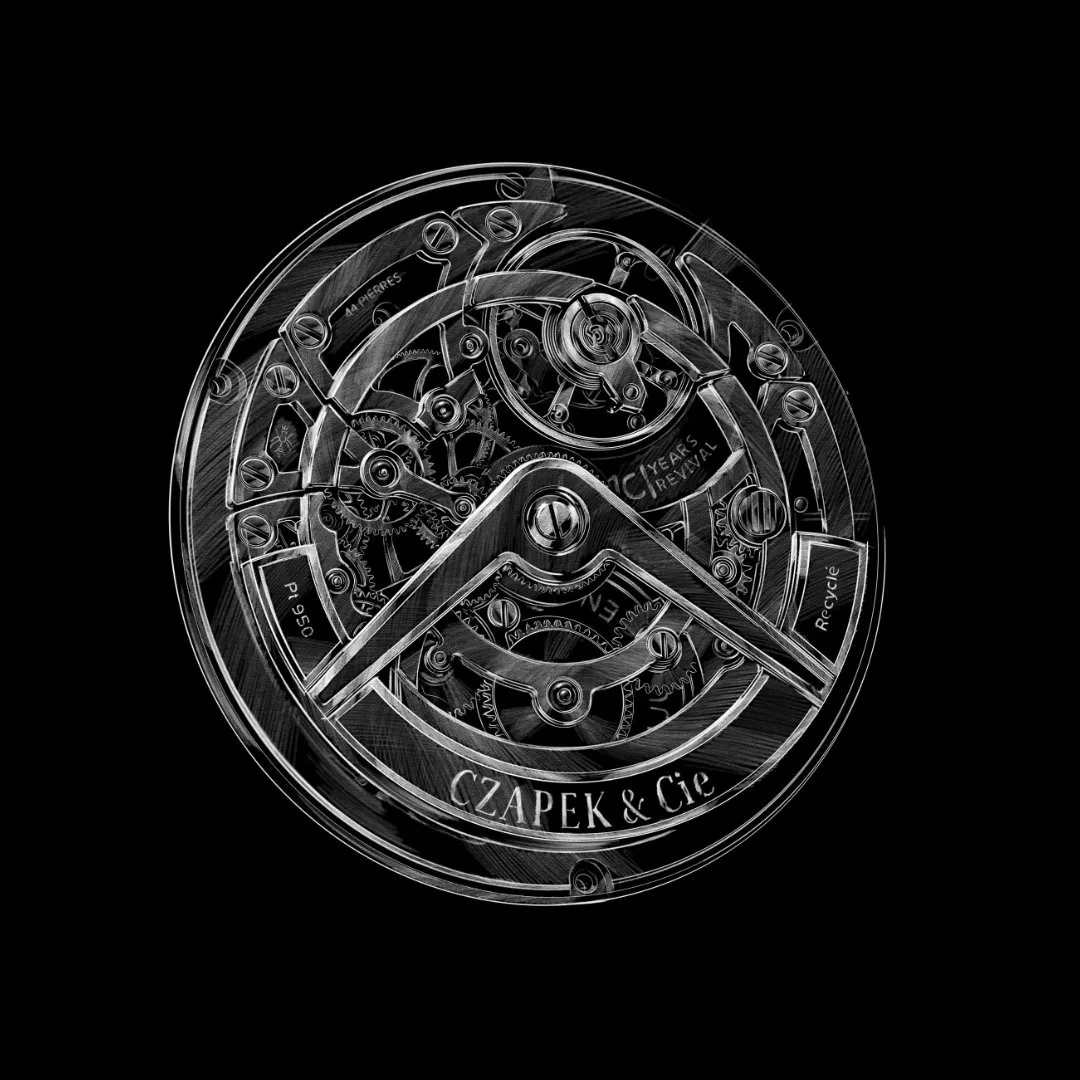
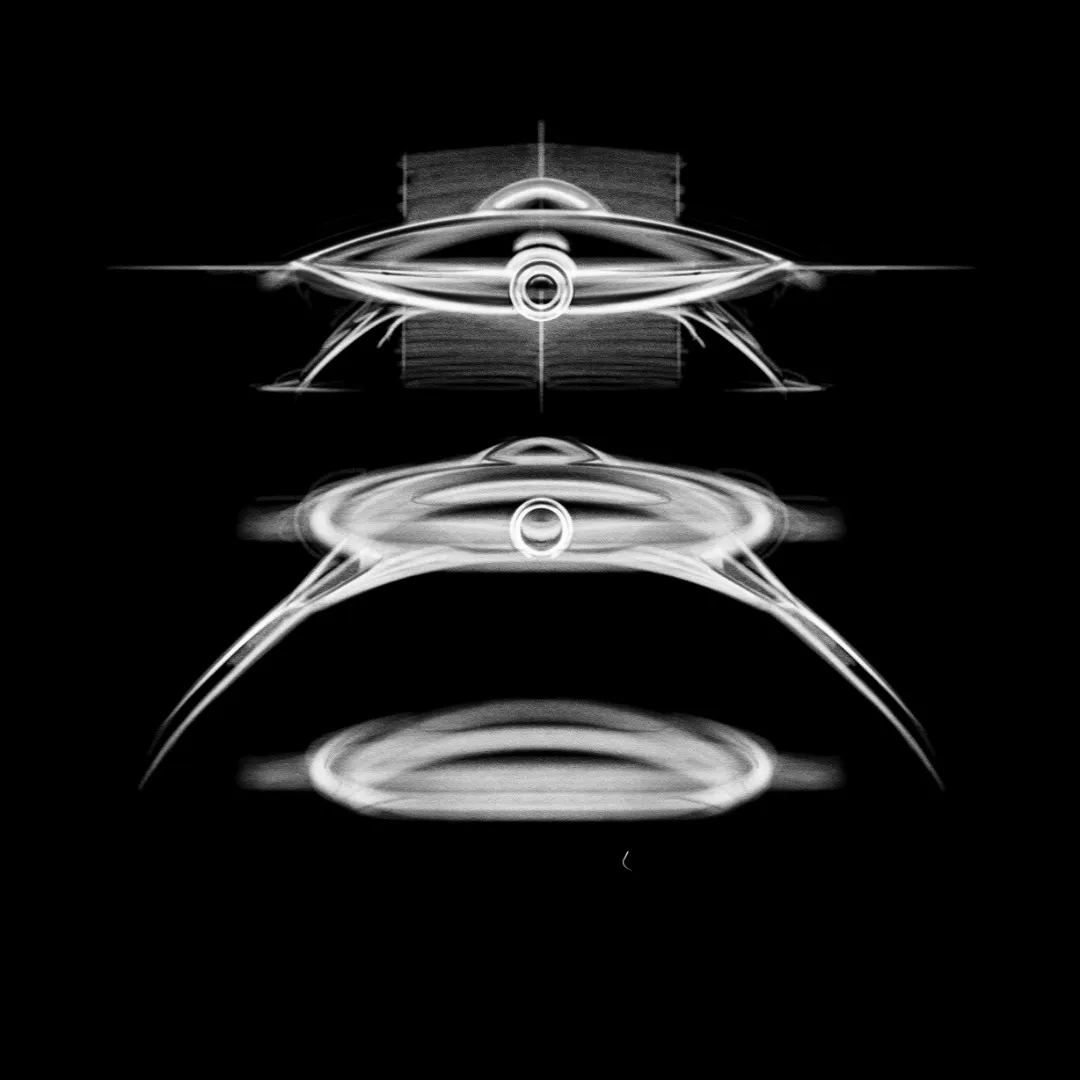
"Czapek," said Yusuf. "The name comes from François Czapek, who worked in Geneva in the nineteenth century; he was Patek’s partner for a time, then their paths separated and his name was all but forgotten. The brand was refounded in 2015 and this watch was made for the tenth year. Calibre 10.1; self-winding, forty-four jewels, twenty-eight thousand eight hundred vibrations an hour, sixty hours of power reserve. Thirty millimetres across and six point one three thick. The balance is the variable-inertia type: four gold blocks are used for regulation, so you correct the rate by distributing mass rather than by moving an index."
"And the mechanism that jumps the hour?"
"Patent pending. It jumps the hour on two digits across twenty-four hours, so at four in the afternoon the window reads sixteen. The classic problem of a jumping hour is this: turning a disc in an instant needs stored energy, and that energy is pulled out of the movement every hour. A badly designed jumping hour disturbs the rate at the moment it leaps. Here the minute disc turns continuously, so the load is spread; the jump is fed from a single source."
"The cover?"
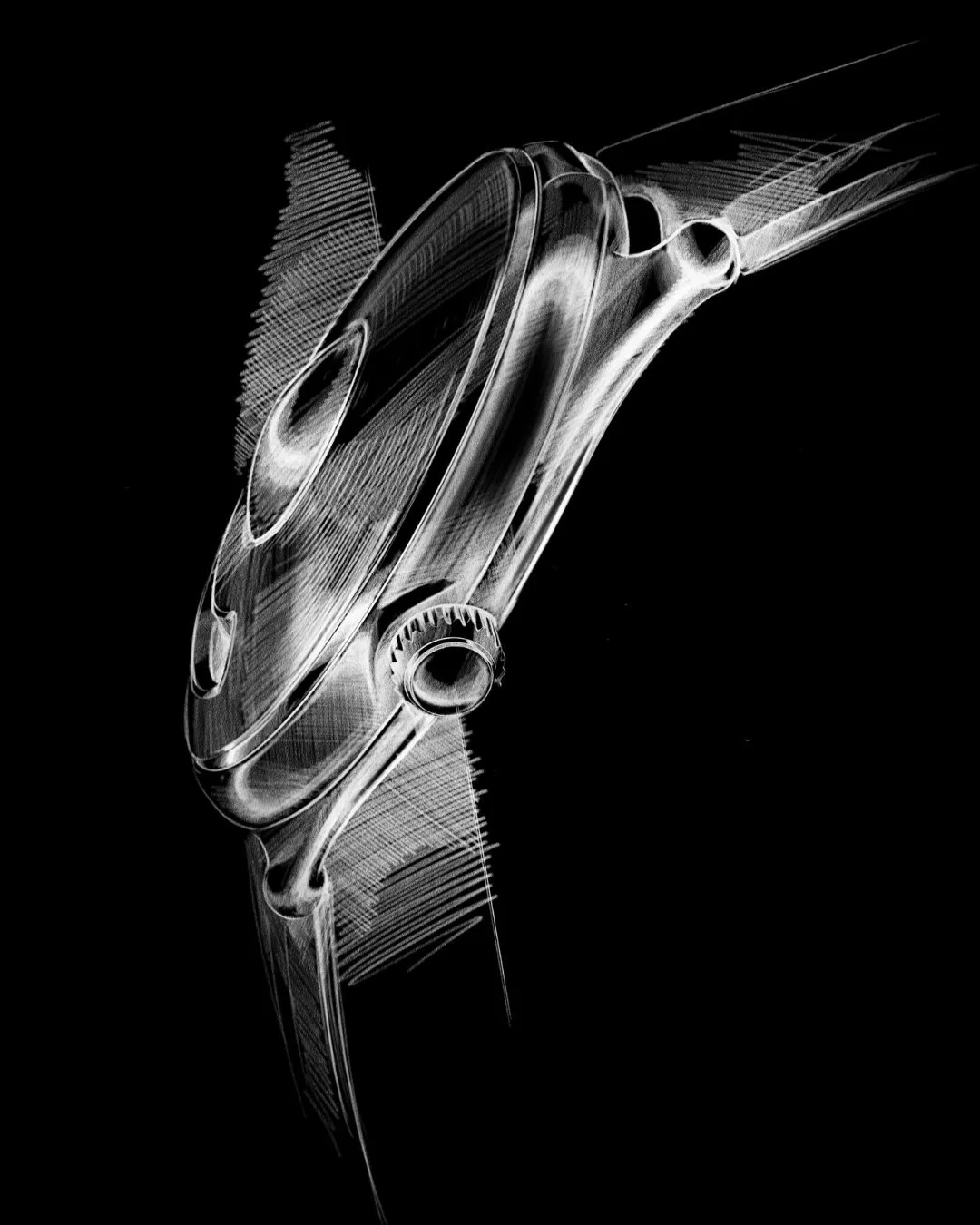
"A half-hunter. On nineteenth-century pocket watches a small window was cut into the middle of the cover so that you could read the time without lifting it. Here that window is shaped like a loupe, and it both hides and shows the mechanism beneath. The top of the cover is guillochéd by hand. The case is forty point five millimetres; a hundred in steel and thirty in yellow gold, at forty-two and sixty-four thousand Swiss francs."
The Man in the Well
Adèle took a thin book from the shelf and set it on the table.
"In A Confession, Tolstoy tells a story," she said. "A traveller crossing the steppe is set upon by a raging beast, and finding nowhere to run he throws himself into a dry well. As he falls he sees a dragon waiting at the bottom with open jaws. He catches hold of a thin twig growing from a crack in the wall and hangs there. His arms tire. And at that moment two mice, one white and one black, are gnawing at the root of the twig with unfailing regularity. On the leaves of that twig there are a few drops of honey; the traveller stretches his neck and licks them with his tongue."
"And he names his own share."
"He does. His two drops of honey were his family and his writing. But he admits he can no longer taste that honey, because he cannot take his eyes off the dragon and the two mice. Tolstoy wrote that story at fifty-one, in the middle of fame and land, in a winter when he had begun hiding a length of cord from himself."
Yusuf picked up the watch. "This watch makes those two mice visible," he said. "When the number changes, you notice that something has ended. A hand that turns continuously never says that, because it never ends anywhere. The leap is awareness itself."
"One of the old thinkers of the East looks at this from somewhere else," said Adèle. "For him, passing away is not annihilation. At every instant the image on the stage is renewed; the mirror changes, but what appears in the mirror is not lost. The cause of our sorrow is that we mistake the mirror for the image itself. That is not an answer to Tolstoy’s fear; it is a proposal to change the fear’s address. Aristotle describes the number, Kant the mind, Tolstoy the fear; he describes the direction of the gaze."
format_quote"When the number changes you notice that something has ended. A hand that turns continuously never says that, because it never ends anywhere."
"There is one more thing," said Yusuf. "Relativity says that whether two events happen at the same time depends on the observer. Two events simultaneous for me are not simultaneous for someone passing me at speed. That means the notion of now is not universal. Some physicists go from there to a picture of the universe in which past, present and future all exist equally."
"And you?"
"I wind my watch every morning," said Yusuf. "That is the gesture of somebody who believes the future has not happened yet."
Adèle put the book back on the shelf. "I should write that down," she said. "Aristotle counted time as the number of motion, Kant as a frame of the mind, Tolstoy as the thing gnawing at the root of the branch. None of the three is measuring the same object. A watch is not a claim about the universe; it is a confession about a human being. And yours repeats the same confession every morning."
format_quote"A watch is not a claim about the universe; it is a confession about a human being."
Hasan Bekmezci