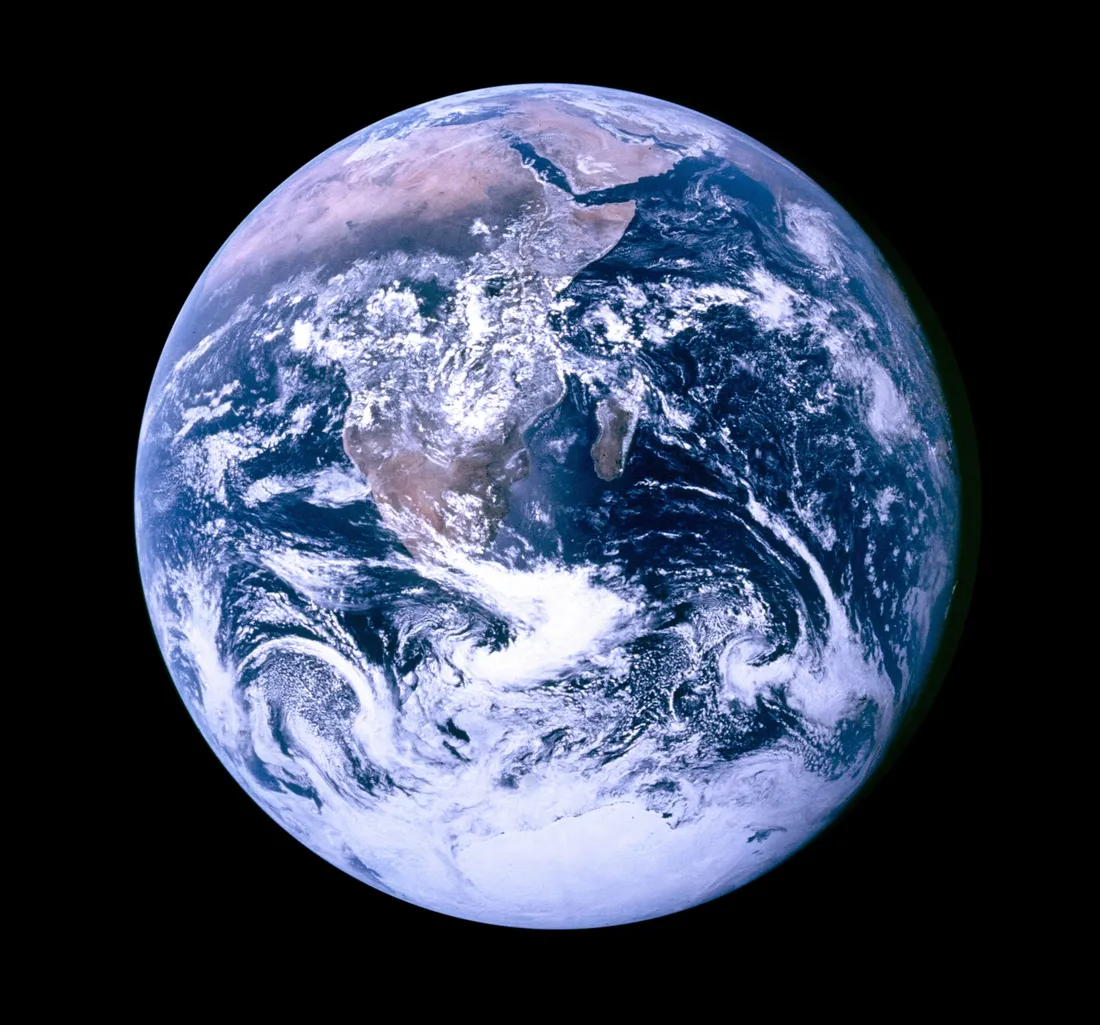
When we turn our eyes to the macro world we meet a terror that paralyses the mind. The Earth is flung around the Sun at roughly a hundred and seven thousand kilometres an hour. That speed is so frightening that it is a full hundred and twenty times the speed of an ordinary airliner; it is thirty times faster than a bullet leaving the barrel of a rifle. Consider that in the time it takes to blink, a third of a second, the Earth covers a full ten kilometres. While you read this sentence, the great sphere we stand on has already been flung tens of kilometres further into the void.
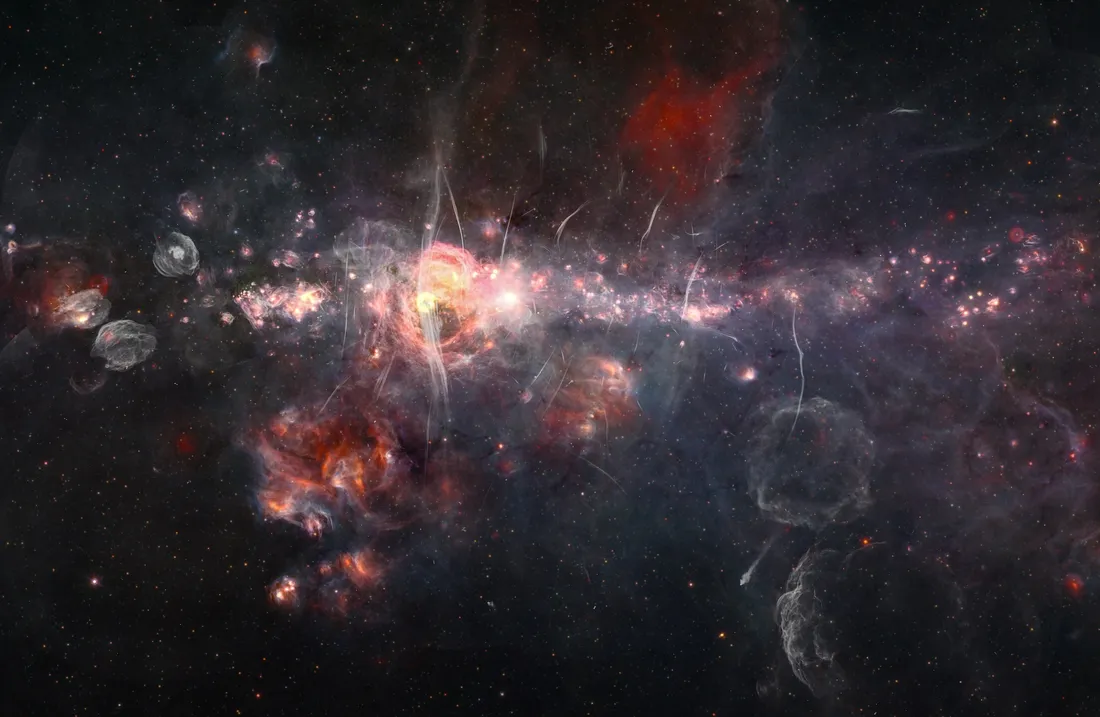
Further: the Solar System we sit inside turns around the centre of the Milky Way at an unimaginable eight hundred and twenty-eight thousand kilometres an hour. A black hole of about four million solar masses stands at that centre, but it is not what holds the Sun in its orbit; the whole mass of the galaxy does that. The speed comes to roughly six hundred and seventy times the speed of sound. Eight hundred and twenty-eight thousand kilometres an hour means two hundred and thirty kilometres every second: Istanbul to Tokyo in forty seconds, or the three hundred and eighty-four thousand kilometres between the Earth and the Moon crossed in half an hour. While we think we are sitting in a quiet room, we are passengers on an enormous cosmic ship hurtling through the pitch dark of space.
format_quote"While we think we are sitting in a quiet room, we are passengers on a ship hurtling along at eight hundred and twenty-eight thousand kilometres an hour."
Hasan Bekmezci
Further still: the universe itself is expanding, and everything is running toward one great thermodynamic end, that absolute cosmic sinking at which entropy reaches its peak. Just like those last melodies played on the deck of the Titanic as she went under after striking the iceberg. Humanity, in the face of that terrifying speed and that inevitable end, looks for consolations that will numb the soul on temporary stages.
While the thermodynamic and cosmological laws set down by the Creator whisper the passing of the universe, miniature human inventions like art, literature and high watchmaking, if they do not turn the heart toward that absolute Power, are nothing but desperate masks trying to make us forget this inevitable sinking.

In A Confession, finished in 1882, the great Russian writer Lev Tolstoy sets out this human helplessness through his own existential crisis, and to do it he chooses an old Eastern parable. A traveller, fleeing a beast on the steppe, leaps into a dry well. At the bottom of the well a dragon waits with its jaws open; above him the beast stands over the mouth. The traveller catches hold of the branch of a bush growing from the wall and hangs there. Then he sees that two mice, one black and one white, which is to say night and day, are gnawing without pause at the root of that branch. The branch is about to give way and he knows it. And at that moment he sees a few drops of honey on the leaves, and reaches for them with his tongue.
What Tolstoy says is this: the honey no longer tastes of anything to him, because he has seen the dragon and the mice. He writes that he came to see the art, the fame and the fortune of his own life as exactly those drops of honey. The question is not whether the honey is sweet. The question is whether a man can look at it the same way once he has heard the sound of the branch being gnawed through.
format_quote"Art that does not recall the Creator is a few drops of honey licked from a branch; it does not stop the end, it only numbs you to it."
Hasan Bekmezci
While the second law of thermodynamics seals the fact that the universe is being dragged inevitably toward chaos and a final going-out, a human being on this cosmic flight at hundreds of thousands of kilometres an hour looking at the wheels he has shut inside a small case and supposing that he governs time is the most tragic illusion of our helplessness. On this voyage, drawn toward the gravitational centre of the Milky Way, the mechanical jewels we fasten to our wrists are not watches; they are seals of warning that whisper how many seconds are left before the inevitable.
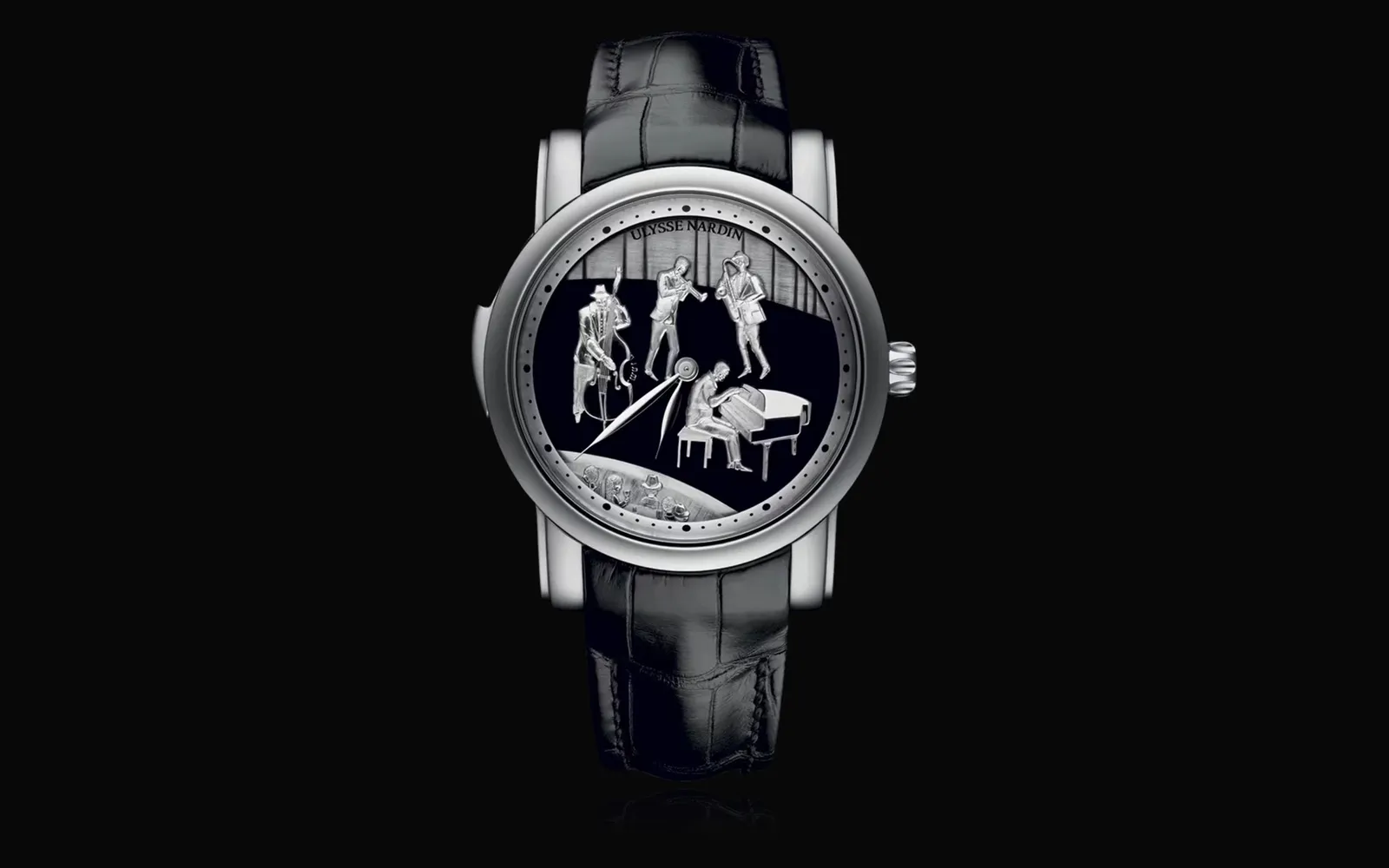
One of the most striking examples of this philosophical, astronomical and existential background made solid on the wrist is the Classico Complications Jazz Minute Repeater that Ulysse Nardin made in 2014, reference 749-88. A platinum case of forty-two millimetres, sapphire on both faces, thirty metres of water resistance, and only eighteen in the world.
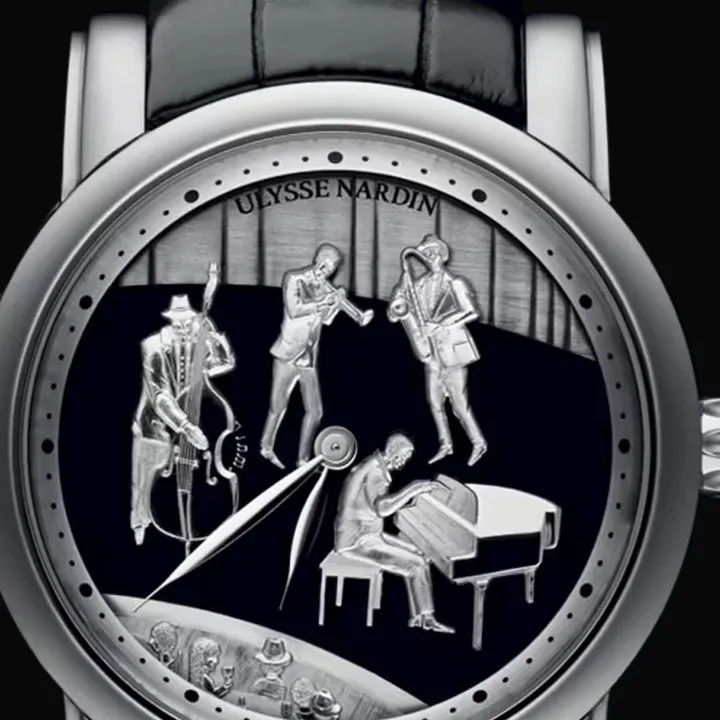
This miniature jazz club built on a black onyx dial is, seen from outside, a flawless world of entertainment and craft. Every figure is carved by hand from eighteen-carat gold. Behind them the folds of the stage curtain are engraved one by one, and the name of the house stands on that curtain. In front are four musicians: a double bass player with his hat down over his eyes and his bow raised; a trumpeter playing on his feet; a third with a saxophone braced against his chest; and a pianist bent over a grand piano. And at the very bottom edge of the dial there is one more detail most people do not see at first: a row of spectators seated at a table, hats, glasses and a bottle. Which is to say the room is not empty. Somebody is listening.
format_quote"Music played on a sinking ship does not stop the sinking; it only makes it audible."
Hasan Bekmezci
Pull the slide on the left flank of the case and the minute repeating mechanism turns the time into sound, with miniature hammers striking steel gongs: the hours first, then the quarters, then the minutes that remain. But the hard part of this particular watch is not the sound. The figures move with it. The rhythm of the hammers and the arms of the gold musicians are tied to the same train of cams, and a deviation of a thousandth of a millimetre ruins both the melody and the scene at once. The movement is the hand-wound UN-74, with about thirty-six hours of reserve.
Every note that rings out is, like the last song played on the deck of the Titanic and like the gnawing of Tolstoy’s mice, an elegant warning that time is running down and that we come a little closer to that great cosmic sinking with every moment.
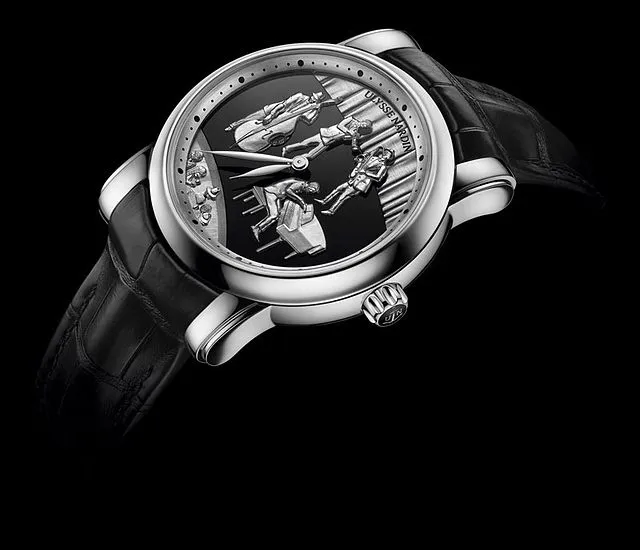
One of them is the cosmic sinking into which creation is dragged at hundreds of thousands of kilometres an hour, Tolstoy’s deep existential waking and the consciousness of the Creator; the other is the Ulysse Nardin Jazz Minute Repeater, which warns a man with sound, with craft and with mechanical splendour from the middle of this temporary place of entertainment.
One is the truth itself; the other is a lesson in warning, hidden among the wheels for whoever is able to grasp it.
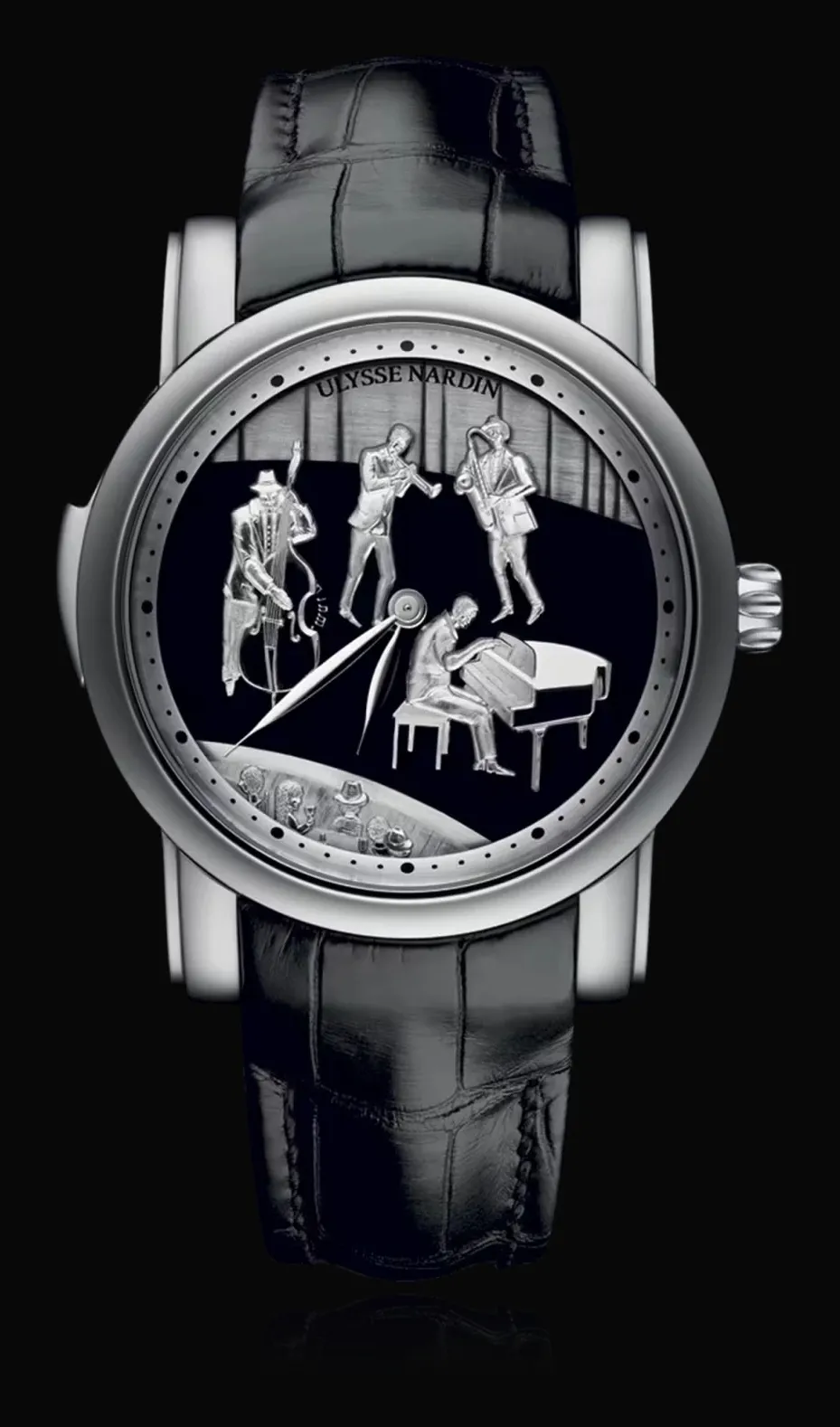
The watch is out of production; the collection it belongs to is on its maker’s site: Ulysse Nardin, Classico