North of Manaus, on an intermediate platform of an observation tower rising above the forest, two people are waiting for dawn. Below them is a green sea, and a thin vapour is climbing off it. Two zoologists are sitting there: Dr Beatriz Salgado, who works on canopy fauna, and Dr Tomás Vieira, who works on insects and amphibians.
With the first light, a large electric-blue wing crossed the gap beneath them.
"A morpho," said Tomás. "And that blue is not on its wing."
"How is it not?"
"There is no blue paint, no pigment on the wing. On the scales there are tiny stacked shelves with gaps of about two hundred nanometres between them. As light reflects off those shelves it interferes with itself; every wavelength but blue cancels out, and blue is reinforced. So the colour you see is not the colour of the wing, it is the geometry of the wing. Crush the butterfly and the blue disappears, because what is lost is not a pigment but a dimension."
Colour Without Pigment, in Metal
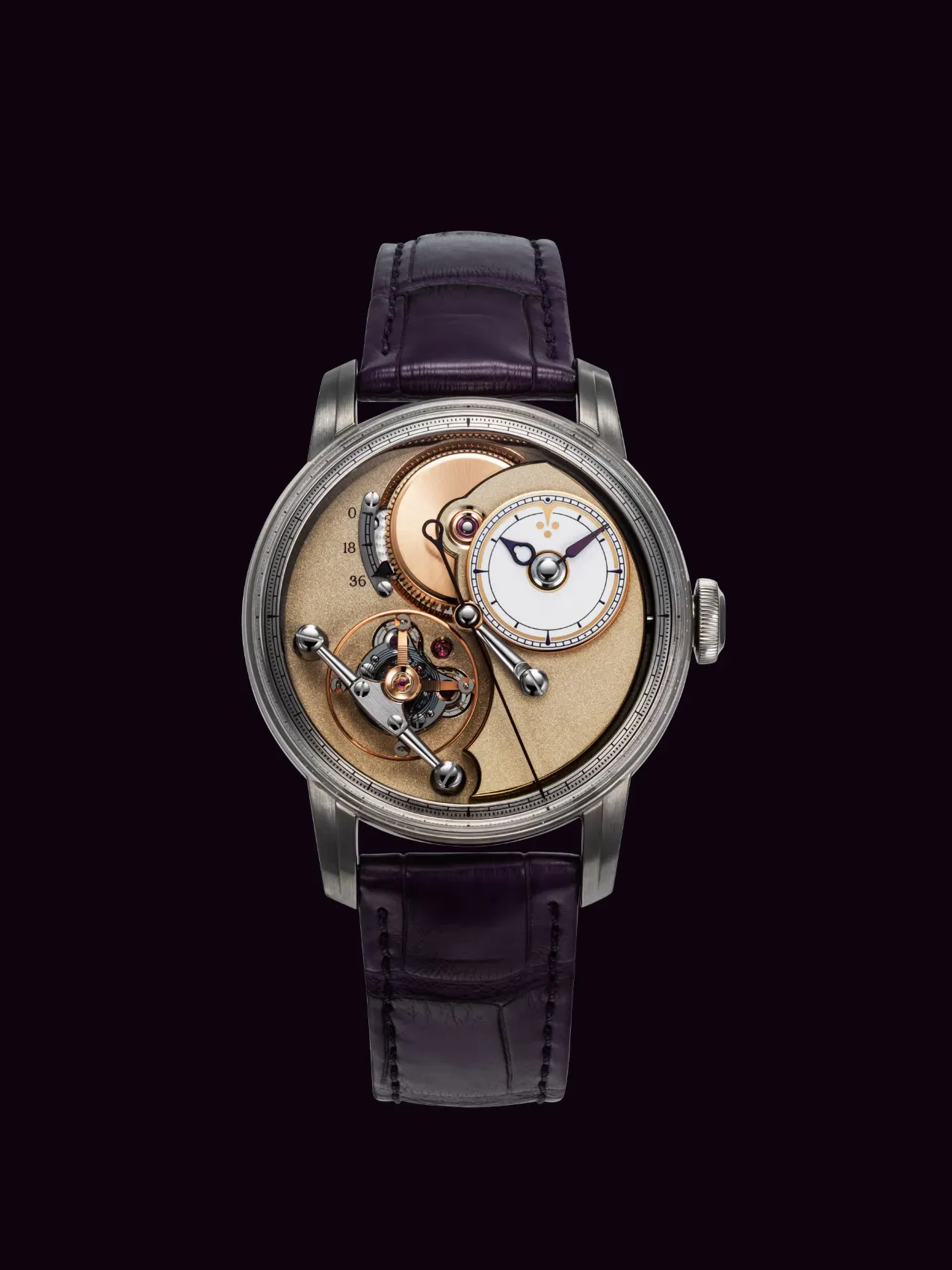
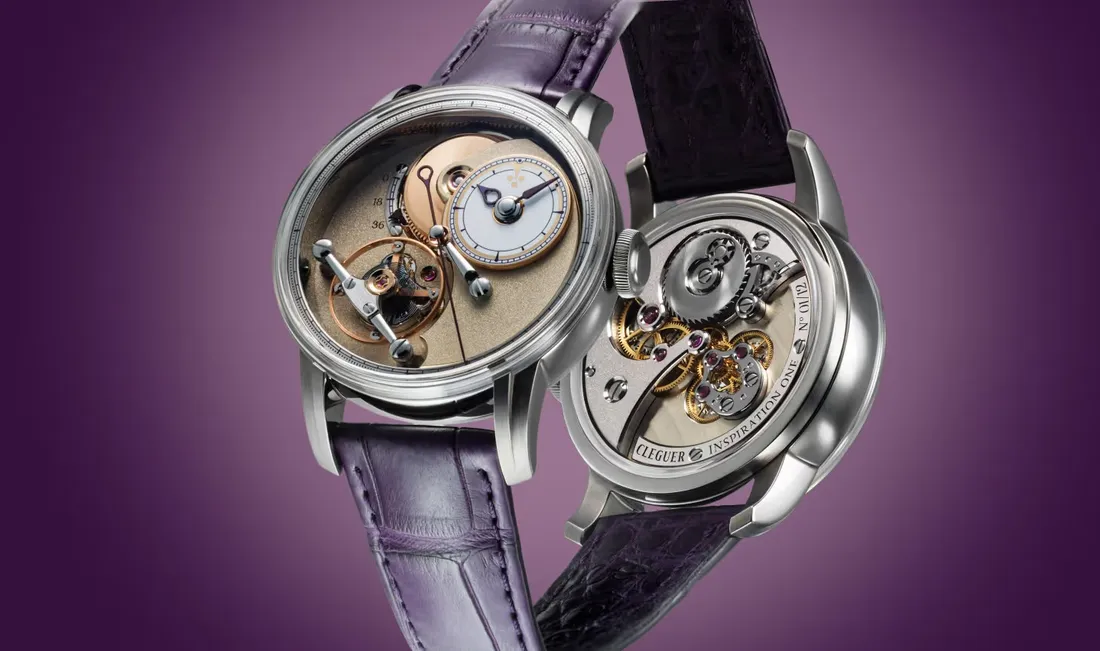
Beatriz took the watch off her wrist and put it on the table. "Then you need to see this. Those hands are mauve. And there is no paint on them either."
Tomás leaned over.
"When steel is heated, a very thin film of oxide forms on the surface," said Beatriz. "As the film thickens, the wavelength that is reinforced in the reflected light changes; first straw yellow, then brown, then blue, then mauve. The only thing the craftsman does is hold the duration and the degree of the heat. So it is the same physics as your butterfly: a thin layer, the interference of light, no pigment. The difference is that your butterfly settled on it over three hundred million years, and a craftsman does this in an afternoon and remakes the part if he is one degree out."
"The brand?"
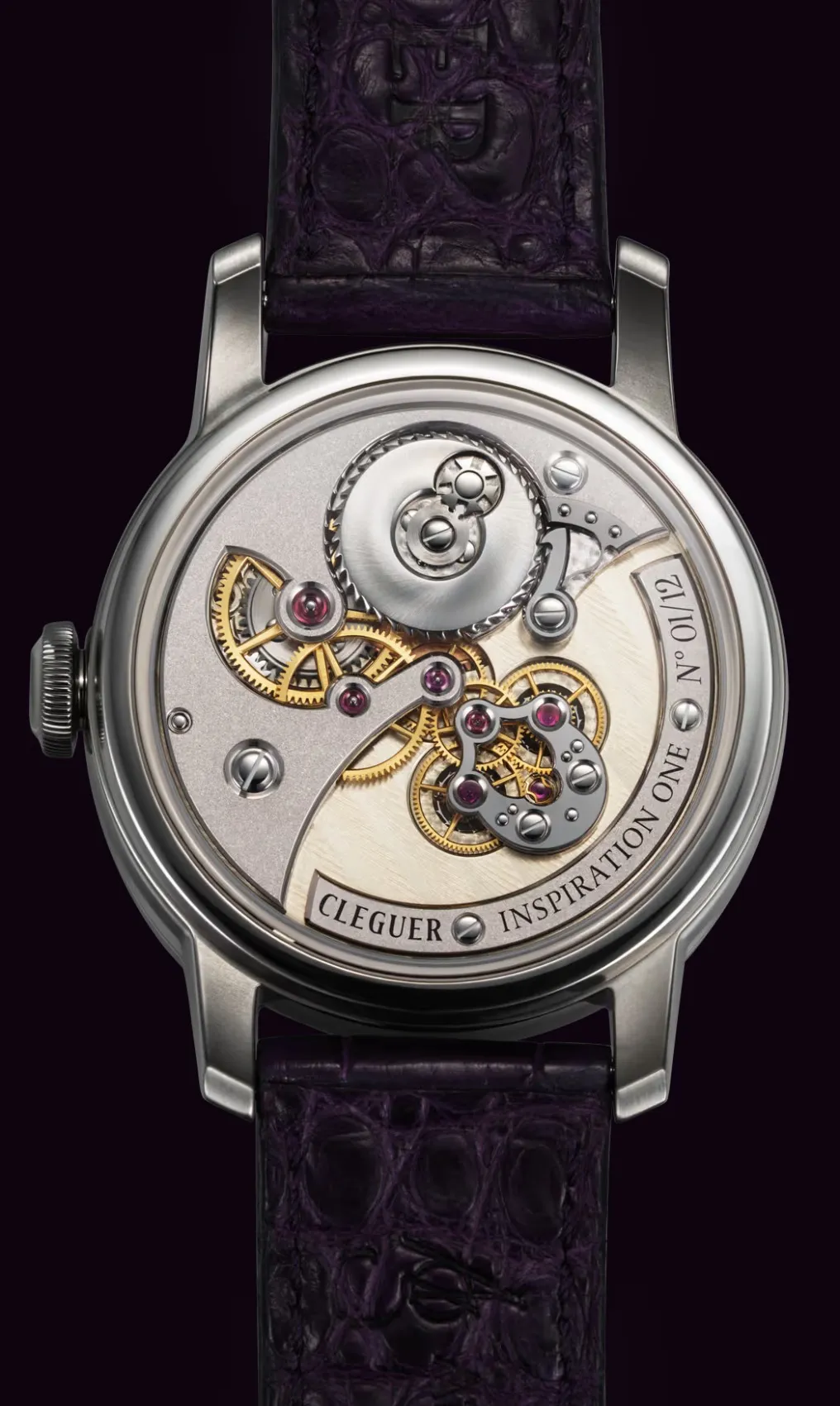
"Cleguer. The man who made it is Mathieu Cleguer, a Breton. He studied car design for four years, saw a watch display at the 2006 Paris Motor Show and changed direction. He worked at Akrivia, then ran a brand’s research and development department, then opened his own workshop. This is his first watch, and it is called the Inspiration One."
Eighty Wingbeats a Second, Five Vibrations a Second
A hummingbird came to the rail of the tower and hung there in the air.
"Look at that," said Tomás. "Its wings beat fifty to eighty times a second. Its heart can reach twelve hundred beats a minute. For its mass it has the highest metabolism of any vertebrate. But the real matter is at night."
"Torpor."
"Yes. When darkness falls it lowers its body temperature, all but shuts down its metabolism and waits until morning in a kind of suspension. At that rate it could not survive a night without feeding. So this animal runs at full power all day and then puts a limit on its own reserve at night."
Beatriz pointed at the watch. "This watch does exactly the same thing. At two points."
"Go on."
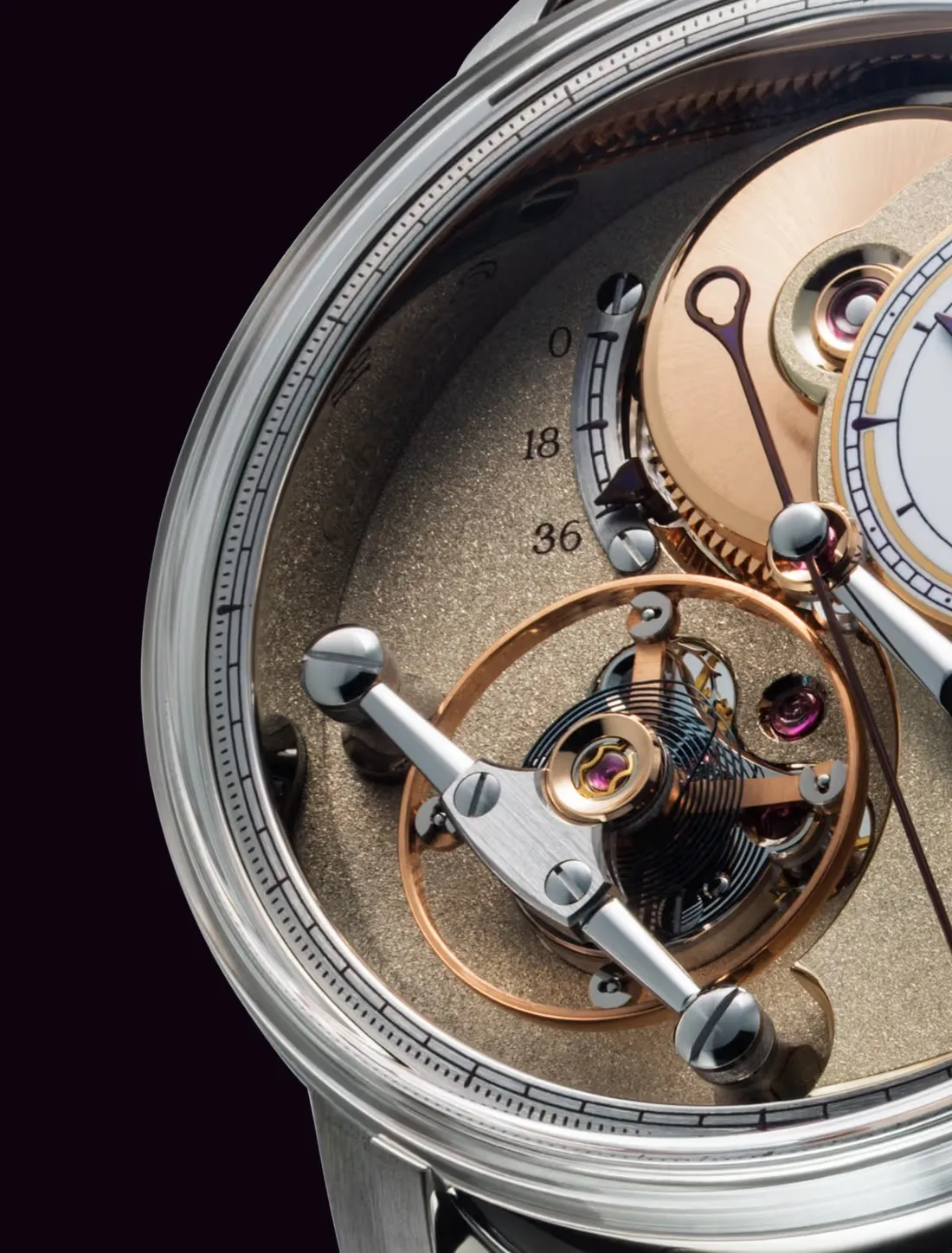
"First, speed. The balance runs at eighteen thousand vibrations an hour, five a second. By today’s standards that is slow. A slow balance rubs less, its oil lasts longer, its parts wear later. It is the opposite choice from the hummingbird: burn little and go far. Second, the reserve. There are thirty-six hours of power reserve, and that reserve is bounded by a stop-work called a Maltese cross. The mainspring can neither run fully down nor be fully wound; only the middle band, where the force is most even, is used."
"So the watch goes into torpor at night as well."
"More precisely, the watch refuses to use its own extremes. The same logic as the bird entering the night with a reserve: never spend the last drop."
How a Stopped System Restarts Itself
Below, on the forest floor, a thin unbroken line was moving: a column of ants carrying pieces of leaf.
"Leafcutter ants," said Tomás. "And they do not eat those leaves. They farm a fungus underground; the leaf is the fungus’s fertiliser. So these are not herbivores, they are farmers. These colonies are the largest consumers of plants in the Neotropics, and the division of labour inside them is set by body size: the biggest cut, the middle ones carry, and the smallest ride on the carried leaf to drive off parasitic flies. No single individual knows anything. What knows is the colony."
Beatriz laughed. "There is a colony behind this watch too. One name is written on it, but the dial is made by one person, the enamel fired by another, the case machined by a third. The dial is grand feu enamel signed Blandenier; glass powder is laid onto the metal and melted in a kiln, and every firing risks a crack. Cleguer does not make that enamel, he has it made by someone who can."
"And the real invention inside?"
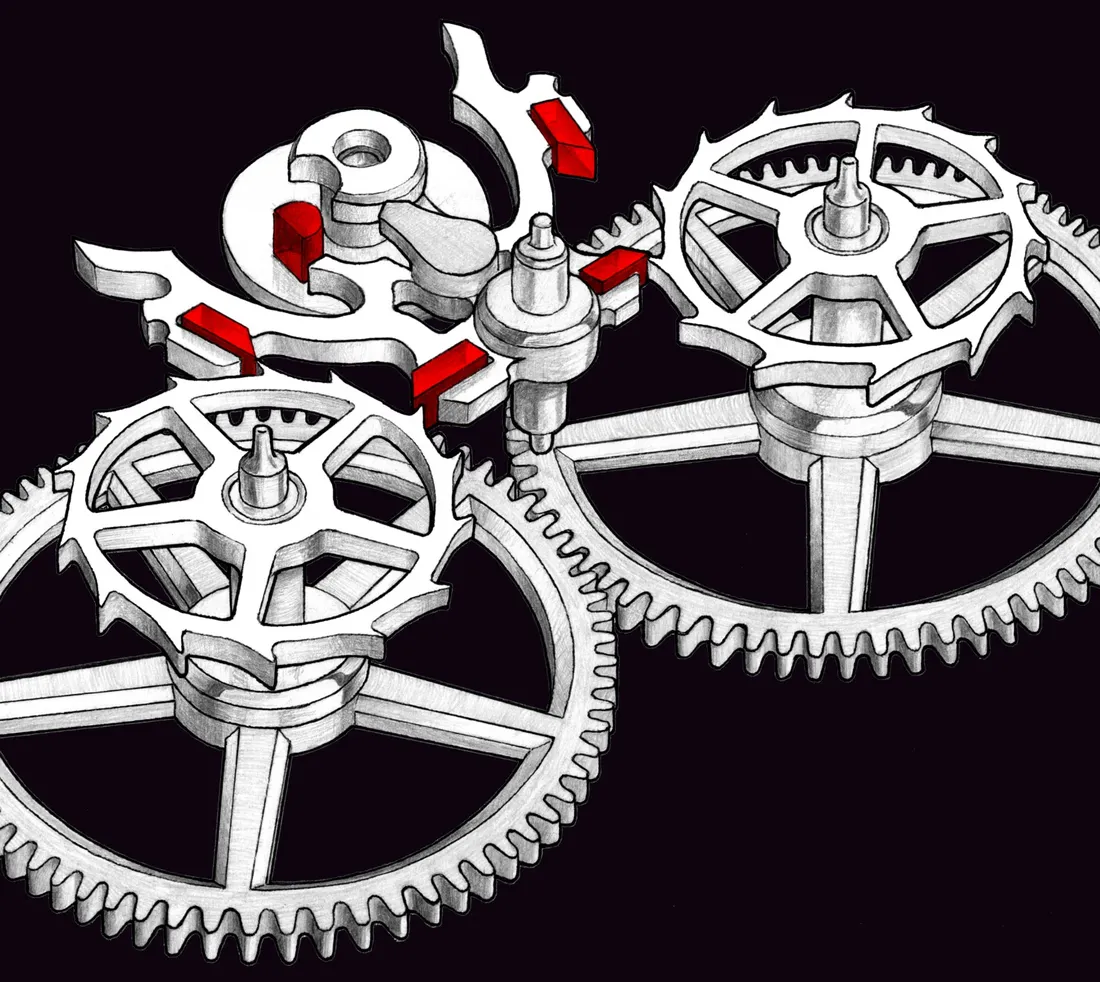
"The escapement. In a conventional watch, energy passes from the wheel to the balance indirectly, through a lever, and loses something to friction at every transfer. The solution known as the natural escapement reduces that loss and delivers the impulse directly; but it has a well-known flaw: if the watch stops, it will not restart itself, you have to shake it. Cleguer built a new geometry that keeps the direct impulse and cures that flaw, and he calls it the innate. There are two escape wheels. The hairspring has a Phillips terminal curve and a Grossmann inner curve, both there to keep the breathing of the balance centred."
Tomás looked for a long time. "Being able to restart itself," he said. "That is the only rule this forest has. When a tree falls a hole opens in the canopy, and the light coming through it sets the waiting seeds below in motion the same week. The system does not begin from zero; it pauses and carries on from where it stood. A forest that could not restart itself would be finished by the first storm."
Borrowed Colour
Among the wet leaves, an orange dot the size of a fingernail moved.
"A poison dart frog," said Tomás. "And that poison is not its own. The frog does not produce it; it accumulates in its skin the alkaloids it takes from the mites and ants it eats. Feed it fruit flies in a terrarium and within two generations it becomes entirely harmless. So this animal’s most famous property is in fact a property borrowed from the food chain."
"And its colour?"
"The colour is its own, but the meaning comes from the chain. Bright colour here is a warning: do not eat me, you will regret it. For that warning to work, a predator must have tried once and survived. So what writes the meaning of the colour is not the frog but the bird."
Beatriz looked at the dial of the watch. "Enamel is the opposite," she said. "That colour is not borrowed. Glass powder melts in a kiln at close to eight hundred degrees and fuses to the metal, and it never fades again. A hundred years from now, the same mauve. The butterfly makes colour with interference, the frog with a loan, enamel with fire. None of the three has anything to do with paint."
"And how many were made?"
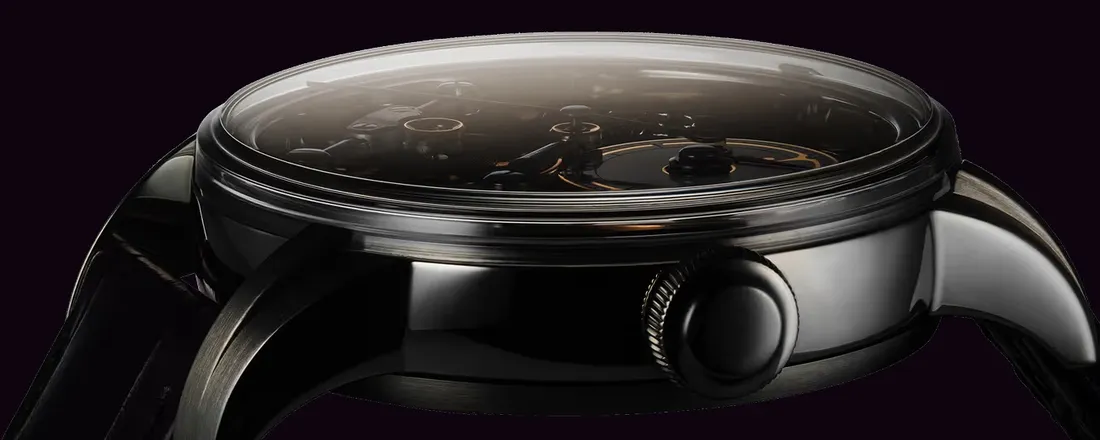
"The first subscription series is twelve pieces in titanium, and all of them sold before the launch. The case is thirty-eight and a half millimetres, twelve thick, water resistant to thirty metres. Thirty-one jewels, hand-wound. Around ninety-eight thousand five hundred euros."
Tomás nodded. "Twelve individuals. In this forest, a species that exists in twelve individuals is by definition about to disappear."
"In watchmaking it is the opposite," said Beatriz. "Twelve is the number a species starts with."
format_quote"The butterfly makes colour with interference, the frog with a loan, enamel with fire. None of the three has anything to do with paint."
format_quote"In this forest a species of twelve individuals is about to disappear. In watchmaking, twelve is the number a species starts with."
Hasan Bekmezci