In the last week of September, close to midnight, a deep sea research submersible held station at two thousand five hundred metres. Outside, the water was two degrees and the pressure ran to hundreds of kilograms on every square centimetre. Two geobiologists stood at the observation port: Dr Tarık Kuran and the chemosynthetic ecosystem specialist Dr Selen Vargel.
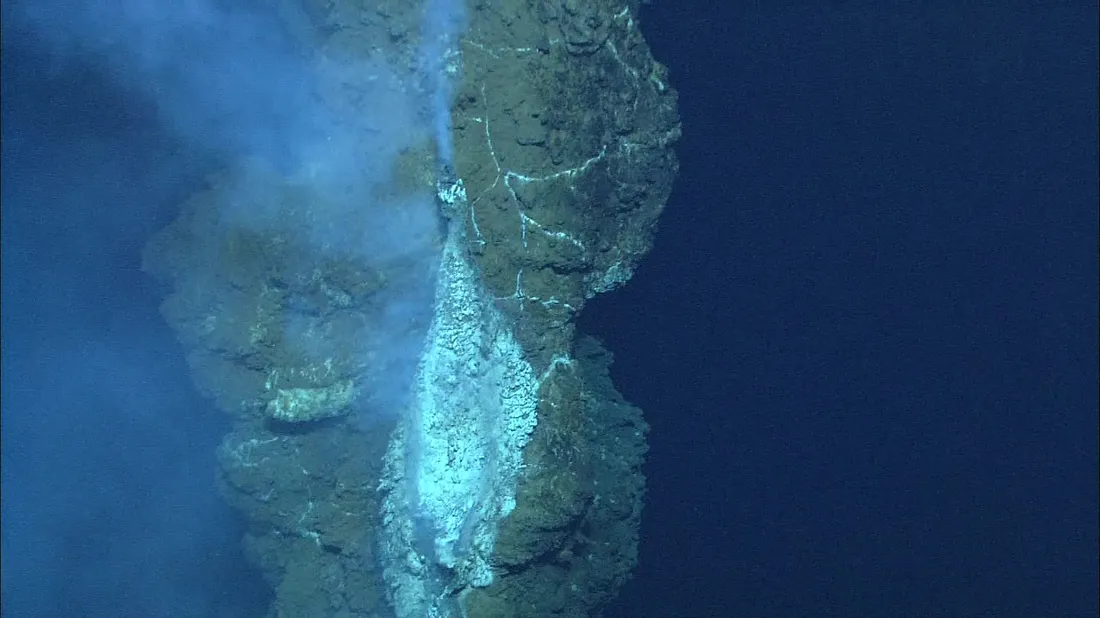
When the floodlights swung onto the sulphur towers on the floor, an unexpected crowd appeared beyond the glass. Black, poisonous fluid at up to four hundred degrees was pouring out of the chimneys. A hand’s breadth away from it stood giant tube worms metres long, albino crabs and sulphur shrimp, packed into one another.
What was the doctrine we were taught for years, said Dr Kuran. The sun is the single source of all life. No sunlight, no photosynthesis; no photosynthesis, no food chain. And yet here, at a depth where the sun is not so much as a rumour, an entire ecosystem is boiling away.
Because life was never tied to a single cause, said Dr Vargel. When these chimneys were first seen at the Galápagos Rift in 1977, nobody was ready for them. The animals here take their energy from chemistry rather than from light. The hydrogen sulphide coming out of that vent is lethal to almost every other living thing. Here it is fuel.
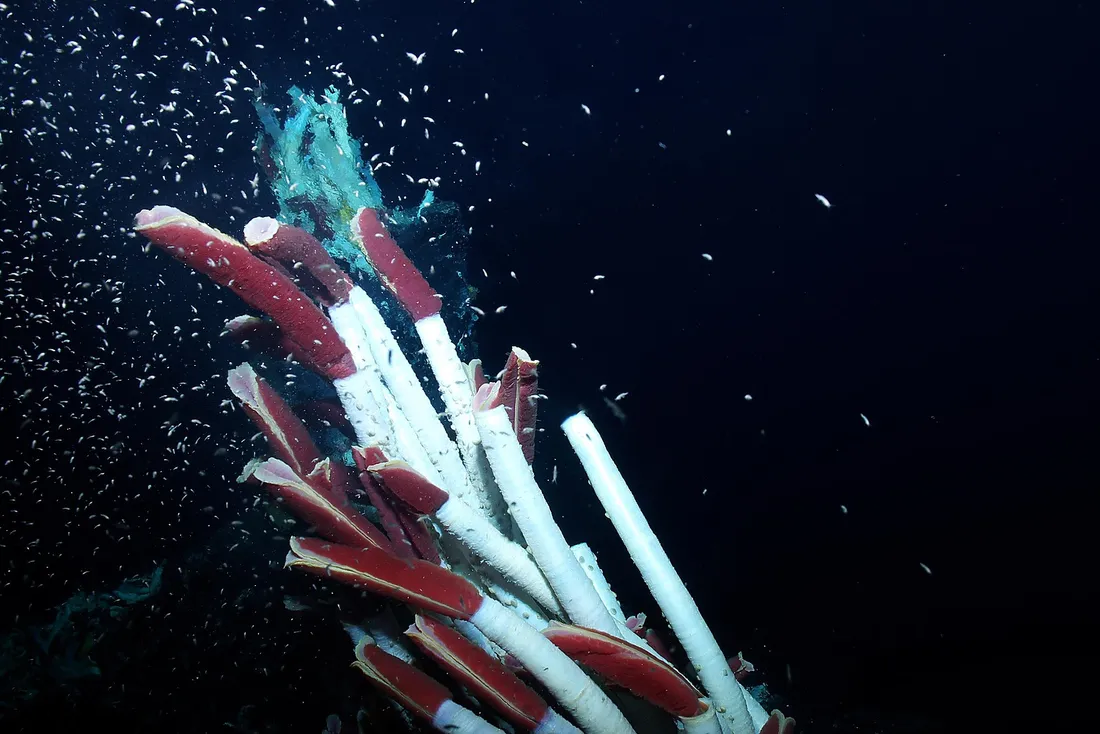
The strangest part of it is the tube worm itself. Riftia pachyptila has no mouth, no stomach and no gut. It carries inside its body an organ called the trophosome, and that organ is packed with billions of symbiotic bacteria. With its red plume the worm draws hydrogen sulphide, oxygen and carbon dioxide out of the water; a specialised haemoglobin in its blood carries the sulphide without being poisoned by it and delivers it to the bacteria. The bacteria burn the sulphur, produce food with the energy released, and feed the worm.
A misunderstanding is worth correcting here. These animals do not make light. Most of them have no eyes at all and live in total darkness. What is extraordinary is not that they glow but that they can eat without the sun ever reaching them. Between the four hundred degree water leaving the chimney and the two degree ocean around it there is a temperate band only a few centimetres wide, and this whole crowd lives on exactly that band.
format_quote"What is extraordinary here is not that they glow. It is that they are fed without the sun."
Hasan Bekmezci
Panerai’s name has always been bound up with light. In 1916 the firm patented a radium based glowing compound and called it Radiomir; radium later gave way to tritium and Luminor was born. There is a third, less familiar patent. On 15 June 1966 Panerai registered, under the name Elux, shortened from elettroluminescenza, the electroluminescent panels that backlit the navigation instruments of the Italian Navy.
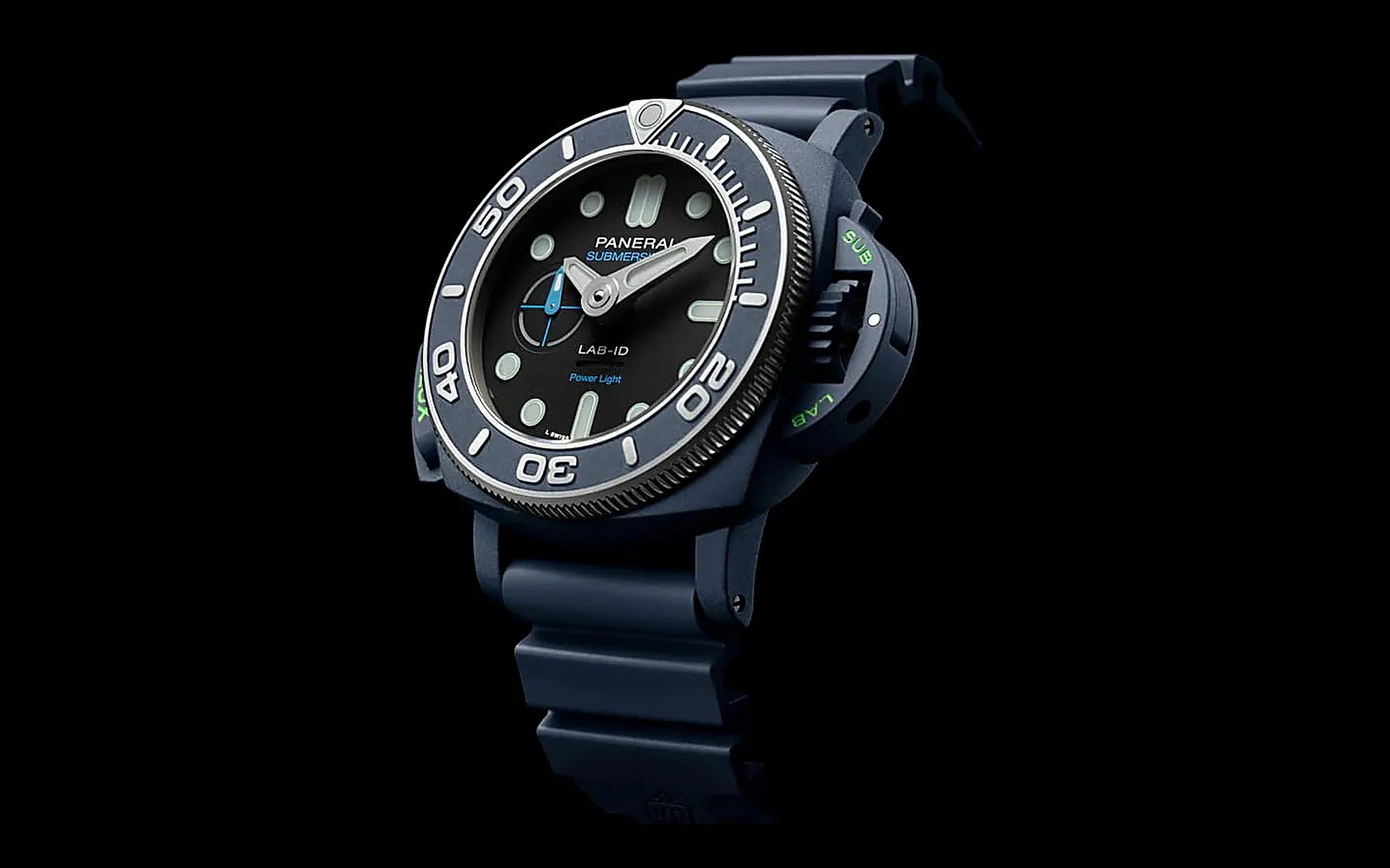
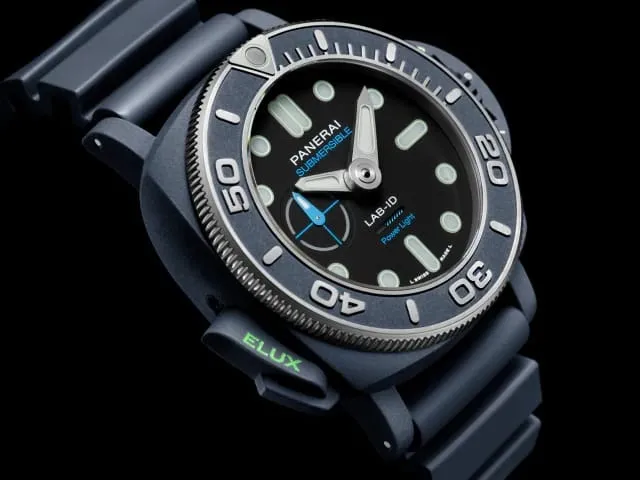
Sixty years on, the Submersible Elux LAB-ID calls that name back. It is the result of eight years of development at the Laboratorio di Idee in Neuchâtel and of four separate patent applications. What came out of it is this: a wholly mechanical watch that contains not one battery and not one electronic circuit, and that nonetheless makes light with electricity.
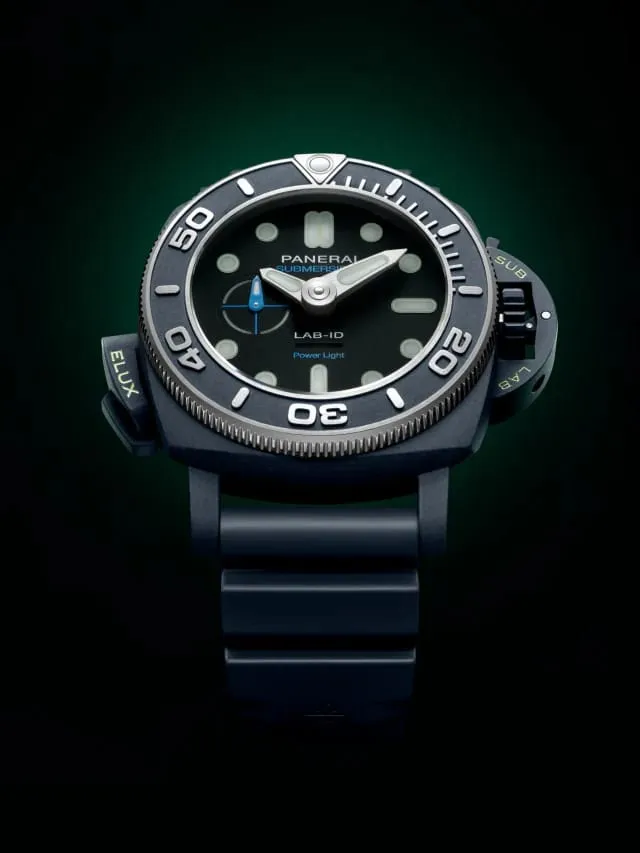
The movement holds six barrels in all. Four of them have nothing to do with running the watch; they are set aside to feed a microgenerator. In front of the pusher at 8 o’clock sits a patented protector. Open the protector, press the pusher, and the mechanical energy stored in those four barrels is released, spinning the generator at speed, and the resulting current goes to a hundred and sixty micro LEDs on the dial.
What lights up is precise: the twelve indexes on the dial, the patented hands, and the dot on the unidirectional rotating bezel. The total burn is thirty minutes, and a linear indicator at 6 o’clock reports how many minutes of light are left. That indicator measures not the power reserve of the watch but the reserve of the light alone.
format_quote"Four of the six barrels do not run the watch. They carry only the light."
Hasan Bekmezci
When the Elux goes out the watch is not blind. The indexes and the hour hand are coated in green Super-LumiNova X2, a new grade that stays roughly ten per cent brighter than the previous one after a hundred and eighty minutes in the dark. The minute hand and the dots on the bezel are marked in blue X1. Two lighting systems therefore work inside one another: a phosphorescent coating that drinks light first and returns it afterwards, and a mechanical plant that makes its own current when a button is pressed.
The case is forty nine millimetres and made of a material called Ti-Ceramitech. It is produced by turning the surface of a titanium alloy into a dense ceramic layer through plasma electrolytic oxidation, and it took seven years to develop. The blue that results is not paint; it is the colour of the surface itself. Water resistance is fifty bar, around five hundred metres.
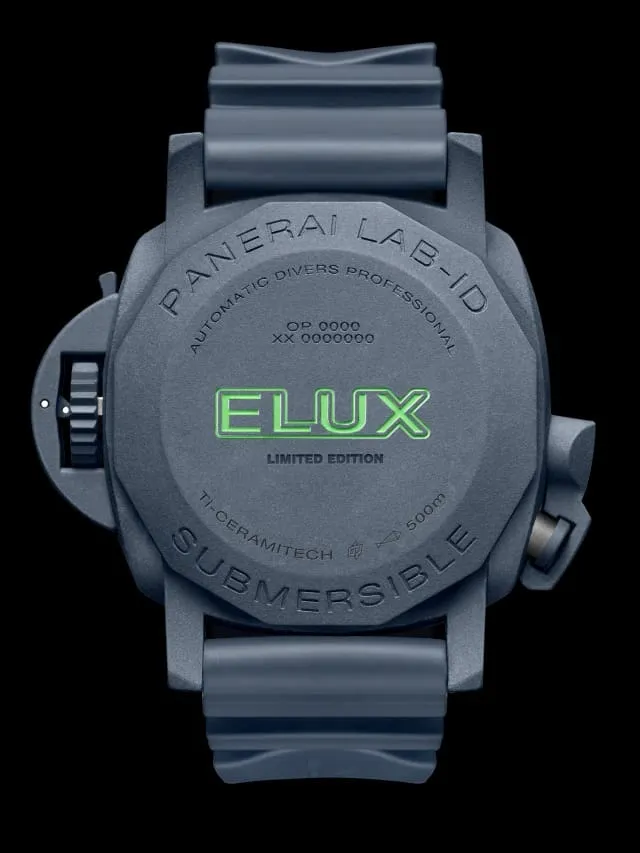
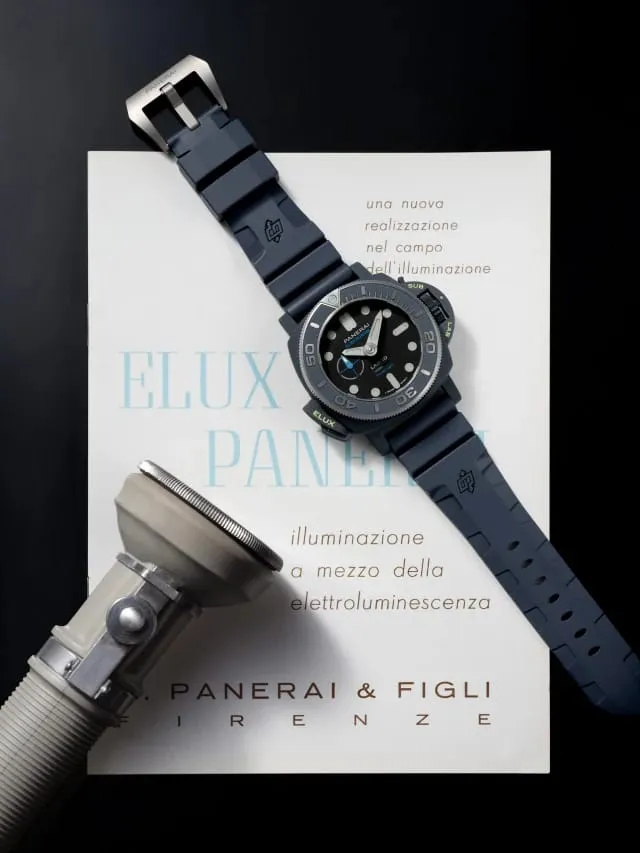
Someone who presses the button and watches the dial burn in the dark may well think of those chimneys at two thousand five hundred metres. The resemblance is the viewer’s reading, not a claim made by the manufacturer. The difference matters too: the animals at the vent produce food, not light. What they share lies deeper. Both refuse to be fed from outside, and draw the energy they need from an order established within themselves.
Inside a worm there is a blood chemistry that will carry a gas which should kill it and not be poisoned by it. That chemistry is not a solution arrived at by trial and error; the price of a failed trial is death, and a dead worm does not attempt a second. In the same way, setting aside four separate barrels for light alone is not an idea that occurs by itself. Somebody had to sit down and design it. Nothing is being invented here. A solution already established is being attempted again, at human scale.
format_quote"If the price of a failed trial is death, that solution was not found by trial and error."
Hasan Bekmezci
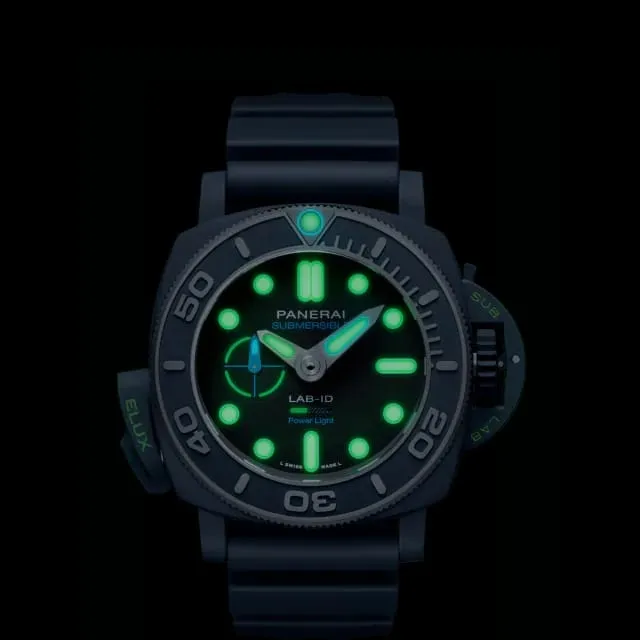
The Submersible Elux LAB-ID is the most stubborn answer watchmaking has given to the problem of light. Pressing the button on the flank of that forty nine millimetre case and watching a purely mechanical light appear in total darkness, you begin to consider how life can be established at a depth the sun never reaches, and how little chance there is that such an order assembled itself.
The watch on its maker’s own site: Panerai, Submersible Elux LAB-ID PAM01800