The Woman Who Sought the Colour of Ice
The polar photographer Ingrid had spent fifteen years of her life chasing the colour of ice. In Antarctica, she was always trying to describe that strange blue which appears where an iceberg meets the water: not the blue of the sky, nor of the sea. A velvety blue that rises from within, from the deep. At the opening of her exhibition in Geneva, as she stood before an enlarged photograph of exactly this blue, someone came up beside her.
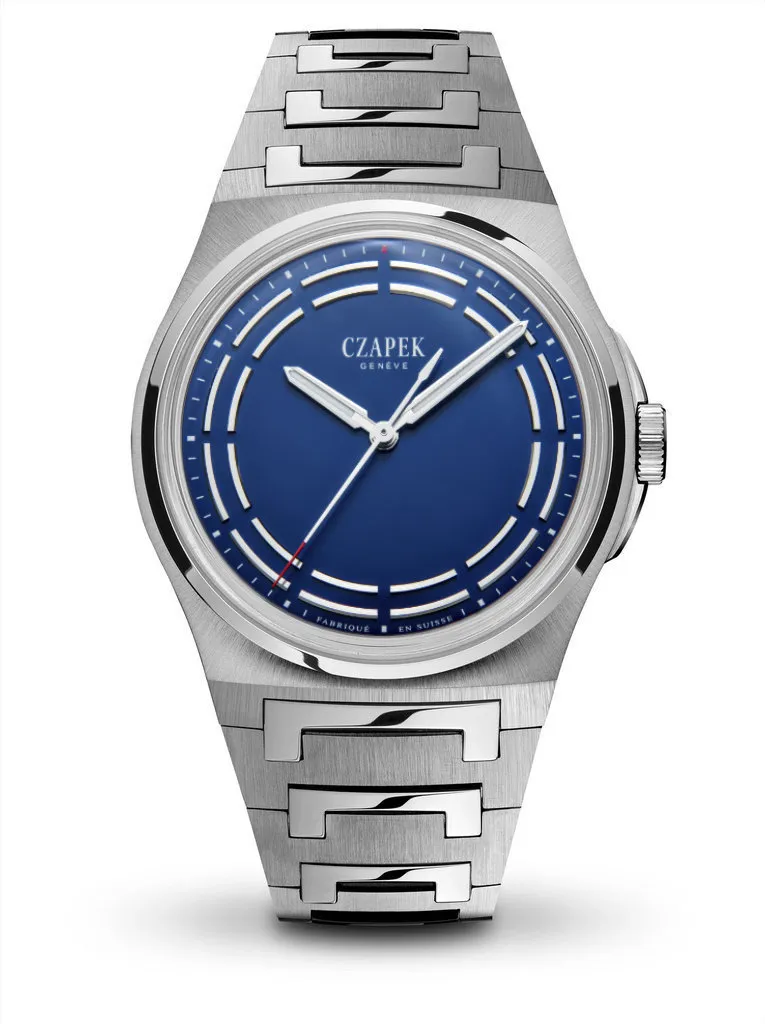
It was Marc, a watchmaker at an independent manufacture. "I know this colour," he said quietly. Ingrid smiled: "Have you been to Antarctica?" Marc shook his head and drew back his shirt cuff a little. On his wrist was a watch in a titanium case; its dial, just like the photograph on the wall, was a deep and velvety blue.
"A Czapek," said Marc. "From the Antarctique collection; in this year's new colour, Cosmic Blue. And like the name of the brand, the name of this collection is no accident either."

Two Stories in a Name
"Who is Czapek?" asked Ingrid. Marc's eyes lit up; this was a story he loved to tell. "Francois Czapek was a Bohemian watchmaker who lived in Geneva in the nineteenth century. And he had a partner in history: Antoine Norbert de Patek. Yes, that Patek. The two founded a house together in 1839; then their paths parted, Patek's name became a legend, and Czapek was all but forgotten. The brand was brought back to life about ten years ago by a group of enthusiasts."
"And why 'Antarctique'?" Marc continued: "Because Czapek's founder also made a watch for the captain of one of the expedition ships that first sighted Antarctica. This collection is a salute to that story, to that sea of ice. And this year's colour, Cosmic Blue, has a velvet finish exactly like the one in your photograph; when the light strikes it, the depth changes, just as it does inside the ice."
format_quote"Patek became a legend; Czapek was forgotten, and returned a hundred and seventy years later."
Marc
A Dial Drawn with Absence
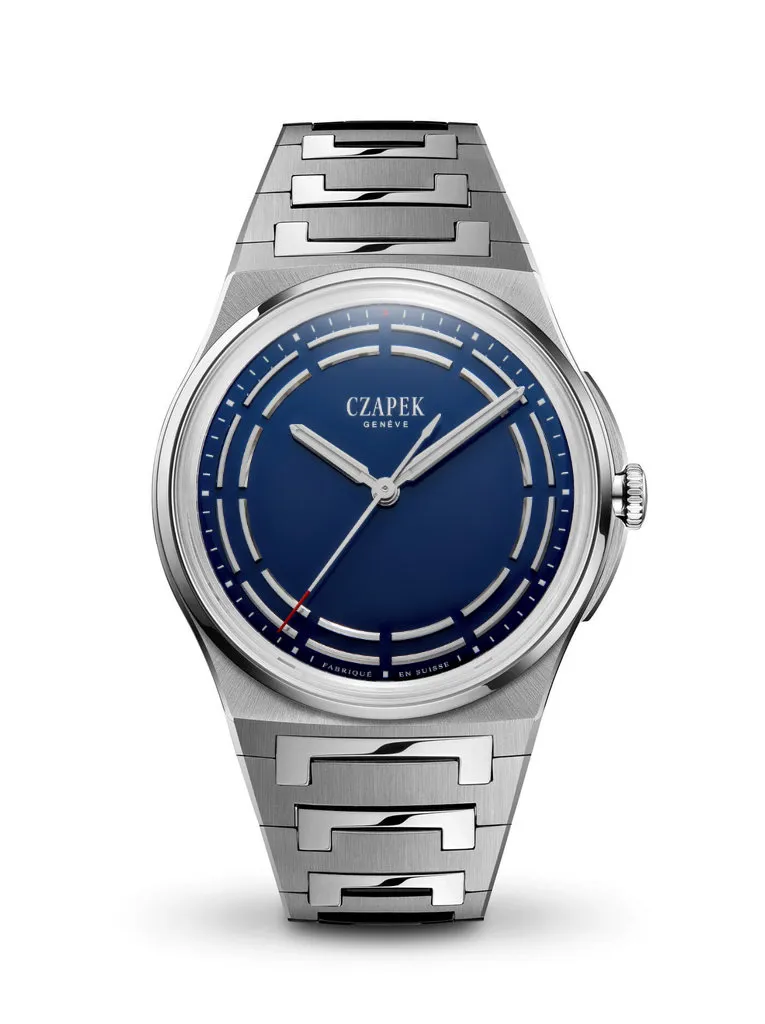
Ingrid leaned closer to the watch and was surprised: there were no hour markers on the dial. In their place, among concentric circles, were twelve small voids. "Where are the markers?" she asked. Marc smiled: "That is exactly where this model's name comes from: Dark Sector. The dial reinterprets the concentric rings of the old sector dials; but instead of adding hour markers, it removes them. At twelve points a void is opened in the surface. In other words, it shows you the time not with presence, but with absence."
"As a photographer you know this well," he added. "Sometimes what makes an image strong is not what you put inside the frame, but what you leave out of it." Ingrid looked long at the dial; as the angle of light shifted, the velvet blue darkened and lightened, and the voids filled with shadow.
"The case and bracelet are entirely Grade 5 titanium," said Marc. "Titanium is far lighter than steel yet at least as strong. This watch sits on the wrist as though it were barely there; like polar equipment, present without making you feel its weight. It comes in two sizes: 40.5 and 38.5 millimetres. And inside beats Czapek's own SXH5 calibre, running about sixty hours once wound."
format_quote"Sometimes what makes an image strong is not what you put in the frame, but what you leave out."
Marc
Showing What Is Hidden
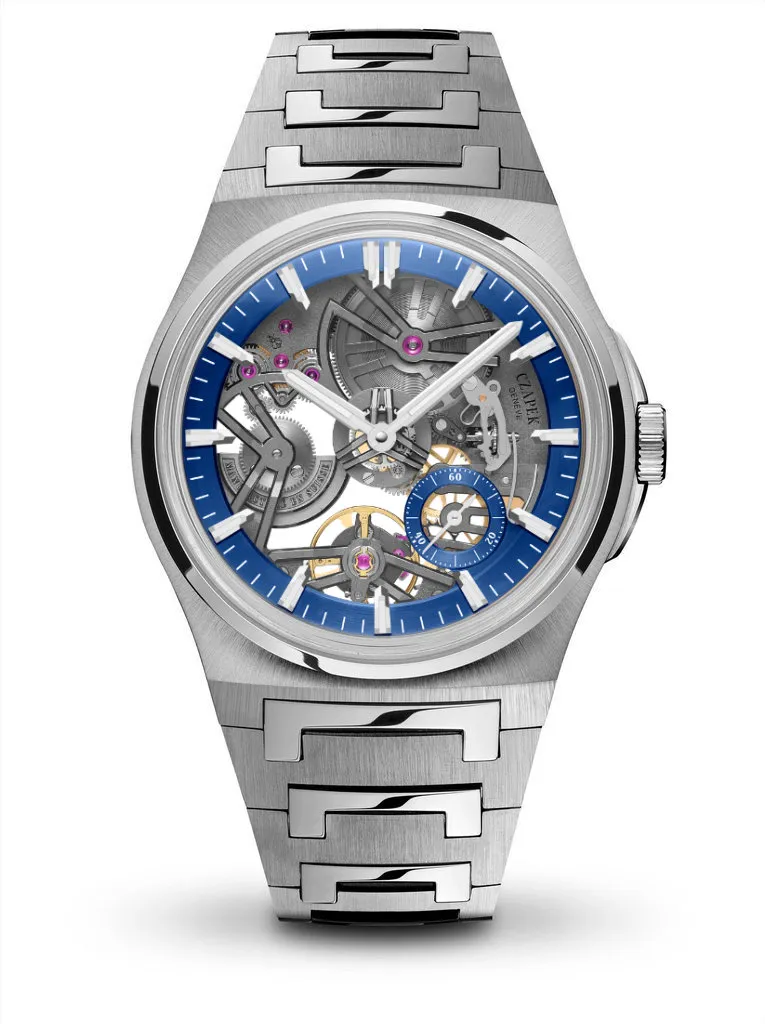
Marc opened a photograph of another model on his phone; this time the centre of the dial was opened up, revealing tiny wheels and a vibrating part within. "They call it the Revelation," he said. "It was born of a collector's wish: 'turn the movement over, show us what always stays hidden.' And Czapek did exactly that; re-engineering the SXH5 from top to bottom into the SXH7, it brought the escapement, normally concealed beneath the case back, to the front of the dial."
"What does escapement mean?" asked Ingrid. "Think of it as a watch's heart valve," said Marc. "It is the part that divides the mainspring's energy into small, equal beats and produces the watch's ticks. Normally you can never see it. Here, when you pull the crown to set the time, you watch with your own eyes how the stop mechanism takes hold of that part. It is like watching a heart stop and start again."
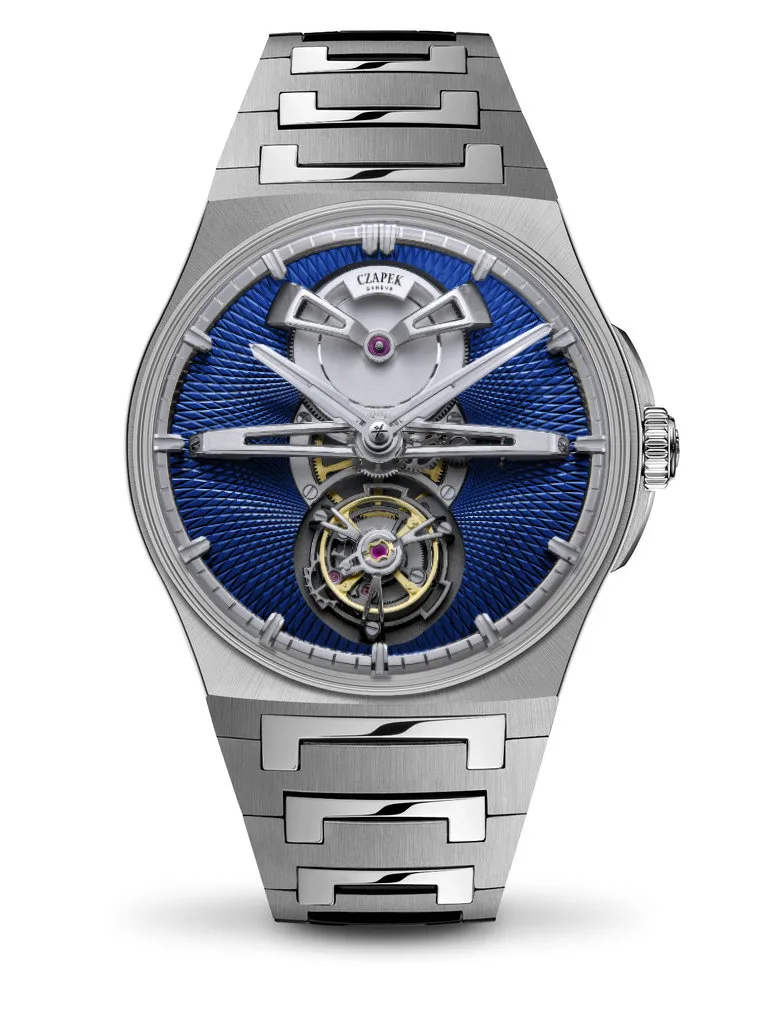
"And there is a tourbillon version too," he added, sliding the screen. "There the dial is hand-guilloche; that is, a craftsman has engraved fine patterns into the surface on an old hand-turned lathe. Inside it, too, is that small cage turning against gravity. Only twenty-five are made each year."
format_quote"It is like watching a heart stop and start again."
Marc
Seeing the Same Blue
When Ingrid was allowed to fasten the watch to her wrist, she turned her arm toward the spotlight of the exhibition hall. The dial, just like the inside of ice, darkened and brightened from angle to angle. The twelve voids stood like small fissures swallowing the light.
"I went to the end of the world to find this colour," she said, laughing. "You made it in a workshop in Geneva." Marc nodded: "In truth we are both doing the same thing. You capture what the light does in ice; we try to repeat it on metal. Both are a matter of patience."
As the exhibition closed, the photograph on the wall and the dial on a wrist shared the same blue in the same evening light: cold, deep and silent.