In the Proverbs of Hell, the English poet and painter William Blake wrote: "A fool sees not the same tree that a wise man sees." The blindness is not in the eye but in the mind behind it. In our own age, the sharpest satire of that blindness, of shouting symbols and of the hunger for display, is scratched into the streets with spray cans and midnight operations by Banksy.
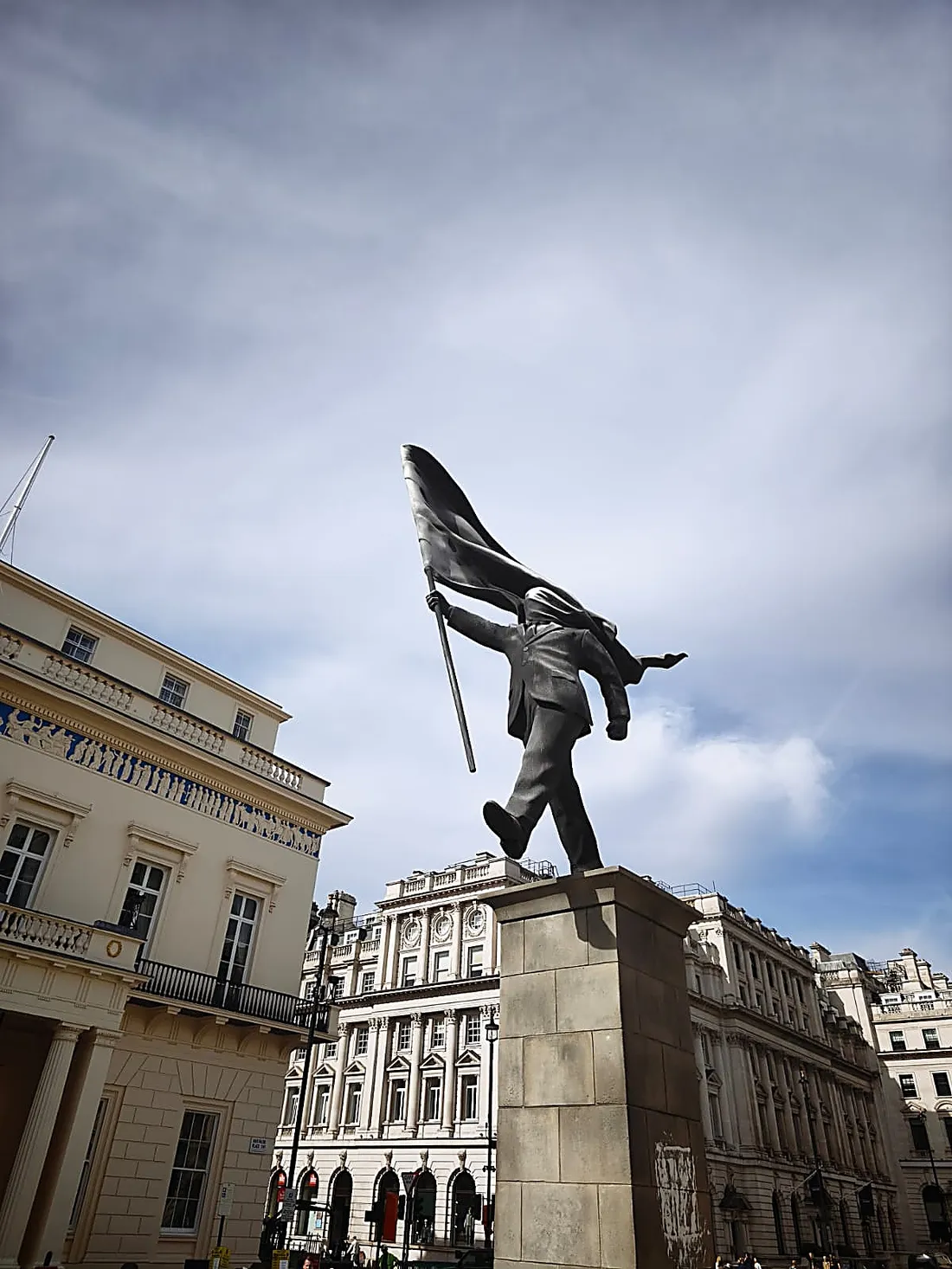
In the centre of London, in the shadow of British imperialism, military victories and gentlemen’s clubs, Waterloo Place became the scene of a startling piece of guerrilla art on 29 April 2026. Brought in at night with nobody noticing, and found by the city when it woke, the sculpture became one of the most current emblems of contemporary art and social criticism.
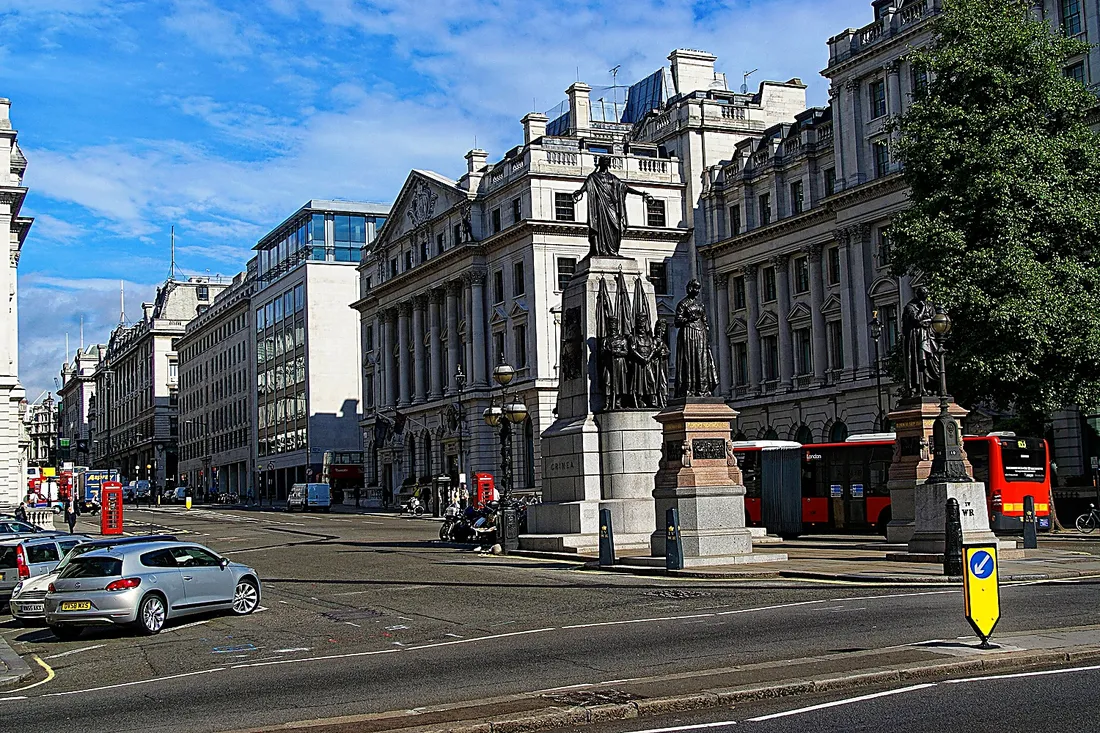
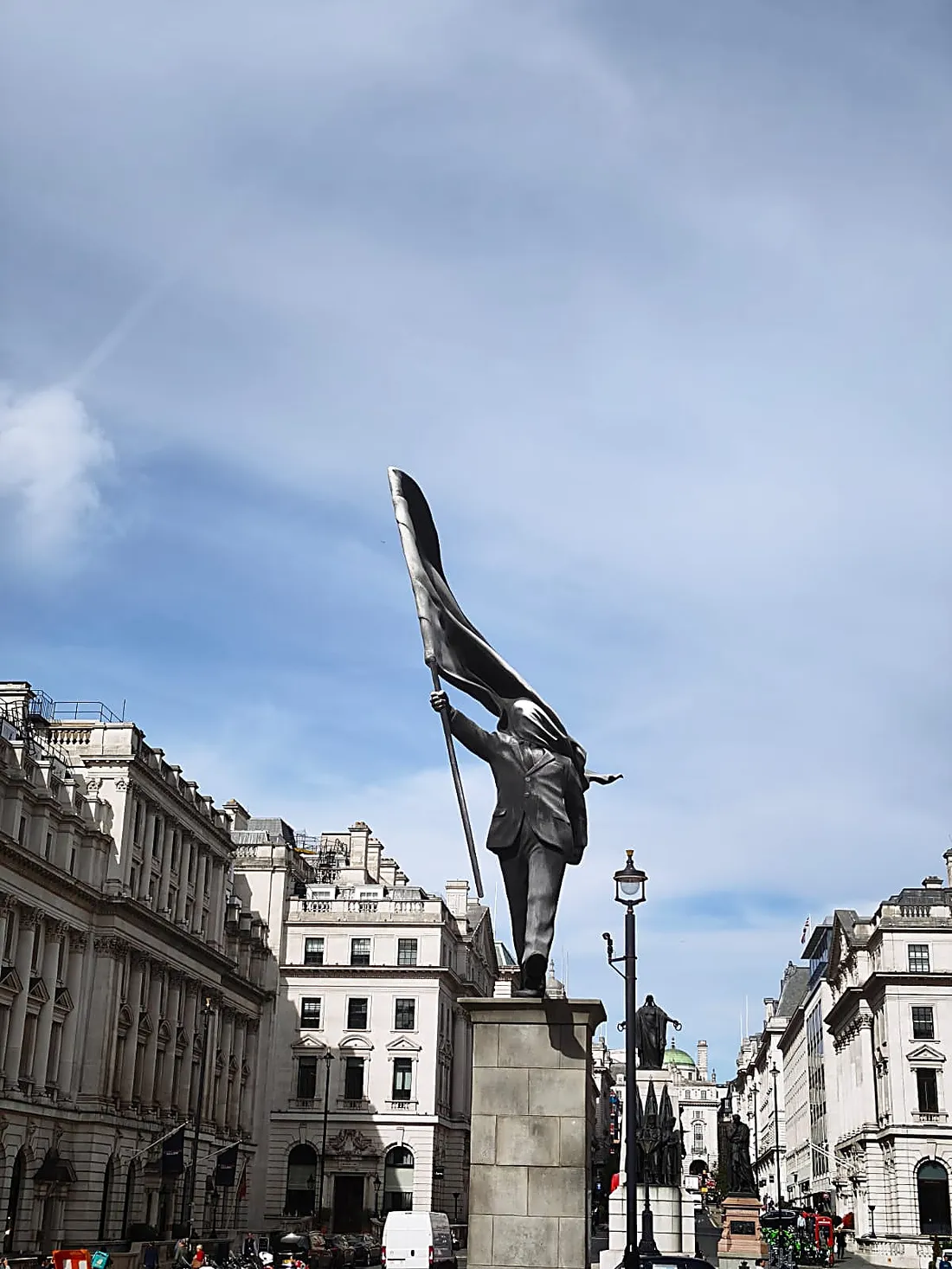
The choice of site was no accident. Waterloo Place is crowded with historical symbols of power, among them the Crimean War Memorial and the statue of King Edward VII. The memorial itself reads like a confession: the three guardsmen John Bell raised in 1861 were cast from Russian cannon taken at the siege of Sevastopol. The monument to victory is made of the enemy’s weapons. Beside it stands Florence Nightingale with her lamp, a reminder of the nights she spent at the barracks in Scutari among thousands of soldiers dying not of wounds but of typhus and cholera. In one square the bronze of triumph and the true bill for that triumph stand side by side, and for a century and a half almost nobody has read both at once.
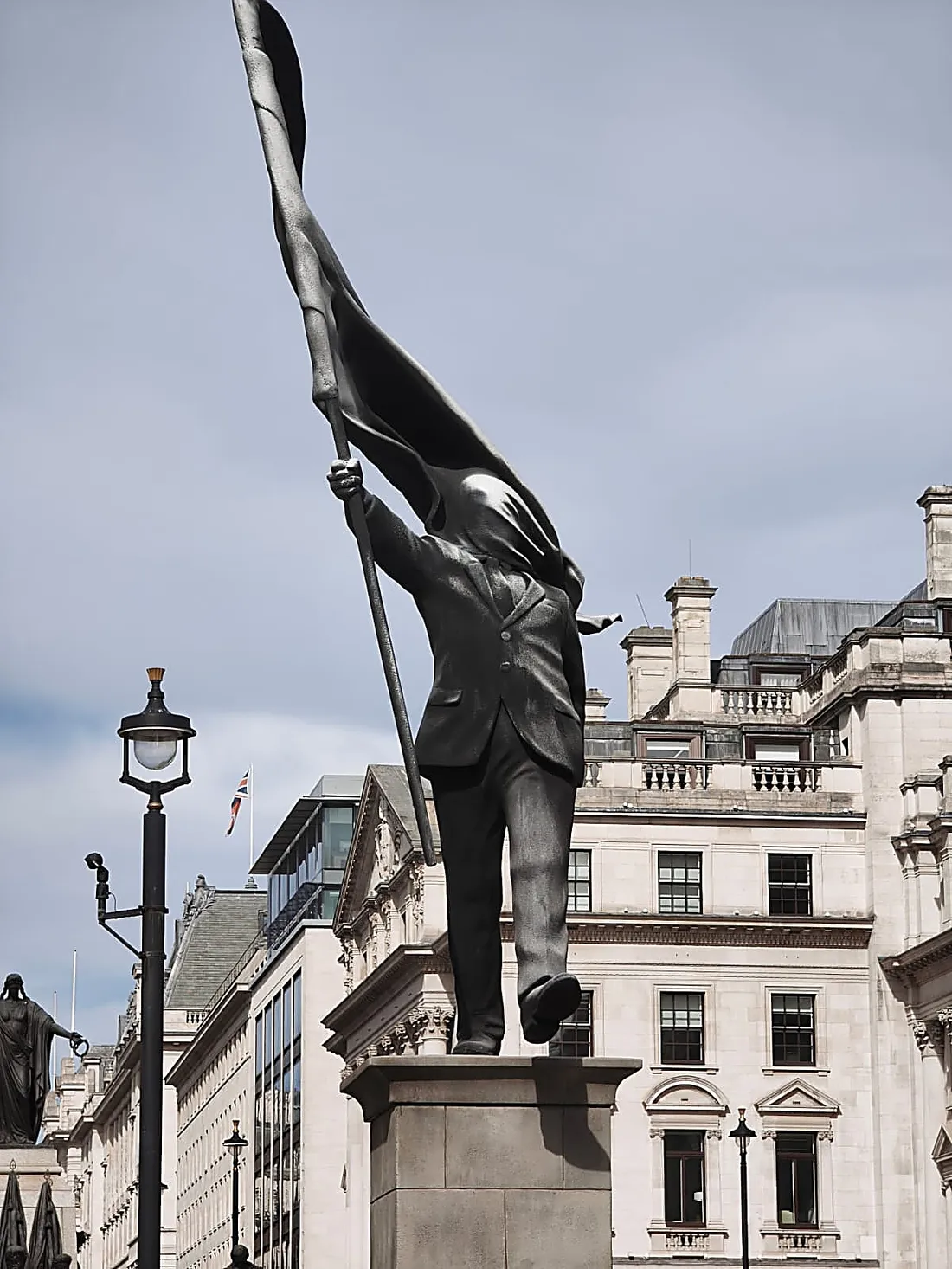
It is exactly this militarist and imperial inheritance that Banksy confronted, with one hard image. A man in a suit, a figure who brings to mind a powerful bureaucrat or politician, carries an enormous flag with evident pride. But the wind has wrapped that flag across his face and taken his sight entirely. Blinded by nationalism and by symbols, unable to see the ground beneath him, he is stepping off the high plinth he stands on into empty air.
The artist claimed the work a few days later on his own account, posting a video of how the sculpture had been put up in the dead of night. The title he gave it left no room for argument: Blind Patriotism.
format_quote"The monument to victory is cast from the enemy’s weapons; the one who paid for it is named on no monument at all."
Hasan Bekmezci
So what does blind nationalism actually do? It takes away a person’s power of judgement and puts a sense of belonging in its place. The exchange looks attractive, because thinking is hard work and belonging is free pride. The moment someone stops questioning an idea and starts saying instead that they belong to it, they are no longer looking with their own eye but through the weave of a flag handed to them.
The blindness comes in three stages, and all three have been repeated countless times in history. First the humanity of the other fades; the enemy is no longer a mother, a child, a neighbour, but an adjective. Then the moral measure splits in two, and the same act is necessity when one of ours does it and murder when the other does. Finally criticism is counted as treason, and a society cuts out the one organ that could have shown it its own error, which is the objection raised from inside. After that it is simply a march, and nobody can see the cliff ahead.
Every catastrophe of the twentieth century passed through those three stages. No generation that went to war thought itself the villain; every one of them had been persuaded that it was in the right, and often that it was the wronged party. Those walking behind the flags never thought of themselves as a crowd; they always thought of themselves as a nation. And every time, the bill was paid not by the one who climbed onto the plinth but by the one who walked beneath it.
The most insidious thing about nationalism is this: it gives a person the feeling of being something great without having done anything at all. It produces a man who has learnt no language, mastered no craft and done no good to anybody, yet believes he is superior by virtue of where he was born. Nobody chose where they were born. To boast of something you did not earn is, like Blake’s fool, to look at a tree and fail to see it.
Love of one’s country is another thing entirely and should not be confused with this. To love your land, to look after your neighbour, to use your language well and to want to leave a better street behind you is a virtue. The blindness is not in the love; it is in turning that love into a certificate of superiority, then into a front line, and finally into an excuse.
format_quote"Nationalism gives a person the feeling of being something great without having done anything at all."
Hasan Bekmezci
This is also the spine of Banksy’s thirty-odd years of work. Coming off the walls of Bristol to become one of the most expensive living artists in the world, he has never once shown his face and never once signed a piece and handed it to a gallery. Hiding his identity is not a marketing game but part of the work itself: it forces you to look at what the piece says rather than at the fame of the person who made it.
The plinth is the oldest instrument of power humanity ever invented. It lifts one person two metres above the rest and bends the necks of everyone looking up. Banksy does not demolish the instrument. He leaves it exactly as it is and sets a scene of falling on top of it. That is why the sculpture lands so hard: the man is not standing on the plinth, he is stepping off it, and there is no ground where he is going.
That a sculpture put up in one night and removed within a week should be talked about more than bronze monuments that have held the same square for a hundred and sixty years is an answer in itself. Permanence is not in the material. It is in whether the thing said is true.
In an age where Banksy is satirising the shouting symbols of power in the street, a philosophy of independent watchmaking steps forward that does not shout, does not reach for display, and simply does its work at the highest level.
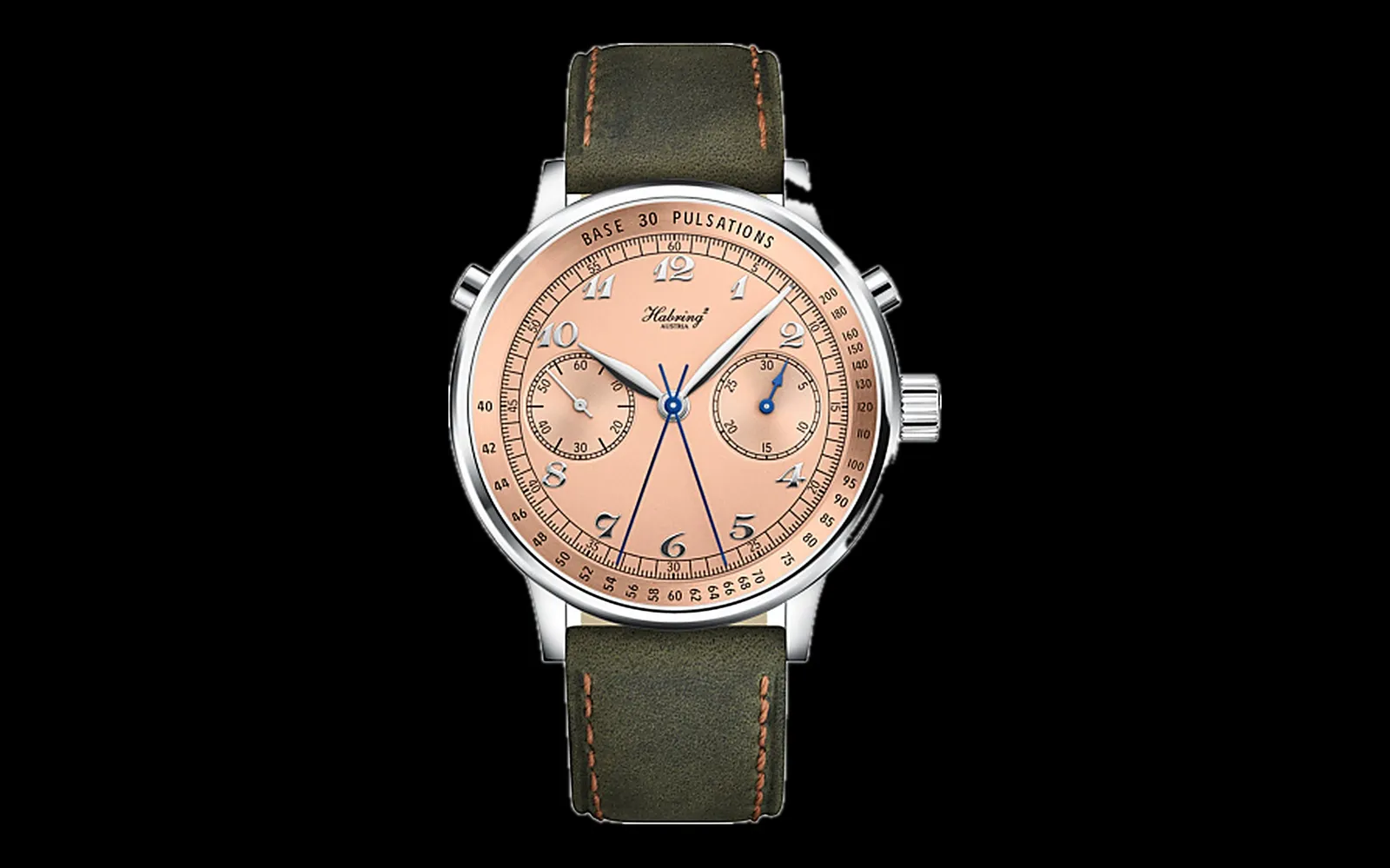
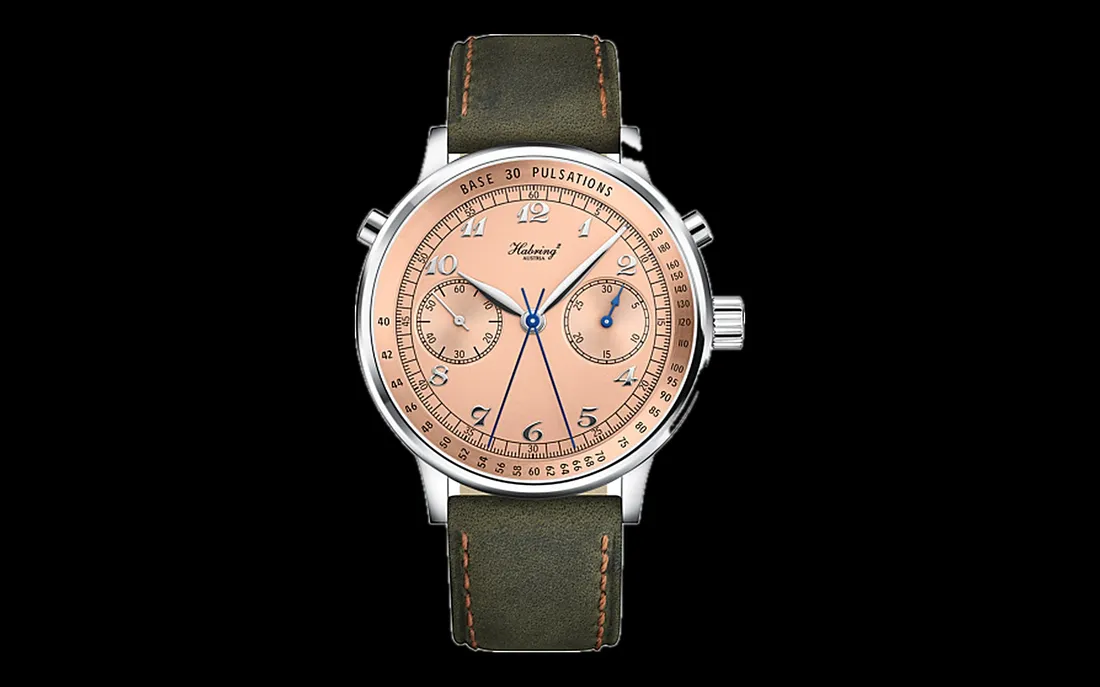
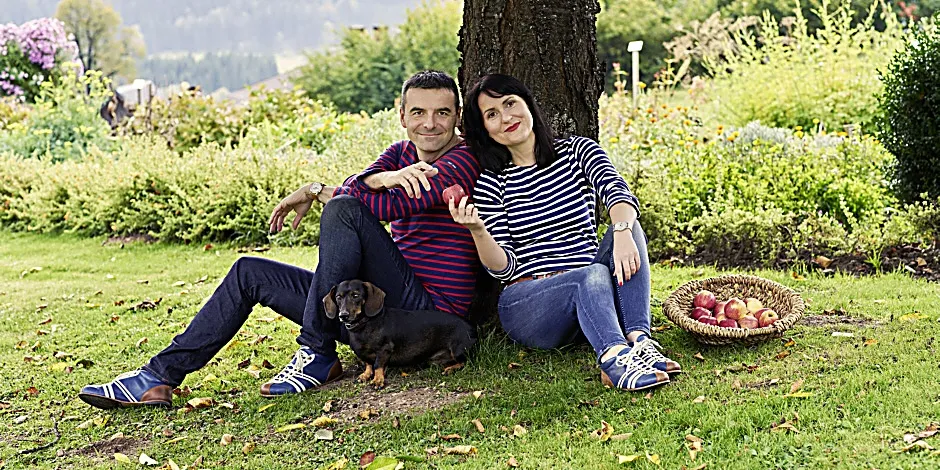
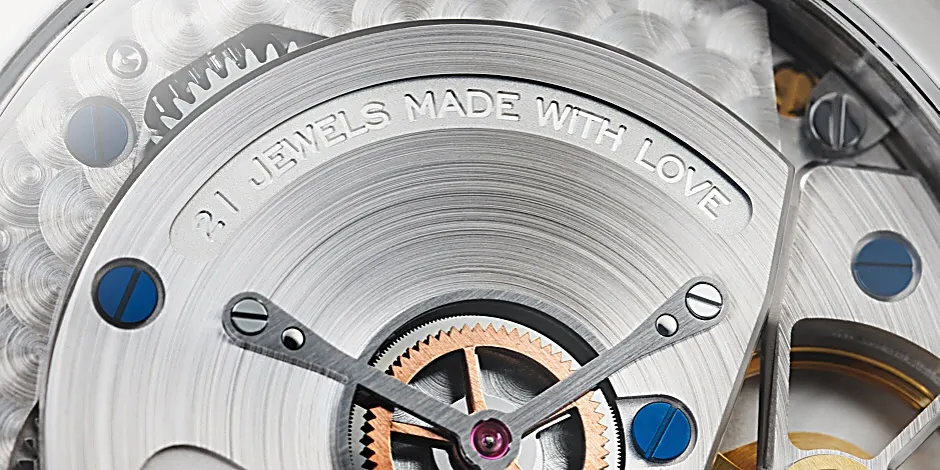
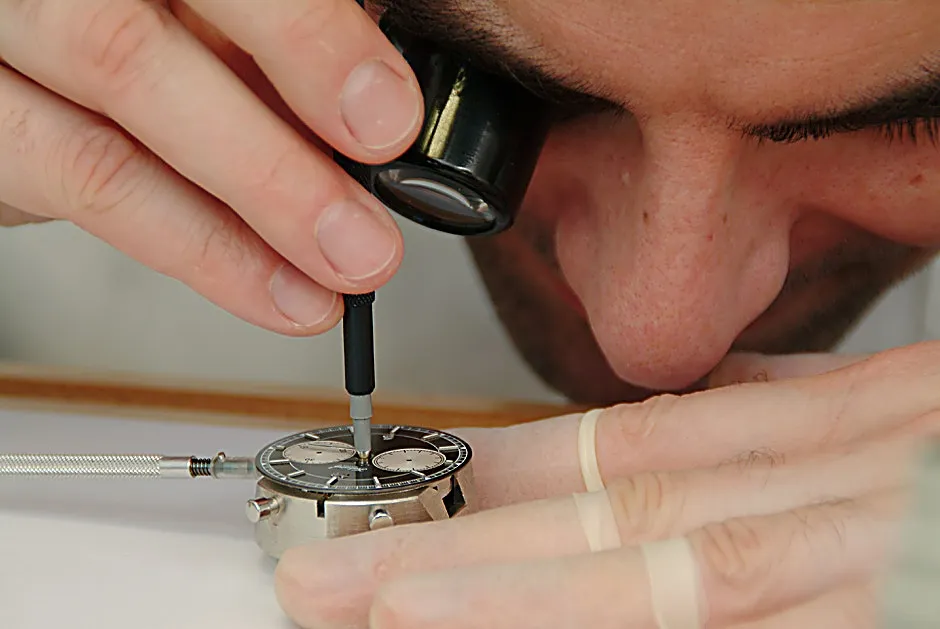
Made in the town of Völkermarkt in the Austrian region of Carinthia by Richard and Maria Habring, the Habring² Doppel 38 is the most refined possible answer to a culture of conspicuous consumption and to watches designed to shout. The brand has no great building, no ambassador, no basketball player, no annual gala. Two people, in a village house, make a few hundred watches a year. The line engraved on one of their movements is the whole manifesto: twenty-one jewels, made with love.
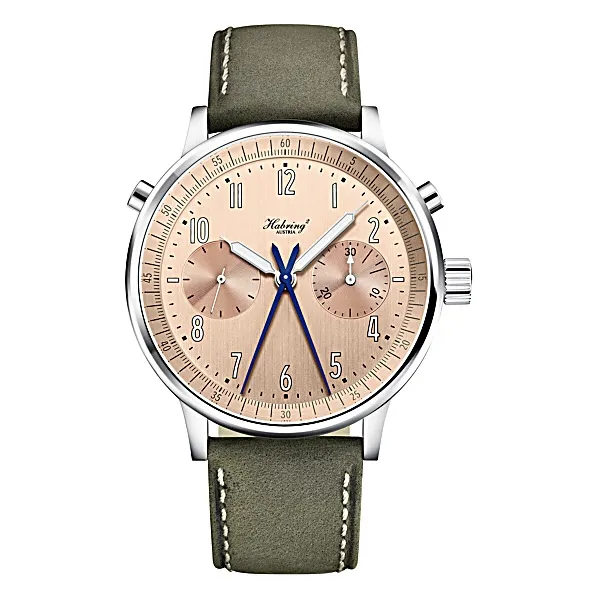
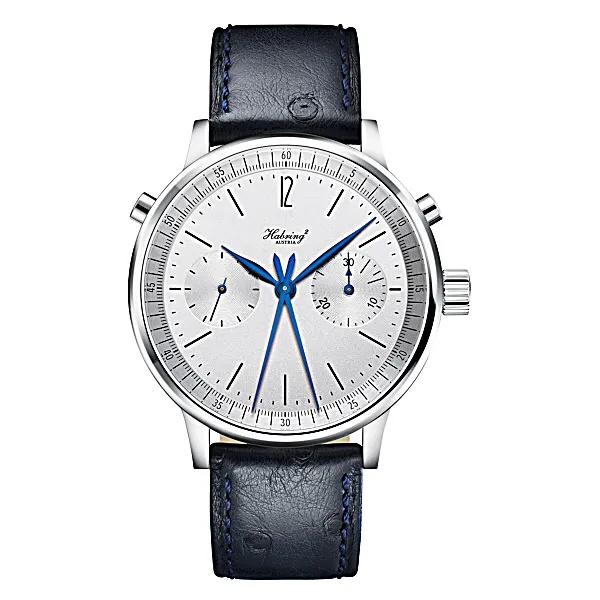
An ordinary chronograph announces itself with two large pushers on the right flank of the case. On the Doppel 38 the pushers are not on the flank at all but on the top edge, at ten and at two: the bullhead layout that is Habring²’s signature on its split-seconds watches. Seen head-on, from the angle the wearer actually looks at it, nothing protrudes from the side of the case. One pusher starts, stops and resets the chronograph; the other freezes the second seconds hand.
Behind that wholly plain dial sits one of horology’s most demanding complications: the Doppelchronograph, the rattrapante, the split-seconds. Two seconds hands rise from the centre, resting one on top of the other, so the eye sees only one. Press the pusher and one of them freezes where it is while the other carries on; press again and the frozen hand catches the other up as if it had never stopped. Built to time two runners at once, it is among the most finely adjusted things that can be put inside a watch.
Richard Habring did not buy this mechanism in. He invented it himself thirty years ago while working at IWC. Until then the rattrapante was a complication found only in the most expensive watches. Habring made it reachable with a clever module sitting on top of a series-production chronograph calibre. Years later, working under his own name, he carried the same idea into a calibre that was entirely his own.
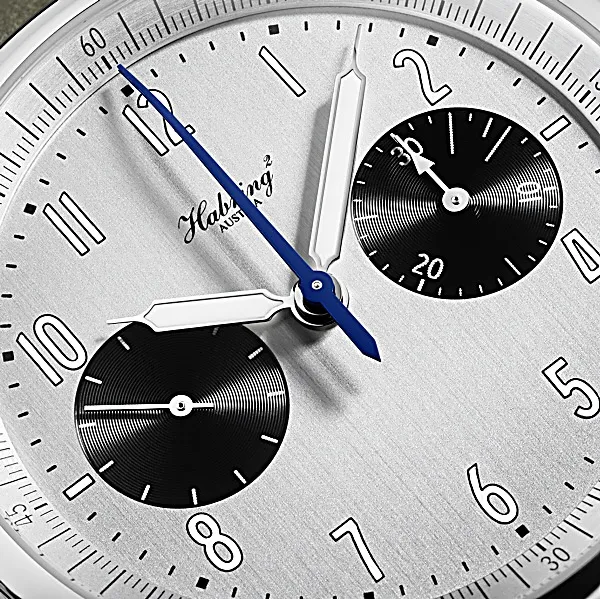
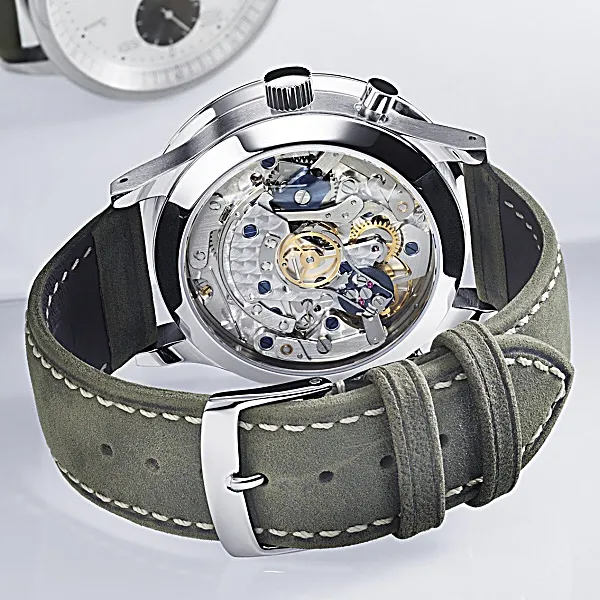
The case is thirty-eight and a half millimetres, forty-one with the bezel, and only eleven and a half millimetres tall excluding the crystal, which is unusually slim for a rattrapante. Built in three parts from 316L steel, its flanks are brushed and its top surfaces polished. The crystal is domed sapphire, the back is sapphire, water resistance is thirty metres, and the serial number is engraved between the lugs at six.
Inside beats Habring²’s own calibre A11R_H1. Thirty millimetres across and seven millimetres high, hand-wound, it runs at twenty-eight thousand eight hundred vibrations an hour and goes forty-eight hours fully wound. It has twenty-seven jewels, is fine-adjusted by a tangential screw, uses a Carl Haas hairspring on its amagnetic escapement, and every movement is regulated to chronometer standard. The count of service-relevant components is ninety-eight.
The dials are silver-plated metal, the registers sunk and circular-finished, the hands polished and heat-blued steel. Even the numeral typeface was not bought off the shelf; it was drawn for Habring² by Lee Yuen-Rapati, a Canadian designer based in London. The watch arrives in a handmade four-part box of brushed and oiled Oregon pine, and inside that box, in case one day you need it, there is a compartment of spare parts.

format_quote"Permanence is not in the material. It is in whether the thing said is true."
Hasan Bekmezci
The feeling of a passing world that comes over us in front of the Sir Henry Unton panel at the National Portrait Gallery, where a birth, a life and a death are laid out on one board of oak, is carried into the street today by the sculpture at Waterloo Place. The man in the suit falling off the plinth has been blinded by the splendour of the flag in his hand and of the office he holds.
Real strength and real quality are not in shouting, nor in hiding behind grand symbols. The measure the Creator gave a human being is not which flag he carried but what he did with the short life that reached his hands. One lifetime, two people, a few hundred watches a year: that needs no plinth.
With not one showy marking on your wrist, the Habring² Doppel 38 divides the hours and the seconds, and goes on ticking as a reminder of how little room an independent, modest, deep intelligence actually takes up against the pomp of a passing world.

format_quote"The measure the Creator gave is not which flag you carried, but what you did with the short life that reached your hands."
Hasan Bekmezci
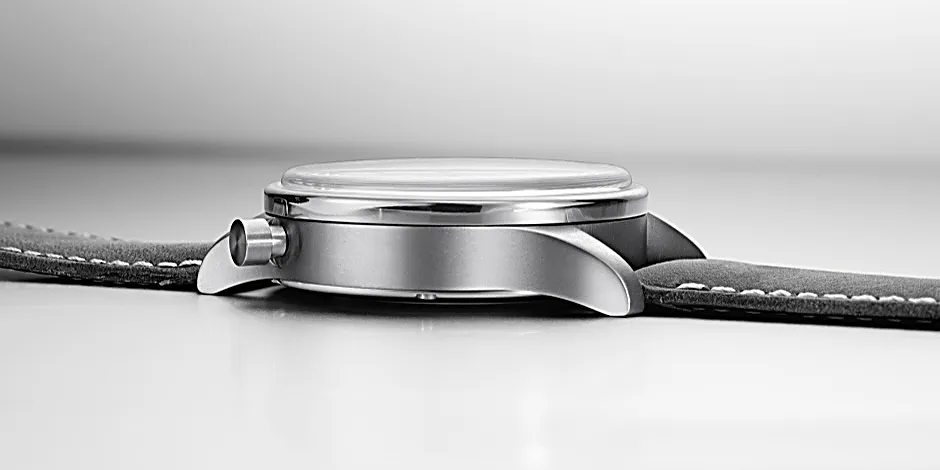
The watch on its maker’s own site: Habring², Doppel 38