In the heavy, existentialist Paris of the years after the Second World War, where the trumpet coming out of the jazz cellars of Saint-Germain-des-Prés mixed with the bleakest pages of French literature, a man was walking the streets whose mind would not fit into any mould: Boris Vian.
He was not only a writer. He was a qualified engineer out of Centrale, a trumpet player who respected no boundary, a devotee of biology and pathology, a contrary alchemist who took the mechanics of words apart and put them back together like the wheels of a watch. Written in 1947, L’Écume des Jours, Froth on the Daydream, is one of the most dreamlike and most tragic masterpieces in French literature, and it gave birth to a world that pushes the limits of reason.
Vian was not telling an ordinary love story. Against the suffocating rigidity of reality, he had put on the surrealist armour of imagination. The poetic love of Colin and Chloé comes under threat from an invisible and merciless rule: Chloé falls ill. But the illness resembles nothing medicine knows. A water lily has taken root in her lung.
There is only one way to cure her: to surround her constantly with fresh, living, beautiful flowers, to lull the poisonous lily in her lung to sleep with the scent of the flowers outside. But flowers cost money, Colin’s runs out, and as the illness advances Chloé’s room shrinks, the walls close in, the light fades. For Vian the human soul and the rooms it lives in were fluid structures that changed shape with the frequency of the pain being felt.
The novel’s other impossible invention is the pianocktail: every note struck on the piano releases a different spirit through the pipes behind the keys, so that the music mixes a cocktail matching its own emotional resonance. As the melody turns bitter the drink gets harder; as the harmony grows the drink becomes a sweet elixir.
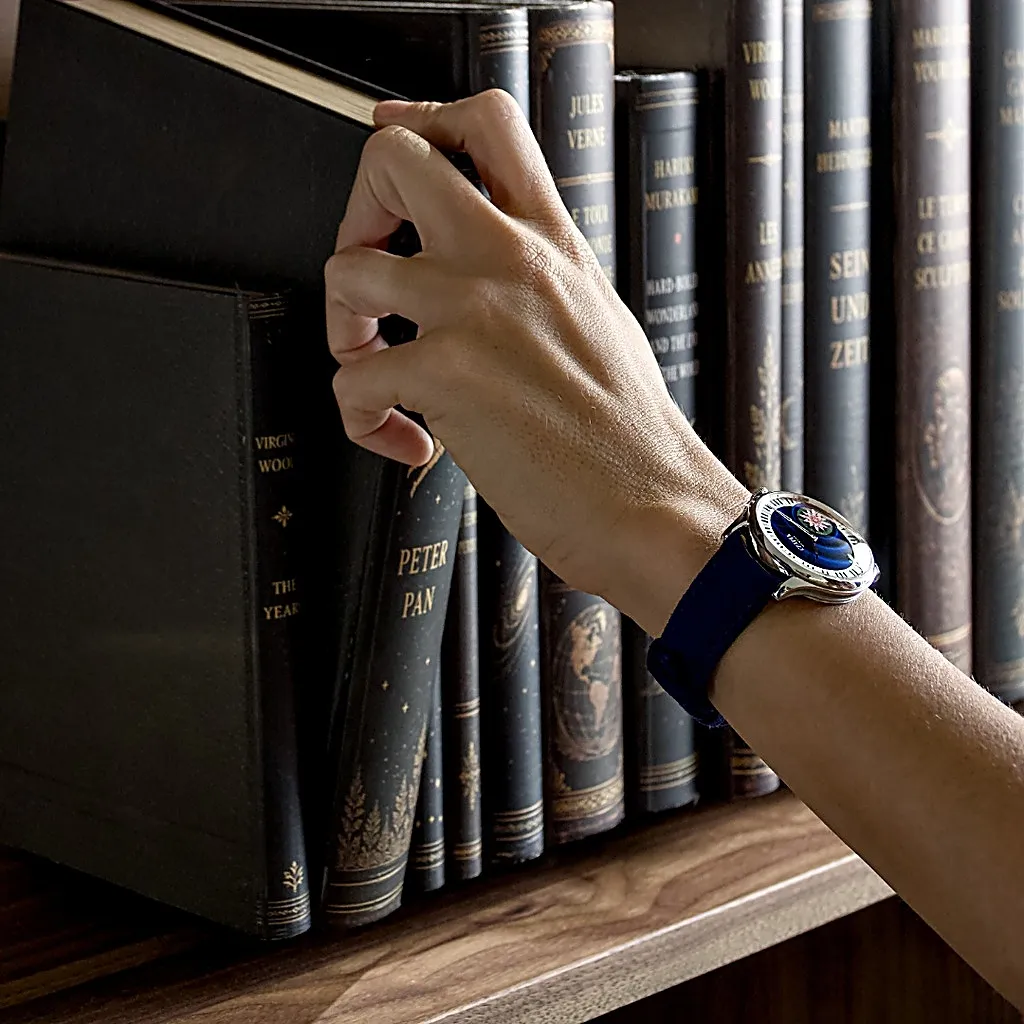
format_quote"For Vian, rooms were fluid structures that changed shape with the frequency of the pain being felt."
Hasan Bekmezci
That tragic water lily which steers Boris Vian’s literature points, in biology, to the exact opposite: one of the most perfect cleansing mechanisms on earth.
Rooted in still water and in marshes, the water lily is born in the middle of mud, of rotting organic matter, of an airless bed. Its roots are deep in the dirt, and yet almost nothing sticks to the leaf and the petals it lifts to the surface.
A distinction has to be made here, because two different plants are constantly confused. The flower in Vian’s novel, and the flower on this dial, is the nénuphar, the white water lily, Nymphaea. The legendary self-cleaning property that materials science calls the lotus effect was described on a cousin living in the same water, the sacred lotus, Nelumbo nucifera. When the botanists Wilhelm Barthlott and Christoph Neinhuis put that leaf under an electron microscope in the nineteen-eighties and nineties, what they found was something a watchmaker would recognise: the surface is not smooth, it is deliberately rough.
The leaf is covered in waxy bumps on the scale of a micron, and those bumps are covered in crystals on the scale of a nanometre. A drop of water falling on that surface cannot flatten out; its contact area is almost nil, so it becomes a perfect sphere and rolls off at the slightest tilt. As it rolls it takes with it every speck of dust, every bacterium, every spore it meets. The leaf does not clean itself; the drop cleans it, and all it needs to do that is a slope and a mouthful of rain.
The corrosive botanical image that consumes a human being in Vian’s novel becomes, in the real world, the most elegant example of staying spotless without having to flee the dirt. The plant does not leave the marsh. It learns to stay clean inside it.
format_quote"The plant does not leave the marsh. It learns to stay clean inside it."
Hasan Bekmezci
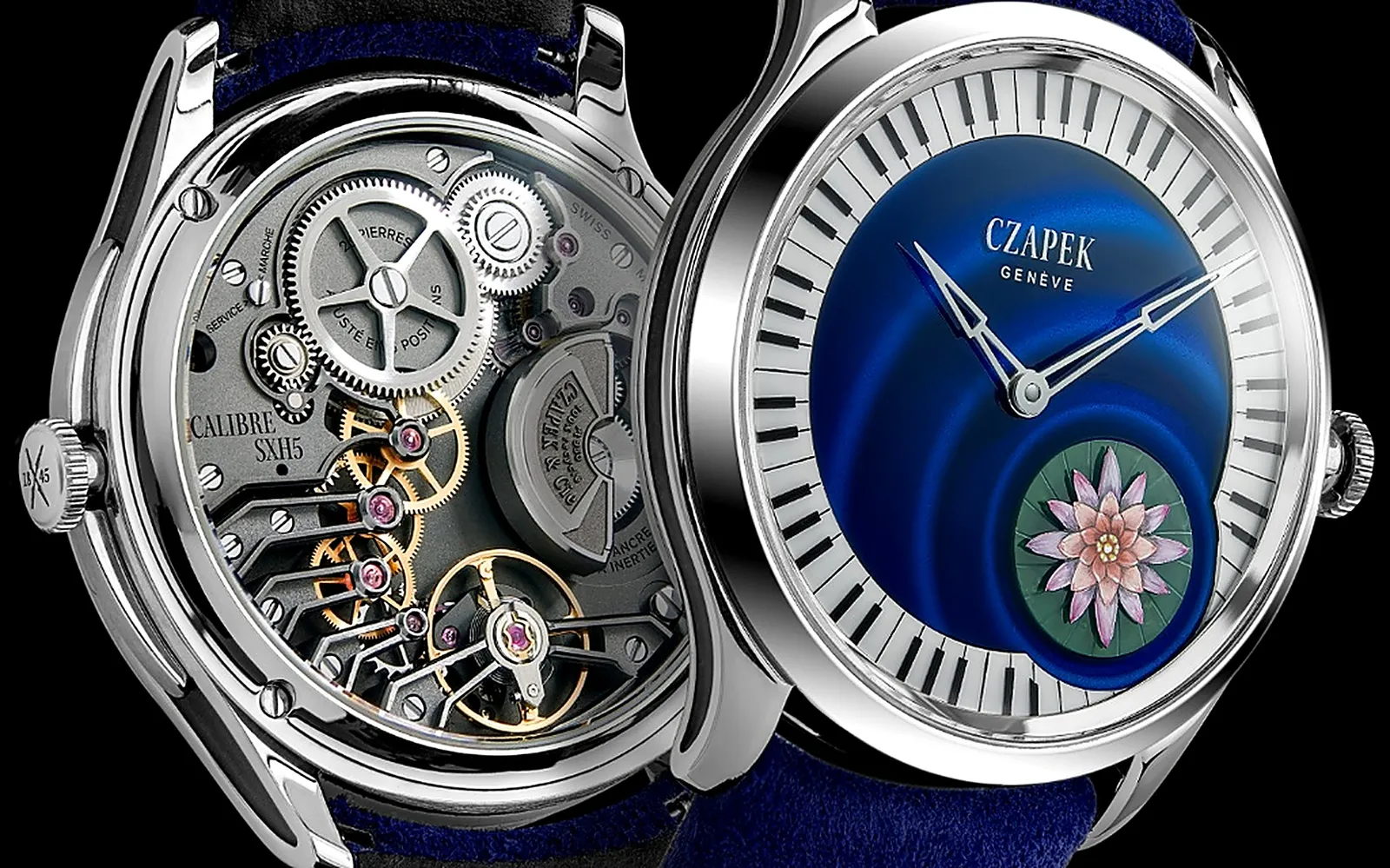
This surrealist masterpiece of literature meets the literary passion of Xavier de Roquemaurel, co-founder and chief executive of Czapek Genève, the most poetic house in independent watchmaking, and is carried to the wrist in the Promenade L’Écume des Jours, made in eighteen pieces only.
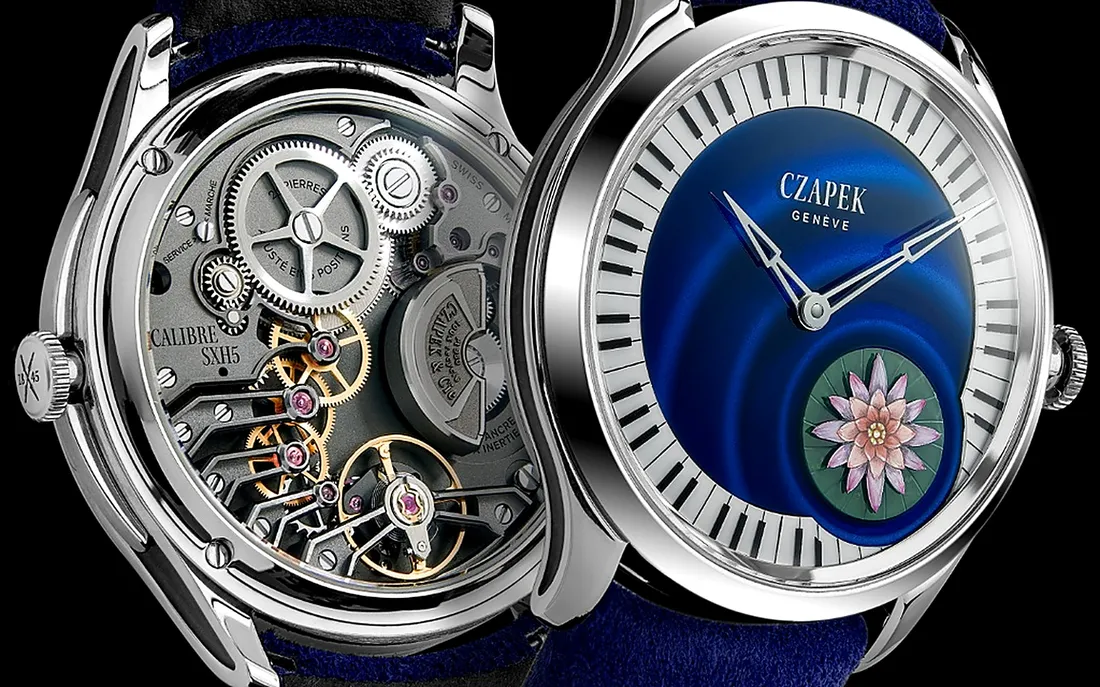
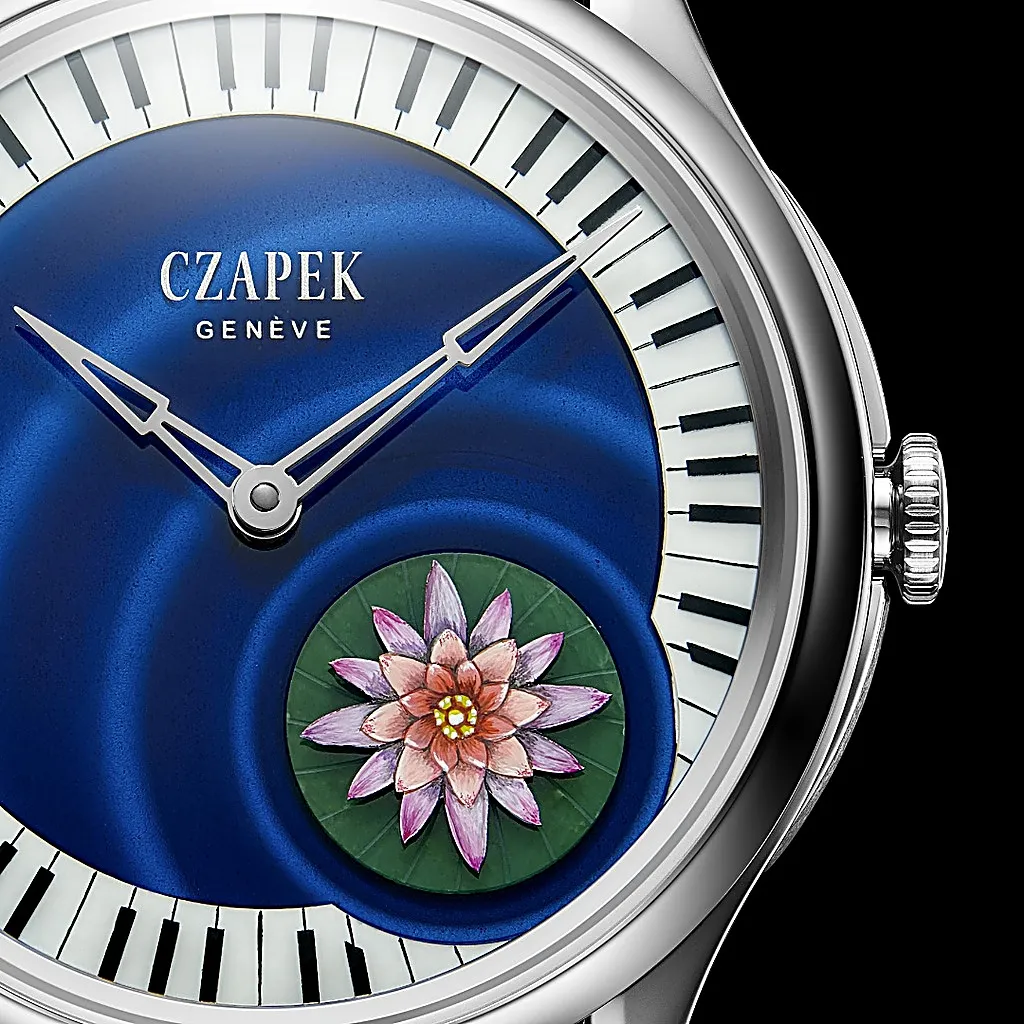
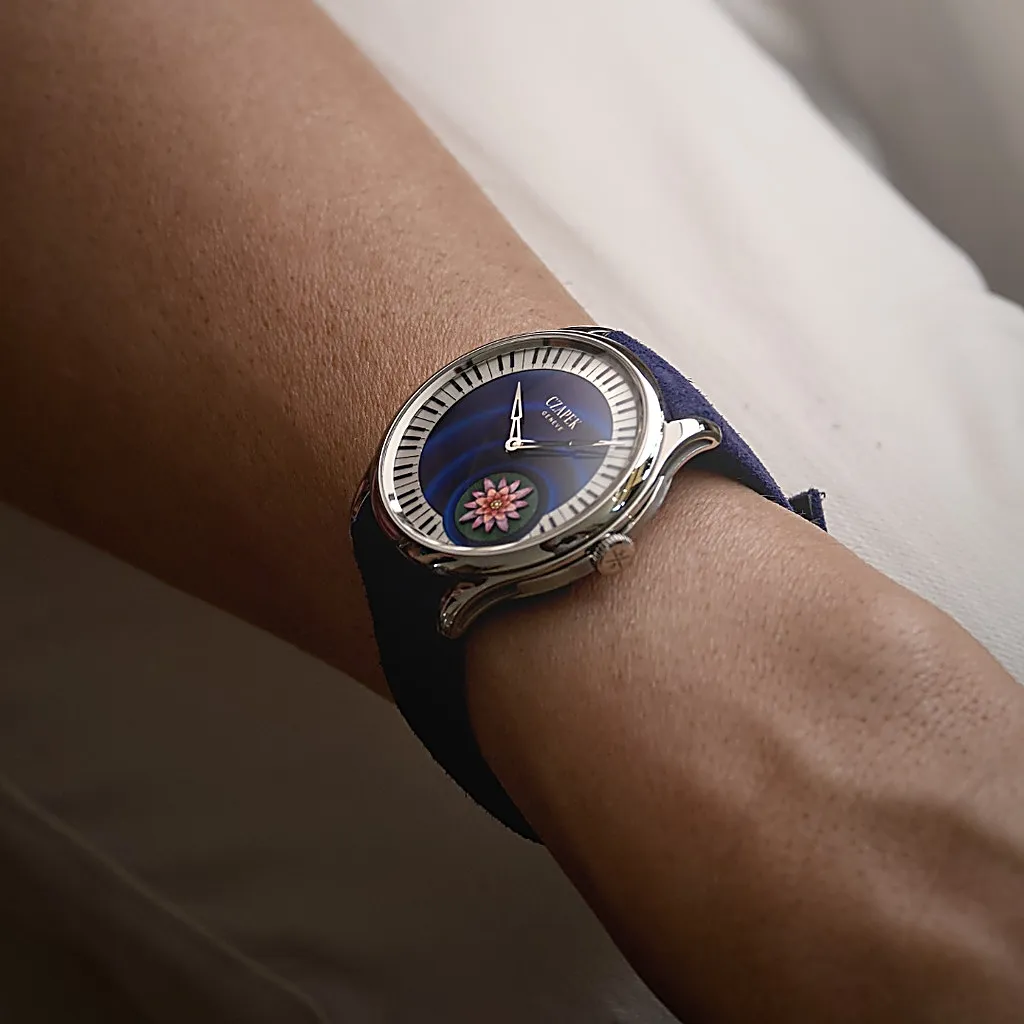
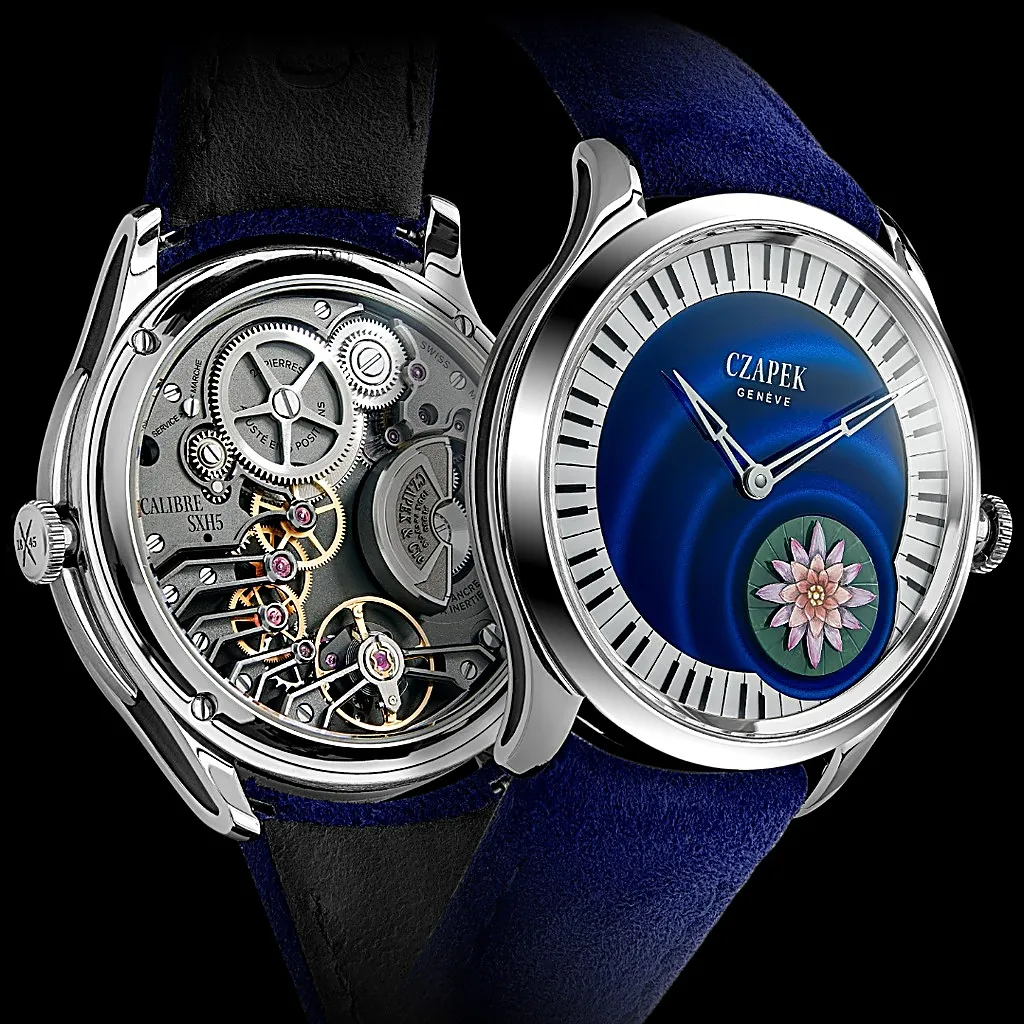
The dial reads less like a plate for measuring time than like a lyric canvas on which the scenes of the novel dissolve into one another. The blue rings at the centre recall the ripple of the first drop to fall into water. The Goutte d’Eau enamel base made in the Donzé Cadrans workshops, the mother-of-pearl ring and the jade disc set by hand into recesses prepared by MD’Art, build the fluidity of water and of feeling up in layers.
The black and white piano keys that ring the dial are painted by hand and whisper that a melody is running out of Vian’s pianocktail. The keys stay still, time moves, and the melody dissolves into the liquid on the dial.

The watch’s most arresting detail is at the lower right. On a jade leaf cut to the micron with a laser stands a water lily made of titanium, coloured by hand in miniature painting. This lily is no ornament; it is the small seconds. Set at four thirty, it turns slowly on the dial as the seconds pass. The reason it is titanium is physics rather than poetry: the tip of a seconds hand can carry only the lightest possible mass, or the movement cannot turn it cleanly.
Every lily is painted one by one and fitted one by one. The eighteen flowers of the eighteen watches are, for that reason, not identical.
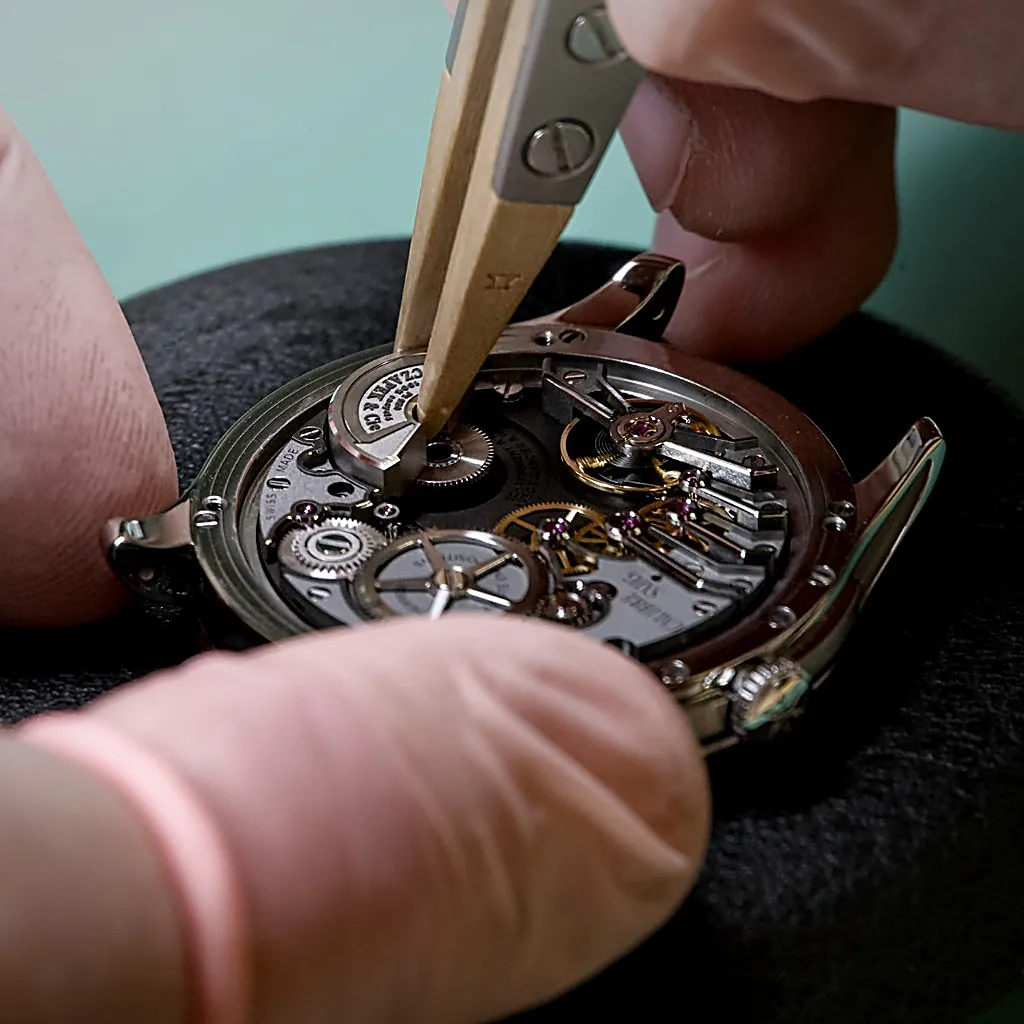
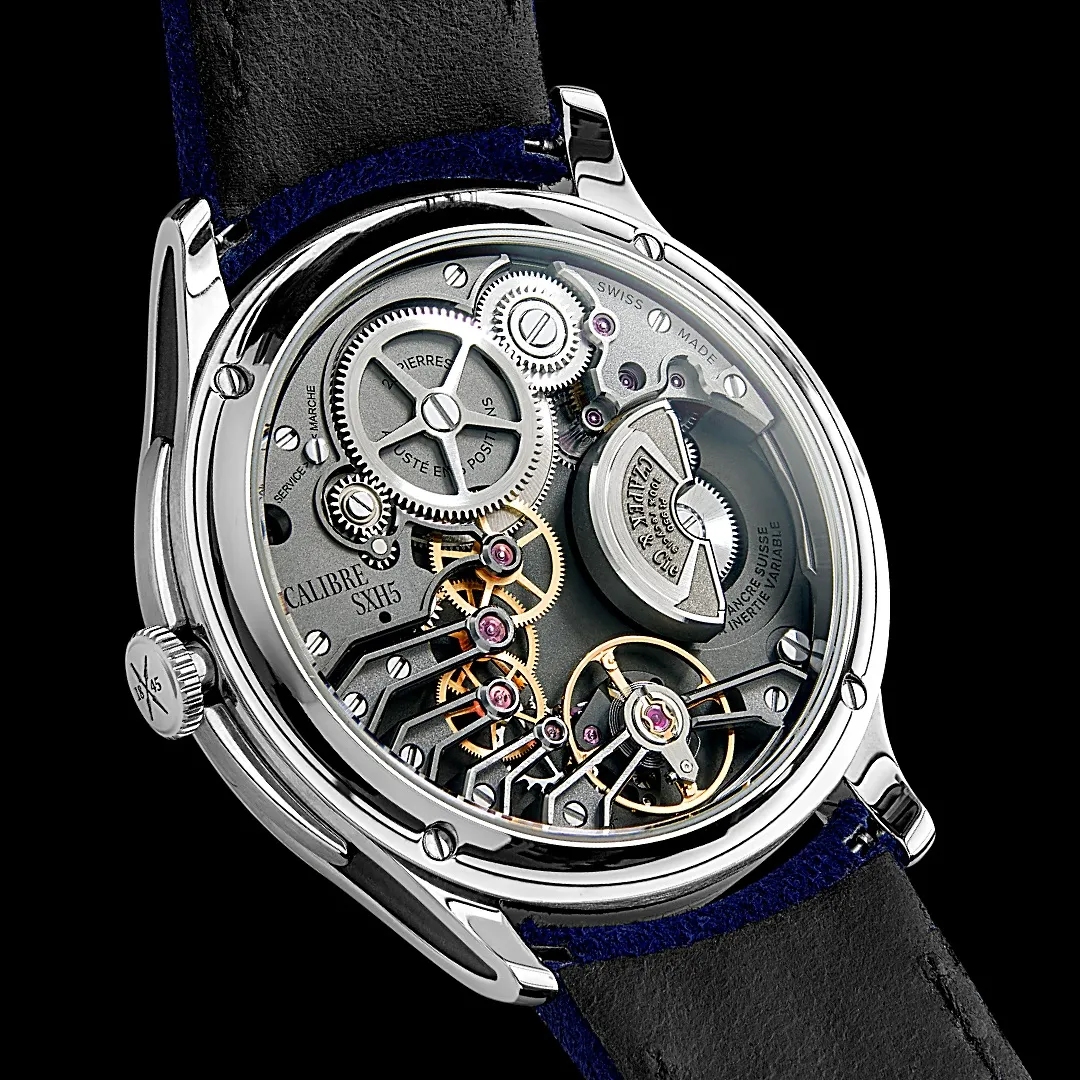
Seen through the sapphire back of the thirty-eight millimetre steel case, the movement is the automatic Calibre SXH5.1. Its winding mass is a micro-rotor cast from one hundred per cent recycled 950 platinum; being a micro-rotor, it does not cover the gear train and the whole movement stays visible. A single barrel gives sixty hours of power reserve, and the frequency is twenty-eight thousand eight hundred vibrations an hour.
The seven skeletonised bridges come from the nineteenth-century pocket watches of François Czapek. They are sandblasted black, bevelled along their edges and straight-grained on their sides. For the Promenade, Czapek’s engineers altered the architecture of the calibre purely for the sake of the dial, moving the small seconds mechanism directly beneath the display and onto the same axis.
Pull the crown fully and the movement stops, so the watch can be set to a time signal to the second. Water resistance is fifty metres. The watch comes on a nubuck strap or a Milanese steel bracelet and carries a three-year warranty. The price is twenty-six thousand eight hundred Swiss francs before tax.
format_quote"Eighteen watches, eighteen flowers, and none of them identical."
Hasan Bekmezci
The Czapek Promenade L’Écume des Jours is more than a mechanical device. It is an instrument on whose single dial the words poured out of Boris Vian’s brilliant mind, the sound of jazz, and a flower that stays spotless inside the mud all meet.
Consider that the bumps on the scale of a micron covering a leaf carry a refinement no laboratory designed. A human being could only see that surface with an electron microscope, and then set about imitating it. Everything imitated has an original, and every original has a maker; the Creator set that measure in place long before anyone looked.
Every time you look at the miniature lily turning on this dial, you understand that time is not only the hours that pass, and that life, exactly as in Froth on the Daydream, is a lyric dream washed in love, in music, in fragility, and in that spotless refinement of creation.
The watch on its maker’s own site: Czapek Genève, Promenade L’Écume des Jours