In the closing decades of the nineteenth century America was churning with the ambitions of the Gilded Age, the artificial courtesies of a rising bourgeoisie and the private bargains struck in smoke-filled back rooms.
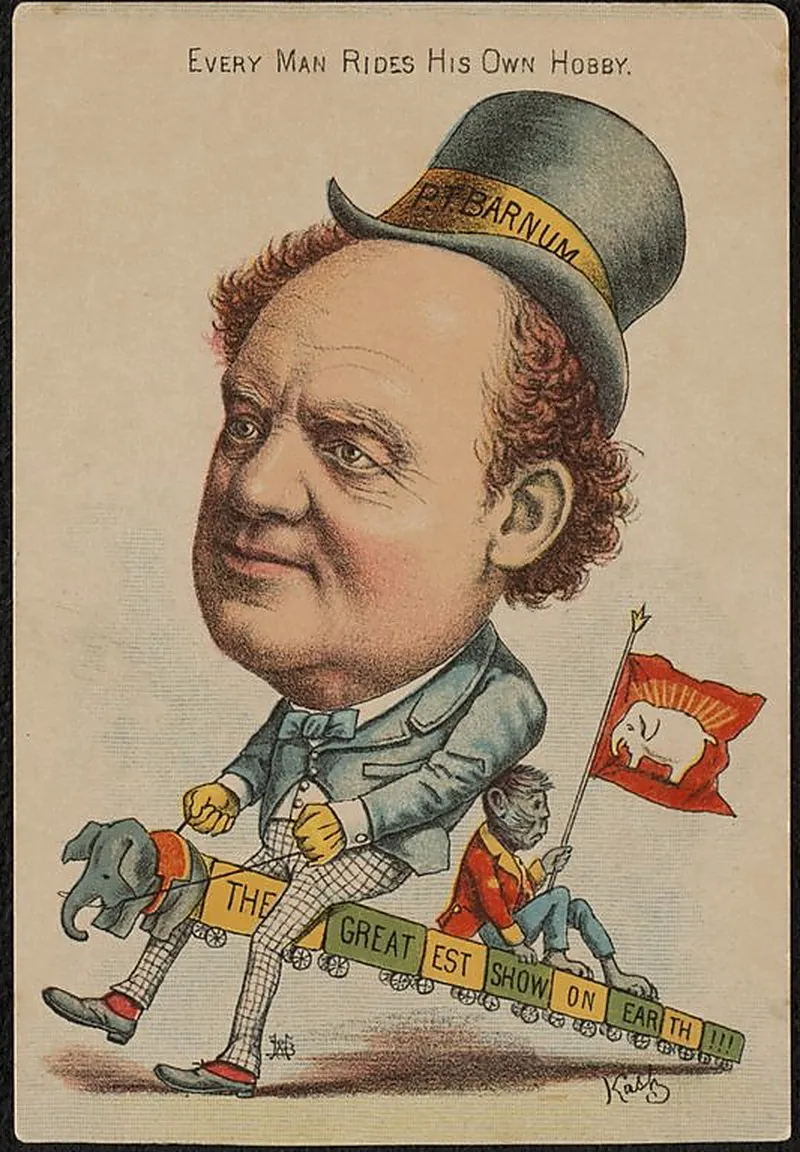
Cassius Marcellus Coolidge was born in 1844 in the town of Antwerp, New York; those close to him called him Kash, and he signed his nineteenth-century work with that name. He was not only a painter: after sign painting, banking, pharmacy and newspaper publishing he turned into one of the most sought-after illustrators of his day. A list of a man’s trades is sometimes a list of how carefully he was watching.
When Coolidge looked at the men’s clubs of that period, at those smoky back rooms, this is what he saw: men in suits, drawing on cigars, stoic and serious expressions fixed on their faces. At the table they were laying sly plans to swindle one another, to bluff, to take an opponent’s last cent. Humanity was exalting its own vanity under the names of strategy and gentlemanliness.
And exactly here the unsettling spark caught in Kash’s mind: if I take the suits and the titles of gentleman off these men, what is left?
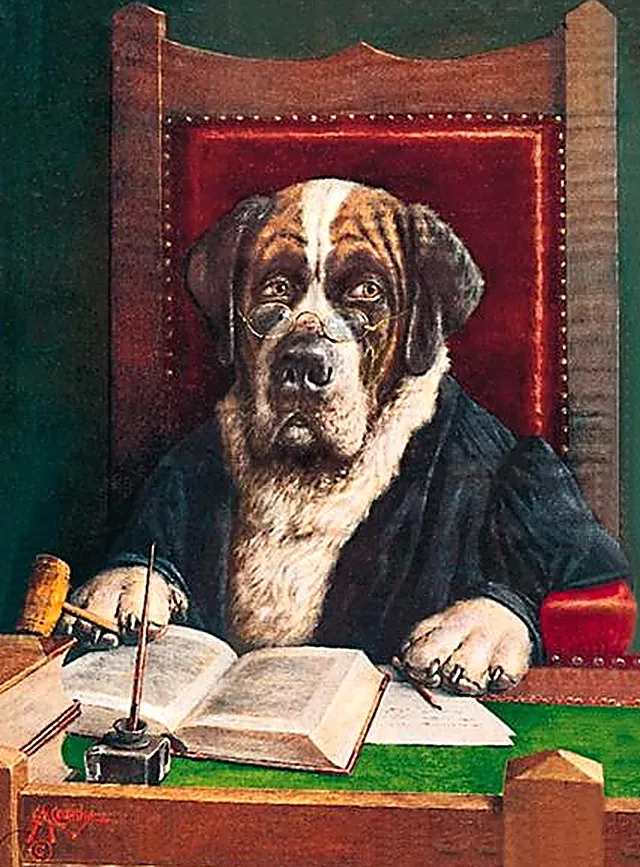
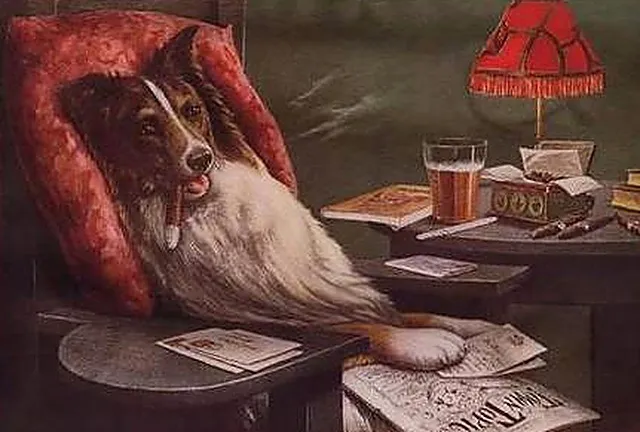
Coolidge sat Saint Bernards, stubborn bulldogs and sly terriers in the places of the men at the table. The dog was, by its nature, the emblem of loyalty, of instinct, of undiluted honesty. By handing them cigars and putting playing cards in their paws, he dressed the filthiest of human drives, greed, cheating and cunning, onto these animals.
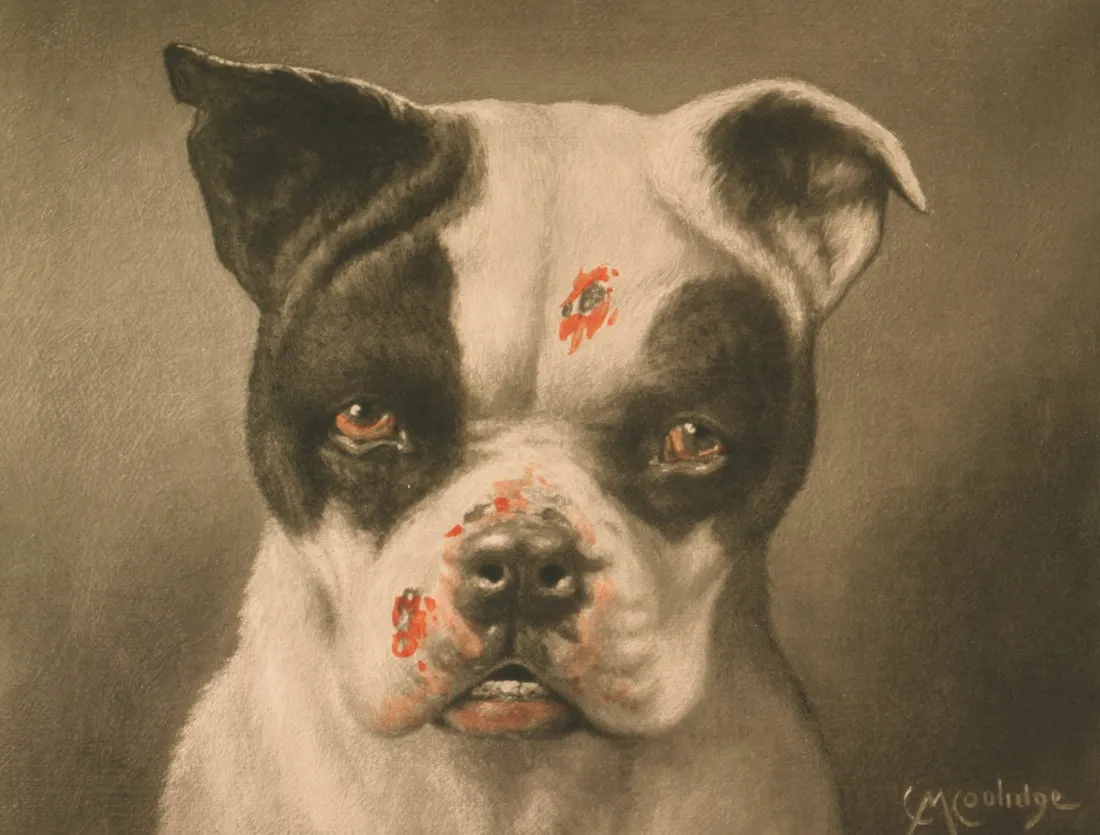
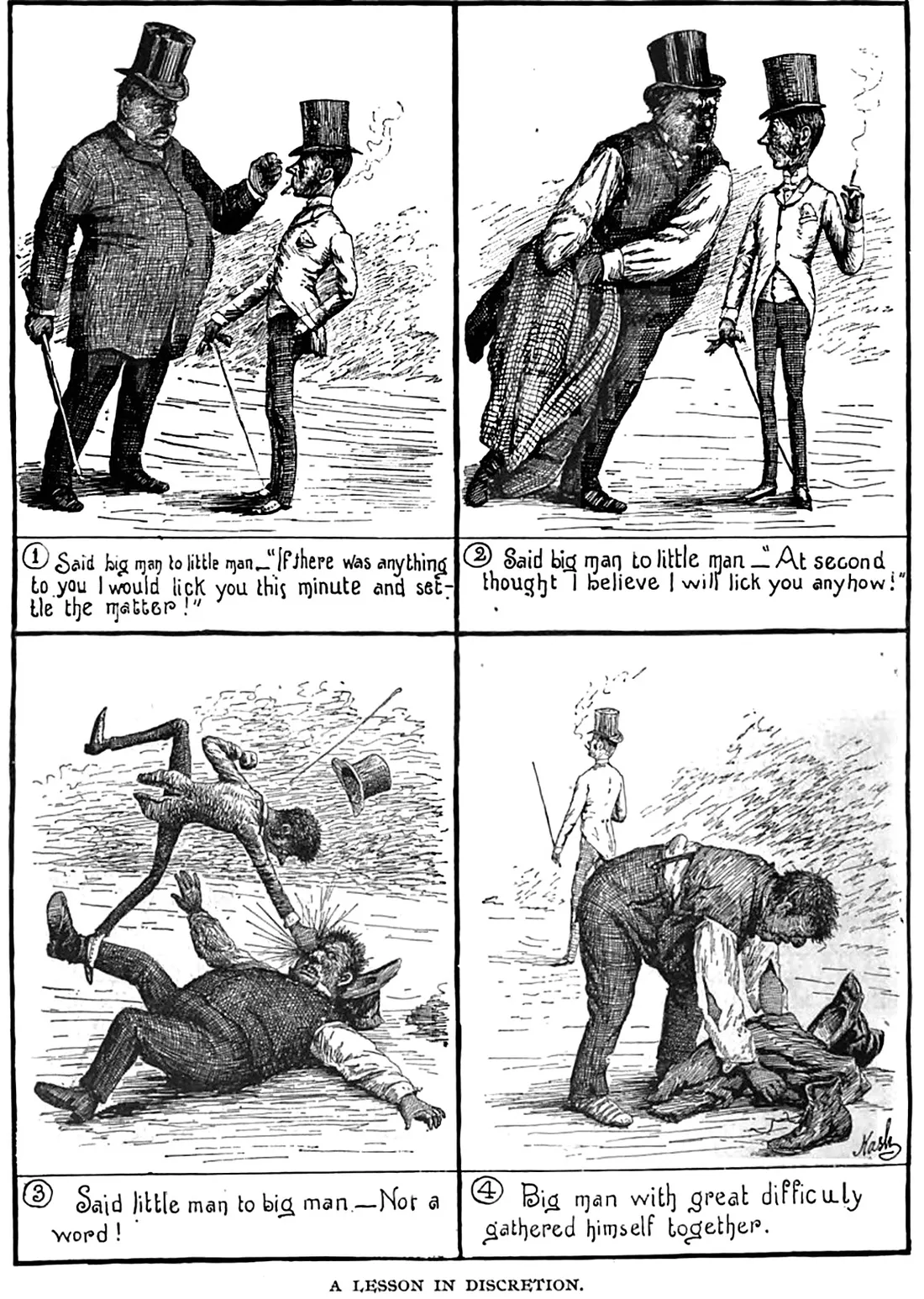
The idea was not born overnight. As early as the 1880s Coolidge was drawing multi-panel ink cartoons of top-hatted men grinding each other down; and in 1895 he gave a portrait of a bulldog covered in lipstick marks this title: I’m a bad dog! What kind of a dog are you? The sentence was not addressed to an animal but to the person standing in front of it. An artist’s sharpest question is usually the one he asks outside the canvas.
The best-known form of the series came in 1903. An advertising firm called Brown & Bigelow commissioned sixteen oils from Coolidge to promote cigars; those sixteen paintings, remembered as Dogs Playing Poker, became the real weight his name would carry. The most reproduced of them is A Friend in Need: a bulldog passing an ace to his friend with his toes, under the table. The hypocrisy behind humanity’s talk of friendship and gentlemanliness had been loaded, in a single brushstroke, onto the back of a dog with saliva running from its jaw.
Coolidge’s second raise was aimed at high art. Against gloomy, elitist, museum-facing painting he built a popular language a labourer, a bar customer and an ordinary person could read. The paintings were made not for museum walls but for calendar sheets, tobacco advertisements and neighbourhood taverns. A century later it is worth remembering which pictures stayed on those walls: the fate of a work is decided not by the wall that hangs it but by the crowd that stands in front of it.
format_quote"An artist’s sharpest question is usually the one he asks outside the canvas."
Hasan Bekmezci
And here, designing the caseback of the Joker Automaton, Konstantin Chaykin and Svend Andersen called Coolidge’s hundred-year raise.
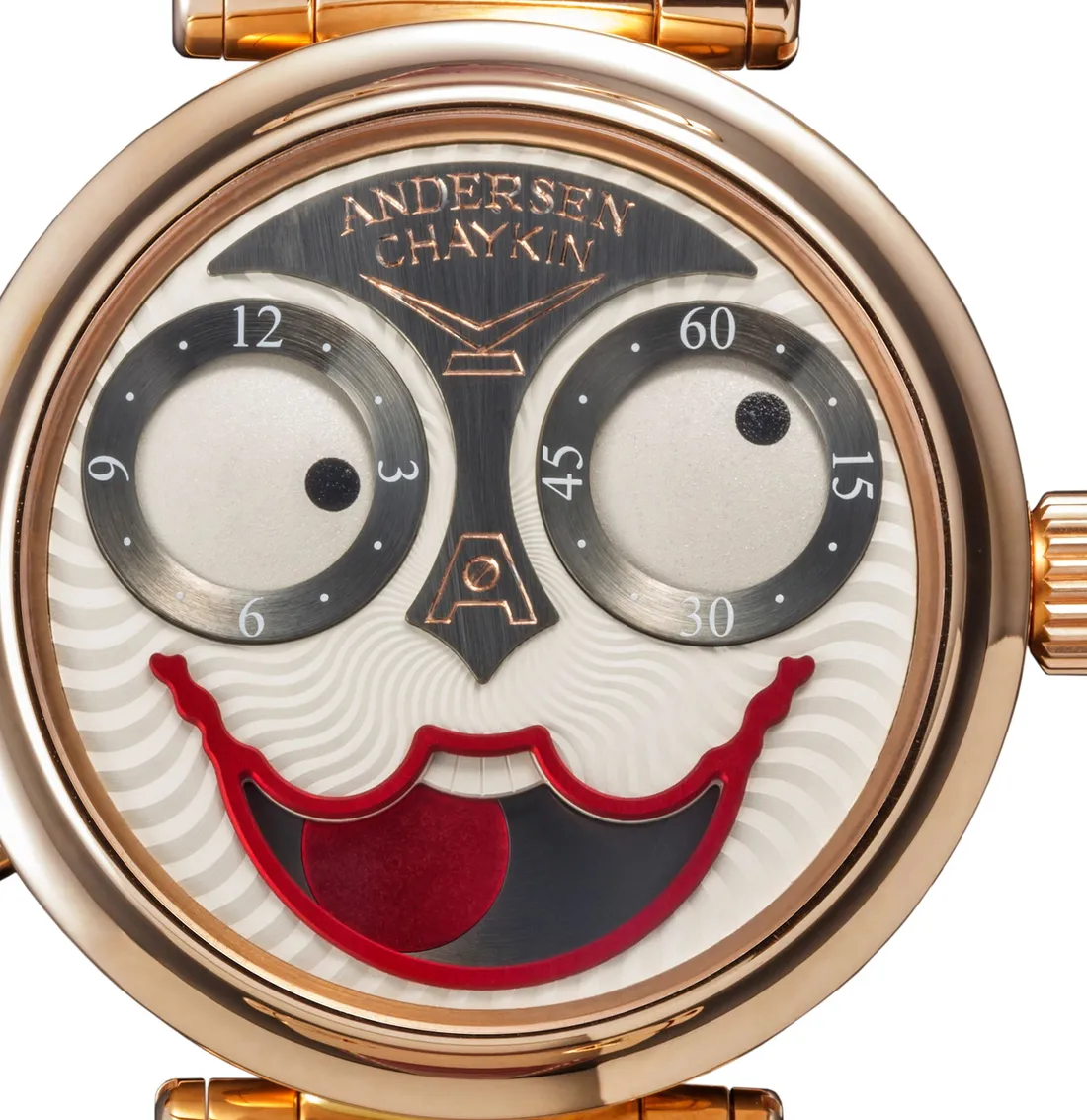
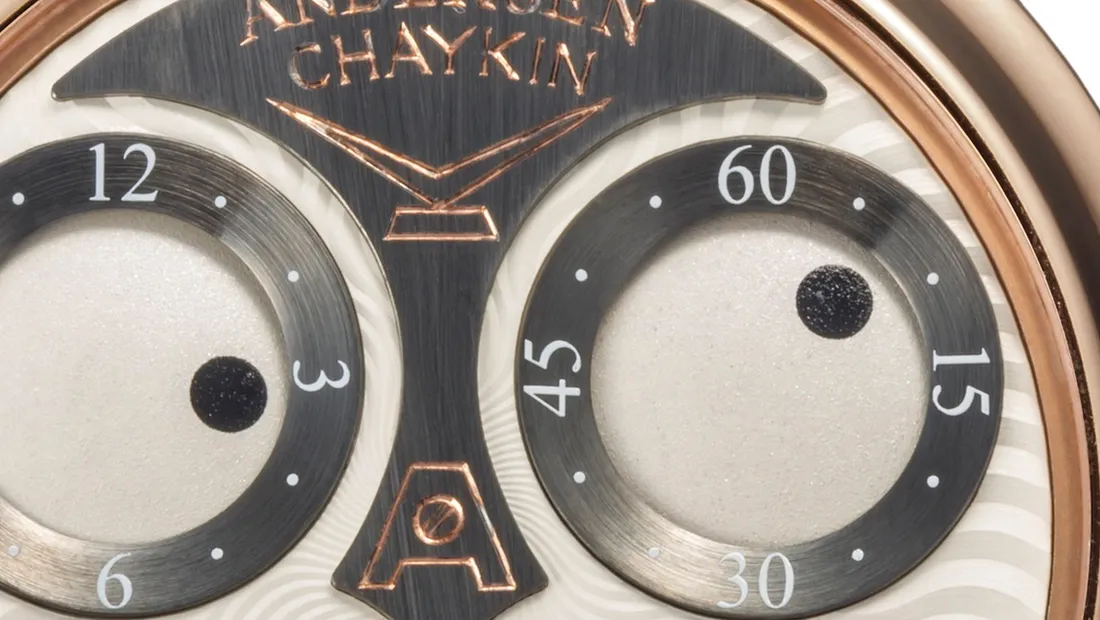
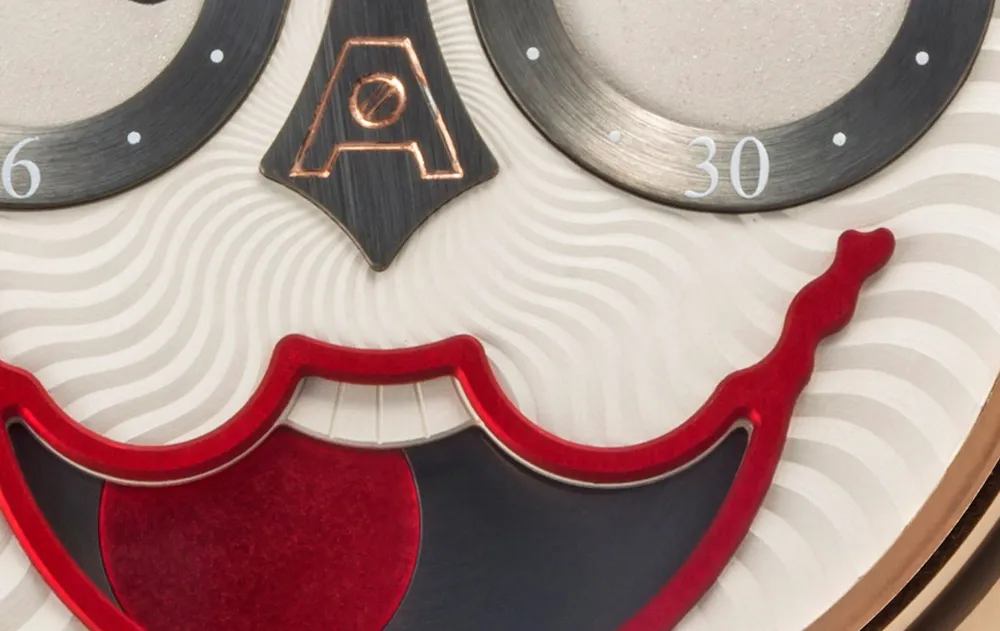
The front of the watch is already a face: the two counters at two and ten o’clock work at the same time as two eyes, their pupils giving the hour and the minute. Where the nose belongs sits the emblem of Andersen Genève, and above the eyes stands Chaykin’s signature. As for the tongue hanging out of that red mouth at six o’clock, it is not a joke but a moon-phase display. To turn a complication into a facial expression is the most expensive form of humour in watchmaking.
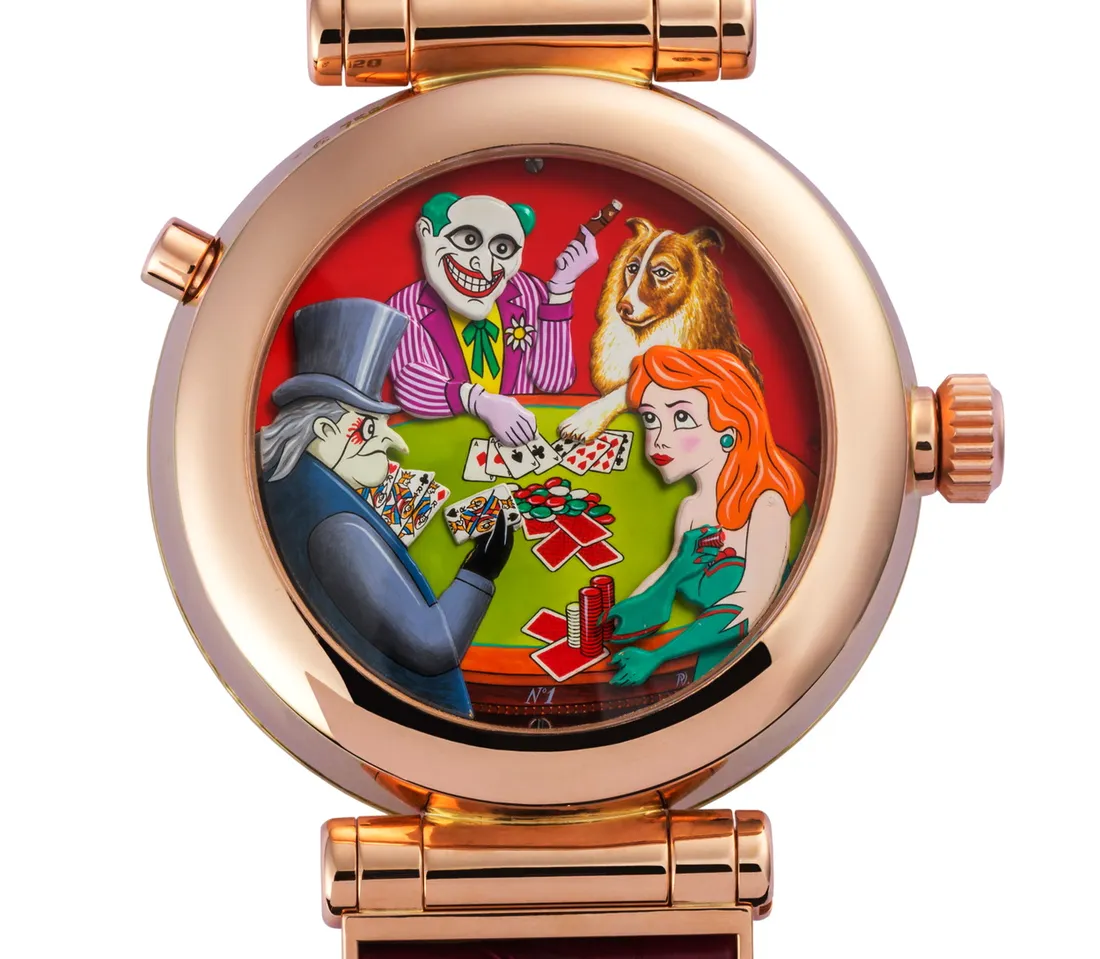
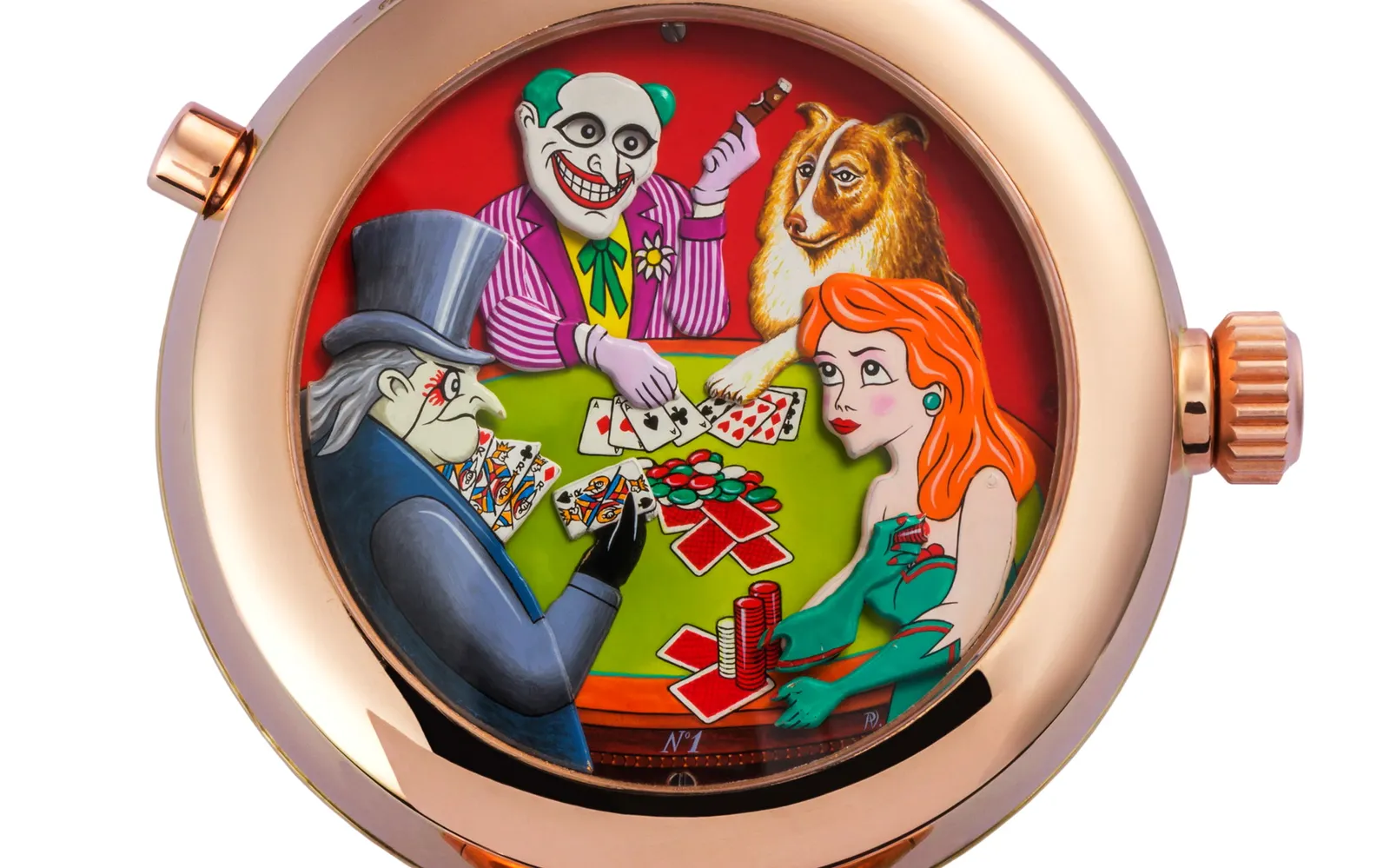
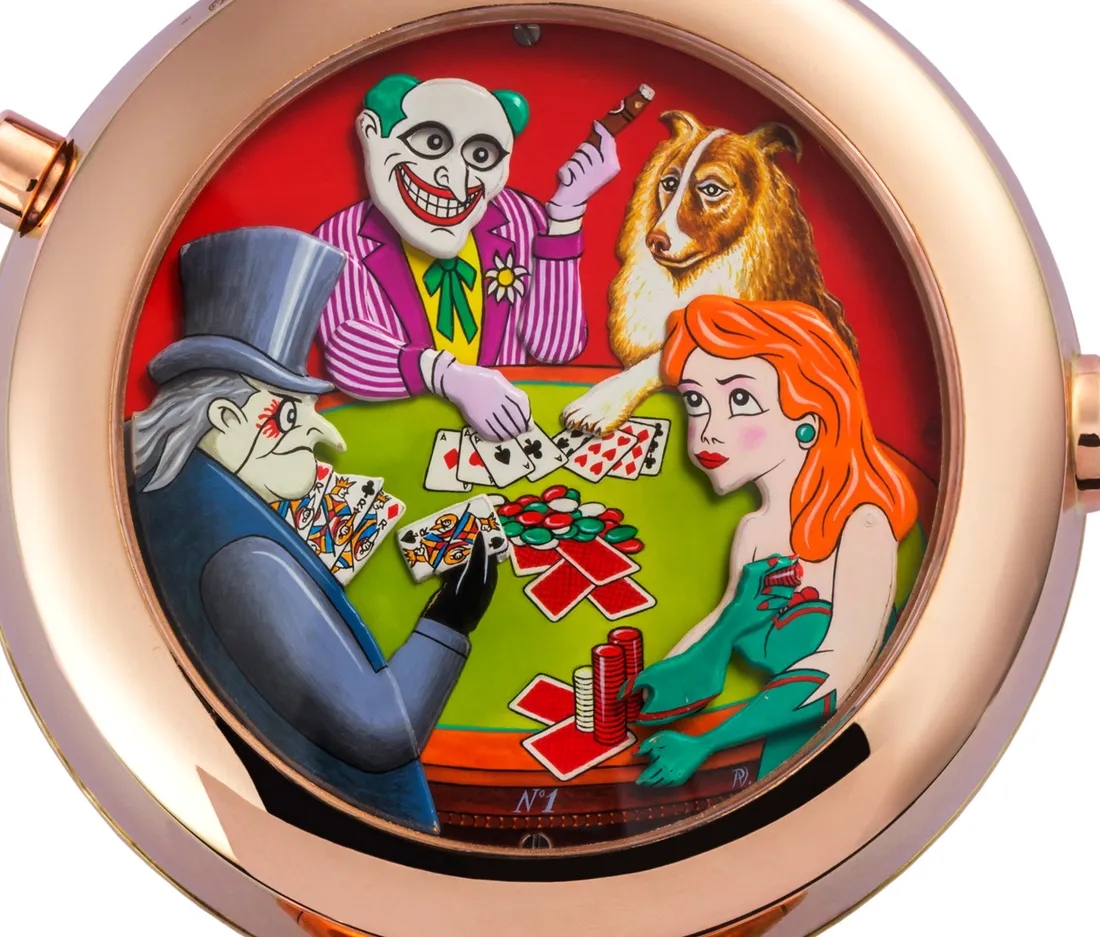
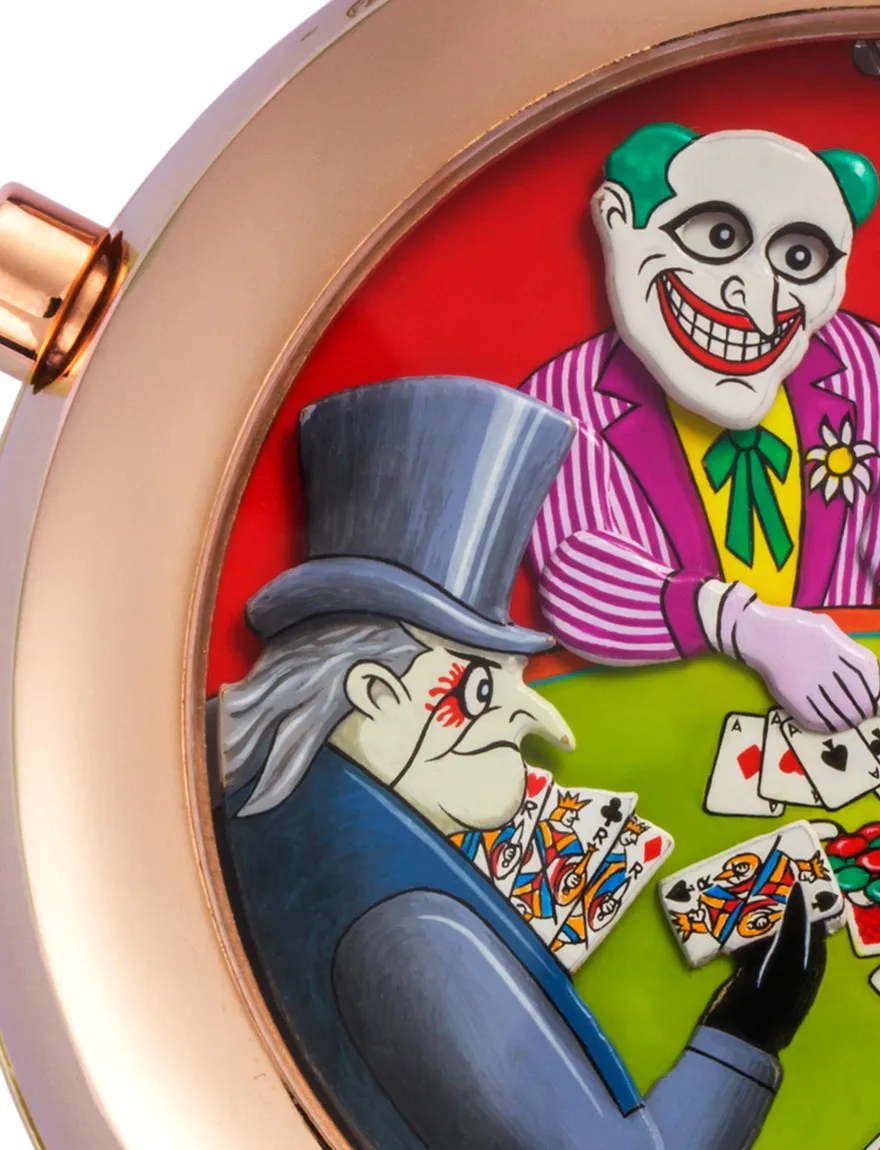
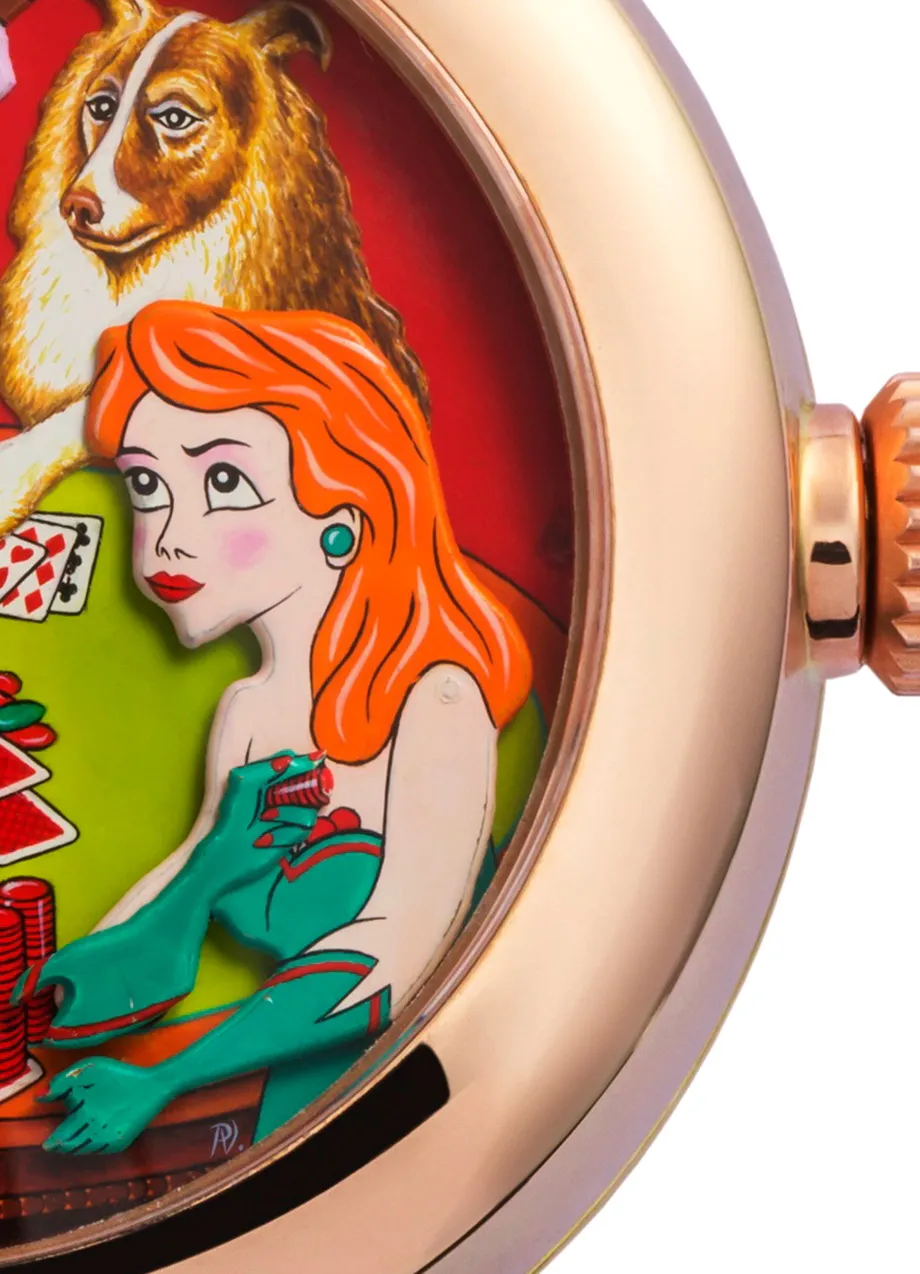
The real scene is at the back. The Eros automaton mechanism Andersen developed years ago has this time been adapted to a poker table. Four characters sit there: the green-haired Joker, the Penguin in his top hat and monocle, a red-haired figure in green gloves, and a collie standing quietly behind them. Press the pusher on the case and all of them move; hands deal the cards, eyes shift, and the woman quietly draws some of the chips on the table towards herself.
Coolidge dressed human hypocrisy in dogs; Andersen and Chaykin closed the circle by seating at that table not the human but humanity’s comic-book caricatures, and one dog. A hundred and fifteen years apart, the two works form the same sentence: the most honest creature at the table is the one not holding cards.
format_quote"To turn a complication into a facial expression is the most expensive form of humour in watchmaking."
Hasan Bekmezci
The laughter Coolidge let out in the tobacco-smelling corners of nineteenth-century rooms turned, in the twenty-first, into a mechanical automaton in the hands of two independent masters from Geneva and Moscow.
Everyone at the table may bluff everyone else; but as long as the wheels behind the caseback keep turning, the winner is always time itself.
format_quote"Everyone at the table may bluff everyone else; but as long as the wheels keep turning, the winner is always time itself."
Hasan Bekmezci