At the Foot of a Granite Wall
In the Swiss Alps, when the first light struck the granite wall, the rock was still ice cold. As the free climber Lena worked chalk into her fingers, she looked up: eighty metres of sheer stone, not a single resting point. Beside her, her friend Theo, who would belay her, was pulling the rope from his pack.
Lena reached to take something off her wrist and stopped. Theo noticed: "Are you not taking your watch off?" Lena smiled. "I used to," she said. "On every climb I killed a watch by knocking it against the rock wall. In the end I found one I did not have to take off."
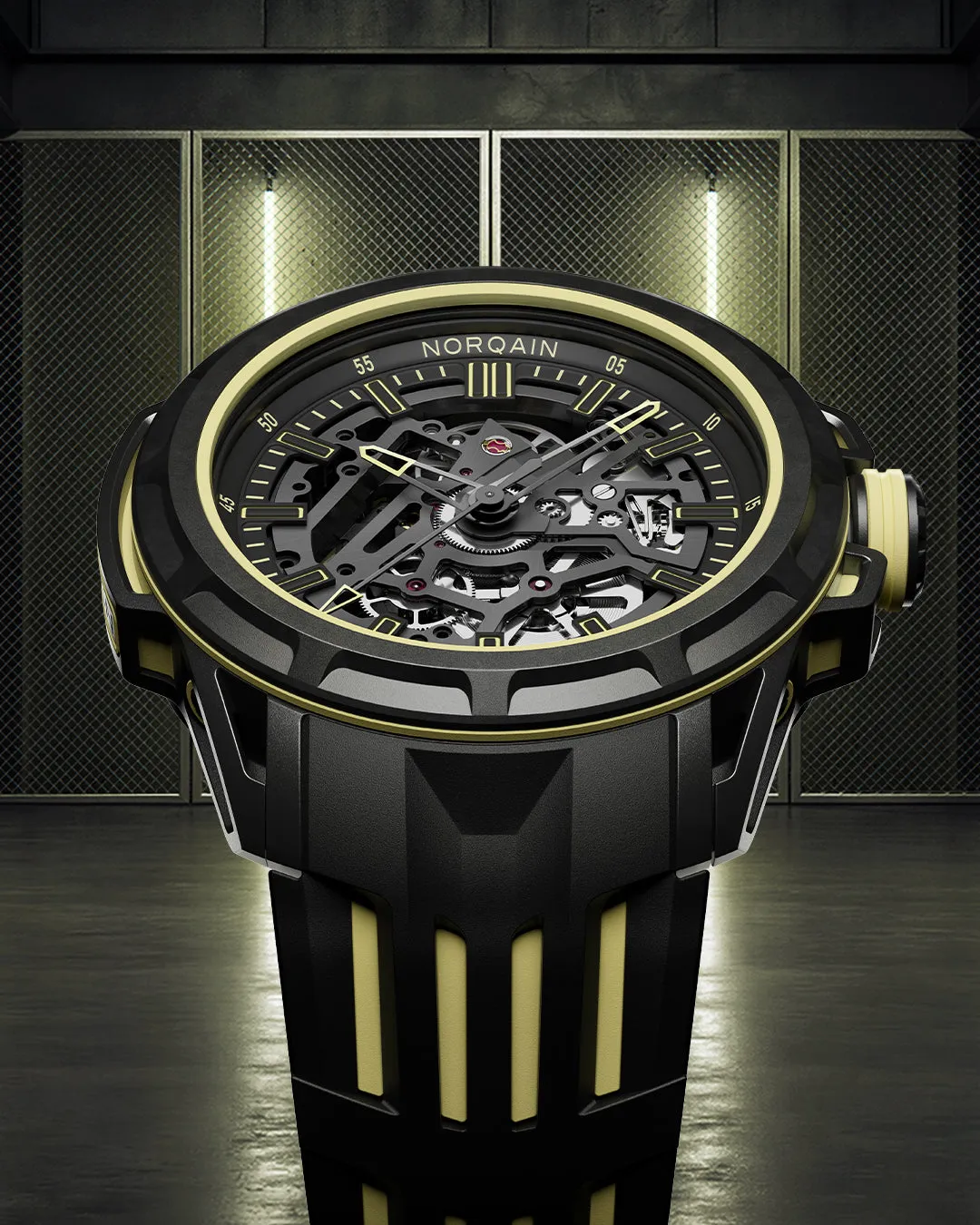
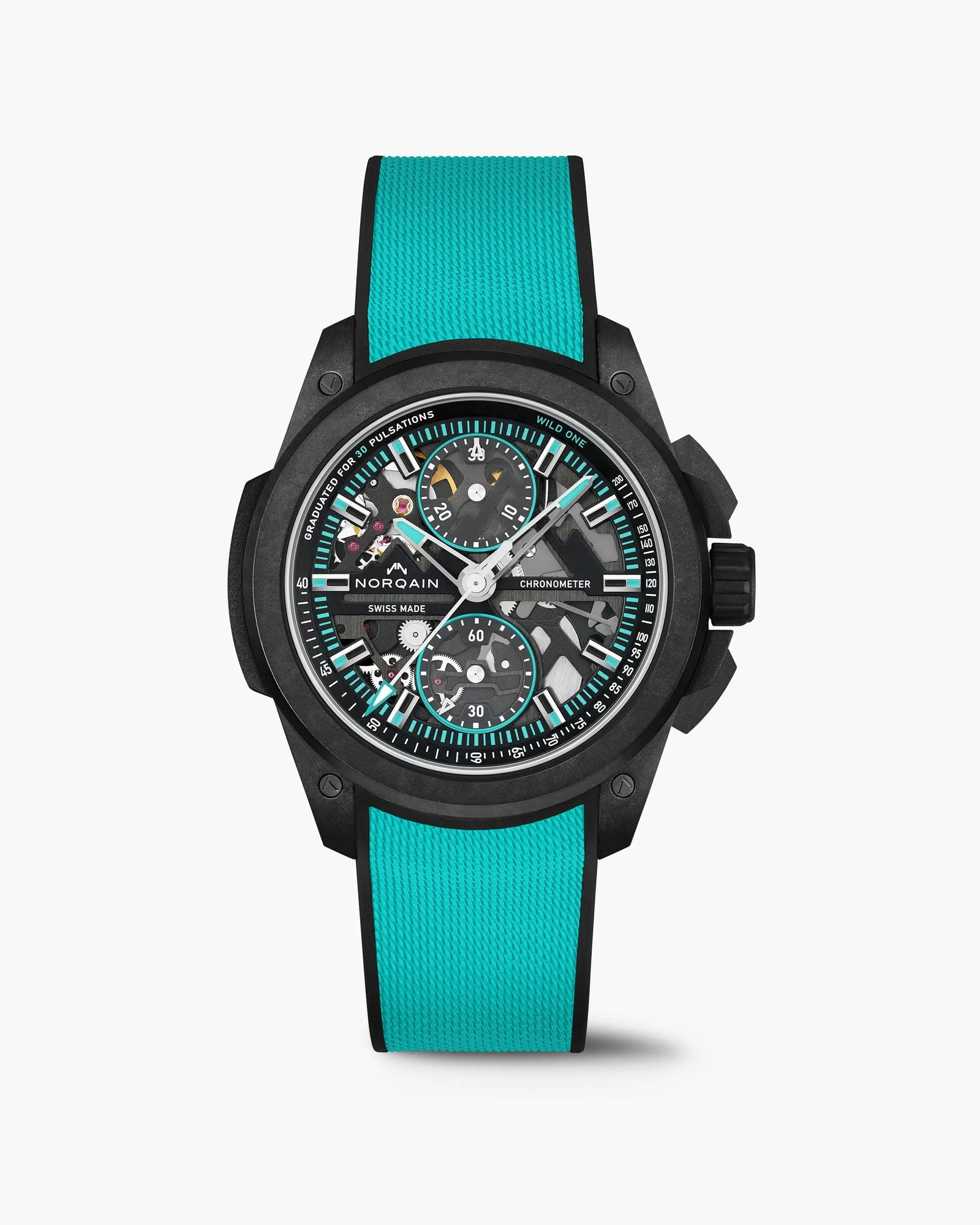
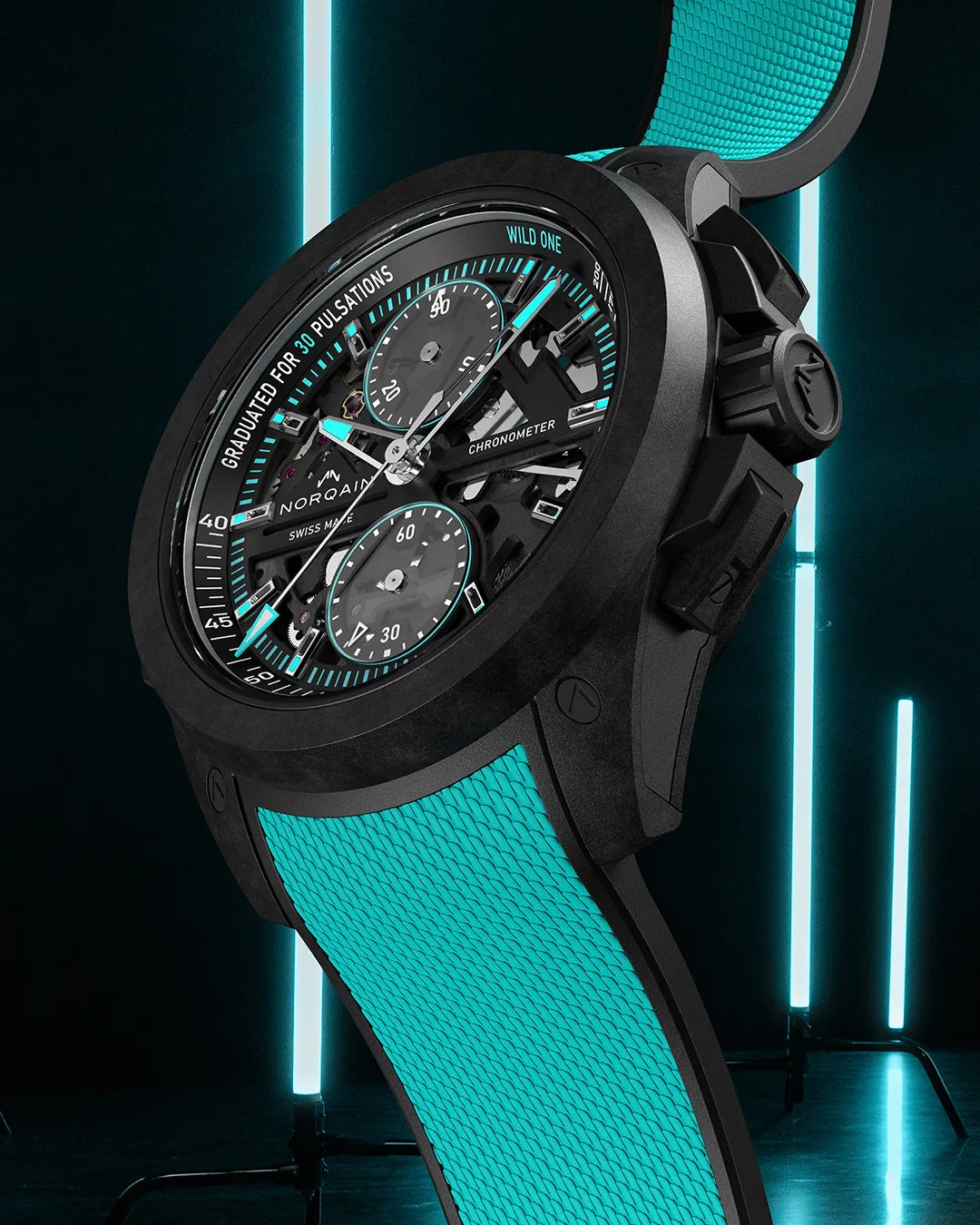
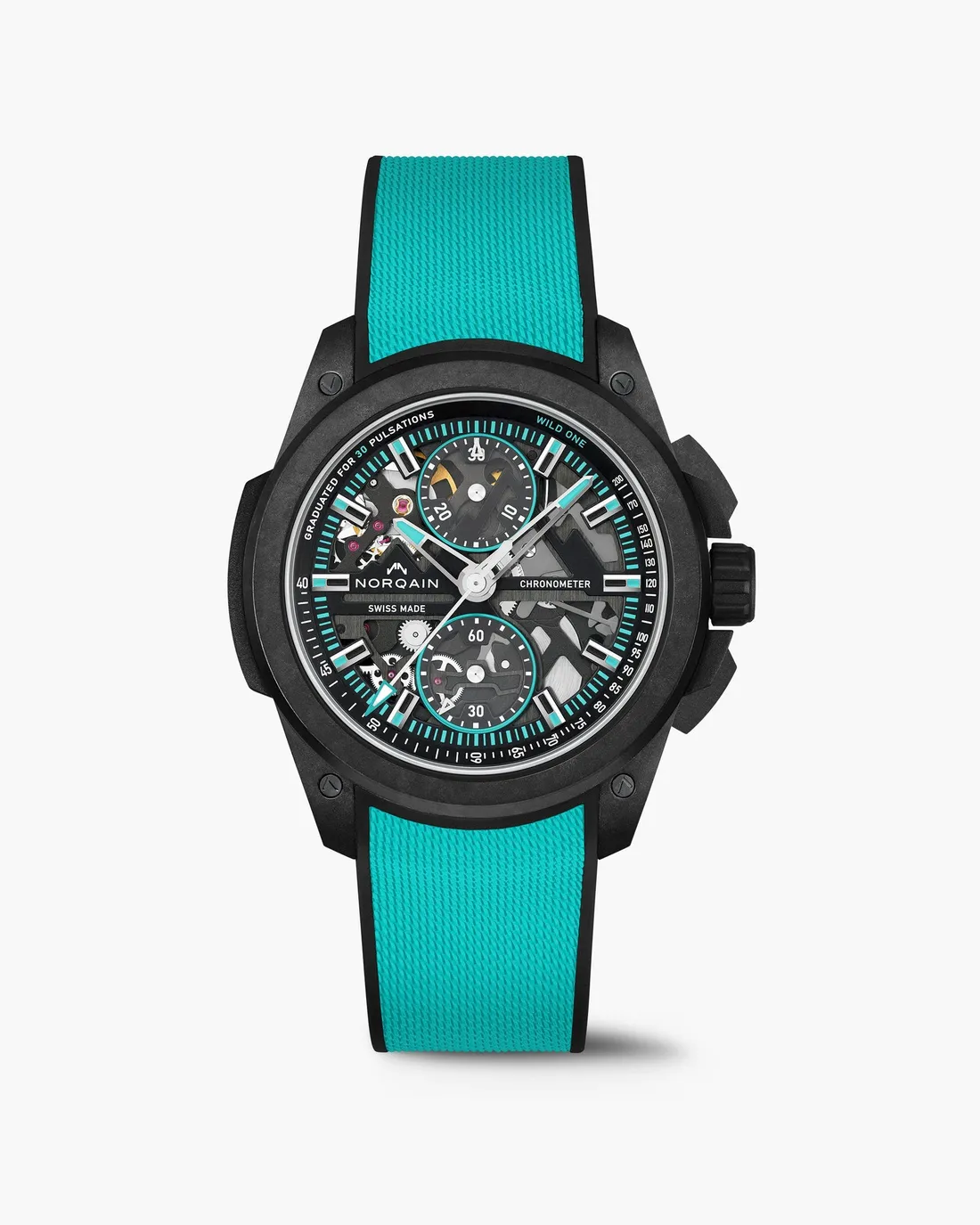
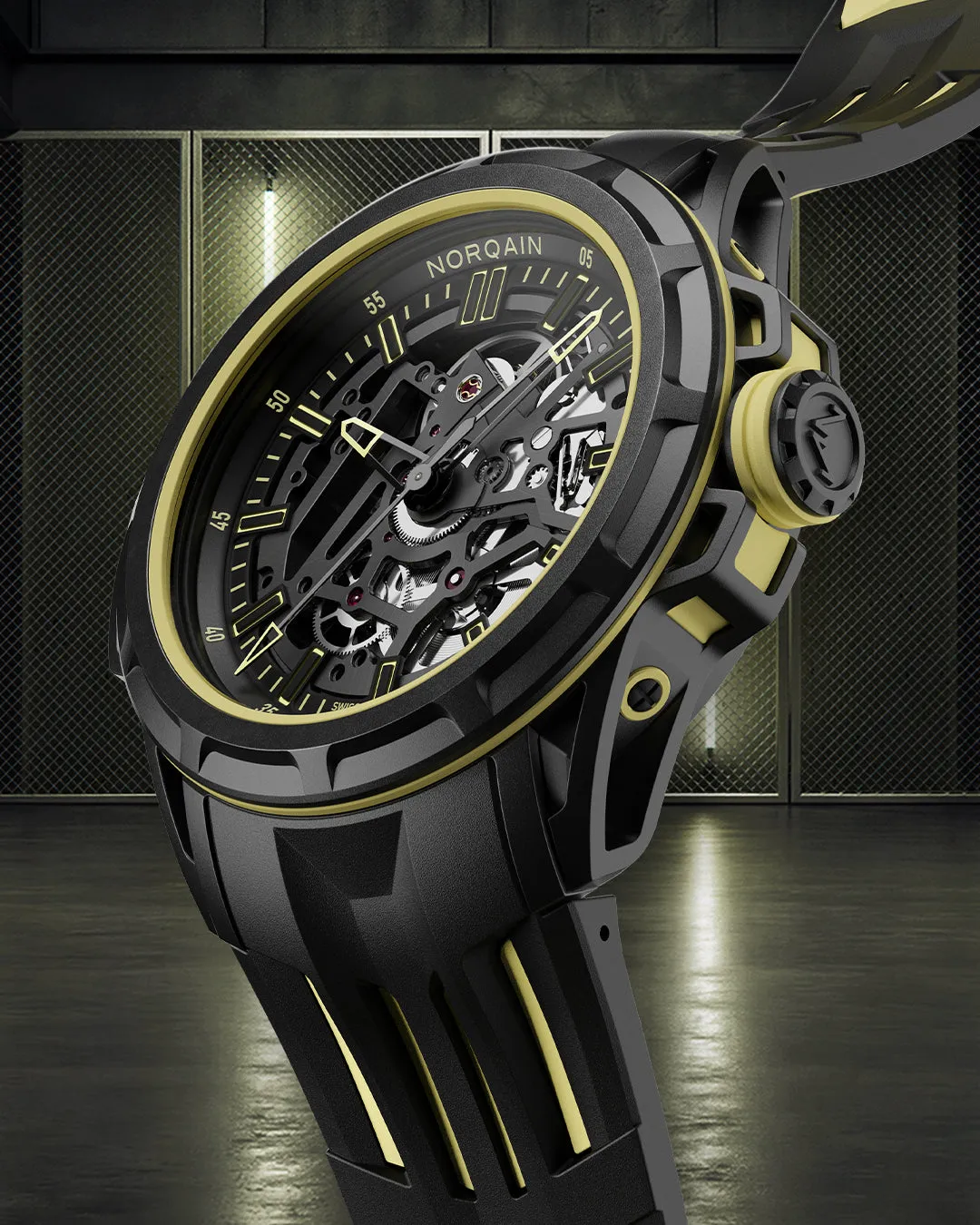
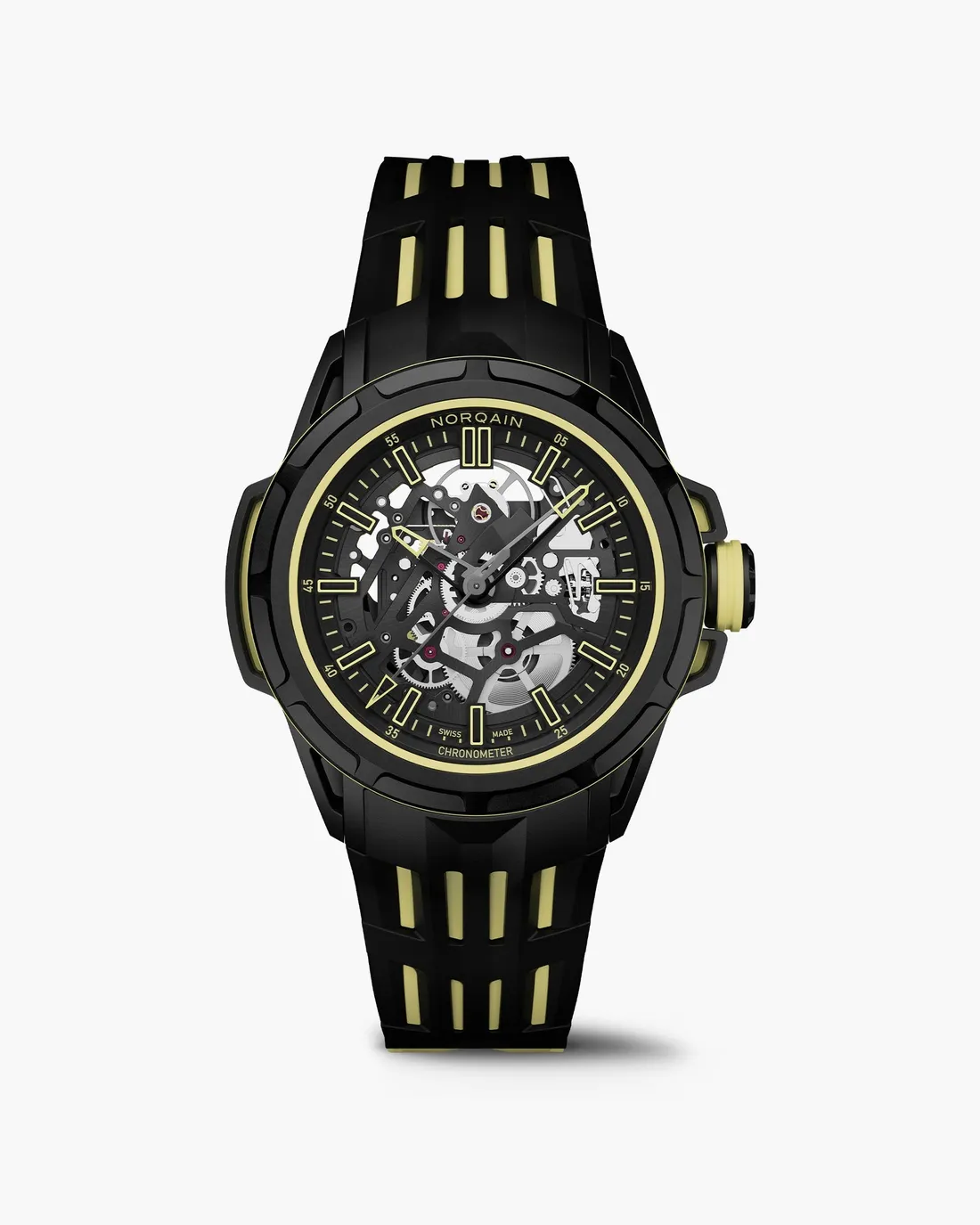
The watch on her wrist looked, at first glance, less like an instrument than a machine: a skeletonised dial, bridges running across it, a matte black case and a turquoise rubber strap. "This is a Norqain," said Lena. "The Wild ONE. And there is a reason its name is 'wild.'"
A Young Brand, an Old Line
"I have never heard of Norqain," said Theo, knotting the rope. "That is only natural," said Lena. "The brand was founded in 2018; in Swiss watchmaking that means yesterday. But the names behind it are not new: the family of founder Ben Kuffer has been in this business for generations, and Ted Schneider, who ran Breitling for years, was there at the brand's founding too."
"Then why found a new brand?" asked Theo. Lena shrugged: "Because they wanted to do something else. Swiss watchmaking usually sells the past; a model from the 1950s, the legacy of an explorer. Norqain, having no past, started from scratch and asked: what should a watch be for people who actually live outside today, on the mountain, in the water? The name comes from this too: Nordic, the plainness of the north, and 'quain', an old root for courage. The hardness of the north, and courage."
format_quote"Swiss watchmaking usually sells the past; having no past, they started from scratch."
Lena
The Secret of Carbon: NORTEQ
Lena took the watch off and laid it in Theo's palm. Theo was startled: "Why is it so light? Almost like an empty box." Lena laughed: "That is the whole point. The case is not steel, not even titanium. Norqain calls it NORTEQ; a material they developed themselves."
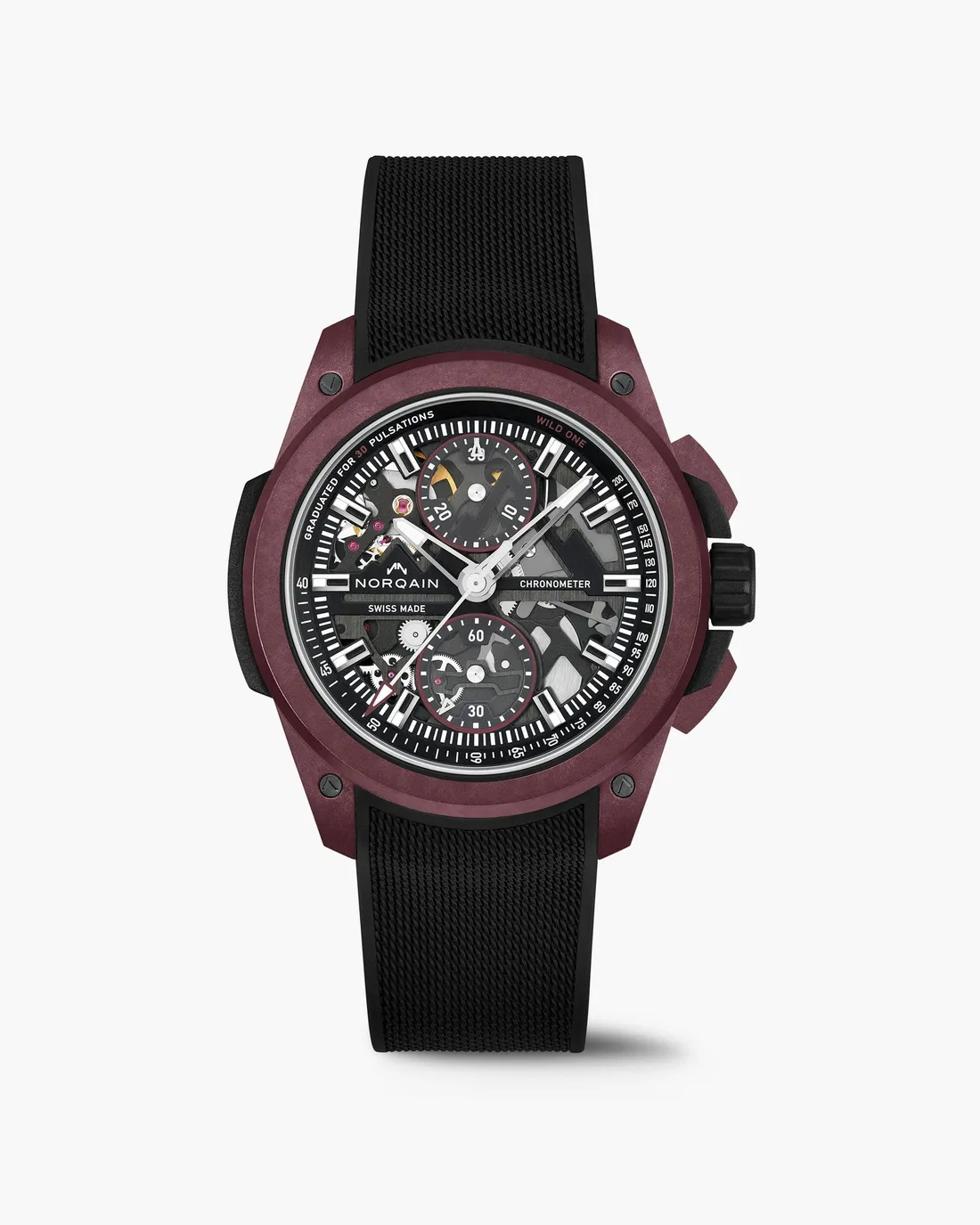
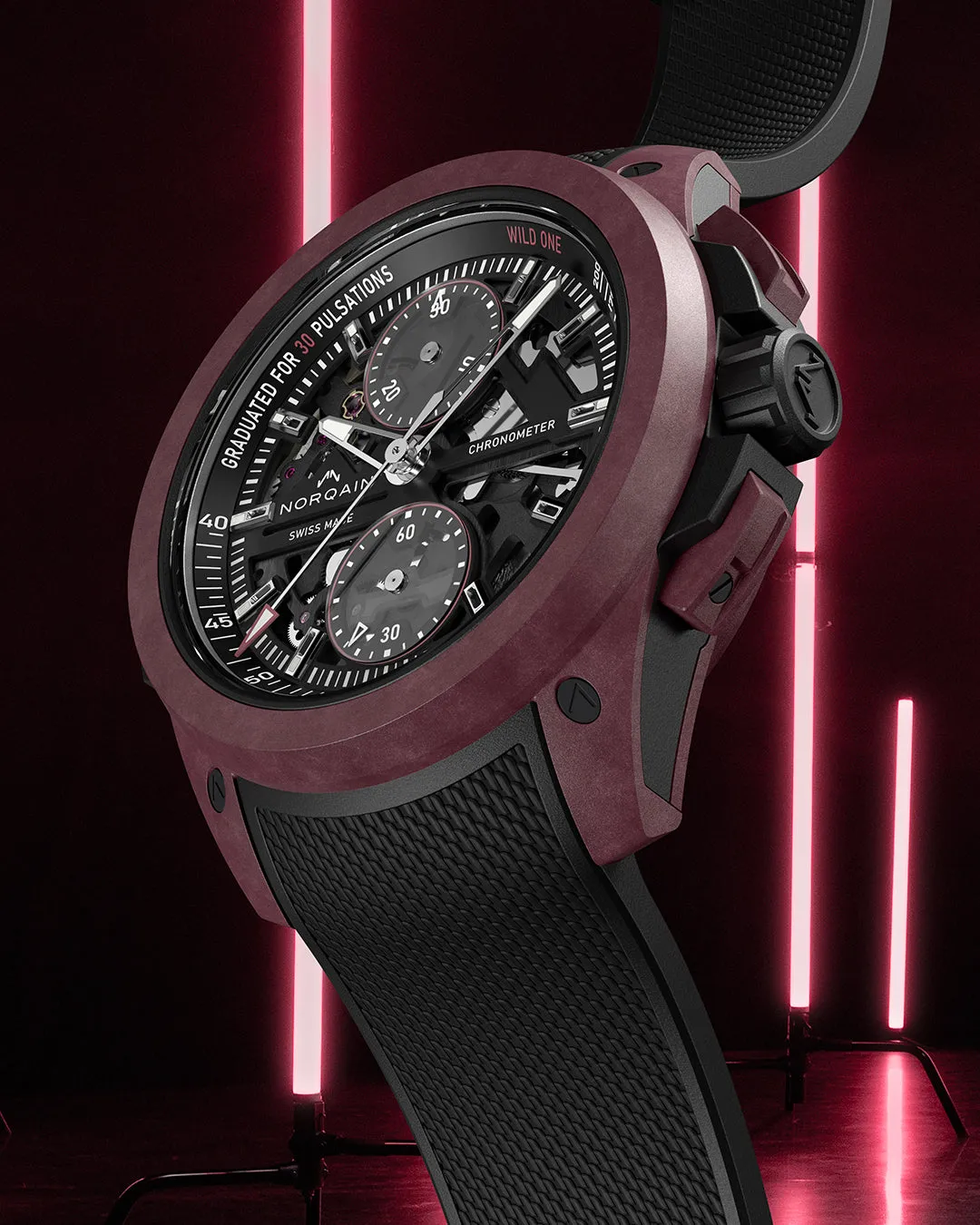
"What kind of material?" asked Theo, holding it to the light and studying the faint texture on the surface. "Carbon-based," said Lena. "Very fine carbon fibres are laid layer upon layer with a resin and pressed under pressure into a single body. The result is this: about six times lighter than steel, and three times lighter even than titanium. Yet harder than steel."
"Do you know why that matters to a climber?" she went on. "Not just the weight; the shock. When you strike a rock wall, a metal case transmits that energy inward, into the movement. The carbon layers instead spread that energy among the fibres and quench it; just as a climber is saved in a fall by the stretch of a dynamic rope. That is why I do not take this watch off my wrist. It has learned to take the impact with me."
format_quote"Strike the rock and metal sends the energy into the movement; carbon quenches it among its fibres."
Lena
The Courage of an Open Dial
Theo looked more closely at the dial. There barely seemed to be a dial at all; the turning wheels, the bridges and part of the springs lay bare within. "This is a skeletonised dial," said Lena. "That is, the unnecessary parts of the plate and the dial have been cut away and the movement brought into the open. Usually this is a matter of showmanship; but here it has a logic: you do not show the inside if you do not trust the material."
"And these two small counters," she added, pointing with a finger. "This is a chronograph; that is, when you press the button, a second mechanism engages to measure elapsed time. For a climber this is no toy: you work out how long a route took you, how long you rested, how long until the light goes. On a mountain, time matters as much as the weather."
"The movement inside is Swiss-made automatic," said Lena. "That is, no battery; every time my wrist moves, a weight inside turns and winds the spring. As I climb, my arm moves hundreds of times; the watch takes its energy from me. And it is water resistant to two hundred metres; so rain, snow, washing under a waterfall, none of it concerns it."
The Function of a Colour
"And this turquoise?" asked Theo, taking hold of the strap. "Is it not a little loud?" Lena shook her head: "On a mountain there is no such thing as a loud colour. Among grey rock, white snow and black shadow, what the eye finds fastest is exactly a colour like this. When you drop a piece of equipment, you have to be able to find it. Norqain makes this collection in several colours: turquoise, burgundy, yellow. All tones that do not vanish in nature."
"And the strap is rubber," she added. "Leather soaks, rots, smells; a metal bracelet grinds against rock and turns ice cold. Rubber washes, dries, does not chill you. Every detail has been asked one question: will it be of use one morning at the foot of this wall?"
format_quote"On a mountain there is no loud colour; there is only the colour you can find, and the one you cannot."
Lena
Looking Upward
Lena fastened the watch back on her wrist, pressed the chronograph button and set her hands to the rock. On the first move her wrist met the stone; a dull sound was heard. Theo flinched, but Lena did not even look.
Forty minutes later at the top, where the sun was filling the valley, Lena stopped the chronograph and smiled: "Thirty-eight minutes. Two minutes faster than last month." As Theo coiled the rope he asked: "What happened to the watch?" Lena held out her wrist: a single scratch on the crystal, and in the movement, not a falter.
"Some watches are made for a display case," said Lena, looking down at the wall below. "Others to go where you go. This is the second kind. And for a climber there is no greater compliment than that."