The deepest known point on earth is a rift beneath the Pacific, more than eleven kilometres down: the Mariana Trench. Not a single mote of sunlight reaches it. An eternal night, an absolute silence and a pressure terrible enough to crush a man in an instant hold sway there. It looks like the place where life ends; a cold, black, bottomless nothingness.
And yet it is precisely there, within that pitch darkness, that a miracle begins. Strange fish with atrophied eyes, creatures with translucent bodies, and above all the jellyfish. Kindling a chemical fire within their own bodies to pierce the darkness, those bioluminescent jellyfish glow softly in the depths. In the place we took for the kingdom of death, life creates its own light. It is as if the universe whispers a secret to us from the very start: even the deepest darkness is not the absence of light, but the veil of a light not yet seen.
This, then, is the story of a tale rising from those dark waters; of a whole ocean fitted onto the caseback of a wristwatch, and of the most ancient truth that ocean recalls to us.
The Window Beneath the Water
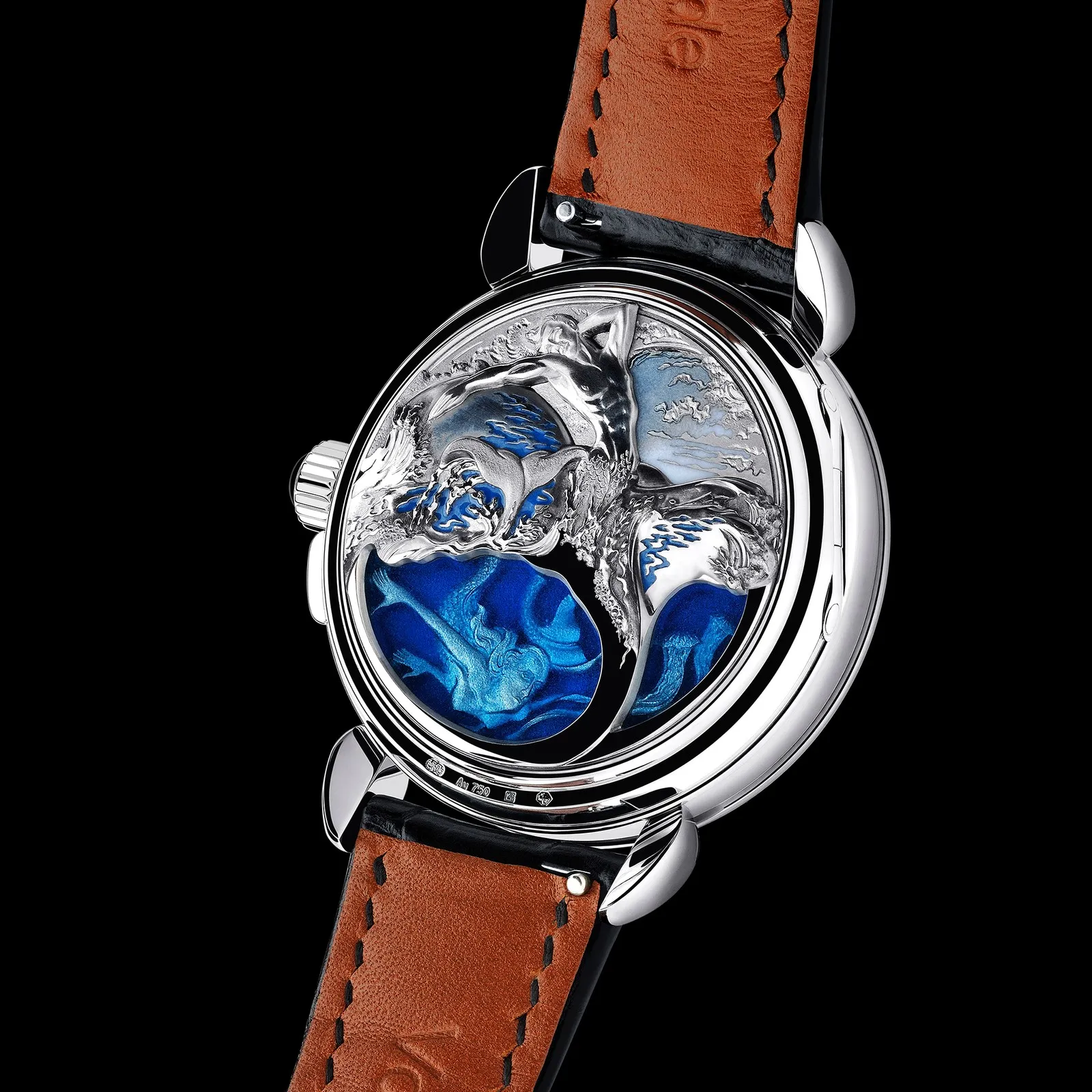
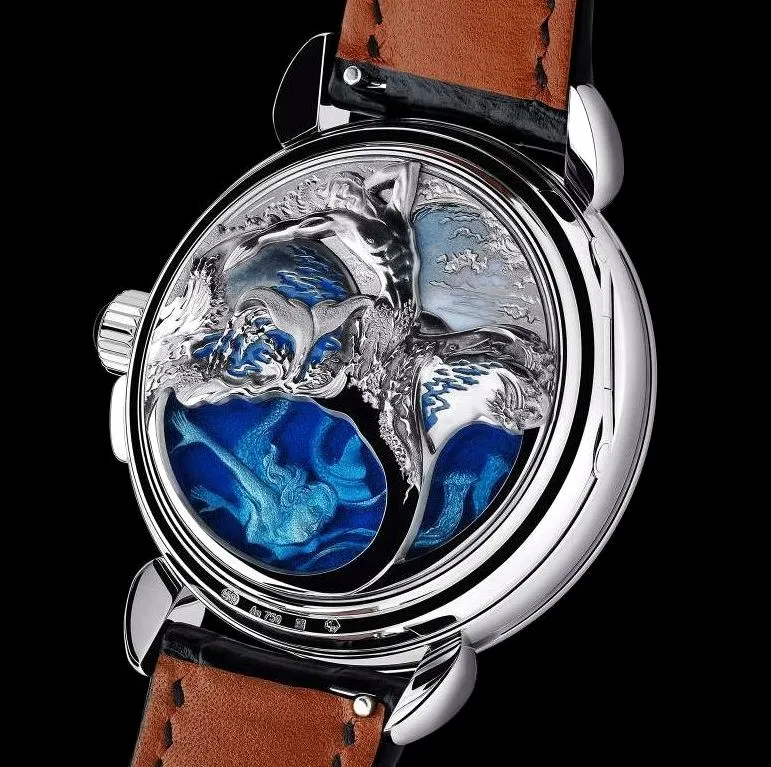
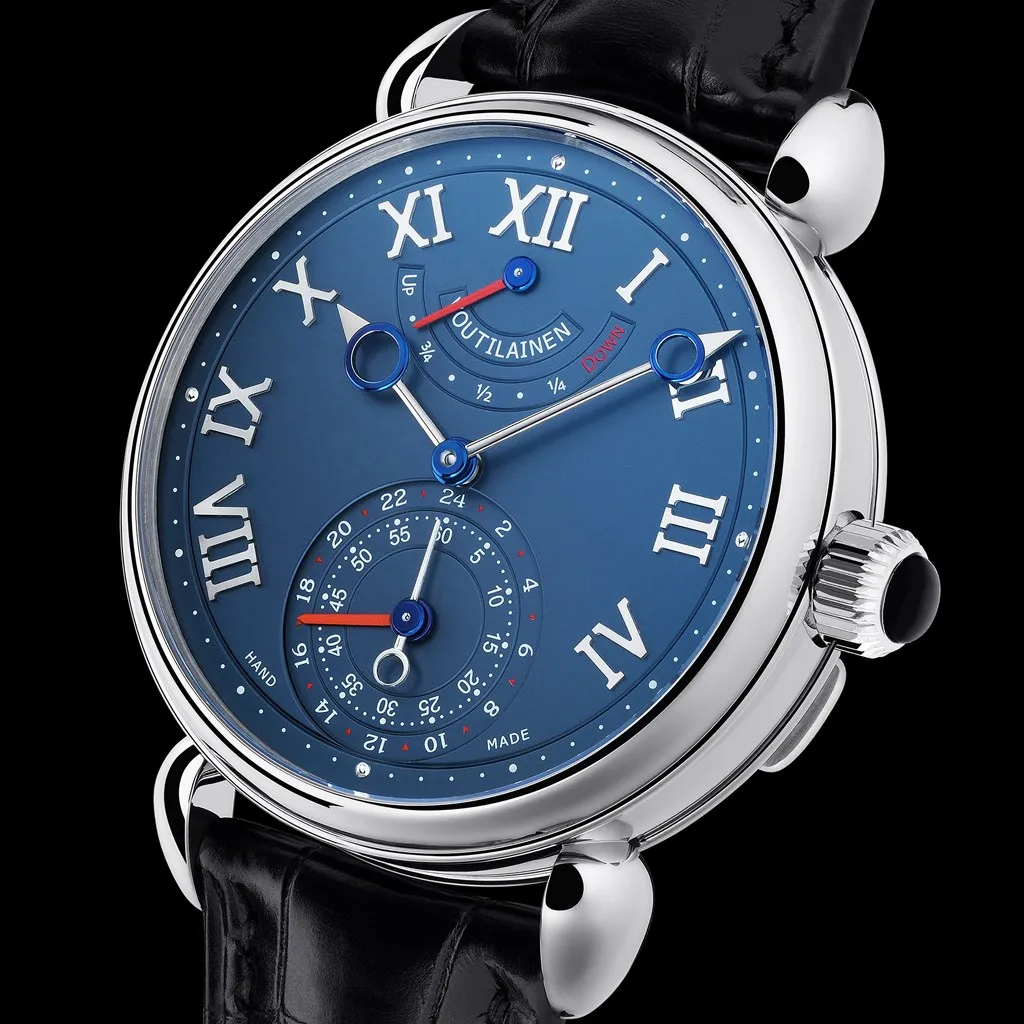
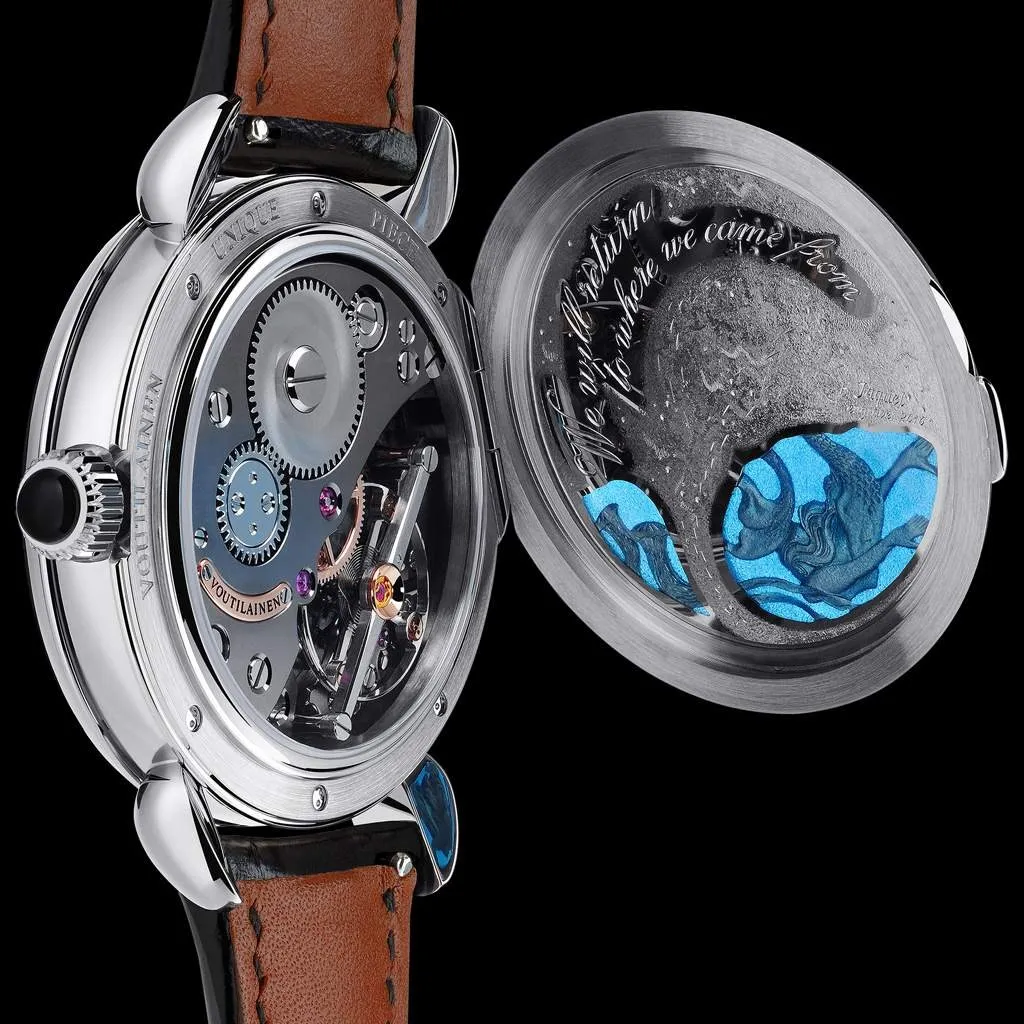
The Vingt-8 GMR Sirène et Triton, bearing the signature of Kari Voutilainen, is a work of art that is one of one in the world. On the visible face of the dial, time flows over a deep-blue guilloché ground; but the true secret of the watch is hidden in its reversible white gold caseback. There an underwater scene appears, depicting a triton and a mermaid figure playing in the waves, the mermaid accompanied by two jellyfish.
To bring this tiny scene into being, two great masters set out from two separate studios in the canton of Neuchâtel in Switzerland: the engraver Eddy Jaquet and the enameller Inès Hamaguchi. On this journey, which they call an experimental approach, countless exchanges between the two studios were needed before the final result was reached; a patient and meticulous collaboration.
The Hand that Descends into Metal: Eddy Jaquet's Engraving
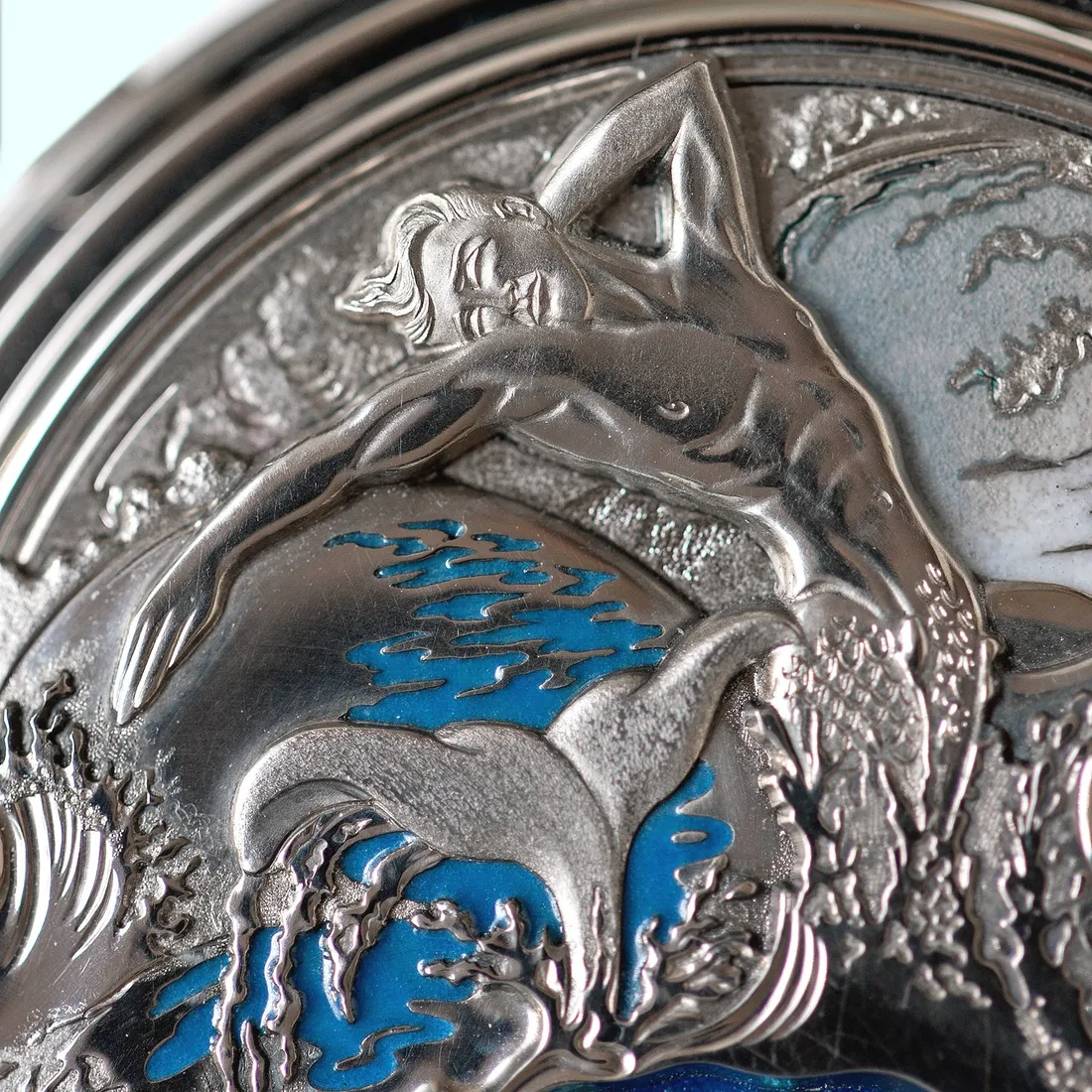
For the Swiss master engraver Eddy Jaquet, this work remained one of the most precious memories of his career; in his own words, he had never worked on so complex a piece before. For the engraving of the reversible white gold cover was not a single-stage affair: several layers of precious metal were cut and shaped one after another. Jaquet raised the waves and the figures in relief; he built the foam of the water and the bodies of the triton and the mermaid, layer upon layer, in the depth of the metal.
A human hand does not bring forth from nothing; but Jaquet's burin awakens the form sleeping within that cold white gold, granting it light and shadow, movement and depth. Every fold of the metal turns into the memory of a wave.
Two Fires, Two Waters: Champlevé and Grand Feu
The one who gave colour and light to the skeleton Jaquet had engraved was the enamel of Inès Hamaguchi. The two worlds of the scene, on either side of the sea's surface, were brought to life with two different enamel techniques. For the part representing the sky and the sea foam, the classic champlevé technique was used.
Champlevé means raised field in French: the master hollows out recesses in the metal and fills them with powdered coloured glass, that is, with enamel. Fired at eight hundred degrees, this opaque enamel covers the blue reflections of the waves and the white brilliance of the distant sky with a full colour that lets no light through. Here the enamel is as solid and matt as a wall.
A Water Like Stained Glass: The Secret of Plique-à-jour
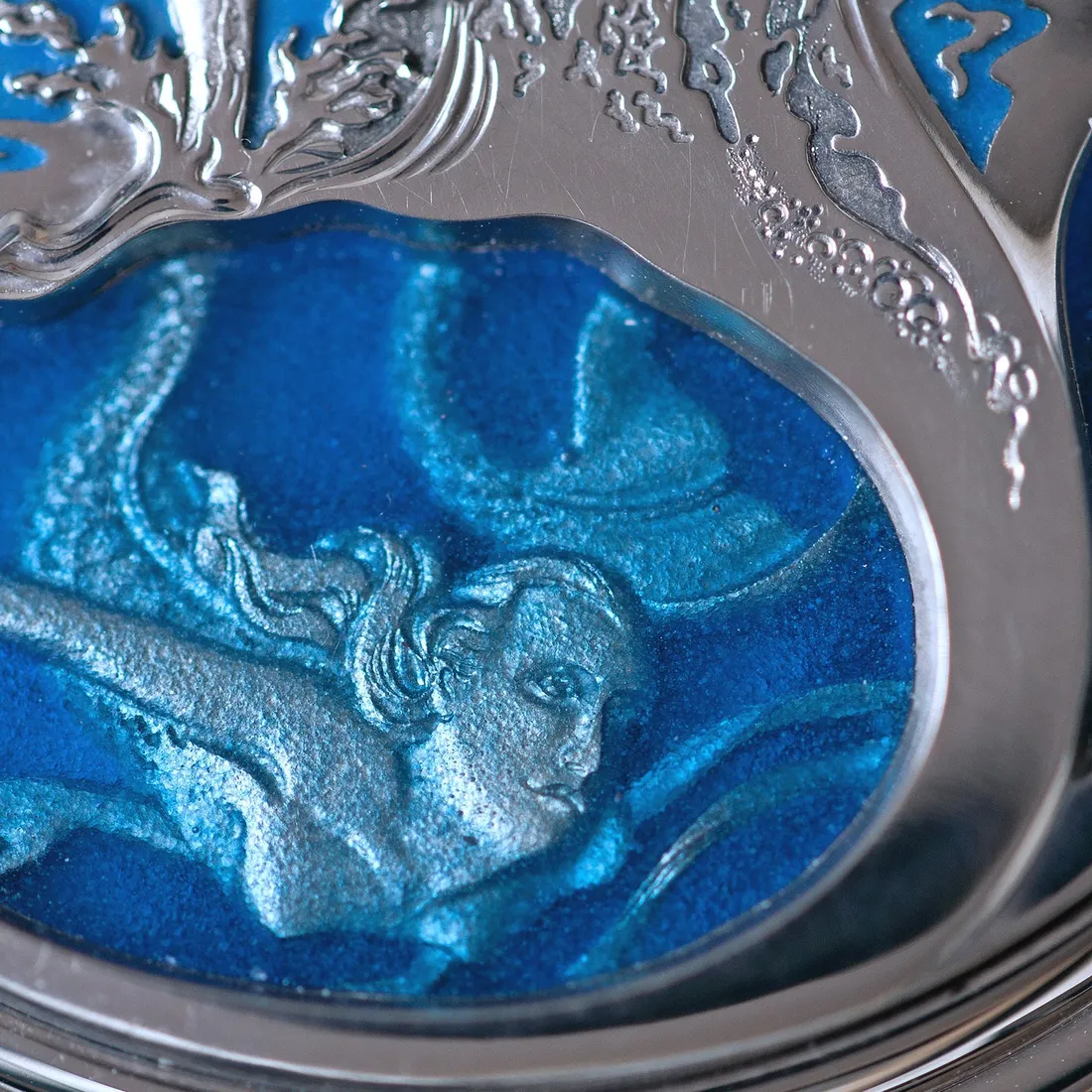
But to depict the underworld of the sea, the deep blue through which the mermaid glides, a far rarer and far more dangerous path was chosen: plique-à-jour. This technique, whose French name means open to daylight, is a method in which there is no metal backing behind the enamel and the light passes through the glass just like a cathedral window. From both faces of the cover, you can see the mermaid swimming behind that translucent blue.
The difficulty of the technique lies precisely here. The enamel is stretched between thin metal walls alone, with no floor to hold it behind; it is laid over a temporary support, fired, and then that support is removed with the greatest care. At every firing, this glassy surface with an empty back can collapse, crack or burst. The smallest hesitation in the master's hand destroys months of labour in an instant.
Its history is no less arduous than the technique itself. Plique-à-jour was born in the fourth century in the Byzantine Empire; it began to appear in Western Europe only in the late thirteenth century, and because of the difficulty of its execution it very nearly vanished altogether. It was revived at the end of the nineteenth century, but today it is so rare that only a handful of names in the world can practise it with mastery. Inès Hamaguchi is one of those few names.
The Invisible Heart: The Vingt-8 GMR
Though the two artists keep some stages of the process behind a veil of secrecy, the fact that this stained-glass effect carries both movement and depth is the fruit of a patient dialogue shuttling between their two studios in Neuchâtel. Jaquet could not have built this scene without knowing the language of metal, nor could Hamaguchi have given it life without knowing the language of fire.
And beneath all this art beats Voutilainen's hand-made Vingt-8 GMR caliber. Made of two hundred and fifty components and twenty-eight jewels, this movement runs on the master's signature direct-impulse double escapement; two escape wheels deliver the impulse to the balance directly, so friction is reduced to a minimum. Beating at eighteen thousand vibrations an hour, the movement shows its sixty-hour power reserve on a retrograde hand, and offers a second time zone, a GMT function, engaged by pressing the crown. The thirty-nine millimetre white gold case carries this entire ocean to your wrist.
We Shall Return to Whence We Came
And now we come to the deepest secret of the watch. When you open the caseback, the reverse of the underwater scene appears: this time the mermaid is seen from behind, her face turned toward where she is going, toward the deep. And there, upon the movement, a maxim is engraved: We shall return to whence we came. This is a memento mori, a symbol that reminds us of death.
But this reminder is not a fear; it is a consolation. For death, as the ancient wisdom teaches, is not an end but a return to the true homeland, to that source from which we came. Like the drop of water that evaporates from the sea to become a cloud, then falls as a raindrop upon mountains and streams, and after a long journey reaches once more that boundless ocean. When the drop returns to the ocean it is not lost; only then does it escape its small and lonely existence and merge into the infinite.
This is why the mermaid has turned her face toward the deep. She is the image not of a flight but of a return, of a reunion. Like that jellyfish glowing in the darkness of the Mariana Trench, life, even in the place that seems darkest, is in truth flowing toward its home, toward its light.
The Memory of the Ocean
The Voutilainen Sirène et Triton is less a watch worn on the wrist than an object of contemplation. On one side, the hand Eddy Jaquet lowered into metal; on the other, the light Inès Hamaguchi tempered with fire; and between the two, the oldest question of humankind.
Time flows, just like water. And this watch whispers to us that every flowing is toward a source. We shall return to whence we came; and that return will be no ending, but a beginning as complete, as peaceful, as the drop's reunion with the ocean.