The Quiet Meeting of Two Worlds
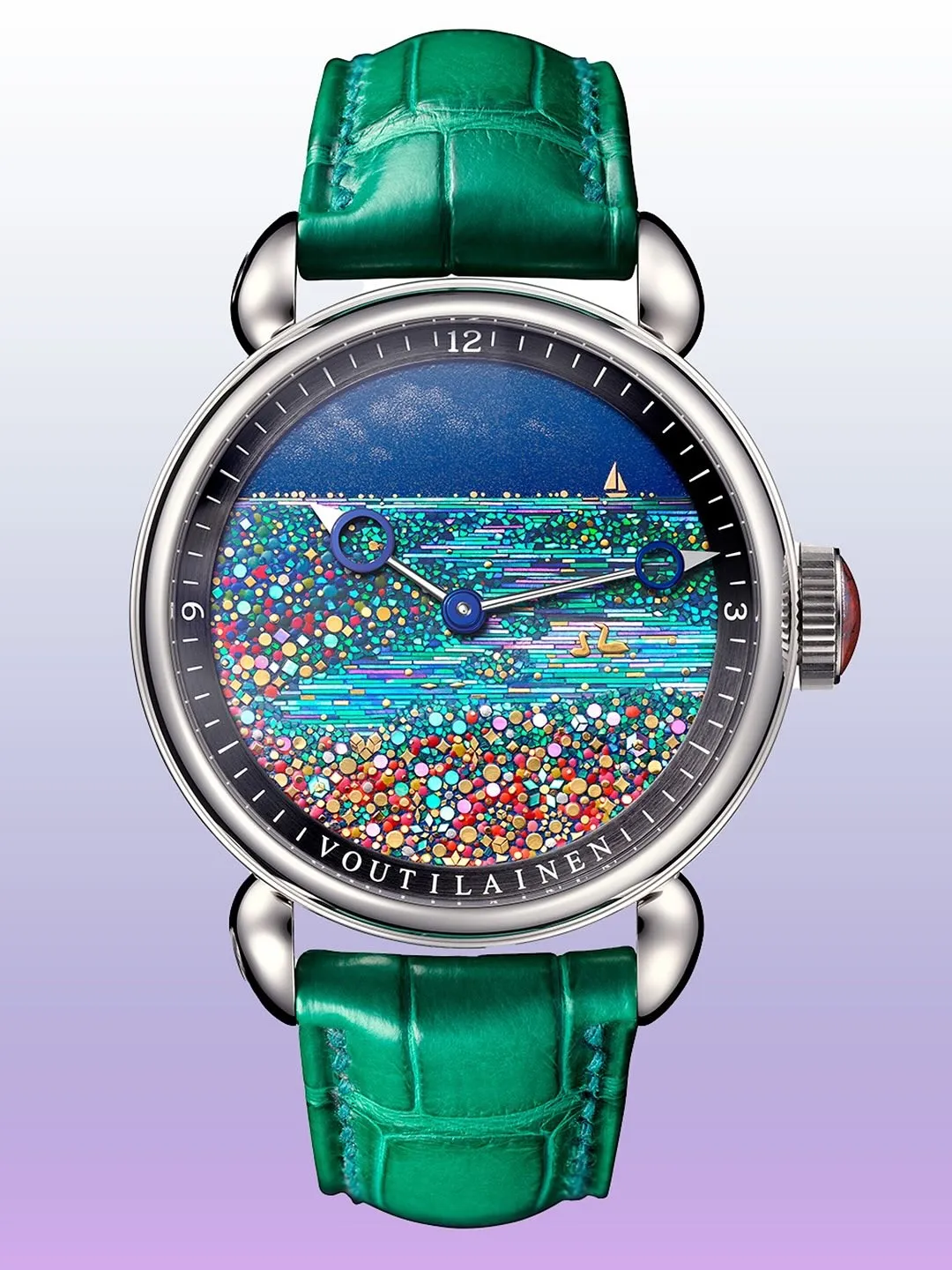
There are a few names in independent watchmaking at whose mention collectors fall silent for a moment. The Finnish master Kari Voutilainen stands at the very front of them. But the 28 Kohan is no ordinary masterpiece of his; it is a unique piece, a love letter that fuses Switzerland's handmade watchmaking with the ancient Japanese arts of urushi lacquer and maki-e. For it, Voutilainen joined hands with the Kitamura Studio, led by master lacquer artist Tatsuo Kitamura, who works only with natural materials.
When a Love Becomes an Object
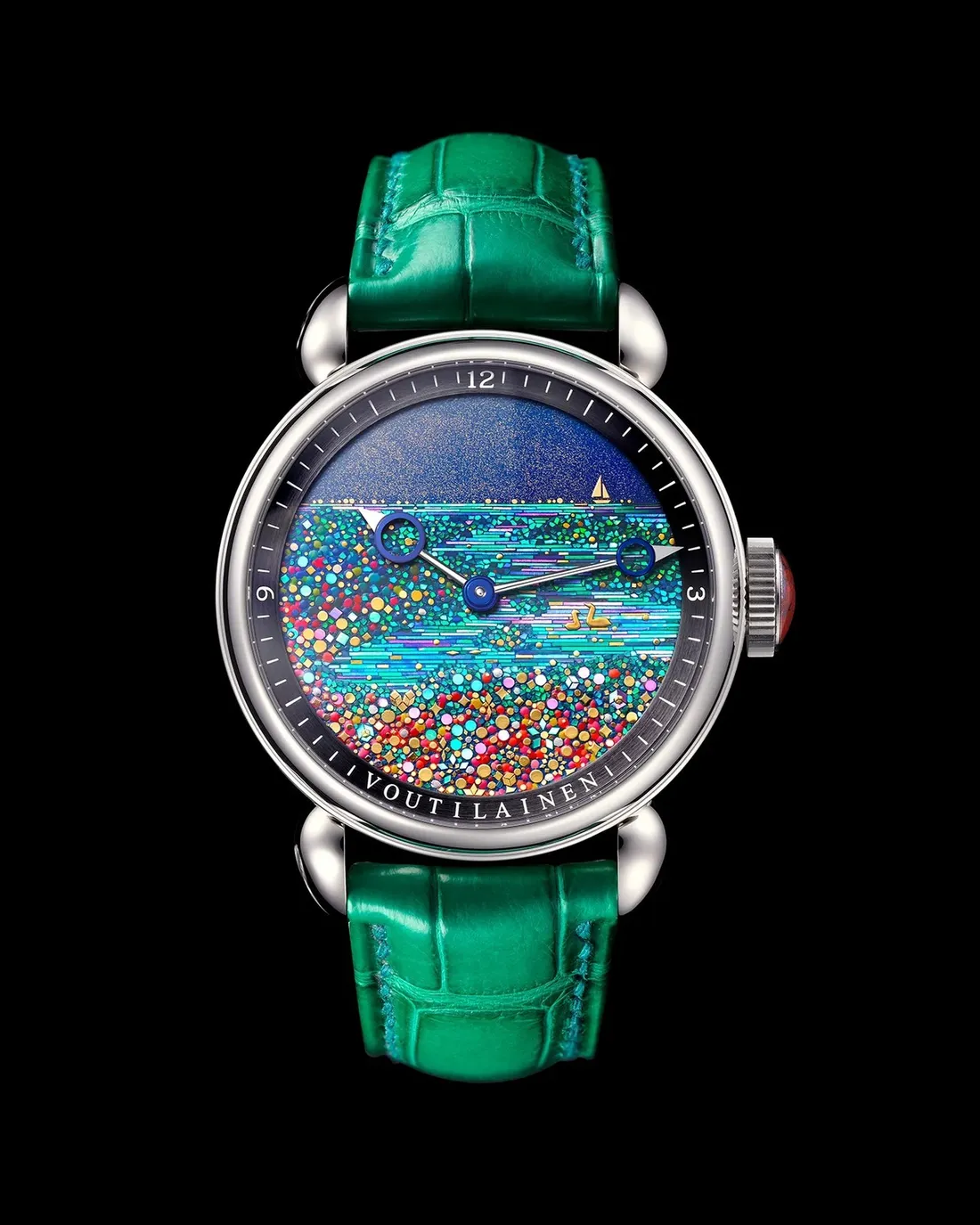
The 28 Kohan is a deeply personal commission made for a private Finnish collector: a token of love offered to his partner. And this is exactly what sets this watch apart from any ordinary timekeeper: here the point is not the watch, but the making-tangible of love itself.
How does a person make permanent the feeling they hold for the one they love? Some write a letter, some a poem. This collector chose to seal his love, together with a homeland, a season and a landscape he shares with his beloved, forever inside a single object. To commission a unique piece is, in truth, a confession: to give someone who is one-of-a-kind to you something that is one-of-a-kind in the world. Every shard of shell on the dial, every butterfly inside the cover, is a private language for two; a coded sentence of love that will rest against a beloved's wrist, one that no one else could fully decipher.
A Tribute to the Nature of Finland
The language of this love is drawn entirely from the nature of Finland; the watch is, in effect, a portrait of a homeland contained in the palm of a hand. The subject of the dial is Lake Saimaa, at the heart of Finland: the country's largest lake, broken into thousands of islands, and the last refuge of one of the world's rarest creatures, the Saimaa ringed seal. In Japanese, the word Kohan already means lakeside; the watch's very name is a debt of gratitude to this lake.
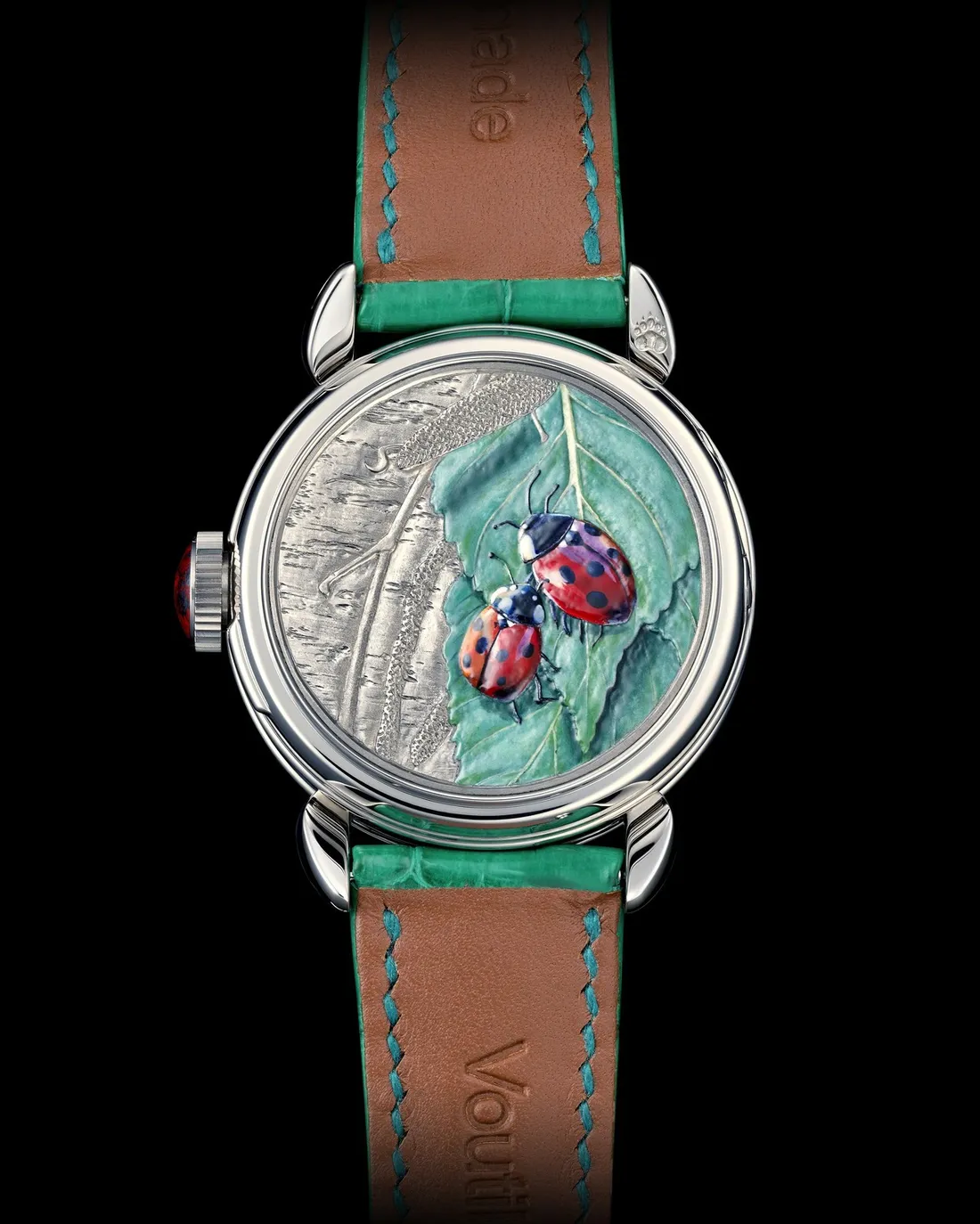
Every living thing in the scene is a symbol from this land. The birch leaf on the outside of the protective cover salutes Finland's national tree; the two seven-spotted ladybugs upon it, that little red beetle the northern people associate with luck and love. Inside the cover, two blue butterflies feed upon lily-of-the-valley flowers; and the lily of the valley is precisely Finland's national flower. The granite stone set in the crown is a nod to the country's billion-year-old bedrock, that unshakeable ground. And so lake, tree, flower, insect and stone, the shared memory of a nation and of two people, are gathered onto a single wrist.
The Dial: A Thousand Layers of Patience
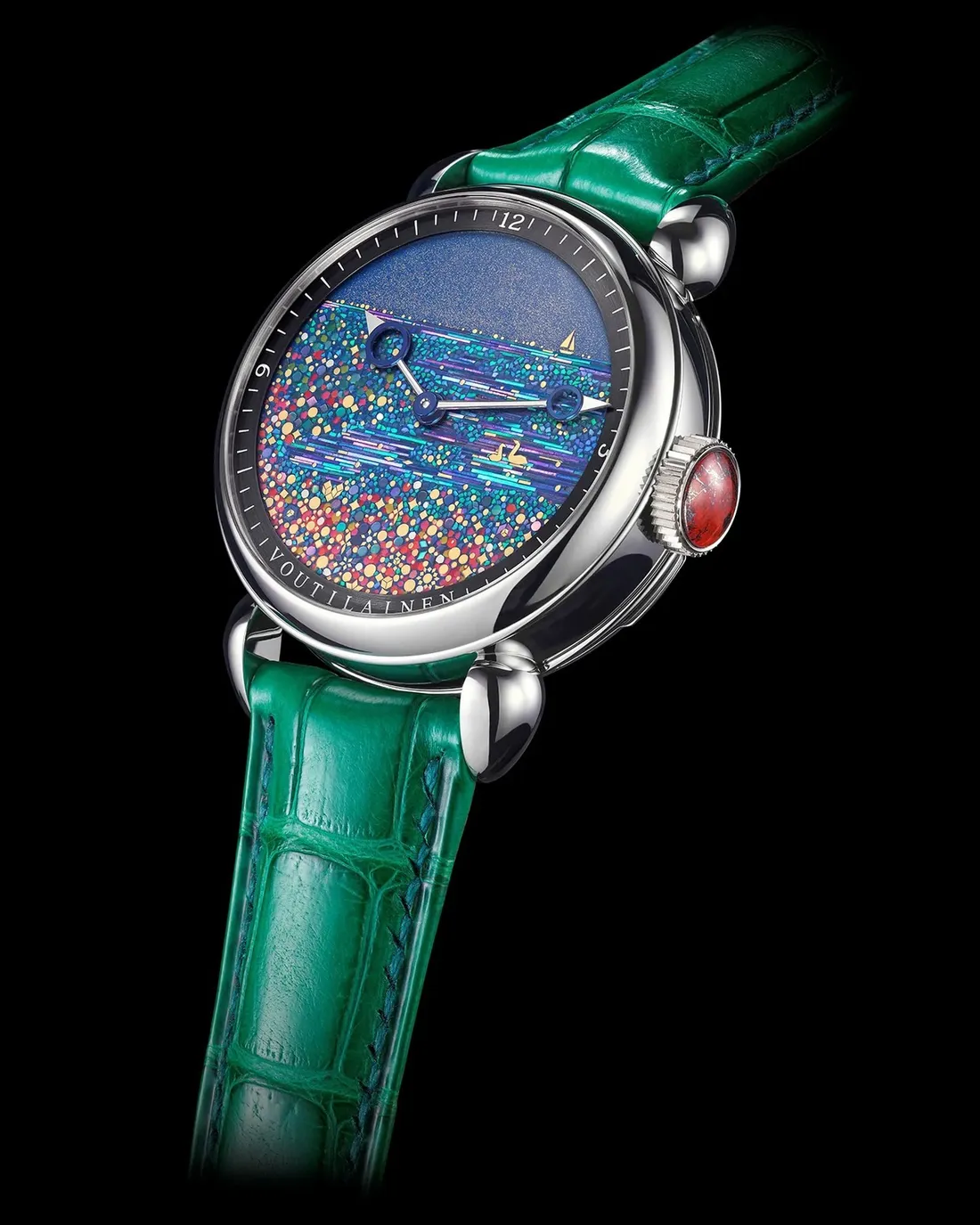
The technique that gives life to this landscape is not watchmaking but the art of miniature painting. Through the raden and maki-e techniques, hundreds of tiny fragments cut from green turban and abalone shells are selected one by one for their colour and shimmer; combined with fine gold and platinum dust and coloured lacquers, and set into layer upon layer of urushi. In maki-e the design is first drawn in lacquer, and gold powder is scattered onto it while wet to fix it; in raden, mother-of-pearl and cut shell are set in place with capillary precision.
Beyond these classical techniques, Kitamura also resurrects, through his own original Saiei Maki technique, the extraordinarily detailed Somada art that arose in the 17th century and vanished before the 19th. Each layer is dried for days in humidity-controlled rooms; a single speck of dust in the air, or a single wrong move, can destroy months of labour in an instant. And the secret by which the dial turns to a blue day in the light and a night scene in shadow remains a mystery the artist shares with no one. Before this dial, one asks: how could a human hand achieve this?
The Hidden Garden Behind the Hinge
The most intimate detail of the 37 mm white-gold case is the hinged protective cover. Its outside is open to all: ladybugs on a birch leaf. But only the owner opens the cover, and inside appears that hidden garden worked in mother-of-pearl and urushi: blue butterflies upon lily-of-the-valley flowers. It is a secret concealed within a watch, one that only two people will know; a private room the beloved may open and gaze into whenever she wishes.
The Craft of the Heart: Calibre 28
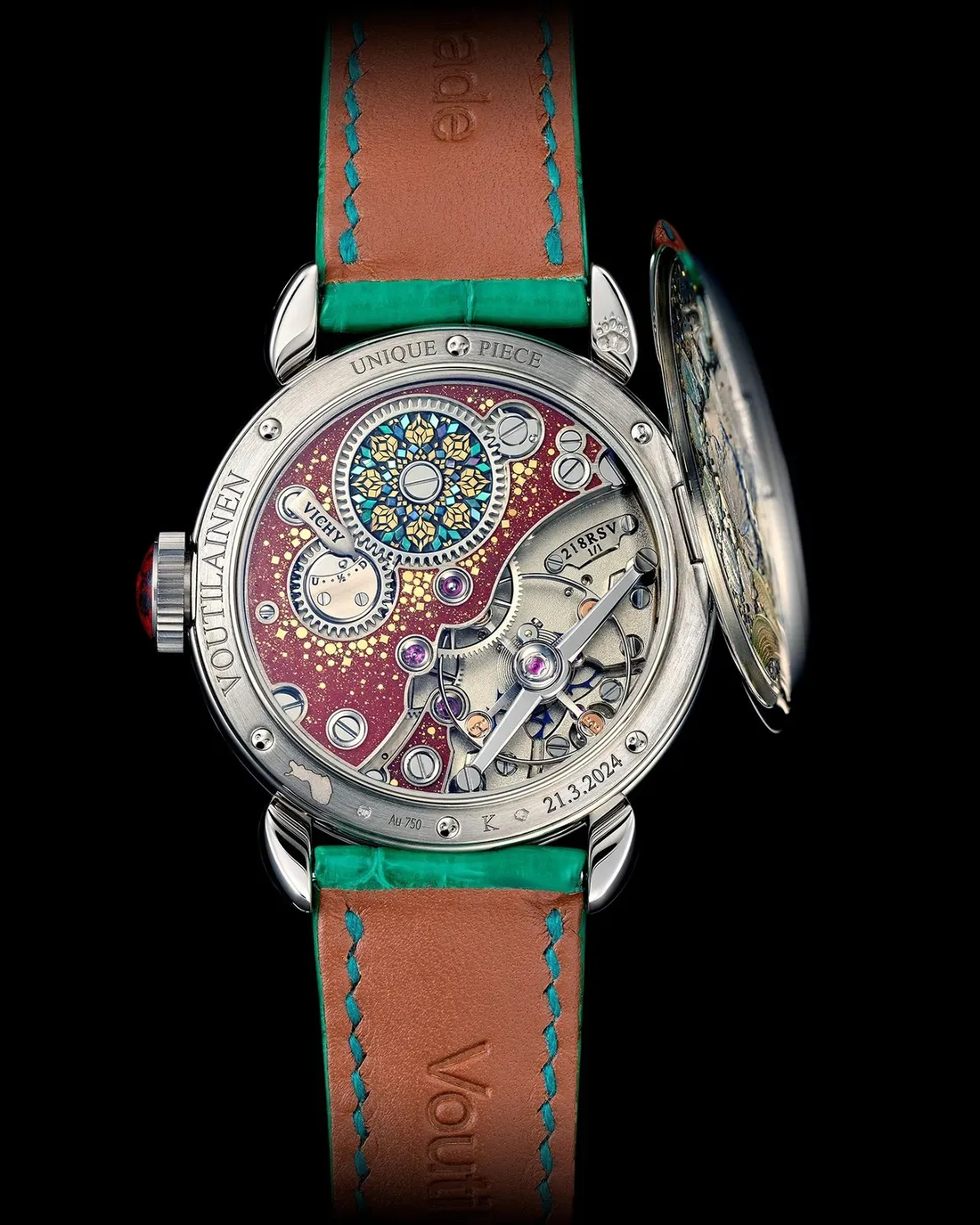
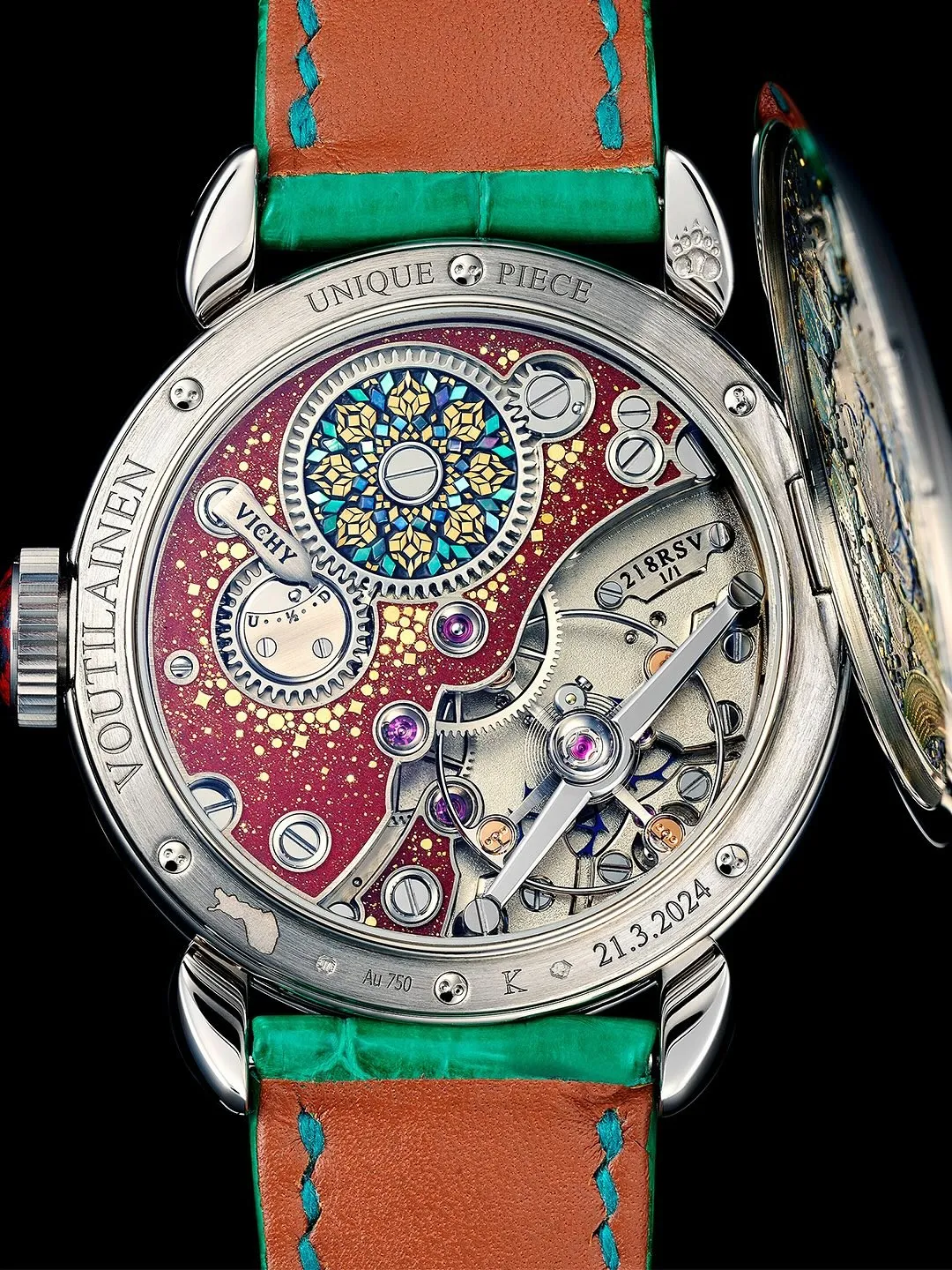
Beneath all this art beats Voutilainen's own in-house Calibre 28 (218RSV), entirely hand-finished in his atelier. Running at 18,000 vibrations per hour, at its heart lies an oversized free-sprung balance wheel 13.5 mm across with a Breguet overcoil; the master's signature patented direct-impulse escapement transfers energy with rare stability.
The truly astonishing detail, though, is inside the mechanism: the main bridge is coated with urushi lacquer and worked with gold maki-e to echo the lake motif of the dial, a refinement almost never seen within a movement. The power-reserve indicator is shaped like a Vichy mineral-water bottle. Through the sapphire back appear black-polished steel parts, sharp anglage, wide Geneva stripes and immaculate jewel sinks.
The Immortalisation of a Love
In the end, what stands before us is not merely an instrument that shows the time; it is the memory of a lake, the portrait of a homeland, and a love made immortal. Voutilainen and Kitamura took nature's most fragile moment and a person's deepest feeling and turned them into a wrist that breathes forever. Some loves are spoken, some are written; this one has been engraved, with gold dust, mother-of-pearl and a thousand layers of lacquer, upon the shore of a lake for all time.