Neil deGrasse Tyson, one of the most widely read astrophysicists of our day, approaches the question through chemistry, and says:
“The most common elements in the universe are hydrogen, helium, oxygen and carbon. These are precisely the elements that form the basis of the human body, and of life as we know it. We are not made of matter foreign to the cosmos; we are made of the most ordinary materials of the cosmos. It is therefore entirely natural that these same chemical elements should have produced similar biological outcomes, that is, life, elsewhere in the universe.”
This observation of modern science leads us to a tremendous truth: if the entire universe, from the smallest atom to the most colossal star, is woven from the same material, then to imagine that life is confined to this small blue dot upon which we live is a great error.
Yet to see life as nothing more than a carbon-based cell is to read the language of the heavens only in part. Let us recall the great analogy drawn by the wisdom of the East and by the ancient sources. Of two travellers who arrive from outside into a world adorned like a palace, one looks upon the ornaments of the palace and understands the hidden life behind them, its soul and its spirit; the other drowns in mere matter, goes blind, and takes everything to be lifeless pieces of stone. In truth, that these magnificent heavens with their constellations should not remain empty is a requirement of reality itself. While the earth is filled with so many conscious beings, those vast celestial palaces too must be filled with conscious celestial inhabitants created from light, from air, from sound, even from electricity and subtle substances. They are the true contemplative spectators of this book of the cosmos.
This, then, is the story of a soul that reads the ornaments of that palace, that crystallises from matter toward meaning, and of the steps it takes in the heart of timelessness.
The Night the Sky Trembled
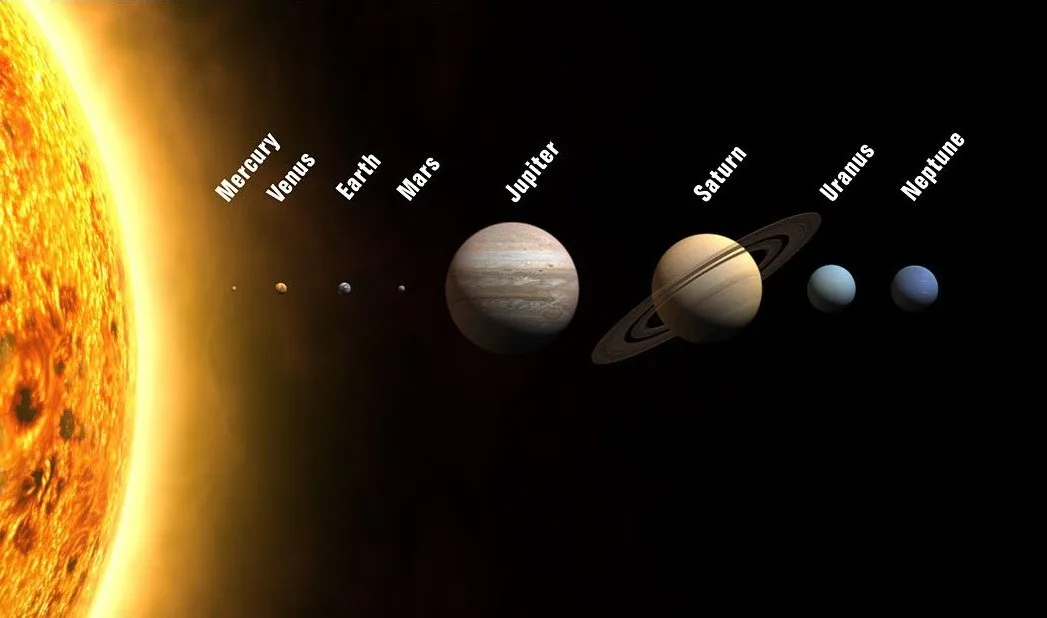
That night, the sky played host to one of the rarest and most extreme alignments in the history of the earth. Mercury, Venus, Mars, Jupiter and Saturn: the five planets known to the ancients, visible to the naked eye, stood side by side, piercing the night sky like diamonds.
On the earth stood a conscious being, weary of the limits of the material world, its heart stretching from physics toward metaphysics. He was no alien, no character out of science fiction; he was an awakened soul in search of the ciphers of the cosmos. His rationalist companion looked up at the sky and smiled mockingly: “Look,” he said, “there is no life in those heaps of rock and gas millions of kilometres away. Only a dry silence...”
But our awakened traveller stayed silent. For he was not merely looking; he was seeing. All at once a deep tremor, a spiritual experience, began in his heart. This was not death; it was the passage of a crystallising soul into the dimension of timelessness, sloughing off the weight of the physical body.
At that very instant, something inconceivable happened at the centre of the sky. In the sources of the East the Sun was likened to a luminous tree, and the planets to its moving fruits, which it perpetually shakes so that they will not fall. That night the Sun, like a chanter at the centre of an ecstatic remembrance, made a deep and majestic shuddering. This was not a destroying explosion, but a tender embrace.
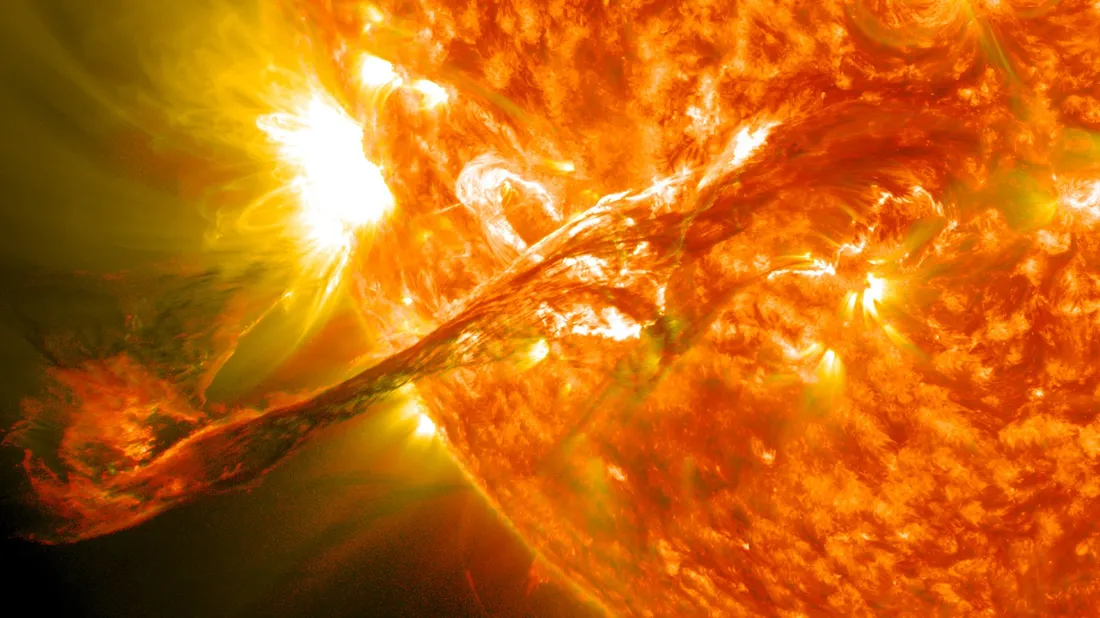
The fascinating part is that this shuddering, described centuries ago in the ancient texts of the East, has been confirmed by modern science, by the field of helioseismology and by the discoveries of the SOHO spacecraft. The vast acoustic waves and plasma movements that circulate constantly within the Sun cause its surface to shake and shudder ceaselessly, like the skin of a drum. By measuring these vibrations, scientists have mapped the unseen depths of the Sun, just as a geologist reads the interior of the earth through seismic waves. These seismic tremors draw the planets toward the Sun with the hidden strings of gravity, align them, and preserve the rhythm of a celestial dance.
The Crystallisation of the Soul and the Planetary Journey
With that cosmic shuddering, the soul of the traveller slipped from the cage of the body and turned into a stream of glittering light. He was now beyond time and place. Caught up in the tender rhythm of the Sun, he set out on a celestial voyage in which he would gaze with a serene eye upon the subtle inhabitants created to suit the nature of each planet.
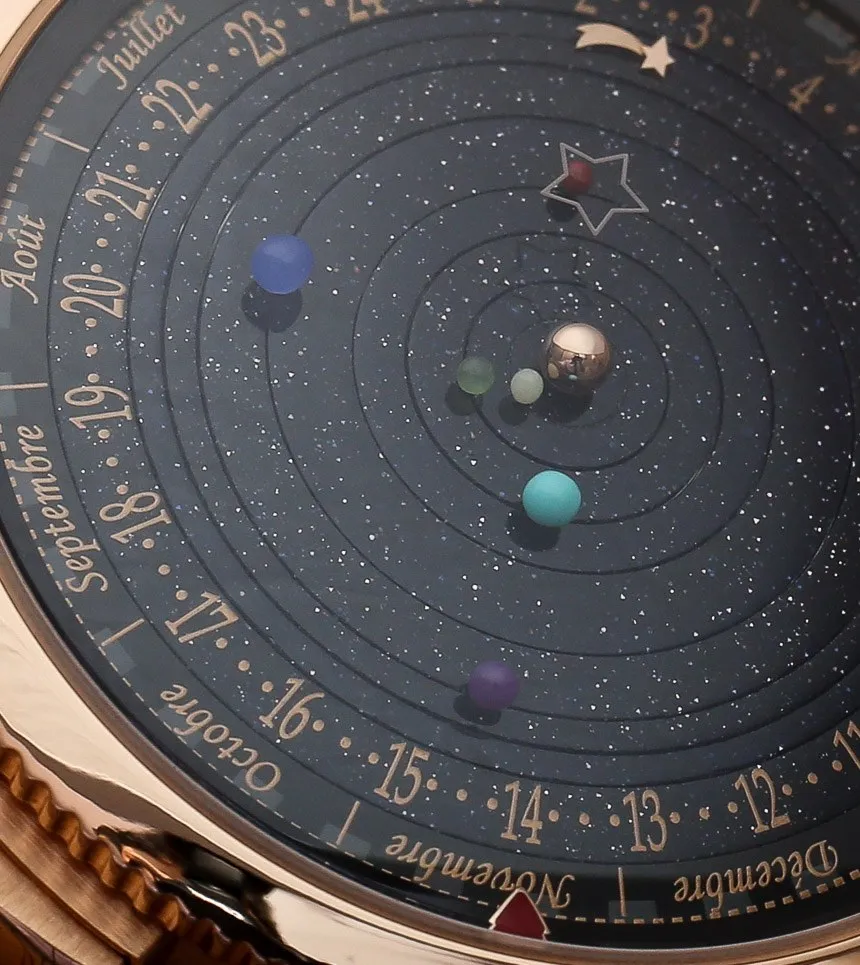
Mercury. The first stop, nearest to the fire of the Sun. Hard, patient and swift, like the green and grey veins of serpentine stone. His soul saw there the rhythm of subtle beings created to suit that high pressure and heat.
Venus. On this planet, dazzling in beauty yet hot as a furnace within, he felt the deep, mysterious green of chloromelanite. He grasped the difference between the illusions behind the acid clouds and true beauty.
Earth. Turning back, he saw his own home. It was the sacred cradle, spinning with the deep blue sparkle of turquoise, upon which life and consciousness draw breath.
Mars. His soul, lighter still, touched the reddish soil, the bold and unruly tones of red jasper. Here he read the secret of struggle and of existence.
Jupiter. Reaching the stormy atmosphere, he was wrapped in the calming, deep sheen of blue agate. Even under that colossal pressure he understood his own nothingness before the vastness of the universe.
Saturn. And at last, to the crown of the sky with its rings, in the mystical purple of sugilite, he reached the place where time flows most slowly and most wisely. A single orbit of Saturn around the Sun takes fully twenty-nine and a half years; this was, as it were, the age at which a soul comes to maturity.
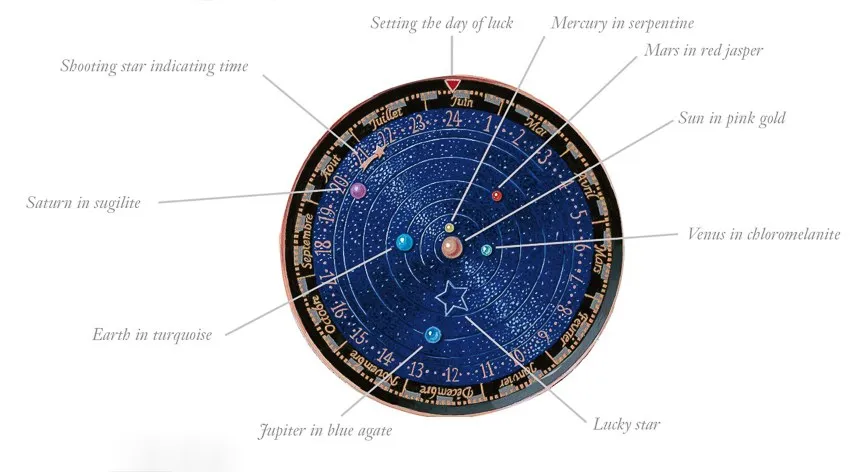
And here lies the cold engineering truth behind that spiritual journey: in the Midnight Planétarium, each of these six planets turns at its true orbital period in the sky. Mercury completes its circuit of the Sun in about eighty-eight days, Venus in two hundred and twenty-four, Earth in one year, Mars in six hundred and eighty-seven days. For Jupiter this circuit takes nearly twelve years, and for Saturn a full twenty-nine and a half. In other words, on this tiny dome upon your wrist you would have to wait almost a third of a human lifetime to see a single orbit of Saturn. The traveller beheld this twenty-nine-and-a-half-year cosmic symphony in a single instant, in the crystallised mirror of his soul. He understood that none of these planets was adrift; all of them, behind the great Sun at the centre, were in a universal act of worship representing the vast glorification of the cosmos.
The Signature of the Cosmos Cast upon the Wrist
After this immense spiritual experience the traveller's soul returned, with the secrets of the universe in its pocket, to its body on the earth. But how would it convey what it had seen, that vertical experience of time, to the horizontal world? How would it tell humanity of this celestial dance, of that fortunate and sacred moment?
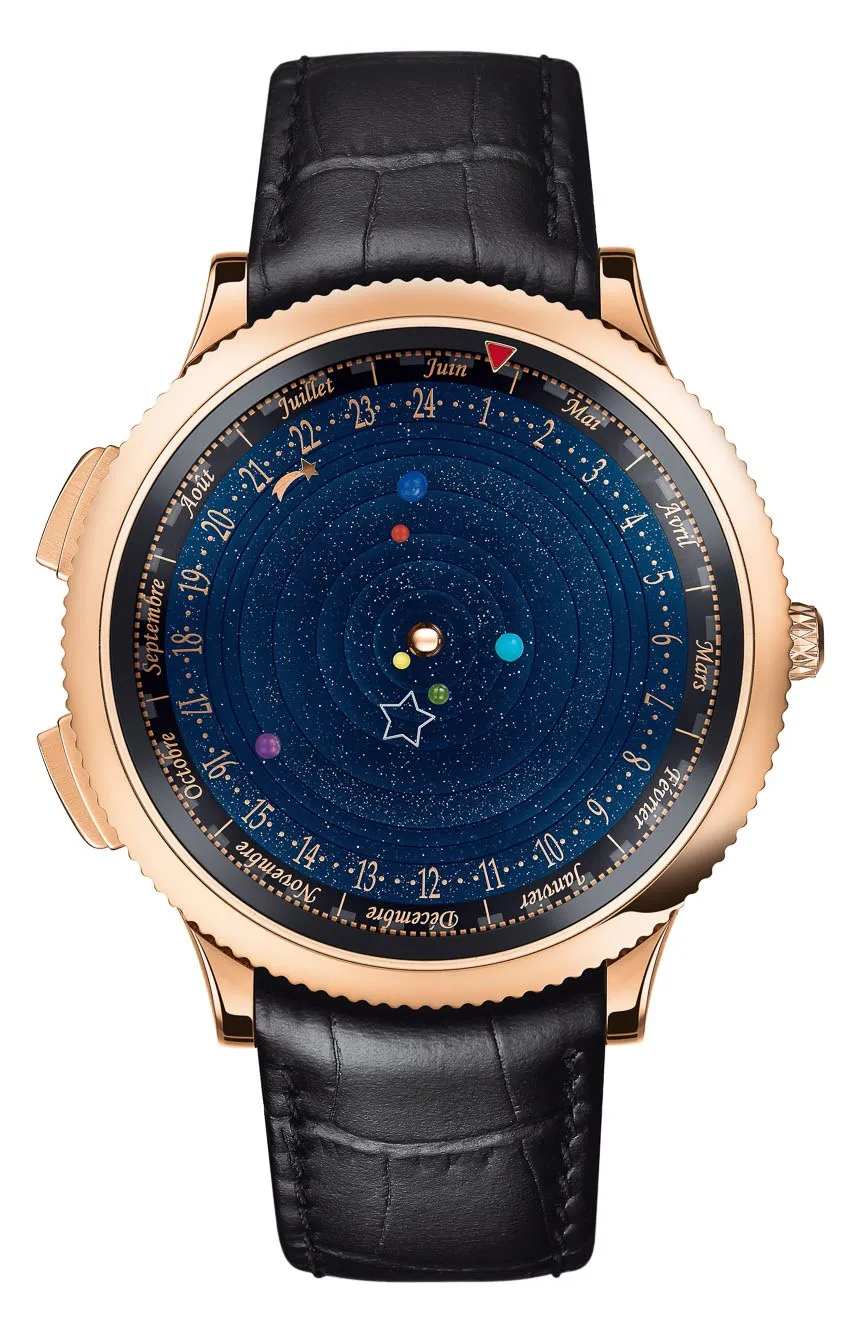
It is precisely here that human genius and art step in. A watchmaker took that traveller's spiritual voyage and, with his fingertips, breathed it into a mechanism. The name of that work was the Van Cleef & Arpels Midnight Planétarium. This watch is not merely a piece of metal that measures time; it is a reflection, in micro-cosmic form, of that night when the traveller's soul crystallised, of that celestial awakening.
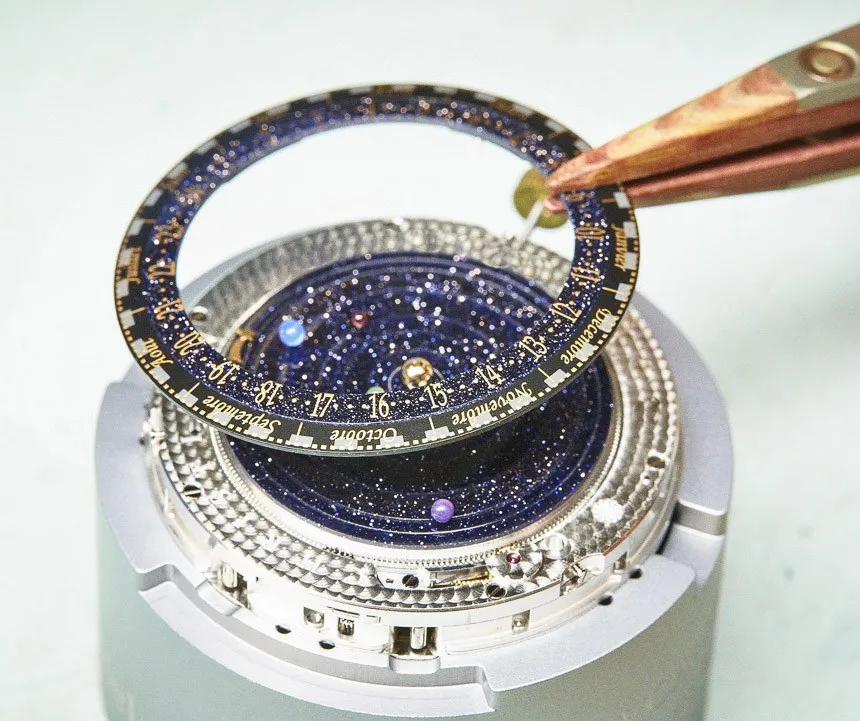
But how was such a sky fitted onto a wrist? Presented in 2014 at the SIHH fair in Geneva, this watch is in truth the meeting of two worlds: the poetic genius of Van Cleef & Arpels and the engineering of the Dutch astronomical watchmaker Christiaan van der Klaauw. Over a self-winding base movement was set a planetarium module designed exclusively for the house. The fruit of a three-year development, this module alone is made of three hundred and ninety-six separate parts.
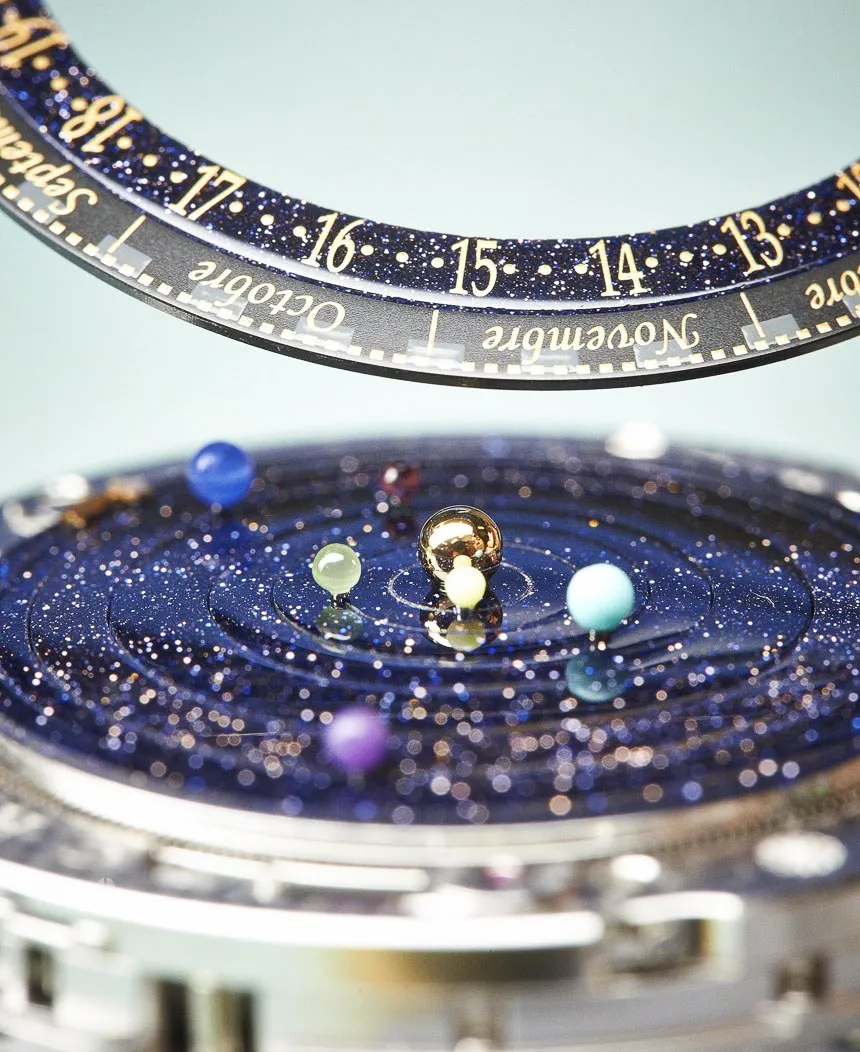
The deep, glittering midnight-blue ground of the dial is aventurine, giving the sense that you are gazing into a true sea of stars. The time is told by a shooting star of pink gold. The house's secret poetry, meanwhile, is hidden in the “lucky day” mechanism: on the calendar ring that encircles the dial, you align a small gold star, carried on the sapphire crystal and moved by the rotating bezel, with a special day of your year. When that day comes, the turquoise Earth passes precisely beneath that star and whispers to you the “lucky day” that is yours alone. On the reverse of the watch is a calendar mechanism bearing day, day-and-night and year indications. This entire cosmos is fitted within a forty-four millimetre case of pink gold.
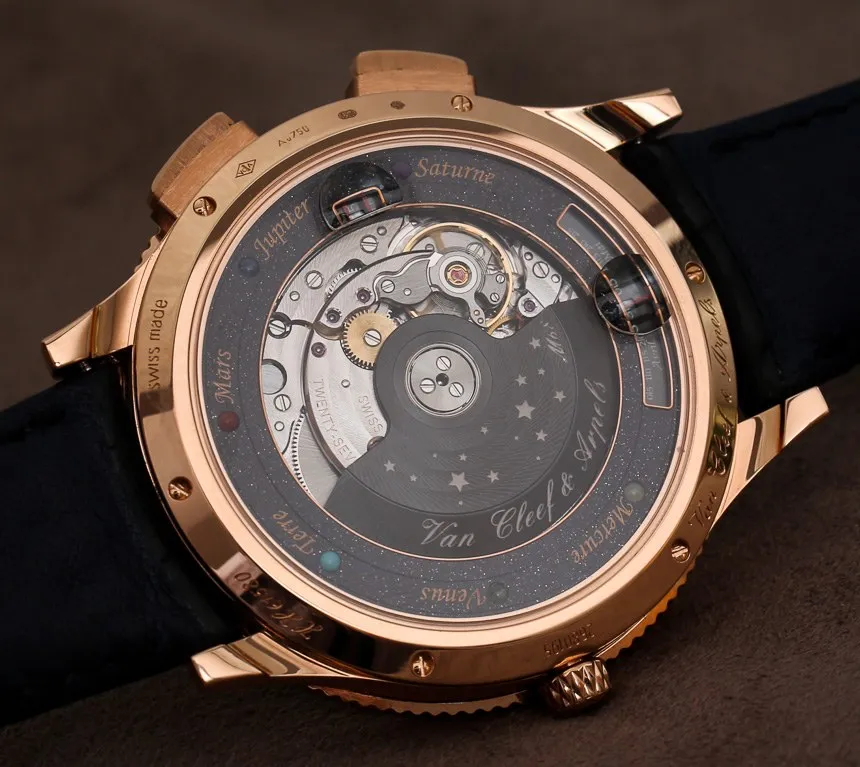
Each precious stone the master set into the dial, namely serpentine, chloromelanite, turquoise, jasper, agate and sugilite, is itself one of the stops the traveller visited in spirit that night. Beneath the dial, like the helioseismic tremors of the Sun, a mechanical heart beats. And that small, hidden star upon the sapphire crystal is the sealing of that sacred moment of awakening, when the soul became one with the universe and the Earth came beneath the star to whisper the “lucky day.”
The central wheels turn, the Sun waits at the centre, and Saturn continues its dignified twenty-nine-and-a-half-year march. A person who fastens the Midnight Planétarium to the wrist does not merely look at a watch; with that eye which, as the ancient sources say, sees the soul of the palace, he beholds the immense, living and encoded poem at the heart of the universe.