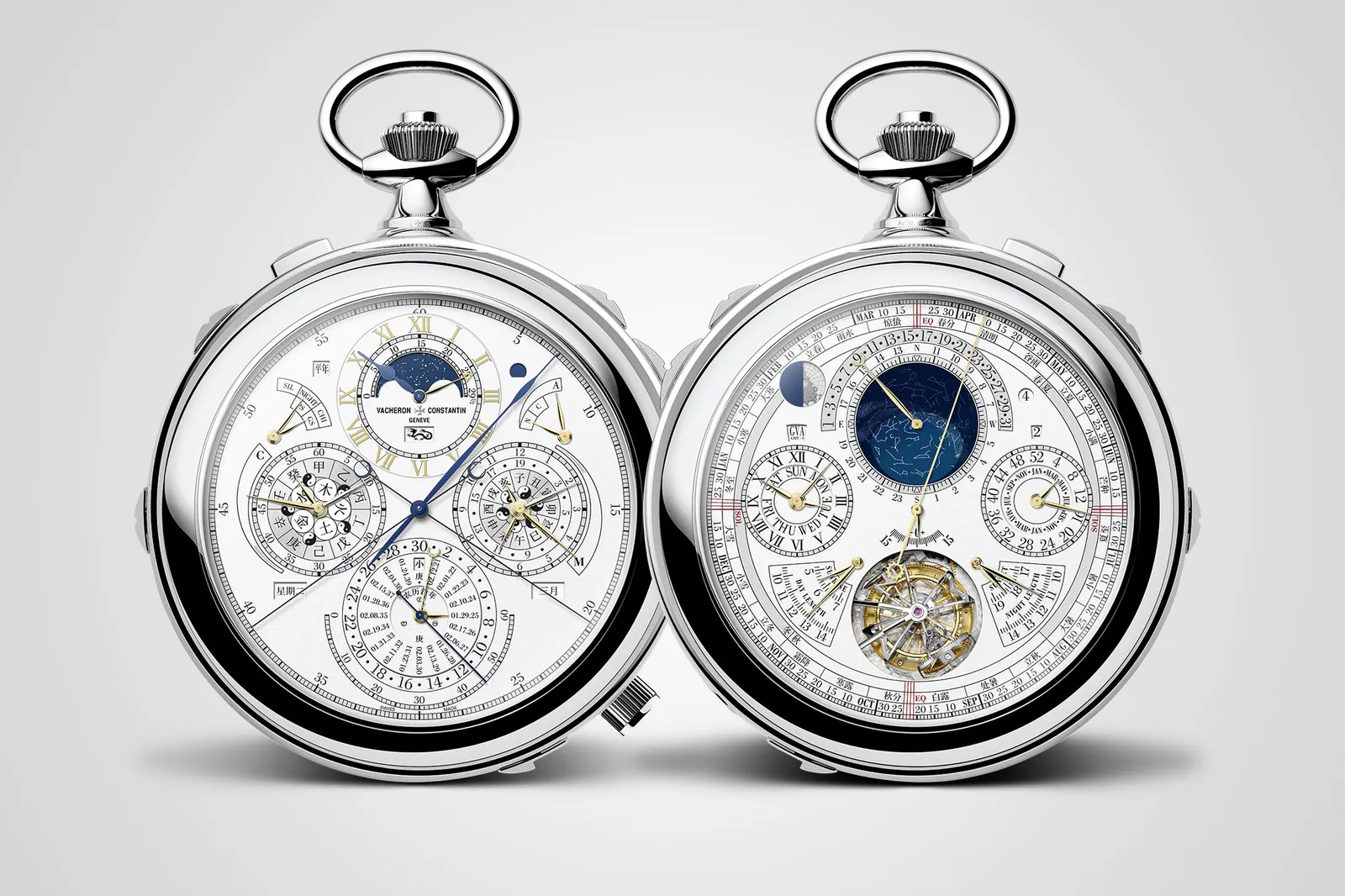
Picture a pocket watch you can open from either side, and a different sky waits for you on each face. On one side, the Western Gregorian calendar, seconds, a chronograph. On the other, the stars over Shanghai, the rising and setting of the sun, and, for the first time ever in a mechanical watch, a fully working Chinese lunisolar calendar. This is the Berkley Grand Complication, built by Vacheron Constantin’s Les Cabinotiers workshop over eleven years for a single collector: the most complicated watch ever made, with 63 complications.
This article explains what every one of those 63 complications actually does, and how the watchmakers built them, in language that requires no prior knowledge of horology whatsoever.

One Collector, Two Records
In 2015, to mark the house’s 260th anniversary, Vacheron Constantin unveiled what it called the most complicated watch in the world: Reference 57260, a pocket watch built for a single collector with 57 complications, which broke the record set by Patek Philippe’s legendary Calibre 89 (33 complications, completed in 1989). In 2024, that same collector asked Vacheron Constantin to go further still. The result, from Les Cabinotiers, the house’s bespoke commissions workshop, is the Berkley Grand Complication: a watch that breaks its own maker’s record with 63 complications.
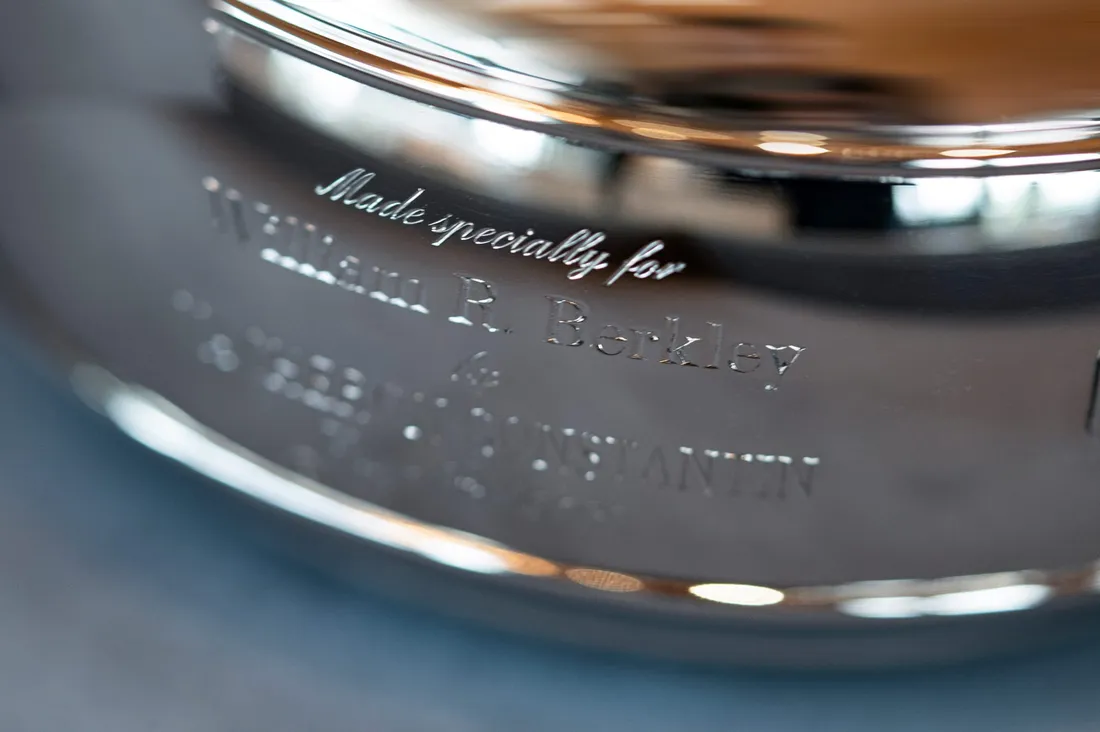
The engraving on the caseback reveals the collector’s identity: “Made specially for William R. Berkley.” Berkley, an American businessman, is the man the watch is named after, a naming tradition that echoes Henry Graves and James Ward Packard, the legendary collectors who gave their own names to Patek Philippe’s and Vacheron Constantin’s great complications a century earlier.
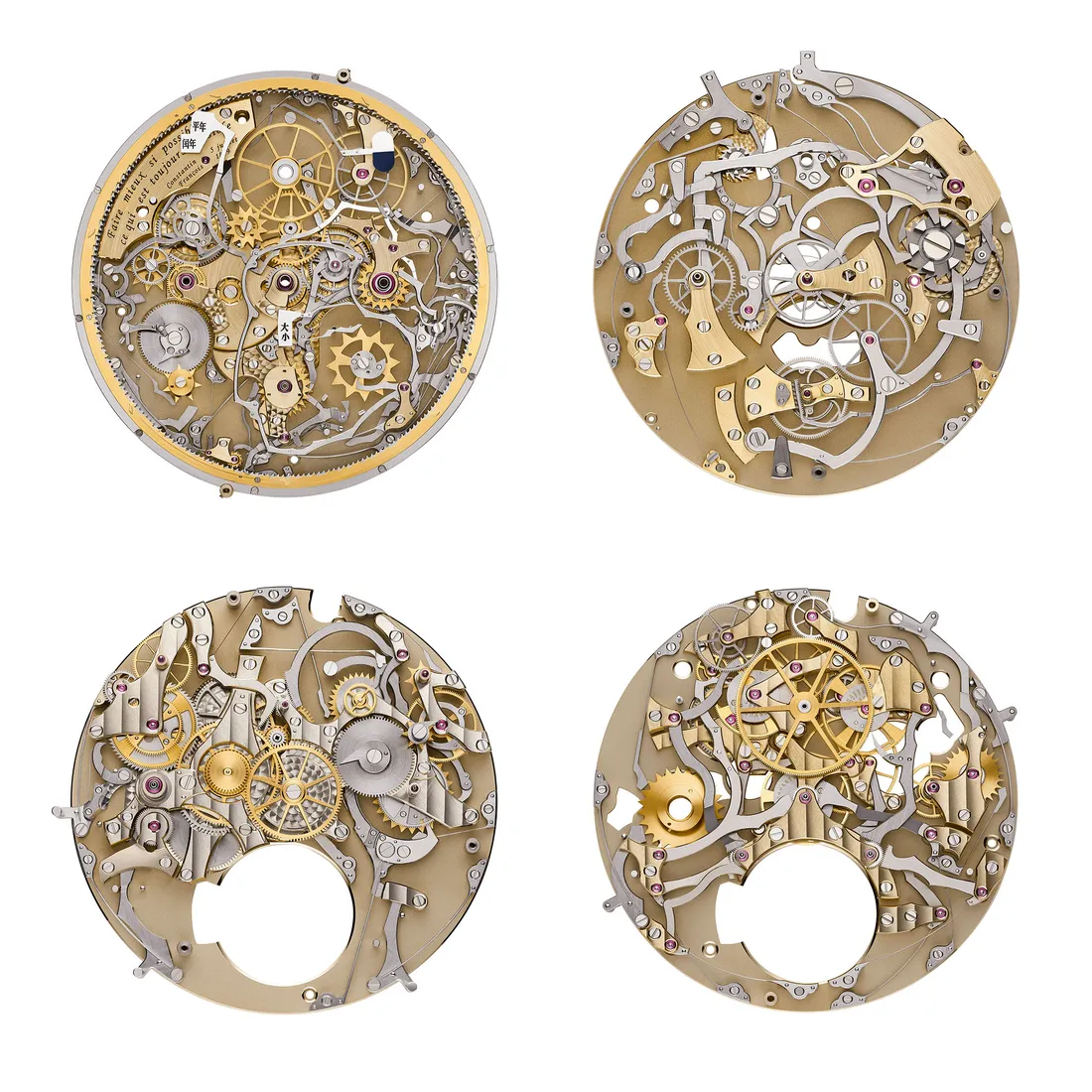
Designing and building the watch took a small team of three watchmakers a full eleven years, with an entire year devoted purely to assembly and regulation. The resulting movement, calibre 3752, is hand-wound, 72mm across and 36mm thick, running at 18,000 vibrations an hour (2.5Hz) with a 60-hour power reserve. Inside sit 2,877 components and 245 jewels, read out through 31 hands and 9 discs. The watch itself is cased in 18-carat white gold, 98mm across and 50.55mm thick, protected by sapphire crystal on both faces.
Balancing Gravity in Three Dimensions: the Armillary Tourbillon
A watch keeps time by counting the oscillations of a balance wheel swinging on a hairspring. The trouble is that gravity affects that swing slightly differently depending on whether the watch is lying flat, standing on edge, or somewhere in between, producing small errors that add up over a day. In 1795, Abraham-Louis Breguet’s solution was to mount the whole escapement inside a slowly rotating cage; as the cage turns, the watch passes through every position, and the error in one orientation cancels the error in the opposite one. This is called a tourbillon.
The Berkley takes that a step further with an armillary tourbillon that rotates not on one axis but on three. It takes its name from an ancient astronomical instrument, a set of nested metal rings once used by astronomers to model the stars and planetary orbits before the telescope existed; like that instrument, this tourbillon is built from rings turning inside rings. Rotating on three axes lets it compensate for gravity in almost any position the watch is held in, and it carries a spherical hairspring rather than a flat one, which breathes far more symmetrically around its own axis and improves precision further. Assembling and regulating a mechanism this complex is so difficult that a full year of the watch’s eleven-year development was devoted to that task alone.

The Gregorian Calendar: the Exception Hidden in a Century
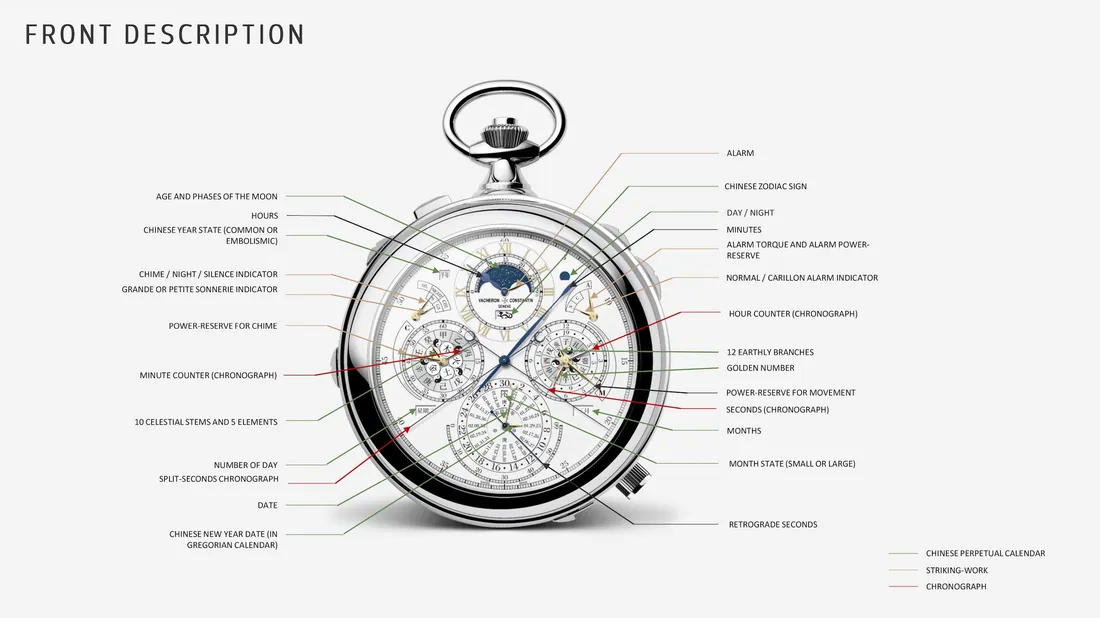
The front of the watch carries a classic perpetual calendar: month, day, date, leap year indicator, a four-year cycle, and even an ISO 8601 display showing which week of the year it is. An ordinary perpetual calendar already knows to add a day to February every fourth year. But the real Gregorian calendar hides one more exception inside that rule: centurial years (those divisible by 100) are not leap years unless they are also divisible by 400, which is why 2000 was a leap year but 2100 will not be. The Berkley’s calendar mechanism knows this deeper rule too, so it will still be correct in the year 2100 without anyone needing to open the case and nudge it by hand.
A World First: a Mechanical Chinese Calendar
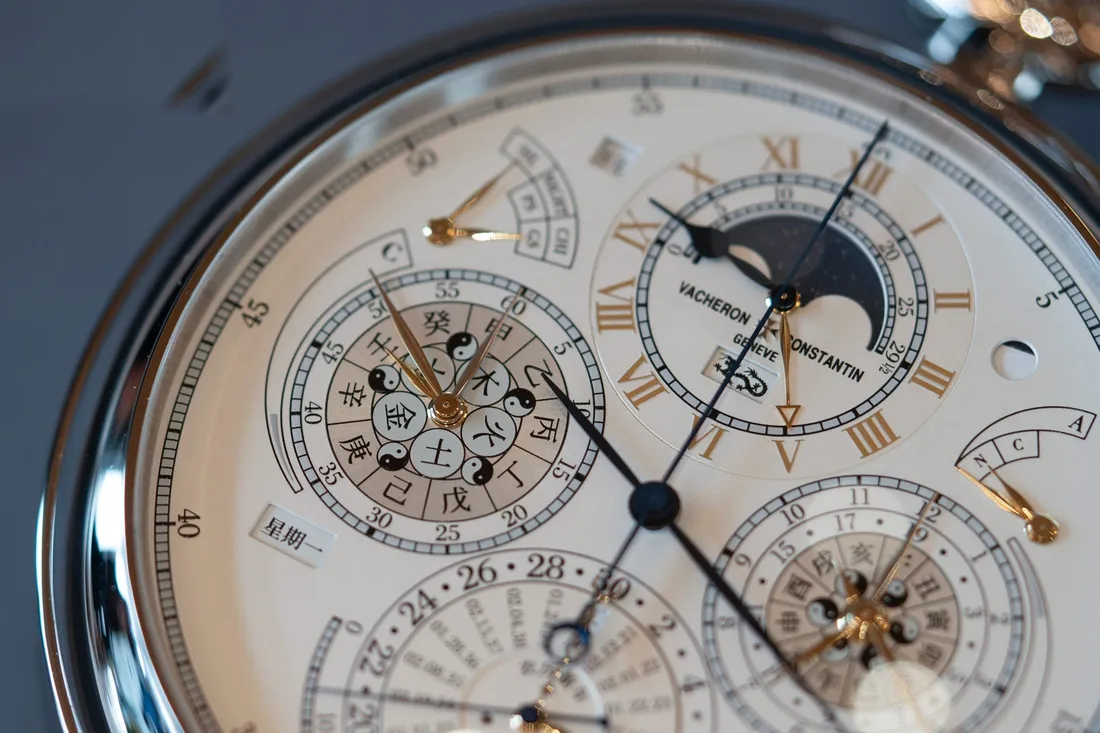
This is where the Berkley truly breaks new ground: the first sustained Chinese calendar ever built into a mechanical watch. To understand why that is so difficult, it helps to see why the Gregorian and Chinese calendars work so differently in the first place.
The Gregorian calendar is a solar calendar: the year is tied to the Earth’s trip around the sun, and the months are fixed, arbitrary lengths (30 or 31 days, with an exception for February). The Chinese calendar is lunisolar: its months follow the real phases of the moon (about 29.53 days each), while its years still follow the real solar year (about 365.24 days). The problem is that twelve real lunar months fall about eleven days short of one solar year. Left uncorrected, Chinese New Year would drift into summer within a few years, then autumn, then winter.
One of the first people to work out a fix, back in the fifth century BCE, was the Athenian astronomer Meton. He calculated that nineteen solar years come astonishingly close to exactly two hundred and thirty-five lunar months, a relationship now called the Metonic cycle in his honour. The Chinese calendar uses that same nineteen-year rhythm, inserting an extra thirteenth “intercalary” month into certain years to keep the moon and the sun synchronised. The “Golden Number” display on the Berkley’s dial shows exactly where the watch currently sits within that nineteen-year cycle.
On top of that sits a base-sixty counting system: ten “celestial stems” combined with twelve “earthly branches” produce sixty possible pairings, known as the sexagesimal cycle, used to name years, months and days alike. The twelve familiar animals of the Chinese zodiac are simply the visible face of that same sixty-unit cycle. The dial also carries separate indications for whether the current year is an ordinary year or one of the rarer years that contains that extra intercalary month, and whether each month is “small” (29 days) or “large” (30 days), since real lunar months, unlike Gregorian ones, do not follow any fixed pattern.
Vacheron Constantin’s engineers did not translate this system straight into brass and steel. They first simulated all of the calendar’s irregularities as a set of mathematical algorithms, and only then designed a mechanical equivalent, meaning they effectively had to think like software engineers before they could think like watchmakers. The watch also shows the date of Chinese New Year translated into the Gregorian calendar, calibrated to remain accurate until the year 2200; the watch’s owner was handed eight spare discs to keep that particular display correct all the way to that date.
format_quote"Before they could think like watchmakers, the engineers first had to think like software engineers."
The Agricultural Calendar: the Sun’s Own Rhythm
Alongside the lunisolar calendar, the watch also carries a far older system, the agricultural calendar. This one ignores the moon entirely and tracks only the sun’s position in the sky, dividing the year into the regular intervals farmers have used for thousands of years to time planting, harvest and the turning of the seasons. A separate solar hand on the dial marks the equinoxes and solstices of this calendar.
A Map of the Sky and the Stars’ Own Clock
On the astronomical face sits a rotating star chart calibrated exactly for the sky over Shanghai, a tiny planetarium on the wrist. Beside it are sidereal hour and minute displays. The ordinary solar day we live by is based on the Earth completing one full turn relative to the sun. But as the Earth spins, it is also moving along its orbit, so it actually has to rotate a little further to face the sun again than it does to face a distant, effectively fixed star. That means a day measured against the stars runs about four minutes shorter than a day measured against the sun. This “sidereal time” is exactly what astronomers use when calculating which star their telescope should be pointed at.
Flanking the tourbillon are two fan-shaped displays showing the calculated sunrise and sunset times for Shanghai, alongside separate hands showing the total length of that day and that night. There is also an equation of time display: an ordinary clock treats every day as exactly twenty-four hours long, but the real sun, because of the Earth’s elliptical orbit and tilted axis, reaches true noon a little early or a little late depending on the time of year, by as much as fourteen to sixteen minutes. A specially shaped cam inside the watch traces that yearly pattern of lateness and haste, and shows you, every day, exactly how far ahead or behind the real sun currently is.
Finally, there is a moon phase display, but not an ordinary one. Most moon phase mechanisms approximate the moon’s 29.53-day cycle with a simple gear and drift a full day out of sync roughly every two and a half years. The Berkley’s moon phase gears that approximation so finely that it takes 1,027 years to drift by a single day.
Catching the Fifth of a Second: the Split-Seconds Chronograph
The front of the watch also carries a classical chronograph, accurate to a fifth of a second, built on a column wheel with a horizontal clutch, the oldest and most trusted chronograph architecture in watchmaking. But this chronograph also has a rattrapante, or split-seconds, function. Two seconds hands, sharing the same pivot, start together; press a pusher and a spring-loaded clamp instantly stops the second hand so you can read its position, while the first hand keeps running underneath, uninterrupted. Press the same pusher again and the held hand snaps forward to rejoin the first in an instant, catching up exactly the way the French verb rattraper, “to catch up,” describes. This lets a single watch time two events that start together but finish at different moments, such as two runners in the same race.
A Hidden Door: the Alarm Mechanism
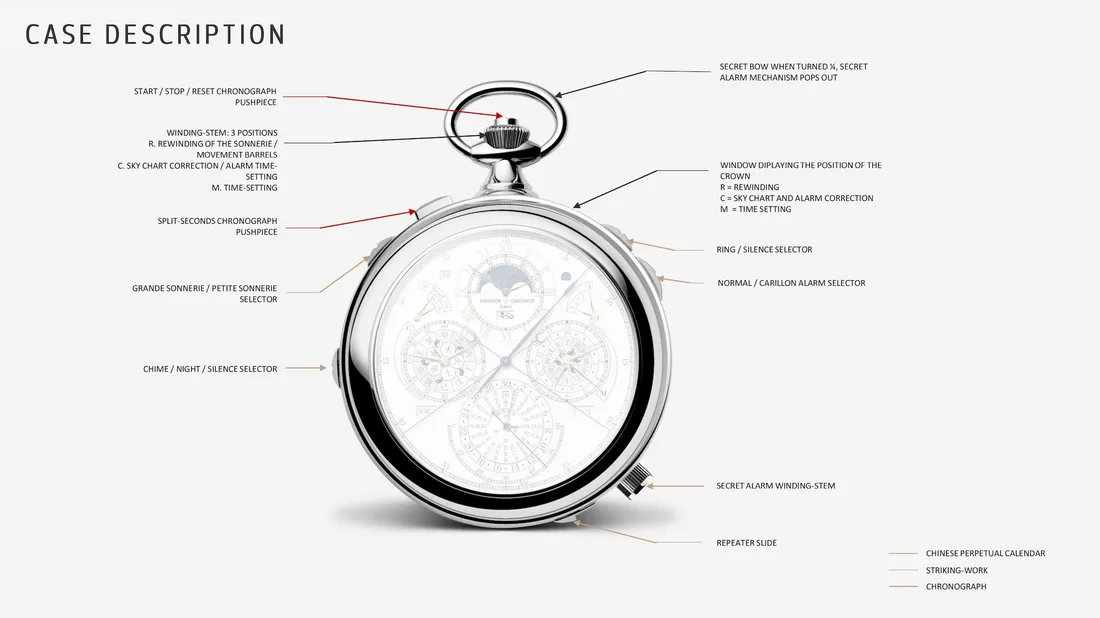
The case holds a secret. Twist the bow at the top of the watch a quarter turn, and a hidden winding stem pops out from inside the case: a dedicated crown belonging entirely to the alarm mechanism, which winds its own separate mainspring and striking mechanism. The alarm runs on its own power, completely independent of the main movement, and has its own power-reserve display. You can have it sound simply, on a single hammer and gong, or route it through the watch’s full Westminster carillon in either grande or petite sonnerie mode.
How a Watch Counts Out Time: the Westminster Carillon
At the heart of the Berkley’s striking mechanism sits a very old but remarkably clever system watchmakers call rack and snail. A snail is a small cam cut into stepped, staircase-like levels; the watch carries three of them, one each for the hour, the minute and the quarter, and all three turn continuously with the going train, so their position always encodes the real time. Press the striking slide, and three pointed levers, called racks, drop onto these snails; each rack falls until it meets its own snail’s current step, and how far it falls determines exactly how many times its hammer will strike. An “all or nothing” mechanism then checks that each rack has fallen completely before releasing the strike, so a half-hearted push on the slide can never produce a garbled or incomplete chime. A rotating governor, a small internal fan, paces the resulting hammer blows so they land evenly spaced and clearly audible rather than blurring together.
An ordinary Westminster carillon uses four gongs and four hammers. For the Berkley, Vacheron Constantin built a system with five of each, which the house describes as the most complicated striking mechanism it has ever designed. The watch can chime in either of two modes: in grande sonnerie, it automatically plays both the quarter-hour melody and the full hour count at every single quarter, the way a church tower would; in petite sonnerie, it plays only the quarter melody each time and strikes the hour just once, at the top of the hour. The difference between the two modes comes down to a small blocking lever that steps in and out of the hour rack’s path. On top of all this sits an on-demand minute repeater that chimes the exact time whenever you want it, and a night silence mode that automatically mutes all striking between hours chosen by the owner, for instance ten at night and eight in the morning.
The Invisible Engineering: Three Power Reserves, One Crown
Packing this many functions into one case carries a hidden cost: managing energy. The Berkley carries three entirely separate power-reserve displays, one for the main going train, one for the striking mechanism, and one for the alarm, so that chiming the hour or setting the alarm never borrows so much as a second from the watch’s actual timekeeping. Managing all of this runs through a single crown with three distinct positions: one to wind the striking and main-going-train barrels, one to correct the sky chart and set the alarm time, and one to set the time itself, with a small window on the case showing at a glance which of the three positions is currently engaged.
Conclusion: Two Civilisations in One Pocket
The Berkley Grand Complication’s real achievement is not any single one of its complications, but the fact that all sixty-three of them live inside the same 98-millimetre case without ever interfering with one another. On one face it carries the Western solar calendar and a chronograph precise enough to catch a fifth of a second. On the other, it carries a Chinese lunisolar calendar thousands of years old, along with the exact stars, sunrise and sunset over the city of Shanghai. Eleven years in the making, by a team of three watchmakers, this watch fits two civilisations’ entire understanding of the sky and of time into a single pocket.