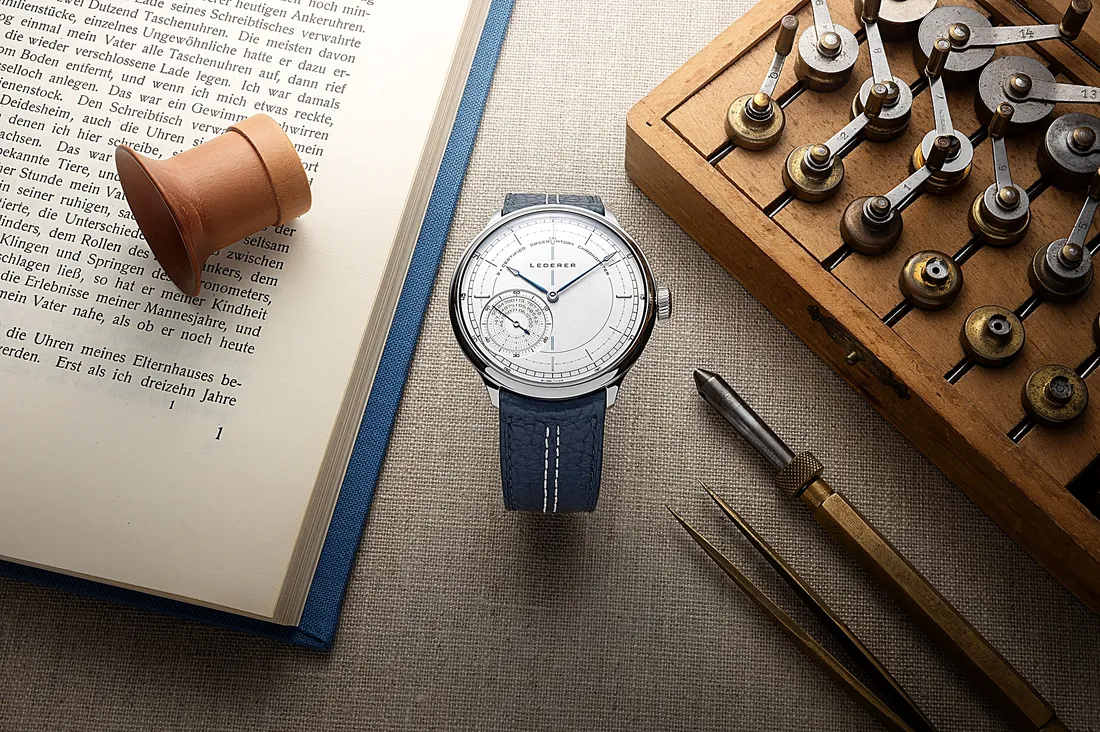
In his early twenties, a young man was repairing pocket watches and table clocks in German museums. The job was restoration. But every mechanism that passed through his hands kept asking him the same question: why does a watch slow down? Why does a watch that is accurate today drift on its own six months later? Bernhard Lederer never put that question down, and for forty years he has looked for the answer in the same place. The escapement.
What measures time in a mechanical watch is neither the mainspring nor the gear train. It is the balance wheel swinging at its own natural rate. Like a pendulum, like a guitar string, a balance left alone will always take the same time to travel out and back. Everything else in the watch does two jobs only: it counts that swing, and it feeds it so it does not die away. The escapement is the name we give to the second job. And that is exactly where the trouble lies, because every feed is also an interference. Every hand that touches the balance disturbs the very thing it is measuring.
Almost every mechanical watch made today uses the Swiss lever escapement. It is cheap, it is robust, it recovers from a knock. In exchange, its pallets slide across the teeth of the escape wheel, sliding means friction, and friction wants oil. Oil ages. It thins, it thickens, it collects dust, it creeps into corners. What spoils a watch’s timekeeping is usually not a fault at all; it is a few micrograms of liquid quietly changing its own chemistry. Lederer’s forty-year objection is aimed at precisely this: the accuracy of a measuring instrument should not depend on the least stable substance inside it.
format_quote"An escapement is not there to measure time. It is there to break force into pieces small enough that they do not bend it."
Hasan Bekmezci
That objection has a history. At the start of the nineteenth century Abraham Louis Breguet designed an arrangement meant to remove sliding friction almost entirely, and called it the natural escapement. Two separate escape wheels gave the balance a direct impulse without needing lubrication. The idea was perfect; the manufacturing was not. Breguet managed only a handful, and the design stayed on paper for a century and a half.
The man who took it off the paper was George Daniels. In 1974, in his workshop on the Isle of Man, he returned to Breguet’s twin-wheel idea, corrected its geometry point by point, and made the whole thing by hand. The result, now known as the Independent Double Wheel, ran without lubrication and held its rate as the years passed. In doing it, Daniels built more than a mechanism. He showed that in an industrialised age a single person, stubborn enough, could still rewrite the fundamentals of precision.
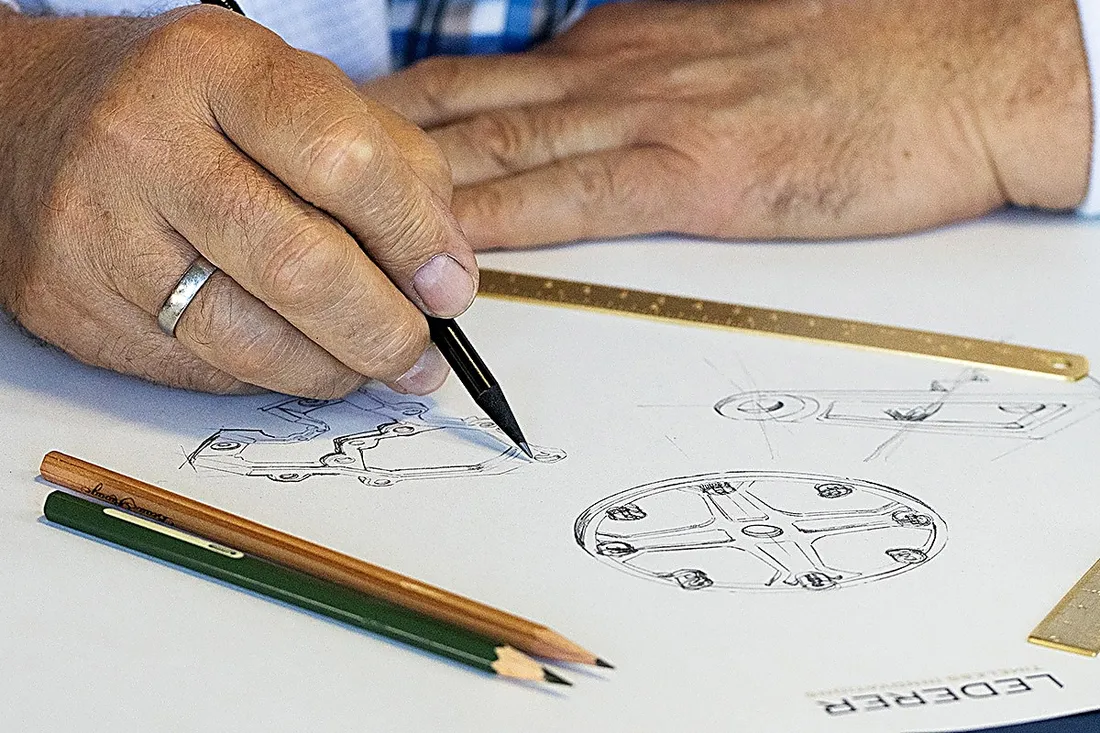
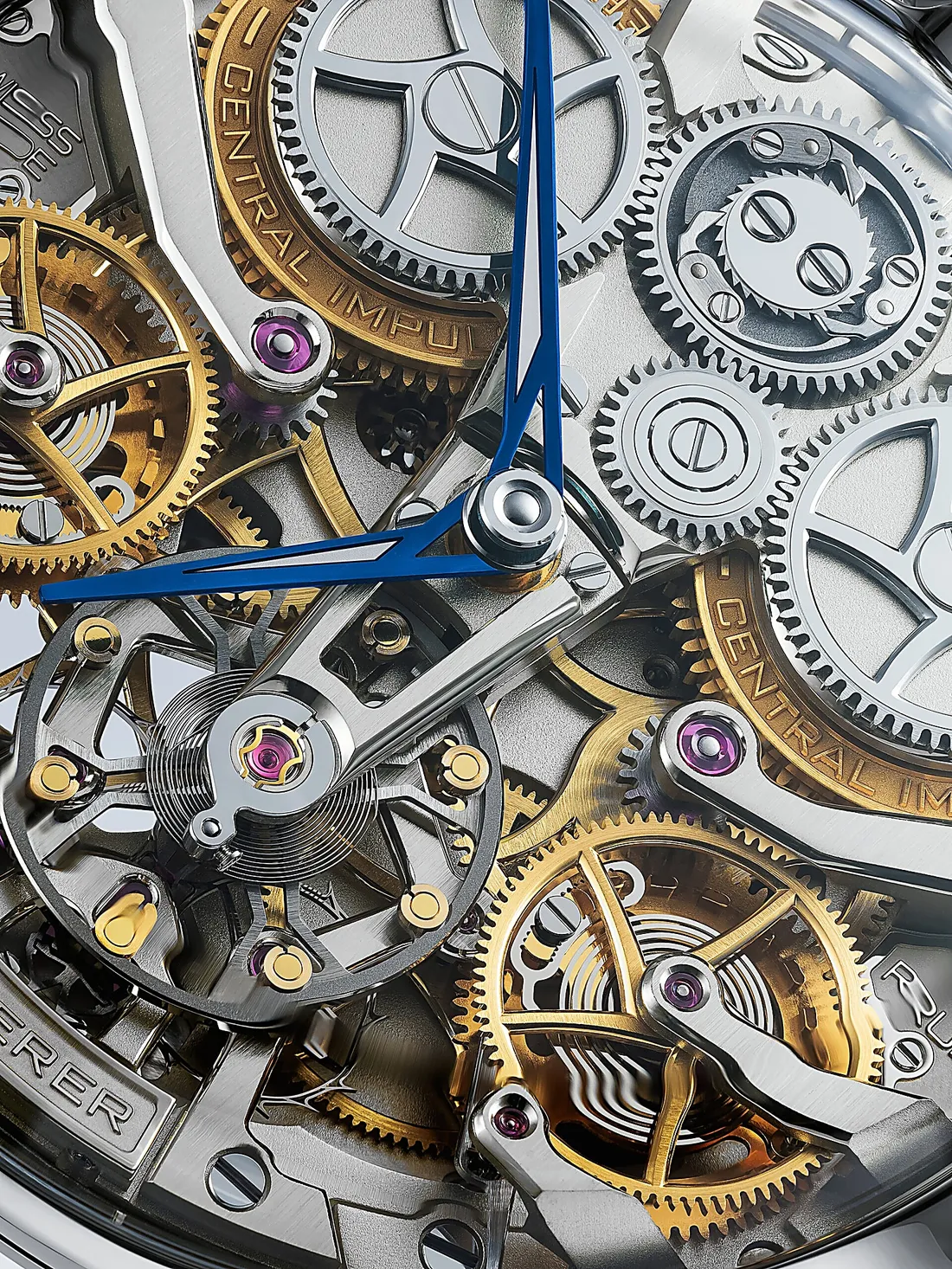
Lederer is the third link. The Central Impulse Chronometer he completed in 2020 took Breguet’s idea and Daniels’s solution and added his own answer on top: two independent gear trains, each ending in its own constant-force mechanism. It won the Innovation Prize at the Grand Prix d’Horlogerie de Genève in 2021.
To see what a constant-force mechanism does, picture a mainspring that is tight when wound and slack as it runs down. Fully wound, the push reaching the escapement is strong; thirty hours later it is weak, and the balance’s amplitude drifts between the two. A remontoir, the small intermediate spring, cuts that drift out. It takes the mainspring’s variable force, stores it on itself, and hands it back to the escapement as a short impulse of exactly the same size every time. The escapement never learns how full the mainspring is.
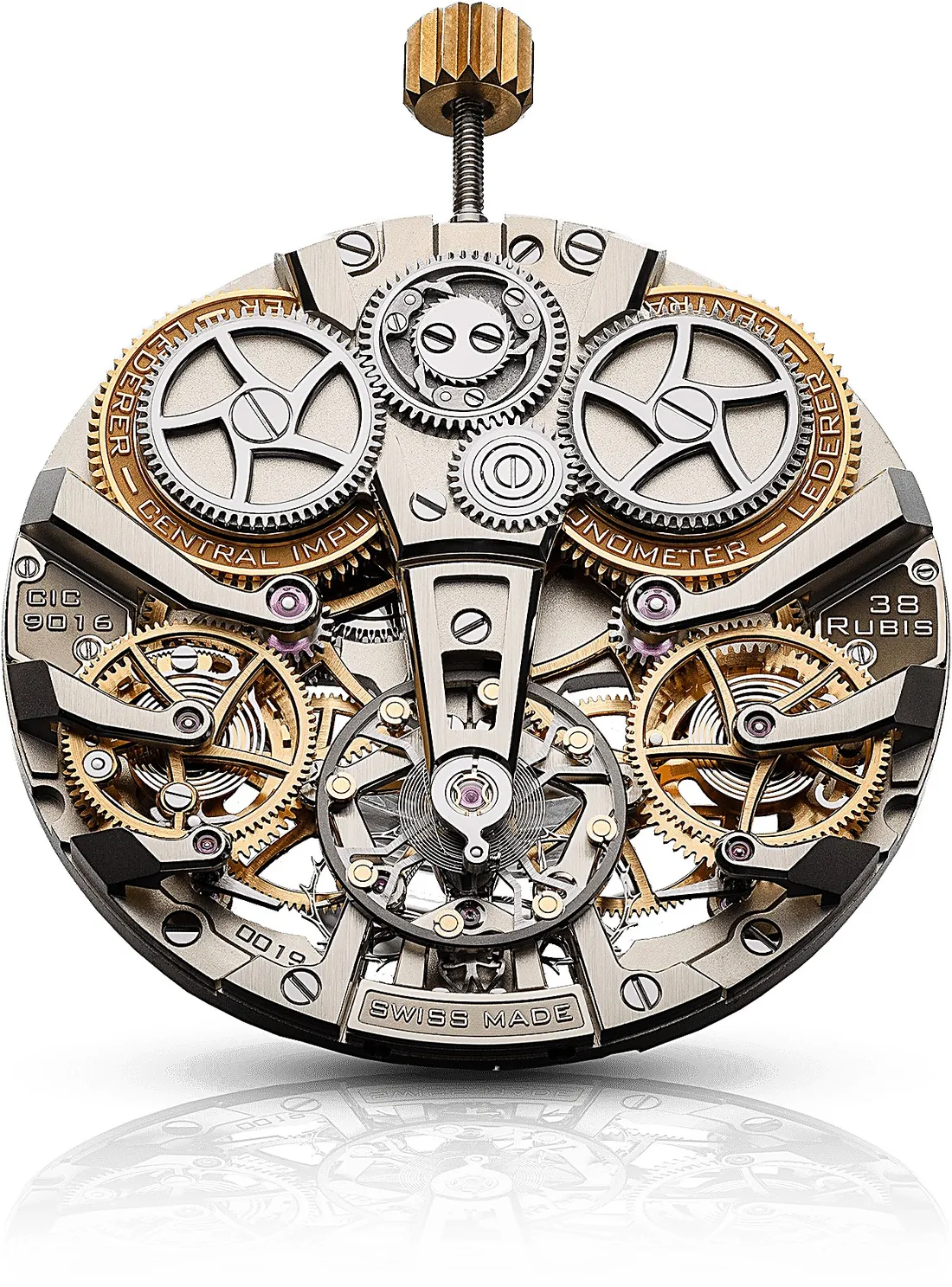
Picture two people at the bench arguing about this architecture: the engineer who designed the escapement, and the régleur who will have to regulate it.
The régleur objects first. Why two trains? Put a better remontoir on a single train and you get the same result with half the parts.
The designer’s answer lies in the way a balance actually moves. It swings out and back, and every full oscillation has two halves. In a detent escapement with one escape wheel, the impulse is delivered to only one of those halves; through the other, the balance coasts on its own inertia. The two halves are not under equal conditions, so the swing is not quite symmetrical. Two independent trains remove that asymmetry: each half gets its own wheel and its own remontoir, and the two impulses can be matched to each other.
The régleur raises his second objection. Two trains mean twice the friction, twice the parts, twice the points that need adjusting. Let one of them wander and you lose everything you gained.
The designer concedes it. That is the price. What you buy with it is this: the force that touches the balance is never a force that has changed since yesterday.
format_quote"What has been inverted here is not the mechanism. It is the direction you are asked to look."
Hasan Bekmezci
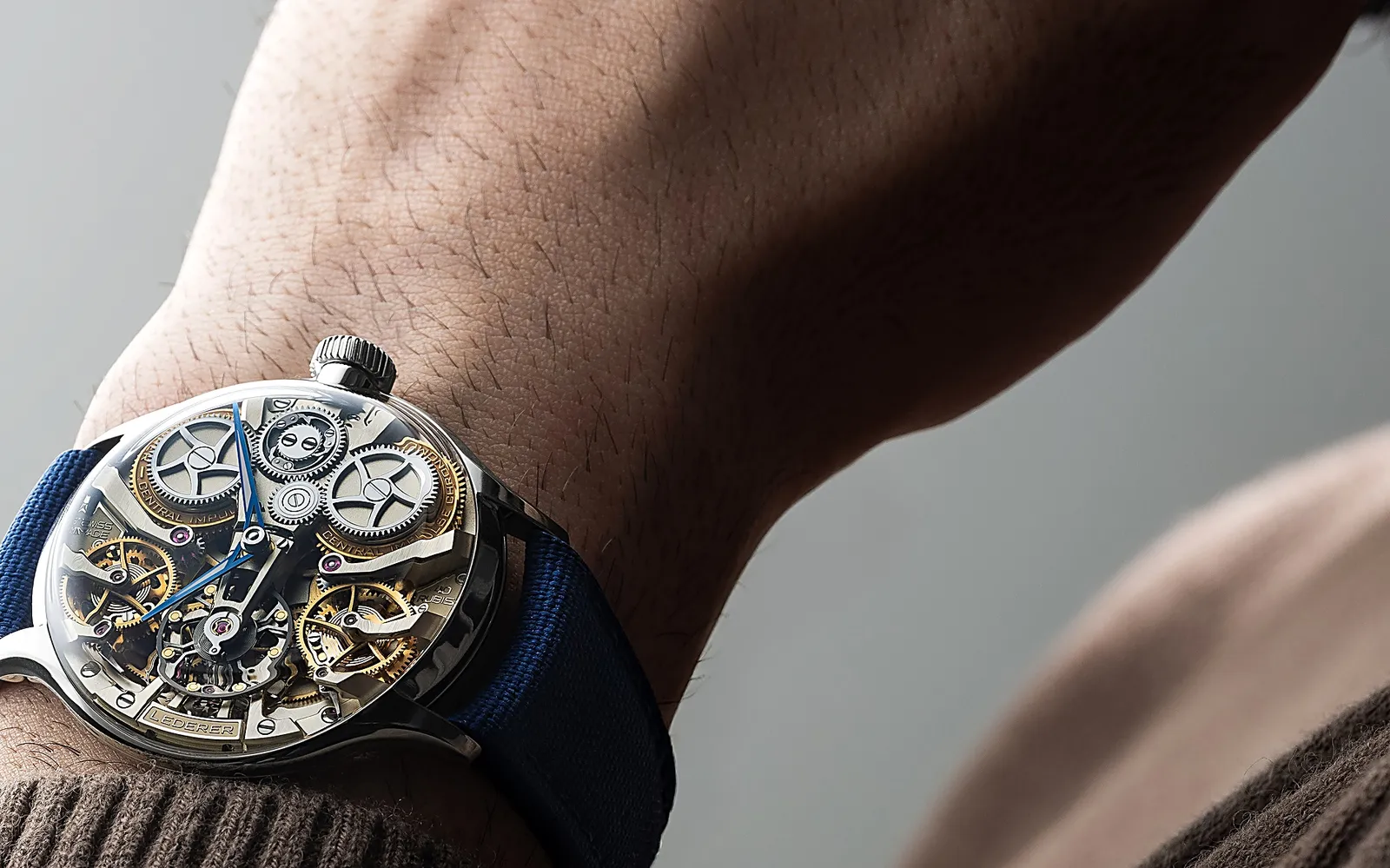
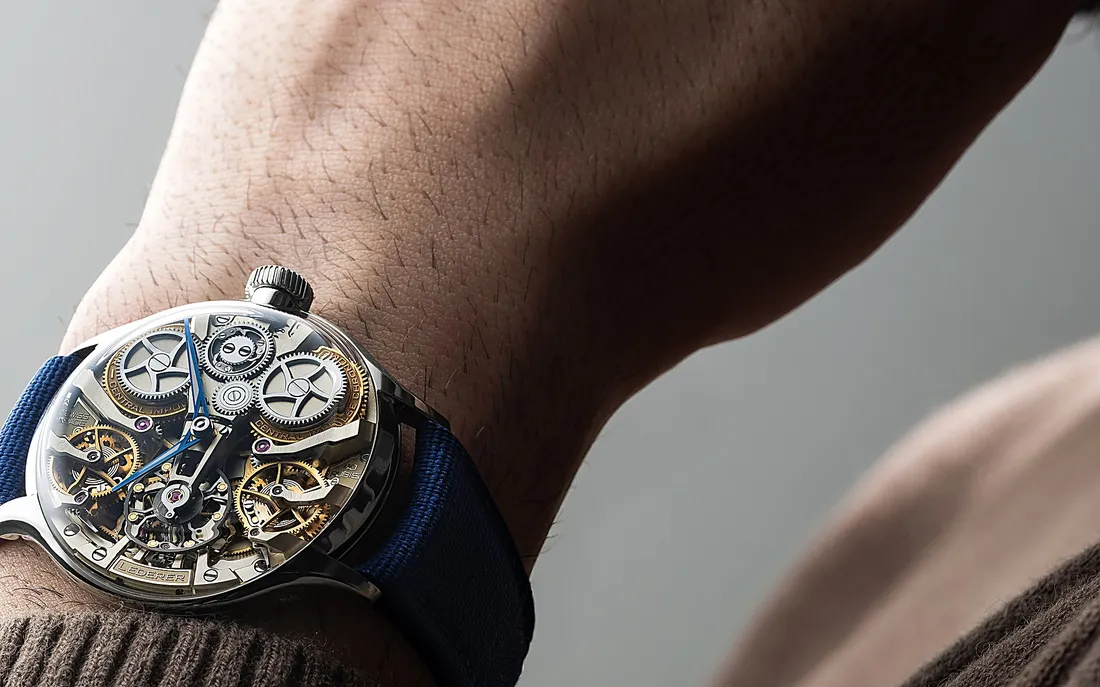
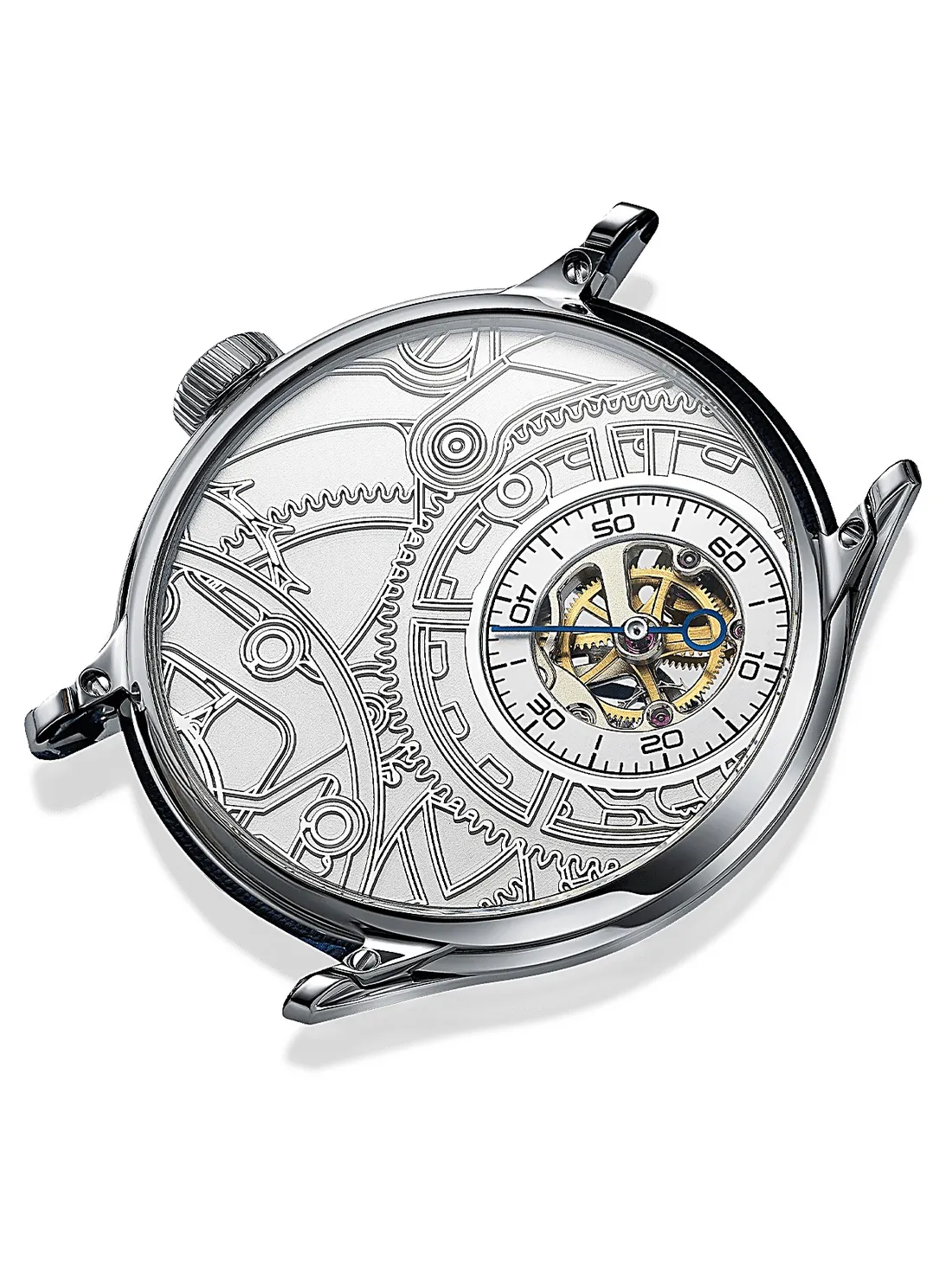
That is exactly what InVerto does. The movement is turned over, and the face that should carry a dial carries the mechanism instead. This is not skeletonising; skeletonising cuts material away, and here nothing is removed. The side normally hidden behind the case is simply brought to the front. Bridges, wheels, remontoir springs, escape wheels, all of it is where you are already looking. A wristwatch has two faces, and Lederer has chosen the one that faces the world rather than the one that faces the wrist.
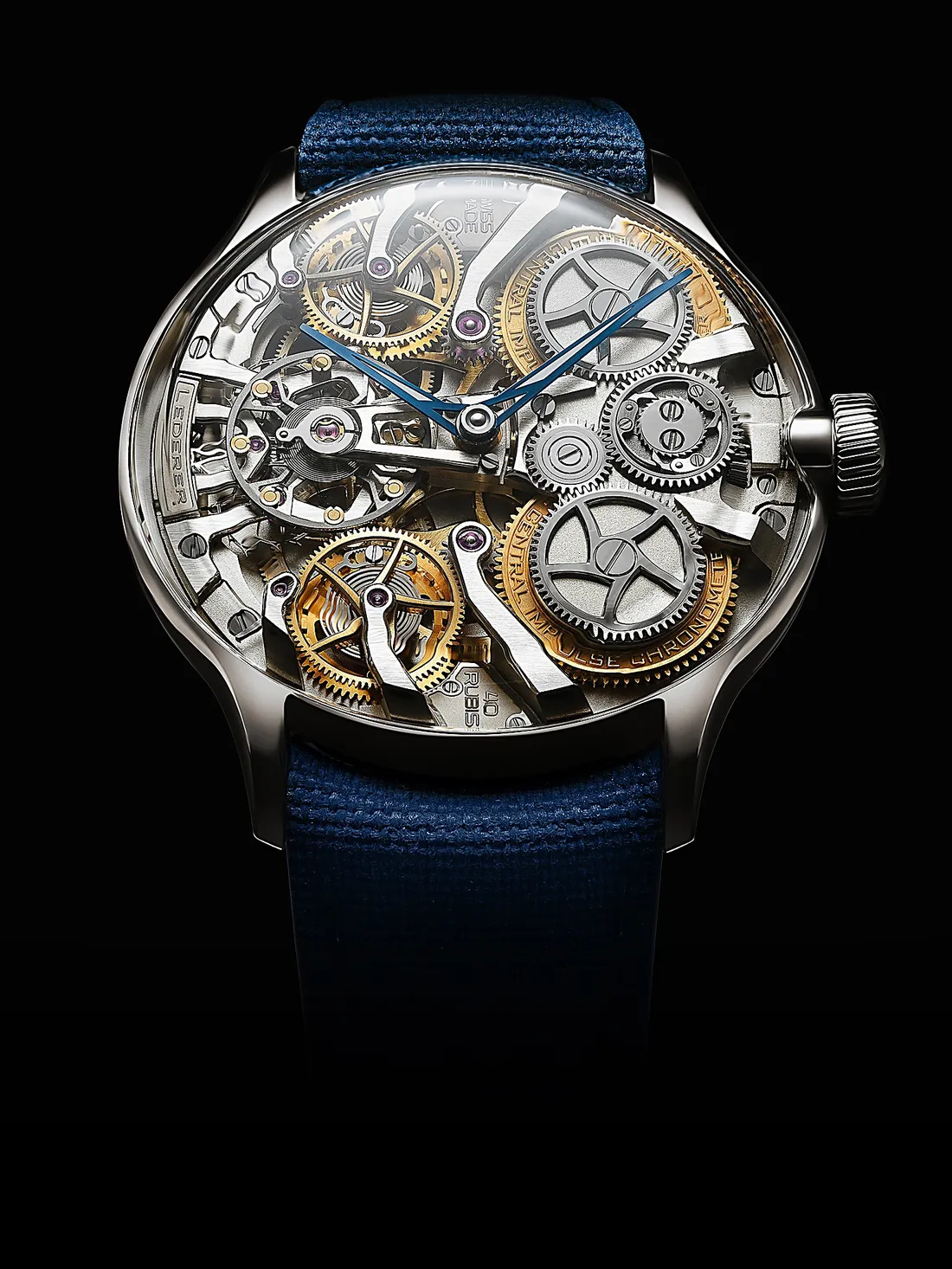
The dial is made entirely in-house and allows itself a single opening: the window onto the patented escapement. Overlapping sub-dials, together with a seconds display that runs the other way, set up a layered way of reading. Telling the time here is not a one-glance affair but a short habit. Once the habit forms, though, you are not only reading numbers; you are also watching what the mechanism is doing at that moment.
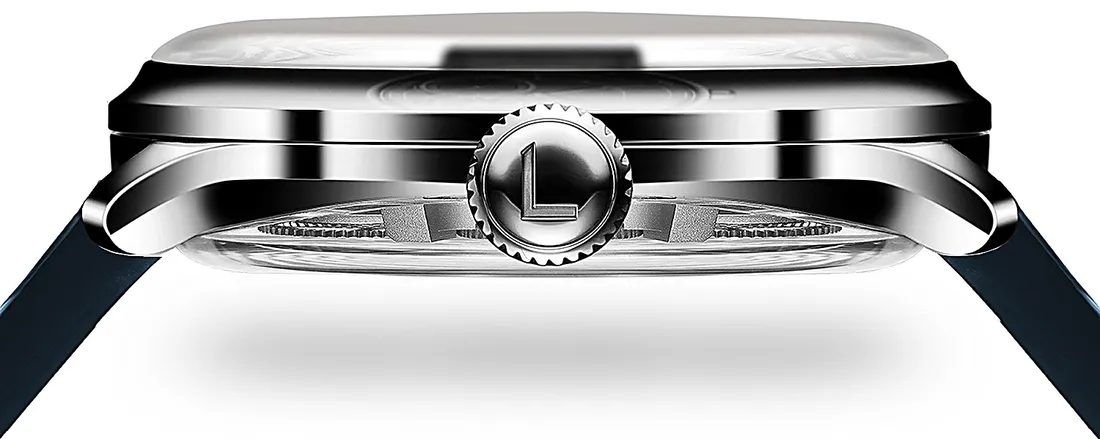
The case measures 39 mm across and 10.75 mm deep. Titanium was chosen, which makes this a watch that announces itself by volume rather than weight. Domed sapphire crystals sit on both sides, each with anti-reflective treatment on both faces. The doming is not decoration: it breaks up the flat, pressed-down look of plate glass and pulls the eye inward.
The claim this watch makes matters because it can be measured. The CIC architecture runs at three full oscillations per second, which is 21,600 vibrations an hour, and the movement is COSC certified. In 2024 Lederer pushed further and presented the Triple Certified Observatory: the first wristwatch to pass the observatories of Geneva, Glashütte and Besançon and carry a COSC certificate as well, four separate chronometry certifications held at once. That same year Geneva gave it the Chronometry Prize. In 2025 it reached the finals of the Louis Vuitton Watch Prize. For 2026 it is nominated in the Complication category of the Grand Prix d’Horlogerie de Genève.
format_quote"A certificate is not a compliment. It is an admission: I was measured, and I had nowhere to hide."
Hasan Bekmezci

His route has not been a straight one. In 1990 he reinterpreted Charles Bond’s gravity escapement. In 1996 he took on a job every traditional tower-clock maker had refused on grounds of climate, and erected twenty-seven monumental clocks built to survive storms and heat. In 2011 he made a tourbillon that completes one orbit of the dial in one hundred and eight minutes, the exact length of Gagarin’s flight. In 2016 he developed a movement for the German navy’s bomb disposal units that holds its rate inside a field of a hundred thousand gauss. None of this belongs to a collection strategy. They are all the same curiosity, photographed in different years.
The price is 152,000 Swiss francs before tax, and production is allocated through to the summer of 2027, which puts it in that small class of watches where having the money is not sufficient. Even so, the real subject of this watch is neither its price nor its scarcity. It is that a question asked three centuries ago is still considered worth answering, and that someone was willing to give forty years to answering it.

Precision in watchmaking is usually offered as a number: so many seconds a day. But the number is not the point. What sits behind it is repeatability. It is easy for a watch to be right today. The hard part is doing the same thing tomorrow, and next month, and with the mainspring full or nearly empty. The entire architecture of the CIC 39 InVerto is built around that one sentence. Lifting the dial away and putting the mechanism in front is not showmanship either; it is the watch showing you how it keeps its word.