Piccadilly Circus was damp and cold on the evening of Friday 5 October 1962. The crowd gathering outside the London Pavilion had come to watch a character they had known until then only from book jackets walk across a screen for the first time. Inside sat Sean Connery, the director Terence Young and the producers Harry Saltzman and Albert R. Broccoli. The film was Dr. No, and what began that evening turned out to be less a series than a habit.
There was no Omega on Connery’s wrist in that film. The bond between the maison and the character was made thirty three years later, in 1995. Lindy Hemming, the costume designer on GoldenEye, chose a Seamaster for Pierce Brosnan’s arm and gave her reason plainly: she was convinced that a naval commander, a diver and a discreet gentleman of the world would wear this watch. Blue bezel, wave-patterned dial, steel bracelet. The decision looked like a choice of accessory; thirty years on, it evidently was not.
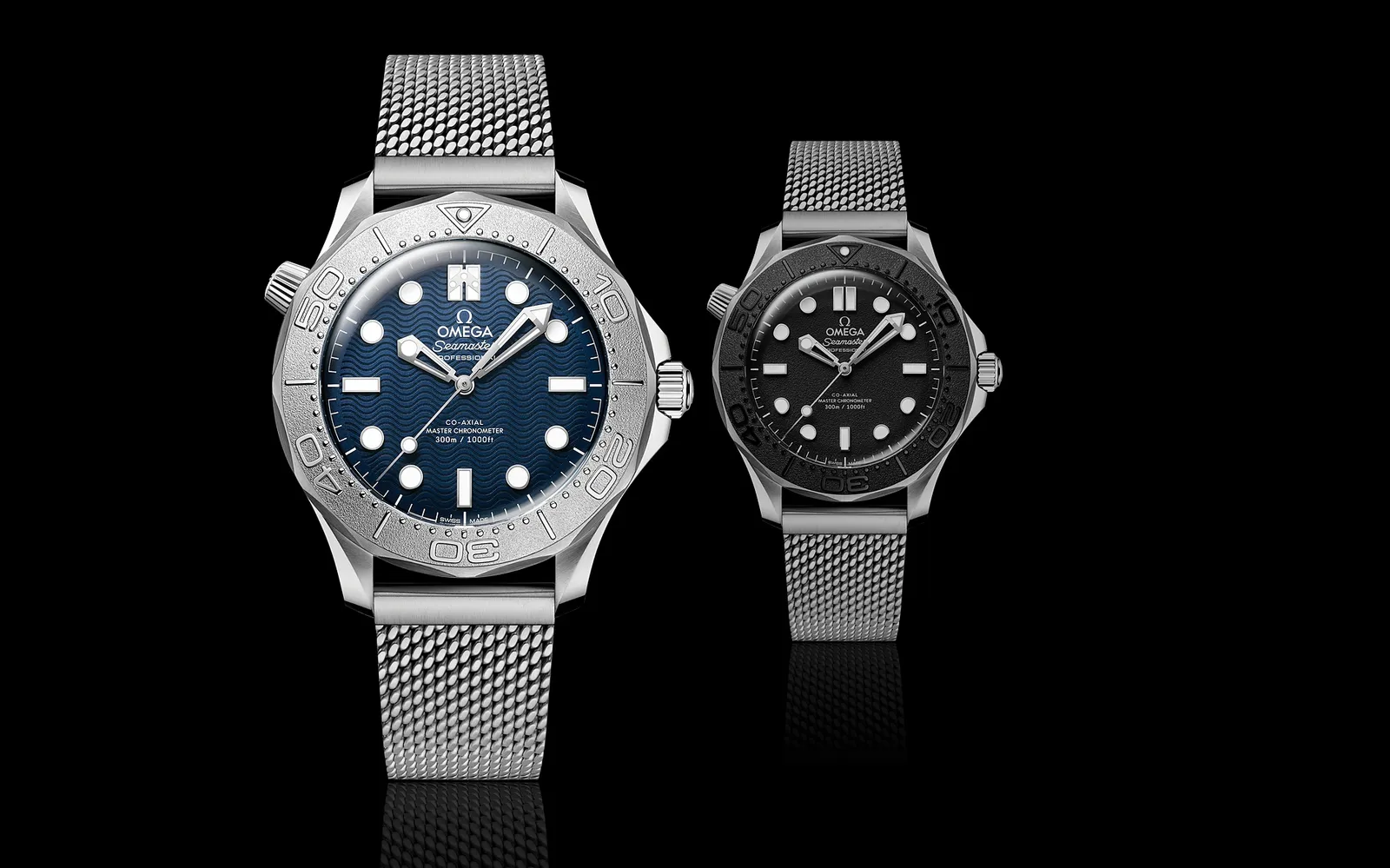
Omega chose the fifth of October this year. The date is not an accident; the anniversary of the world premiere of Dr. No is now kept as a Bond day the world over. On it the maison presented two readings of the same Seamaster Diver 300M and set them against each other. One is Bond’s file, the other belongs to the organisation across the table. In the maison’s own words, switching sides is still possible.
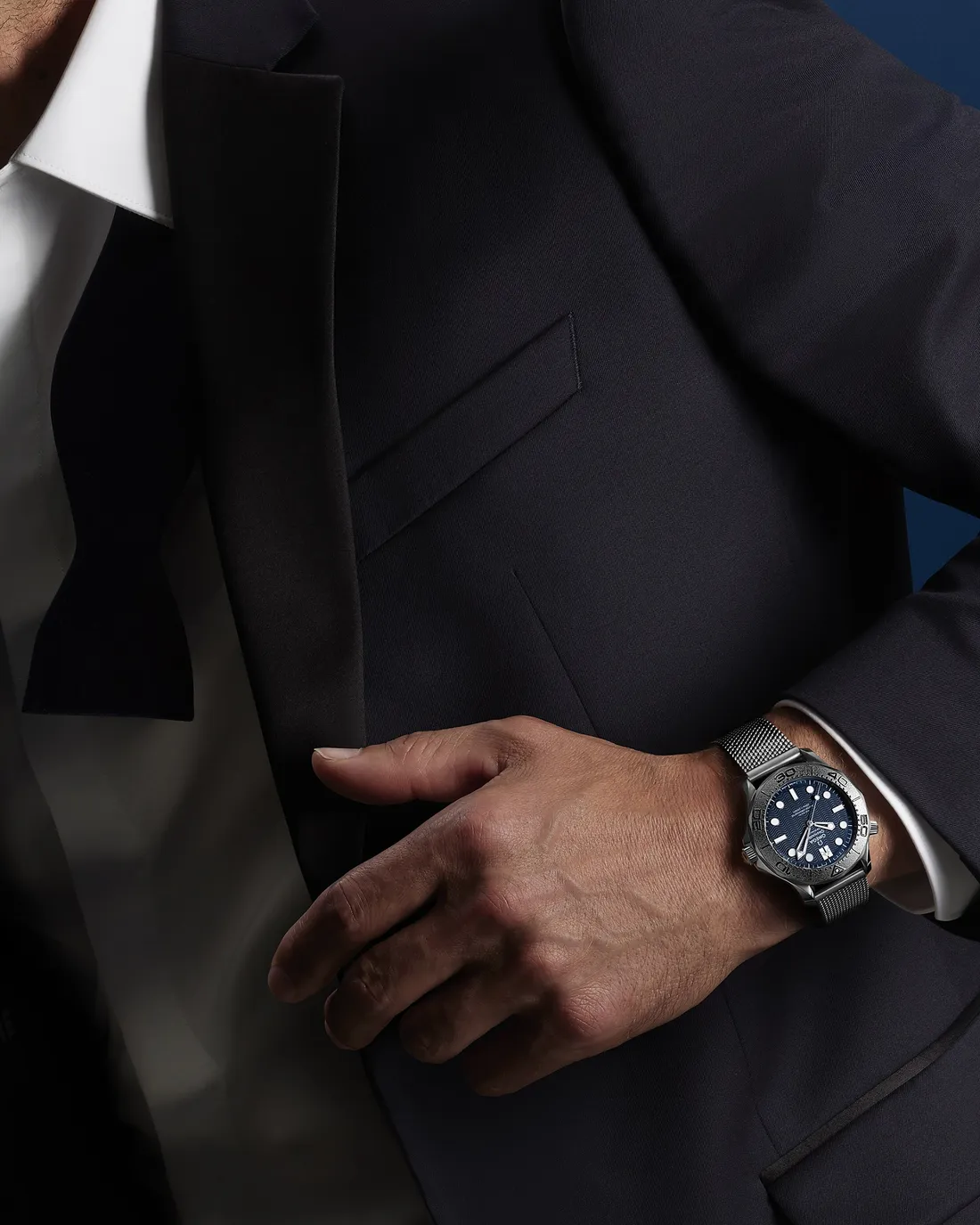
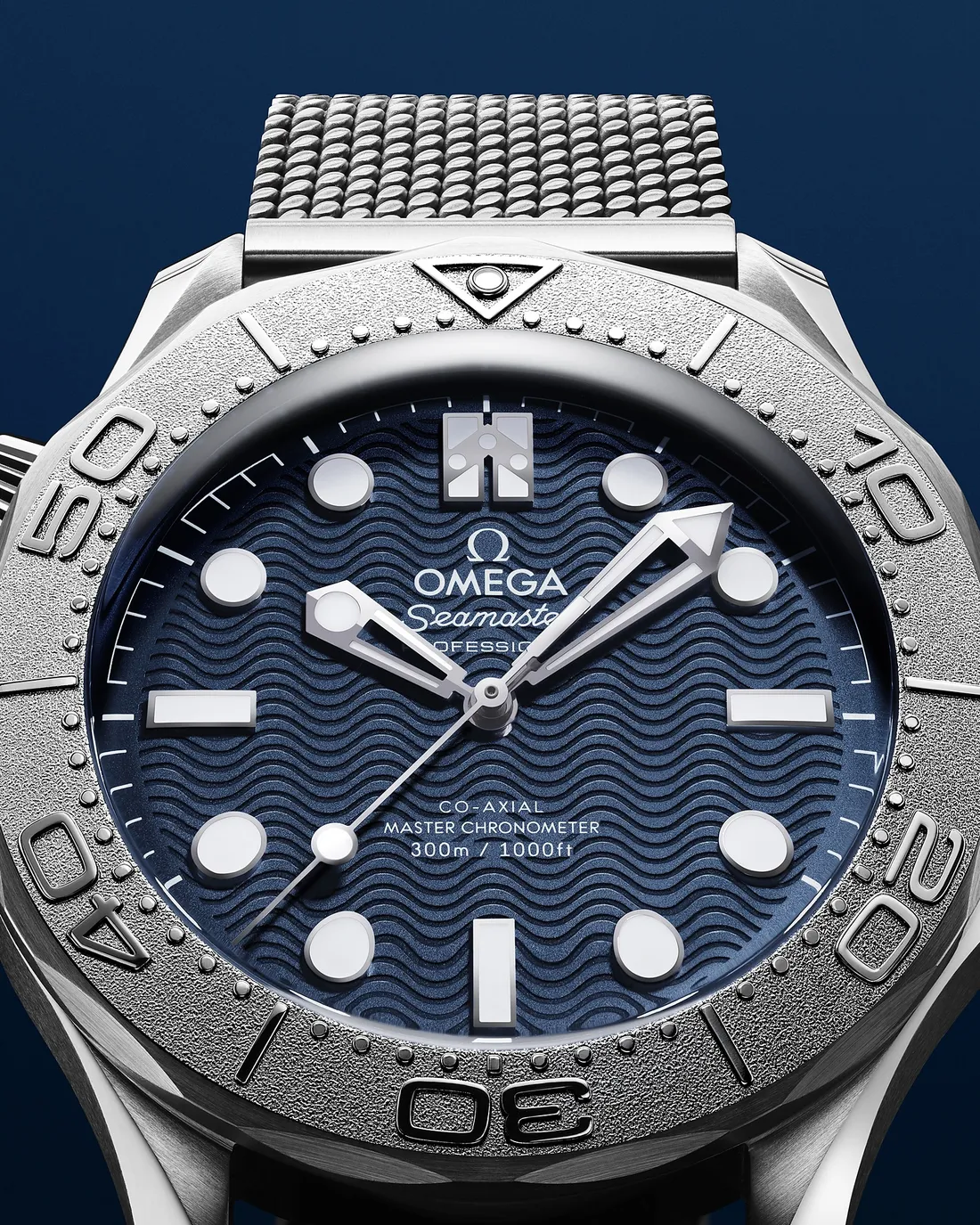
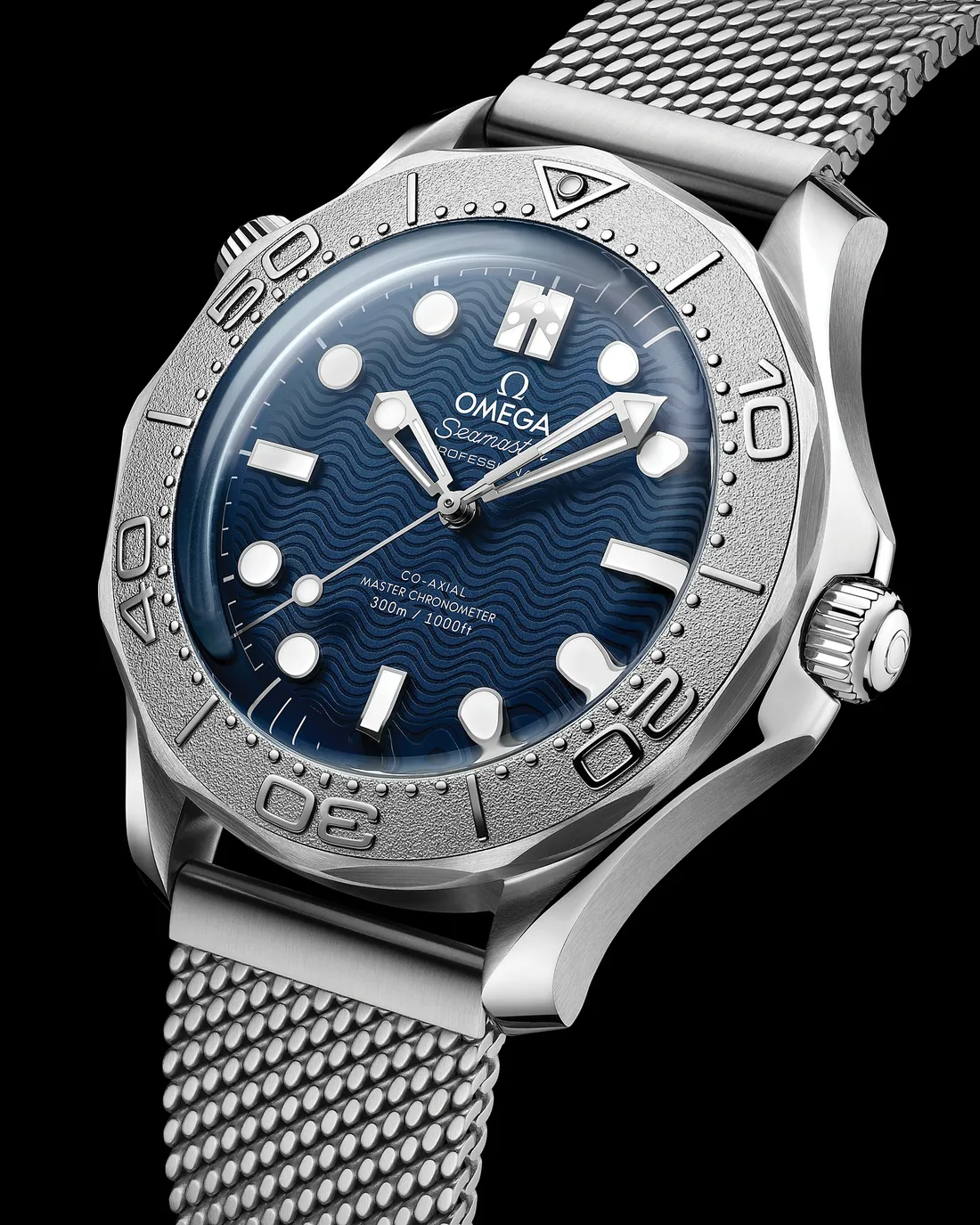
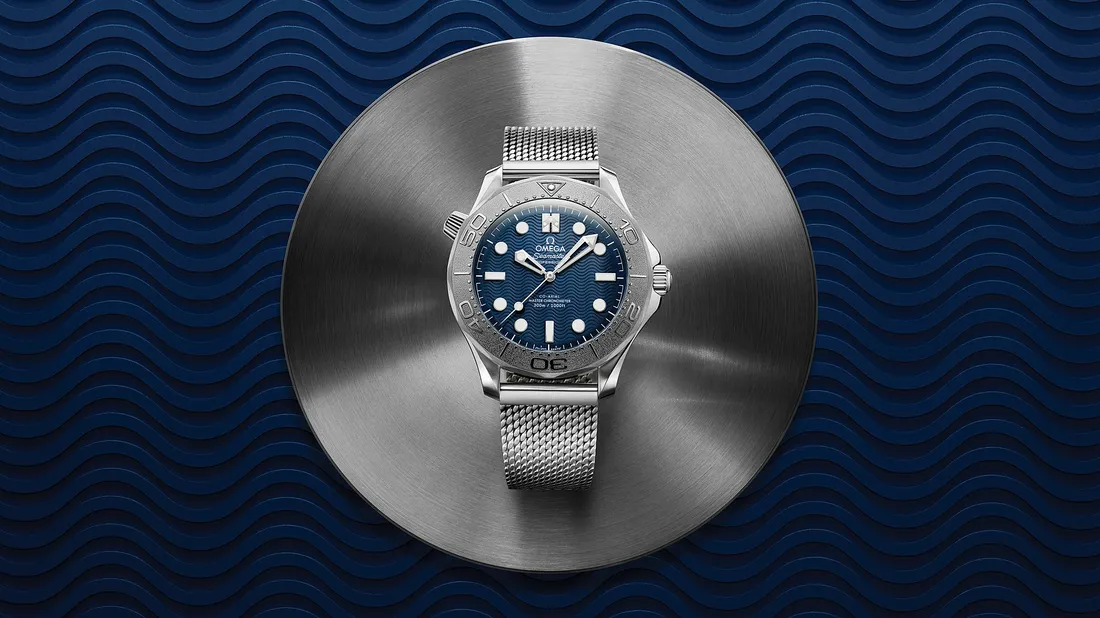
The watch in Bond’s file is a forty two millimetre diver in stainless steel, good to three hundred metres. Its dial is blue aluminium, the wave pattern on it laser-engraved; it is the grandchild of the dial Hemming picked in 1995. The ring of the bezel is made of grade 5 titanium, lighter than steel and harder to scratch. A helium escape valve sits at ten o’clock, and the bracelet is brushed steel mesh.
That wave pattern has been the Diver 300M’s signature since the family was introduced in 1993, and it comes back, reshaped, in every reading of it. The work of the helium valve is far less widely known. On long deep dives a diver lives for days in a pressure chamber breathing helium; the helium atom is so small that it seeps in past the seals of a watch and builds up pressure inside the case. During the ascent, as the outside pressure falls, the helium left inside can push the crystal out of its seat. The valve at ten o’clock lets that excess out by itself. The small cylinder on the flank of the case is not an ornament but a fuse.
In the dark the dial does not fall to a single colour. The luminous dot at twelve on the bezel and the minute hand burn green; the hour hand, the seconds hand and the indexes turn blue. The split is not decoration. A diver must read the minutes first in the dark, because air is measured in minutes. The colour decides which piece of information the eye takes first.
format_quote"To decide which hand glows in which colour in the dark is to decide which piece of information the eye takes first."
Hasan Bekmezci
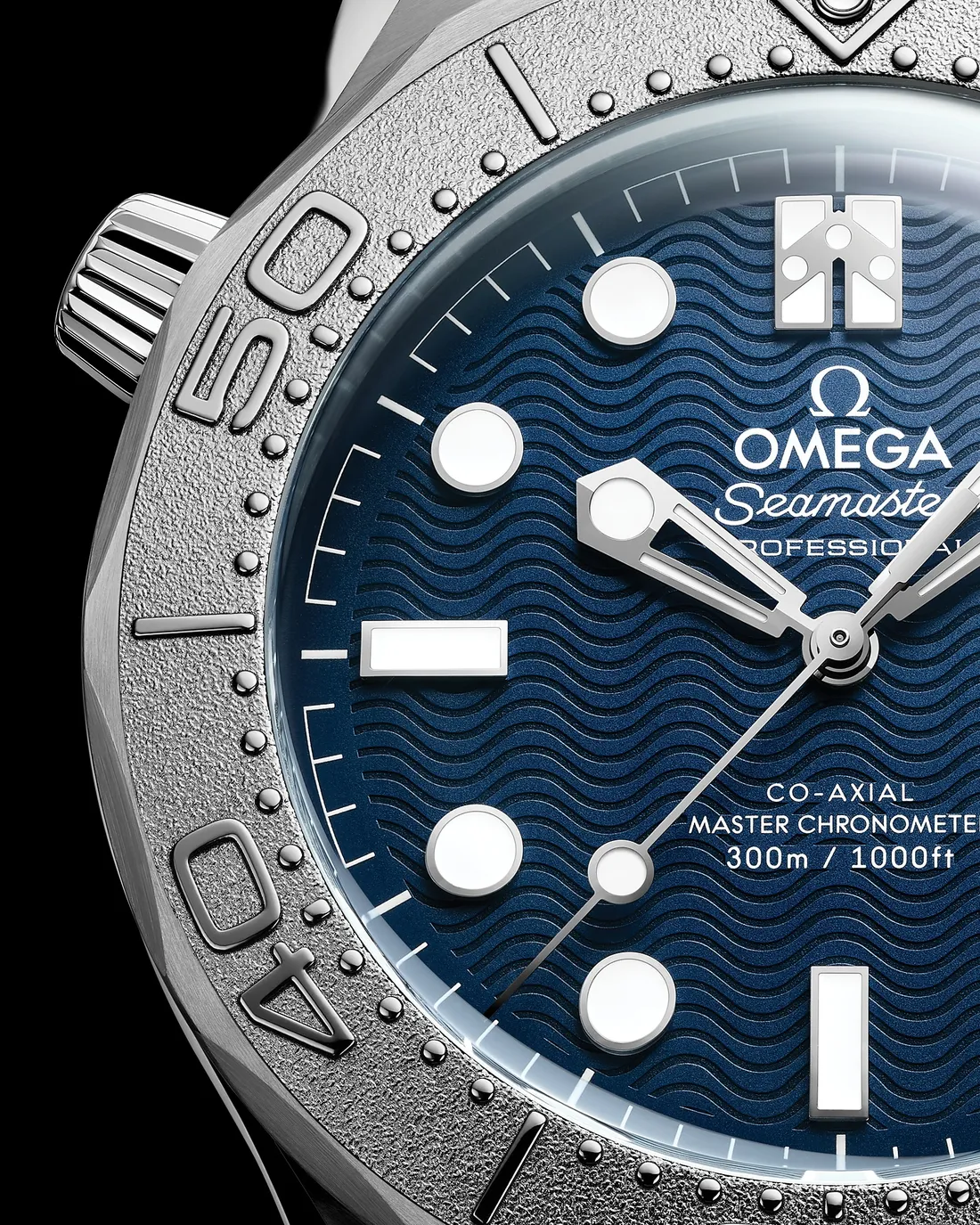
The legibility of the dial follows the same logic. The indexes and the hands are kept at the largest size the eye can separate underwater; blue is the first colour to disappear as you go down, and yet it has been chosen here as the ground of the dial, because the white luminous surfaces laid on it carry the contrast. A diver’s watch is designed so that its dial can be read in bad conditions, not so that it looks handsome; and its handsomeness comes from exactly that.
Inside runs Omega’s calibre 8806. Carrying the title of Co-Axial Master Chronometer, it has passed the eight tests of METAS, the Swiss Federal Institute of Metrology; the best known of them requires the watch to hold its precision even after passing through a magnetic field of fifteen thousand gauss. It winds itself, runs for fifty five hours and beats three and a half times a second.
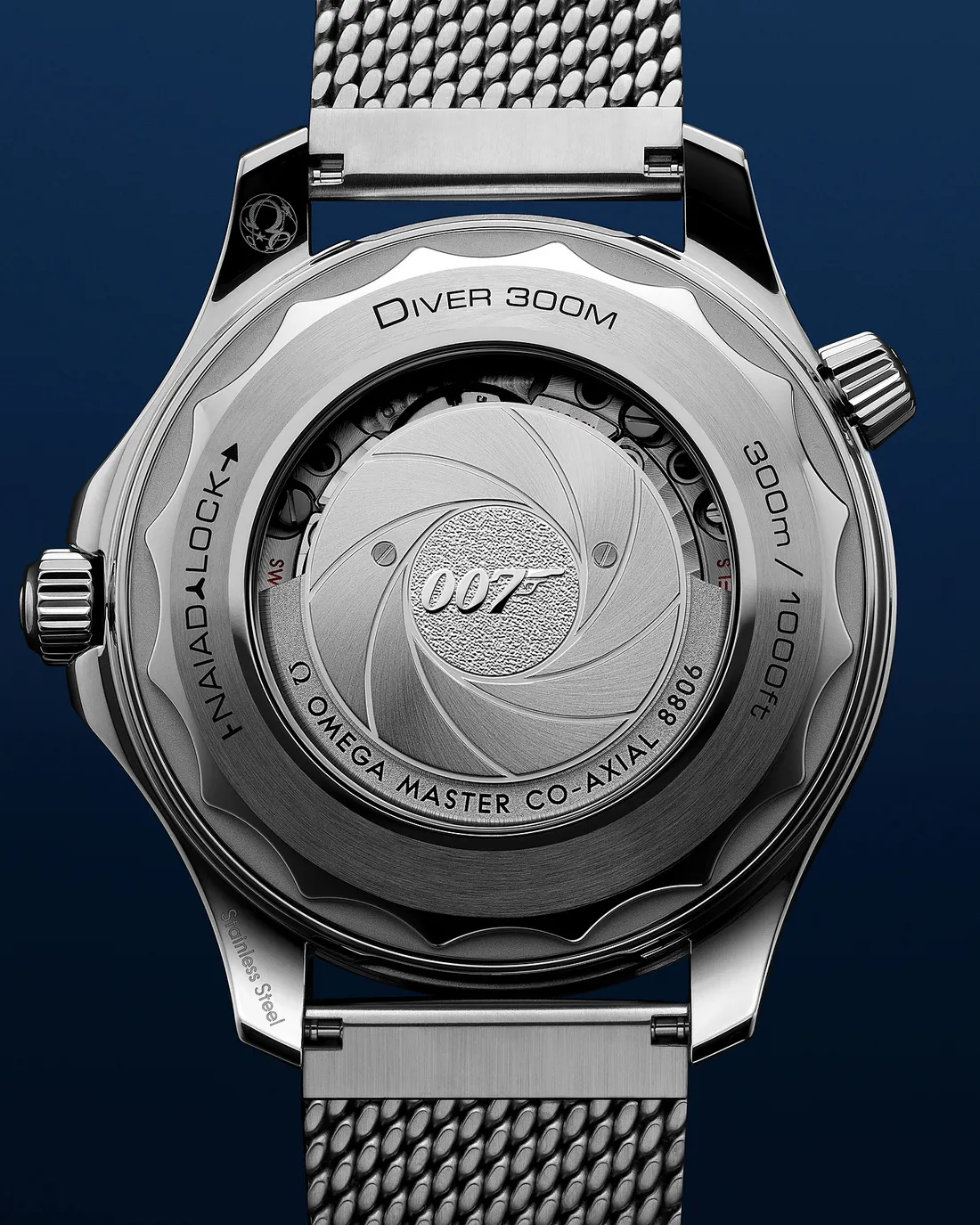
The caseback is sapphire, and the alignment of the engravings around it is held fast by the system Omega calls NAIAD LOCK; tighten the back and the lettering does not end up crooked. Under the sapphire, a rhodium-plated section of gun barrel is worked into the rotor. Every time your arm moves, that barrel turns in both directions and winds the watch, so the image from the opening titles of the films has become, here, the very part that feeds the movement.
The watch in the opposing file is built on the same case, the same calibre and the same mesh bracelet. Only two surfaces change: the dial turns a grained black and the bezel ring black ceramic. Both cost the same, eight thousand six hundred dollars.
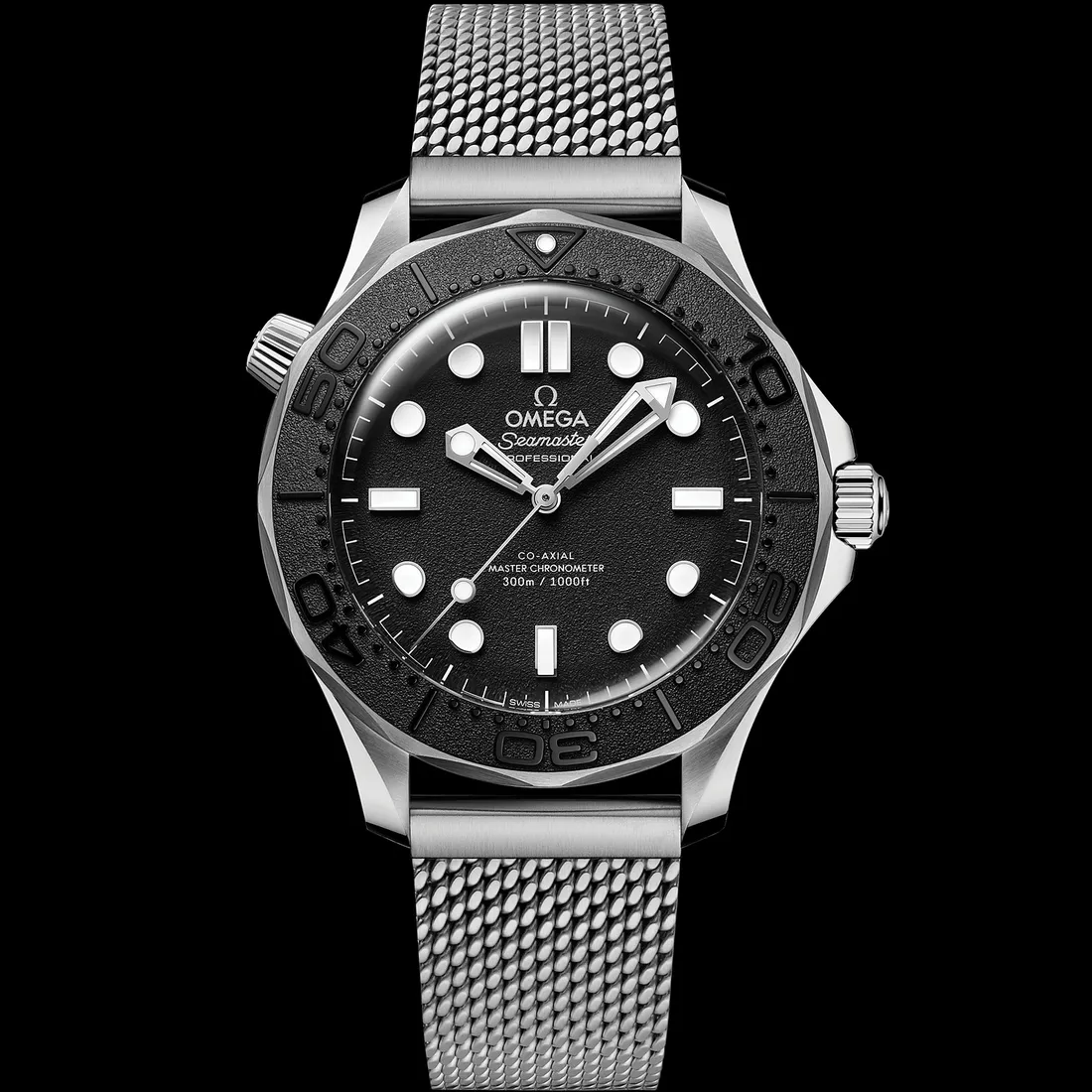
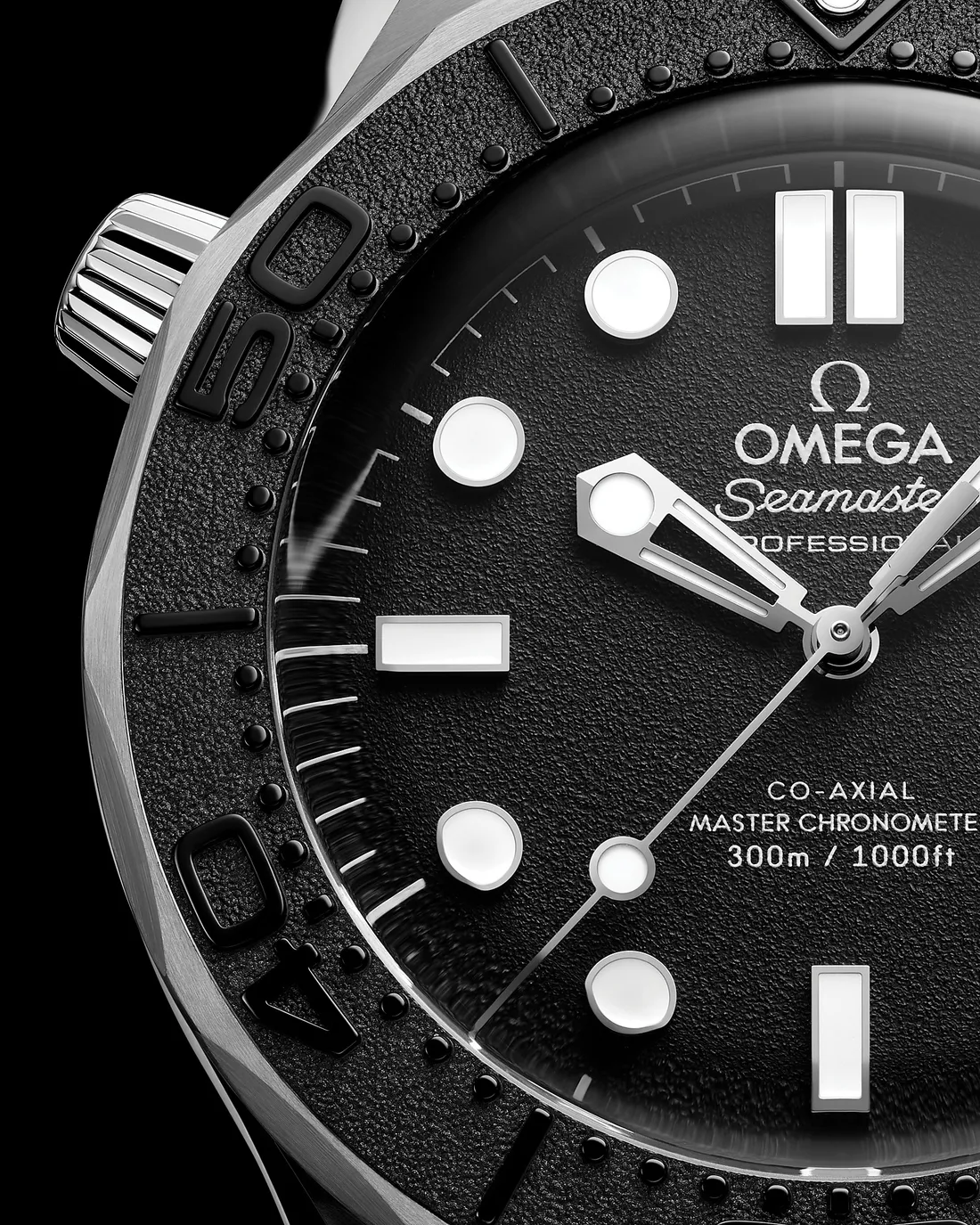
That the maison has deliberately set these two beside one another says something less about watchmaking than about people. The movement inside the two boxes is identical. The same mainspring stores the same energy, the same escapement keeps the same rhythm, the same rotor turns in both directions. The difference is only on the surface.
format_quote"The movement inside the two boxes is identical; the difference is only on the surface."
Hasan Bekmezci
A person is like that too. The heart, the lungs, the eye and the brain placed inside a body are not made in different models for the one who does good and the one who does harm. The same heart beats to the same rhythm in both, the same eye carries the same light to both. The Creator did not divide the body into two production lines. The division begins in the direction that body is wound in, which is to say in the intention. The mechanism is neutral; what takes a side is the will.
format_quote"The mechanism is neutral; what takes a side is the will."
Hasan Bekmezci
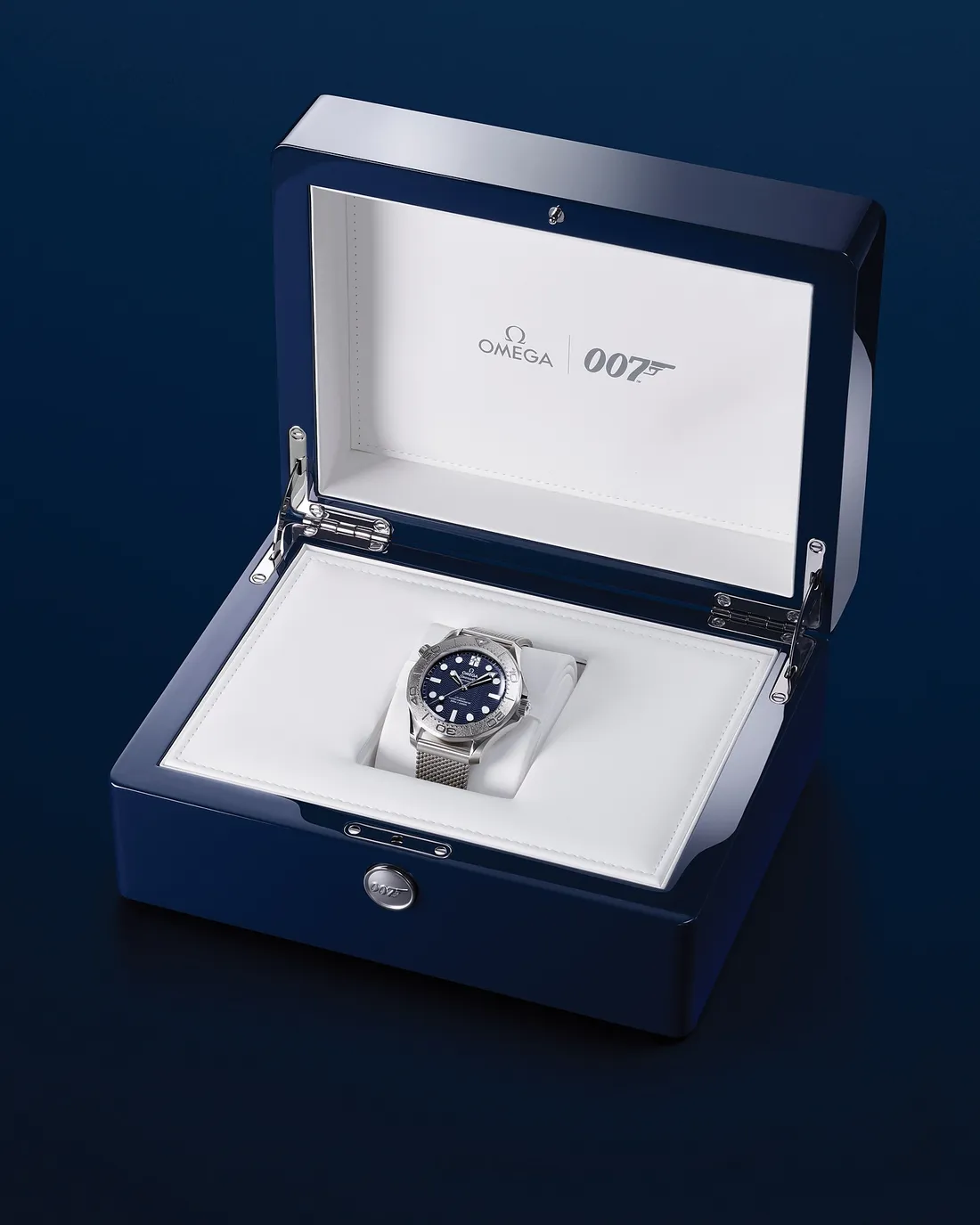
A real instrument built for a fictional character is a strange object. Bond never existed; but the calculation made in his name is real, the titanium ring is real, the fifty five hours of power are real. What we put on the wrist is not the residue of a story but engineering taken seriously enough to carry that story. And like all serious engineering it returns to the same question: an order tuned this finely does not wind itself. Every order that has been wound points to the one who wound it, and to an intention.
The watch on its maker’s own site: Omega, Seamaster Diver 300M James Bond Edition