
Christopher Ward teases its own watchmaker a little when it describes him. Johannes Jahnke is not the sort of person who goes out of his way to attract attention, the maison says; he does not drive a flash car, and his hobbies include fixing old washing machines. Born in Dresden, in the watchmaking heartland of Saxony, this is the mind behind the JJ calibres that run the brand’s most ambitious watches. Standing over a dismantled washing machine on a Saturday morning, what is most likely turning in his head is a small disc under a dial that refuses to move at exactly the right moment.
Because that was precisely what bothered Jahnke for years. A jump hour shows the hour not with a hand but with a disc turning in a window. The idea is simple; the execution is not.

On most jump hour watches the disc does not snap over at the instant the minute hand reaches twelve; it shifts a little early or a little late, and it shudders. Worse, the sudden release of energy needed for that jump throws the movement off its rate, so the watch loses a little of its own accuracy on every hour. Jahnke’s solution was to stop storing power in the last minutes and dumping it, and instead to gather it evenly across the whole hour and release it in one single clean stroke. The disc turns as the minute hand crosses the line.
Peter Ellis, the maison’s co-founder, sums up that way of working: the clever thing about Johannes is the way he comes up with insightful, and often not very complicated, solutions to difficult problems.
format_quote"Finding solutions to hard problems that are not very complicated is harder than finding complicated ones."
Hasan Bekmezci
The name the brand gave that watch is no accident either. John Harrison was an English joiner who, in the eighteenth century, set out to build a clock that would hold its seconds through months at sea so that a ship could find its longitude, and who succeeded. The greatest inheritance English watchmaking left this country is not an ornamented case but an obsession with being exactly on time.
The module found its first home in 2011, inside a watch called the C9 Harrison Jumping Hour. Christopher Ward was then still an English brand trying to prove itself, and its claim to be carrying haute horlogerie into reach of everyone looked a little oversized. JJ01 made the claim worth taking seriously.
In the fifteen years since, the module has been refined again and again, first by Jahnke and now by the maison’s current technical director Frank Stelzer, who is also the name behind the FS01 that runs the brand’s award-winning chiming watch, the C1 Bel Canto. The new C1 Jump Hour XV is the fifteenth-anniversary reading of that first watch, limited to three hundred pieces.
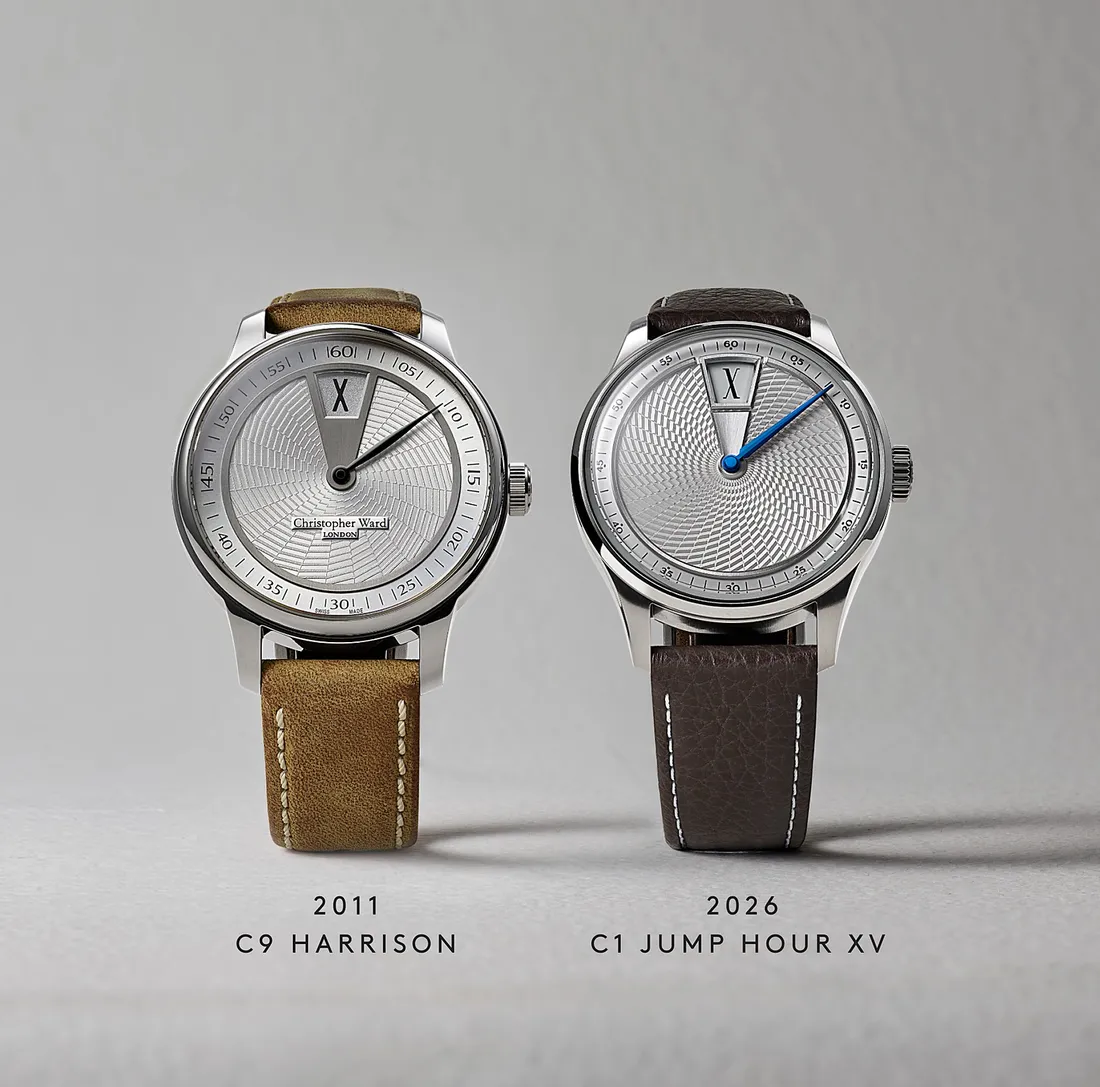
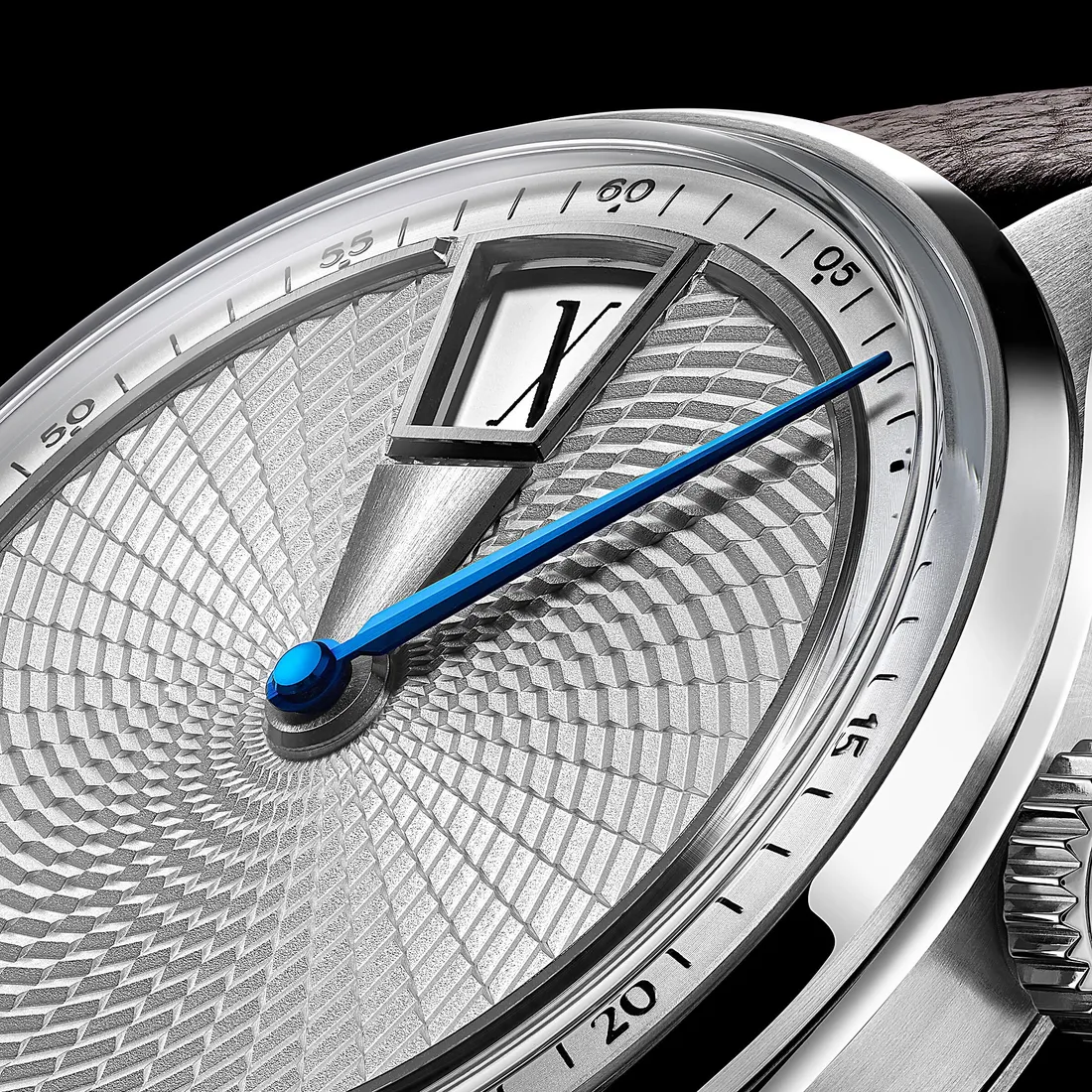
What strikes the eye first on the new watch is the surface of the dial. In a rhodium-silver tone, a guilloché pattern they call the spider’s web opens outwards from the centre. The pattern is cut deeper and finer than before; the old name plaque in the middle of the dial is gone, and the surface has become one continuous texture.
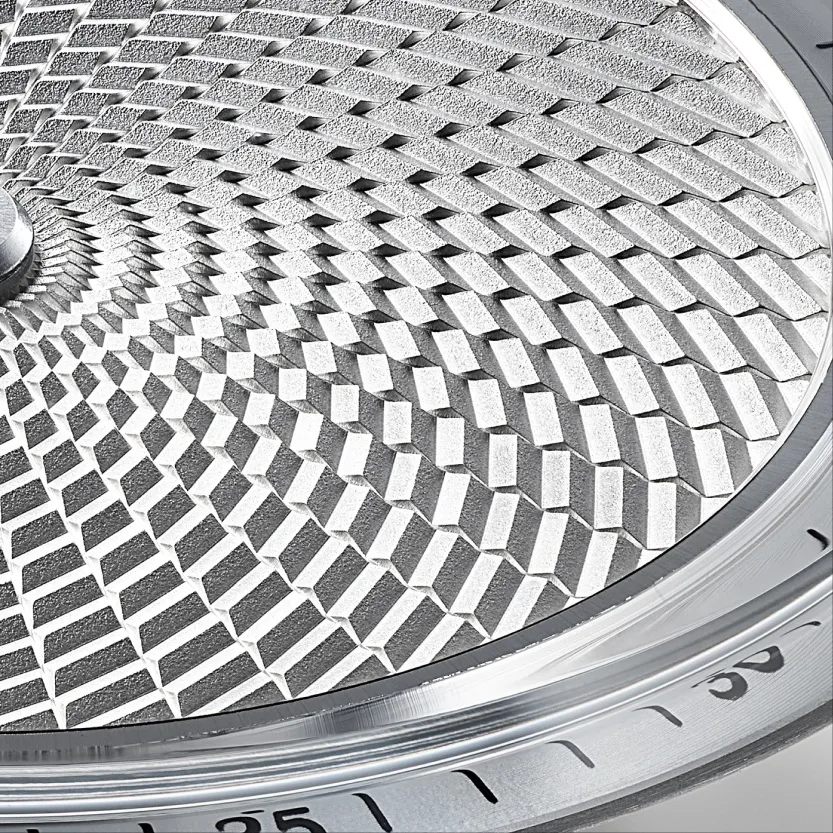
How that pattern is made is the heart of the brand’s story. Traditional guilloché is cut into the surface of metal on a centuries-old rose engine, by a cutter the craftsman presses in by hand; it takes a craftsman years and it multiplies the price of a watch. Christopher Ward does the work with a femtosecond laser. A femtosecond is a quadrillionth of a second, and a pulse that short vaporises metal before it has time to heat it, so the edges do not melt and the pattern stays sharp. Lasers of that precision are used in making medical equipment.
The result is not in dispute: turn the surface and every ring of the web catches the light from its own angle, and the dial will not hold still at one colour. What is in dispute is whether this counts as real guilloché. But the worth of a pattern is measured by how exactly the machine was told what to do, not by the age of the machine.
format_quote"The worth of a pattern is measured by how exactly the machine was told what to do, not by the age of the machine."
Hasan Bekmezci
format_quote"Being exactly on time is harder than being early and harder than being late."
Hasan Bekmezci
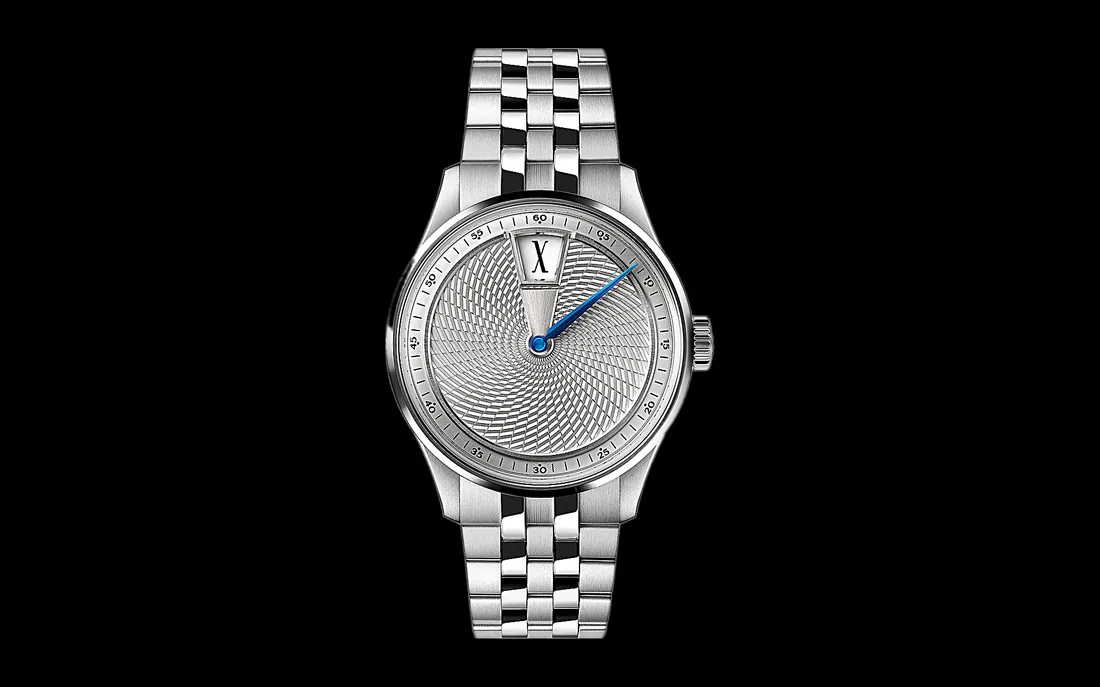
The dial is built in four layers. At the bottom the guilloché disc, around it rings of brushed and polished metal, and over them all a sapphire ring carrying the minute track. The arrangement gives the surface a real depth; the figures do not look printed onto the dial but suspended above it.
The case is thirty nine millimetres, not forty one, and takes the form the brand calls Light-catcher, curving inwards at the flanks; it is cut from marine-grade stainless steel and worked in brushed and polished surfaces. Over it sits a box-shaped sapphire crystal with an anti-reflective coating. The minute hand is multi-faceted and is now finished in blue PVD rather than black; on a silver dial it is the one point of colour for the eye to hold.

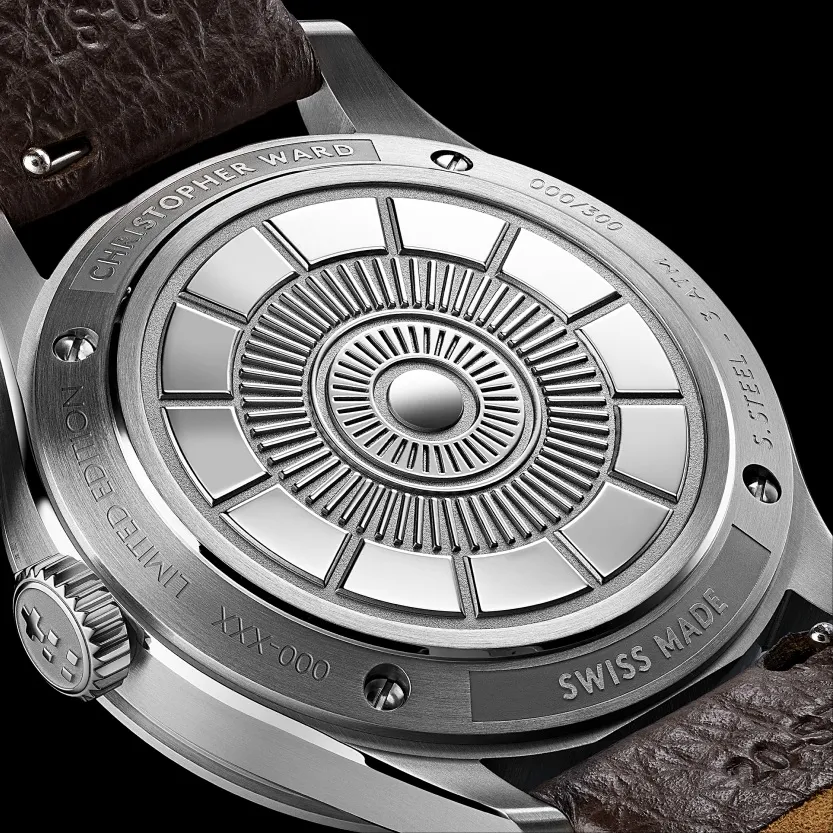
The price is two thousand three hundred and fifty euro on the Consort bracelet. The maison held the edition to three hundred pieces and it has already sold out.
What this watch really describes is not a mechanism but the way time reaches us. A watch read with an hour and a minute hand tells us that time slides, that it is something we can bargain with: a little longer, not yet, almost. A jump hour does not do that. A figure stands in the window, never stirring, never warning; then in one instant it gives its place to another and does not come back.
A life is measured the same way. The energy of an hour is gathered quietly and evenly, without being noticed; then that hour ends in a single stroke. The moment we realise we have lost it is the moment the loss is already complete. That a craftsman should spend fifteen years getting this movement to land exactly on the line is so that we are shown time more truthfully. The work of the person looking at it is to take what is shown seriously.
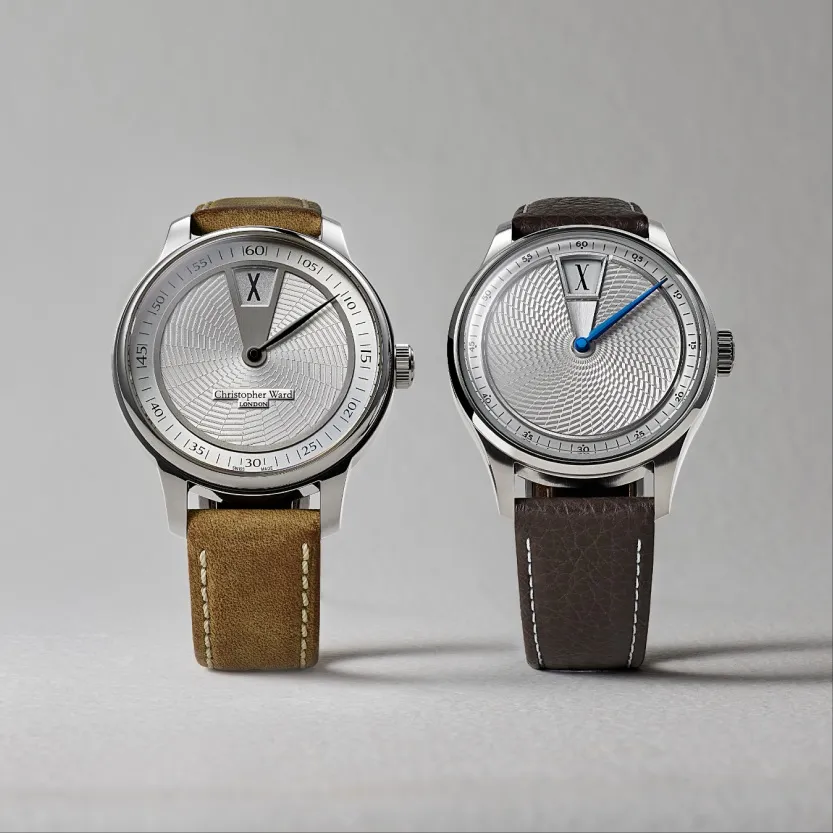
The watch on its maker’s own site: Christopher Ward, C1 Jump Hour XV