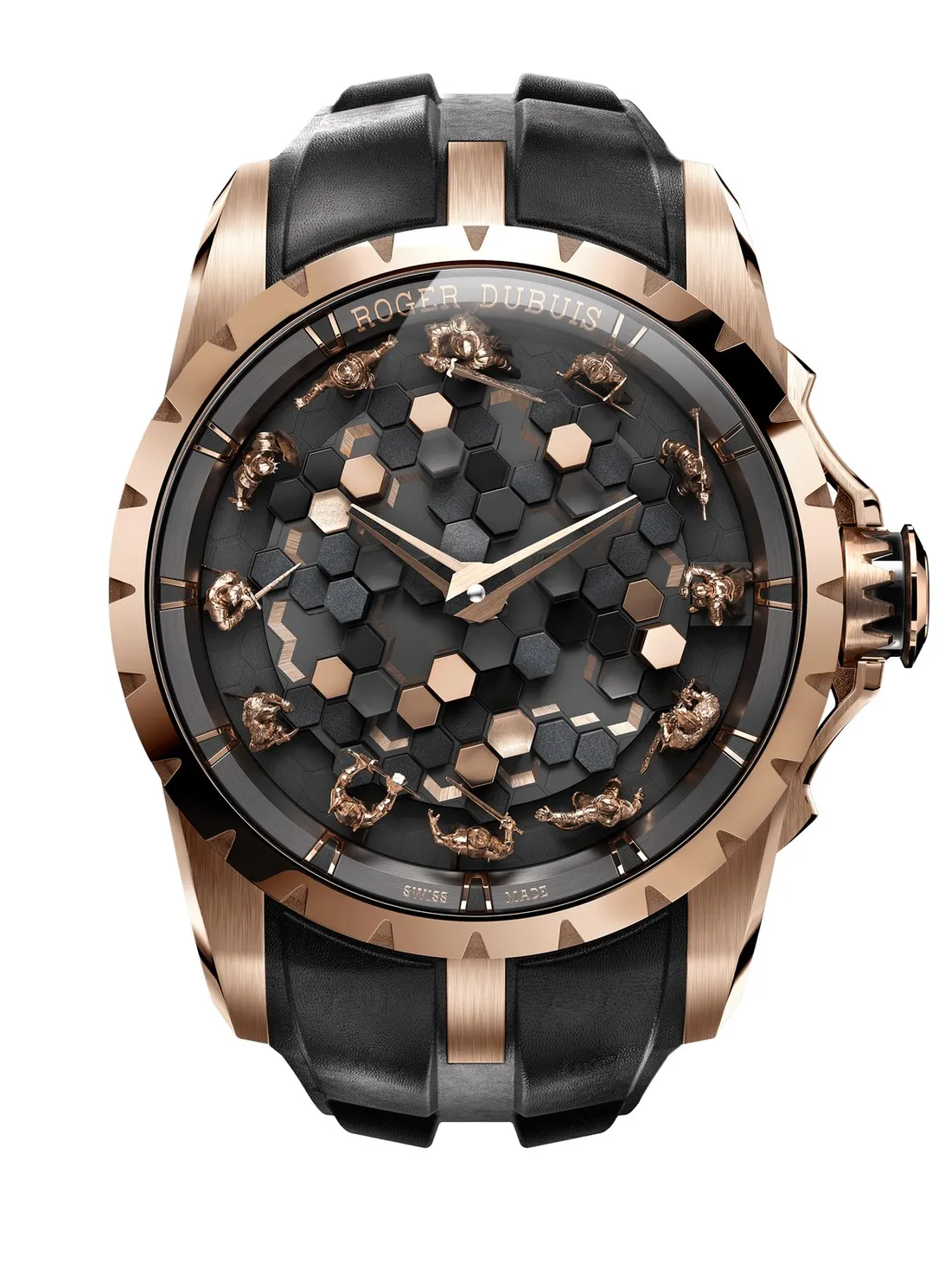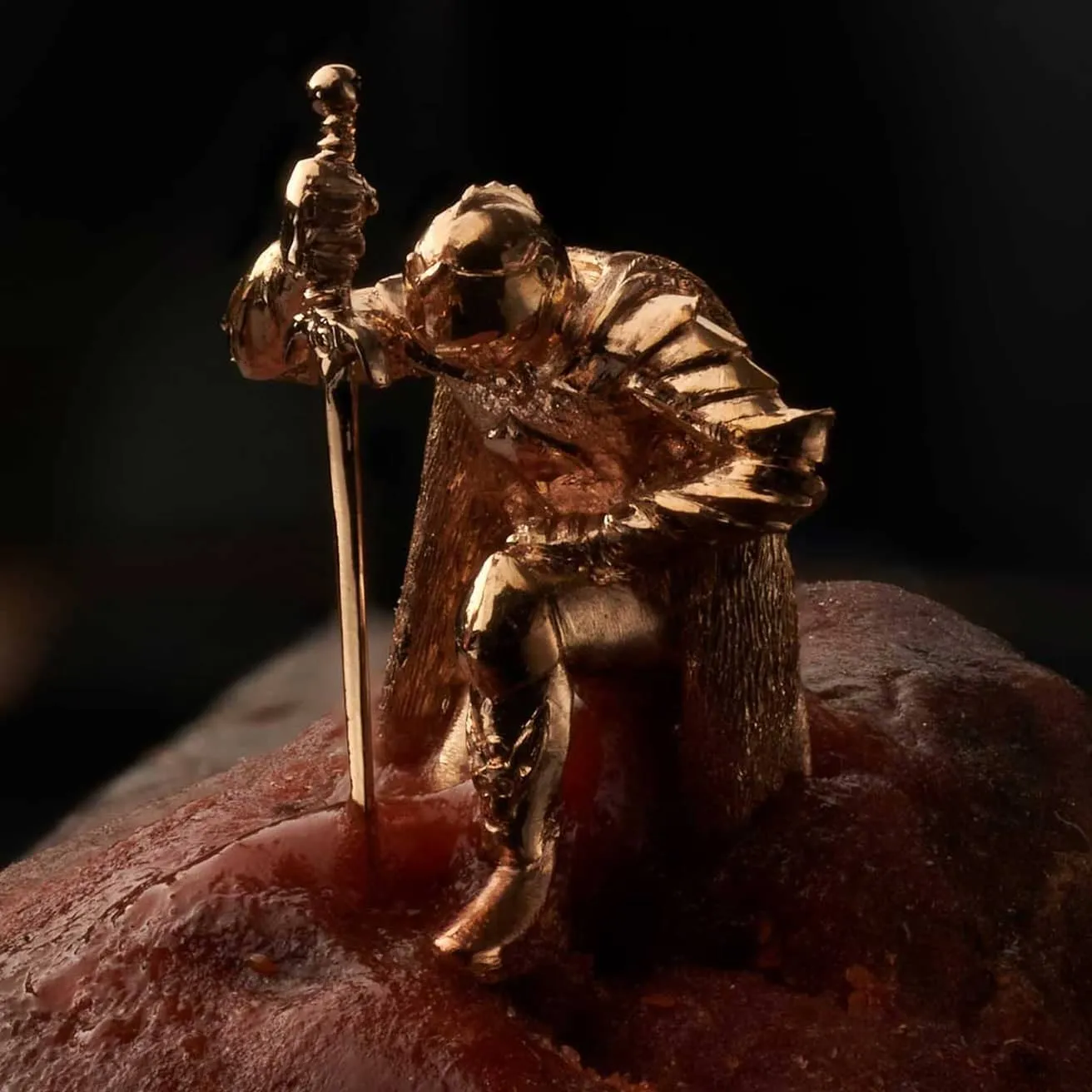
The legend begins in the darkest age of a foggy island. Kingdoms had turned on one another and the land ran with blood, when a young man drew a sword from the stone and became king: Arthur. Around him gathered the bravest warriors of the age. But Arthur did not seat them around a throne; he gathered them around a round table, for this table has neither head nor foot, no one above and no one below.
And behind the king, standing in the shadow, is a figure: Merlin. The legend's wisest counsellor, the seer said to read the future, the master who arranged stones and stars as he pleased. With the Excalibur Knights of the Round Table collection, Roger Dubuis carried this thousand-year-old legend to the wrist; and with the Omniscient Merlin, it wove the tale directly around that mysterious sage.
Why Round? A Table Without a Head
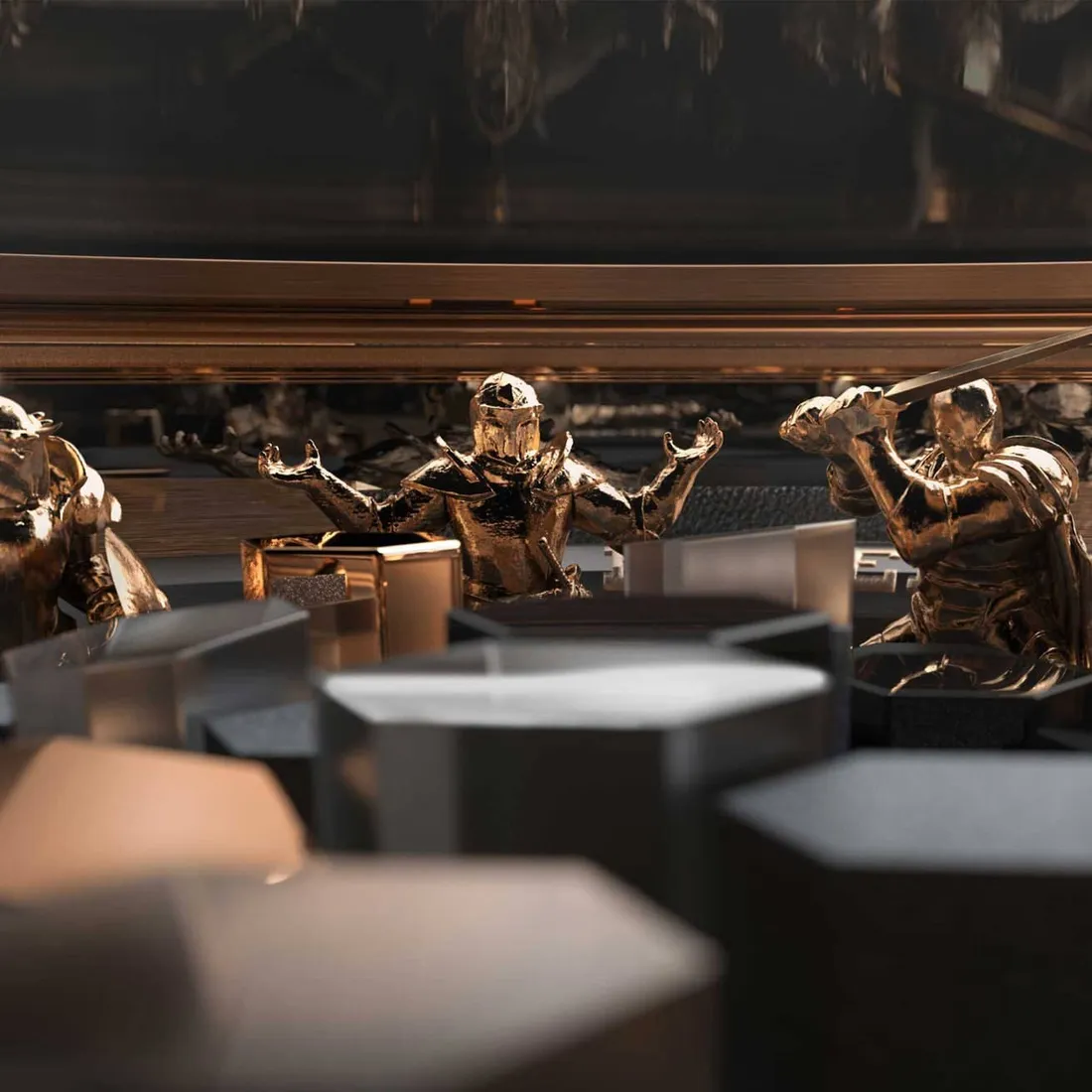
The round table is not merely a piece of furniture but an idea. At a long table there is a head, one person sits at the top, and the rest are ranked by station. At a round table there is no such precedence: everyone is equidistant, every voice carries the same weight. Arthur, though a king, counts himself one of his knights. This table is the symbol of brotherhood, of justice, of loyalty to a shared oath.
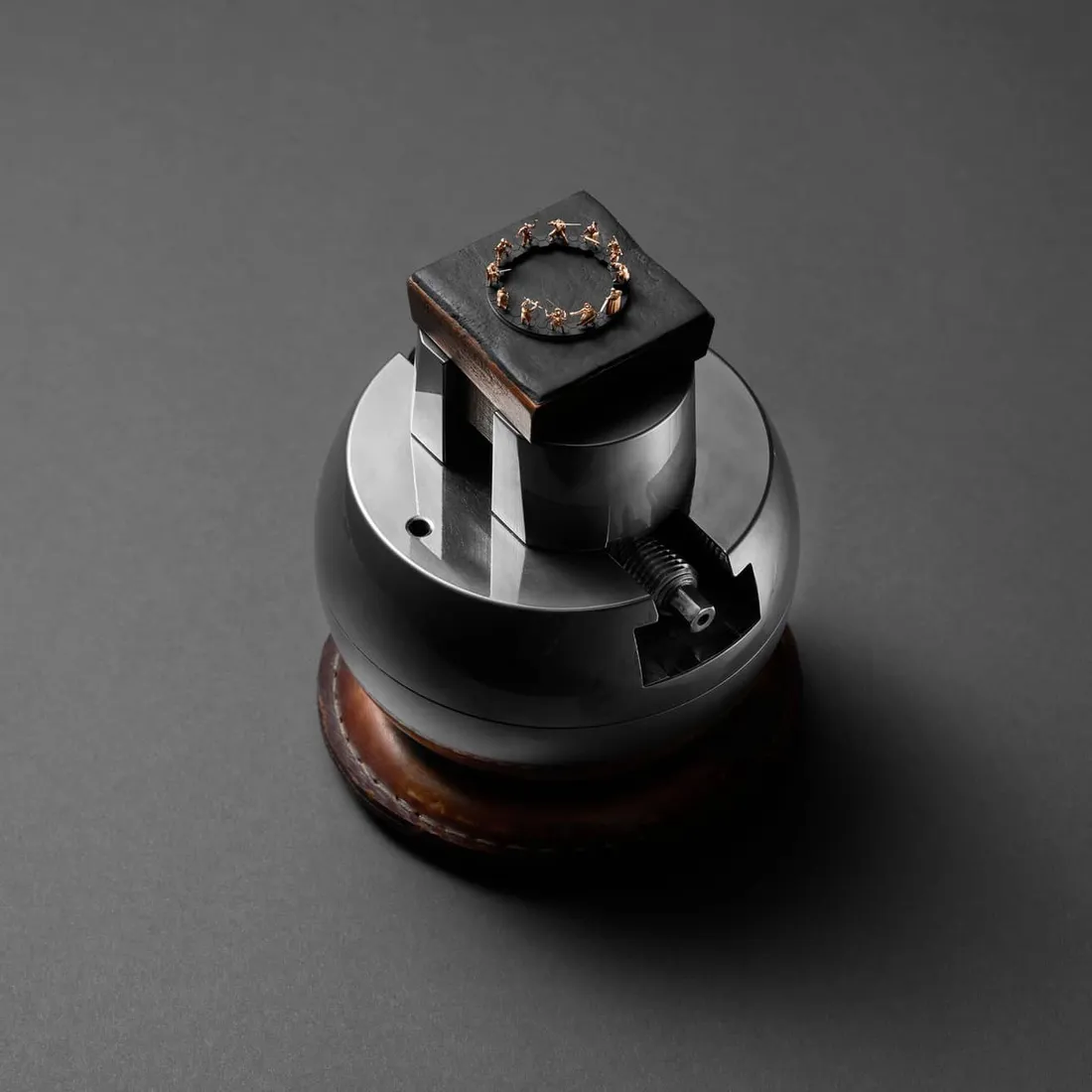
And the twelve knights arrayed around it are each a character: one the emblem of courage, one of loyalty, one of humility. Roger Dubuis dared to fit this whole table, together with its twelve warriors, inside a dial of forty-five millimetres.
Merlin and the Giant's Causeway
The legend beneath this dial runs thus: it is said that Merlin, to immortalise the memory of Arthur's uncle, the great King Pendragon, tore giant basalt stones from the edge of the world, carried them across the sea to England, and there raised a monument. Some believe that the mysterious ring of stones we call Stonehenge today rose from these very stones.
The place that inspired the legend is real: the Giant's Causeway on the coast of Northern Ireland. Nearly forty thousand basalt columns, most in almost perfect hexagons, formed some sixty million years ago as lava cooled and contracted. This honeycomb forest of stone, laid down by nature's own hand, looks indeed as though a giant had paved it. To find their inspiration, the craftsmen of Roger Dubuis travelled to this very edge of the world, to that cold shore.
The Giant's Causeway Fitted Into a Dial
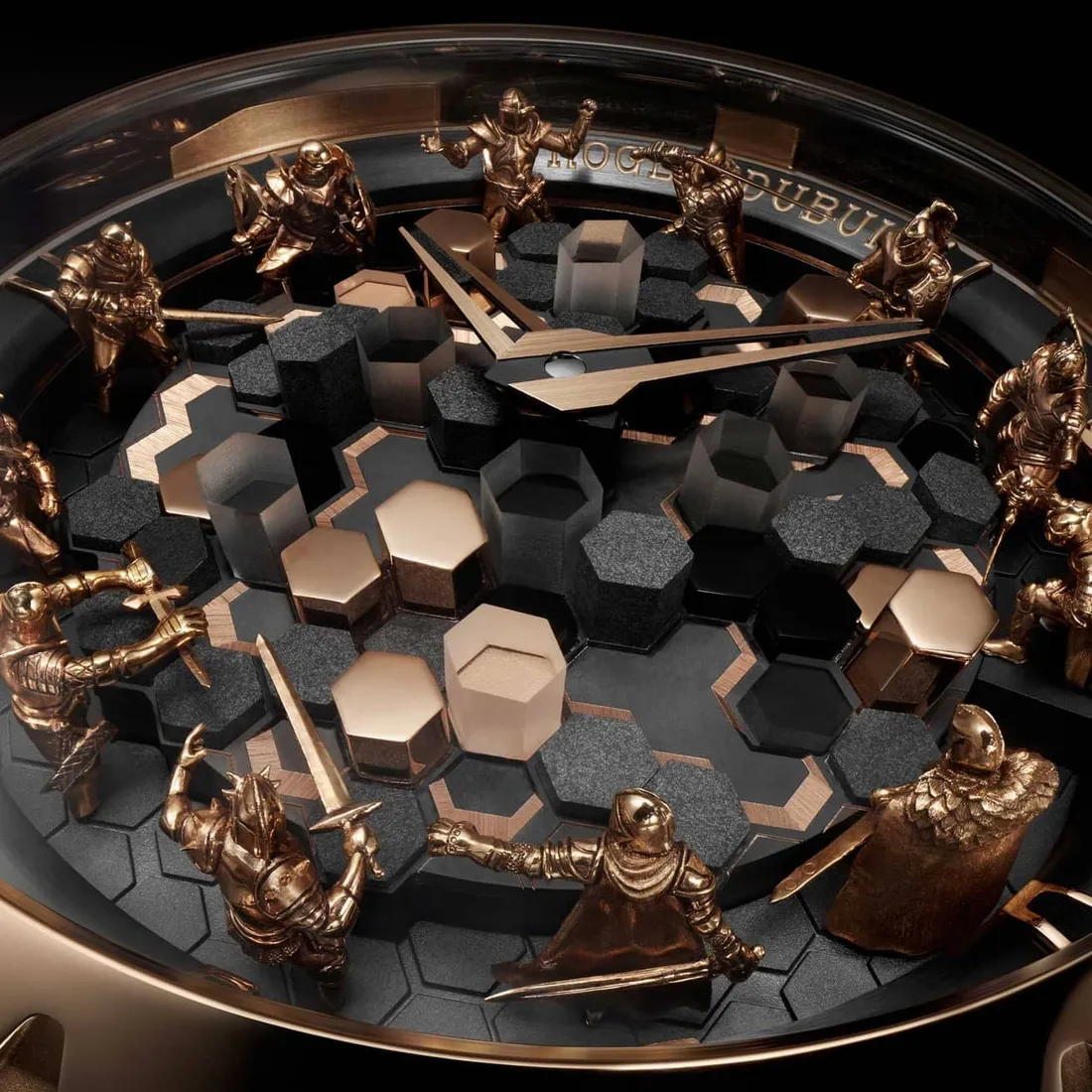
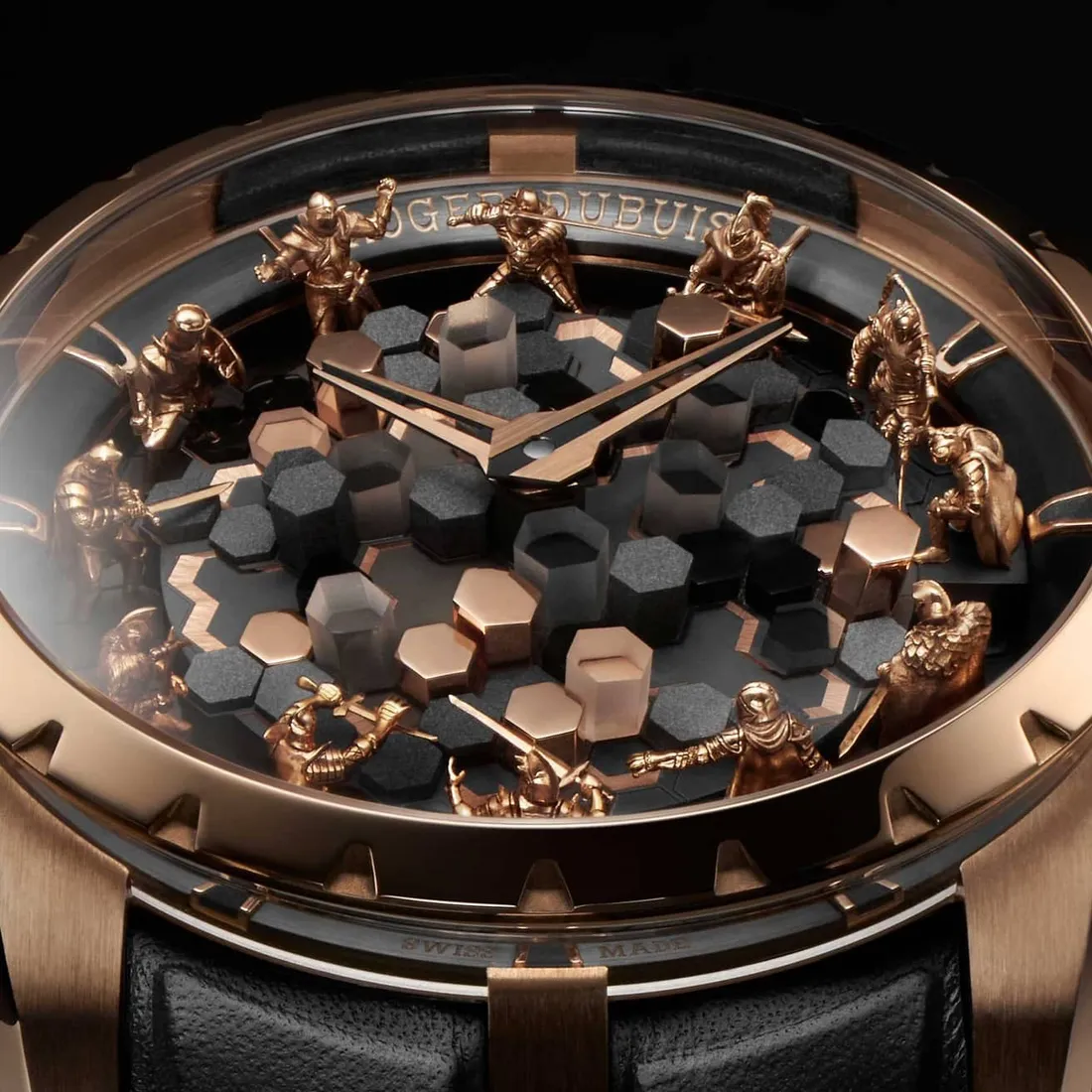
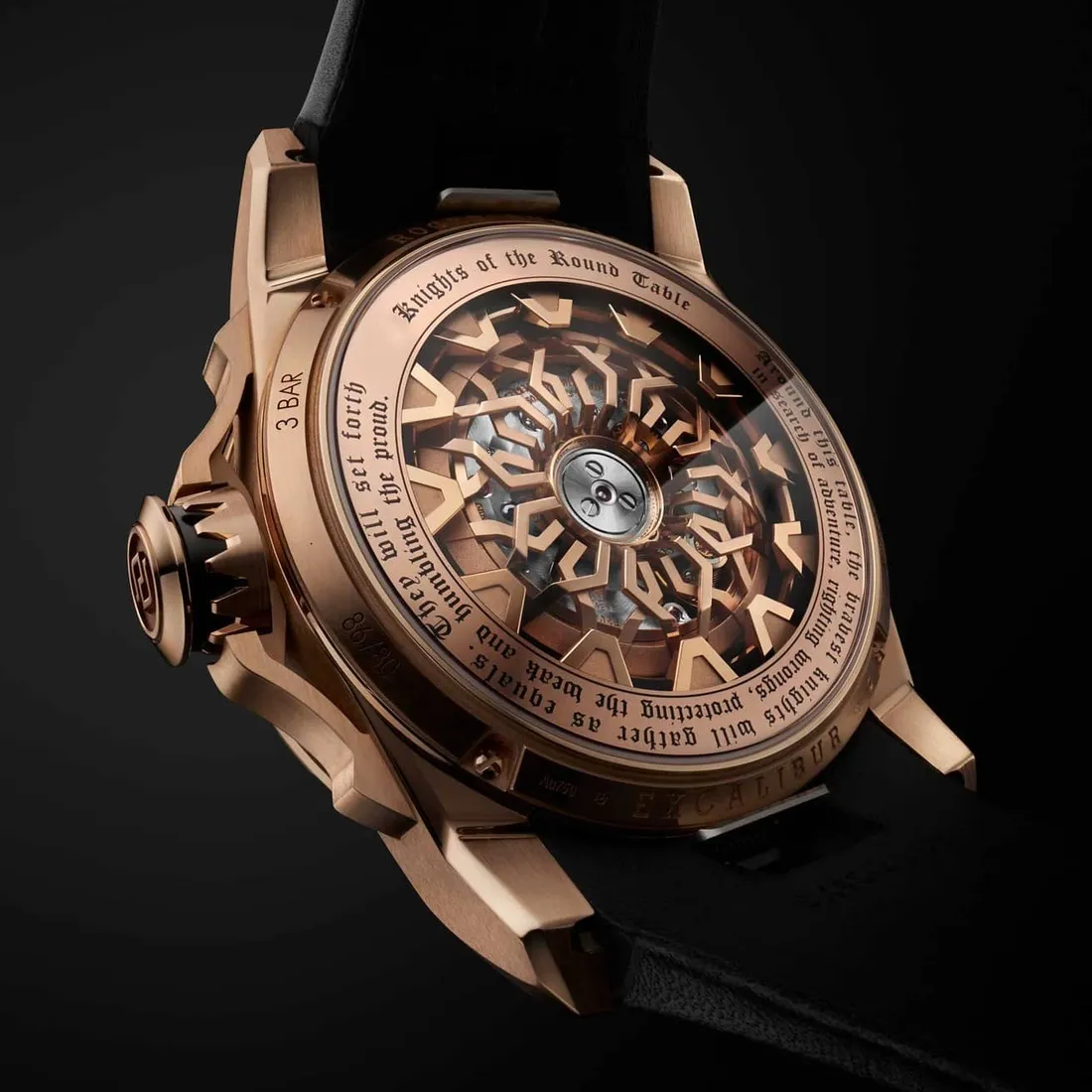
The dial is like a true landscape painting; but it is drawn not in paint, but in stone. The Giant's Causeway is rebuilt upon the dial with exactly fifty-six hexagonal blocks: twenty-eight blocks of genuine basalt, nine of pink gold, and nineteen of black and transparent glass. The heights of the blocks vary from 0.2 to 3.7 millimetres, and all of them descend toward a vanishing point at the centre of the dial.
The result is a magical illusion of depth: looking at a flat dial, you feel as though you are gazing down between giant basalt columns into an abyss. The depth a painter creates with perspective, Roger Dubuis built here by hand, with the real layers of genuine material.
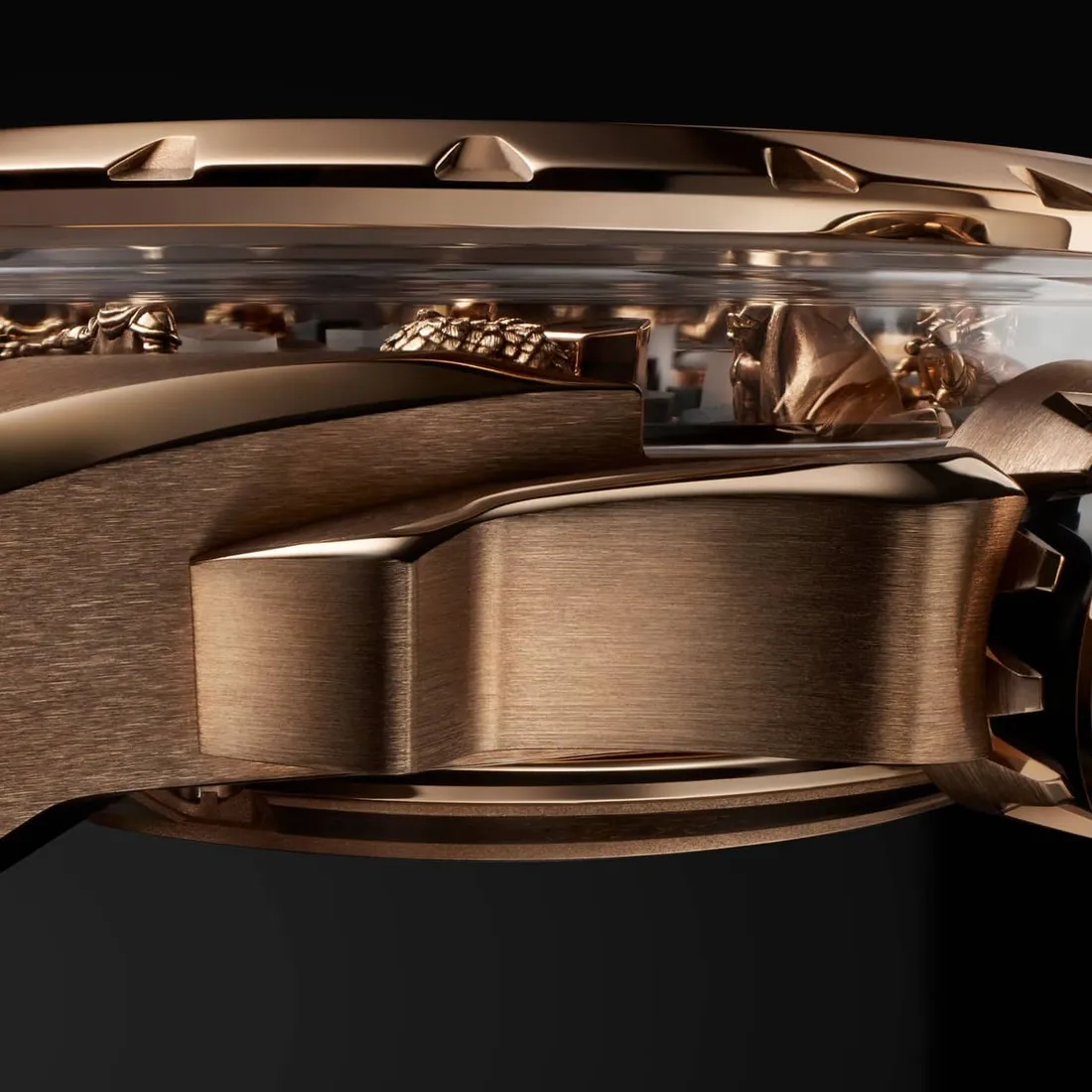
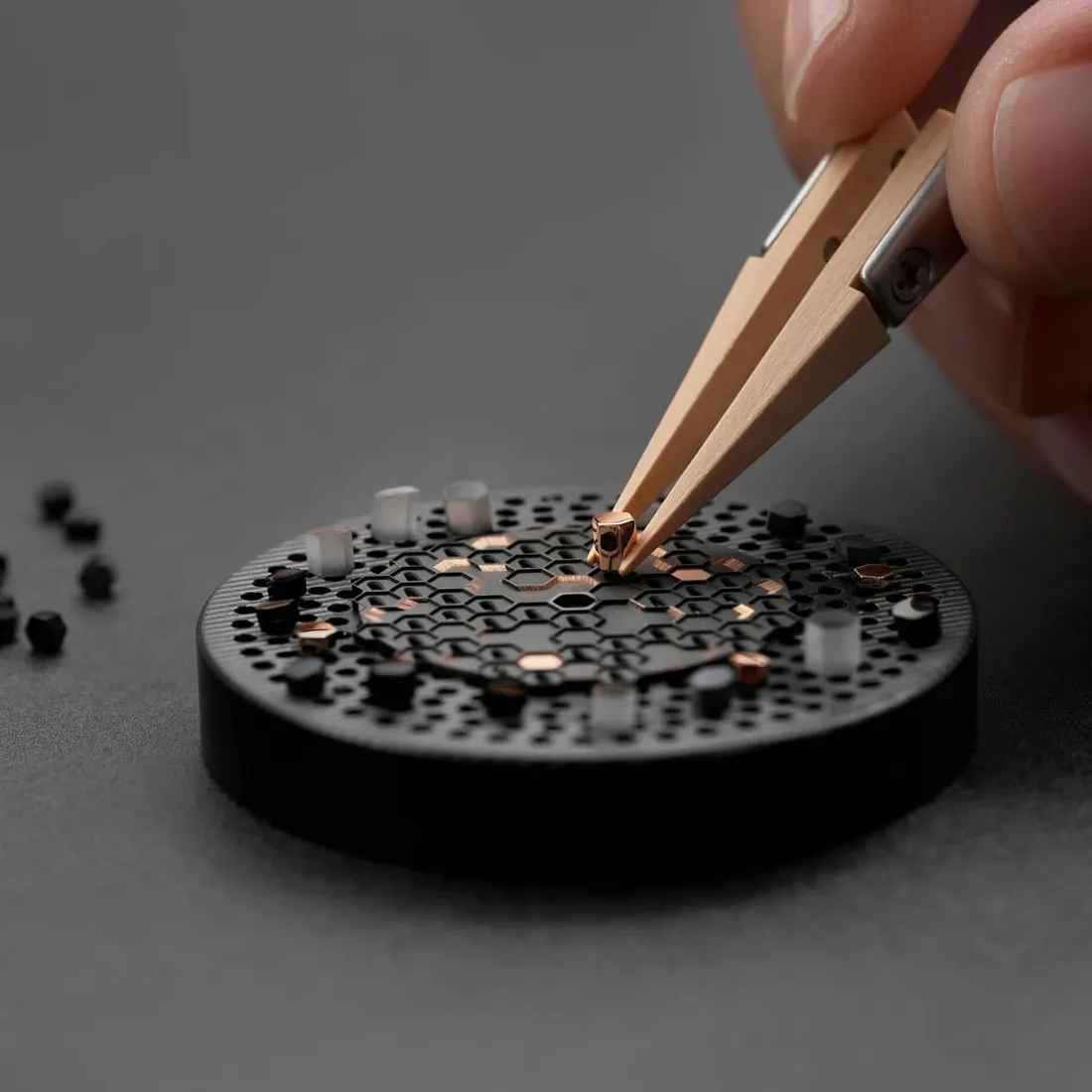
Building this landscape is a work of architecture and sculpture more than of watchmaking. Fourteen different finishes are applied across one hundred and seventy-two components; each block is carved, polished and brought to exactly the right height one by one. An error of even a tenth of a millimetre would ruin the whole perspective. And so each piece is set in place with the patience of a mosaicist.
Shaping the Twelve Knights
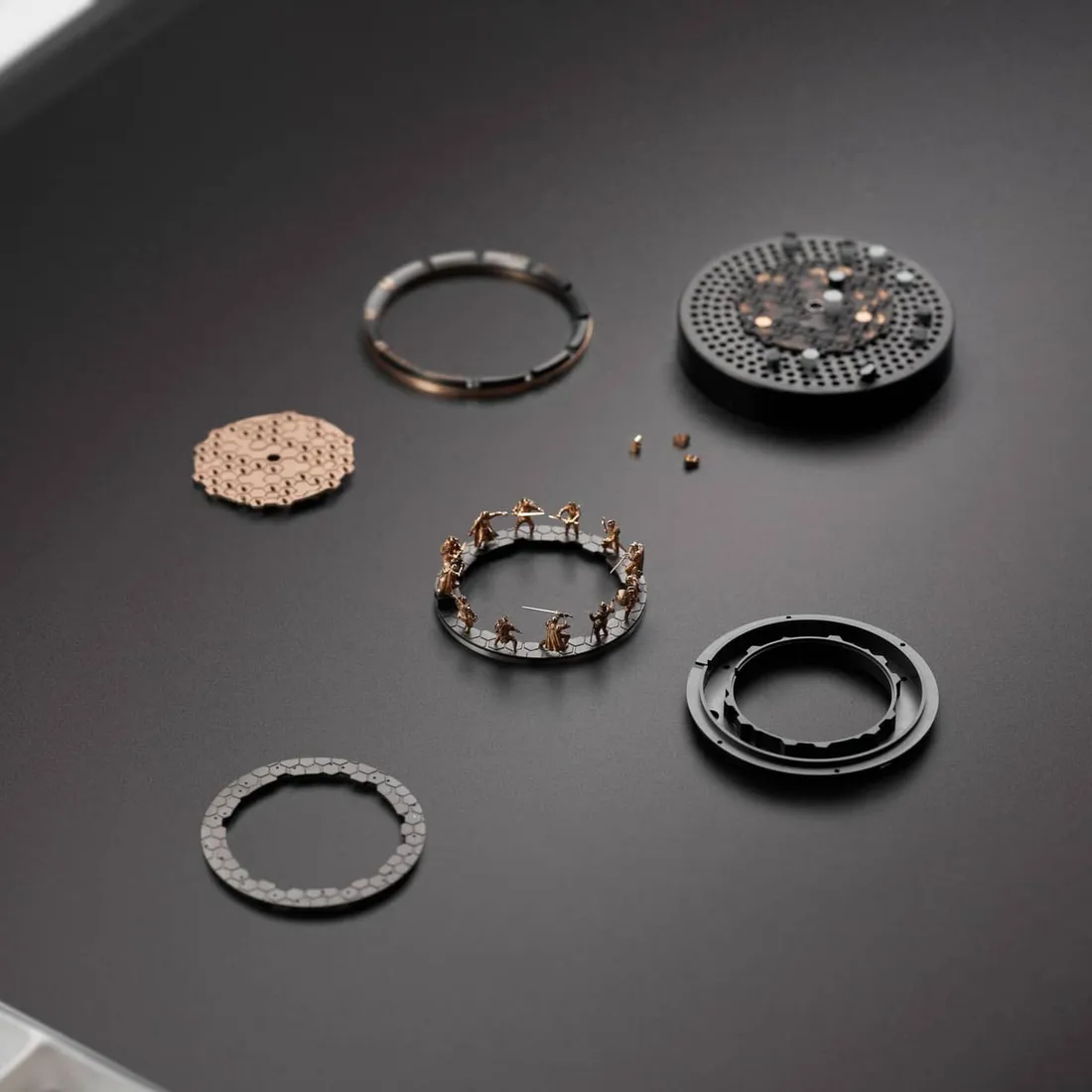
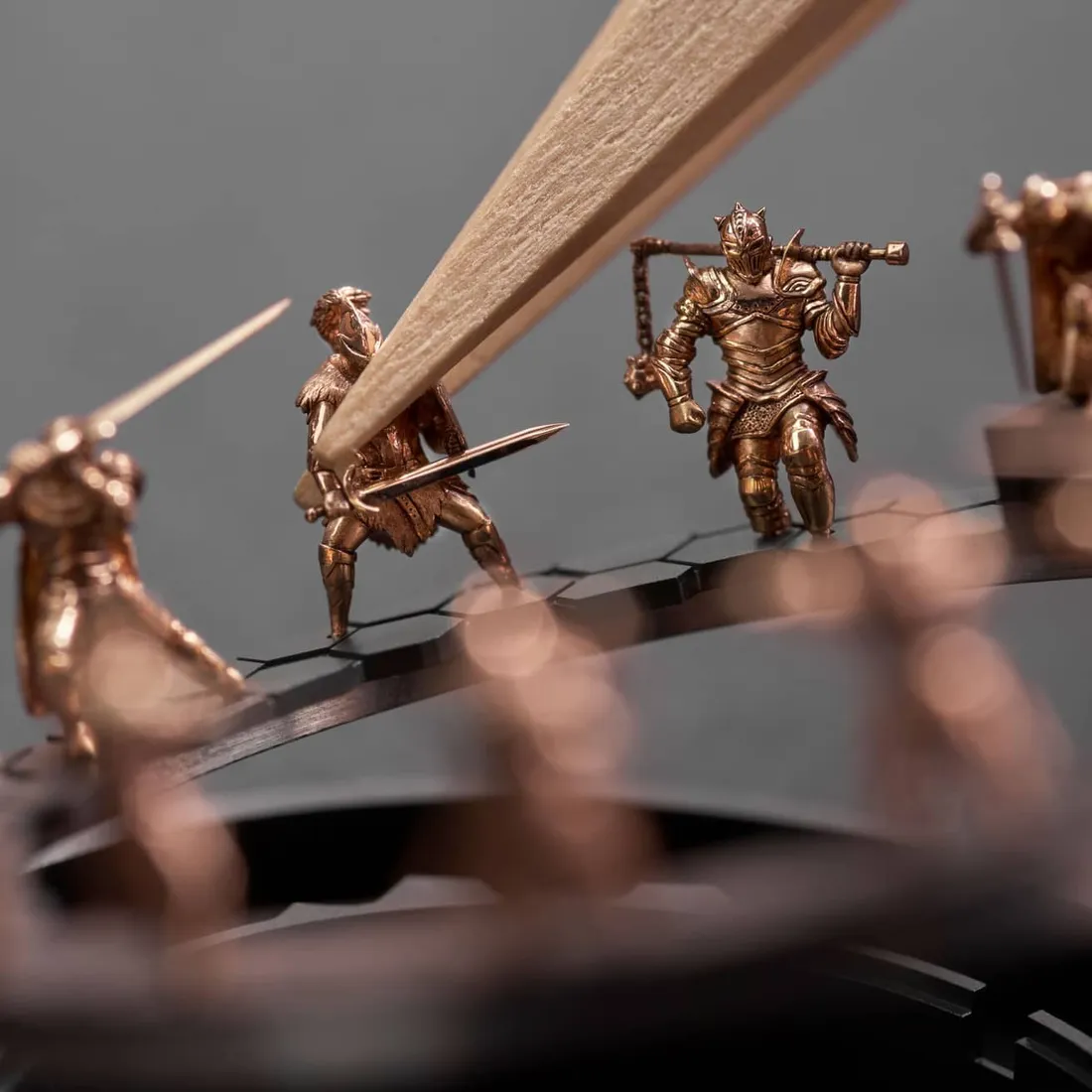
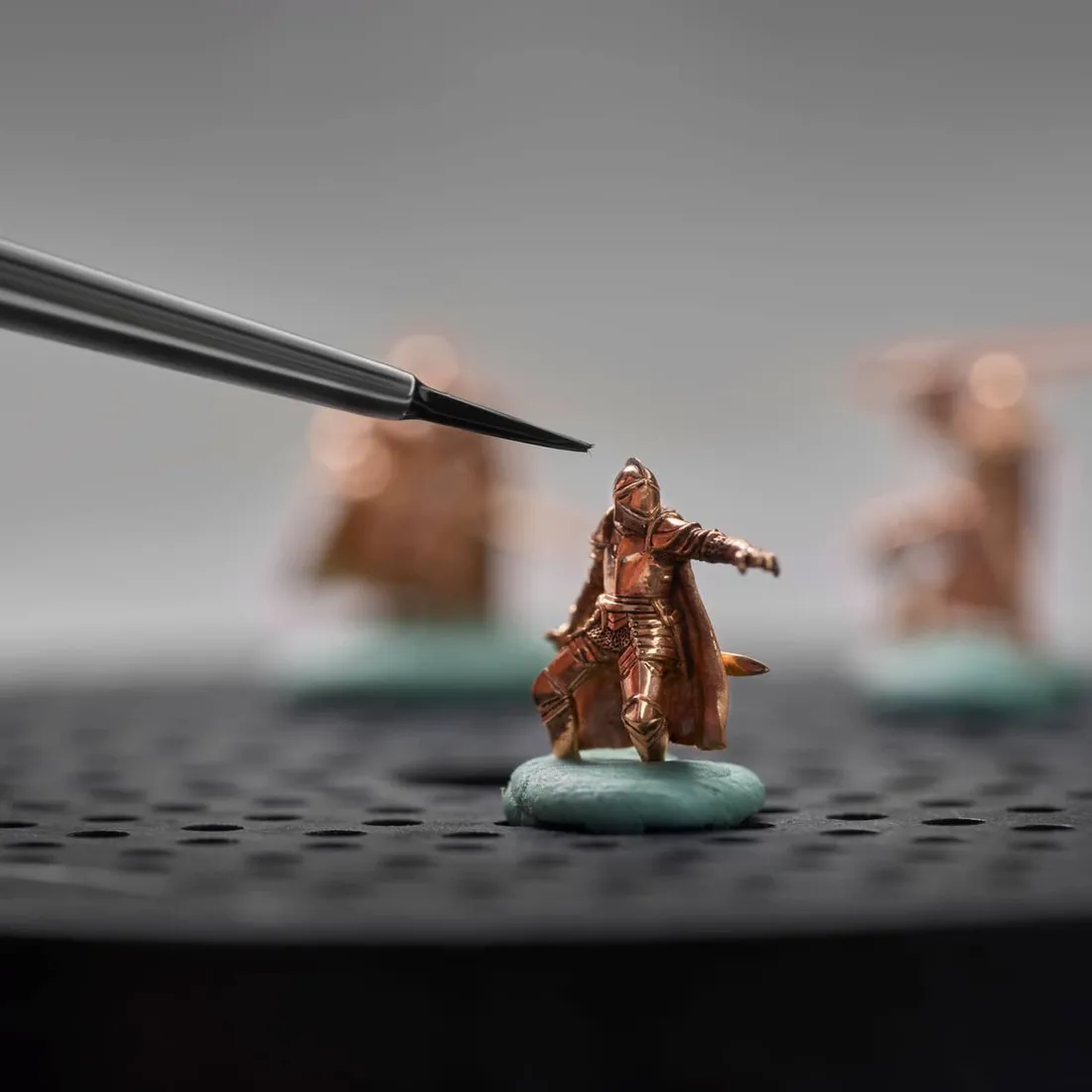
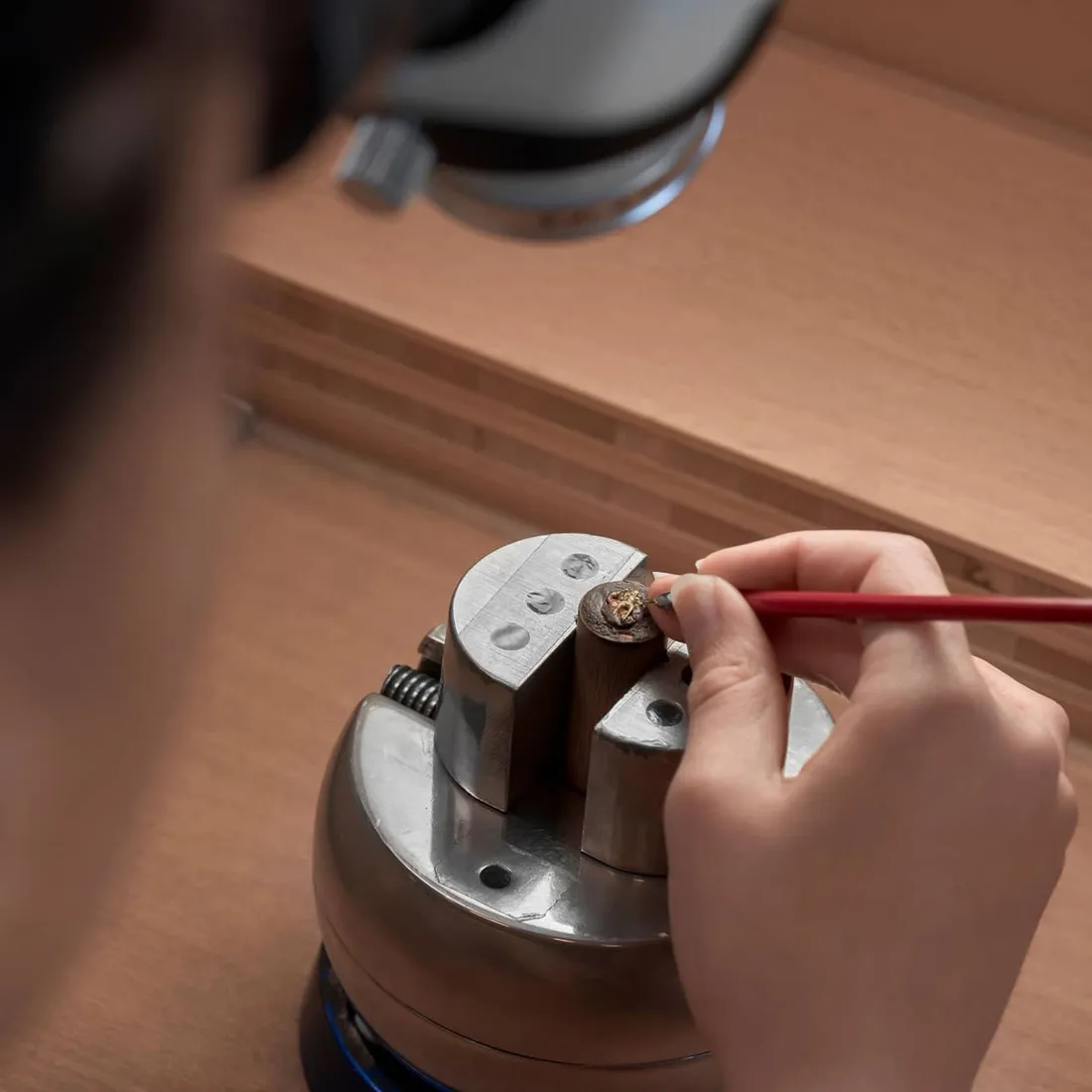
But the true miracle of this dial is the twelve tiny warriors arrayed around that forest of stone. Each of these pink-gold knights, only six millimetres tall, is hand-carved one by one. It takes an artisan one to three days to bring each figure to its final form; every detail is worked separately, from the curve of the shield to the stance of the sword and the battle-ready expression beneath the helmet.
In the end no two of the twelve knights are alike; each has its own personality, its own pose, its own weapon. It is like breathing the soul of a whole warrior into a piece of metal the size of a grain of wheat; and it must be done twelve times, with twelve different characters.
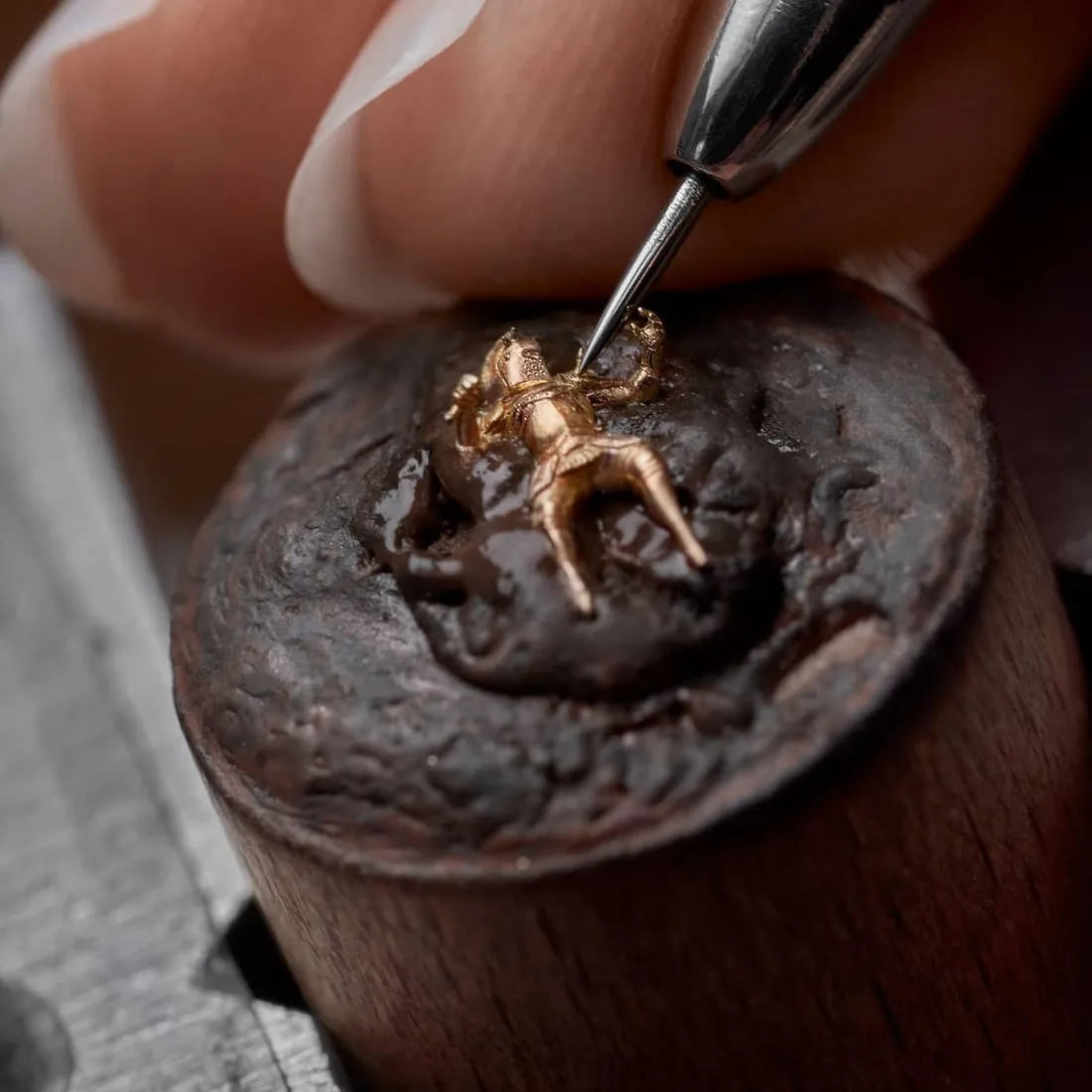
Each finished knight is then set in its place upon the basalt ground; arranged all around, at equal intervals, just like the real knights seated at the round table. This placing is perhaps the most breath-holding moment of all: to position a tiny sculpture upon a running movement, with tools finer than a human hair, without scratching a single surface, demands the composure of a surgeon.
The Geneva Seal: the Poinçon de Genève
Behind all this visual feast stands a mark unseen but held to be the highest guarantee in watchmaking: the Poinçon de Genève, the Geneva Seal. In existence since 1886, this seal is granted only to watches made in Geneva that meet the strictest criteria of hand-craftsmanship, finishing and precision. It demands that the bevel of every bridge, the head of every screw, even the smallest part hidden from view, be finished by hand.
Roger Dubuis is one of the very few manufactures whose entire production carries this seal; the brand's identity has become one with it. So however dazzling the fairy-tale landscape upon the dial, the mechanism beneath it is finished with the same rigour, under the same oath.
The Heart: Calibre RD821
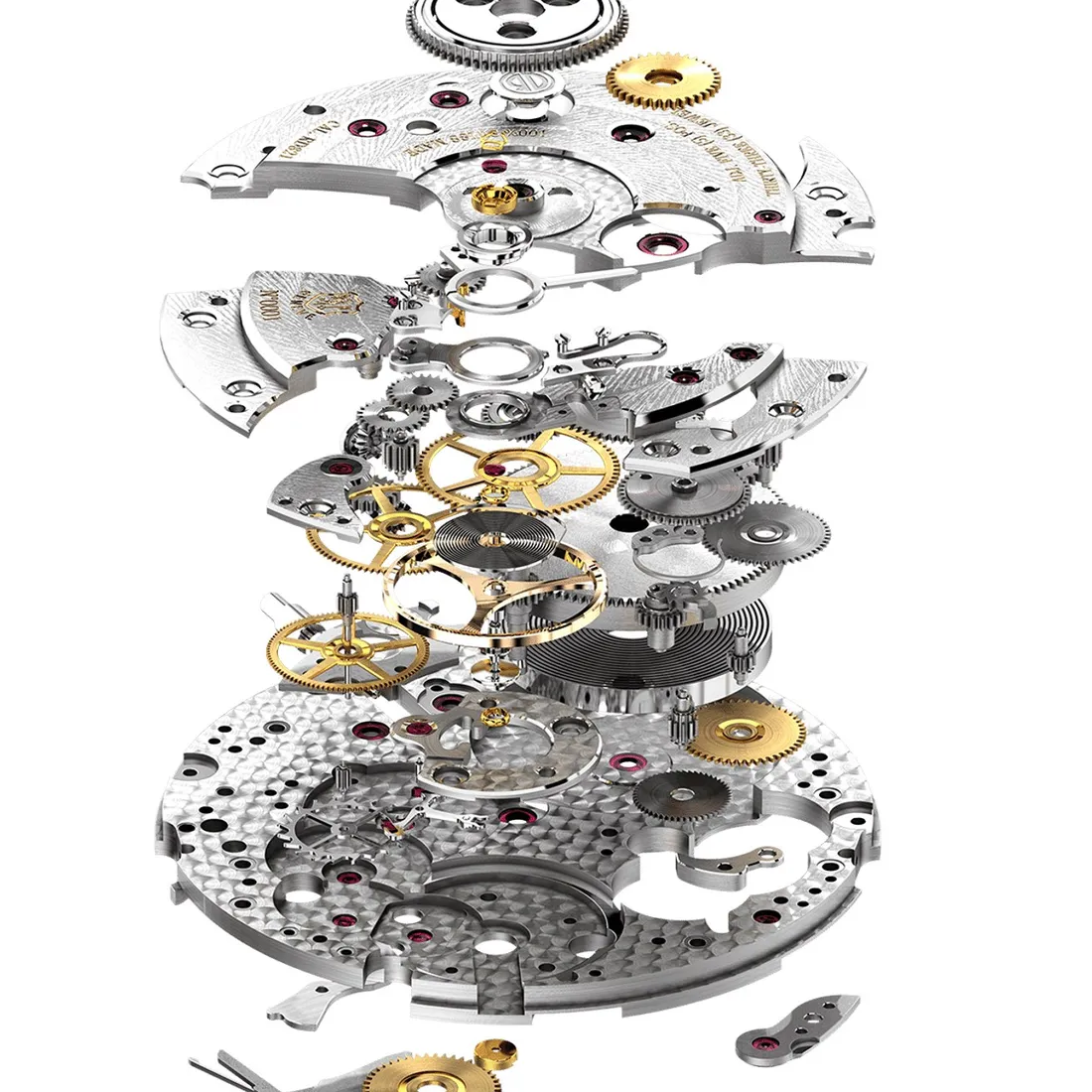
The heart that keeps this whole universe alive is the automatic RD821 Monobalancier calibre. Displaying the hours and minutes, this movement is made of one hundred and seventy-two parts and thirty-three jewels, beats at 28,800 vibrations per hour (4 Hz), and runs for 48 hours when fully wound. It is adorned with rhodium-plated Côtes de Genève and finished from end to end to the criteria of the Geneva Seal.
This whole world lives within a forty-five-millimetre pink-gold Excalibur case, with anti-reflective sapphire crystal and a calf leather strap. To all appearances a powerful, modern sports watch; yet beneath the crystal, a thousand-year-old legend quietly keeps its watch.
The Omniscient One
The watch is named the Omniscient Merlin, the all-knowing Merlin. In the legend, Merlin is a sage said to see the past and the future at once. But even the wisest seer of a tale is, in the end, a figure of a tale. To know the past and the not-yet-happened together, a boundless knowledge that encompasses all things, is the province of neither a king nor a wizard.
Before this dial one cannot help but ask a few questions. Who taught the lava the hexagon as it cooled? Who laid the forty thousand columns of the Giant's Causeway in that flawless geometry, with no hand to carve them? And who first set the measure that flows time silently over these twelve tiny knights? Roger Dubuis worked a legend into stone and gold; but the true splendour behind that legend lies in that order itself, which no master could ever imitate.
On your wrist, twelve knights hold their eternal council, gathered around an oath without end. And at the true head of that round table, in fact, no one sits; for there is only one seat of all-knowing, and that seat fits upon no wrist.