The year is 1205. In the dim workshop of the citadel palace at Diyarbakır, among the smells of melted beeswax and brass, a master craftsman leaned his elbows on a wooden bench. Abu al-Izz Isma'il ibn al-Razzaz al-Jazari, chief engineer to the Artuqid ruler Nasir al-Din Mahmud, was studying the intricate schemes he had drawn on parchment.
When the young palace scribe came in, he stared in astonishment at the imposing wooden model of an elephant standing in the middle of the room, and at the wheels mounted on it.
"Master Jazari, is this figure merely an ornament for the palace, something to display the ruler's magnificence?"
Al-Jazari raised his head. In his eyes was the deep light of mathematics and philosophy.
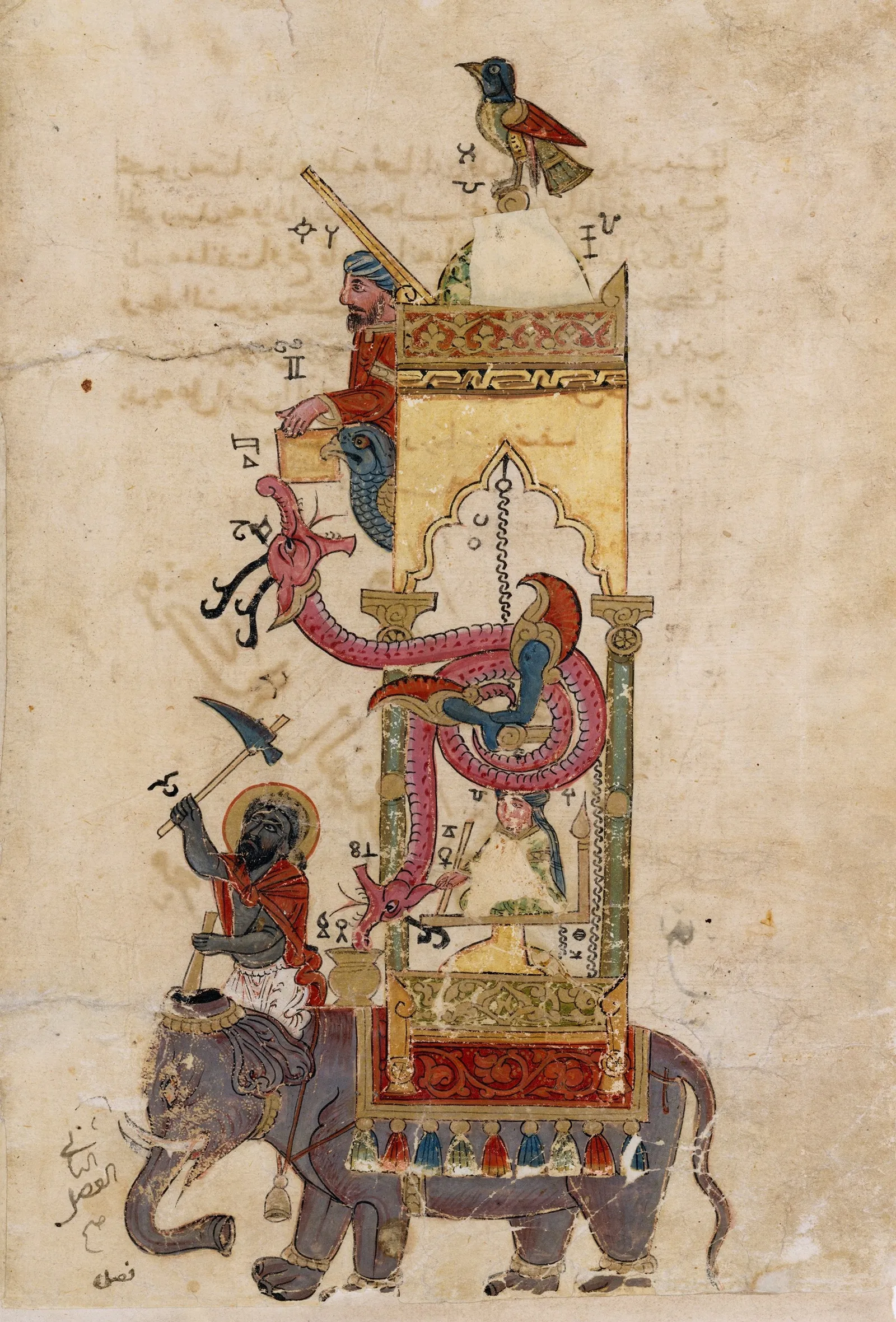
"No, scribe. This is neither a mere ornament nor merely an elephant. This is the common time of mankind. Dragons that bow with the flow of water without a hand touching them, birds that call, men that beat a drum. Here we are gathering the universal language of time, in all the colours of the known world, into a single body."
A year later, in 1206, those drawings were collected into a book. Its short name is Kitab al-Hiyal, the book of ingenious devices. It contains building instructions for some fifty machines, each described in the kind of detail you would look for in an assembly manual today.
A Manifesto of Peace Between Cultures: Why These Figures?
What sets the Elephant Clock, the best known of al-Jazari's works, apart from other water clocks is not only its technique but the universal symbolism carried on its outer casing. In the Silk Road geography of the thirteenth century, at a moment when East and West met through both trade and war, al-Jazari brought together symbols from the four corners of the known world in one single mechanism.
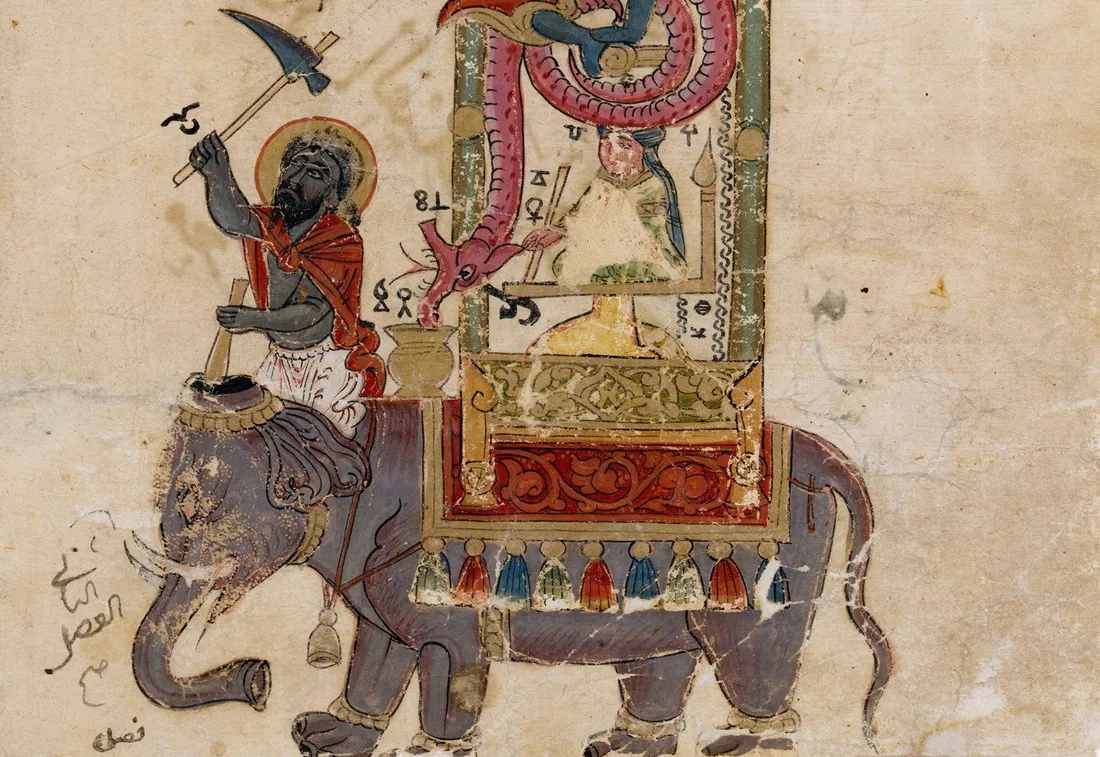
The elephant stands for India: for strength, endurance, and the deep mathematics of Indian civilisation.
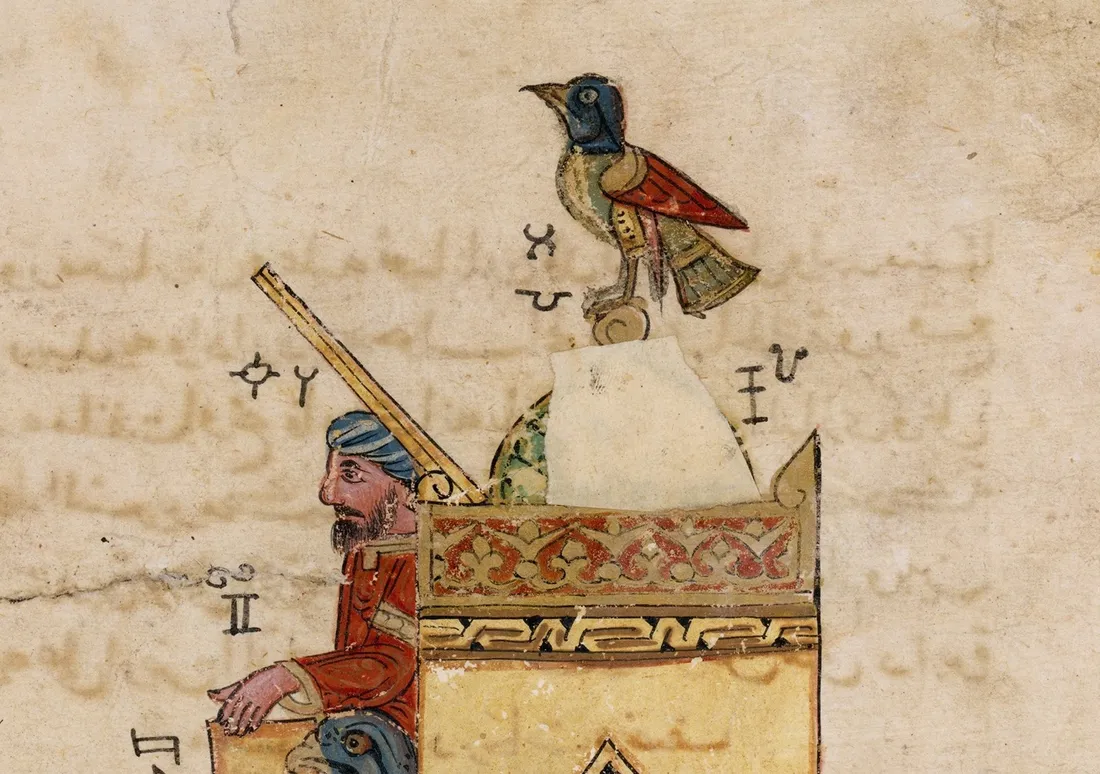
The phoenix, the simurgh, stands for Persia: for the sky, for wisdom, and for ancient Iranian culture.
The dragons stand for China: for protective power and for celestial order.
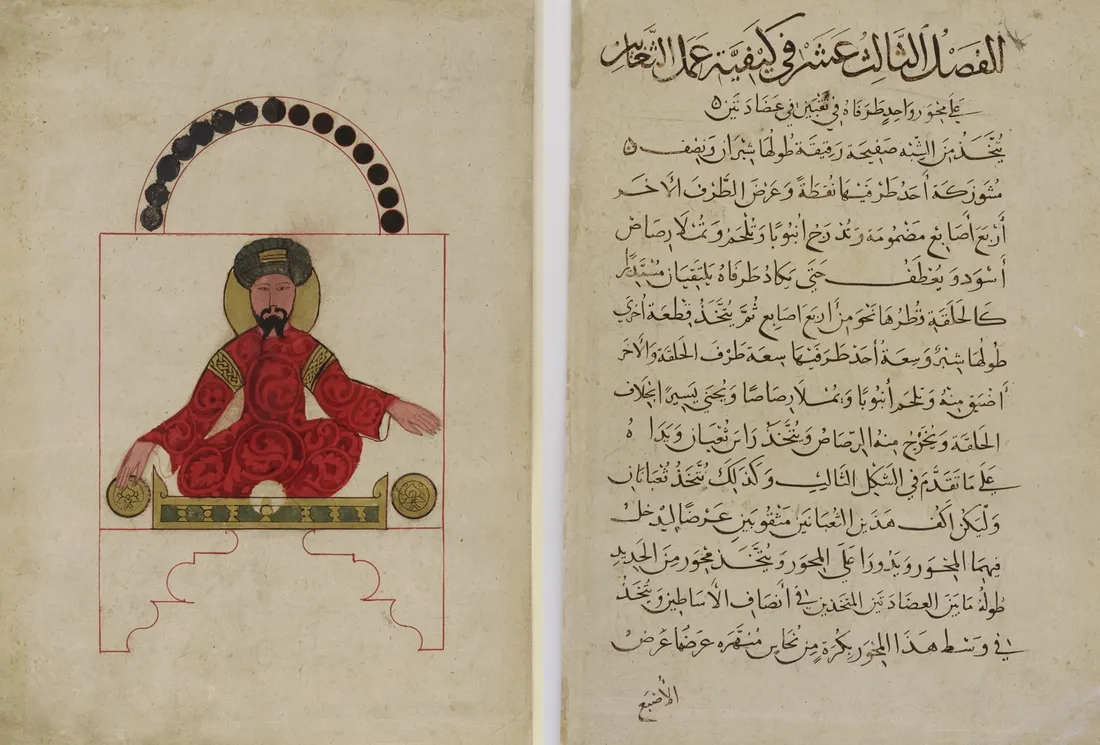
The enthroned ruler and the turbaned scribe stand for the Islamic world: for science, for just government, and for mathematics.
A fifth belongs on that list, and it completes it: the mechanism itself. The sinking-bowl water clock comes out of the Greek and Alexandrian tradition, the principle found in the devices of Ctesibius and Philo. So the figures come from four civilisations and the physics that moves them from a fifth. Al-Jazari names that inheritance openly in his book, and then adds his own solutions on top of it.
With this choice al-Jazari was declaring something: time belongs to no single nation, no single religion, no single geography. Science, which is an accumulation belonging to all mankind, moves the way the gears in this clock do, by one culture completing another.
The cycle runs like this: India's elephant, Persia's phoenix, China's dragon, and the Islamic world's scribe and driver. All four are tied into one common time.
Mechanical Anatomy: How Does the Elephant Clock Work?
The system al-Jazari used in this clock is the closed-loop feedback principle that lies at the foundation of modern automation.
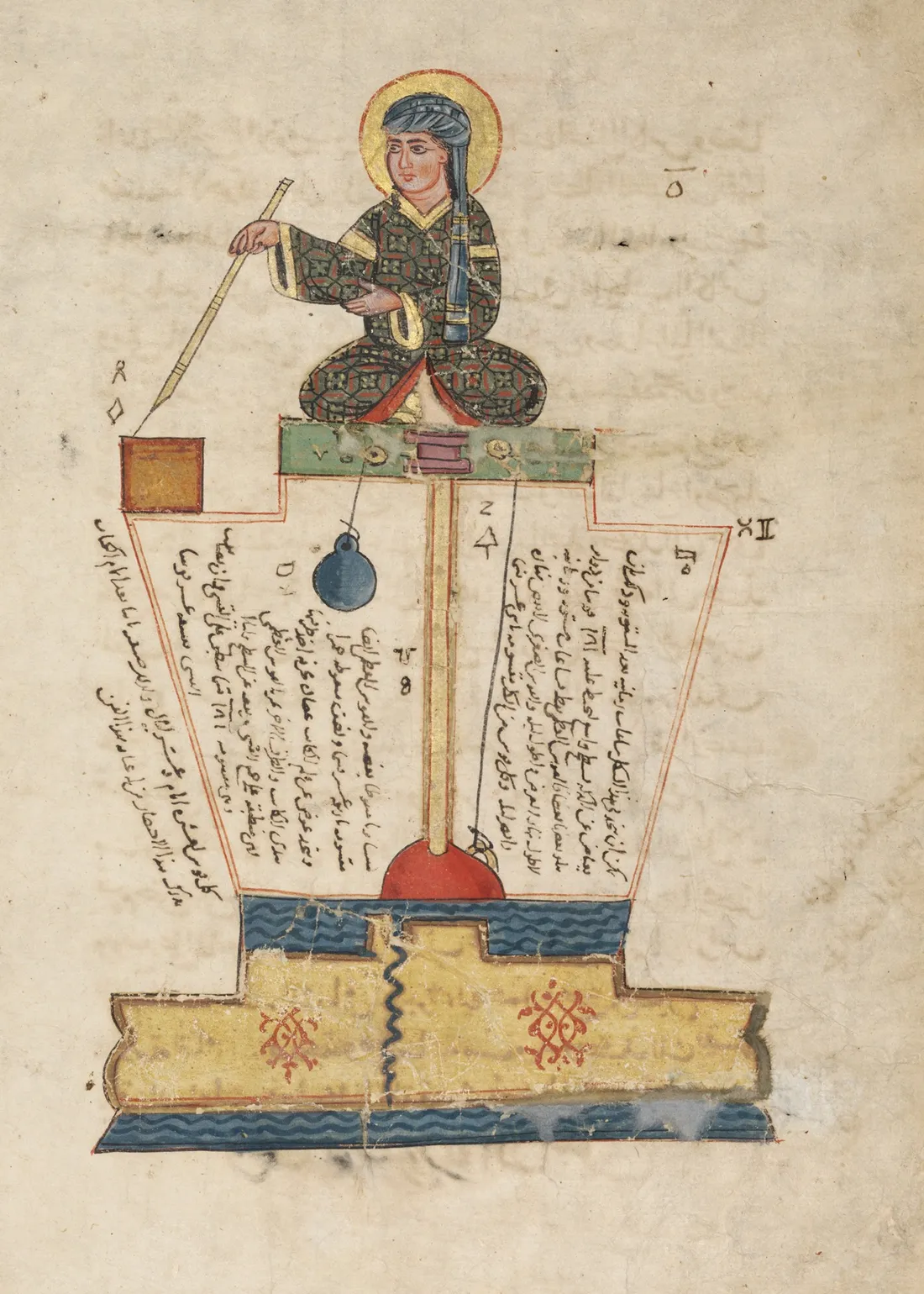
The copper bowl. Inside the water tank in the elephant's belly floats a copper bowl with a hole of a fraction of a millimetre in its base. Drawing water into itself, it takes exactly thirty minutes to sink. The real skill here is the diameter of that hole: too large and the bowl sinks early, too small and it never sinks at all. Al-Jazari also explains in his book how to arrive at that hole by trial.
Power transmission and display. As the sinking bowl descends it pulls the cords attached to it. The pen in the hand of the turbaned scribe, seated in the castle on the elephant's back, indicates the minutes on an arc-shaped scale.
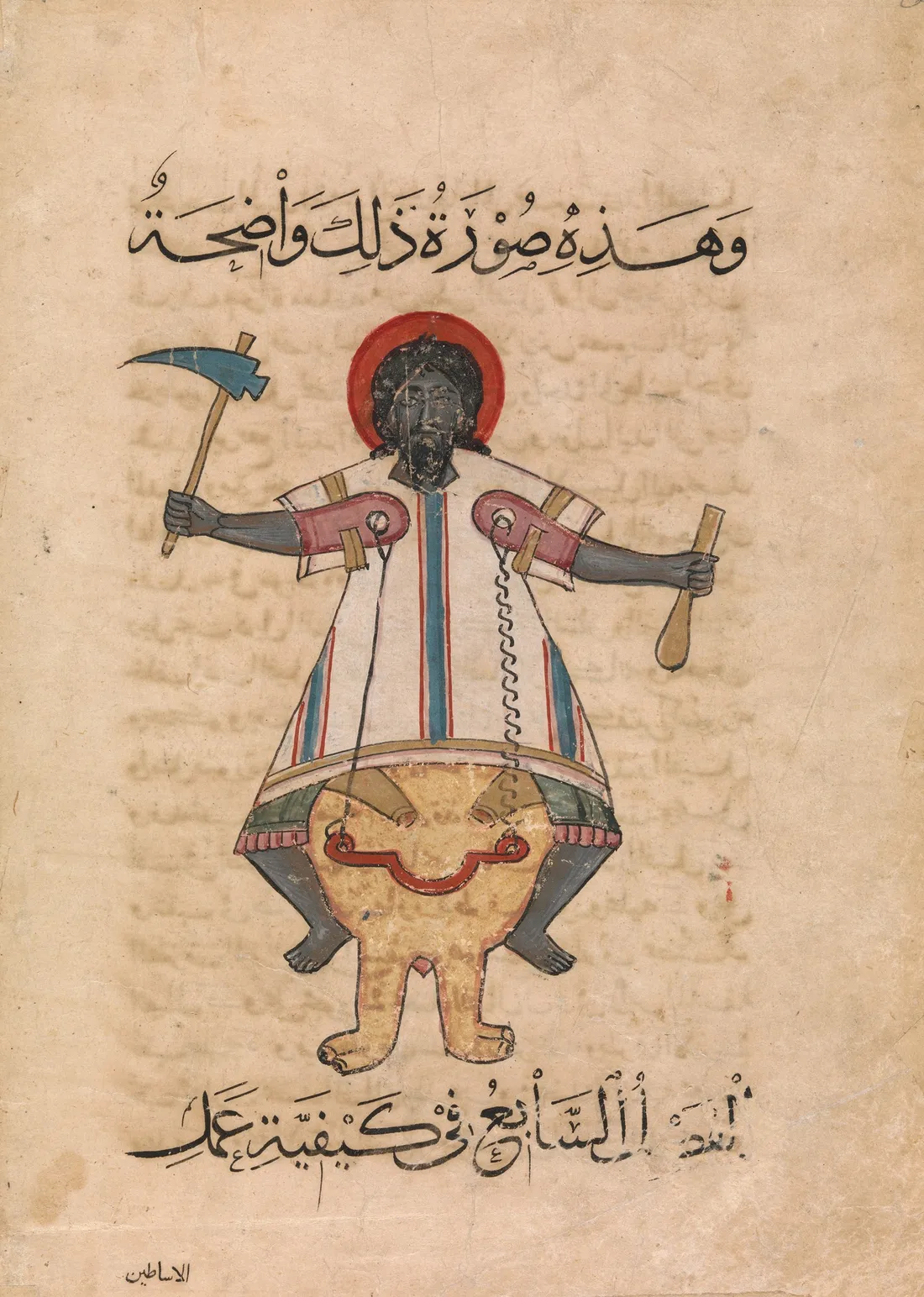
The mechanical theatre. When the thirty minutes are up and the bowl settles on the bottom, the reaction begins. The bird at the top turns and whistles. A bronze ball leaves the falcon's beak and falls into the dragon's mouth. Tipped forward by the weight of the ball, the dragon drops it into the vase at the elephant's neck. The falling ball trips mechanical levers, making the Indian driver strike the elephant's head with his axe and beat his drum.
Automatic reset. The dragon, as it tips, uses a lever system to draw the sunken bowl back up out of the water. Emptied of water, the bowl floats on the surface again and the system resets itself for the next half hour.
That last step is the most important part of the whole device. The output of the system, the dragon tipping forward, is at the same time re-establishing the system's input. In engineering this is called feedback, and it removes the need for anyone outside to intervene. Which is why the elephant clock is not an ornament but a machine that governs itself.
One Genius, One Inheritance
Al-Jazari was the first great mind who, in the thirteenth century, refused to see time as a matter of numbers alone and joined it instead to the movement of nature and of cultures.
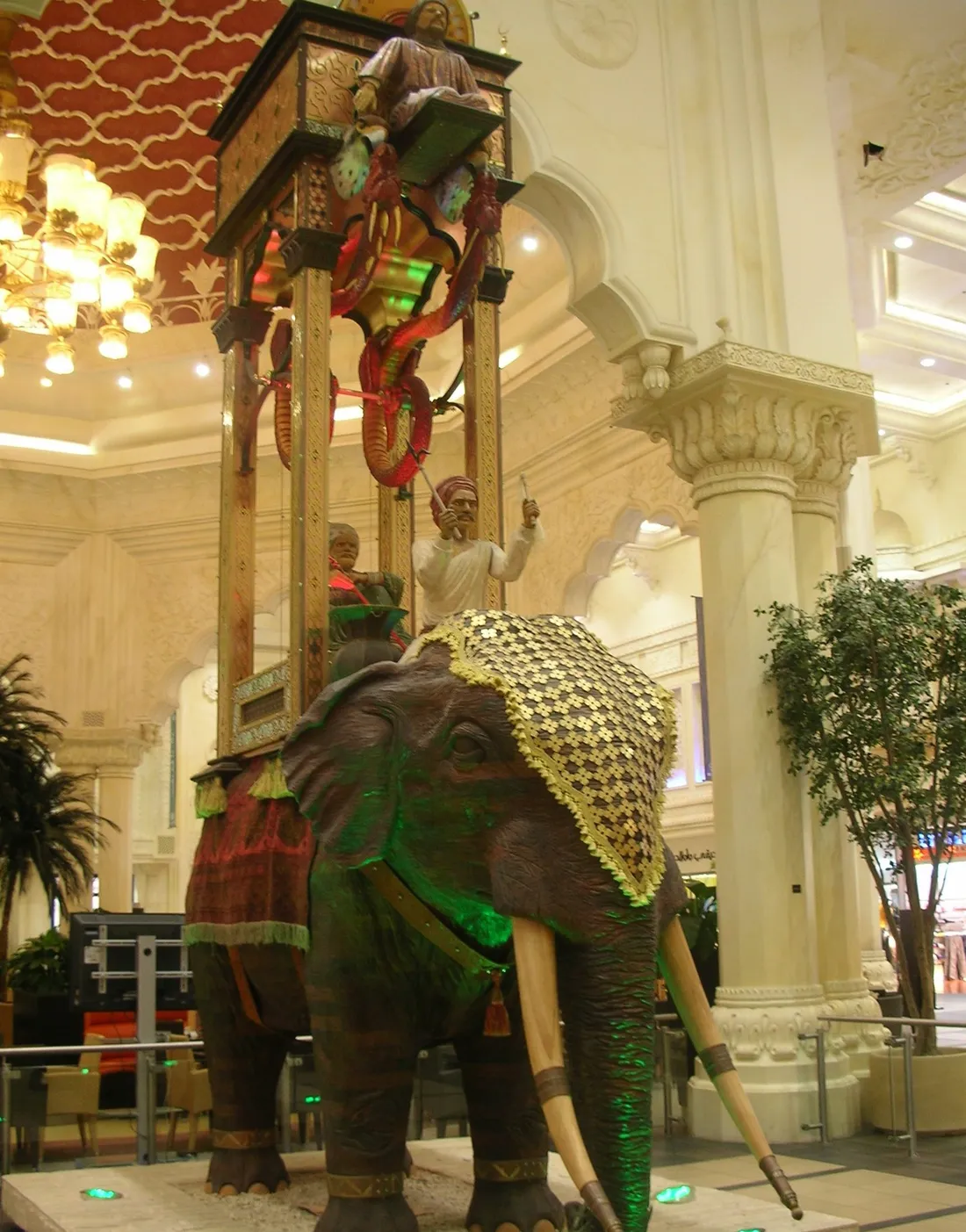
Eight hundred years on, faithful copies of the same device still run on the same logic: the bowl sinks, the dragon tips, the bird calls, and the system winds itself up again.