A human being is inclined to forget his own truth inside the noise of cities, a noise woven out of lies. Among titles, the greed for property and the rules of false courtesy, he loses his soul. But strip a person of all those artificial shells and set him down in the untouched lap of a virgin forest, and only that bare and sacred question is left: who am I, and who brought me into being?
Hayy ibn Yaqzan, written by Ibn Tufayl in twelfth-century Andalusia, follows the track of that question on a deserted island. The abandoned child who has never seen a human face, fed and raised on the milk of a gazelle, builds his life through contemplation in stages of seven years each.
When the gazelle that raised him dies, Hayy opens her chest looking for the source of life. Seeing that the material organs are all in place but that the invisible power moving them has gone, he grasps that the body is only a temporary garment and that what matters is the invisible thing which gave that body life. To open a body and fail to find life inside it is the oldest lesson in philosophy.
The more he studies nature, the elements, the stars and the planets, the more he understands that nothing which rises, sets and passes away can exist by itself; behind every perishable thing there must be an Artificer free of time and place, one whose existence is necessary. And when he silences the appetites of the body and sinks into contemplation, he passes beyond the limits of reason and experiences the loss of his own self in the light of the Creator.
Leo Tolstoy, by contrast, lives the same existential crisis in the middle of civilisation, in the Confession he wrote at the summit of his immense literary success and wealth. Brought to the edge of suicide by the questions of why he is living and what his works and his fortune mean, Tolstoy flees the shallow answers of science, of philosophy and of society and takes refuge in the lap of the peasants, of nature and of undiluted faith. Where all the worldly vanity built by reason collapses, he cries out that the only thing keeping a person alive is hidden in a love without titles and without alloy.
Hayy’s path on the deserted island, beginning in reason and arriving at love, and the peace Tolstoy found by fleeing the palaces for nature, intersect at the same point: truth is hidden in the plainness that begins where the artificial ends.
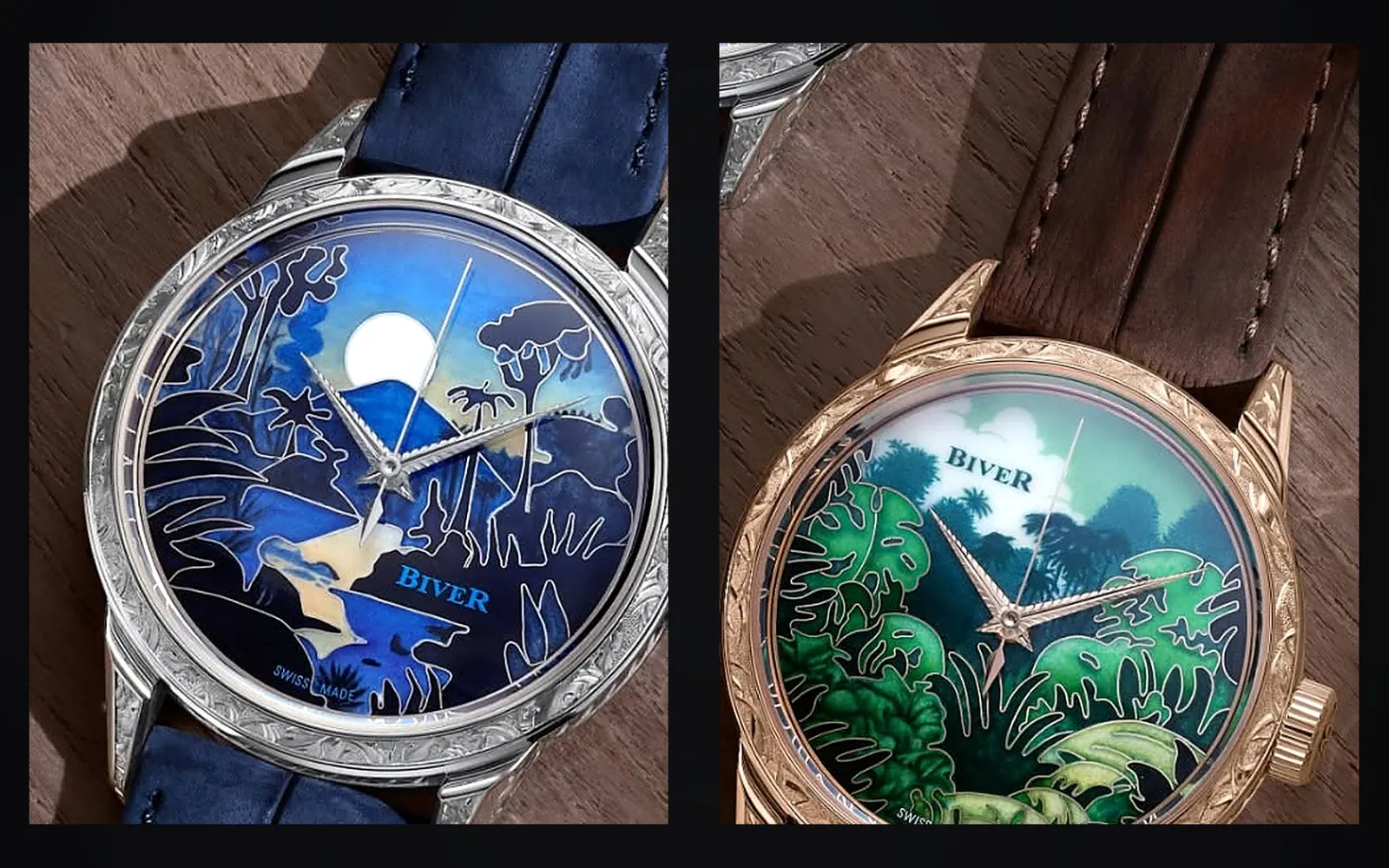
The Biver Automatique Jungle Day and Jungle Night, out of the hands of Jean-Claude and Pierre Biver, are two literary mirrors of that spiritual search sealed onto a wrist. Both are unique pieces, made with Material Good of New York in such a way that no second copy will exist.
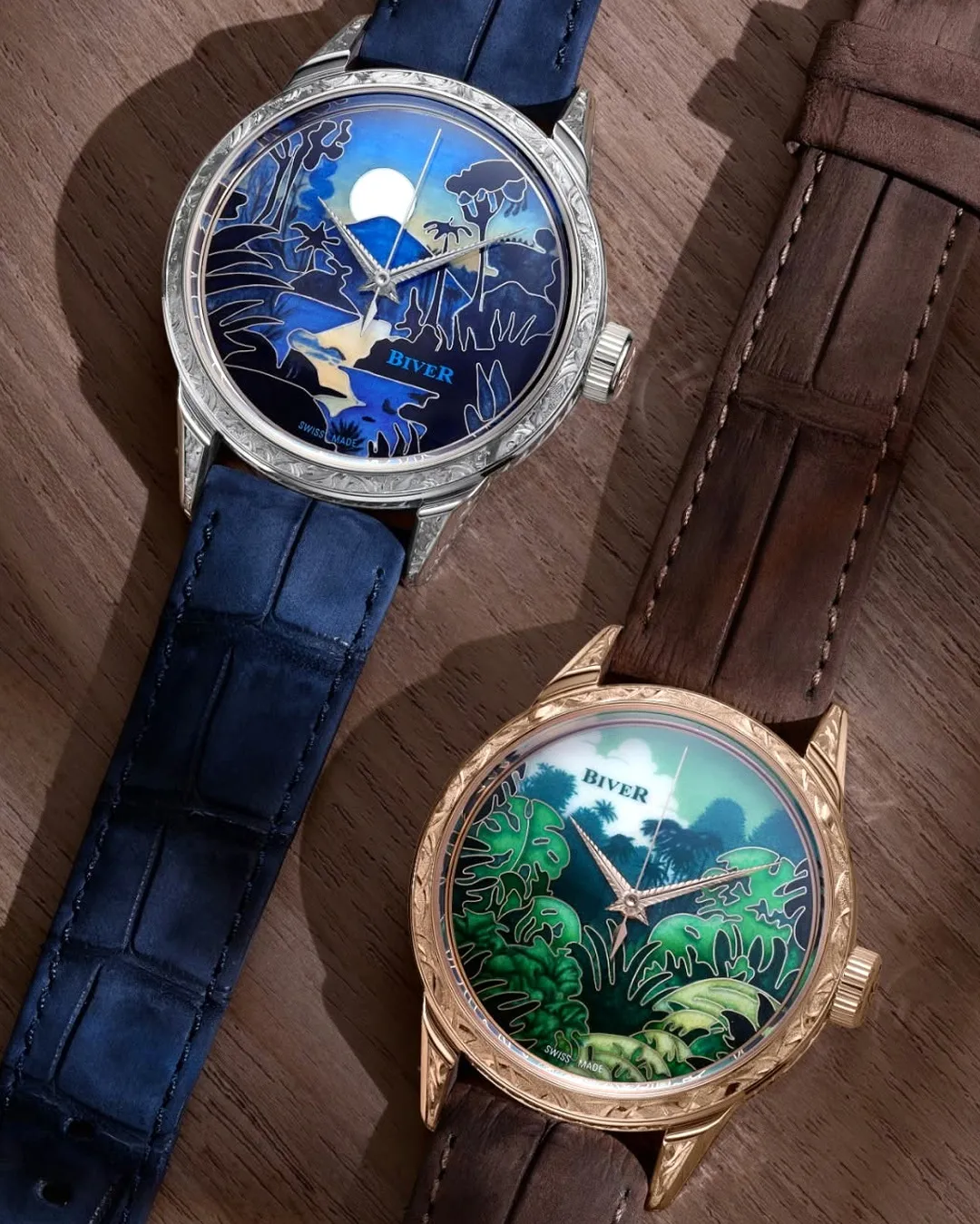
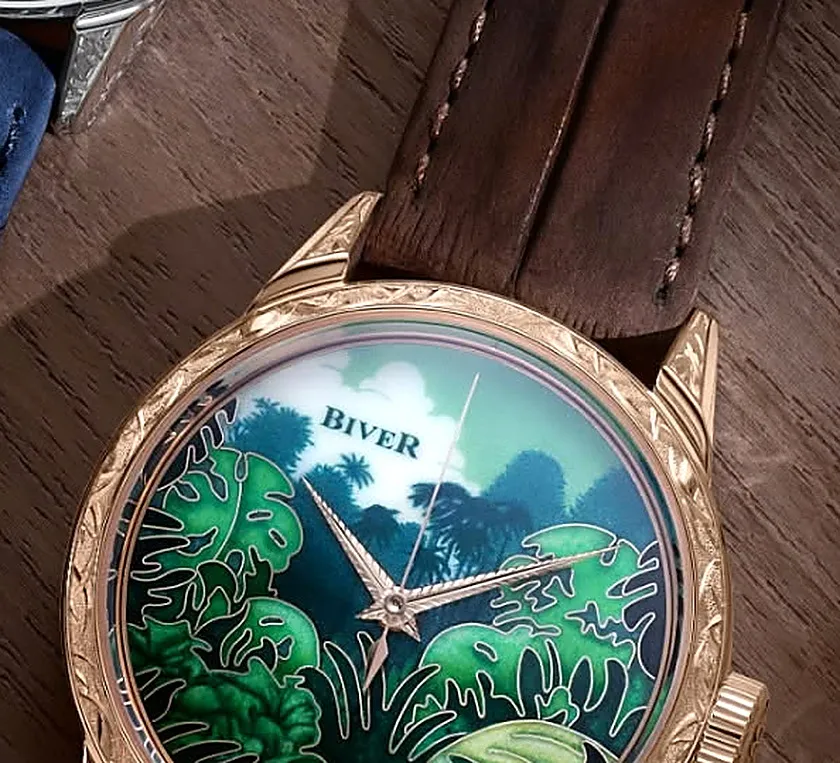
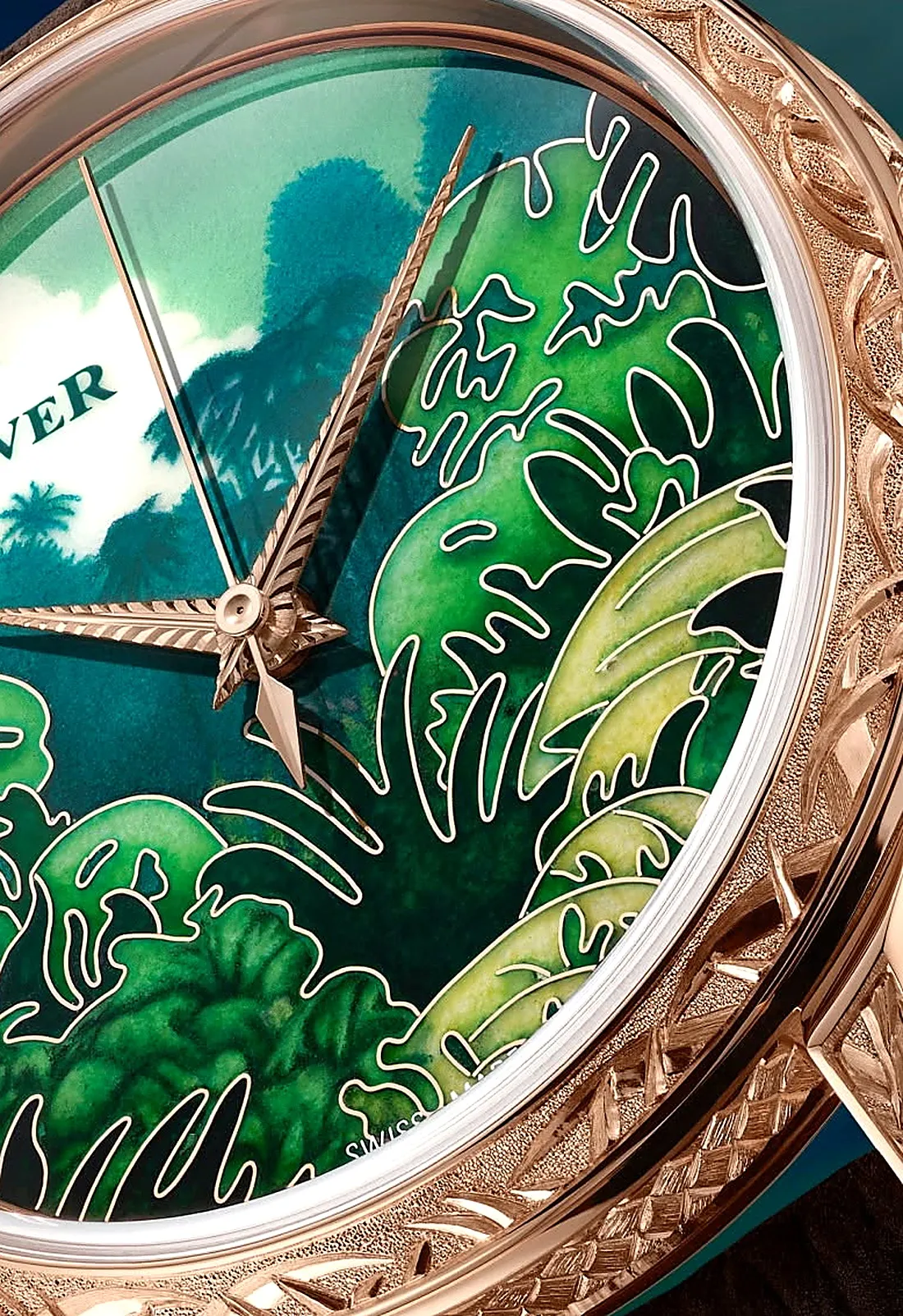
When the sun filters through the dense leaves of the tropical forest and draws its first gold lines on the ground, Hayy opens his eyes onto a waking world. Wrapped in the warm case cast from eighteen-carat rose gold, Jungle Day is that moment of waking in which Hayy and Tolstoy grasp the material world through contemplation.
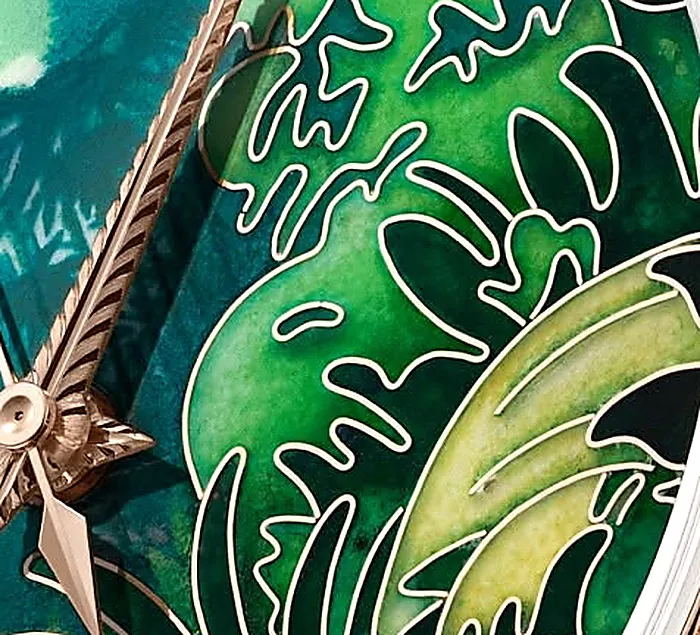
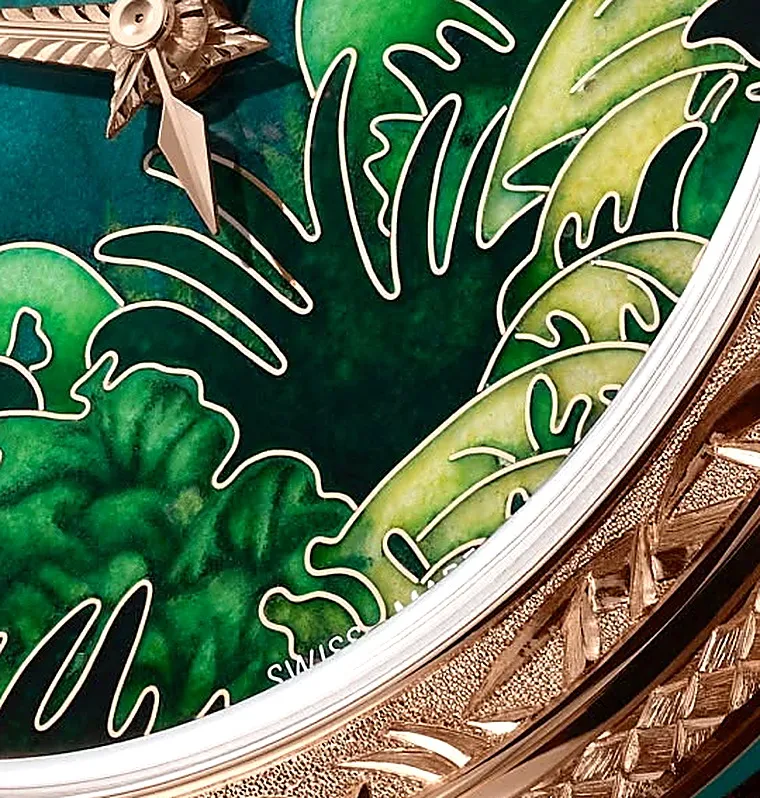
The living emeralds on the dial carry the ceaselessly bursting abundance of life; behind them, above the leaves, a palm and a hazed sky appear. Look closely and you see a fine gold line along the edge of every leaf: that is cloisonné. The craftsman bends gold wires the thickness of a hair with tweezers, draws the boundaries of the pattern onto the dial plate and fixes each wire in place. Every one of the small cells that emerge is then filled with a different colour of powdered enamel and fired; you do not move to the next colour before the last has settled, and every turn in the kiln is a gamble on the layer beneath not cracking. At the end the surface is stoned and polished, but the gold wires are not erased: they are at once the line and the wall. Cloisonné does not bury colour inside metal; it draws a boundary around each colour and puts gold in between.
When Hayy understands through the death of the gazelle that the body is perishable, and when Tolstoy realises in his Confession that all titles come to zero in front of death, both turn back to nature. The day is the first stage, where reason, the eye and experimental contemplation read the Creator in his work.
format_quote"To open a body and fail to find life inside it is the oldest lesson in philosophy."
Hasan Bekmezci
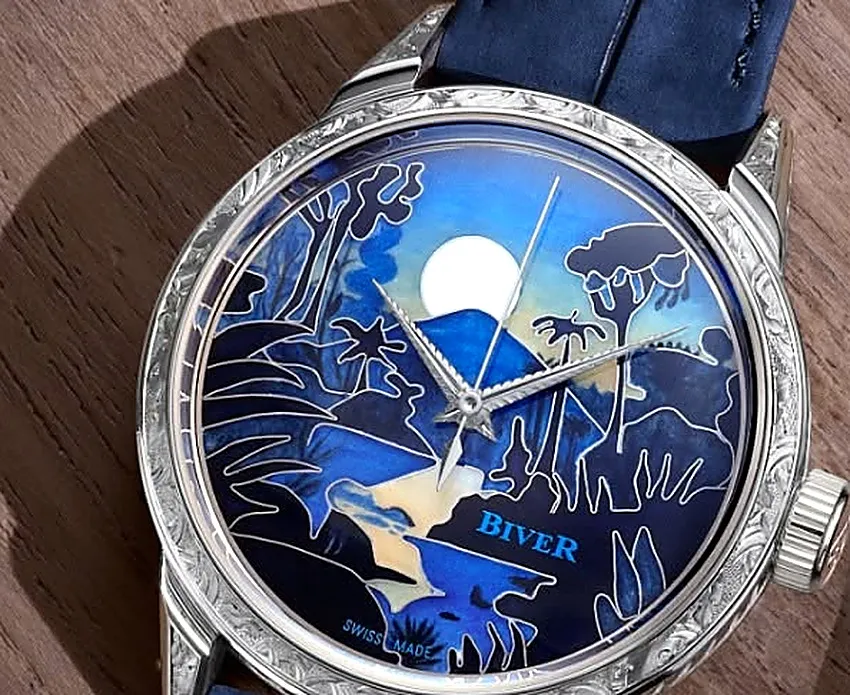
When the sun sets and a velvet darkness falls over the forest, the creatures are asleep. But the souls of Hayy and Tolstoy no longer fit inside matter. Shaped by the cold, proud, unalloyed bearing of a platinum case, Jungle Night is that great leap from the concrete to the abstract, from the limits of reason into the ocean of what exceeds it.
The silvered full moon rising on the dial and the deep navy sky seal the moment Hayy lifts his head and watches the celestial spheres. The brand tells this scene in a single sentence: the full moon rises over a mountain and a river. Day and Night do not show the same view; they show two different hours of the same world, two different palettes and two different creative approaches. The hardest thing about making a pair is not the resemblance but that each of the two must stand up on its own.
The child studying the circular motions of the stars and the planets understands that nothing perishable can be absolute. The depth of those layers of blue and navy enamel is the night of union in which the eye goes blind and the heart gains sight. The night is a fortress of contemplation where reason falls silent, words run out and the soul is left alone with its own Creator.

format_quote"The hardest thing about making a pair is not the resemblance but that each of the two must stand up on its own."
Hasan Bekmezci
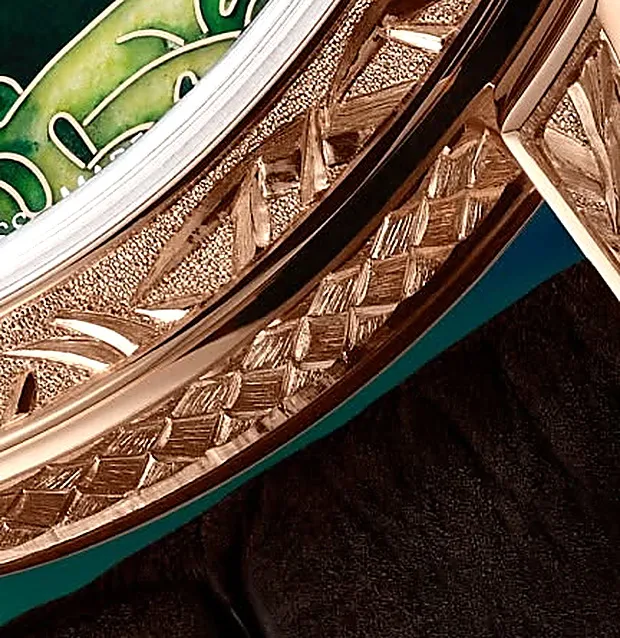
What lifts these two out of being merely objects of high watchmaking and turns them into a spiritual contemplation is that every single line on them came from the hand of one artisan. All the surfaces of the cases, from the lugs to the edge of the bezel and the flanks, were cut by hand by a single engraver. The hands are the same: each was worked individually and on all of its surfaces, and the white gold hands of the night piece were brought into the same language as its dial. To engrave the unseen face of a hand as well is to hand the work over to yourself rather than to the buyer.
Biver also says he did not do this alone: the friends who do the enamelling, the engravers, the people in the atelier. Whether a watch actually worked, the house says, is something you only find out once it is assembled, and that is also the moment you learn whether you can be proud of it.
The movement behind the caseback is undemonstrative in a way that suits this calm: inside a thirty-nine millimetre case, the calibre JCB-003 wound by a micro-rotor in 22-carat gold. The house’s main plate is an unusual choice: a special gold alloy containing palladium. No coating, no treatment; the material is naturally white, it does not oxidise and it does not deteriorate. To make a movement out of a material that needs no coating, instead of coating one, is a quiet kind of pride.
And all of it reminds us of one truth: time is not the rhythm of mechanical wheels but an endless walk in which a person searches his own inner forest for the one who made him, and finds his peace in him.
format_quote"To engrave the unseen face of a hand as well is to hand the work over to yourself rather than to the buyer."
Hasan Bekmezci