Rome. Late afternoon, and the two-thousand-year-old stones of the Colosseum burn red in the light of the setting sun. Half-ruined, yet still standing; empires were born and died, and it is still there. This is why they call Rome the Eternal City: in the very place where time is most merciless, stone defies it. Gaze long at the curving arches of the Colosseum and, after a while, you notice something strange; those rings stacked one upon another resemble the body of a giant coiling serpent.
This is no coincidence. The serpent is one of Rome's oldest and most constant symbols. The ancient Romans wore the snake biting its own tail, the ouroboros, as the sign of eternity and of time's unending cycle. The gold serpent bracelets pulled from the ashes of Pompeii seem, even two thousand years on, still ready to coil around a woman's wrist. For Rome, the serpent speaks not of death but of rebirth by shedding one's skin, that is, of time itself.
It was the jeweller of this city, Bvlgari, that translated this ancient symbol into its own language in the 1940s: the Serpenti. A snake that coils around the wrist on a supple gold Tubogas body, its eyes set with precious stones. When Elizabeth Taylor wound a Serpenti around her wrist while Cleopatra was being filmed at the Cinecittà studios on the city's edge in 1962, that snake was already a legend; it had crept out of Rome's stone onto the silver screen, and from there into the dream of an entire century.
But what if this jewelled serpent were one day to become a real machine? A mechanical creature that breathes, whose heart is visible, and that tells the time with its eyes? It was this impossible question that brought together the elegance of Rome and the maddest watch atelier in Switzerland, and out of it came a Horological Machine: the Bvlgari × MB&F Serpenti.

Where Two Worlds Meet
This meeting has two architects. The first is Bvlgari's design director, Fabrizio Buonamassa Stigliani; once a car designer, he still draws a watch as if drawing a car. The second is the founder of MB&F, Maximilian Büsser; a rule-breaking dreamer who redefined watchmaking as 'machine' and 'art.' What bound them together was a shared passion for cars; both were in love with the curves of a body and the flow of light over metal.
This was the two houses' second collaboration, and it took more than three whole years. Buonamassa's Roman elegance and Büsser's Genevan mechanical daring sharpened and fed one another. The result was neither pure jewellery nor pure machine; it was the flawless hybrid of the two.

Hundreds of Sketches: the Birth of a Design
A creature like this was not born in an instant. Bringing it to life took hundreds of sketches and dozens of 3D-printed models. Buonamassa drew the serpent's head exactly like the body of a concept car: flowing, muscular, with aerodynamic curves. On the paper, first roughly and then ever more sharply, a serpent's head appeared; a form with eyes, a snout and scales, yet at the same time recalling the bodywork of a racing car.
This was the meeting of engineering and sculpture in a single pen. Every line was both an aesthetic and a technical decision; for beneath those curves, a genuinely working mechanical heart had to fit. When the final drawing was approved, the work had crossed from dream into reality.


Five Sapphires and One Body: the Case Craft
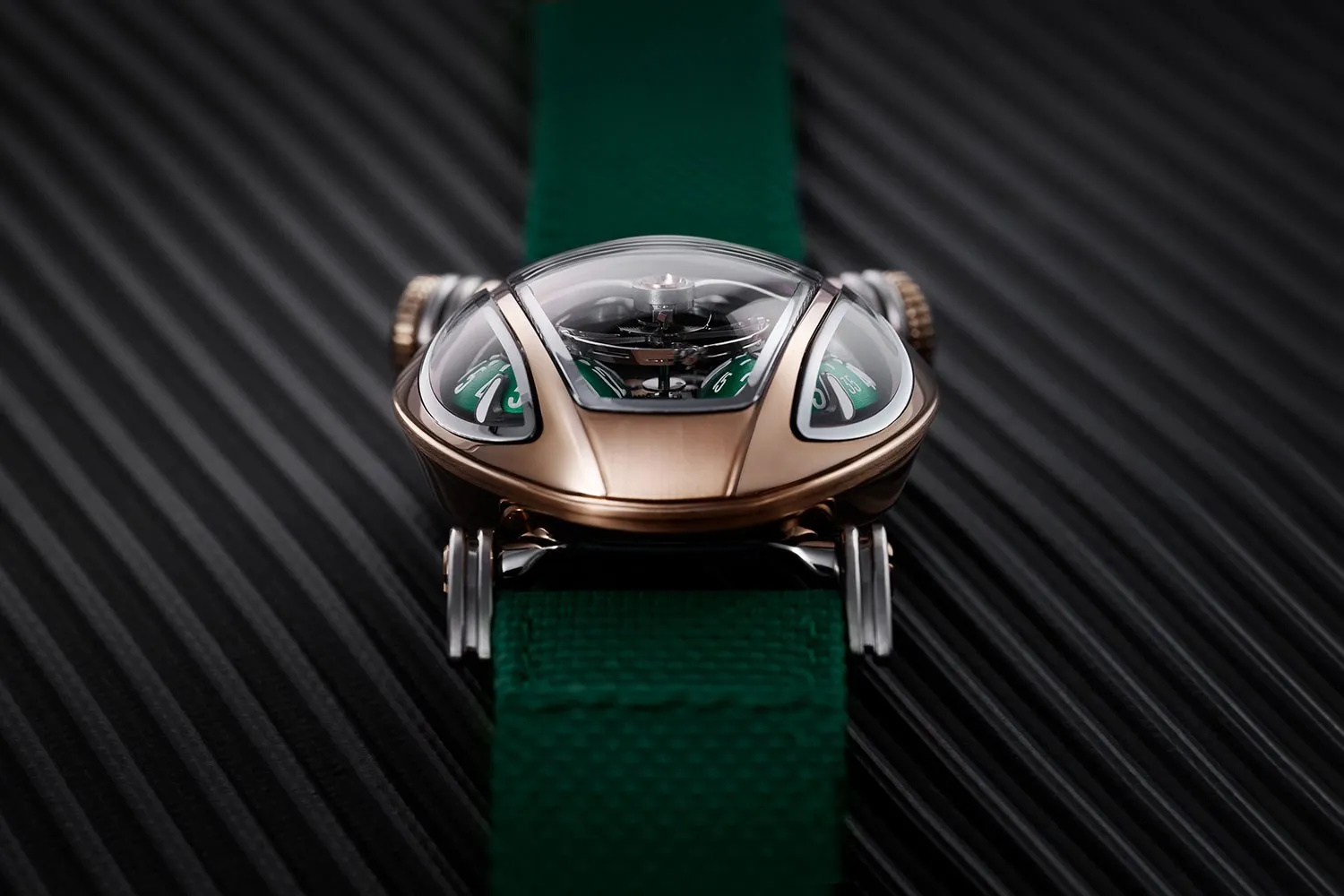
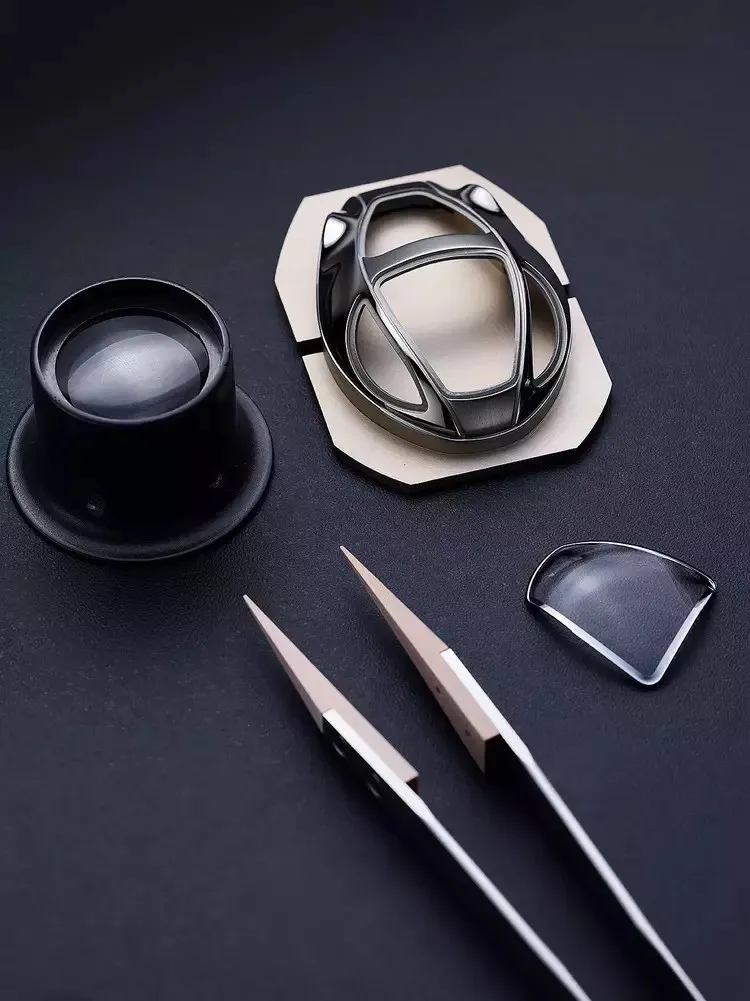
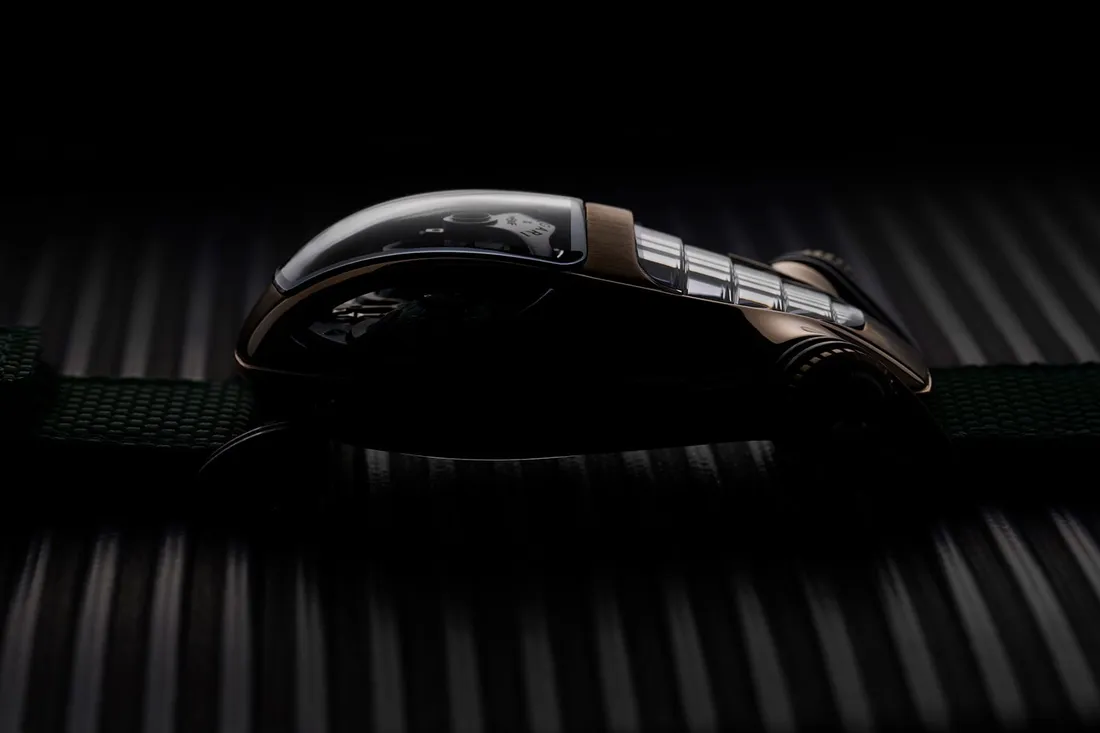
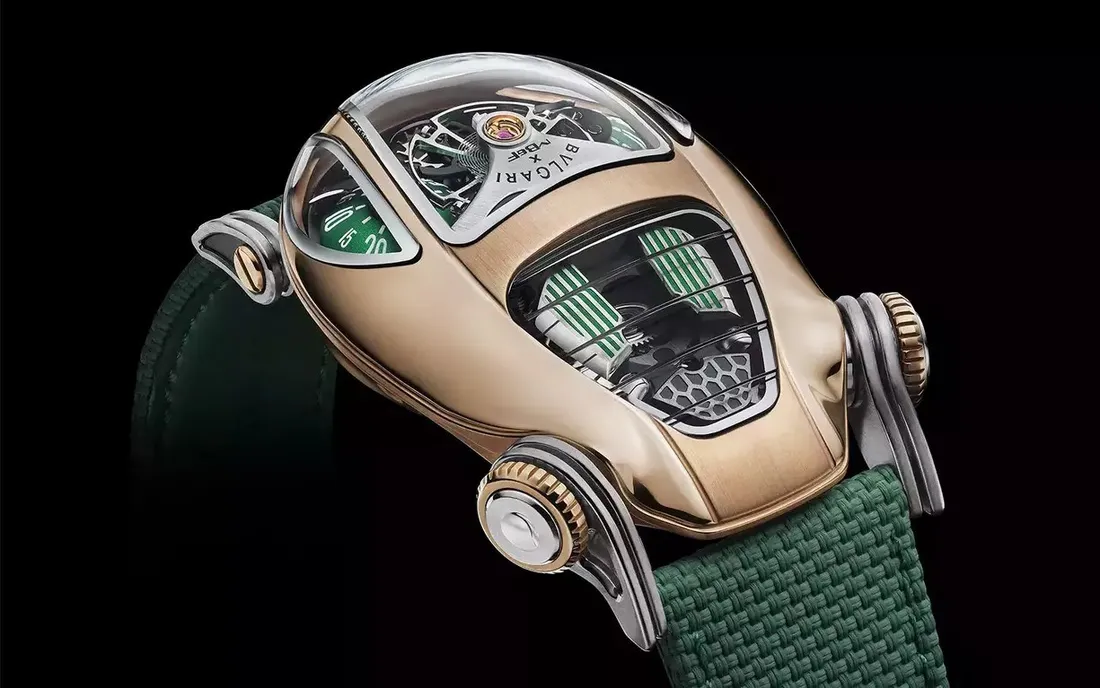
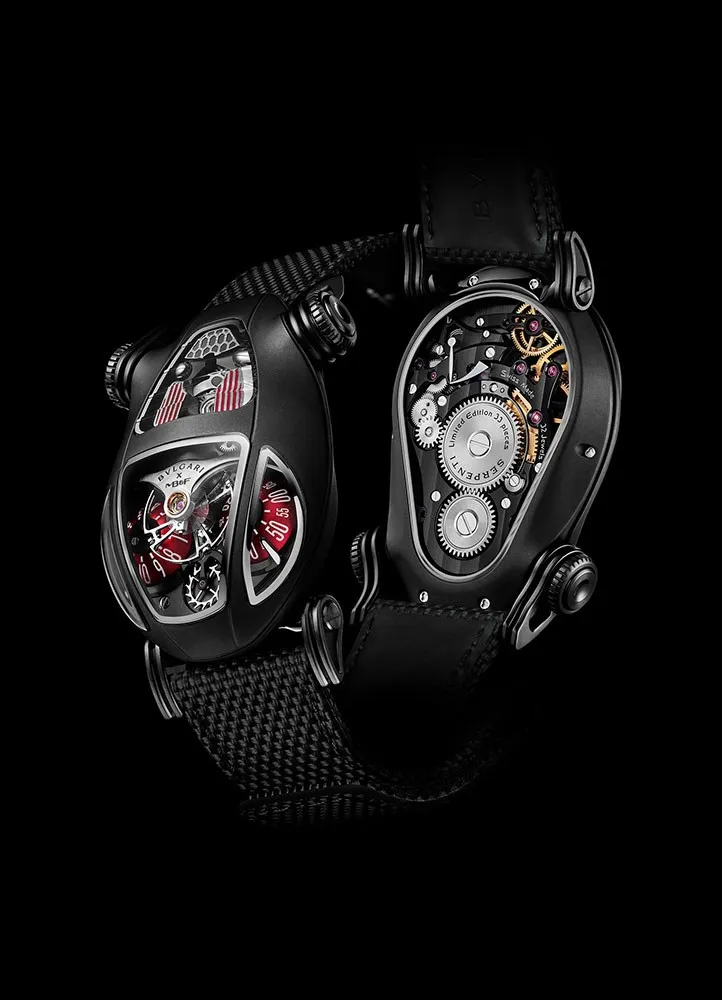
This biomorphic case, imitating a living form, measures 53 by 39 millimetres and resembles no classic watch. The organic, flowing curves on its surfaces could only be achieved by carving them from a single block with five-axis 3D milling machines; a complexity an ordinary lathe could never reach. Covering the serpent's 'head' is not a single crystal but no fewer than five separate sapphire crystals, stepped one into the next; just like a car's windscreen and headlights.
Look at the details: on the grille of the case, Bvlgari's signature hexagonal motif repeats; it speaks at once of a snake's scales and of a sports car's front grille. Rome's jewellery tradition and automotive design melt and merge into a single metal body.
The Serpent's Eyes: the Gaze That Tells Time
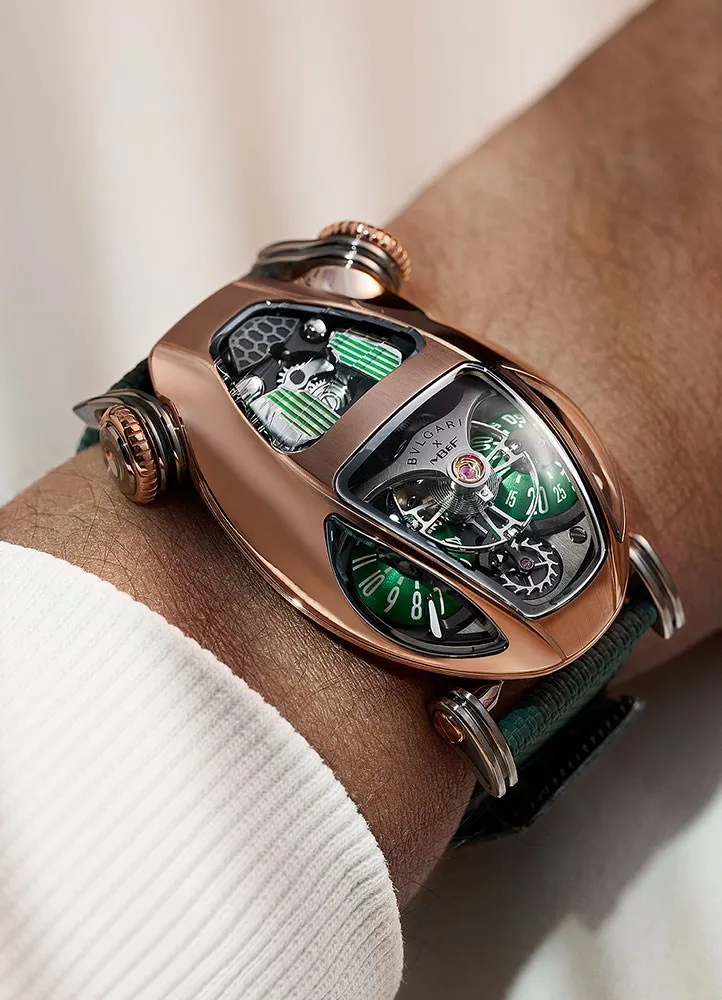
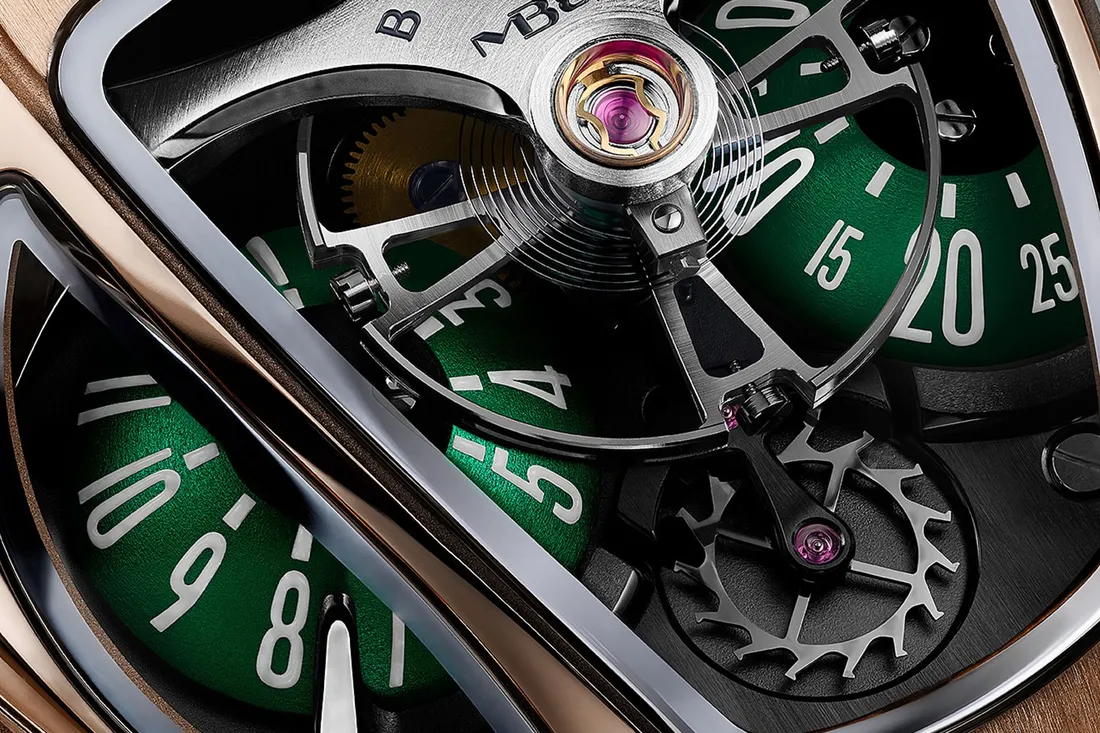
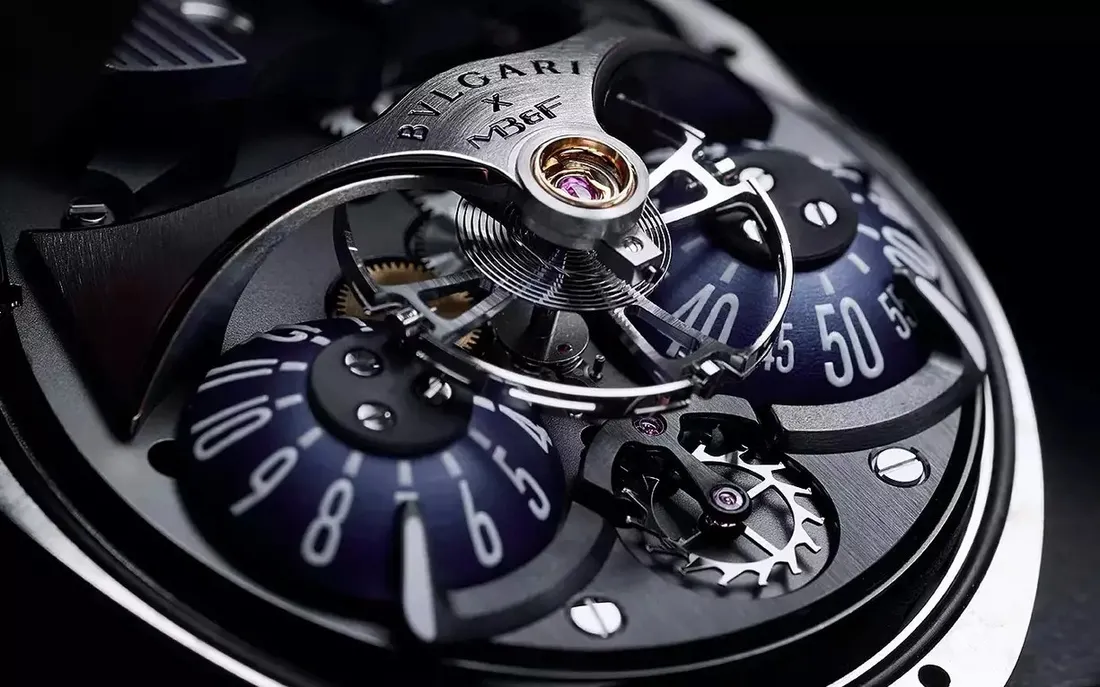
Now we come to the most ingenious part of this watch. This serpent tells the time neither with an hour hand nor a minute hand; it tells it by looking at you with its eyes. The serpent's two eyes are in fact two tiny rotating domes made of paper-thin aluminium. The left eye shows the hours and completes one full turn every twelve hours; the right eye shows the minutes and turns once an hour. So when you look at the watch, you are in fact looking into the serpent's eyes, and reading the time from its gaze.
These aluminium domes are chosen so light that the tiny mechanical heart can turn them without the slightest strain. The result is both a technical necessity and a poetic idea: time no longer lives on a surface, but in a living gaze.
The Serpent's Brain: a 14-Millimetre Heart
Right behind the eyes, the serpent's 'brain' is displayed bare: an enormous flying balance wheel, 14 millimetres across. This is the heart of a hand-wound movement that MB&F developed from scratch for this watch. Unlike the small, hidden balance of most watches, this giant wheel stands in the open and oscillates only two and a half times a second (2.5 Hz). This slow rhythm is no flaw but a deliberate choice: the large, slow wheel swings with a visible gravity, just like the calm, hypnotic breathing of a snake.
This wheel rests upon a three-dimensional bridge that bears the signatures of both houses. Offering a 45-hour power reserve, this movement resembles less a watch than a mechanical living thing breathing in its cage. Seen through the sapphire caseback, the dance of the wheels and that giant balance is like watching the serpent's heart beat.
Three Serpents, Three Souls
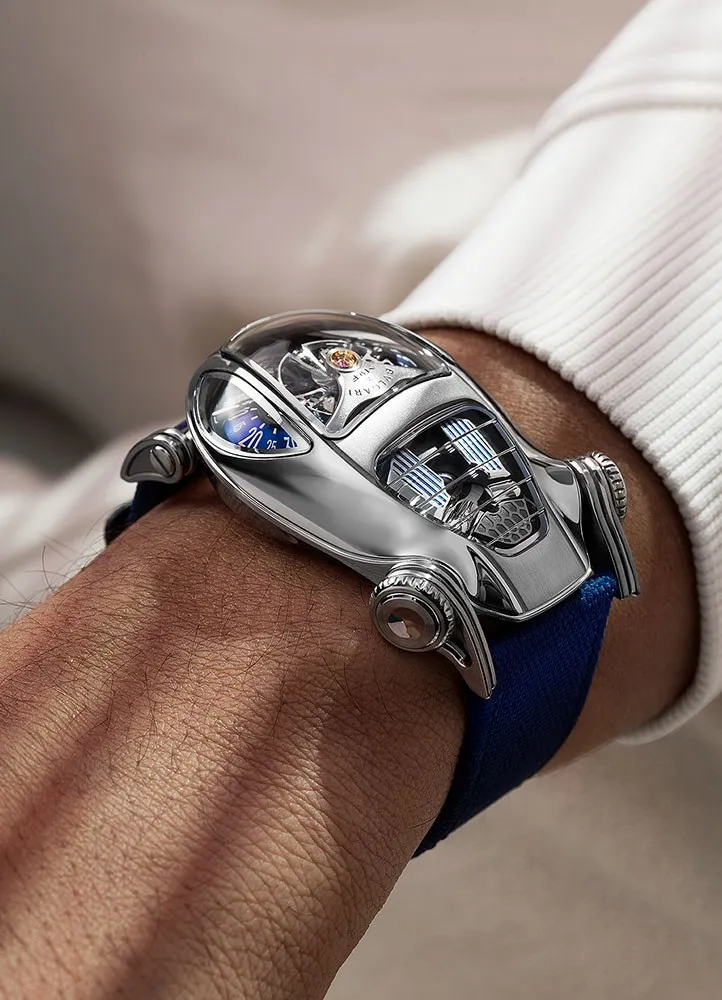
The Serpenti comes to life in three different bodies, with three separate characters; each limited to just 33 pieces, that is, 99 in all. The first, made of grade 5 titanium and gazing with blue eyes, is the light and modern one. The second, in black PVD-coated steel with red eyes, is the most menacing and dark. The third, in 18-karat rose gold with emerald-green eyes, is the warmest and most precious. Each serpent wraps around the wrist on a rubber strap with a velcro fastening matching its colour.
Prices are around 132,000 Swiss francs for the titanium and steel, and 152,000 for the rose gold. Because MB&F's masters can produce only six to eight movements a month, all 99 of these serpents will take more than a year to reach their owners. This is not mass production; it is a slowly nurtured brood.
Time Coiled Around the Wrist
The Bvlgari × MB&F Serpenti breaks our habits about what a watch can be. It is not an instrument on your arm; it is a breathing mechanical creature coiled around it, looking at you with its eyes. Within it, it carries Rome's thousand-year-old serpent legend, three years of struggle between two passionate designers, hundreds of sketches and Switzerland's boldest mechanics.
Perhaps this is why this watch, rather than measuring time, turns time itself into a symbol: like the serpent that sheds its skin and is reborn, never dying, it too goes on breathing forever on your wrist. And each time you ask the hour, you look not into the eyes of a machine, but of a living creature.