Chapter I: A Clay Lick at Tambopata
In the south east of Peru, on the bank of the Tambopata river, there is a wall of clay. Towards six in the morning the forest first falls quiet, and then the noise arrives like a wave: hundreds of parrots drop from the upper storey of the trees, gather in front of that wall and work at the clay with their beaks.
Two biologists sat at the wooden table in front of the observation hut. The ornithologist Dr. Elena Vásquez had been counting the birds at this wall for eleven years. Facing her, the molecular biologist Dr. Julian Mercer worked on processes inside the cell and had come to the forest for the first time.
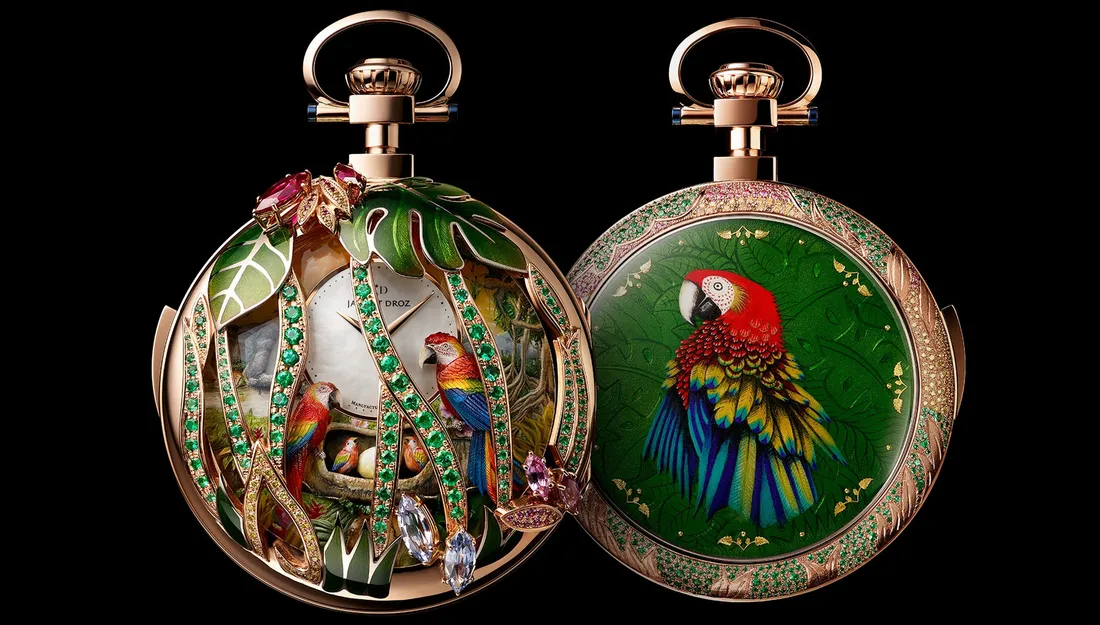
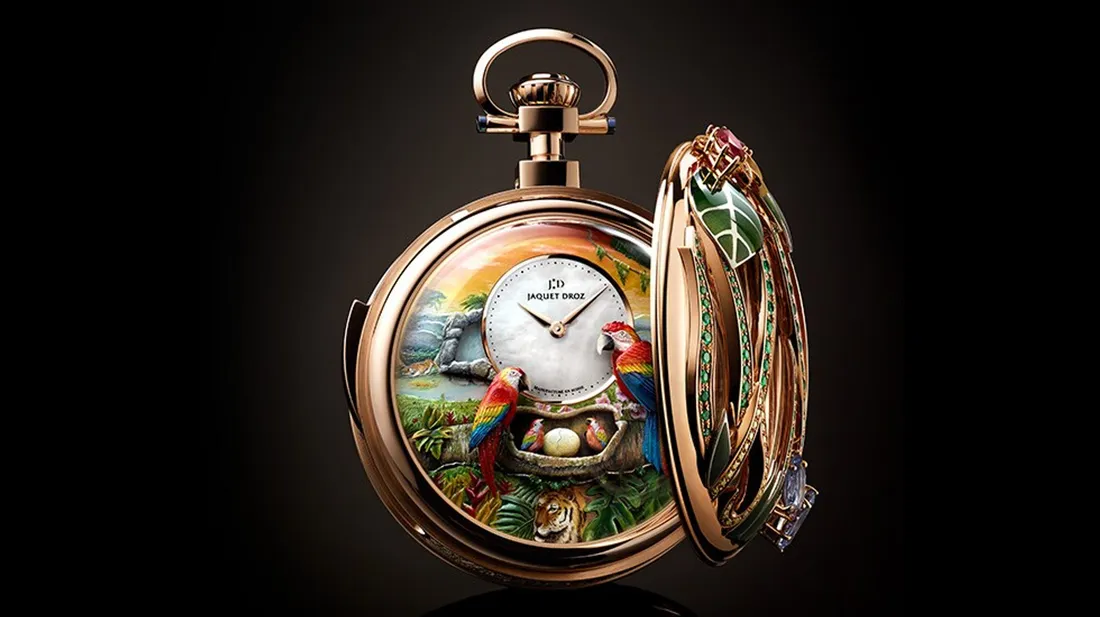
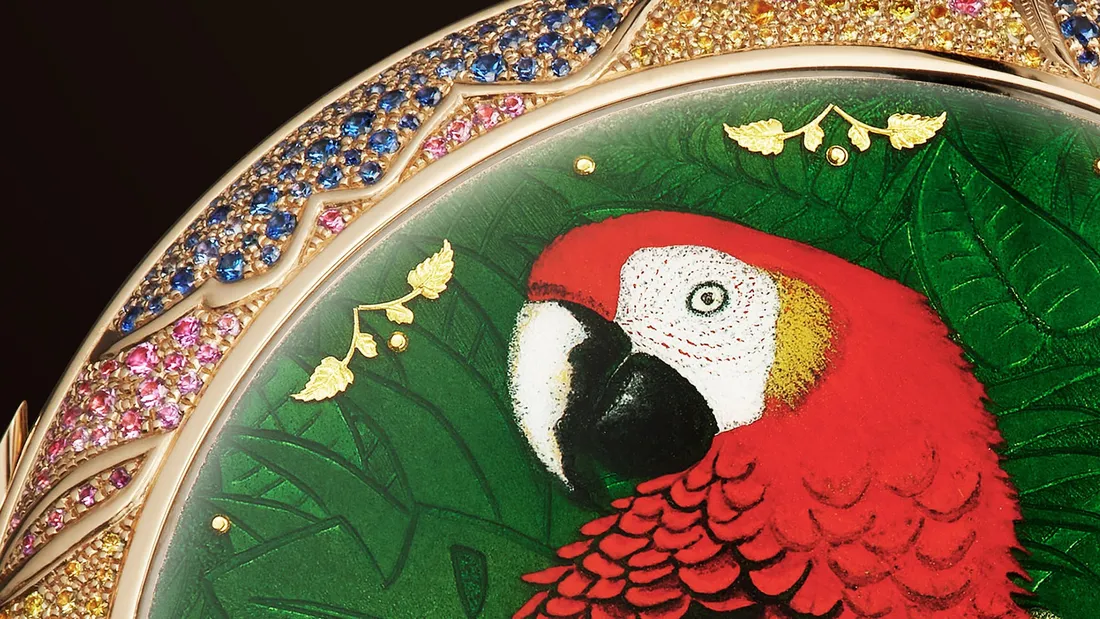
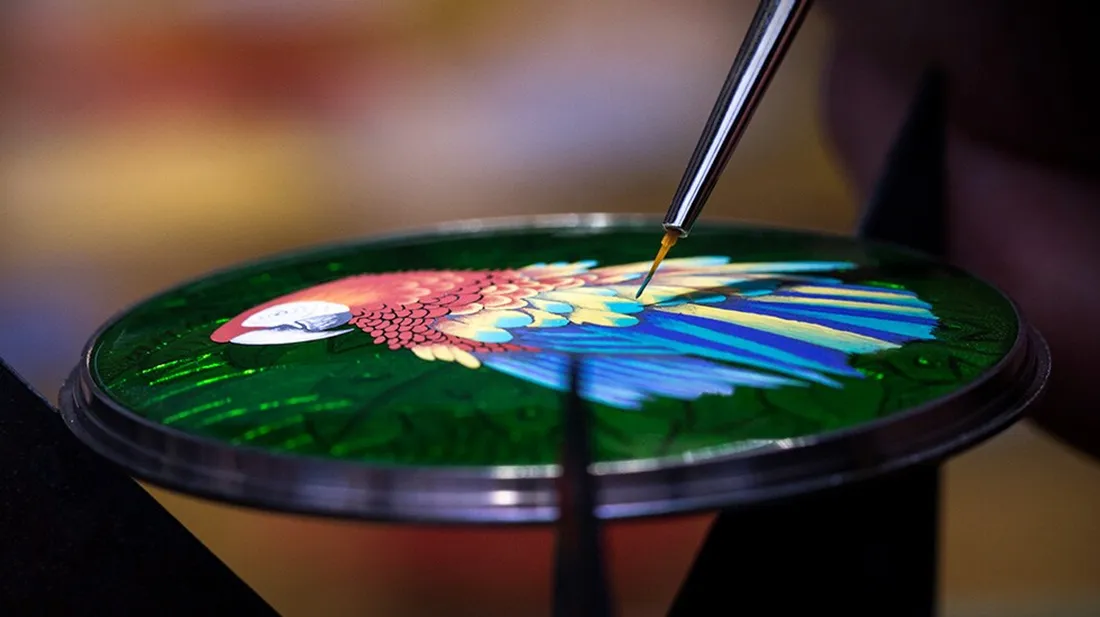
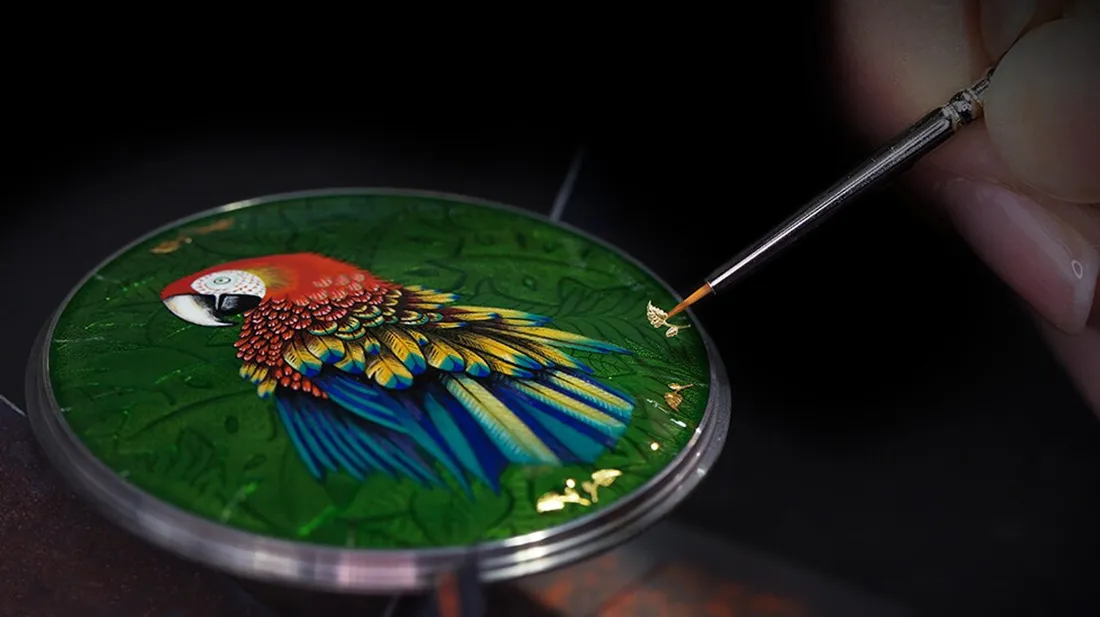
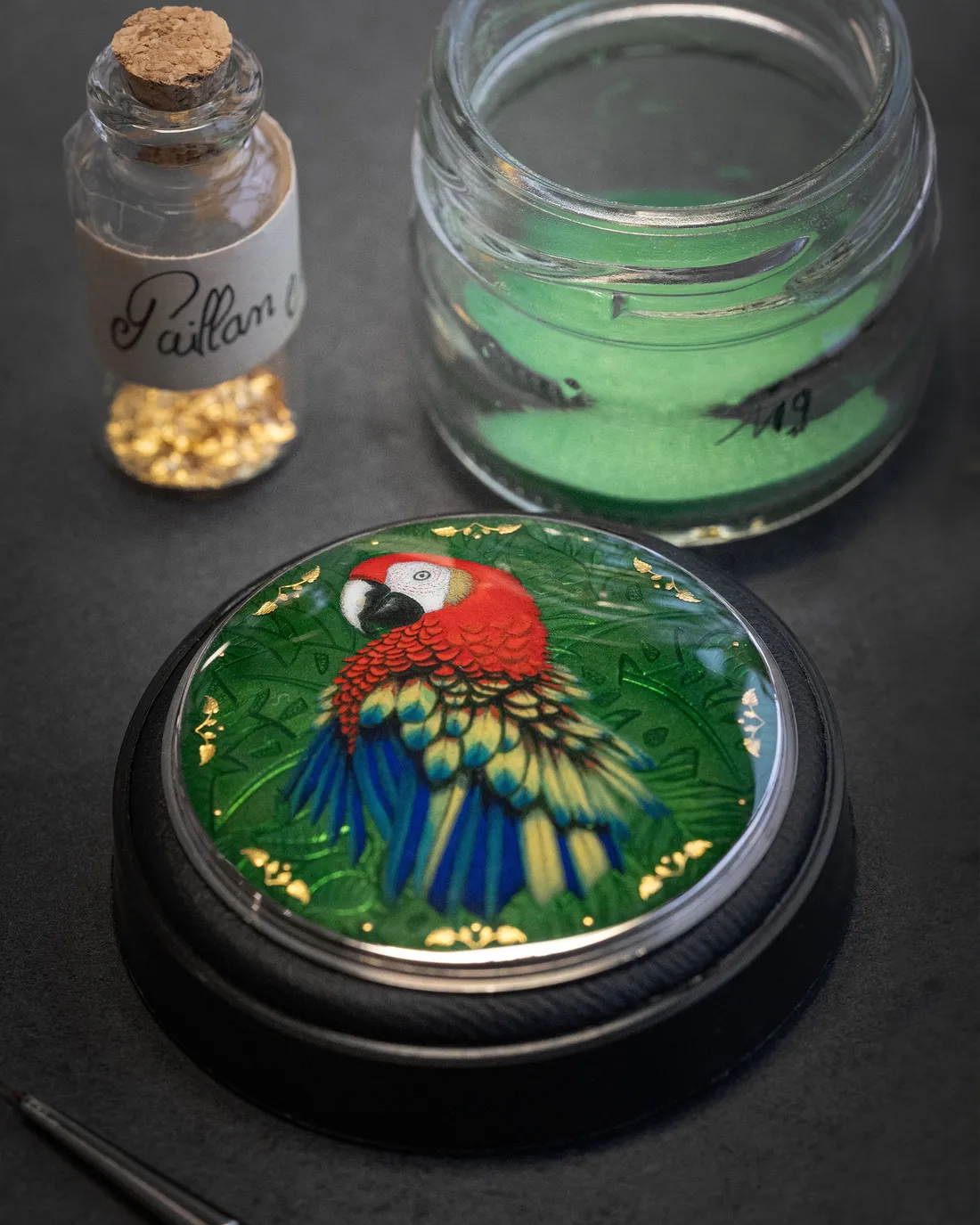
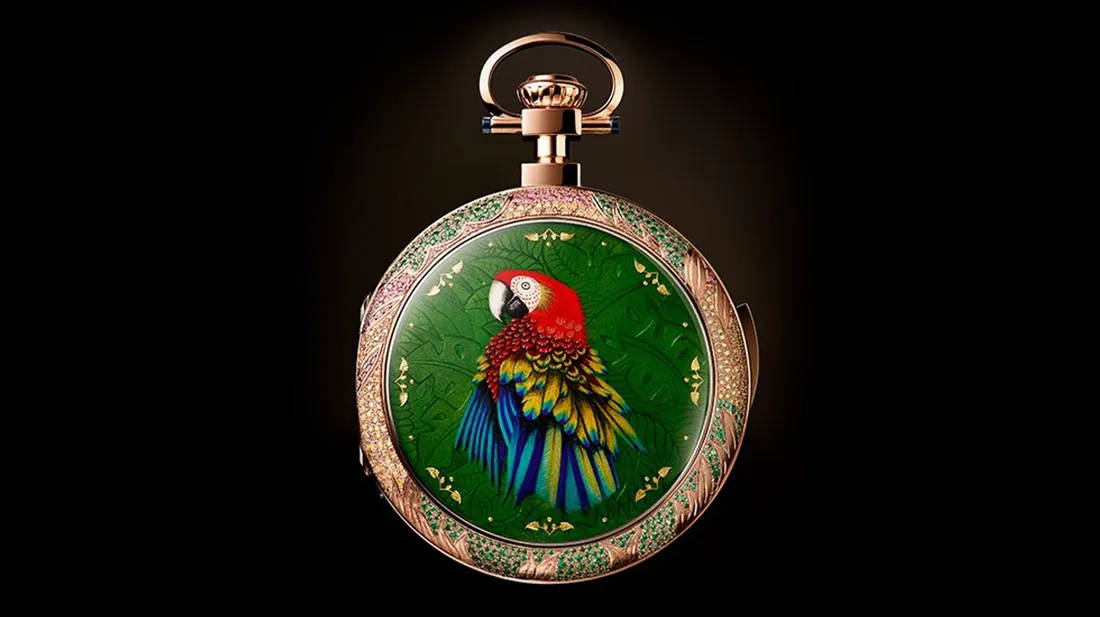
Julian took a pocket watch from his pocket and laid it on the table. On its cover was the texture of green leaves and, at its centre, a red macaw; the stones looked wet in the first light of the morning.
Elena lifted her head from her scope and looked at the watch for a while: "Julian, you are a cell biologist. Why are you carrying a macaw in your pocket?"
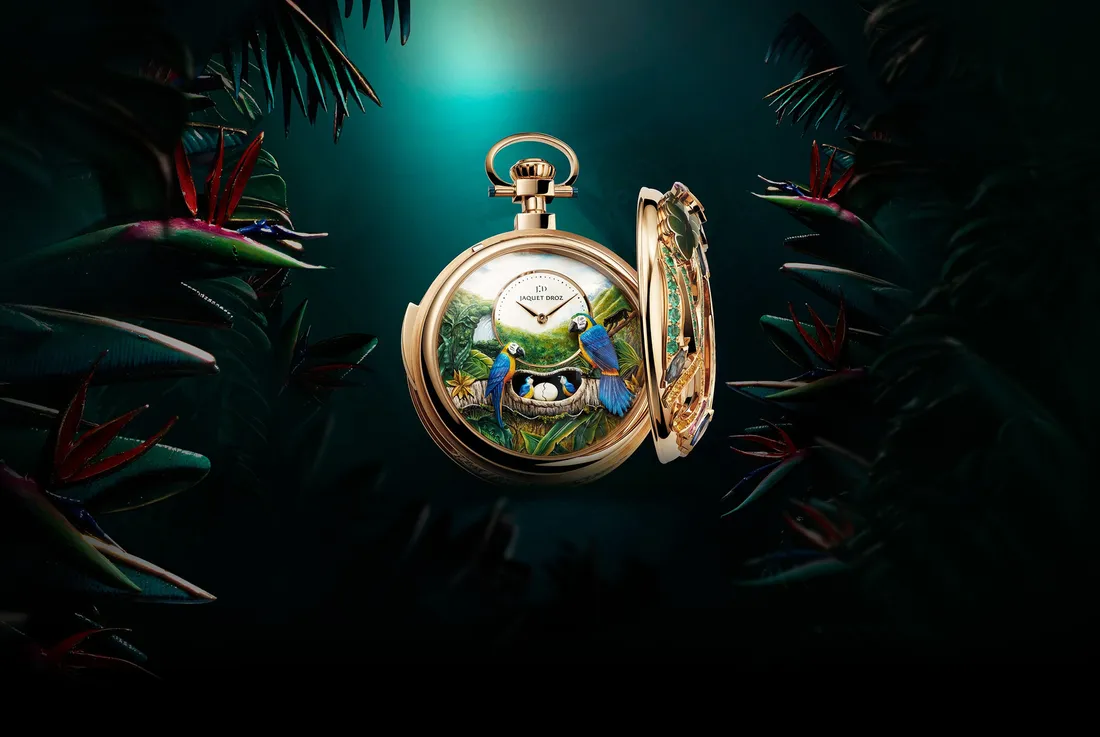
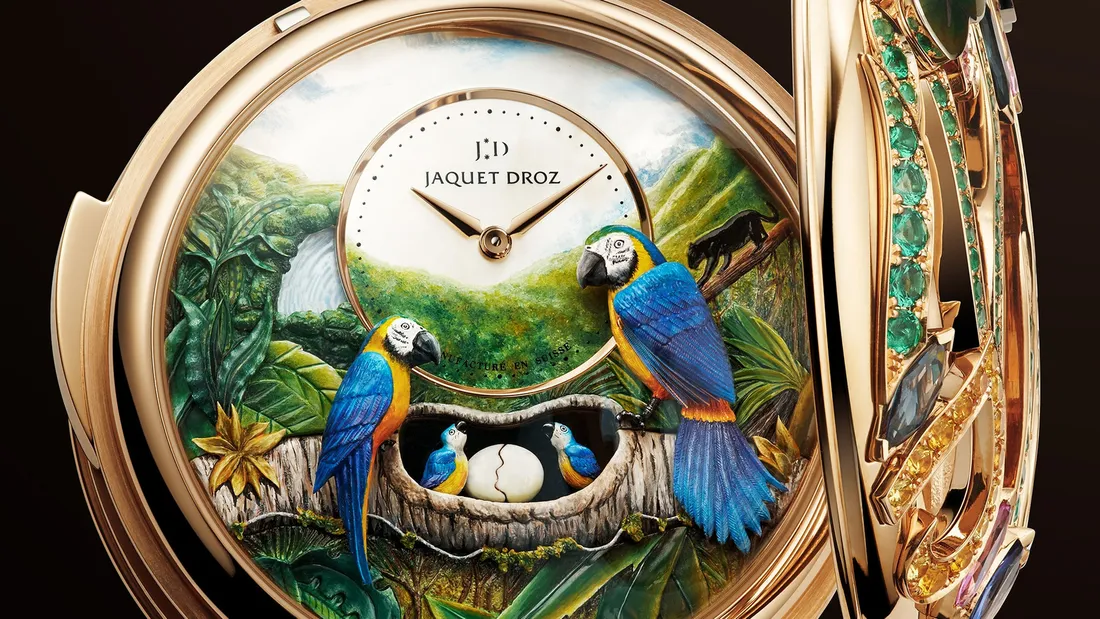
"Because the people who made this watch," said Julian, "set out to do by hand what I do in a laboratory. It is a Jaquet Droz. It is called the Parrot Repeater and it was made as a single piece."
Chapter II: How a Blue Feather Becomes Blue
Elena took the watch in her hand and looked at the red parrot on the cover: "They did this with paint. Yet the bird does not do it with paint."
"How does it do it?" asked Julian.
"The red and the yellow it really does make with pigment," said Elena. "But that pigment is a class found almost only in parrots across the whole living world: psittacofulvin. Most birds make red from the carotenoids they take from the fruit they eat; the parrot synthesises it in its own feather cells. Which is to say it does not borrow its colour from its food, it produces it."
"And the blue?"
"There is no blue pigment," said Elena. "There is no such paint as blue in birds. The keratin inside the feather sets as a spongy, regularly spaced network. The size of the voids in that network is held so that it scatters back the blue wavelength of light. So blue is not a chemistry, it is a geometry. Crush the feather and the blue disappears, because what carries the colour is not the material but the order of the material."
Julian looked at the blue birds on the dial of the watch: "And to imitate that blue these craftsmen had to fire enamel layer upon layer. What the bird builds at the nanometre scale, they built with a layer of glass baked at eight hundred degrees."
"That is the most honest part of the imitation," said Elena. "The Creator did it with structure, man imitates it with paint. Both are beautiful; but their roads are not the same."
format_quote"There is no such paint as blue in birds; blue is not a chemistry, it is a geometry. What carries the colour is not the material but the order of the material."
Dr. Elena Vásquez, ornithologist
Chapter III: The Forest on the Dial, Relief and Enamel
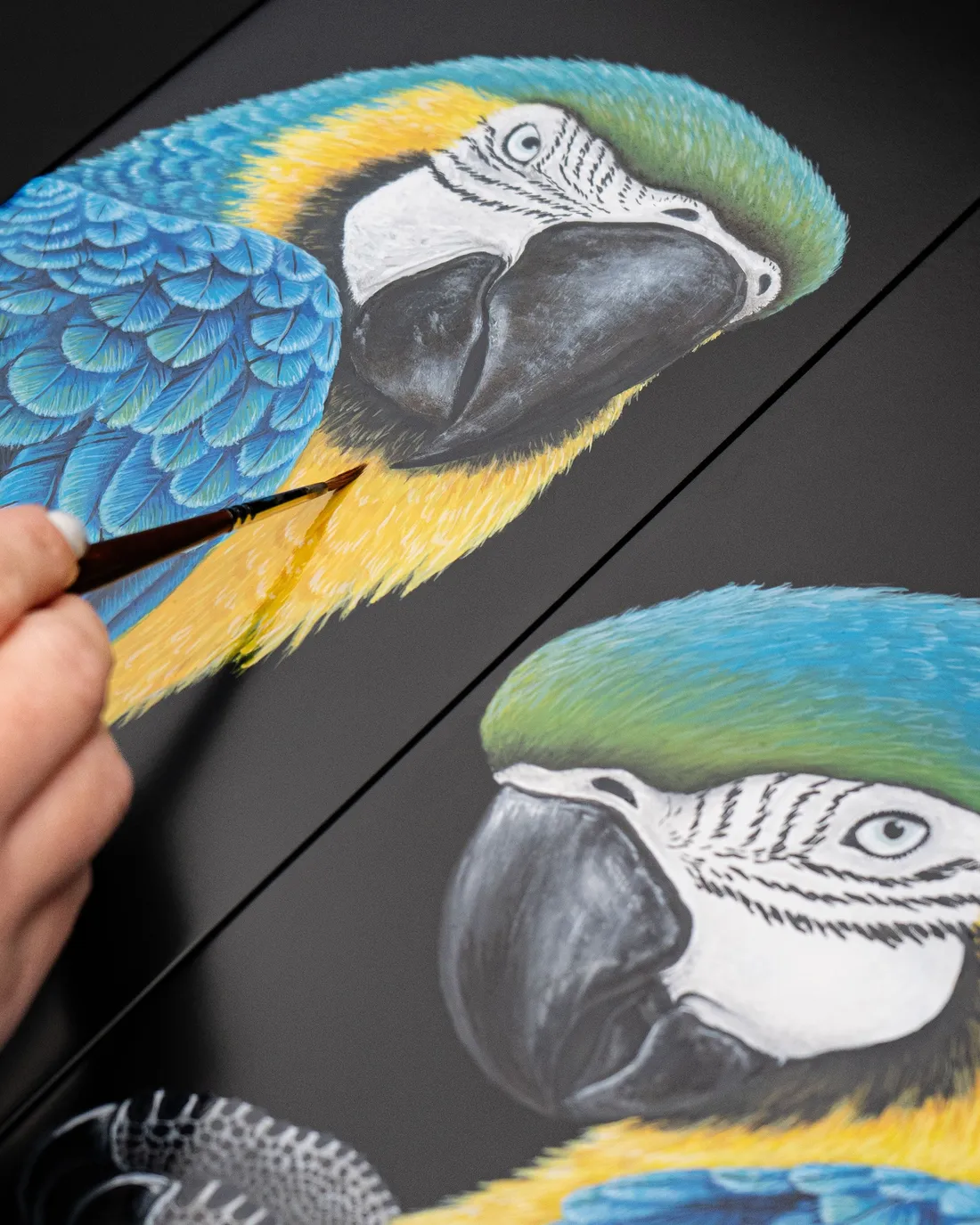
"Now tell me how this was made," said Elena. "Because I use a microscope to describe a single feather. These men drew the same feather by hand, below a millimetre."
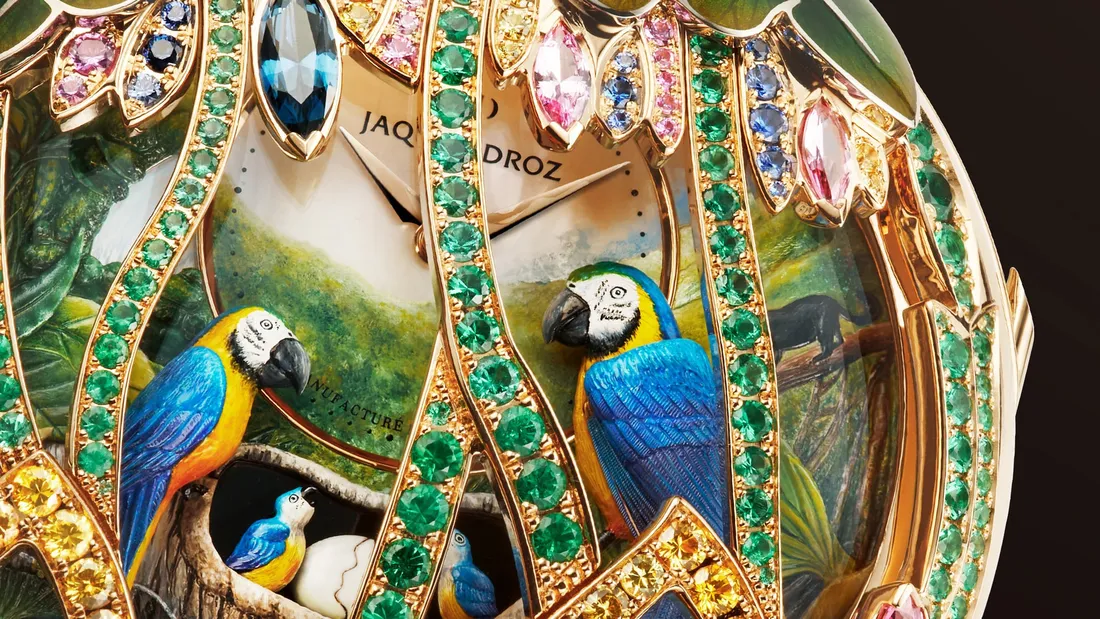
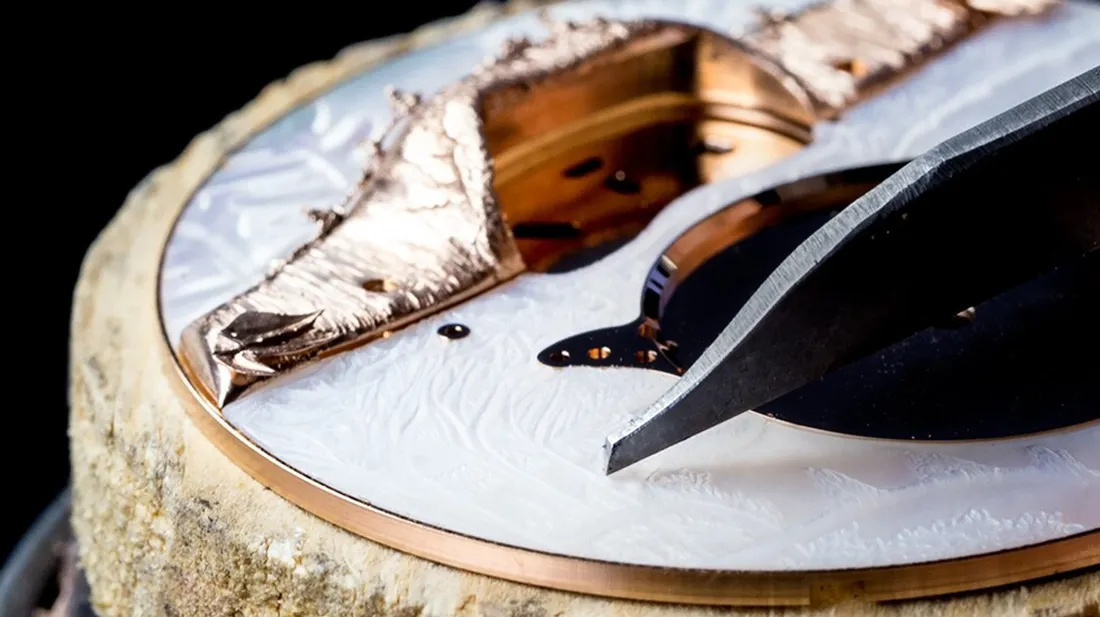
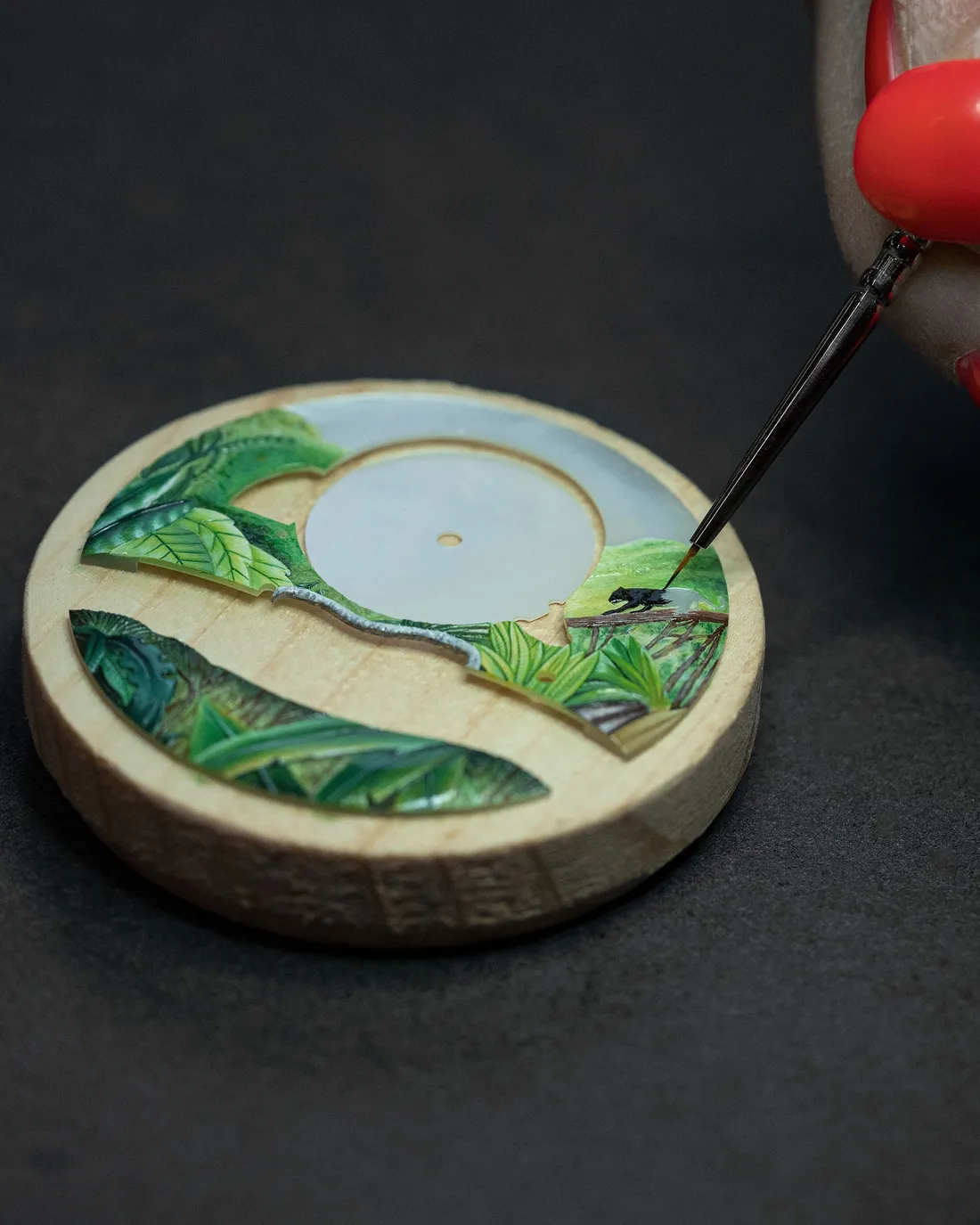
Julian turned the watch as he explained: "The scene was not painted onto one surface. First the mother of pearl is carved. The way the leaves overlap is done not with paint but with real depth; the craftsman goes down into the mother of pearl and sets each leaf on a lower layer. The depth of the relief varies by the order of a hundredth of a millimetre, and that difference decides how the light will slide across a leaf."
"And then?"
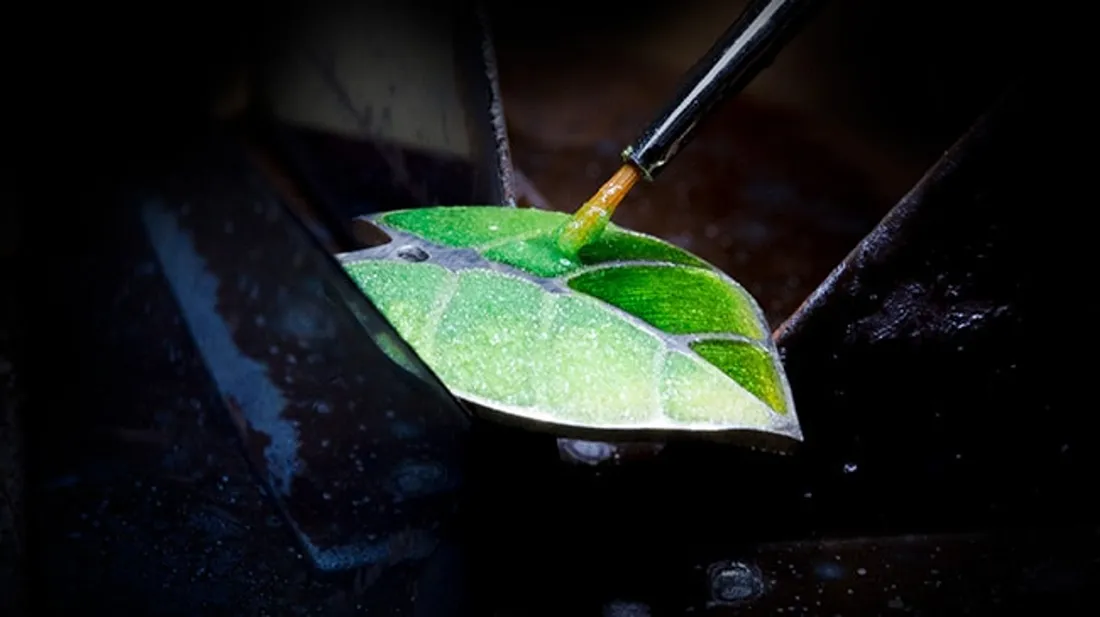
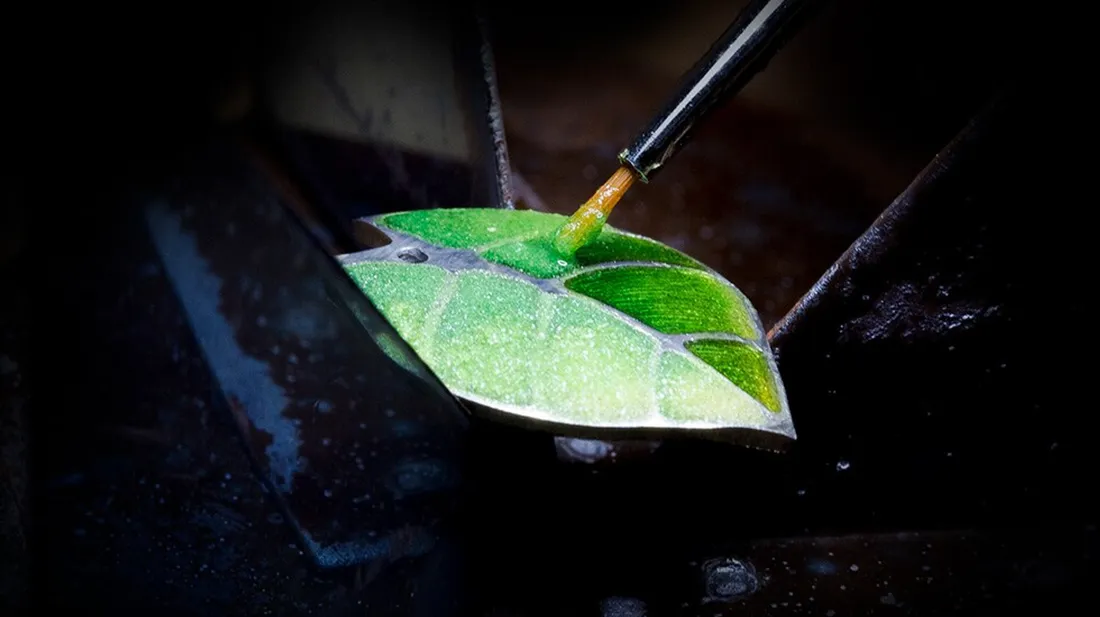
"Then comes the enamel. The colours are laid on one at a time and fired at every stage; no layer goes on before the one beneath it has been baked. Every firing is a gamble, because enamel shrinks, cracks or shifts its colour. The reason the green looks so deep is not a single green; it is several transparent layers fired over one another."
"And those sparks?" said Elena, pointing at the gold glints at the edge of the cover.
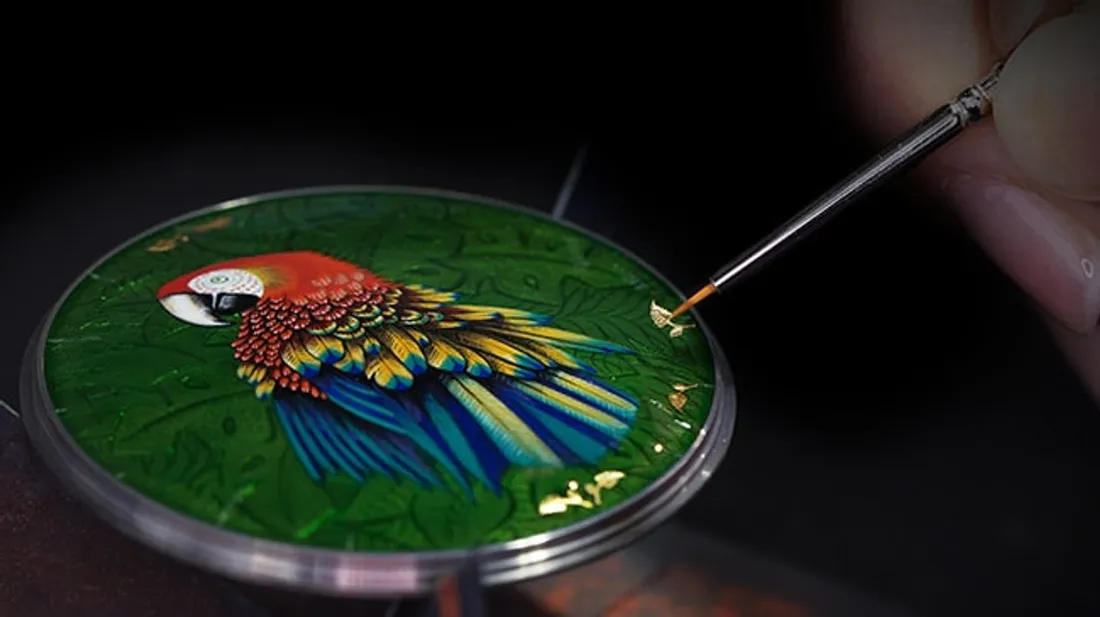
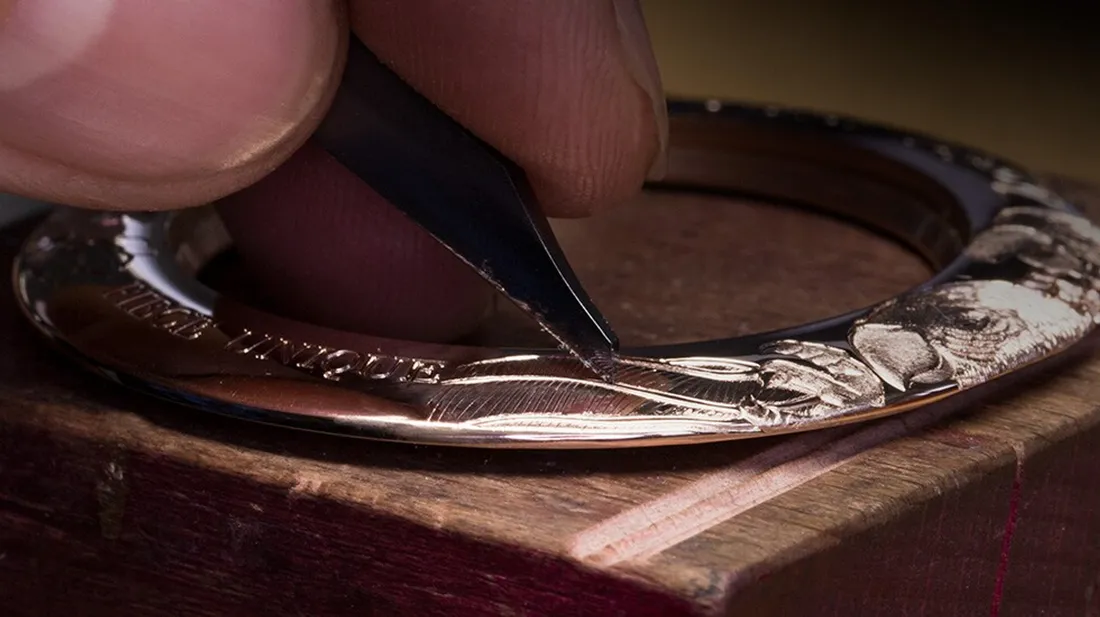
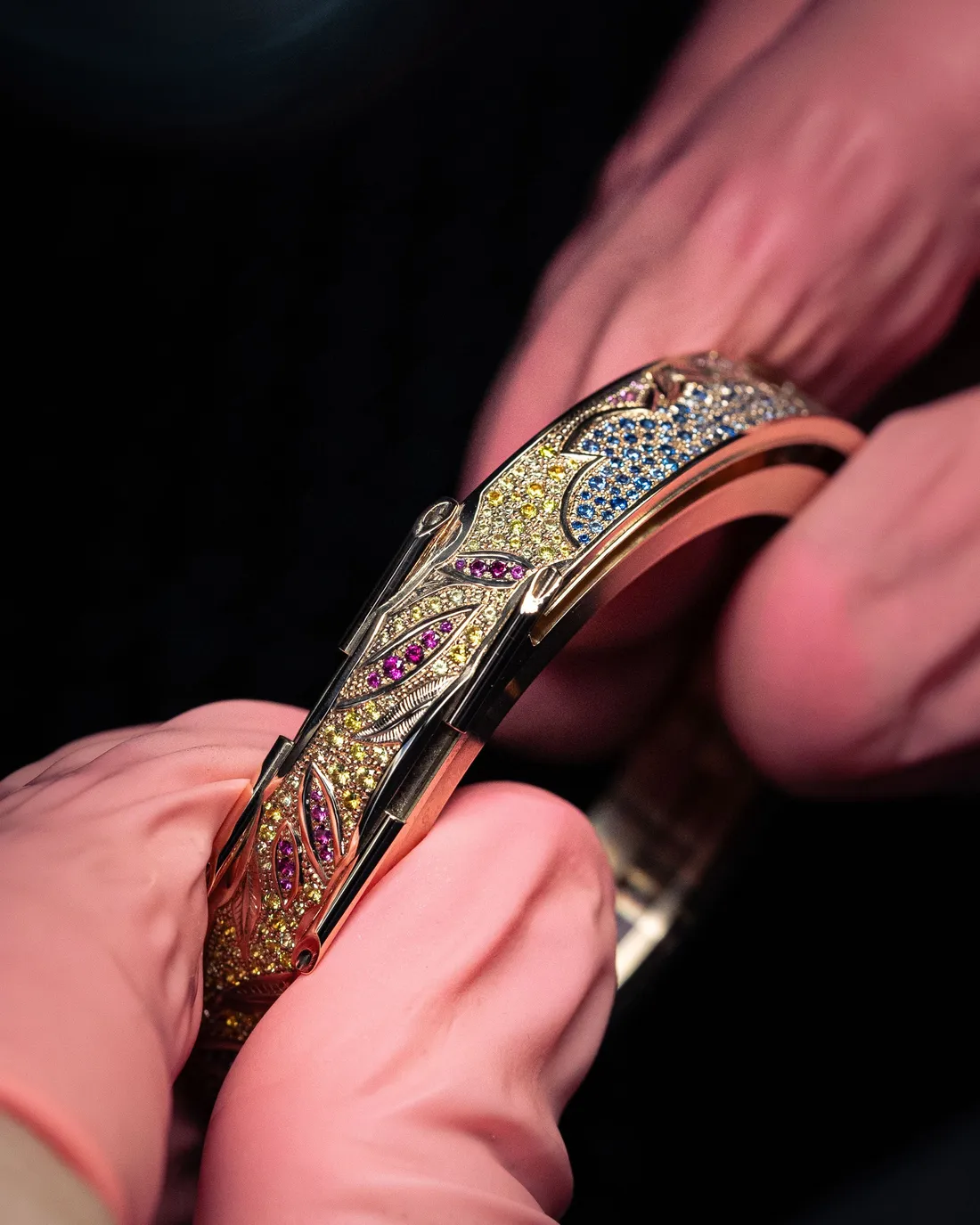
"Paillonné," said Julian. "Cut leaves of gold are placed between the layers of enamel, transparent enamel is poured over them and it is fired again. The gold stays inside the glass; as the light goes in and out it reflects from a depth. And the body itself is engraved by hand: the plant motifs on the flank of the case are cut with a graver."
"The stones?"
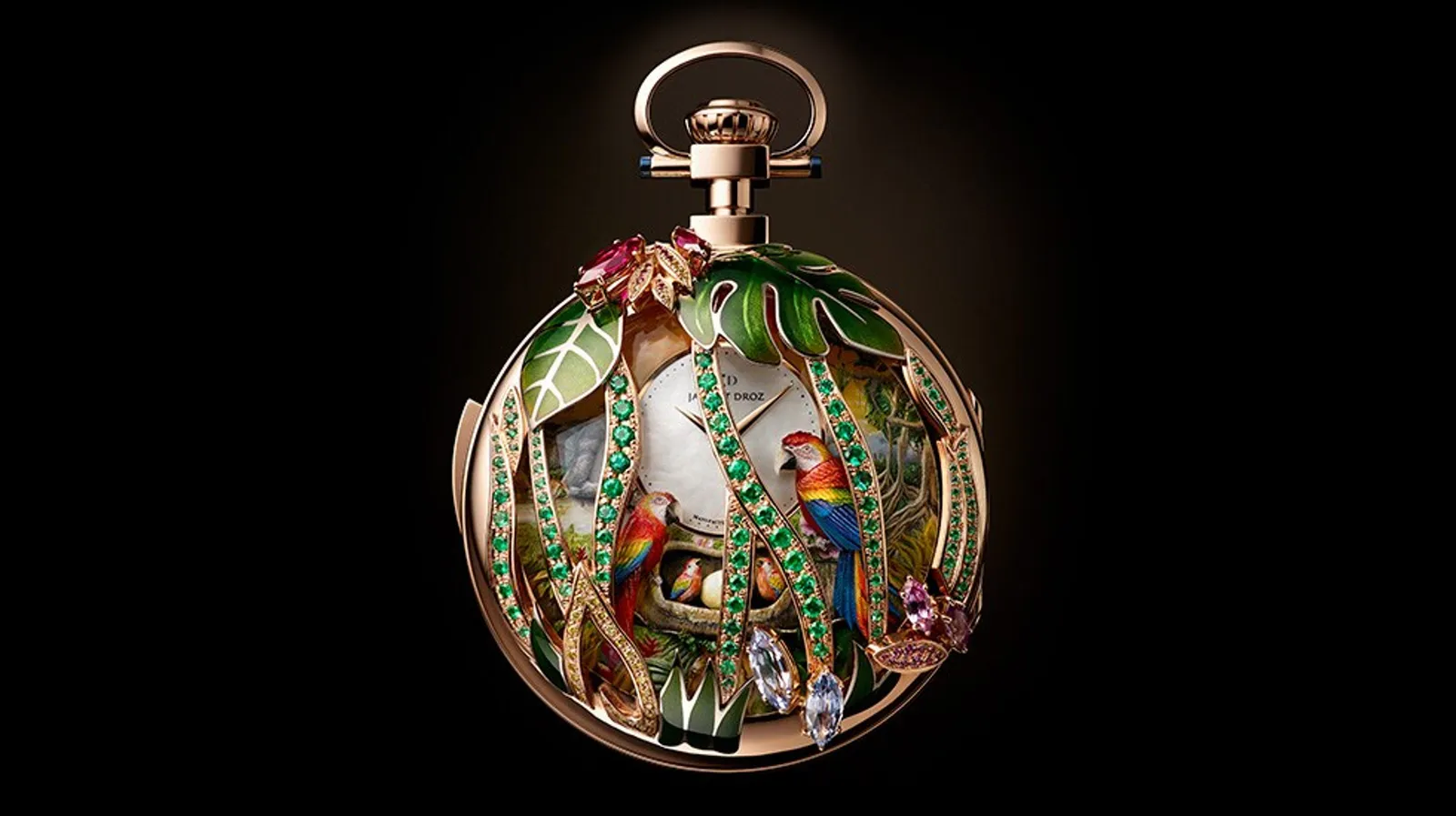
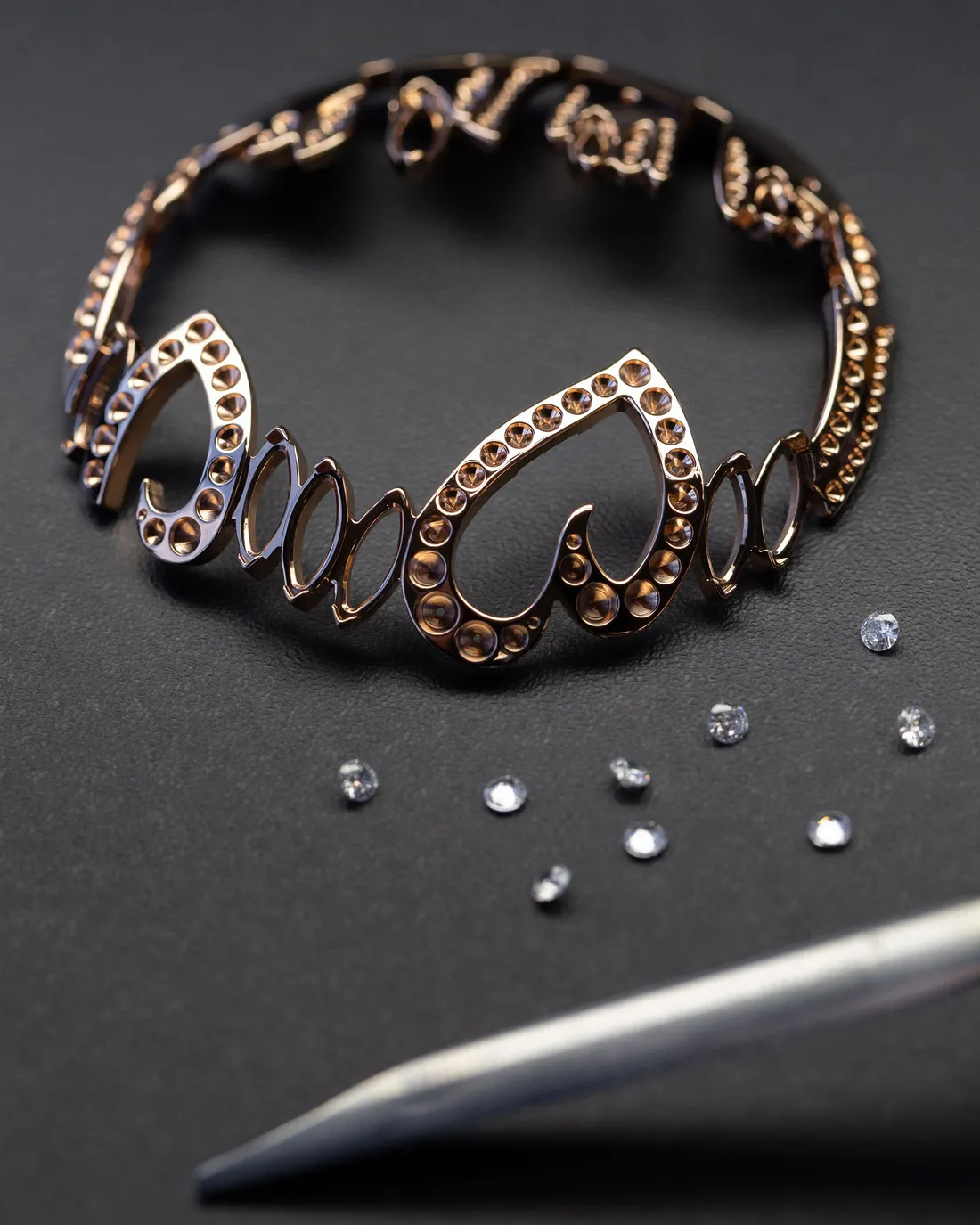
"On this piece there are three hundred and forty four emeralds, two hundred and eighty one blue sapphires, three hundred and thirty eight yellow sapphires, one hundred and eight pink sapphires and sixteen rubies. The total weight of the stones is a little over five carats and every one of them is set individually. Opening hundreds of settings by hand on a body larger than forty six millimetres asks for the same patience as carving the mother of pearl."
"The dimensions?"
"Fifty six millimetres across, twenty seven millimetres high, in red gold. It took a year and ten separate artisans worked on it. Numerus clausus one: a single piece."
format_quote"The depth of the relief varies by the order of a hundredth of a millimetre, and that difference decides how the light will slide across a leaf."
Dr. Julian Mercer, molecular biologist
Chapter IV: The Parrot's Work in the Forest
The noise in front of the wall grew. Elena turned her scope: "There are five separate species in front of us at this moment. And this scene is not only beautiful; this forest largely stands up because of their work."
"Where do parrots sit in the food pyramid?" asked Julian.
"At first sight it is simple: consumers that feed on plants. But the truth is more interesting," said Elena. "A parrot is also a seed predator. Its beak breaks hard shells that no other bird can crack; the upper mandible is joined to the skull by a movable hinge and works with the lower one like a pair of pliers. Its tongue is thick and muscular and turns the nut until it finds the right angle. Which is to say that the fate of the hardest seeds in this forest is decided by a parrot's beak."
"Does that not harm the forest?"
"It eats some seeds and carries and drops others. The large billed species are among the very few animals that can move the seeds of large seeded trees. When they decline, those trees slowly decline too; the composition of the forest changes. We call that a keystone effect: even if they are few in number, their loss rearranges the whole system."
"And there is the matter of nests," she added. "Macaws do not cut their own cavities; they use the hollows already present in dead or rotting trunks. So when old trees are felled it is not only a tree that goes, it is the parrot's bedroom. That a pair usually raises only one or two chicks a year makes it heavier still; the reproductive rate is low."
"And why do they eat the clay?"
"The strongest explanation is sodium," said Elena. "In these inland parts of the Amazon the sodium in the soil is low, while certain layers of the clay are rich in it. The second explanation is that clay particles can bind some plant toxins in the gut. Probably both together. And notice this: there is a hierarchy in front of this wall too. Above, over the trees, a hawk or a harpy eagle may be waiting. That is why the parrots come down all together, noisily and in waves; a crowd is an insurance against being picked off one by one."
"So that noise is a management of fear," said Julian.
"That noise is a calculation," said Elena.
Chapter V: Which of Them Is More Perfect
When the sun struck the wall squarely the birds took off all at once; the sound of hundreds of wings came and went like a brief clap of thunder. The watch lay open on the table.
Julian was quiet for a while, then asked: "Elena, a question. Which of them do you think is more perfect? That parrot taking off, the same parrot worked onto this dial, or the human being who worked the dial?"
Elena laughed: "You have already made the ranking; I shall only supply the numbers."
"The dial is a work. A year, ten people, hundreds of stones, dozens of firings. My respect for it is boundless. But the dial does not repair itself, does not multiply, does not fly and does not make another dial."
"The parrot, on the other hand," she went on, "lives forty years, flies, cracks a hard shelled seed, learns by imitating sounds, feeds its chick and, most importantly, produces a copy of itself. Inside a single feather of its wing a network has been woven at the nanometre scale in order to build a blue without paint. And what weaves that network is not the hand of a craftsman; it is an instruction."
"And that instruction?" said Julian.
"That is your field," said Elena. "The floor is yours."
format_quote"The dial does not repair itself, does not multiply, does not fly and does not make another dial."
Dr. Elena Vásquez, ornithologist
Chapter VI: Trillions of Operations a Second, the Human Being Is Itself a Work
Julian closed the cover of the watch and set it on the table.
"Then let us put the scales side by side," he said. "There are hundreds of stones on this dial; in a human body there are about thirty seven trillion cells. In the nucleus of each of them two metres of DNA stand folded into a space six microns across. Two metres in a single cell. Join all the DNA in one body end to end and the length runs to hundreds of times the distance between the Earth and the Sun."
"And it is not a warehouse," he went on. "It is a working bench. Every day, in every one of your cells, tens of thousands of DNA lesions occur: breaks, mismatches, chemical attacks. Almost all of them are noticed and repaired. The error rate during copying comes down, with the proofreading mechanisms, to the order of one in a billion. If an engraver draws a wrong line he throws the piece away; if a cell writes a wrong letter, it finds that letter and changes it."
"And there is the speed," said Julian. "The ATP molecule, the currency of energy in the body, is constantly being spent and rebuilt in your cells. A human being turns over something of the order of his own body weight in ATP in a day; that means more than ten to the twenty first molecules being recharged every second. At the same time ribosomes are stringing proteins together, the folding is being checked, and the faulty ones are pulled out and recycled. You manage none of it. You merely have breakfast."
"Now back to the question," he said, touching the cover of the watch. "A human being worked this dial. But a single cell of a single finger of that human being is a work many times more complex than the whole dial he worked. The engraving came from the hand of a master; and the master did not make his own hand."
Elena nodded: "I have thought the same thing in the field for years. When we imitate the Creator's work we call it art; the original itself we call ordinary. The order is exactly the reverse: our best artist is a master to the degree that he notices he too was made."
"And the one who notices becomes modest," said Julian. "Not one of the ten people who made this watch ever said their work was superior to the parrot. It is always the onlookers who say that."
format_quote"A human being worked this dial. But a single cell of a single finger of that human being is a work many times more complex than the whole dial he worked."
Dr. Julian Mercer, molecular biologist
Closing: A Gong in Front of the Clay
It was past seven when the birds returned. Julian pulled the slide at nine o'clock on the case.
The pocket watch struck the hours, then the quarters, then the minutes; because the cathedral gongs wind twice around the movement, the sound lasted unexpectedly long. At the same moment the scene under the cover came alive.
Elena looked for a while at the birds and for a while at the watch: "They both made a sound at the same moment. But one was built inside fifty six millimetres, from six hundred and sixty eight components, in a year, in the hands of ten people. The other came out of an egg and built itself."
Julian closed the cover: "That is exactly why I love this watch. It shows us our own limit, in its most beautiful form."