Look at the world of traditional high watchmaking and you find a sacred geometry we have been taught by heart for centuries. The hours are in the middle, the hands are born at the centre, the complications are set about the dial like symmetrical jewels in balance. Our eye is so used to that order that looking at a dial brings us peace.
But what if a watch deliberately tore that comfort zone down?
Imagine a courage that stirs the still waters of traditional aesthetics, turns the classical rules upside down, and feeds on the Spanish word loco, which means crazy. The Christopher Ward C1 Loco Classic, which earned an official nomination at the twenty twenty six Grand Prix d’Horlogerie de Genève, one of the most prestigious stages in horology, is precisely the name of that aesthetic revolt.
Imagine a scene. In the early eighteen nineties, in a small workshop in the Swiss town of Le Locle, a young watchmaker is working alone in the dark of the night. Every luxury pocket watch on his bench has a flawless symmetry: the hands are born at the exact centre, and Roman numerals rule the dial in a circular hierarchy.
The craftsman sighs. Is time a straight line imprisoned inside a circle, he asks himself, or a theatre that breaks the rules of the mind? He takes up his tweezers, moves the wheels, carries the hands upward and leaves the heart of the movement exposed, thrown out into the open. In the morning, the old masters come into the workshop, look at the dial and are appalled: this is madness, they say, the man is a loco.
The real scene took place much more recently and somewhere else entirely. July twenty twenty four, a stiflingly hot Friday evening in Biel. Christopher Ward’s Swiss team had gathered at the local football club before the summer break. Adrian Buchmann, the design director, wanted to show an idea he had been working on; he opened his laptop and threw the image onto the big screen in the meeting room. What little air was left in the room was taken by the gasps that followed. In front of them stood perhaps the most beautiful rendering of a watch the house had ever seen. Two years later the finished watch exists.
The house has never explained where the name came from. What is known is that loco is Spanish for crazy, and that the first of the family, the C12 Loco, grew out of what the house calls a playful doodle by its technical director.
Loco means madness by the dictionary; in the world of craft it is the highest form of release from being a slave to the rules. As in the line attributed to Pablo Picasso: every child is an artist, and the problem is how to remain one once grown up. The source of the line is disputed, but the thought is sound. And the C1 Loco Classic returns, with that childlike and crazy courage, to a horological world that falls victim to its own habits as it grows older.
format_quote"In the world of craft, loco is the highest form of release from being a slave to the rules."
Hasan Bekmezci
History is full of these mad revolts against the rules of the traditional academy. Perfection does not lie in repeating what exists, but in breaking the rule and building a new language.
In the classical physics of Isaac Newton, taken as absolute for centuries, time was an unshakeable river running at the same rate everywhere in the universe and for everyone. While the whole of science believed that rule, Albert Einstein said that time is not fixed, and that it bends according to mass, to speed and to the observer. The academic world of the day saw it as an irrational madness. Yet Einstein, by breaking that rigid sense of absoluteness over time, opened physics to relativity and to flexibility.
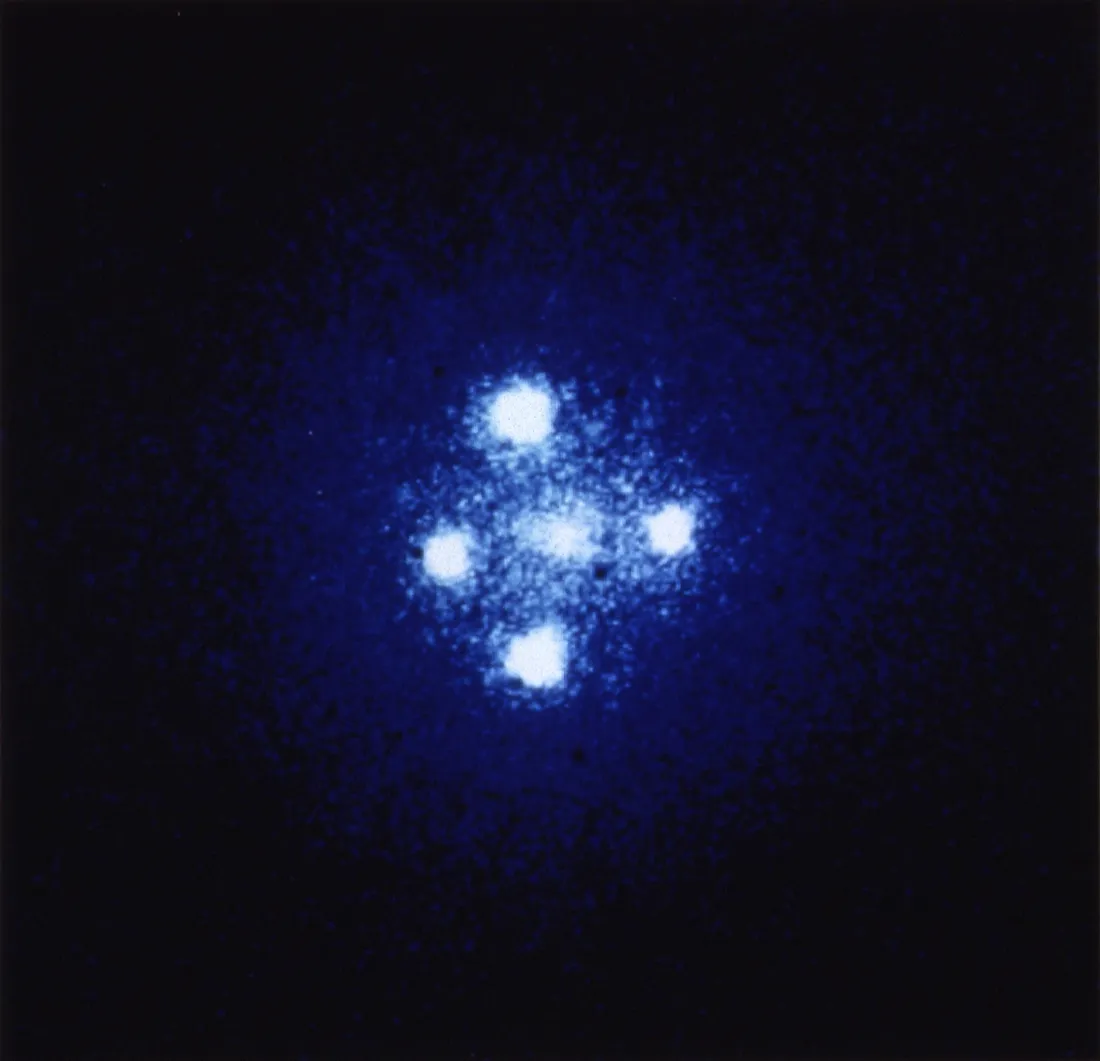
The next revolt came against Einstein himself. When the pioneers of quantum physics said that two particles at opposite ends of the universe give results that agree with each other across any distance, Einstein refused to believe it and called it, mockingly, spooky action at a distance; a kind of witchcraft. His objection, written in nineteen thirty five, became testable through the theorem John Bell set out in nineteen sixty four. And the physicists who ran that test in the laboratory, John Clauser, Alain Aspect and Anton Zeilinger, received the Nobel Prize for Physics in twenty twenty two. Yesterday’s mad idea, cast out as witchcraft, became today’s textbook.
In painting, Pablo Picasso tore apart the single vanishing point and the flawless perspective that had ruled the canvas since the Renaissance. When he broke faces and objects into pieces and drew them from several angles at once, the art academies called it madness. Yet Picasso was not drawing the outward look of the object but the many-sided truth at its core.
Salvador Dalí answered the classical view of time as a rigid, mechanical ruler with his melting watches; The Persistence of Memory carried the mental and elastic nature of time onto the canvas and broke every aesthetic habit of its day.
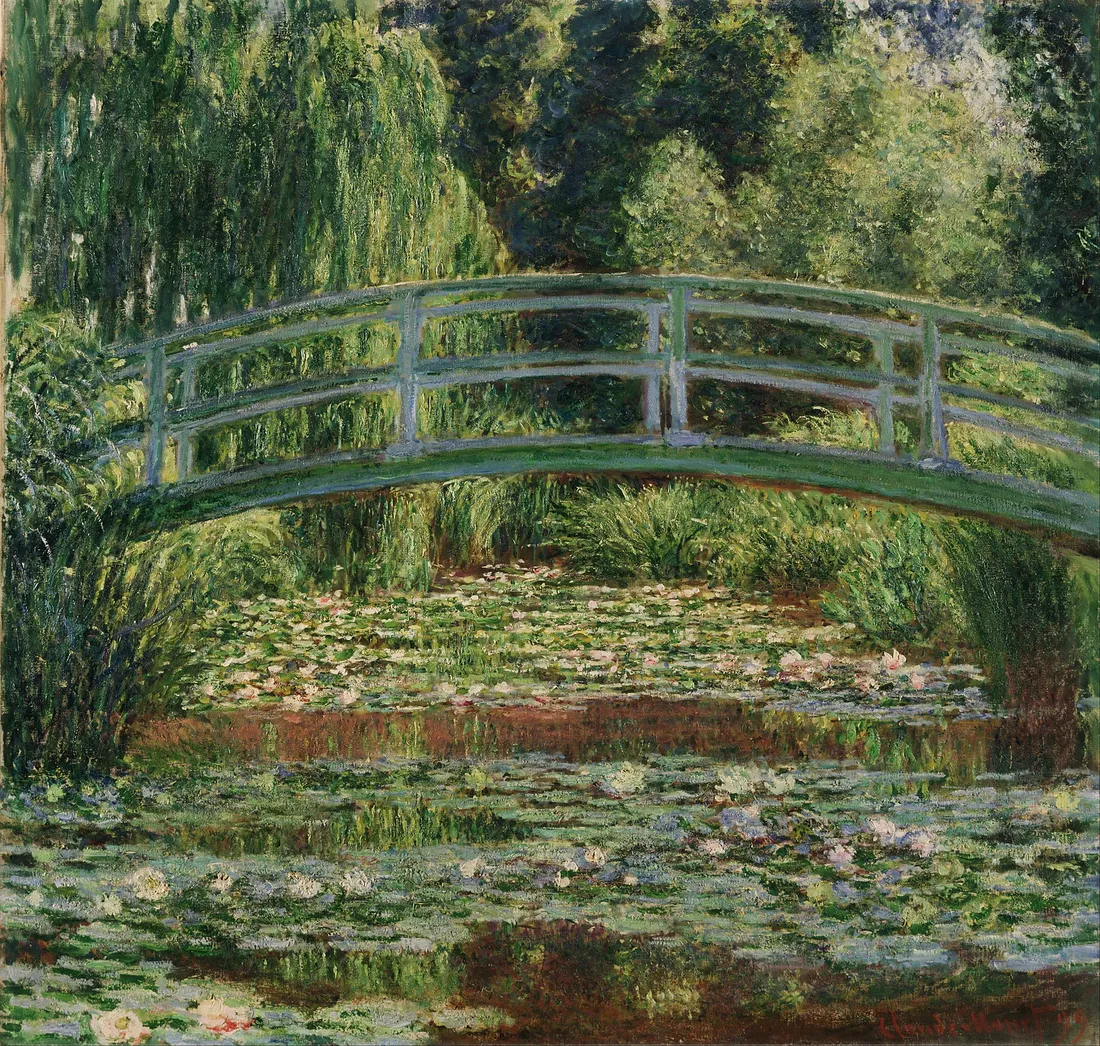
Claude Monet was laughed at when he refused the conservative brushwork of the Paris Salon and put the momentary changes of light onto canvas in raw strokes. Those raw strokes opened the doors of modern painting wide.
Andy Warhol levelled the idea of high art that had been shut inside museum walls for centuries. When he put an ordinary tin of soup at the very centre of an art gallery, the critics were appalled. By breaking the elitist boundaries, Warhol brought out the iconic spirit inside the everyday object.
In mathematics, for two thousand years, humanity took the geometry of Euclid on a flat sheet of paper for the only truth: the interior angles of a triangle add to a hundred and eighty degrees, and parallel lines do not meet. Bernhard Riemann asked what would happen if the universe were not a flat sheet but a sphere, an elastic surface. The interior angles of an enormous triangle drawn on a sphere add to more than a hundred and eighty degrees. Riemann showed mathematically that space can be bent.
Years later, writing general relativity, Einstein had to describe how enormous masses bend space and time like a trampoline. With the geometry of a flat sheet it could not be expressed. So Einstein took the mathematics of curved space that Riemann had developed years before and set it into his equations. Without that mad mathematics the bending of space and time could never have been written down.
In chemistry, while his contemporaries were listing the elements at random, Dmitri Mendeleev believed in elements that had not yet been found and left gaps in his periodic table. They laughed at him. Years later gallium and germanium were discovered, and each sat down in the box Mendeleev had left empty, weight and all.
format_quote"Yesterday’s mad idea, cast out as witchcraft, became today’s textbook."
Hasan Bekmezci
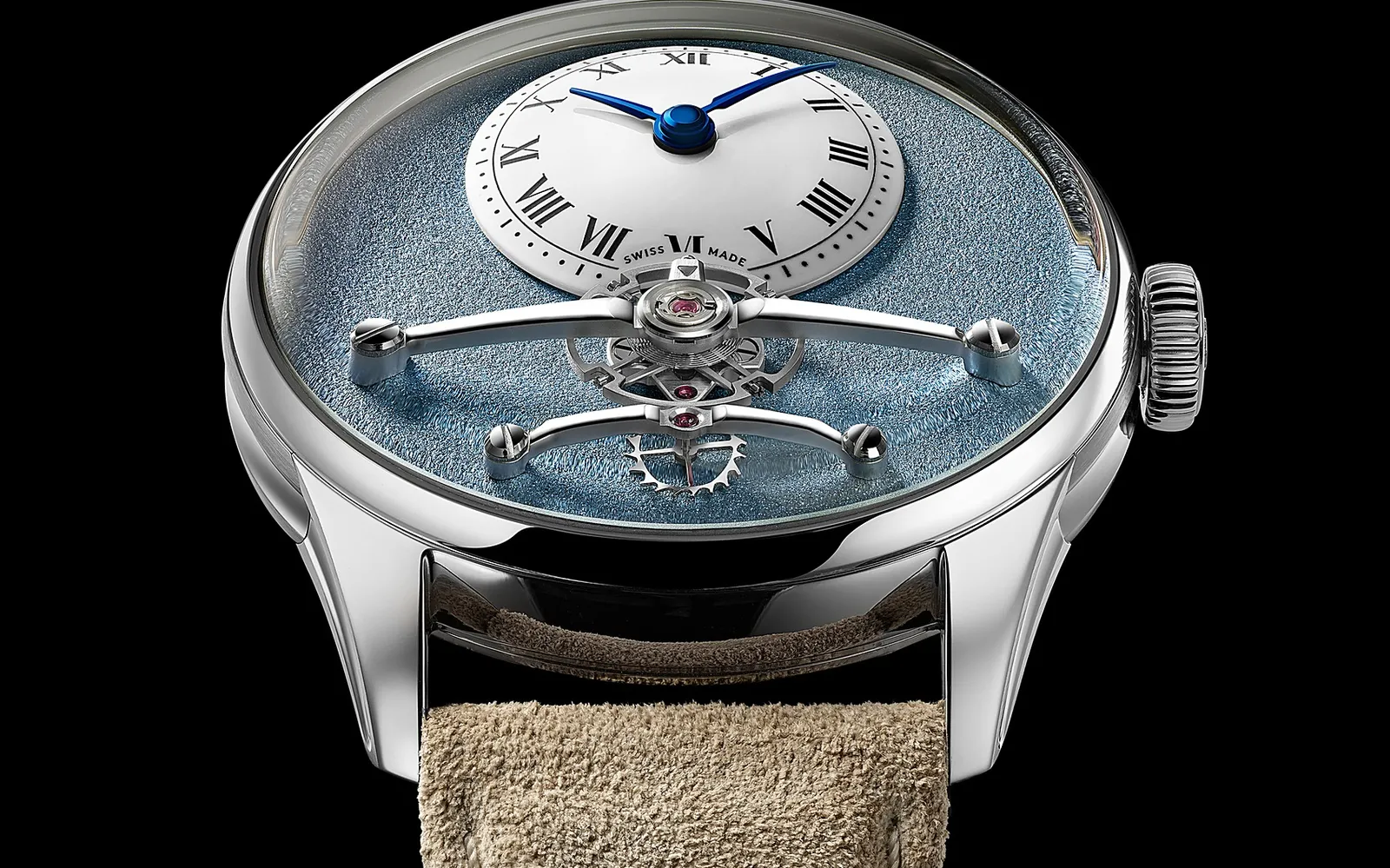
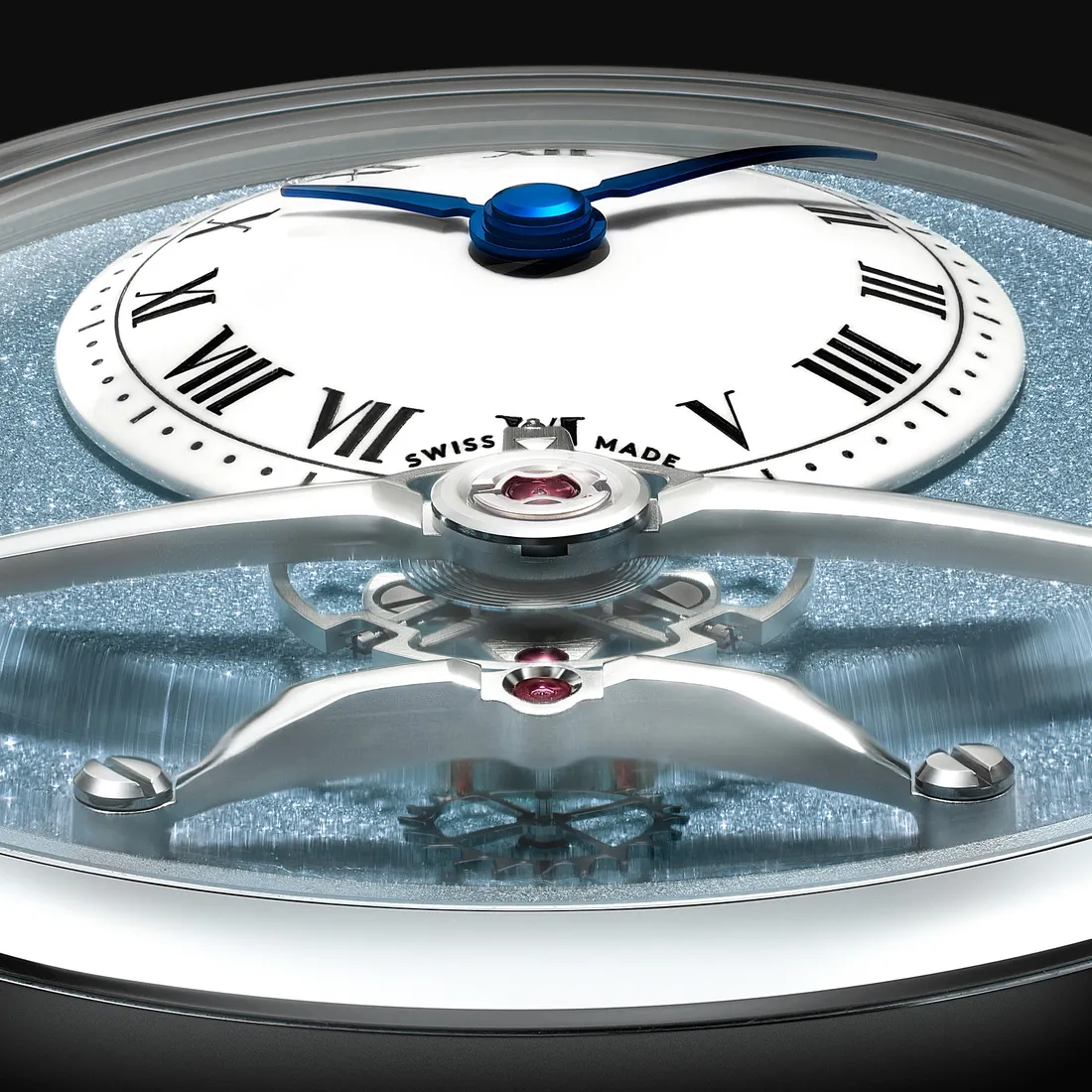
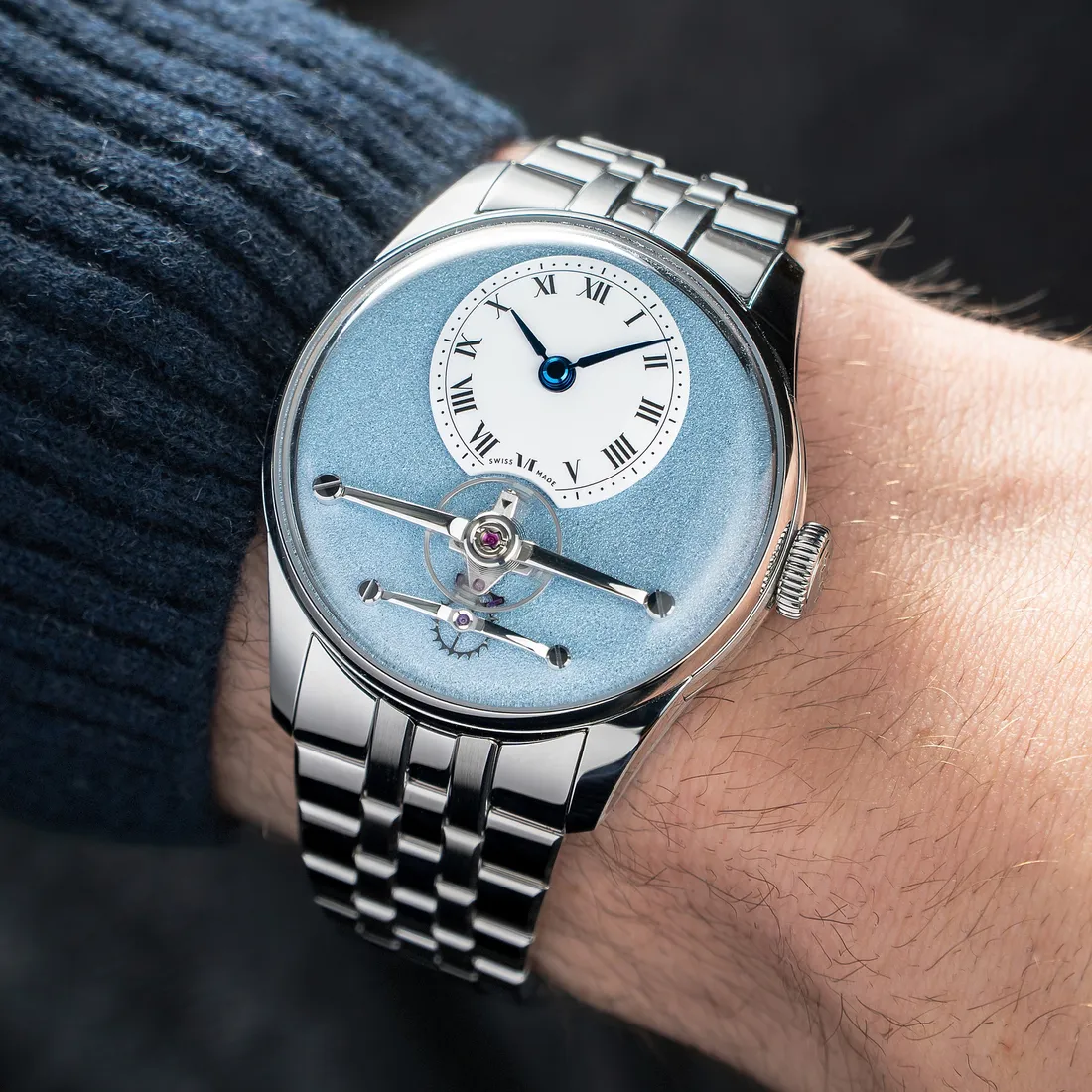
The C1 Loco Classic likewise refuses the role the classical academy assigns to a dial. It takes the accustomed balance of the dial apart, carries the reading of time upward and turns the lower field entirely into a stage for mechanical theatre. Above, it holds a classical pose with thoroughly traditional Roman numerals and blue hands; below, it starts a raw, skeletonised mechanical revolt.
There is a fine distinction here that should not be missed. What is broken is the circle, not the symmetry. In the house’s own description, the face of the watch is an exercise in symmetry from top to bottom: the domed ceramic dial above, the balance and escapement below, both on the same vertical axis. Loco does not destroy symmetry; it takes it off the centre and sets it on a vertical axis.
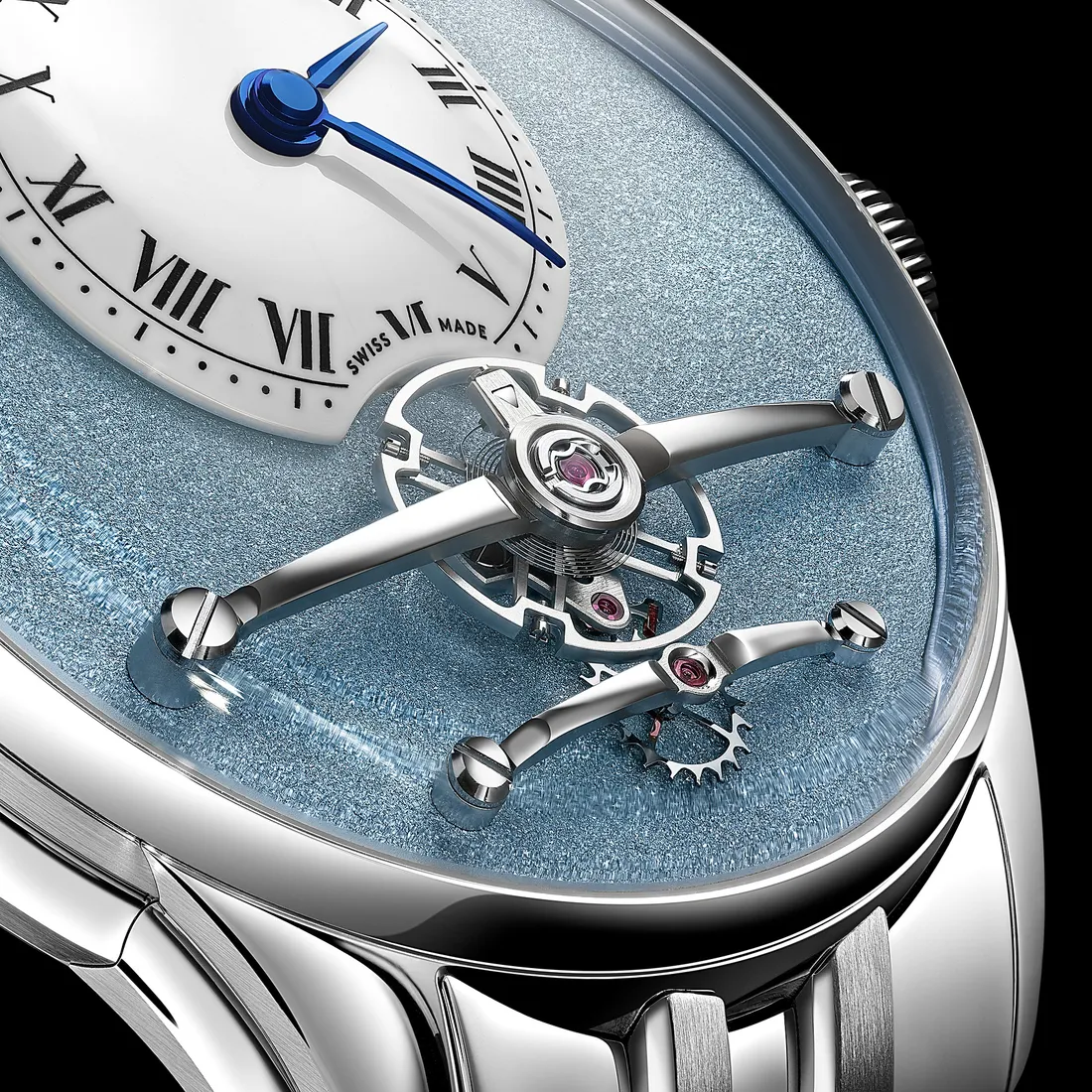
Emptying the centre of a watch and carrying the time display upward does not end with redrawing the dial. The answer in the C1 Loco Classic is to build the dial itself as two layers, one on top of the other.
The base dial underneath is first given a grain sandblasting; a varnish carrying powdered mother-of-pearl is laid over it, and finally a PVD colour five microns thick or less. That thinness is what keeps the texture beneath from disappearing. Jörg Bader, the brand’s product director, compares the result to an oil slick on water: each individual point of sparkle stands out, while the whole changes with every angle. In the house’s own phrase, the effect is Monet at Giverny.
The time dial set on top of it is white ceramic and domed. The Roman numerals on it were drawn for this watch; each is laser-engraved and then finished by hand under a microscope, filled with black lacquer through a fine needle. The hands just above are diamond-cut, polished and coated in blue PVD, and they are curved to follow the line of the dial and of the domed sapphire crystal.
Below works the free-sprung balance. Made for Christopher Ward by specialists in Switzerland, its hairspring is forty five microns across, a twentieth of a millimetre. It vibrates twenty eight thousand eight hundred times an hour, four times a second. The bridges holding the balance and escapement are slim and rounded, and each set spends more than five hours in the hands of the polisher in the Swiss Jura.
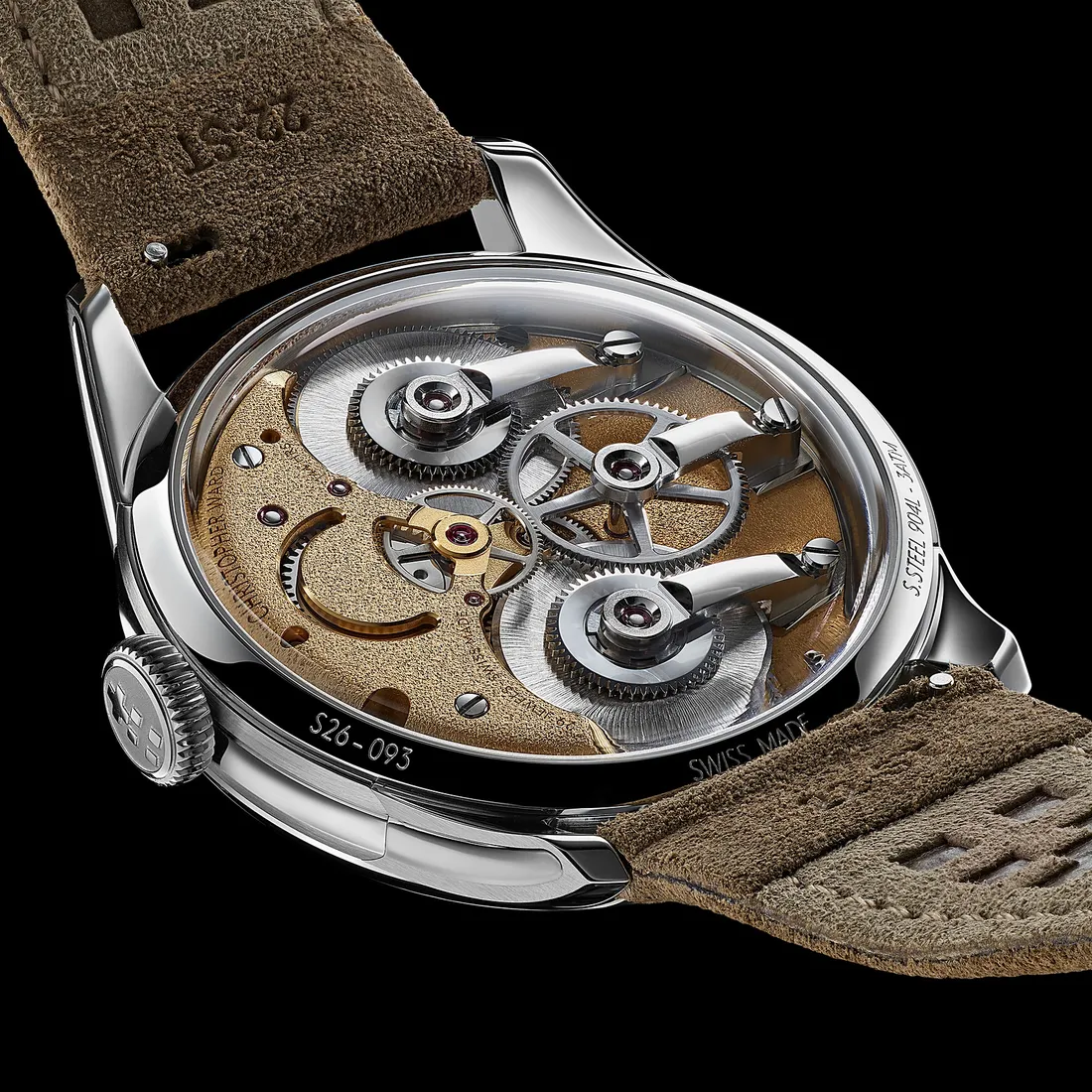
The movement is the CW-003, and it is wound entirely by hand. With no rotor in the way, the back leaves the same architecture open to view: three stacked circles, a barrel above and a barrel below with the bevelled intermediate winding wheel between them, all carried on horizontal, rounded bridges. The baseplate has been given a laser-engraved grained texture, its edges polished, and it is finished in a warm 2N gold plating.
Built from a hundred and thirty eight components, the calibre runs for a hundred and forty four hours, six days, on a single winding. It carries twenty nine jewels, and its daily rate falls between zero and plus seven seconds. Its root is the SH21, the house’s first own calibre, which now carries the name CW-001; Frank Stelzer redesigned it from the ground up for the C12 Loco and then refined it again for the Loco Classic.
The case is forty one millimetres and made of 904L stainless steel, an alloy chosen for a deeper lustre than the common 316L. It is fourteen point one millimetres high, forty eight millimetres lug to lug, and weighs sixty four grams. A scalloped groove runs across the case and flows into individually soldered lugs, drawing an unbroken, rounded profile. Water resistance is thirty metres. The five-link Consort bracelet is 904L too, and its links come out without a tool; or you can fit one of the textured suede straps instead.
Winding the watch from the crown each morning is handing human energy straight to a mainspring. That contact takes the wearer out of the role of a spectator standing outside the engineering.
format_quote"What is broken is the circle, not the symmetry."
Hasan Bekmezci
The Grand Prix d’Horlogerie de Genève is the most visible platform in watchmaking. For a model to take an official nomination there certifies that it does not merely look good, but brings fresh air to the industry in engineering and in design.
The C1 Loco Classic was nominated in the Petite Aiguille category of the twenty twenty six competition. That category is reserved for watches between four thousand five hundred and ten thousand Swiss francs, and this year six finalists were chosen from the twenty six watches entered in it, by the votes of the Academy’s one thousand and twenty eight members. The prizes are handed out in Geneva on the evening of the seventh of November; which is to say that as these lines are written the watch has won nothing yet, and is only in the final.
The watch costs five thousand eight hundred and fifty five euros and is open for pre-order, with deliveries beginning in the middle of December.

The Christopher Ward C1 Loco Classic is a rare piece that refuses the ordinary, and that holds a mechanical revolution in its lower layers while looking at time through a classical window.
It is not merely a watch on the wrist; it is for those who carry a living manifesto, one that bends the rules, plays with aesthetic perception and brings crazy courage together with engineering of a high order. Having made its name on the GPHG stage, this bold design goes on breaking the habits of modern watchmaking.
The watch on its maker’s own site: Christopher Ward, C1 Loco Classic