In the middle of a pitch-black ocean, when the floodlights of a research vessel cut into the water, a piece of theatre begins below. Metres under the surface, shapes appear that resemble no fish at all.
Every time I watch them my astonishment goes up another notch, says the biologist at the rail. What is down there is not an ordinary fish. Its body is cartilage from end to end, which means it withstands the pressure of the open ocean without carrying a single brittle bone. It has no scales and no armour; its skin is covered in microscopic denticles that reduce drag almost to nothing, so it slides through the water without making a sound.
Anyone seeing them this close for the first time does not think they are swimming. They think they are flying, weightless, underwater. With a wingspan that can reach seven metres, these are the gliding birds of the sea. There is not one rough edge on them, not one line that does not serve the movement.
They have the largest brain and the highest brain-to-body ratio of any fish. They belong to the very short list of animals that recognise themselves in a mirror, which is to say they know that they exist. They open the cephalic fins on either side of the head like a pair of scoops and steer plankton into the mouth. They hunt nothing and harm nothing. They simply glide.
That elegance is not only an aesthetic matter. The manta is a biological pump sitting at the centre of how the planet breathes.
At night they descend from the surface to between two hundred and a thousand metres, into the twilight zone, to feed. That layer is an enormous mineral store of zooplankton, small crustaceans and microscopic organisms, and while they glide through it they take on nitrogen, phosphorus and iron. Then, to recover the body heat they lose in that freezing water, they return to the sunlit layer at the surface.
This is the decisive moment. Sunlit surface water is usually poor in iron and nitrogen; it is a kind of oceanic desert. The rays release what they digested in the deep, and that waste acts as a concentrated liquid fertiliser for the surface. Fed on those minerals, phytoplankton undergo a population explosion. More than half the oxygen on Earth comes from these microscopic sea plants; one of every two breaths we take is owed to them. The blooming plankton absorbs atmospheric carbon dioxide, and when it dies it sinks to the sea floor still holding that carbon, locking it out of the atmosphere for thousands of years.
The cycle was first described in whales. But across the vast tropical stretches where whales do not go, it is the manta that carries the load. It is a living syringe, drawing the dark mineral sediment of the deep and injecting it into the lit world above.
format_quote"One of every two breaths we take is the work of a handful of minerals carried up from the dark."
Hasan Bekmezci
What the biologist saw in that floodlight came back to us in the summer of 2026 in an entirely different material. Approaching its two hundred and seventieth year, Vacheron Constantin announced a set of six pieces under the title Métiers d’Art Tribute to the Animal Kingdom. All six come out of the house’s One of Not Many Crafts Programme, which pairs a craftsperson from outside watchmaking with the watchmakers in Geneva and asks that their own technique be brought down to the scale of a dial for the first time.
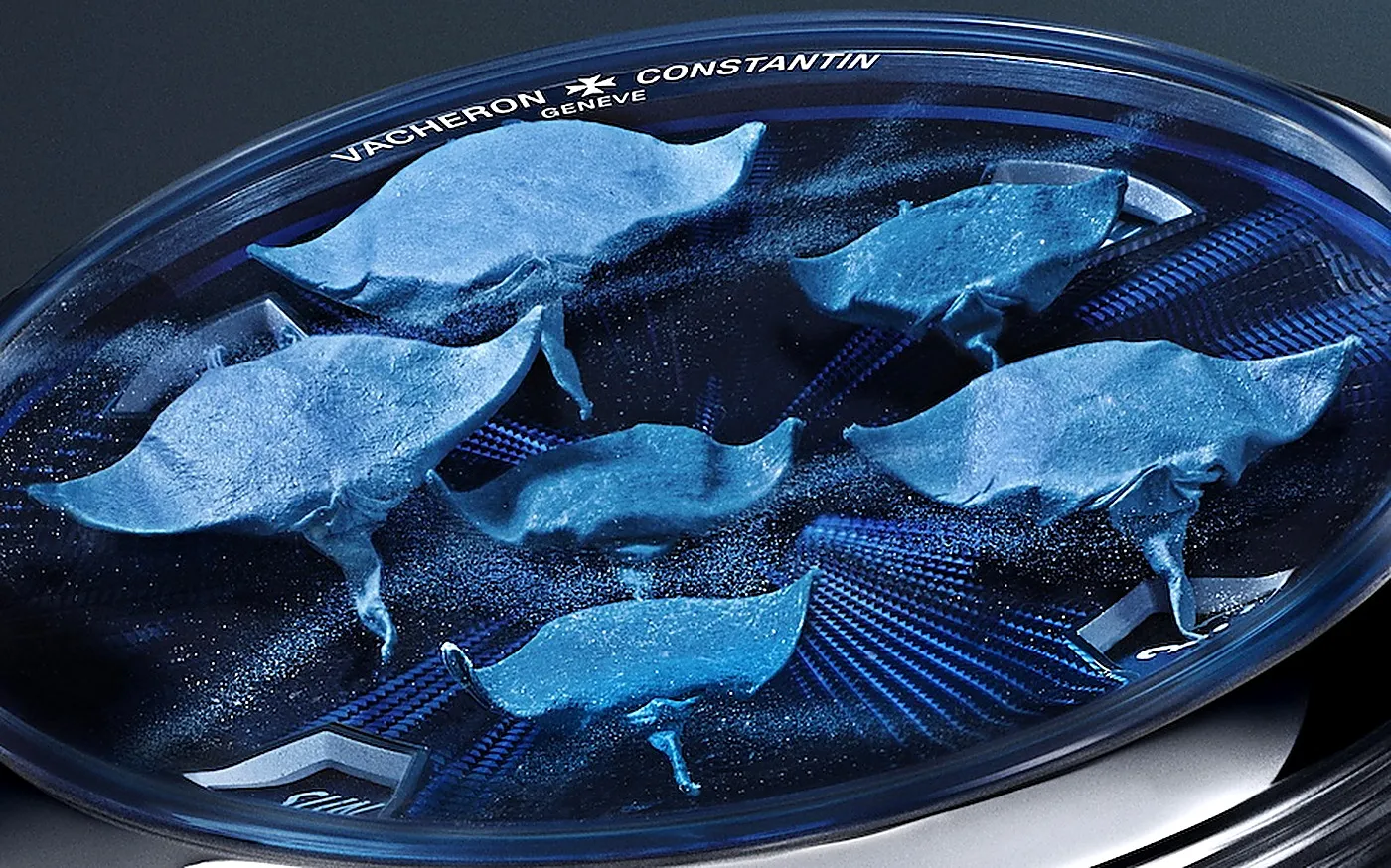
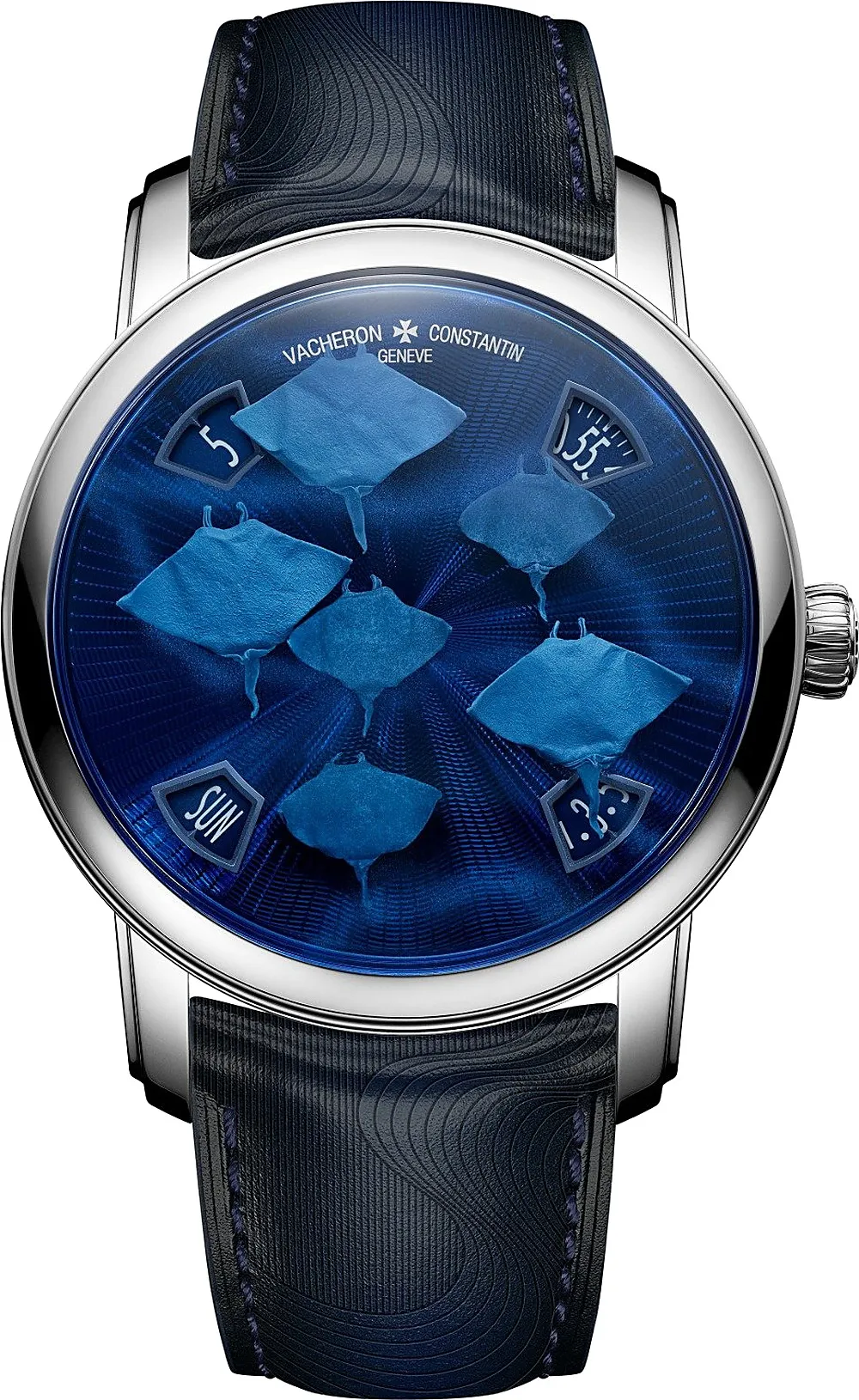
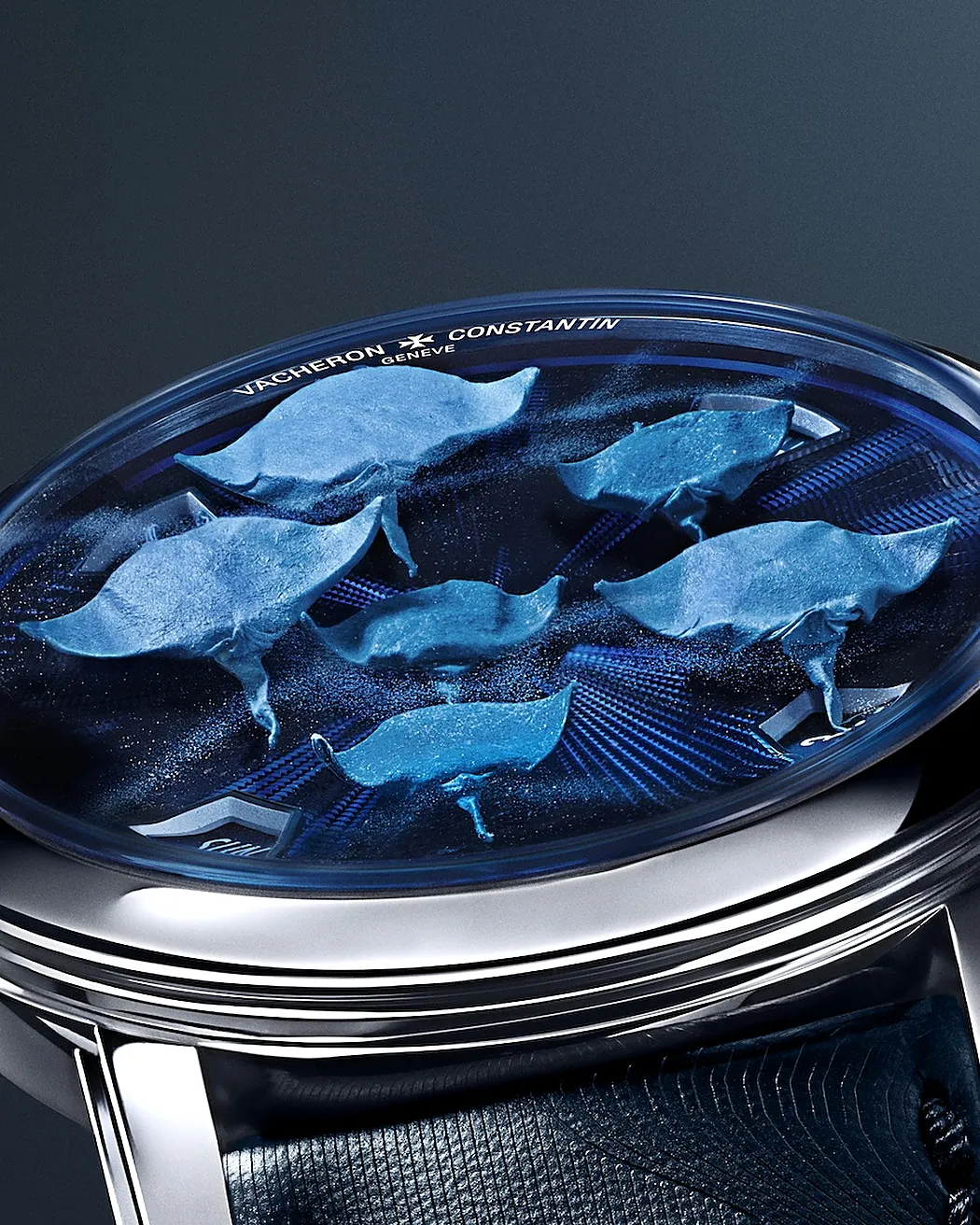
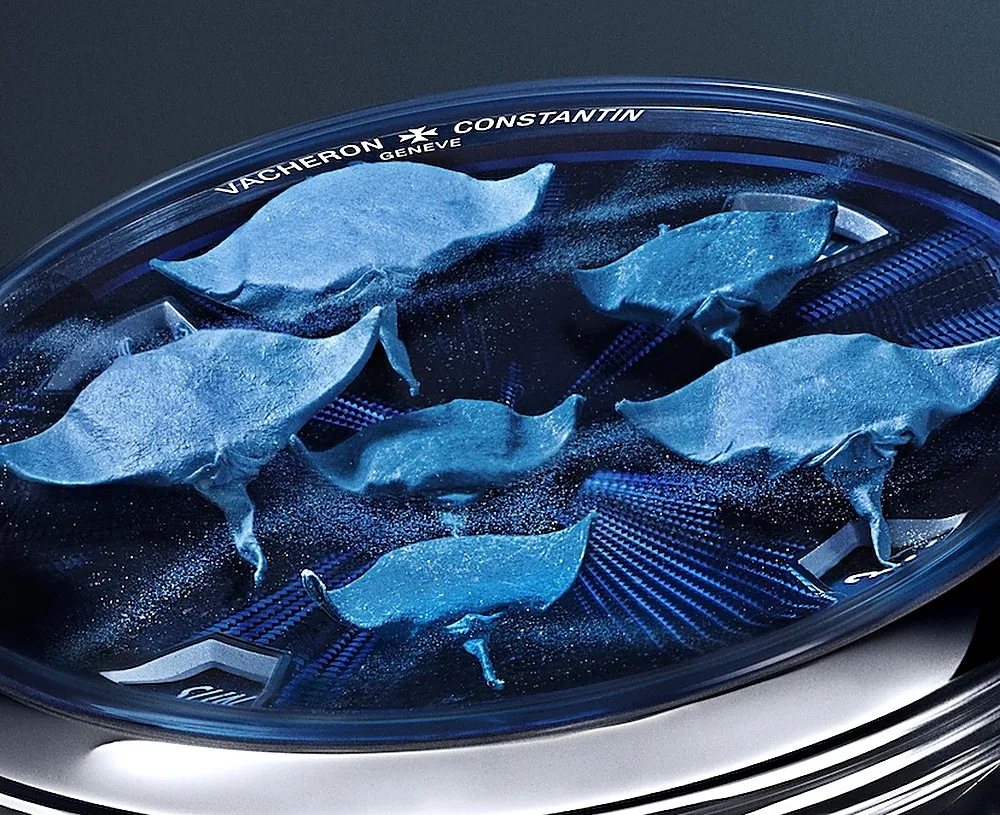
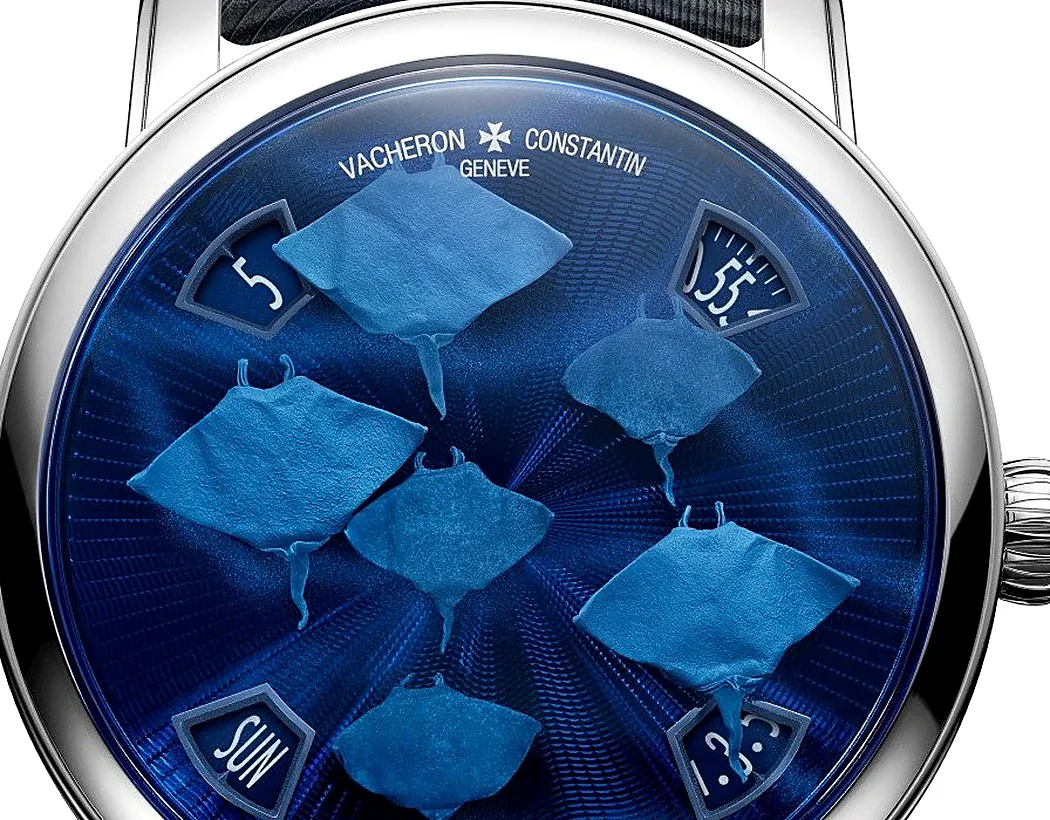
The piece that fell to the manta rays is called Oraygami, reference 7630A/000G-H204. And the six rays on that dial are not carved, cast or painted. They are folded.
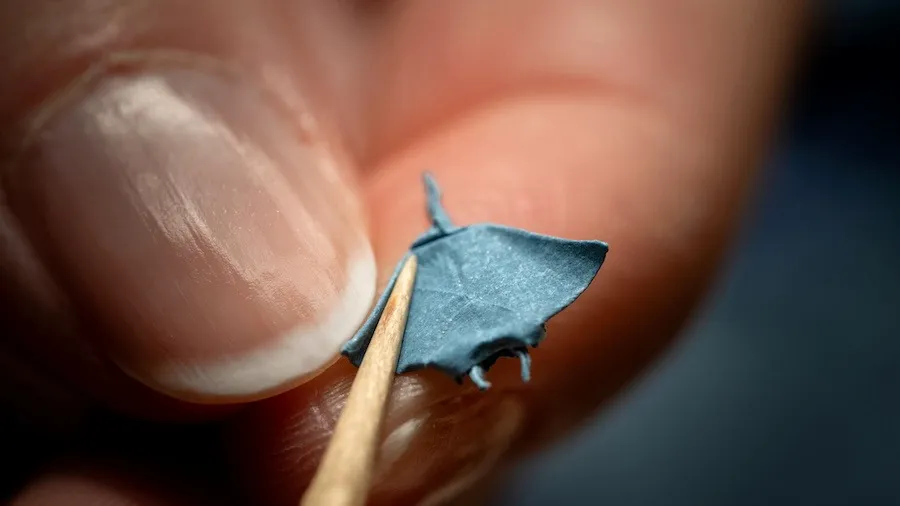
The artisan is Anja Midori, and her discipline is micro-origami: turning a single sheet into an animal, with folds under a millimetre and without a cut anywhere. The rule of origami is unforgiving; nothing may be cut and nothing may be glued. Getting the cephalic fins, the curve of the wing and that long thin tail out of one square demands that the folding sequence be exactly right from the first crease. Midori did it at a scale that fits inside a watch case, every figure born from a square of paper held in tweezers.
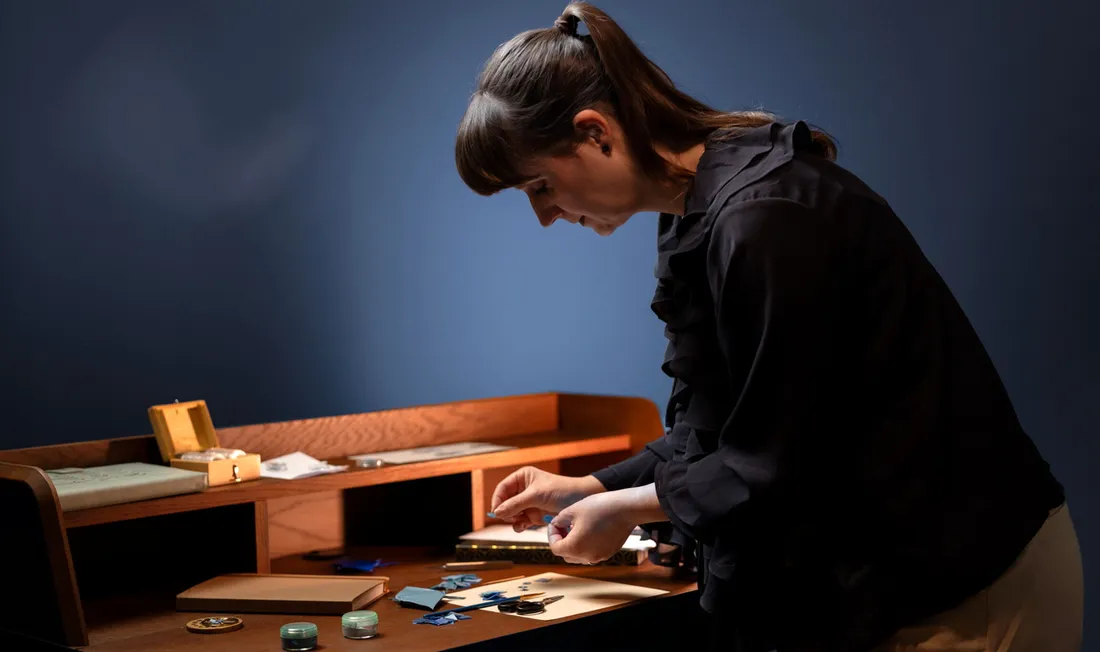
What lies beneath the paper is the product of the opposite discipline: hand-guilloché 18K gold. Guillochage means cutting an unbroken geometric texture into metal on a hand-cranked rose engine, without stopping the lathe and without breaking the rhythm of the hand. The wave pattern on this base opens and closes with the light and turns the gold underneath into a blue depth. Two timescales sit side by side on this dial: paper folded in seconds, and a lathe worked for hours.
Putting paper on top of gold looks like a strange choice at first. But value works in reverse here. The precious thing is not the gold; it is the fragile thing placed on it. By making gold the ground and paper the subject, Vacheron breaks the hierarchy on purpose.
format_quote"The precious thing is not the gold. It is the fragile thing placed on it, and the hierarchy is broken on purpose."
Hasan Bekmezci
The most radical decision on this dial was taken where you cannot see it. There are no hands.
Inside runs Vacheron Constantin’s calibre 2460 G4, a self-winding movement of two hundred and thirty-seven parts beating at 28,800 vibrations an hour with a forty-hour reserve. The G4 in the name stands for four indications, and all four have been pushed out to the edge of the dial rather than left at the centre. Jumping hour at upper left, dragging minute at upper right, jumping day at lower left, dragging date at lower right. A jumping indication waits and then snaps into place in one movement; a dragging one creeps along continuously and unnoticed. Two different temperaments of time are running on the same dial at once.
The reason for that arrangement is not technical display. It exists so that the hands can be removed. The moment the centre is cleared the dial stops being an instrument and becomes a stage, with no steel bar sweeping over the rays. The 12.9 millimetre height of the forty-two millimetre white gold case is there for the same reason: roughly four millimetres of air have been left between the paper figures and the sapphire, so that nothing is pressed against the glass and the rays genuinely hover.
format_quote"The moment the centre is cleared, the dial stops being an instrument and becomes a stage."
Hasan Bekmezci
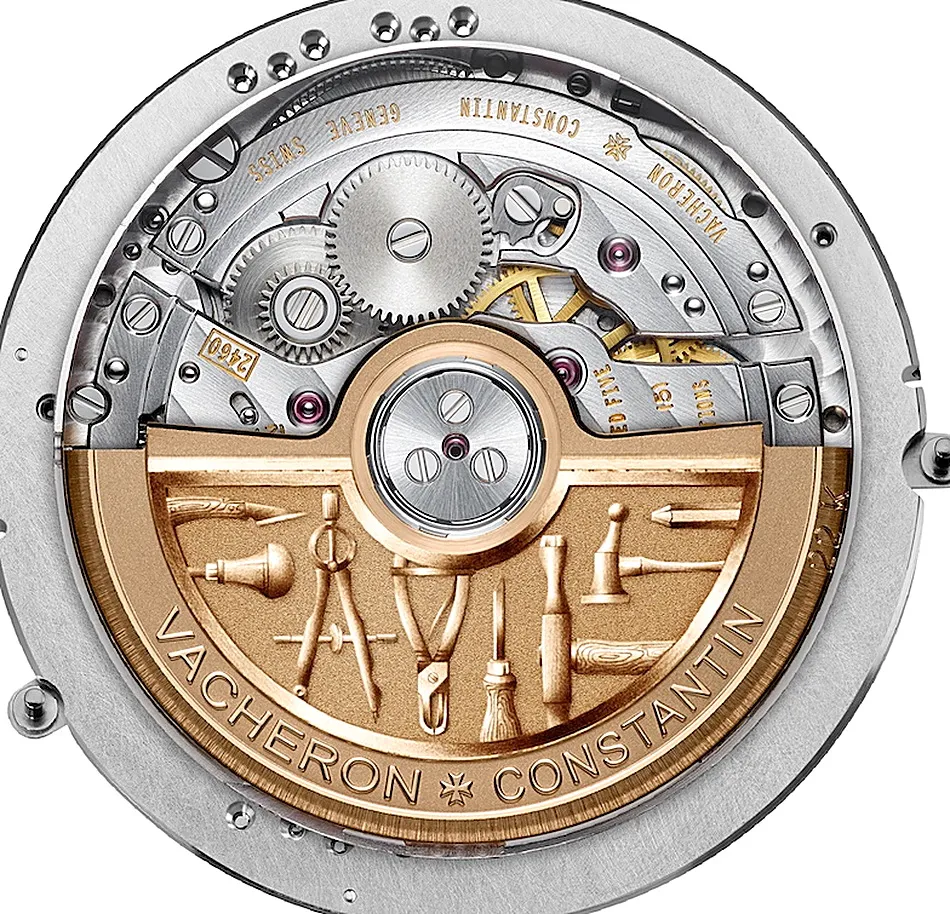
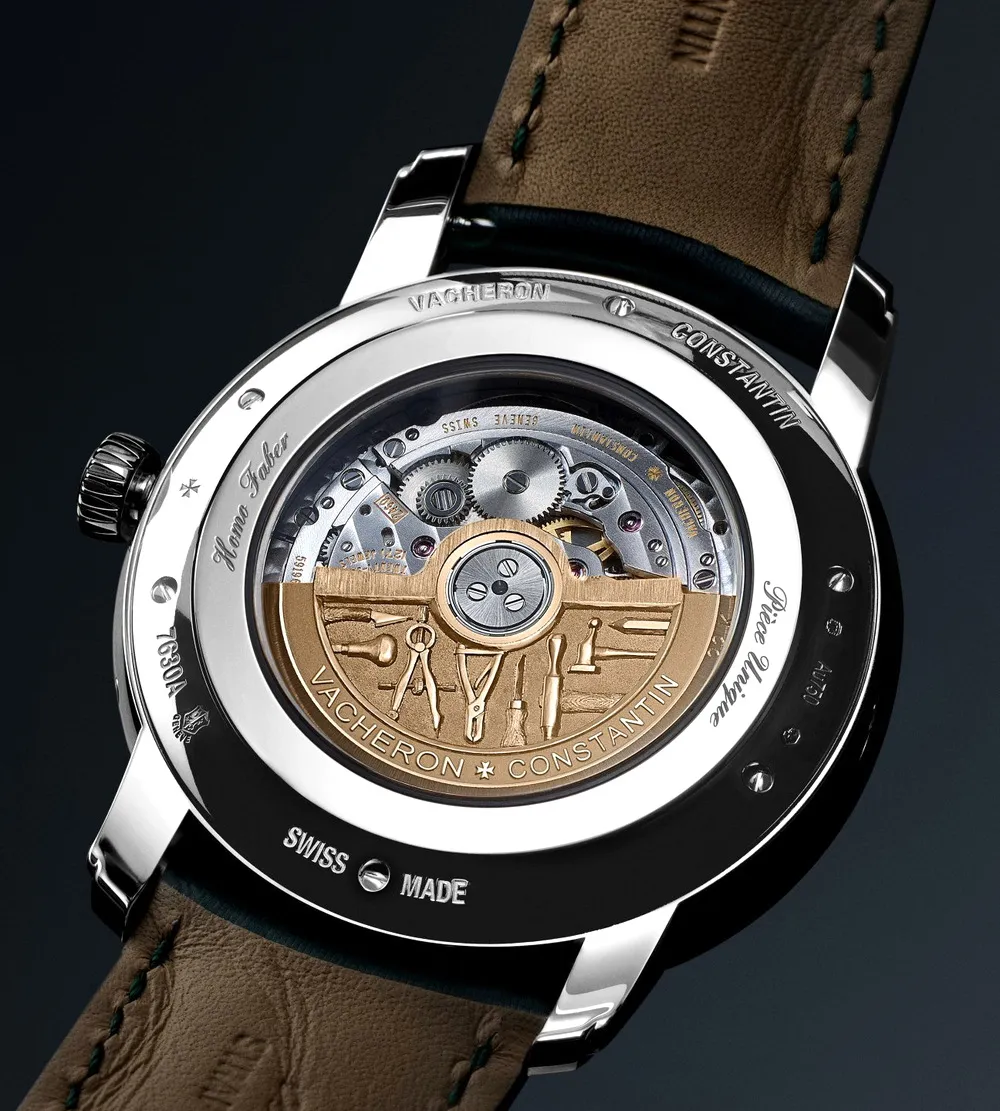
Look through the back and you find a relief of craftsmen’s tools on the rotor, identical across all six pieces in the series. Vacheron did not put its own crest behind the movement; it put the instruments of the hand. The whole argument of the collection is compressed into that small engraving.
Oraygami is not a diving watch and it is not an object that expects to meet water. What it does is stranger than that. It takes the quietest animal in the ocean, renders it in the most fragile material available, and sets it on the most permanent one. Paper rests on gold, and gold rests on forty hours of stored energy.
Every time you look at those six shadows under the sapphire you are reminded of the modest arrangement thousands of metres down that manufactures half the air we breathe. A freedom that does not fight the current but travels with it.