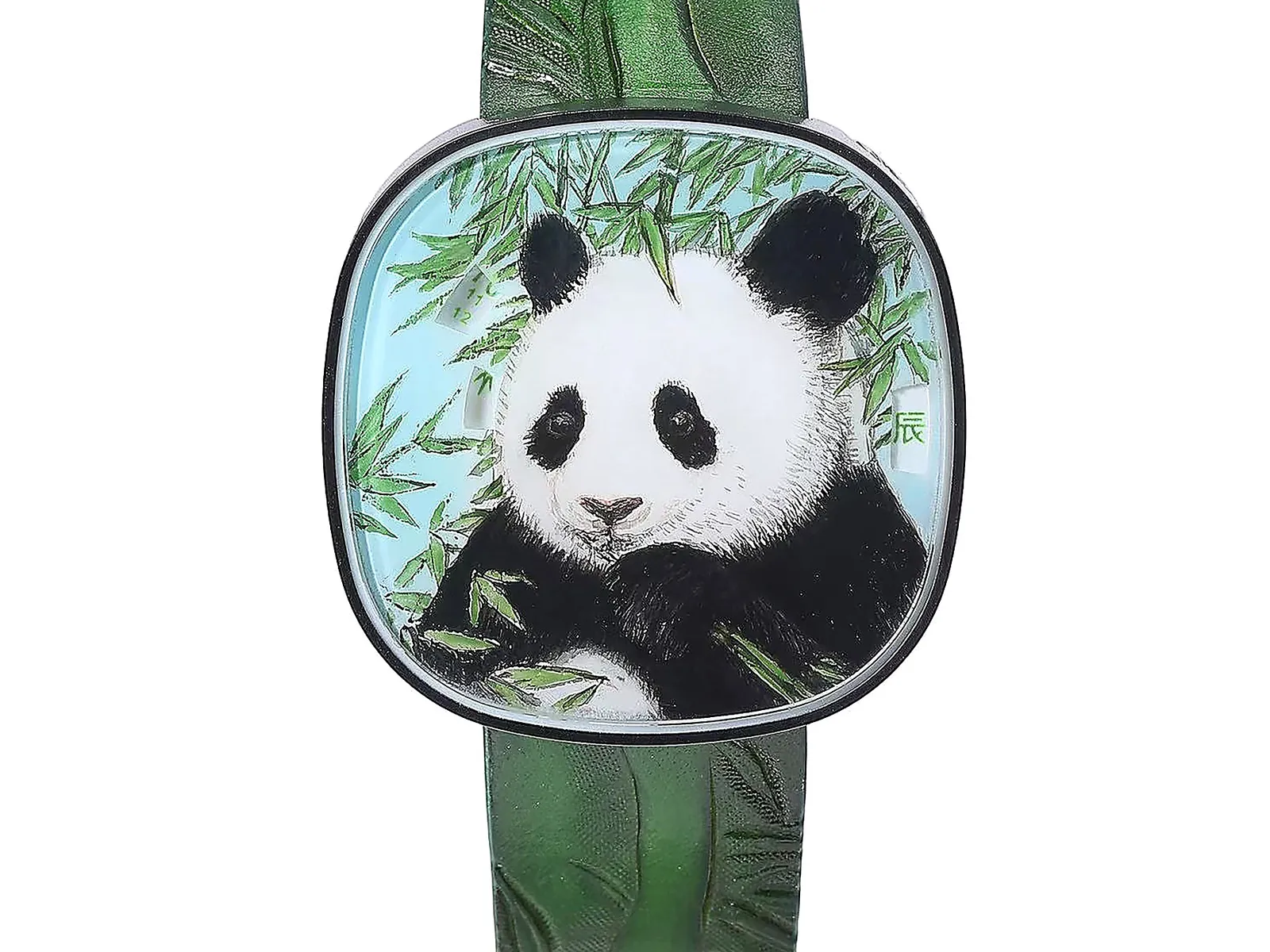
Slowness is not the result of laziness but of arithmetic. To understand that, you have to climb into the mist of the Sichuan mountains.
You are inside an absolute silence where nothing can be heard but the whisper the wind makes in the bamboo leaves. Out of the fog an enormous panda appears; it minds neither the storm nor the passing of time. It simply sits, takes hold of a bamboo shoot and surrenders to the stillness of the moment.
Now, if you ask me where the art is here, I will answer like this: if you look at this dial and see only a green strap and a charming picture of a panda, you have missed one of the deepest philosophical revolts in modern watchmaking. The art in this CHF 3,300 piece from FAYY lies far beyond the brushstrokes. It stands for a biological miracle and for a philosophical foot put out in front of the flow of time.
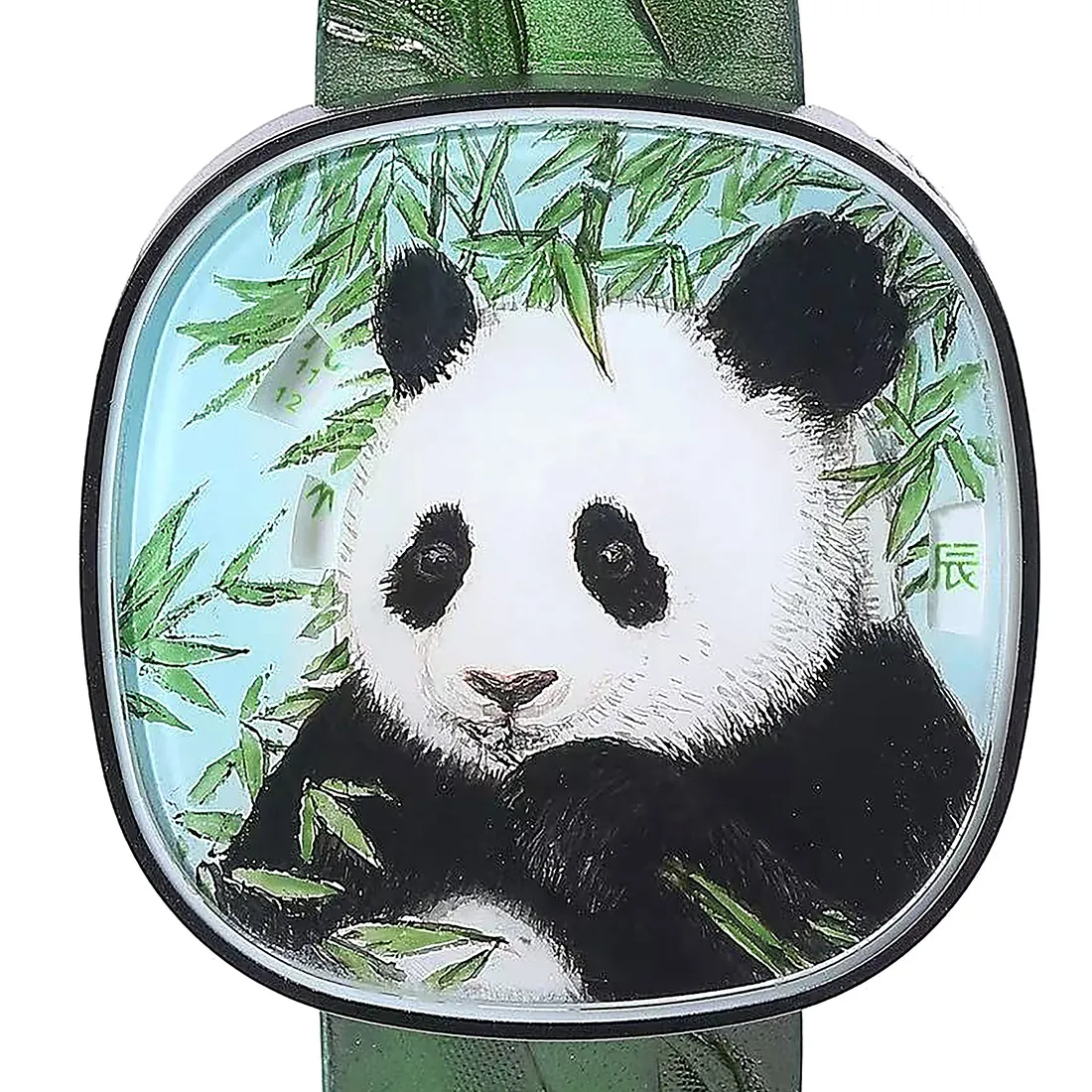
Traditional high watchmaking cuts time into slices and pushes a person into a hurry. Chronographs, lightning seconds, scales that split the minute into a hundred. The seconds come down on our backs like a whip. In Chinese, though, manman means to slow down, to be unhurried, to settle into the moment. It is also the name of the panda who owns this dial: Manman.
The panda on the dial is in no rush. It does not run to hunt, it is not battered about in pursuit of targets. It spends fourteen hours of the day sitting and eating bamboo. This watch is a silent manifesto set into a dial against the inexhaustible hurry of modern man: where are you running to? Time is a thing that shrinks while you chase it, and widens once you stop and settle inside it. What you carry on your wrist teaches you less how to read time than how to slow it.
format_quote"Time is a thing that shrinks while you chase it, and widens once you stop and settle inside it."
Hasan Bekmezci
But that slowness is not a preference; it is an obligation, and this is exactly where the seal in the biology lies. The panda is anatomically a carnivore, a bear; its gut is a carnivore’s gut, short and simple. It has no fermentation chamber for breaking down cellulose. And yet its provision is bamboo, the toughest and most fibrous grass in the world.
The result is a crisis of accounting: it can digest barely a fifth of what it eats. The only way to make that up is quantity. It eats between twelve and thirty-eight kilos of bamboo a day, spends half of the day chewing, and moves deliberately slowly so as not to spend energy it cannot replace. The stillness of the panda, in other words, is not a temperament but the solution to an equation. No calm in the universe is free of charge.
And how does the paw of a bear hold a thin bamboo stem? Here the signature of the design becomes visible. One of the bones in the panda’s wrist, the radial sesamoid, has been extended so that it works like a finger. We call it the false thumb. False, because it is not a finger; it is a wrist bone. But it does the work: it locks the stem against the palm, strips the sheath, holds the shoot.
Look carefully at how that miniature panda on the dial takes hold of its bamboo. That grip is not the work of coincidences; it is the art of the one who gives the provision shaping the bone architecture of the creature so that it can reach that provision. The power that draws the orbit of the stars in the Milky Way is the same power that carved the wrist bone of the panda you see on this dial to fit a stalk of bamboo. Whoever gives a star its orbit gives a bear its thumb, and signs both with the same hand.
format_quote"The stillness of the panda is not a temperament but the solution to an equation. No calm in the universe is free of charge."
Hasan Bekmezci
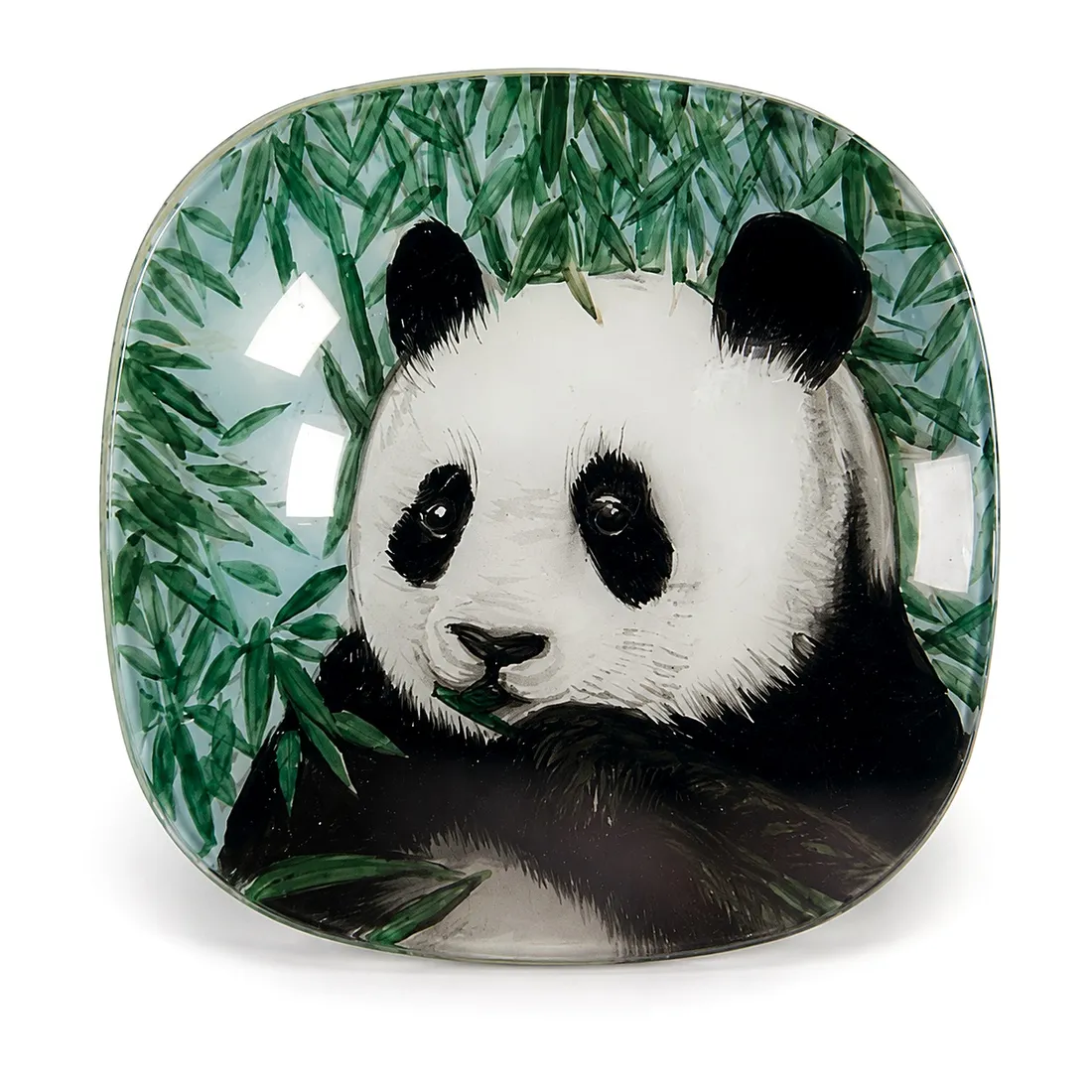
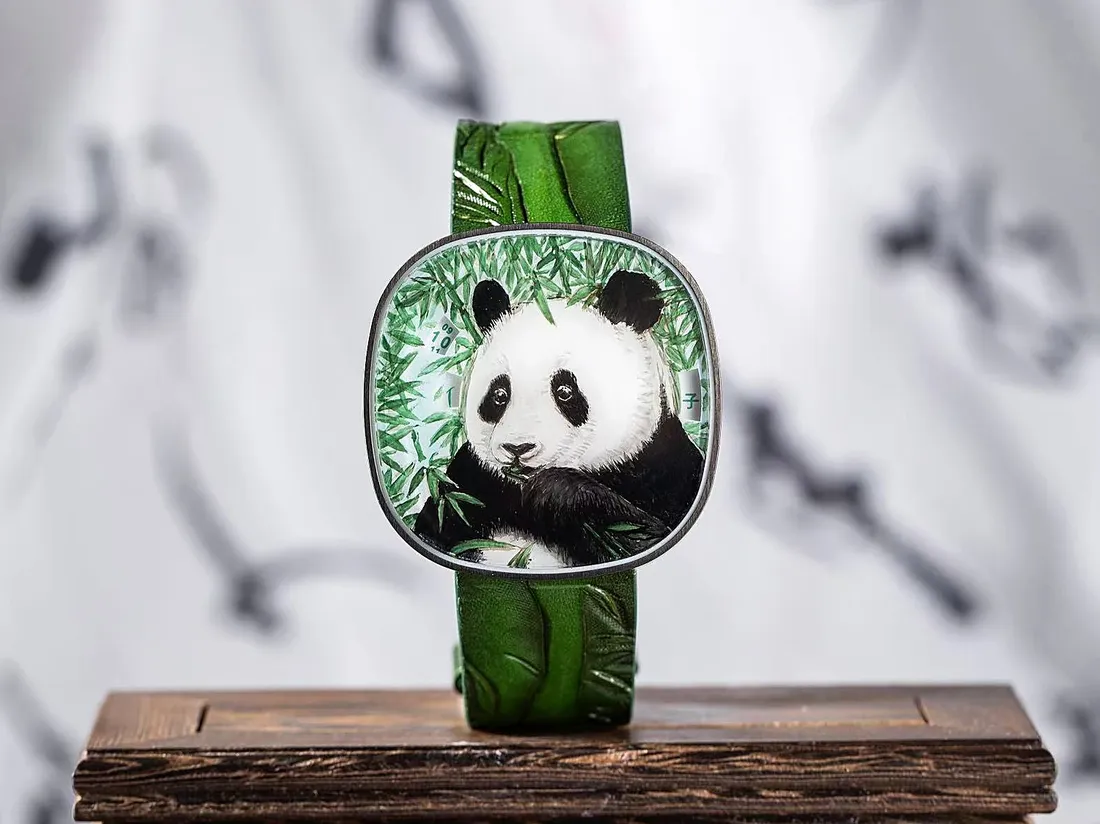
Now to the watch itself, because the craft here is not where you assume it is. The Manman Panda is not a miniature painted onto a dial. The portrait is worked onto the underside of the sapphire crystal in Chinese inner painting, a craft recognised in China as national-level intangible cultural heritage. Inner painting means working from the back face of the glass, in reverse order: the detail that will appear in front goes on first, the background last. Like speaking a sentence from its end towards its beginning.
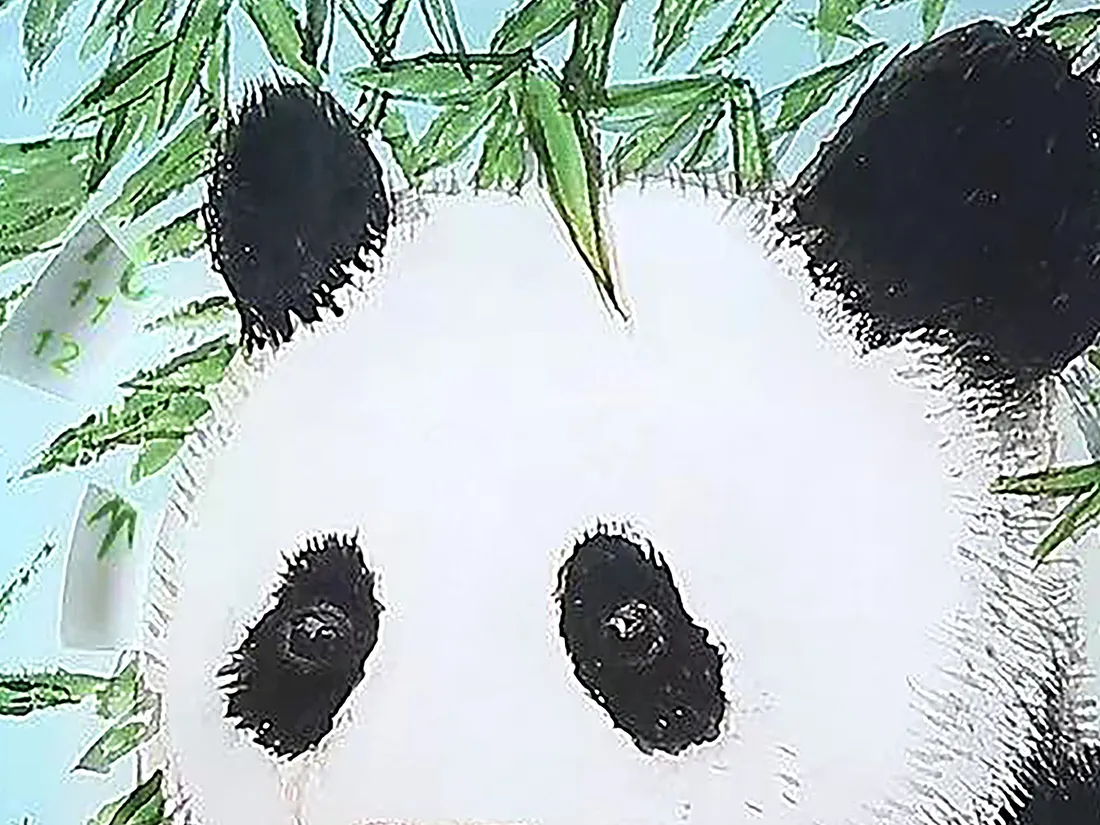
Around three and a half thousand brushstrokes for a single dial. All of them at the scale of a millimetre, all of them beyond recall, and all of them sealed inside the glass when the work is done. So the sapphire stops being the surface that protects the movement and becomes the work itself. The most durable part of the watch is also the carrier of its most fragile art.
Two names stand behind this. The portrait was designed by Yuan Long Jun, chief designer of panda culture at the World Ecological Design Organisation, who has worked on the panda for more than thirty years. The one who carried that design under the sapphire is Lai Si Jia: third-generation inheritor of the Guangdong inner-painting tradition and its sole recognised representative. When a craft is down to a single recognised representative, that craft has been entrusted to one person’s patience.
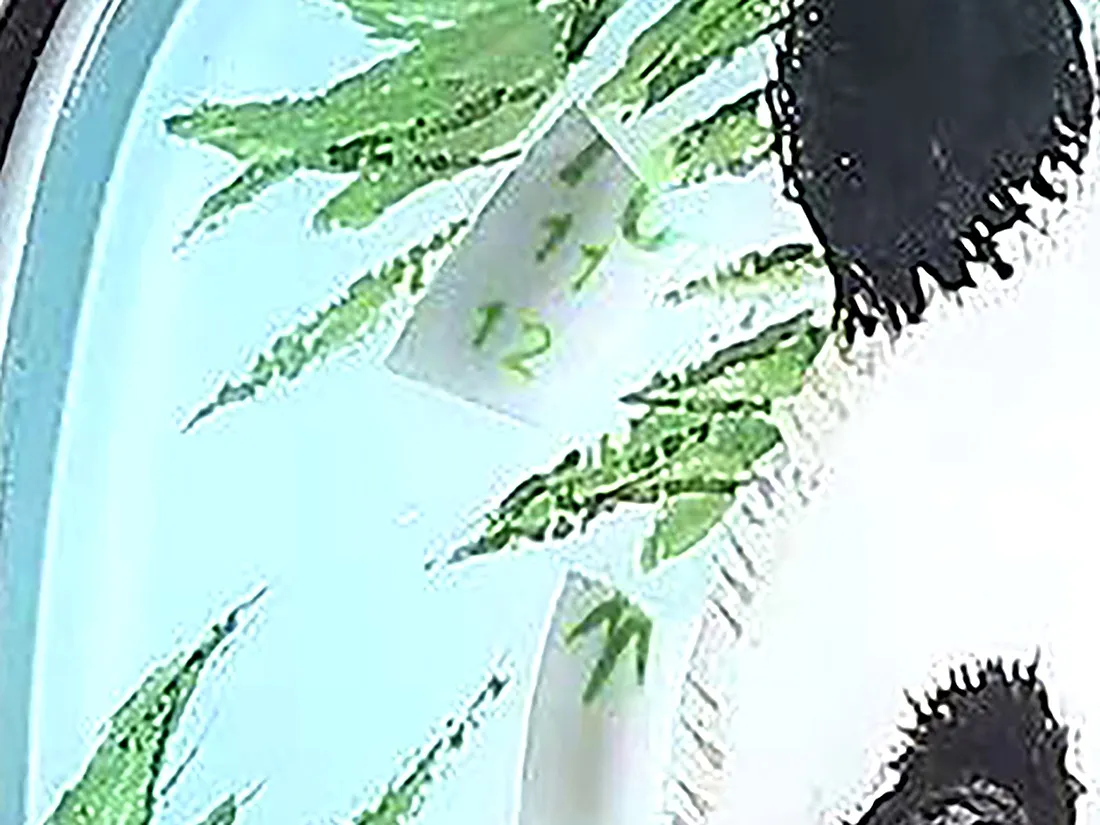
Do the hands sweeping over the picture not cut this painting in two? They do not, because there are no hands. Hours, minutes and seconds turn on separate independent discs and are read through small windows opened into the picture. The numerals are written in the green of the leaves, which means the time display is not an instrument laid over the painting but a part of it. It may be the bravest decision available to a watch: not to sacrifice legibility to the picture, and not to sacrifice the picture to a hand.
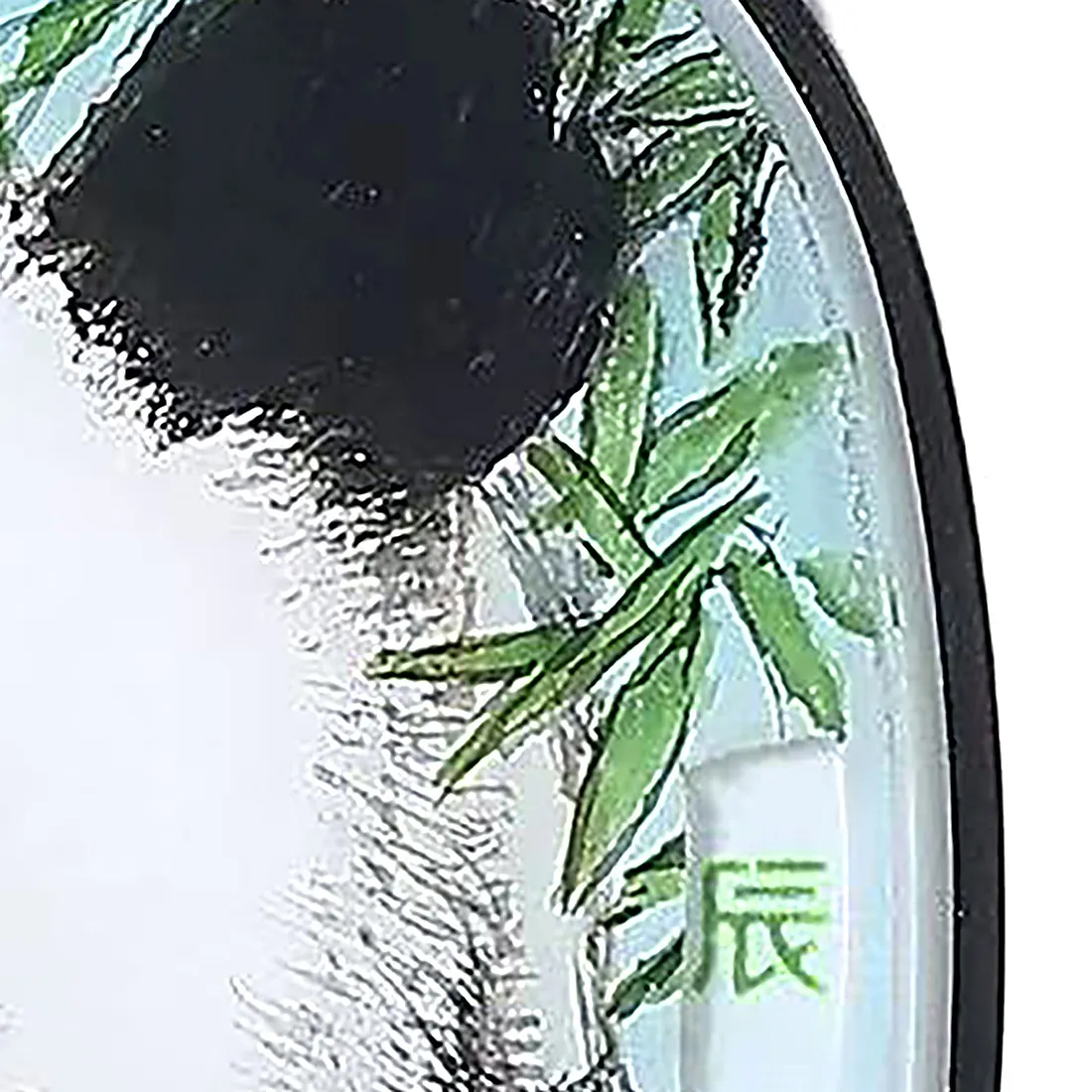
On the right-hand side of the dial stands a single Chinese character. It is one of the Twelve Earthly Branches, the mark of that ancient order which divides the traditional Chinese day into twelve double hours. Where the Western watch tries to subdivide the minute, the eastern calendar cuts the day into large pieces. On this dial the two stand on one surface: on one side a Western numeral read through a window, on the other the name of the double hour.
format_quote"When a craft is down to a single recognised representative, that craft has been entrusted to one person’s patience."
Hasan Bekmezci
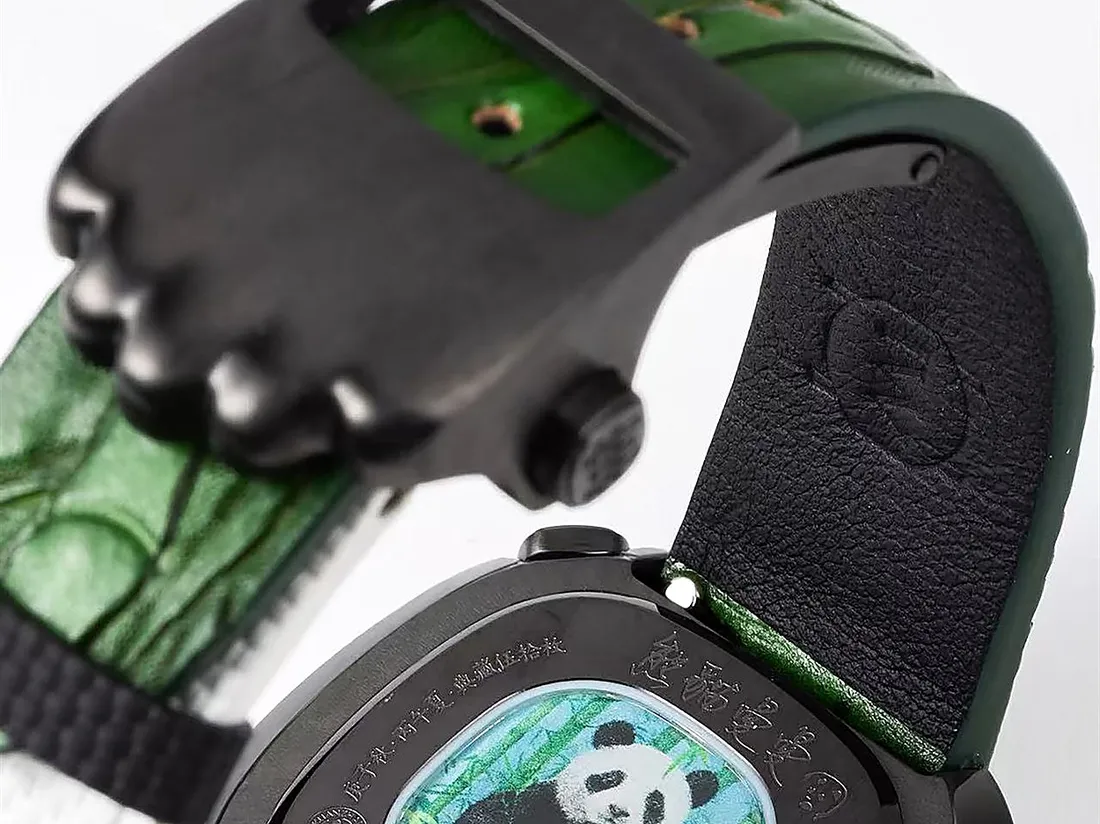
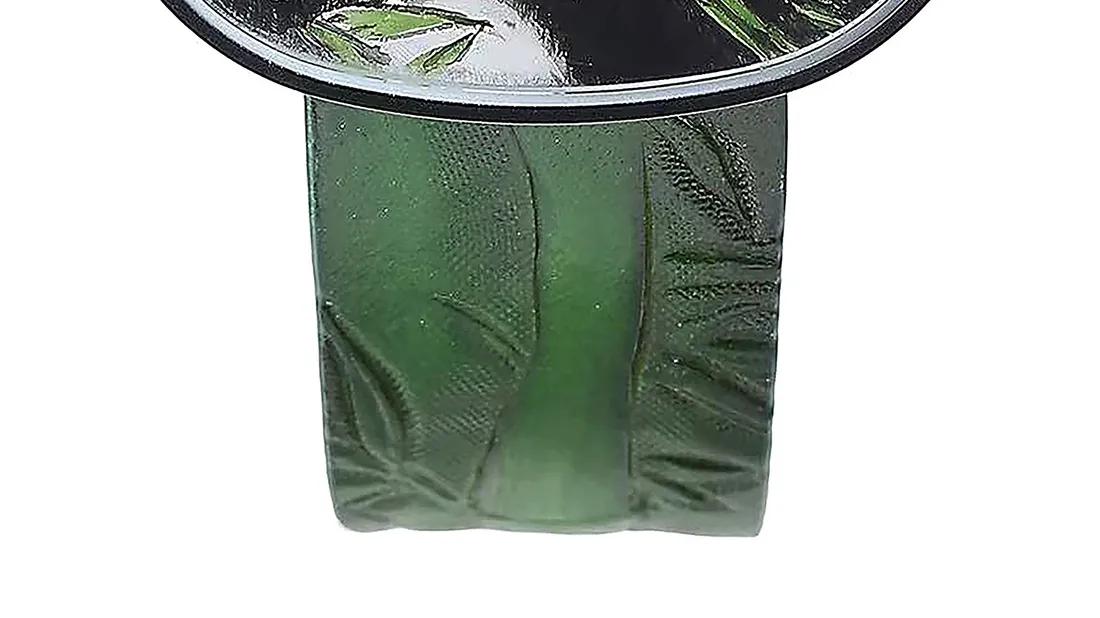
In watchmaking a strap is usually no more than a passive piece of leather holding the case to the wrist. Here, though, the green leather is hand-stamped with a bamboo pattern so that the forest on the dial spills out beyond the case and wraps the wrist. The watch stops being a picture imprisoned inside a case and becomes an ecosystem coiled around the arm. Where the dial ends the landscape does not; only its material changes.
The case belongs to that same continuity: thirty-nine by thirty-nine millimetres, twelve millimetres deep, titanium, lugless, with the crown hidden. The absence of lugs is not a styling whim but a function: the watch can be taken off its strap and hung on a leather cord. It leaves the wrist and turns into a medallion. That a painting can become a pendant is an admission that it was a painting all along.
On the back there is a second panda, from the same hand, in the same technique. To paint the face nobody will see is to do the work for yourself rather than for the buyer.
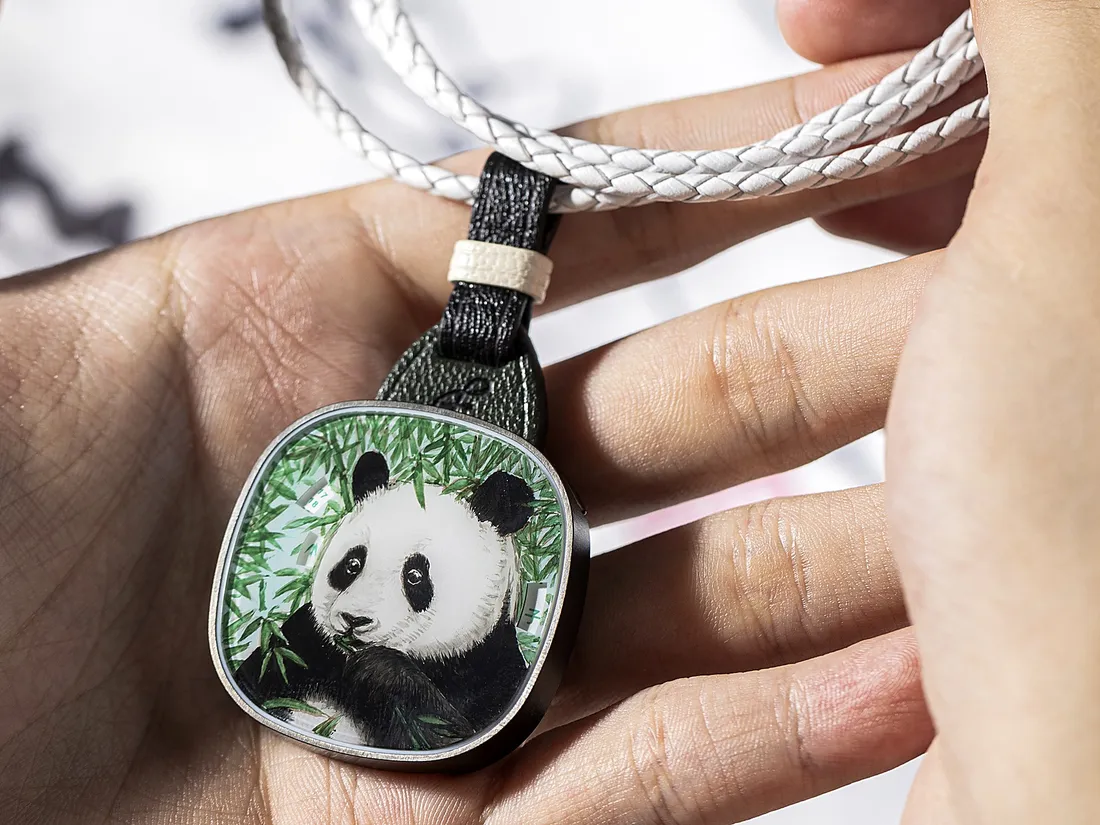
The movement suits that calm by being undemonstrative: self-winding, 28,800 vibrations an hour, forty hours from a full wind. Water resistance is fifty metres. Fifty pieces are being made, at CHF 3,300, which for handwork on this scale is unusually reachable. The brand says that is deliberate: to carry the heritage of inner painting, and the story of Manman, to as wide an audience as the craft allows.
FA001 is FAYY’s first watch, and it is entered in the Artistic Crafts category of the GPHG 2026. To choose, as a first step, not a dial but a painting inside glass takes less courage than sheer stubbornness.
The art here is not paint, leather and metal brought together. The art here is a philosophical stance that says slow down to the ambitions of a man; an anatomical seal of that merciful order which feeds a carnivorous bear on bamboo shoots; and the stillness of nature inscribed onto a wrist as a forest.
And there is this. The watch does not let you read the time quickly. It makes you read one numeral, through one window, between the leaves. You have to stop for a second in order to look. Perhaps that second is the whole point.