In the last week of September, a little after midnight, a research submersible sat at twelve hundred metres in the western Pacific. The glass of the observation chamber had fogged where it met the two degree water outside. Two people were inside: the photobiologist Dr Sabiha Tekin and the luminescence spectroscopist Dr Kenan Arslan.
When the floodlights went out the chamber fell into an absolute dark. Then, a few metres beyond the glass, a green shading into turquoise appeared, giving off no heat, burning no fuel and raising the temperature of the surrounding water by not one degree.
Look at the spectrometer, said Dr Tekin. The thermal camera reads zero. The incandescent bulb humanity was so proud of for a century wastes most of what it draws as heat. We used to think light had to be burned into existence.
We learned to get light by burning, said Dr Arslan. But there is another route, and it is in this water. When a molecule called luciferin is brought together with oxygen by the enzyme luciferase, the energy released leaves directly as photons. It is called cold light.
A correction belongs here, because the phenomenon is routinely oversold. The reaction does not convert a hundred per cent of its energy into light; in firefly chemistry the measured yield is nearer forty per cent. The comparison still makes it extraordinary. An incandescent bulb turns only two to four per cent of its electricity into light and surrenders the rest to the room as heat. In the body of a deep sea animal there is no appreciable rise in temperature at all. This is illumination that does not scorch the tissue, does not warm the water and does not betray the position of what carries it.
Three comparisons make it easier. The first is a fire that does not burn: a flame that stays ice cold in the hand and transmits no heat to the skin. The second is a factory without waste; where a car engine throws most of its petrol out of the exhaust as heat, here the energy goes straight to the work. The third is a lantern that needs no charging from outside, because at a depth that has never seen the sun the animal does not receive light, it makes it.
The method varies by species. The lamp that burns on the lure of a deep sea anglerfish is usually not the fish’s own chemistry at all; symbiotic bacteria housed in that organ do the burning. The fish rents its light rather than manufacturing it.
format_quote"In the deep, light is not a by-product of heat. It is the whole purpose."
Hasan Bekmezci
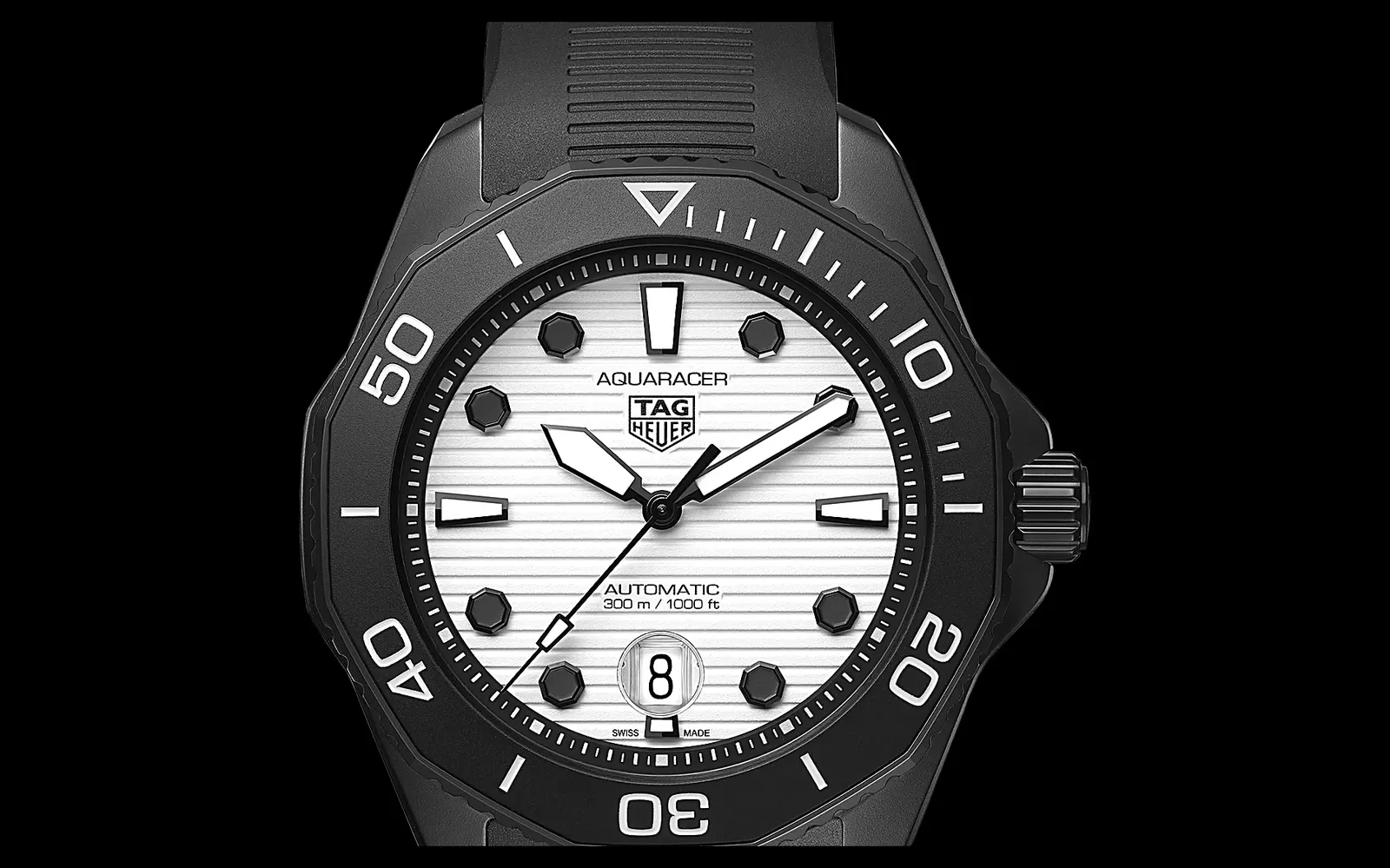
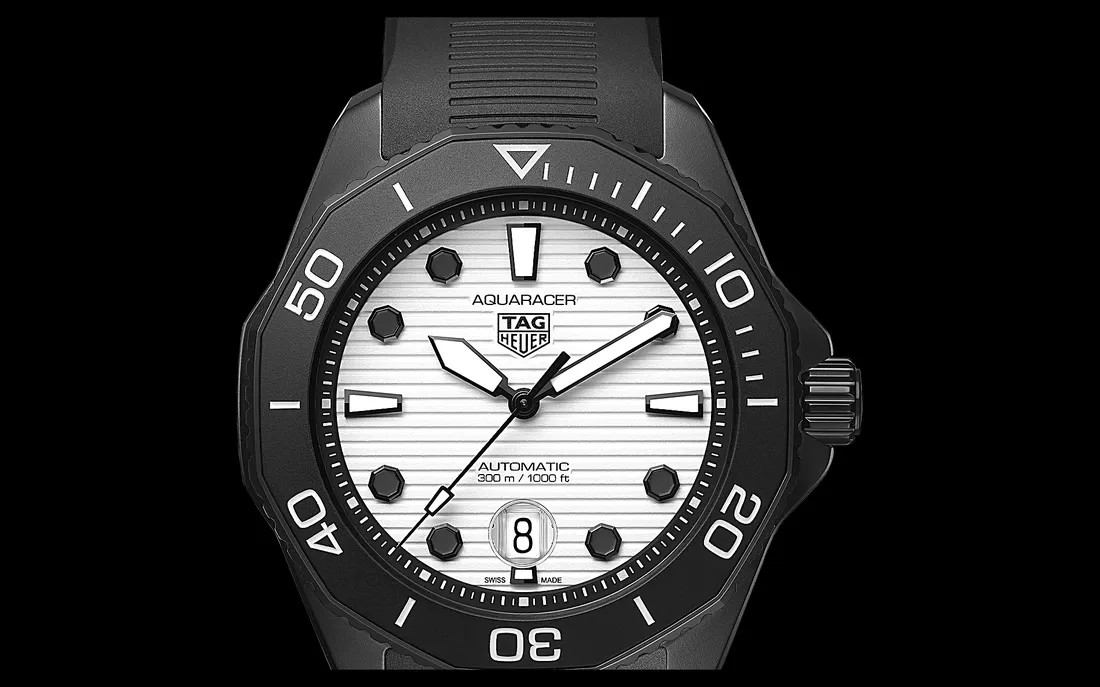
The most honest answer to this idea on the wrist is not an expensive complication but a tool watch. In the reference collectors call the Night Diver, TAG Heuer’s Aquaracer Professional 300 Date turns the entire dial into a source of light.
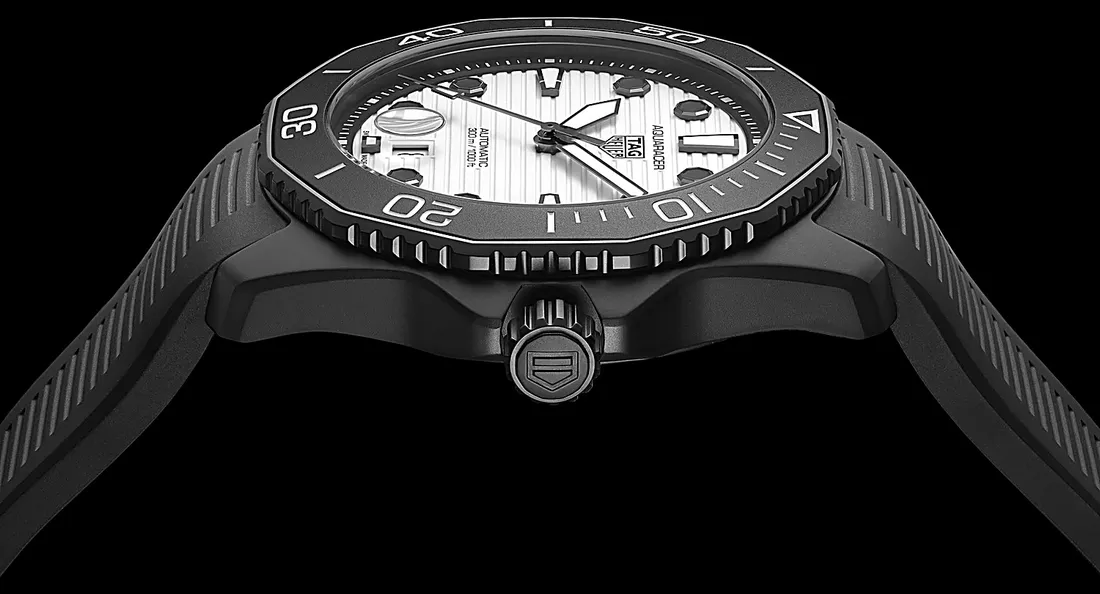
The forty three millimetre case is stainless steel coated with diamond like carbon. The coating takes it down to a matt, bottomless black, which sets a hard contrast against the green rising off the dial. The rotating bezel above it is not octagonal but twelve sided, the signature of the Aquaracer Professional line; a fingertip finds a stop on every facet and can turn it in a wet glove.
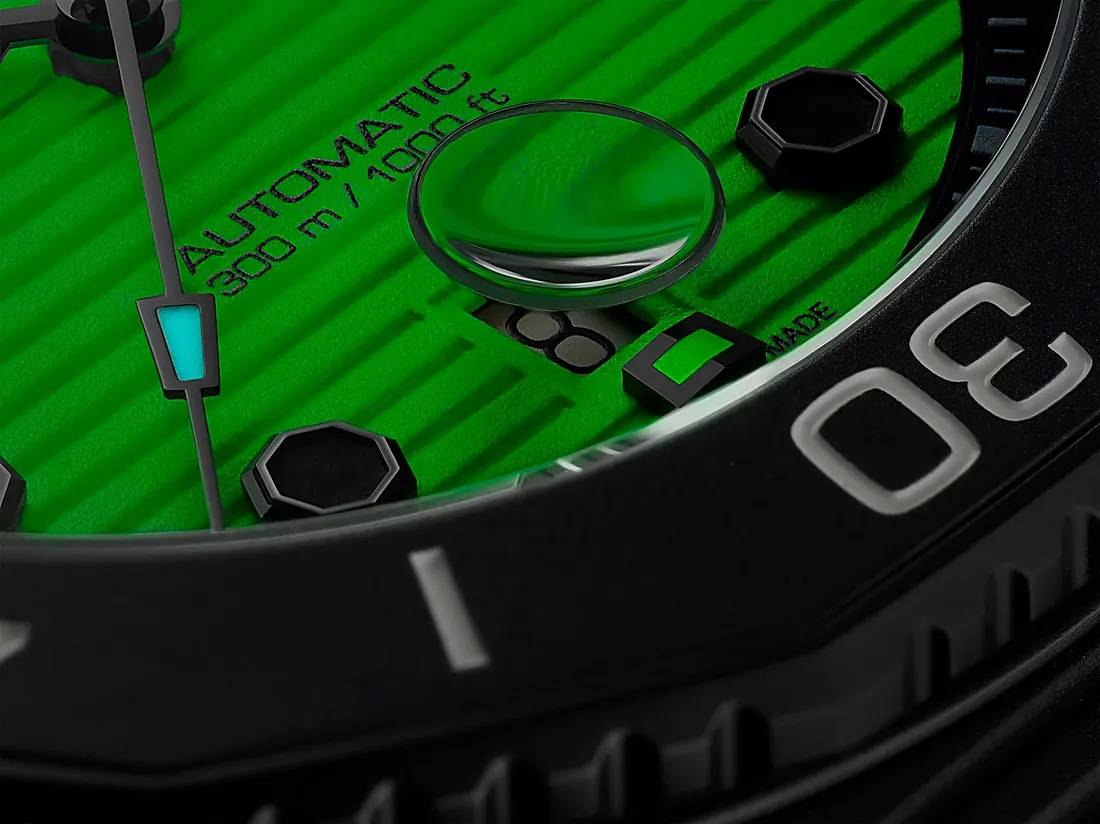
By day the dial reads pale, almost white, with a fine horizontal striping across it. The instant you step into the dark that whole surface goes green. A second colour has been used to keep it legible: the minute hand and the marker on the bezel glow blue, so that the eye does not lose the dive time inside the green field.
Honesty is owed here. Super-LumiNova is not bioluminescence and it does not make light by a chemical reaction. It is phosphorescent; it drinks light first and then gives it slowly back. It does, in other words, the exact opposite of what the animal does: the animal produces light, this borrows it. The one thing they share is that neither burns anything to shine. The resemblance is the viewer’s reading, not a claim made by the watchmaker.
format_quote"Super-LumiNova does not make light. It borrows it, drinks first and repays after."
Hasan Bekmezci
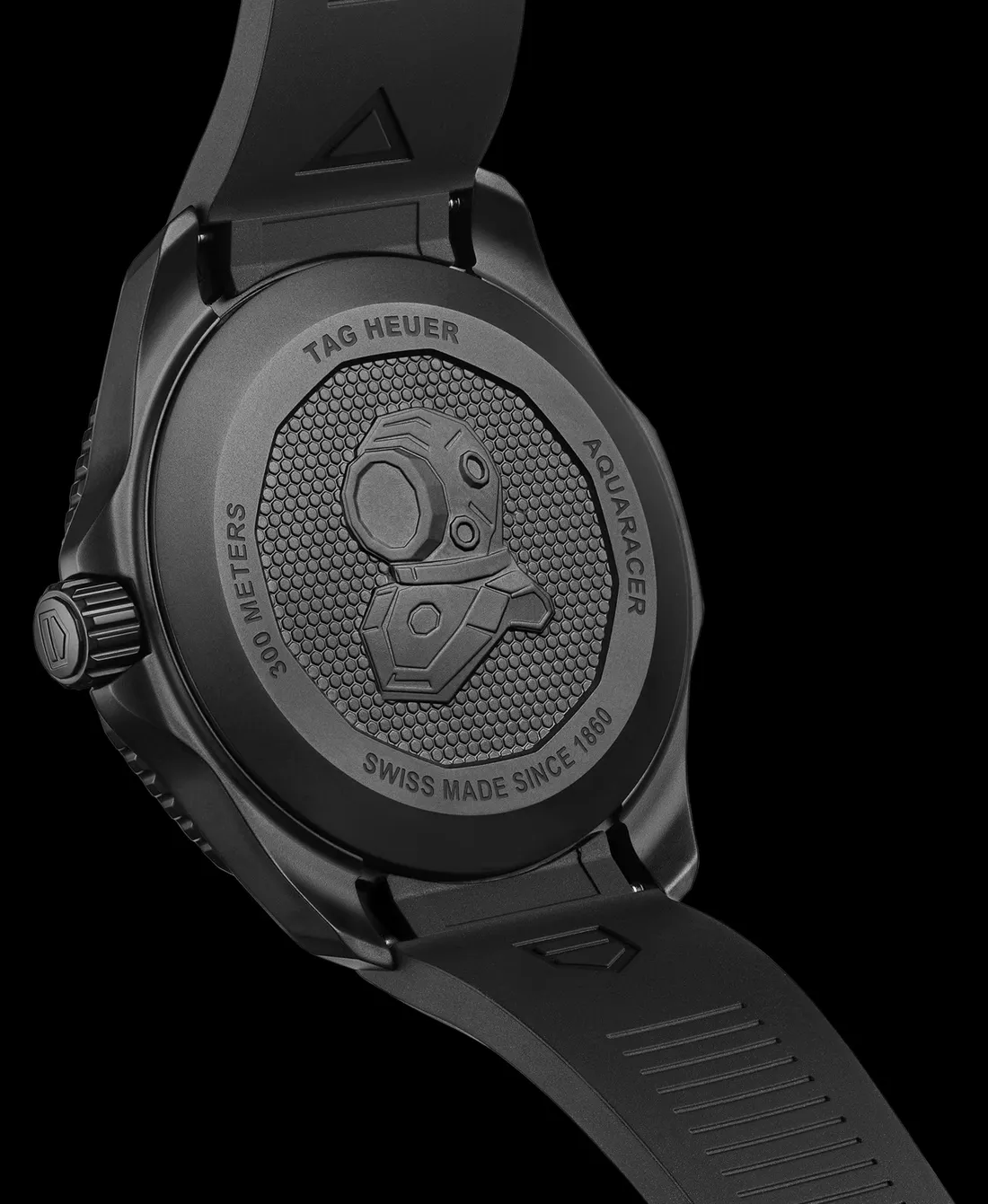
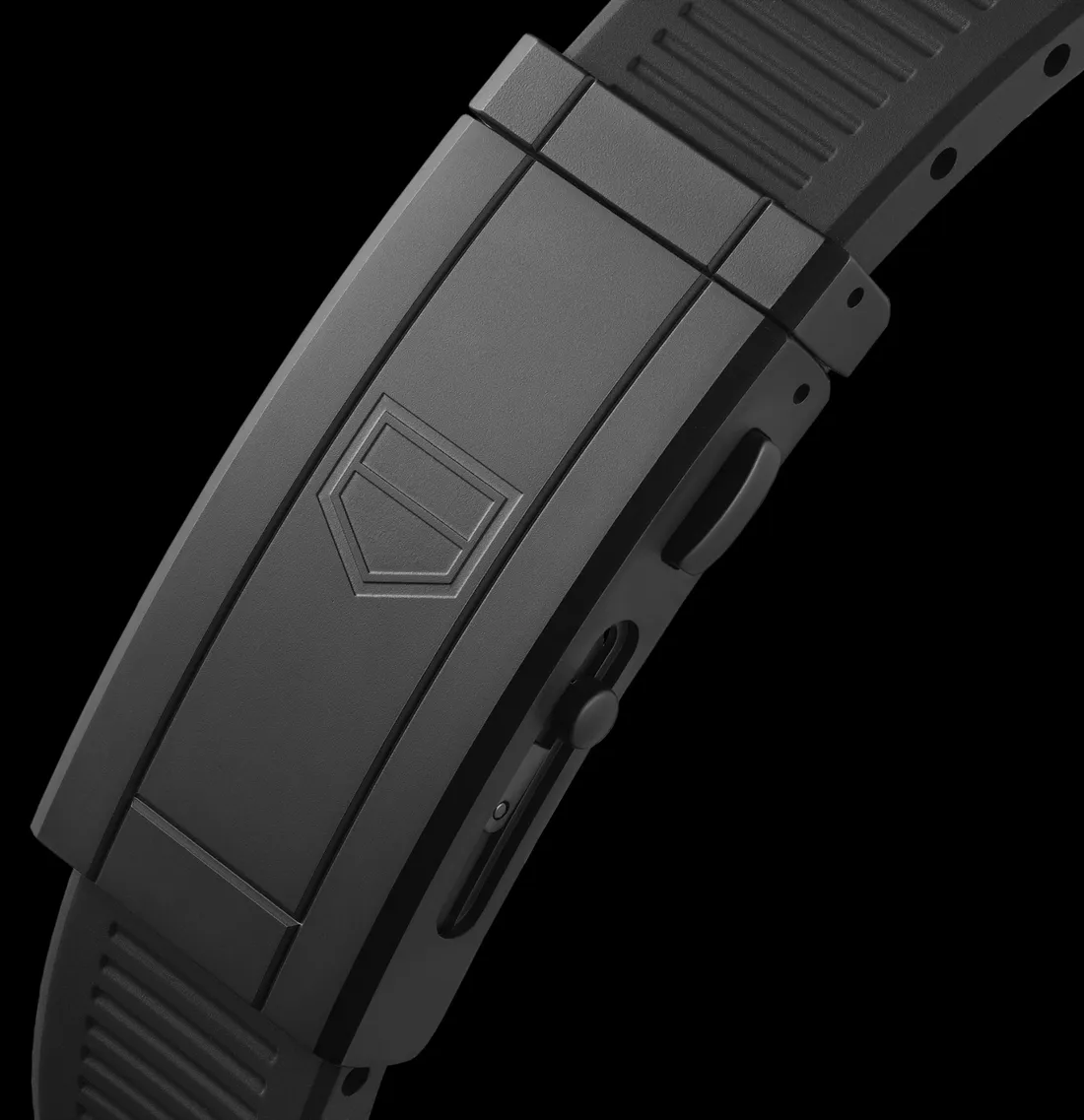
The movement is wholly mechanical. The automatic Calibre 5 asks for no battery and no circuit. Water resistance is three hundred metres, and the case is built so that at that depth it has no need of a helium escape valve. The strap is black rubber. There is no elaborate complication here and no display piece theatre; what a tool requires has been done, and no more.
That may be exactly what makes the watch worth writing about. Without climbing to the unreachable shelves of haute horlogerie, it answers a thoroughly concrete need, reading the time in total darkness, with a thoroughly calm solution.
Someone watching the whole dial fill with light at night may well think of the green that appeared beyond the glass at twelve hundred metres. The difference between the two lights is plain: one makes, the other borrows. But their common origin raises the same question. Who placed inside a cell the chemistry for making light without being scorched by it? That molecule did not arrive at its own formula.
When a person learns that light can be had without burning, the lesson is not only an engineering one. It becomes visible that waste is not compulsory in this universe, and that the Creator can give even the smallest animal an arrangement that runs without loss.
format_quote"Waste is not compulsory. It was not our bulbs that taught us so, but a cell at the bottom of the sea."
Hasan Bekmezci
The Aquaracer Professional 300 keeps this idea alive on the wrist without recourse to astronomical prices. Watching the whole dial turn green in the dark, you begin to think that light can be given not only by burning, but by an order that wastes not a single thread.
The watch on its maker’s own site: TAG Heuer, Aquaracer Professional 300 Date