The sky is never quiet. Right now, as you read this line, particles from space are passing through your body a few hundred times a second and you feel none of them. Standing on the surface and trying to catch one very rare event is therefore like trying to hear a pin drop in the middle of a stadium. First you have to empty the stadium.
The only way to empty it is to go underground. You take a lift down an old mine gallery driven into a mountain until there are fourteen hundred metres of rock above your head. That rock works like an enormous pair of ear defenders: it filters out very nearly every particle falling from the sky and leaves behind a silence that rings in the ears.
In the laboratory at the end of the gallery, in the middle of the room, stands a stainless steel vessel the size of a lift car. It is filled with liquid xenon. Xenon is ordinarily a colourless gas; take it below minus a hundred degrees and it turns into a clear, heavy liquid rather like water. The vessel has one job only: to wait for a knock at the door.
What is expected to knock is a particle nobody has ever seen. We have not seen it, and yet we believe it makes up four fifths of all the matter in the universe. Which means everything we have ever pointed a telescope at, every star, every planet, every cloud of gas, is the remaining fifth of the story.
The astroparticle physicist Dr Ilse Reinhardt has been waiting fifteen years for that single knock. Across from her sits the theoretical cosmologist Dr Kwame Adjei, whose job is to explain why the expected guest has still not arrived. On the table between them lies a wristwatch that appears to have nothing whatsoever to do with the conversation.
Naming What We Cannot See
"Another empty month," said Ilse. "Fifteen years, zero signal."
"Zero signal is an answer too," said Kwame.
"What kind of answer?"
"This kind. You walk into a room and the curtains are moving. You cannot see the wind, you cannot hold it, you cannot photograph it. But you know the window is open, and nobody argues with you about it. The curtains are moving in the universe too. We have been staring at those curtains for a hundred years."
"Which curtains?"
"The way galaxies turn. Think of it like this: you tie a stone to a string and whirl it above your head. The faster the stone goes, the tighter you have to hold. Past a certain speed the string gives way, snaps, and the stone flies off. So from the speed of the stone you can work out how strong the string is, even if you never see the string."
"And in the sky the string is gravity."
"Exactly. The solar system obeys the rule to the letter. Mercury sits right beside the sun, its string short and taut, and it goes round in eighty-eight days. Neptune is far out, its string slack, and it takes a hundred and sixty-five years to make the same trip. The further out, the slower. It is one of the soundest rules we have."
"And galaxies break it."
"Completely. In a galaxy the stars at the rim turn at almost the same speed as those near the centre, as though every one of them were bolted to a single wooden disc and the disc were spinning. Now go back and work out the string: to hold a stone turning at that speed the string would have to be far thicker. But weigh up every star we can see, every cloud of gas, every grain of dust, and the string that comes out is thread. It should have snapped billions of years ago and the outer stars should have been thrown into the dark. They have not been."
"So something else is holding the string."
"And that something is invisible. It wraps around the visible part of the galaxy like an envelope and never speaks to light: it does not shine, it does not cast a shadow. That is why we named it dark matter. Notice what that is: not a name, not even a description. Only a confession that we cannot see it."
"And it has a sibling," Kwame went on. "You throw a ball into the air. It slows as it rises, stops for an instant, then falls. Everybody knows this. Now what would you think if the ball went faster the higher it rose, and faster still with every passing second?"
"That somebody was pushing it."
"That is exactly what the universe is doing. Distant galaxies are moving away from us, and the speed at which they recede grows with every billion years that passes. We call it dark energy. But that name is not the name of whatever pushes the ball. It is shorthand for the sentence something is pushing the ball. The moment we say dark, we have said it does not interact with light, and nothing else at all. Not an explanation, a confession."
Ilse smiled. "That should feel familiar. The nineteenth century stood exactly here and fell into exactly the same trap."
"Tell me."
"There is a schoolroom experiment. You put a ringing bell inside a glass jar and pump the air out. You go on watching the hammer strike, but the sound fades and finally stops altogether, because sound needs air to carry it. Take the air away and you have taken the sound away. A sea wave needs water, sound needs air."
"And then light turned out to be a wave as well."
"And that is where the question arose: what is the water of light? The experiment made it more urgent still, because when the air was pumped out the sound died but the light went on passing through the glass. So whatever carried light was not air, and it was present even in a vacuum. They assumed an invisible, weightless substance passing through everything and filling every corner of the universe. They called it the aether."
"And they did not find it."
"In 1887 Michelson and Morley decided to go looking," said Ilse. "Their logic was very simple. Picture two people swimming at the same speed in a flowing river. The first swims a hundred metres downstream and back; the current pushes him out and holds him up coming home. The second swims a hundred metres across to the far bank and back; the current keeps sweeping him sideways, so to hit his mark he has to swim at an angle the whole way. Both cover exactly the same distance. But if the river is flowing, their times can never be the same. One of them is bound to be late."
"And they turned light into those two swimmers."
"They split a beam of light in two. Half went one way, half at right angles to it, both were brought back by mirrors, and then they were laid side by side to see which had fallen behind. If the earth is moving through a sea of aether at thirty kilometres a second, one of them had to be late. And since they did not know which way the river ran, they floated the entire apparatus on a bath of mercury and turned it slowly through every direction, all summer long. To catch it just once."
"And?"
"Not late in any direction. The two swimmers came home hand in hand every single time."
"So there was no river."
"No river. No water. Finding nothing is the most productive failure in the history of physics, because the moment you accept that result you must accept something far more uncomfortable: the speed of light does not depend on who measures it. Chase after it or run the other way, you get the same number. And if the speed is the same for everyone, then the thing that stretches is not the light. It is time and distance themselves. Eighteen years later relativity came straight out of that."
"So the aether was a wrong answer."
"No," said Ilse. "The aether was an honest answer to a badly posed question. The question was: what does light travel in? The right response was not to find the name of a substance but to cancel the question. Light needs nothing to travel in. We run the same risk when we say dark matter today. Perhaps there really is an invisible particle and one day it will strike the vessel. Or perhaps we are asking a badly posed question about gravity, and the right response is not the name of a particle but the cancelling of the question."
format_quote"Finding nothing is the most productive failure in the history of physics."
The Engine Under the Bonnet
Kwame pulled the watch on the table towards himself. "I am glad you brought this. Somebody here has done the one thing we have failed to do in fifteen years."
"In a wristwatch?"
"In a wristwatch. First you need to know this: in a watch it is not the hands that decide the time. The hands are only messengers. The one part that decides the time is the balance wheel."
"And what is that?"
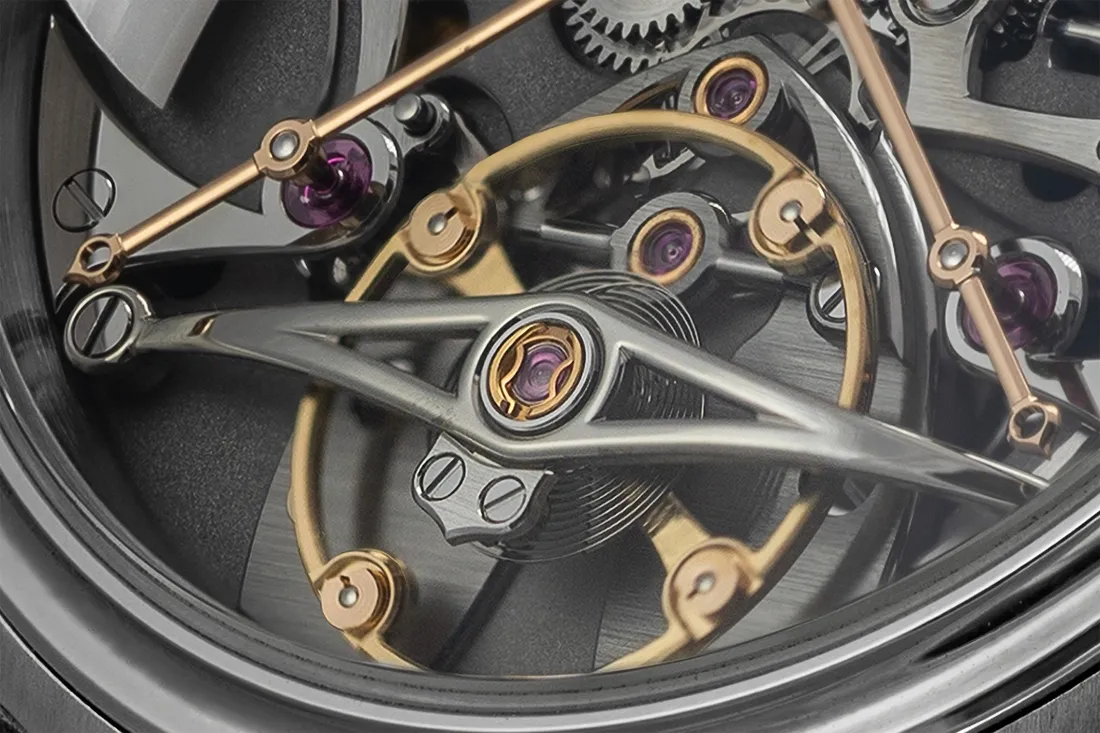
"A small wheel attached to a spiral spring as fine as a hair. It swings endlessly from side to side. Think of a child on a swing. How long one swing takes does not depend on how hard you push; it depends on the length of the rope. Push harder and the child goes higher, but comes back in the same time. That stubborn property is the only reason a watch can work at all. In a balance, the length of the rope is replaced by the weight of the wheel and the stiffness of the spring."
"And who pushes the swing?"
"The part called the escapement. Like a person standing behind the swing who gives exactly one push each time the child comes back. No more, no less; it only replaces the energy lost to friction. In this watch the swing goes back and forth twenty-one thousand six hundred times an hour, three times a second. Everything you see on the dial is the sum of a number counted three times a second."
"Understood. So what is unusual about this one?"
"Where the balance is. In an ordinary watch it sits under the dial, behind the surface you are looking at. To see it you have to turn the watch over and look through the back. Same logic as a car: the engine is under the bonnet and you look at the instrument panel. All day long you carry the effect on your wrist, never the cause."
"And here?"
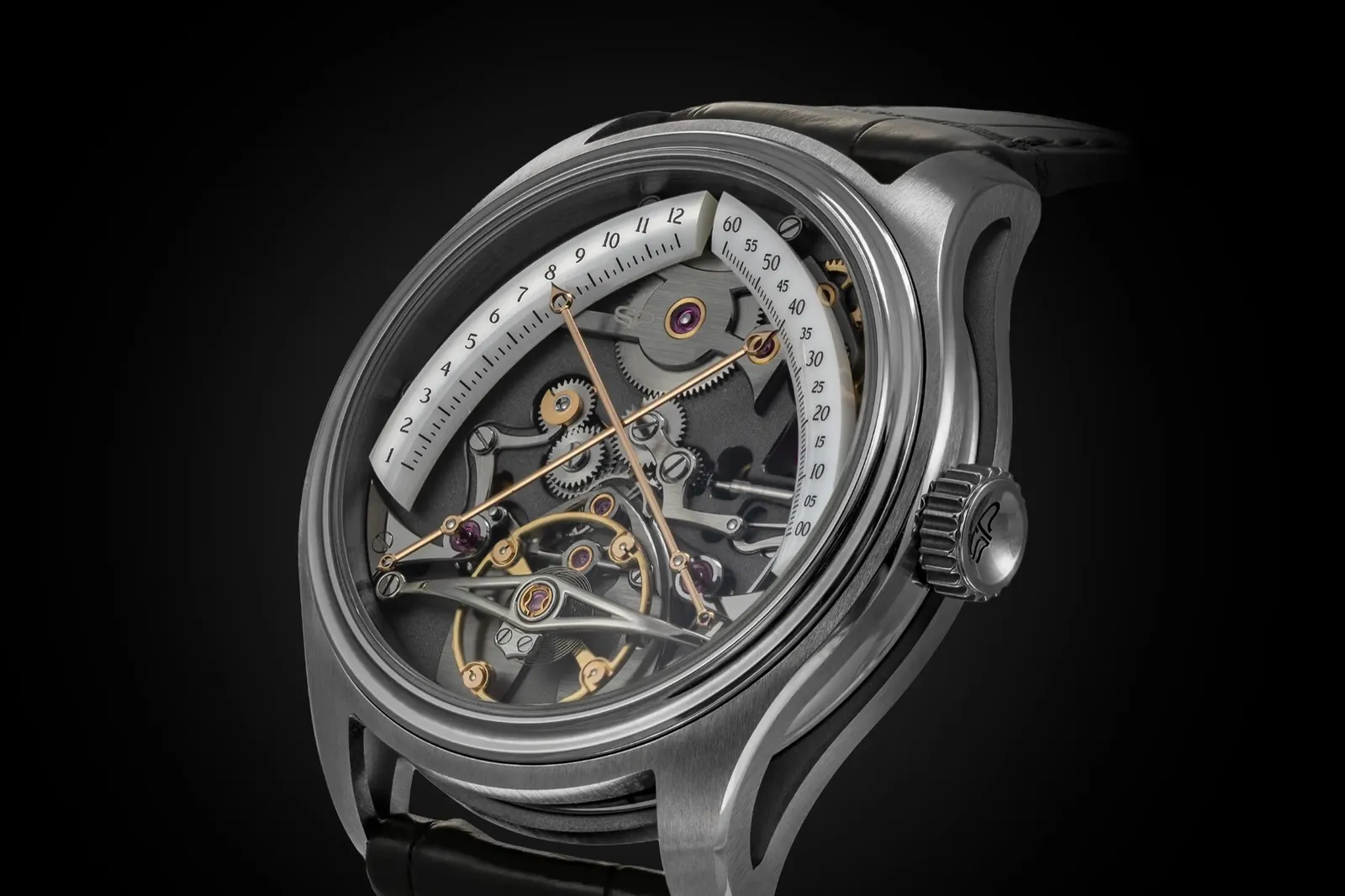
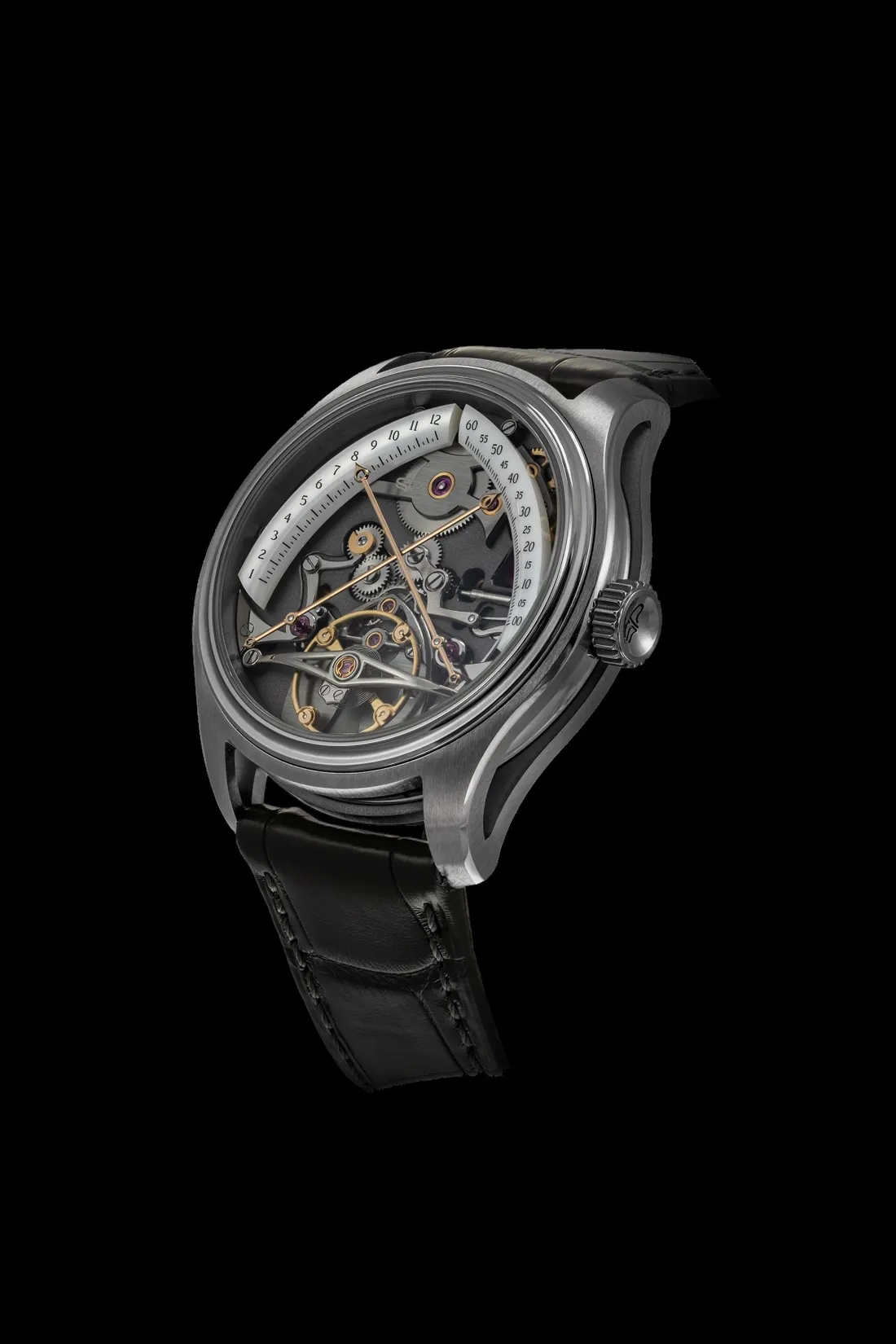
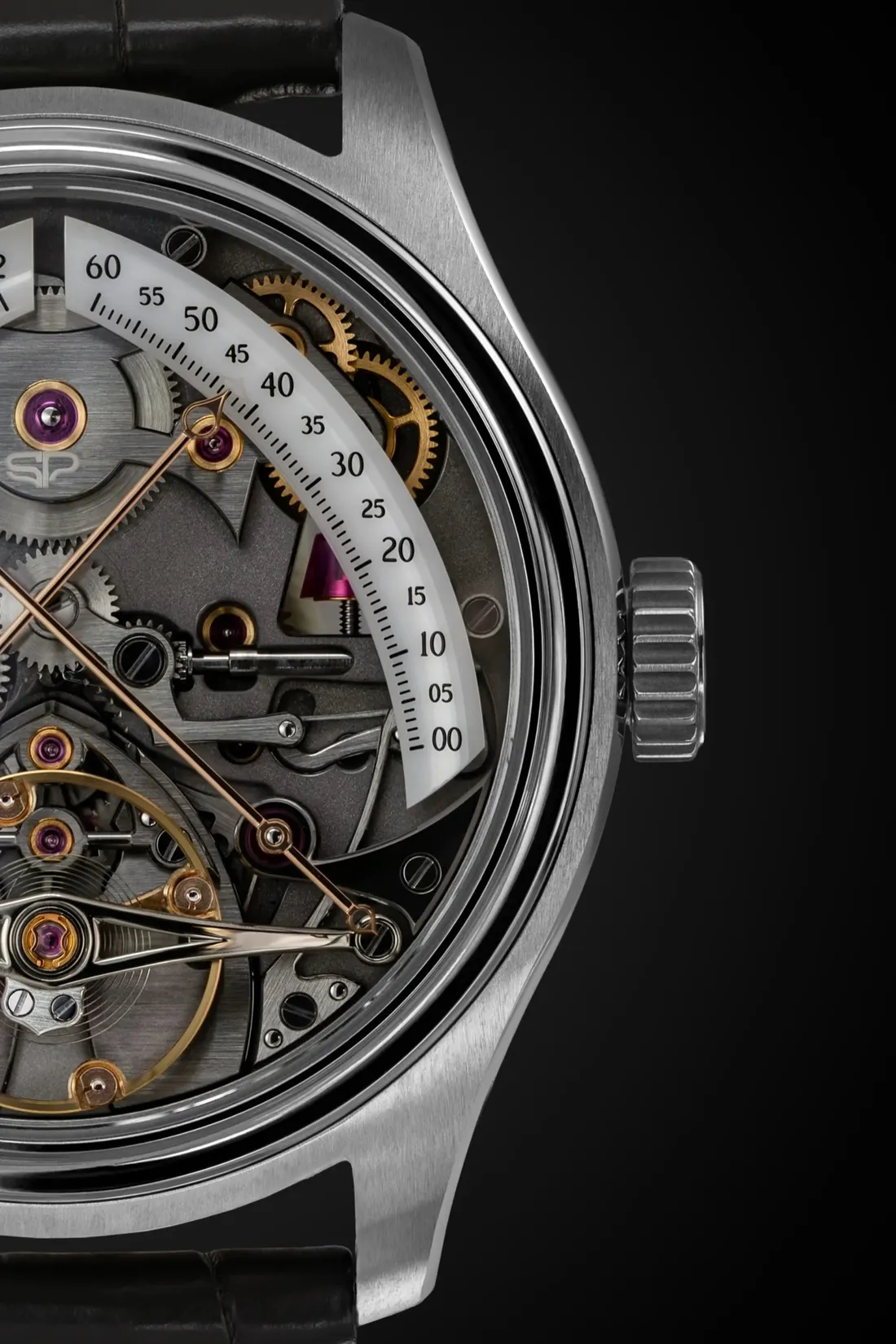
"Here the bonnet has been taken off and the engine mounted on the windscreen. The dial has been stripped away almost entirely and the balance has been lifted, on its own bridge, up to the floor where the hands live. The moment you look at the watch you are looking at what makes the watch."
Ilse looked up. "And that is precisely what we cannot do."
"Precisely. You measure the speed of a star; you are reading the instrument panel. You cannot move the engine onto the windscreen, because there is no bonnet to lift. That is why you came down under fourteen hundred metres of rock. Think of it like this: a billiard table in a darkened hall, and half the balls are invisible. When an invisible ball strikes a visible one, all you see is the visible one jump; you never see what hit it. The liquid xenon in that vessel is full of those visible balls. If an invisible particle strikes a xenon nucleus, the nucleus is knocked out of place, and in being knocked it gives off a single spark of light. That spark is what you have been waiting fifteen years for."
"And the rock?"
"The rock keeps the hall quiet. If particles from the sky were hammering the table all day long, you could never tell which jump was the real one."
"And is there a price for moving the engine onto the windscreen?"
"A heavy one. First, the dial is also a lid. It is the only thing shielding the balance from dust, sweat and shock, and taking it off takes the shield with it. Second, there is the bridge. Fix the bridge that carries the balance at one end only and the other end is left out in the air like a balcony. Every knock your wrist takes flexes that balcony by a few microns, and the moment it flexes the balance staff loses its square."
"Meaning what, in practice?"
"A balance out of square runs at one rate lying down and another standing up. The watch tells you one time on the table and a different time on your arm. So a balance lifted to the upper floor needs a bridge thicker than usual and anchored at two points. Visibility here is not decoration; it is an engineering debt that has to be paid."
A Submariner’s First Watch
"It is called L’Impétrant," said Kwame. "The man who made it is Stéphane Pierre, a micro-mechanical engineer who spent years in the submarine industry. Impétrant is the word for a young submariner assigned to a crew but not yet fully taken into the group. He gave his first watch the name of his own former condition. I like that: a maker who still counts himself a candidate."
Ilse leaned in. "The hands look strange. They do not turn."
"They do not. Both the hours and the minutes are retrograde. The hand travels along an arc, and on reaching the end of it flies back to the start in a fraction of a second and begins again. A rotating hand is a runner going round and round a track. A retrograde hand is a runner who covers a hundred metres and then has to be carried back to the starting line every time."
"And what carries it back?"
"A part called a snail cam. The name comes from its shape: a spiral ramp that climbs and ends in a sheer cliff. A little finger rests against that ramp. As the cam turns, the finger creeps up the ramp and drives the hand along its arc. The instant it reaches the edge of the cliff the ground runs out from under it, a tensioned spring snatches it to the bottom, and the hand flies back to zero. Because the dial has been removed you can watch that climb and that fall with your own eyes; normally nobody but the watchmaker ever sees it."
"And what does that cost?"
"A rotating hand is dragged by a constant force and its bill is predictable. A retrograde hand must also feed a spring that is being tensioned all the while. Every minute a little money is stolen from the watch’s energy budget. And every reset lands a small slap on the movement. Fail to absorb that slap and the swing of the balance shortens, and the watch loses time at the exact instant of the jump."
"Our counters work the same way," said Ilse. "The measurement window fills, the system resets, a new window opens. We do not keep a continuous record; we keep slices. Retrograde is really the honest form of measurement: there is no infinite flow, only finite windows."
"So what is inside?"
"His own calibre, and three separate acts of stubbornness in it. First the size of the balance: eleven and a half millimetres, enormous for a wristwatch. A big wheel is heavier, and what is heavy is hard to push off course. A heavy swing takes effort to get going, but once it is going a passer-by knocking into it cannot spoil it. A small light balance flinches at every jolt."
"Second?"
"The way it is regulated. In an ordinary watch the rate is set by an arm that grips the spring by the neck and shortens its working length; slide the arm and the watch speeds up or slows down. It is an easy solution, but the arm drifts of its own accord over time. Here there is no arm. The rate is set by turning tiny weights in and out on the rim of the wheel. A screw does not drift."
"Third?"
"The last coil of the spring. As it works, a spiral spring opens and closes like breathing. In a flat spiral that breath is not properly centred: the spring swells to one side and leans the balance staff against its bearing. Like pulling an accordion from one end, it opens, but it opens crooked. In this watch the last coil has been lifted above the others. The spring now opens and closes like a true circle, and the staff stays in the middle whatever position the watch is in."
"And there is a fourth thing," said Kwame, "but that one is not stubbornness, it is refusal. It is called a Maltese cross."
"What does it do?"
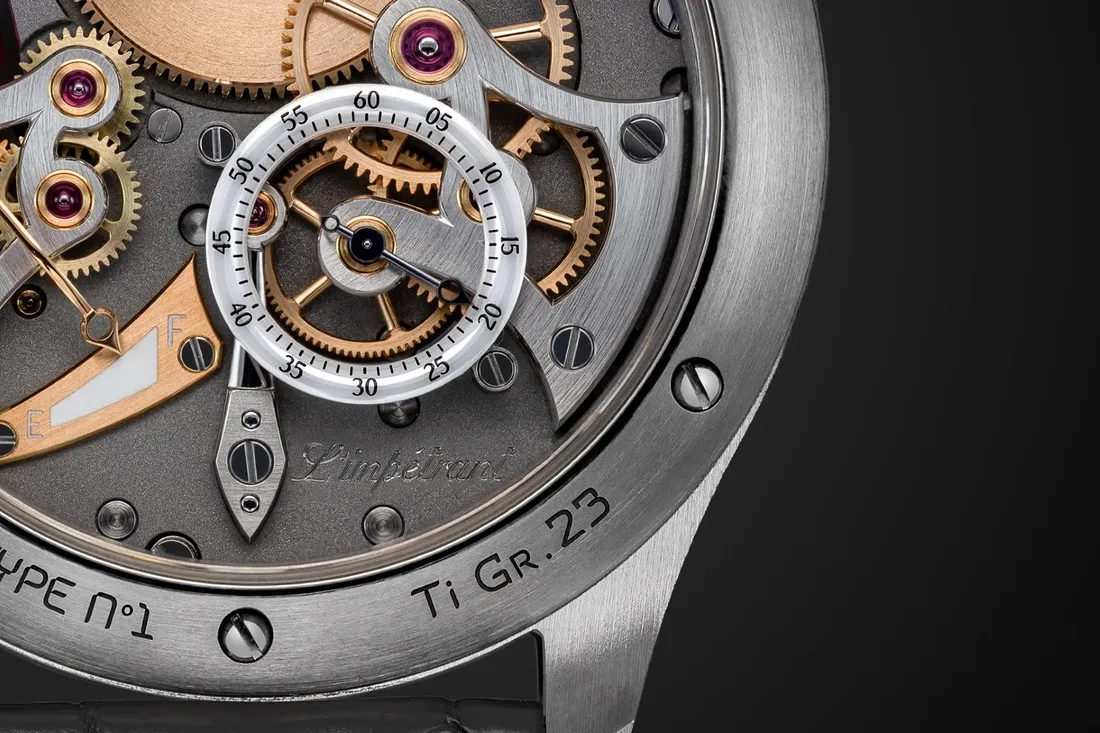
"The energy of a watch comes from a wound coil of spring. Fully wound, that coil pushes far too hard; nearly run down, far too weakly; in the middle it is even. Think of a water tank: full to the brim the pressure is too high, and near the bottom you start drawing sediment. The Maltese cross is a cross-shaped lock riding on the winding wheel that physically prevents the first and the last turns of the coil from ever being used. The watch runs only on the clean middle section."
"So it deliberately refuses part of its own tank."
"Deliberately. It gives up reserve and buys consistency with it."
"And the case?"
"Grade 23 titanium. Titanium already weighs half what steel does; grade 23 is the version with the oxygen and iron deliberately reduced, the grade used for medical implants. Oxygen in the alloy hardens the metal but makes it brittle. Like too much flour in a dough: it holds its shape beautifully and cracks at the slightest strain. Grade 23 is that flour reduced, a softer, more forgiving metal that does not let a crack travel. Thirty-nine millimetres across, ten point eight thick, twelve point two with the domed crystal."
"How many were made?"
"The first release is a subscription series of fifteen pieces, followed by fifty in titanium. Eighty-four thousand Swiss francs before tax."
"Did he make it alone?"
"No, and he does not hide it. He developed it with the prototypist Julien Tixier and around thirty specialists had a hand in it. Like the author list on one of our papers. The myth of the lone genius holds up in a workshop exactly as well as it holds up in a laboratory."
Ilse held the watch up to the light. "I have noticed something. While you were describing this watch to me you never once mentioned time. You spoke about material, weight, flex and friction."
"Because time is not a substance," said Kwame. "What we measure has never been time. Every single time, we counted the regular repetition of something else: the swing of a pendulum, the vibration of a quartz crystal, the transition of a caesium atom. We do not measure time; we count a repetition we trust, and we call it time."
"Exactly like dark matter," said Ilse. "We do not measure that either. We count its effect and give it a name. The curtain moves, and we say wind."
format_quote"We do not measure time; we count a repetition we trust, and we call it time."
format_quote"The aether was not a wrong answer; it was an honest answer to a badly posed question."
Hasan Bekmezci