Ask which part inside a watch works hardest and the answer is the balance spring. It opens and closes three times a second, more than two hundred and fifty nine thousand times a day. Ninety five million times a year. And the whole problem is this: every opening and closing has to take exactly the same length of time.
For two hundred years this spring has been made in almost exactly the same way across the industry: a flat spiral. Like a snail shell laid on a plate, it winds inwards in a single plane. That shape can be manufactured, regulated and made cheaply. But it is not perfect.
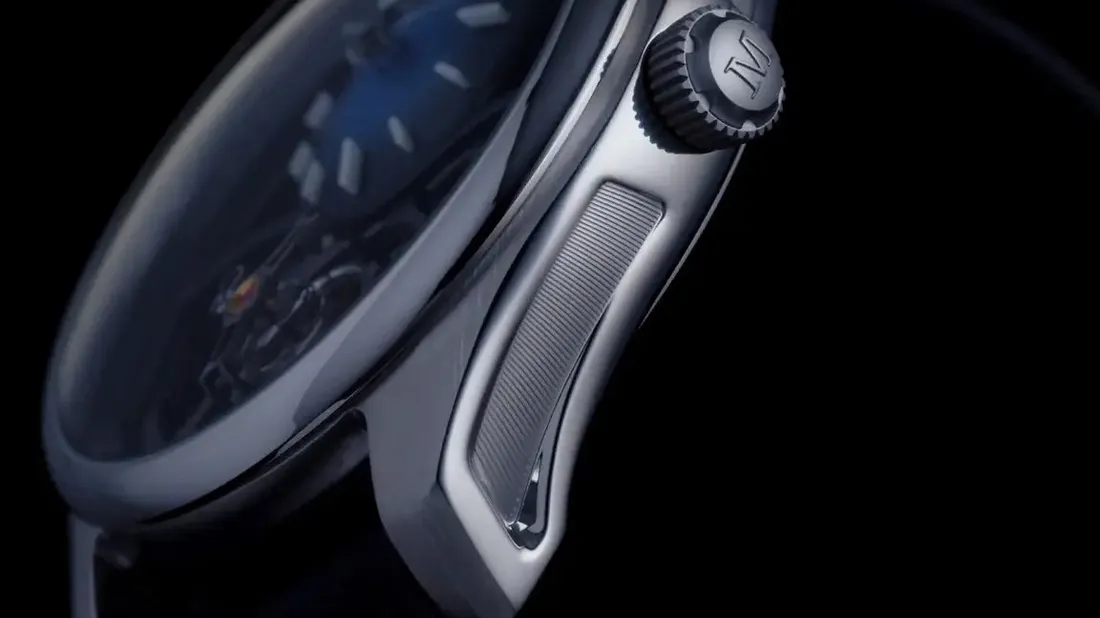
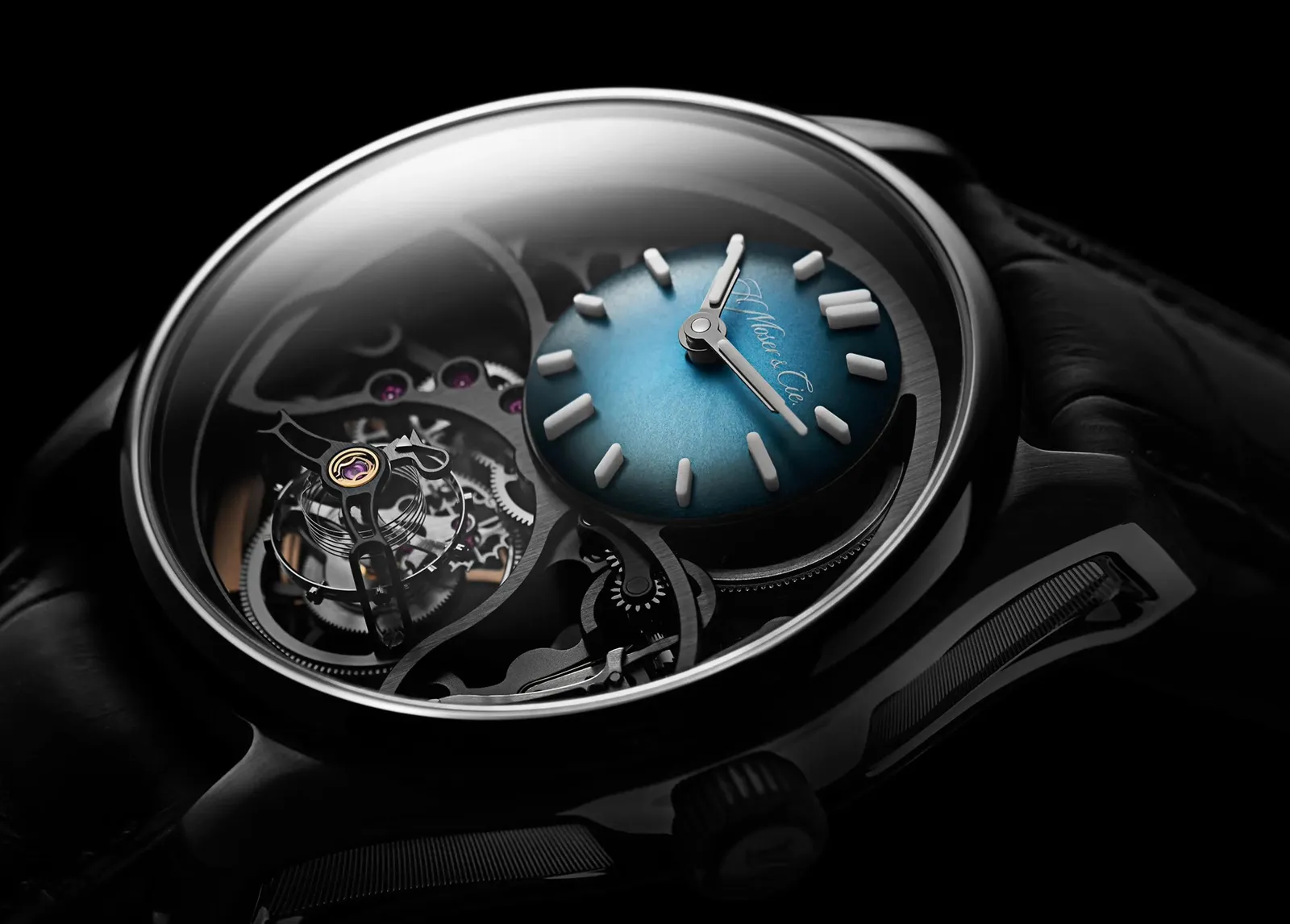
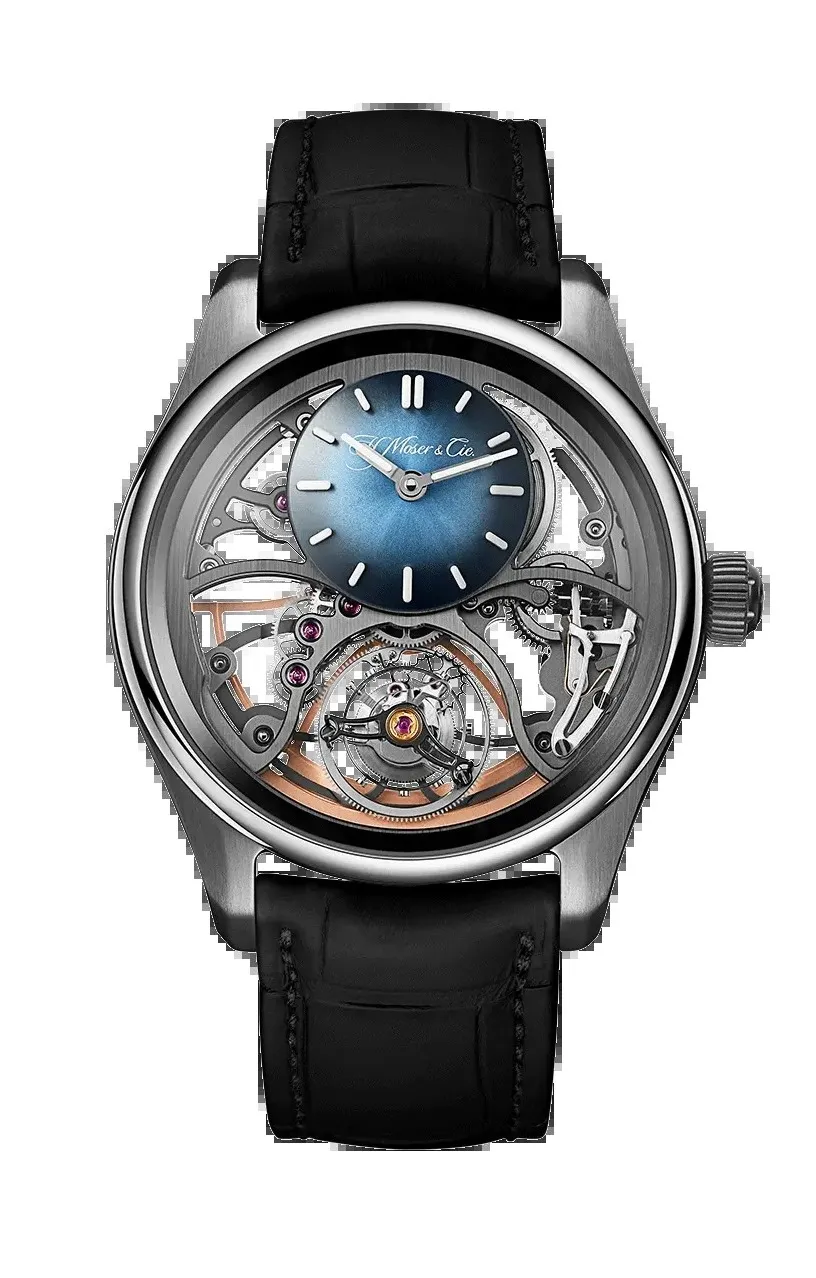
The watch in front of us removes that imperfection by standing the spring upright instead of laying it down. The H. Moser & Cie. Pioneer Cylindrical Tourbillon Skeleton, reference 3811-1200.
The Problem of the Spring: Why a Flat Spiral Is Not Enough
The balance wheel and the balance spring are the wristwatch equivalent of a pendulum. The spring pulls the wheel back, the wheel tensions the spring, the two oscillate together, and the duration of that oscillation is the accuracy of the watch. The spring's job is to hold that duration constant.
A flat spiral spring has two structural problems.
The first is the shifting centre. As the spring breathes, that is as it opens and closes, the coils do not distribute themselves evenly all the way round; they crowd on one side and loosen on the other. The consequence is this: the centre of gravity of the spring moves relative to the balance staff on every oscillation. A centre of gravity that moves means gravity loading the spring asymmetrically. Lay the watch on a table and it runs at one rate; stand it vertically on your wrist and it runs at another.
The second is isochronism. The ideal of a spring is to take the same time however widely it opens. That property is called isochronism and in practice it is never fully achieved. With the mainspring fully wound the balance swings with a wide amplitude; as the mainspring runs down the amplitude narrows. In a flat spiral, as the amplitude narrows the period shifts slightly too. Which is to say the watch does not run at the same rate on its first day and its last.
Both problems come from the same source: the spring is wound in a single plane, and that plane is not symmetrical.
format_quote"The centre of gravity of the spring moves on every oscillation. That means gravity loading the spring asymmetrically."
Breguet's Half Solution and the Sailors' Full One
The first man to attack this problem seriously was Abraham-Louis Breguet. The solution he found around 1795 still carries his name today: a terminal curve that lifts the outermost coil above the plane of the spring on a bridge and bends it inwards. That single move makes the spring's breathing far more concentric. The Breguet overcoil is an invention, and two hundred and thirty years later it is still used in the best watches. But it is a half solution; the spring still sits in a single plane and the symmetry is not complete.
The full solution came from somewhere else: from the sea.
In the eighteenth and nineteenth centuries the only way for a ship to find its longitude was to carry a chronometer holding Greenwich time without fail. Those chronometers were instruments that rocked in the swell, warmed and cooled and had to run for months, and they had no tolerance to spare; an error of a few seconds a day became, weeks later, a position error measured in kilometres. That is why the makers of marine chronometers abandoned the flat spiral and wound the spring as a helix parallel to the balance staff, that is as a cylinder of spring steel.
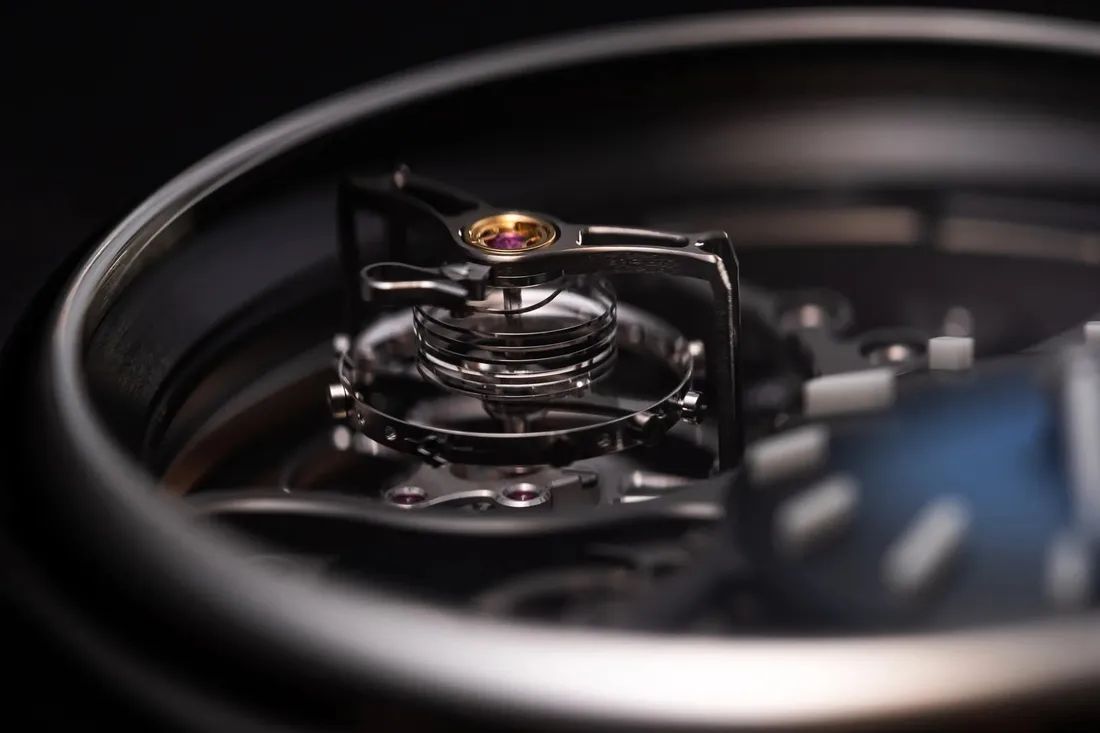
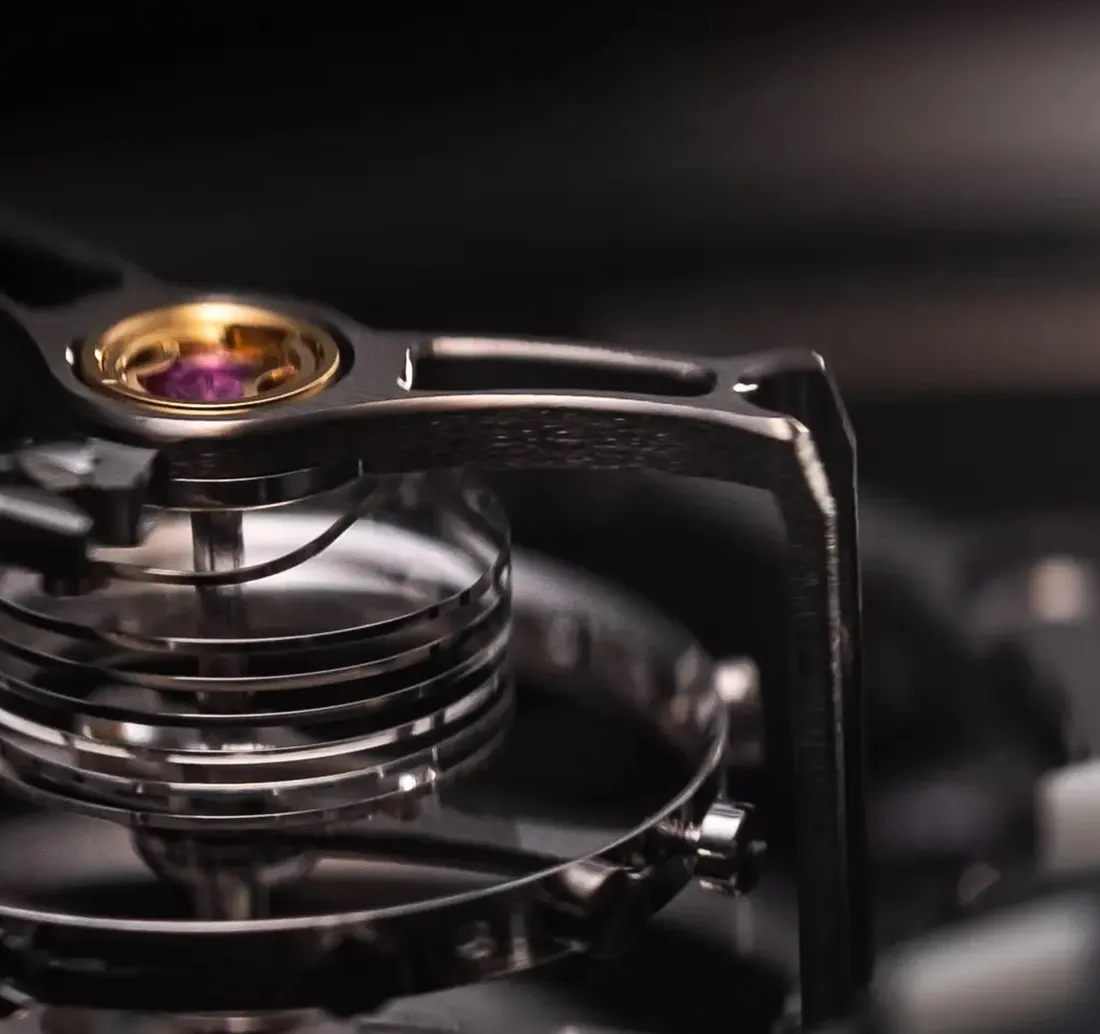
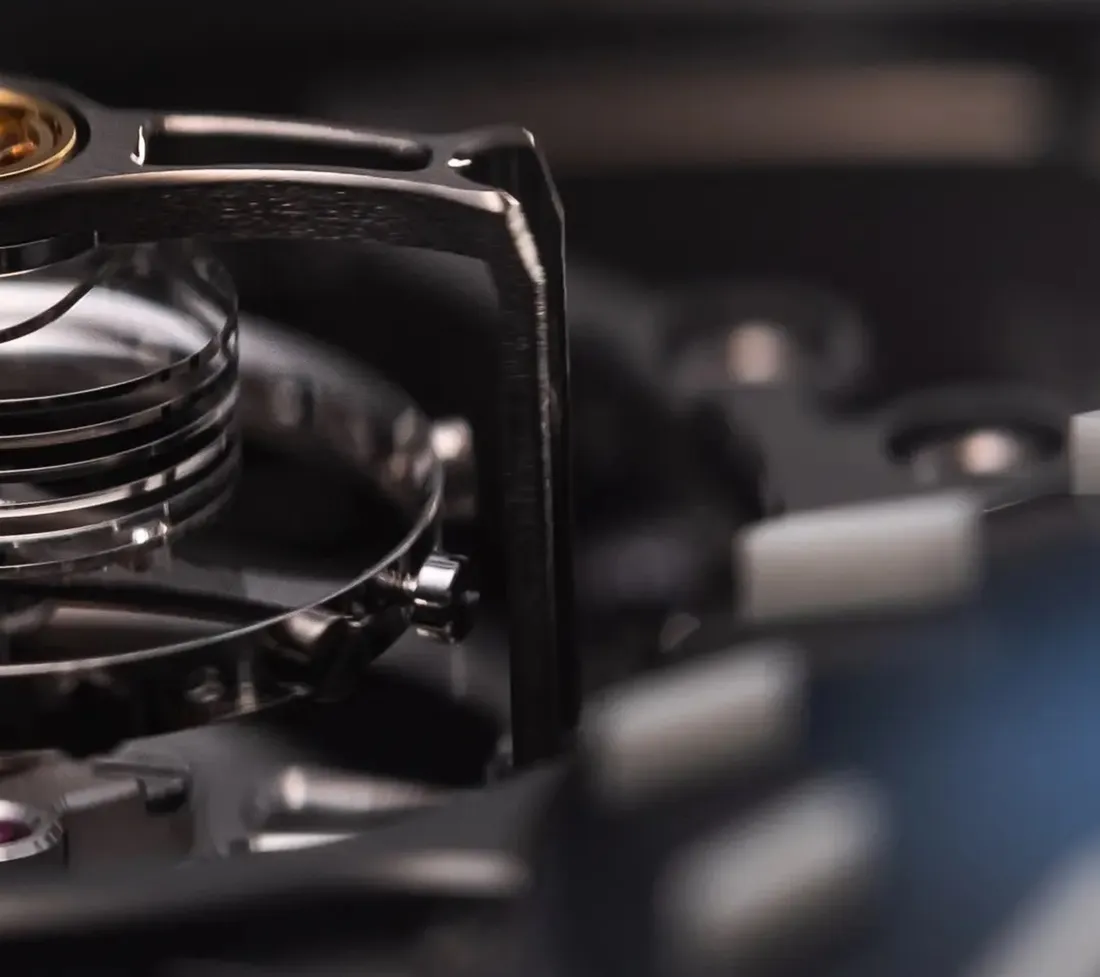
The superiority of the cylindrical spring is geometrically obvious. The spring is now symmetrical about the staff in every direction; as it opens and closes it contracts and expands evenly towards its centre. The centre of gravity stays on the staff and does not move. And with terminal curves at both ends the isochronism improves markedly as well; Moser sums it up in its own words: the period of oscillation stays constant regardless of amplitude.
So what sits inside the watch in front of us is not an innovation but a restoration. The solution of the marine chronometer has been carried into a forty two millimetre wristwatch.
format_quote"What sits inside this watch is not an innovation but a restoration. The solution of the marine chronometer has been carried to the wrist."
The Price of the Cylindrical Spring
If the cylindrical spring is this good, why is it not in every watch?
Because the price is heavy, and the price has three items.
The first is height. A flat spiral is as thin as paper; a cylindrical spring demands vertical room. That single requirement changes the whole architecture of the movement. It is exactly why the calibre HMC 811 is designed three dimensionally: thirty four millimetres across but five and a half millimetres tall, and the plane of the dial is not a single layer. The domed sapphire crystal over the case is not an aesthetic choice either; it is a necessity imposed by the spring. The height of the case is therefore above the usual measurements of a wristwatch.
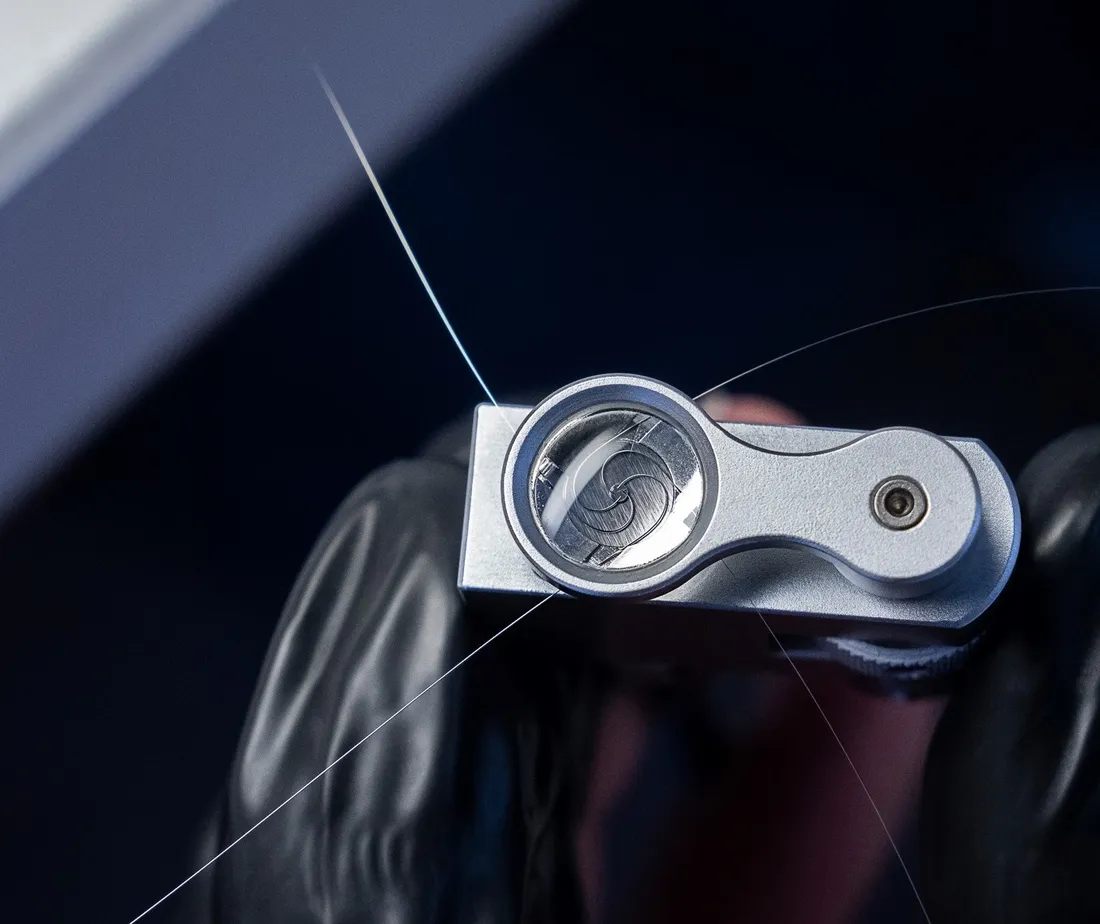
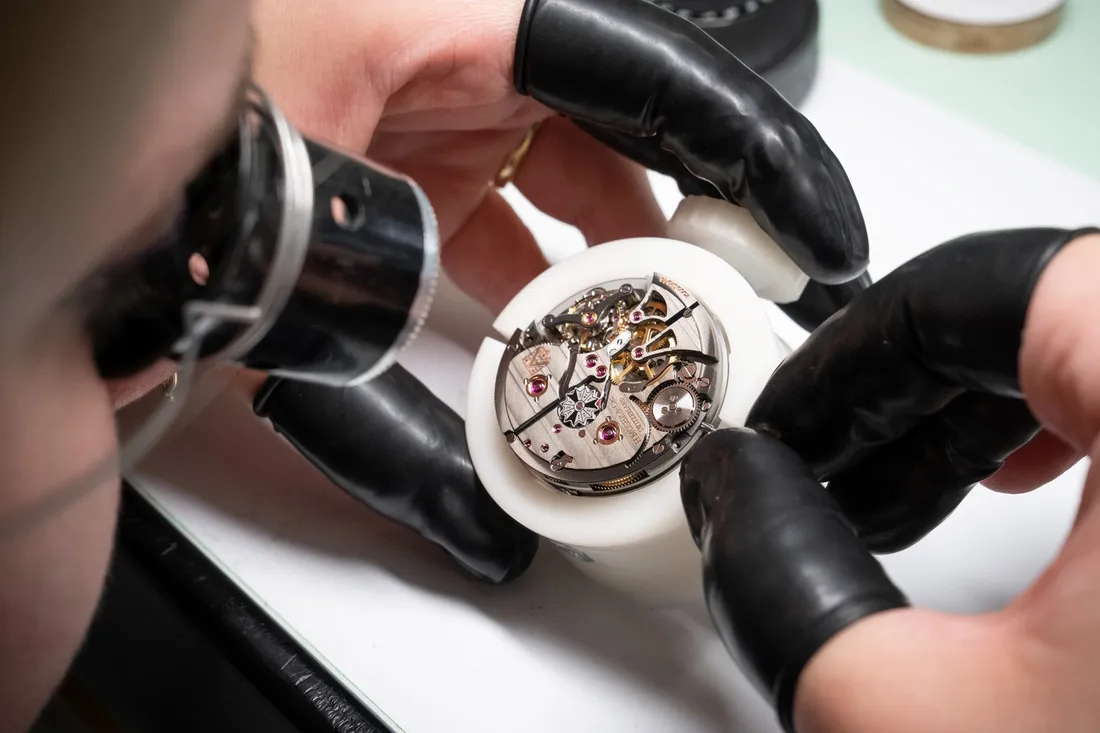
The second is difficulty of manufacture. Winding a cylindrical spring, annealing it, forming both terminal curves by hand and matching it to the balance takes many times longer than a flat spiral. Today that work can only be done in a number of workshops in Switzerland you can count on one hand.
The third is fragility. A long, fine spring standing upright is more exposed to shock than a flat spiral. That is why watches with cylindrical springs usually stay in classical, quiet cases. What Moser has done here is precisely the opposite: it has put this spring inside the Pioneer, that is inside the brand's sports collection. The case is steel, water resistance is twelve atmospheres, the crown is protected. Which is to say this piece is not a display cabinet object but a marine chronometer solution designed to be worn.

A House That Makes Its Own Springs
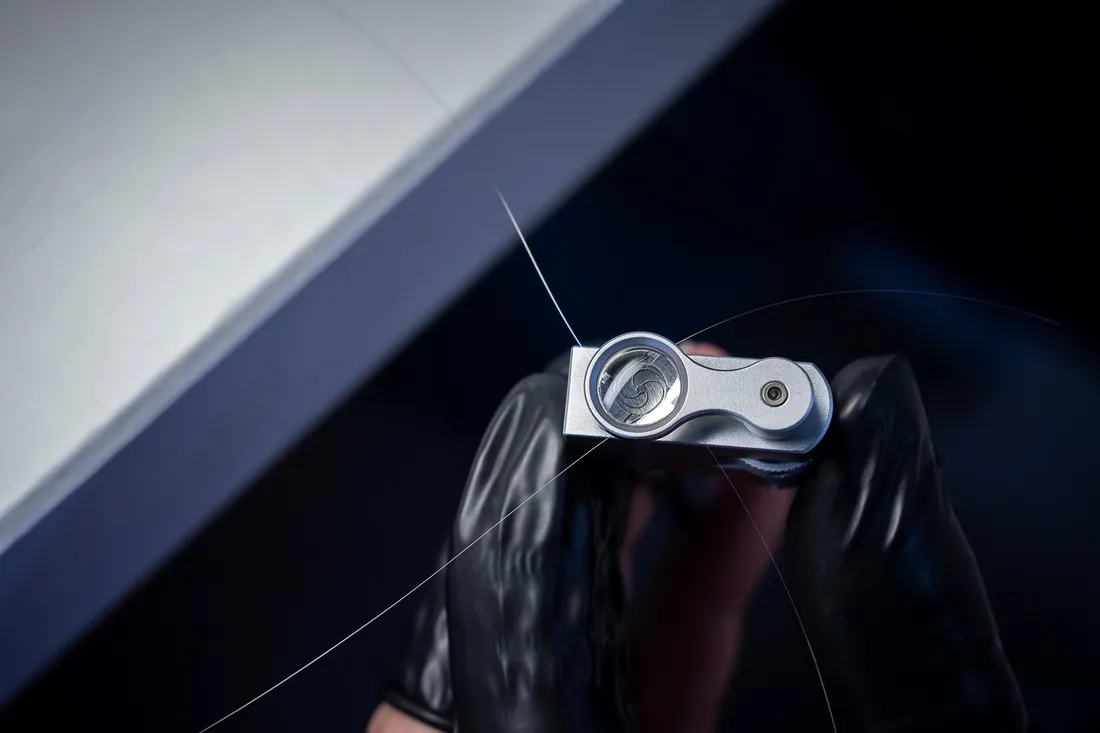
Here is something very few brands in the industry can say: H. Moser & Cie. makes its own balance springs.
That is a bigger sentence than it looks. The balance spring is the hardest part of a mechanical watch to produce; its alloy, its cross section, its number of coils and its heat treatment decide the precision directly. The overwhelming majority of the industry buys this part and has depended on a single supplier for decades. Moser makes its springs at Precision Engineering AG, the sister company inside the group; the Straumann name the springs carry belongs to that same tradition. And this is exactly the precondition for being able to make a part like a cylindrical spring in series: you can only produce what you cannot order from outside if you can make it yourself.
The workshop is at Neuhausen am Rheinfall, on the bank of the Rhine falls. That address is not a coincidence. The brand's founder Heinrich Moser started in the watch business in Saint Petersburg in 1828, built a great fortune there, and when he returned to his native Schaffhausen he invested his money in water: he built a dam and a hydraulic power plant on the Rhine and supplied the industry of the region with power. So the brand's story is as much the story of an engineer as of a watchmaker.
The company broke up in the middle of the twentieth century and the name was raised again in 2005. In 2012 the Meylan family took it over; Edouard Meylan has been at its head ever since. Today's Moser is not large; it makes around two thousand watches a year. That number is not a complaint but a choice.



The Flying Tourbillon: A Second Attack on the Same Problem
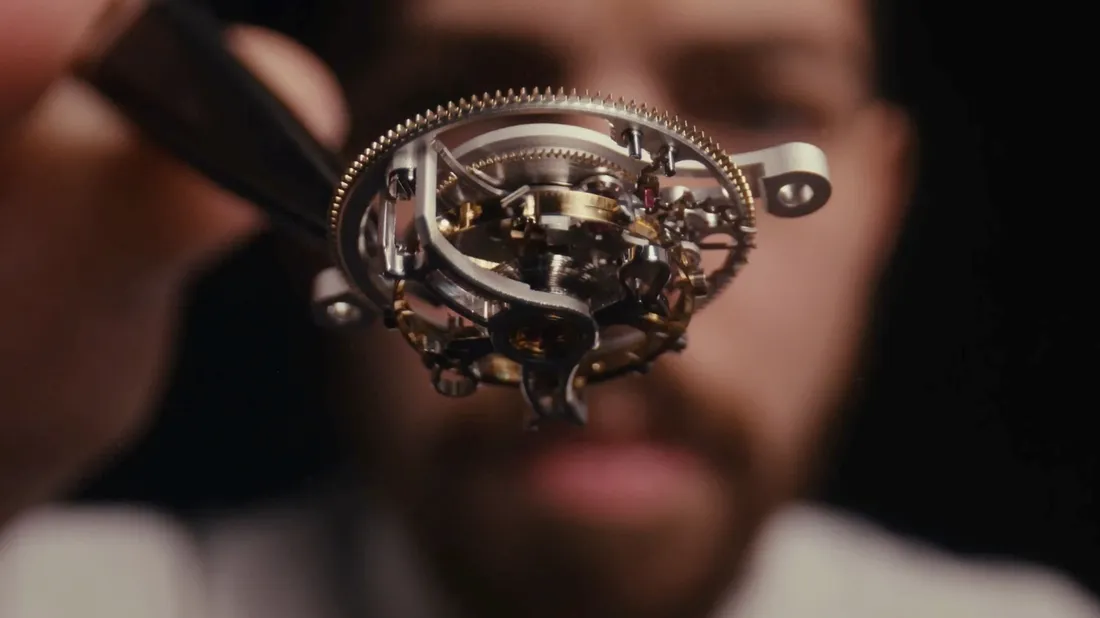
At six o'clock stands a one minute flying tourbillon. And the real question here is why a tourbillon belongs in the same sentence as a cylindrical spring.
The logic of a tourbillon is this: you put the balance wheel and its escapement into a cage and turn the whole cage slowly. In that way the error gravity brings from one particular direction is spread across all directions as the cage turns, and averaged out. A tourbillon does not remove the error; it averages it.
A cylindrical spring does something else: it reduces the source of the error. A spring whose centre of gravity does not move is already less sensitive to gravity.
When the two come together, two different strategies aim at the same target: one shrinks the problem at its source, the other distributes what is left. That is a rare piece of engineering honesty in watchmaking, because most brands sell the tourbillon as a solution when the tourbillon is in fact a compensation.
The cage is flying, which is to say there is no bridge above it; it is supported from one side only and appears to stand in mid-air. That has its price too: a bearing on one side asks for finer adjustment than a bearing on two. But the reward is that the cage, and the cylindrical spring inside it, can be seen from the side. In this watch that sight is the dial itself.

format_quote"A tourbillon does not remove the error, it averages it. The cylindrical spring reduces the source of the error. Two strategies for one target."
The Silence of the Dial: Fumé, Globolight and an Unsigned Design
The design of this watch carries the brand's best known stubbornness: as little as possible is written on the dial. For years Moser removed even its own logo from the dial, and did so not as a stunt but as a principle; the question of what a name saves if the piece is not recognisable on its own became the brand's signature.
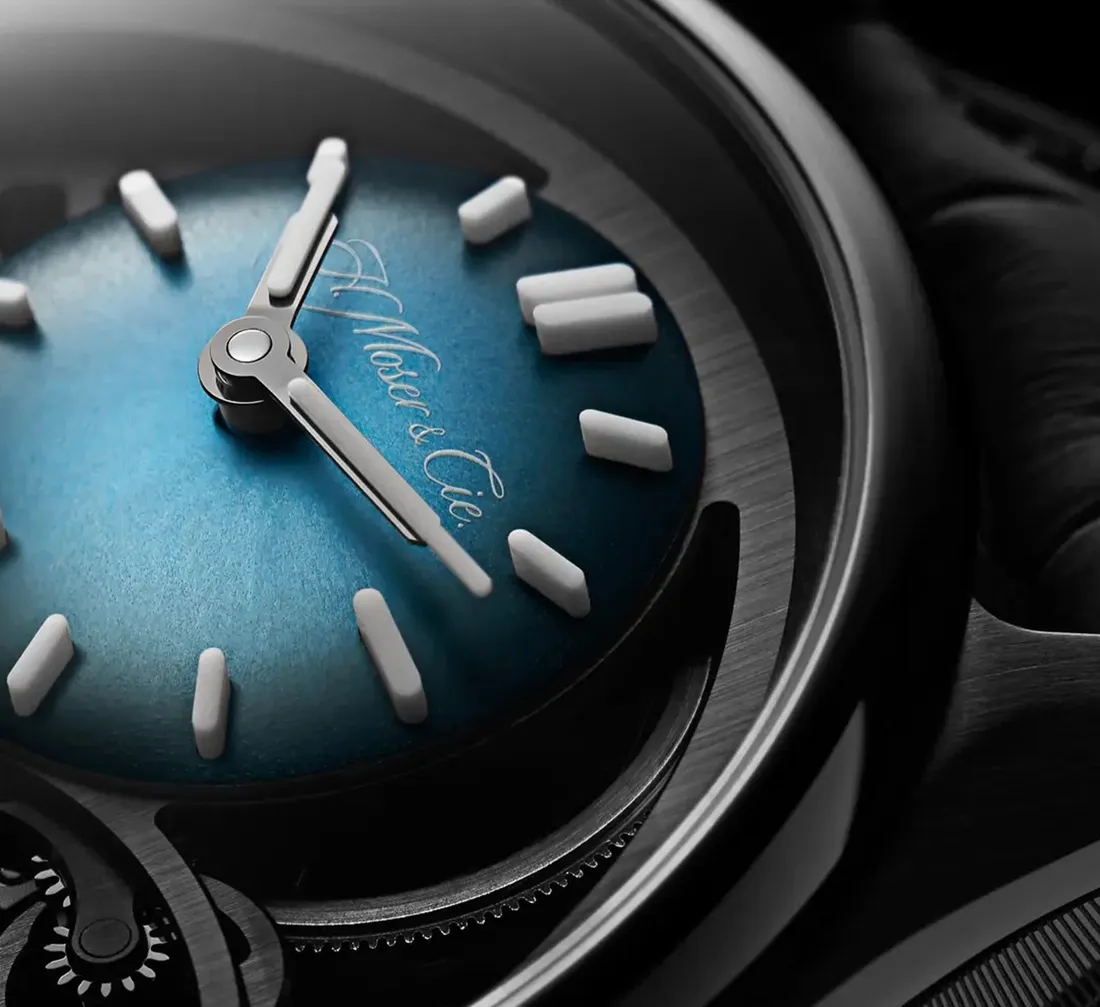
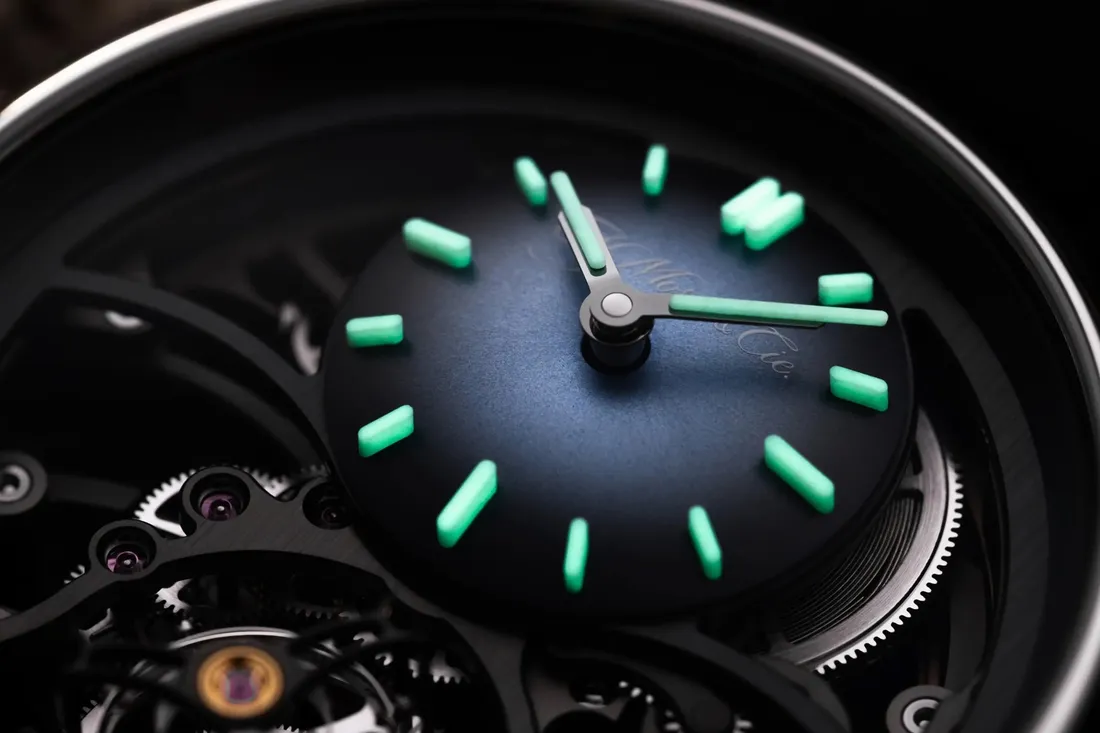
Here the dial is not really a dial at all. At twelve o'clock there is a small, domed sub-dial, and only that shows the hours and minutes. The rest of the surface is movement: a skeletonised main plate and bridges in an anthracite finish, with the wheels visible beneath.
The colour of that small dial is Funky Blue fumé. Fumé is a gradation that darkens from the centre towards the rim, and it is achieved not with paint but with a process sprayed onto the dial in layers; the edges come down almost to black. Its being domed is a choice too: light does not gather at one point on a dome but spreads across the surface, so the gradation changes as the watch moves.
The indexes are made of a material unusual in the watch industry. Moser calls them Globolight: three dimensional blocks of a ceramic based material into which a light storing substance has been mixed. A classical lume is a layer applied on top of a dial and it thins over time. Globolight is not a layer but a solid body; it is cut, shaped and set onto the dial. What emerges in the dark is therefore not a fine line but green blocks with volume.
And the only piece of writing in the middle of the dial is the brand's handwritten signature: H. Moser & Cie.
The Caseback and the Specification
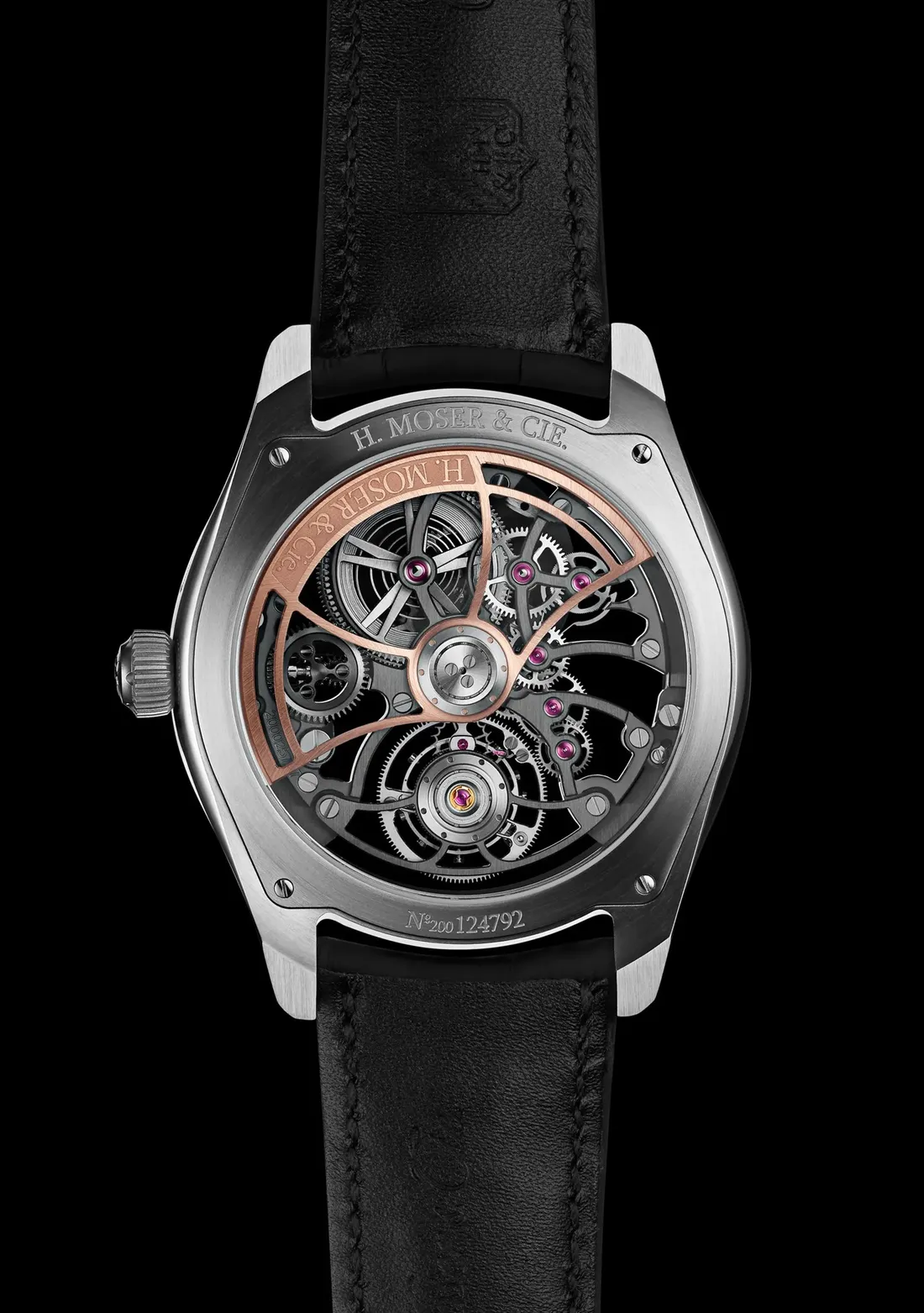
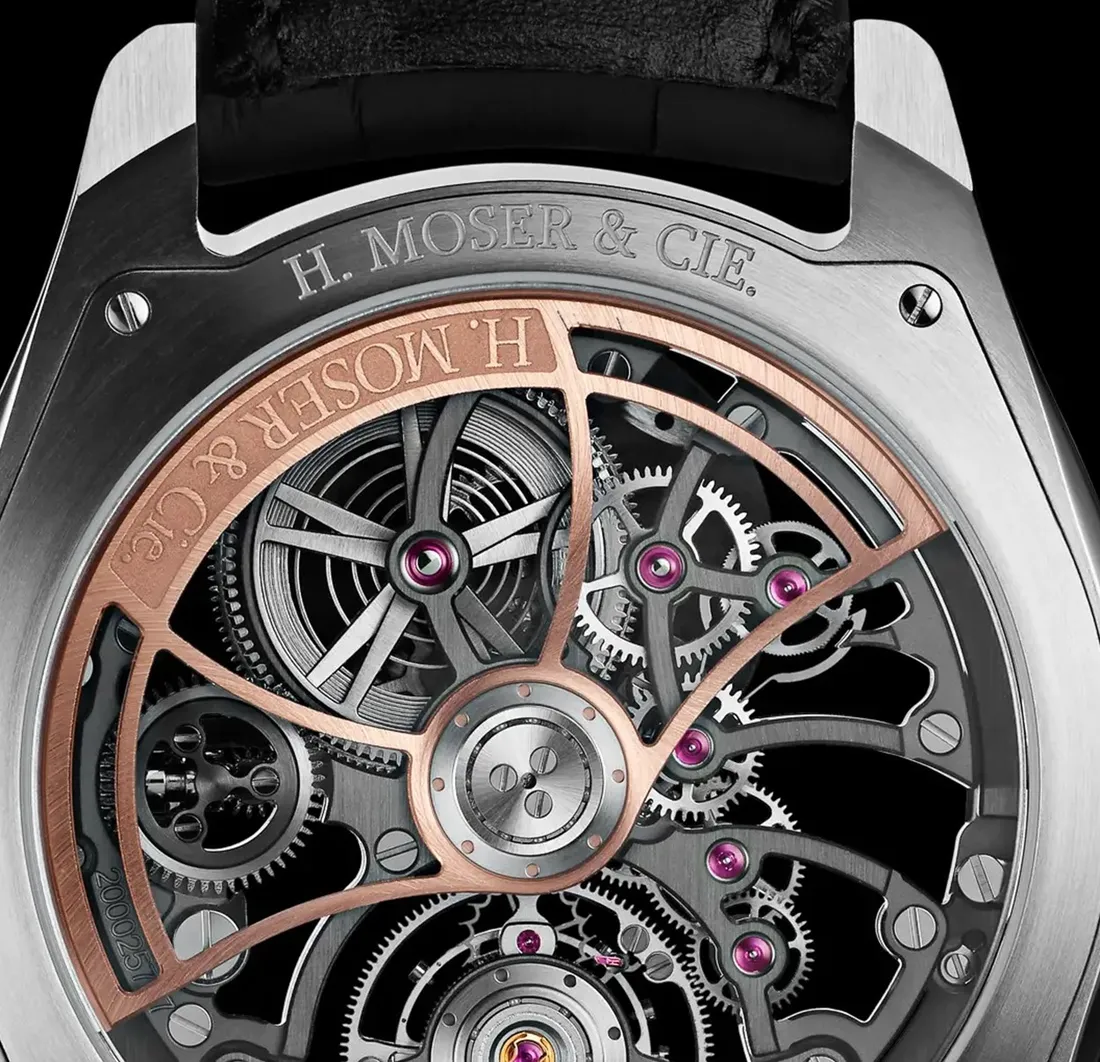
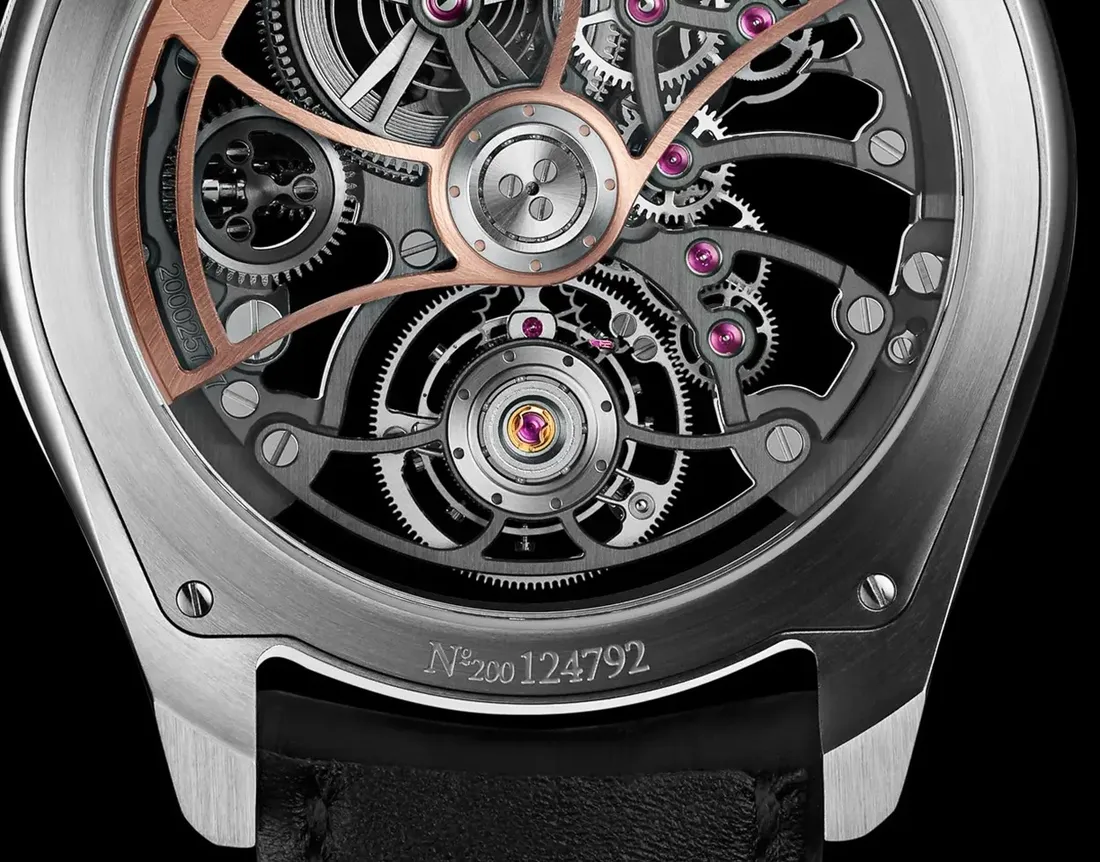
The caseback is sapphire and shows the other face of the skeletonised movement. Main plate and bridges are in an anthracite finish, and the oscillating weight sitting on top is in gold and skeletonised itself; on the dark ground it stands like a golden cross. The winding system is a bidirectional pawl system, which is to say it winds whichever way you swing your arm.
The specification runs as follows. Case in steel, forty two point eight millimetres across, water resistant to twelve atmospheres. Calibre HMC 811: automatic, fully skeletonised, three dimensional, thirty four millimetres across, five and a half millimetres tall, twenty one thousand six hundred vibrations an hour, that is three cycles a second, twenty eight jewels. A cylindrical balance spring and a one minute flying tourbillon at six o'clock. Power reserve seventy two hours. Alligator strap. Catalogue price seventy nine thousand Swiss francs, excluding tax.
And now an honest note. In a wristwatch, the practical gain a cylindrical spring gives over a well made flat spiral in daily life is small. A modern flat spring, properly regulated, already stays within a few seconds a day. The real return of the cylindrical spring lies not in laboratory numbers but in two other places.
The first is engineering honesty: a brand choosing the most expensive and most difficult road purely because that road is right. The second is the sight of it: this spring can be watched at work. A flat spiral seen from above looks motionless; a cylindrical spring seen from the side breathes like an accordion. Three times a second. Once you have seen that, you no longer need to look for anything on a dial beyond the hour and the minute.
Closing
For two hundred years watchmaking turned laying the balance spring flat from a necessity into a tradition. It was cheap, it was easy, it was good enough. And like everything that is good enough, it stopped the thinking.
The Pioneer Cylindrical Tourbillon Skeleton refuses that pause. It stands the spring upright, rebuilds the movement around that decision, makes the domed crystal for it, raises the case for it, and then, instead of hiding the whole arrangement, puts it where the dial should be.
What you read on your wrist amounts to hours and minutes. But what you see is a solution found two hundred years ago so that people would not be lost at sea, still breathing, three times a second.