format_quote"To map a place you need to know only two things: how far you have gone, and in which direction. Inō Tadataka began gathering those two facts at the age of fifty-five, and walked for seventeen years, having turned the length of his own stride into a unit of measurement."
PART I: NORTH FROM FUKAGAWA
Inō Tadataka was not born a man of science. He was adopted into a family in Sawara that brewed sake and traded rice, he grew the business, he fed his town through years of famine, and at forty-nine he handed all of it to his son and moved to Edo. There he knocked on the door of a teacher nineteen years younger than himself to study astronomy and calendrical calculation. What he wanted to learn can sound modest today: how long, on the surface of the earth, is one degree of latitude?
Answering that required a long north-south line. In June 1800, at fifty-five, he left the Fukagawa district of Edo with a small party and headed north towards Ezo. It was the first step of a walk that would last seventeen years and be split into ten separate expeditions. The total distance came to forty-three thousand seven hundred kilometres.
The first thing he did before setting out was to measure his own stride. He walked a line of known length again and again, counted his paces, tried it tired and tried it rested, and in the end turned his own step into a fixed unit.
"Why the stride and not the rope?" his young assistant asked at the first post station.
"We will use the rope as well," said Tadataka. "On flat, open ground we measure with the chain. But a coastline is not flat. You cannot lay a rope across rocks or draw it tight over a marsh. In those places the only instrument left to us is my leg. What makes an instrument trustworthy is not that it is perfect, but that its error is known."
format_quote"What makes an instrument trustworthy is not that it is perfect, but that its error is known."
Distance alone was not enough. Every measured segment also needed a bearing, and for that they carried a magnetic compass. But the compass alone was not enough either, because small errors stack on top of one another across hundreds of kilometres until they become one large drift. So on every clear night Tadataka stopped, measured the height of the stars above the horizon, and read the latitude of his position out of the sky. What he measured by day he checked by night.
"So we walk by day and correct by night," the assistant said.
"No," said the old man. "By day we estimate, by night we measure. If we do not write down the difference between the two, then in seventeen years we will not have a map. We will have a story."
Tadataka died in 1818 at the age of seventy-three, before the map was finished. His students and the officials of the astronomical bureau carried on for three more years, and the completed map of Japan was delivered in 1821. The measurements were so accurate that these maps stayed in use well into the modern era.
PART II: THE ROOT OF MUSASHINO
On the Musashino plain that Tadataka’s expeditions crossed, west of present-day Tokyo, a low plant with small white flowers was farmed field after field: murasaki, Lithospermum erythrorhizon. The Japanese word for purple comes from the name of that plant. Its value lies in the roots, lifted in autumn, dried for months, ground and prepared as dye.
Purple was expensive not because it was rare but because it was laborious. The colour does not settle in one dip; the silk, once mordanted in ash lye, goes into the bath again and again, and each pass takes the tone one step deeper. Under the ranking system established at the beginning of the seventh century, purple belonged to the highest grade and stood among the shades closed to common use. In the Edo period the city’s purples leaned towards blue while Kyoto’s leaned towards red. In time that bluish tone became the signature of a city: Edo murasaki.
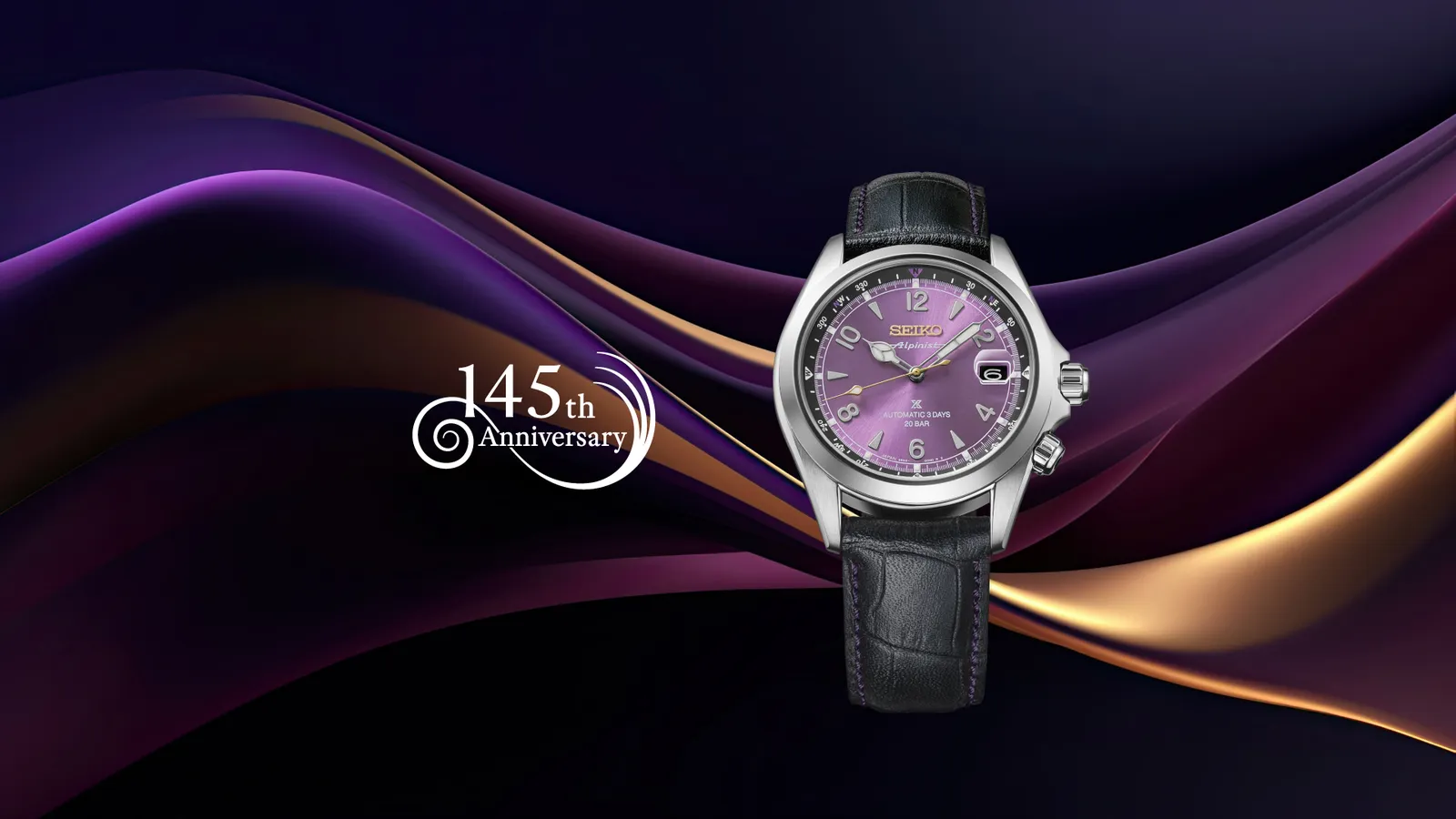
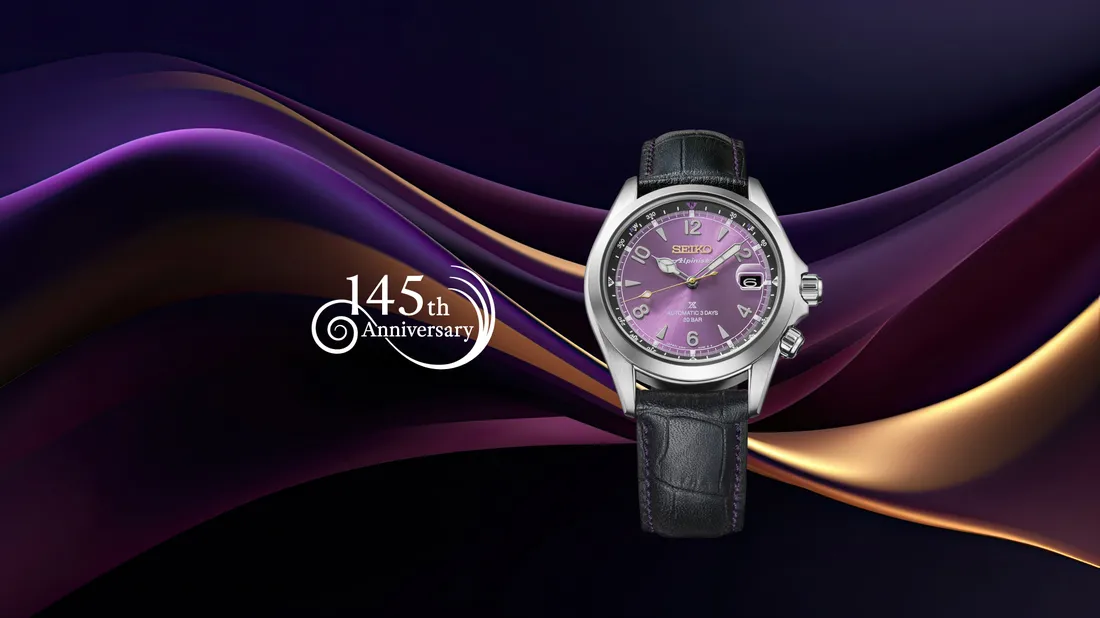
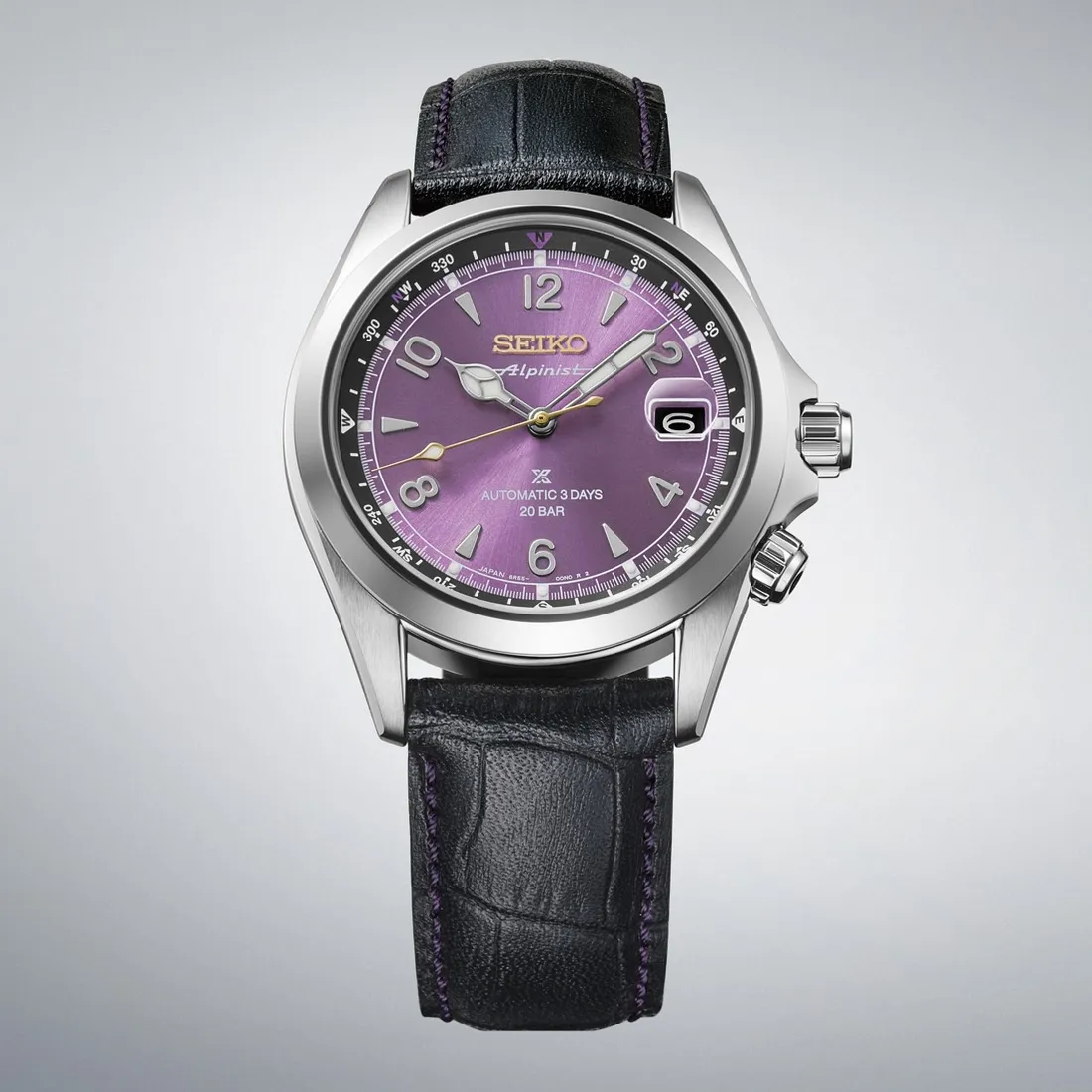
Seiko grew out of a shop opened in Ginza in 1881, and turned 145 in 2026. Six limited editions were prepared for the year, and that colour is what they have in common. The Alpinist is one of them.
PART III: A SHOP AT THE FOOT OF THE MOUNTAIN
A small watch shop in the foothills of the Yatsugatake. Nozomi is a mountain guide; Kurihara has stood behind the same counter for thirty years. A purple-dialled Alpinist sits in the window.
"Why does this count as a mountain watch?" Nozomi asks. "There is no altimeter on it, no barometer."
"Because the first Alpinist was made in 1959, and nobody had a barometer then," says Kurihara. "The Laurel Alpinist was Seiko’s first sports watch. It was made for the people who went into the mountains in Japan, people climbing without proper equipment. What they wanted from a watch was short: do not break when dropped, do not stop when I sweat, be readable in the dark. The whole history of the Alpinist turns around those three sentences. The compass ring came much later, with the 1995 generation, and this watch belongs to that line."
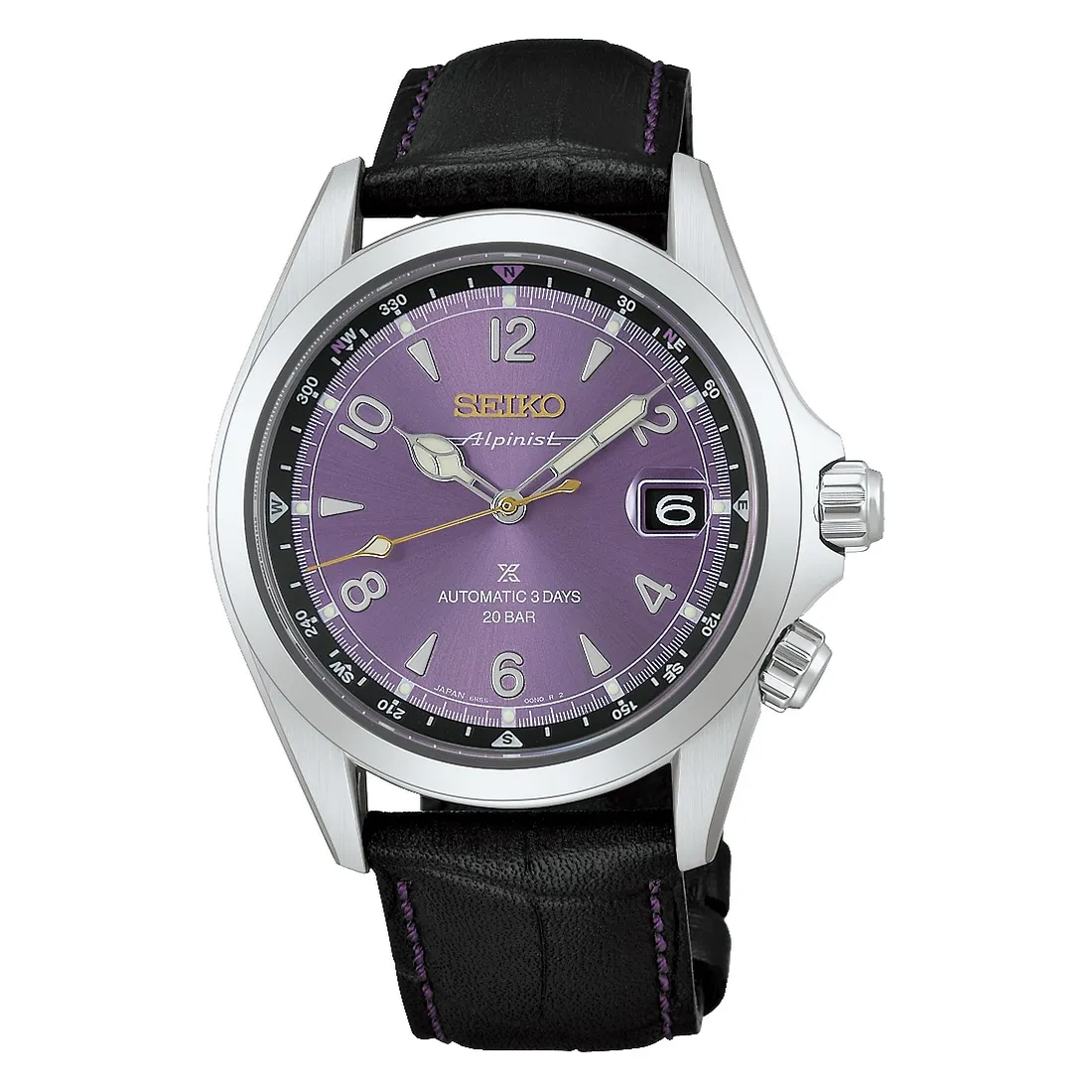
Nozomi turns the ring. The second crown at four o’clock rotates the outer circle of the dial.
"This ring is not magnetic, is it?"
"It is not," says Kurihara. "The ring is only a scale. You take the bearing from the sky, not from the watch. In the northern hemisphere, hold the watch flat and point the hour hand at the sun. The exact midpoint of the angle between the hour hand and the 12 on the dial marks south. Then you turn the ring to bring the S to that point, and every bearing is there on the dial. For that you do not need a compass, you need an hour hand you can read properly."
"And in cloud?"
"In cloud it will not work. But once you have found a bearing and locked the ring, that bearing stays on the dial even when the fog comes down. That is what Tadataka did too: he checked the bearing he took by day against a star at night, and then wrote the correction down. The work of an instrument is memory."
format_quote"You take the bearing from the sky, not from the watch. The work of an instrument is memory."
"What is inside it?" Nozomi asks.
"A 6R55," says Kurihara. "Automatic, but you can wind it by hand as well. Twenty-four jewels, seventy-two hours of power reserve. The daily rate is given as plus twenty-five to minus fifteen seconds. It hacks: pull the crown and the seconds hand stops, so you can set it against a reference to the second. Three days of reserve is a real comfort in the mountains. Take it off on Friday evening, put it on again on Sunday evening, and it is still running."
"The case?"
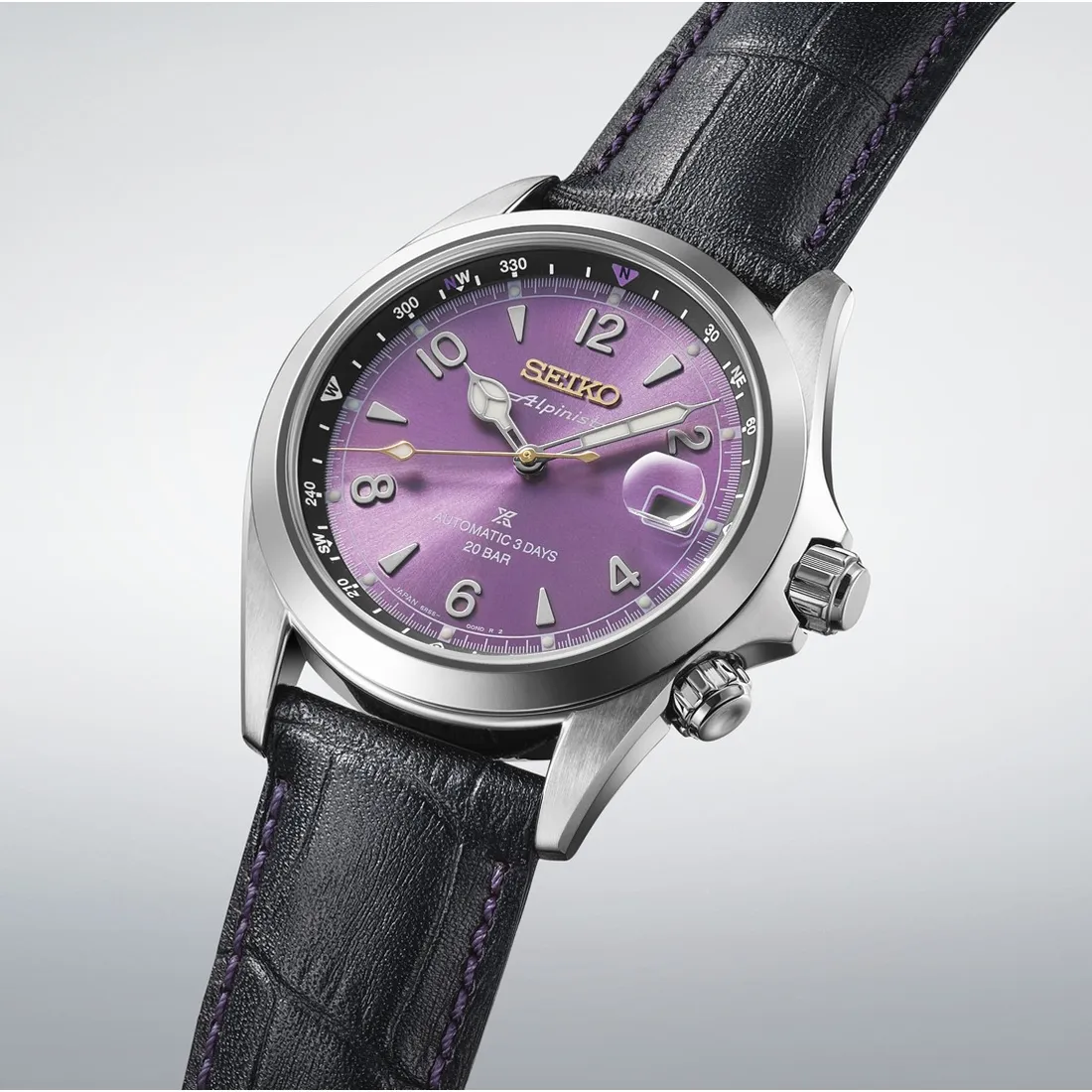
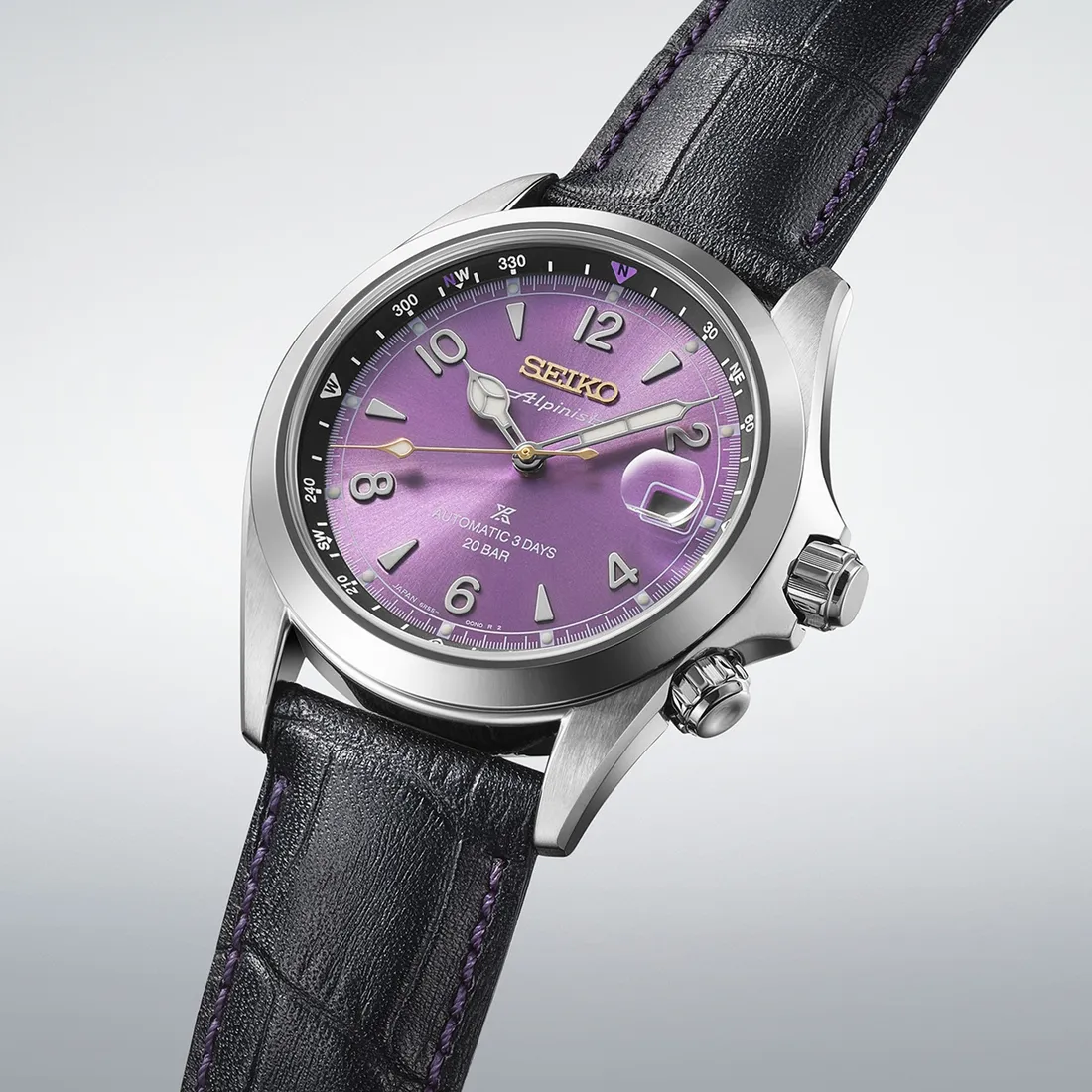
"Thirty-nine and a half millimetres across, twelve point seven thick, forty-six point four from lug to lug. Steel with a hardening coating; Seiko has used it for a long time, and it does not abolish scratches, but you notice the difference the first time you drag your arm across rock. Twenty bar, two hundred metres. Magnetic resistance 4,800 A/m. The sapphire crystal is anti-reflective coated on the inside and carries a magnifier over the date. The case back screws down and is see-through, so you watch the movement work."
"Is a leather strap not an odd choice for a mountain?"
Kurihara laughs. "This is not an expedition watch, it is an anniversary watch. Twenty millimetres, crocodile-patterned calfskin, purple stitching, a three-fold clasp with a push button. Seven thousand pieces will be made. If you are taking it up a mountain, change the strap; the case is ready as it is."
PART IV: THE RECORD
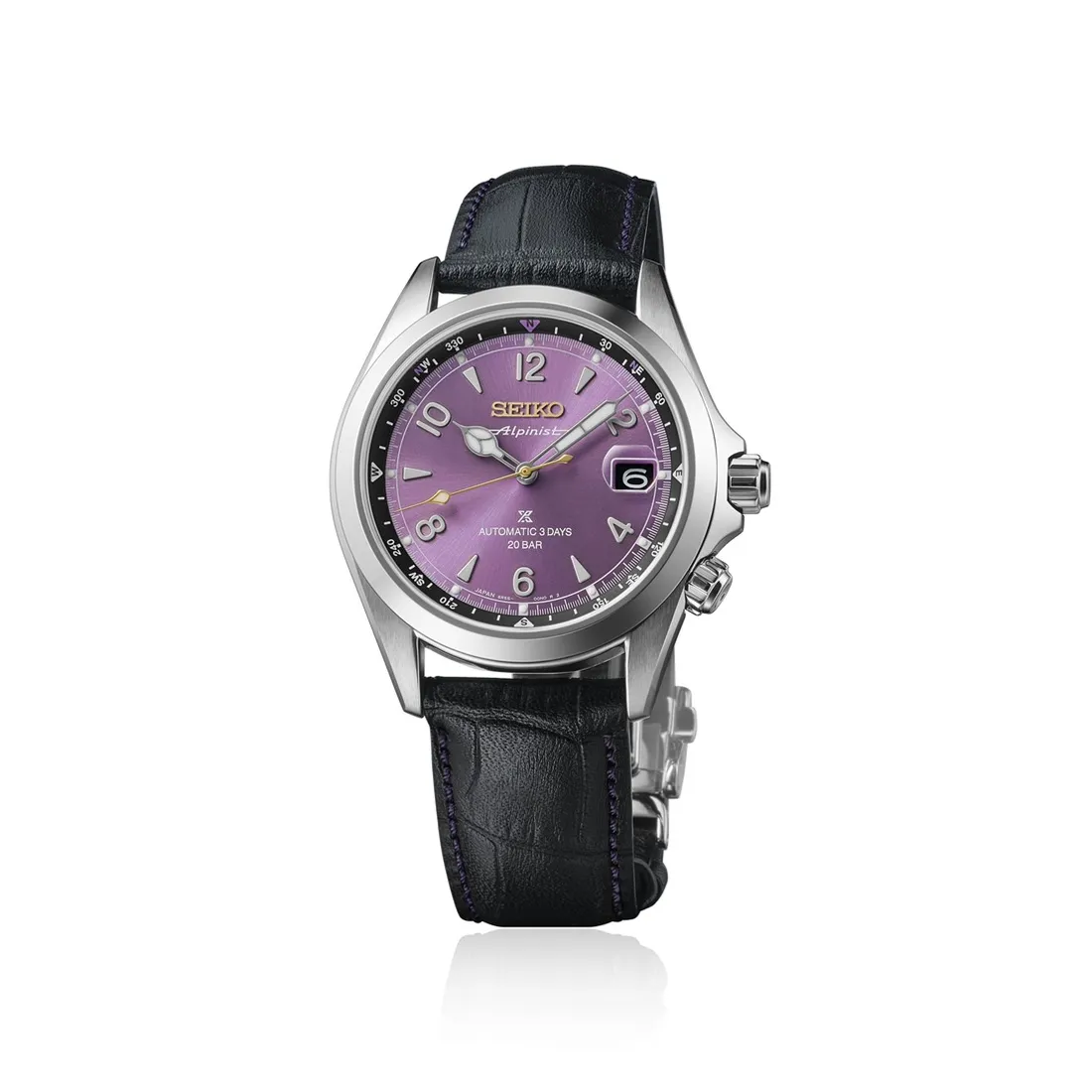
Model: Seiko Prospex Alpinist, reference HBC006 (HBC006J1).
Limited edition: Seiko 145th Anniversary Limited Edition, 7,000 pieces; LIMITED EDITION on the case back.
Movement: calibre 6R55, automatic with manual winding; 24 jewels, approximately 72 hours of power reserve, daily rate +25 / -15 seconds, stop-seconds function.
Case: stainless steel with super-hard coating; 39.5 mm diameter, 12.7 mm thick, 46.4 mm lug to lug.
Crystal: sapphire with anti-reflective coating on the inner surface and a magnifier over the date window.
Dial: Edo purple sunray dial; gold-coloured Seiko and Alpinist scripts and gold seconds hand; Arabic numerals alternating with wedge markers; LumiBrite on hands and indices.
Compass: 360-degree internal compass ring turned by the second crown at four o’clock.
Durability: 20 bar (200 metres) water resistance, 4,800 A/m magnetic resistance, screw-down see-through case back, screw-down crown.
Strap: 20 mm crocodile-patterned calfskin with purple stitching and a three-fold push-button clasp.
Availability: October 2026, around USD 900 / EUR 980.
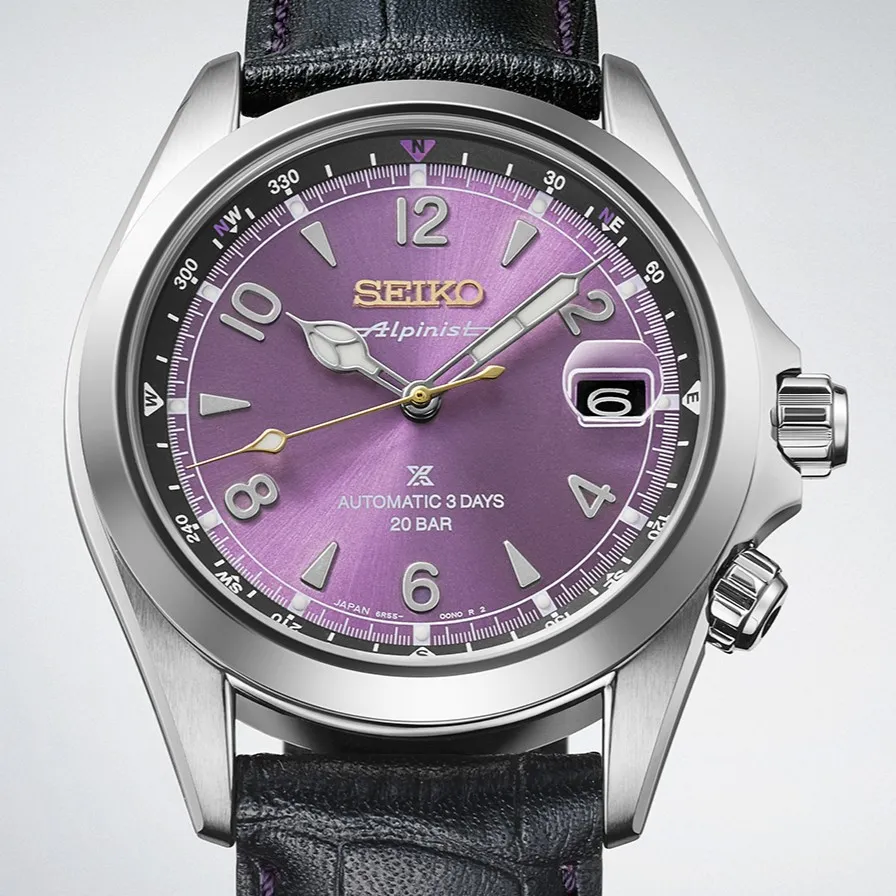
When Tadataka’s map was finished, nobody looking at it could see forty-three thousand kilometres. They saw a coastline. That is the whole business of an instrument: to reduce an enormous amount of work to a single readable mark. This Alpinist, finished by a 145-year-old watchmaker in the colour drawn from the root of a plant, does the same thing; it fits two questions, how far and in which direction, into a circle thirty-nine and a half millimetres wide.
format_quote"That is the whole business of an instrument: to reduce an enormous amount of work to a single readable mark."
Hasan Bekmezci