Let us begin with a simple game. Write down two numbers, zero and one; then find each new number by adding the two before it. You get this sequence: 0, 1, 1, 2, 3, 5, 8, 13, 21, 34, 55, 89... This is the famous sequence that Leonardo Fibonacci introduced to the West in the thirteenth century. And here is the magic: divide any number in it by the one before, and the result always approaches the same mysterious ratio, roughly 1.618. It is called the golden ratio, written with the letter phi.
Start drawing this ratio with squares and quarter-circles, and the famous, ever-widening golden spiral appears. Now to the truly astonishing part: this spiral is not a human invention; it is already there, everywhere in the universe. The shell of a sea snail, the nautilus, is exactly this golden spiral. The seeds at the centre of a sunflower are arranged in spirals, one turning left and one right, in exactly 34 and 55, two consecutive Fibonacci numbers, because that is the only way to pack the seeds most densely. The scales of a pinecone, the skin of a pineapple, the petals of a daisy, the whorls of Romanesco, the branching of a tree; all whisper the same numbers. And go to the largest scale: spiral galaxies, hurricanes. A galaxy in the sky and a seashell in your hand are drawn by the very same mathematics.
And what of the human being? Man too is not exempt from this measure. Divide your height at the navel and the ratio comes near to phi; each bone in your finger is about 1.618 times the one before it; the tiny snail-shell of the inner ear, even a single turn of the DNA helix that carries the code of life, obey this ratio. From the atom to the galaxy, from the flower to the human, the same measure repeats and repeats. And past a certain point one cannot help but ask: who whispered the same proportion to a seashell, a sunflower and a distant galaxy? It is an order far too insistent to be left to chance; it lies upon everything like a silent signature, laid down gently, revealing itself only to whoever learns to read. And to notice that signature is to be drawn into a contemplation that begins where words end.
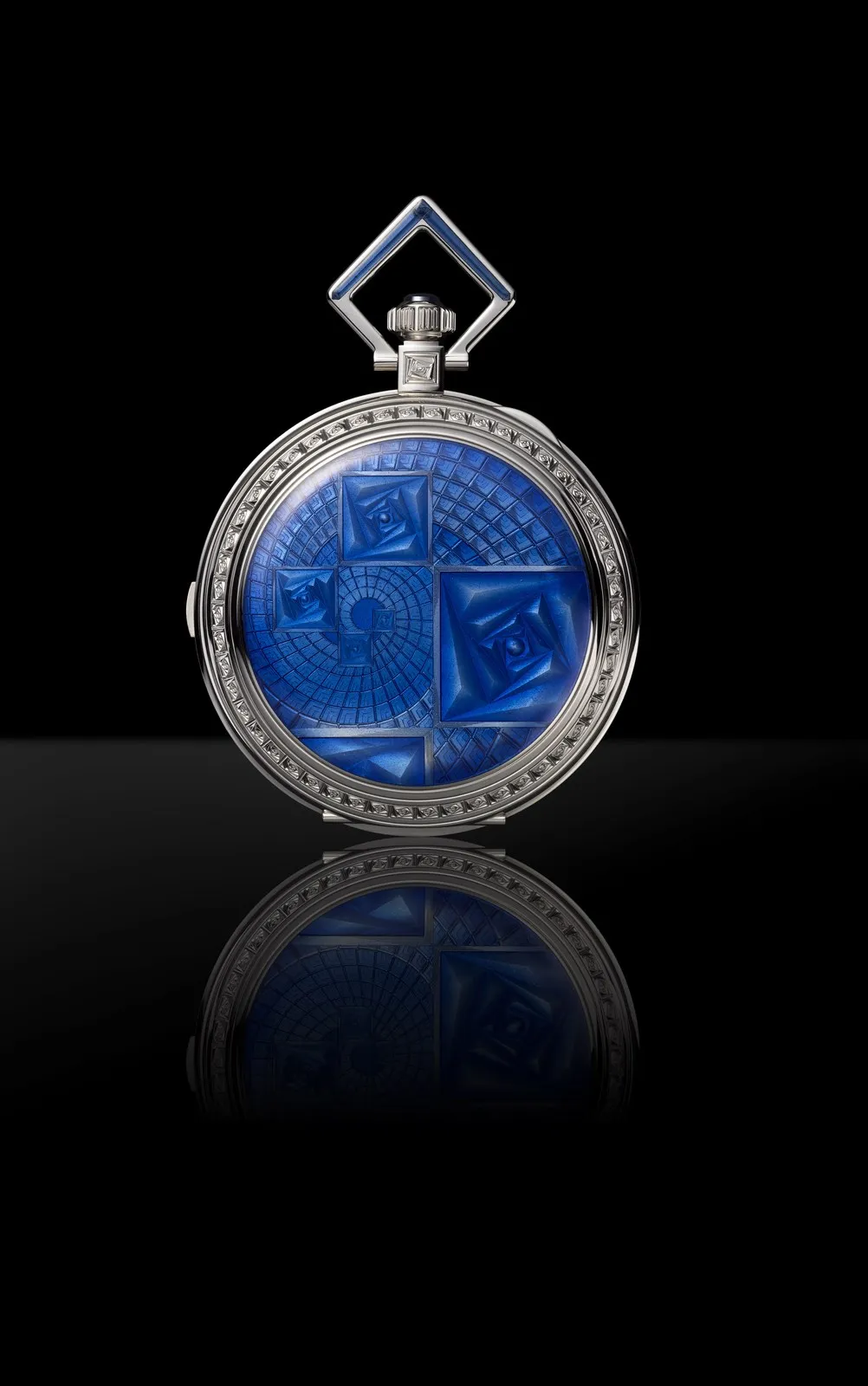
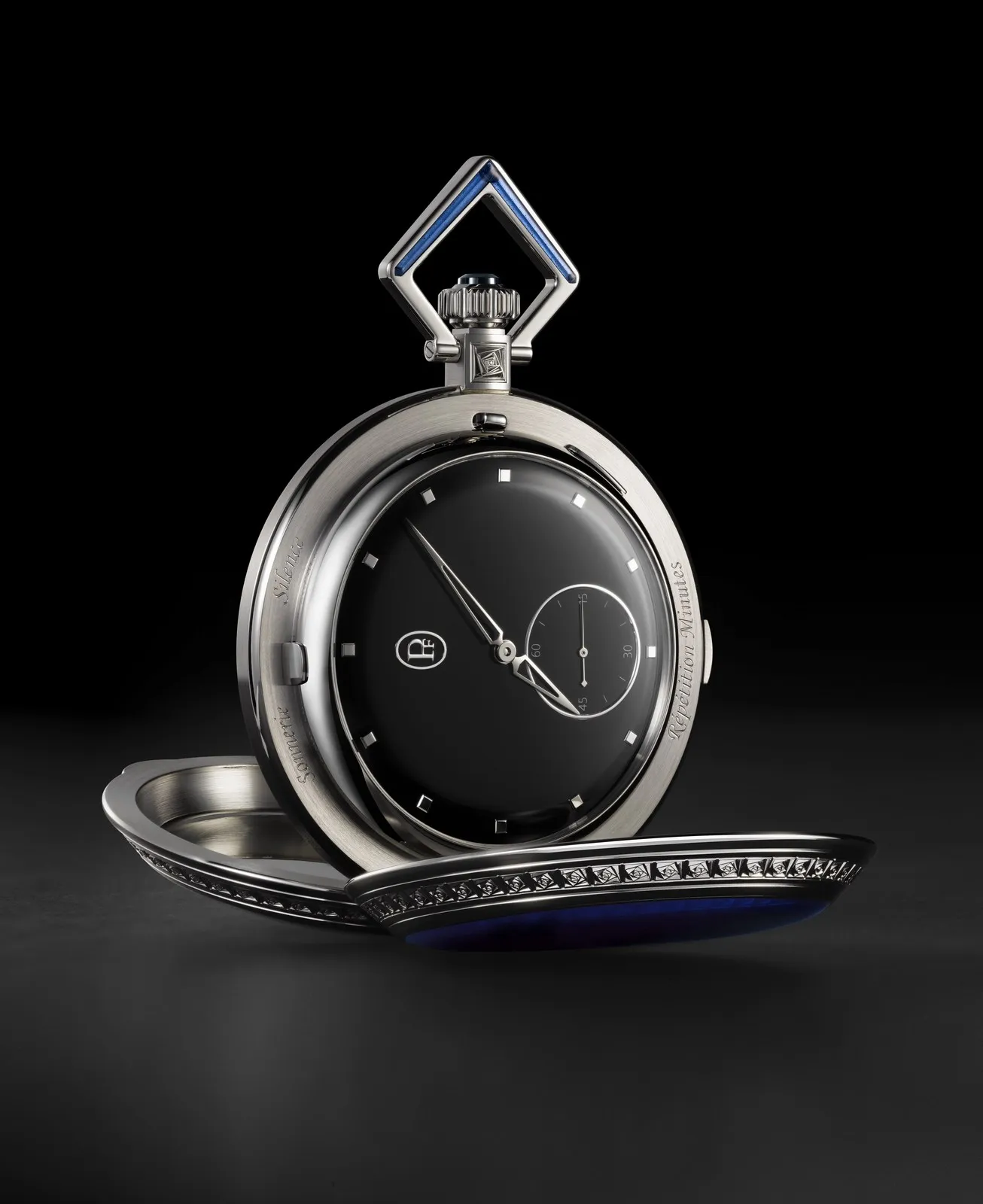
One watchmaker spent his whole life in awe of this proportion. And one day, he decided to take that spiral, present everywhere in the universe, and engrave it upon a tiny pocket watch. The name of that work is the Parmigiani La Rose Carrée, the Square Rose.
A Heart that Slept for a Hundred Years
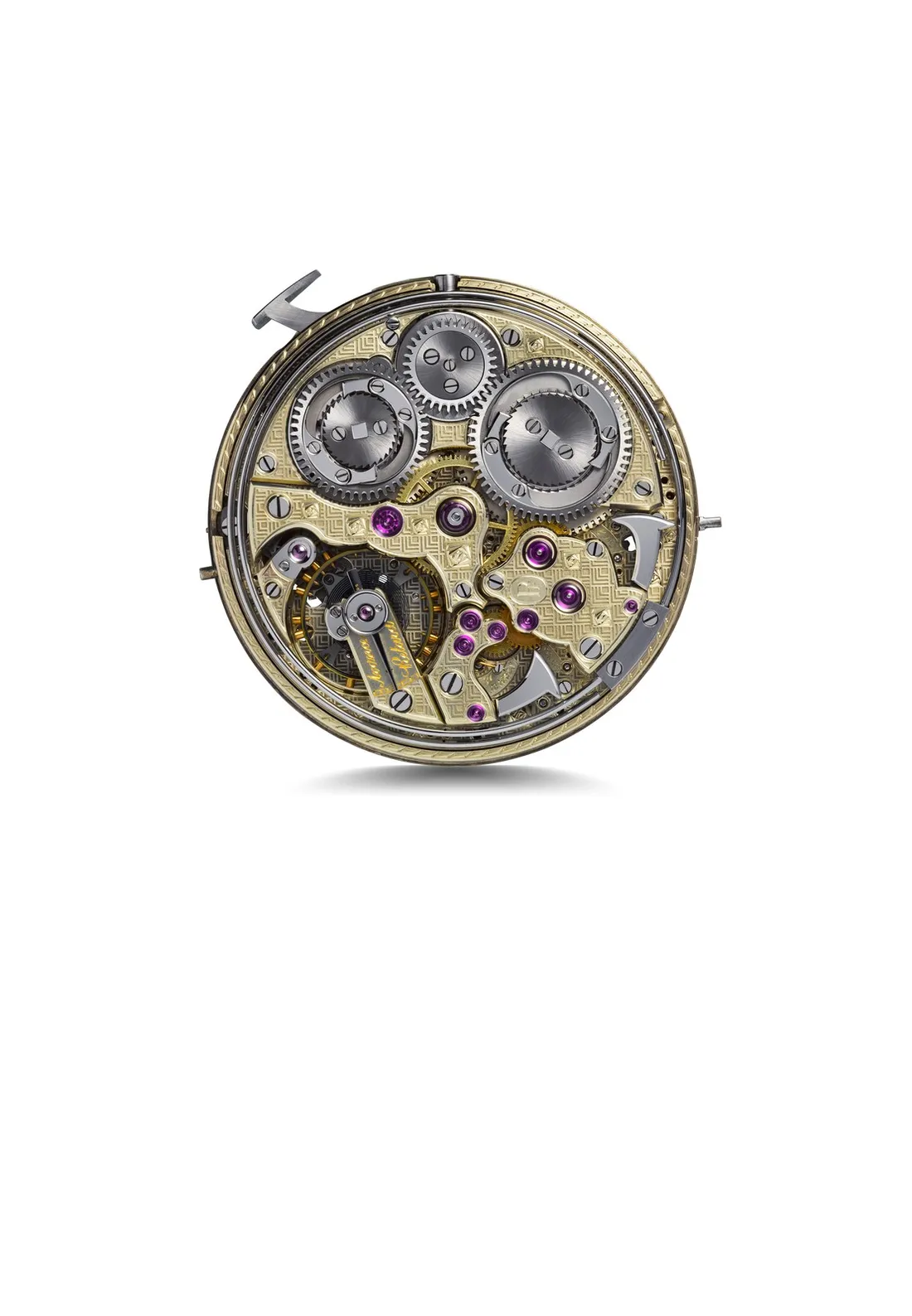
The story's roots reach far back, to the turn of the twentieth century. In those years the legendary master of complications Louis-Élisée Piguet built an extraordinary pocket-watch movement with a grande sonnerie and a minute repeater. Years later, a still-young restorer named Michel Parmigiani found this movement and bought it; but he did not restore it. For more than twenty years it waited in a drawer, like a sleeping heart.
In 2021, for the twenty-fifth anniversary of Parmigiani Fleurier, the time came to wake that sleeping heart. In just twelve months the maison restored this antique movement and gave it a brand-new body. The grande sonnerie, like a cathedral bell, chimes the passing hours and quarters of its own accord, without you doing a thing; the minute repeater, at the push of a slide, sounds the minutes one by one. And how many hands did it take to bring together this thousand-year-old mathematics and this hundred-year-old heart? Nine. Parmigiani calls them Les Mains d'Or, the Golden Hands.
The Hand that Drew the Vision: Anne-Marie Moser
It all began with a drawing. The designer Anne-Marie Moser took the golden spiral, Michel Parmigiani's passion, and turned it into a motif that speaks the language of a dial: a rose that sits on a square grid yet opens with the curl of the golden spiral. This is the Square Rose that gives the watch its name. The balance of blue and black, of lines and voids placed according to the golden ratio, all came first from her pencil. What the architect's paper is before a building rises, Moser's drawing was for this work.

Those Who Woke the Sleeper: Francis Rossignol and Christie Girel
Bringing a hundred-year-old movement back to life was the work of the restorers Francis Rossignol and Christie Girel. It is like a surgeon restarting a stopped heart: every wheel was taken apart and cleaned, worn parts were remade in exact fidelity to the originals, the gongs were retuned. Remember that restoration is Parmigiani's genetic code; Michel Parmigiani began this profession as a restorer. A heart that had stopped a hundred years ago began, in their hands, to beat again.
The Hand that Carved the Spiral into Metal: Eddy Jaquet
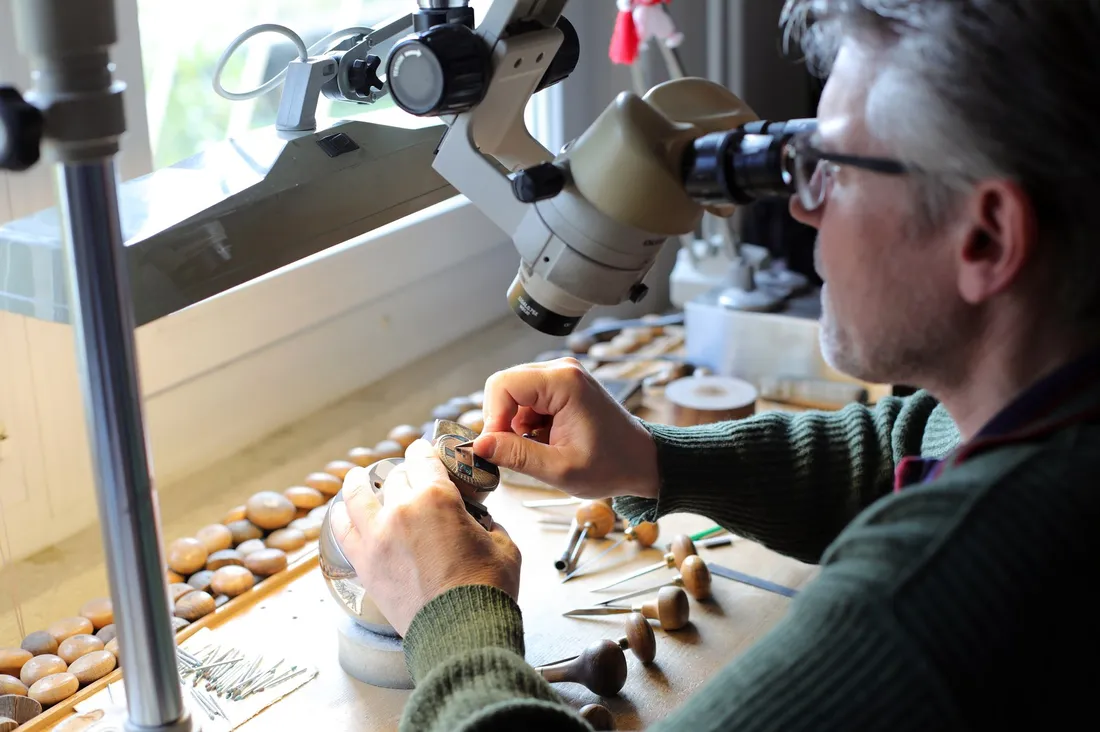
Next came the task of working Moser's Square Rose into the metal; this is the work of the engraver Eddy Jaquet. With the steel graver called the burin, Jaquet engraved this golden-spiral pattern not only onto the case but across the entire mainplate and bridges of the movement. So the pattern, just as in nature, repeats itself at every scale: outside, on the cover; inside, among the wheels. To draw the spiral of the universe at the scale of a fingernail, by hand, one stroke at a time; such is Jaquet's patience.
The Master of Unseen Edges: Bernard Muller
Now we come to an art no naked eye will notice but every connoisseur will feel at once: anglage. The angleur Bernard Muller bevelled the edge of every bridge of the movement to a forty-five-degree angle and polished it by hand until it shone like a mirror. Think of it as a jeweller faceting a stone; except that here what is faceted is the watch's unseen inner architecture. Light runs along these bevelled edges. Above all the sharp inward corners, those angles that no machine can cut and that only the patience of the human hand can open, are the infallible seal of true handwork.

The Hand that Paints with Fire: Vanessa Lecci
The one who gave the covers their deep blue was the enamel artist Vanessa Lecci. The technique she used was grand feu, great-fire enamel: powdered coloured glass is laid over the engraved surface and fired in a kiln at over eight hundred degrees, turning into a glossy, luminous layer. Lecci repeated this three or four times over. The difficulty lay here: whereas an ordinary dial is about thirty millimetres, this surface was close to sixty; and the larger the surface, the greater the risk of cracks and bubbles. Michel Parmigiani explains the reason for this blue: it is the colour of a body of water seen from the sky. A sky-blue, then, born of fire.

The Last Chain Maker: Laurent Jolliet
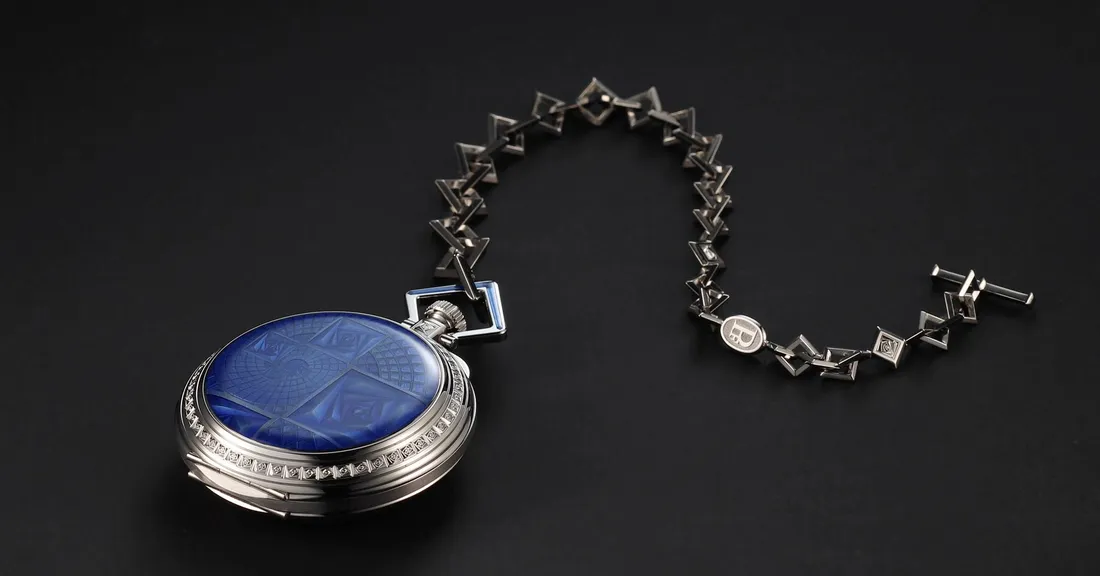
A pocket watch is completed by its chain. But today, in Switzerland, almost only one master can still weave these chains in the traditional way: Laurent Jolliet. For this watch Jolliet forged by hand a chain of exactly thirty-two square links; two of the links bear engraved squares, and one the Parmigiani logo. Each link was bent, soldered and filed one by one. A chain is, in truth, a sentence written in metal, each link a word. And Jolliet's are among the last hands that can write this sentence; so this chain is also the record of a vanishing craft.

Body and Face: Les Artisans Boîtier and LM Cadrans
The body that would house all these arts, the sixty-four-millimetre double-hunter case in 18-carat white gold, was made by the atelier Les Artisans Boîtier; with its two covers, an architecture that both protects and carries the blue Square Rose upon it. The face of the watch was signed by LM Cadrans: a dial carved from a single piece of black onyx. Onyx is cut not from glass but from a hard stone; and its deep, nocturnal black becomes a night sky beneath the white gold delta-shaped hour and minute hands.
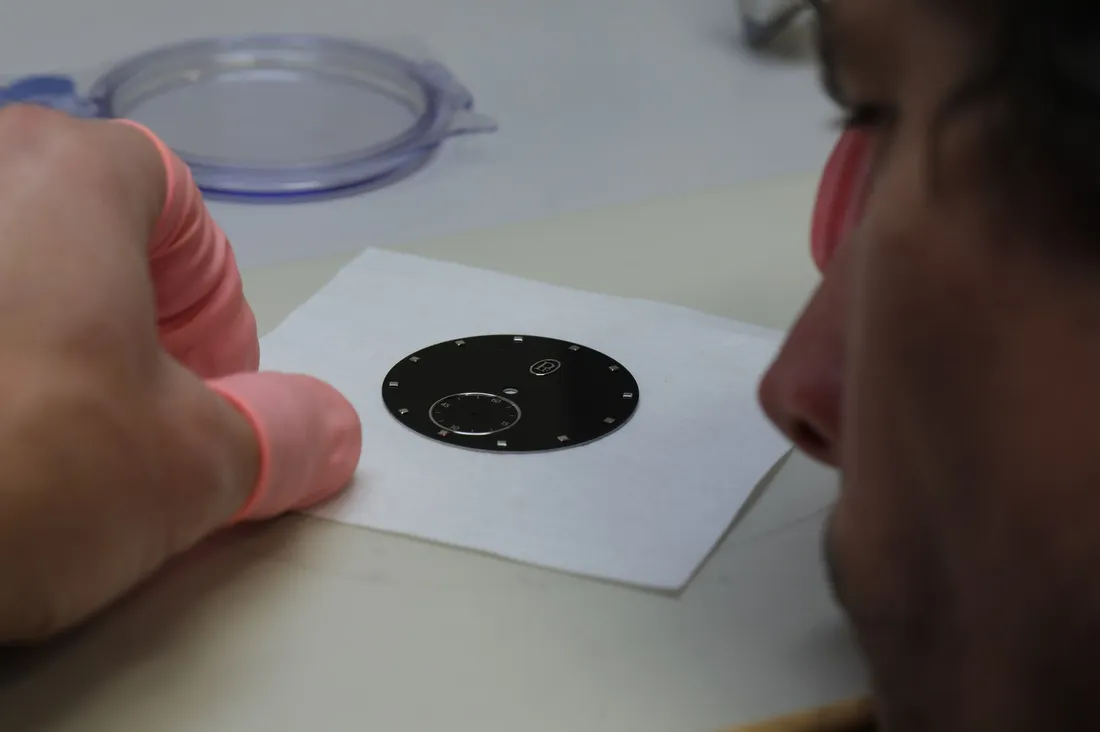
The same number that draws a seashell, a sunflower, a distant galaxy and your own hand now turns, spiral upon spiral, in the hands of nine masters, upon a single pocket watch. La Rose Carrée is one of one in the world; it has no equal, and never will.
But perhaps its true beauty is this: this watch is a bridge built between the silent mathematics long ago engraved into nature and the patience of the human hand. When you carry it in your pocket, you carry a work that shares its proportion with a sunflower, a shell and your own fingers. Some beauty is seen with the eye; this watch, instead, quietly leaves to your own contemplation the measure behind the seen, and the question of who set it there.