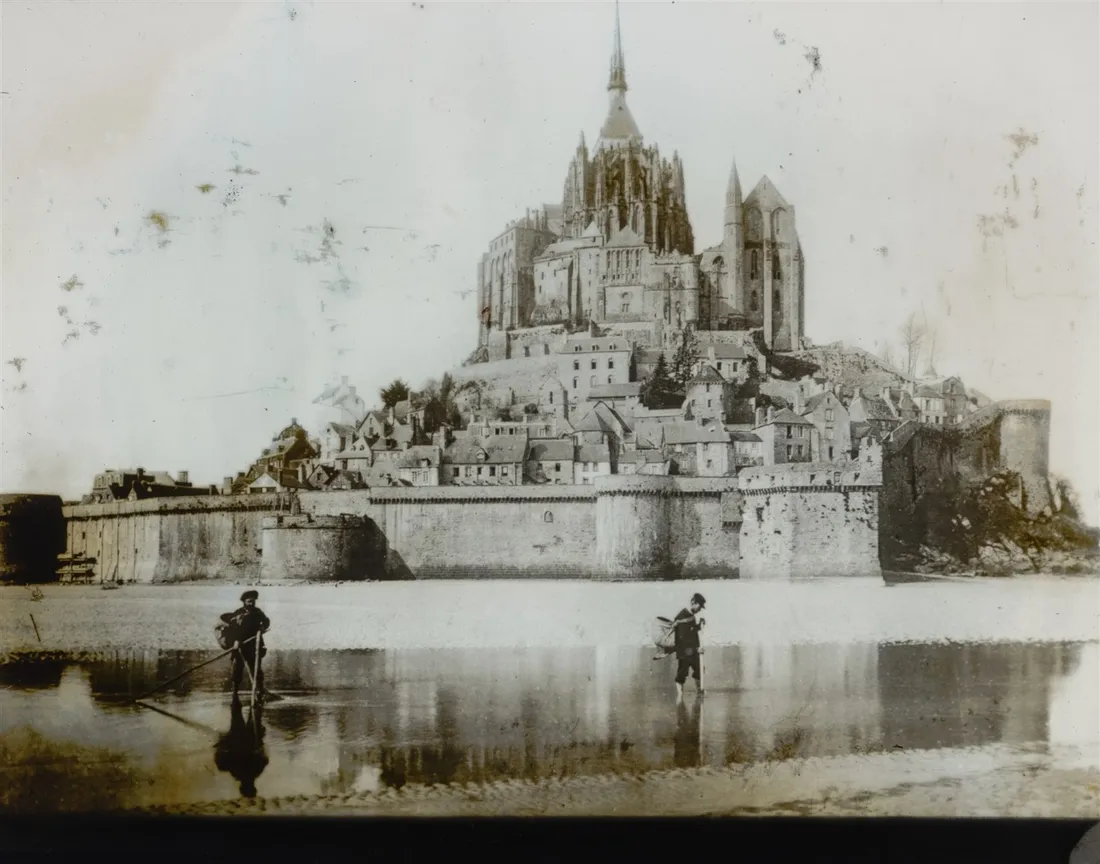
On the highest northern ramparts of Mont Saint-Michel, the thousand-year-old colossus of stone rising toward the sky out of a veil of mist off the coast of Normandy in France, two men were standing.
As the wind carried word of an approaching storm, the young aide-de-camp looked down from the ramparts, with astonishment and a touch of fear, at the wet and dark desert of sand stretching for kilometres. The waters had withdrawn so far that a strip of land connecting the island to the mainland had appeared; it was as if the ocean had suddenly evaporated and vanished.
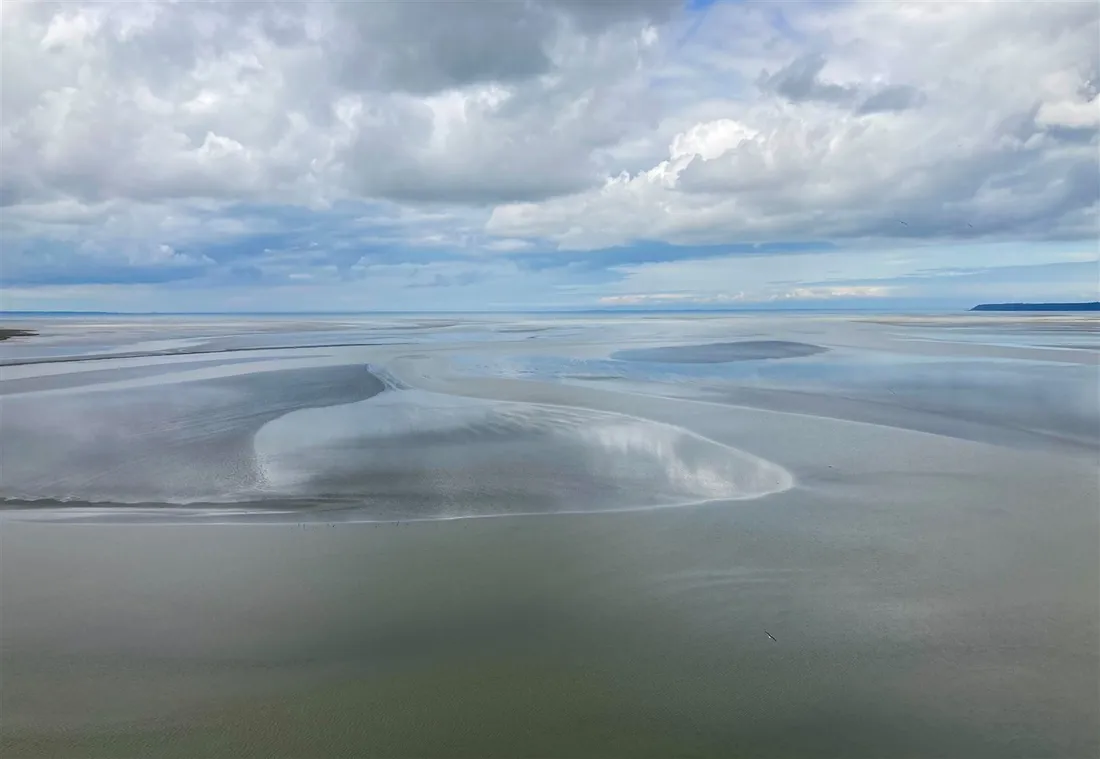
The young aide grasped the cloak of the old sea-dog captain beside him and murmured: "Captain... The sea has almost completely disappeared. Has the ocean abandoned us? And what is this dark silence?"
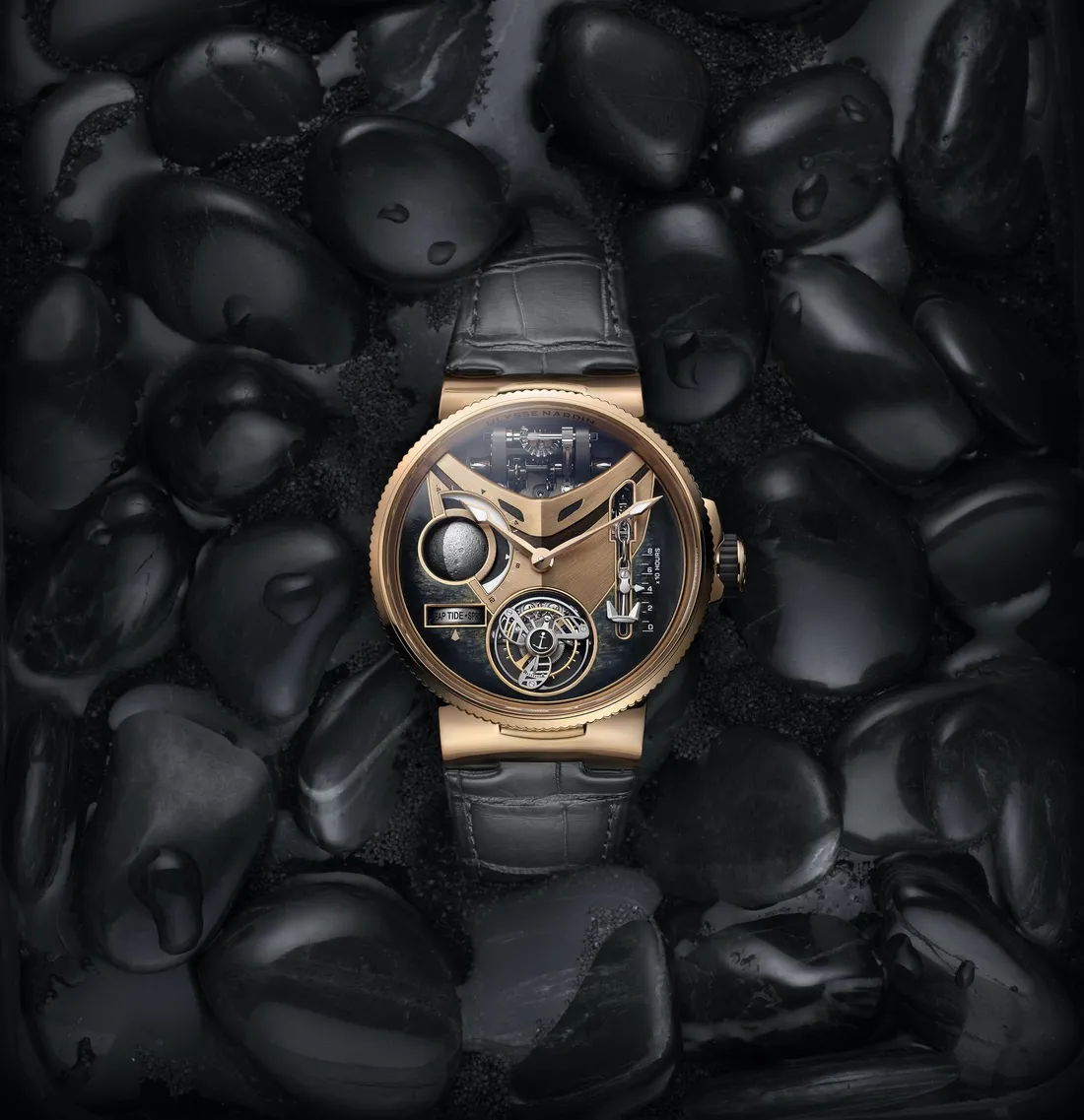
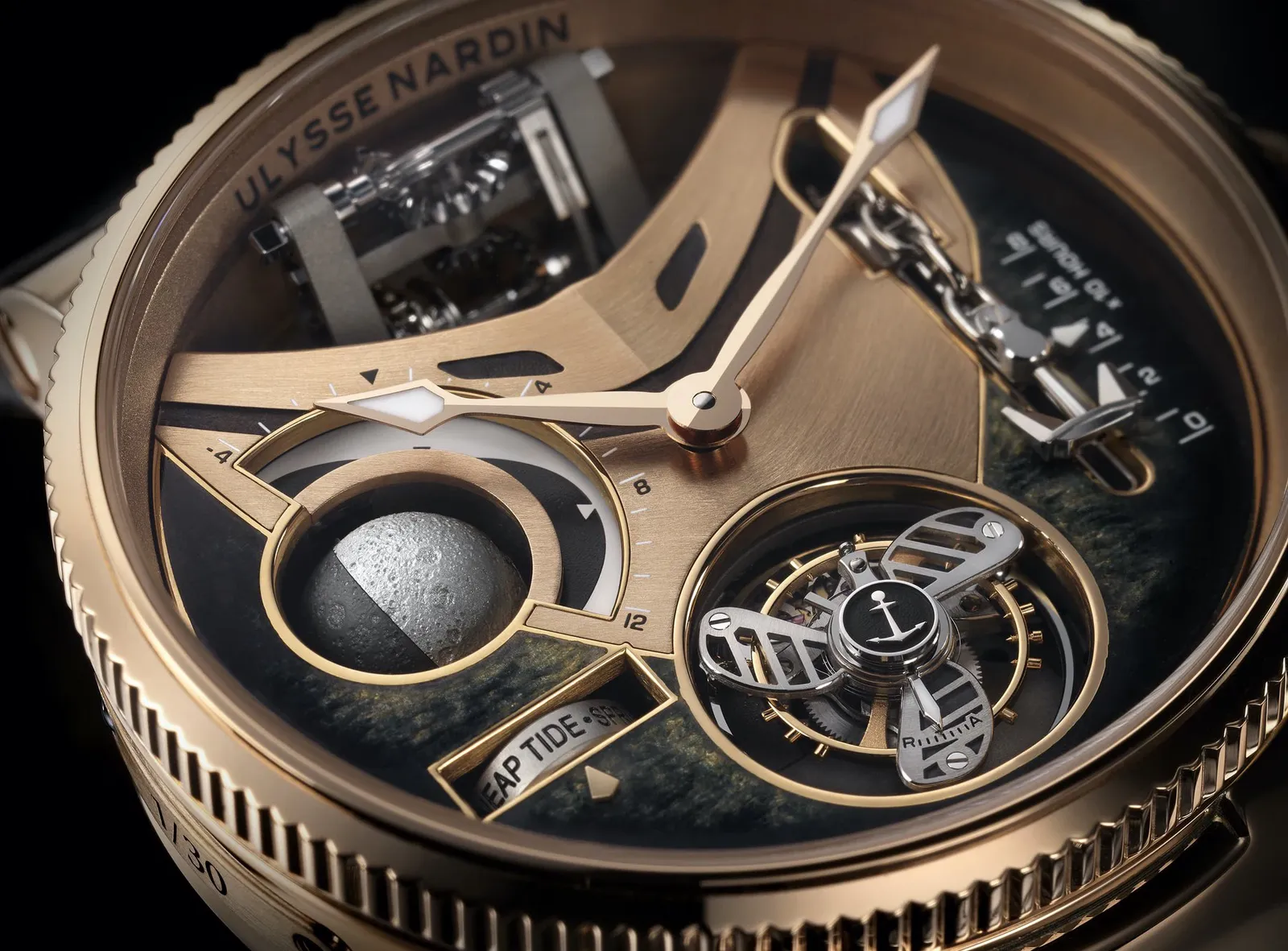
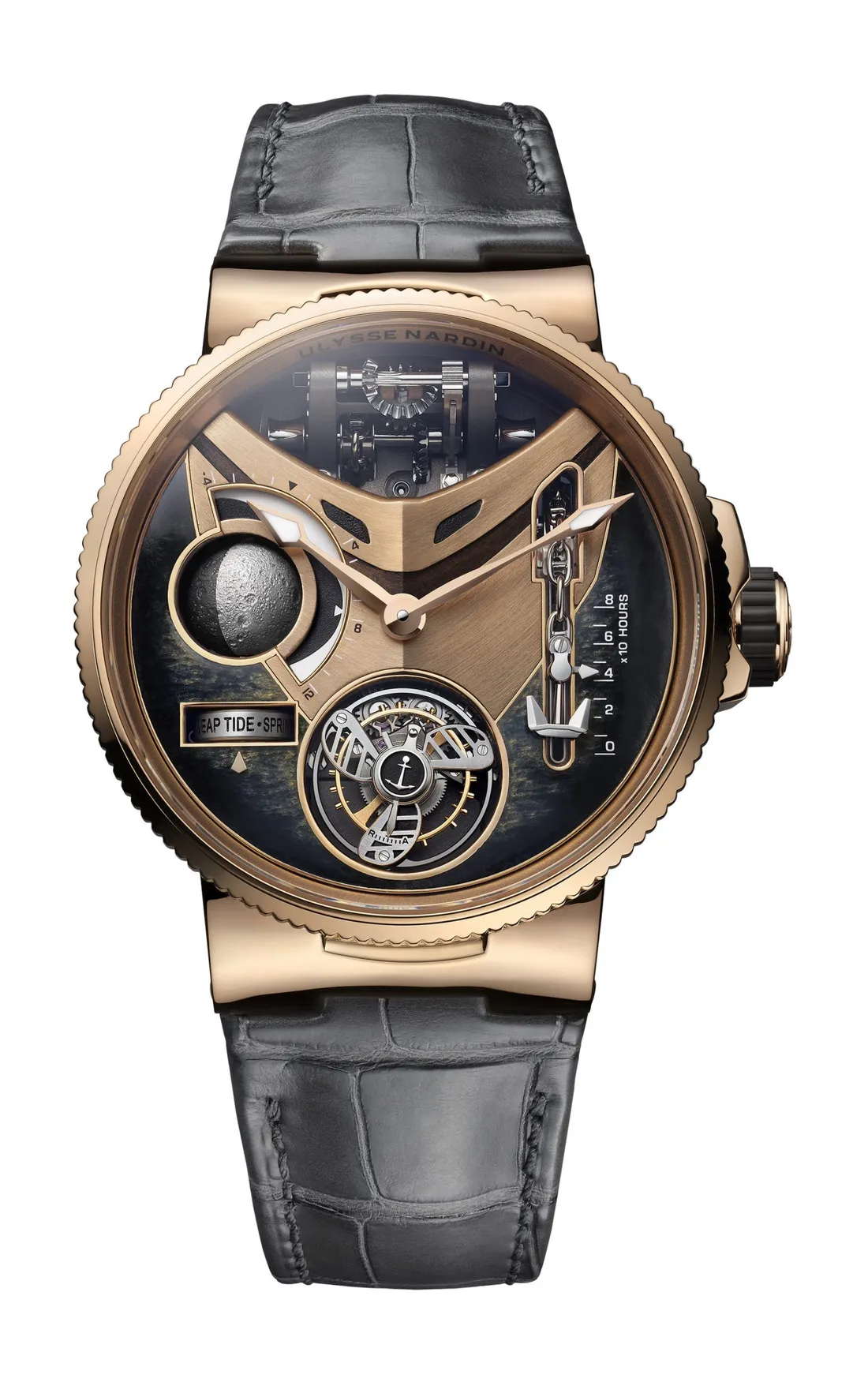
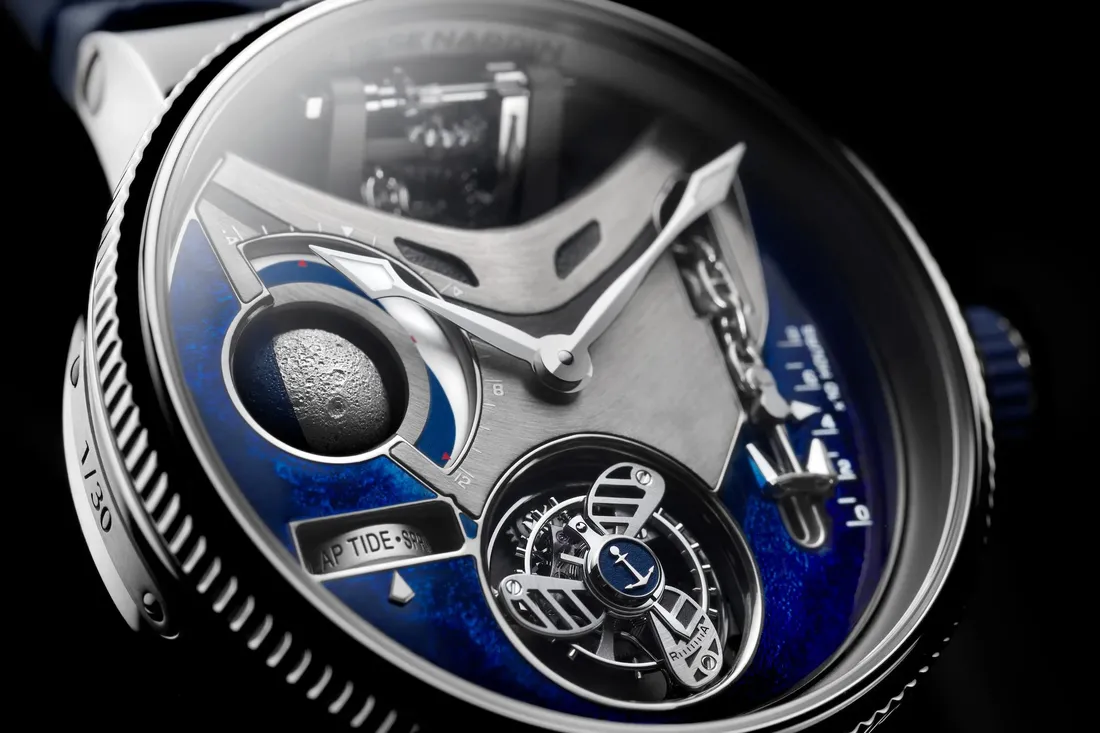
The old captain smiled faintly, the deep lines that storms and the open seas had left on his face creasing. He raised his left arm and drew back his sleeve. He looked at his Ulysse Nardin Marine Mega Yacht, its 18-carat rose-gold case glittering like a jewel in the misty light. On the dial, the three-dimensional miniature Moon sphere was in the full darkness of the New Moon phase. In the gold window just beneath it were the words "SPRING TIDE".
The captain touched his aide’s shoulder in a fatherly way and pointed to the wet horizon where the ocean ended: "Look, my boy! You are mistaken. The sea has not fled; it has merely drawn back in order to leap more powerfully. What you see is no ordinary natural event. This is the most magnificent painting in the universe, the most enchanting work of art engraved upon nature itself!"
Unable to take his eyes off the glimmer of the watch on the captain’s wrist, the young aide asked with curiosity: "A work of art, Captain? But what would change if that cold Moon in the sky and these tides did not exist? Would the sea not still remain the sea?"
The captain drew a deep breath. Turning his eyes down from the ramparts, he began to explain: "My boy, think of the ocean as the body of a colossal living being. The tide is the ocean’s very lungs, so that this living being may breathe in and out; it is the pump of blood that its heart beats rhythmically every day. Imagine our Earth as a sphere wrapped in a giant, elastic sheet full of water. As the Moon turns around this sphere, it pulls that elastic sheet of water toward itself with invisible ropes of gravity."
"So the waters swell toward the Moon, Captain?"
"Precisely! Whichever side of the Earth the Moon is on, the ocean waters beneath it bulge outward. If it is the time of the New Moon or the Full Moon, the Sun too lines up behind the Moon. The two of them begin to pull that sheet of water along the same line. When the forces combine, the waters reach enormous heights exceeding 14 metres, just as they do here; we call this a Spring Tide. But when the Sun and the Moon stand at right angles and pull their ropes from opposite directions, the forces are broken and the waters grow calm; that is the Neap Tide you see on the dial."
Frowning at the captain’s absorbing account, the young aide asked: "Gravity? Captain, what exactly do you mean when you say gravity?"
The captain turned his gaze to his aide, the wisdom of a sailor who had reached the secrets of the universe in his eyes: "Gravity, my boy, is that invisible divine glue that holds the whole cosmos together. And the strength of this glue is calibrated so finely that our minds struggle to grasp it. Look; do you know what would happen if gravity on Earth and in the universe were even a hair’s breadth weaker? Atoms could not come together to build stars and planets. Our atmosphere and our oceans would instantly scatter into the dark depths of space, and even the ground we stand on would fall apart."
"And if it were a little stronger, Captain?"
"Then the catastrophe would be even greater! Had gravity been the slightest bit stronger, the universe would have collapsed in upon itself the moment it was born, and all the stars would have turned into vast black holes within seconds. Not a single quiet corner would remain where life could flourish."
The young aide’s eyes widened in amazement, and these words fell from his lips: "Oh... So there is a tremendous fine-tuning at work here!"
The captain nodded: "Yes, yes! Exactly so, my boy! Everything is set upon such a magnificent equilibrium, such a delicate fine-tuning... That is precisely why I tell you this natural event you see is a tremendous work of art. All this cosmic balance whispers to us that it came from the hand of a Supreme Artist who designed everything knowingly and by measure."
The young aide pointed excitedly at the watch on the captain’s wrist: "But Captain, how can this watch on your arm fit the delicate balances and the immense dance of the sky onto your wrist? How does that jet-black dial shimmer so deeply and so vividly?"
The captain brought the watch close enough for the aide to see: "This is called Grand Feu Champlevé enamel, my boy. The master who made this dial carved tiny hollows into the rose gold. Then, with micro-brushes, he worked enamel paint made from powdered glass into those hollows one by one. Afterwards he placed the dial into kilns at 800 degrees and fired it many times over. At the slightest mistake the enamel cracks and becomes worthless. This deep black and navy tone represents the prow, the forward hull, of a colossal mega yacht cleaving through the waves."
The aide pointed his finger at the little sphere at 9 o’clock: "Captain! This little sphere... Is this not the Moon we know? How were they able to make it three-dimensional like this?"
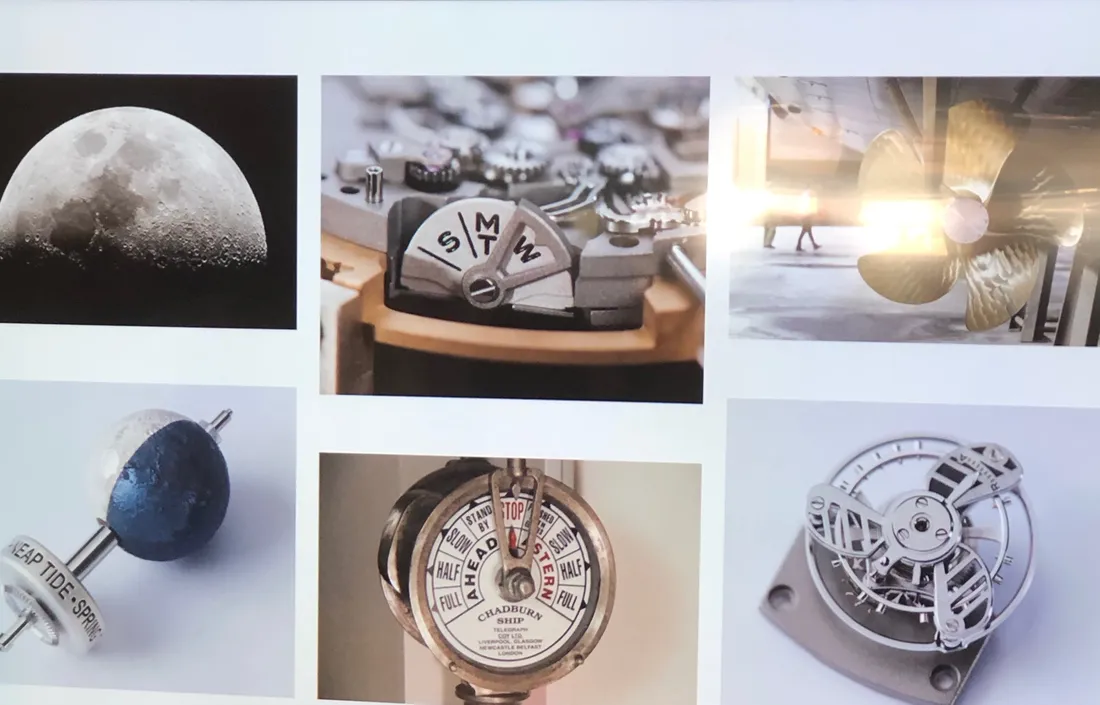
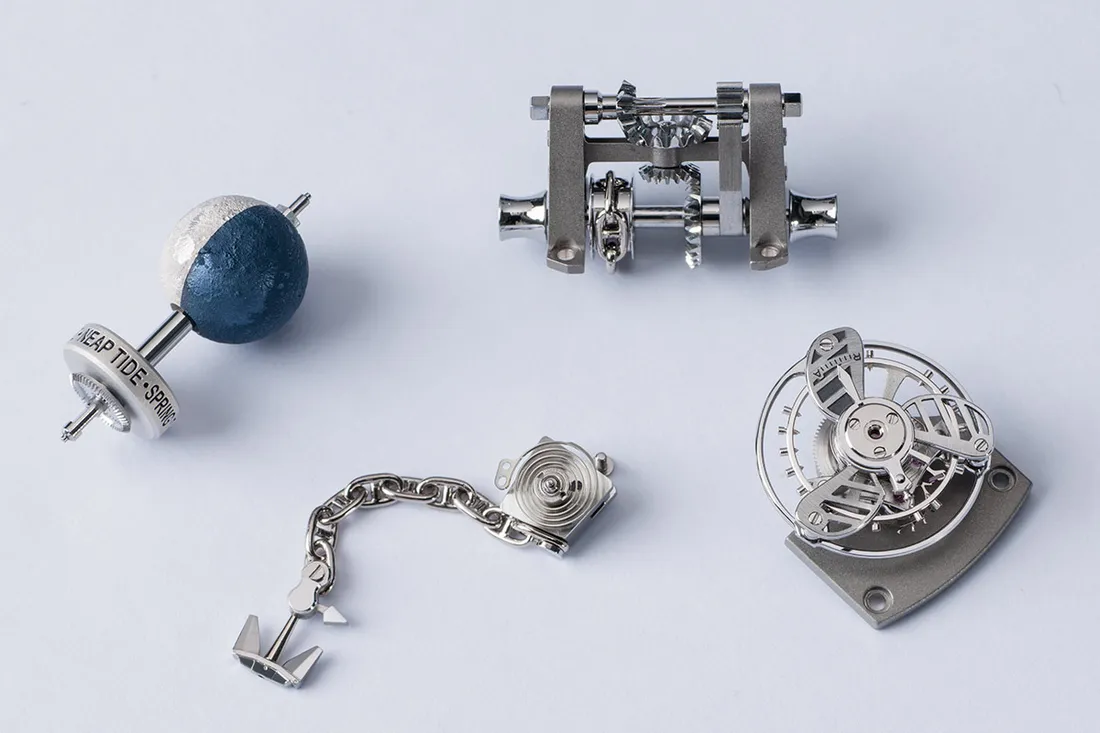
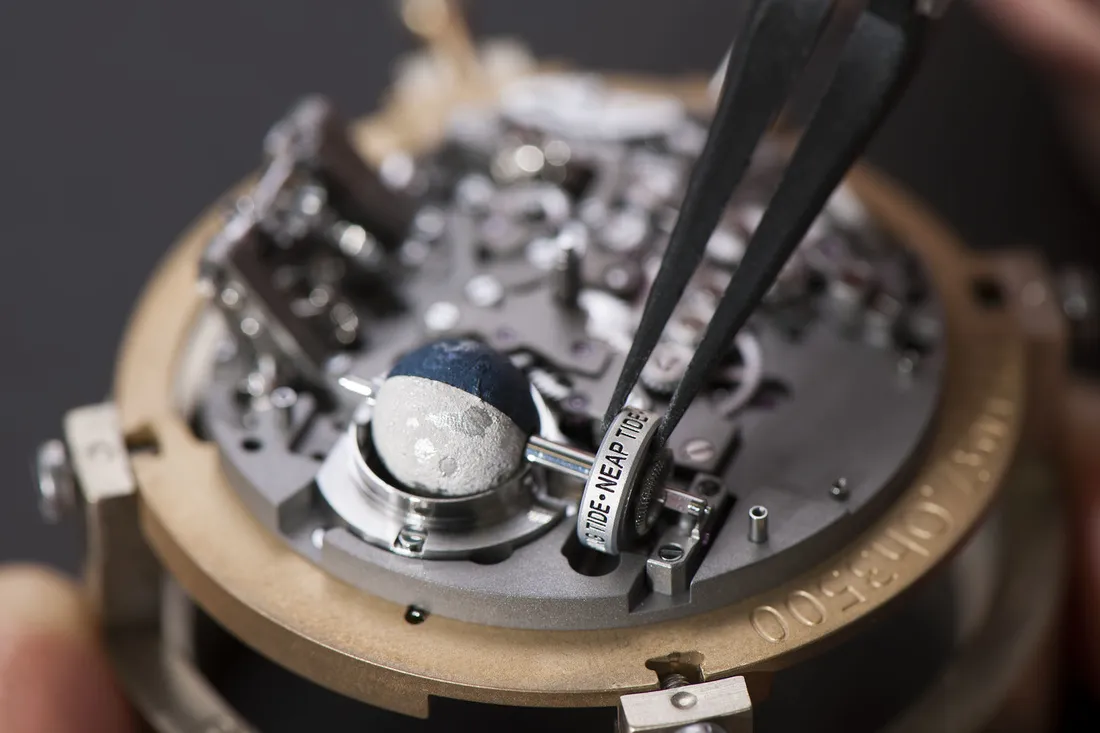
"Yes, my boy. One half of that sphere glitters in rose gold and rhodium, while the other half is coated in black PVD to represent the dark face of the Moon. While the Moon in the sky completes its cycle in 29.5 days, this miniature sphere too turns on its own axis through the gears within the movement, letting you experience which phase the Moon is in, in three dimensions. And in the window beside it you read, in real time, whether the water is rising (Flow) or withdrawing (Ebb)."
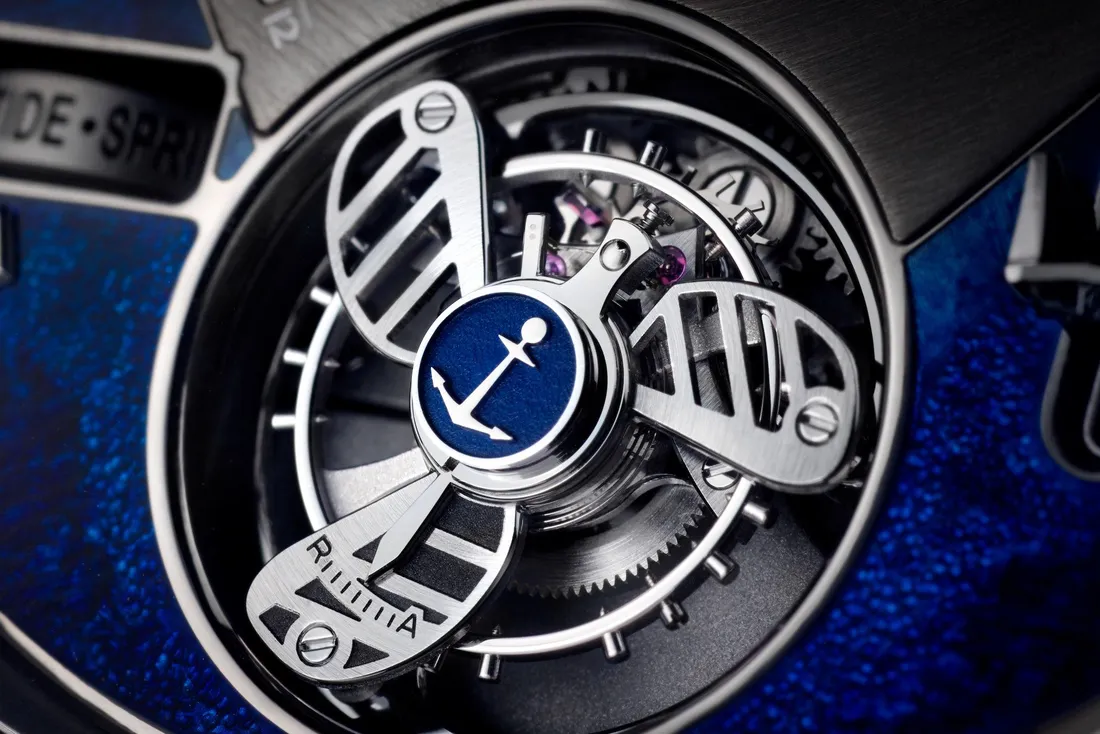
When the aide noticed the ever-turning part in the lower portion of the watch, he cried out with excitement: "And what about this golden propeller at 6 o’clock, Captain? It spins round and round on itself just like a ship’s engine!"
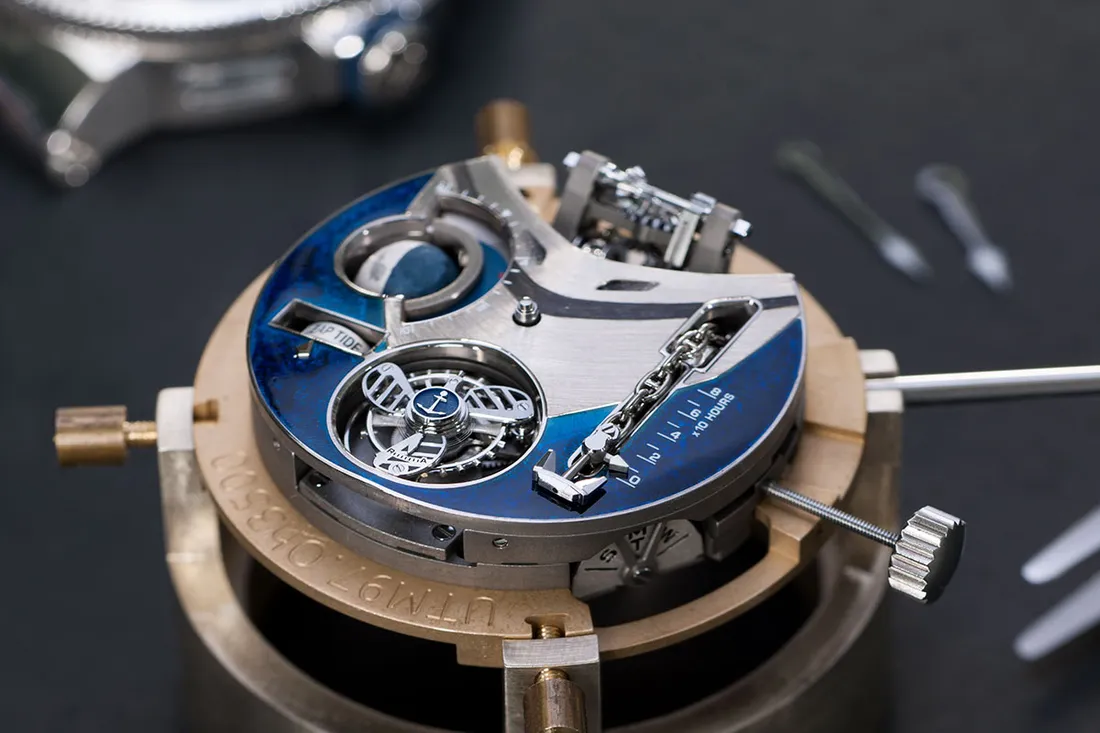
The captain smiled with pride. Fixing his eyes on that moving heart of the watch, he began: "That is a Flying Tourbillon, my boy, the very summit of the art of watchmaking... You remember the immense gravity of the Earth we spoke of a moment ago? So that this force does not constantly pull the delicate mechanism inside the watch downward and cause time to drift, this tourbillon is like a whirling dervish that turns ceaselessly on its own axis... Just like the unstoppable turning and vibration of the particles, the atoms, throughout the cosmos... That perpetual spinning of subatomic particles, as though they whirl in invisible love like a form of remembrance; this mechanism too turns upon my wrist exactly like a dervish! Defying the pull of the Earth, it sets the watch’s mechanism free. What is more, the masters of Ulysse Nardin have shaped it in the form of the high-efficiency propeller of the most modern mega yachts. Completing one full turn each minute, it keeps the heart of the watch alive."
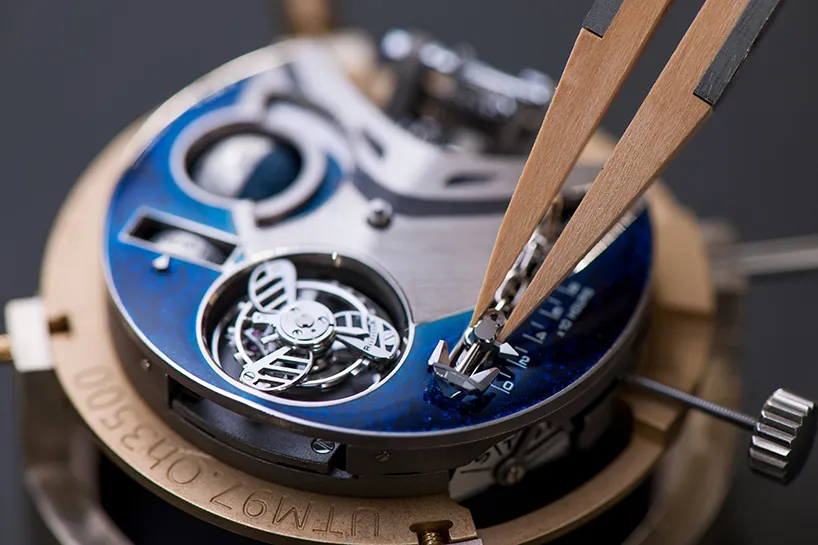
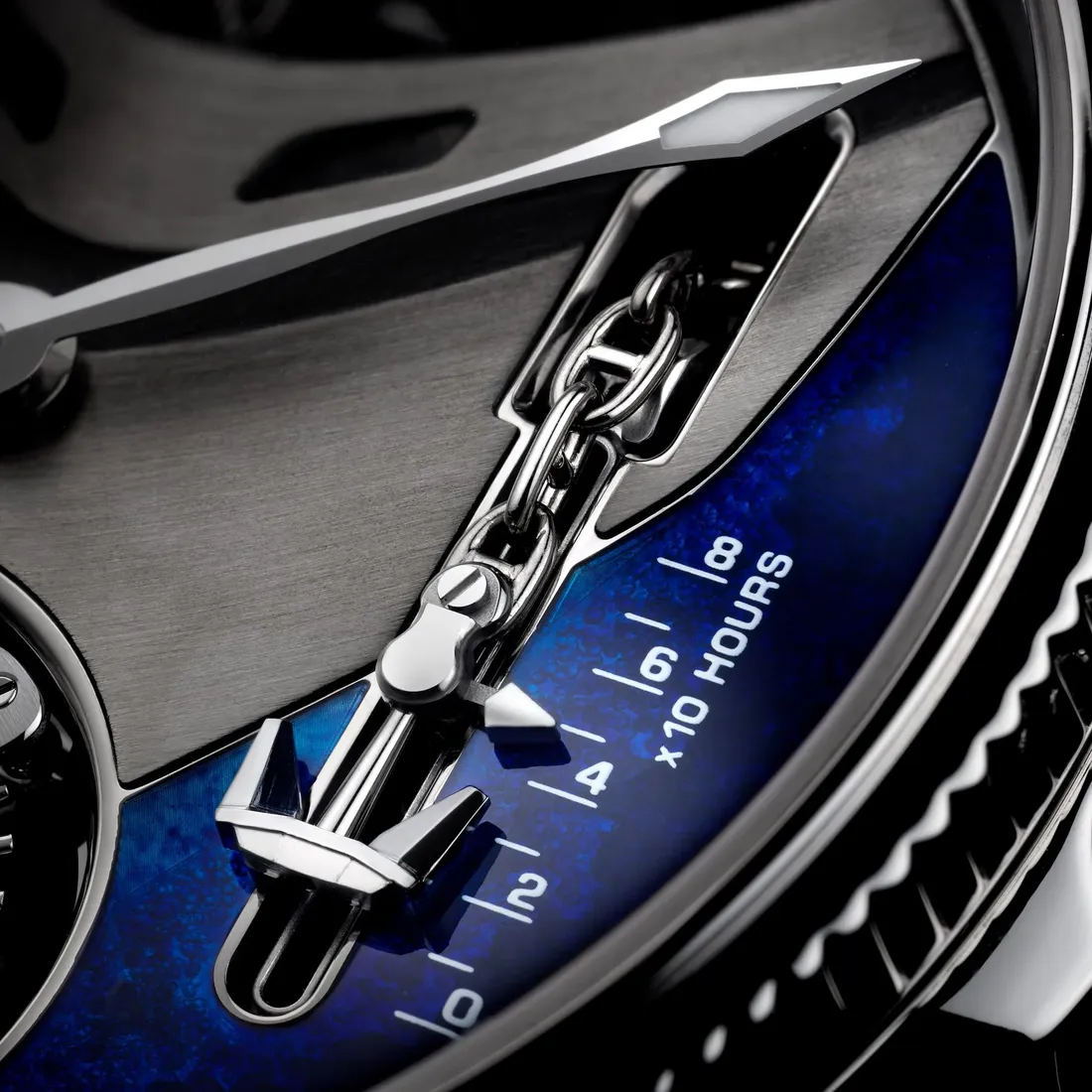
The aide focused on the chain on the right-hand side of the watch. His eyes had widened in astonishment: "Captain! Am I seeing this wrong? Is there a real anchor and chain inside the watch?"
"You are not mistaken, my boy. This is a world first! That miniature structure you see at 12 o’clock is a ship’s windlass. When I turn the winding crown of the watch, the windlass wheels begin to turn and, drawing an impossibly fine micro-chain, they haul the gold anchor at 3 o’clock upward. As the watch runs and its 80 hours of power are spent, the anchor slowly descends on a vertical scale. It tells you how much power the watch has left with a ship’s anchor."
"And what about that little sapphire window beside the case? There are letters inside it..."
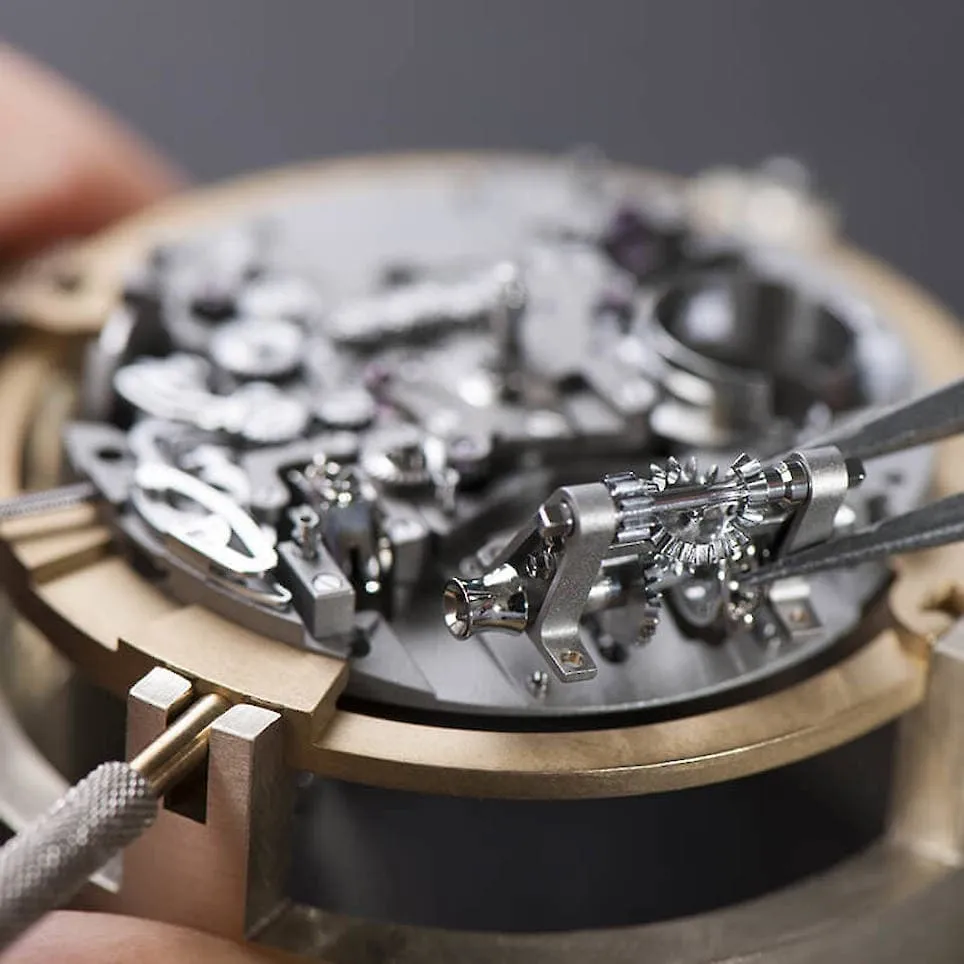
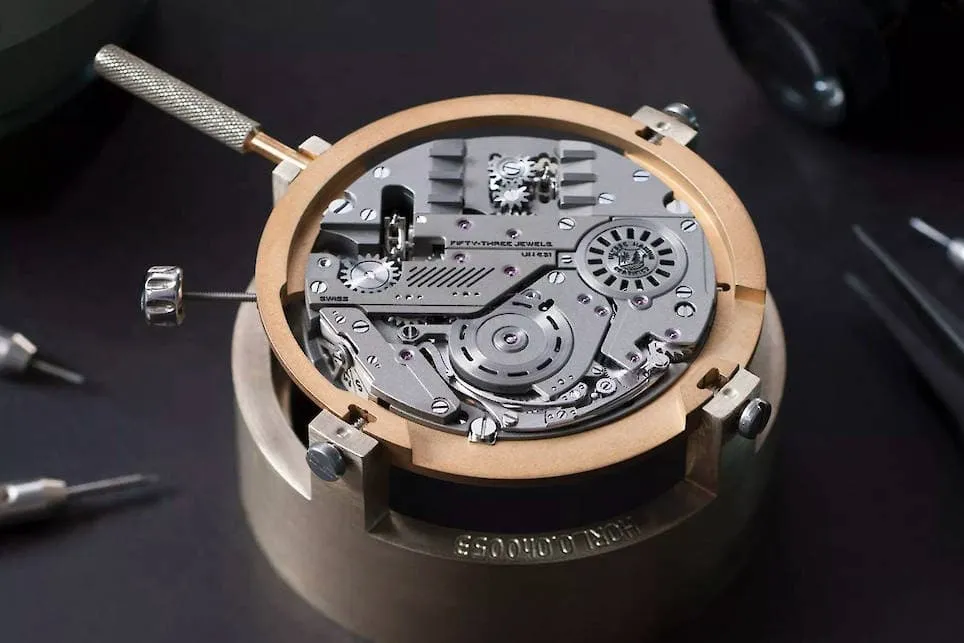
"That is a ship’s telegraph. When you pull the crown, the watch’s mechanism shifts between the S (Setting), W (Winding) and M (Tide setting) modes, like a captain’s bridge. At the heart of this watch beats the 504-part UN-631 caliber, developed together with the legendary watchmaker Christophe Claret. Only 30 fortunate people in the world own this watch."
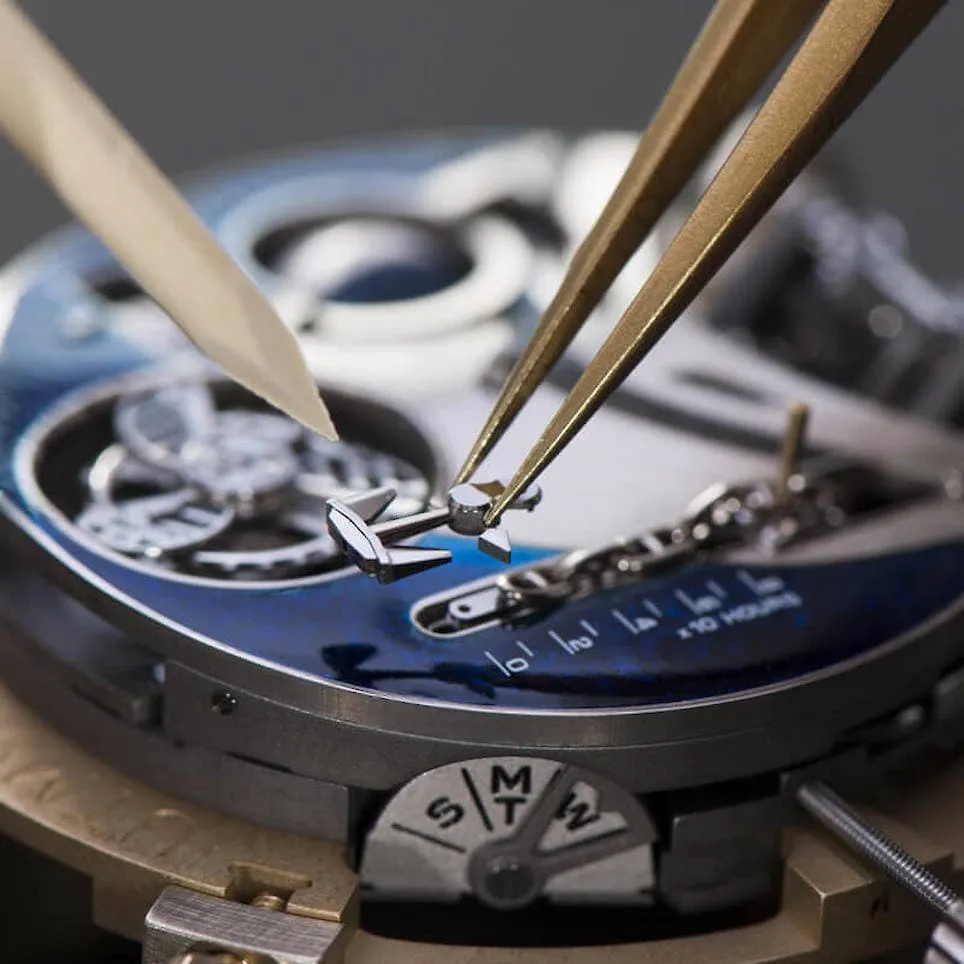
In the Workshop: The Meticulous Assembly of the UN-631 Caliber
Behind the scenes of this cosmic theatre that fits onto the wrist lies one of the most demanding disciplines in watchmaking. The UN-631 caliber unites every complication, from the anchor-and-chain mechanism to the three-dimensional Moon sphere, from the tidal indicator to the flying tourbillon, within a single movement. The masters adjust these 504 parts to micron precision; each wheel and each bridge is finished and polished by hand.
At that very moment, a colossal roar rose from the depths of the bay of Mont Saint-Michel. The dark mass of water on the horizon began to charge toward the shore with what the French famously call the speed of a galloping horse. The sea, kilometres away, swallowed the desert of wet sand in only 15 minutes; the waves began to pound the foot of the ramparts. In an instant, Mont Saint-Michel was transformed into a magnificent fortress standing alone in the midst of the waters, cut off from the world.
The young aide was spellbound before this tremendous return of the ocean and the flawless tuning of the cosmos. As the captain watched the play of light upon the miniature anchor chain and the dervish-like spinning propeller on the dial of his watch, he squeezed his aide’s shoulder: "Do you see, my boy? The immense architecture of the sky and this little mechanism on my wrist share the very same moment. This watch is a timeless masterpiece that carries the ocean’s breath, the Moon’s passion and mankind’s eternal wonder at time upon the wrist like a crown of 18-carat rose gold."