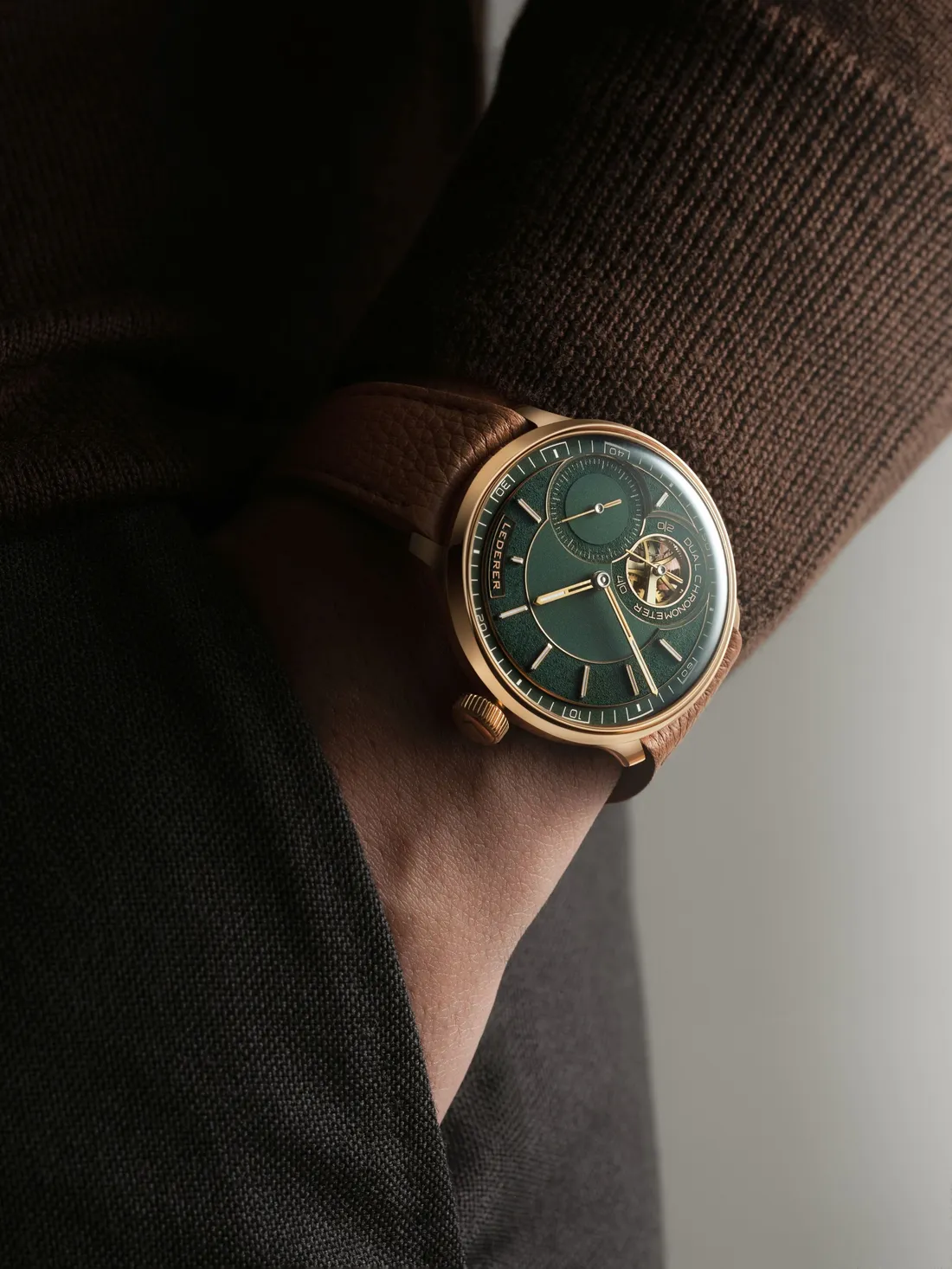
Some ideas are born ahead of their time. In 1789, Abraham-Louis Breguet, the Einstein of watchmaking, drew an equation. On paper it was flawless; to build it was impossible. So impossible that even its genius inventor made a few attempts and gave up. Two hundred and fifty years passed. And a mathematician-watchmaker named Bernhard Lederer finally solved that unsolvable equation. The result you hold in your hand is the Lederer CIC 39 Racing Green.
This is less a watch review than the story of a theorem being proved. At the point where high mathematics, micro-mechanics and microchip technology meet, we will examine together, step by step, what lies behind a deep green dial. And I promise: even if you have never studied these sciences, by the end it will all fall into place.
The Einstein of Watchmaking and an Unsolvable Dream
First, let us understand this: at the heart of a watch sits a part called the escapement. Its job is to release the raw power stored in the mainspring to the balance wheel in tiny, perfectly equal sips. Like a gatekeeper: it lets through neither too much nor too little, always the same measure of energy. How precise a watch is depends entirely on how fairly that gatekeeper behaves.
Traditional escapements had a problem: they delivered power to the balance indirectly, by sliding friction, and needed oil. And oil is watchmaking’s great enemy; over time it thickens, dries and ruins precision. Breguet’s dream was an escapement that needed no oil at all: the échappement naturel, the natural escapement.
The idea was elegant. Place two wheels side by side, turning in opposite directions. Let the balance in the middle receive a direct, tangential push from the right wheel as it swings right, and from the left wheel as it swings left. No friction, no oil, just a pure and direct touch. On paper it was perfect. But in the real world, three fatal problems awaited Breguet.
Breguet’s Mathematical Deadlock
The first problem was gear lash, or backlash. As the two wheels turned each other, there remained a gap between them, even if only a hundredth of a millimetre. This tiny gap caused the wheels to lock momentarily, or wasted the energy outright. Imagine trying to drive two gears with a hair’s width of play between them: they either clatter or stick.
The second problem was more insidious: angular velocity mismatch. As the power from the mainspring fell, the speed and the angle at which the wheels struck the balance changed. Yet that push had to be delivered every single time with exactly the same microscopic geometry. Think of pushing a child on a swing: if you do not push at exactly the right moment and angle, the swing slows and stops. As the power dropped, the angle of Breguet’s escapement drifted, and the watch simply stopped.
The result? Breguet could make only a few of these watches, all pocket watches, and they kept stopping. Fitting one into a wristwatch was utterly impossible with the mathematics and materials of the day. The dream waited on paper for two centuries.
format_quote"Breguet’s equation was flawless on paper. But the mathematics and the materials to build it would not be born for another two hundred and fifty years."
Lederer Solves the Equation Like a Mathematician
Bernhard Lederer first followed in the footsteps of a great master. The legendary English watchmaker George Daniels had carried Breguet’s natural escapement a step further, as the independent double wheel escapement. Lederer took up this legacy and rewrote Breguet’s geometric equations with modern mathematics and the formulas of friction. Through three great revolutions.
One: he redrew the geometry. He threw out traditional tooth shapes and recomputed the curve of every tooth with special mathematical curves called the involute and the epicycloid. So when the two wheels meet, they do not slide with friction but touch and part in pure rolling contact; friction is almost nothing. On top of that, he shifted the angle at which the balance and wheels meet from Daniels’ 100 degrees to a far gentler 120 degrees. Perfect geometry buried the backlash problem in history.
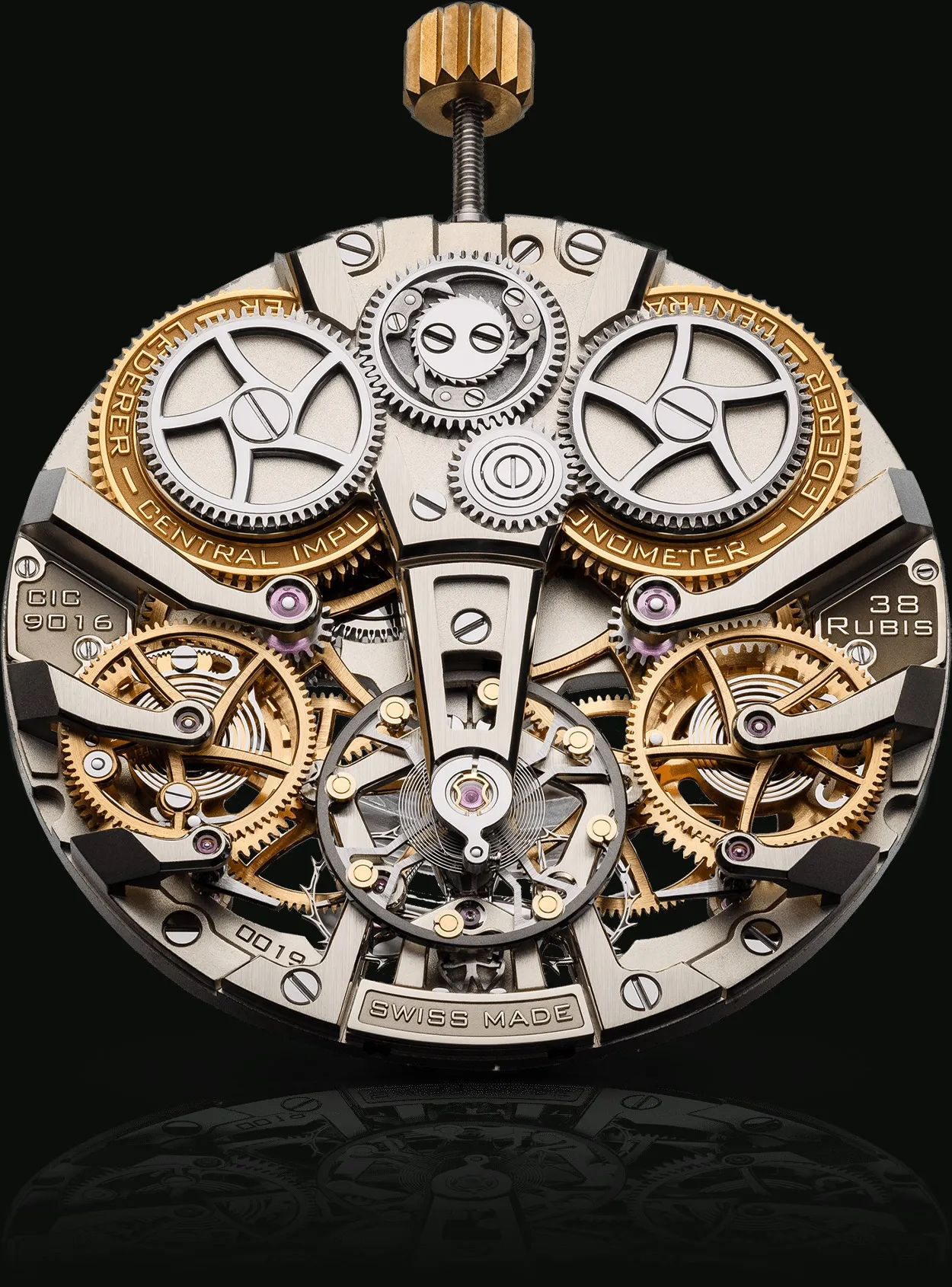
Two: he made the force constant. To solve the problem of the angle drifting as power falls, he split the mechanism in two: two separate barrels, two separate gear trains. Behind each, between the fourth and fifth wheels, he placed a tiny intermediate spring called a remontoir d’égalité. This spring recharges every ten seconds and delivers perfectly constant torque to the escapement; because the two remontoirs work in turn, the balance receives a perfectly regulated burst of energy every five seconds. Whether the mainspring is full or nearly empty, the force and angle of the impulse never change. Think of a water tower: whether the reservoir is brimming or half empty, the tap always flows at the same pressure.
Three: he defeated inertia. In Breguet’s day, wheels were made of steel or brass; they were heavy. If you try to stop and restart a heavy wheel six times a second, you lose serious energy to the metal’s inertia, its reluctance to change motion. Lederer made the two escape wheels and the detent from hardened titanium. He cut their weight so far that the energy needed to stop and restart them fell to almost nothing. Think of the difference between flicking a brick and flicking a feather.
Manufacturing: Watchmaking of the Microchip Age
Now, solving this micron-level geometry on paper is one thing; making it is another. This is where traditional watchmaking ends and the technology of space and microchips begins. If you tried to cut these parts on an ordinary lathe, even a millionth-of-a-metre error from the cutting tip would ruin that precise geometry and lock the two wheels together.
So the escapement’s micro-parts are shaped as if printing a computer processor, by lithography and electroforming, the family of semiconductor techniques known as LIGA. This method shapes metal to a tenth of a micron; the flawless contact geometry that Breguet dreamed of but could not make became possible only with the technology of this age. Being able to work modern materials to such precision is what eliminated backlash entirely.
Central Impulse Chronometer: Two Hearts, One Pulse
Now let us put it all together. The CIC, the Central Impulse Chronometer, is really two separate chronometers fitted into a single case. Two barrels, two gear trains, two remontoirs and two escape wheels; all of them feed one central balance. A central detent lets only one wheel touch the balance at a time; the two wheels push in turn, alternating.
Think of it as a twin-engine aircraft, or two hearts beating in turn to drive a single pulse. The balance is a variable-inertia design, finely tuned for stability with its four regulating and four balancing weights. The result: a naturally impulsed, constant-force chronometer that can restart itself. Three full oscillations a second, that is, 3 Hz.
The watch world’s verdict is clear: the CIC won the GPHG Innovation Prize in 2021 and the Chronometry Prize in 2024, and in 2025 it was a finalist for the Louis Vuitton Prize for Independent Creatives. The reason collectors revere it is precisely this micron-level mathematical victory.
format_quote"When you turn this watch over, you are not looking at a movement, but at a theorem finally proven, ticking."
CIC 39 Racing Green: A Victory in the Colour of Speed
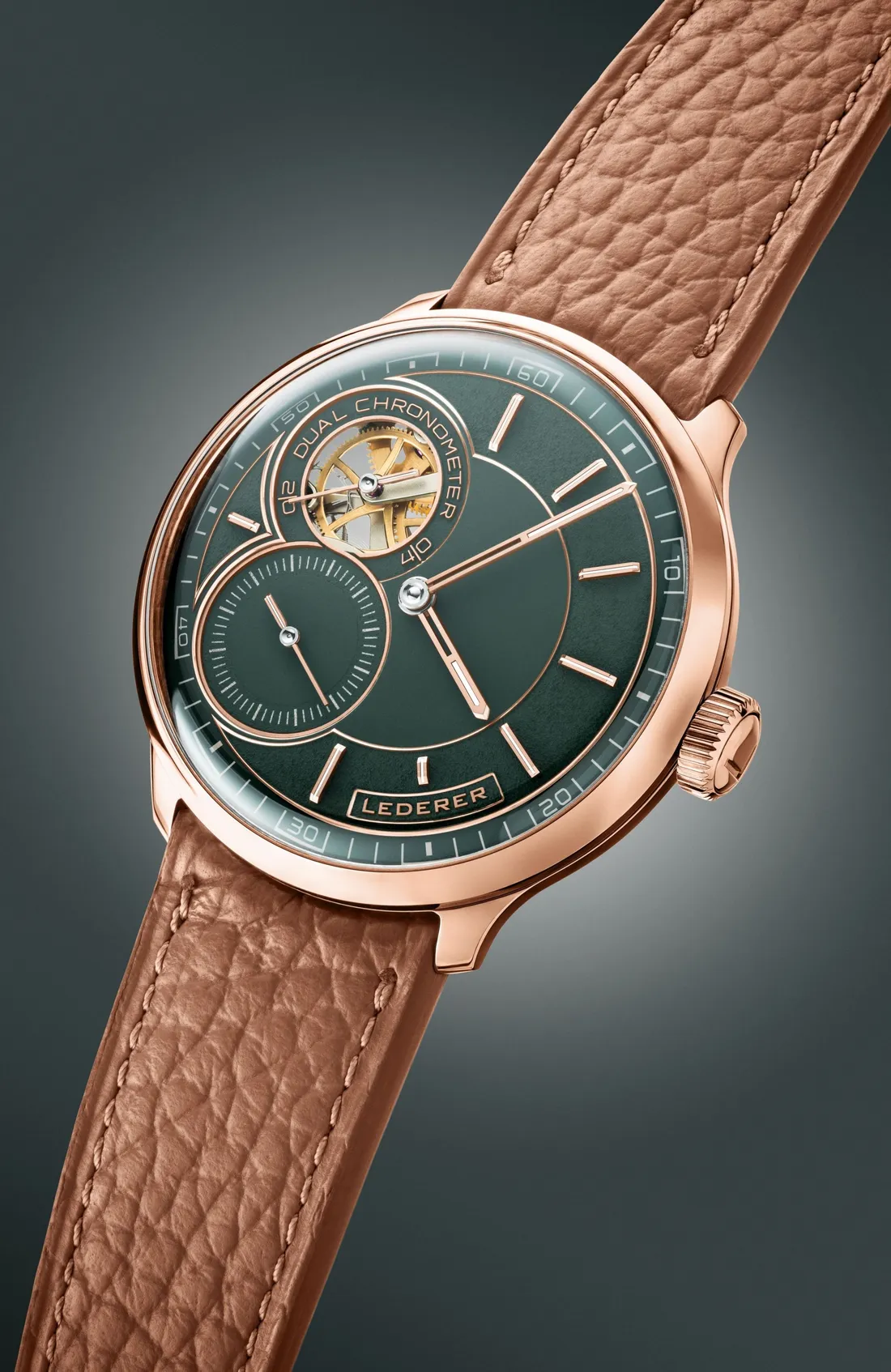
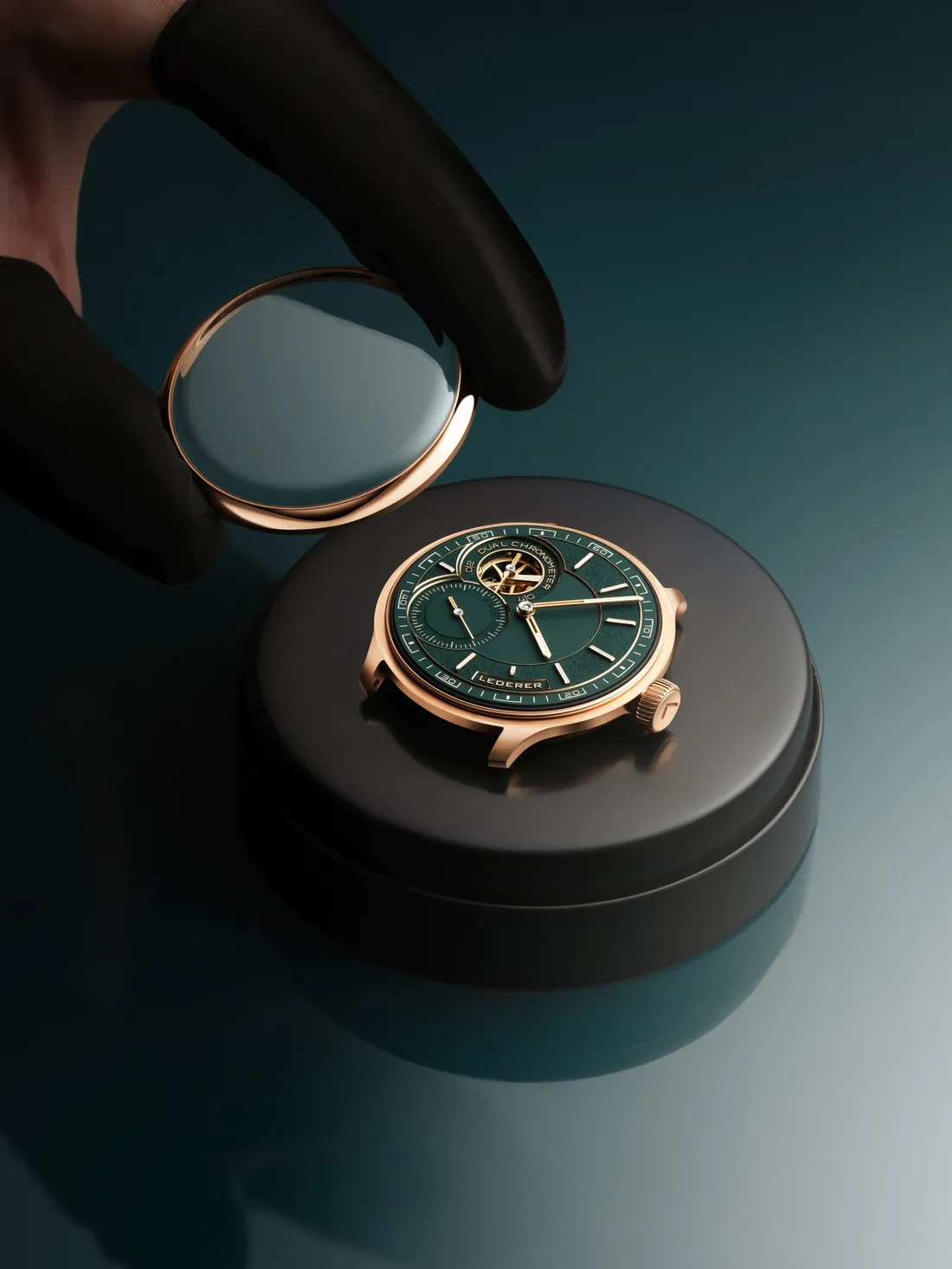
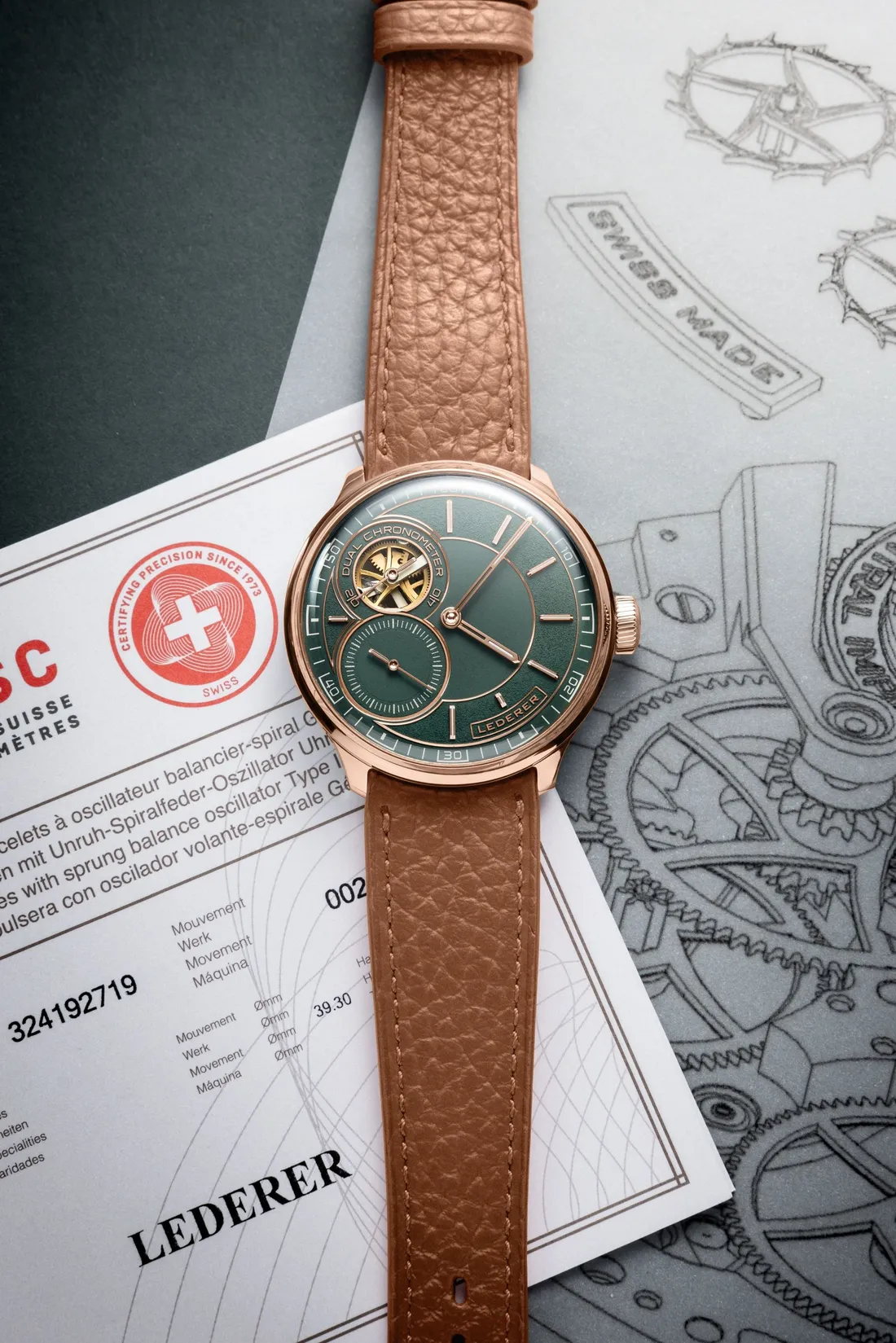
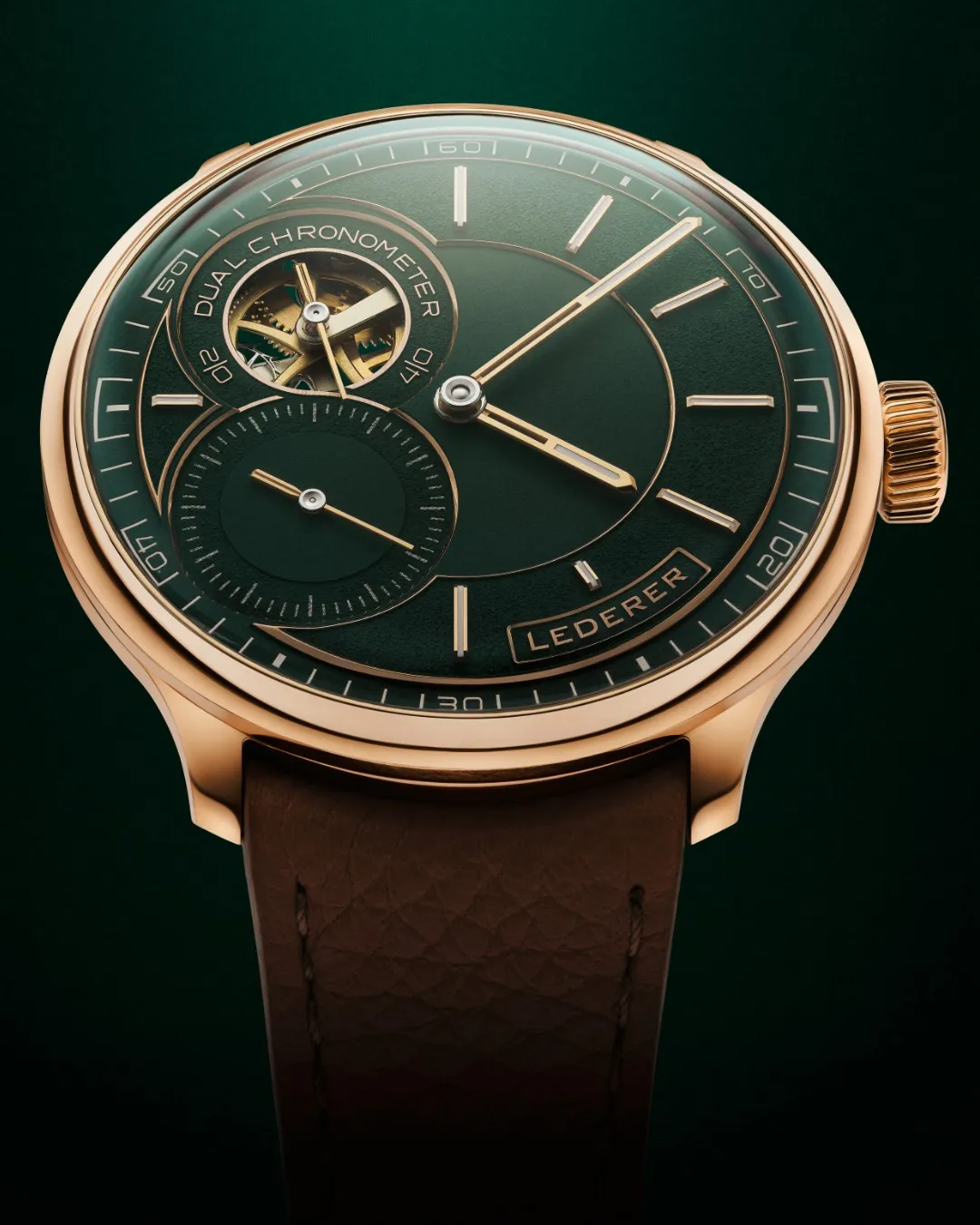
All this engineering fits into an elegant case just 39 millimetres across and only 10.75 millimetres thin. And the dial is a sandblasted, matte, deep green. So why Racing Green? Because it is British racing green; the colour of motorsport, of the chase for the perfect lap, of precision married to speed. For a chronometer in pursuit of the perfect beat, no colour could be more fitting.
Across the dial it proudly reads Dual Chronometer. The man who makes this watch by hand, Bernhard Lederer, has been independent since 1986 and is a master of the AHCI, watchmaking’s most select academy of independents. Its price is around 155,000 Swiss francs.
And the loveliest thing about this watch is that both of its faces are equally mesmerising. The front is a lesson in simplicity and restraint; the back, a cathedral of symmetry. That is why our cover image shows the two together: both faces of the coin are masterpieces.
From Paper to Wrist: A 250-Year-Old Proof
So on your wrist you carry a dream from 1789, high mathematics, microchip technology and a touch of racing green. Breguet drew the equation; Lederer, 250 years later, solved it. He placed behind it two mechanical computers that hold the torque constant, recomputed the geometry of the teeth for zero friction, made the wheels of titanium, and produced it all with microchip precision.
When you turn this watch over, you are not really looking at a movement. You are watching a theorem that hung in the air for two centuries finally being proved, ticking. Had Breguet lived to see it, I think his eyes would have filled with tears.