In the winter of 1879 there was a man of fifty-one at Yasnaya Polyana: Leo Tolstoy. War and Peace and Anna Karenina were long behind him; he had land, a family, fame and health. And yet that winter he had given up going out with a gun, and he had begun hiding a length of cord from himself. The question lodged in him was simple, and until it was answered nothing had any taste: is there any meaning in my life that death cannot destroy?
To set that question out, in A Confession, finished in 1882, he reached for an old story out of the East. A traveller crossing the steppe is set upon by a raging beast. There is nowhere to run, so he throws himself into a dry well. But as he falls he sees that a dragon is waiting at the bottom with its jaws open. He can neither climb out nor go down. He catches hold of a thin twig growing from a crack in the wall and hangs there. His arms begin to tire. And at that very moment two mice, one white and one black, are gnawing patiently and evenly at the root of the twig he is holding. On the leaves of that twig there are a few drops of honey; the traveller stretches his neck and licks them with his tongue.
Having told the story, Tolstoy names his own share in it: his two drops of honey were his family and his writing. But he admits that the honey has lost its taste, because he can no longer take his eyes off the dragon and the two mice. This is the first of the two windows onto the same well. Another man, fallen into the same place and looking at the same scene, will arrive somewhere else entirely.
The trial of humankind with time and with its own mortality is the deepest subject of both mechanical watchmaking and existential thought. The story of the traveller who, walking in the desert, is suddenly charged by a lion and in sheer panic leaps into a deep dry well lays that truth bare. Catching hold of a thin branch on the wall as he falls, the man sees an enormous dragon waiting below with its mouth open, and above him two mice, one black and one white, gnawing endlessly at the root of the branch. On the branches of the tree there are a few drops of honey.
There are two kinds of man who fall into that well, and the scene has to be read through two separate windows:
The First Window: The Man Who Cannot See the Truth and Numbs Himself Chasing the Honey
The first man to fall into the well sees the terrible picture around him, the dragon below, the black and white mice gnawing at the root, yet he does not want to understand the meaning behind it. Either the cold breath of death so fills his mind that he can taste nothing of that honey at all, or he numbs his reason and his feelings in order to forget that inevitable end.
This is the man who misunderstands the words "seize the day". He sees the passage of time, the turning wheels, the sifting sand, as nothing but an object of mortal consumption. He does not notice that the black and white mice stand for night and day, that every passing second is spending his life. He clings to the fleeting drops of honey on the branch; but that consolation does not remove the reality at the bottom of the well.
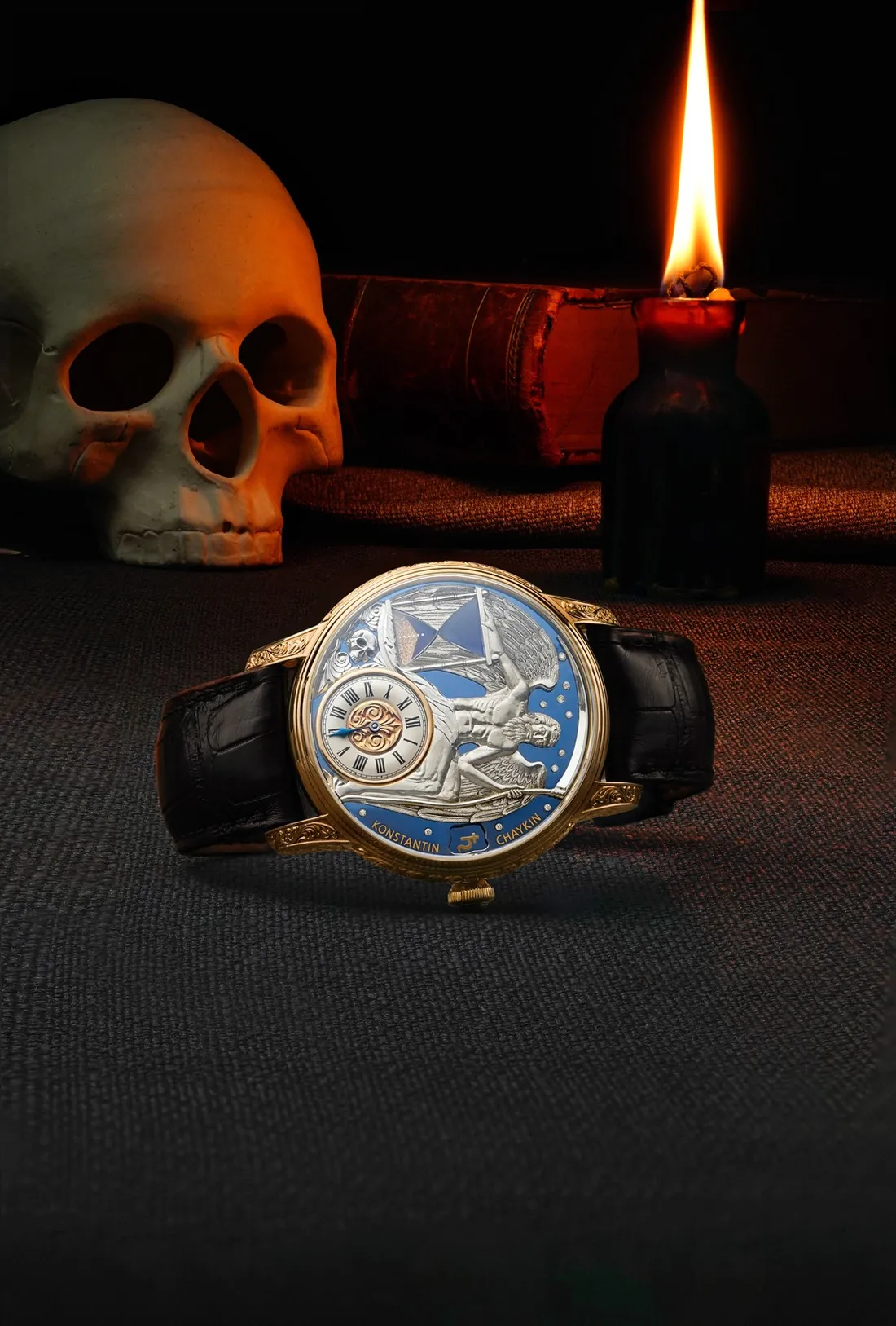
That way of looking is the exact opposite of a genre painters have known for centuries. In the still-life tradition called vanitas, the painter sets a skull, a candle, an hourglass and a flower already beginning to wilt on the table. The aim is not to frighten but to ask the viewer a question: if all of this is going to end, what exactly are you accumulating? The dial of the Carpe Diem is a vanitas table laid not on a canvas but on a wrist.
The Second Window: The Man Who Grasps the Wisdom of the Event and Takes Refuge
The second man to fall into the well looks around him with the eye of insight. "Ah," he says, "there is nothing random here. This lion in the desert, this dragon at the bottom of the well, these mice that stand for night and day gnawing at the root, and the honey on the branches. All of it is connected, and all of it is the work of One who orders."
This man solves the analogy:
The Lion: the misfortunes that chase a man, and the pressure of time.
The Well and the Dragon: the inescapable appointed end, and the door into the earth.
The Black and White Mice: night and day; the wheel of time gnawing ceaselessly at a life.
The Honey in the Tree: the passing bounties of this world, offered as a test.
Seeing the whole picture, the moment this traveller understands his own helplessness he lets go of the chase after mortal honey. What passes through his mind is less a plea than a conclusion: an order tuned this finely cannot have assembled itself. If that is so, this palace has an owner, and here I am not a proprietor but a guest whose stay has a fixed length. What settles a person is exactly that recognition, because the thing he was afraid of losing had never been his; it had been lent to him.
This is the man who lives the moment in its true meaning. He meets the passage of time not with dread but with calm, because he knows the Owner of that order.
format_quote"This palace has an owner, and here I am not a proprietor but a guest whose stay has a fixed length."
The Humble Messenger and the Handing Back of the Trust
Seen with the eye of wisdom, the end at the bottom of the well, or the winged figure that represents it in paintings, is not a terrifying catastrophe. He is a humble and honoured messenger carrying out the command of the Creator.
He is charged with taking the delicate guests of God out of this mortal world of trial and carrying them to their eternal homeland. The gnawing of the branch by the mice that stand for night and day does not drag a man into non-existence; it quietly announces only that the time abroad is up, and that the hour of return to the true country has come.
A Mechanical Masterpiece: Konstantin Chaykin, Carpe Diem
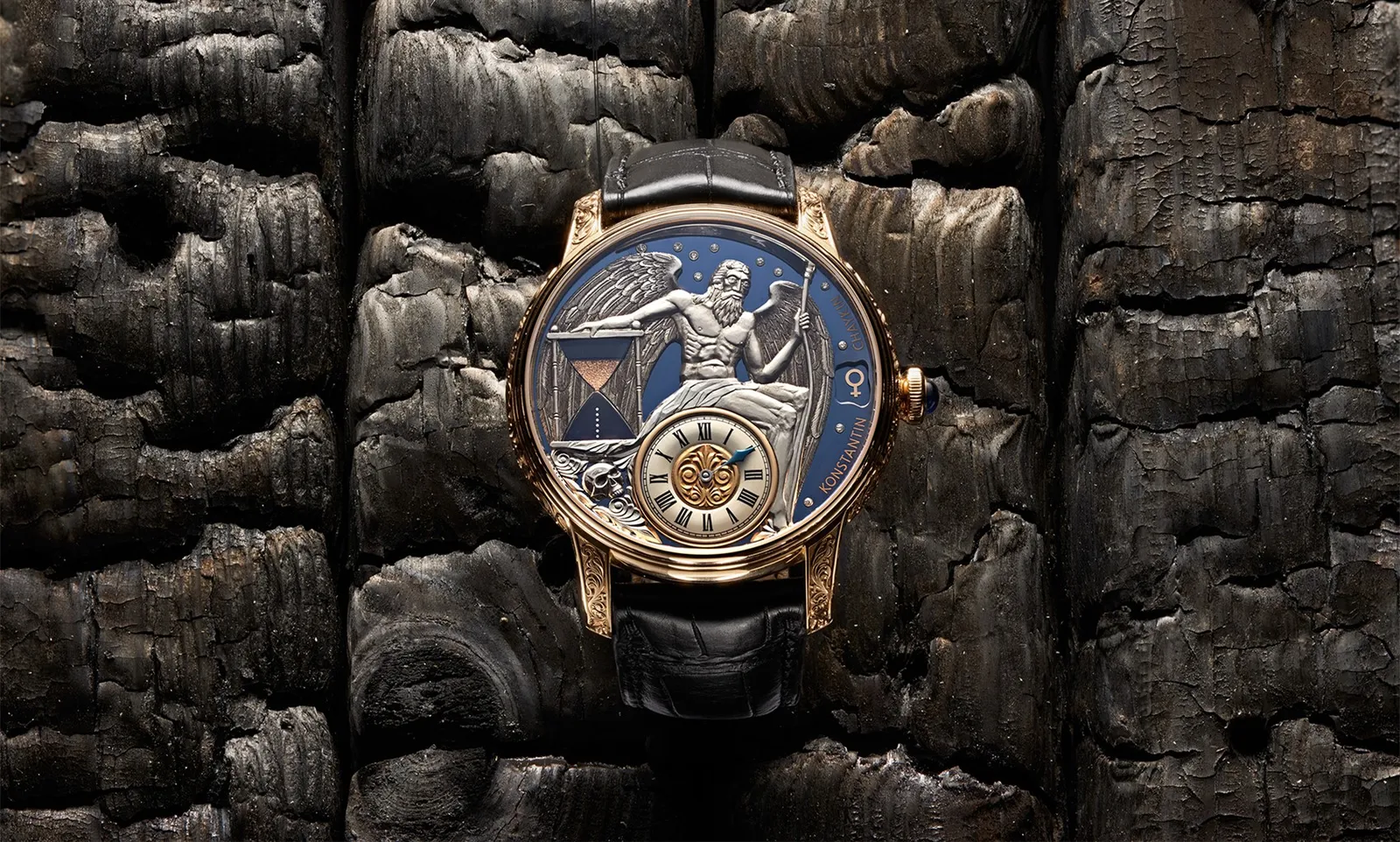
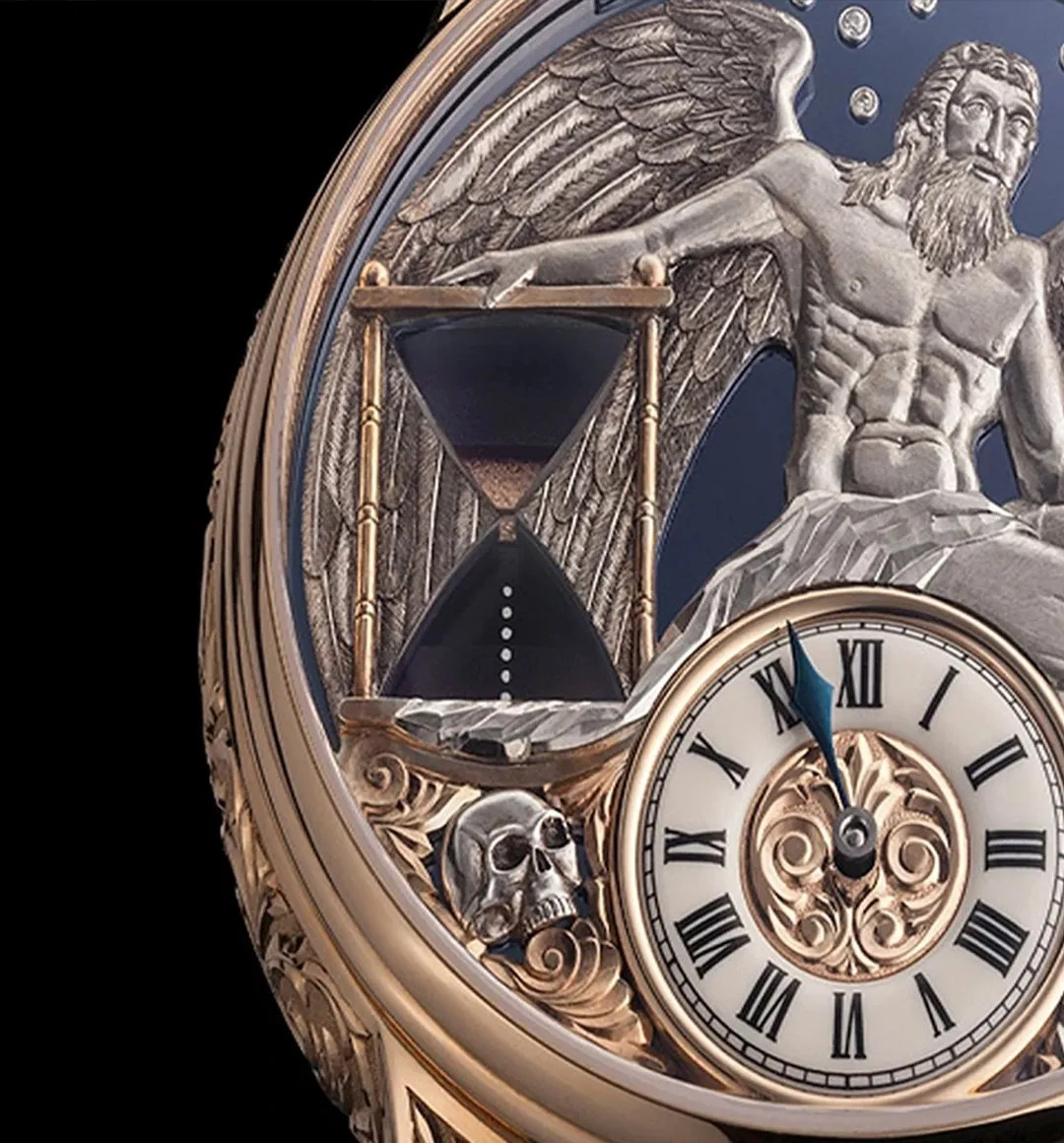
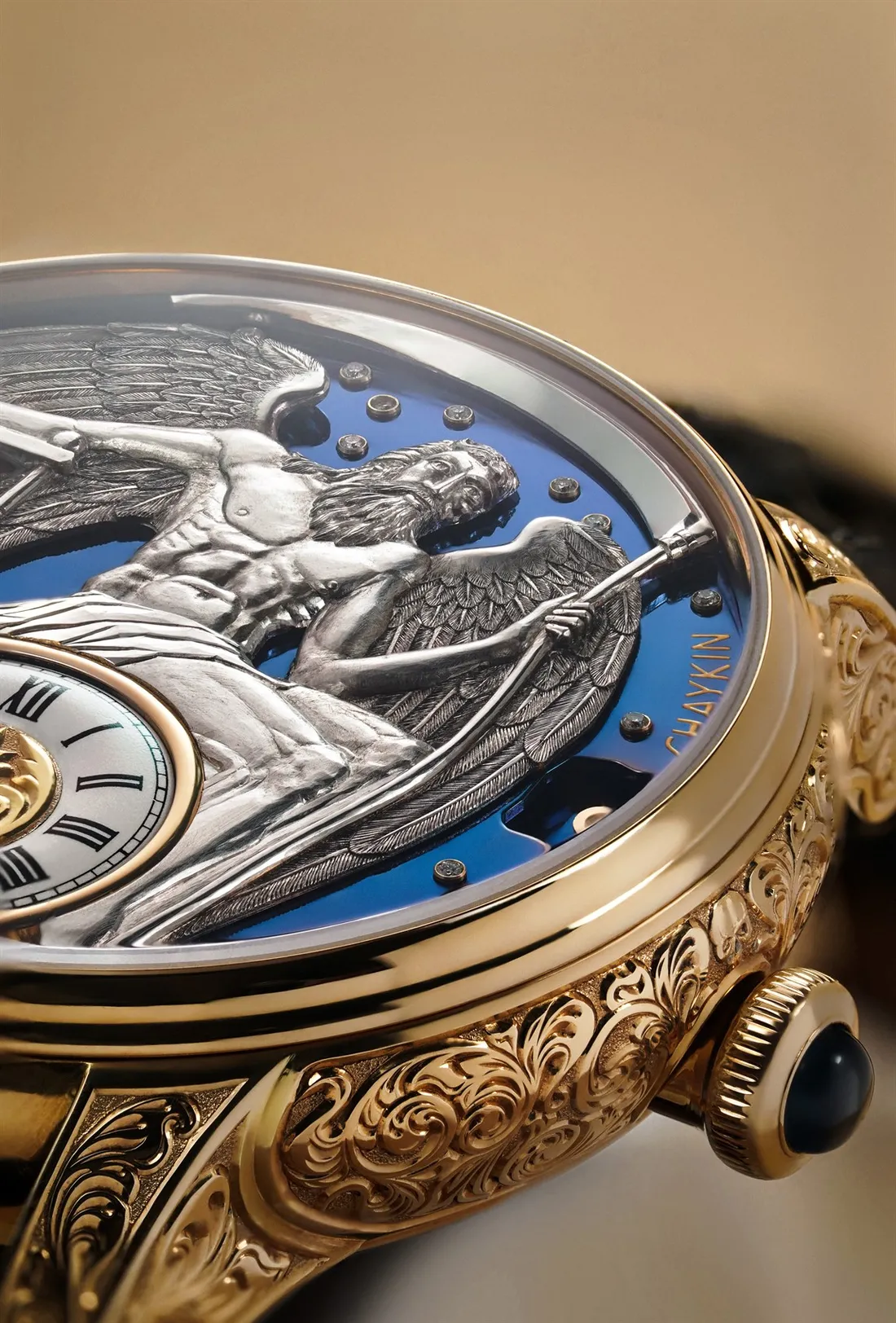
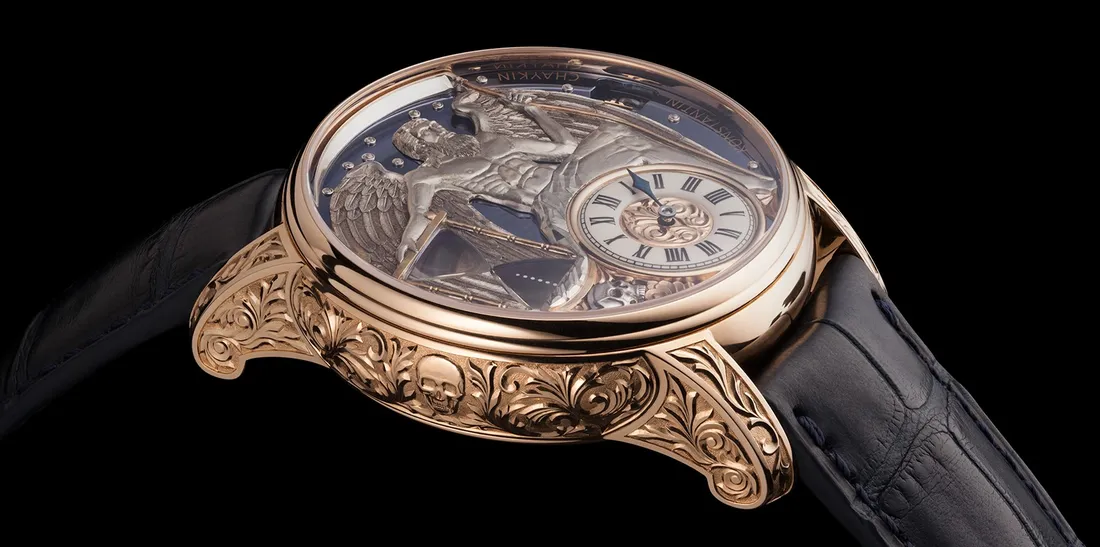
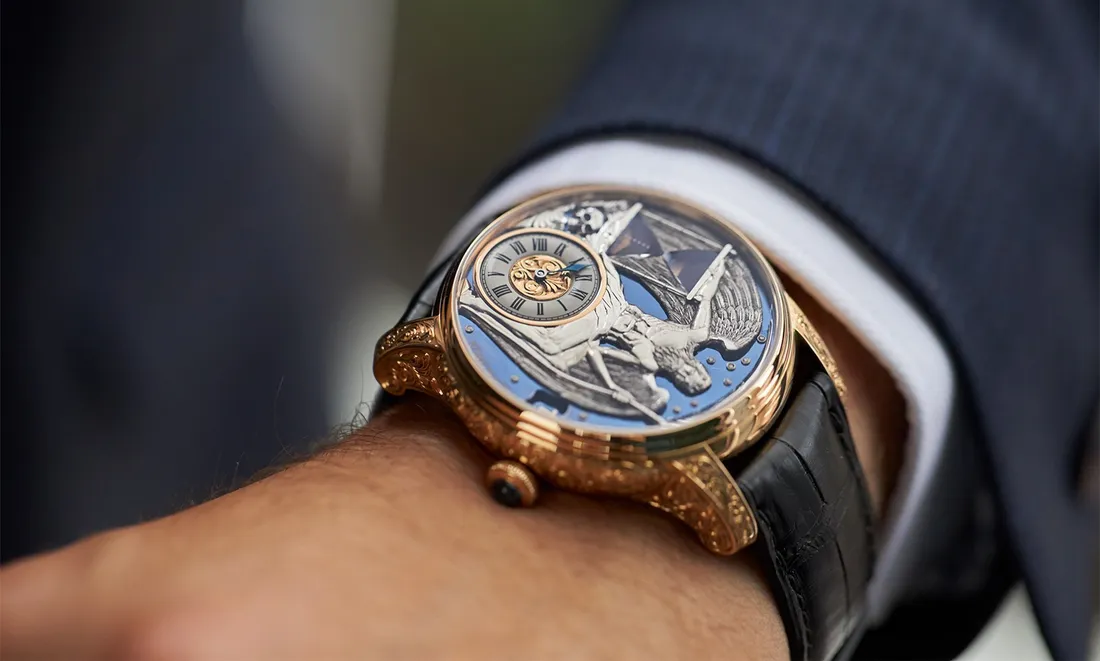
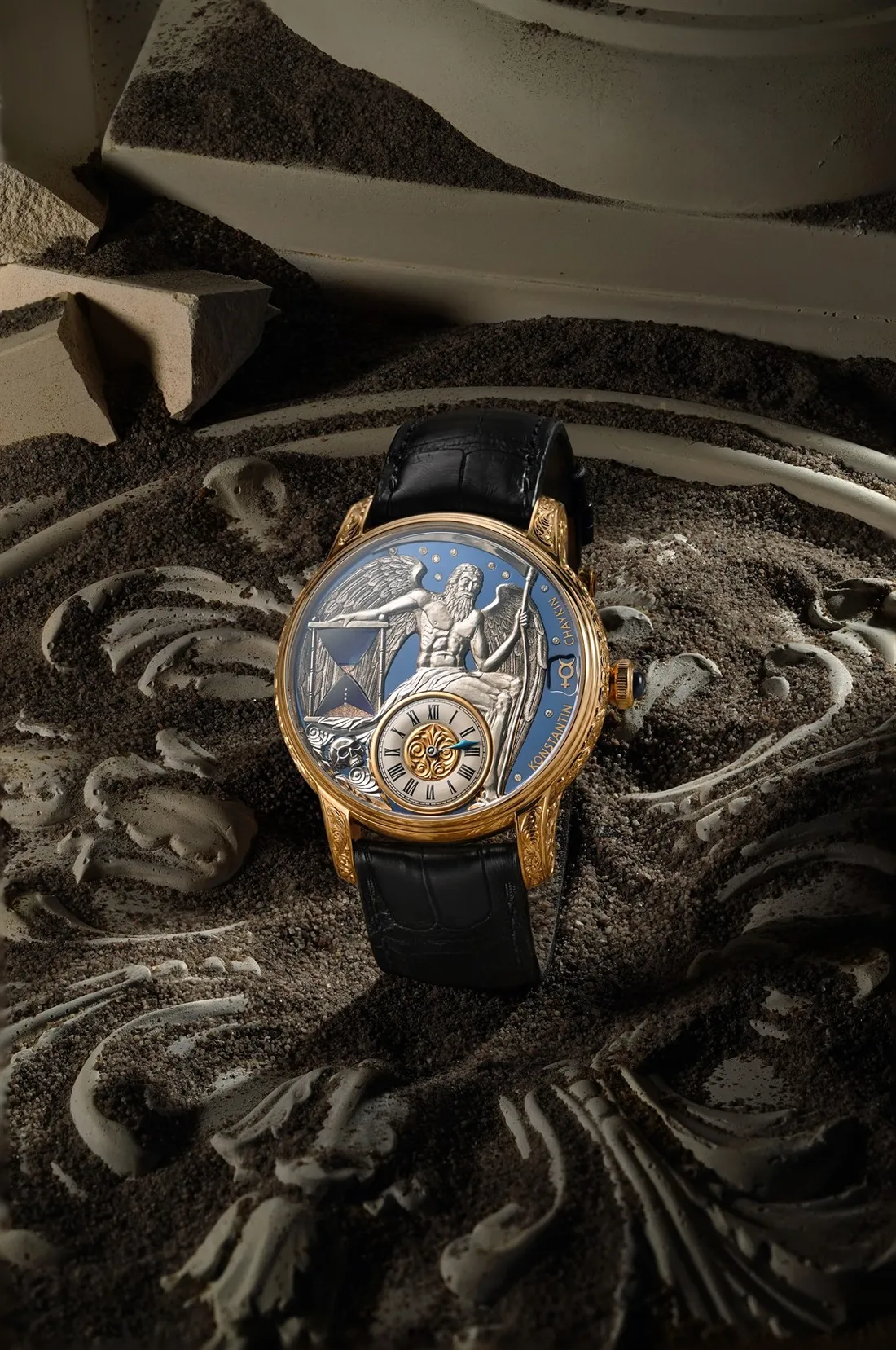
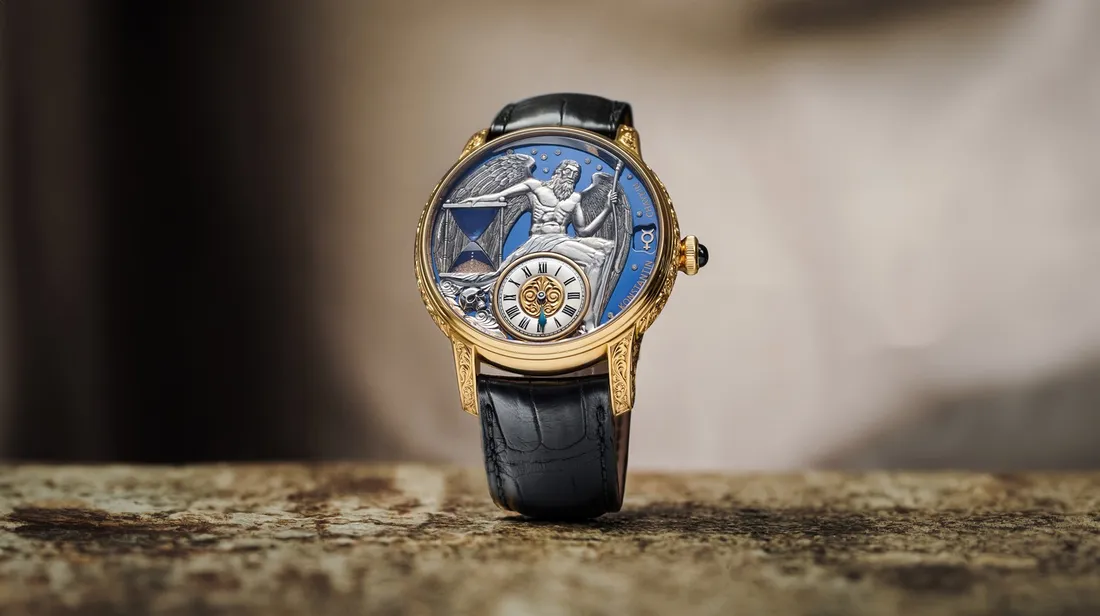
These two ways of seeing turn into a living mechanical allegory on the dial of the Konstantin Chaykin Carpe Diem, one of the most singular models in independent watchmaking. Introduced in 2014, it is the first example of what Chaykin calls the allegorical watch; the hourglass here is not a picture drawn on the dial but a working device that takes the place of the minute hand.
The Winged Messenger
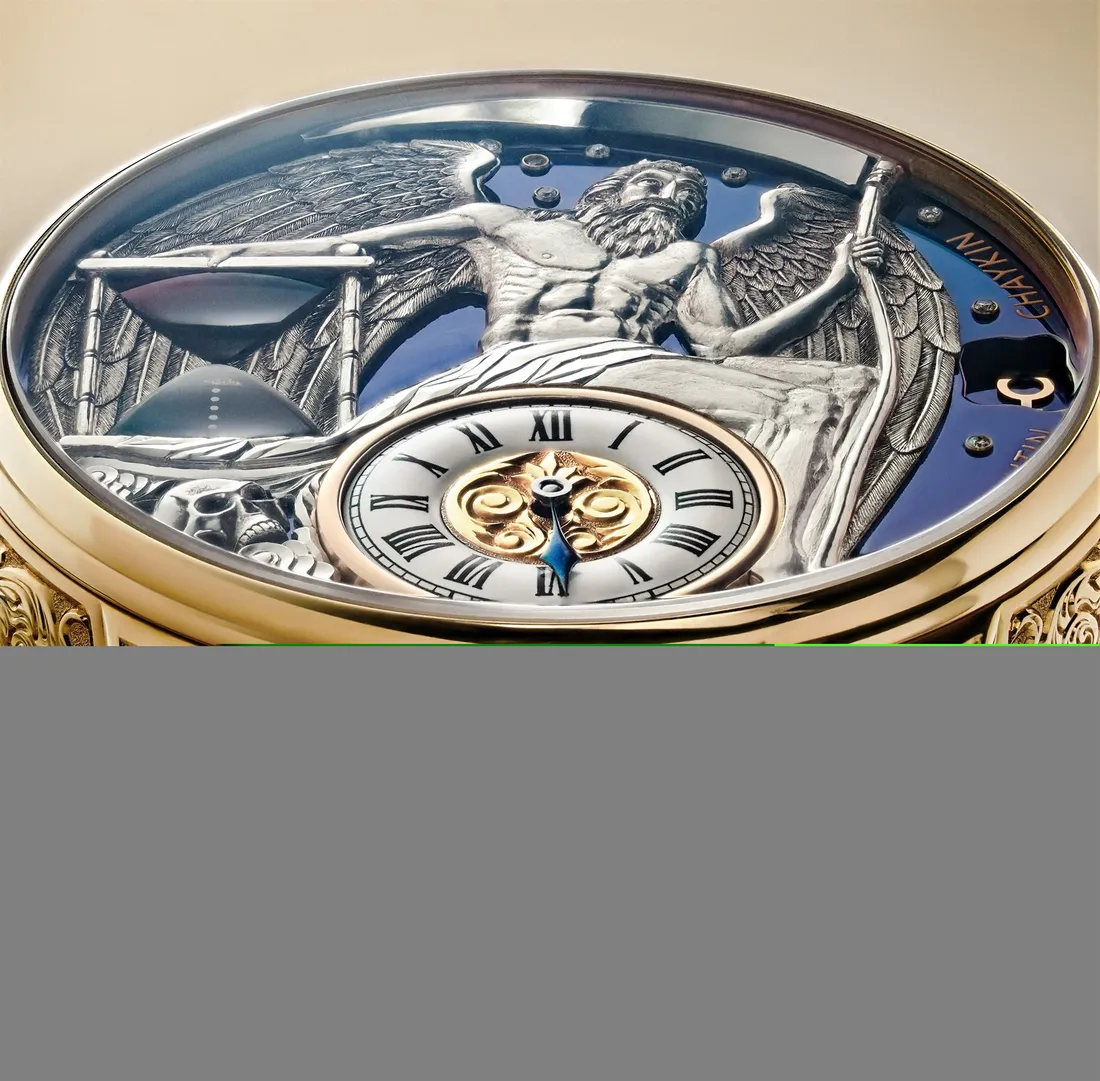
Seated in dignity on the right of the dial, the winged messenger rests one hand on the hourglass and watches the flow of time. He is a mechanical portrait of a messenger carrying out his duty in calm.
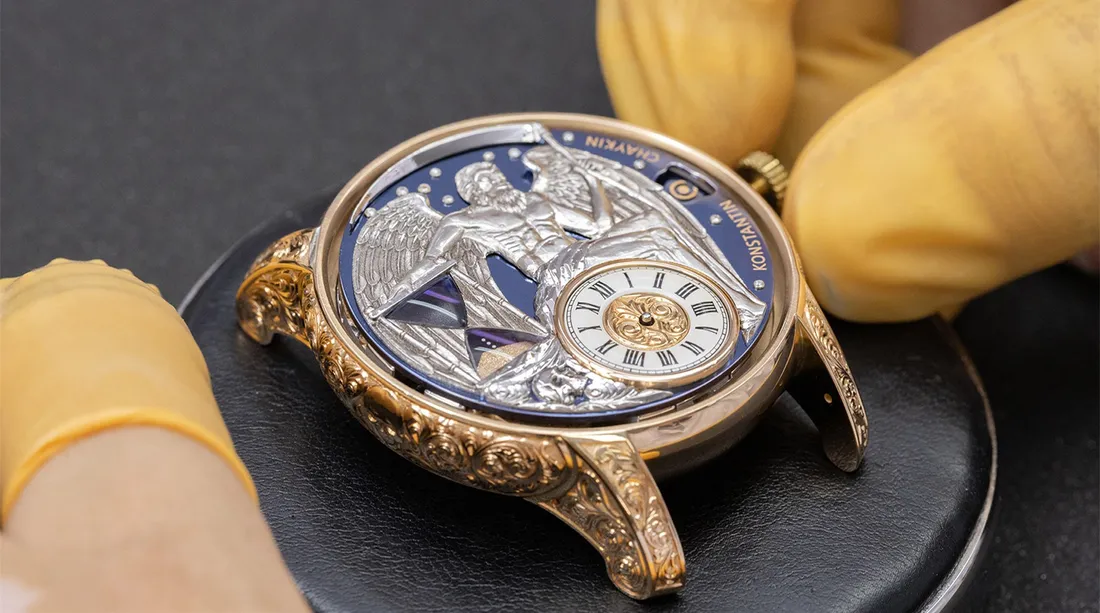
The figure is not an applique stuck onto the dial but a relief cut by hand into silver: the craftsman first removes what is not the figure, then hammers the ground behind it matte with thousands of tiny blows. It is the logic of a stonemason’s relief: the surface left polished steps forward, the ground that has gone matte falls back. The blue behind him is not paint either but steel turned blue by heat; what makes the colour is not a pigment but the way a very thin film of oxide splits the light. The same physics that colours a soap bubble, or the film of oil in a puddle.
The Mechanical Hourglass (the Walking Minutes)
There is no conventional minute hand on the dial. The passing of the minutes is shown by golden grains appearing to sift downwards inside the hourglass, in periods of sixty minutes.
Here is the secret: there is no sand actually falling inside that hourglass. Chaykin linked tiny shutters covering the two bulbs to the movement; as the shutters open and close in sequence, the upper bulb appears to empty and the lower one to fill. It works exactly like a Venetian blind: the view behind the window never changes, only the angle of the slats does, and yet the eye is convinced the view has changed.
The second subtlety is in the timing: the indication does not spend every second but consumes the hour in six steps of ten minutes. The little row of dots between the bulbs marks those steps. When the hour is complete the upper bulb refills in an instant and the cycle starts again; in watchmaking language that is a retrograde display, one that flies back. It is like the sign at a bus stop that says "next bus in 10 minutes": it does not give you the second, it gives you what is left.
The Skull
The finely worked skull motif, sitting just beneath the hourglass in the lower left corner of the dial, is a reminder of the mortal nature of worldly desires and of the reality of the appointed end.
Its position is not an accident: it has been placed directly under the emptying bulb, which is to say where the sand goes. At the bottom centre of the dial, at six o’clock, stands the small white enamel hour dial. It carries Roman numerals and a single blued steel hand. Being single-handed is not a shortcoming but a choice: like the shadow on a sundial, it tells you which hour you are in, not which second.
The Symbols of the Days
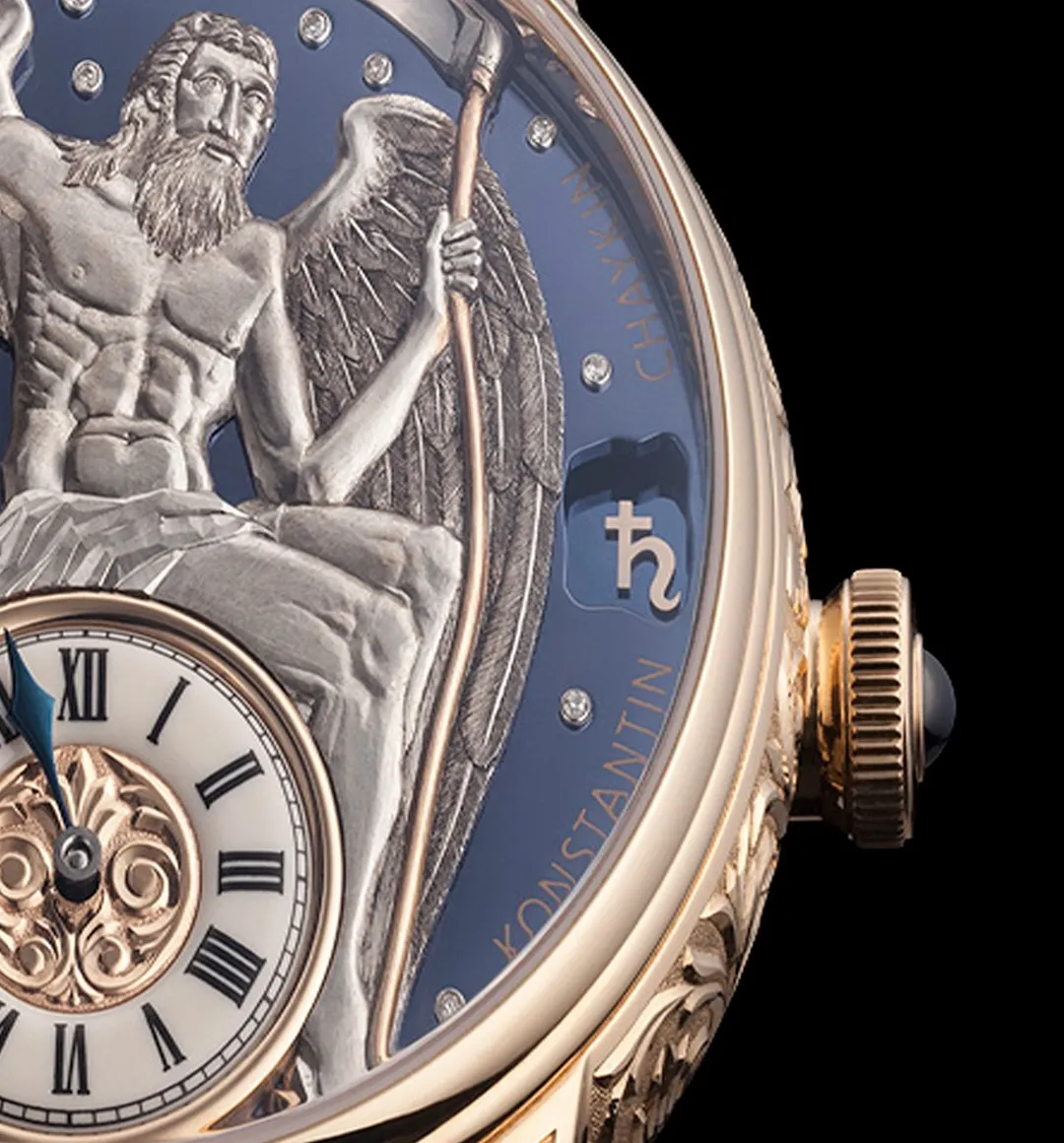
In the window at three o’clock the days of the week turn past; like the night and day gnawing at the fragile branch, they show the uninterrupted flow of time.
The days are written not in words but in planetary symbols. For two thousand years the seven days have been paired with the seven classical bodies of the sky, and that pairing still sits inside the names of the days in many languages: Monday belongs to the Moon, Saturday to Saturn. Chaykin writes it with a single mark instead of a word, the way road signs use a picture rather than text: an alphabet that can be read without knowing the language.
The Craft Behind the Dial
The calibre that runs the watch, the K.01-4, was developed and built in Konstantin Chaykin’s own manufacture. It is hand-wound and gives 48 hours of power reserve. Hand winding is a consistency in a watch like this: you put the energy in yourself, and every turn of the crown draws a thin steel ribbon tight like a bow, a tension that then unwinds slowly across two days. Wind it on Friday evening and it is still running on Sunday morning.
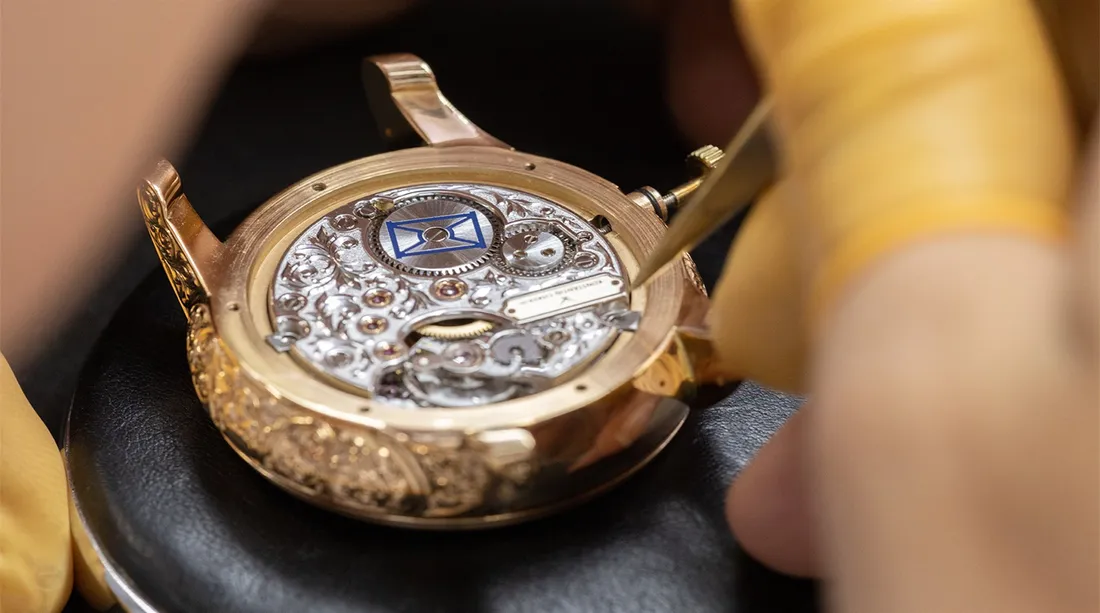
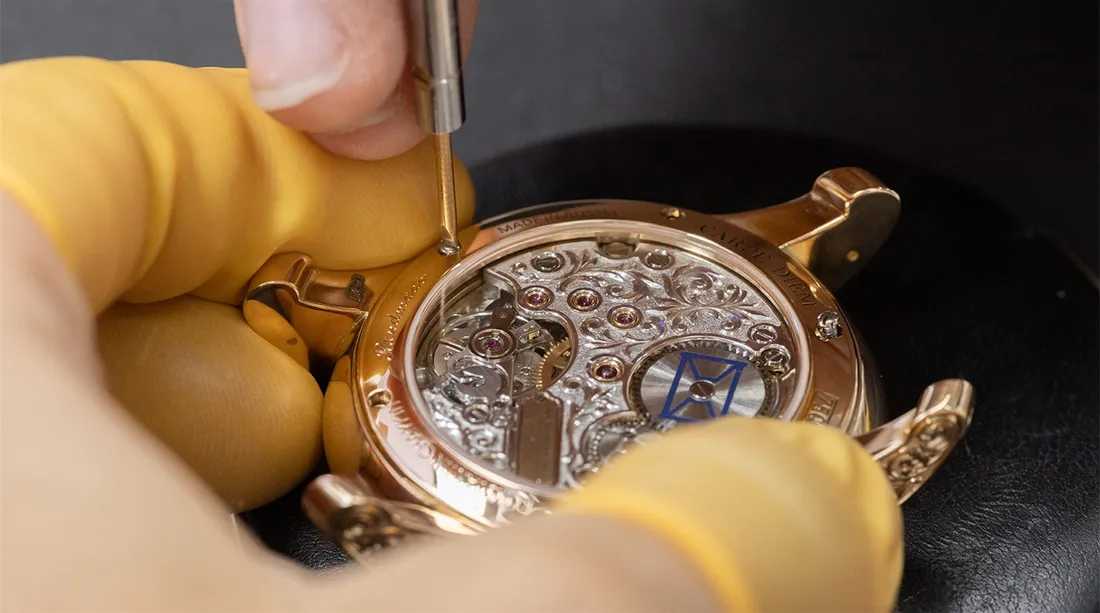
The movement carries the traditional finishing of haute horlogerie: Côtes de Genève, perlage, fine straight and circular graining, hand-polished chamfers, engraving, polished screw, pin and jewel countersinks, ball-polished pivots and rhodium plating. The bridges are a story of their own: cut in relief by hand and finely hammered on the ground, so that the craft on the front of the dial carries on unchanged on the back.
The "Pac-Man" regulator Chaykin developed for this calibre is where the fine adjustment happens. What sets the rate of a watch is the free length of a hairspring finer than a human hair. Think of a guitar string: press it against a fret to shorten it and the note rises, release it and the note drops. The regulator does the same job, only it works in microns where a guitarist works in millimetres.
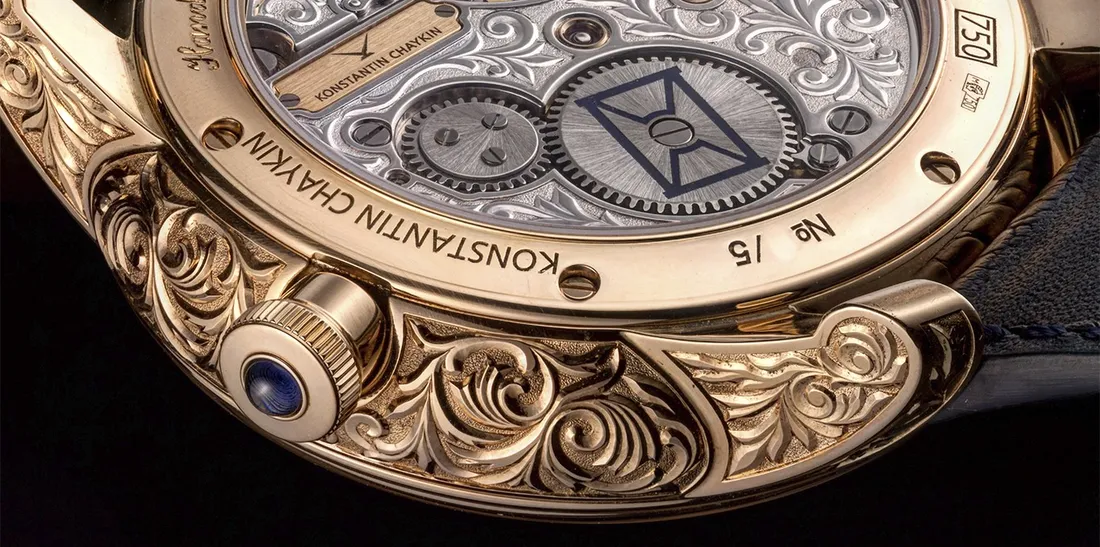
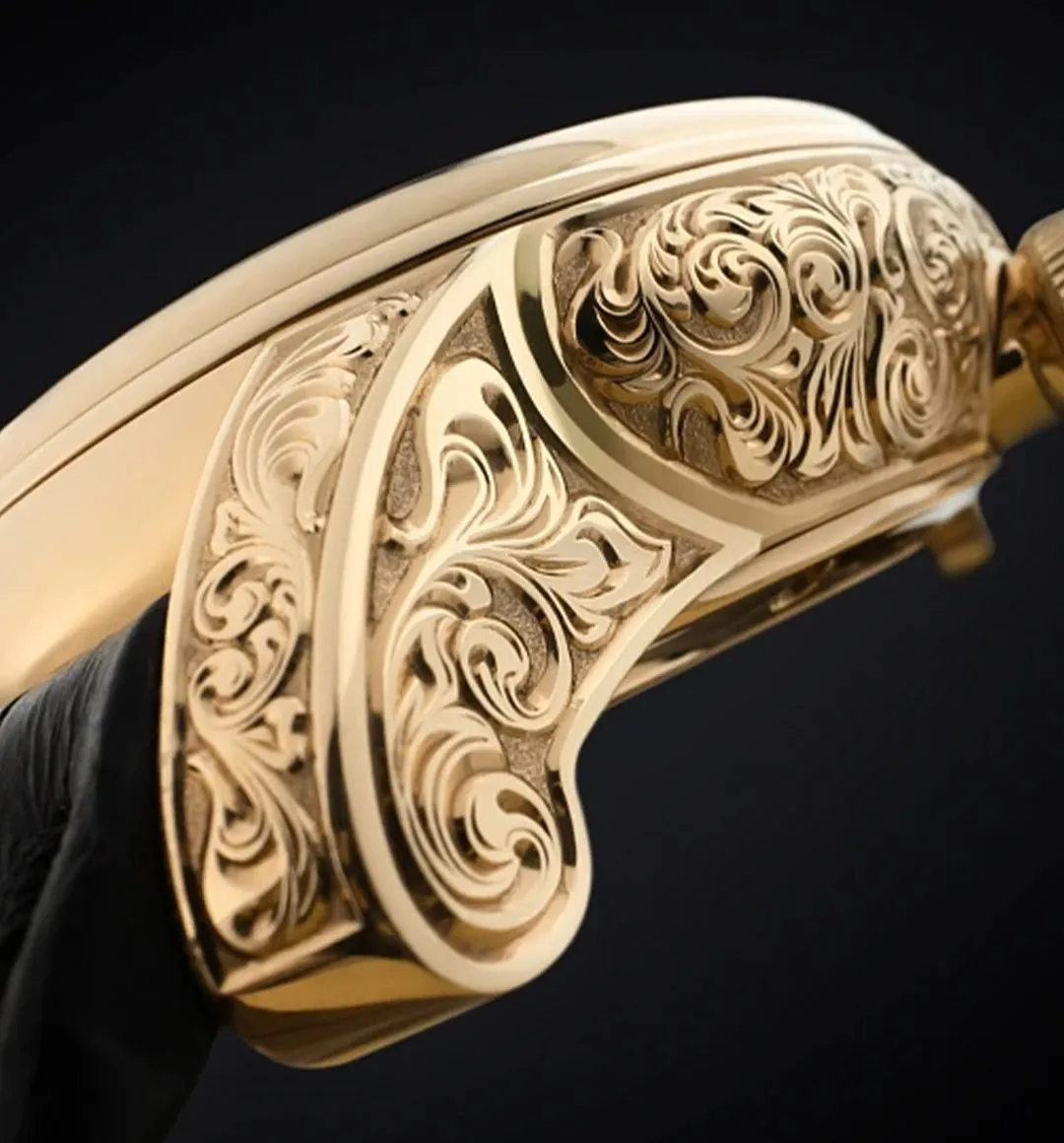
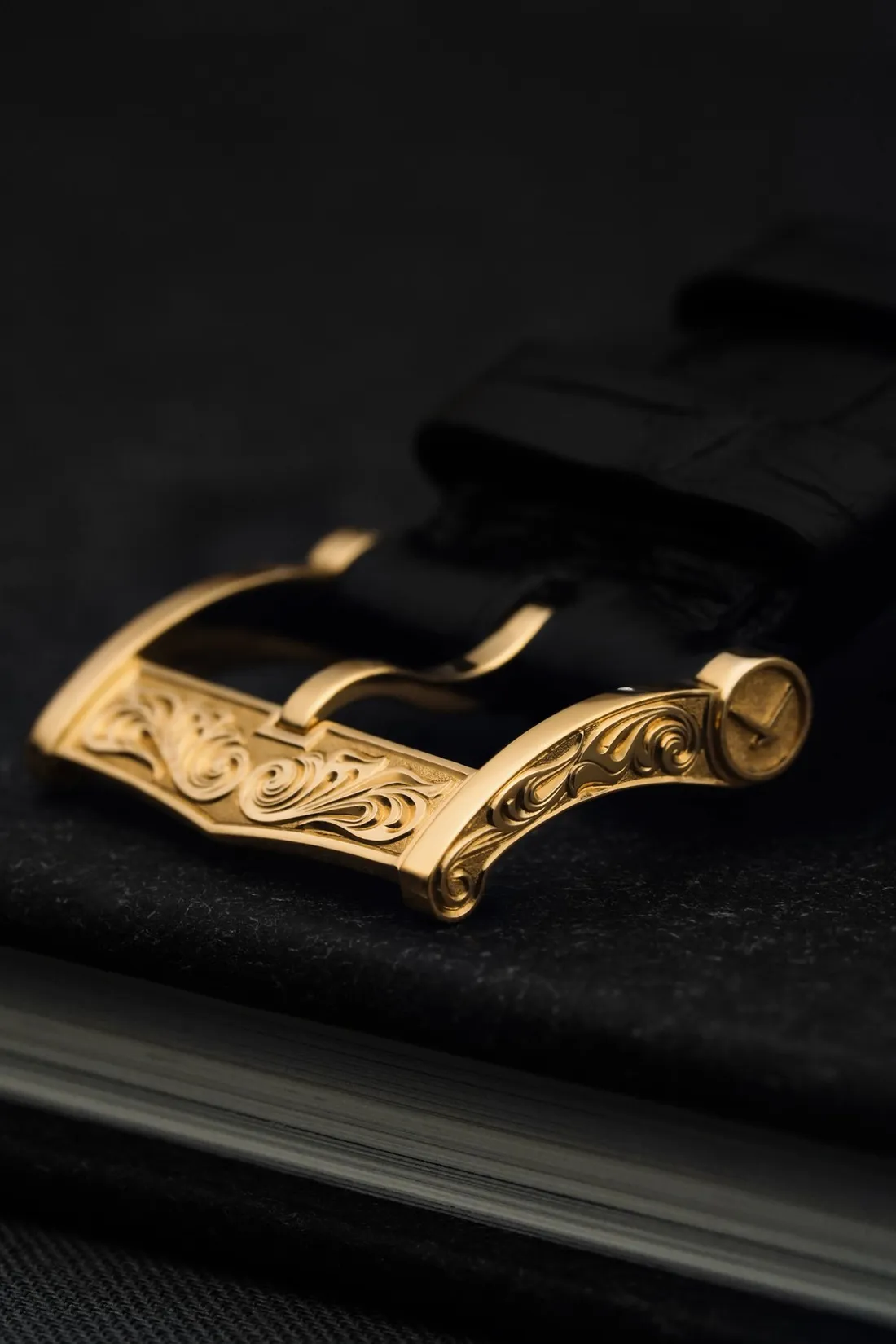
The case is 45 mm across and made of 18 carat rose gold. Choosing gold is not decoration but necessity: to cut a floral motif by hand to this depth, the metal has to yield to the graver. Working the same pattern into steel would be like trying to carve into granite a shape you cut into wood. Here too the ground has been hammered matte, so that the polished scrolls gather the light alone.
The case back is sapphire crystal. Like the glass floor of a boat, it opens to view the side that is normally closed, and turns the watch from an instrument into an object watched from both faces.
In the Workshop
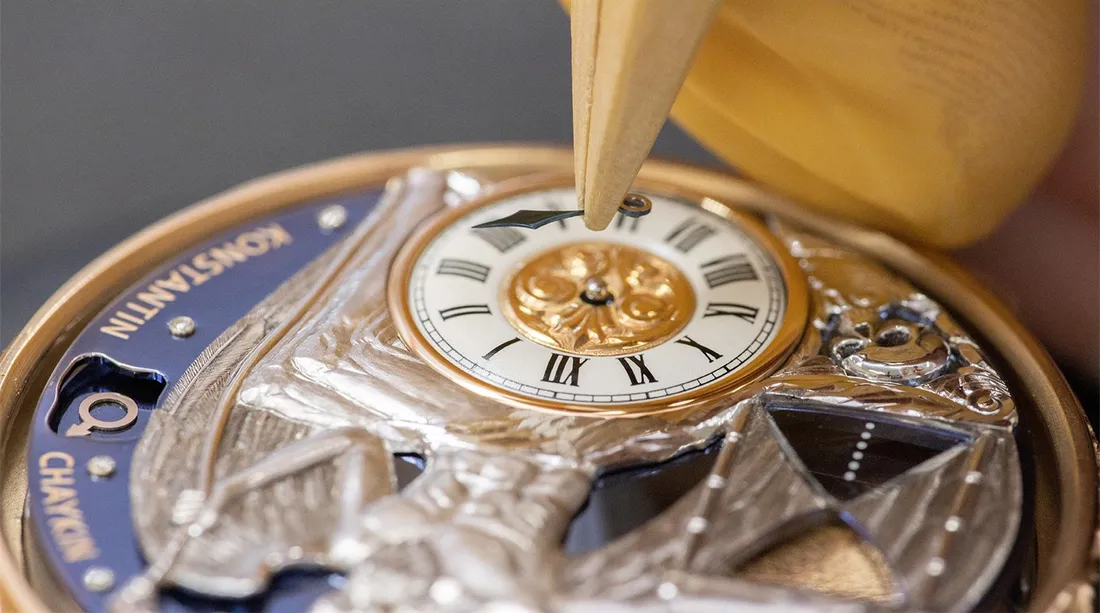
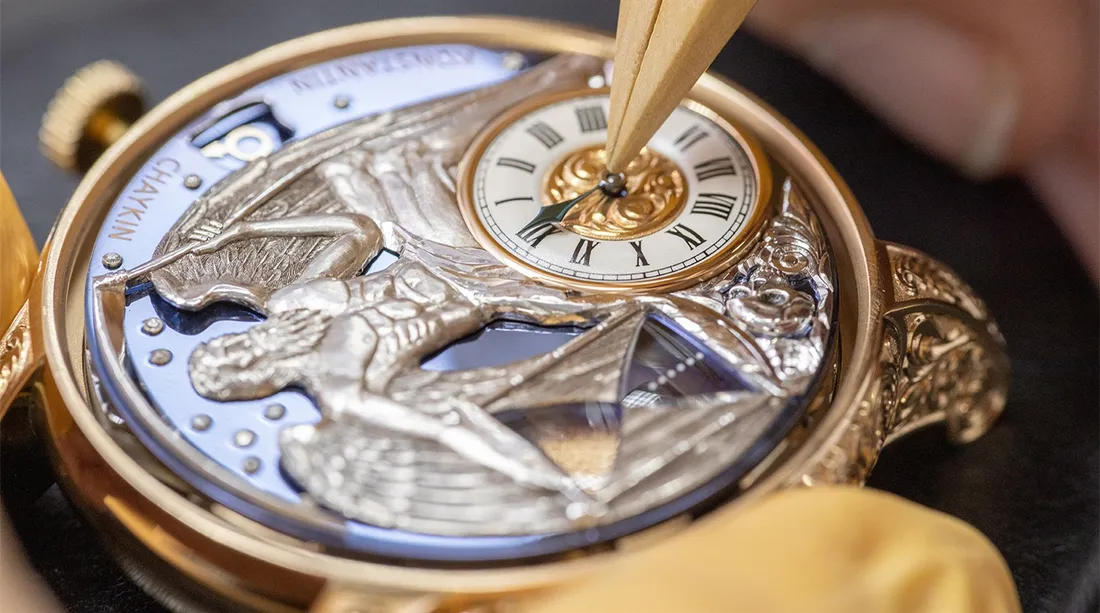
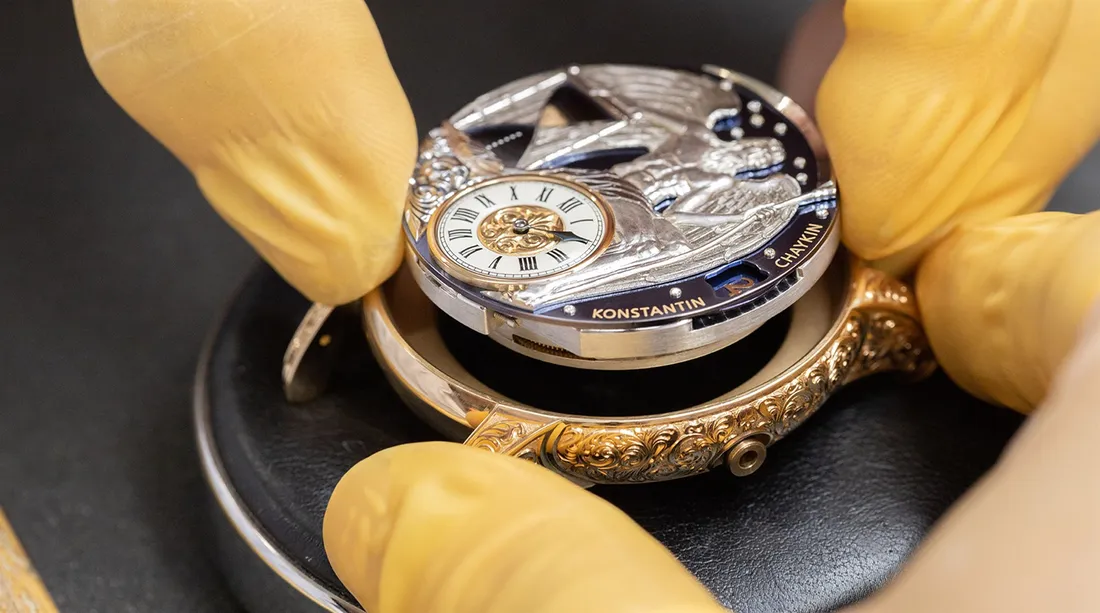
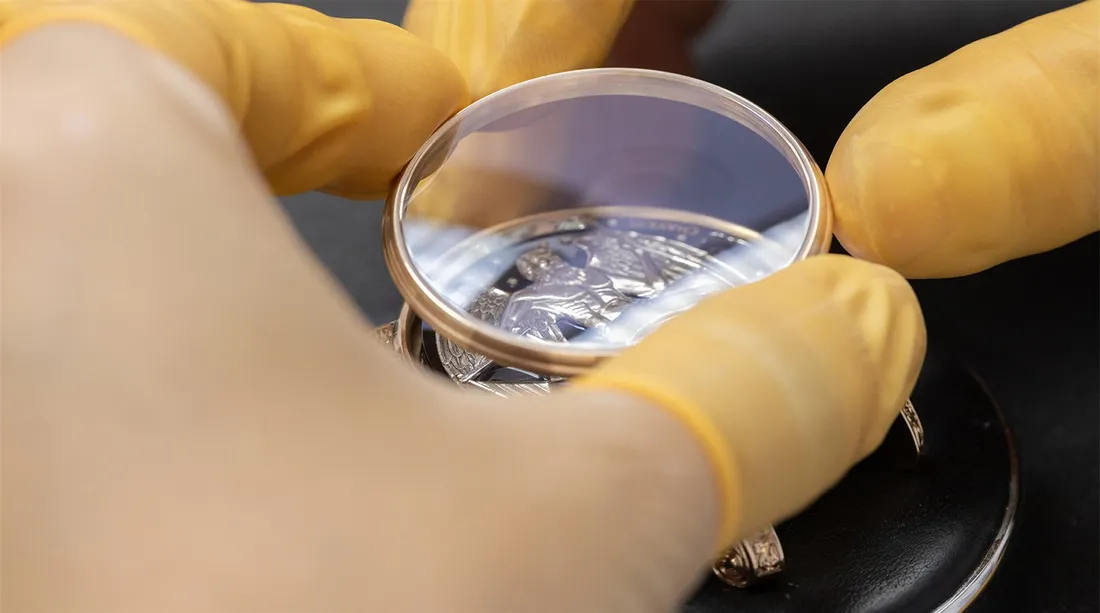
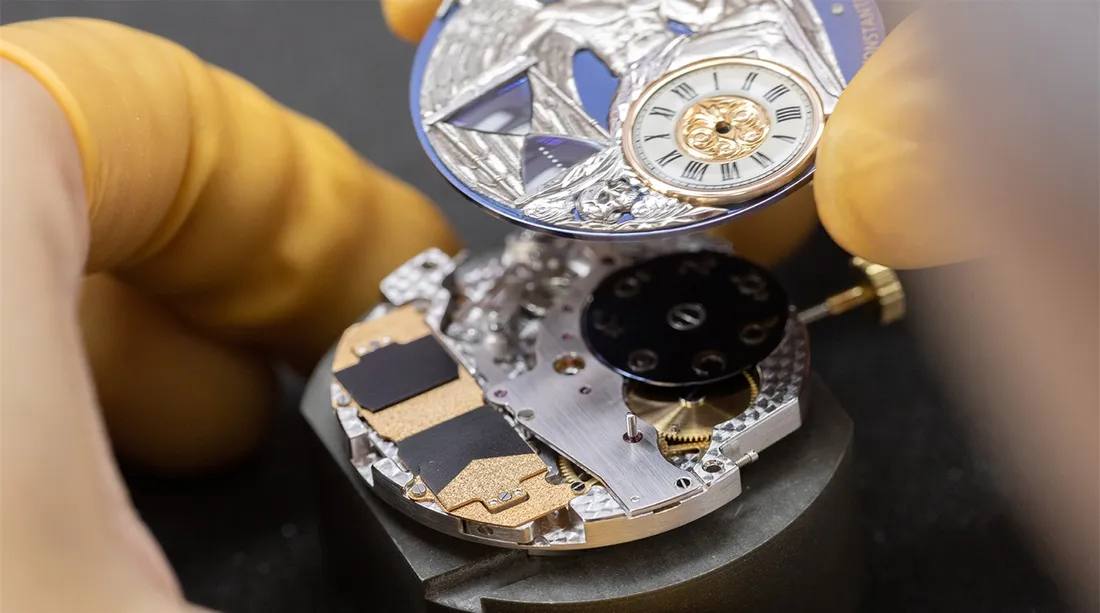
The hardest part of this dial is that a real mechanism is working underneath the allegory. The shutters of the hourglass, the disc of the day window and the hand of the hour dial are stacked in layers on the same calibre, and because each layer hides beneath the next, assembly runs in one direction only, with no way back.
Where the Wisdom Meets: Living the Moment With Meaning
The warning not to be fooled by the mortal drops of honey in the well and the message "Carpe Diem" engraved into the dial come together at the same point: to live the moment is not to spend time in a stupor, but to know that every moment is a divine gift and to use it consciously, taking refuge in the Owner of that order.
Time is flowing, the messenger is at the door, and the true sweetness is not in the mortal honey but in an unshakeable surrender to the Creator who set this order in place.
format_quote"Time is flowing, the messenger is at the door, and the true sweetness is not in the mortal honey."
Hasan Bekmezci