Edo-Period Kyoto, 1782: A Tsuba Master’s Metallic Agony
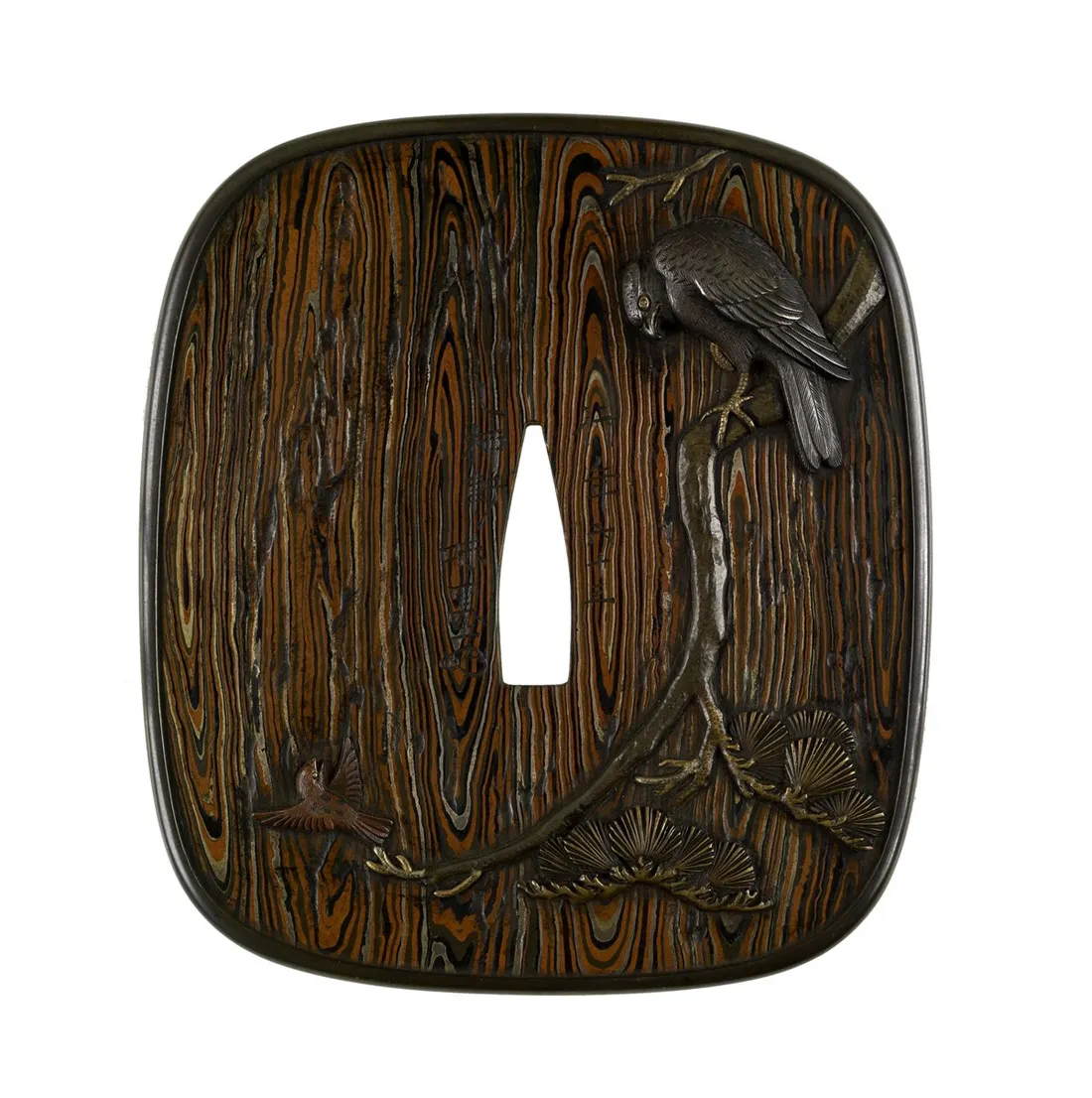
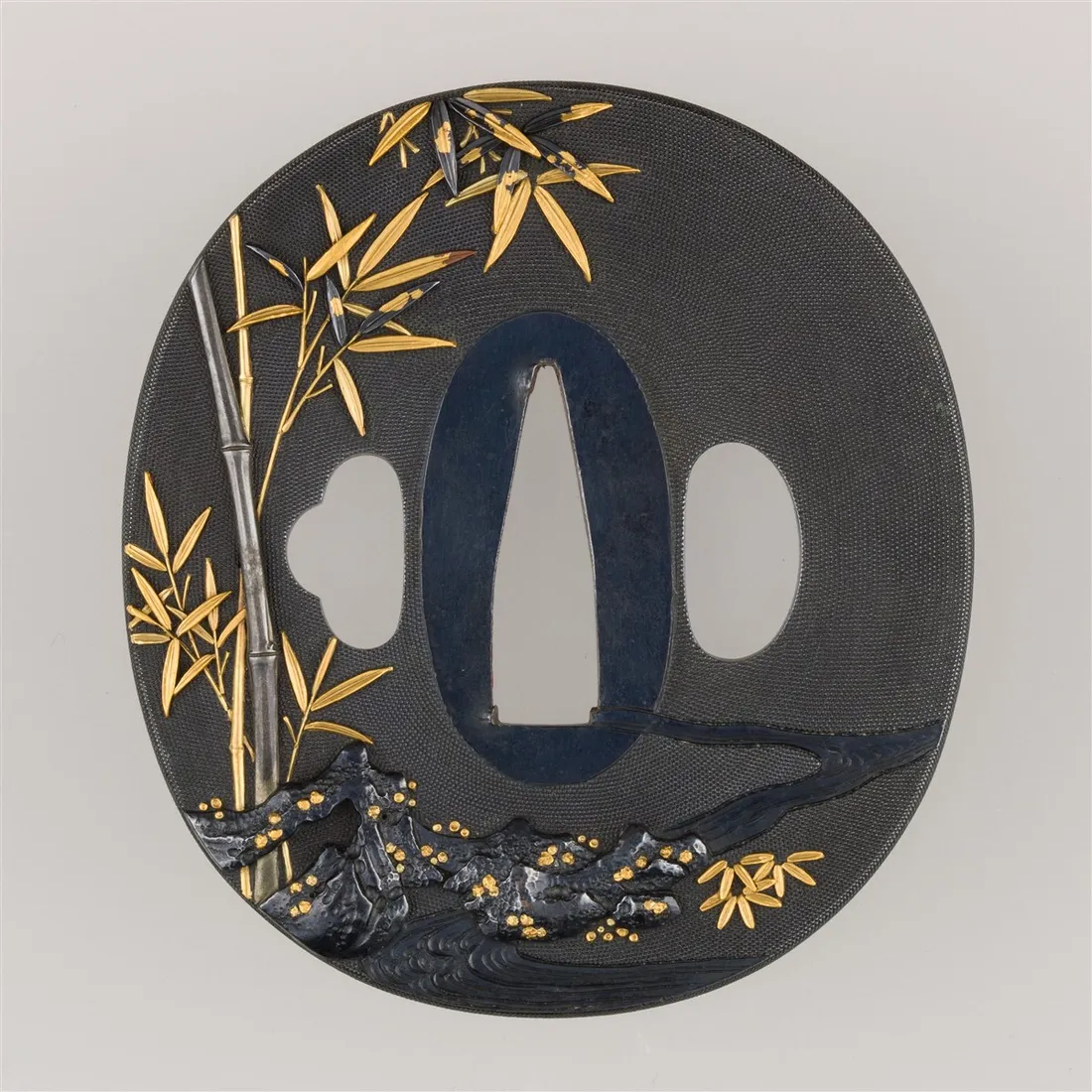
As the winds of peace blew across Edo-period Japan, katana swords were ceasing to be mere instruments of war and becoming works of art that embodied a samurai’s spirit, philosophy and status. The hand-guard plate between the hilt and the sharp steel blade was called the tsuba.
In his dim workshop in Kyoto, a tsuba master (tsubashi) sweated at the forge. His aim was not to hammer a single solid piece of iron; it was to fuse copper, gold and silver to one another without melting them, and so obtain a mystical, wood-grained alloy: mokume-gane, wood-grain metal.
His agony was searing. When he stacked metals of different melting points and placed them in the furnace, a single degree too much and the gold and silver liquefied and ran to the floor of the furnace like mud. Too little heat, and the metals would not hold to one another; at the first hammer blow the layers peeled apart like paper.
The master waited for days at that delicate threshold of temperature, the edge of solid-state diffusion, at which the atoms would seep into one another’s lattice without the layers melting. Then he twisted the metal block, carved it and pressed it into an acid bath. The copper darkened, the silver shone, the gold gleamed; and there emerged that organic texture recalling the annual rings of an old pine or a ginkgo trunk. The master drew a deep breath and whispered: "The katana stops the enemy; the tsuba guards the soul of the hand that holds the sword. The metal must not liquefy; it must only flow within itself, without melting."
The Story on the Dial: A Deadly Dance Frozen Within Time
The story told on this singular dial by Kees Engelbarts freezes, forever, one of nature’s most highly charged moments: the encounter between prey and predator, held within the flow of time.
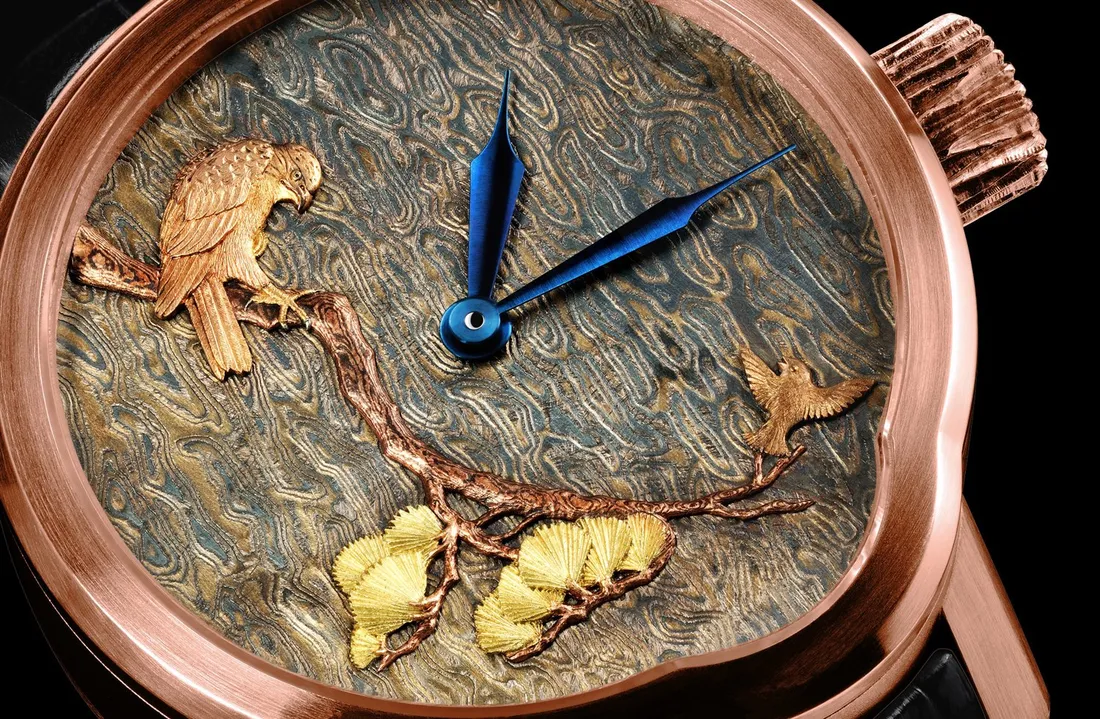
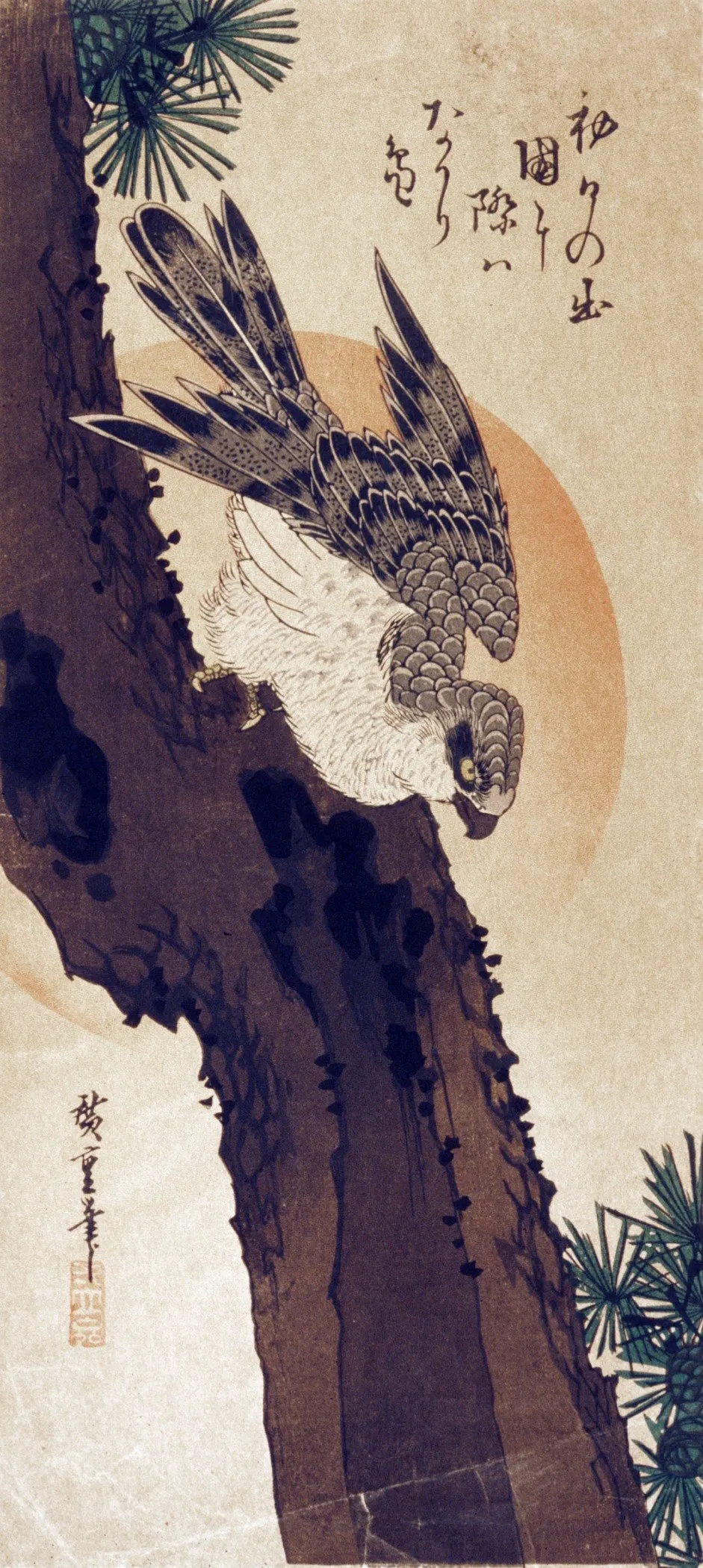
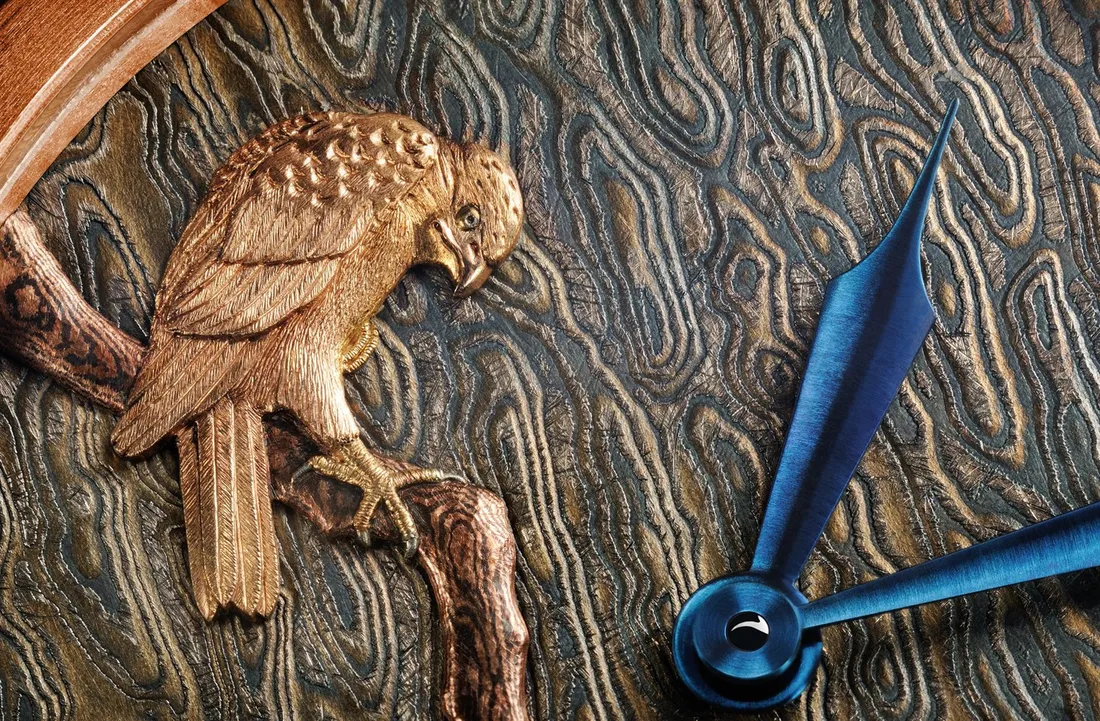
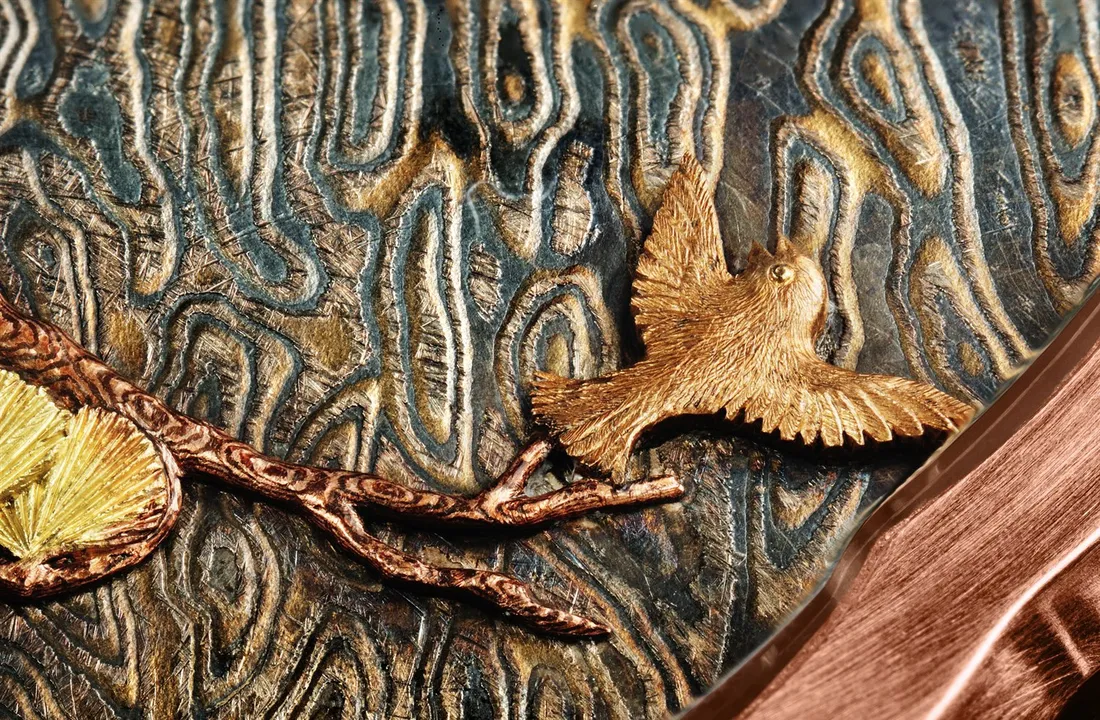
In the upper-left corner of the dial, perched on an old, gnarled ginkgo branch, stands a hawk. It is calm, patient and utterly sure of itself on its perch; its eyes are fixed, its muscles tensed, its focus on the prey fluttering below. In Eastern aesthetics the hawk stands for high strategy, focus and resolve. At the lower right is a helpless sparrow, beating its wings as it tries to glide away; it represents fragility, the transience of life and the price of a moment’s inattention.
This dial depicts that single split-second line between life and death: the hawk has not yet taken off from the branch, and the sparrow has not yet been caught. The distance between them is time itself. As the flame-blued steel hands turning at the centre pass between the two birds each second, they seem to ask: will time work in the hunter’s favour, or will it let the prey escape? This scene is a mechanical and artistic manifestation of mono no aware, the Japanese sensibility of a deep awareness of the transience of things and of the moment.
The Summit of the Engraver’s Art: High Relief (Takabori)
In Swiss haute horlogerie, engraving usually brings to mind symmetrical, computer-controlled, slightly superficial lines. But when Kees Engelbarts takes up his micro-gravers (the burin, the échoppe) in his Geneva workshop, he applies to the dial the most difficult of the traditional Japanese engraving techniques.
The hawk and sparrow figures are not simply drawn onto the dial or cast. Using the takabori technique, the master flings the figures out of the dial like three-dimensional little sculptures. The hawk’s body is worked as a three-dimensional mass rising about 1.5 mm from the dial surface; by carving away the lower parts, the master makes the bird’s shadow fall onto the ground, creating a layered sense of depth. The feathers on its head and wings are carved one by one with special onglette gravers a tenth of a millimetre wide; when the light strikes, each feather’s angle breaks the light differently and the bird seems to come alive. The panic in the wing-beat of the sparrow at lower right is conveyed by the curved carving of its wing feathers; its tiny beak and eye are the fruit of hundreds of micro-strokes that can only be completed under a microscope.
Carving Like a Brushstroke, and Gold Inlay: Katakiribori and Nunome-Zogan
On the rough bark texture of the ginkgo branch and along the joins of the leaves, the katakiribori technique is used. In it the master drives the graver into the metal not at a fixed angle but at varying angles, just like the pressure a calligraphy master applies as he presses and lifts his brush on the paper: a single line struck with the graver laid on its side gives a deep crack in the bark, while a stroke with its tip held upright gives the smooth parts of the branch.
The ginkgo leaves on the branch are, in Eastern culture, a symbol of resilience and immortality. These leaves are fixed to the branch with the high-purity gold-leaf inlay technique (nunome-zogan), and then the characteristic vertical vein lines on them are worked with micro-scratches. The warm yellow of the gold forms a perfect contrast with the red gold of the case and the wood grain of the dial.
The Master’s Risk: Engraving on Mokume-Gane
Engraving on a sheet of mokume-gane is many times harder than engraving on a plain plate of gold or silver, because mokume-gane is a union of copper, silver and gold layers of completely different hardness. As the master drives his graver, he passes in an instant from a soft silver layer to a hard copper one; if he cannot adjust his pressure with a millisecond’s reflex, the graver slips and that single, one-of-a-kind dial, prepared over weeks of labour, is ruined in an instant. What makes Kees Engelbarts’s art unique is that, across thousands of graver strokes, there is not a split-second’s margin for error.
Case and Material Craft: Red Gold with a Bark of Wood
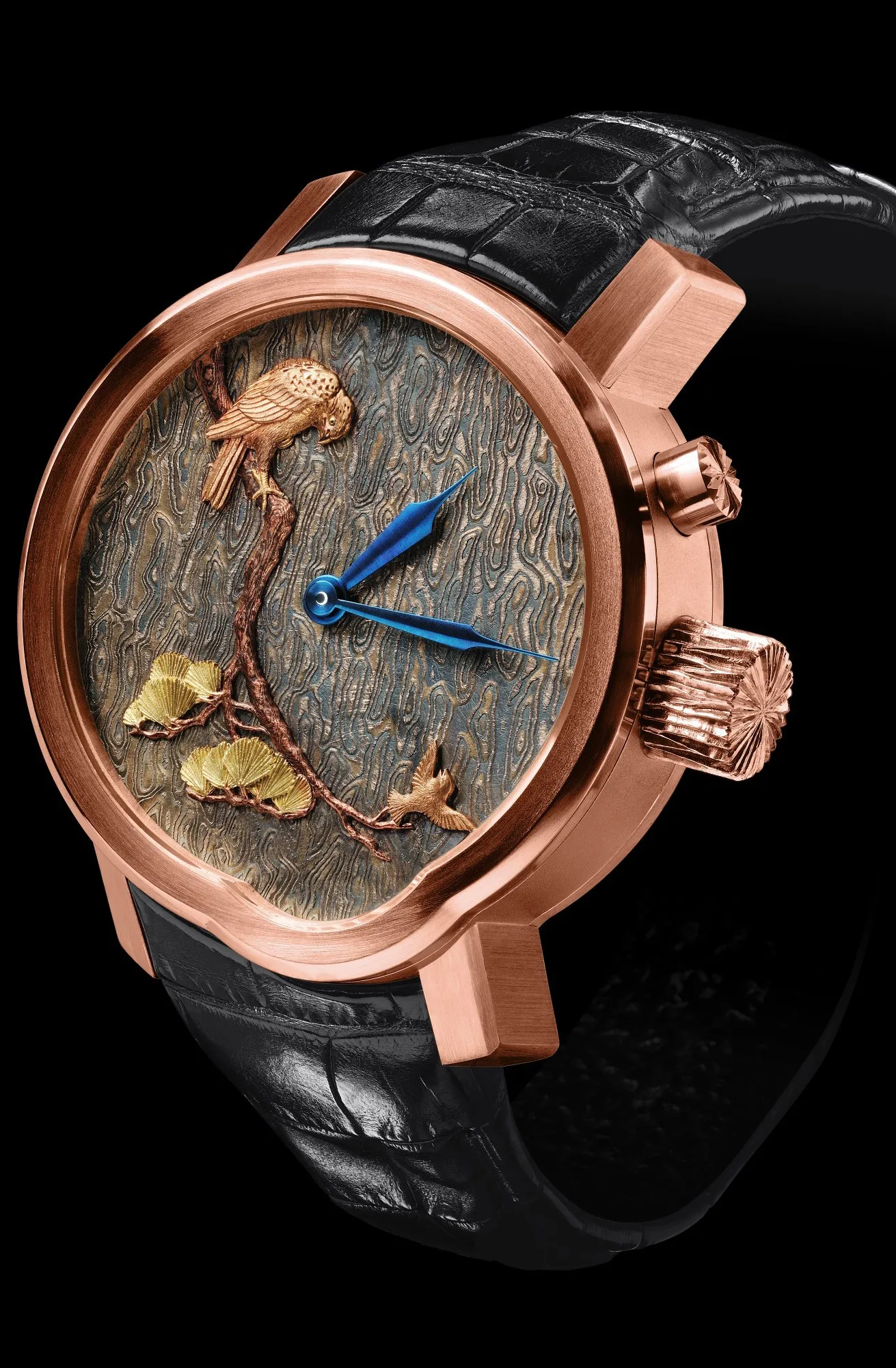
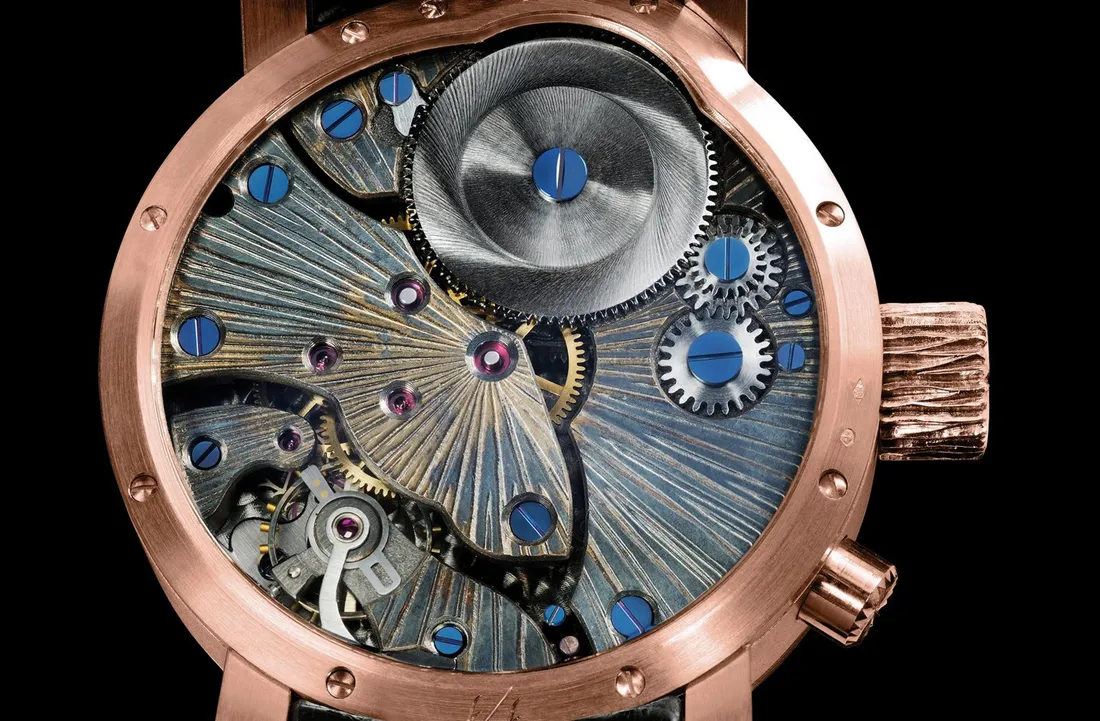
The case completes the organic, brushstroke feeling of the dial. It is made of 18-carat red gold; thanks to the roughly 25 percent copper content in its structure, it has a deep terracotta and earthen tone, different from standard pink or yellow gold.
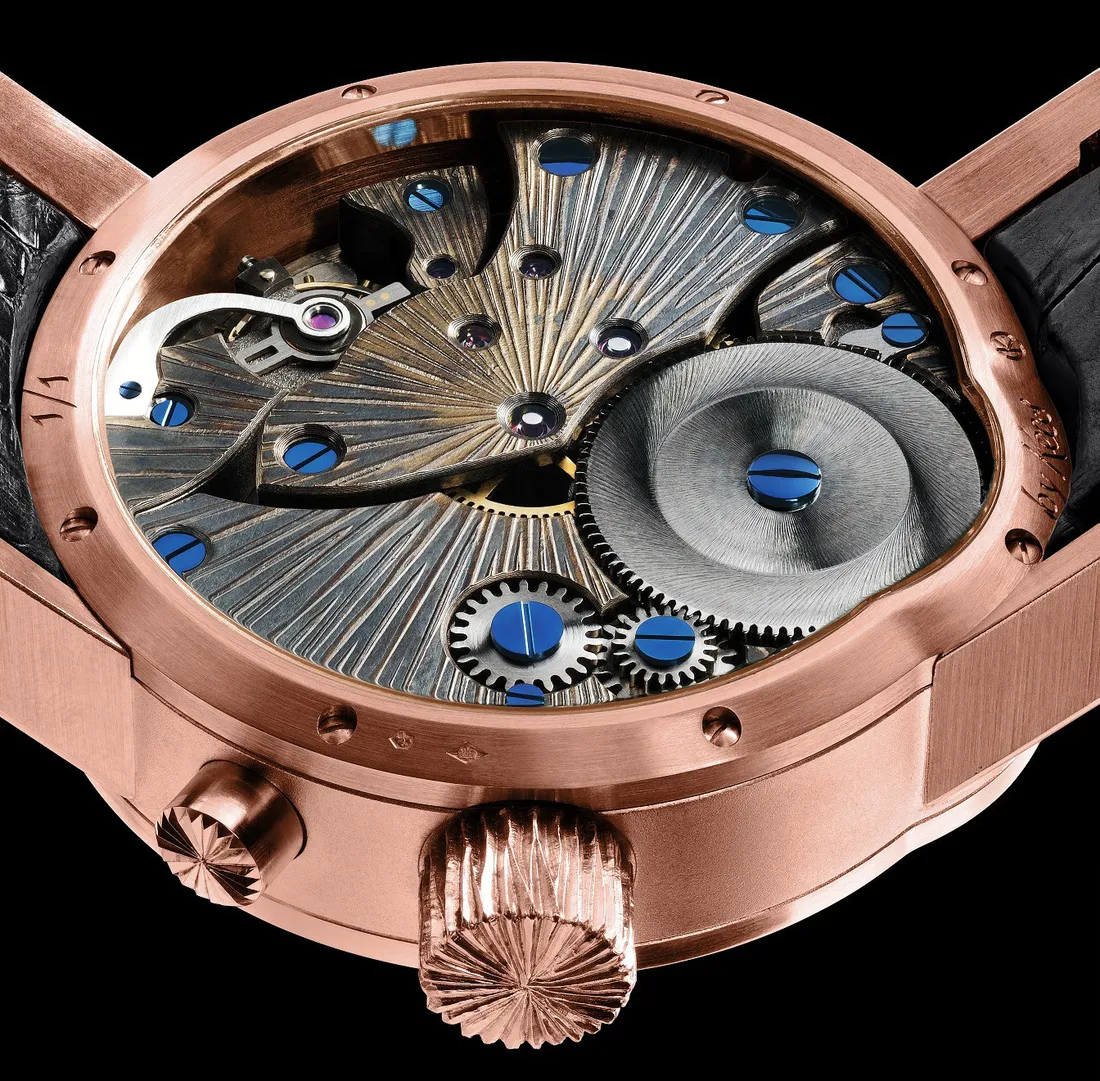
The bezel and the outsized winding crown are not a polished, smooth gold. With a hammer and special gravers, Engelbarts carved the outer surface of the case to carry the texture of an antique tsuba or old tree bark from the dial onto the case. So that the hours and minutes can be read clearly within the dial’s complex, earthen structure, the steel hands were heated gradually to about 290 degrees Celsius until they reached a sapphire-blue oxide layer. This bright blue brings to mind the cold, sharp line between prey and predator.
Nature and a Biological Analogy: Neural Tension and Muscle Reflex
The stance of the hawk and the sparrow on the dial, and the working principle of the mechanism, correspond exactly to the neuromuscular, the nerve-and-muscle, tension in living organisms.
The hawk’s stance, locked onto its target, resembles the pre-warning signals sent from the motor cortex in a hunter’s brain to the muscles: the muscles have not yet contracted, but the calcium ions are ready to be released at the cellular level. The dial freezes the peak of this potential energy. The sparrow’s fluttering, in turn, is the sudden surge of adrenaline an organism releases in the face of danger, the fight-or-flight response.
And mechanical balance is exactly this: the potential energy stored in the mainsprings is converted, through the pallet fork and balance wheel, into kinetic energy; the hawk on the dial, too, is about to turn its own biological potential energy into a kinetic attack. The ticking of the watch is the beat of this merciless heart of life and death in nature. And that beat never stops: every time you look at the dial, the hunt has been postponed once more by a split second, and time has held its breath again.