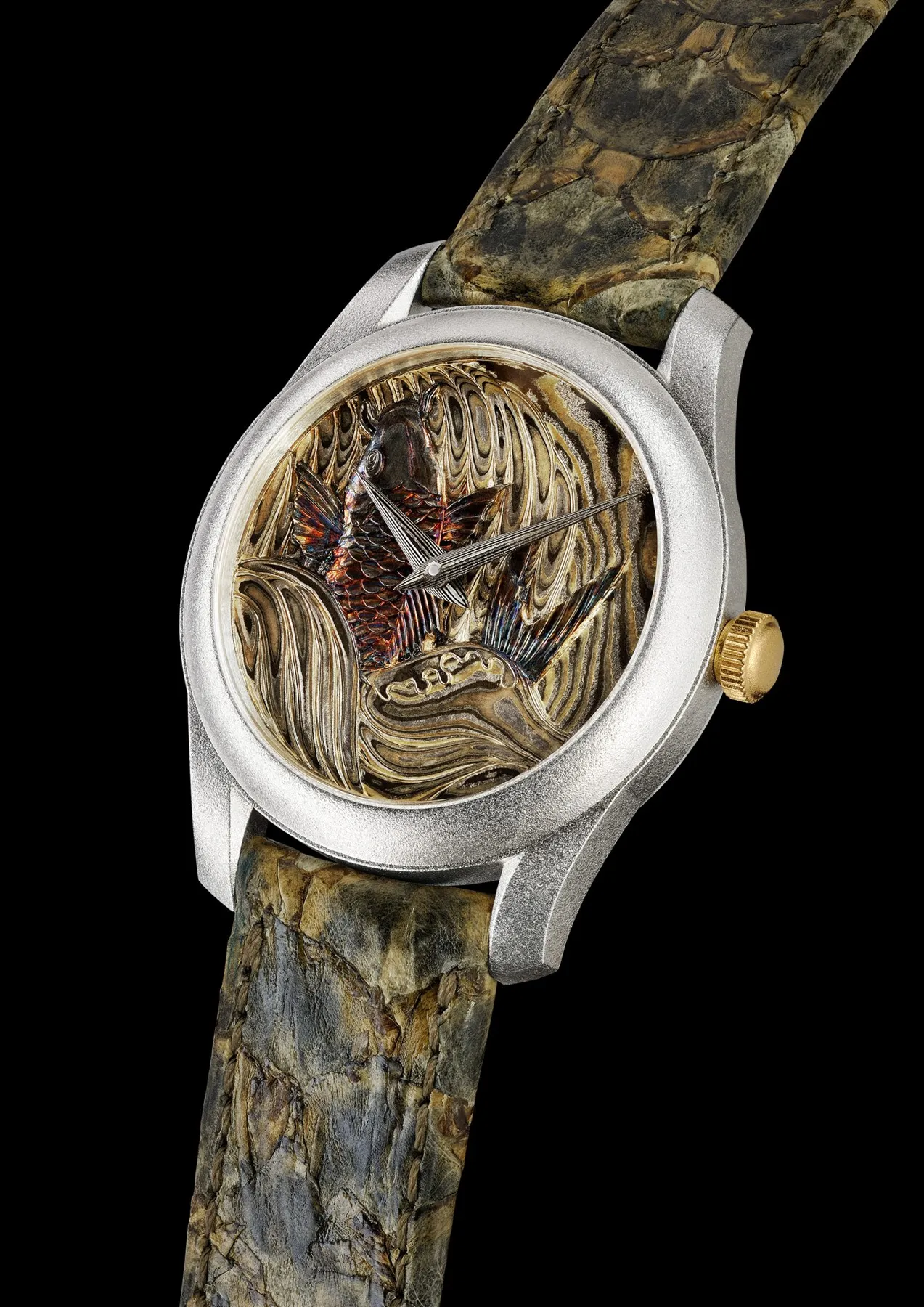
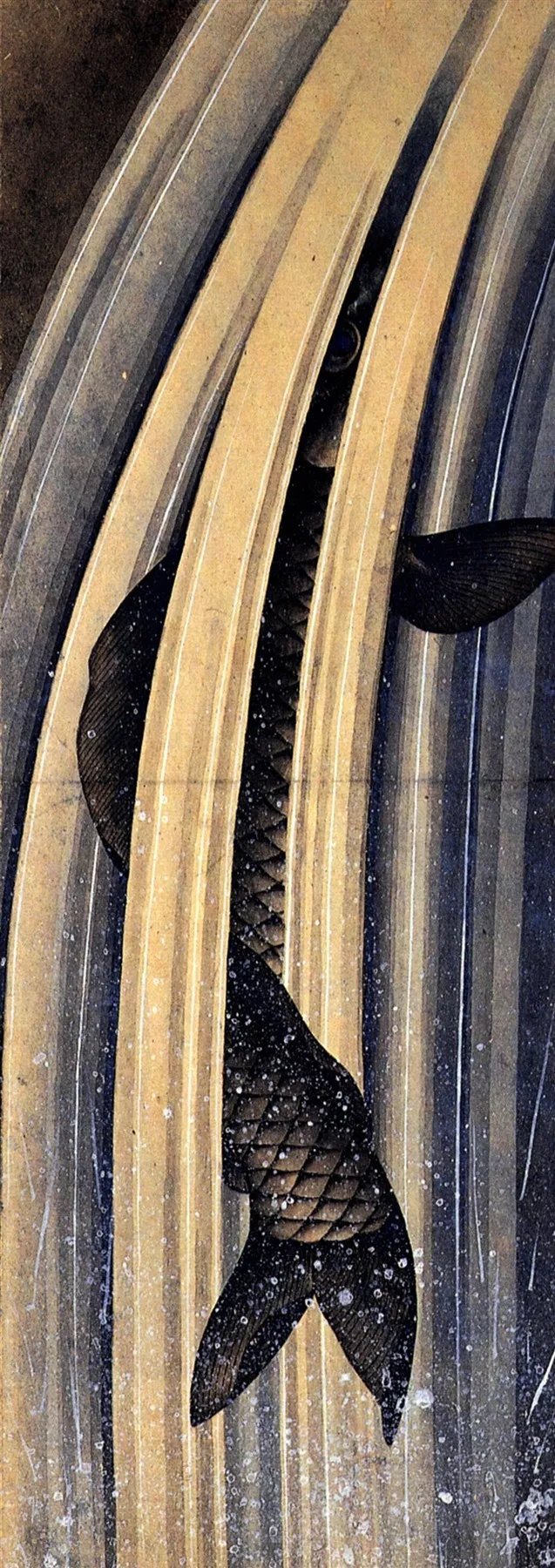
format_quote"In the foaming, rushing waters of the Yellow River every wave was a relentless battle against gravity and against the current. When a carp swims upstream to reach the Dragon Gate at the top of the falls, it does not merely cross a river; it rewrites its own fate and becomes a dragon. In his Geneva workshop, Kees Engelbarts has made that ancient Eastern myth immortal on a dial, through fluid metallurgy and micro-sculpture."
An Eastern Legend in Geneva, and a Biological Metamorphosis
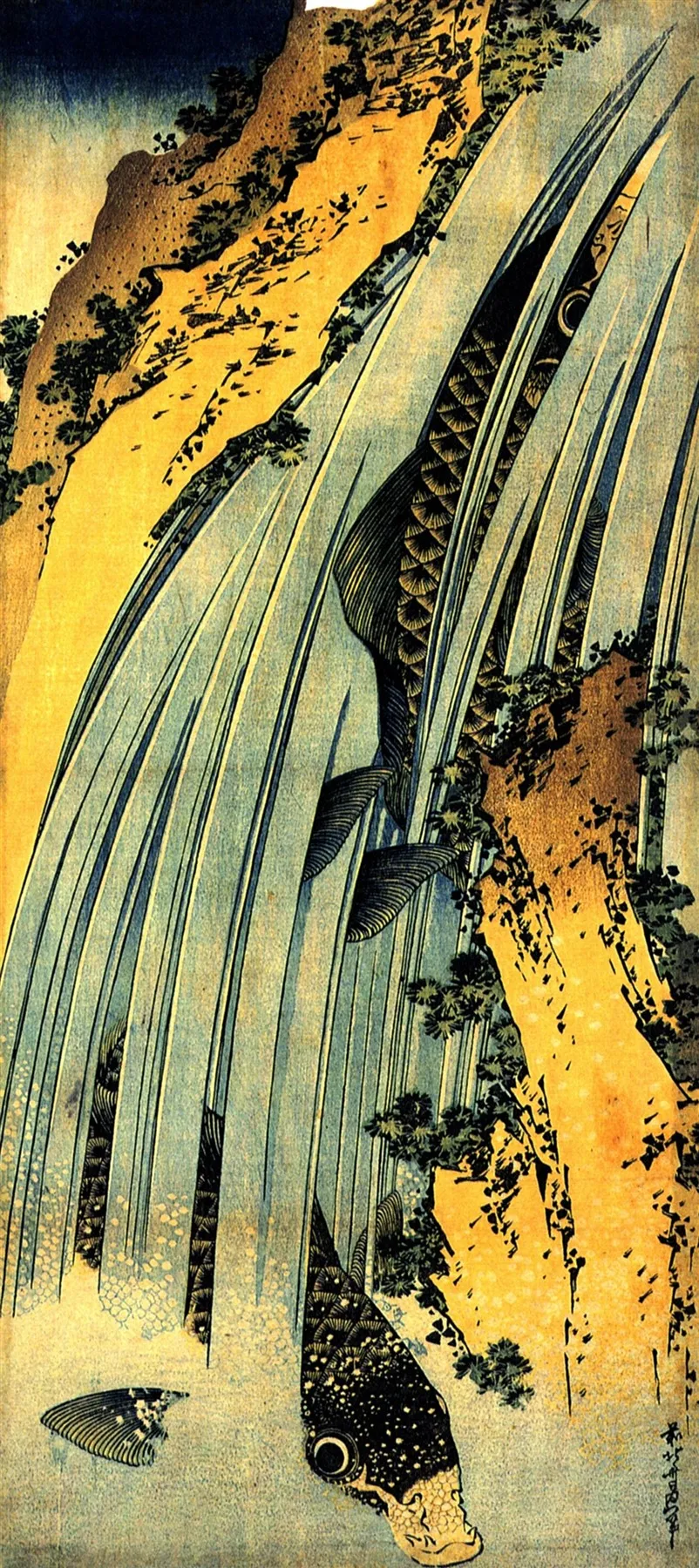
The Geneva-based Dutch master Kees Engelbarts is known in the world of independent watchmaking as the wizard who carves metal. This part of the trilogy, The Dragon Gate Trilogy, takes as its subject the legend of Longmen, one of the most inspiring symbols of endurance in Chinese and Japanese mythology.
The biological and spiritual transformation a carp undergoes by climbing enormous waterfalls is an artistic expression of resistance in physics, of hydrogen bonds and of fluid dynamics. Engelbarts sets on the dial precisely that frozen breaking instant in which the carp bursts through the surface of the water.
Engelbarts himself is a kind of swimming-against-the-current story. He was born in the Netherlands, studied engraving at the trade school in Schoonhoven, then went to the school of gemstone and jewellery design at Idar-Oberstein in Germany, and from there to Geneva. After a few years working for other companies he became an independent engraver. Today every watch that carries his own name is a single piece, and most of them emerge at the end of a production that runs for months.
The legend itself is not one scene either; it has three acts. So rather than compressing the story onto one dial, Engelbarts divided it across three watches: on the first the carp is thrashing in the foam at the foot of the falls, on the second the transformation has begun halfway up and the tail is still a fish’s tail, on the third there is only the dragon. They are not sold separately; the story can only be bought whole.
Solid-State Physics and Metallurgy: Mokume Gane (木目金)
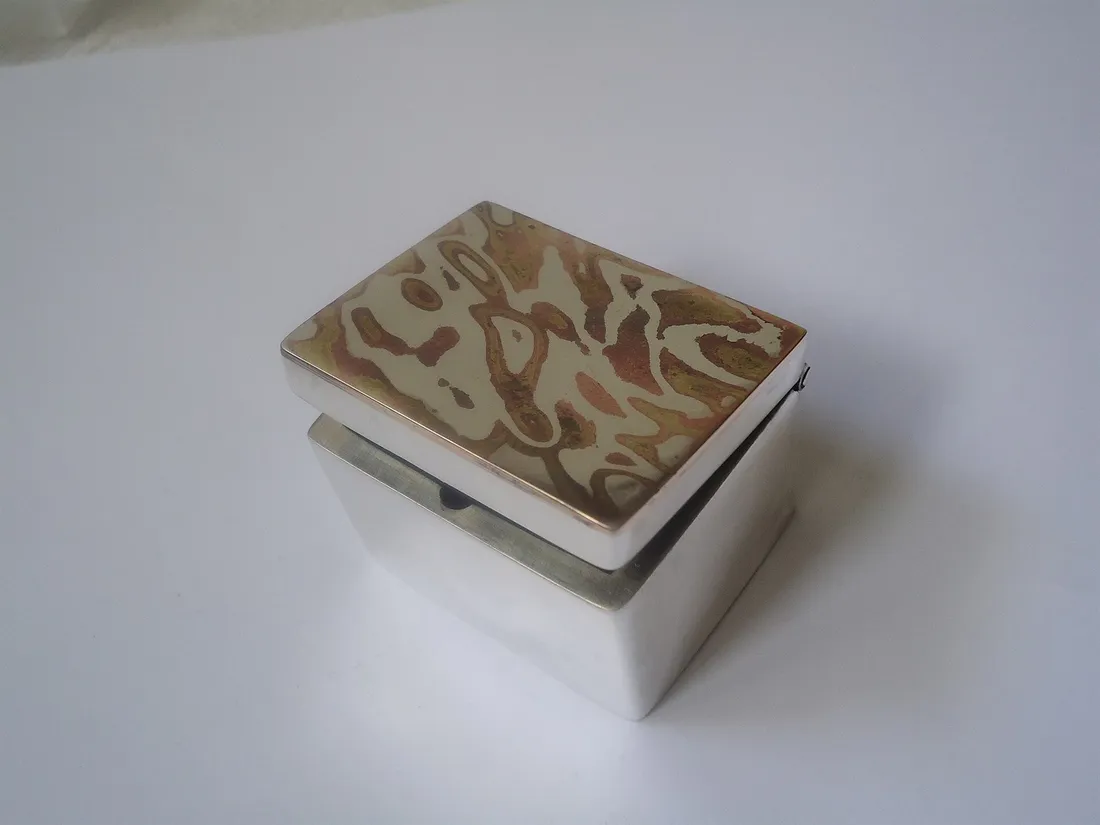
That mesmerising texture on the dial, resembling the grain of wood and the foaming waves of water, is neither a conventional paint nor an enamel. Mokume Gane, developed in seventeenth-century feudal Japan to decorate the tsuba, the guard of a samurai sword, and the other sword fittings, is a union of technology and art.
The technique is credited to Denbei Shoami (1651-1728), who worked in Akita. Its name describes exactly what it does: mokume is the grain of wood, gane is metal. Metal with a wood grain.
Solid-state diffusion bonding: precious metals of different colours and compositions, alloys of gold, silver and copper, are brought together under high heat below their melting points and under enormous pressure. Without melting, the metals seep into one another’s crystal lattices at the atomic level and become layered.
The puff pastry analogy: exactly like a thousand-layer puff pastry skilfully folded, or like Damascus steel, this bonded block of metal is bent, cut and forged again. When it is carved, the different colour tones of the lower layers are exposed and form the patterns of turbulent flow inside water.
The layers used in this trilogy were chosen deliberately: white gold and silver. Once the block is worked, the surface is etched with acid and the silver layers are partly oxidised to darken them. The pattern therefore appears not through pigment but through the different way the two metals answer the air. This is a stage the craftsman can control but cannot entirely foresee; nobody knows which pattern will come out of a block until it is cut. You cannot see the grain without felling the tree.
Fluid Mechanics and Micro-Relief Engraving
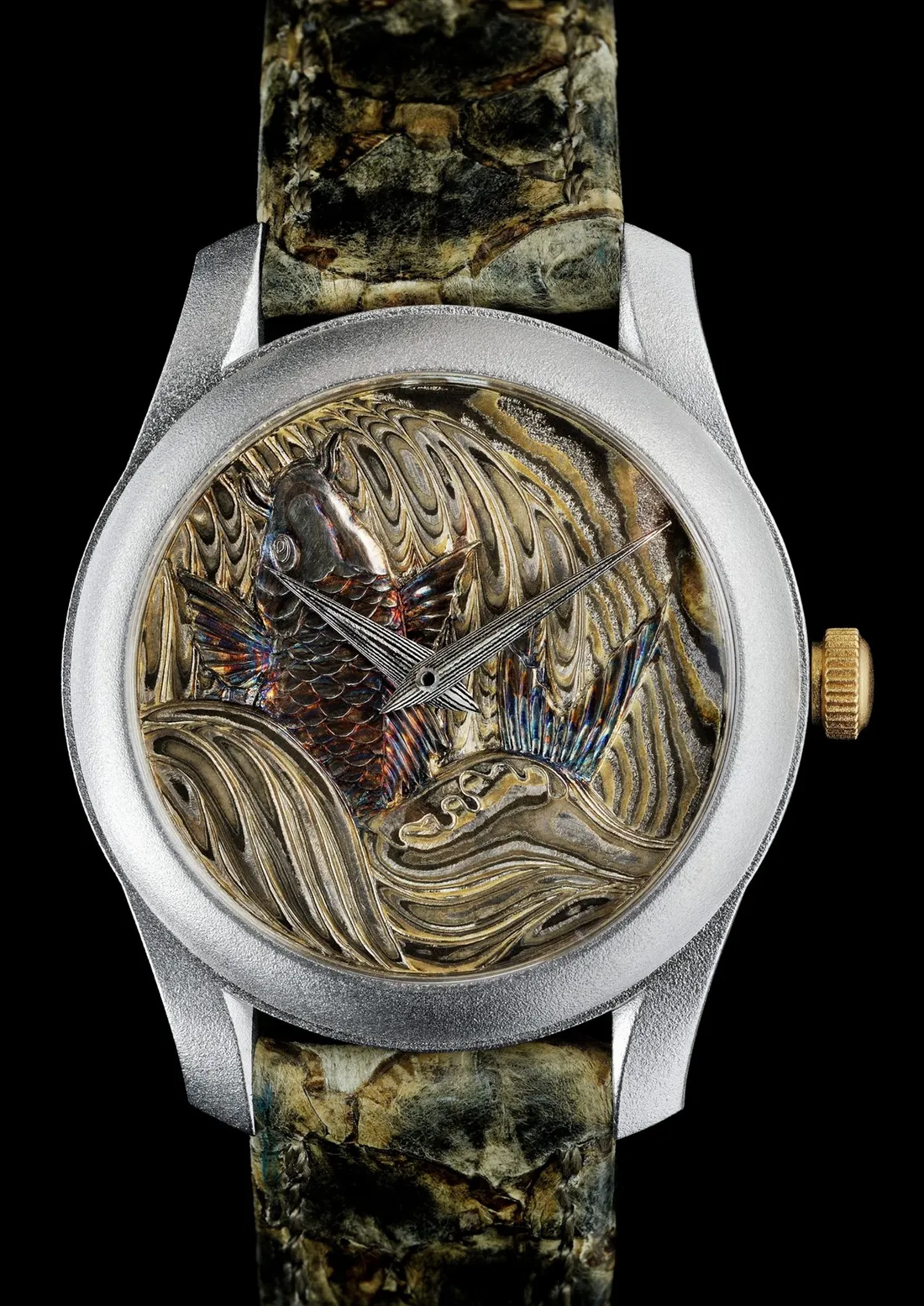
The waves of water on the dial are not a static picture but a simulation of foaming turbulence at a high Reynolds number. Engelbarts breaks the cold hardness of metal with the dynamic form of fluid mechanics.
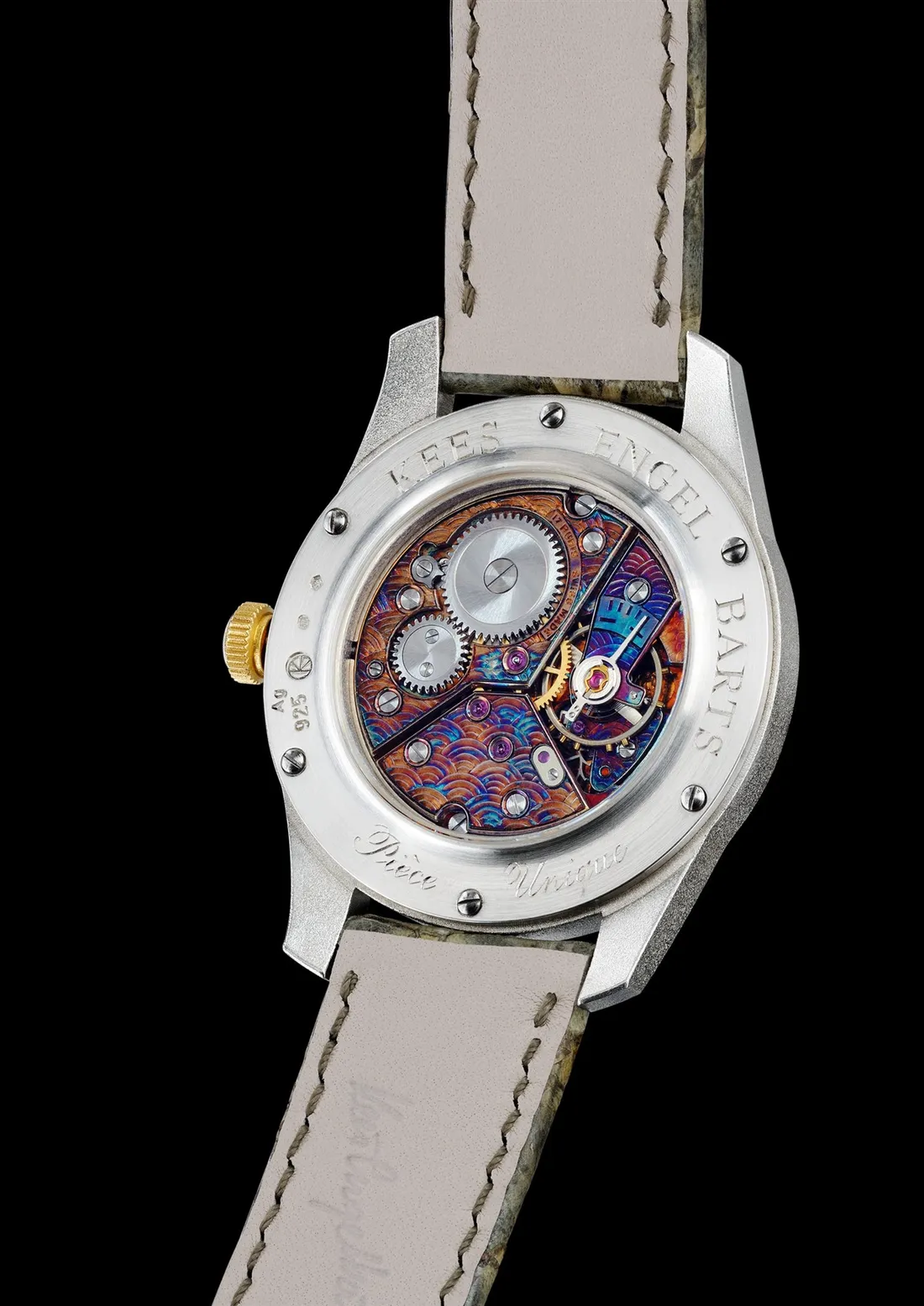
The scales, the dorsal fin and the gills of the carp bursting out of the water have been worked with micro-chisels into a three-dimensional relief. When light strikes the dial, the metallurgical colour transitions across the fish’s scales come alive.
The hour and minute hands have been stripped entirely of standard arrow shapes. In keeping with the mokume gane texture, they have been shaped by hand into a rough, organic form, as though they were part of the current. The hands were taken from the same block as the dial, from the same layers of white gold and silver, and passed through the same etching; both of the parts you read the time from were lifted out of the water.
The riskiest part of the work has to do with sequence. The mokume gane block is prepared first and carved afterwards, but how deep the cut goes during carving determines where the pattern will change. A chisel that sinks a tenth of a millimetre too far finishes the silver layer on the fish’s back, enters the white gold beneath it and changes the colour in an instant. So the craftsman has to think in volume like a sculptor and in colour like a painter at the same time. There is a palette under the dial, and that palette runs vertically.
The Second Act: Half Fish, Half Dragon
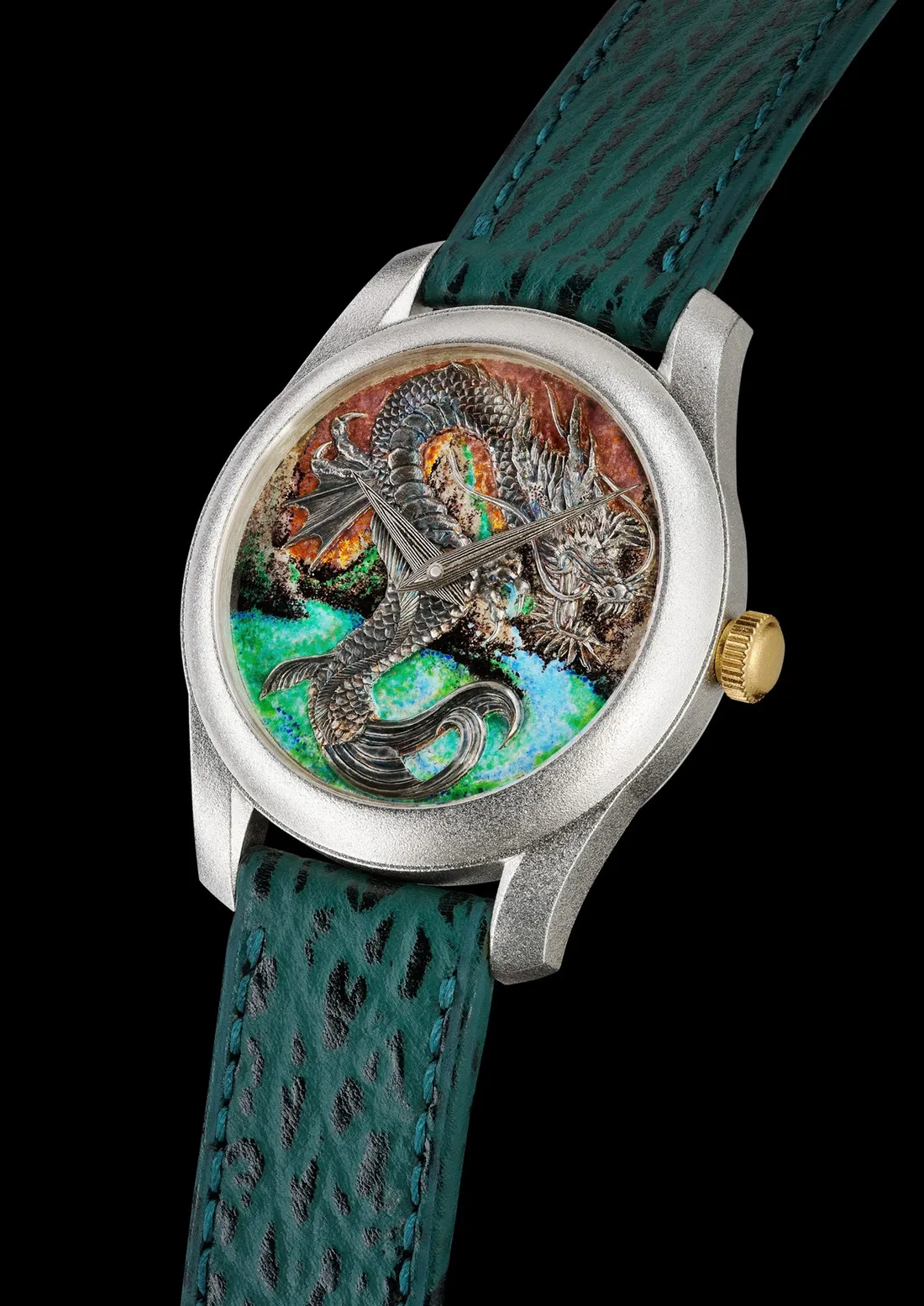
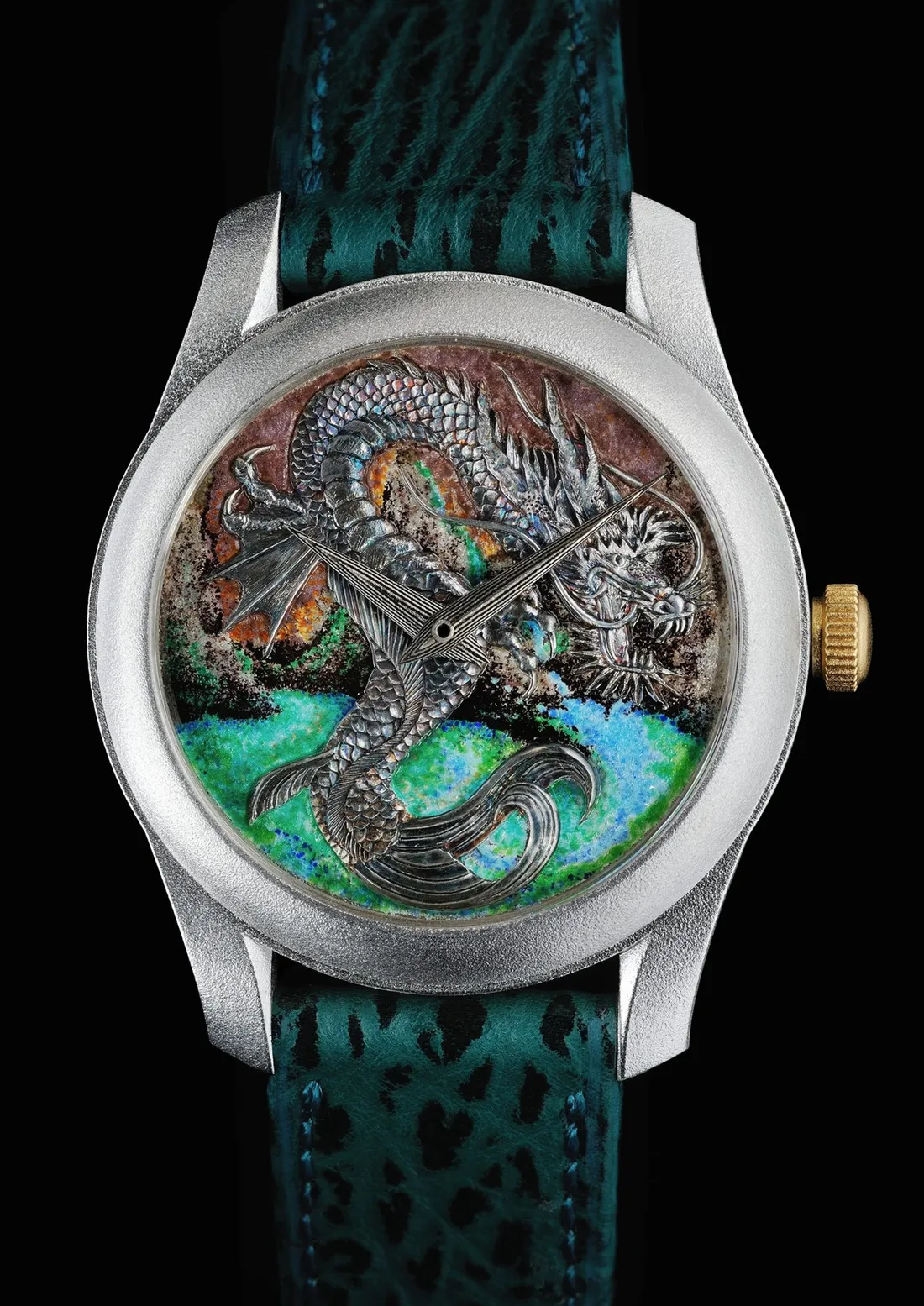
On the second watch of the trilogy the story is at its midpoint. Halfway up the falls the animal is no longer recognisable; the head has become a dragon’s, the body has lengthened, but the tail is still a carp’s tail. There is no mokume gane on this dial. Here Engelbarts used solid pure silver, carved the figure directly out of that single metal and closed the background with enamel. The surface has been partly oxidised to darken it.
The reason for changing the material is narrative. On the first watch the animal is still part of the water, and mokume gane is the water itself; on the second the animal breaks away from the water and begins to acquire a form of its own, so the ground simplifies and the figure steps forward. The material tells you where in the story you are standing.
The Third Act: A Dragon in Porcelain Blue
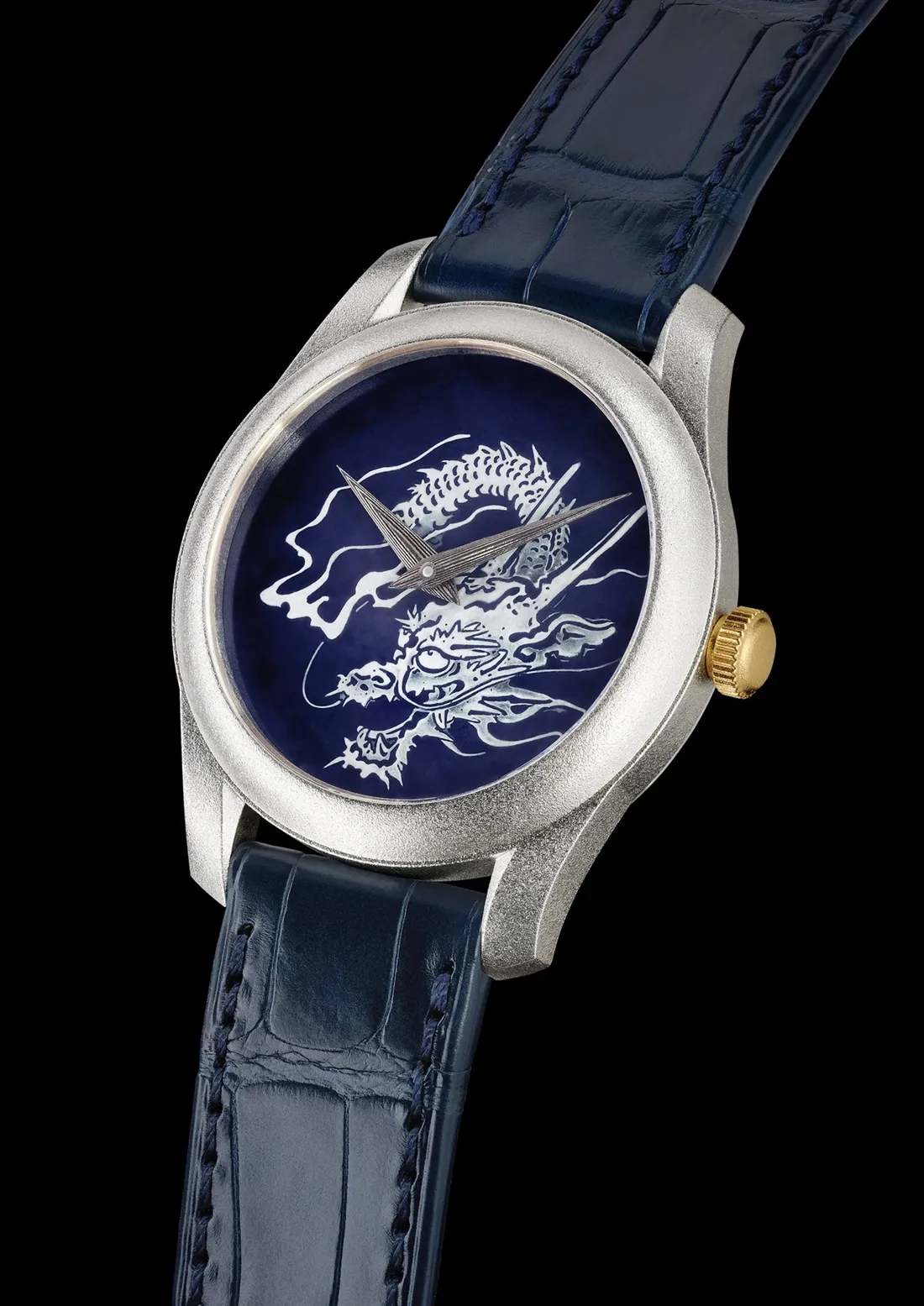
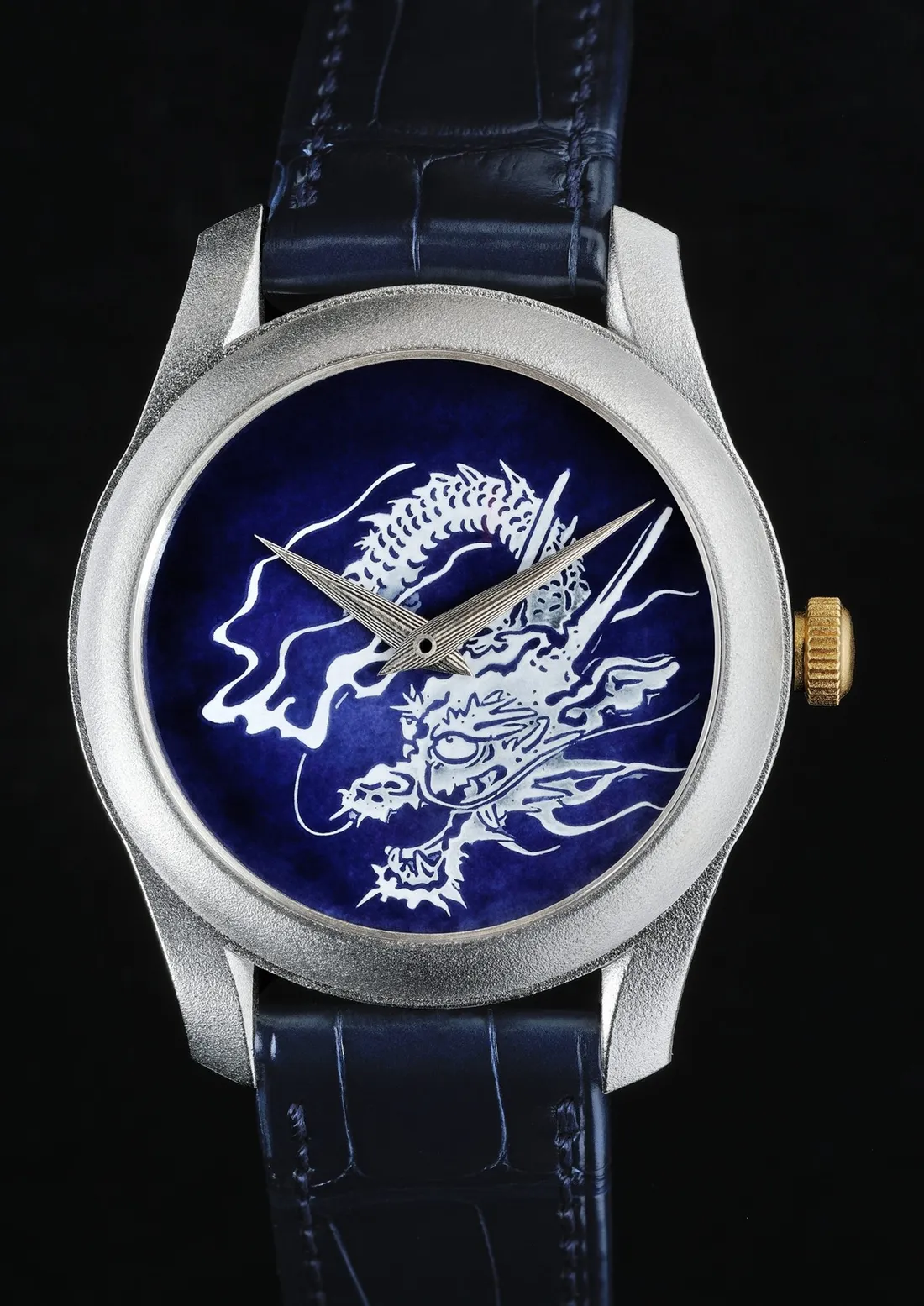
On the last watch the engraving disappears altogether. The third dial is enamelled ceramic, painted by hand. The person who painted it is not Engelbarts but Gaël Colon, an enameller who once worked for Roger Dubuis. It is a miniature painting whose blue and white recall Chinese porcelain: the dragon has passed the gate and is now among the clouds.
That choice completes the story. Metal is the material that is beaten and resists; enamel is glass that has been through fire. The carp is told in metal, because the carp’s story is a struggle. The dragon is told in glass, because the struggle is over and only the surface is left. In this trilogy the material is the subject.
The Box of the Story: 140 Hours of Lacquer
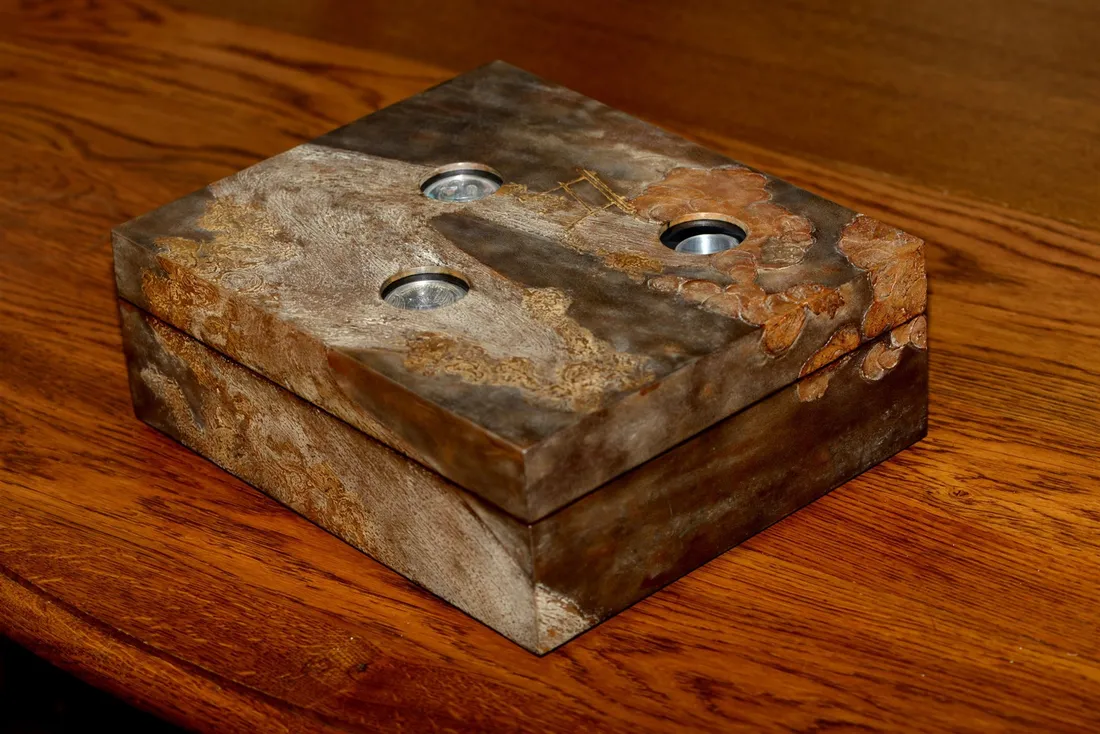
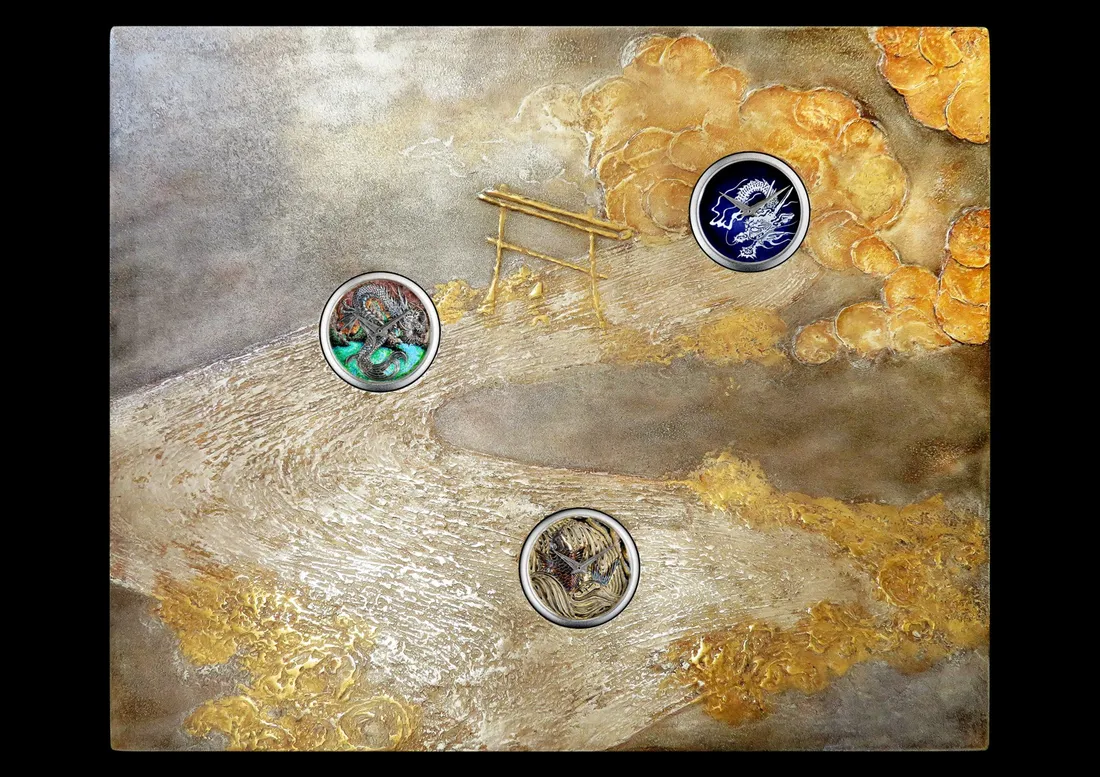
The trilogy is not only three watches. The wooden presentation box that comes with the set was decorated by the lacquer artist Catherine Nicolas over 140 hours. On the box is the setting of the legend: the lake, the rapids, the gate and the clouds, worked in silver and gold powder. Three windows have been cut into the lid, and through them the dials of the three watches are visible.
So the stage of the story stands on the outside of the box and its actors inside it. The set is sold only as a whole and the price is given on request.
The Horological and Artisanal Record
Artist and maker: Kees Engelbarts, Geneva; independent engraver and watchmaker.
Set: the Dragon Gate Trilogy, one whole made of three unique pieces, sold together with a hand-lacquered presentation box.
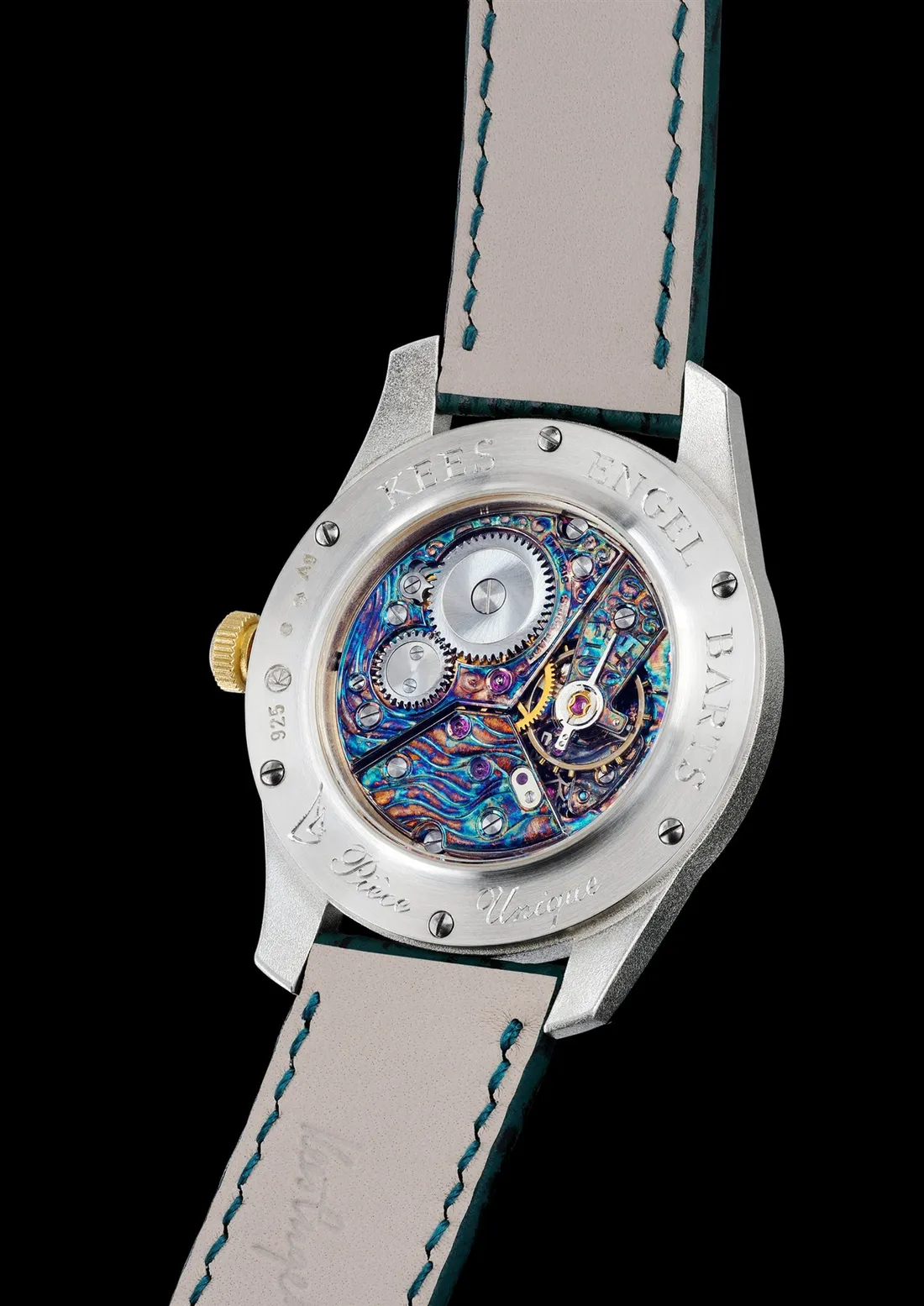
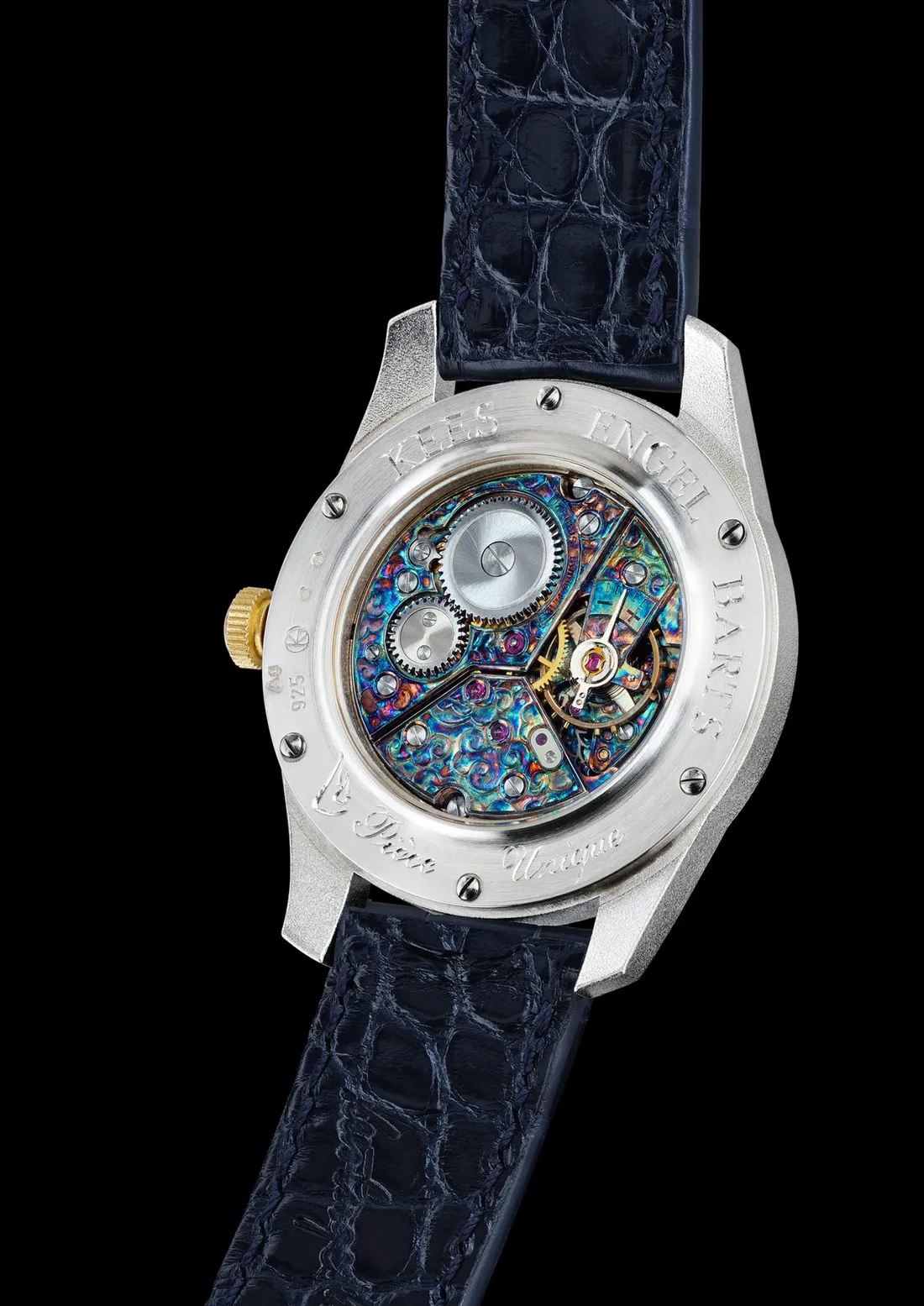
Case: 39.5 mm Argentium silver, matte finish, sapphire crystal on both sides, 18-carat yellow gold winding crown.
Movement: Peseux 330, hand-engraved on each watch to match its own dial, silver plated and oxidised.
First dial, the carp: white gold and silver mokume gane; hand-engraved carp attempting to scale the waterfall; etched and partly oxidised.
Second dial, the transformation: solid pure silver; hand-engraved transformation of the carp into a dragon; enamelled ground, partly oxidised surface.
Third dial, the dragon: enamelled ceramic, hand-painted by Gaël Colon.
Hands: white gold and silver mokume gane, dauphine shaped, etched and oxidised.
Straps: Nile perch for the carp, green shark leather for the transformation, blue crocodile for the dragon; Argentium silver buckle on all three.
Presentation box: a wooden box lacquered by Catherine Nicolas over 140 hours, depicting the lake, the rapids, the gate and the clouds in silver and gold powder, with three windows in the lid.
Price: on request, available only as a set.

Kees Engelbarts’ Dragon Gate Trilogy is not a mechanical device that merely measures time in the ticking of hours and minutes. Thanks to the atomic metallurgy offered by the Mokume Gane technique and to unalloyed handwork, it is a living masterpiece of sculpture that lets you carry on your wrist that legendary moment in which endurance turns into victory.
format_quote"You cannot see the grain without felling the tree."
Hasan Bekmezci