Bells in the Midst of Nothingness: The Birth of Time and Cosmic Relativity
The human soul, like the characters in Leo Tolstoy's heavy, penetrating novels, wages a silent war at every moment between its own mortality and the infinity of the universe. That great question we cannot admit to ourselves always lies in wait amid the ordinary noise of life: are we nothing in this world, or a link in a chain that reaches into eternity?
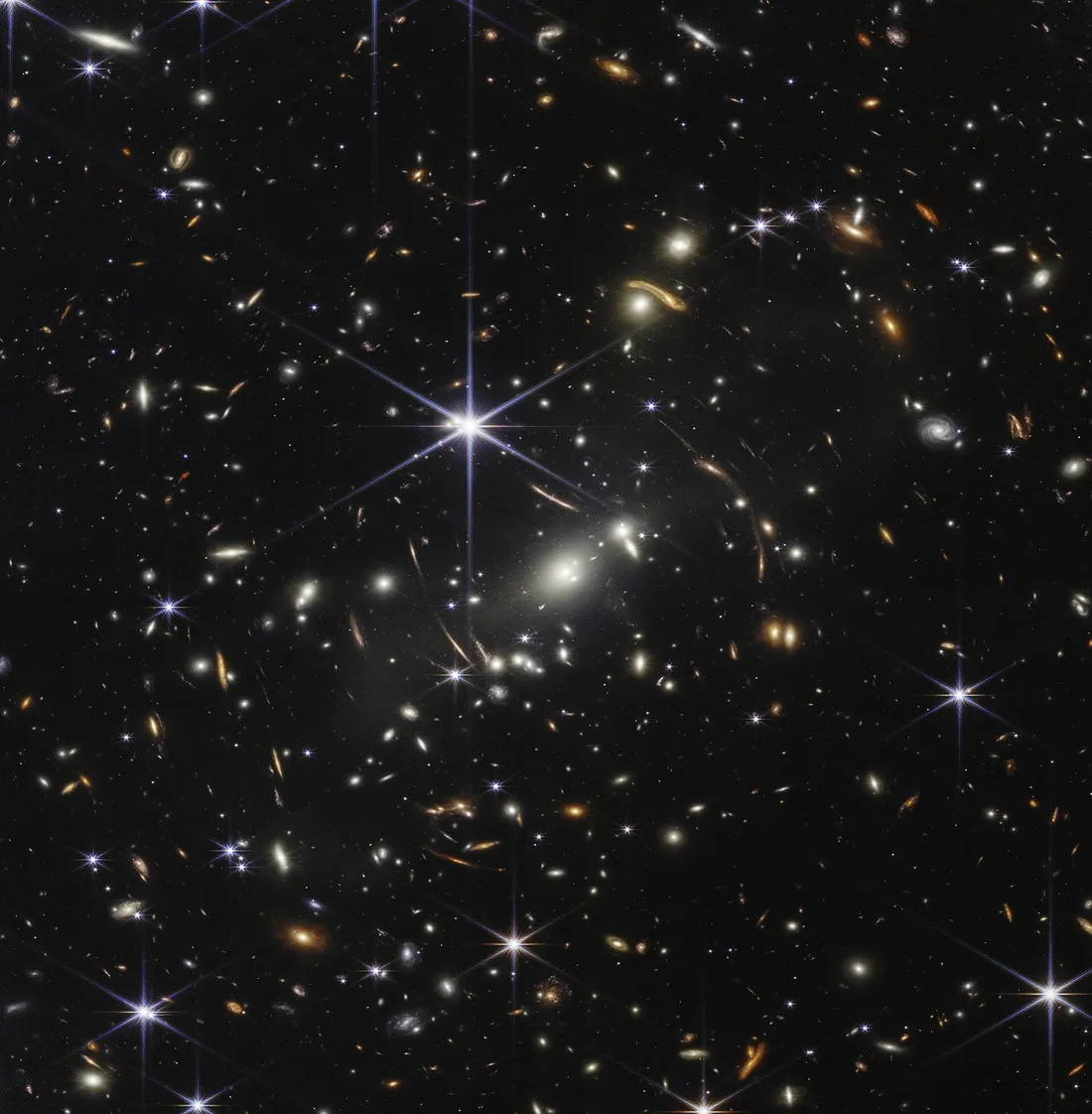
The answer to this question was given in that absolute darkness where placelessness and timelessness reigned, some 13.8 billion years ago, with the very creation of time. When the Big Bang occurred, a Creator who is outside time and not subject to its rules triggered the first instant of the universe. From that moment on, time began to flow for humanity like a river that cannot be stopped, cannot be reversed, and yet can be bent.
We tend to imagine time as nothing more than the monotonous, mechanical, soulless ticking of the clock on our wall. Yet time is the most mysterious, most fluid and most relative concept in the universe. To believe it absolute and unchanging is the greatest illusion of human perception. This cosmic secret was whispered to the human soul centuries ago, between the lines of the sacred texts that guide humanity. In the Qur'an, the relativity of time and how it flows differently in different dimensions is laid clearly before us. In Surah Al-Hajj, verse 47, it is said, Verily a day in the sight of thy Lord is like a thousand years of your reckoning, and the limits of the human mind are stretched. Likewise, in the Bible, Psalm 90:4 proclaims the relativity of universal time in these striking words: For a thousand years in Thy sight are but as yesterday when it is past, and as a watch in the night.
Here, then, is the human being: a tragic creature caught between the eternity to which the sacred texts point and the limits of its own world. We grow old counting seconds; the universe breathes in cycles of millions of years. It is precisely here that Haute Horlogerie becomes the manifesto of humanity's desire to reach timelessness, to carve a mechanical notch into that great river with its own mortal hands.
The Dreams of a Genius: Einstein's Race with the Speed of Light
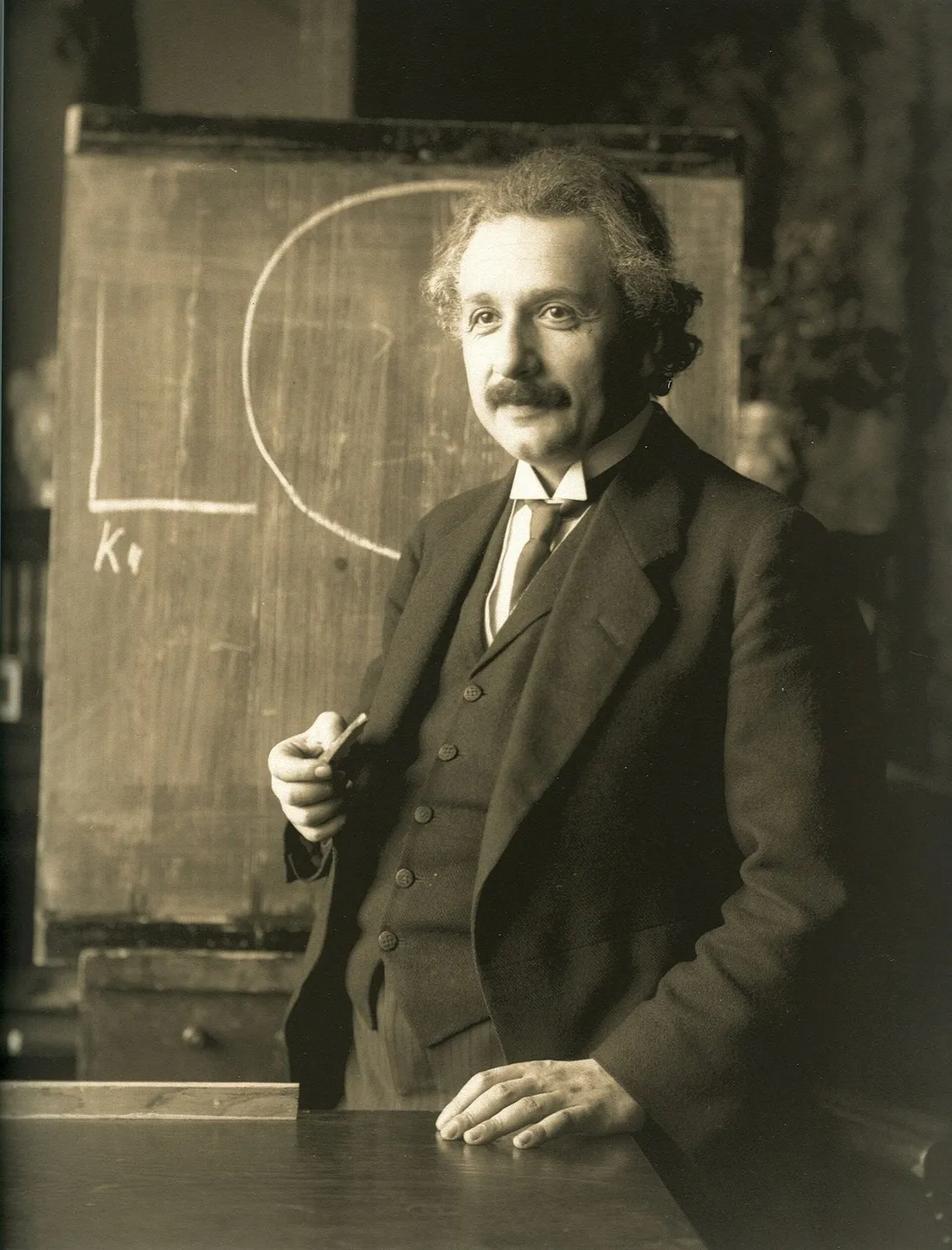
But who, and how, cast into modern reason this relativity whispered by the sacred texts? The story begins in Bern in 1905, with the dreams of a 26-year-old bent over his desk in a patent office: Albert Einstein.
When Einstein lay down at night, he had strange, jarring dreams. In one, he saw himself riding a beam of light, racing into the depths of the universe at 300,000 kilometres per second. He looked into a mirror; because he was travelling at the speed of light, he could not see his own reflection. At that instant he woke from the dream. What would happen if we ran alongside light itself? Would time stop?
As Einstein walked toward Bern's famous clock tower, the Zytglogge, he realised something: time did not flow the same for every observer. For the one who moves fast, time slows; beside a planet of immense mass, time grows heavy like honey and bends. Einstein tore down at the root the notion of absolute time that humanity had believed unshakeable. Time was an illusion; past, present and future were but a stubborn illusion. Time could be bent, could be stretched, and everything was shaped in the immense hands of gravity.
The Ancient Mirror of the Night: What Does the Moon Tell Us?
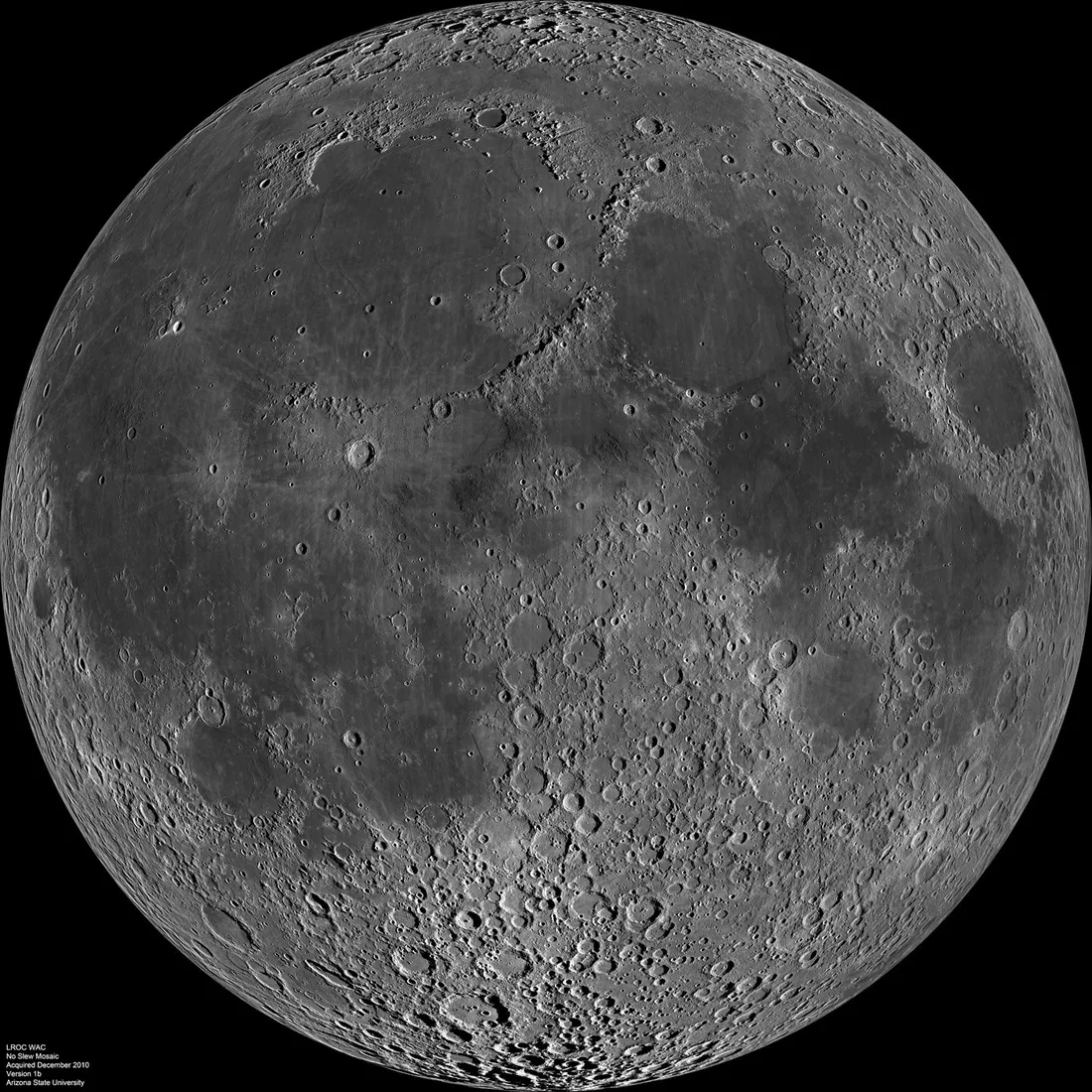
While Einstein was unravelling the gravitational web of the universe, there was another master of gravity to which humankind has been bound since the first moment it raised its head to the sky: the Moon. Why, for centuries, for thousands of years, have all watchmakers spent their lives placing those tiny moon-phase indicators inside watches? What does the Moon tell us?
What would happen if there were no Moon? Without it, the earth would spin on its axis like a wild top; the days would shorten, storms would make life impossible, and those immense ocean tides would not occur. The Moon embraces the earth with its gravity like a tender mother, calms it and brings it into line. But it does something deeper: the Moon teaches the human soul to die and be reborn again and again. Every month it vanishes from the sky (the New Moon), then becomes a crescent, grows, tears through the darkness of the night as a full moon, and then shrinks and dies once more.
The Moon is the sky's mirror of the human cycle of birth, life and death in this world. That pale light of the night is a companion to human solitude. This is why the human being has wished to carry the rhythm of that ancient companion in the sky upon the wrist, to be synchronised with it.
Kurt Klaus's Revolt in the Swiss Mountains
The art of bringing time and the Moon under control with mechanical wheels was carried to an entirely new dimension in the modern age by a legend living under the roof of IWC Schaffhausen: Kurt Klaus. The year is 1985. Swiss watchmaking was living through the darkest period in its history. Quartz watches had invaded the market, and century-old mechanical workshops were closing one by one. Everyone thought mechanical watches were finished. In those cold, smoky Schaffhausen days, a genius named Kurt Klaus shut himself in his workshop and raised what amounted to a banner of revolt: the Da Vinci Perpetual Calendar.
Kurt Klaus designed a system that resolved the different lengths of the months, and even the capricious 29th day of February that comes once every four years, through a mechanical memory within itself. But his true revolution was this: he linked all these complex calendar and moon-phase indications to a single crown. The user did not have to press dozens of hidden correctors to set the watch; he simply turned the crown. Inside, the wheels followed one another like a symphony orchestra. This invention went down in history as proof that mechanical watchmaking had not died but had, on the contrary, become immortal.
Yet traditional perpetual calendars had a chronic weakness rooted in the man-made calendar system: the century years. According to the Gregorian calendar we use, century years such as 2100, 2200 and 2300 are not leap years even though they are divisible by four (because they are not evenly divisible by 400). This is why even the finest perpetual calendars made to date would err upon reaching the year 2100 and require the manual intervention of a watchmaker.
The Mechanical Formula of Eternity: The Portugieser Eternal Calendar
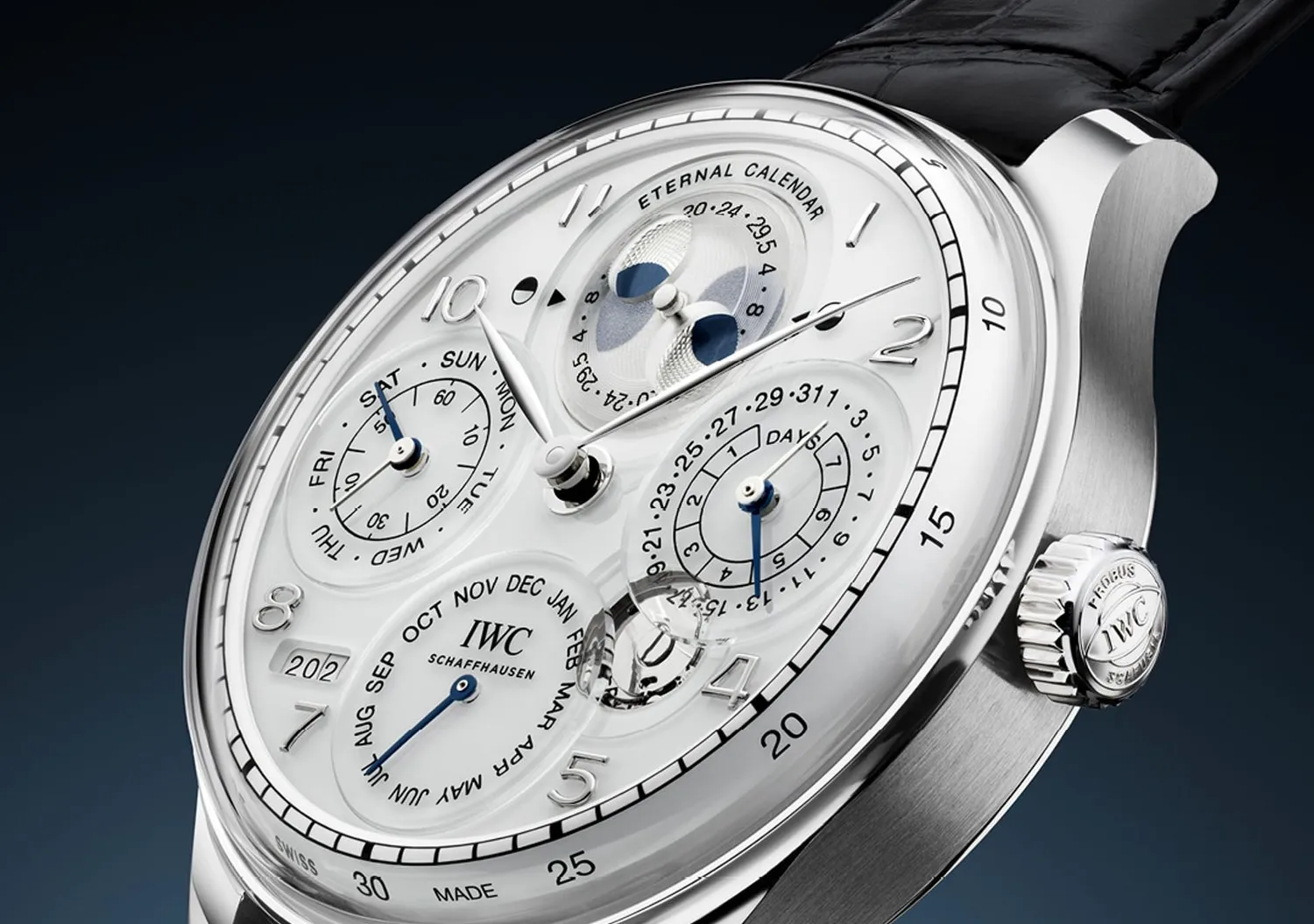
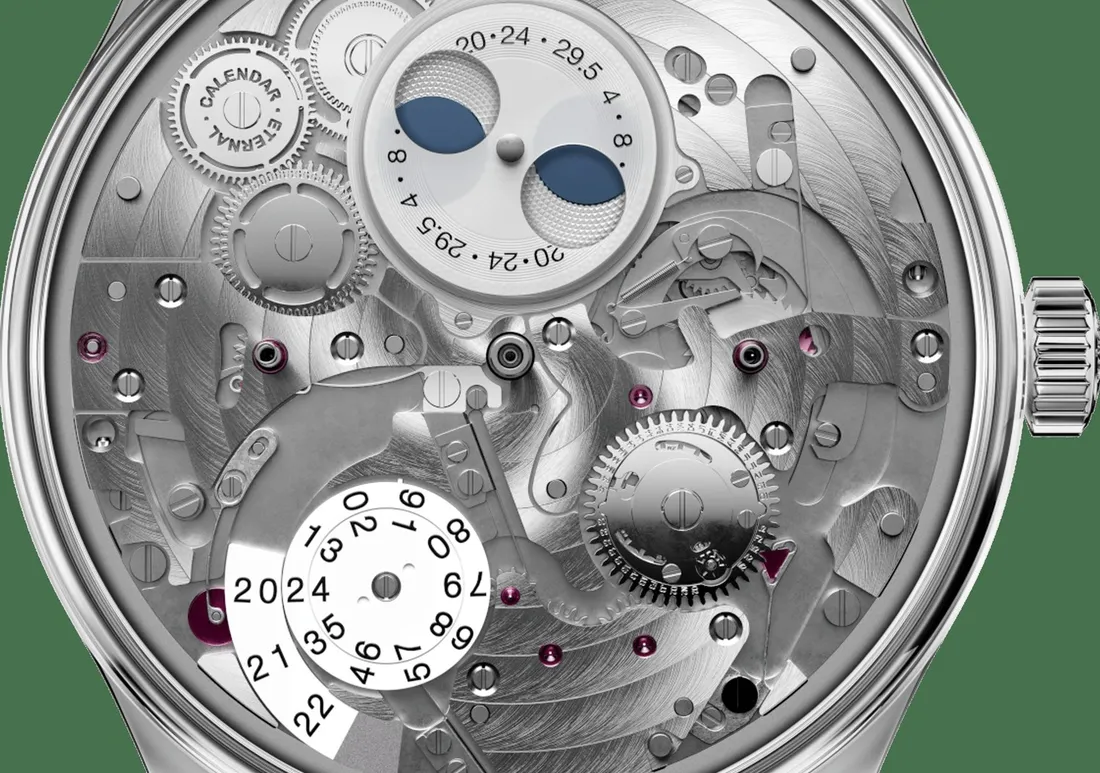
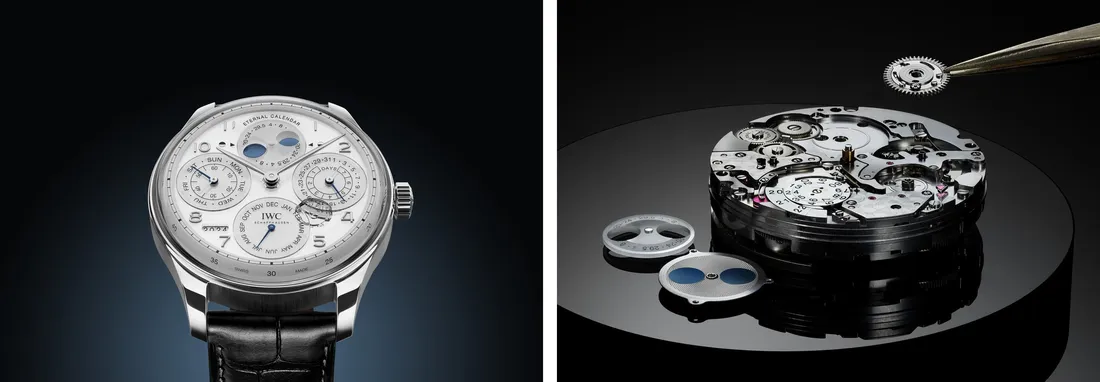
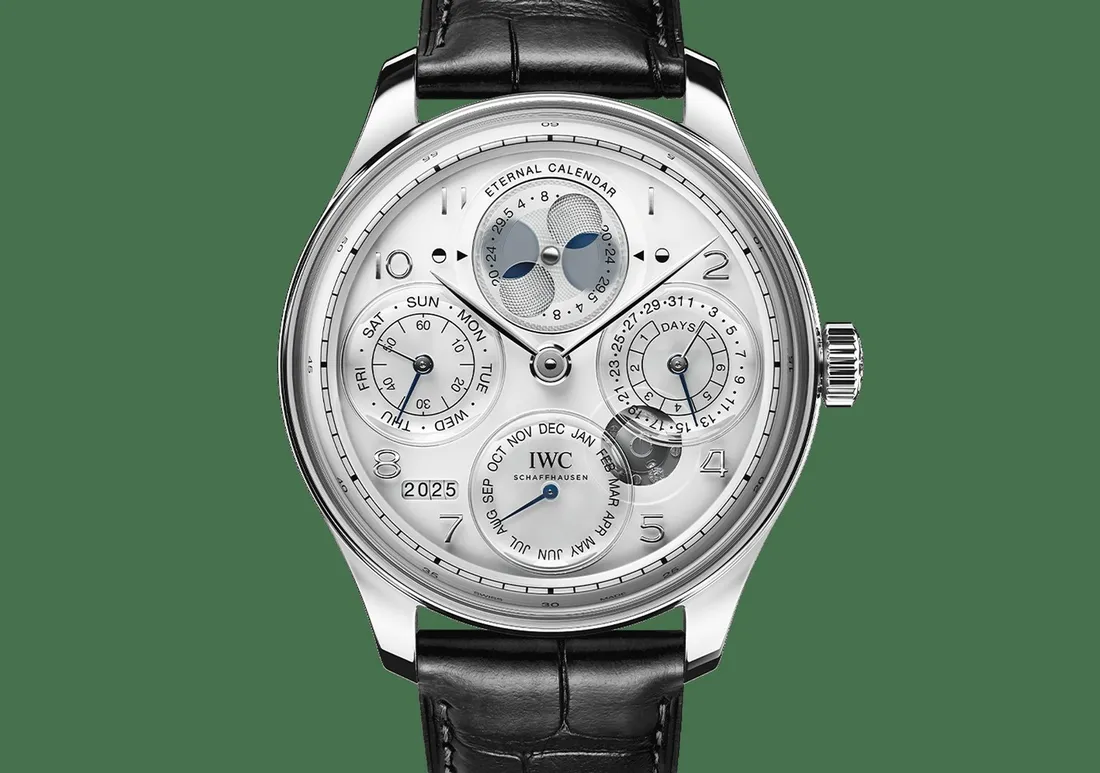
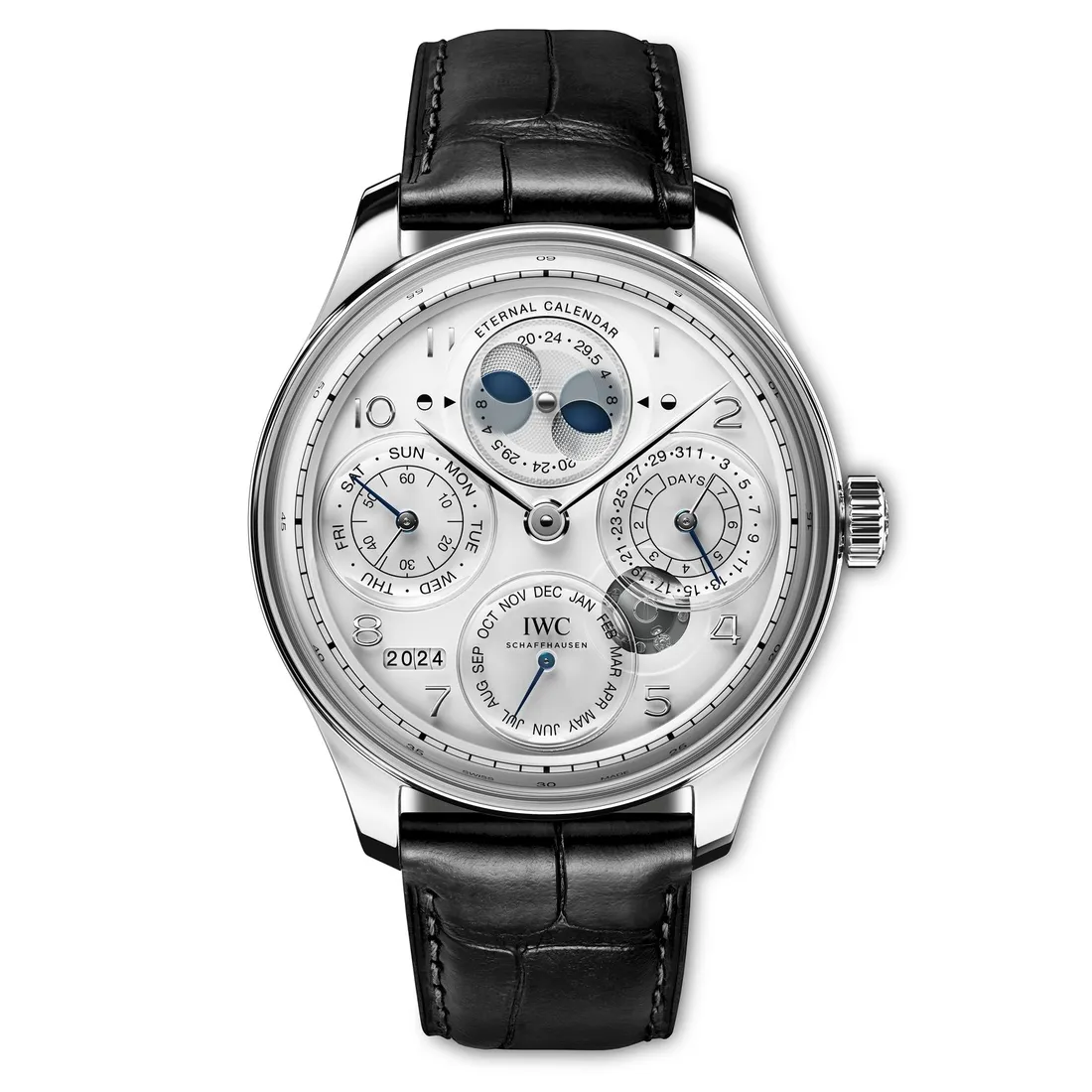
IWC Schaffhausen took Kurt Klaus's legendary legacy and, in the most literal sense, bound it to eternity. The masterpiece before us: the IWC Portugieser Eternal Calendar. This is a Secular Perpetual Calendar, programmed to resolve those man-made calendar exceptions in the century years entirely mechanically, without any human intervention.
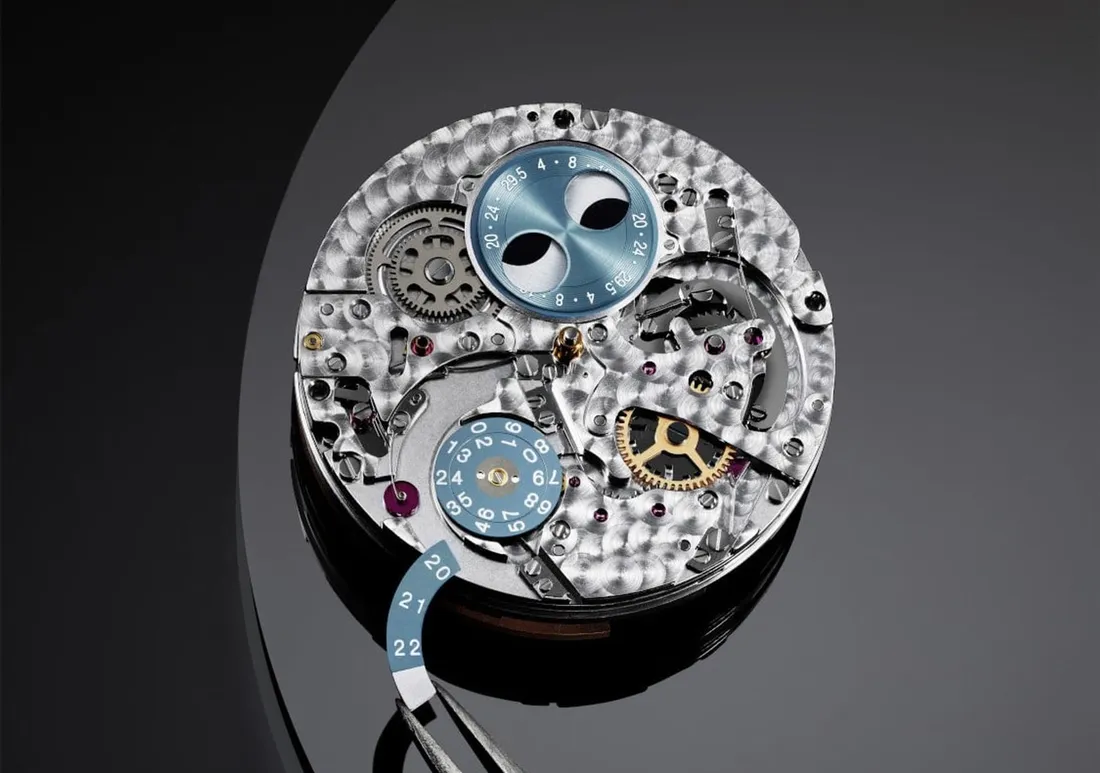
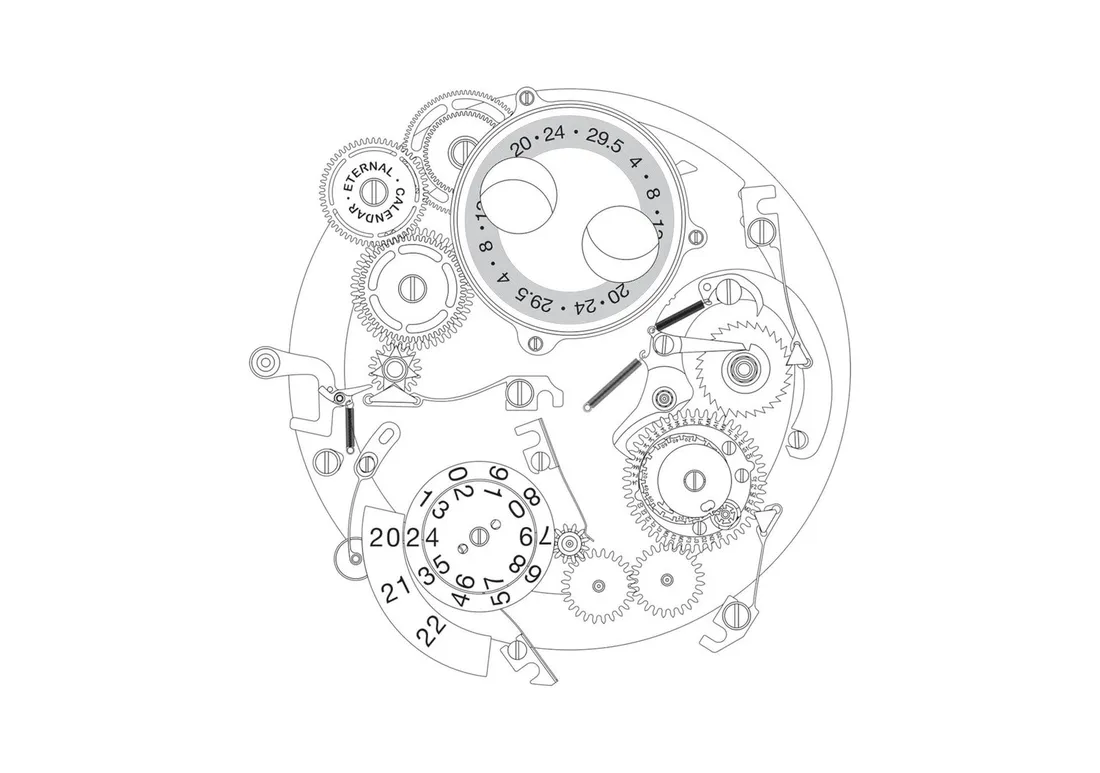
So how did the masters achieve this? The answer lies hidden in one of the most audacious engineering decisions in the history of watchmaking: an extraordinarily slow secular gear system that completes only a single full rotation every 400 years. Consider this: some of the teeth of this wheel will touch their neighbour perhaps only once in the entire lifetime of a watchmaker; yet in that single moment of contact there is no luxury of error. Thanks to this micro-mechanical genius, the calendar automatically skips exactly 3 leap years within its 400-year cycle. And it will make this immense decision by itself for the first time in human history in the year 2100, passing February of 2100 as 28 days rather than 29, keeping the flow of time flawless.
There is more. The future of the universe and of the human calendar has been calculated with such precision that, because humanity has not yet made an official and astronomical decision as to whether the year 4000 will be a leap year, this watch will continue to calculate all leap years flawlessly, without being off by even a single day, at least until the year 3999. Even after you, your children, your grandchildren and their grandchildren have departed this world, the wheels inside this platinum case will go on whispering the calendar of the universe without fault.
A 45-Million-Year Cosmic Cipher: We Are Here, and You?
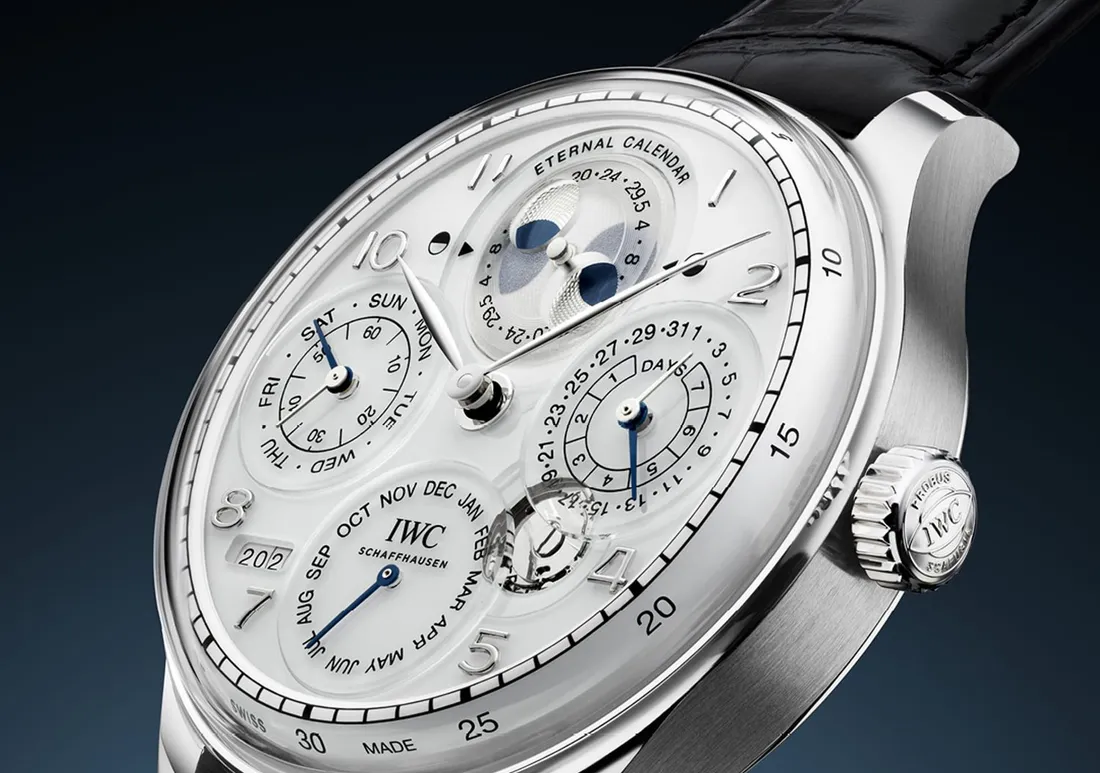
Now we come to that unimaginable detail that carries this watch beyond the limits of reason: its all but eternal moon-phase display. IWC's engineers sat down at supercomputers and simulated more than 22 trillion possible gear combinations one by one, then designed an immense reduction gear system, mathematically perfect, made of three intermediate wheels. The resulting Double Moon display will, in theory, require not a single day's adjustment for a full 45 million years.
Now stop and think: 45 million years. No mortal alive in this world has a lifespan to reach that figure. So why does a human being build so flawless a mechanism for a span of time he can never exhaust? For whom was this watch made? The answer lies beyond human self-regard, in the universe itself. The great astrophysicist Carl Sagan, with his famous cosmic gaze, used to say: If we are alone in the vast universe, it would be an awful waste of space. The pioneering astrobiologists of modern science and of institutions like NASA today seriously debate the possibility of life in different corners of the universe, even on the moons of our own solar system.
In fact this idea is not new. When we look at the ancient texts of philosophy, at thinkers stretching from Democritus in ancient Greece to Giordano Bruno, we meet the idea of the plurality of worlds. They argued most clearly that the stars and planets were not empty, that there could be life there too.
Today we do not yet know the nature of those life forms, what kind of biological or energetic structure they might have. Perhaps they are not carbon-based like us; perhaps they exist in an entirely different order beyond our perception; perhaps there are ancient life forms that read time not in linear scenes as we do, but in cosmic periods of millions of years. This is why the IWC Portugieser Eternal Calendar was not made for the mortals of earth alone. This watch is like a mechanical message sent to those unknown neighbours in the other corners of the universe who might perceive time with a cosmic eternity. A letter written in a cosmic tongue: We, the people of earth, are here with our mortal bodies; yet we possess a mind and a craft great enough to fit even your eternal, million-year rhythm onto our wrists and measure it. It is a noble banner that the human mind raises toward universal life.
But what exactly did these great minds say about other life and about our neighbours in the sky? Here are words, from the masters of both West and East, that cross the ages and reach us today.
«The universe is a pretty big place. If it's just us, it seems like an awful waste of space.»
Carl Sagan, astrophysicist
«There are countless suns and countless earths, each turning around its own sun just as our planet turns around ours. The countless worlds of this infinite universe are no less noble and no less inhabited than our own Earth.»
Giordano Bruno, On the Infinite Universe and Worlds, 1584
For centuries the Eastern-Islamic tradition of wisdom described the universe as the «eighteen thousand worlds»; the great thinker Fakhr al-Din al-Razi defended this boundless multiplicity in even clearer terms:
«It is established by proof that beyond this world there are worlds beyond number. It is not rationally impossible that God has created, beyond our world, thousands upon thousands of worlds.»
Fakhr al-Din al-Razi, 12th century
The Transparent Universe Beneath the Glass: A Technical and Aesthetic Anatomy
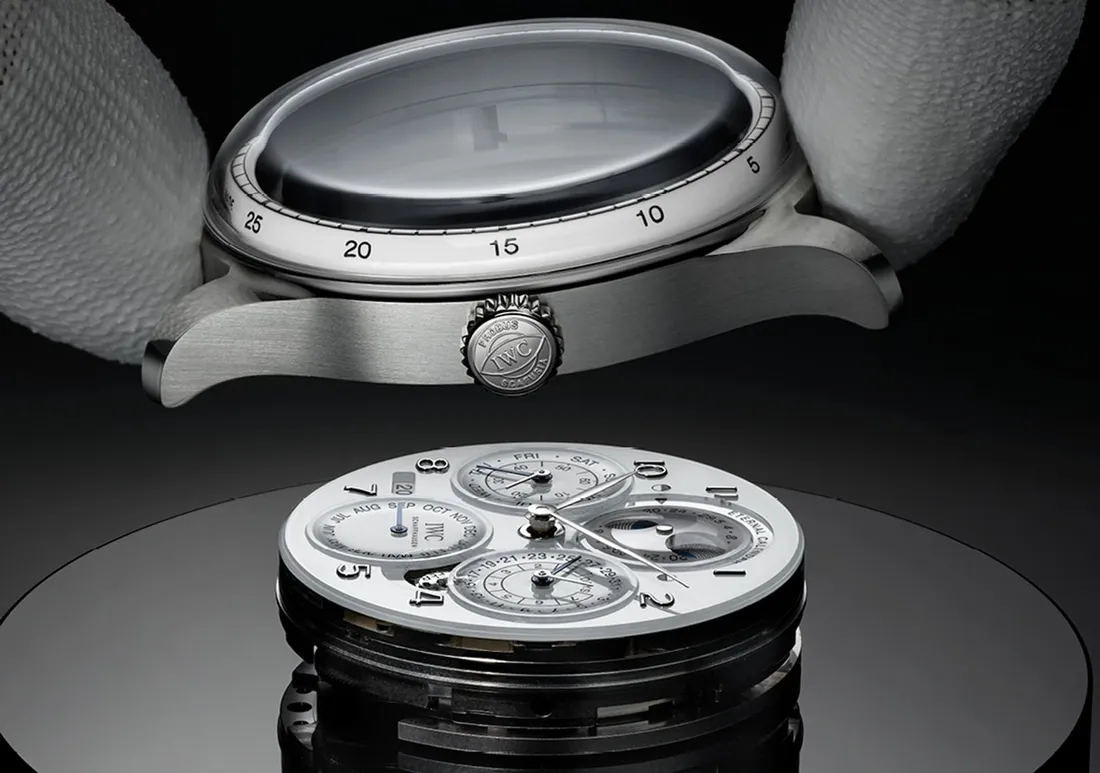
It is not enough merely to know this ingenious cosmic mechanism; to watch it also nourishes the soul. IWC's designers used glass elements and sapphire crystals at a density never seen before, so that this mathematical genius would become a visual feast from the outside. The double box-glass sapphire crystals at the front and back of the watch lay bare the mesmerising depth of the mechanism.
The glass dial, with its noble brilliance, passes through a truly superhuman process of craftsmanship; for sapphire is a material far harder than steel yet just as brittle and unforgiving. Frosting and lacquering: in the first step, the underside of the sapphire glass dial is frosted through chemical and mechanical processes and then immediately coated with a special lacquer of pure white. This gives the dial a deep, porcelain-like, extraordinary translucency.
Machining the sub-dials: the sub-dials that carry the chronograph and calendar apertures are engraved, machined and polished one by one on the glass surface, to the millimetre, and then set flawlessly onto the main base plate. At this stage a single wrong pressure can shatter in an instant a transparent dial that has taken hours of labour. Printing and hand-applied appliqués: in the final stage all the text and logos on the dial are printed with high precision; and those iconic numerals and appliqués are mounted one by one, by hand, under loupes and with tweezers, by master watchmakers. This whole mesmerising universe of glass is protected within an immense platinum case, polished, brushed and produced to the highest standards of craftsmanship.
The power that gives life to this mechanical computer is IWC's own legendary Calibre 52640. Its famous automatic Pellaton winding system is reinforced with ceramic components and is all but immune to wear. Converting the rotor's motion in both directions into energy at the slightest movement of your wrist, this system stores an immense 7-day (168-hour) power reserve in two great barrels placed side by side. Even when the watch is off your wrist, it continues that 45-million-year cosmic calculation without interruption for 7 days.
Conclusion: The Immortal Masterpiece of Mortal Bodies
Tolstoy says that the greatest tragedy of the human being is to live knowing the inevitability of death. Yet the human being can transcend his own death through art and craft. The IWC Portugieser Eternal Calendar is the most elegant victory the human being has won against that merciless river of time. Time, which began with the Big Bang, was bent by Einstein's dreams and washed in the melancholy light of the Moon, has attained eternity within this watch.
When you fasten this platinum masterpiece to your wrist, you are not merely looking at a watch; you are looking at the world, at time and at infinity through the eyes of those unknown friends in the boundless universe Carl Sagan pointed to, of the eternal beings whose nature we do not know. Do not see time merely as a number that flows away; look at this watch and listen to the voice of eternity.