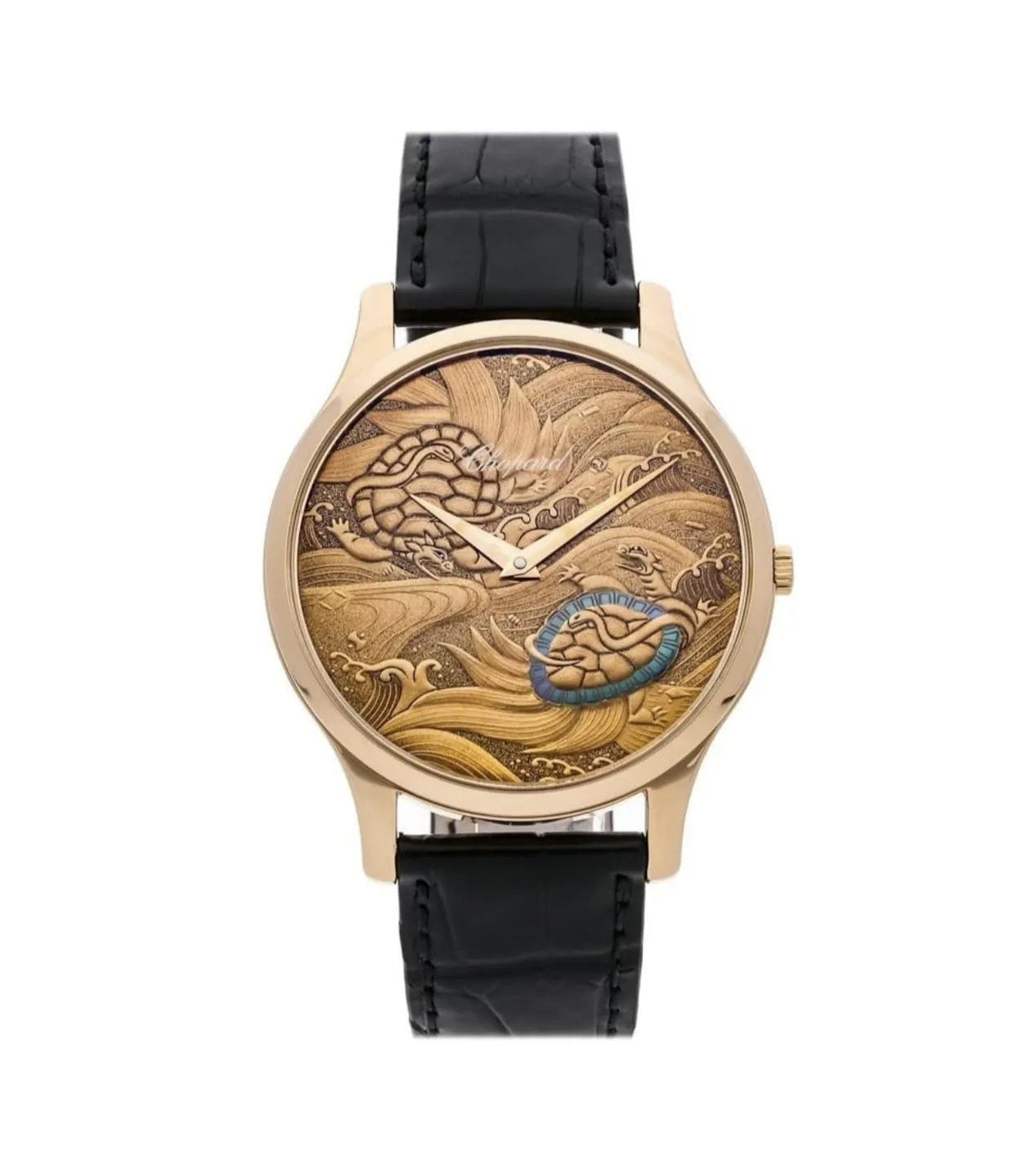
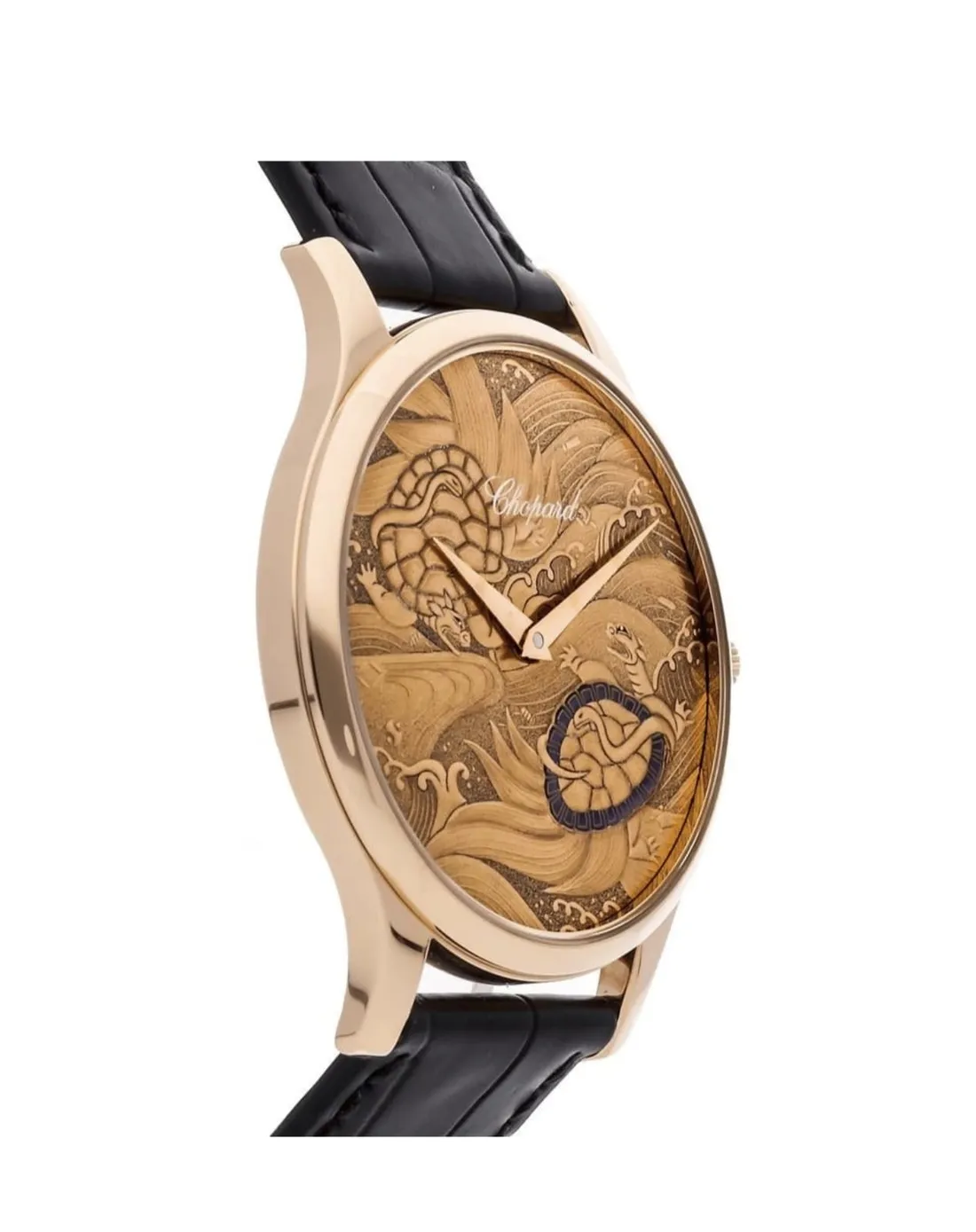
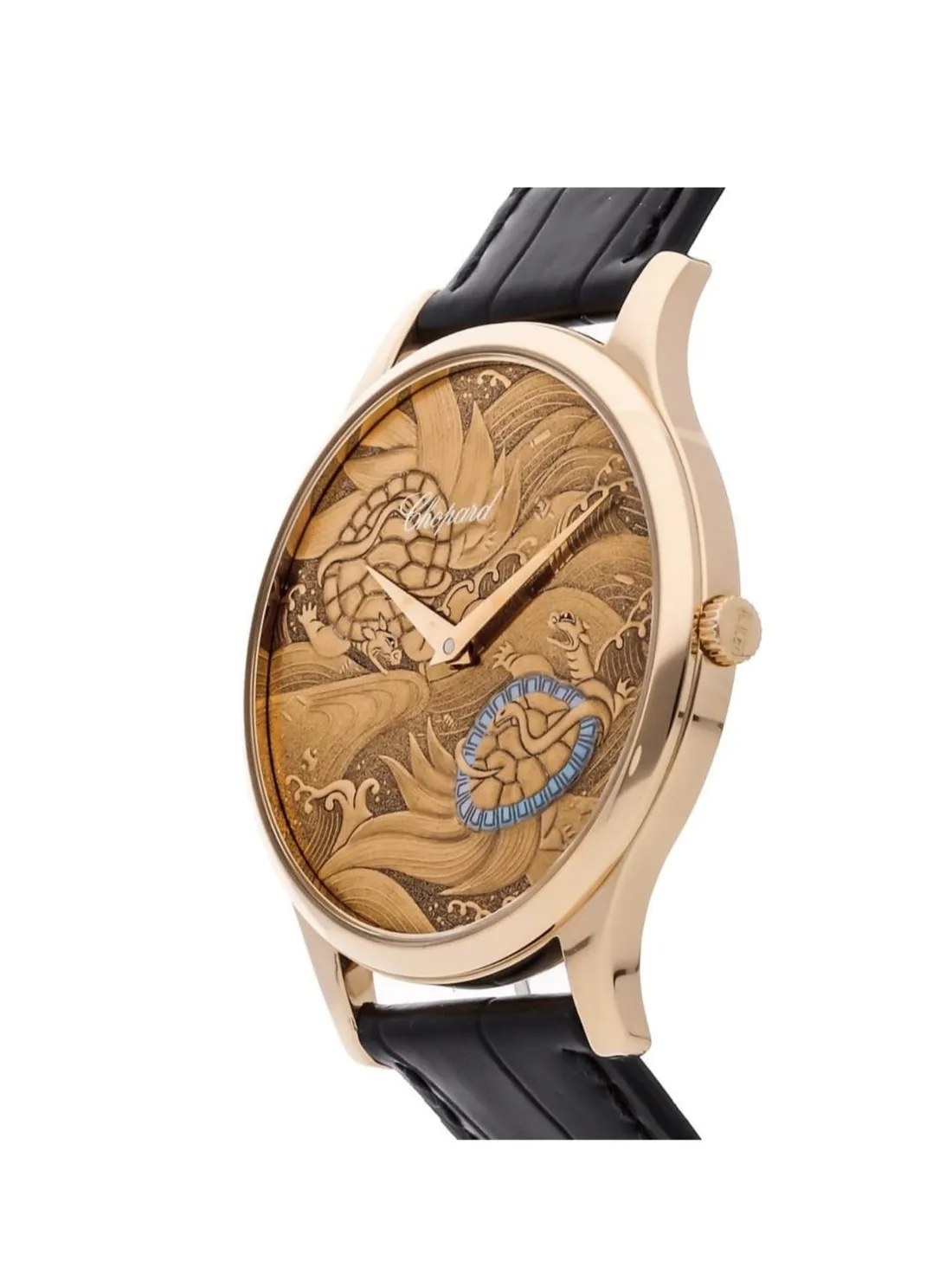
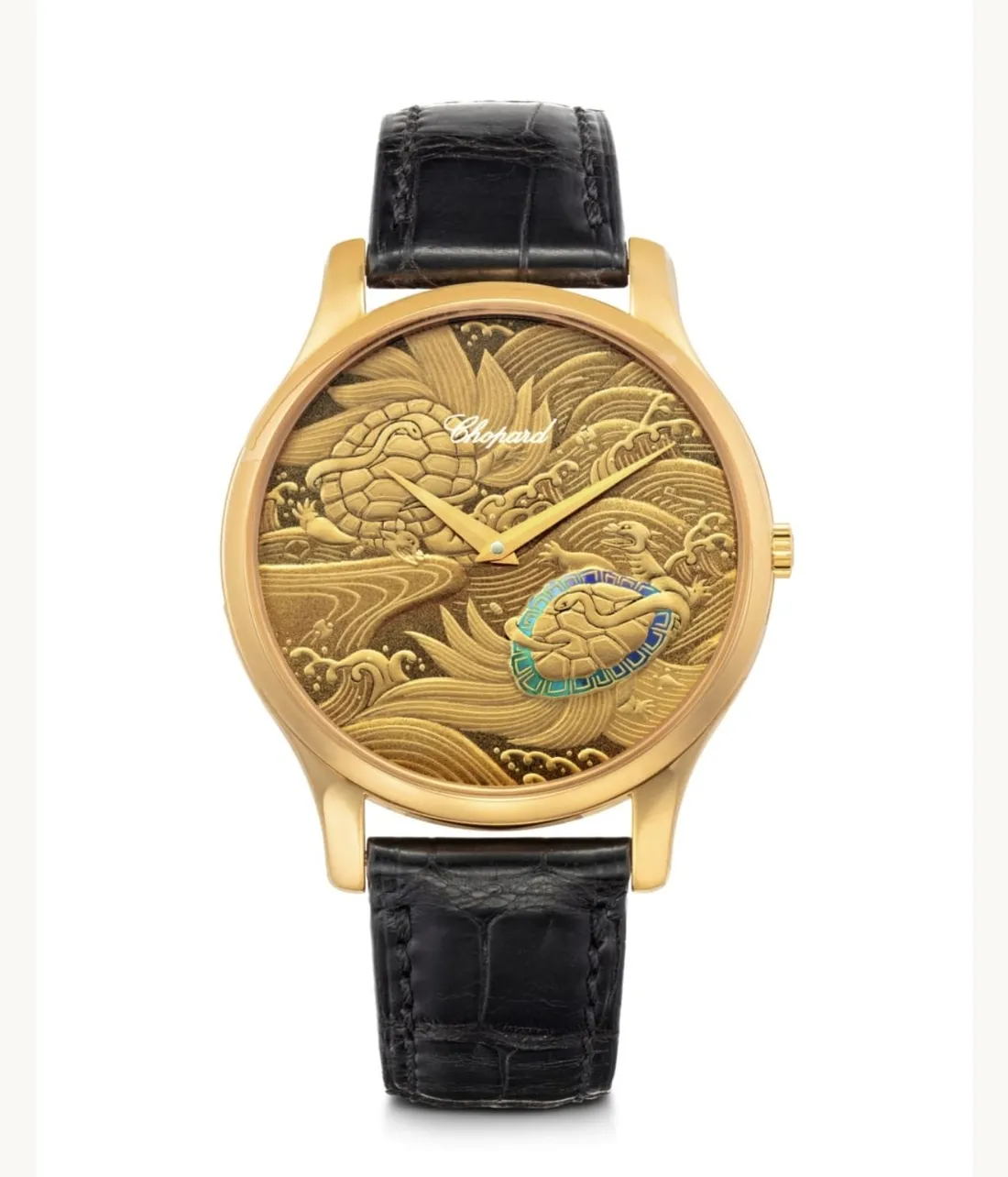
The Chopard L.U.C XP Urushi collection, which brings together Swiss micromechanical engineering and the centuries-old traditional lacquer art of the Rising Sun on a single dial, is one of the most distinguished examples of the artistic-dial (Métiers d’Art) concept. The "Treasured Turtle and Snake" model (Ref. 1902), offered as a special showing, immortalises on its dial nature’s struggle for life and an eternal friendship through a mesmerising craft.
The Story: A Silent Vow by the River
In the lush Urushi forest at the foot of Japan’s misty mountains, it was not the ticking of time that could be heard but the sound of the wind, the leaves and the flowing water. On the bank of the clear river that ran through this forest and slipped down into the valley, there lived an old turtle that had been there for many long years. Its shell had hardened with passing storms and the experience of the years; its steps were heavy as patience itself, yet unshakeable.
One spring morning, as the snows in the mountains melted, the river’s waters suddenly surged. As the old turtle wandered along the bank, it saw a young snake trapped among the sharp rocks at the water’s edge. The snake was supple and swift, but helpless against the force of the raging water. Without hesitation the old turtle entered the water; standing against the current with its broad, unshakeable body, it became a safe refuge for the snake. The snake, grateful, wrapped itself around the body of this old friend who had saved its life on that stormy day.
From that day on, a true bond of friendship formed between these two creatures, right in the heart of nature. Whenever harsh winds blew through the forest or the river surged, the snake would coil around its friend’s protective shell; and the turtle, drawing strength from the snake’s suppleness and vitality, would face the hardships of life together with it.
An old artisan who lived in the depths of the forest watched from afar the harmony these two creatures displayed by the river. He believed that this loyalty and union in nature must not fall to time. And so he decided to inscribe onto a small canvas the golden sunset over the river, the foaming waves and the eternal embrace of these two friends.
The Resin of an Ancient Art: What Are Urushi and Maki-e?
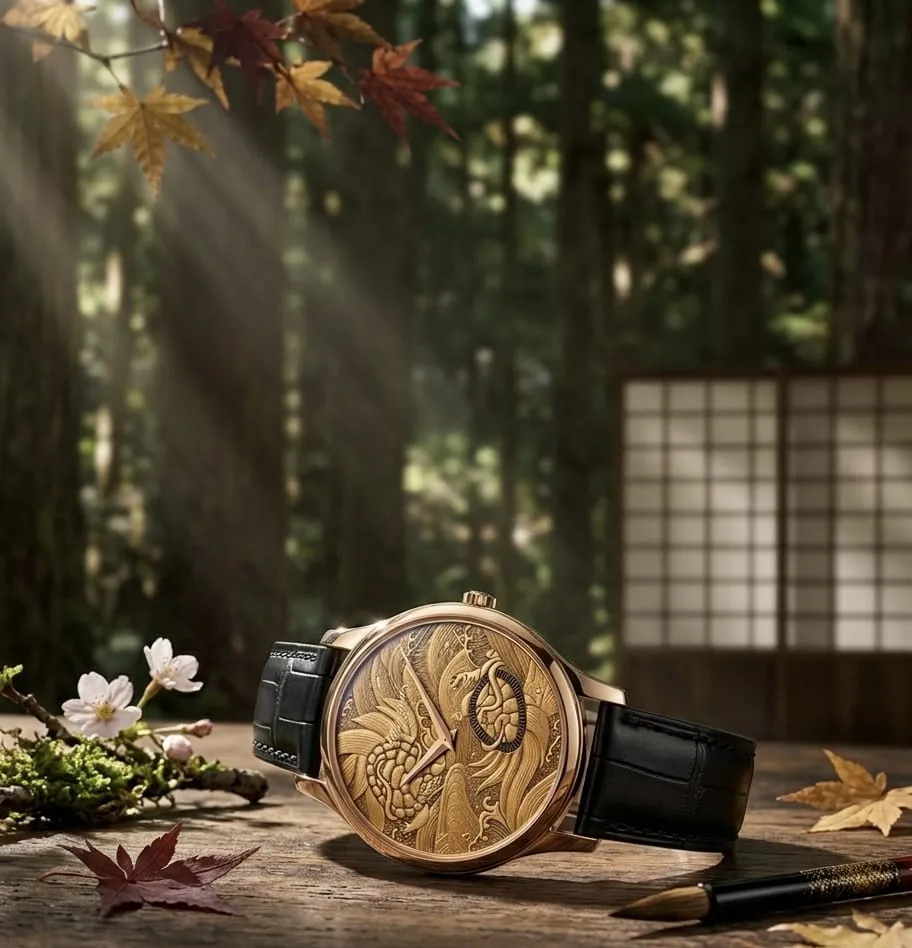
The art of Urushi is a traditional Japanese lacquer craft, rooted thousands of years back, extremely laborious and demanding of patience. This natural resin, obtained from the sap of Toxicodendron vernicifluum (the Urushi tree), can be harvested only once a year and in very limited quantities. Because of its toxic effect and because it hardens only slowly, in special high-humidity environments when exposed to air, it is worked only by artisans of the highest mastery.
The Maki-e (sprinkled picture) technique applied to the dial is based on sprinkling powders of gold, silver or platinum onto the wet Urushi lacquer at the scale of microns, with the help of bamboo tubes and fine brushes. Each layer takes days to dry; to capture perfect depth and a layered visual effect, the dial is sanded and re-polished dozens of times.
The Legendary Names Behind the Art: Masumura and Koizumi
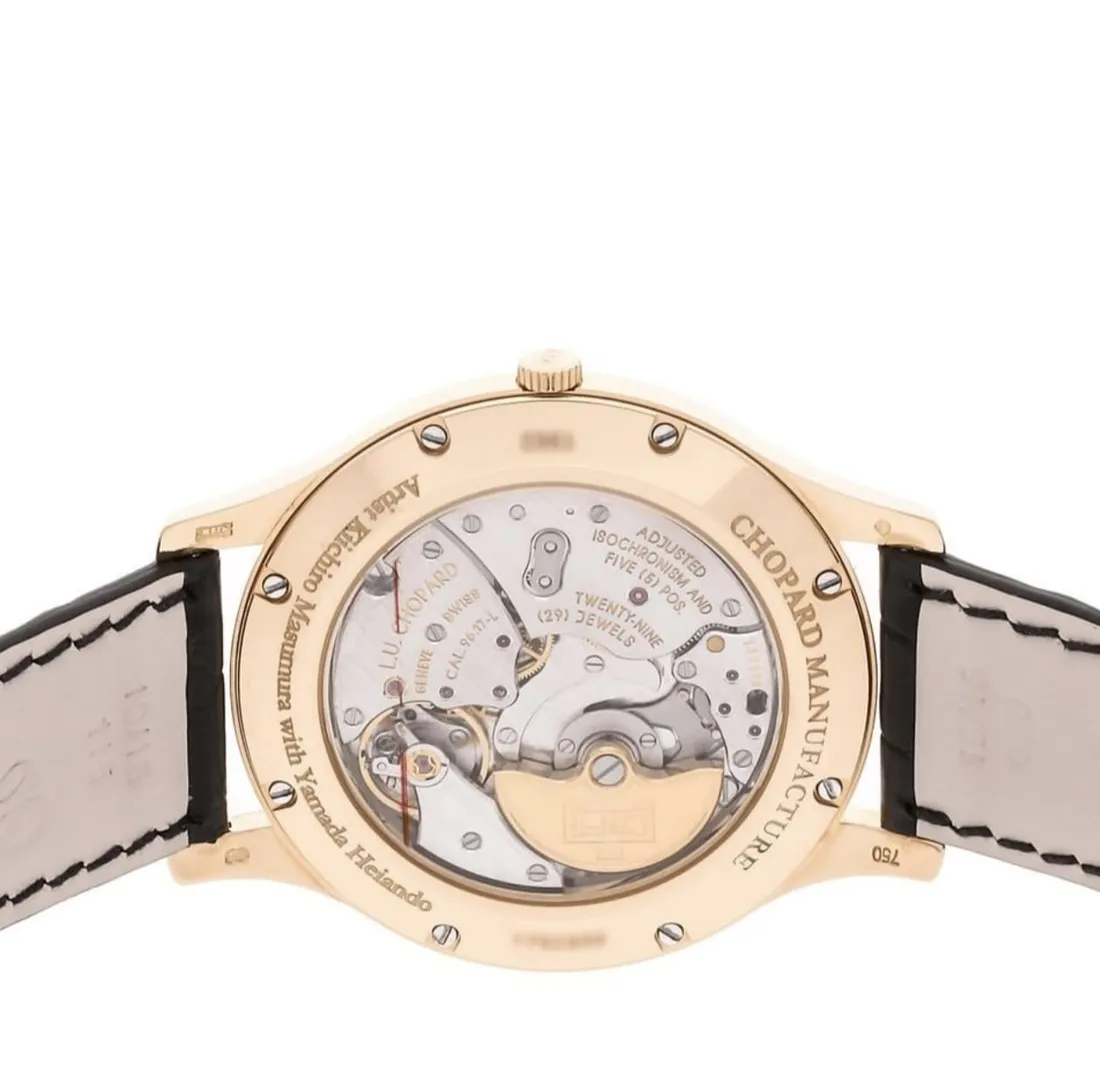
Chopard’s success in this collection rests on the collaboration it built with Yamada Heiando, Japan’s most prestigious traditional lacquer house and the official supplier to the Imperial Household of Japan. Two towering names stand out in the project.
Kiichiro Masumura (増村紀一郎) is a master artisan honoured by the Japanese government with the title of "Living National Treasure" (Ningen Kokuhō). Masumura designed the artistic composition on the dial and personally oversaw the colour palette and the depth of the Maki-e textures. Minori Koizumi, for his part, is a master Maki-e artist within Yamada Heiando; he painted each dial one by one under the microscope, with weeks of meticulous handwork, layering the gold powders coat by coat.
Iconography and Symbolism
The turtle and snake figures on the dial are not merely a technical achievement; they represent the perfect harmony of nature’s opposites. The entwined union of the turtle, which symbolises long life, unchanging steadfastness and constancy, with the snake, which represents renewal, suppleness and energy, underlines the balance within life. The wave and foam motifs on the gold-sandblasted ground, meanwhile, speak of the fluidity of time and the eternal rhythm of nature.
Technical Specifications
Case: 18-carat rose or yellow gold; about 39.5 mm in diameter, 6.8 mm thick.
Movement: the in-house L.U.C Calibre 96.17-L, an ultra-thin automatic.
Rotor: a 22-carat solid gold micro-rotor; Chopard Twin twin barrel.
Power reserve: about 65 hours.
Dial craft: hand-made Urushi lacquer and 24-carat gold-powder Maki-e art.
Horological Value and Architectural Art
The L.U.C XP case architecture is one of the emblems of extra-flat elegance in watchmaking. Fitting a mechanism with a twin barrel and a solid gold micro-rotor into a case only 6.8 mm thick, Chopard balances the artistic intensity of the dial with the simplicity of the case structure. Even a seconds hand has been left out, so that the integrity of the artistic canvas on the dial is preserved.
The Chopard L.U.C XP Urushi is not merely an instrument that shows the time; it is a living canvas that beats with a Swiss calibre and carries Japan’s philosophy of life woven together with nature.