On the morning of 20 April 1818, as the port of London woke into heavy fog and the smell of rope, a twenty-one-year-old Swiss watchmaker named Édouard Bovet stepped onto the deck of the Orwell, a ship belonging to the East India Company. He was a long way from the steep mountains of the Val-de-Travers where he was born and from the quiet workshops of Fleurier. In the chest in his cabin lay four extremely precise pocket watches made of brass and gold. The destination was China, a country the maps had not yet finished drawing and which, for Westerners, was little more than a mysterious tale.
As the ship struck its oak ribs against the waves and pulled away, every tie to land was cut. The voyage ahead, four months long, was a merciless examination in which human will faced the force of nature.
When they had passed the great swells of the Cape of Good Hope and entered the endlessness of the Indian Ocean, days and nights ran into one another. For the sailors, time was measured by the shifting of the wind, the creak of the sails and the storm clouds covering the sky. Édouard Bovet withdrew to his cabin every night, opened his chest by candlelight and listened to the ticking of his watches.
While the ship, its wooden body rolling, was carried into uncertainty, the fact that those small wheels went on turning in a flawless rhythm was, for Bovet, a way of holding on to an order. The only way to find direction on the ocean was to measure the angle of the sun with an astrolabe by day and to trust the pole star by night. With the earth beneath them entirely fluid, time and the sky were the only fixed guides. If everything under your feet is moving, your compass is no longer an instrument but a habit.
On 16 August 1818, after exactly four months at sea, the Orwell dropped anchor at Canton. When Bovet showed his watches to the representatives of the court and to the high officials, he created a great deal of admiration; all four found a buyer almost immediately, for a total of ten thousand Swiss francs. By the measures of that day it was an astronomical figure. Four years later, in 1822, he founded his own house with his brothers, and in China every first-class watch came simply to be called a Bovet.
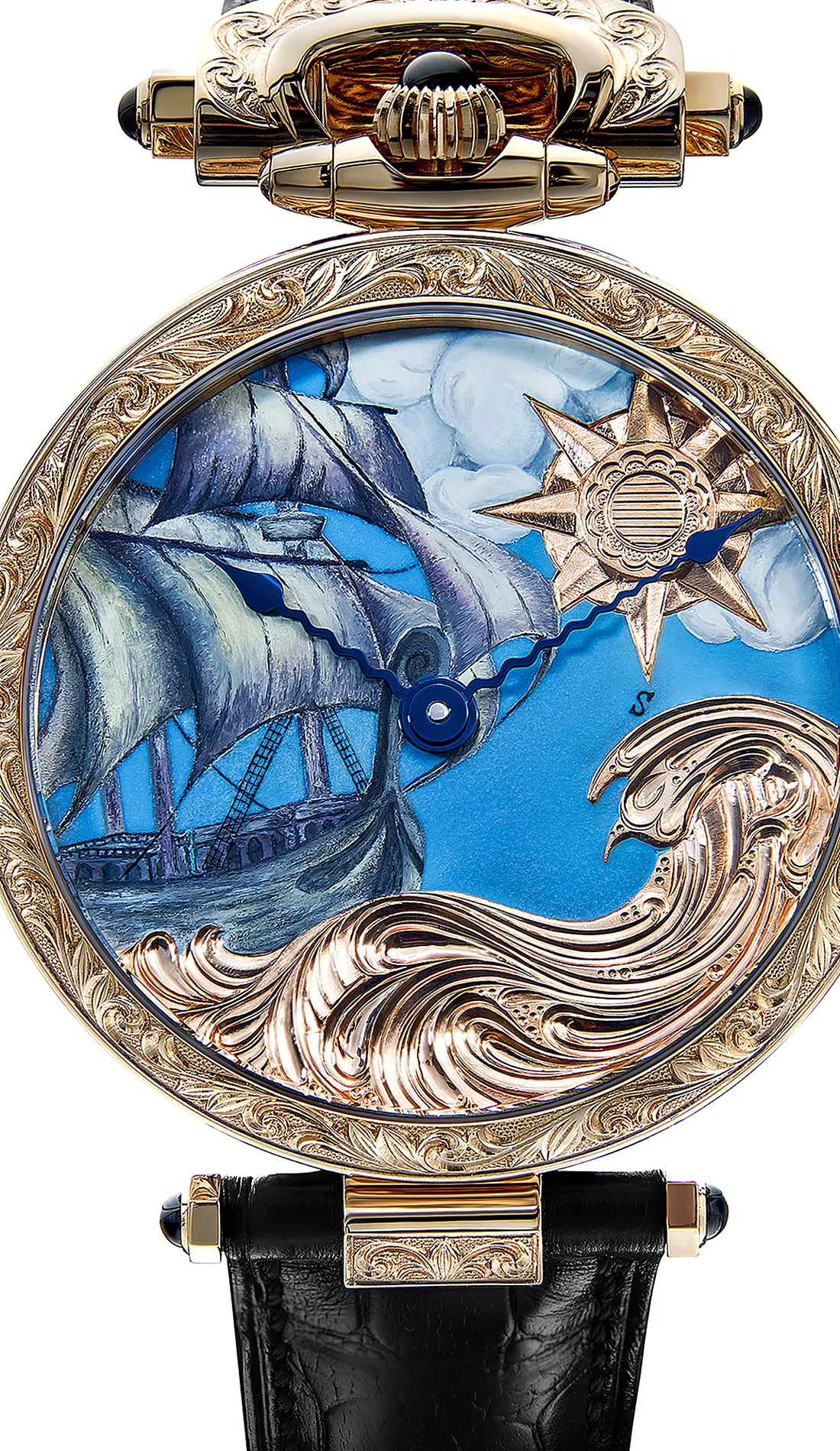
Édouard Bovet’s hundred-and-twenty-day adventure comes back to life two centuries later, in this watch, in the language of micro art.
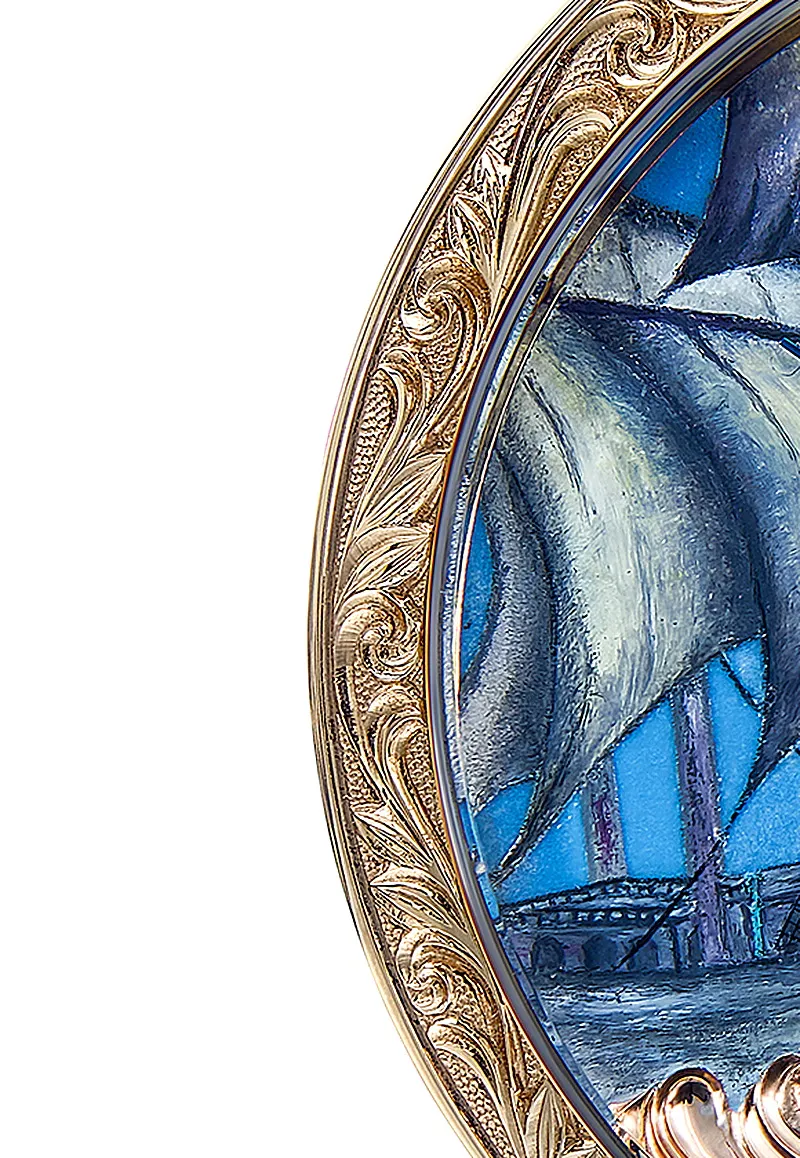
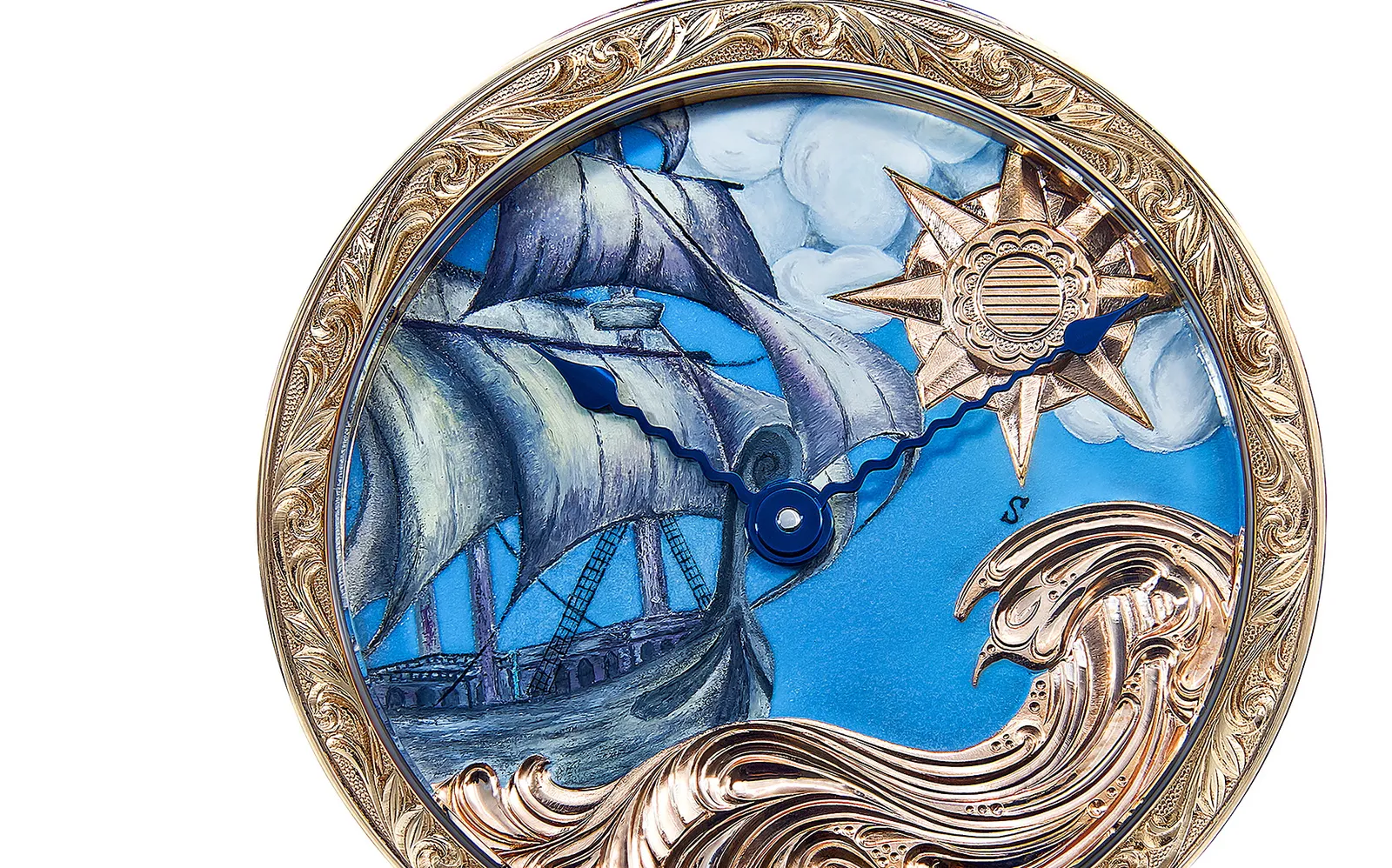
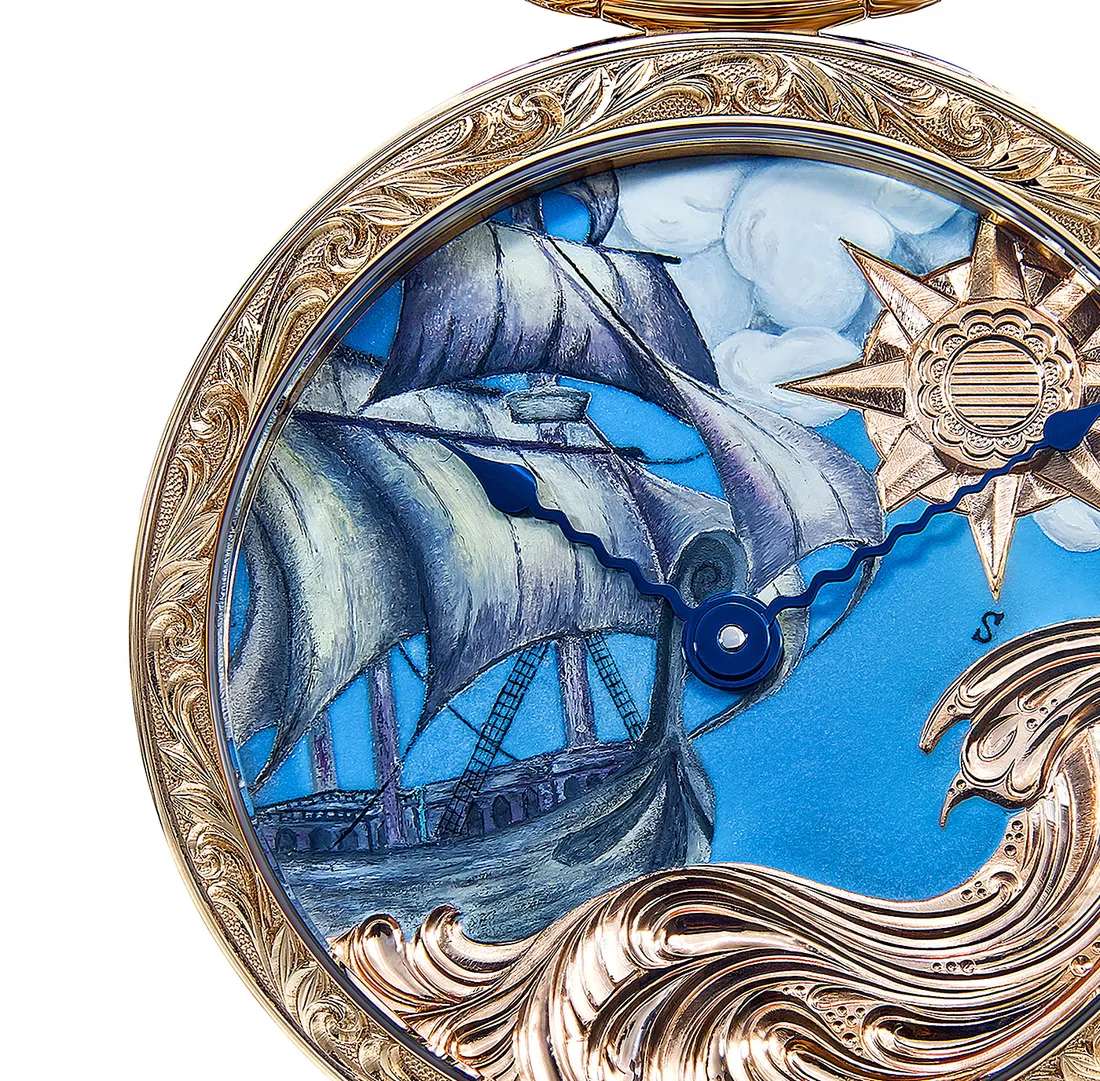
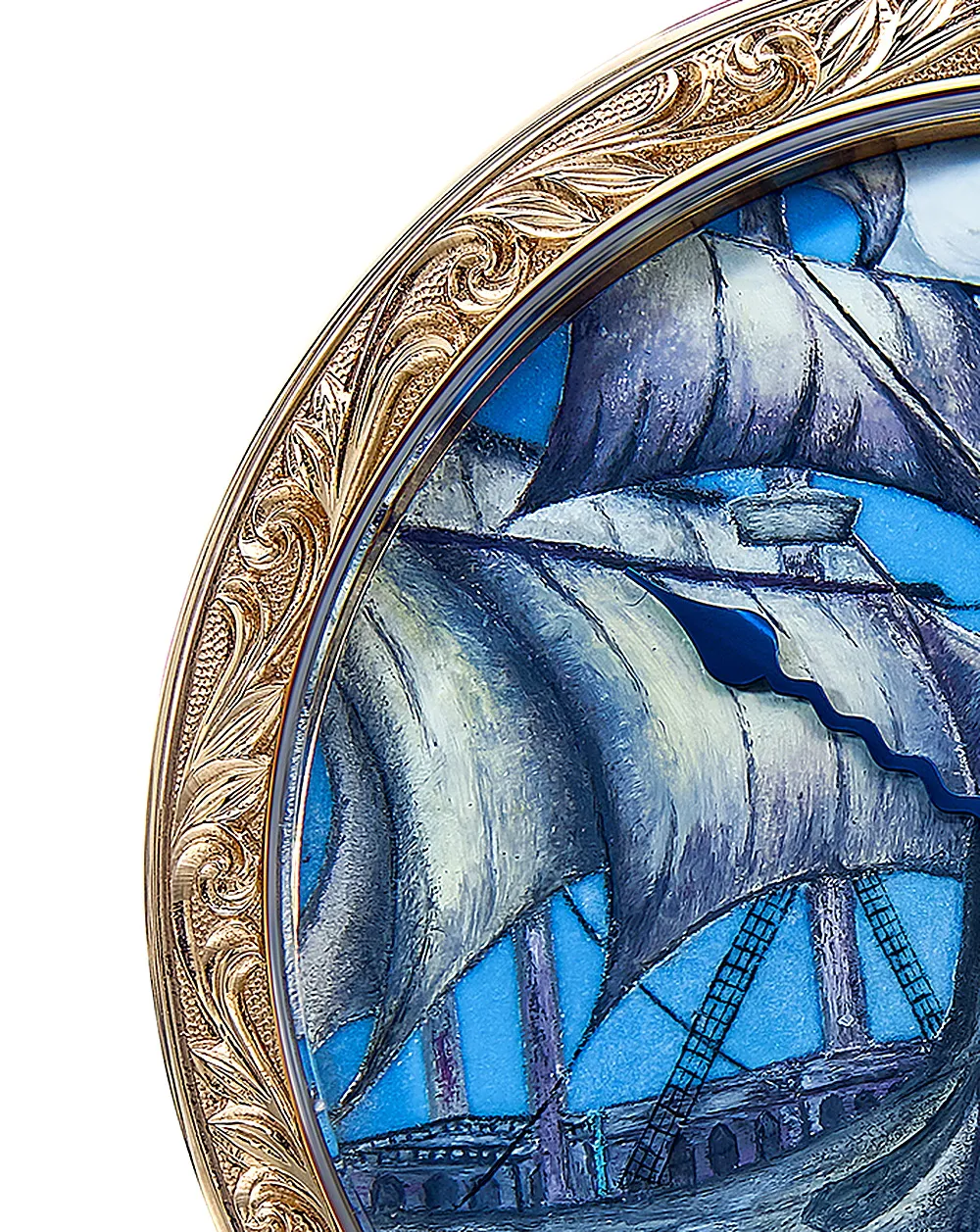
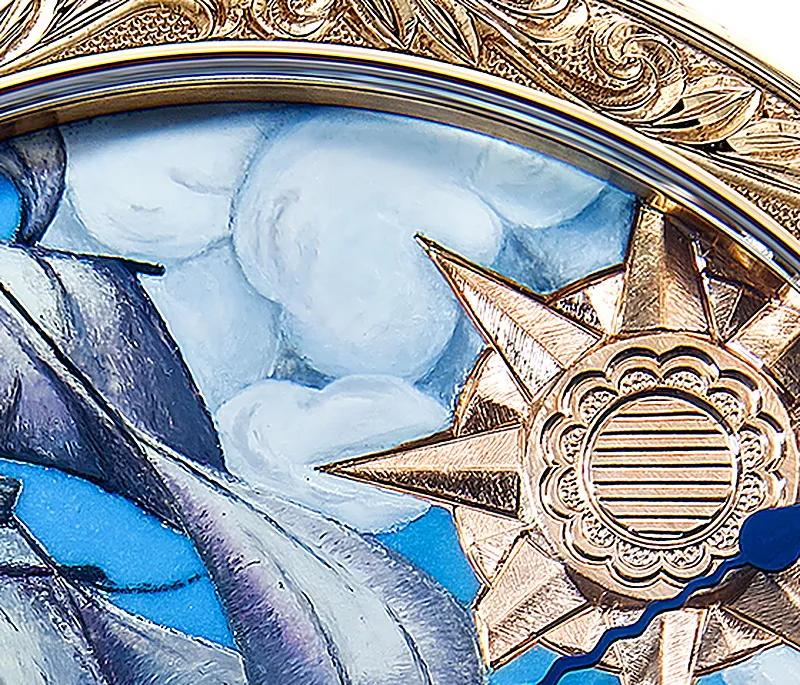
At the centre of the dial stands the Orwell, gliding over stormy blue seas. This is not enamel: the scene is a miniature painted by hand with brushes the thickness of a hair. And it hides a surprise; thanks to the Super-LumiNova mixed into the paint, the whole scene gives off its own light in the dark. So the ship is a painted picture by day and, by night, a view that appears of its own accord. A decision made by someone who remembered that what a sailor needs most is to be able to see at night.
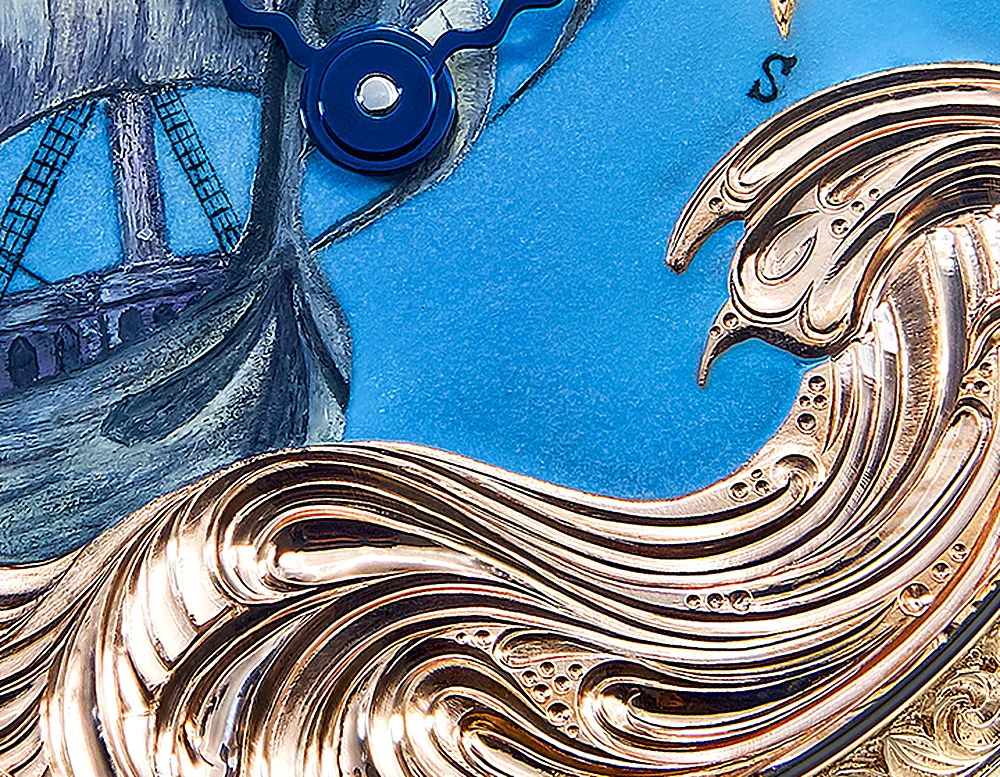
The radiant sun rising at the upper right of the dial and the wave swelling below are not paint but reliefs, cut by hand out of eighteen-carat red gold. When the light strikes the dial the back of the wave genuinely shines, because what is there is matter that has truly been lifted and shaped. To leave paint behind in one part of a picture and move into metal is the moment a painter turns into a sculptor.
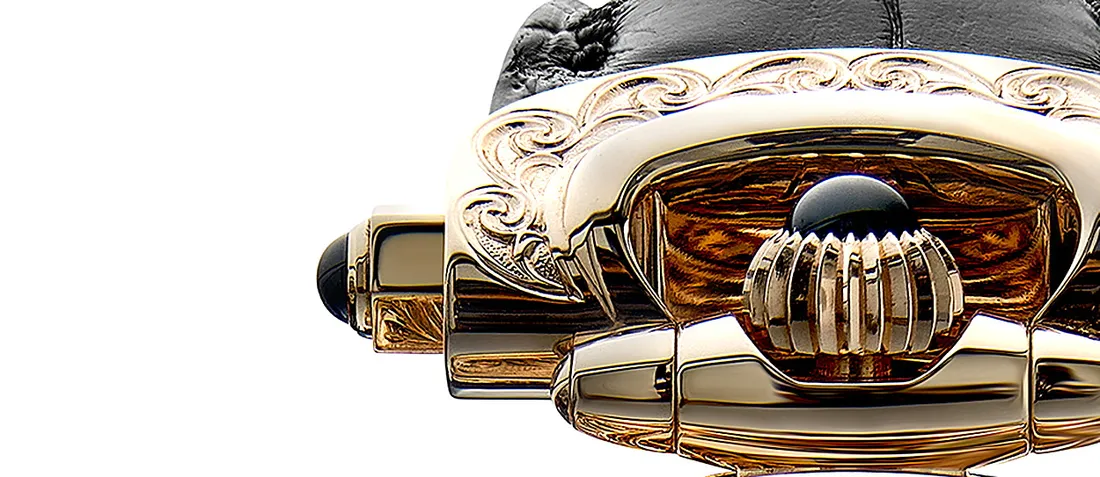
The case itself is not a surface but a canvas: on the bezel, the lugs, the bow and even the buckle sit motifs cut entirely by hand in the raised plant and leaf pattern the Fleurier craftsmen of the nineteenth century developed, the Fleurisanne. That engraving alone takes around a hundred and thirty hours on a single watch.
format_quote"If everything under your feet is moving, your compass is no longer an instrument but a habit."
Hasan Bekmezci
Turn the watch over and the real surprise is there. The off-centre dial on the back is not metal but stone: cut from real stone taken from the Château de Môtiers, the castle the house itself owns. Stone is a fragile material; for every dial that is finished, six shatter on the workshop floor. To choose a material that costs you six losses in seven attempts is a decision made by stubbornness, not by efficiency.
From the edge of that stone dial the movement itself is visible: bridges, wheels and the balance. Bovet does something very few houses in Switzerland do and makes its own hairspring; the regulating organ of the watch is the house’s own design as well. Two words written on the dial sum up the whole mechanism: sept jours, seven days. The hand-wound in-house calibre produces a hundred and sixty-eight hours of uninterrupted power from a single mainspring barrel and runs at 21,600 vibrations an hour. Uninterrupted running was exactly what Édouard Bovet was looking for on his four-month voyage.
And the case is fitted with Bovet’s patented Amadeo system. Within seconds and without any tool, the watch turns into a double-faced wristwatch, a table clock, or a pocket watch on the chain provided. Which is to say four watches inside one object. The reason this is possible is hidden in the mechanics: a particular coaxial reversed hand-fitting means time runs in the same direction, and correctly, on the art face and on the movement face alike.
format_quote"To choose a material that costs you six losses in seven attempts is a decision made by stubbornness, not by efficiency."
Hasan Bekmezci
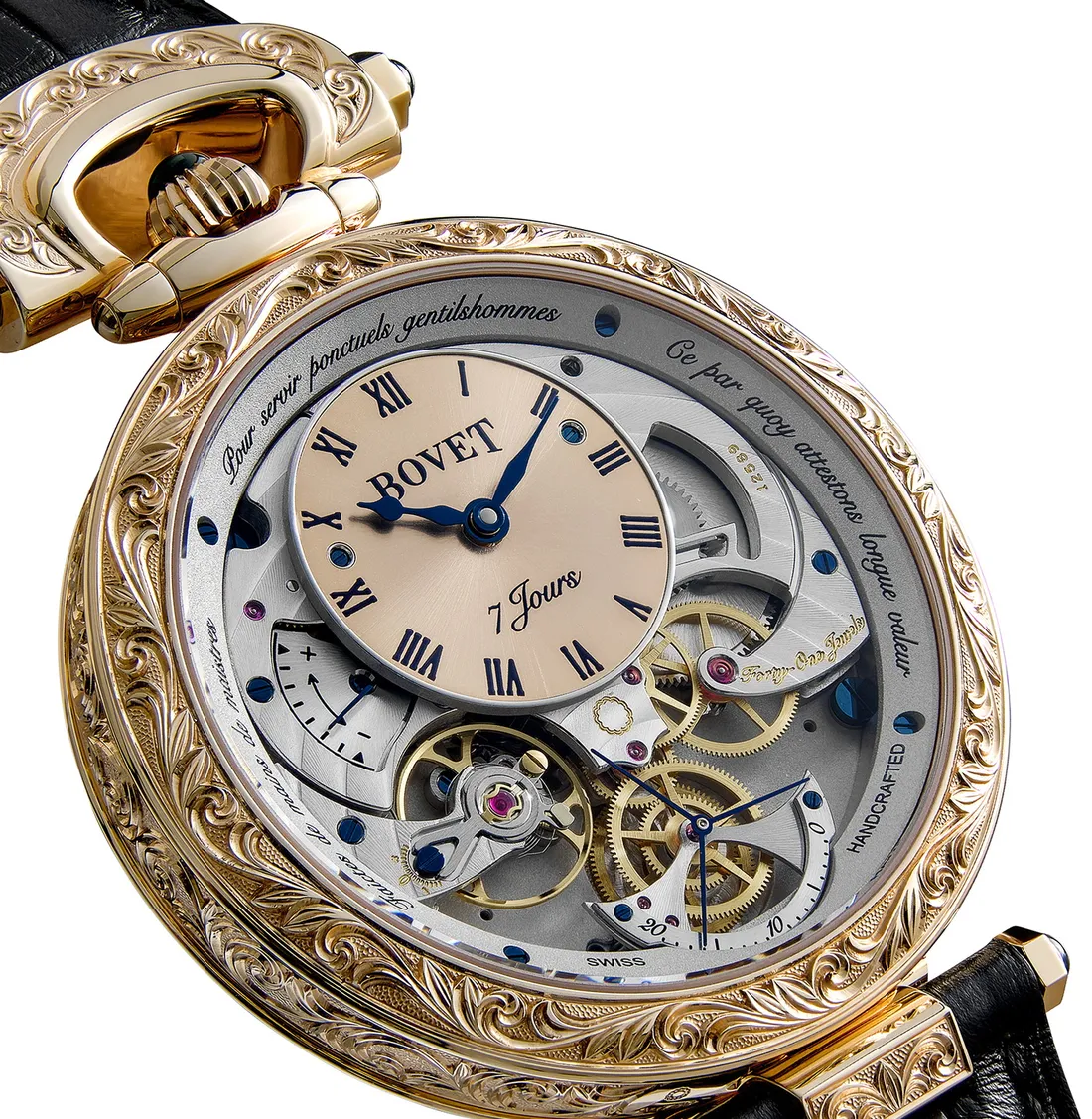
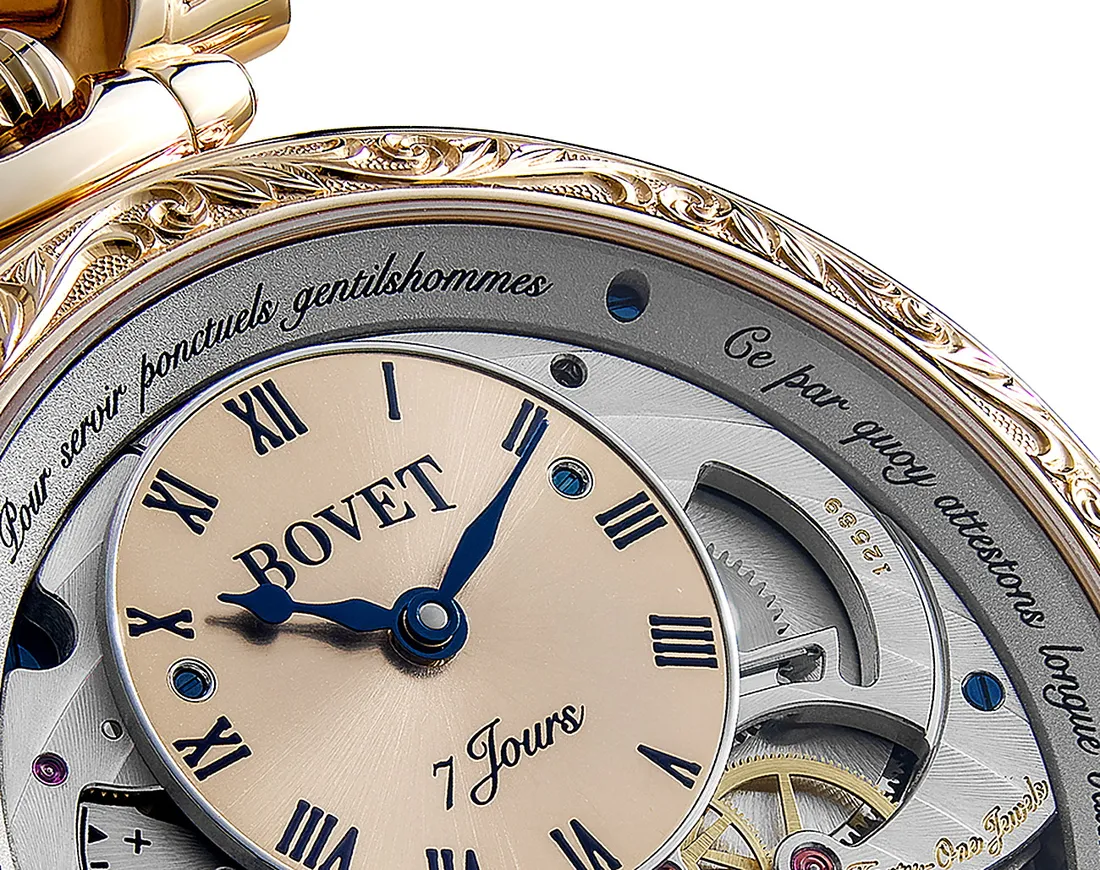
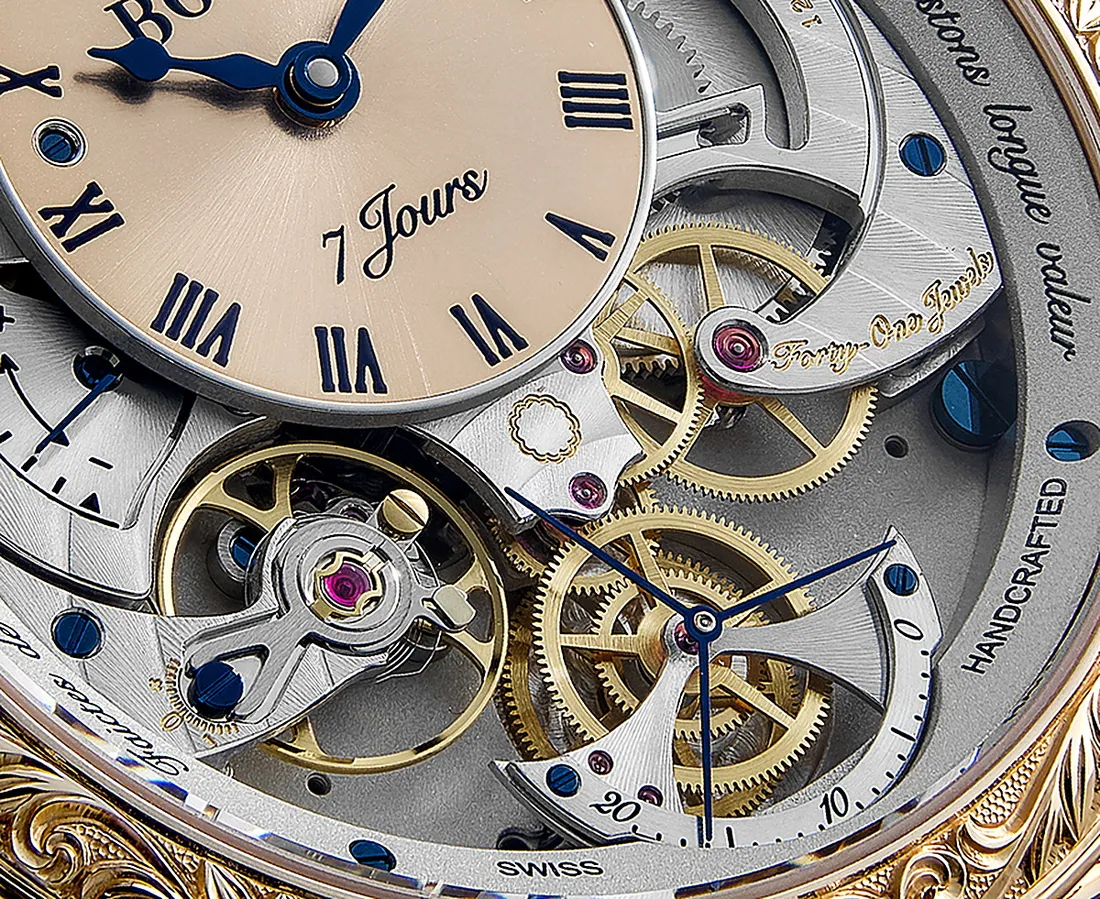
The Monsieur Bovet Tribute to Edouard Bovet is not merely an object that measures time; it is the appearance on a wrist of a ship that set out in courage, of an ocean crossed by the pole star, and of the signature Swiss craft carried into the palaces of the East.
What a two-hundred-and-four-year-old house has done in this piece is not a celebration but a proof: the only thing left of the road its founder took with four watches is that the hands which made those watches are still working.
format_quote"The legacy of a house lies not in the history it owns but in the fact that the hands which made that history are still working."
Hasan Bekmezci