
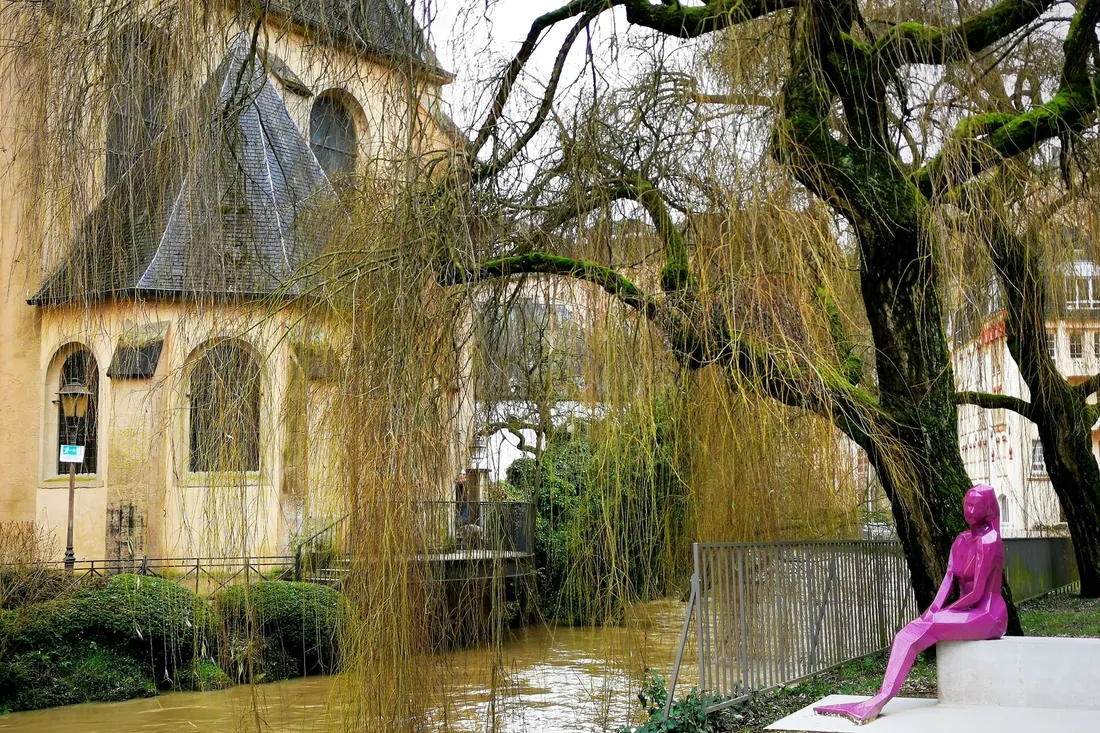
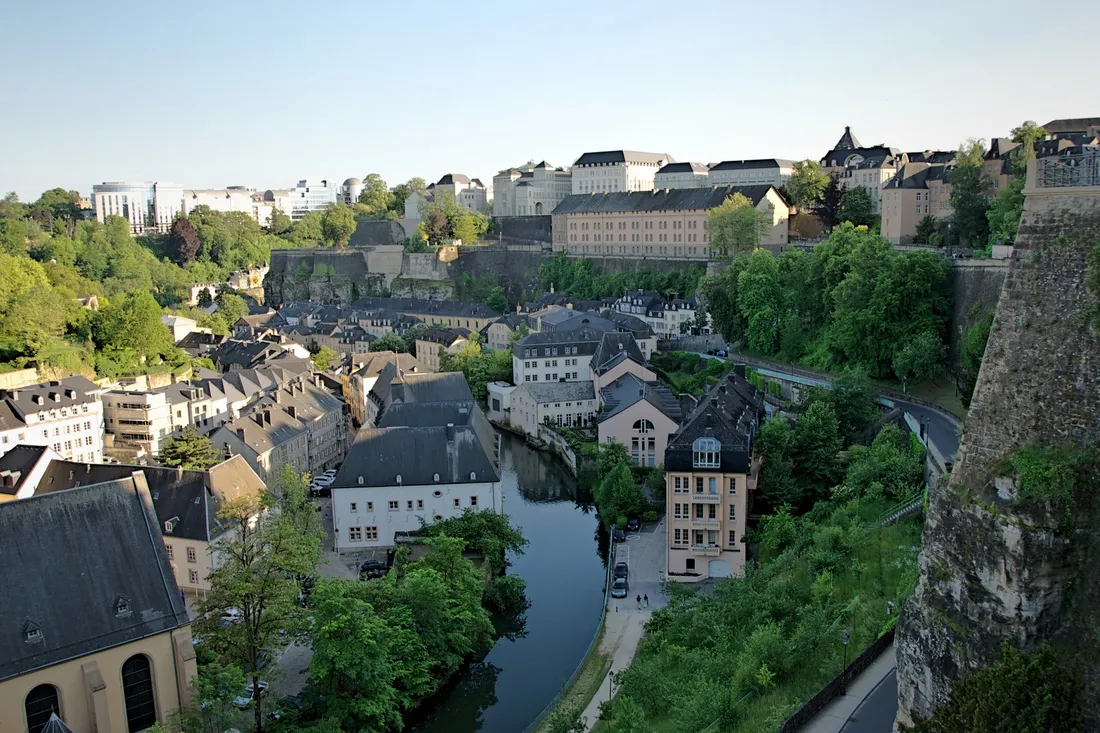
The light mist drifting up out of the valley of the Alzette was climbing, in the early hours of the morning, over the ivy-covered ramparts of the Bock cliffs. Walking through the calm, peaceful, charming Luxembourg of today, it is hard to imagine that the ground beneath your feet witnessed, over centuries, the enormous ambitions, the tragic loves and the bloody wars that drew the fate of Europe.
Let us go back into the depths of time, to the year 963.
In the icy winter wind sliding out of the dense forests of the Ardennes, the echo of Count Siegfried’s heavy armoured boots can be heard on the gravel. Siegfried stands at the top of that enormous, sheer rock where the valleys of the Alzette and the Pétrusse cross, looking down. In his eyes there is not only the conquest of land but a geopolitical genius. “This place,” he whispers into the wind, “is the very heart of Europe. The anvil where kingdoms find no way through, where east and west strike against one another.”
That day, through an exchange with the Abbey of St Maximin in Trier, Siegfried took over this steep rock and, laying the first stones one on another, built his small castle, Lucilinburhuc. The legends whisper that for this castle and for his wife Melusina, the fairest of the fair, he made a pact with the mysterious powers in the cliffs; and that every Saturday Melusina turned into a mermaid in the cool waters of the Alzette and secretly blessed the fortresses of the town. Siegfried blended love and ambition on the same rock.
format_quote"This place is the very heart of Europe. The anvil where kingdoms find no way through, where east and west strike against one another."
Hasan Bekmezci
The Gibraltar of the North: Cannonballs Ringing on the Walls
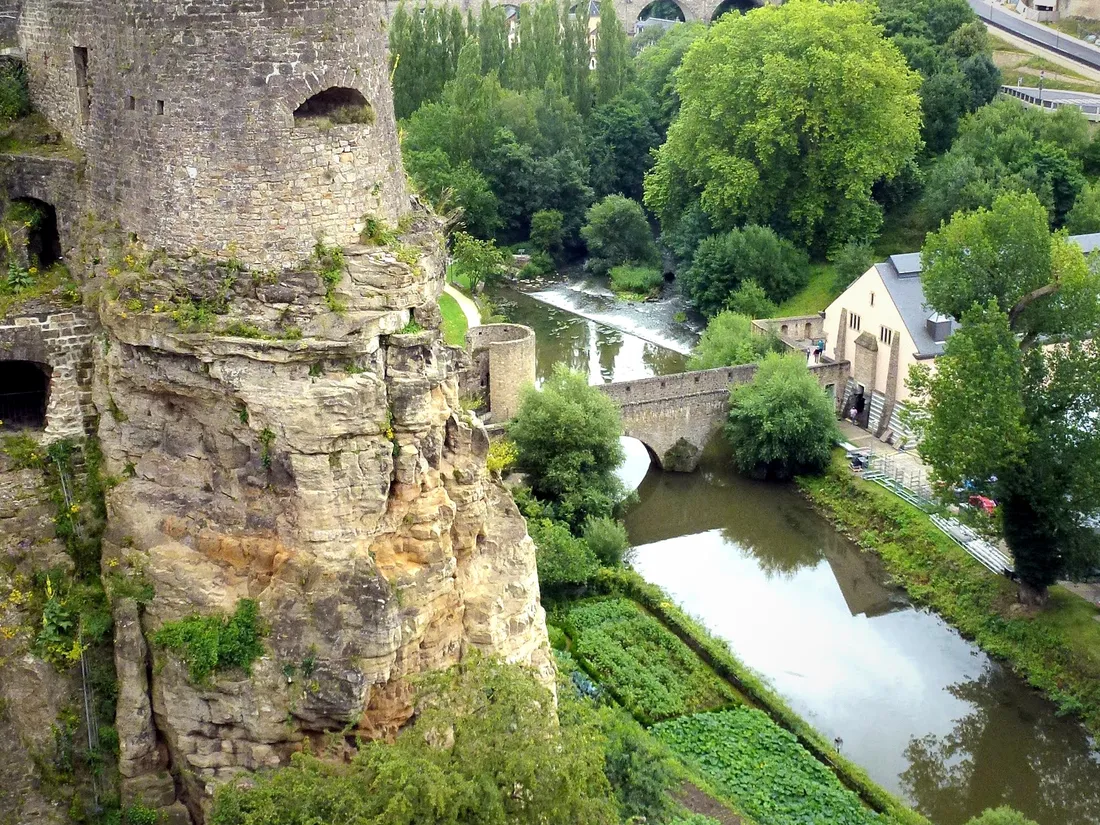
As time passed, Siegfried’s small stone castle turned into an enormous beast that whetted the appetite of empires. The underside of the rock was carved out with millimetric military engineering; tunnels kilometres long, the casemates, along with magazines and secret passages, were built.
For centuries the smell of gunpowder never left these cliffs. Spanish tercios marched at the foot of the walls at night, beating their shields against one another. Vauban, the legendary military architect of Louis XIV of France, rebuilt the ramparts with the blood of thousands of soldiers in order to turn the rock into an unassailable star fortress. Austrian guns turned day into night among the smoke rising from the valley. The Prussian garrison stood watch in the tunnels, listening to the whistle of death the wind brought in.
The wind pouring over the walls carried the echo of towers brought down in every siege and of screams drowned in the valley. Thanks to its natural canyon and its hollowed cliffs the town became so impassable that European diplomacy granted it a title: the Gibraltar of the North. Whoever took this place would hold the key to Europe.
The Emblem of the Red Lion and an Imperial Crown
In the middle of the 13th century, Count Henry V looked out over the ramparts and made his decision, to seal his defiant stance. He was no longer an ordinary lord. He chose a formidable Red Lion, the Roude Léiw, rising over a shield striped in silver and blue, double-tailed, wearing a gold crown on its head and raising its claws to the sky.
Why two tails? Because a single tail stands for ordinary power, while the forked pair represents the double resistance of both the duchy and its independence, two separate powers that will never bow. This lion is a guard of steel protecting the walls.
The ambition of the House of Luxembourg passed beyond the cliffs. By 1312, in the shadow of swords in Rome, a great coronation took place. Henry VII, Count of Luxembourg, took the throne of the Holy Roman Empire. A will that came out of a small rock fortress had turned into an enormous imperial crown ruling Germany, Bohemia and Italy.
And yet those glorious victories, imperial crowns and conquests, spread over centuries, taught humanity a bitter truth: war is a tragic illusion that destroys time and swallows generations.
With the Treaty of London in 1867 the people of Luxembourg took a legendary decision. Those enormous ramparts, over which blood had been spilled for centuries, were pulled down by their own hands, tonnes of gunpowder were carried out of the tunnels, and the city declared its perpetual neutrality. The stone fortresses were demolished, but in their place an unshakeable peace was built.
format_quote"War is a tragic illusion that destroys time and swallows generations. The stone fortresses were demolished, but in their place an unshakeable peace was built."
Hasan Bekmezci
The Red Lion Over Time: the Navitimer B01 Luxembourg
Among the remains of the Bock ramparts, listening to the wind of those old tunnels, Breitling, one of the most iconic names in the history of watchmaking, presents a timekeeper that stands in tribute to this historical transformation of Luxembourg: the Navitimer B01 Chronograph 43 "Luxembourg Special Edition".
Announced on 17 July 2026, the series is limited to 100 pieces and each one carries its own number on the case back. Its sale is tied to a single address: the Breitling boutique on the avenue de la Porte-Neuve in the centre of Luxembourg City. The price is 9,520 euros, and on the day of the announcement roughly forty of the numbered pieces had already found owners. It is the first time the maker has set a watch aside for Luxembourg, and the boutique manager Cédric Colchen says so plainly: this is the first watch they have offered dedicated to the country.
The circular slide rule on the front of the watch once calculated the courses of aircraft; in this special version it measures the time of a world in which borders have come down and peace holds. The dial is deep blue and the three counters silvery white, but it is worth looking carefully at the hands of those counters. Each of the three is painted separately: red, white and light blue. Which means the flag of Luxembourg has been placed on the dial not as an emblem but as three working hands. The flag does not stand still here, it turns.
The real historical soul of the watch, though, is kept in its transparent sapphire case back. Look into the centre of the crystal and, over the wheels working underneath, that legendary emblem of Luxembourg appears: the double-tailed, gold-crowned Red Lion. The double-tailed lion that Henry V carved into the ramparts in the 1200s now stands not as a sword but as a shield, guarding time over the Manufacture Calibre B01.

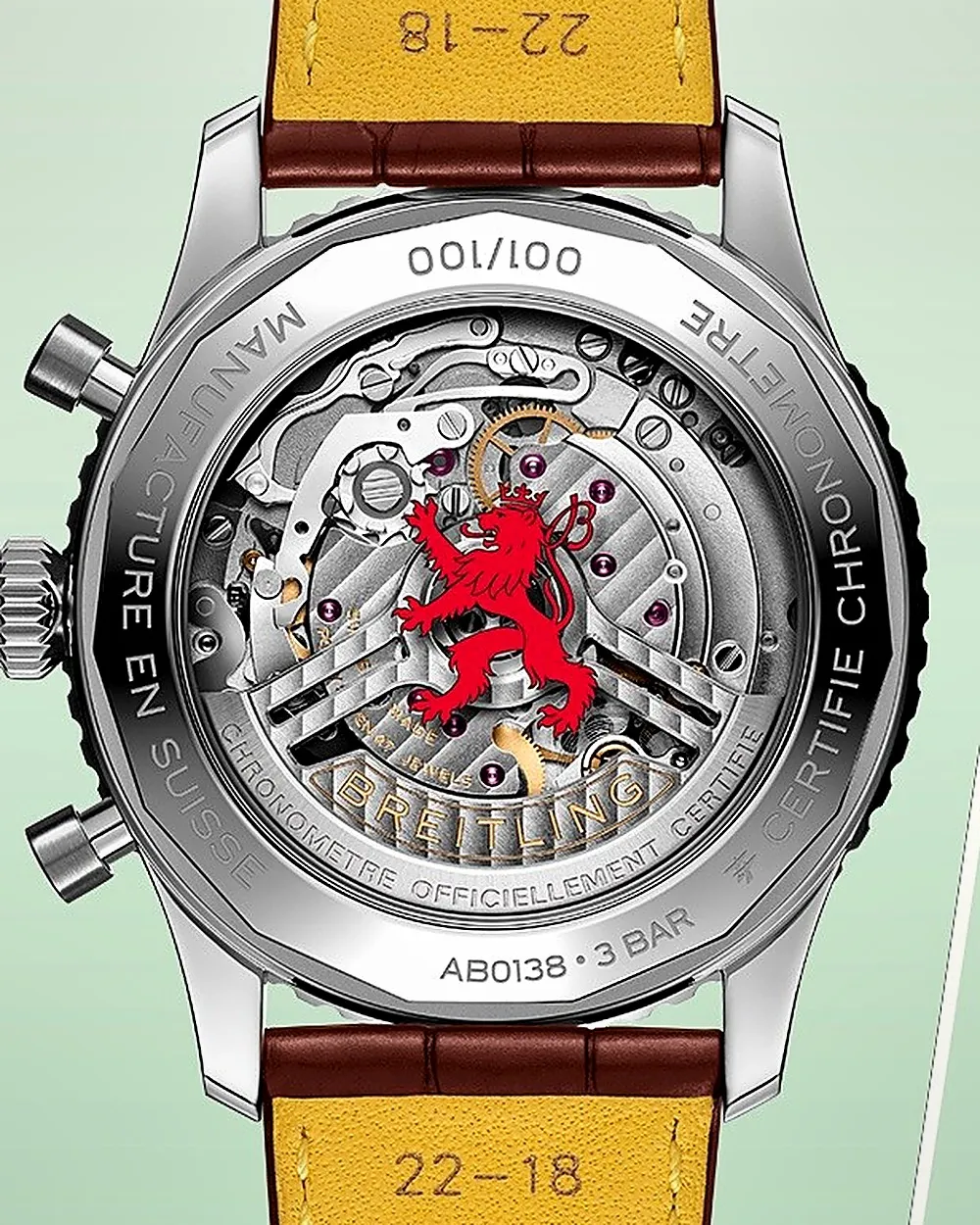
format_quote"The double-tailed lion that Henry V carved into the ramparts in the 1200s now stands not as a sword but as a shield, guarding time over the movement."
Hasan Bekmezci
The movement carrying this watch has a story of its own, and not a short one. With the B01, introduced in 2009, Breitling came back to its own chronograph calibre after a gap of forty years. Its architecture stands on the classical side of high watchmaking: a column wheel command and a vertical clutch. It is easier to explain what that pair means with an example. In a cheap chronograph the command is done by a cam; when you press the button the seconds hand jumps slightly and the pusher feels hard under the finger. A column wheel works between the teeth of a cylindrical comb and softens the pressure; that clean, single-piece feel under your finger comes from there. A vertical clutch, rather than engaging the counter with a horizontal gear, brings it in by pressing two discs together; which is why the seconds hand never jumps as the chronograph starts, and why it does not steal from the running of the watch.
Beyond that, the watch has handed its accuracy over to an institution: the calibre behind the dial is COSC certified. The meaning of that certificate is clear. The movement is measured for fifteen days in three different temperatures and five different positions, and its average daily deviation is required to stay between minus four and plus six seconds. So the "Chronomètre Officiellement Certifié" engraved on the ring of the case back is not an advertising line, it is the record of an examination that was passed.
As the swords of war melt away and give their place to micro wheels, the wind blowing over the cliffs no longer carries the sound of cannonballs but the smooth ticking of time.

The Craft and the Technical Detail
Limited edition: 100 numbered pieces worldwide. Each watch carries its own number on the case back and the series was sold only in the boutique on the avenue de la Porte-Neuve in Luxembourg City. The price is 9,520 euros. It is the first watch the maker has dedicated to Luxembourg.
Roude Léiw: at the centre of the case back crystal, the double-tailed, crowned Red Lion, the symbol of the Grand Duchy of Luxembourg. The B01 calibre and its automatic winding mass are visible beneath the crystal.
Counter hands in the colours of the flag: the hands of the three Tri-Compax counters are painted red, white and light blue. This is the only sign that separates the edition from the front.
Movement: Breitling Manufacture Calibre B01. Automatic, 28,800 vibrations an hour, 47 jewels, column wheel command and vertical clutch. Around 70 hours of power reserve.
Certification: COSC certified chronometer. Fifteen days of measurement in three temperatures and five positions, with an average daily deviation between minus four and plus six seconds. The inscription Chronomètre Officiellement Certifié appears on the ring of the case back.
Case: 43 mm stainless steel, screw-down crown, a fluted bezel turning the aviation slide rule, sapphire crystal front and back, 3 bar or 30 metres of water resistance. The reference base is AB0138.
Functions: hours, minutes, small seconds, chronograph to a quarter of a second, 30-minute and 12-hour counters, date window at six o’clock.