Early in the nineteenth century, as Alexander von Humboldt pushed into the interior of South America, what he needed most was to know where he was on the map. Latitude was easy; measuring the height of the sun above the horizon at noon was enough. Longitude was another matter entirely, and the only answer to it was a watch.
The logic runs like this. The Earth turns three hundred and sixty degrees in twenty-four hours, which is fifteen degrees an hour. If you carry a chronometer that holds the time of a reference city without drifting, you measure the moment the sun reaches its highest point where you stand and compare the two times. An hour of difference means you are fifteen degrees away from that city.
The entire weight of the method rests on the chronometer. One minute of error in the instrument becomes roughly twenty-eight kilometres of error in position at the equator. Draw a map with that error and the rivers run through the wrong places.
format_quote"To know the time is to know where you are. One minute of error becomes twenty-eight kilometres of it at the equator."
Hasan Bekmezci
On his expeditions Humboldt relied on the chronometers of Johann Heinrich Seyffert to calculate his coordinates and carry out his scientific measurements. Seyffert was a watchmaker who, in the late eighteenth century, laid the foundations of precision timekeeping in Saxony, and Humboldt held his work in particular regard.
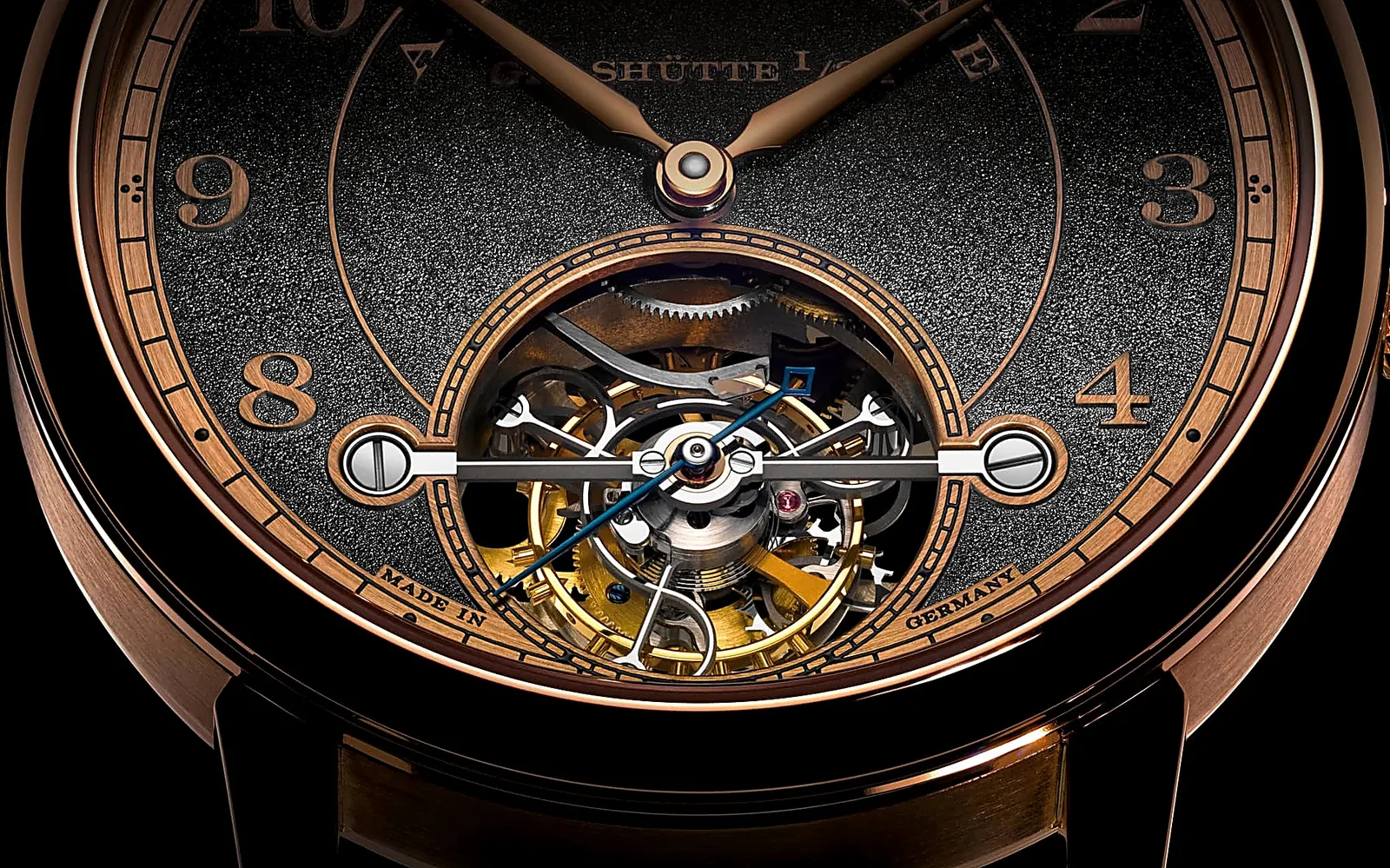
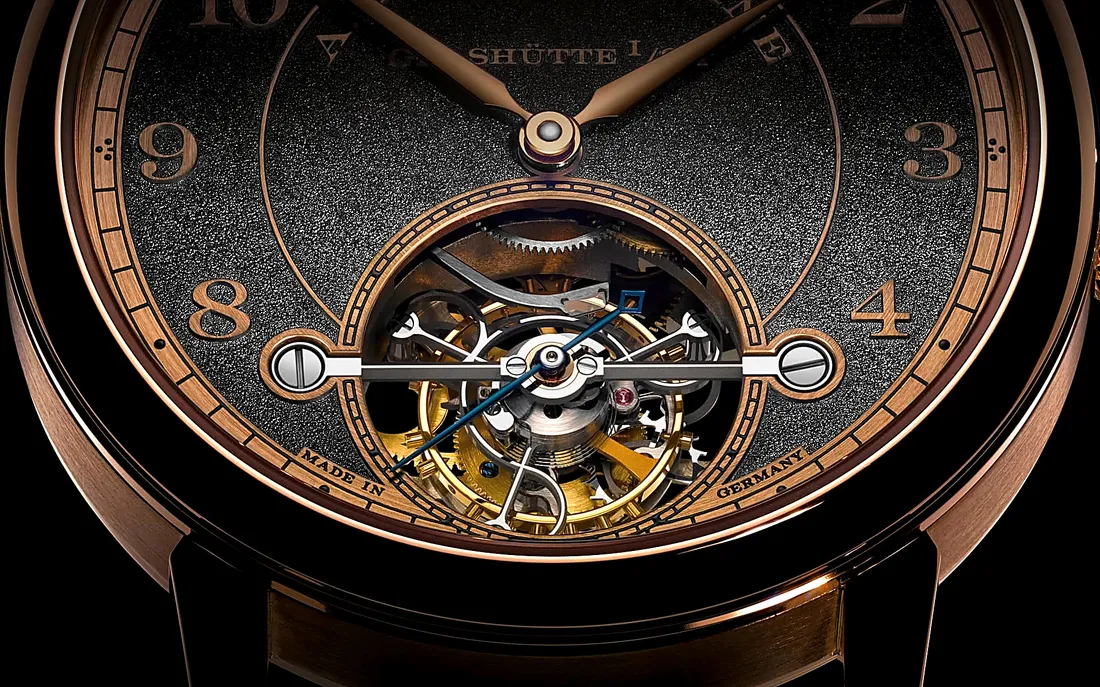
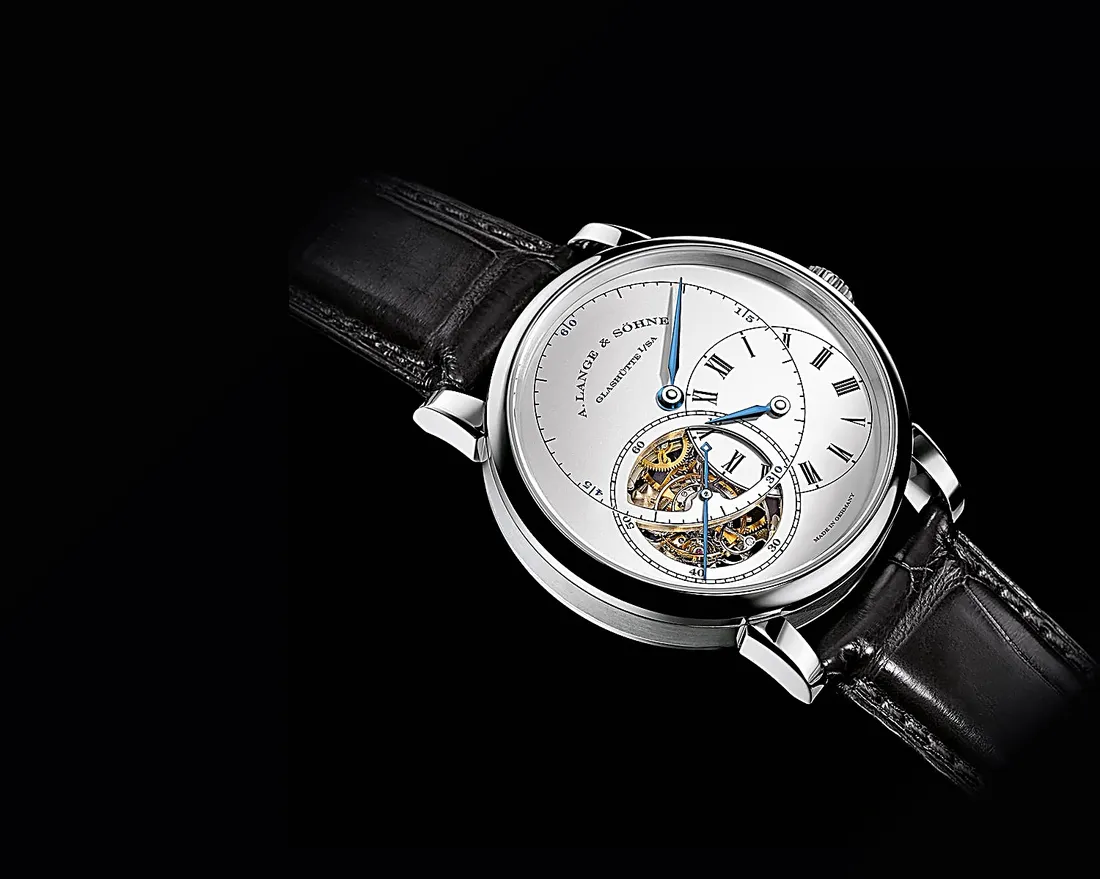
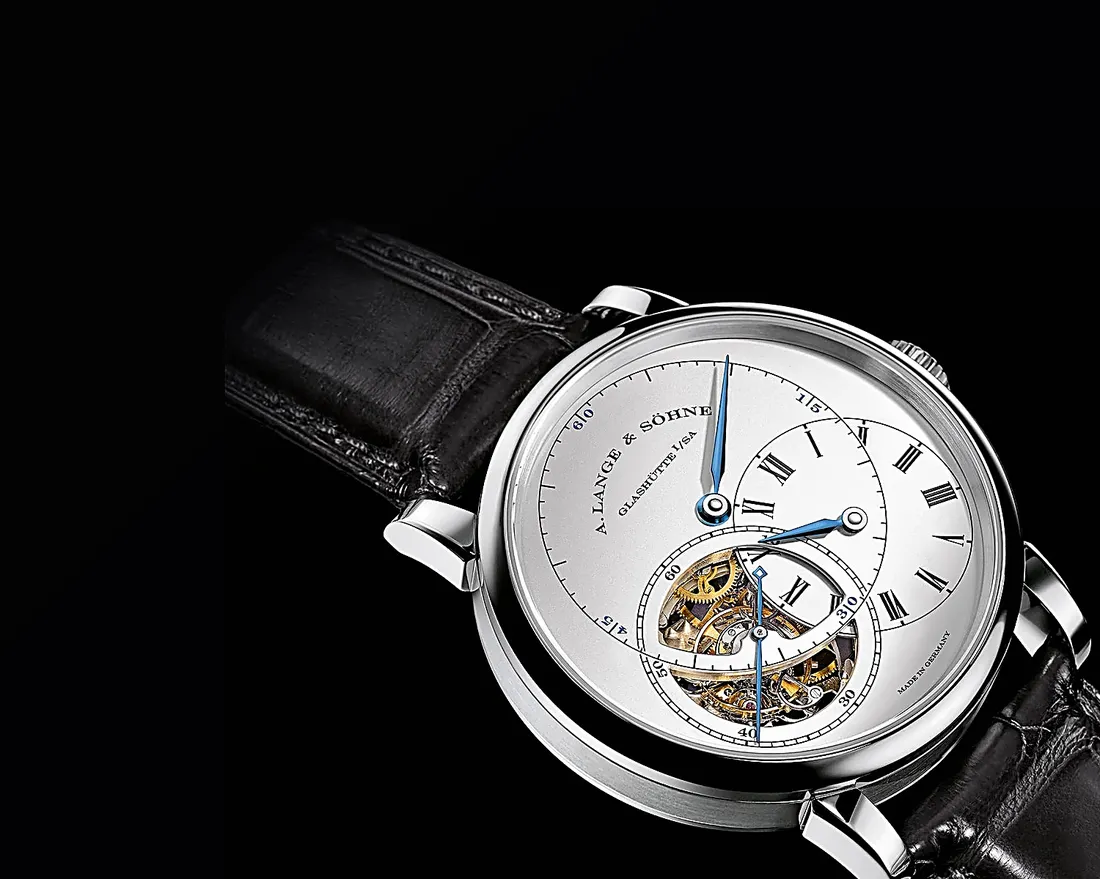
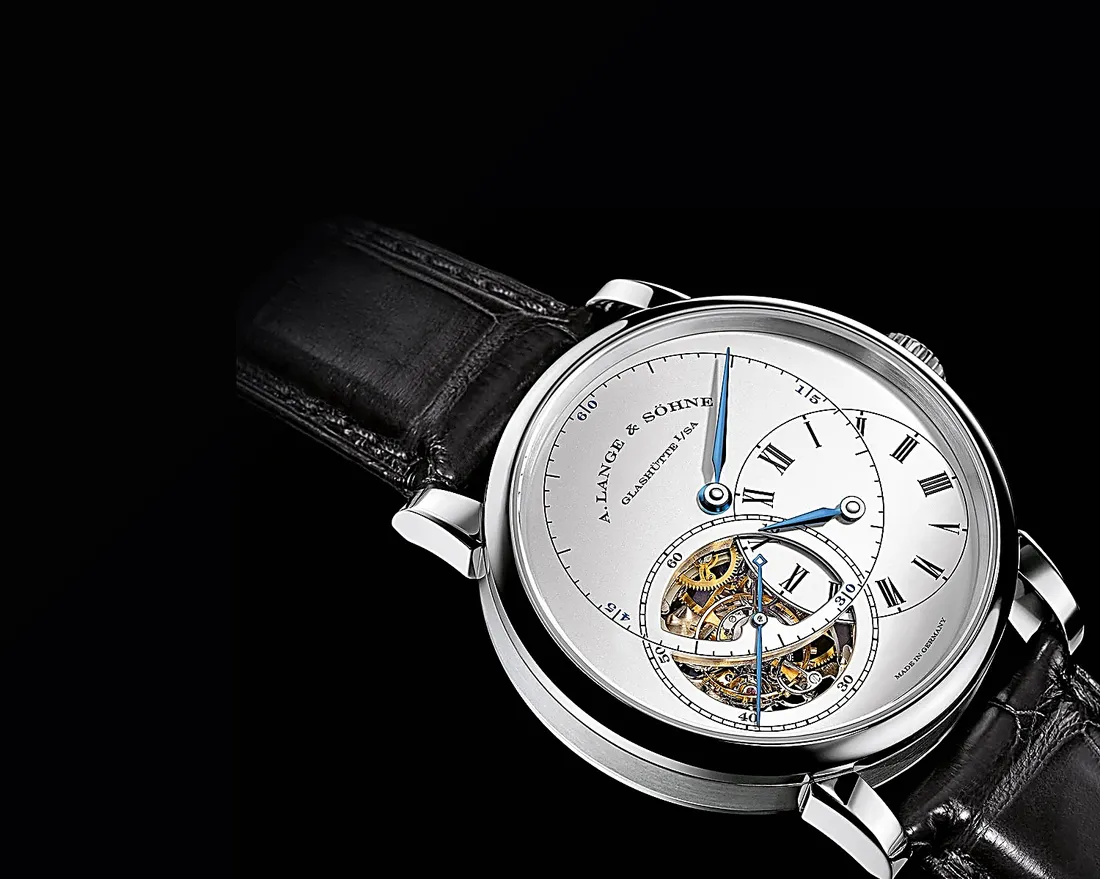
The dial of this watch comes straight from there. Lange drew the face of the Richard Lange Tourbillon “Pour le Mérite” from Seyffert’s precision chronometer number ninety-three. There is no single centre with three hands overlapping on it; hours, minutes and seconds each keep their own circle, close enough to touch and separate enough never to be confused. That is how the face of a scientific instrument is laid out, because a person taking a measurement reads one quantity at a time.
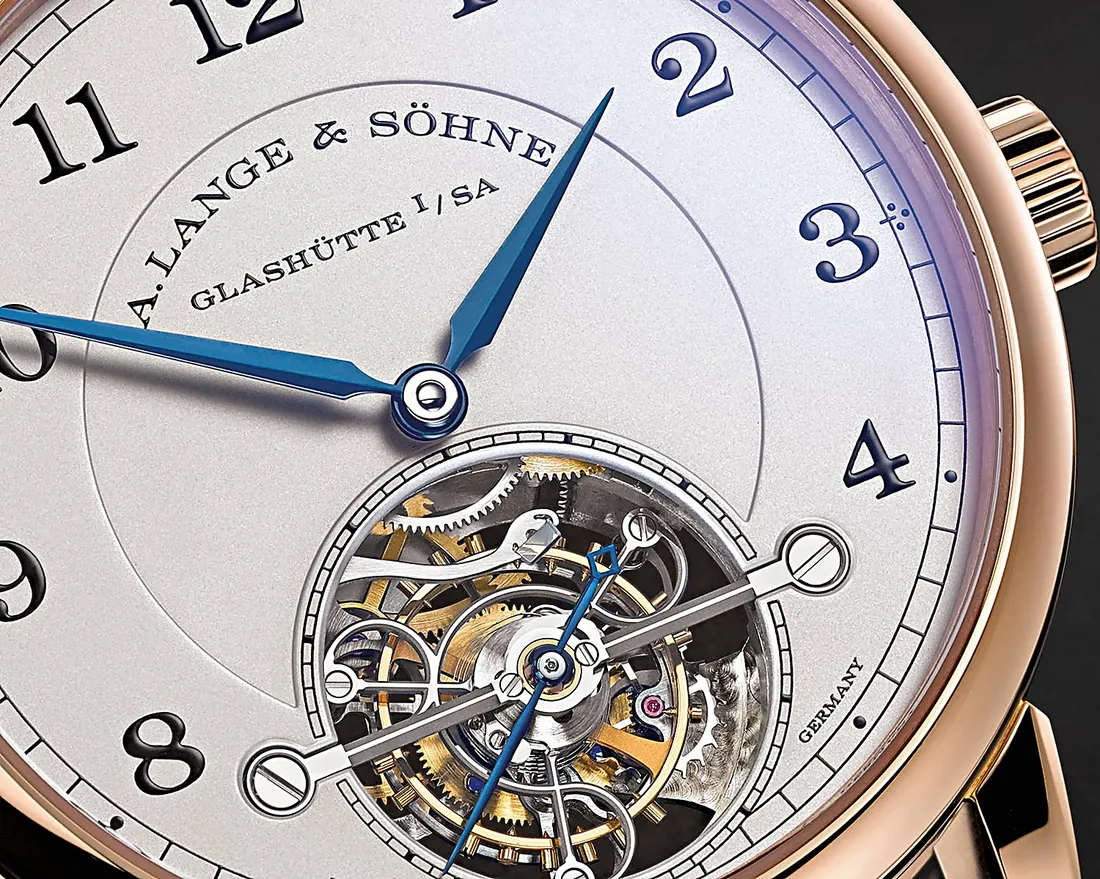
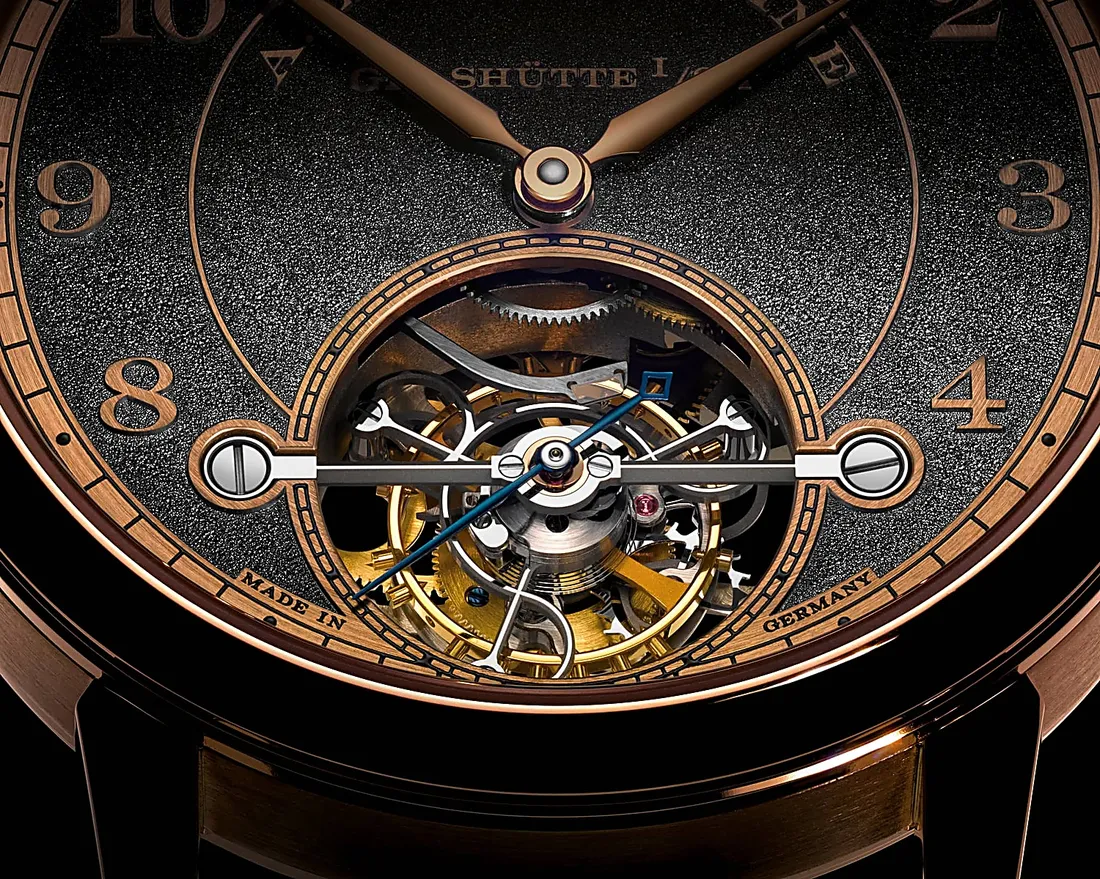
The tourbillon turning beneath the dial is not always on show. In the hours when it is not needed for reading the time, a small segment pivots aside and leaves the mechanism open. As the hand travels the arc between six and twelve o’clock, the segment pivots back and completes the hour circle with the numerals VIII, IX and X. The dial, in other words, is a complete dial in the moment it must be read, and a window in the moment it need not be.
The real problem all of this is built around sits below the dial, right at the beginning. The energy of a mechanical watch is stored in a mainspring, and that spring is tight when wound and slack as it empties. Fully wound, the force reaching the escapement is strong; thirty hours later it is weak. The amplitude of the balance drifts between those two extremes, and when amplitude changes the rate changes with it. So even a watch that is right today will not be right in the same way tomorrow, as the spring runs down.
History has given two kinds of answer to this. The first is concealment: use only the middle of the spring’s range and never go near the extremes. The second is correction, and the fusée-and-chain is the oldest and most elegant example of that second path.
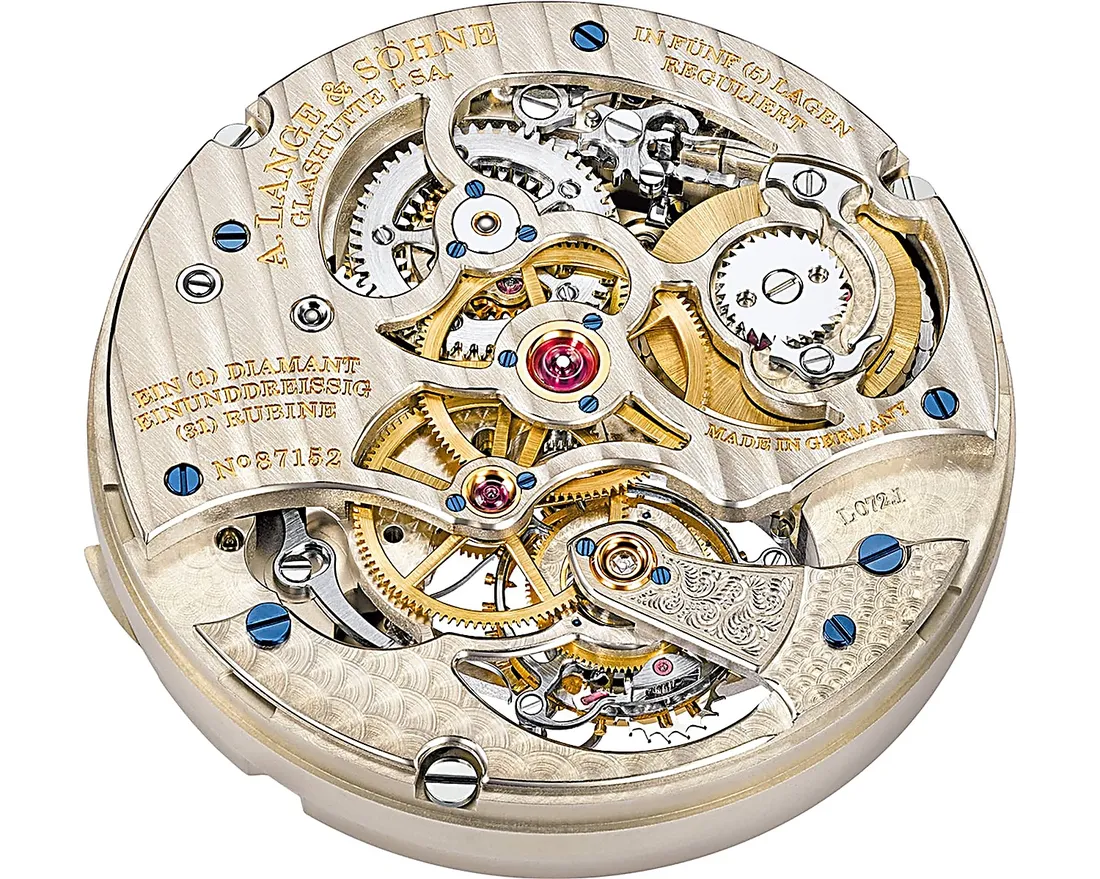
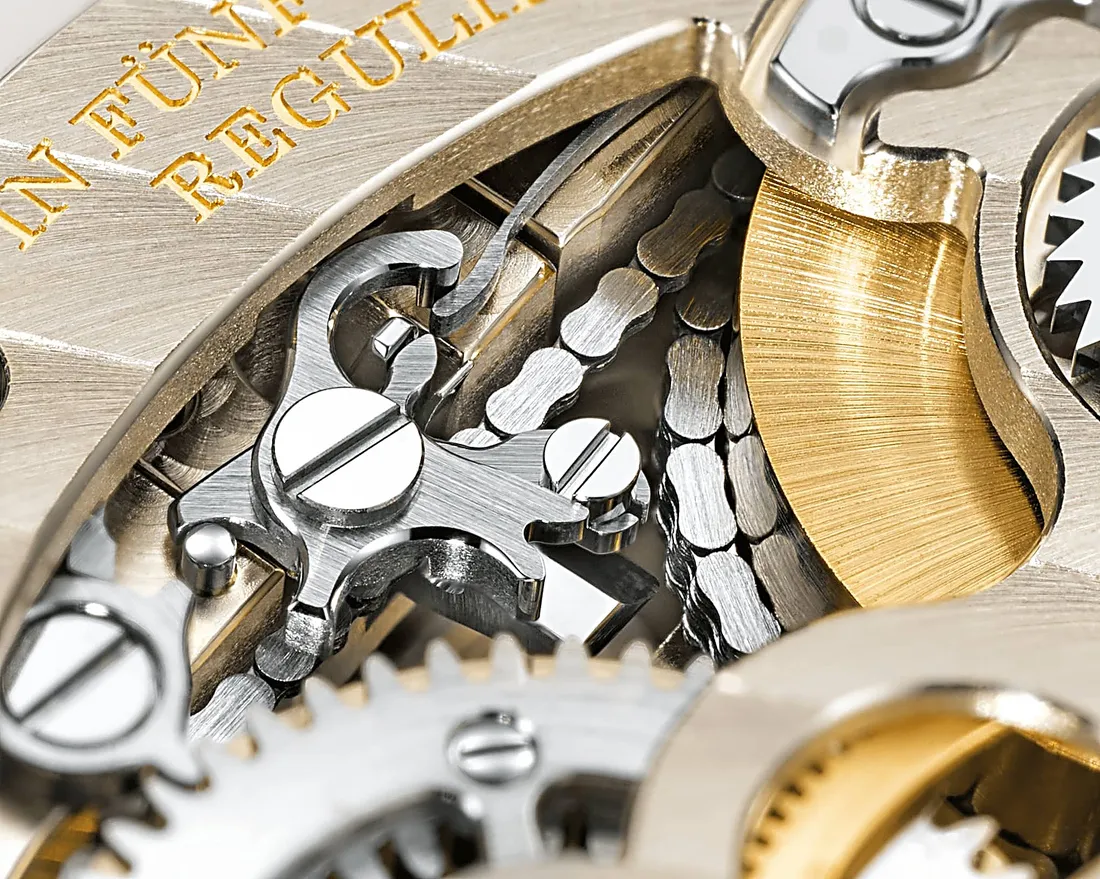
The fusée is a cone-shaped pulley. A fine chain is stretched between the mainspring barrel and the cone. When the watch is fully wound the chain pulls at the narrow end of the cone: the force is high but the lever arm is short. As the spring empties, the chain works down towards the wide end: the force falls but the lever arm grows. Because turning moment is force multiplied by lever arm, one rising as the other falls keeps the product very nearly constant. The impulse reaching the escapement is therefore the same size in the watch’s first hour as in its last.
The idea is older than watchmaking. The same geometry appears in fifteenth-century tower and table clocks, and even in the cranks used to span crossbows. The difficulty is not the idea. It is the chain.
format_quote"A fusée does not make the mainspring stronger. It accepts that the spring weakens, and builds a geometry in which the weakening no longer matters."
Hasan Bekmezci
Picture two people at the bench discussing this mechanism: the constructor who calculates the fusée and the craftsman who will build the chain.
The chainmaker asks about the count first. How many links do we need?
Hundreds, the constructor answers. Each link is two thin plates and a rivet. The chain has to stay under a millimetre wide, because it must sit in the groove of the cone.
The craftsman objects. This chain is not a miniature bicycle chain. Every link has to be the exact twin of the next. Let one run a micron longer than its neighbour and the chain will not wind evenly onto the cone; it will add its own ripple to the very force curve we are trying to straighten.
The constructor accepts it. That is the price. What we get in return is this: we are not hiding the force curve, we are correcting it.
The chain has a side effect too. When the watch is wound, the barrel has to turn the other way, and that would stop the train for a moment. Lange solves it with a planetary gear set inside the fusée, so the watch keeps running even while it is being wound.
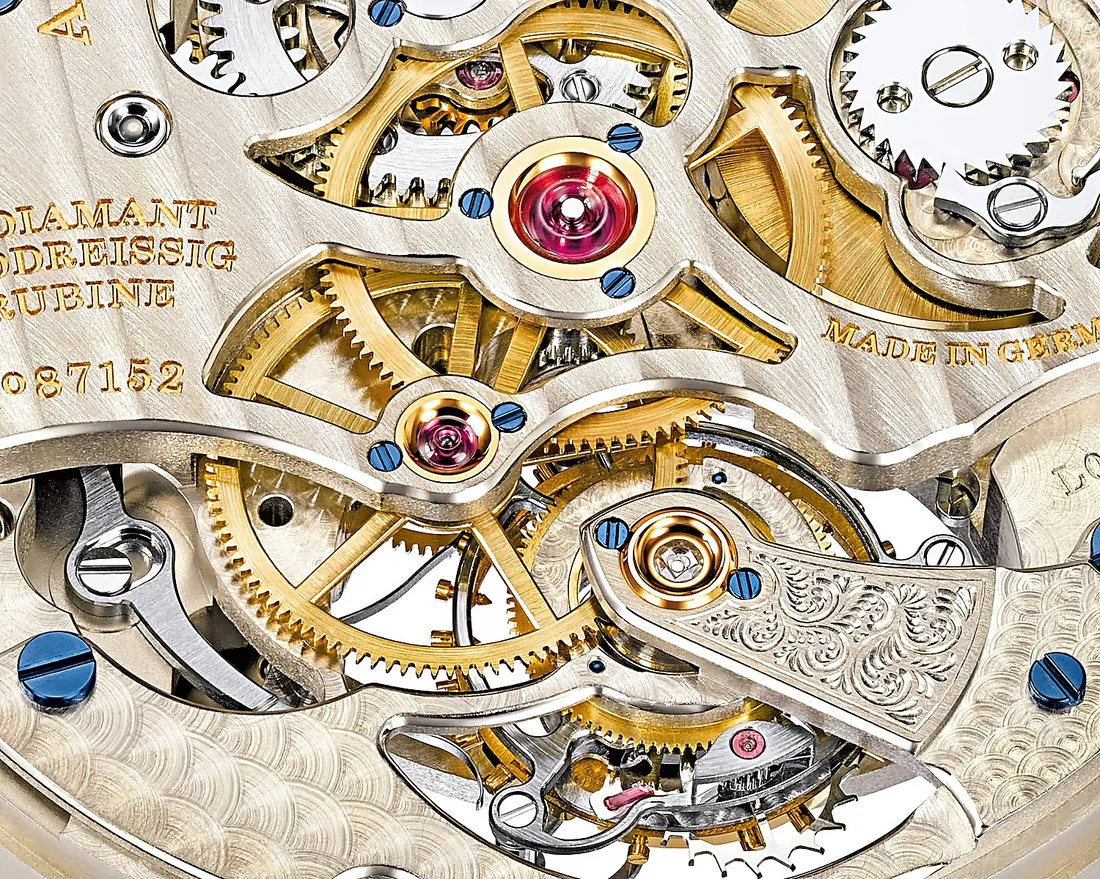
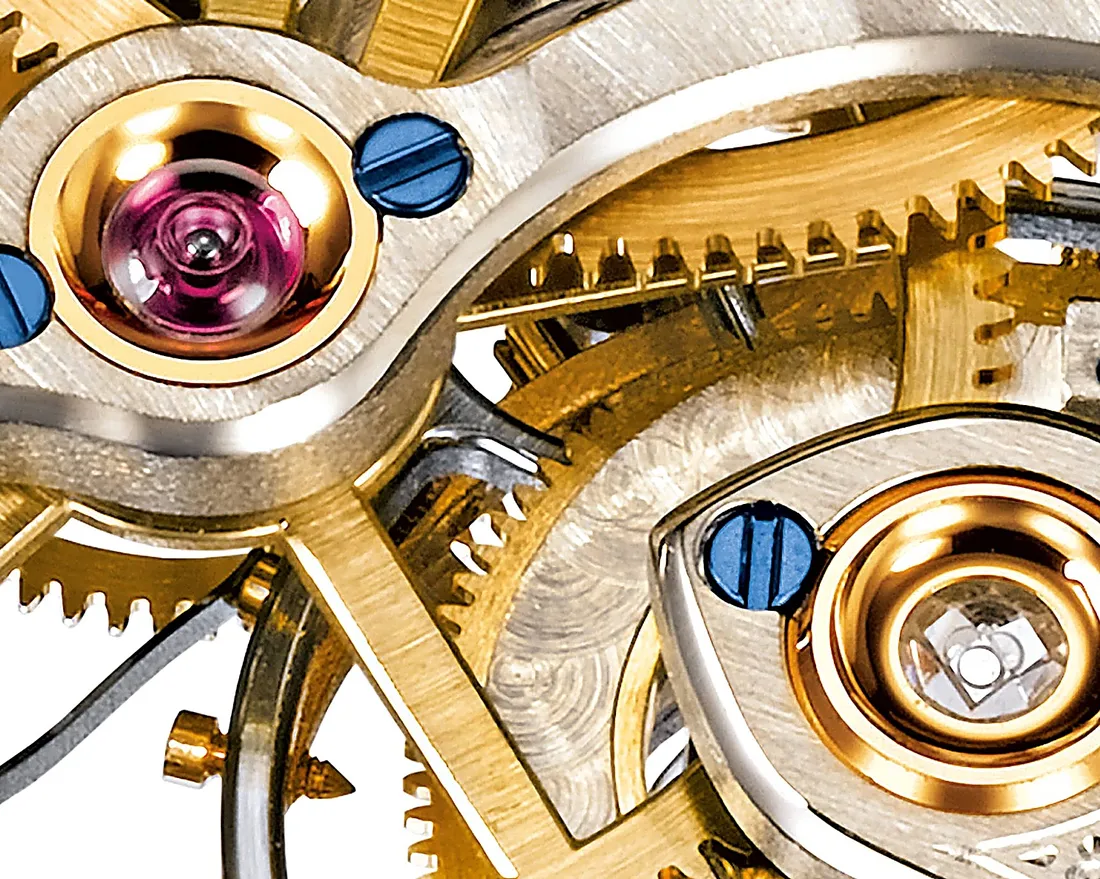
The second corrector is the tourbillon. The idea Breguet set out two centuries ago is simple. When a watch stands upright in a pocket or on a wrist, the balance and its spring feel gravity from a single direction, and if that direction never changes, the error always gathers the same way. A tourbillon takes the escapement into a cage and turns the cage once a minute. Gravity does not go away; but even with the watch upright, the balance passes through every vertical position once each minute, and the errors cancel one another out.
format_quote"A tourbillon does not abolish gravity. It persuades the balance to suffer it equally from every direction, once every minute."
Hasan Bekmezci
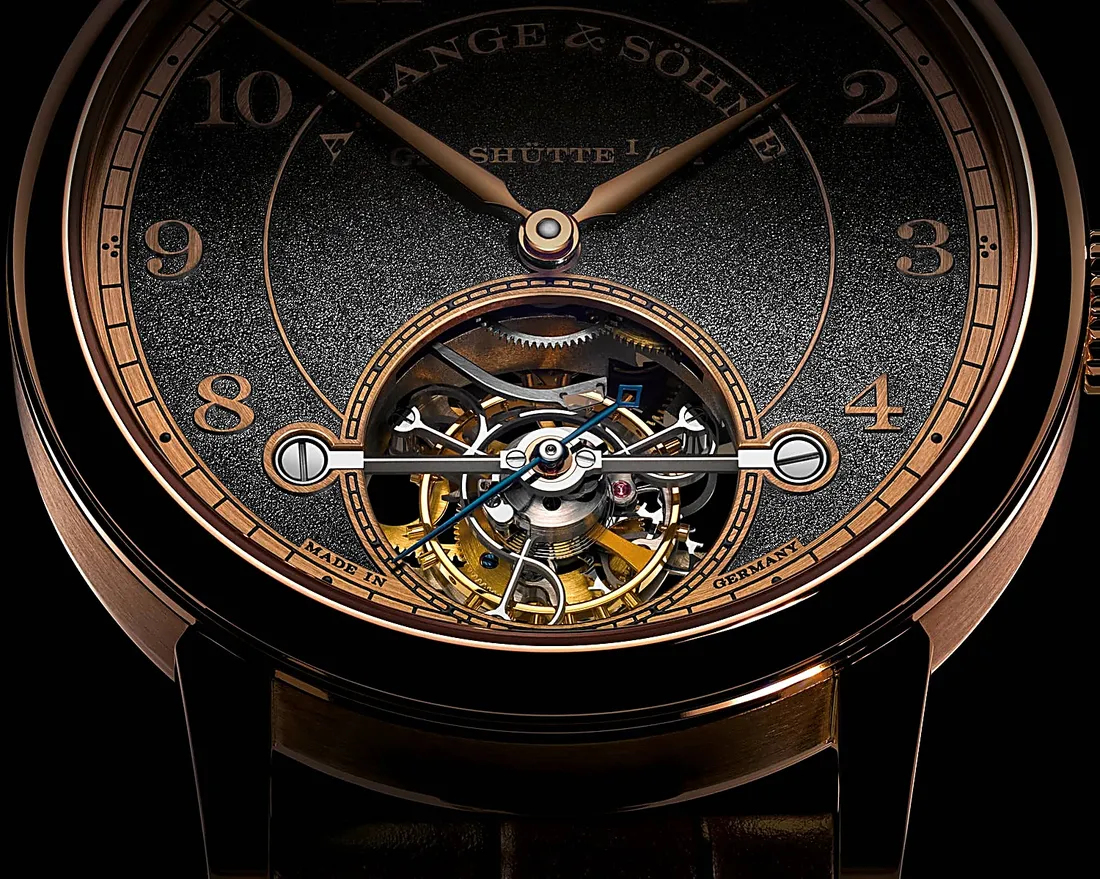
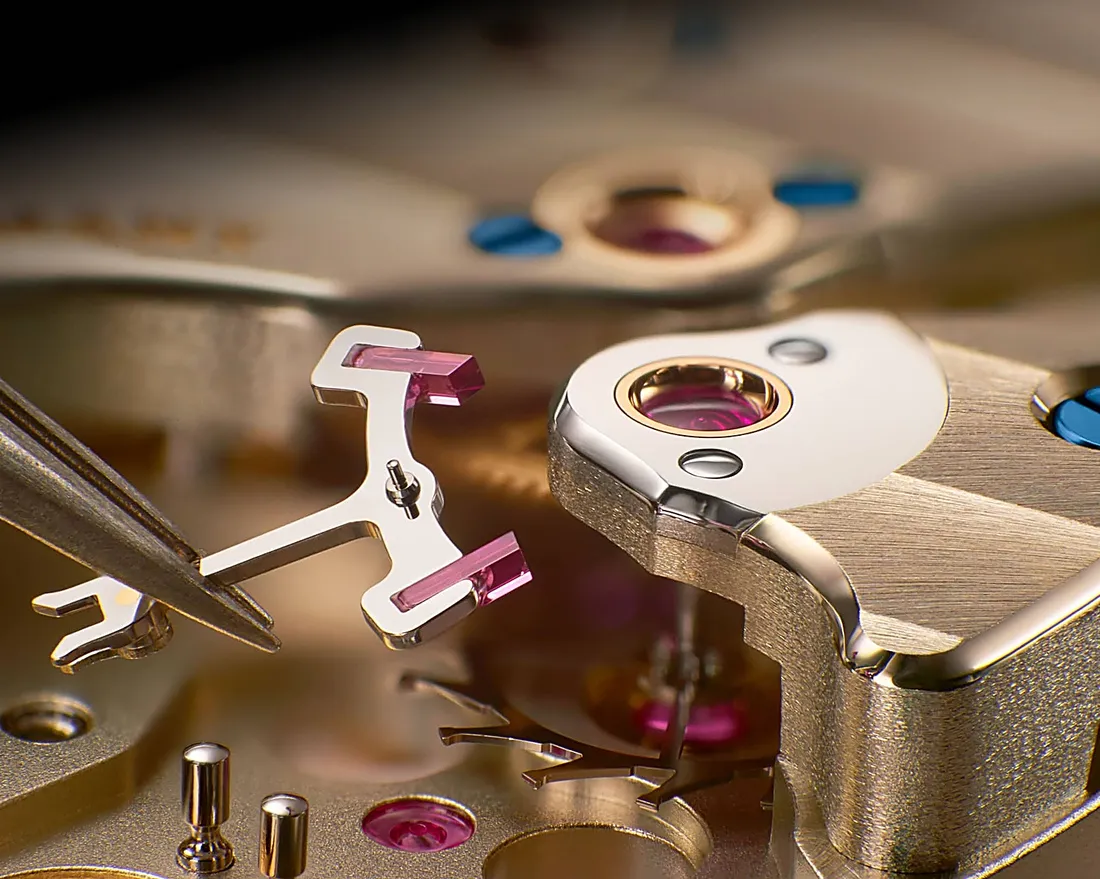
The tourbillon has a known weakness: setting the watch to the second is difficult. On an ordinary watch, pulling the crown brings a small brake against the balance and the seconds hand stops. When the balance sits inside a turning cage that brake is not easy to reach, which is why many tourbillons allow no seconds setting at all and cannot be brought onto the same second as your telephone.
Lange uses a patented stop-seconds mechanism in this watch. Pull the crown and the tourbillon, and with it the entire movement, comes to a halt, so the watch can be set to one-second accuracy. On a precision instrument that detail is not decoration but the definition of the work; there is no sense in a watch being right to the second if it cannot be set to the second.
The words Pour le Mérite in the name carry a story of their own. It began as the name of a Prussian order, and in 1842 a separate class for the sciences and arts was added to it. Alexander von Humboldt stands among the figures most closely involved in establishing that class. So the tradition of chronometers Humboldt trusted on his expeditions and the name this watch carries gather around the same man. Lange gives that name only to watches built with a fusée-and-chain.
The movement is called the L072.1. It is made at Glashütte, wound by hand and finished by hand across its bridges. The balance cock is engraved by hand for each individual watch, which is why no two Lange cocks are ever exactly the same.
What makes this watch interesting is that it brings two separate correctors together in one movement. The fusée-and-chain corrects the fall of energy over time; the tourbillon corrects the effect of position. Neither abolishes a flaw; both distribute its consequences. That may be watchmaking at its most mature: not denying what you cannot remove, but arranging everything else around it.
Think once more about what Humboldt was doing as he looked at Seyffert’s chronometer. The instrument in his hand was not telling him the time; it was telling him a distance. Because he knew the Earth turns on its axis, and turns regularly, he could find his place by measuring time. What he was really measuring was not the hour but a promise made by the sky: the world will turn tomorrow as it turned yesterday.
Two centuries later the chain inside this watch trusts the same promise. It knows the mainspring will weaken, it arranges its own geometry accordingly, and it leaves the rest of the work to the balance. Perhaps that is the most honest thing a person can do: accept what cannot be changed, order everything within reach around it, and trust the word of the one who set the order.