format_quote"If the vortex in the skin of a soap bubble and the gas in a supernova remnant are solving the same equation, the only difference between them is scale. And scale adds nothing to the truth of a law."
Hasan Bekmezci
In the Cupola observation module of the International Space Station, the one that looks out into pitch darkness, the atmospheric light of the Blue Marble turning below them drifted past. The orbital representatives of two opposite poles with a Cold War behind them, the American astrophysicist Dr Sarah Miller and the Russian orbital engineer Commander Dmitri Sokolov, hung weightless.
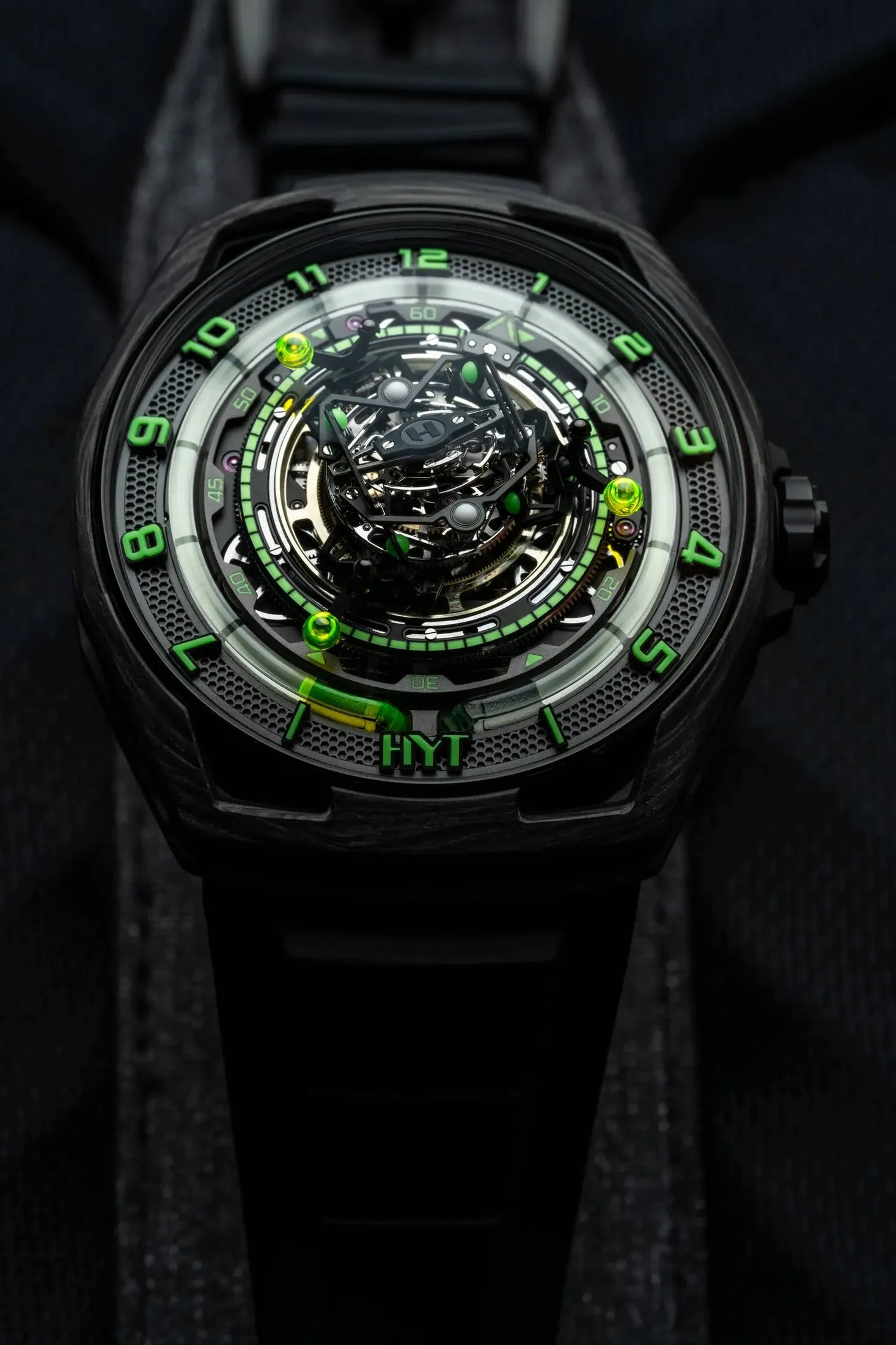
Sarah’s eye had caught on the neon green tube on Dmitri’s wrist. Inside the watch’s circular glass capillary, the two liquids, one green and one transparent, held to one another in a torqueless harmony in the middle of the vacuum.
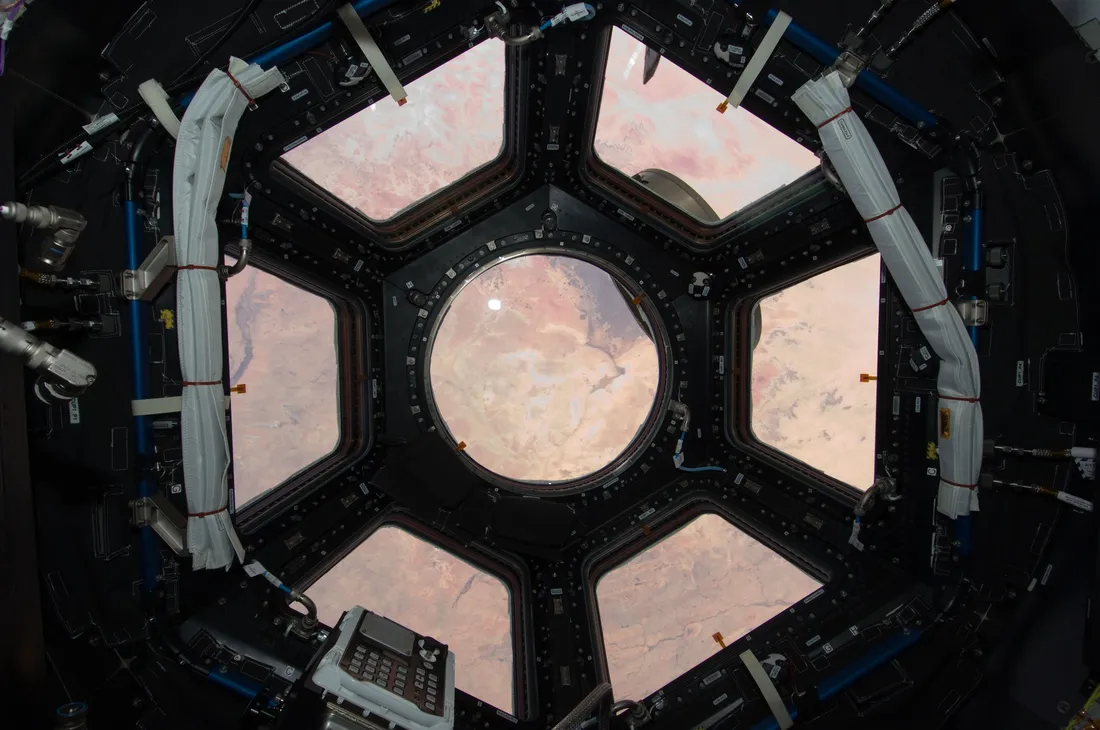
When the Cupola was added in February 2010 it was considered a luxury for the crew; today it is where they spend most of their time. The central window is eighty centimetres across, the largest window ever flown facing the planet. Outside, they are travelling at four hundred kilometres of altitude at roughly twenty-eight thousand kilometres an hour, which means one full orbit every ninety-three minutes and sixteen sunrises a day.
“A watchmaker should have come up here to work,” said Sarah. “Morning arrives sixteen times a day and the only thing that knows which one is real is the object on your wrist. Time cannot be read from the sky here; only the instrument you carry knows the truth.”
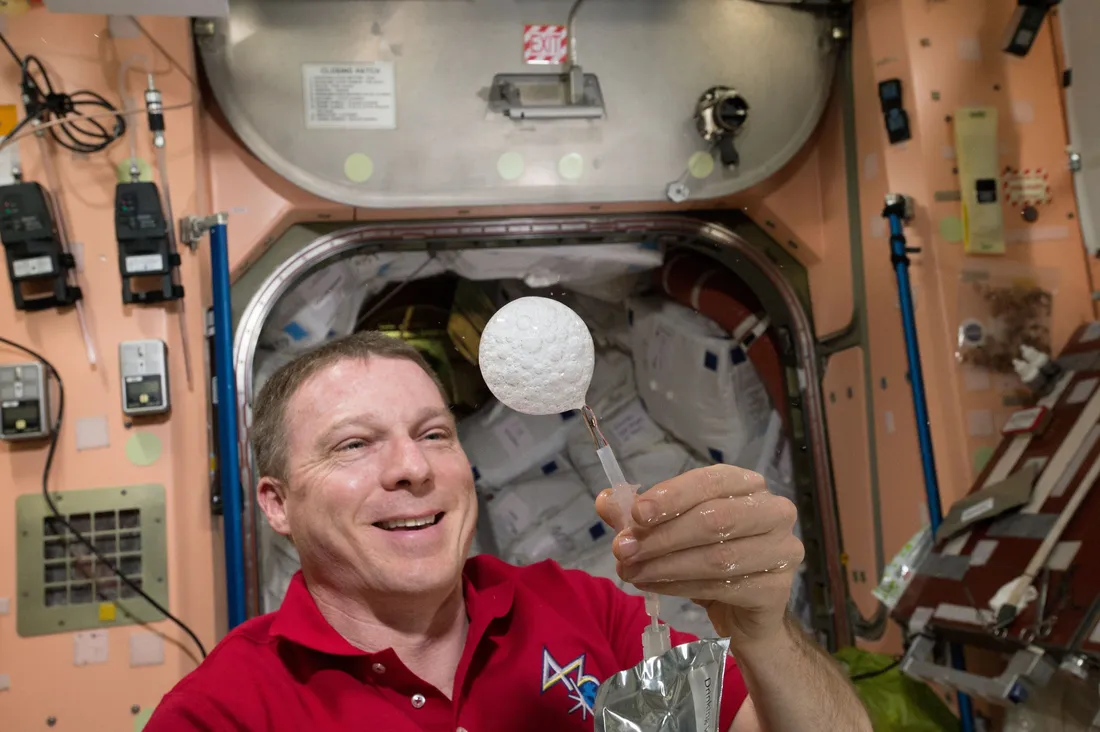
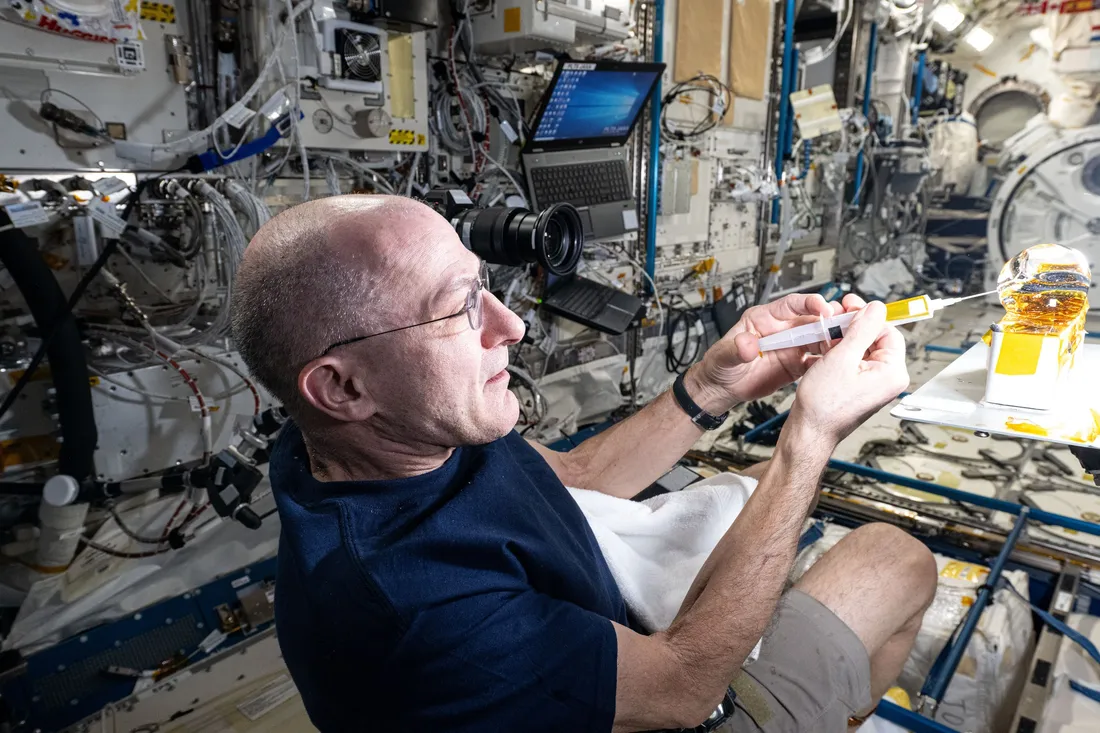
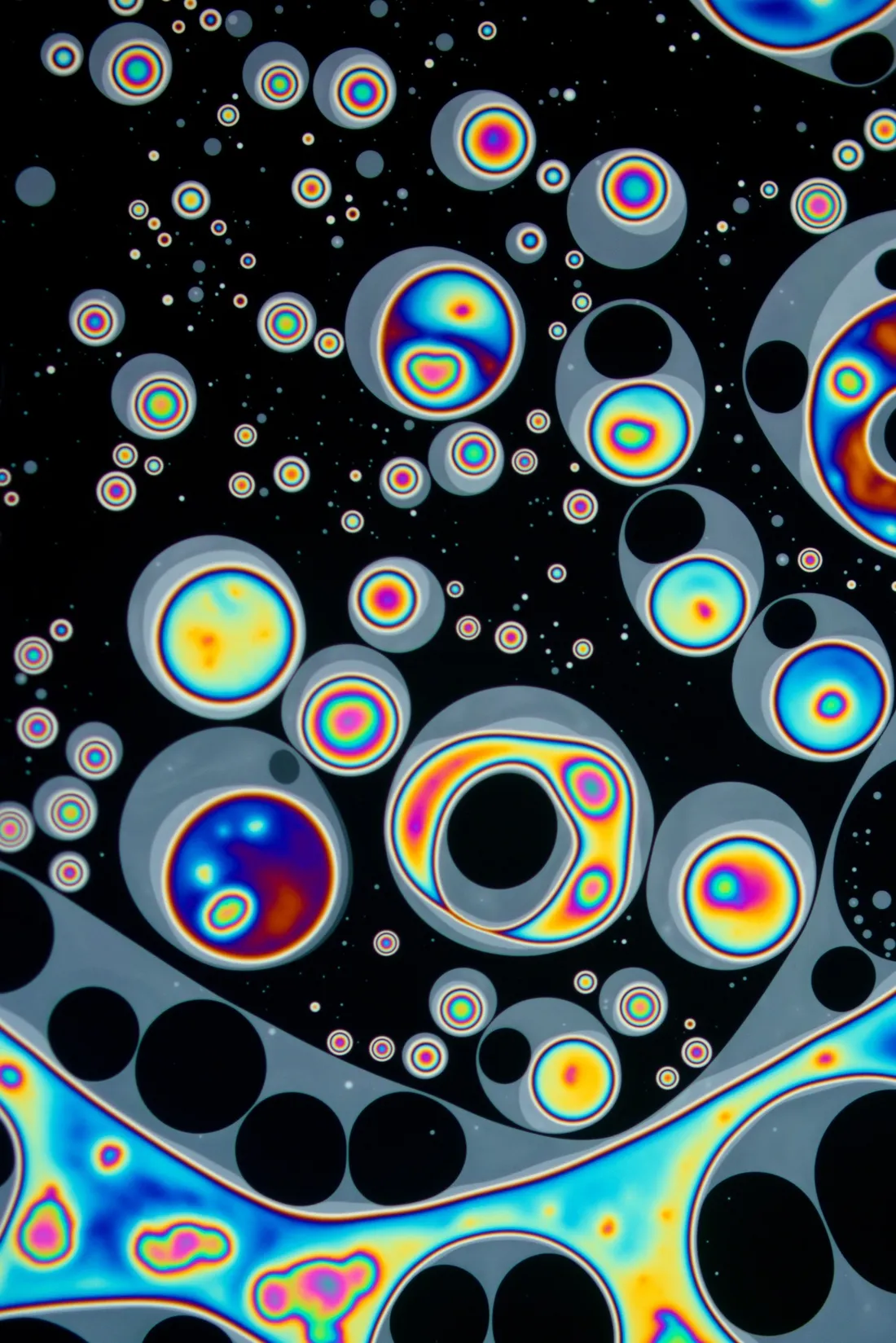
Sarah drew a special microfibre cord from her pocket, made a loop from it and released a drop of soapy water into the loop with a micro-injector. In weightlessness an enormous sphere of soap film formed. Under the light, the layers of liquid on the surface of that bubble began to flow in vortices around one another, raising storms of their own.
Sarah fixed her eyes first on the vortices on the surface of the bubble, then on the capillary tube of the HYT on Dmitri’s wrist.
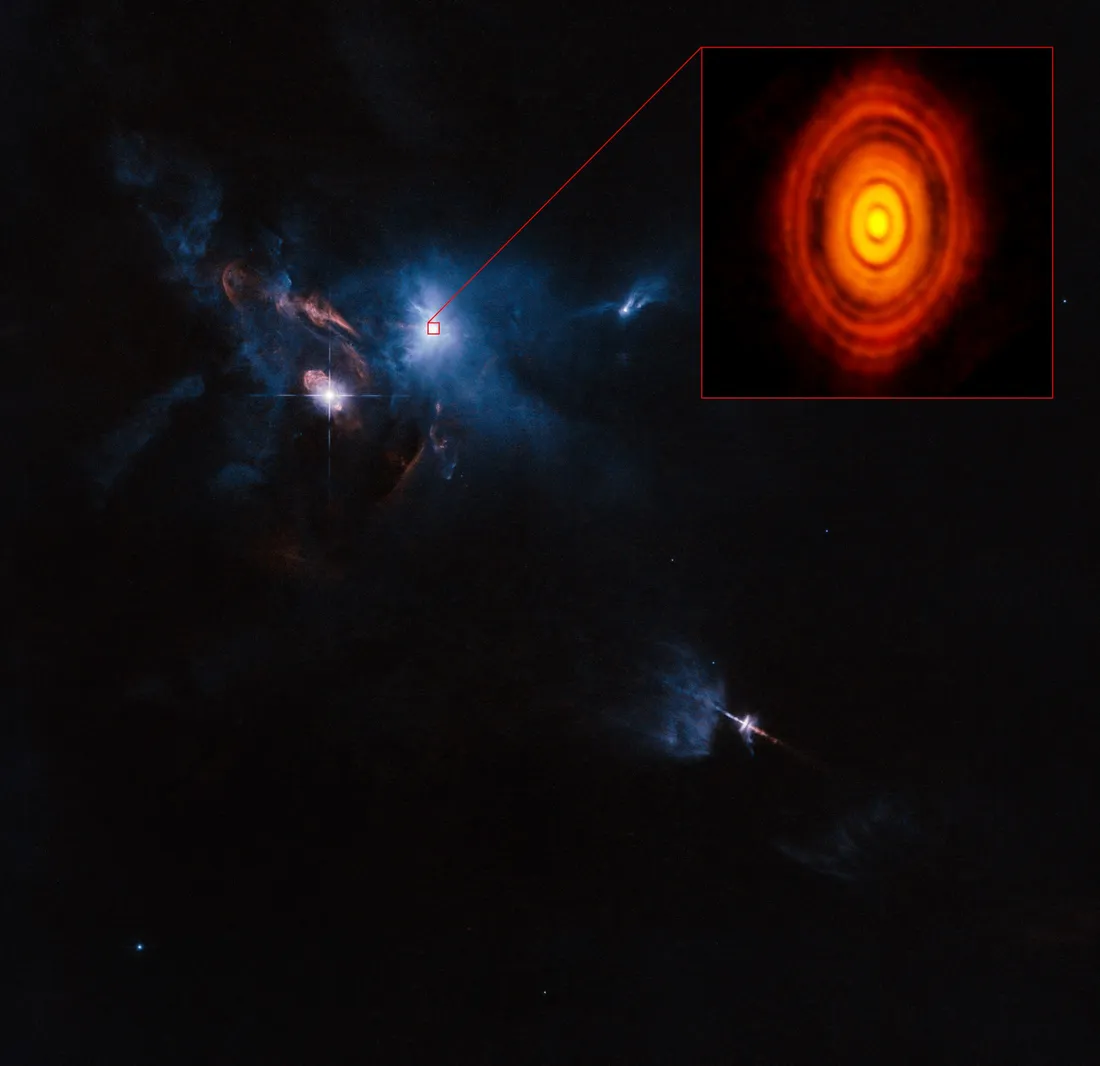
“Dmitri. Look at this. Look at the fluid mechanics on the surface of a soap bubble in weightlessness. The way the liquid on that paper-thin film turns in vortices, and the way star dust and gas clouds thousands of light years away turn around one another after a supernova explosion to form new planetary systems, are exactly the same physical equation!”
“Is it this clean because there is no gravity?”
“Precisely. On Earth a soap film drains at once; the liquid gathers at the bottom, the film thins at the top and it bursts. Here there is no bottom. What is left is only surface tension and differences in temperature. The noise is switched off and the equation stands naked. An experiment you would fight for weeks to clean up in a laboratory, you set up here with one drop of water.”
Dmitri drew a long breath and pointed at the glass capillary of the HYT on his wrist, and at the two liquids moving inside it under pressure.
“And what does that mean, Sarah? If the gas clouds and stars in space behave like the liquid in a soap bubble, the question arises: are bodies in space moving inside something fluid? What the ancients called the Aether was perhaps not necessarily a concrete particle you could hold in your hand. It was the general name for floating on something, for being subject to a fluid medium. What we call the vacuum in quantum field theory today is not emptiness; it is dark matter, quantum foam and a sea of radiation. Gases and dust themselves already behave, at the macro scale, like a fluid. So the stars, the liquid in the HYT’s tube and the soap bubble are all inside the same medium, the same rules of flow.”
“Let me correct one term here,” said Sarah. “The aether of the nineteenth century was a material medium in which light was supposed to vibrate, and in 1887 Michelson and Morley went looking for it and found no trace at all. The aether in that sense died. But what you mean is something else: floating inside something, being subject to a continuum. In that sense modern physics did not kill the aether, it renamed it. Today we call it a field.”
“And a field flows.”
“It flows. Think of an interstellar gas cloud: in reality it is made of atoms kilometres apart from one another, so it is not a liquid in any ordinary sense. But look at it on a large enough scale and that crowd of atoms behaves as a single substance; it exerts pressure, carries waves, makes vortices. Like a Mexican wave in a stadium: nobody runs anywhere, and yet the wave goes round the stadium.”
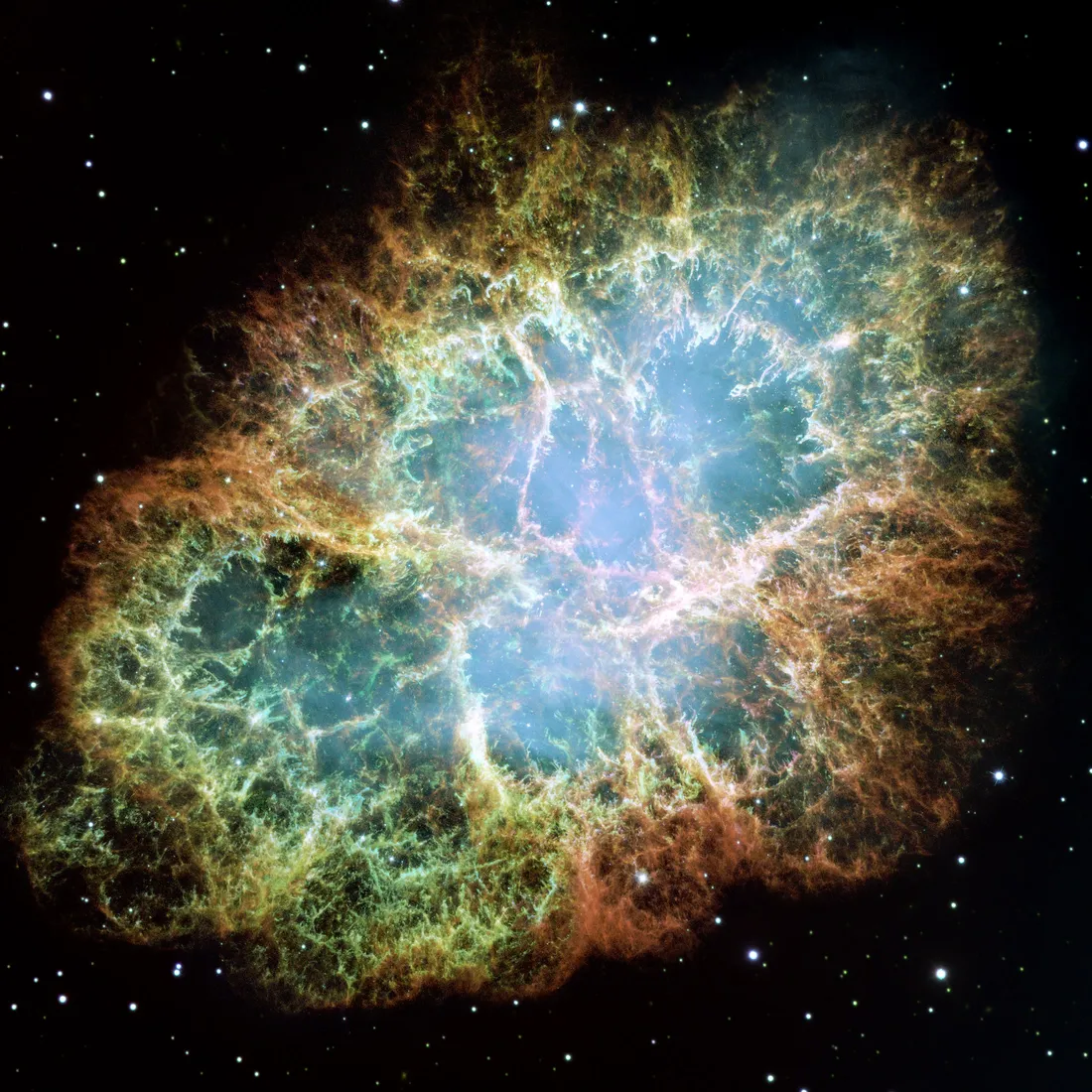
“Add this too,” said Dmitri. “The resemblance between the vortices you see on that soap film and the structures in a supernova remnant is not merely a resemblance of appearance; both have names. When two fluids of different density slide over one another, ripples form along the boundary and then curl into spirals like a ram’s horn. Those rows of waves under certain clouds are the same thing.”
“And when the heavy fluid sits on top of the light one?”
“Then the boundary sags downward in fingers; that is the mechanism that gives a mushroom cloud its shape, that drives the motion in a lava lamp, and that builds those vast columns in a supernova remnant. The filamentary structure you see when you look at the Crab Nebula is the same structure that forms in a kitchen sink the instant water meets detergent, magnified a million times a million. The equation is the same; only the number of variables differs.”
“Is that why engineers work with soap films?”
“Exactly. A soap film is a two-dimensional fluid; you can read what is happening inside it from its colours. You cannot bring a galactic disc into a laboratory, but you can stretch a two-dimensional model of one across a wire frame.”
A River Eight and a Half Centimetres Long
“And this is exactly what brings me to a state of wonder!” said Sarah, excited. “Look, the inside of that circular glass tube on the HYT’s dial is a micro-universe less than a millimetre across. On one side a non-polar transparent oil, on the other a polar fluorescent green liquid. The millimetric meniscus boundary between them turns in a circular orbit all day long, held apart by molecular repulsion and never mixing. Just like the liquid vortices on that soap bubble, just like the gas discs turning around the black hole at the centre of a galaxy! HYT has taken time out of the ticking of a wheel; it has imprisoned the greatest cosmological secret of the universe, fluid mechanics, inside a watch case.”
“The glass tube itself is not ordinary either,” said Dmitri. “Borosilicate. What separates it from ordinary glass is that it barely expands when heated; it is why oven dishes, laboratory tubes and telescope mirrors all belong to the same family. If you are going to strap a glass tube to a wrist and carry it from cold to heat all day, you have to choose the glass that does not grow.”
“And why do the two liquids not mix?”
“For the same reason water and olive oil do not. A water molecule has differently charged ends, which is to say it is polar, and the molecules attract one another; an oil molecule is non-polar. The water molecules take each other by the hand and push the oil out. Where the two liquids meet, that pushing behaves like a membrane, and the name of that membrane is the meniscus. The point at which you read the time on an HYT is in fact the place where two liquids refuse to shake hands.”
“One thing puzzles me,” said Sarah. “Driving liquid through a tube that narrow must be hard. Doesn’t a narrow tube increase friction?”
“It does, and that is precisely the point. Resistance to flow in a tube goes as the fourth power of the radius. Halve the tube and the resistance does not double, it goes up sixteen-fold. Below a millimetre, pushing liquid is like forcing dough through a sock.”
“Then why so narrow?”
“Because the narrowness is also the solution. In a wide tube the liquid runs to one side under its own weight; turn the watch over and the display is ruined. In a narrow tube capillarity takes over: the attraction between the liquid molecules and the glass wall becomes stronger than the liquid’s own weight, and the liquid stays wherever it was left. It is why the corner of a napkin dipped in water draws the water upward. HYT accepts the price in friction because narrowness buys independence from gravity.”
“And here there is no gravity anyway.”
“There is none, but the watch was not designed for that. The irony is this: this watch takes all these precautions against gravity, and right now it is having the easiest day of its life.”
Five Thousand Years of Measuring with Water
“In truth the only new thing here is the engineering,” said Sarah. “The idea is very old. Humanity first measured time with water.”
“The clepsydra.”
“The water thief. The word says exactly that. The oldest known examples come from Egypt, stone vessels found in the tomb of the pharaoh Amenhotep; you fill them, they empty drop by drop through a hole in the base, and the lines on the inner wall show the hours that have passed. The Greeks carried the idea into their courtrooms: a lawyer’s speaking time was limited by the emptying of a vessel.”
“So why did we abandon it?”
“Because water is a treacherous measure. When the vessel is full the pressure is high and it runs fast; as it empties it slows, so the first hour of your clock is shorter than the last. The Greeks tried to solve it by tapering the wall of the vessel, then by adding a second vessel held at a constant level. And there is freezing: in winter the water froze and time stopped. Once the pendulum arrived, water became redundant overnight and a two-thousand-year tradition was forgotten within a few generations.”
“And now it is back.”
“But inverted. In a clepsydra the liquid produced the time; the rate of flow was itself the measure. Here the liquid does not produce time, it only shows it. What produces the time is the balance wheel inside; the liquid is merely a hand. Five thousand years later, the liquid has stepped down from the throne and taken a place on the stage.”
“Is that a regression or a progress?”
“Neither. It is an acknowledgement. The house says in its own words that it wants to return to the sources of timekeeping as they were established thousands of years ago. So the liquid here is not a flourish, it is a quotation.”
A Biologist’s Idea: Where HYT Came From
“And whose idea was this?” asked Sarah. “A watchmaker does not wake up one morning and decide to make a watch out of liquid.”
“He does not, and in fact no watchmaker did,” said Dmitri. “At the root of it there is a biologist. Someone interested in the fluid transport systems of the human body thought the same logic could be applied to an indicator, and an engineering company was set up first to build it. When the brand appeared in 2012 its name said as much: hydro mechanical horologists.”
“So not watchmaking but microfluidic engineering.”
“Both at once. And the marriage was not easy. The house went under financially in 2021 and then came back on its feet under a new structure. What we are holding is, quite literally, the product of a brand living its second life.”
“What is the real difficulty in carrying liquid inside a wristwatch?”
“Leaks and bubbles. Holding a millilitre of liquid in a tube for years without losing a drop is hard enough on Earth, but if a single air bubble forms inside the liquid the display is broken. So the system is filled under vacuum and every seal in it is single-use. When it comes in for service the tube is not replaced, the entire fluid module is. Maintaining this watch is less like oiling a movement and more like an organ transplant.”
The Gyroscope at the Centre: The Conical Tourbillon
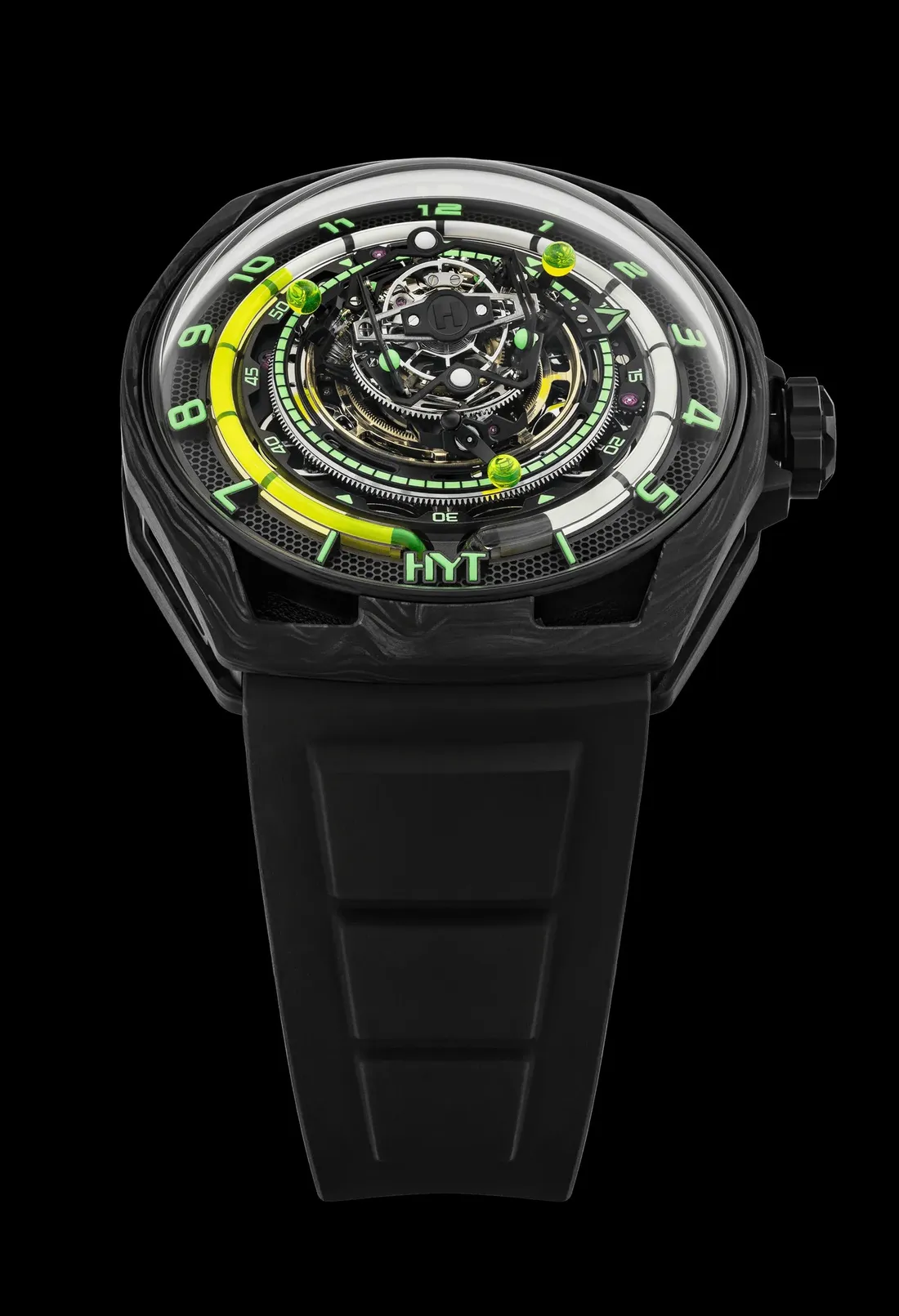
Dmitri moved his finger to the very middle of the dial. Looking through the liquid, a balance wheel could be seen standing at an angle inside a cage.
“But Sarah, the real heart of this watch is not in the tube. Look here.”
“A tourbillon.”
“A conical tourbillon. And for an orbital engineer nothing could be more familiar. A classical tourbillon turns the balance wheel in a single plane; when the watch stands upright, gravity always pulls from the same direction, and the resulting error is averaged out by rotating the cage. But as long as the plane is single, the error stays in a plane too.”
“And here the plane is inclined.”
“Inclined. The balance is at thirty degrees to the horizontal, the escape wheel at fifteen and the pallet fork at twenty-three. The cage makes one full turn every thirty seconds. So the centre of mass of the balance wheel travels not around a single circle but across the surface of a cone. Like a satellite orbiting not on one axis but on an inclined orbit: the greater the inclination, the more of the planet you see.”
“Whose idea was it?”
“The origin goes back to 1928 and a watchmaker named Walter Prendel, working in Saxony; he was the first to build a tourbillon with an inclined balance, and for many years it was all but forgotten. The modern reading of it in this watch is signed by Eric Coudray, one of the few names who build the hardest mechanisms in the world of complications. So at the centre of this dial stands an idea born a century ago in Germany, brought back to life in a Swiss workshop.”
“A question,” said Sarah. “Is the gravity error really that large? How much does a watch drift without a tourbillon?”
“Less than you think, and that is the thing tourbillon advocates prefer not to say. In a well-regulated modern wristwatch the difference between positions rarely exceeds a few seconds a day. The tourbillon was invented at the end of the eighteenth century, when pocket watches sat in a waistcoat pocket in the same upright position for days; there it was a genuine gain. Once we moved to the wrist, the arm’s constant movement began to take the average by itself.”
“Then why is it still made?”
“Because it is no longer a correction but a declaration of capability. A tourbillon cage carries the entire weight of the escapement while turning itself; you are loading the most delicate region of the movement with extra burden and demanding that the watch still keep time. Do it on an inclined axis and the job gets harder by a further order: the cage no longer turns like a flat tray but like a wheel tipped on its side, carrying its own weight in a different direction on every revolution.”
“So the difficulty is the point.”
“As an orbital engineer I can hardly object. We also put spinning wheels inside a satellite to hold its attitude; they are called reaction wheels. A spinning mass gives a stability it would not give if it stood still. The thing at the centre of that dial is nothing other than a gyroscope placed inside a wristwatch.”
Three Spheres: When Determinism Looks Like Chaos
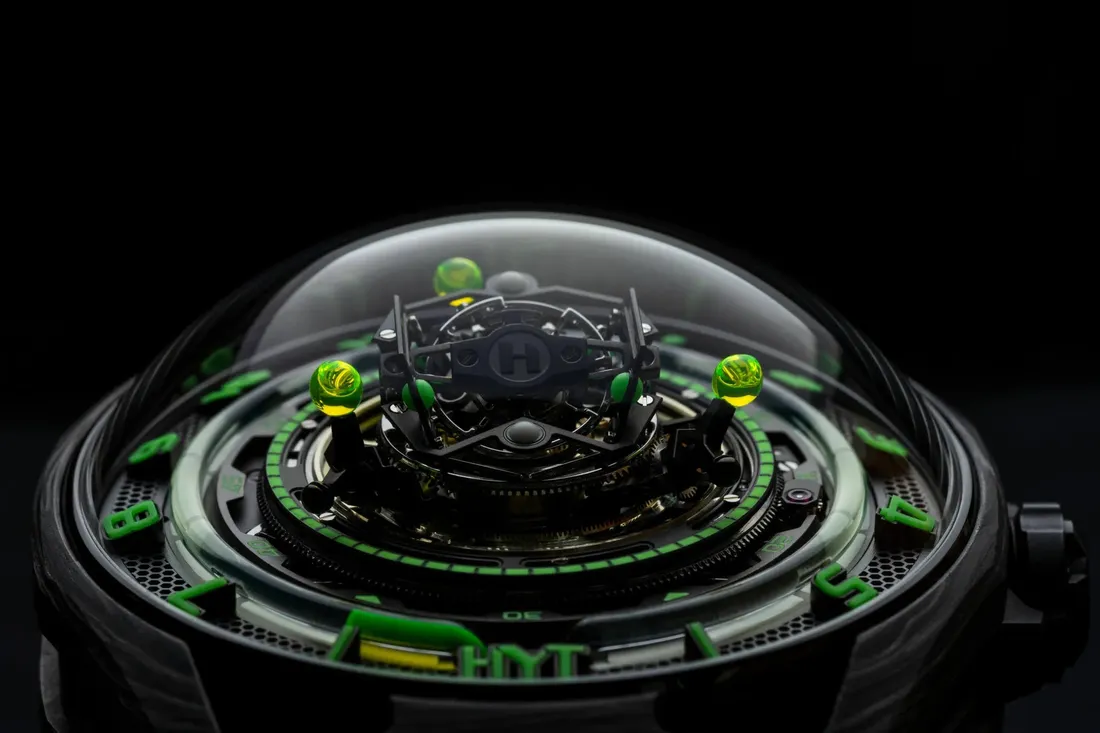
Sarah suddenly leaned in. Three small green spheres were turning above the dial, apparently attached to nothing.
“Dmitri, what are those? Are they loose?”
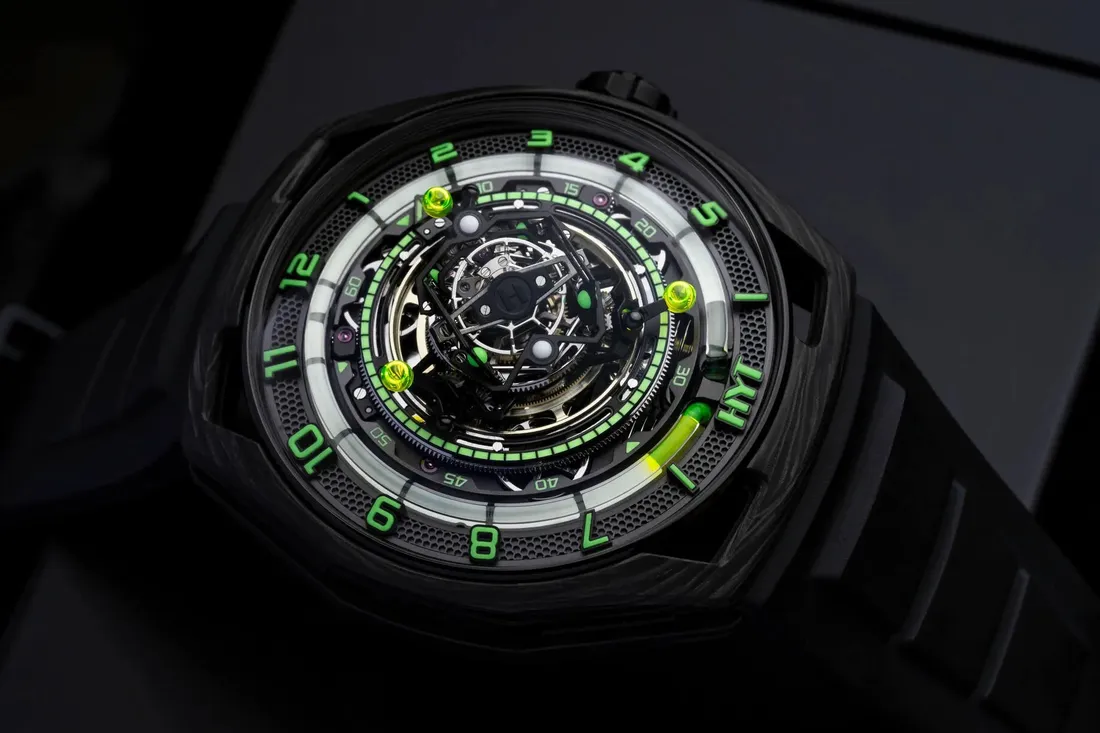
“They look it, but they are not. Each is two and a half millimetres across, blown by hand by a glassmaker and filled with fluorescent liquid. All three turn clockwise, but one makes four turns a minute, one five and one six. The house calls it exactly that: chaotic animation.”
“But that is not chaotic. Three fixed speeds. A completely determined system.”
“And there lies the whole point,” said Dmitri, smiling. “A fully determined system that looks chaotic to the eye. The common multiple of four, five and six is sixty; which means these three spheres come into line only once a minute. Through the fifty-nine seconds in between you can see no order at all. For your eye to count an order, the repetition has to fall within an interval the eye can hold.”
“That is nearly a summary of celestial mechanics.”
“Just so. Leave three bodies in one another’s gravity and the resulting equation has no general solution; we call it the three-body problem. With two bodies the orbit is a clean ellipse and you can compute a thousand years ahead. The moment you add the third, the system is still entirely deterministic, with no randomness anywhere; but its behaviour becomes unpredictable. These three spheres above the dial are a harmless miniature of that problem.”
“And at night?”
“At night the real show begins. All three are filled with fluorescent liquid; in the dark, three green points draw a figure nobody can solve, each at a different speed. Watching that in space takes you somewhere strange, Sarah. Three spheres on this side of the glass, a hundred billion stars on the other; both trying to solve the same problem, and neither of them solving it.”
“How do they make those spheres?” asked Sarah.
“By hand. A glassblower blows a two and a half millimetre sphere to a tolerance measured in microns; then each one is filled individually with fluorescent liquid and closed. Making a hollow glass sphere at that size is already hard; filling it and sealing it without leaving a bubble is another matter. And because the spheres are geared to the movement their weights have to match; if one is heavier than the others the mechanism turns out of balance.”
“Three glass balloons inside a watch.”
“And turning them. Consider it: each sphere needs its own gear train, its own arbor, its own bearing. A significant part of a five hundred and thirty-three component movement exists so that three balls, which contribute nothing whatsoever to the accuracy of the watch, can spin. As an engineer I ought to call that waste. I do not.”
“Why not?”
“Because the job of this watch is not to measure time but to make time visible. For accuracy alone a three-dollar quartz is enough today. Everything beyond that has to do with why a human being does a thing at all.”
Euler’s Equations of Fluid Motion and What They Mean for Us
The equations Leonhard Euler set down on paper in 1757 are the constitution of every flow from the millimetre tube in the HYT to a supernova. When Euler wrote those lines he had neither a computer nor a wind tunnel; only a pen, paper and the courage to imagine a frictionless fluid. So what do these mathematical rules give us in daily life and in understanding the universe?
They let us foresee. We call this the continuity equation, and what it says is extremely simple: matter that goes in somewhere has to come out somewhere else. Like a crowd speeding up when a street narrows. Water spurting when you pinch the end of a hose, and wind accelerating over an aircraft wing to hold the aircraft up, are consequences of the same sentence.
They let us manage storms and rockets. We call this the momentum equation. Just as, in a packed bus, the people on your left push you into the gap on your right, liquids and gases always run from high pressure to low. Predicting the path of a hurricane, or throwing gas out of a rocket’s exhaust so that it can climb into space, are results of this rule. It is also what carried into orbit the very station they were standing in.
They show that energy is never lost. Just as a roller coaster turns the potential energy at the top into speed on the way down, the pressure in a fluid is turned into velocity and heat. It is how we make electricity from water at a dam. The same equation is what turns the pressure in the HYT’s bellows into the travel of the liquid; apart from scale there is no difference at all.
“I would like to add something,” said Sarah. “Euler’s equations describe a frictionless fluid. In the real world there is friction, and once you add it the equation is called Navier-Stokes. Nobody has yet proved whether that equation always has a well-behaved solution; it is still one of mathematics’ seven million-dollar problems. Which is to say we cannot fully solve the equation of the thing flowing inside the tube on your wrist.”
“And how do we know when a flow will be smooth and when chaotic?” asked Dmitri.
“From a single number,” said Sarah. “You take the speed of the flow, the width of the tube and the thickness of the liquid and reduce them to one ratio. If that ratio is small the flow proceeds in layers, smooth and predictable; we call it laminar. If it is large the flow breaks up inside itself and turbulence begins.”
“Make it concrete.”
“Open a tap slightly: the water comes down as a column like glass, straight, almost invisible. Keep opening it slowly; at some point the column suddenly goes cloudy, turns white, and its sound changes. There is no in-between state, there is a threshold, and the water crosses it. The same threshold exists on an aircraft wing, in a blood vessel, in the smoke from a chimney and in intergalactic gas streams.”
“And in the tube on my wrist?”
“In your tube the flow is so slow and the bore so narrow that the ratio is nearly zero. The liquid inside never enters turbulence; for twelve hours it flows perfectly laminar. That is not an accident, it is the design itself: had it gone turbulent the meniscus would blur and you could not read the time. Right now you are carrying one of the most peaceful flows in the universe on your wrist.”
“And there is this,” said Dmitri. “Euler was forty when he wrote these equations and had already lost one eye; towards the end of his life he lost both. He went on writing after he went blind, and in fact wrote faster; his sons and students took down what he dictated. He wrote more than eight hundred papers before he died, and the first page of fluid mechanics still carries his name.”
“Describing fluids without seeing them.”
“And perhaps that is exactly why he succeeded. Someone trying to follow a fluid with the eye gets caught on the confusion he sees. When Euler closed his eyes what remained were three sentences: matter is not lost, force produces acceleration, energy is conserved. Today an aircraft wing, a heart valve and this tube on my wrist are all inside those three sentences.”
Contemplation Through the Window of the Scientists
Looking out from the dome of the space station, Sarah and Dmitri deepened the mind’s contemplation of this miraculous flow through three great physicists.
Richard Feynman and the Whole Universe in a Glass of Wine
In one of his lectures, citing a poet, Feynman said that anyone who looks closely enough into a glass of wine will find the whole universe there, summarising complex scientific truths in an extremely plain observation. The liquid in a glass is a syllabus on its own.
The Marangoni effect, the climbing dance of a liquid. Swirl wine in a glass and let it settle, and the tears of wine form, climbing up the sides and then running back down in droplets. The alcohol in wine evaporates faster than the water. In the evaporating region the surface tension rises and pulls the liquid below it up the side of the glass like a suction force. Just as the liquid in the HYT advances along its tube, the liquid climbs by itself through a difference in surface tension.
Fermentation, the miraculous labour of yeasts. What turns the juice of a grape into wine is fermentation. Yeast cells, invisible micro-organisms, eat the sugar in the grape and turn it into alcohol and carbon dioxide gas. Light energy that came from the Sun has been converted into a molecular liquid by the hands of tiny creatures working like a biological factory.
The molecular chemistry that makes taste and colour. What gives wine its red colour and that astringency on your palate are chemical molecules called tannins and anthocyanins. What you see when you look into the glass is in fact a vast molecular architecture built by atoms bonding to one another at particular angles.
Astrophysical origin. The hydrogen in the water molecule in the wine formed in the first minutes of the Big Bang. The carbon and oxygen inside it, and the silicon in the structure of the glass, were cooked in the core of a giant star billions of years ago and scattered into space by a supernova explosion. The hand holding the glass and the liquid inside it are both made of that star dust.
“And you can make the same sentence about this watch,” said Dmitri. “The hydrogen in the green liquid on the dial comes from the first minutes of the universe, the silicon in the borosilicate glass from the core of a star, the carbon fibres in the case from the same stellar furnaces. What I have strapped to my wrist is, quite literally, cooled stellar residue.”
Werner Heisenberg and the Limit of the Human Mind
According to the famous joke told in the world of physics, Heisenberg devoted his life to understanding quantum mechanics and the unpredictable turbulence of fluids. In the joke, on dying and coming before the Almighty, Heisenberg says he would like to ask two questions: why relativity, and why turbulence? And he adds: I am fairly sure He knows the answer to the first.
There is no record that this ever happened; the same joke is also attributed to Horace Lamb, the great name of fluid mechanics. But the reason it survives is that it puts its finger on something exactly true: the limitation of human reason and man’s helplessness before knowledge.
A human being can formulate vast cosmic theories like general relativity mathematically and with relative ease. But he cannot fully compute the chaotic vortices that form when you pour milk into a cup of tea. Let us speak in numbers: we can predict the path of a hurricane three days ahead to within a hundred kilometres, and we cannot say where a given drop from a running tap will land a second from now. Even today’s most powerful computers, when computing a real turbulent flow, have to divide it into billions of small boxes and produce approximate solutions; because large vortices give birth to smaller ones, and those to smaller ones still, and the chain runs all the way down to the molecular scale.
The one who possesses knowledge is of course the Creator, who holds complete knowledge of every atom and every vortex in the universe; the human mind runs into the limit of its own capacity in front of even the simplest turbulence.
Paul Dirac and Divine Aesthetics
Paul Dirac said that the presence of a mathematical beauty in the fundamental laws of nature is far more likely than that beauty being an accident. You cannot look for a rational order in paint a painter has thrown at random. But the equations of the universe are as elegant as the proportions in a piece of music or a work of architecture.
Euler’s plain three-line equation explains everything from a drop of water to the eruptions on the surface of the Sun. A programmer has to write thousands of lines of complex code merely to make a simple game, while the fluid mechanics of the entire universe is expressed in a handful of basic symbols.
Dirac’s own life is the best proof of this thesis. The equation he wrote in 1928 to describe the electron produced negative-energy solutions for the sake of preserving its mathematical symmetry. Rather than throwing those solutions away, Dirac took them seriously and said the electron must have an opposite. Four years later the positron was found in the laboratory. The beauty of the equation had announced something nobody in nature had yet seen.
For Dirac this aesthetic was clear proof that the universe is not the product of blind accident; that behind it stands a transcendent, flawless and artful mind and will.
Sarah looked at the sunrise filtering in through the glass and lowered her voice.
“These three names are in fact saying the same thing from three different places. Feynman says that if you look closely enough at the small you will see the large. Heisenberg says that even having understood the large you may stand helpless before the small. And Dirac says that what binds the two together is a beauty, and that the source of that beauty cannot be accident.”
“And all three are standing in front of the same window.”
“Yes. Look at that tube: in a bore narrower than a millimetre, two liquids refuse to mix and advance for twelve hours. The law that makes that possible is at the same moment turning a galactic disc. The same law. Nobody wrote one for watches and another for galaxies.”
“And who wrote that law?”
Sarah did not answer. Below them, over the Pacific, the thin blue line of the atmosphere was glowing along the horizon.
Case, Calibre and Numbers
Dmitri took the watch off his wrist and passed it to Sarah; in weightlessness it turned slowly between the two of them.
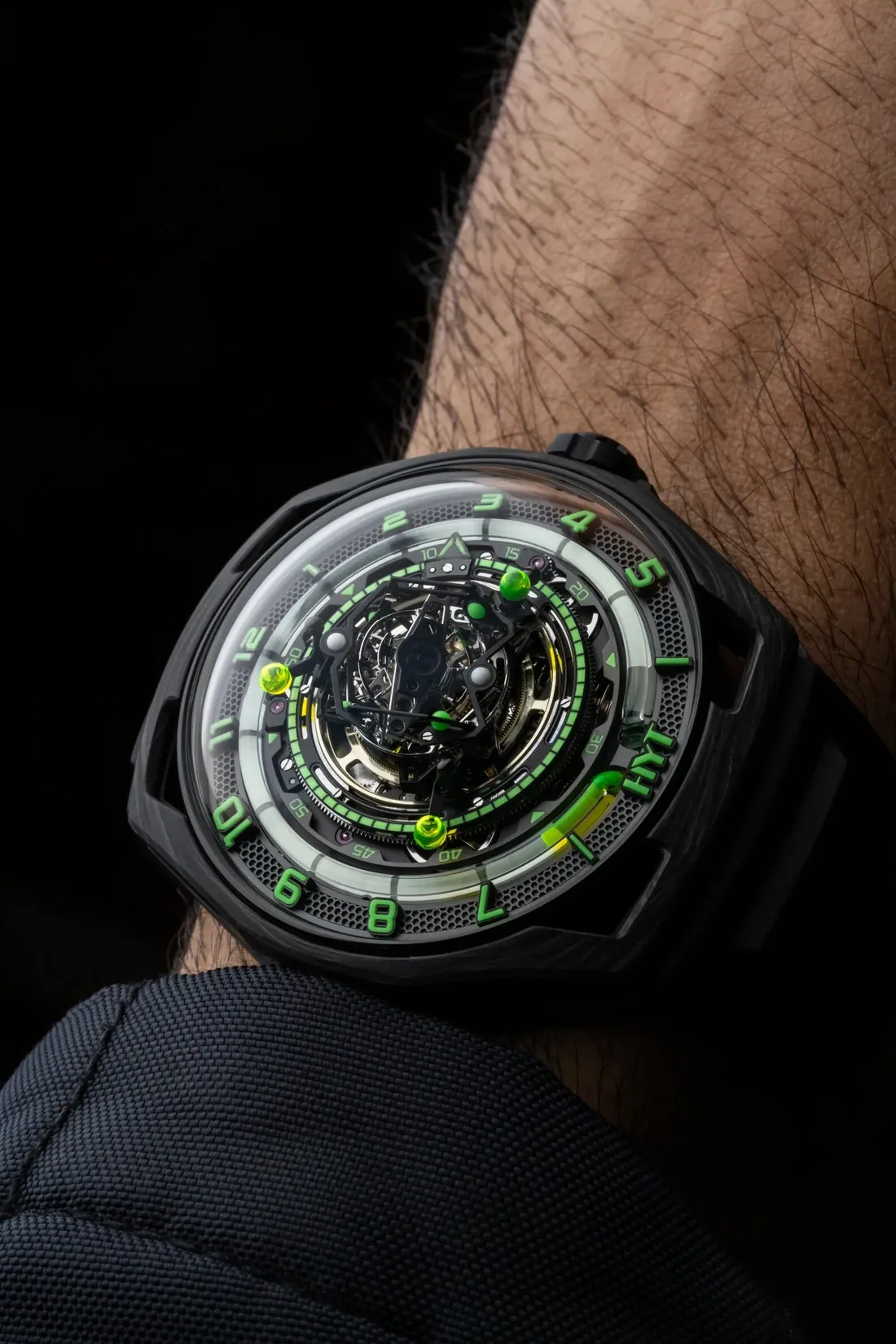
“Since we are speaking in numbers, let me give this one’s papers too. It is called the Conical Tourbillon Black Eklipse, the reference is H02759-A, and eight were made.”
“The case?”
“Carbon and black DLC-coated titanium. Forty-eight millimetres wide, fifty-two point three long and twenty-five point one five thick. Domed sapphire crystal with anti-reflective coating; black grids with a green ground on the flanks. Water resistant to fifty metres.”
“Twenty-five millimetres thick.”
“Thick, but obligatory. Inside there is a tourbillon cage, two bellows, a capillary tube and three turning spheres; these are not stacked but layered. The thickness is not a preference, it is the invoice for the volume.”
“The movement?”
“Calibre 701-TC. Five hundred and thirty-three parts, sixty-one jewels, twenty-one thousand six hundred vibrations an hour, that is three hertz. Forty hours of reserve. And one detail: there is no winding crown, the watch is wound with a key supplied with it.”
“With a key?”
“With a key. It looks like a return to the state of a pocket watch two hundred years ago, but the reason is not nostalgia: the flank of the case is filled with grids and bellows housings, and no room was left for a classical winding crown to pass. Form has decided use.”
“The price?”
“Three hundred and thirty-five thousand Swiss francs, excluding taxes. Eight people wear this watch. One of them is currently in orbit.”
“The dial is worth describing too,” Dmitri went on. “It is made of thirty-nine separate parts, all black-coated brass. The numerals are not printed but applied in relief, and filled by a method called Lumicast: the luminous compound is cast into a mould and set, so the numeral itself becomes a glowing volume. In the classical method luminous paint is brushed onto a surface and wears away with time; here the body of the numeral is already made of that material.”
“And that grid under the dial?”
“A perforated mesh. It does two jobs. First, it leaves the movement beneath it in shadow without hiding it completely, which gives you depth. Second, it creates a texture for light to hold onto on a black-on-black surface. A completely flat black dial looks like a hole under light and the eye cannot read it. The mesh gives that black a layer.”
“So even the darkness has been built.”
“The watch is called eclipse, after all. They have treated darkness not as emptiness but as a surface to be worked on.”
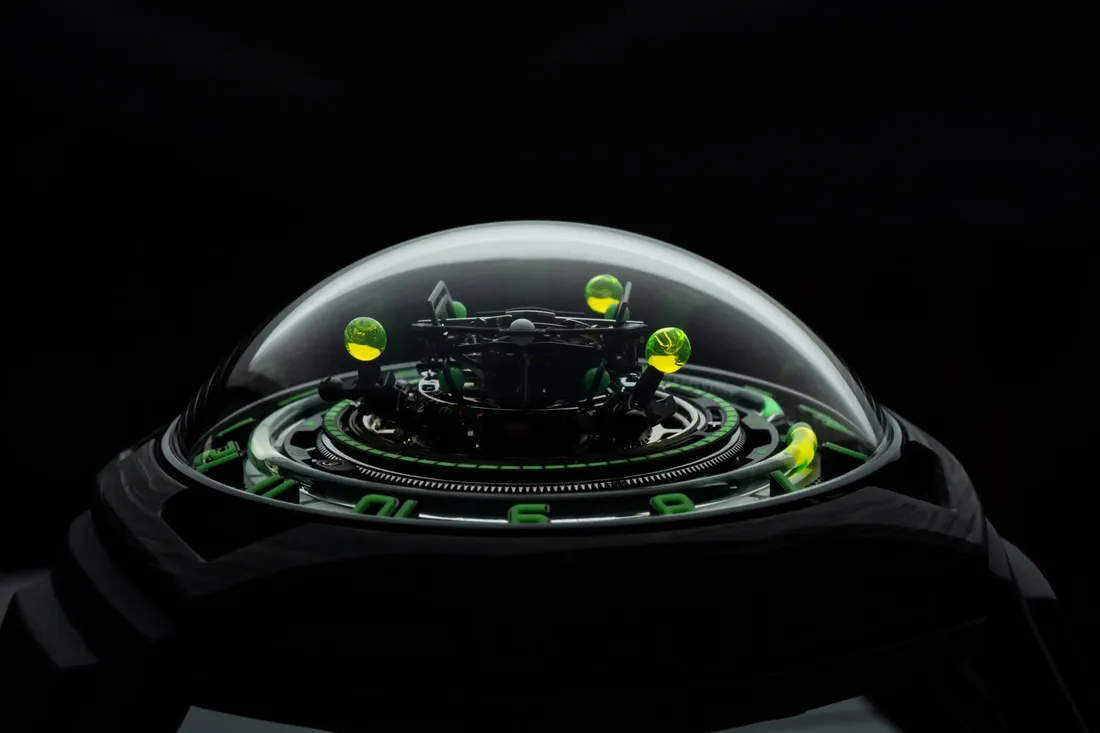
Sarah held the watch up to the light. The green liquid in the capillary stood for a moment beside the orange of a sunrise entering through the Cupola.
“I have noticed something, Dmitri. There are three separate conceptions of time in this watch, and all three are on the same dial. The liquid is continuous, flowing time; it advances, fills and then resets in an instant. The tourbillon is cyclical time; it returns to the same place every thirty seconds and arrives nowhere. The spheres are unpredictable time; they are deterministic, and yet looking at them you cannot guess the next second.”
“And a human life is exactly the sum of those three.”
Sarah and Dmitri looked at the colours dancing on the surface of the soap bubble, at the neon glow of the HYT, and at the pitch darkness of the universe visible through their windows. One was a liquid flowing in a glass tube a millimetre wide on a wrist; the other, galaxies drifting millions of light years away. But both were inside the same divine equation, the same flow.
“One last question,” said Sarah, handing the watch back. “Eight people carry this watch and probably none of the others will ever reach orbit. Why did you bring it?”
Dmitri looked out of the window for a while.
“Because on your first day up here you lose something. There is no longer any such thing as down. Put a glass down and it does not fall; pour water and it does not run, it becomes a ball. Every intuition you learned in a lifetime is useless overnight, and a person is far more disturbed by that than he expects.”
“And this watch?”
“This watch is still flowing. It flows without gravity too, because what pushes it is not gravity but two bellows. So here, in a place where nothing falls, there is still something flowing on my wrist. It will sound absurd to you, but it does me good.”
Sarah smiled and did not answer. In the glass of the dome, the reflection of the green liquid and the orange of the sunrise overlapped for a moment.
format_quote"The liquid is flowing time, the tourbillon is cyclical time, the three spheres are unpredictable time. A human life is exactly the sum of those three."
Hasan Bekmezci
format_quote"Man can write a cosmic law like relativity in three lines, and cannot compute the vortex of the milk he pours into his tea. Our helplessness is hidden not in ignorance but in scale."
Hasan Bekmezci