An Evening on the Caspian Shore
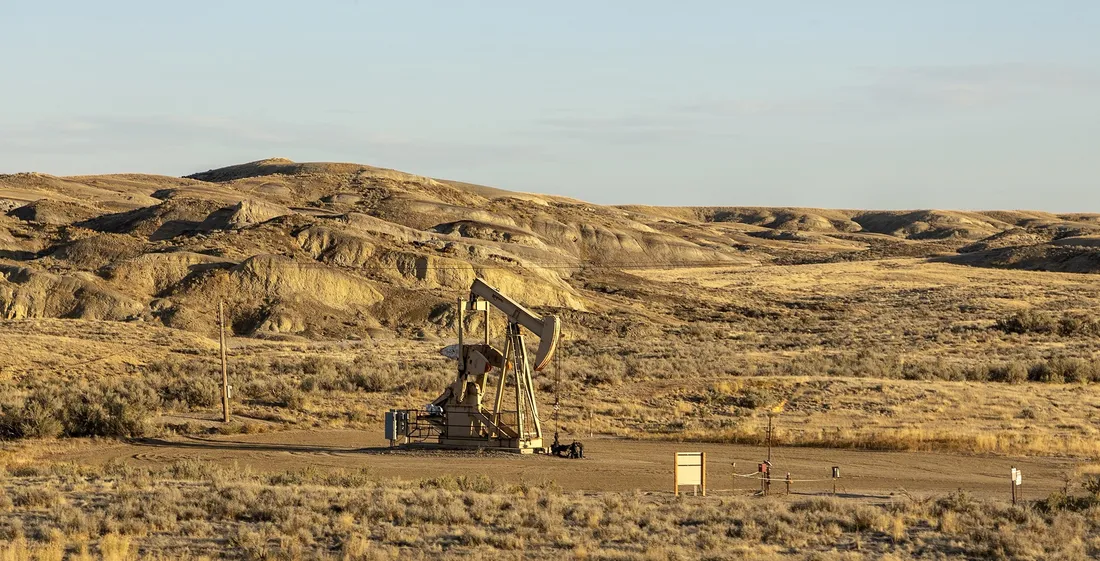
On the Absheron peninsula the evening comes off the land, not off the sea. As the sun goes down the light over the Caspian turns first orange and then the colour of lead. On the flat ground running parallel to the shore, dozens of iron animals set a few hundred metres apart go on lowering and raising their heads. They neither hurry nor slow down.
Sinan had worked on that flat ground for thirty years. He was a petroleum geologist. Looking at a drill core he could tell you which layer belonged to which age, which rock was porous and which was impermeable.
Marc had arrived from Geneva two days earlier. He was on the technical inspection of a pipeline project. But that was not really his trade. He had made watches for forty years, specialising in striking mechanisms, and had started taking on this kind of work after he retired.
They were sitting at an iron table outside the camp house. Marc put down his cup and looked at Sinan's wrist.
"Show me that thing again."
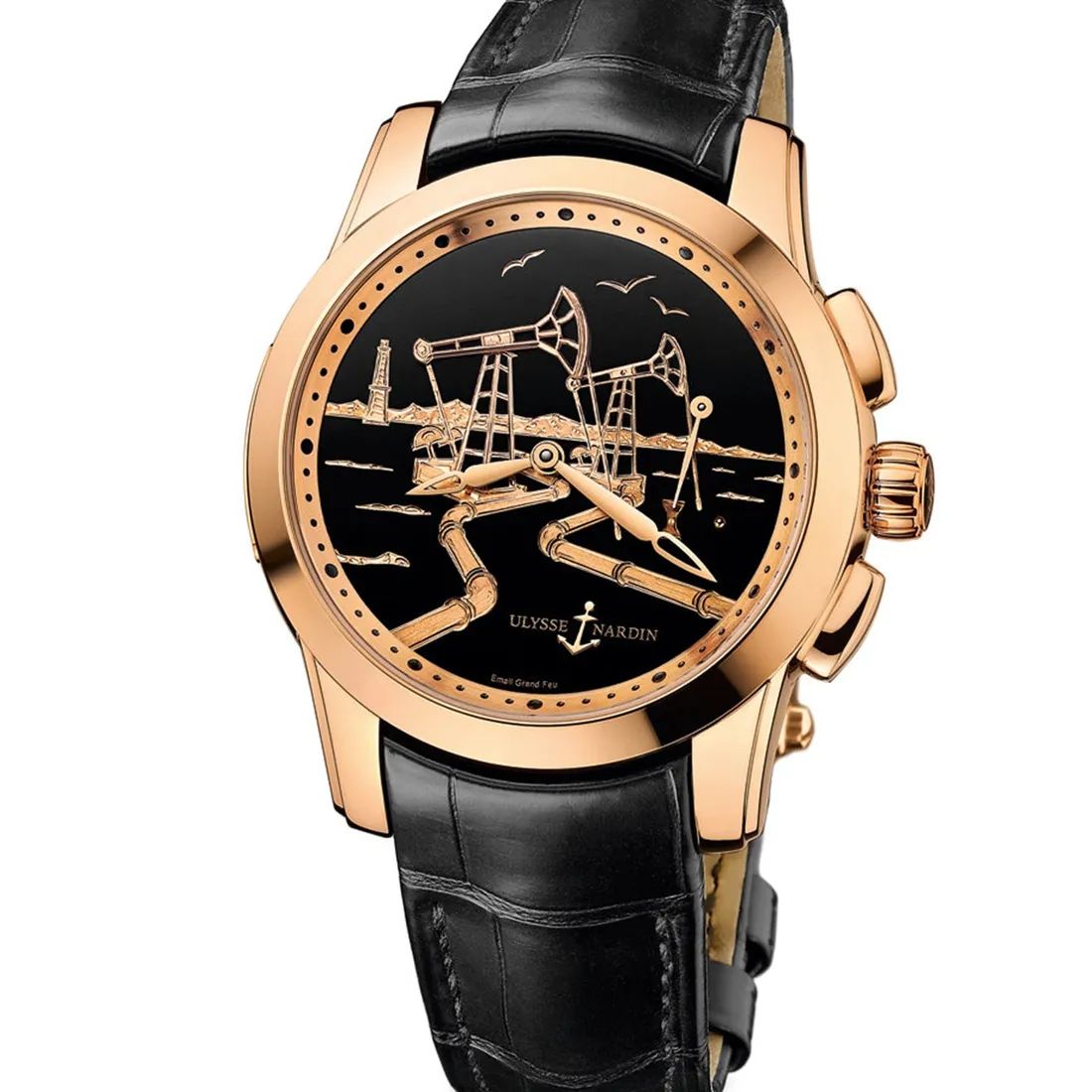
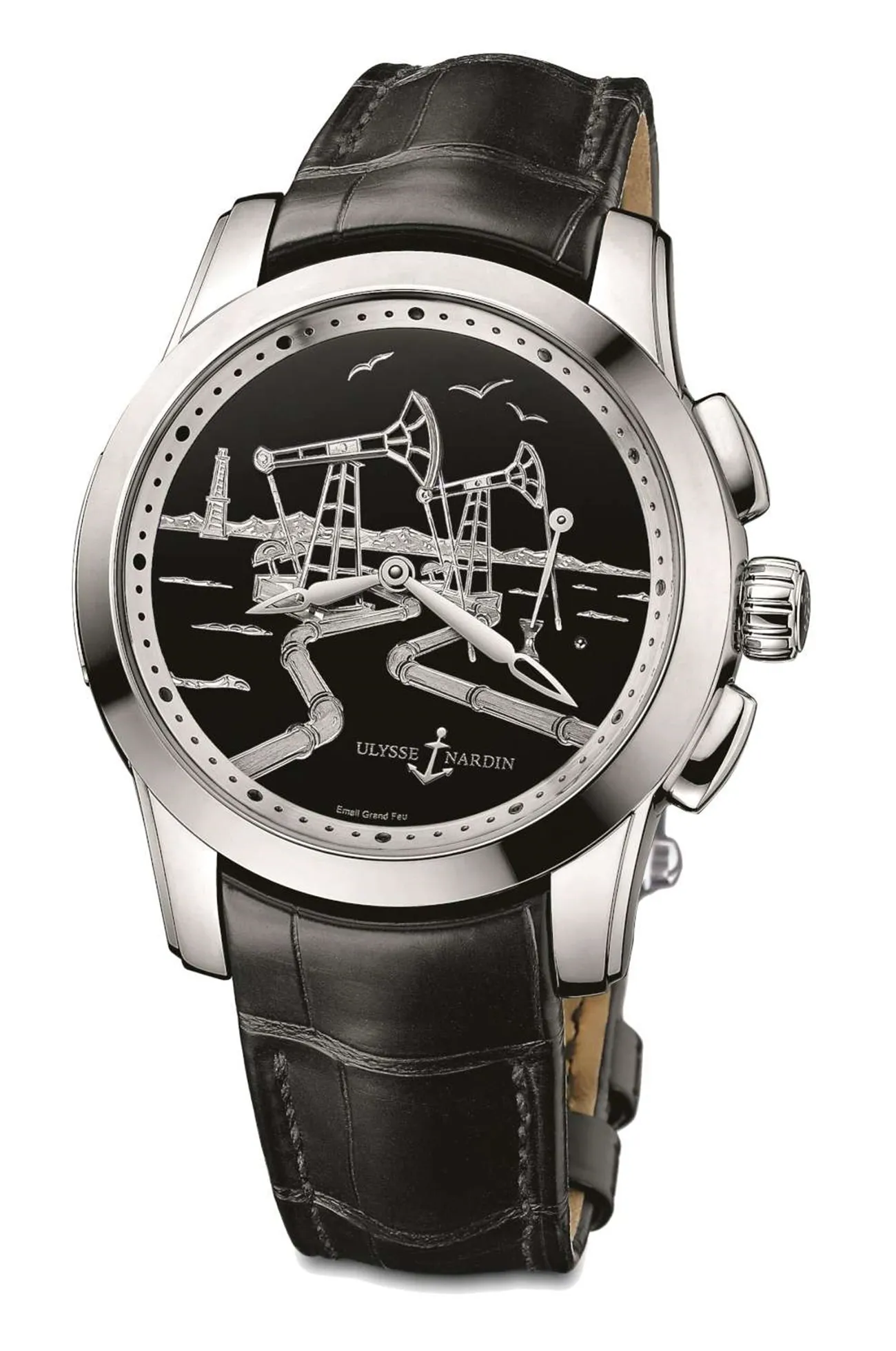
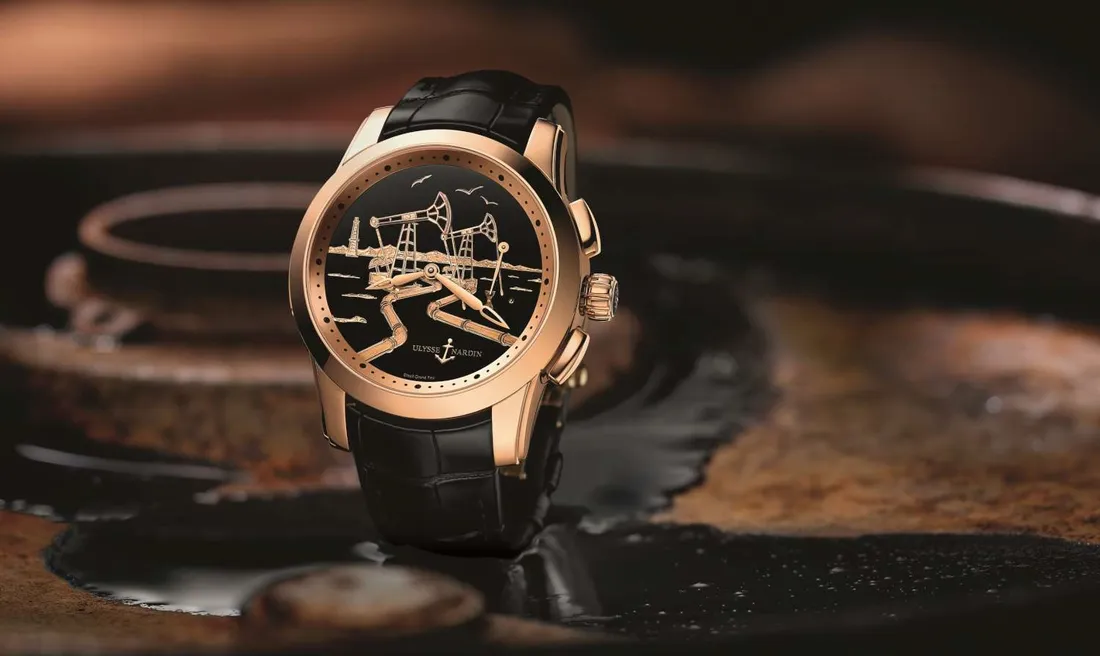
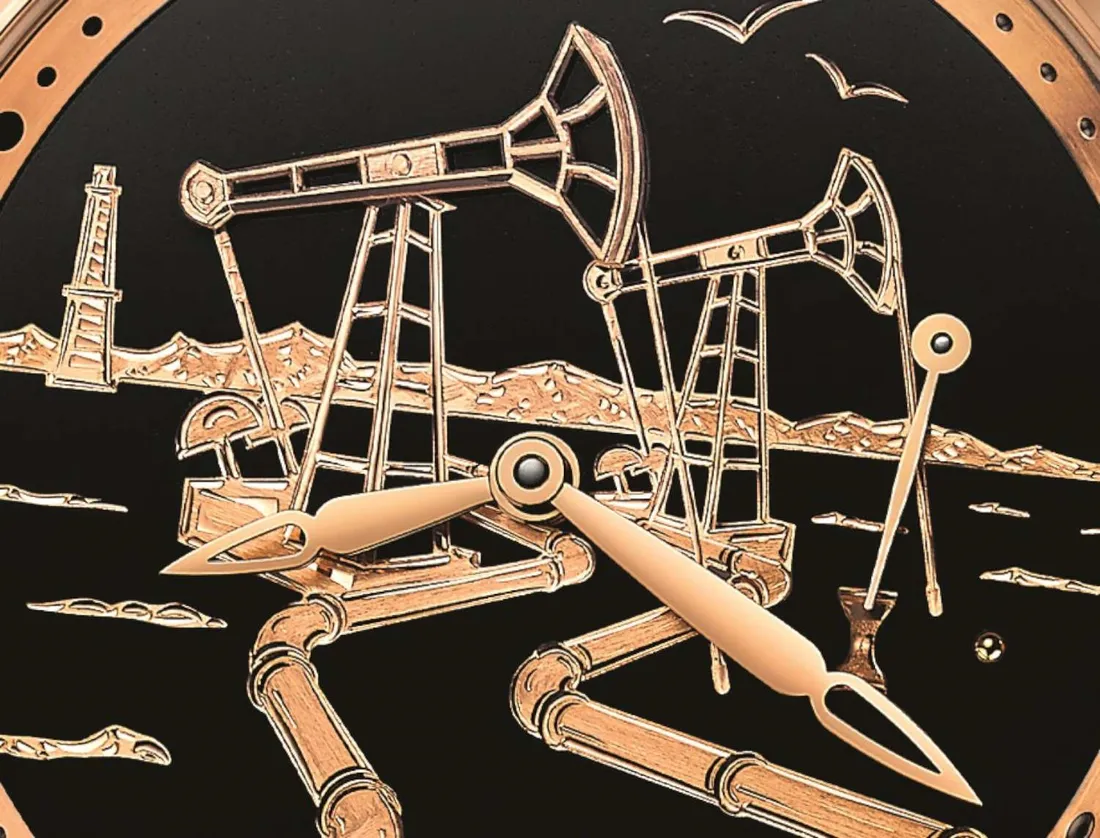
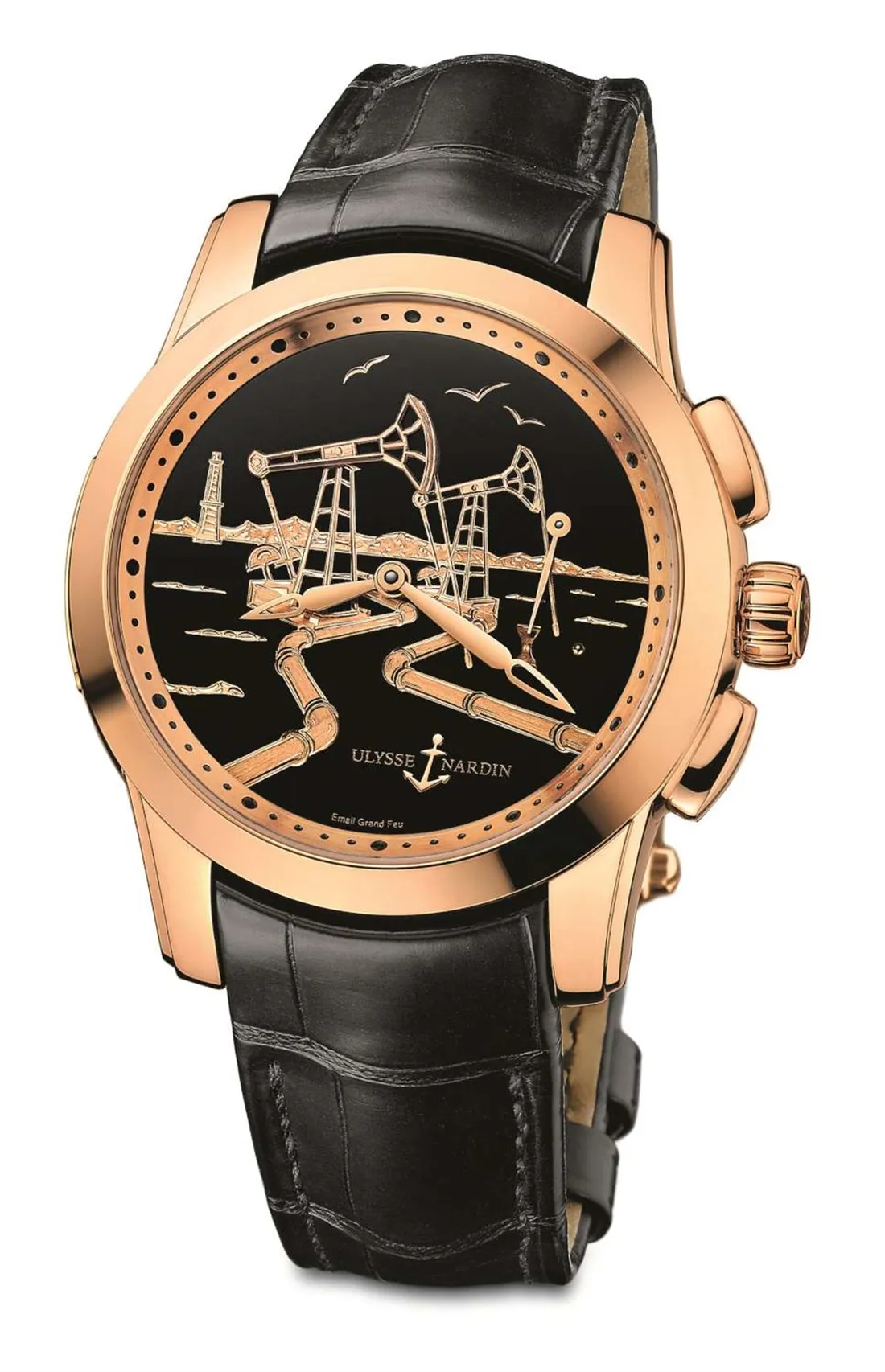
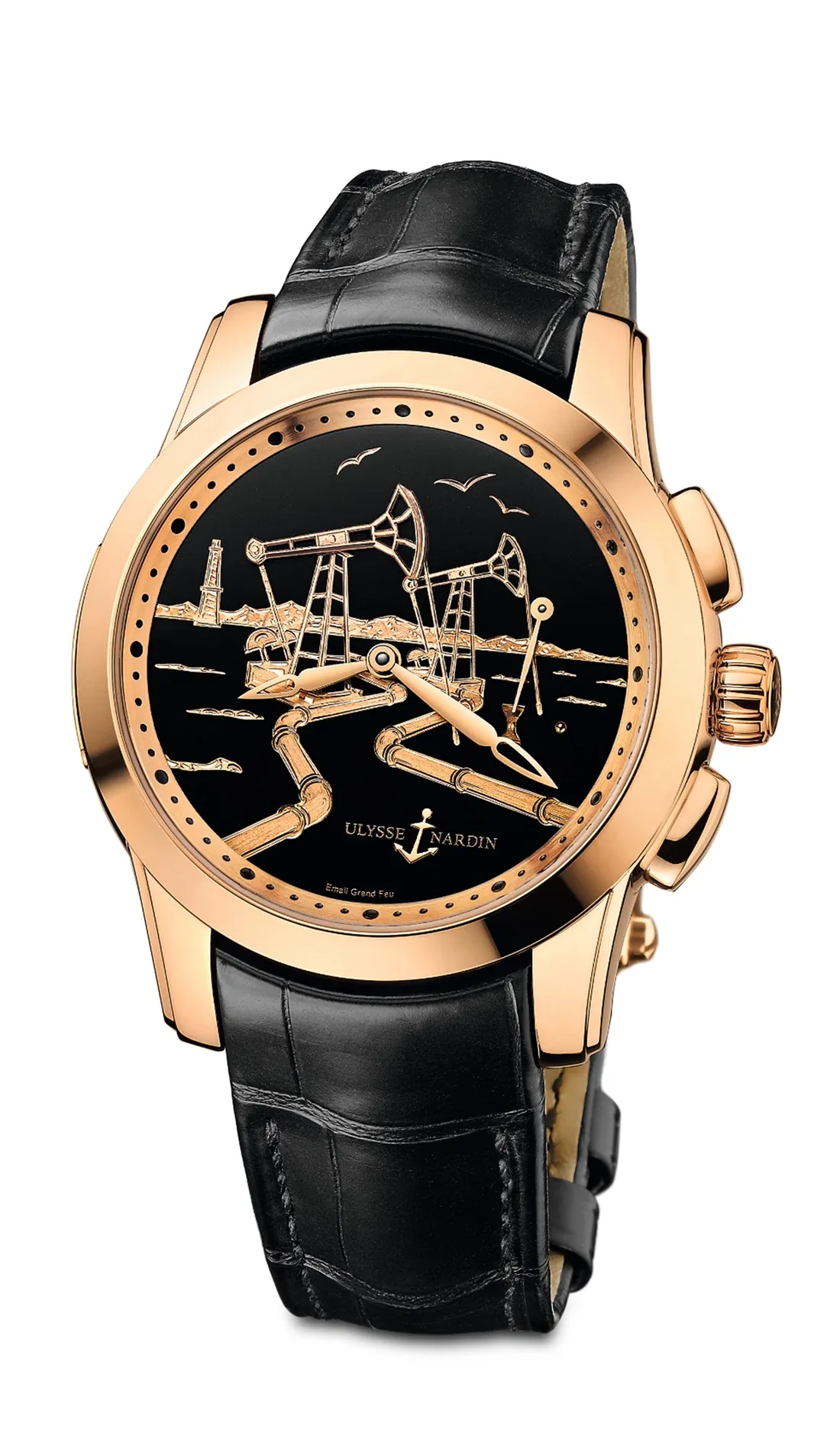
Sinan held out his arm. A black dial. On it, three oil derricks and two pumps made of gold. The arm of the pump in the foreground sat directly beneath the hour and minute hands.
"I bought it thirty years ago. At the time it just seemed like a good joke to me. A pump jack on a geologist's watch."
Marc shook his head.
"It is not a joke. It is a lesson in geology strapped to your wrist. Only nobody tells it that way."

1846: Two Wells Opened in the Same Year
"How do you mean?"
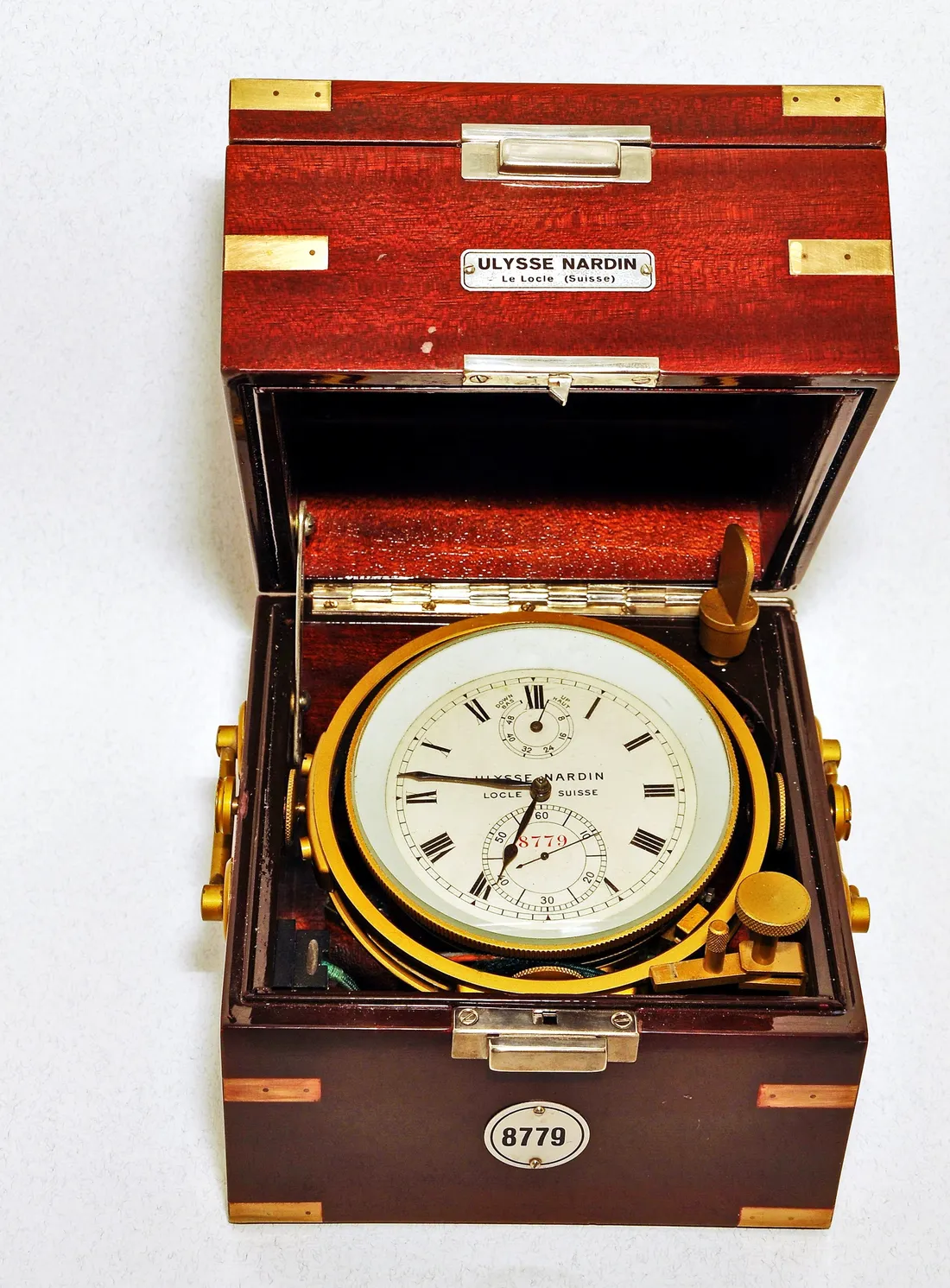
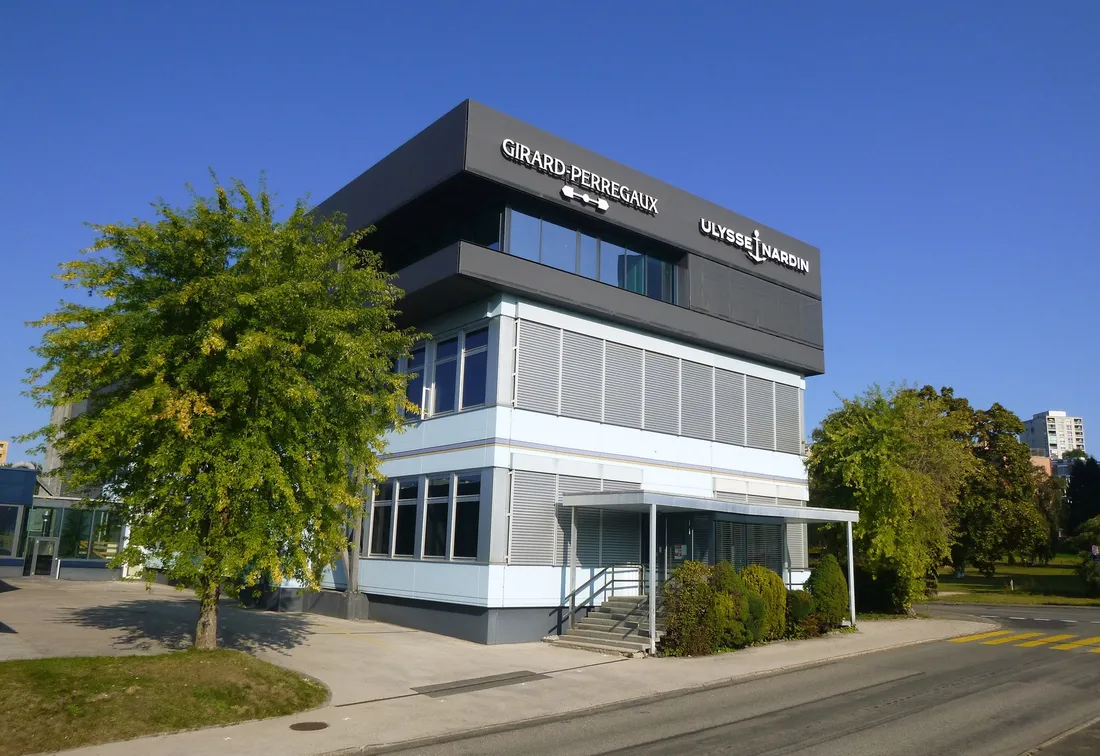
"Let us start here," said Marc. "The name of this watch is Ulysse Nardin. The name of the man who founded it was also Ulysse Nardin. His father was a watchmaker and so was he. At twenty three he borrowed five hundred francs from his father and opened his own workshop in the attic of the family house, in Le Locle. The year was 1846."
Sinan set his cup down slowly on the table.
"Did you say 1846?"
"Yes. Why?"
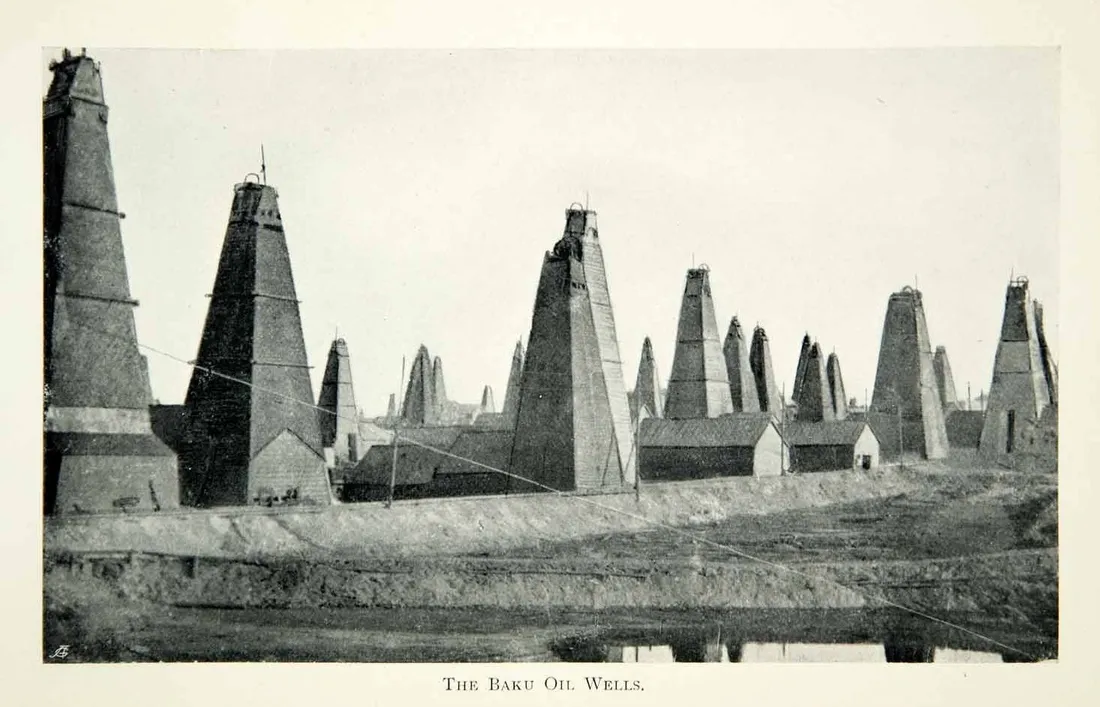
"Because thirty kilometres from here, at Bibi Heybat, the first oil well in the world sunk by drilling was opened in 1846. Twenty one metres deep. Thirteen years before the first well in America."
Neither of them said anything for a while. In the distance the pumps went on lowering and raising their heads.
"The same year," said Marc at last. "One of them went twenty one metres down. The other went up into an attic. In truth they were after the same thing: to take an energy that was waiting inside the ground, or inside a spring, and turn it into a regular movement."
"What was Ulysse Nardin making up in that attic?"
"Marine chronometers. To find your longitude at sea you have to carry a reference clock on board, and that clock has to hold its rate for months, on a rolling ship, through changing temperatures. Ulysse Nardin became the best in the world at it. Over a century, more than three quarters of the marine chronometers tested at the Neuchâtel Observatory came out of this house. Some fifty navies found their way with these instruments."
"And then one day they sat down and put a pump jack on a dial."
"Exactly that. But not without a reason."
The Same Lever
Marc took a pen from the table and drew a horizontal line on a napkin. He put a triangle in the middle of it.
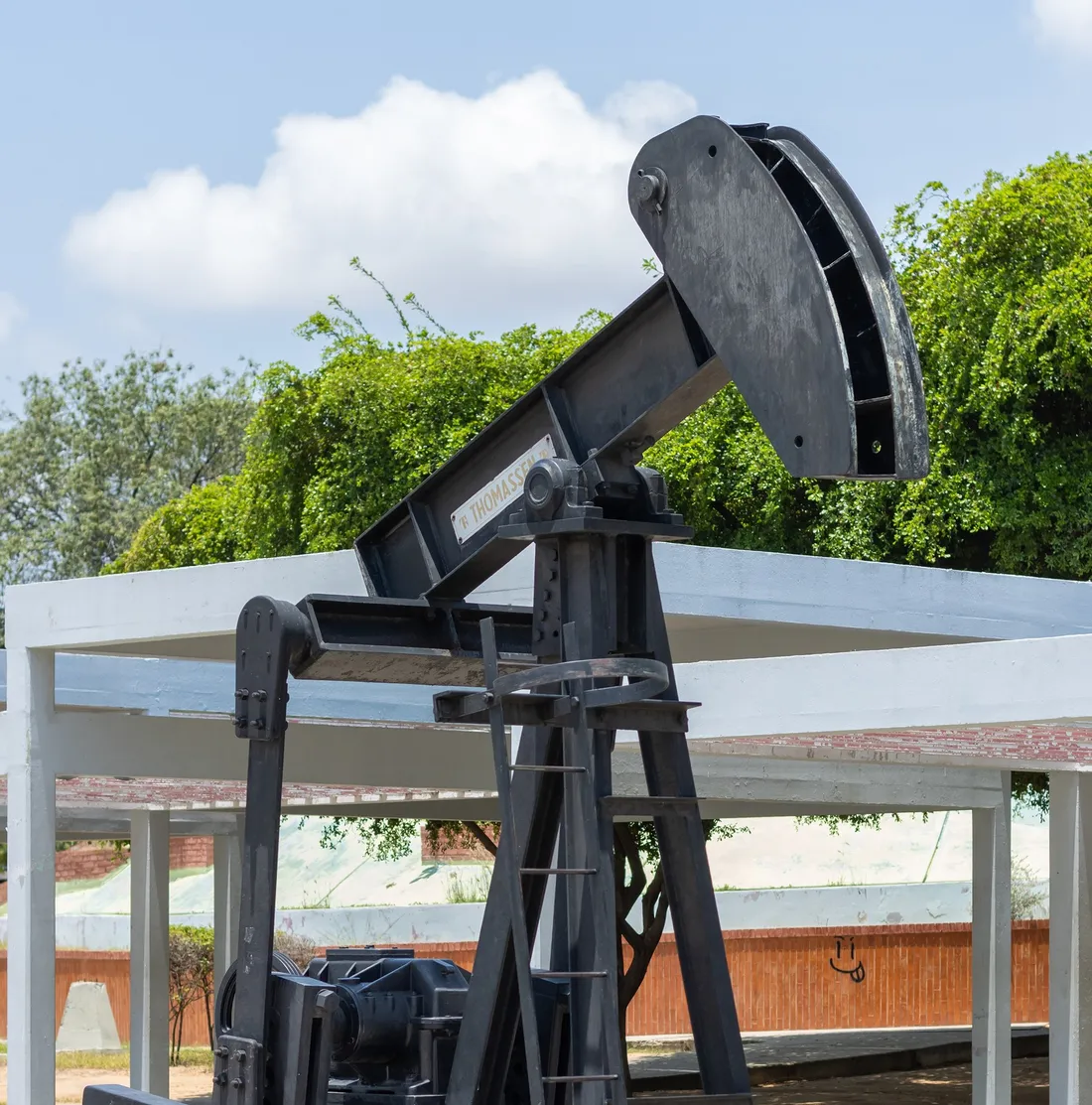
"That is the anatomy of your animal out there. There is a pivot in the middle and a long beam rocking on top of it. At one end of the beam a heavy counterweight, at the other the rod that goes down the well. The counterweight falls, the far end rises, and it pulls the piston at the bottom upwards. Then the reverse happens. A simple lever. Because the pivot is in the middle we call it a first class lever."
"I know that much."
"You do. Here is what you do not. The same thing is inside this watch. In the striking mechanism there is a hammer, the hammer has an arm, the arm has a pivot. A catch is released, a spring pushes the hammer, and the hammer strikes a steel wire that runs around the inside of the case. The same geometry. Only the scale is different. The beam out there is seven or eight metres long; the one in here is a few millimetres."
Sinan looked more closely at the dial.
"And those gold arms just sit there."
"Do they? Wait." Marc pointed to the small pusher on the side of the case. "Press that."
Sinan pressed it.
The sound came first. One short, clean ring. Then the arms of the pumps on the dial went down and came back up. There was no gap between the sound and the movement; they were the same instant.
"This is called a jaquemart," said Marc. "The name given to figures that move on the dial while the watch strikes. But what is being done here is not moving a figure for decoration. The same release that drops the hammer also brings the arm down. So the pump on the dial is not doing the work a real pump does; it is moving for the reason a real pump moves. A lever turning stored energy into a single stroke."
Compressed Sunlight
"All right," said Sinan. "My turn. You told me about the lever. Let me tell you what that arm is pulling."
He stood up and pointed at the flat ground.
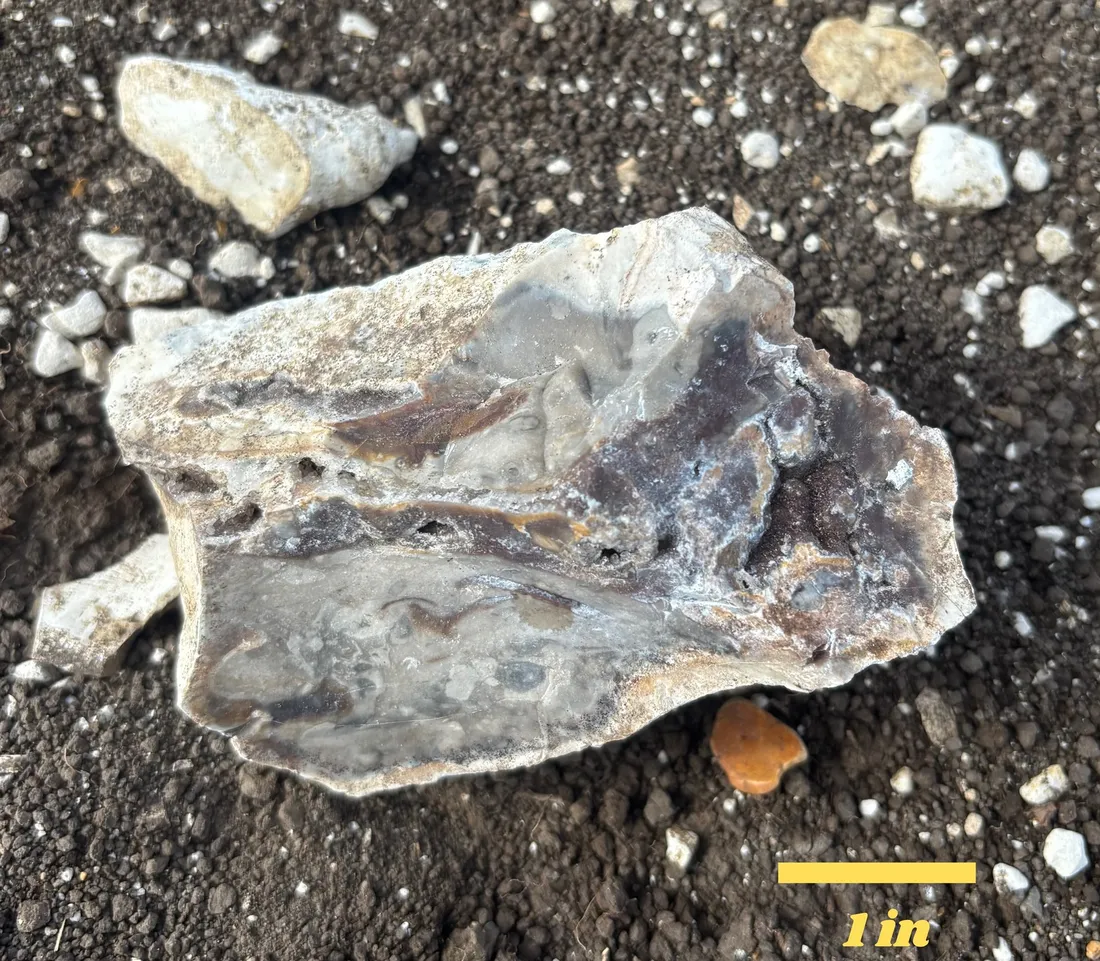
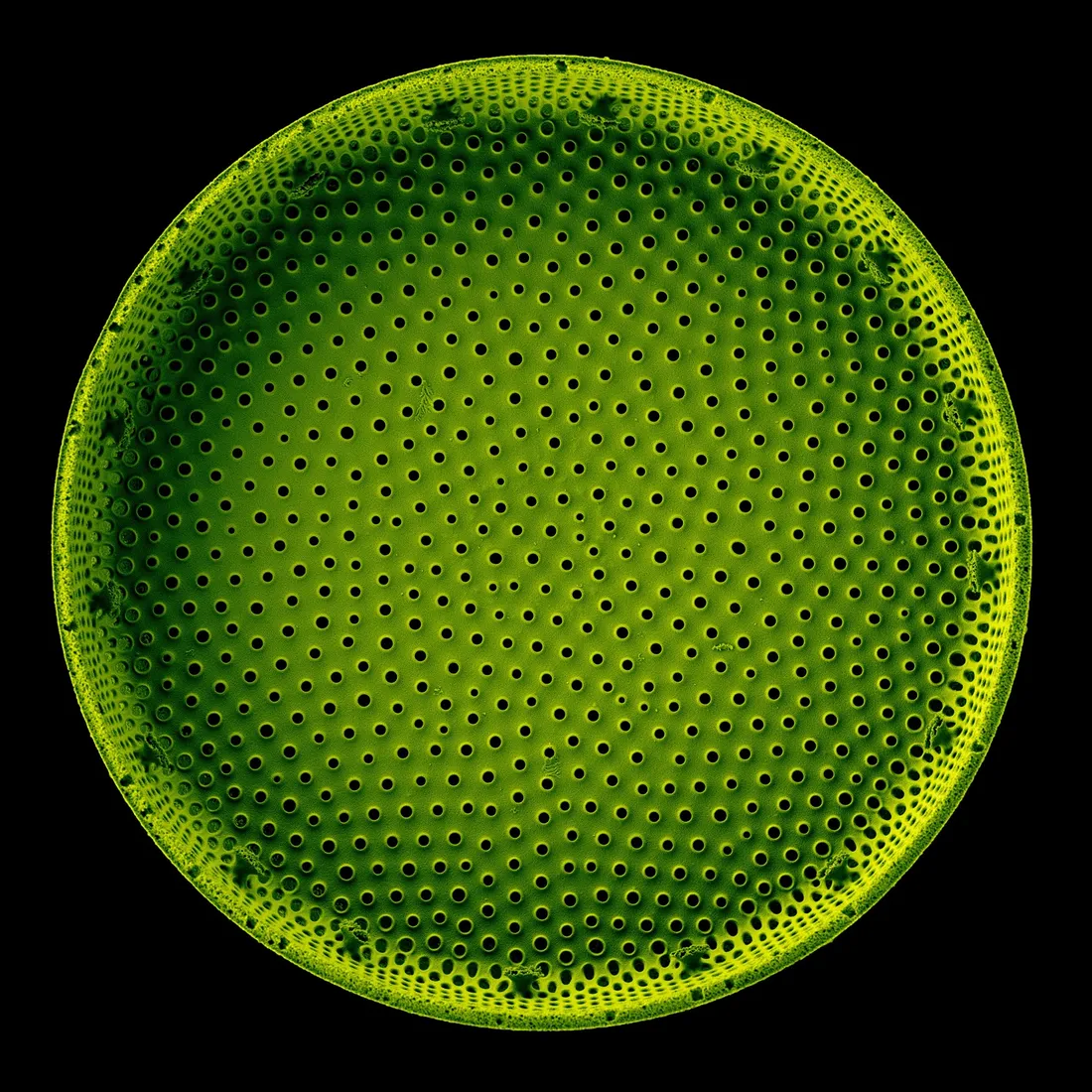
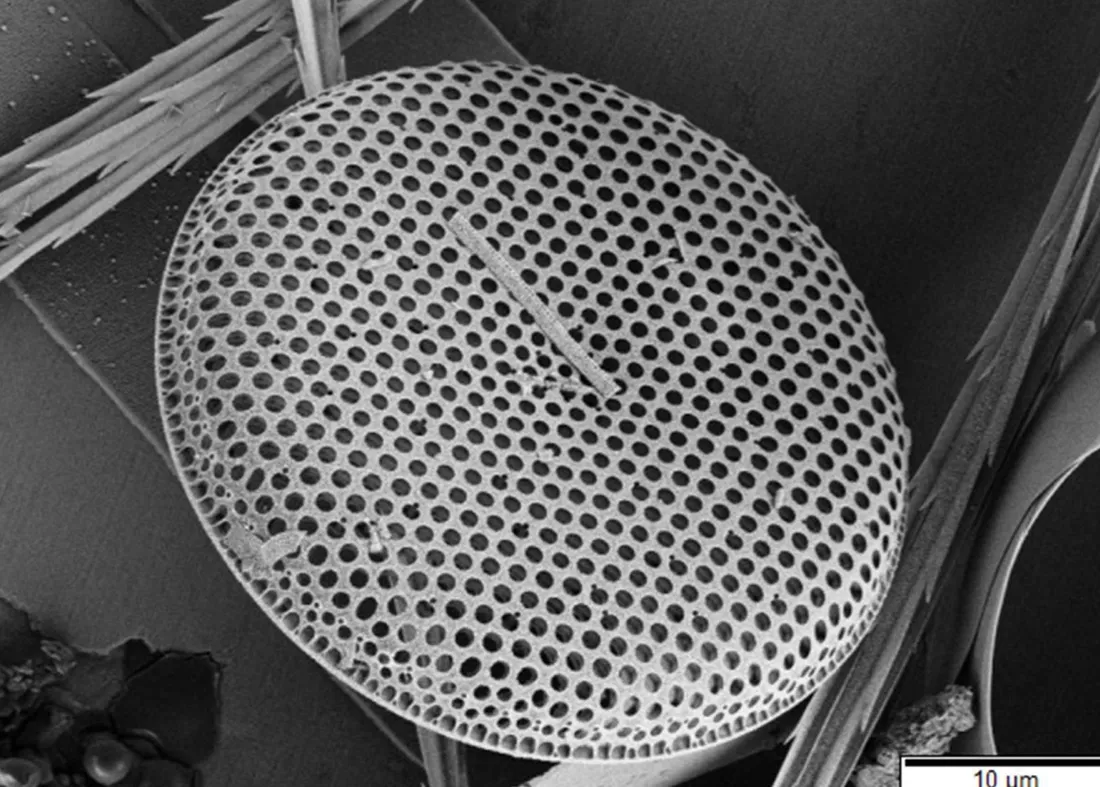
"What comes out of here is not a liquid mineral. It was once alive. Something like a hundred million years ago, in a warm sea that was the ancestor of this water, invisible algae and diatoms were floating. A diatom does one thing: it catches sunlight and turns it into a chemical bond."
"Photosynthesis."
"Photosynthesis. When those organisms died they sank to the bottom. On a bottom without oxygen they could not rot, so mud came down on top of them, and more mud on top of that. Kilometres of it. The pressure rose, the temperature rose. Between about sixty and a hundred and sixty degrees, over millions of years, that organic matter slowly turned into hydrocarbon. Geologists call that range the oil window. Any colder and the change never starts; any hotter and everything ends up as gas."
Marc narrowed his eyes.
"So what that pump is pulling up..."
"Is sunlight that fell on this sea a hundred million years ago. Compressed. Coming up at five or six strokes a minute."
Marc looked at the dial for a long moment.
"Then the same thing is inside this watch," he said. "On a smaller scale. In the morning you swing your arm, a weight inside turns, and it winds a spring. The spring stores that movement. Then it gives it back, slowly, over forty two hours. Eight times a second, in equal measure."
"What is the difference?"
"The difference is scale. Your field gives back a hundred million years of sunlight over fifty years. My spring gives back one movement of a wrist over forty two hours. But the job is the same job: turning accumulated energy into a regular rhythm. Both are a store and a counter."
Two Kinds of Fire
"There is one more thing," said Marc, turning the dial to the light. "Look at that black. It is not paint. It is glass."
"Glass?"
"Grand feu enamel. Glass ground to a powder, laid over a gold ground and put into a kiln. A kiln above eight hundred degrees. In there the powder melts and fuses to the ground. Then it is cooled, another coat goes on, and back it goes. Every time, the dial can crack, the colour can turn, the gold can move. Only the craftsman knows how many times it went into the fire."
"Why go to all that trouble?"
"Because what you end up with no longer ages. Enamel does not fade, does not oxidise, is not touched by ultraviolet. In a hundred years it is the black it is today. Paint cannot do that."
Sinan laughed.
"Do you realise the two of us are describing the same thing?"
"Tell me."
"Your enamel is cooked for a few minutes at eight hundred degrees. My oil is cooked for millions of years at a hundred. One is very hot and very short, the other is warm and very long. But they are the two ends of the same equation: heat multiplied by time. And in both cases the result is a substance that does not go back."
Marc smiled. "The derricks on the dial are gold as well. Carved by hand, then set onto that black. So you have the product of two different fires on your wrist: the fire of the enamel and the fire of the gold."
The Architecture of the Sound
"And where does the sound come from?" asked Sinan. "Is there a bell in there?"
"Not a bell. A wire. A steel wire that runs around the inside of the case and is fixed at its ends. We call it a gong. When the hammer strikes it the wire vibrates, the vibration passes into the case, and the case gives it to the air. The case of a wristwatch is a small closed volume; getting the sound out of it is the hardest part of the job."
"When does it strike?"
"Two ways. You can press the pusher, as you did just now, and have it strike at once. Or you can switch it on, and then it strikes by itself on every hour and every half hour. That is what an hourstriker is. Note that this is not a minute repeater. A minute repeater counts out the hours, the quarters and the minutes separately when you ask it to; there is no such counting here. What happens here is simpler and more stubborn: the hour has come, so strike."
"Like out in the field."
"Like out in the field. Nobody walks up to a pump and asks it what time it is. The pump works without being asked."
Sinan took the watch off his wrist and turned it over. The case back was sapphire and the movement showed through it.
"Do you see that hammer?" said Marc. "And that gong wire. Everything that happened when you pressed the pusher happened in there. The calibre is called the UN-610. Self-winding, forty one jewels, with a chronometer certificate. Forty two hours of power reserve."

The Specification
Model: Ulysse Nardin Hourstriker Oil Pump, 2015.
References: 6106-131/E2-OIL in 18 carat rose gold; 6109-131/E2-OIL in platinum.
Case: forty two millimetres, water resistant to thirty metres, sapphire crystal, screwed sapphire case back.
Dial: black grand feu enamel, with hand-carved 18 carat gold derricks and pumps set onto it.
Movement: calibre UN-610, self-winding, 41 jewels, around 42 hours of power reserve, chronometer certified.
Complication: strikes the hours and the half hours, and can also be triggered on demand. The pump arms on the dial are jaquemart automatons that move at the moment of striking.
Strap: black alligator.
Production: eighteen pieces in each metal. Launch prices of 129,000 dollars in rose gold and 150,000 dollars in platinum.
Closing
When it had gone properly dark, Sinan put the watch back on and pressed the pusher one more time.
The sound came. The arms went down and came up.
Far off, over the flat ground, the real pumps went on going down and coming up. There was no synchrony at all between the miniature on his wrist and the giants on the horizon. One was announcing the hour. The other was pulling up an accumulation a hundred million years old.
"I did not know any of this when I bought it," Sinan said.
Marc shrugged. "A watch tells you the time. A good watch also makes you ask where the time came from."