On a Cartographer's Desk
North of London, in a studio converted from an old printworks, the cartographer Owen's desk always looked the same: sea charts piled one on another, faded inks, and a silver pair of compasses set to one side. Owen restored maps fifty years old; he believed a map showed not only a place, but courage.
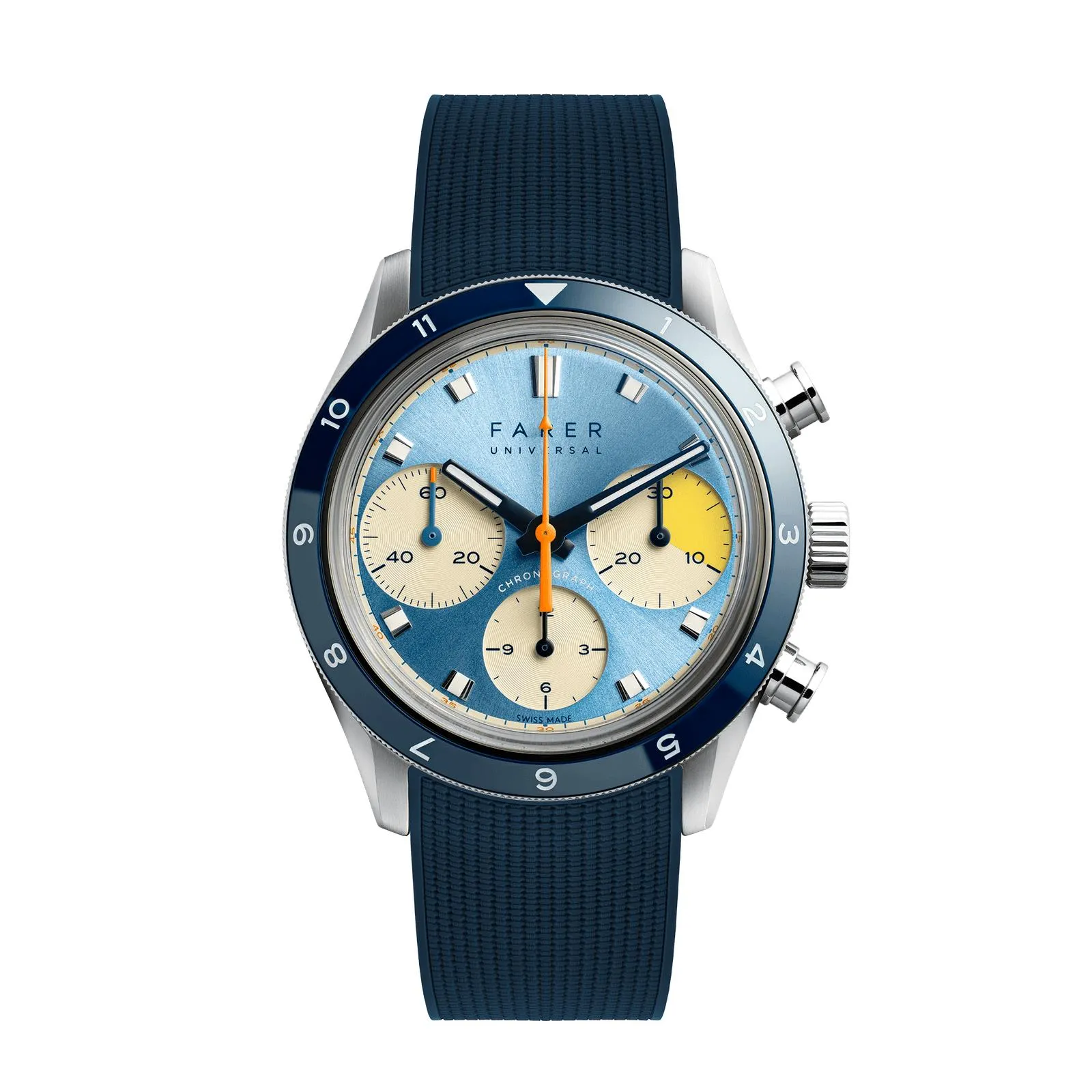
That morning his niece Nora had come to ask about the watch she would buy herself with her first salary. "I want a serious watch," she said, "but one that will not bore me." Owen smiled and took a small box from a drawer. The chronograph that came out of it changed the colour of the whole room at once: an ice-blue dial, darker blue counters upon it, and a single bold splash of yellow.
"This is a Farer," said Owen. "A British independent brand. They design in London, have the watches made in Switzerland and sell them directly; because there is no shop's margin in between, they can give you a chronograph of this quality at a far more honest price. But what really caught me was their courage with colour."
Every Watch Carries an Explorer's Name
Nora looked at the writing on the back of the watch. "Volante," she read. "What does it mean?" Owen's eyes lit up; this was his favourite part. "Farer names all its watches after British explorers, sailors and pioneers," he said. "Even the name of the brand comes from this: in old English, a 'farer' is one who travels, a wayfarer."
"Look," he went on, touching one of the charts on the desk. "These names are the same as the names on my maps. They were people who drew a coastline for the first time; no one had told them what was correct, they had to find it themselves. Farer designs its watches the same way: putting side by side colours no one else uses, and testing for themselves whether it works."
Nora laughed: "So this watch is like a document of discovery." "Exactly," said Owen. "And like a good cartographer, they place no colour by accident."
format_quote"In old English, a 'farer' is one who travels. And these watches carry the names of travellers."
Owen
Colour Has a Job to Do
Owen held the dial up to the light and pointed to each part in turn. "On a chronograph you have to read three things at once: the time, the elapsed minutes and the elapsed seconds. Most brands do this in a single colour to keep the dial calm; but the result is this: when you are in a hurry you confuse which hand is which."
"Farer does exactly the opposite," he said. "That slender, long hand is the chronograph seconds; they have painted it yellow. The small counter on the right counts the elapsed minutes; its hand is orange. The one on the left is the watch's own small seconds. So your eye looks for a colour, not a shape. You find the right information in half a second. Colour here is not ornament, it is a sign language."
"And these buttons?" asked Nora, pointing to the two small pushers on the right of the case. "The top one starts and stops," said Owen. "The bottom one resets. A chronograph is really a second mechanism placed inside a watch; when you press the button, a small clutch engages and links that hand to the main wheels. The watch's own time never stops; you have simply pinned a stopwatch beside it."
format_quote"Colour here is not ornament, it is a sign language."
Owen
A Dial That Speaks in the Dark
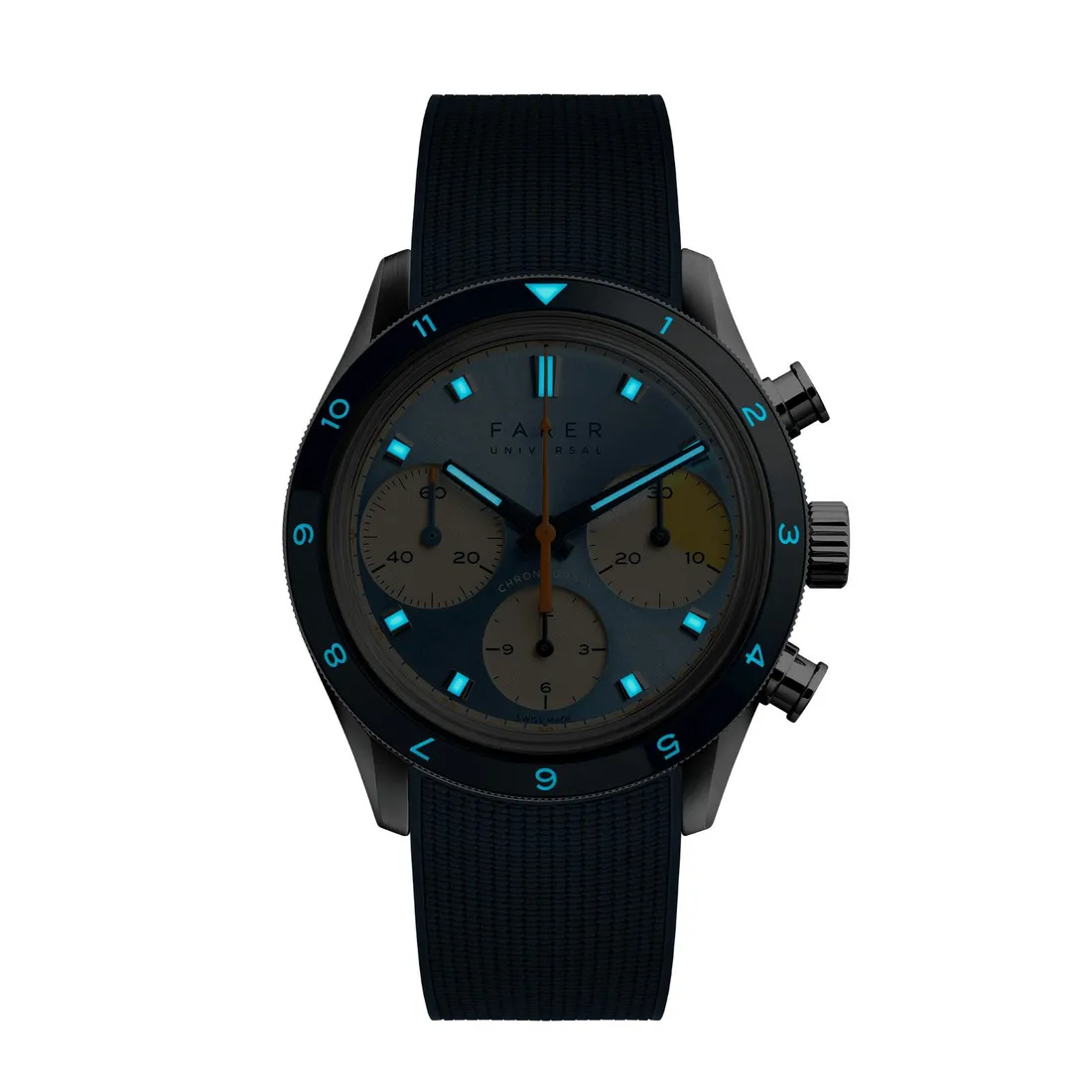
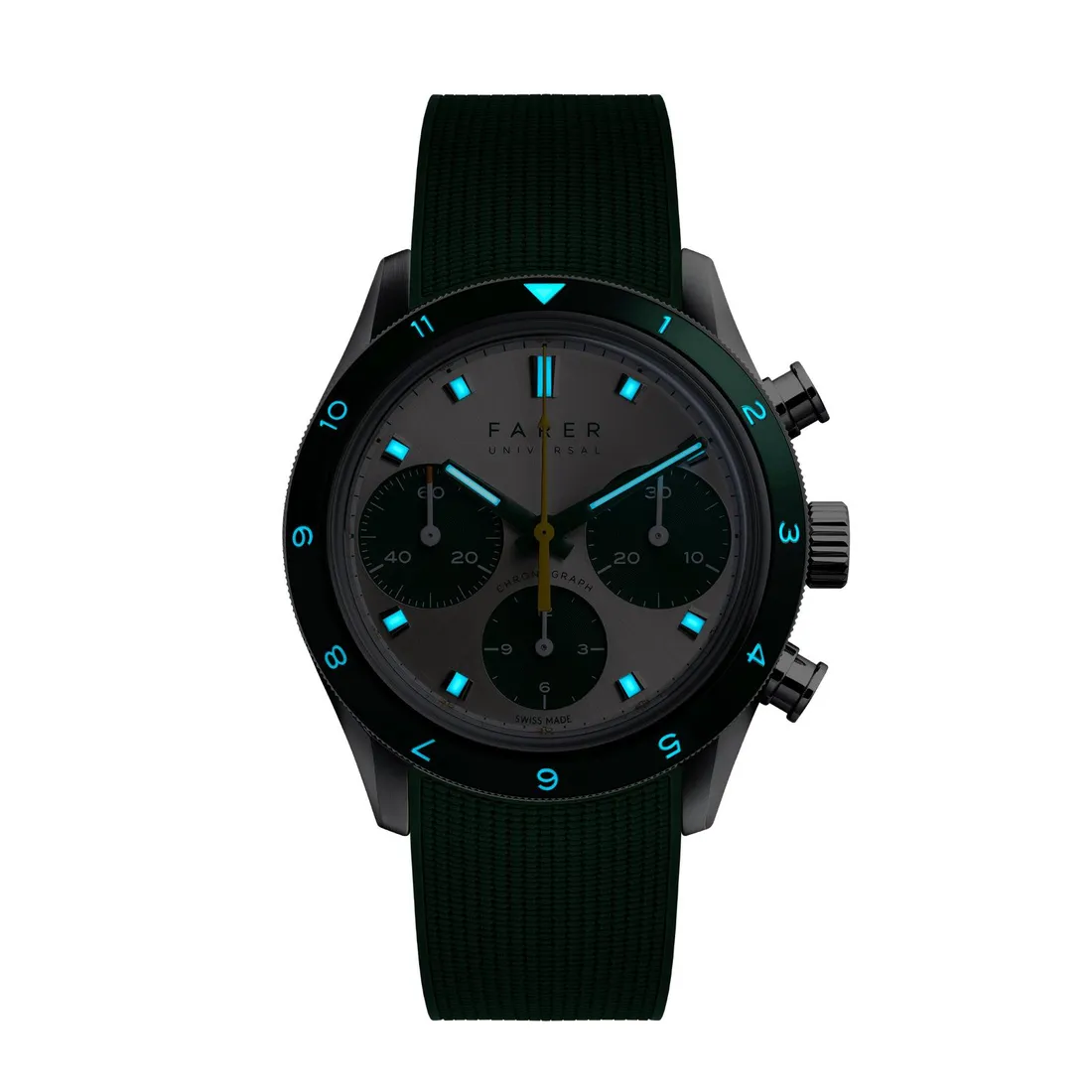
Owen drew the curtain and plunged the room into darkness. Nora let out a cry: the dial glowed with an ice-blue light, as if lit from within. The triangle marker on the bezel, the numerals, the tips of the hands; each was visible separately.
"We call this lume," said Owen. "A substance that drinks in light all day and gives it back in the dark. It is not radioactive; simply a paint that keeps the sun in its memory. What Farer does is this: they put different colours of lume in different areas. So even in darkness you can tell which hand is which. The play of colour you see by day continues by night."
He opened the curtain again. "That is good design," he said. "Thought through not for show, but to work in every condition in which it is used."
Three Colours, Three Characters
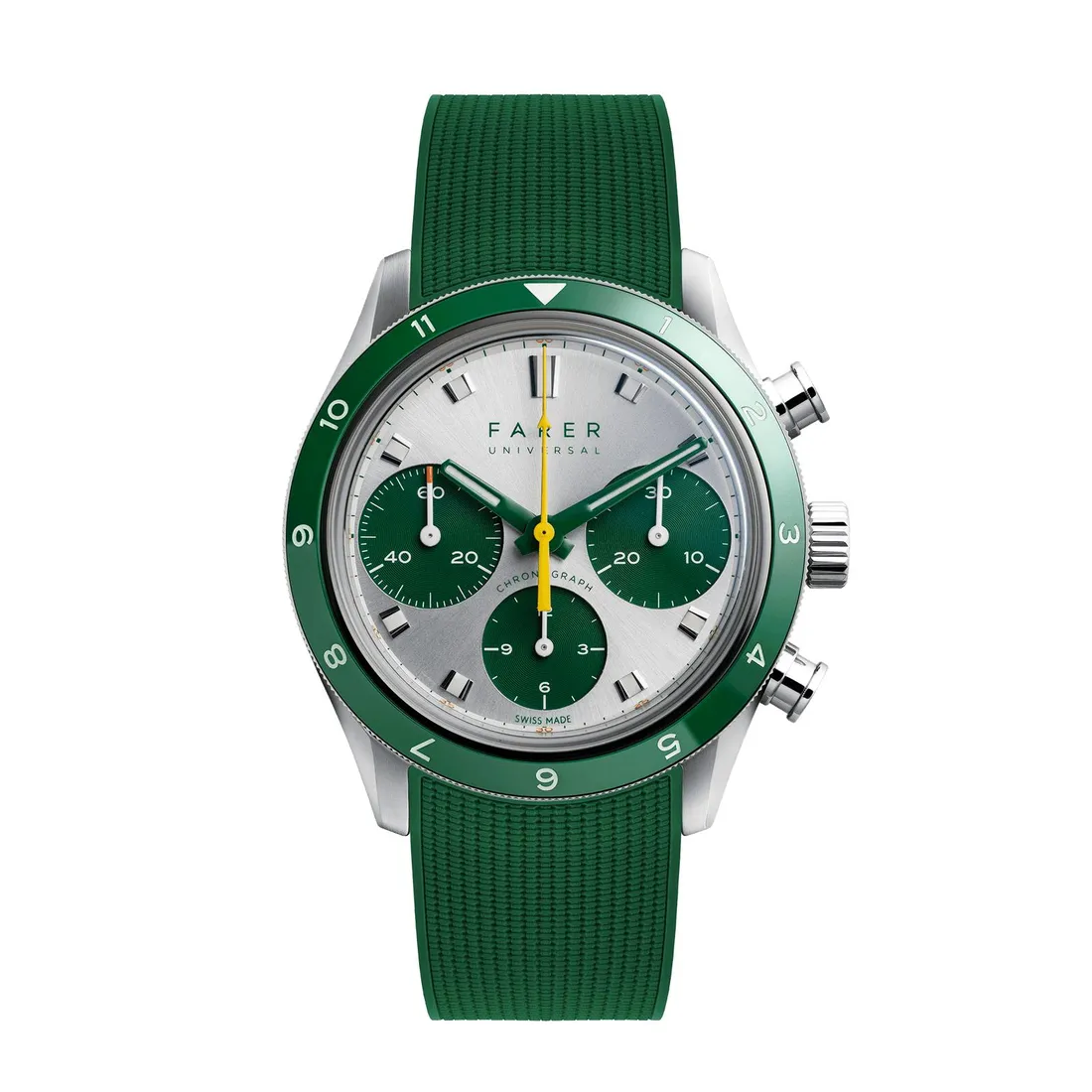
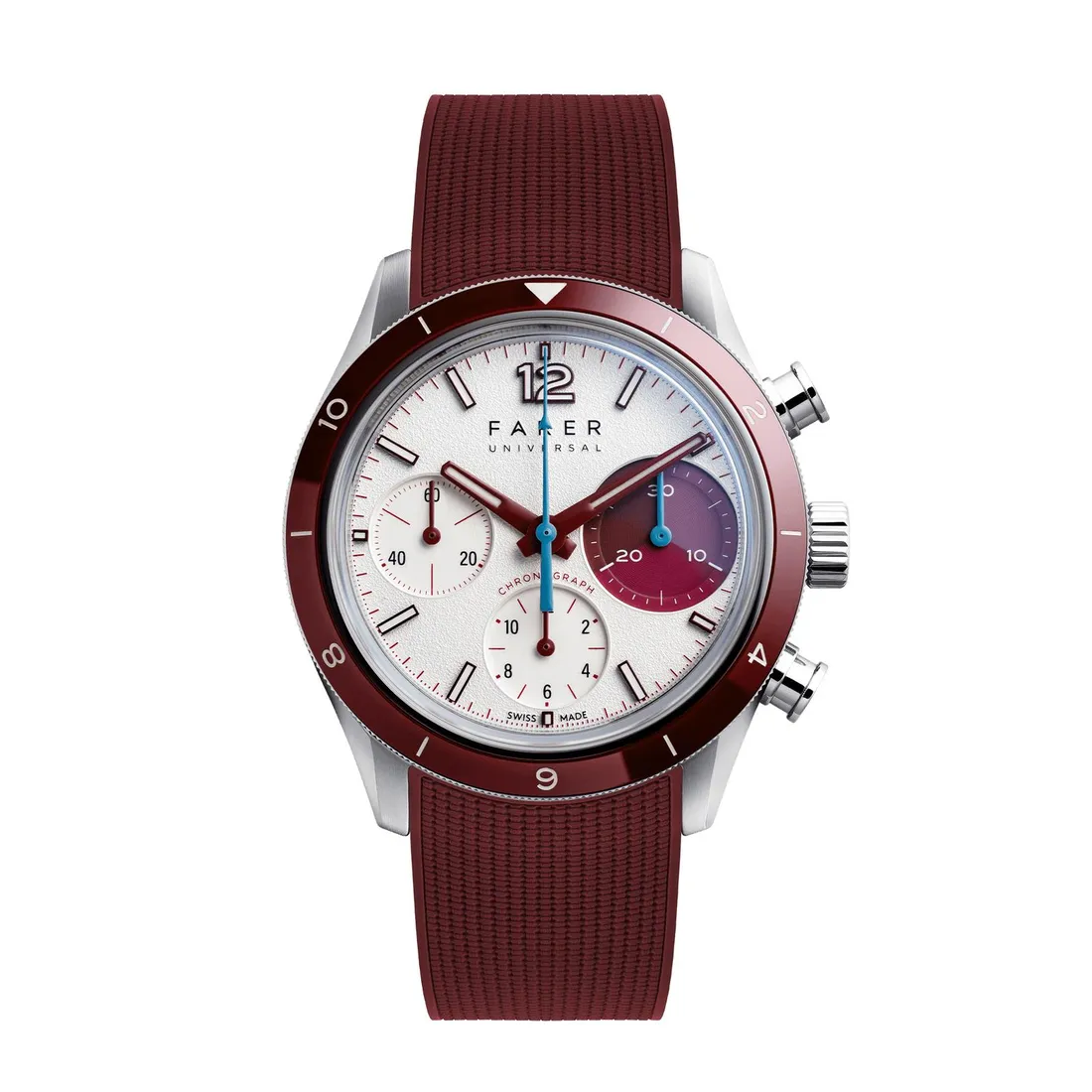
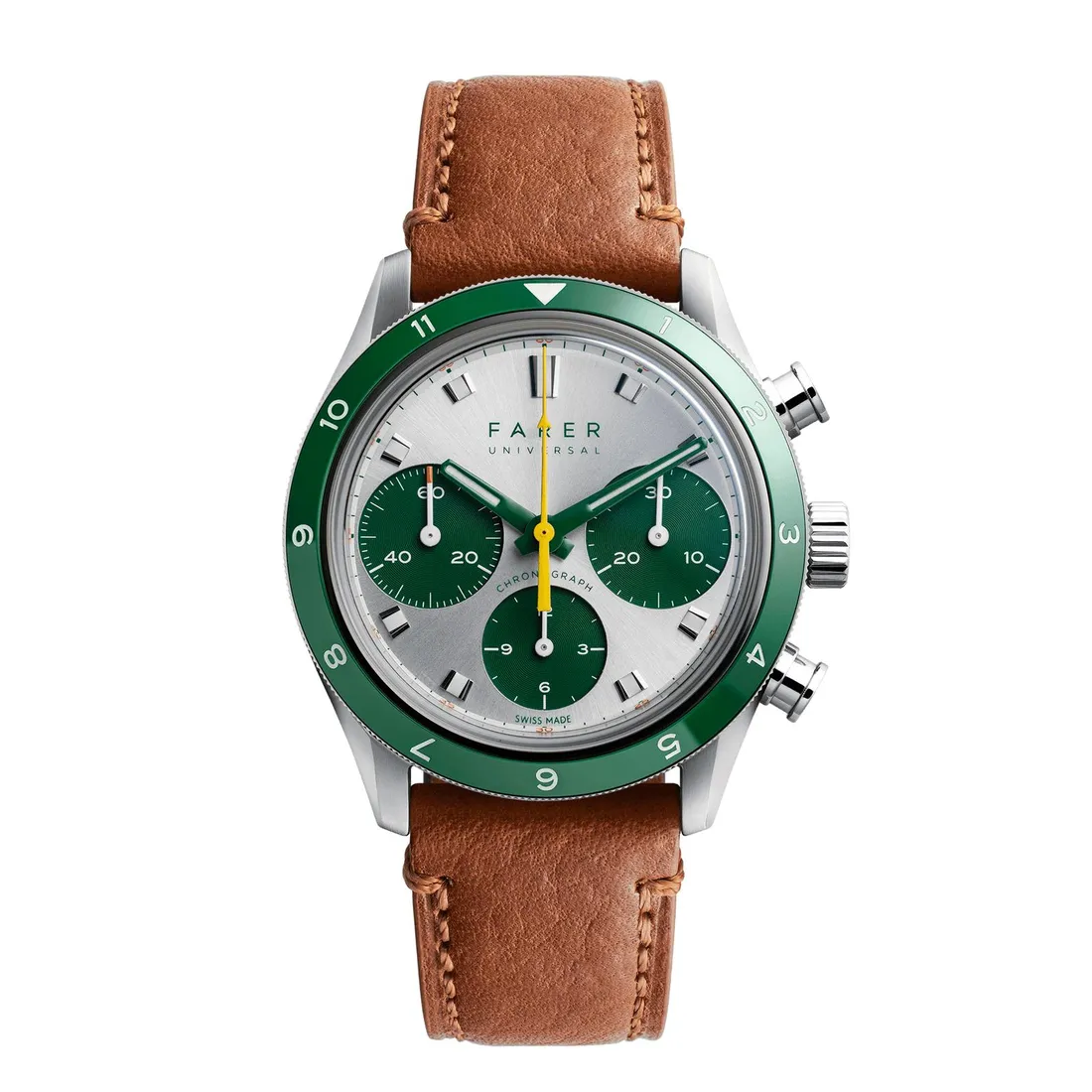
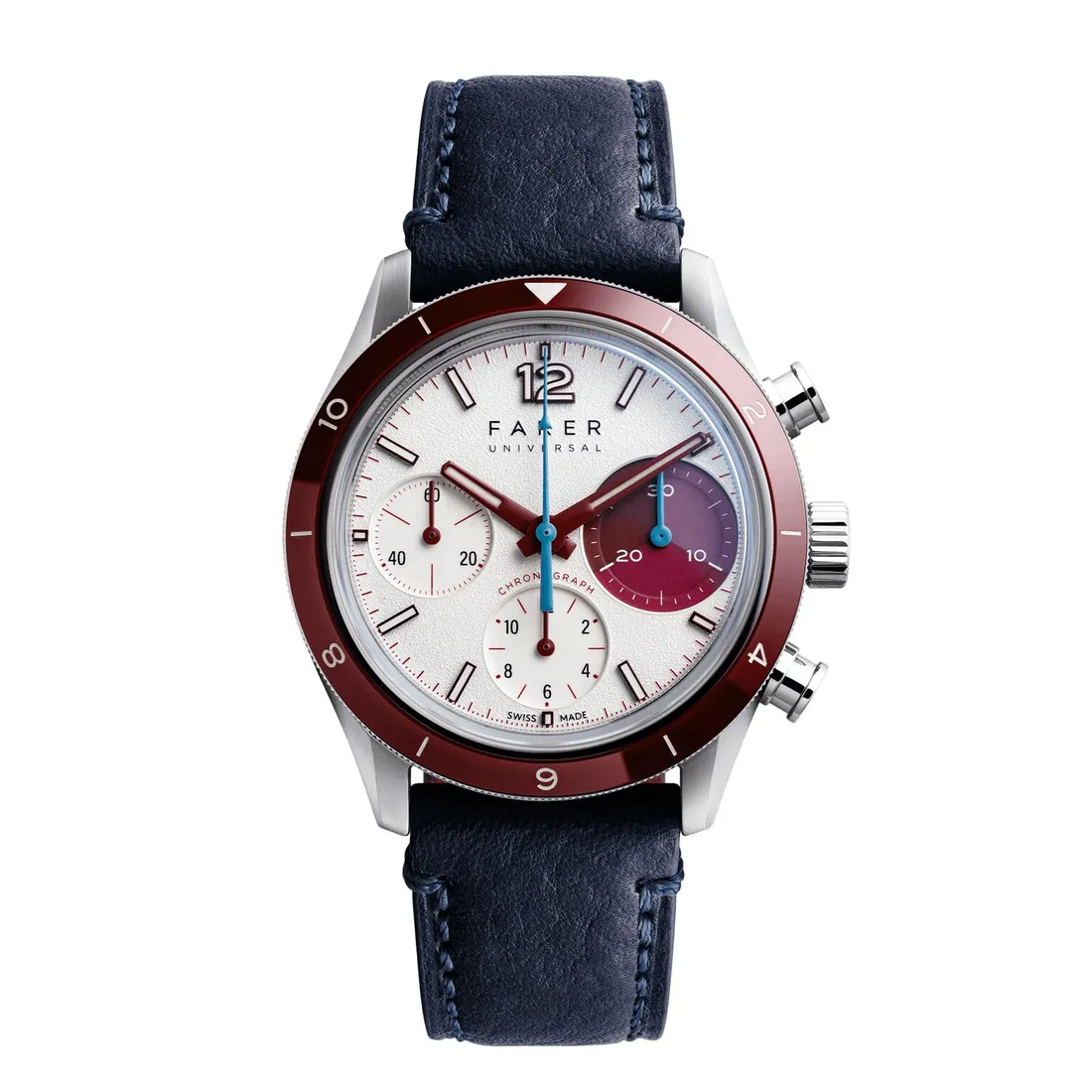
Owen took two more watches from the box. "These are siblings of the same family," he said. "That ice-blue one is the Volante; like sky and speed. The one with the green bezel is the Gara; like forest and earth, the calmest. And this burgundy one is the Libre; like an old leather-bound journal, the warmest."
"All have cases of around 39 millimetres," he added. "For a chronograph that counts as small, and that is exactly why they are elegant; chronographs are usually thick and large. The straps change too: rubber for a run in the morning, suede for the table in the evening. The same watch, three separate lives."
Nora set the three side by side and looked at them a long while. "Choosing a colour," she said at last, "turns out to be like choosing a character."
Drawing a New Map
In the end Nora chose the ice-blue one, the Volante. As Owen fastened it to her wrist, he pointed to one of the old charts on the desk: its edges worn, its ink faded, but the coastline upon it still clear.
"The man who drew this map," he said, "did not know what was there before he saw that coast. He set out all the same. Today you are not simply buying a watch with your first salary; you are beginning to draw your own map."
Nora pressed the chronograph button. The yellow hand began to turn around the dial; small, bright and steady. Outside, London's grey afternoon went on, but on her wrist a handful of colour was drawing its own way.