By the Bank of a River
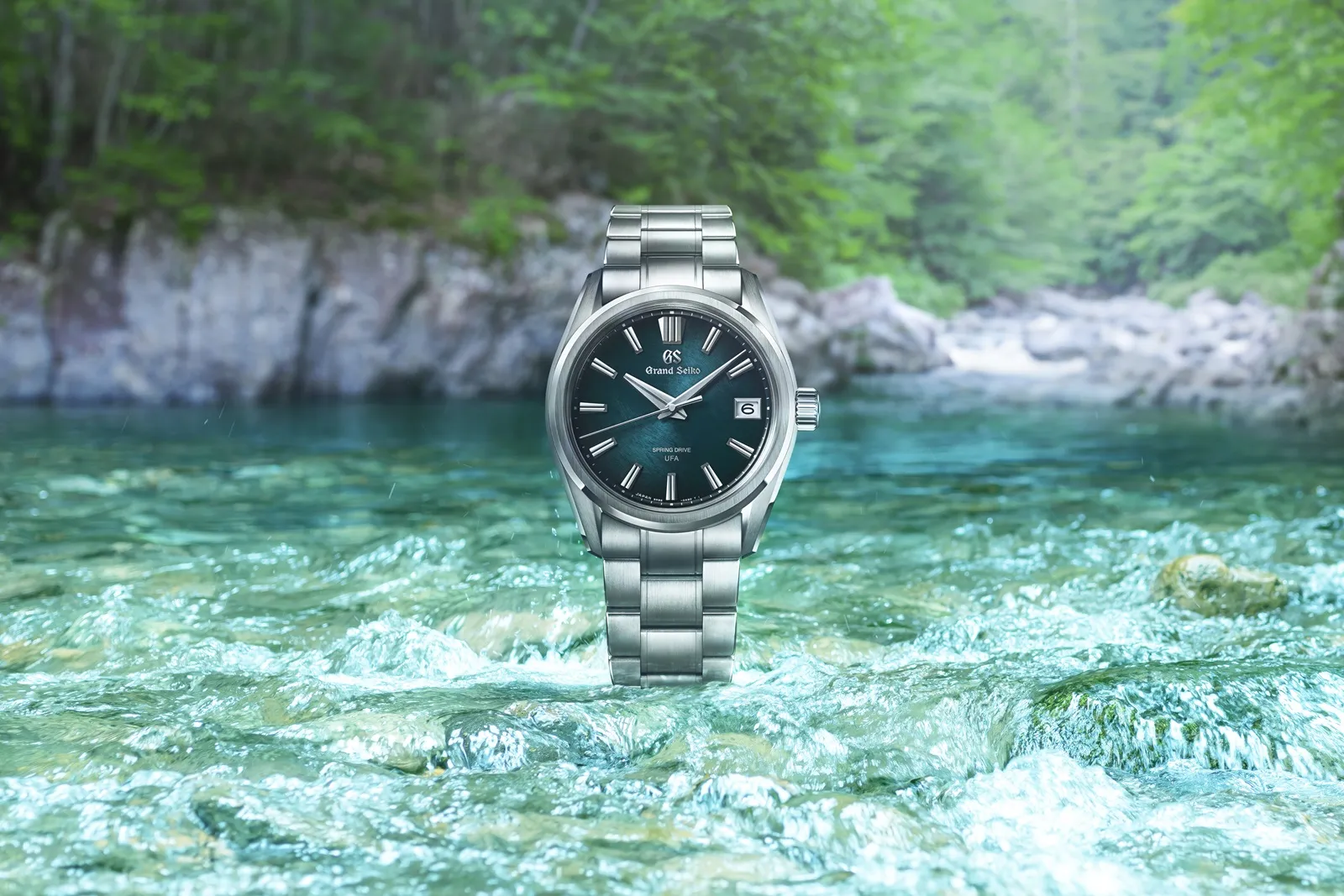
In Japan's Nagano region, near Shiojiri, the Atera River ran that morning with an unusual clarity, fed by meltwater slipping down between the mountains. The colour of the water trembled somewhere between blue and green, mirroring the pebbles on its bank and the pine forest above. The landscape photographer Ren had been chasing the light of this valley for years; beside him was his friend Mia, here for the first time.
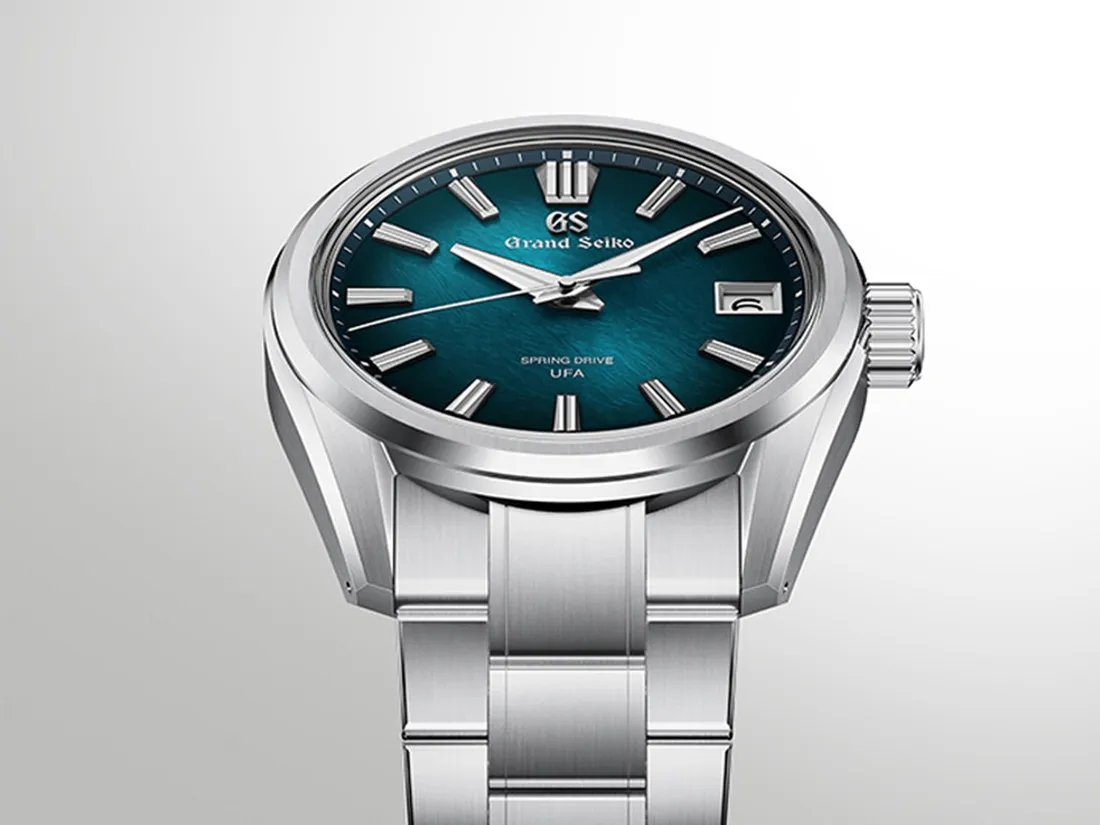
As Ren set his camera down on a rock, Mia's eye was caught by the watch on his wrist. The dial carried exactly the colour of the river flowing before them: a vivid blue-green, deepening from the edges toward the centre. "Ren," said Mia, "the dial of that watch looks as though you cut a piece straight out of that river."
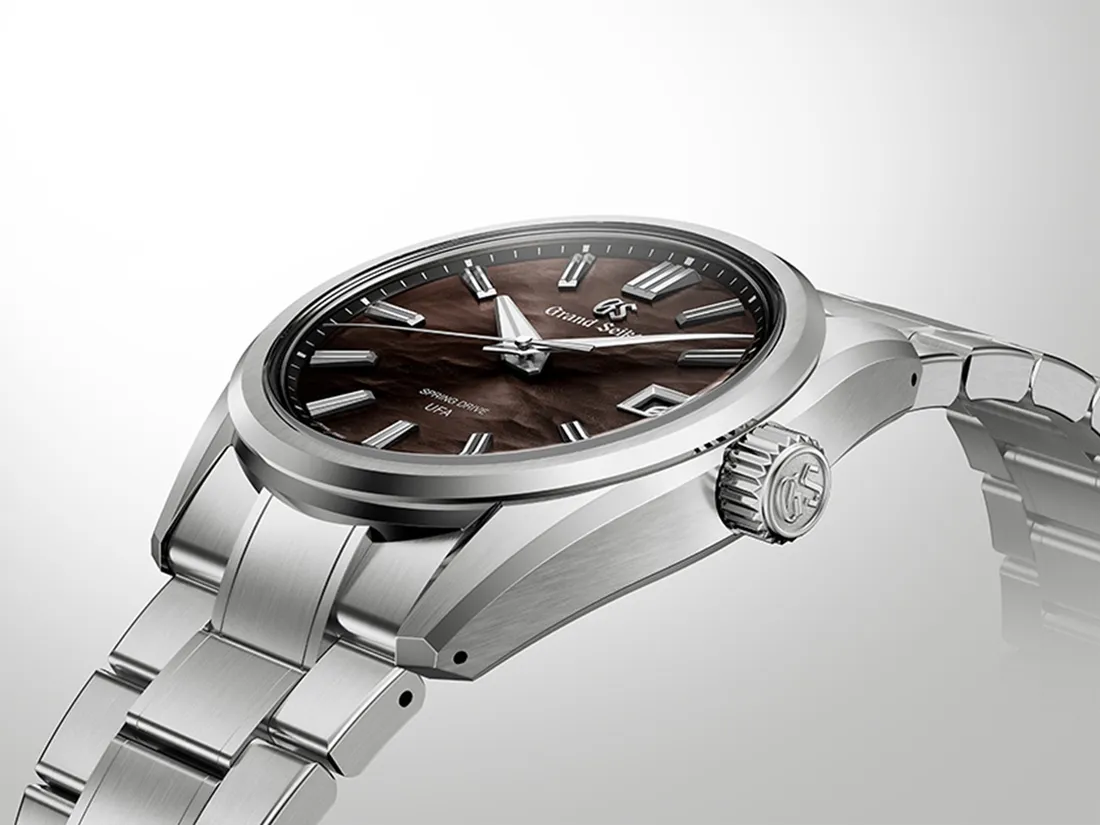
Ren smiled. "In a way, that is true," he said. "This is a Grand Seiko; one of the new nature dials of the Evolution 9 collection. Its name is SLGB011, but we call it the 'Atera Valley.' The Shinshu studio where Grand Seiko makes its Spring Drive watches is right here, a few kilometres up this very river. The craftsmen took this landscape they see every morning and worked it into the dial. So what is on my wrist is truly a portrait of this valley."
A Landscape on the Dial
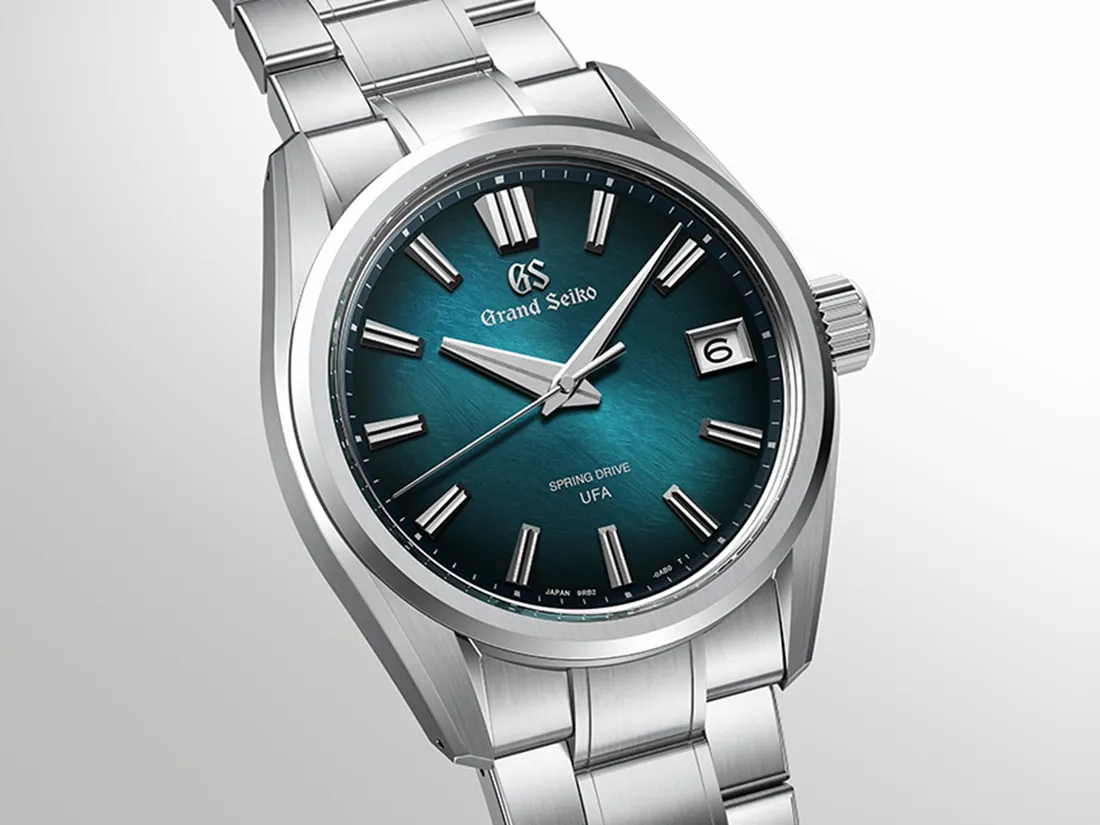
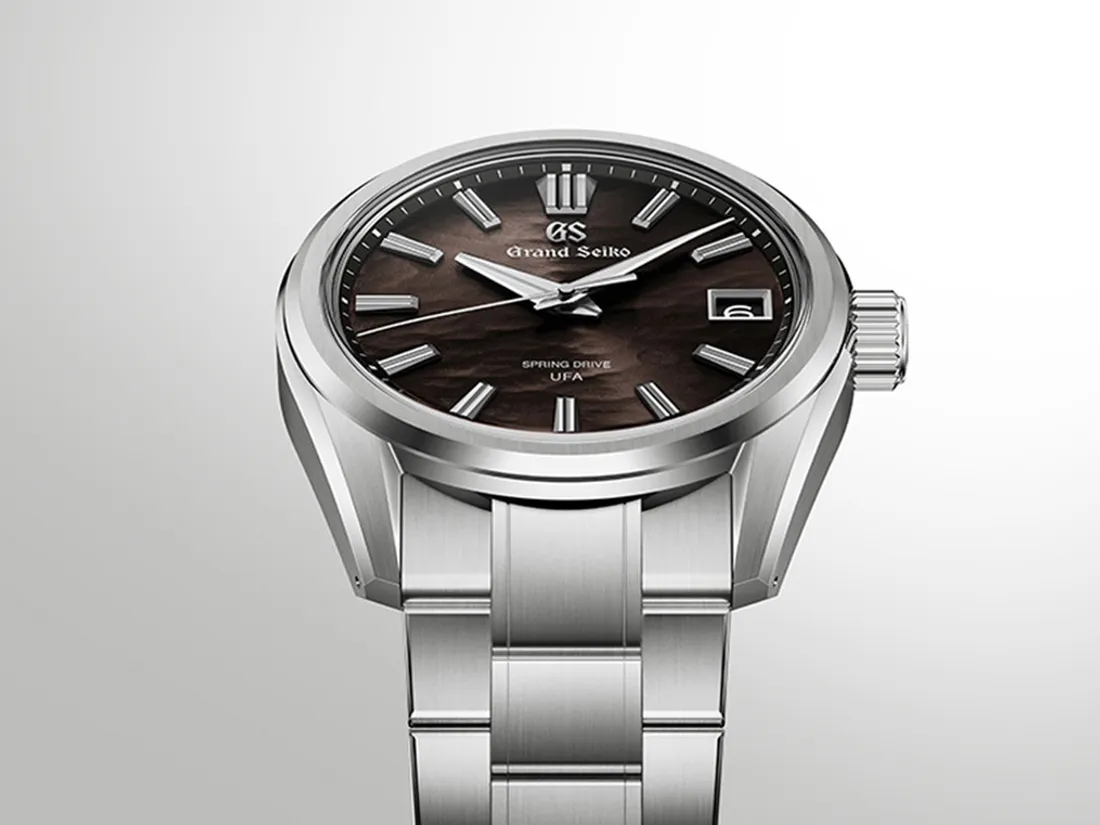
Mia looked more closely at the watch. The dial was not a flat colour; it had a texture that deepened with the angle of the light, rippling in fine lines. "How is this texture made?" she asked. "This is Grand Seiko's secret," said Ren. "They do not simply paint a colour; they work a relief into the surface of the dial, like the ripple on the face of water. Then they apply colour over it, layer upon layer. So when the sun strikes from any angle, the dial answers like a real water surface; now darkening, now shimmering."
"The case and bracelet are special too," he added. "They call it Ever-Brilliant Steel; an alloy brighter than ordinary steel and far more resistant to corrosion. And its surfaces are polished by hand on a spinning disc, a method called Zaratsu; so flawless that when you look at the edges you can see yourself as in a mirror, without the slightest distortion. Grand Seiko calls this 'the grammar of light and shadow.'"
format_quote"They do not simply paint a colour; they work into the dial the very ripple of a water surface."
Ren
The Flowing Second: Spring Drive
For a moment Mia focused on the seconds hand and was startled: it did not jump tick by tick like other watches, but glided, uninterrupted and smooth, just like the river before them. "This seconds hand never stops," she said.
"Because this is a Spring Drive," said Ren. "Grand Seiko's own invention, a system found in no other brand in the world. Inside there is a mainspring, wound like a mechanical watch; it draws its power not from an electronic battery but from the tension of that spring. Yet it governs that power with the rhythm of a quartz crystal vibrating thirty-two thousand times a second. When the heart of the mechanical meets the brain of the quartz, the seconds hand flows instead of jumping. All you hear is silence; all you see is the true flow of time."
"So," Mia said slowly, "this watch shows time not in steps, but uninterrupted, like a river." Ren nodded: "Exactly. And to understand that by the bank of this valley is easier than it could ever be anywhere else."
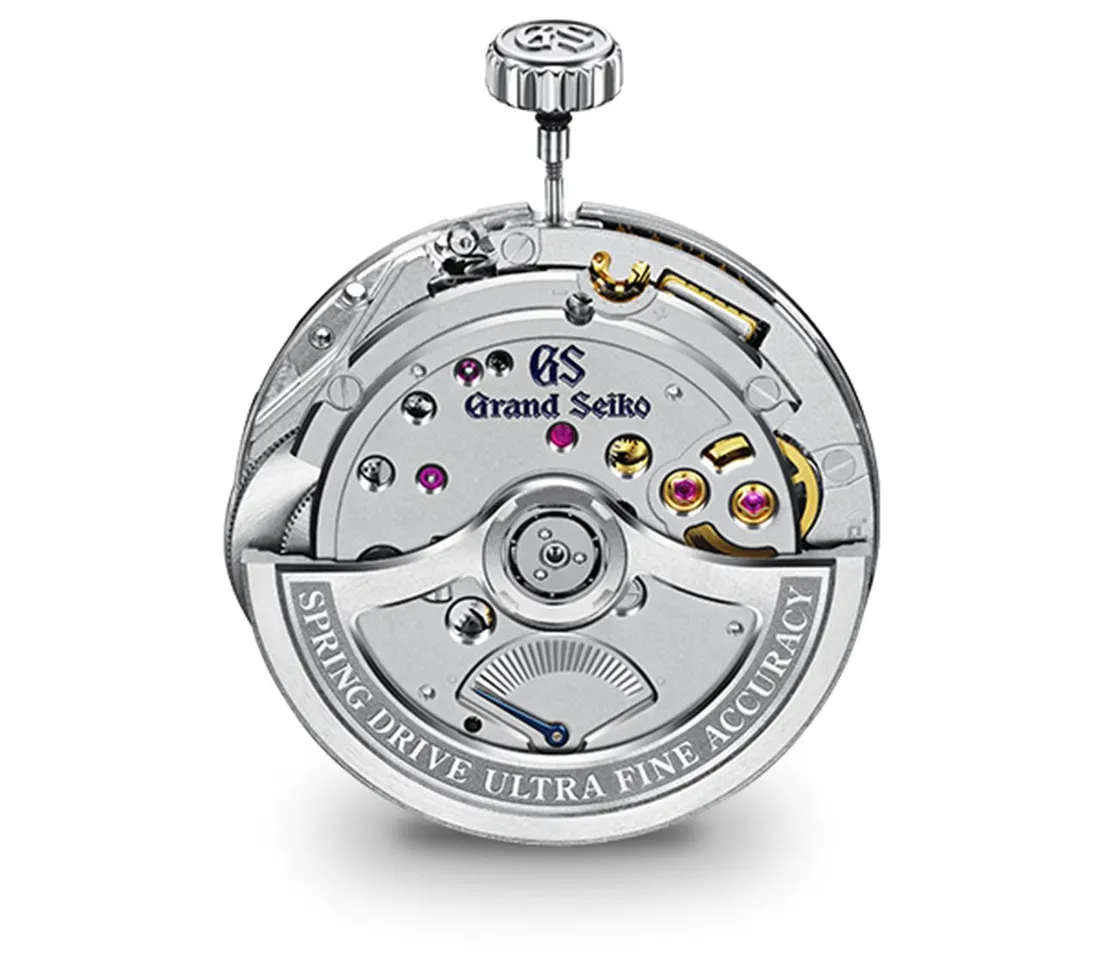
format_quote"The seconds hand flows instead of jumping; all you see is the true flow of time."
Ren
Twenty Seconds a Year: Ultra Fine Accuracy
"And how accurate is it?" asked Mia. Ren's eyes lit up. "That is where the real miracle of this model lies. Its calibre carries the name U.F.A., Ultra Fine Accuracy. An ordinary good watch might stray a few seconds a day; this one strays only twenty seconds a year. Not a day, but a whole year. Think of it: the seasons turn, this river freezes and flows again, snow falls and melts, and through an entire year this watch scarcely loses its truth."
"It also has a power reserve of three days, about 72 hours," he added. "Take it off on Friday evening and set it on the table, and it will still be flowing on Monday morning. It is a strange feeling to find that old awe we feel for nature, this time in a mechanism made by human hands."
The Lake of Night
Ren took a second watch from his bag; this time the dial was a deep, textured black, like the darkness of night. "This one is called the SLGB007," he said. "Its dial draws on the night surface of Lake Suwa, also here in these lands. If the river just now was daytime, this lake is night. Its case is High-Intensity Titanium; it carries the lightness of titanium but is brighter than ordinary titanium and far more resistant to scratches."
Mia held the two watches side by side: one the daytime blue-green of water, the other the black of the lake at night. "They are like two different hours of the same valley," she said. Ren agreed: "Grand Seiko calls this 'the nature of time.' They try to write onto a watch not only the hour, but a moment, a season, a light."
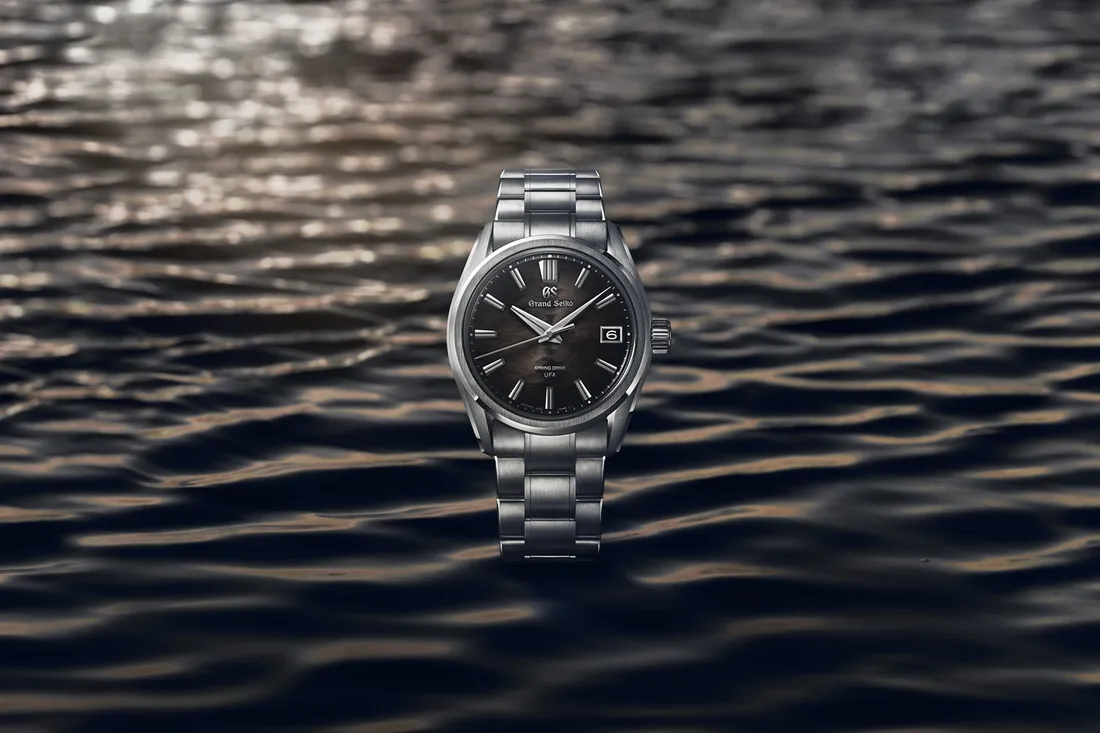
format_quote"They write onto a watch not only the hour, but a moment, a season, a light."
Ren
The Nature of Time
As the sun rose over the valley, both the river and the dial on Ren's wrist gleamed at the same instant. In that moment Mia understood why a watch could be so silent: because nature, too, flows silently. Neither does the river run tick by tick, nor the seconds of this watch.
"I take a photograph," said Ren, "and that moment freezes, ends. But this watch does not freeze the moment; it keeps letting it flow. Perhaps true mastery is not to stop time, but to respect its flow."
The two of them stayed there a while longer, listening to the sound of the river and the silence of the wrist. The light of the valley went on changing, at the same slowness, both in the water and in the depth of a dial.