PART I: THE WORKSHOP AT MIDNIGHT AND AN ART DRAWN FROM ITS SCABBARD
In the dim light of the old workshop looking out over Lake Geneva, the microscope lamp on the bench was focused on a single point. Outside a light rain was falling and the light reflected off the wet cobblestones struck the window. Two friends were once again alone together at the bench: Dr Elias, a senior horologist who had given his years to the rare complications of mechanical watchmaking, and Deniz, the young researcher.
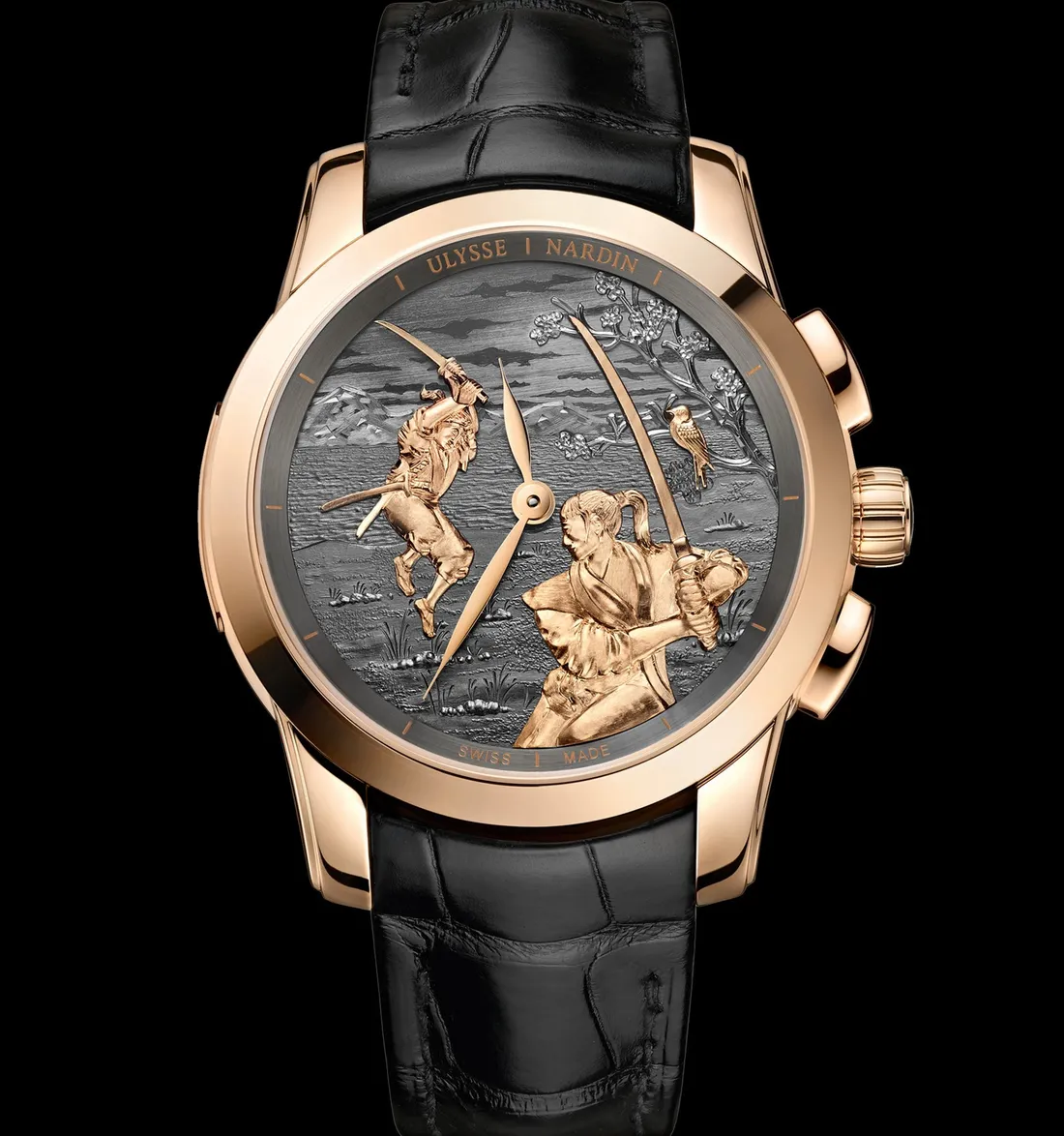
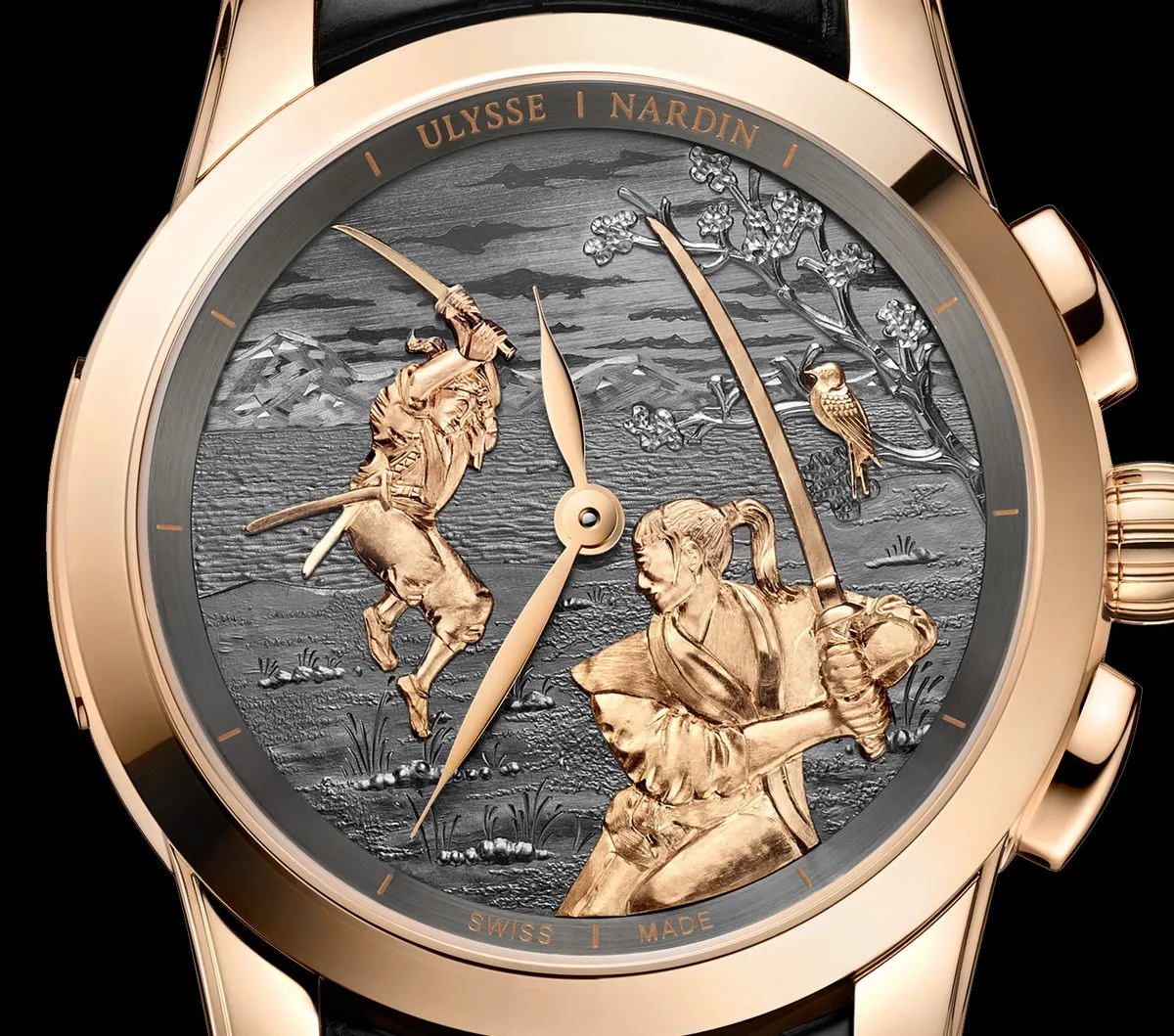
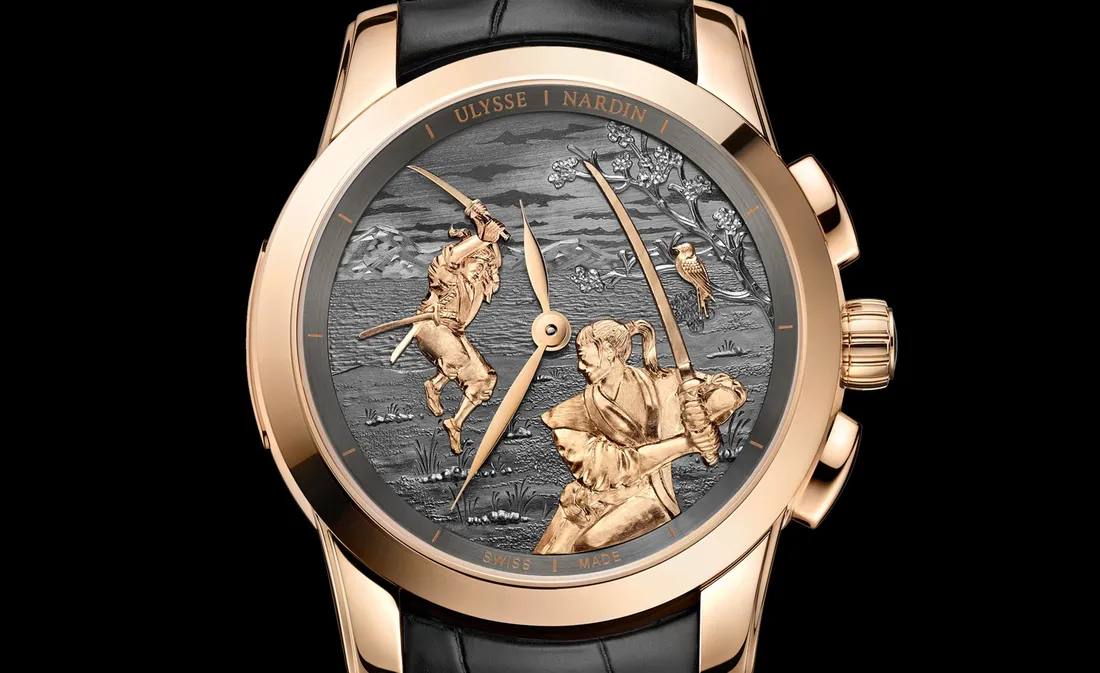
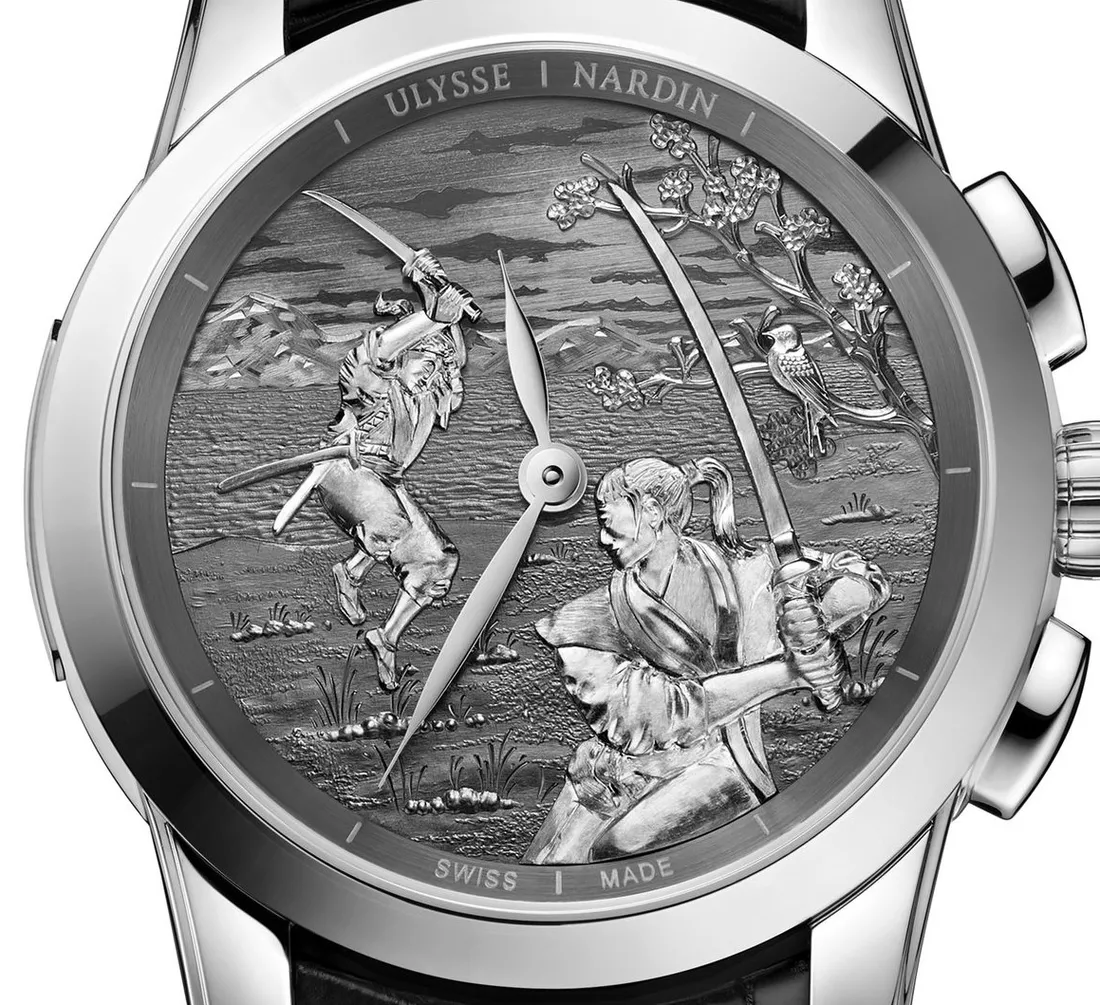
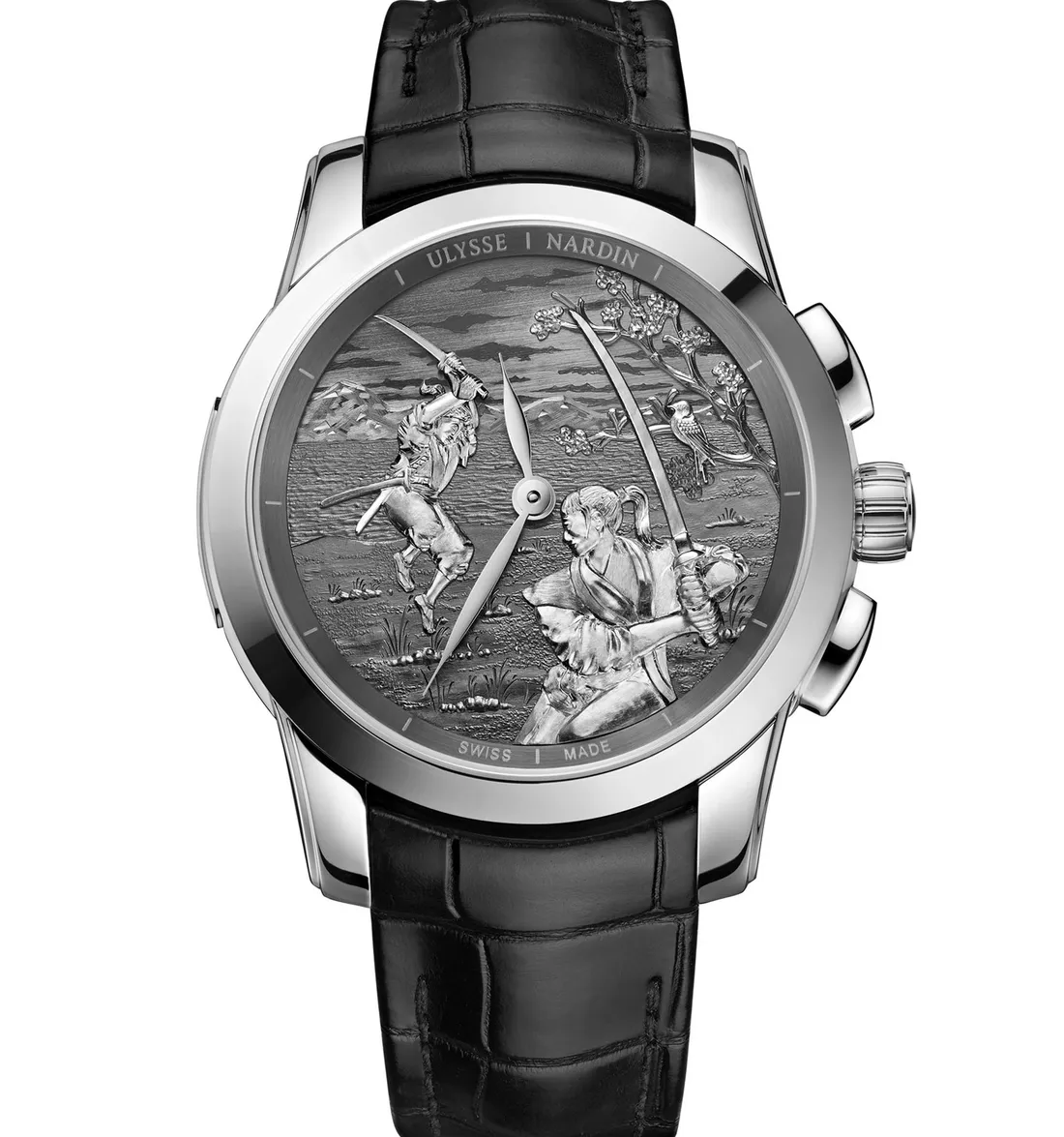
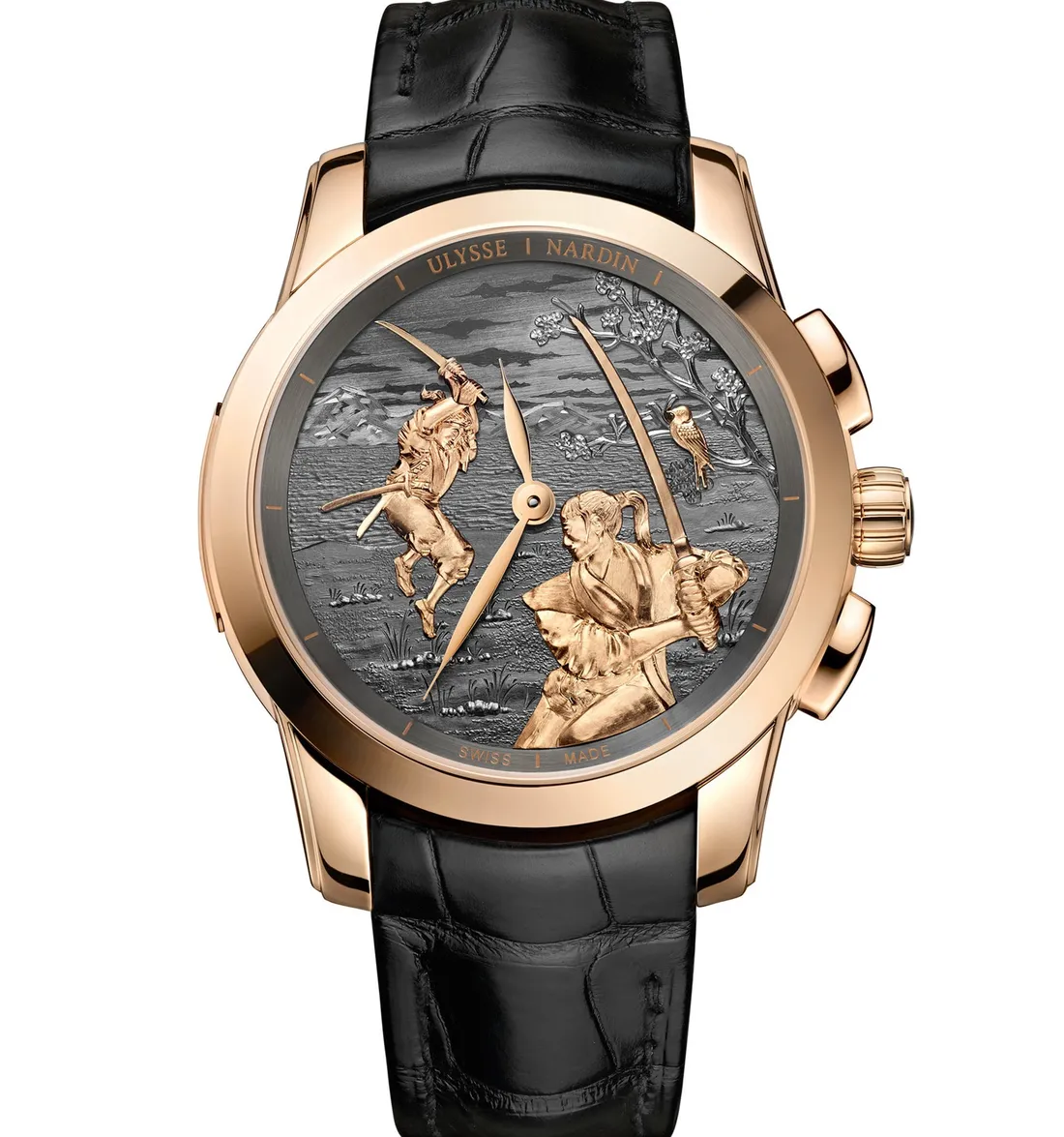
In the middle of the table, gleaming on a black alligator strap, stood an extraordinary Ulysse Nardin in a platinum case. Its dial was no ordinary watch dial; it was a three dimensional stage set, carved by hand almost like a relief, bringing a legendary duel of samurai to life in tones of silver and grey...
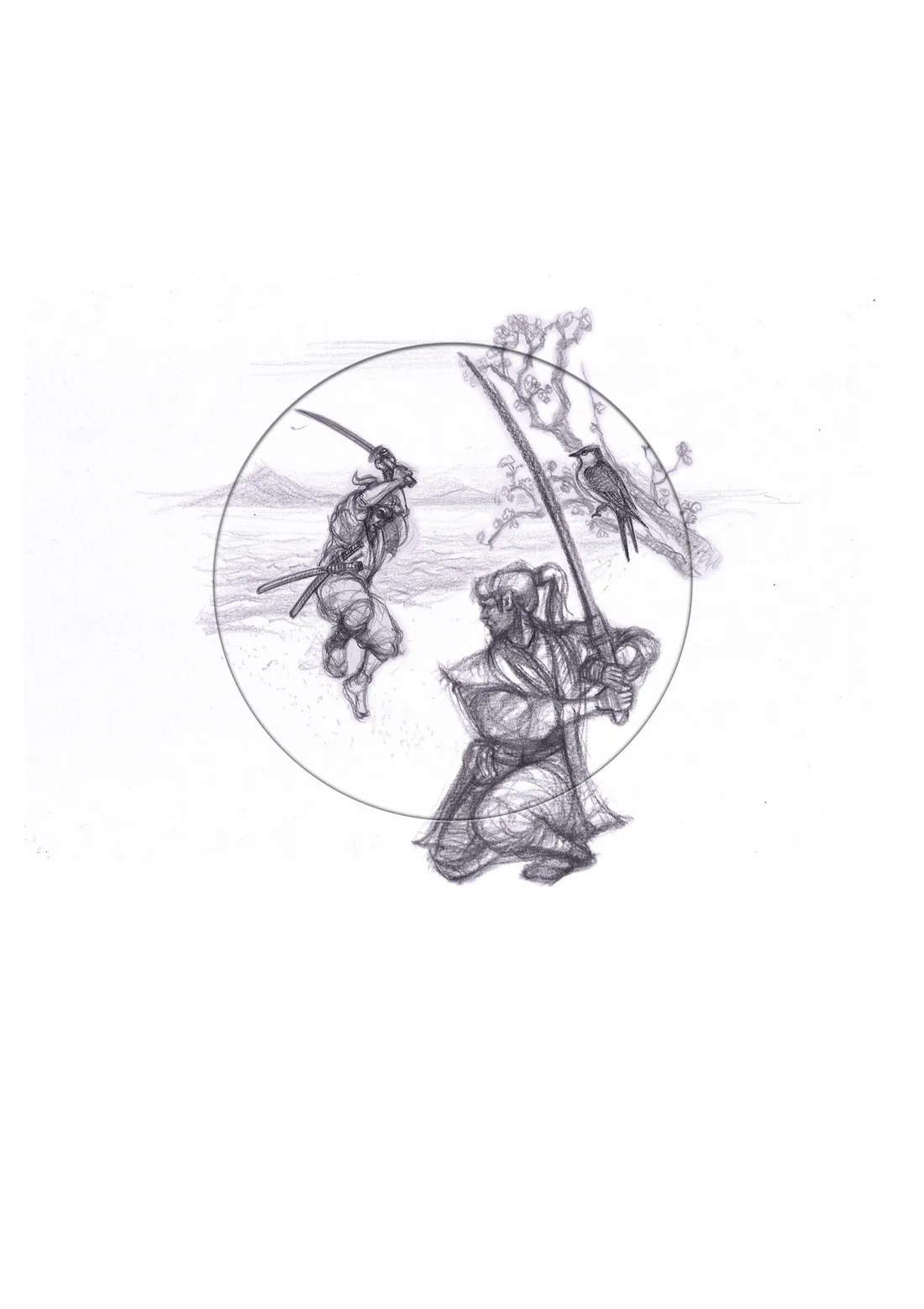
Deniz adjusted the lens of the microscope and looked at the dial. Two samurai, with cherry blossom (sakura) and a swelling ocean behind them, had drawn their swords and were living that merciless moment in which time stops.
Deniz, without lifting his eyes from the lens, in a whisper:
"Elias... This is not a dial, it is like the ring of a blade drawn from its scabbard, still hanging in the air. Look at it, every fold in the armour of the samurai on the right, that reflection of light on the curve of his sword... A man looking in here does not simply see the time; he feels that shattering break, one breath wide, between life and death."
PART II: FIRST CYCLE, THE DUEL AT GANRYŪJIMA AND THE PHILOSOPHY OF ZANSHIN
The subject (that split second in 1612 and the mind of Musashi)
Dr Elias took off his glasses, held the case of the watch gently with a piece of velvet and smiled.
Dr Elias:
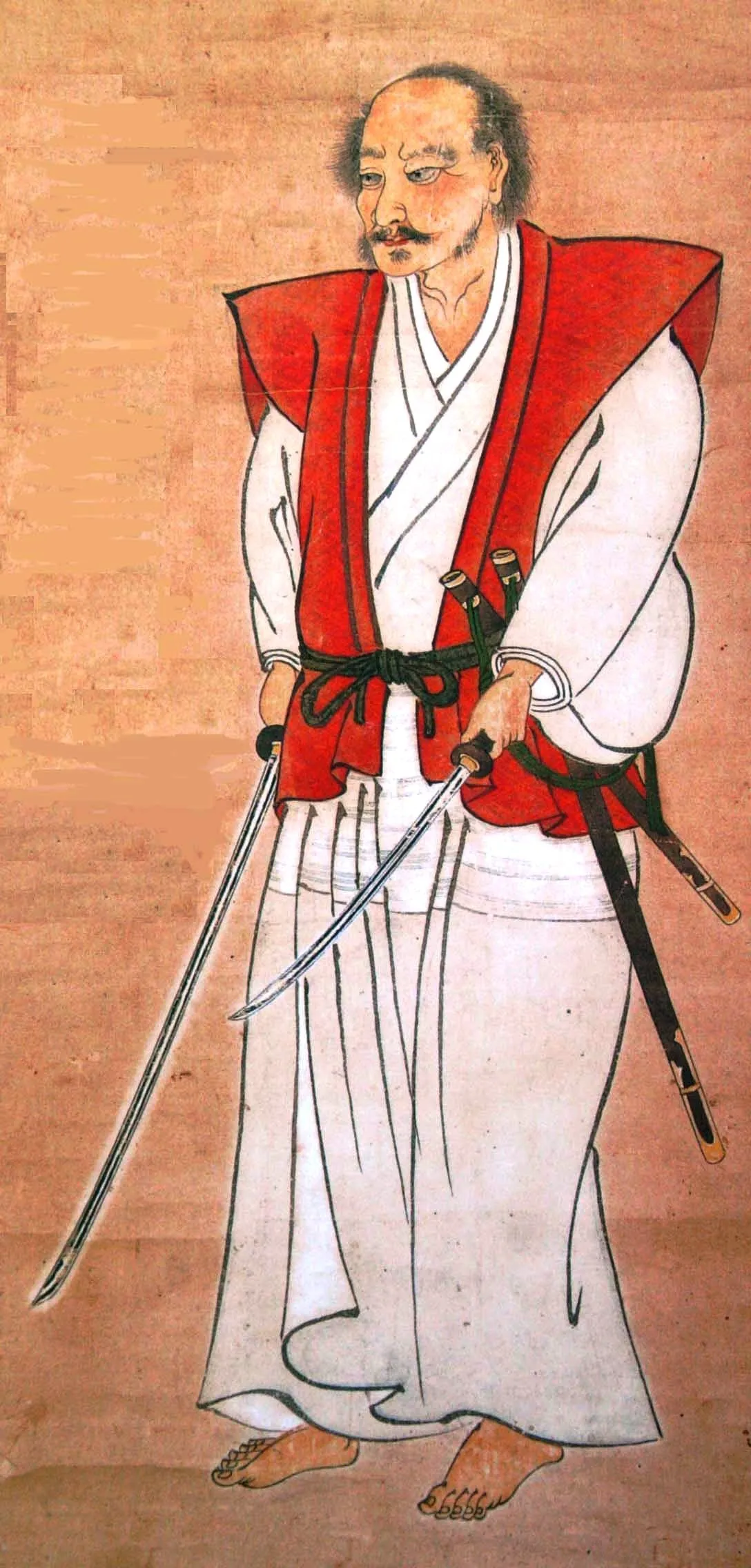
"Because the picture worked into this dial is no ordinary Japanese scene, Deniz. This is the greatest duel of the East, historically and philosophically, which took place on the morning of 13 April 1612 on the island of Ganryūjima: the meeting of Miyamoto Musashi and Sasaki Kojirō.
Think of that moment in which time froze... Waves are breaking on the shore, the wind is shaking the branches of sakura. Kojirō is drawing from its scabbard the enormous sword he called the Monohoshizao. Facing him stands Musashi, holding his katana, without a single crumb of fear in his eyes.
In the Japanese martial arts they call this zanshin, unbroken awareness of mind. In the mind there is neither regret for the past nor anxiety about the future... There is only the moment. That fraction of a second in which the sword glides through the air is itself the moment when a man walks, in the fullest sense, along the border between life and death."
The examination (the sharpness of time)
Deniz, noticing the slide beside the crown of the watch:
"And these two samurai are not simply standing on the dial like statues, Elias... What does this slide on the side do?"



PART III: SECOND CYCLE, THE MIRACLE OF THE JAQUEMART AND THE MECHANICS OF SOUND
The subject (the movement of the swords and the mechanical theatre)
Dr Elias:
"And here is exactly where that spellbinding mechanical miracle begins, the one that carried Ulysse Nardin to the summit of haute horlogerie. This is an hourstriker with a jaquemart complication. The difference from a minute repeater is this: a minute repeater strikes, on demand, the hours, the quarters and the minutes separately; an hourstriker strikes the hour, adds the half hour if you want it, and on top of that you can press the slide and make it strike whenever you like.
In mechanical watchmaking a jaquemart is the name given to the human or figural automatons that move on the dial as the watch strikes. When you pull that slide, or when the hour arrives, the small hammers inside the movement begin to strike steel gongs.
In that same fraction of a second these hand-carved samurai on the dial come alive. The samurai on the right brings his katana down, the one on the left makes his attack with his sword. The movement of the swords is synchronised exactly with that crystal clear ring the movement produces."
The examination (the analogy between the steel of the sword and the gong of the movement)
Deniz, with boundless admiration:
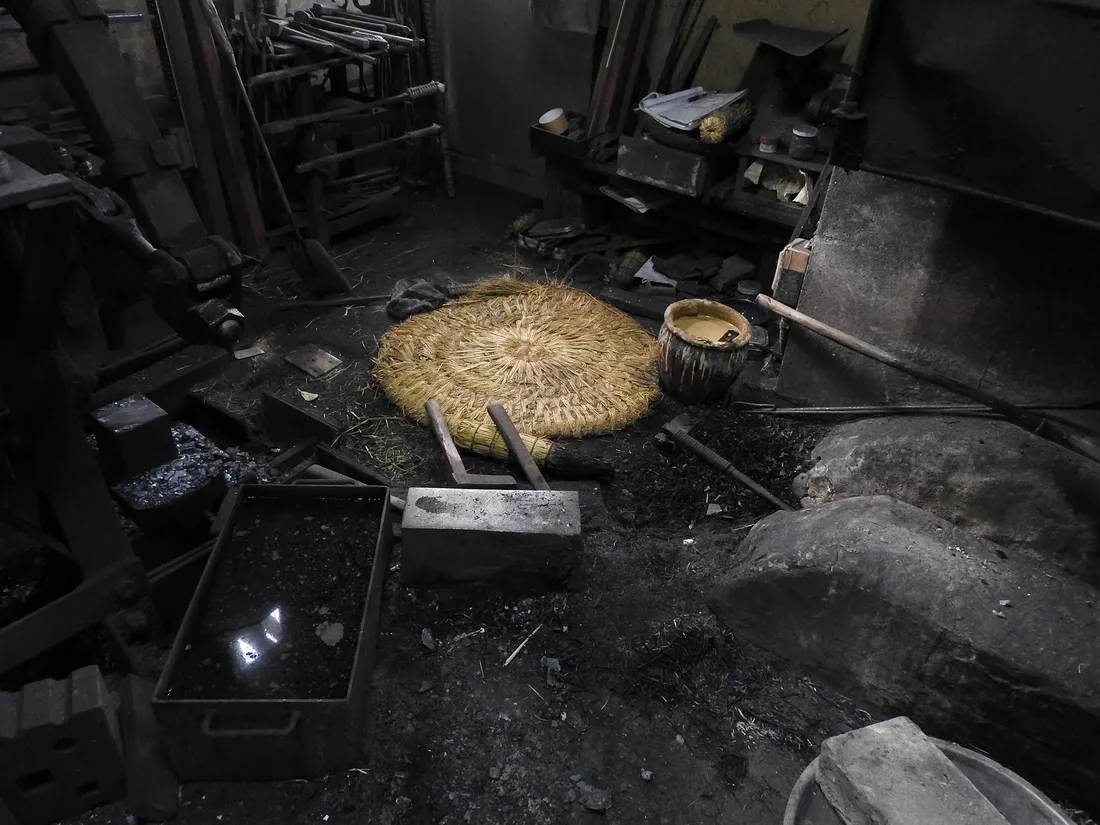
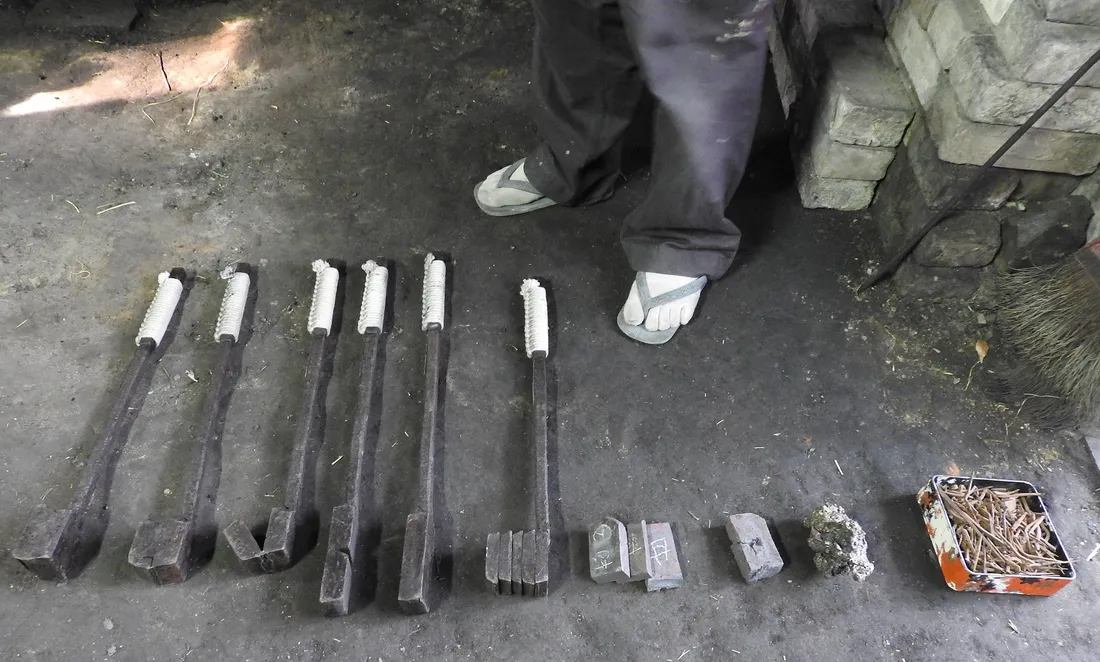
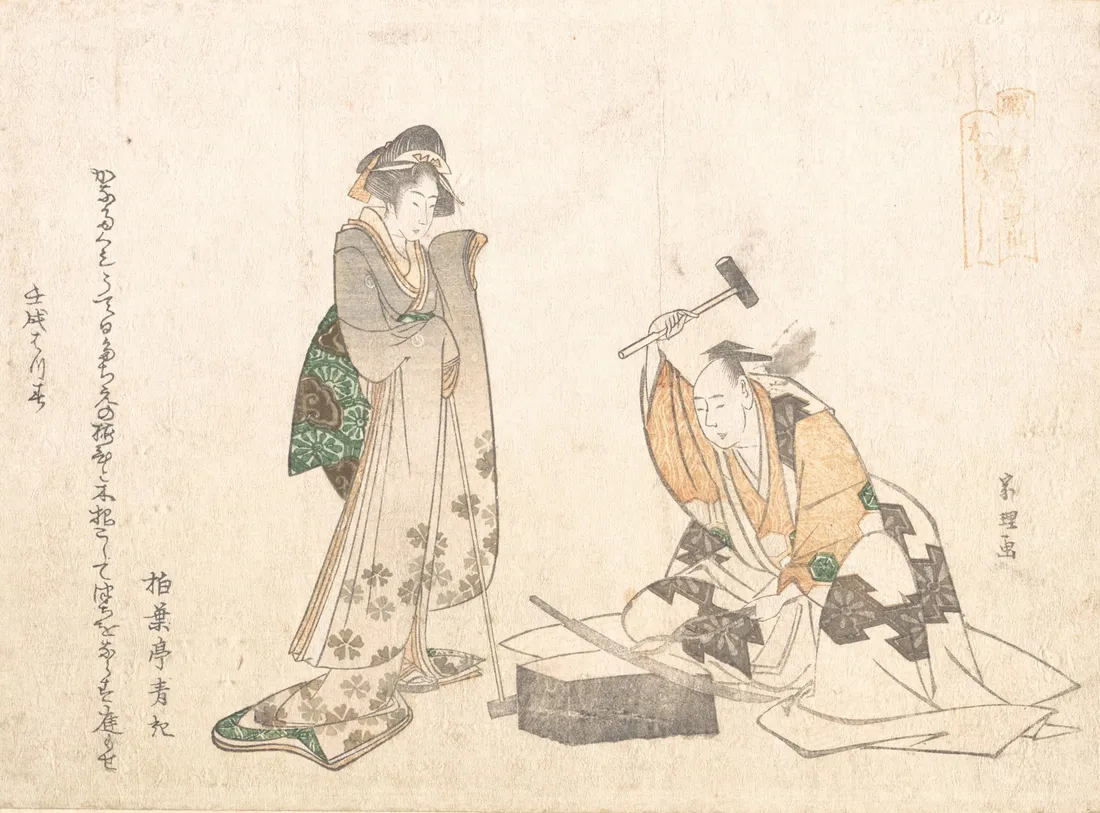
"That is a magnificent analogy, Elias... The smith who beats out the samurai's sword and the watchmaker who tunes the acoustic gong of the watch are fed by the same fire.
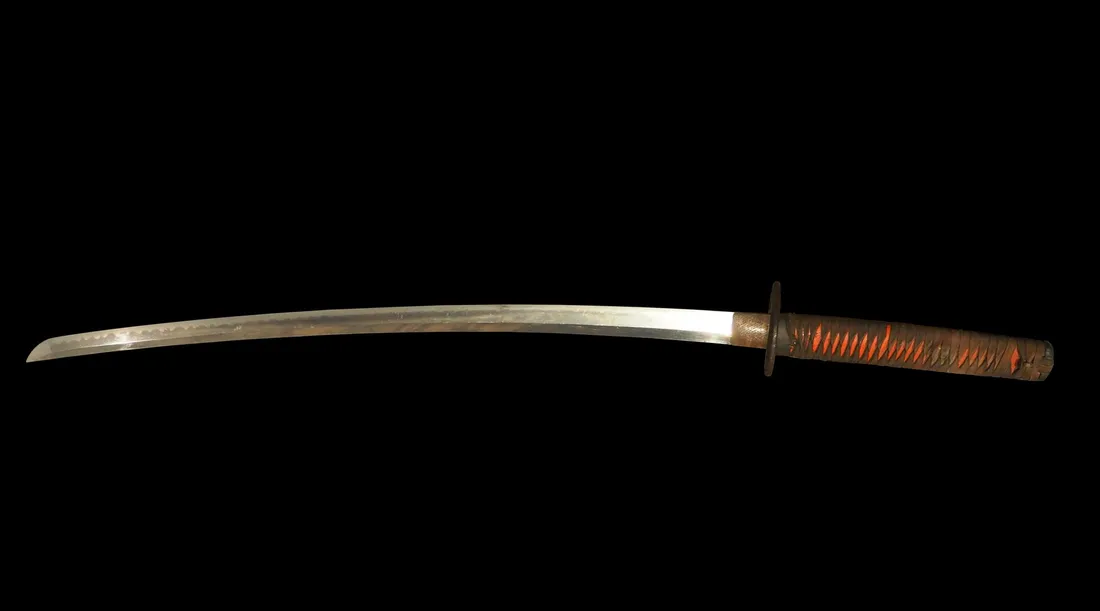
A samurai sword, in tamahagane steel, takes its sharpest form as it is folded layer upon layer and worked in the fire. And the craftsman at Patek Philippe or Ulysse Nardin puts those minor and major gongs through the fire too, tuning them to the clearest frequency the ear can hear.
Every time the hammer inside strikes the gong, the samurai on the dial swings his sword. You watch time with your eye like a piece of theatre, and you hear it with your ear like the clash of a blade."
PART IV: THIRD CYCLE, THE CRAFT OF ENGRAVING AND THE HOROLOGICAL SPECIFICATION
The subject (hand engraving and work at the scale of the micron)
Dr Elias:
"And the making of that dial takes months, Deniz. The master engraver goes in under a microscope, onto a gold plate, with cutters at the scale of the micron. The smallest tremor of the hand can throw away months of labour and hundreds of thousands of francs worth of material in a single second.
Exactly as Musashi would have lost his life with one wrong move, the master engraver is in a state of zanshin over that circular plate. Not one mistake is permitted."
The technical detail (the specification)
Model and reference: Hourstriker Classic Samouraï. 6109-130 in platinum, 6102-130 in 18 carat rose gold. Introduced in 2018.
Case: 18 carat rose gold or platinum, forty three millimetres, water resistant to thirty metres.
Dial art: hand-carved, moving samurai figures in rose gold or grey gold on an anthracite grey dial.
Movement: Ulysse Nardin's own calibre UN-610, self-winding, around forty hours of power reserve.
Complication: jaquemart automatons and an hourstriker. It strikes the hour on demand, and if you want it, automatically on the hour and the half hour as well.
Crystal and case back: sapphire crystal, screwed sapphire case back. The movement and the hammers can be watched.
Strap: black alligator, with a buckle in the same metal as the case.
Production: eighteen pieces.
PART V: THE GREAT SYNTHESIS AND THE SOUND OF TIME
Deniz pulls the slide on the case of the watch gently; as the samurai on the dial move, a spellbinding sound of a bell rises out of the movement.
"Elias... Do you hear it?
On one side, the spirit of the samurai who in 1612 on the island of Ganryūjima stopped time in his own mind and gave a life its meaning in a single stroke of a sword...
On the other, the Swiss watchmaker who made time immortal by shutting that moment inside mechanical wheels, hammers and hand engraving..."
Dr Elias, smiling and leaning back:
"This is what real watchmaking is, Deniz.
Ordinary watches only tell you that time is passing. The Ulysse Nardin Samurai reminds you how sharp time is, how precious, and that every second of it is as sacred as a sword drawn from its scabbard."