June 1979. At Le Mans, the number forty Porsche 935 T in Kremer Racing colours stays on the circuit for twenty-four hours. Three men share the wheel: François Servanin, François Trisconi and Laurent Ferrier. When the race ends they are third overall. Almost all of their rivals are professional drivers; two of these three do their real work somewhere else entirely.
That is exactly where Le Mans parts company with other races. Over twenty-four hours nobody cares about the fastest lap. The winner is the crew that holds the same rhythm through the night, changes tyres on time, keeps the engine out of the red and does not stop until morning. The measure is not speed but continuity.
format_quote"Le Mans is not won by whoever is fastest. It is won by whoever does not stop."
Hasan Bekmezci
Laurent Ferrier was born in Geneva on 19 December 1946. He is a third-generation watchmaker; both his parents and his grandparents worked in the trade. His father worked on high complications in a workshop directly below the family apartment, so he grew up beside exceptional watches. He graduated from the École d’Horlogerie de Genève in 1968 and joined one of the great watch houses of Geneva, working in roles that ran from prototype watchmaker to the design of the exterior parts.
That same year, at twenty-two, he left watchmaking to follow his other passion. He began selling automotive components and worked his way into the racing world. In 1974, at twenty-eight, the house he had left created a technical department and called him back. He returned, and stayed thirty-seven years, eventually taking charge of the creation department. What he says he really learned there was this: everything is a question of balance and harmony.
François Servanin’s story begins somewhere else. He was born near Lyon into a family that had been in haulage since 1875, and at twenty-one he joined his brother at the head of the family firm. In 1969 he became the Mercedes truck and coach dealer for the Rhône, moved into cars in 1976 and took a Porsche dealership in 1978. Between 1974 and 1985 he regularly swapped his raincoat and briefcase for a racing suit, and started the Le Mans twenty-four hours twelve times. In later years he founded the off-road manufacturer Auverland, acquired the Panhard marque in 2005 and in 2009 sold the company to Renault Trucks in order to turn to a new project.
That new project was Laurent Ferrier. Servanin made his friend the kind of offer that arrives once in a lifetime: design a watch from nothing, and build your own house around it. Ferrier accepted in 2009, at the age of sixty-three, only three years from retirement.
format_quote"To begin at sixty-three is not to notice that time is running out. It is to notice that there is still some left."
Hasan Bekmezci
The house was launched officially in 2010, and its very first creation, the Classic Tourbillon Double Hairspring, took the Men’s Watch Prize at the Grand Prix d’Horlogerie de Genève that same year. It was the first time so young a company had been honoured for a first work. The following year, in 2011, the Galet Micro-Rotor, the brand’s first automatic, reached the final in the same category. It is still made today, under the name Classic Micro-Rotor.
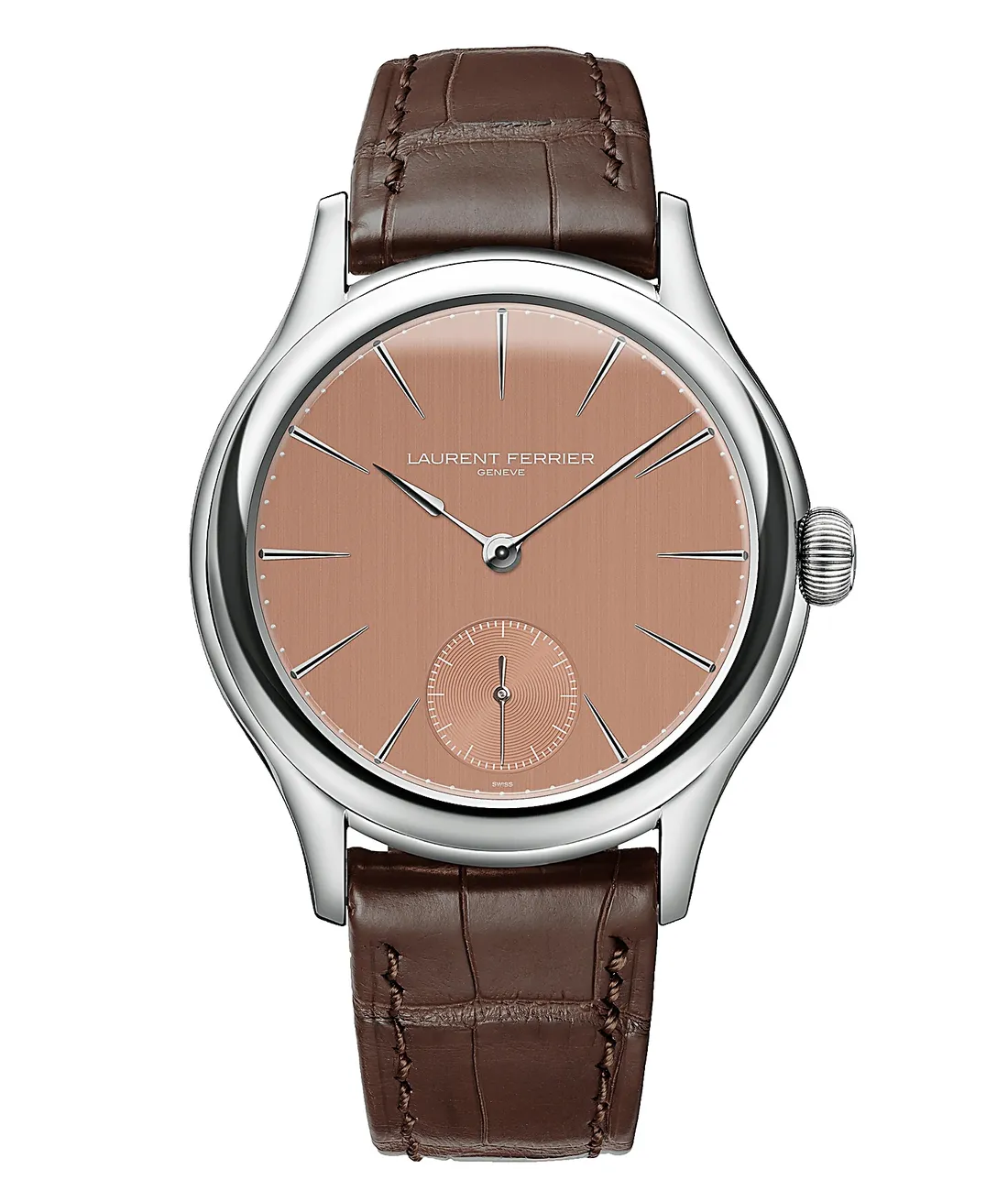
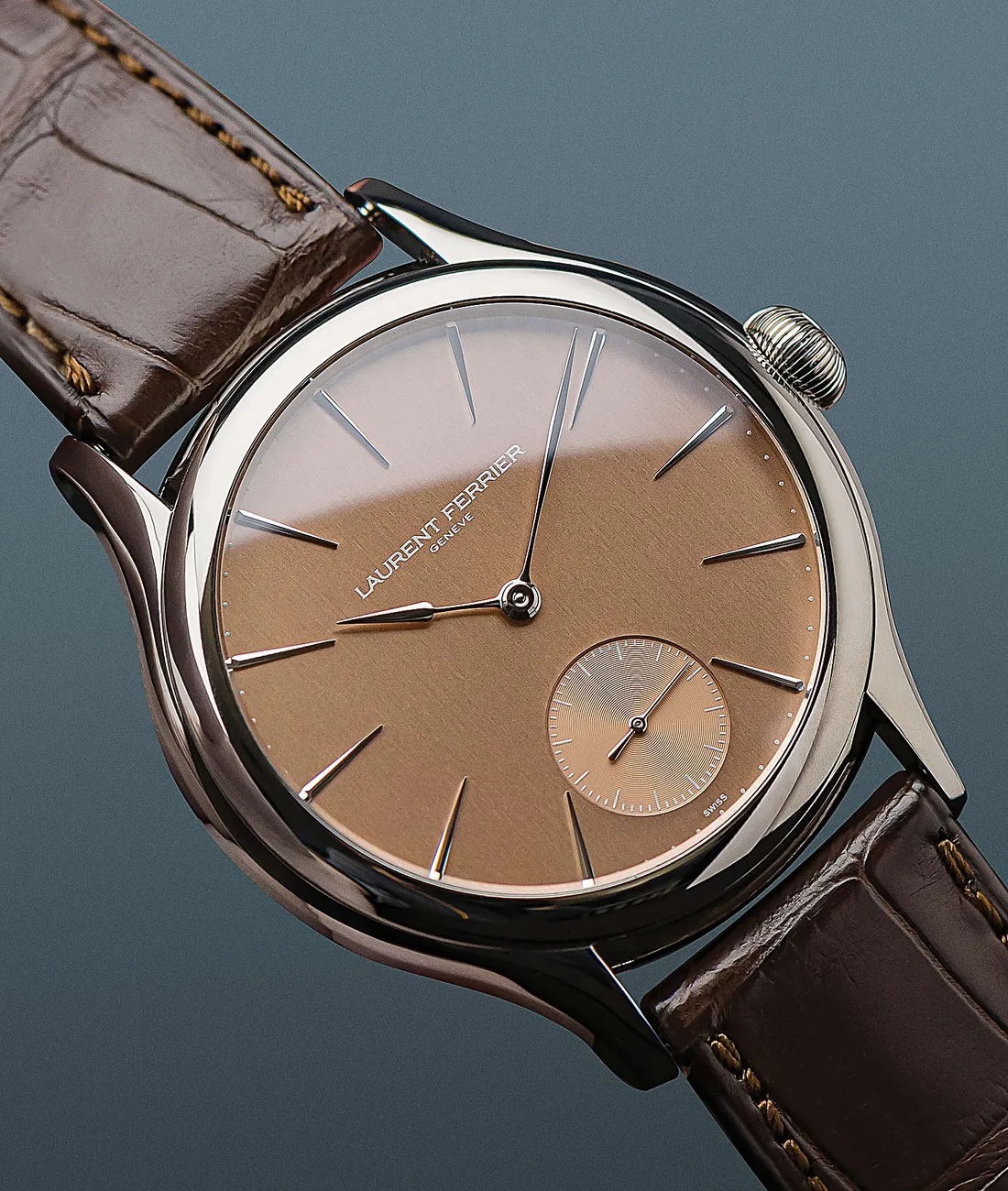
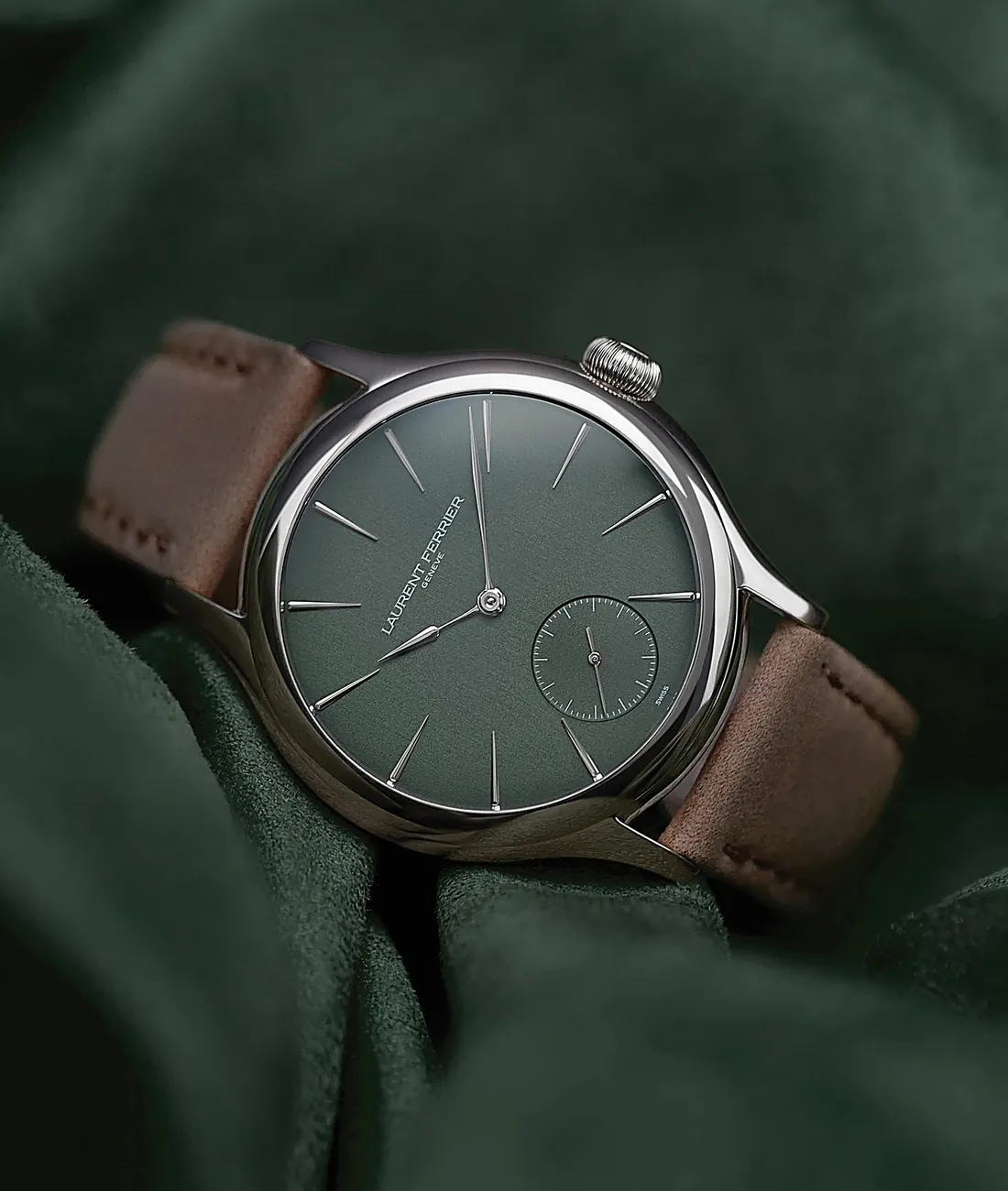
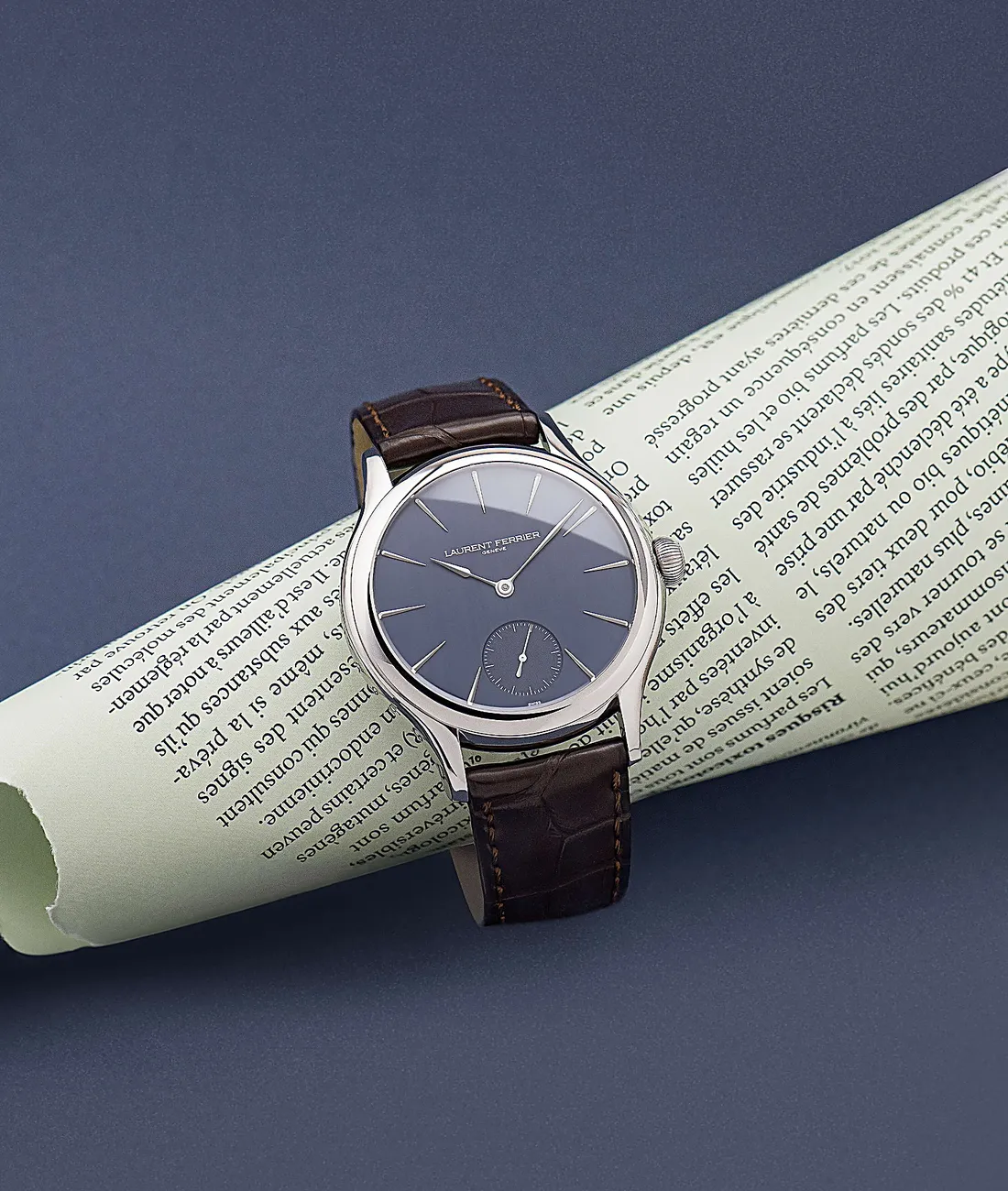
The case is named after the French word galet, a pebble, and the name sits exactly right. The forty-millimetre body follows the line of a nineteenth-century pocket watch, softened as though it had come out of a riverbed. No sharp corner, no aggressive line; the case rounds light off rather than breaking it. It is eighteen-carat white gold and eleven point one millimetres deep.
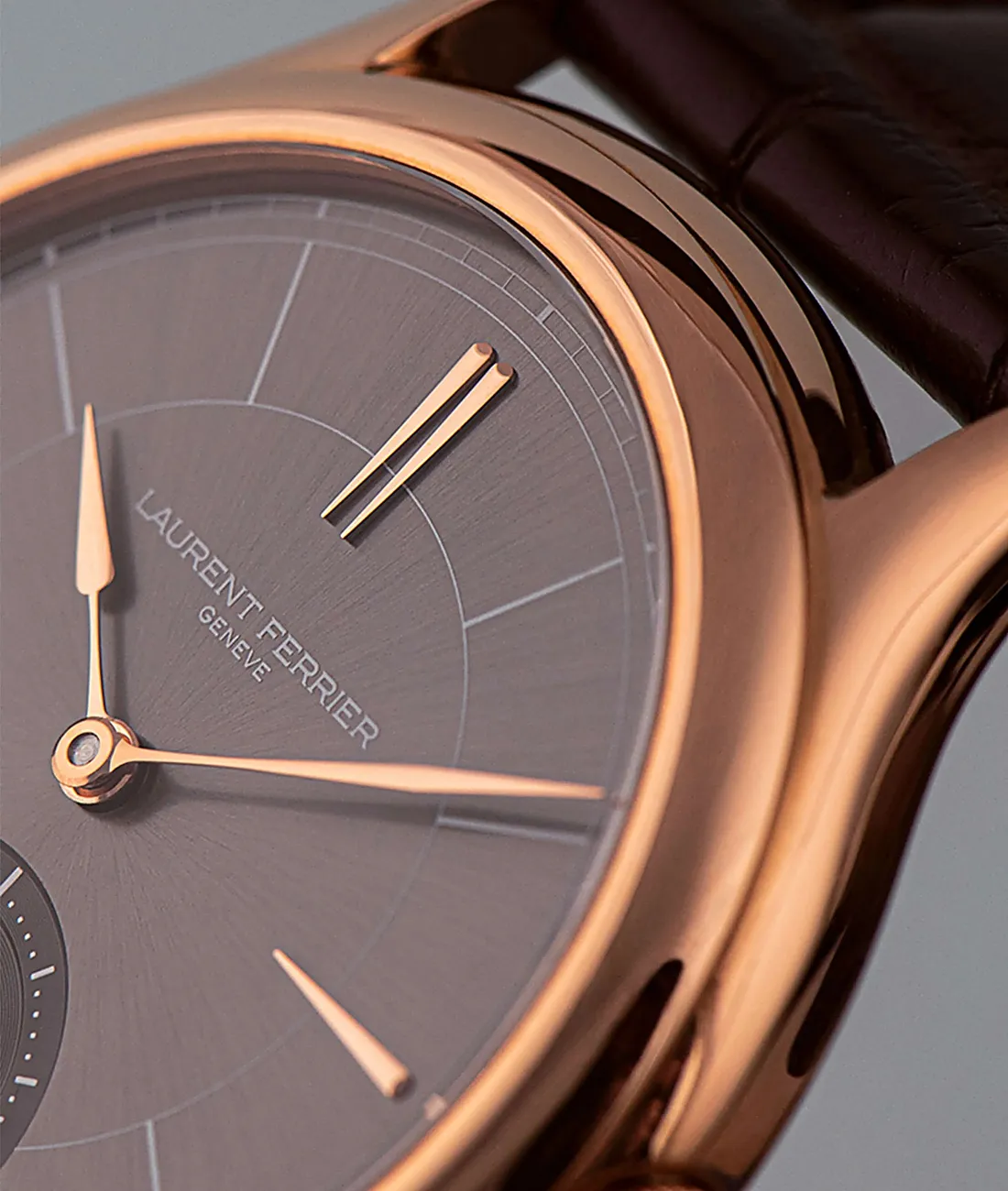
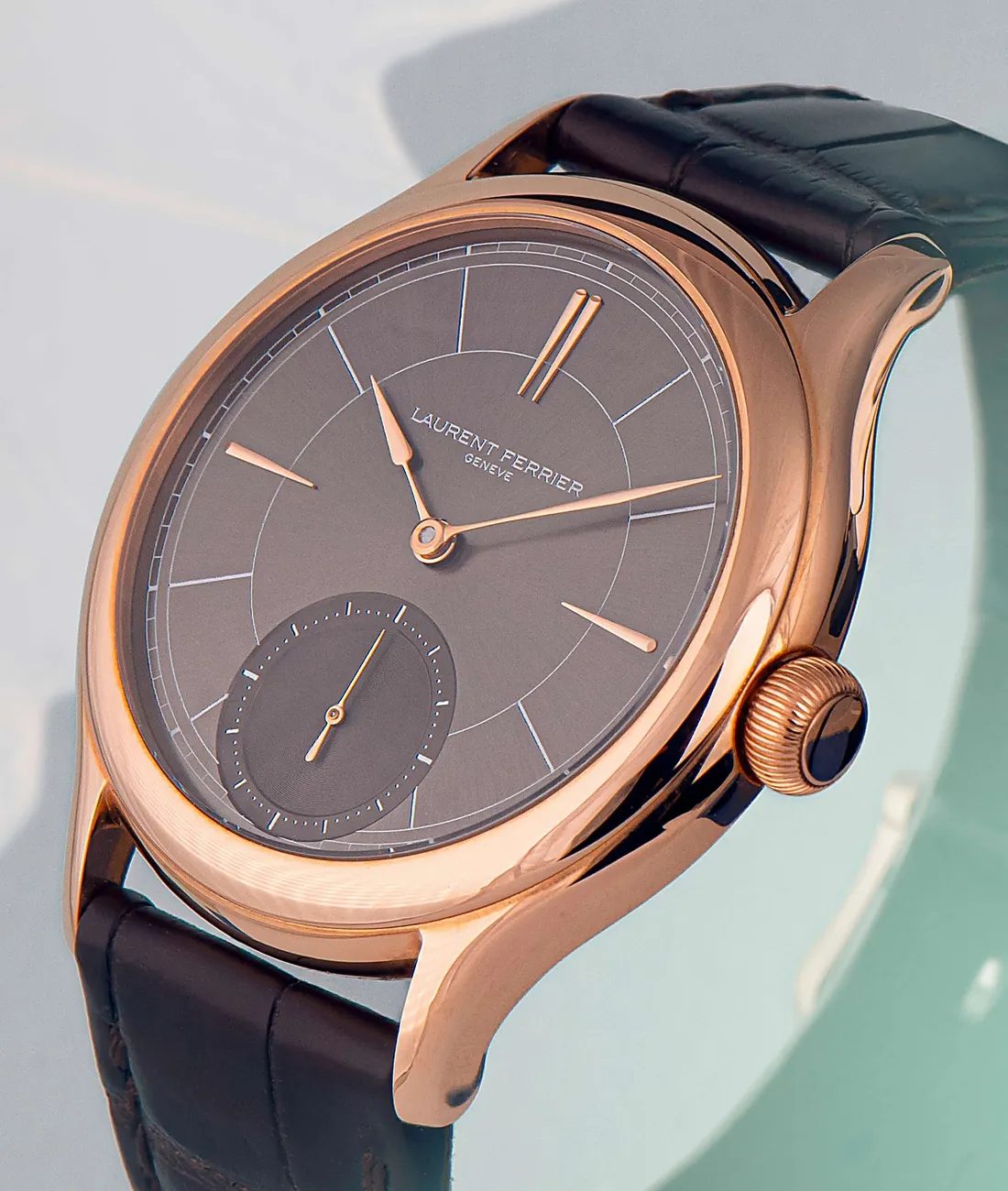
The dial holds to the same restraint. Hours, minutes and a small seconds at six. The indices are drop-shaped and the hands take the assegai form of an African spear point. That hand shape became the house signature, and it was chosen for legibility before beauty: the broad body is visible from a distance and the fine tip lands exactly on the index.
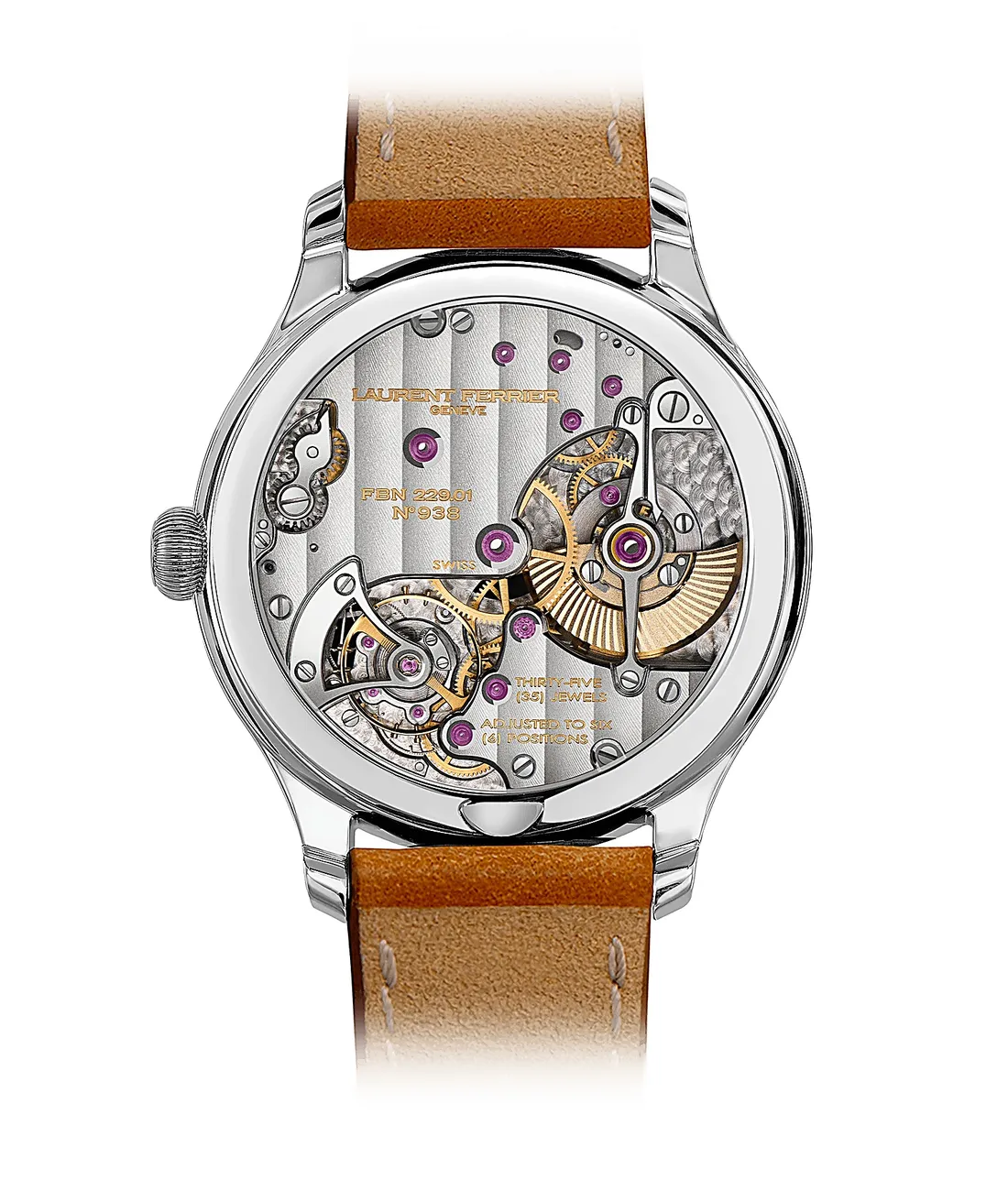
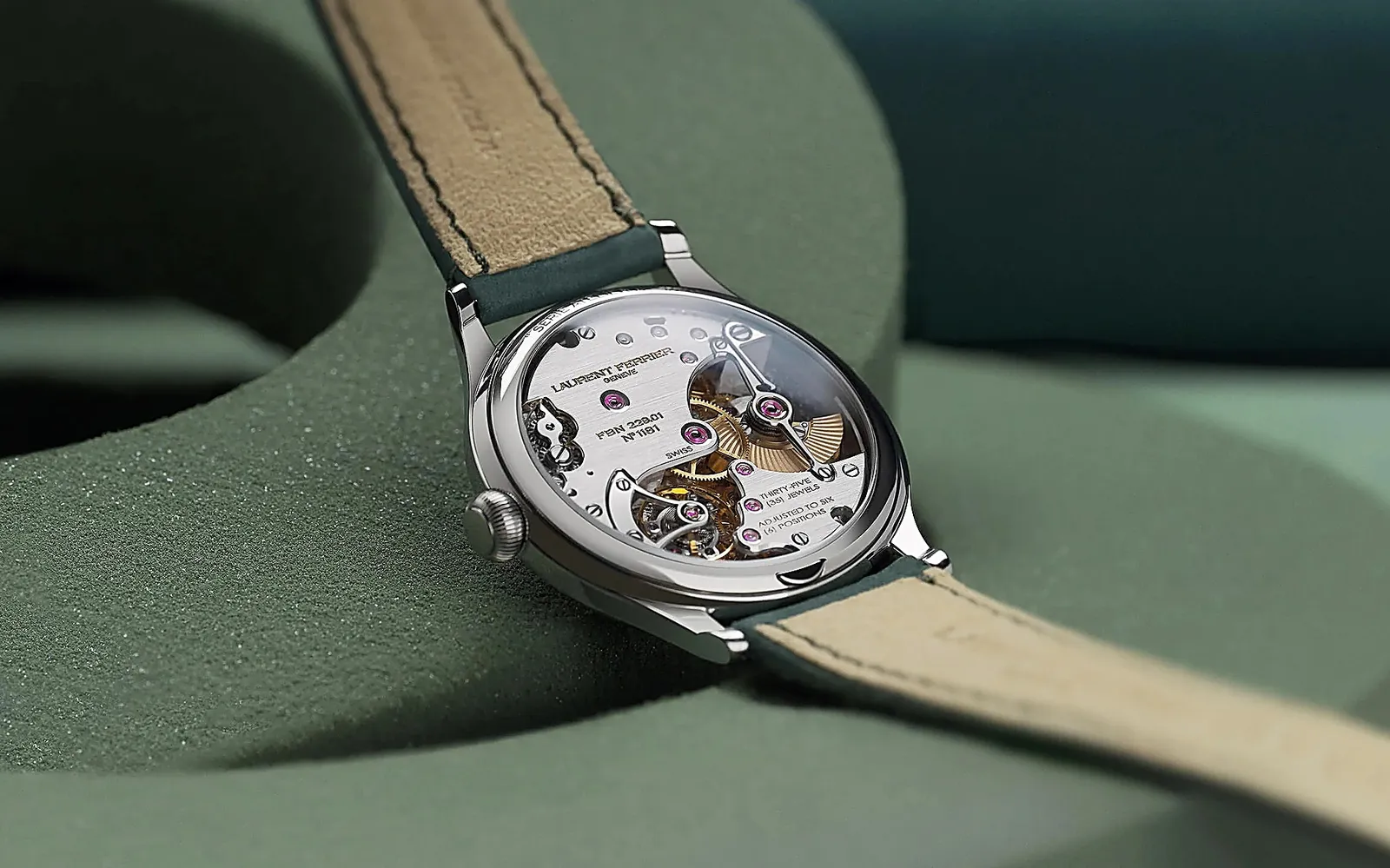
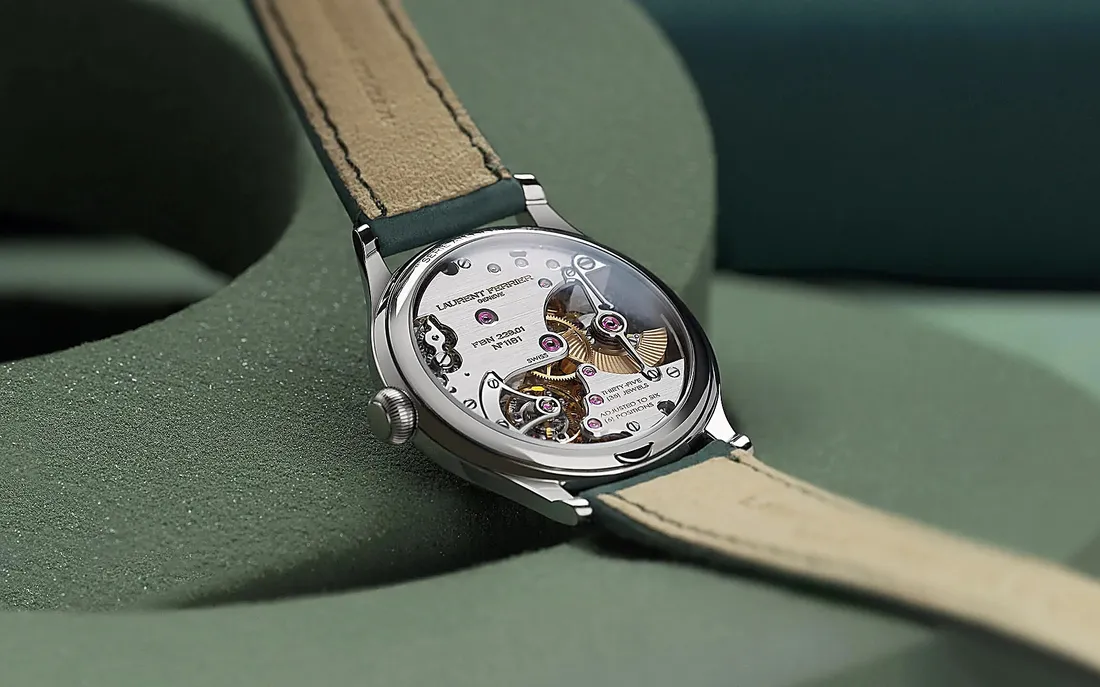
The real subject is at the back. This watch winds itself, and yet there is no ordinary rotor inside it. In a conventional automatic the rotor sits above the movement like a separate storey and adds its own height to the watch. A micro-rotor instead sinks into the plane of the movement; it cuts a housing for itself inside the plate and adds nothing on top. The gain is thinness.
The price is paid in physics. A rotor’s winding power depends on two things: its mass and the distance of its centre of mass from the axis. Being small, a micro-rotor loses on both. Halve the radius and you lose more than half the effect. A watch with a micro-rotor therefore harvests far less energy from the same arm movement than a conventional automatic does.
format_quote"A micro-rotor buys thinness and pays for it in energy. It settles the bill in gold."
Hasan Bekmezci
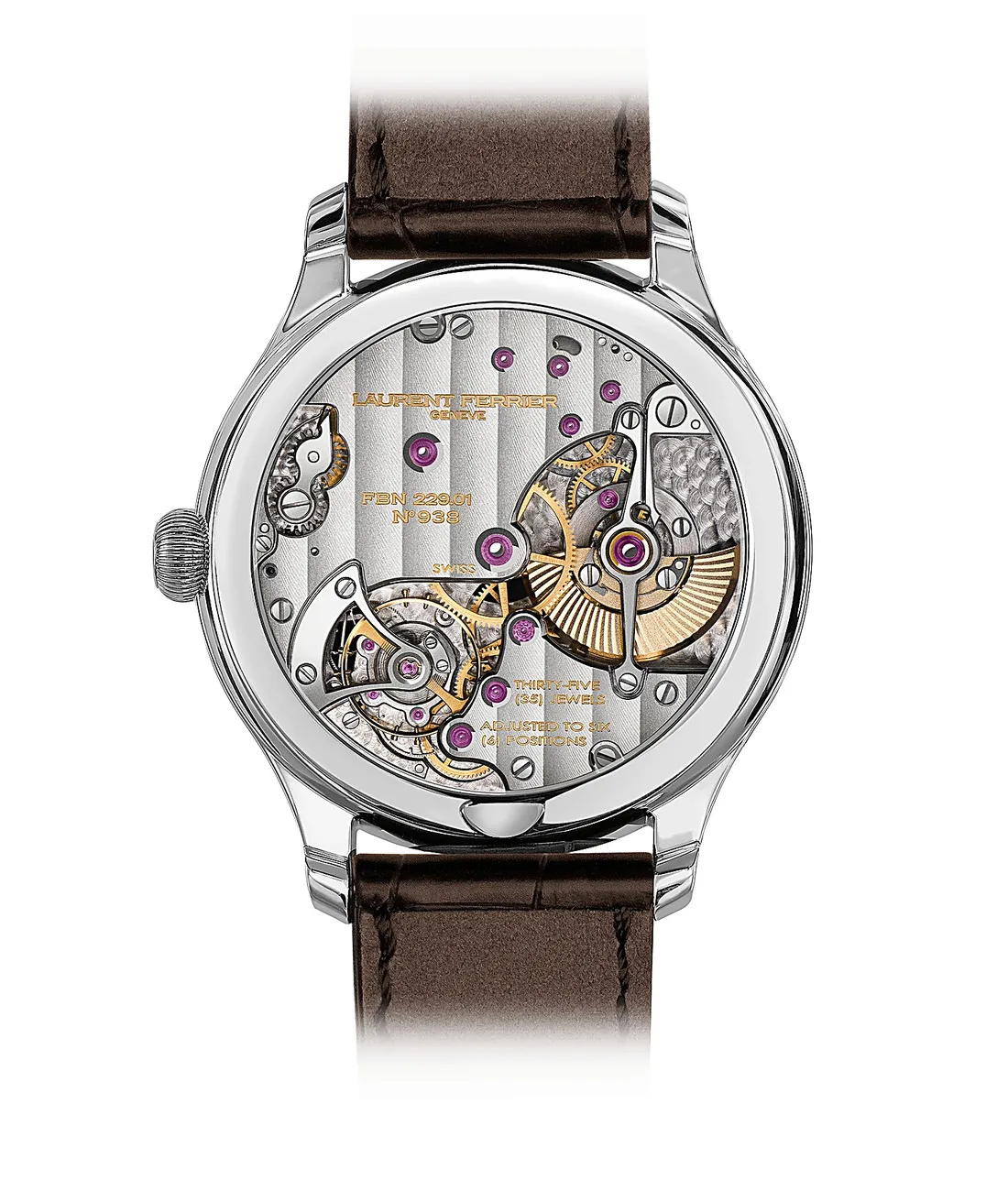
There are two ways to make up that loss, and Laurent Ferrier uses both. The first is material: the micro-rotor is made from a dense metal, so the greatest possible mass is packed into a small volume. The second is the winding system. A simple click arrangement turns only one direction of the rotor’s motion into winding and freewheels in the other. This watch uses a pawl-fitted system in which both directions reach the barrel. From the same arm movement, that is twice the yield.
A micro-rotor has one more weakness. Because it is sunk into the movement there is little room around it, and a hard knock presses it into its bearing. Laurent Ferrier answers that with a flexible mounting; the rotor absorbs the shock in its own seat before it can pass into the winding wheels.
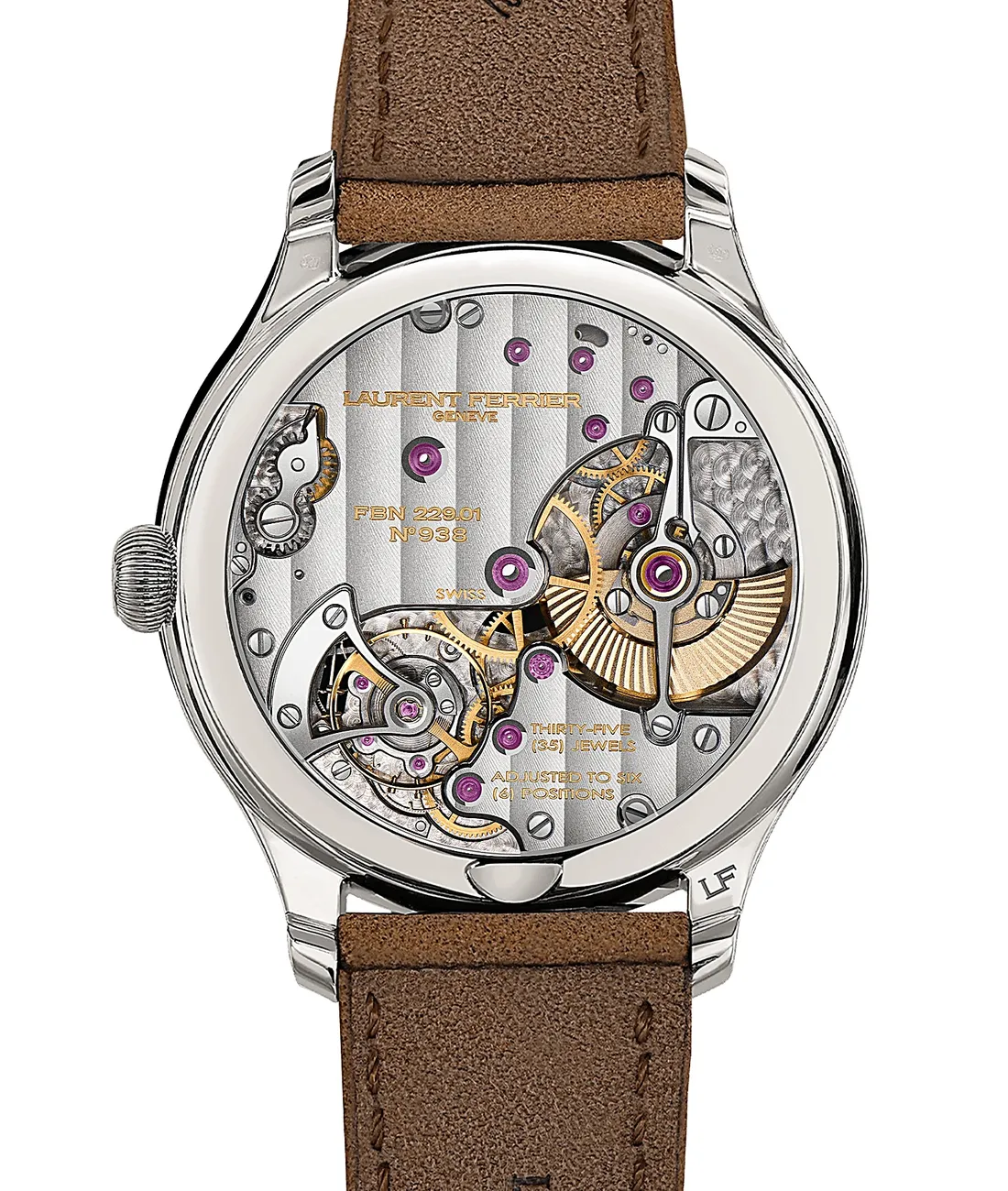
The movement is thirty-one point six millimetres across and four point three five deep. It holds one hundred and eighty-six components and thirty-five jewels, beats at three oscillations a second and runs for seventy-two hours.
The choice of frequency is deliberate too. The industry habit is four oscillations a second; a faster balance is a little more resistant to outside disturbance. In exchange, four oscillations a second means the escapement touches the balance 28,800 times an hour. Drop to three and that figure falls to 21,600, and the difference reports straight into wear and energy consumption. That is largely why a seventy-two hour reserve is possible on the already scarce energy a micro-rotor gathers.
The escapement is silicon and gives the balance a double direct impulse. Silicon needs no oil, is unaffected by magnetic fields and barely changes dimension with temperature. Needing no oil matters on its own, because the ageing of oil stands at the head of the list of things that spoil a mechanical watch over the long term.
Picture two people at the bench weighing these trades: the constructor who calculates the movement and the régleur who will regulate it.
The régleur is uneasy. Three hertz is low. A sharp movement on the wrist will disturb the balance more, and the positional differences will grow.
The constructor recalls the arithmetic. Go up to four hertz and the escapement touches the balance seven thousand two hundred more times an hour. The energy a micro-rotor gathers is limited; we have no reserve to pay that bill with. Seventy-two hours would fall to forty.
Then where do we recover the loss, the régleur asks.
The constructor’s answer is in the escapement. In a double direct impulse arrangement the pallets do not slide across the teeth of the escape wheel; the impulse is delivered directly. Friction losses drop and efficiency rises. The stability we gave up in frequency, we take back from the cleanliness of the escapement.
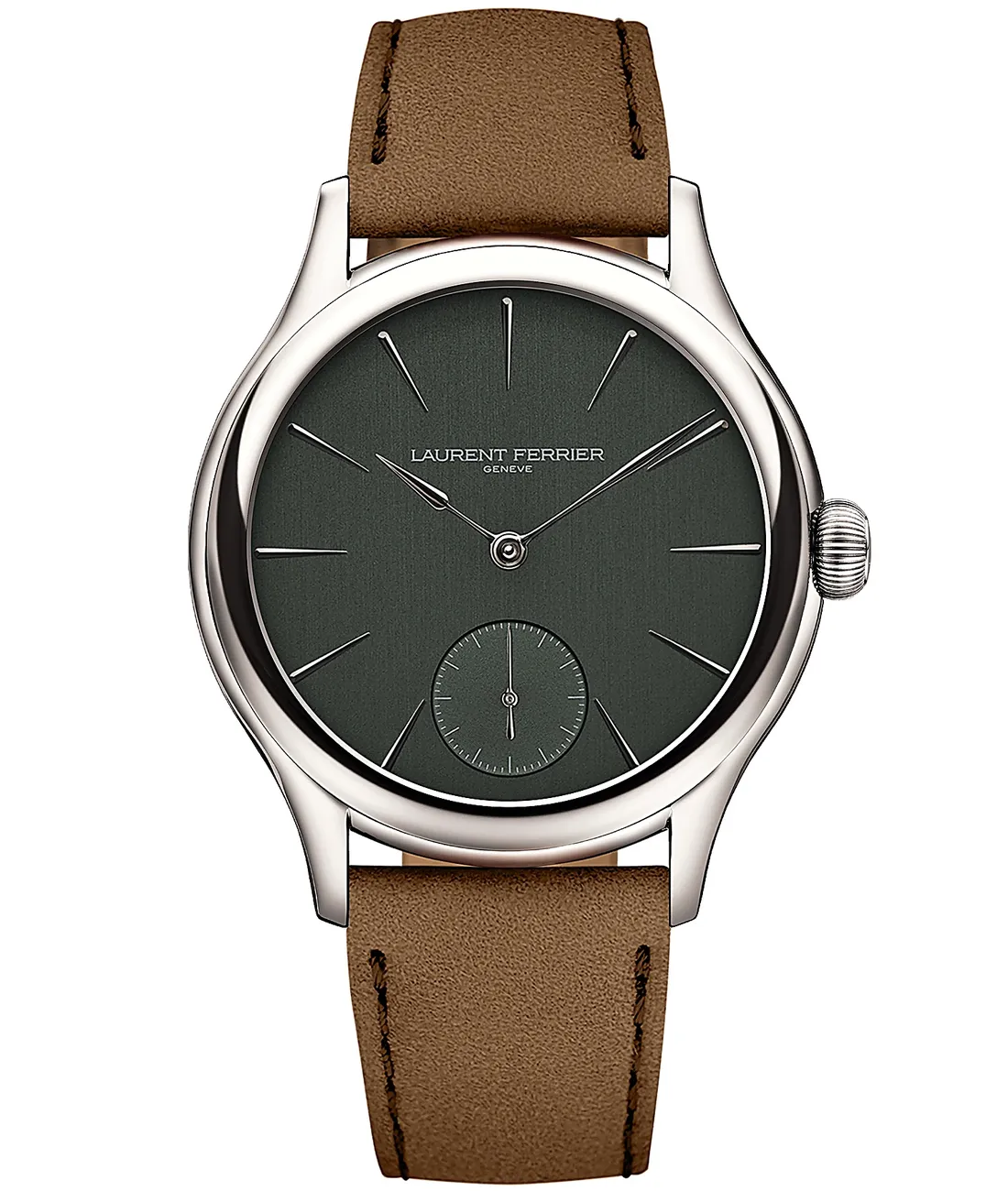
The whole logic of this watch resembles those twenty-four hours at Le Mans. What was chosen was not the highest frequency but the rhythm that can hold longest without changing. The rotor was kept small and the lost energy was recovered by losing less of it. The dial was left plain, because the legibility of an instrument should be the same at midnight as at noon.
Laurent Ferrier works today in the creative department alongside his son, Christian Ferrier, while François Servanin continues as president of the house. A company built on a friendship of more than forty years has passed into a second generation.
It is not common in the history of watchmaking for someone to begin making his first watch under his own name at sixty-three. But age is not really what this story says. Ferrier signed another house’s dials for thirty-seven years, and that time was not wasted; the first watch that carried his own name was the sum of those thirty-seven years. Perhaps that is the finest answer a man who measures time can give about his own: to show that what we call preparation runs to the very end, and that nothing is late.