A Mechanical Universe: The Legacy of 1899
It is 1899. In Switzerland's Vallée de Joux, in the Audemars Piguet workshop at Le Brassus, two young masters, Jules Louis Audemars and Edward Auguste Piguet, are about to complete one of the most complex mechanical calculating machines ever made by human hands: the legendary L'Universelle pocket watch. Together with La Grosse Pièce of 1921, these two works became milestones of the house's technical daring.
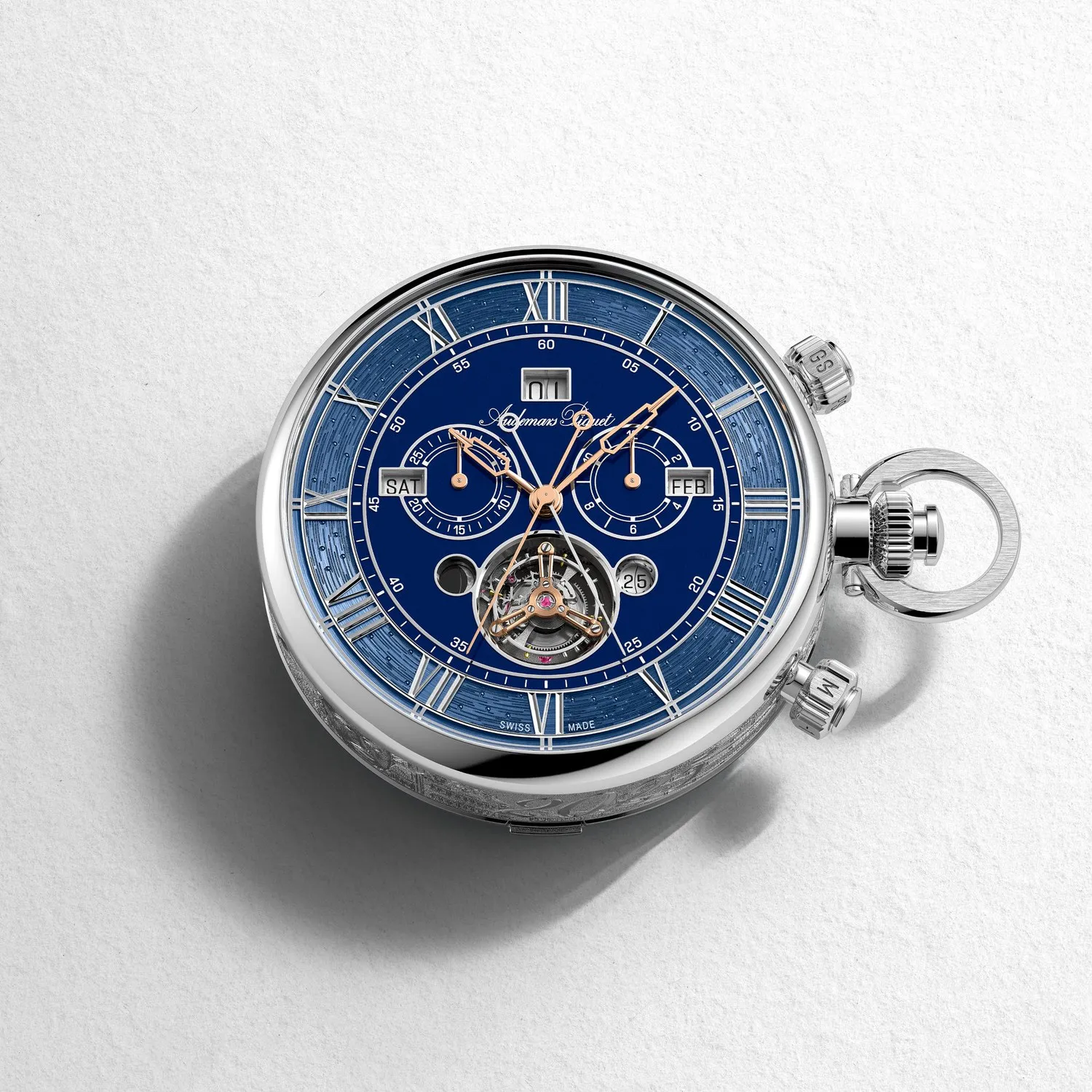
More than a century has passed. The world has gone digital, and humanity now reads time from the cold pixels of phone screens. Yet to celebrate its 150th anniversary, Audemars Piguet has returned to a format older even than the wristwatch: the pocket watch. The 150e Héritage before us is the spirit of 1899 reborn through 21st-century engineering. Into a 50mm platinum case, 23.4mm thick, it packs a mechanical universe of 47 functions and 30 complications. This is not a watch; it is a hand-wound computer built from wheels, springs and bridges.
Physics: A Cage That Defies Gravity
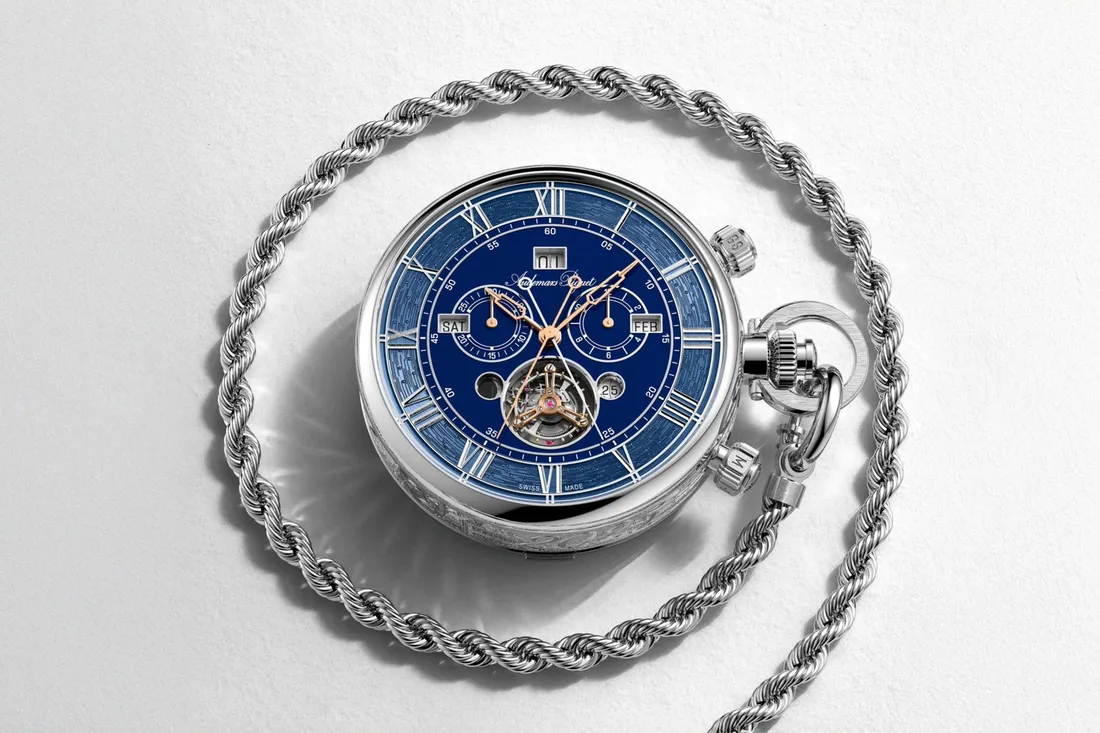
In the lower half of the dial, a cage that seems suspended in mid-air turns endlessly on its own axis: the flying tourbillon. It is watchmaking's most elegant answer to physics. The balance wheel, the heart of a mechanical watch, works within the earth's gravitational field, and when the watch stands upright, gravity distorts its oscillation asymmetrically and undermines precision.
The tourbillon, much like a gyroscope or the reaction wheel of a satellite in orbit, continuously rotates the entire regulating assembly, spreading the disruptive pull of gravity over time and averaging it back to zero. Beating at 21,600 vibrations per hour (3 Hz), this mechanism keeps the fractions of a second as regular as a celestial body. The masters of Le Brassus have, in effect, captured Newton's laws in the palm of a hand.
Acoustics: A Soundboard Made of Sapphire
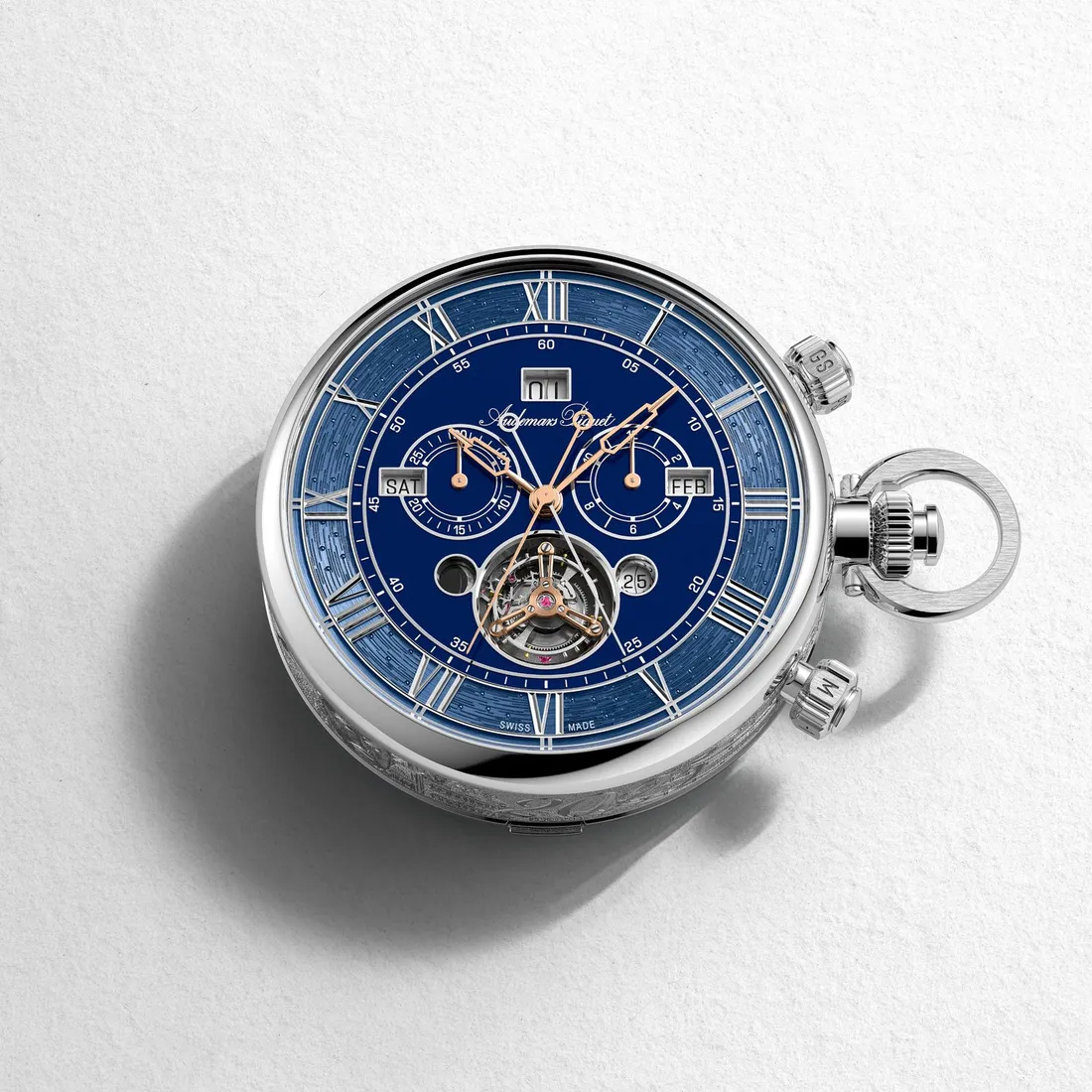
When your finger touches the multifunction pusher at 2 o'clock, the watch begins to speak. In Grande Sonnerie mode it strikes the hours and quarters of its own accord every quarter of an hour, without your touching anything; Petite Sonnerie voices only the full hours; and when you pull the pusher, the minute repeater reads the time aloud in low, double and high tones.
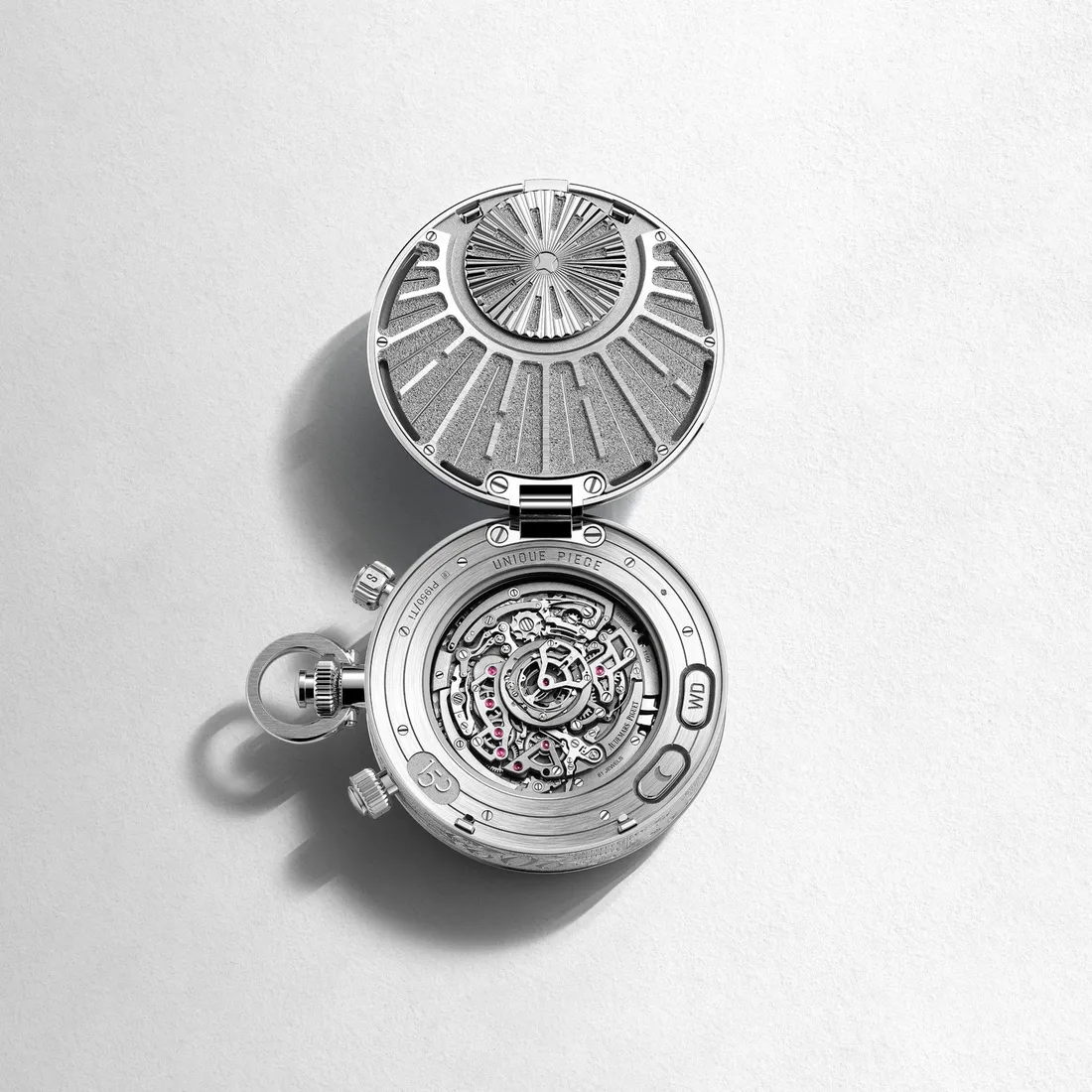
The true feat of engineering lies in the sound itself. Audemars Piguet's patented Supersonnerie technology turns the watch's caseback into a soundboard made from a large sapphire crystal. Just as the body of a violin or a guitar amplifies the vibration of a string, the sound waves born when the hammers strike special-alloy gongs are strengthened and clarified through this sapphire membrane. It is a meeting of materials science and acoustics that no phone speaker could ever imitate.
Metrology: Splitting Time in Two
At the centre of the dial rest two slender seconds hands stacked one upon the other: the rattrapante, the split-seconds flyback chronograph. As two cars flash past side by side on a racetrack, you press the pusher; one hand stops instantly and freezes the first time, while the other keeps flowing into the future. In this way you measure two events separately against a single reference instant.
This is a mechanical solution to the problem of simultaneity and successive measurement in physics; it does the work of a photo-finish camera or a laboratory chronometer with no electronics at all, using pure wheel-and-lever geometry. Together with its semi-instantaneous minute counter and dragging hours counter, it records elapsed time without needing a single digital processor.
Computer Science: A Memory Encoded in Gears
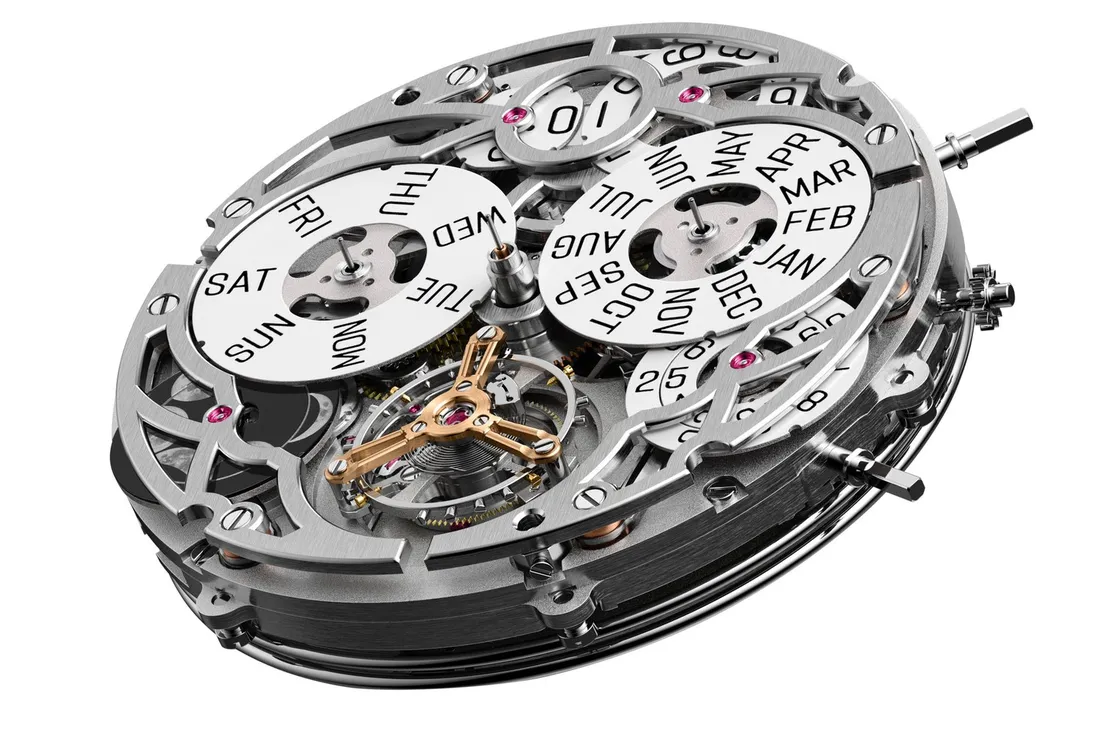
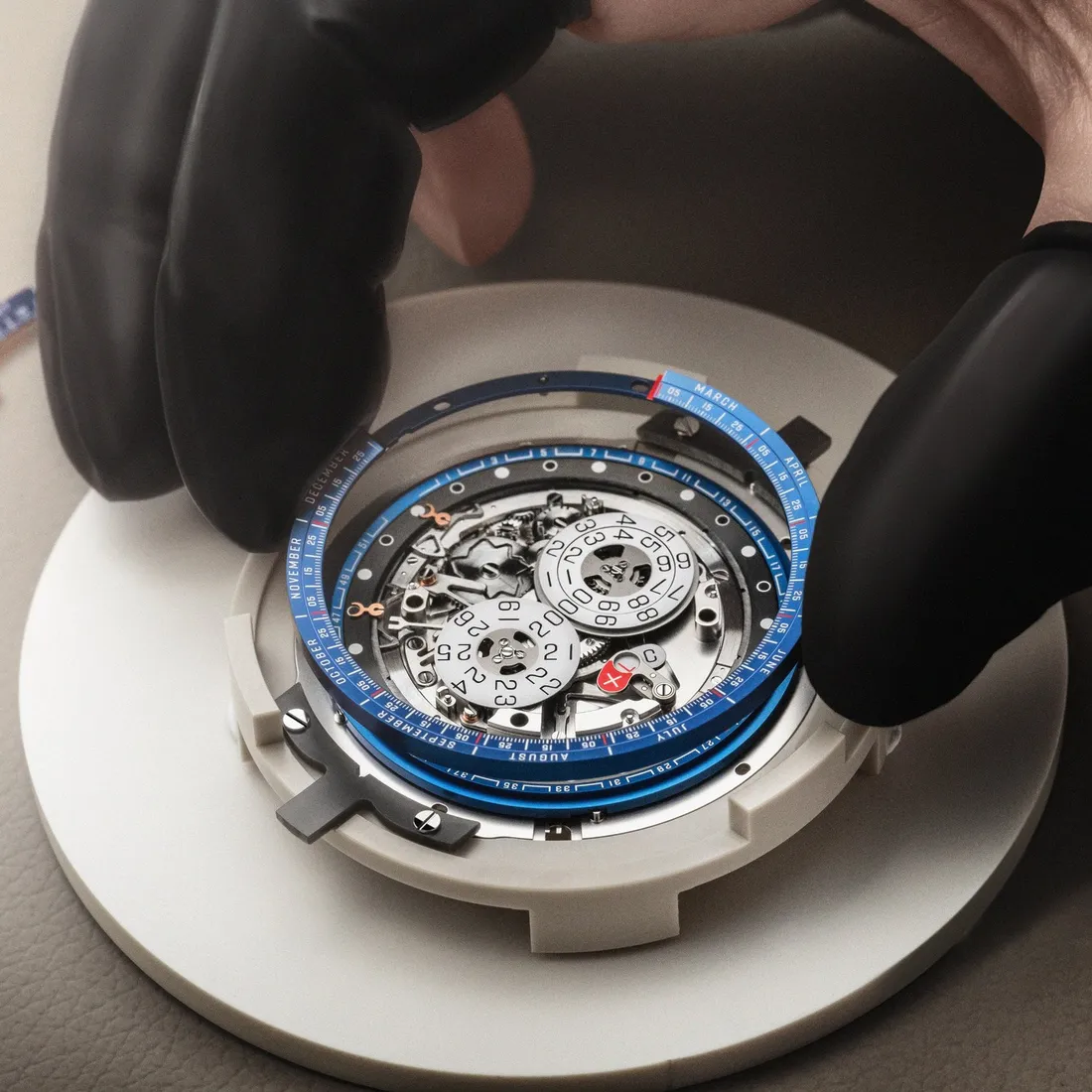
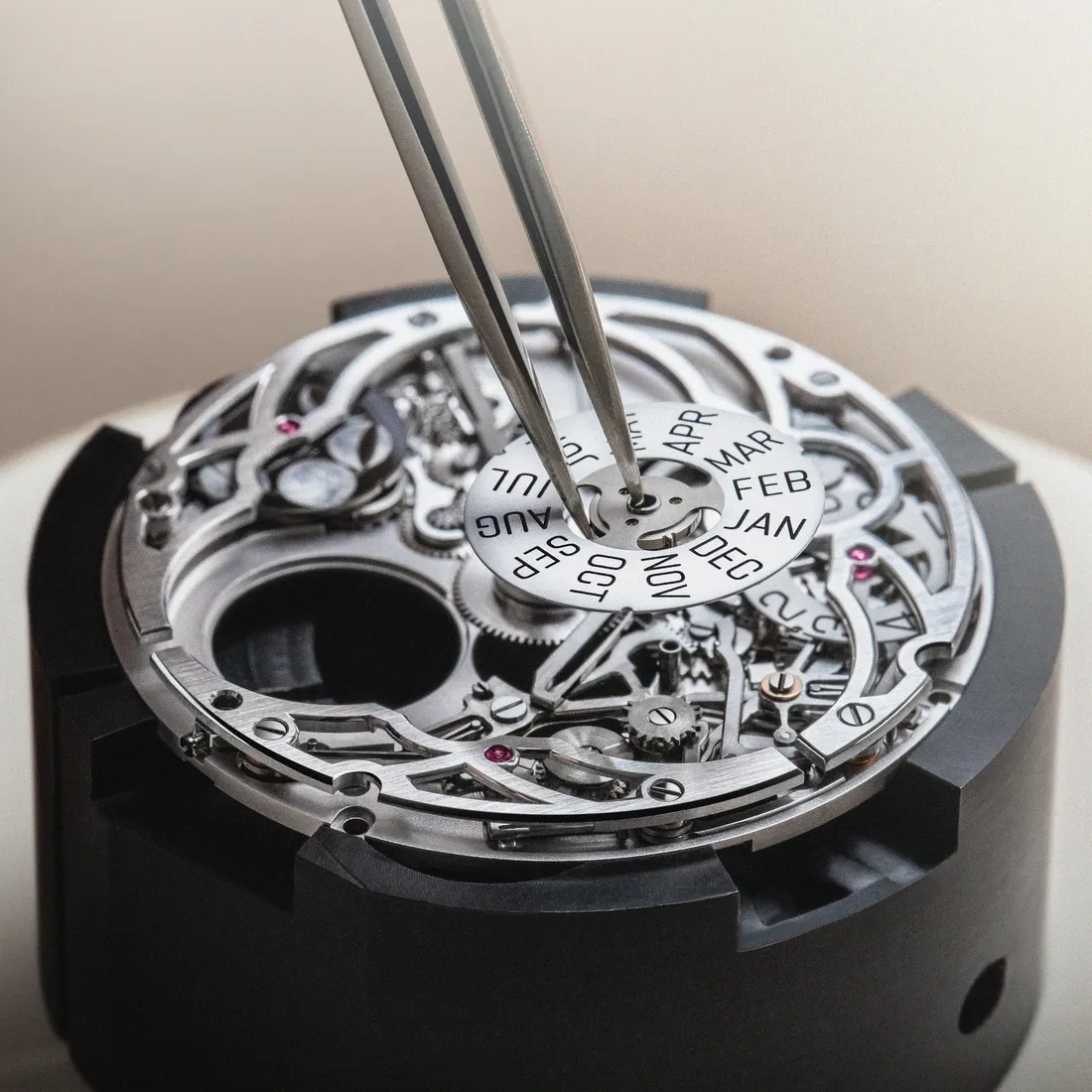
The calendar apertures on the dial hold a memory that sees far beyond a human lifetime. This is a semi-Gregorian perpetual calendar, and it flawlessly computes whether a month has 28, 30 or 31 days, and even the leap years in which February has 29, with no manual adjustment, accurately until the year 2399.
The secret is, in truth, an algorithm etched into mechanics. The four-year leap cycle is encoded, much like modular arithmetic in a computer, into the tooth counts of the wheels and the geometry of a program cam. It is a read-only memory that runs on pure physics without any electric current, storing the self-repeating rule of the calendar as a logic circuit translated into the turning of gears.
Astronomy and Humanity: Reconciling the Moon and the Sun
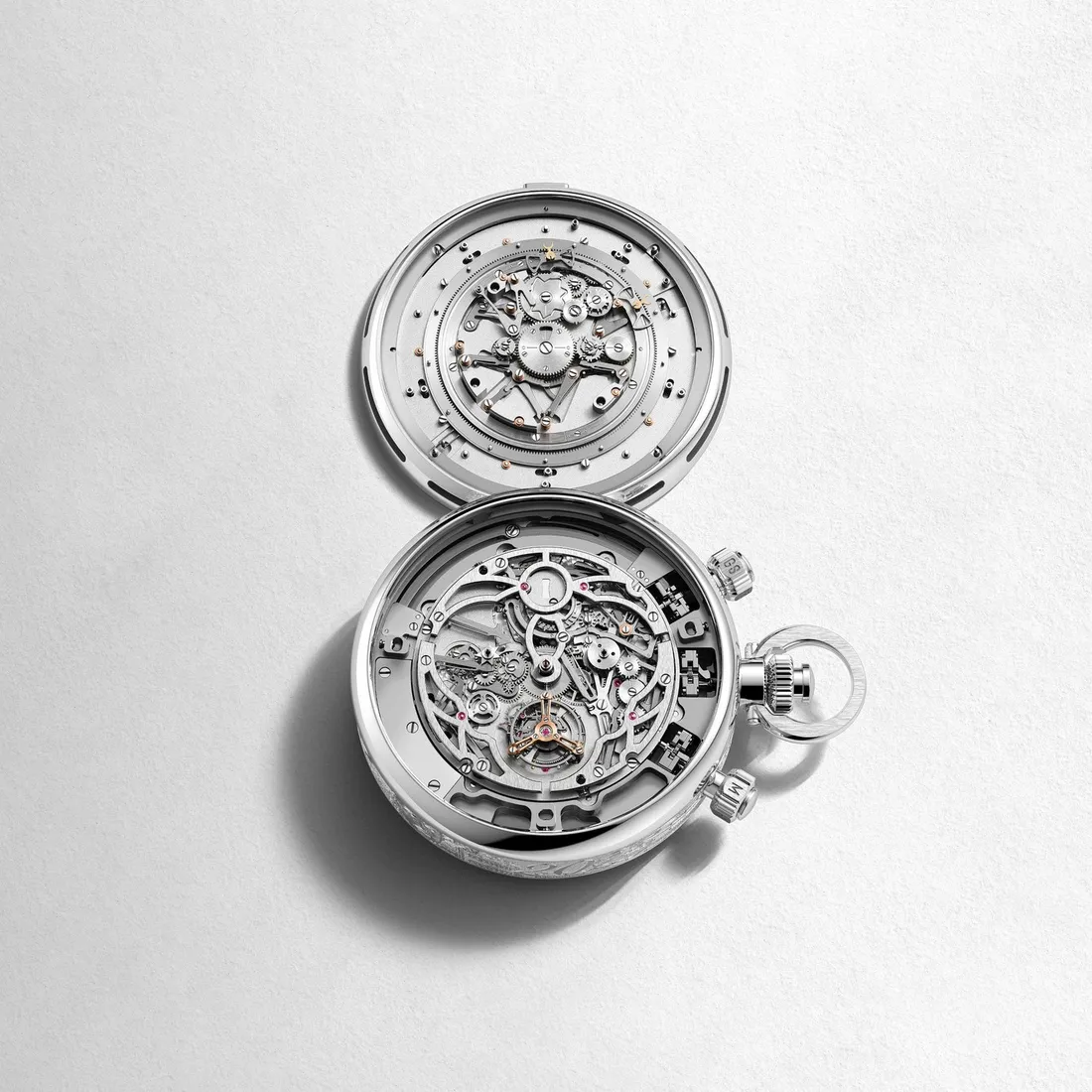
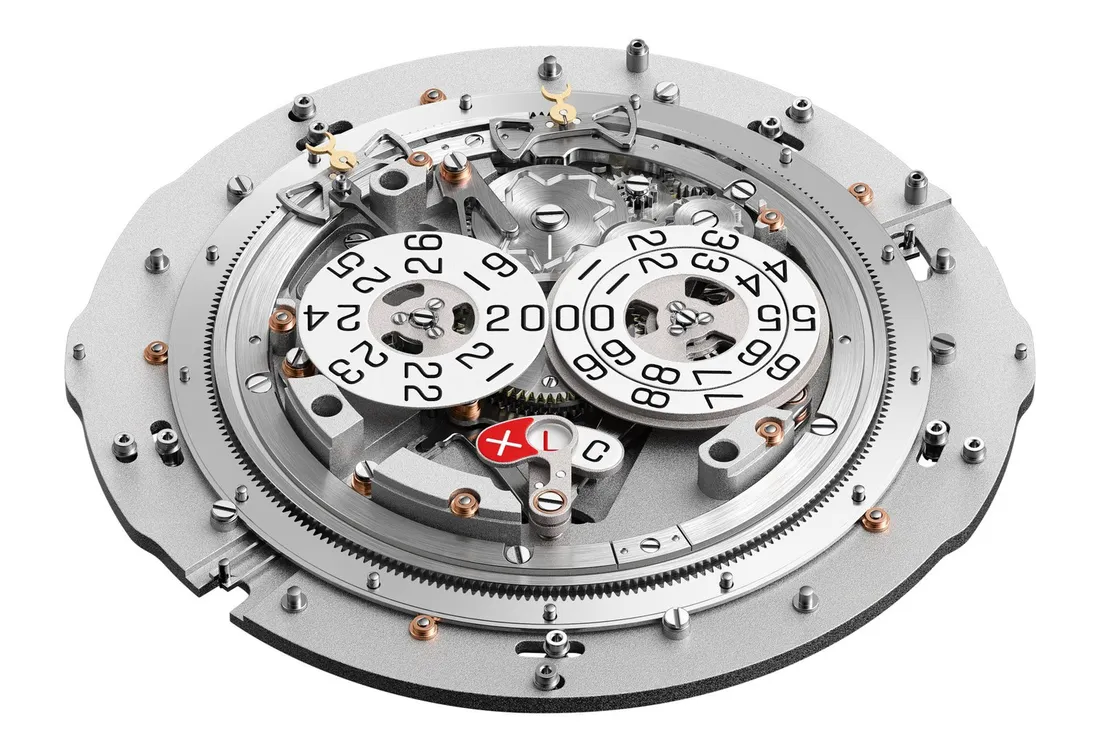
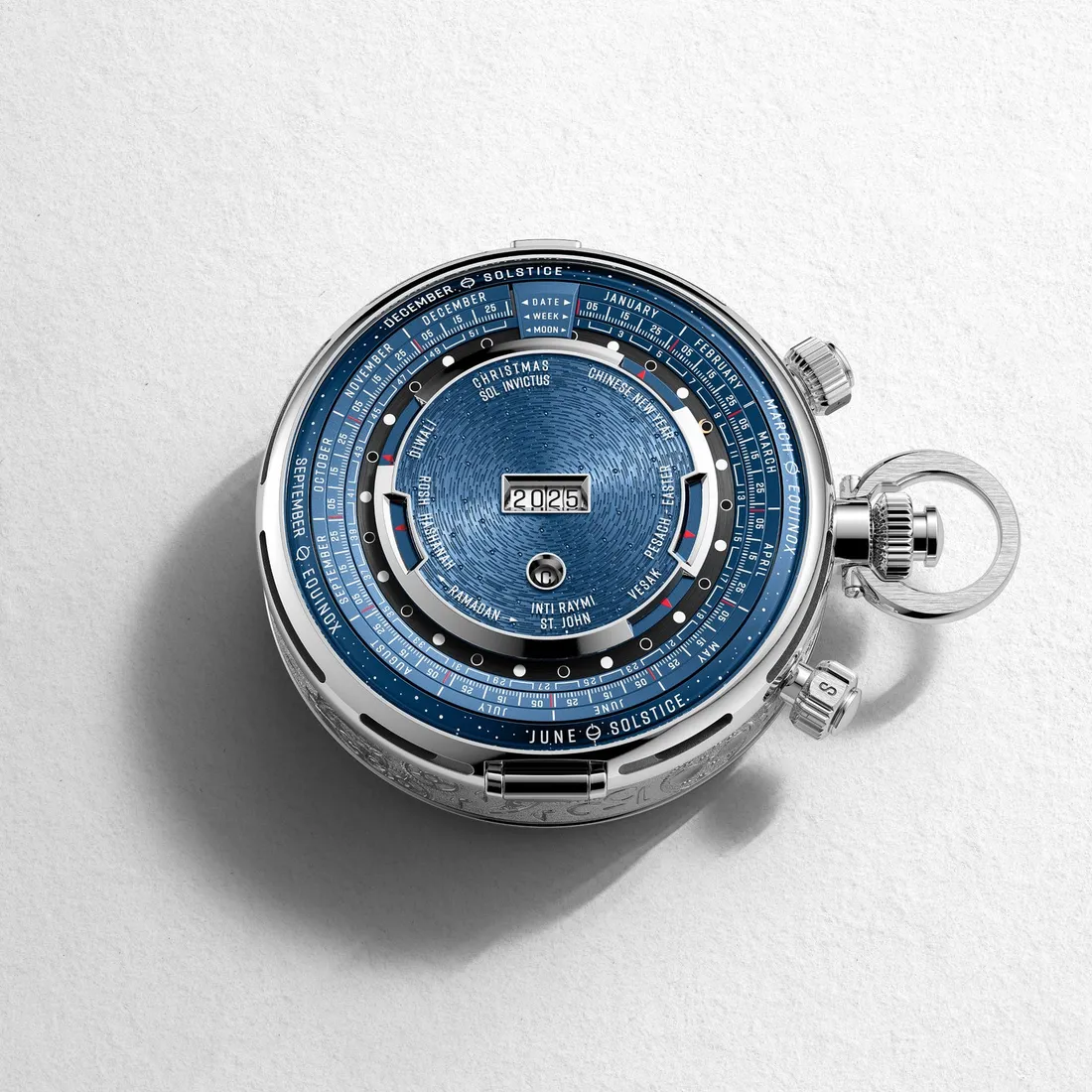
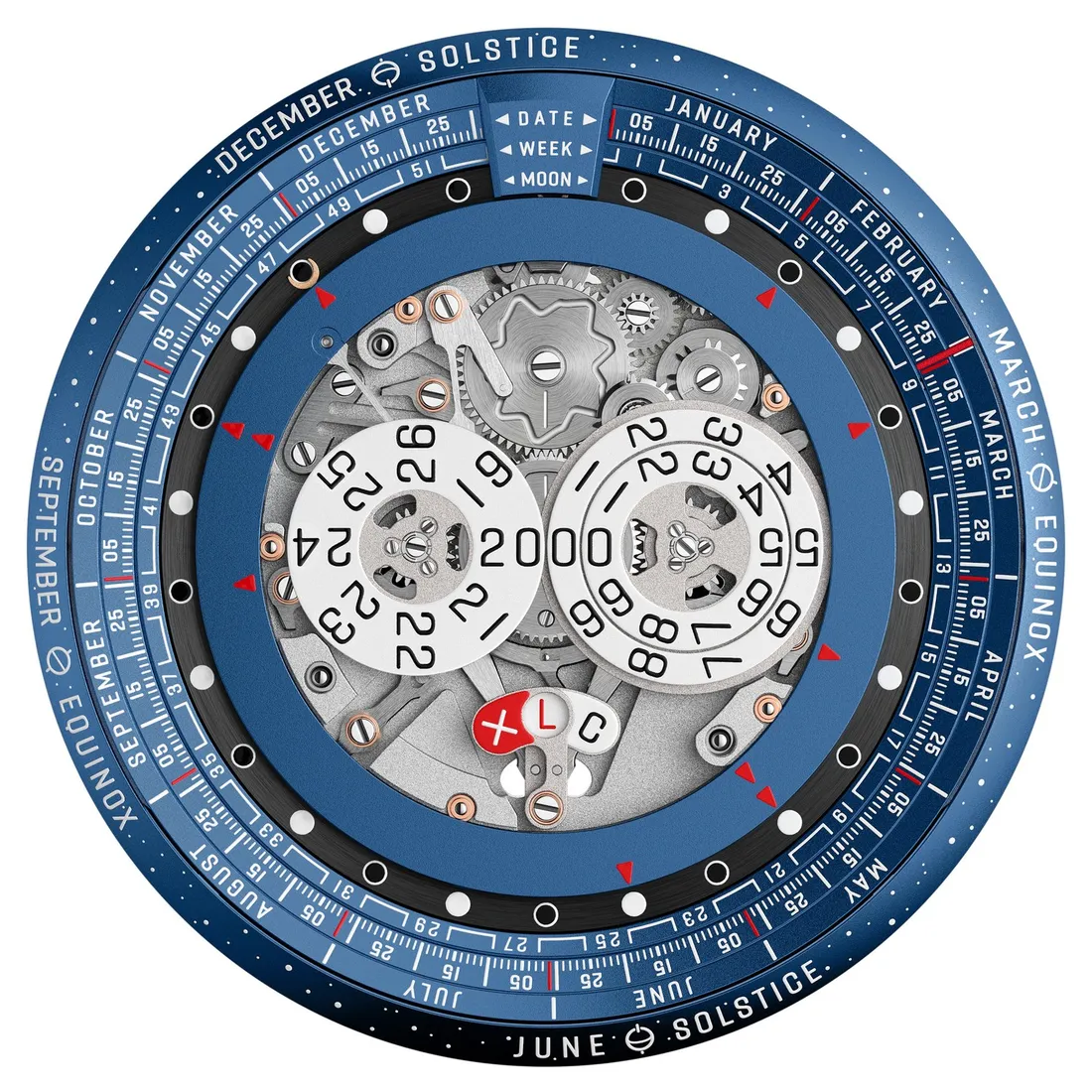
The most original part of the 150e Héritage is the Universal Calendar, housed within the caseback and operating independently of the main movement: a mechanical celestial calculator of 8 complications and 17 indications that unites solar, lunar and lunisolar cycles on a single display. Besides the year, leap years, months, weeks and dates, it shows the phases of the moon, the solstices and the equinoxes.
At the heart of this mechanism beats one of astronomy's most elegant discoveries: the Metonic cycle. In the 5th century BC, the Athenian astronomer Meton realised that 19 solar years are almost exactly equal to 235 lunar months. A single full turn of the bidirectional wheel on the caseback completes precisely this 19-year cycle, reconciling the rhythm of the moon with the rhythm of the sun. The mechanism covers the period from 1900 to 2099 and preserves its accuracy regardless of the power reserve.
Its most striking dimension is anthropological: this single display can track nine great celebrations born of different calendar traditions at once, among them Ramadan, Christmas, Easter, Diwali, Vesak, Rosh Hashanah and Chinese New Year. The watch thus offers a shared map of the various time systems humanity has built over thousands of years by looking up at the sky.
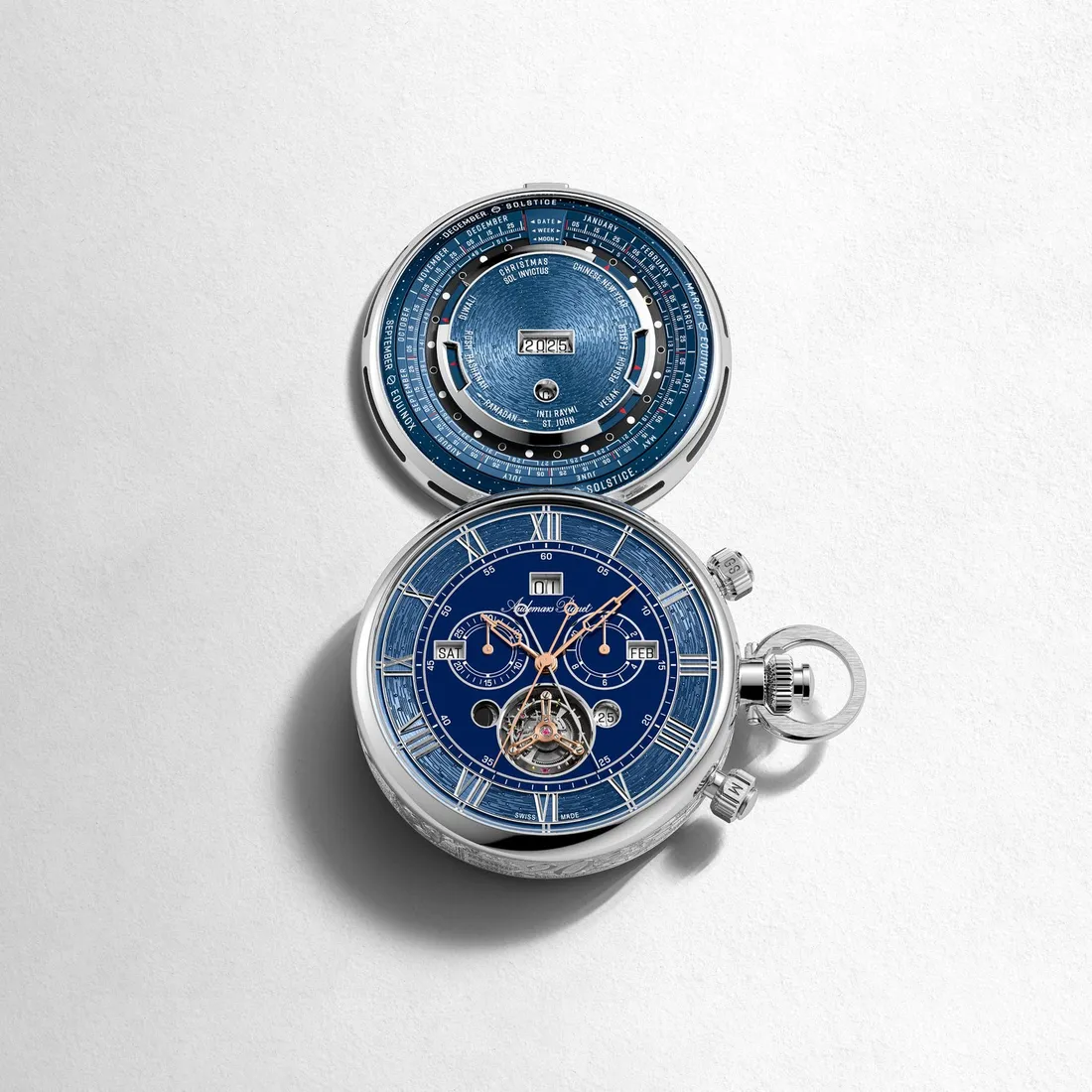
Chemistry and Craft: Blue Born of Fire
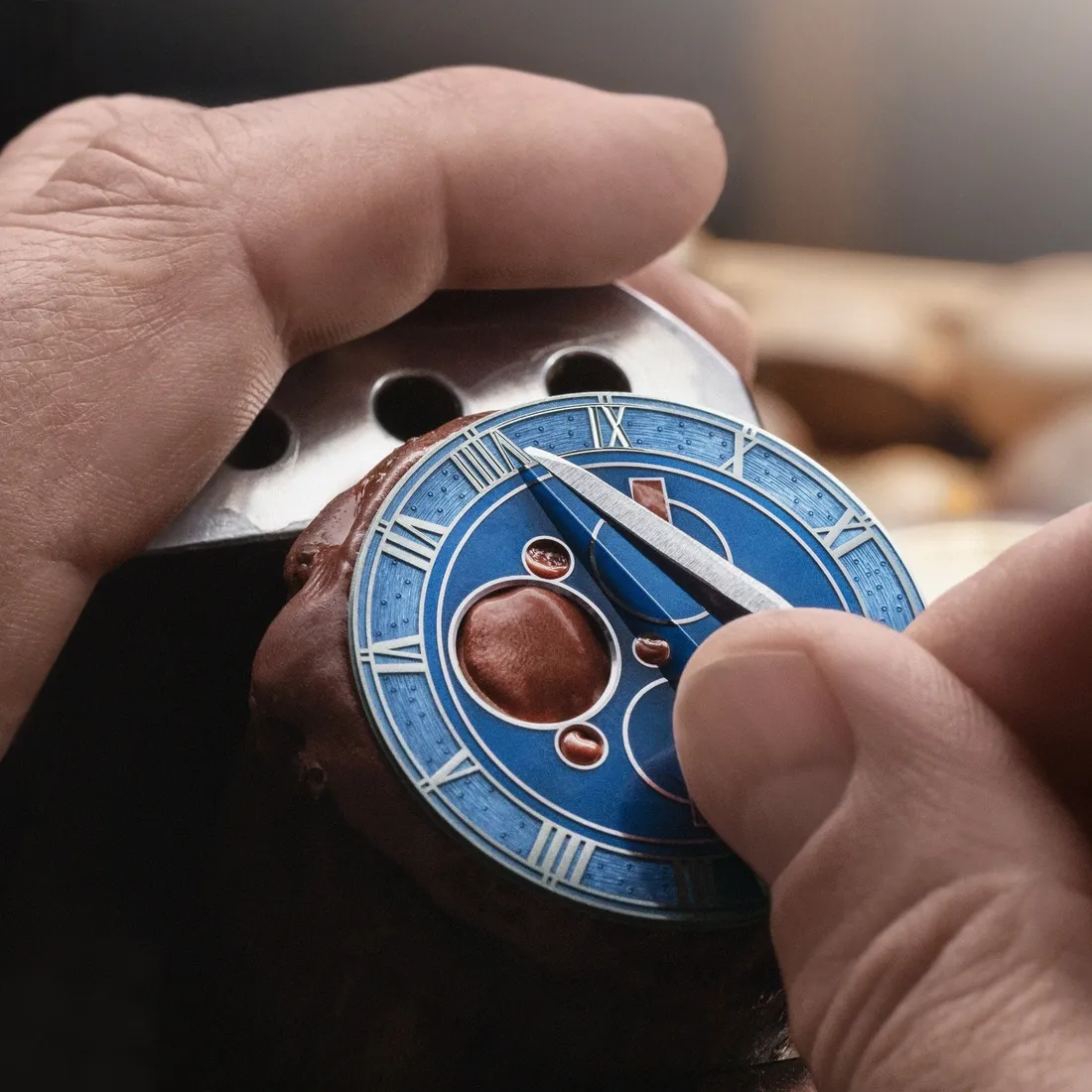
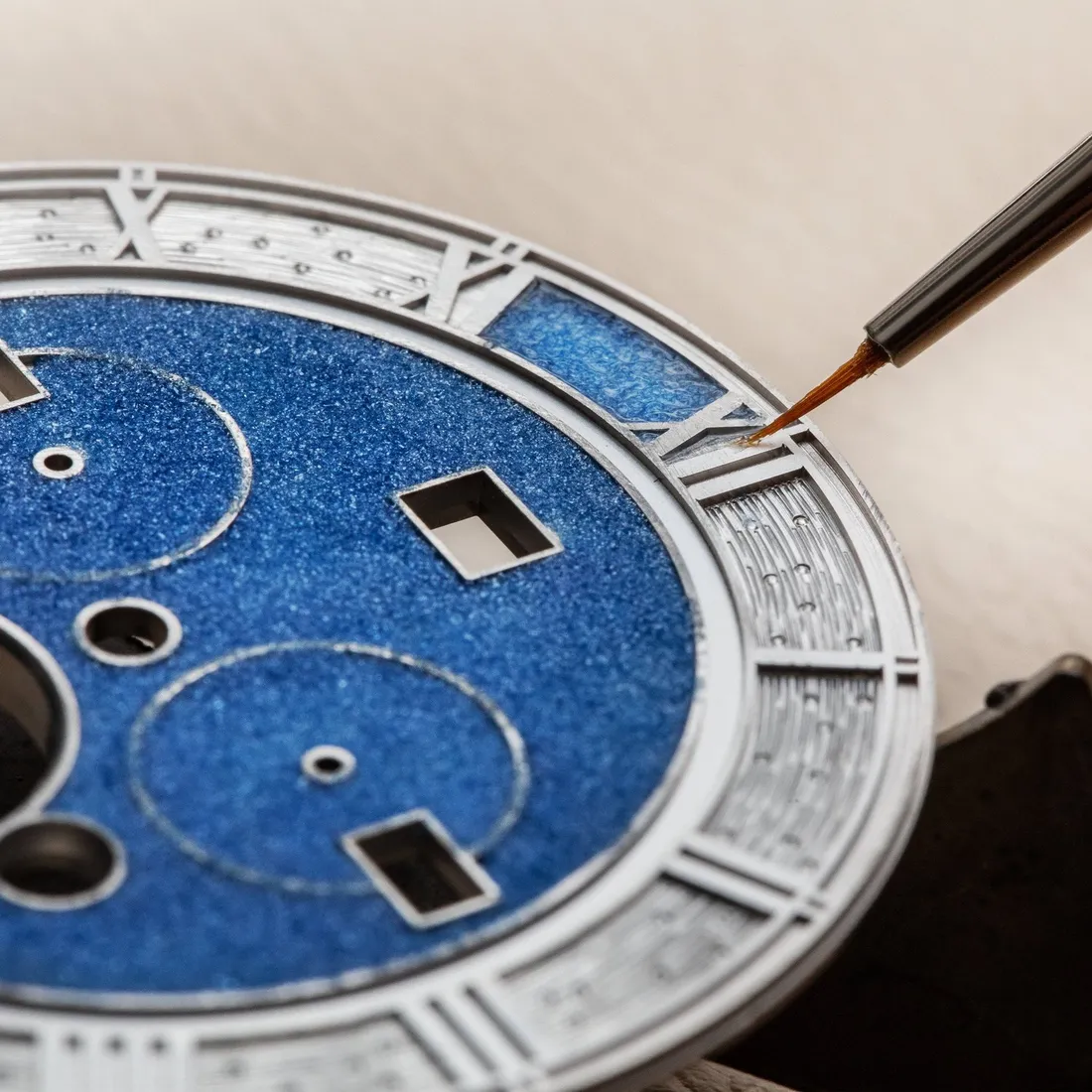
The face of all this mechanical genius is covered by a craft no less patient. The dial is made of translucent blue grand feu (great fire) enamel worked over 18-carat white gold. Enamel is, in essence, a chemistry of glass: powdered glass coloured with metal oxides is fused again and again in a kiln above 800 degrees. Each firing is a gamble; a deviation of a single degree can crack months of labour. The star-trail motifs and the Roman numerals on the dial are hand-engraved one by one.
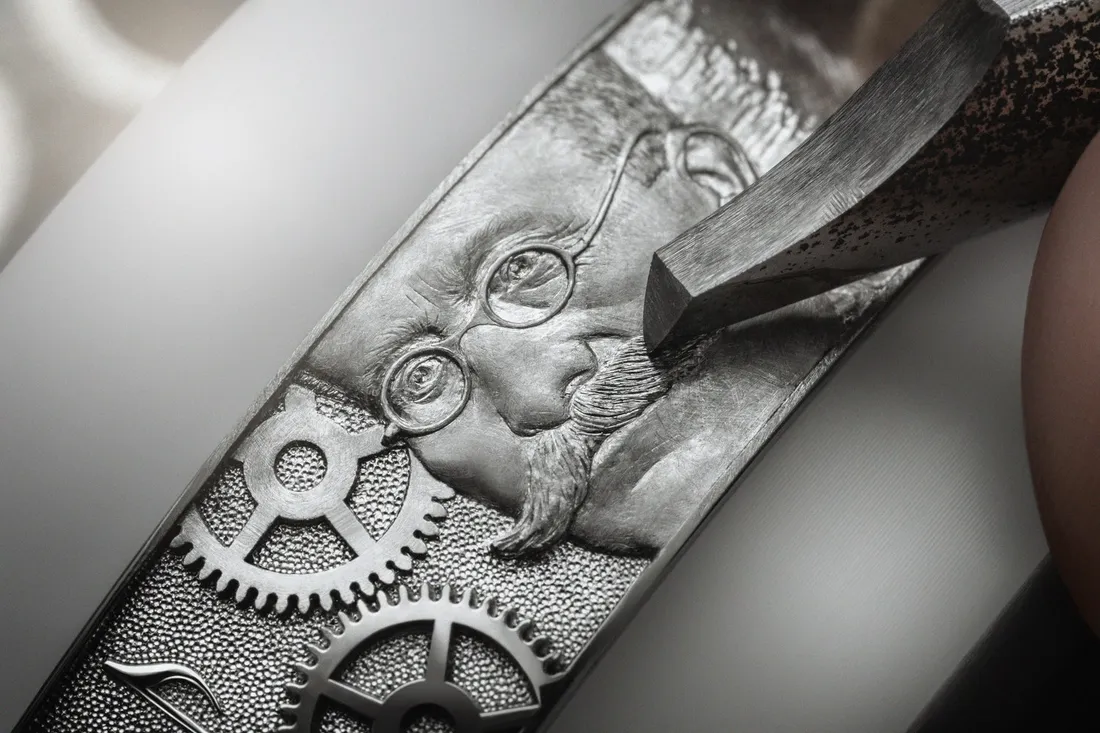
The surface of the platinum case likewise carries months of an engraver's labour: scenes depicting the house's 150-year history, the portraits of its founders and the 150th-anniversary emblem are cut into the metal with steel gravers. A hidden push-piece at 6 o'clock opens the caseback a full 180 degrees, revealing the sunburst-patterned sapphire soundboard within.
The Cosmos in Your Palm
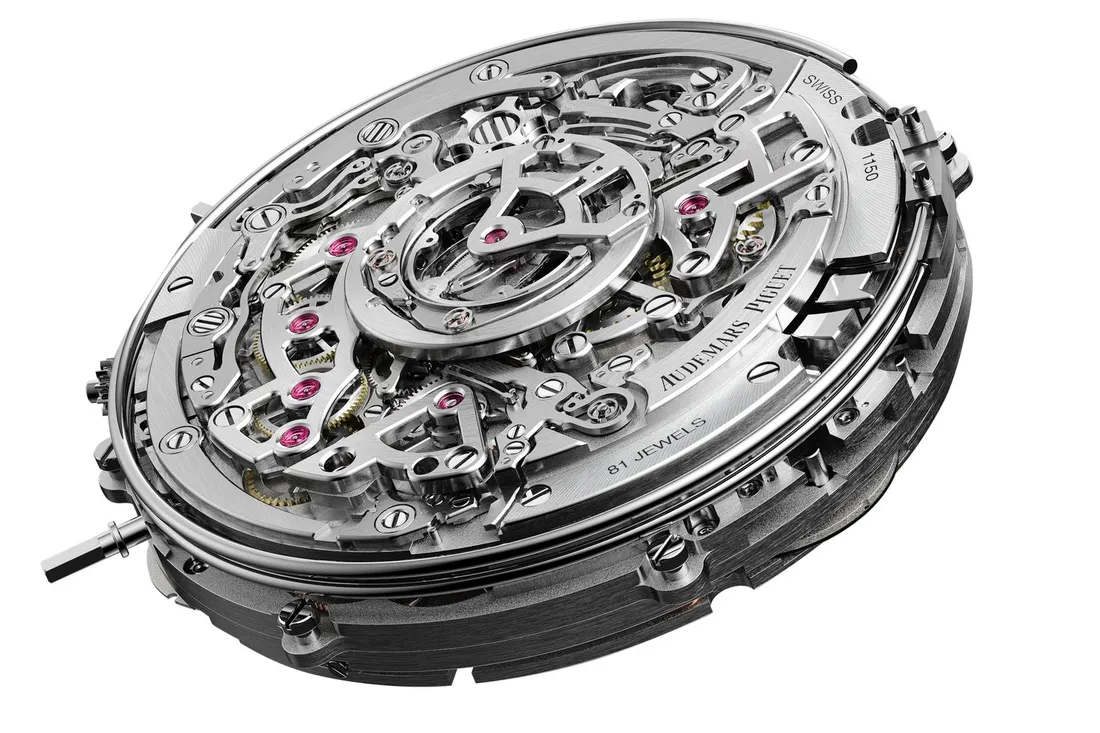
The hand-wound Calibre 1150 packs 1,140 components and 90 jewels into a body just 34.3mm across and only 8.8mm thick, offering a minimum 60-hour power reserve. The whole ensemble is completed by a hand-made platinum chain and produced in just two unique platinum pieces (reference 75150PT.OO.01).
In the end, what stands before us is not a luxurious accessory to slip into a pocket; it is a monument of science in which physics, acoustics, mathematics, astronomy and chemistry meet within a single platinum case. With this blue masterpiece Audemars Piguet whispers to us: however vast and complex the universe may be, with the right craft you can fit the whole of the sky and of time into the palm of your hand.