Imagine you are a crystallised traveller gliding on an orbit cleared of stardust, out along the Orion Arm of the Milky Way.
You are looking at billions of suns glittering in the middle of the dark, at clouds of gas turning in the spiral arms, at planetary systems bending in wells of gravity. That continuum of space and time which the human eye takes for a flowing river whispers quite another truth when it is seen from the window of a higher consciousness.
Particles of light, which is to say photons, do not take their steps as an unbroken line when they are thrown out of the cores of stars and cut through the dark. Every cosmic event you witness, from the birth of stars to the swallowing of black holes, is made of invisible micro-leaps hidden in the invisible fabric of the universe. Looking from one end of the Milky Way to the other you understand that time is not an endless and seamless flowing god but a created thing, measured, quantised and bounded, on which the divine manifestation is worked frame by frame.
From the vast gravity at the centre of the Milky Way to the clouds of dust in its outer arms, everything is woven with a geometric limit of infinite smallness. The Planck length that the German physicist Max Planck set down in mathematics, about one point six times ten to the minus thirty five metres, is the building block of every mass and every step of distance on the galactic scale.
Think of one of those enormous photographs of the Milky Way that astronomers take with their great space telescopes, full of gas clouds in every colour. Looked at from a distance, the interstellar gases and the lines of light appear as smooth as silk. But go close to the photograph, down to the level of the pixel, and you meet the smallest indivisible square pixels out of which the picture is made. The Planck length is exactly that smallest pixel of the universal canvas. A photon or a subatomic particle moving through the galaxy does not glide; it advances by stepping from one Planck pixel to the next.
The time it takes light to cross the smallest spatial step in the Milky Way, that Planck length, is the smallest slice of time physics can define: Planck time, five point three nine times ten to the minus forty four seconds.
Through the eyes of a traveller the Milky Way is a divine projector flashing on and off ten to the forty three times a second. In one Planck time the universe stands in one frame. In the next Planck time it leaps to the next frame. Between two Planck moments there is no slice of time that passes, flows or glides.
The sweeping seconds hand on a watch on our wrist, and the sense of flow in our minds, are a visual and felt illusion produced by the eye and the consciousness knitting together leaps of that unbelievable speed.
format_quote"Time does not flow; time strikes frame by frame."
Hasan Bekmezci
Seen with the traveller’s crystallised understanding, the fact that time is a created thing becomes plain through three principles. First, where there is a building block, something has been made: every phenomenon that can be broken up, divided and composed of micro-packets of five point three nine times ten to the minus forty four seconds has a designed architecture. Second, there is the cosmic birth: at the instant the universe broke out, the pixels of space and the frames of time were created at once; time is not an independent power existing before the universe but a component of it. Third, the fabric can bend: near a black hole, where gravity is immense, the rhythm at which the Planck frames strike slows down, while in empty space it speeds up. Something that can be bent, that can be curved and whose speed can change cannot be a Creator; it is only a perishable thing.
format_quote"Something that can be bent, that can be curved and whose speed can change cannot be a Creator; it is only a perishable thing."
Hasan Bekmezci
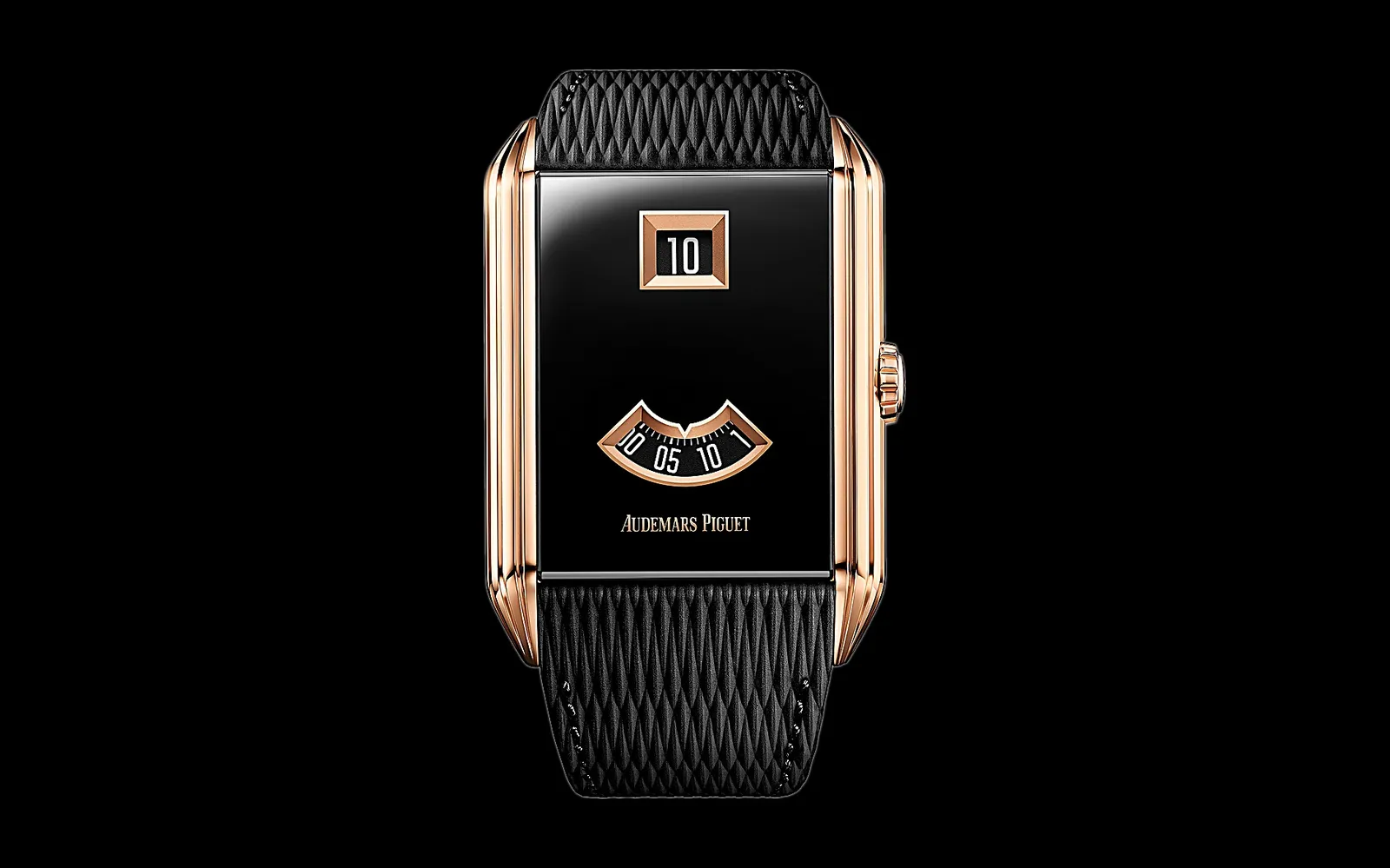
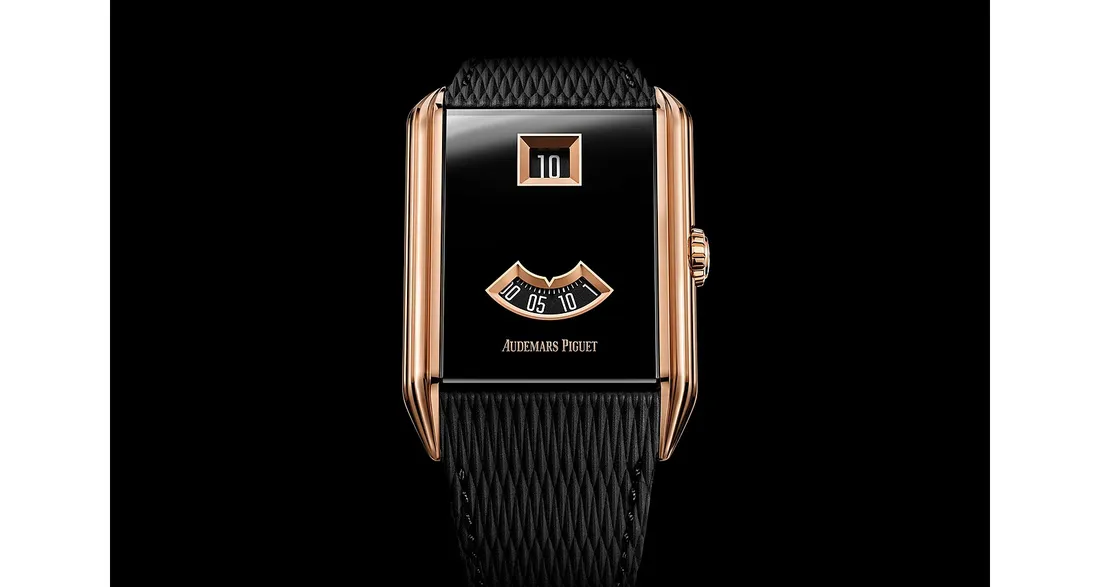
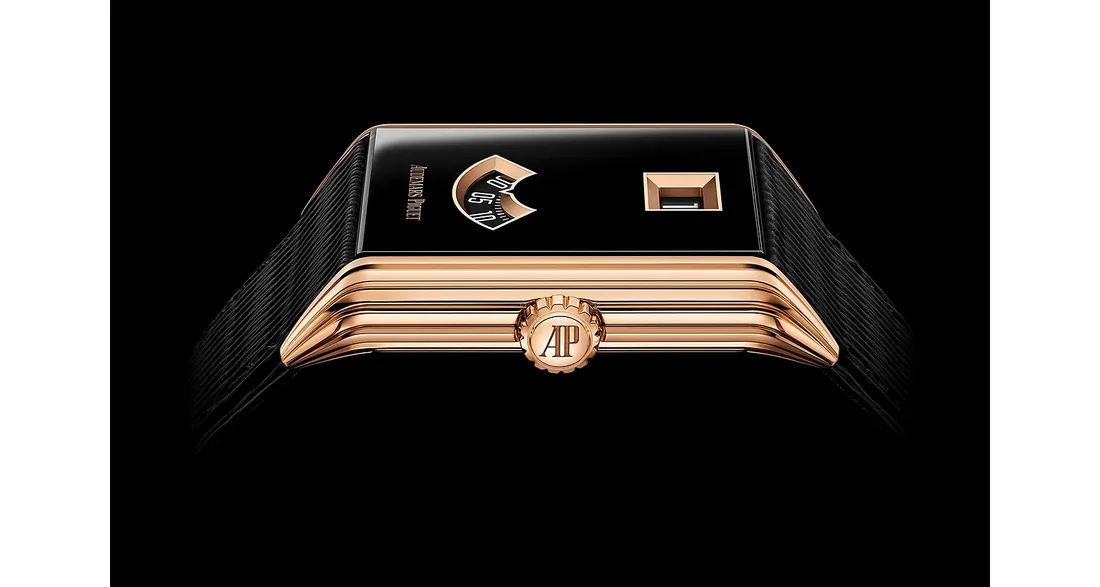
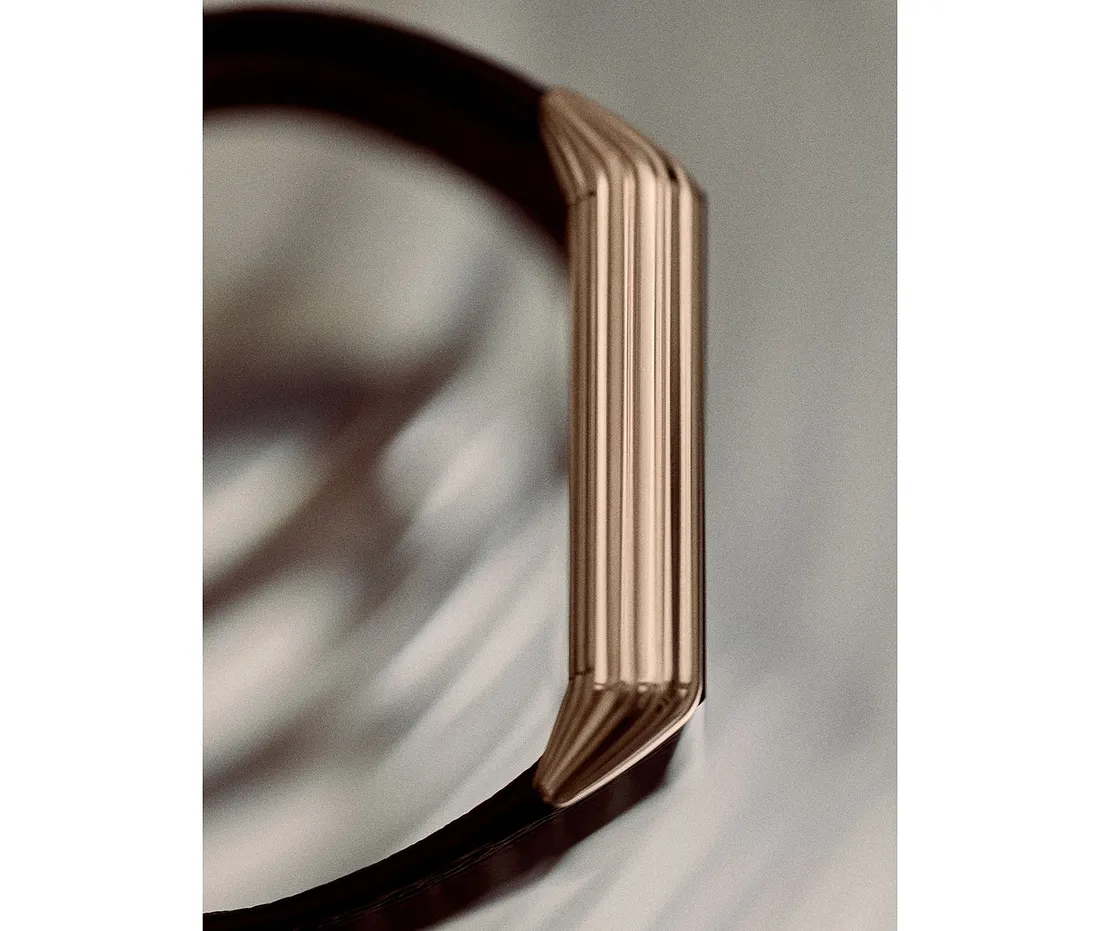
The architectural seal of that cosmic leap in high watchmaking is the Neo Frame Jumping Hour, which Audemars Piguet presented in February this year. The maison builds the watch as a reading of Art Deco; its rectangular case is made of pink gold and sapphire, eight gadroons run along each flank and the lugs recall aerodynamic lines. The case measures thirty two point six by thirty four millimetres and is eight point eight millimetres thin.
The dial is black sapphire and two apertures are cut in it. On a classical watch the hour hand slides slowly from one to two. On this watch there is no hour hand. In the square aperture above, the hour figure stands; in the fan-shaped opening below, the minute disc travels. The instant that minute disc completes its run, a spring inside the movement releases the trigger. The figure does not slide past the window; in a single fraction of a second, in one instantaneous movement, it leaps to the next hour.
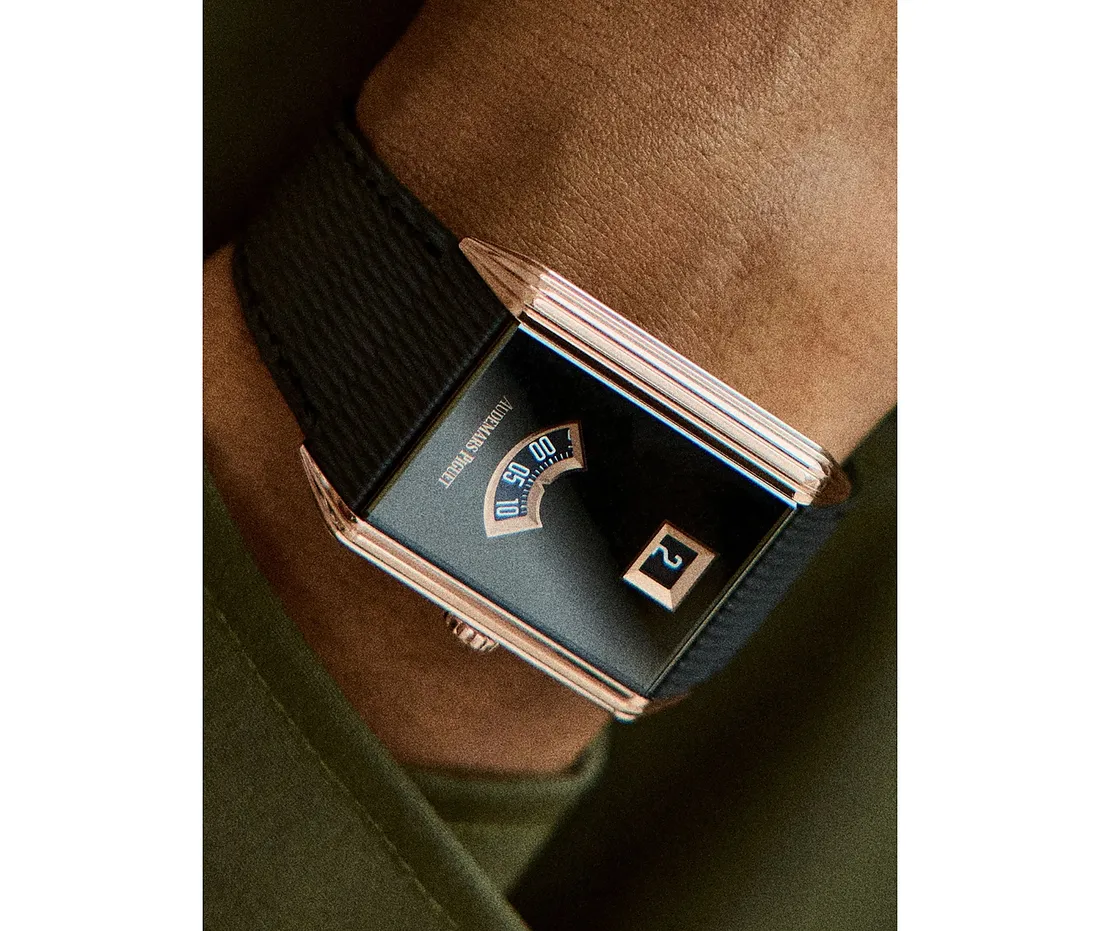
The Calibre 7122 inside is the maison’s first selfwinding jumping hour movement, built on the Calibre 7121 of the Royal Oak Jumbo. It is twenty nine point six millimetres across, beats four times a second, runs for fifty two hours and is made of two hundred and ninety three parts, two of which are the discs that show the hours and the minutes. The hours disc is titanium and the trailing minutes disc aluminium. The movement carries a patented shock-absorbing system: when the watch takes a knock, it mechanically prevents the figure from jumping by accident.
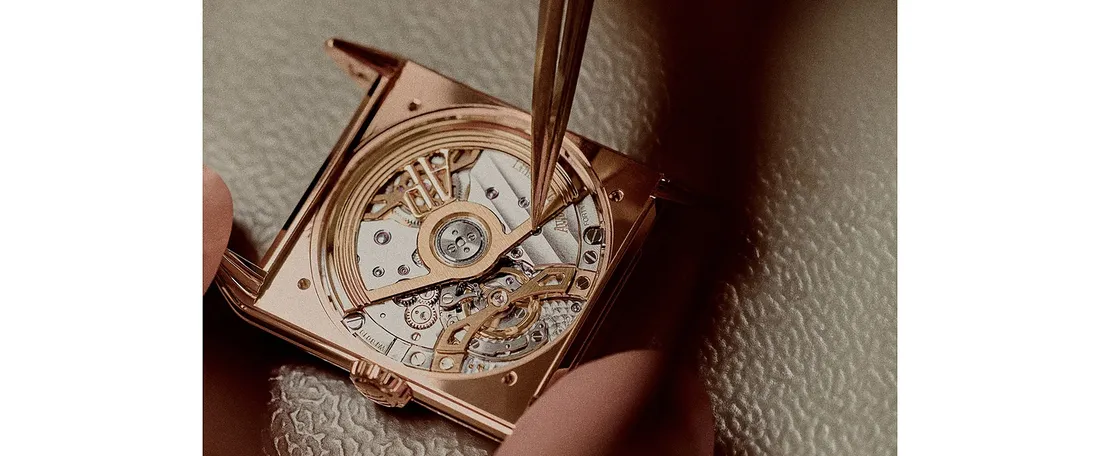
The jumping hour is a complication that goes back as far as the 1650s, where the figures change place every sixty minutes. Audemars Piguet was among the makers of the first jumping hour wristwatches in the 1920s. Sébastian Vivas, the maison’s Director of Museum and Heritage, recalls that in those years the glass was so fragile that it had to be protected by metal; today the same place is filled with sapphire, and it is the sapphire that takes the stage.
The sudden leap of the figure to the next one in that window is the direct expression of the Planck time leap we witnessed in the Milky Way. Time does not glide; as the dial shows, it jumps from frame to frame.
For a soul gliding through the Milky Way the glitter of the stars and the flow of time are nothing but an illusion. What is real are the Planck frames ticking at every point of the universe. The sudden leap of the figure in this window reminds us that time is not an unbroken river but a perishable created thing, brought into being moment by moment by its Owner and woven frame by frame.
format_quote"Time is not an unbroken river but a perishable created thing, brought into being moment by moment and woven frame by frame."
Hasan Bekmezci
The watch on its maker’s own site: Audemars Piguet, Neo Frame Jumping Hour